
Healing or Necrosis? Warning Signs to Watch After a Breast Lift
AI Summary
- Breast lift necrosis warning signs include worsening dark colour, odour, discharge, or open incisions.
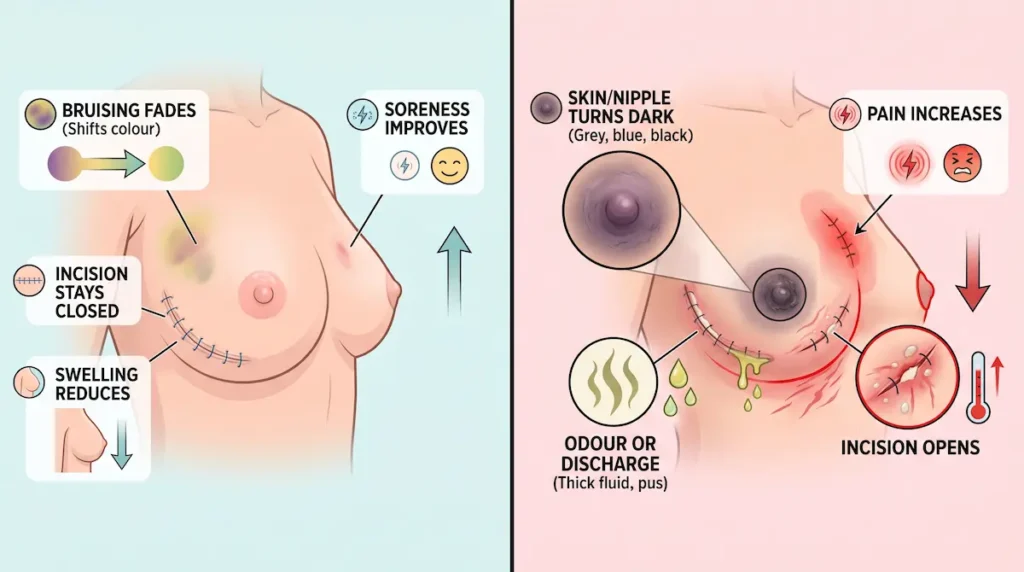
- Normal healing improves as bruising fades, swelling reduces, and soreness becomes easier to manage.
- Contact your surgeon promptly if nipple or incision changes worsen instead of settling.
- Canadian patients should confirm photo review, escalation steps, and virtual follow-up before travel.
Summary generated by AI, fact-checked by our medical experts
Breast lift necrosis is uncommon, but it is serious. Normal healing after a breast lift should gradually improve: bruising fades, swelling settles, and tenderness becomes easier to manage. Warning signs are different. Skin or nipple tissue that turns dark blue, grey, purple-black, or black — especially if it worsens instead of improving — should be reported to your surgeon promptly.
After a breast lift in Turkey, it is normal to watch every colour change closely. That is especially true for Canadian patients recovering partly in Istanbul and partly back home. A breast lift changes skin tension, reshapes breast tissue, and moves the nipple-areola complex into a higher position. Most early colour changes are bruising. Some are swelling. A small number, however, can signal compromised blood flow.
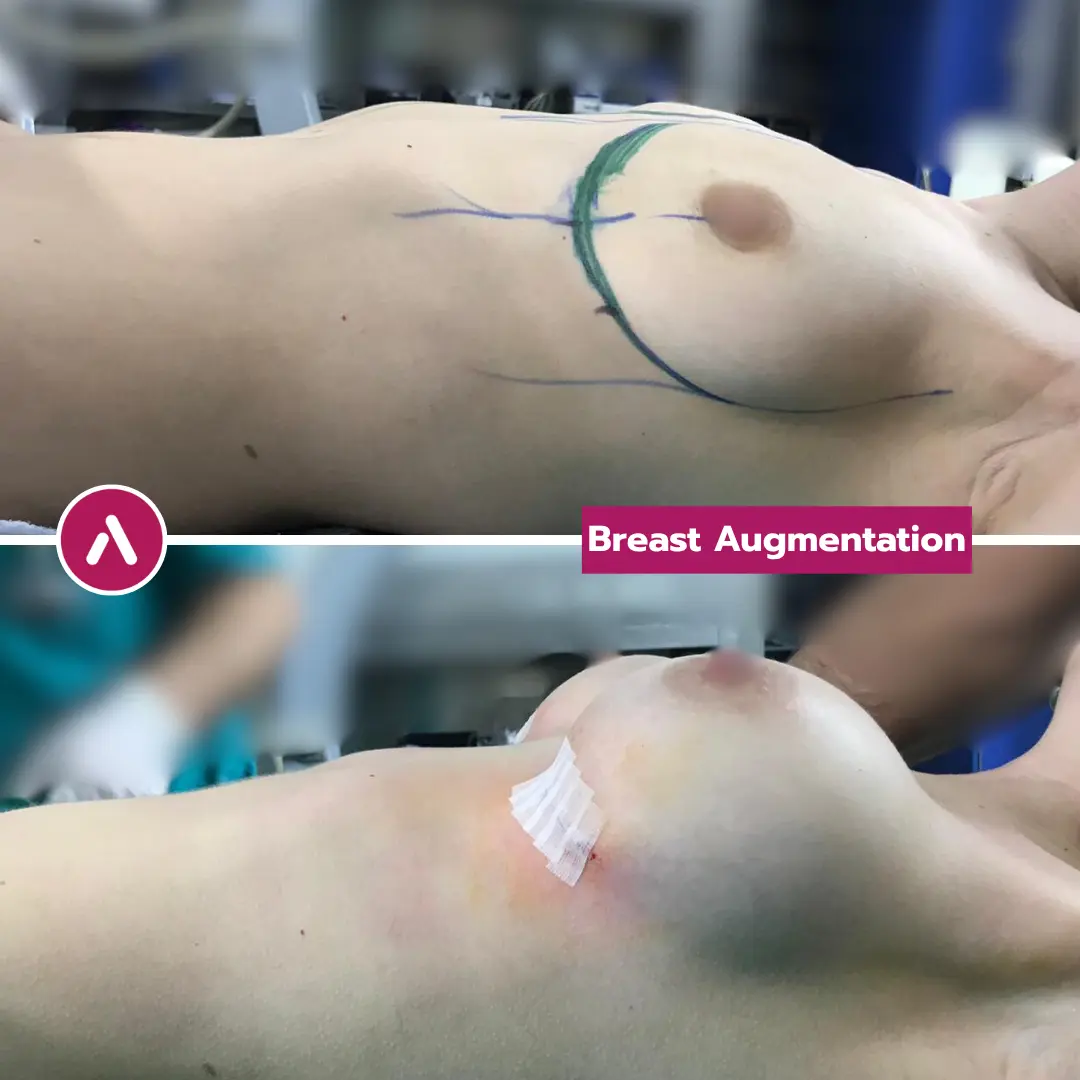
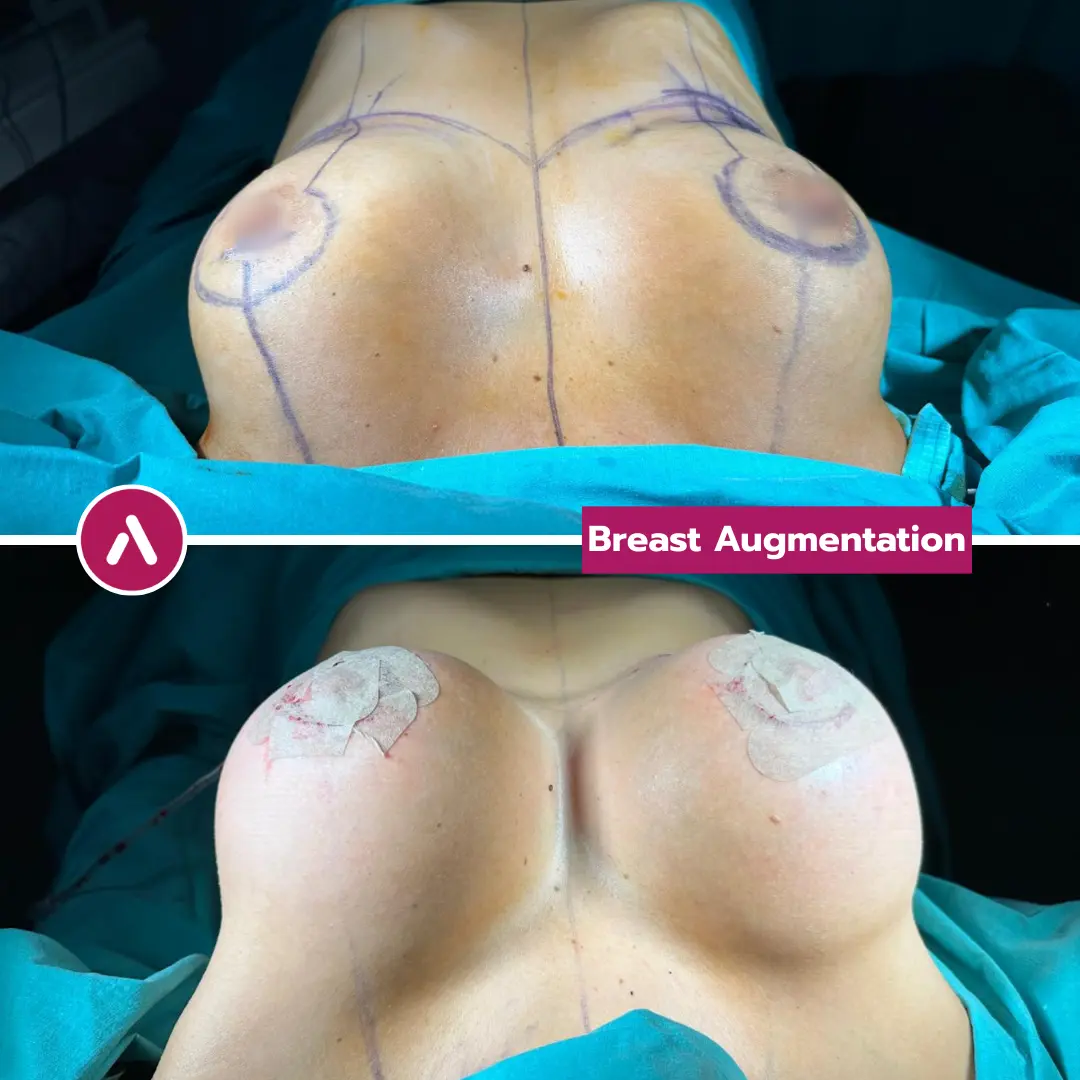
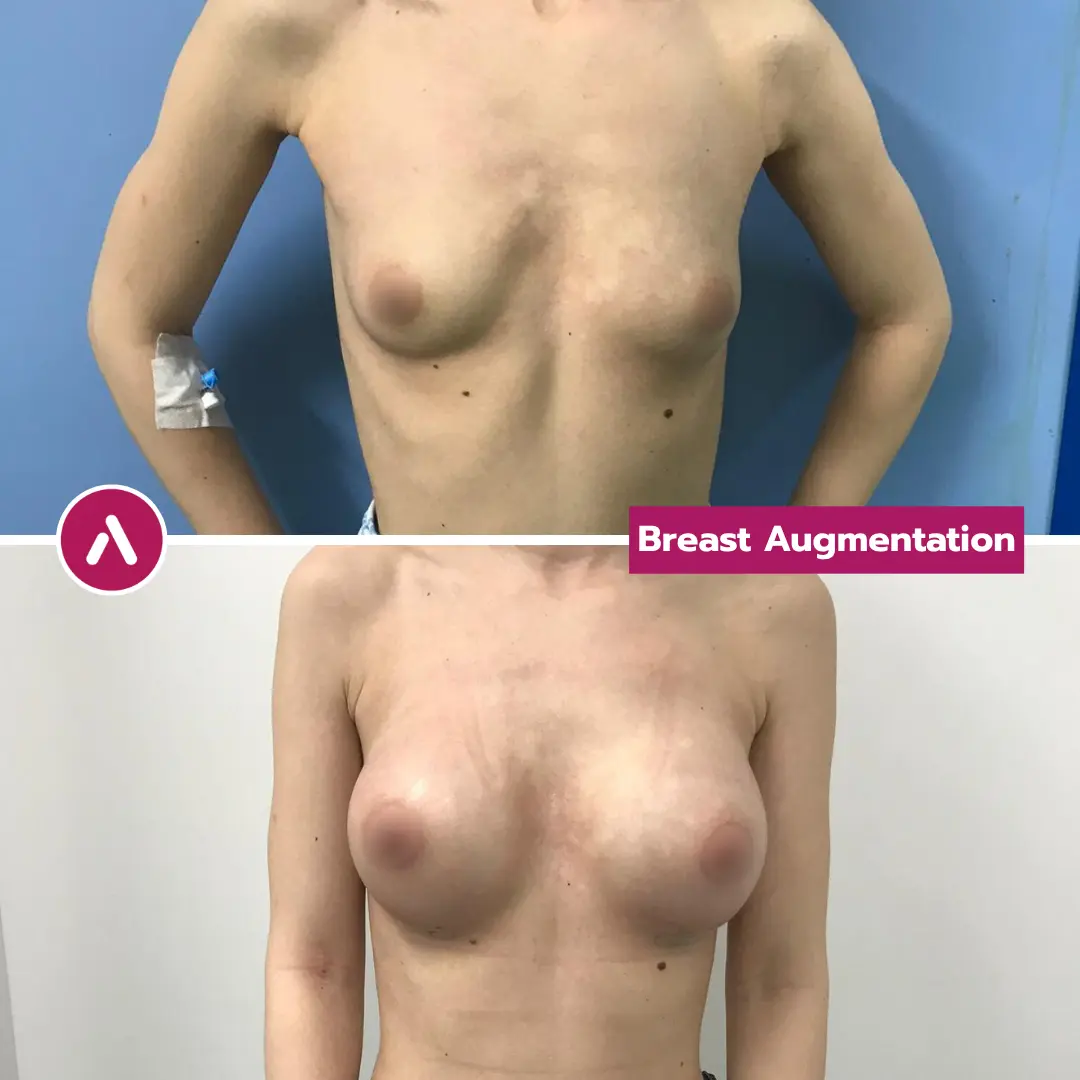
This guide is written for the patient who is trying not to panic, but also does not want to miss something important. You will learn how normal healing usually behaves, what breast lift necrosis can look like, which symptoms should prompt a call to your surgical team, and why early assessment matters. It cannot diagnose your wound from a description or photo. If something looks worse day by day, contact your surgeon or seek urgent medical care.
Surgeon-led safety note: Healthy healing generally moves in the right direction. Ischemic tissue usually declares itself by getting darker, cooler, more painful, more open, or more odorous over time. The safest response is not panic — it is early communication with your surgical team.
Table of Contents
Necrosis vs Normal Healing After a Breast Lift
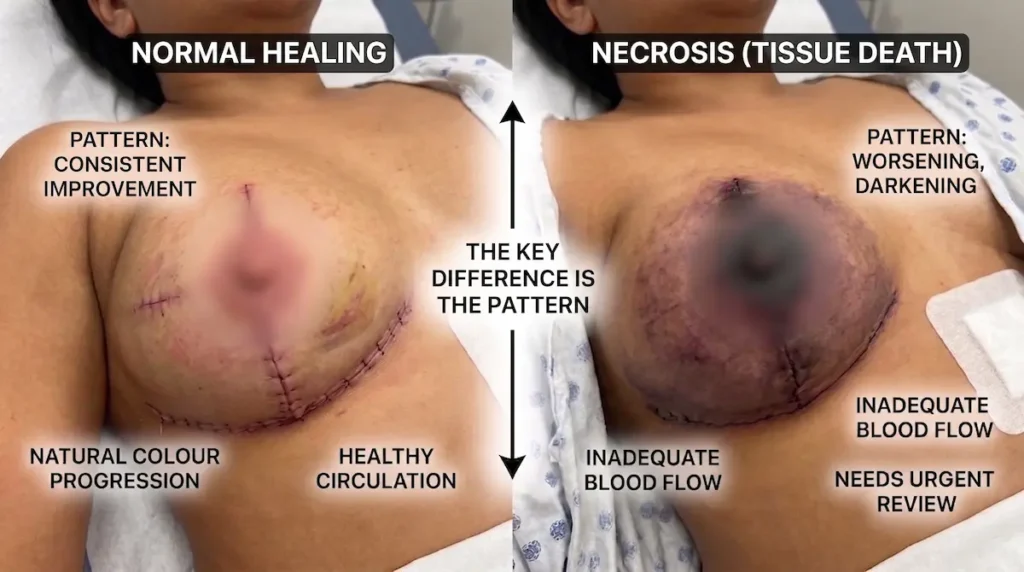
The key difference between necrosis and normal healing is not one single colour on one single day. It is the pattern. Normal healing usually changes, softens, and improves. Necrosis means tissue has lost enough blood supply that it may not survive, so the affected area often becomes darker, more fragile, and more concerning rather than steadily better.
What necrosis means in breast lift recovery
Necrosis means tissue death caused by inadequate blood flow. In breast lift surgery, the area of greatest concern is often the nipple-areola complex, sometimes called the NAC, because it must keep a reliable blood supply while being lifted and reshaped. Skin along the incision line can also be affected if tension is high or circulation is compromised.
Peer-reviewed surgical literature describes nipple-areola complex ischemia as a complication that can occur after breast reduction or mastopexy, and early recognition is central to management. A PubMed review on how nipple ischemia after breast lift and reduction surgery is managed explains that the problem begins with impaired blood flow before tissue loss becomes obvious.
That distinction matters. Ischemia can sometimes be reversible when identified early. Established necrosis is more serious and may require wound care, delayed healing, scar management, or reconstructive steps later. This is why a “wait and see for weeks” approach is unsafe when the colour change is getting worse.
Why the nipple and areola need careful monitoring
During a breast lift, the nipple is not simply moved like a sticker. It remains attached to breast tissue through a carefully planned blood supply, often called a pedicle. The surgical plan is designed to protect that circulation while lifting the nipple into a more balanced position.
Because the nipple and areola depend on small blood vessels, they are more sensitive to swelling, tension, smoking-related vessel narrowing, diabetes-related circulation issues, and very large lifts. Most patients heal without necrosis. Still, this is the one complication where quick reporting can change the outcome.
How rare is breast lift necrosis?
Breast lift necrosis is considered uncommon, but “rare” should not be used as a reason to ignore warning signs. The right way to think about it is simple: most colour changes are normal bruising, but darkening that progresses, tissue that looks dusky or black, or an incision that opens with odour or discharge deserves prompt review.
For a Canadian patient, this means having clear post-op instructions before flying home, knowing who reviews your photos, and understanding when to escalate to local care. AKM’s follow-up model includes virtual check-ins after surgery, but urgent warning signs should never wait for a routine appointment.
What Normal Healing Looks Like
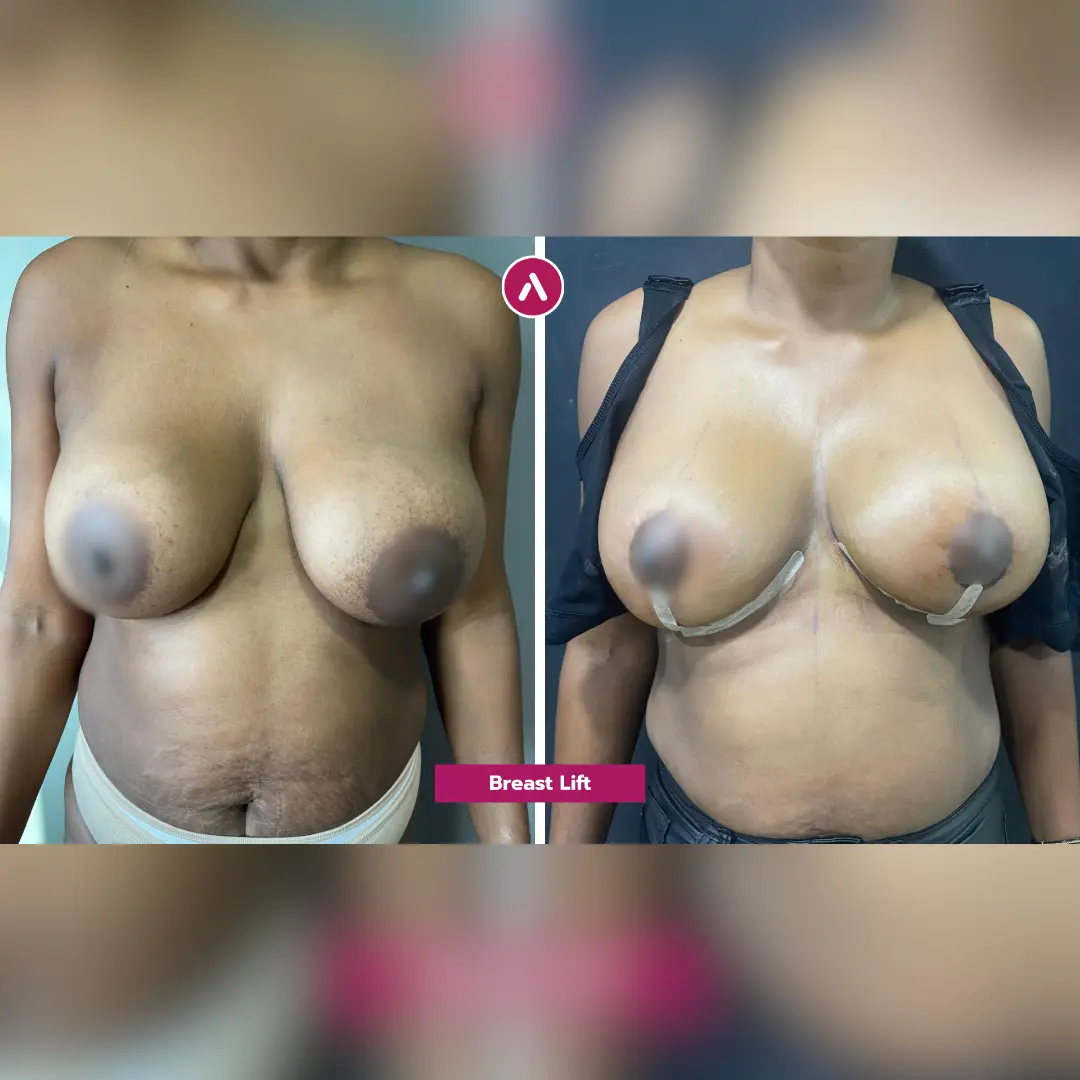
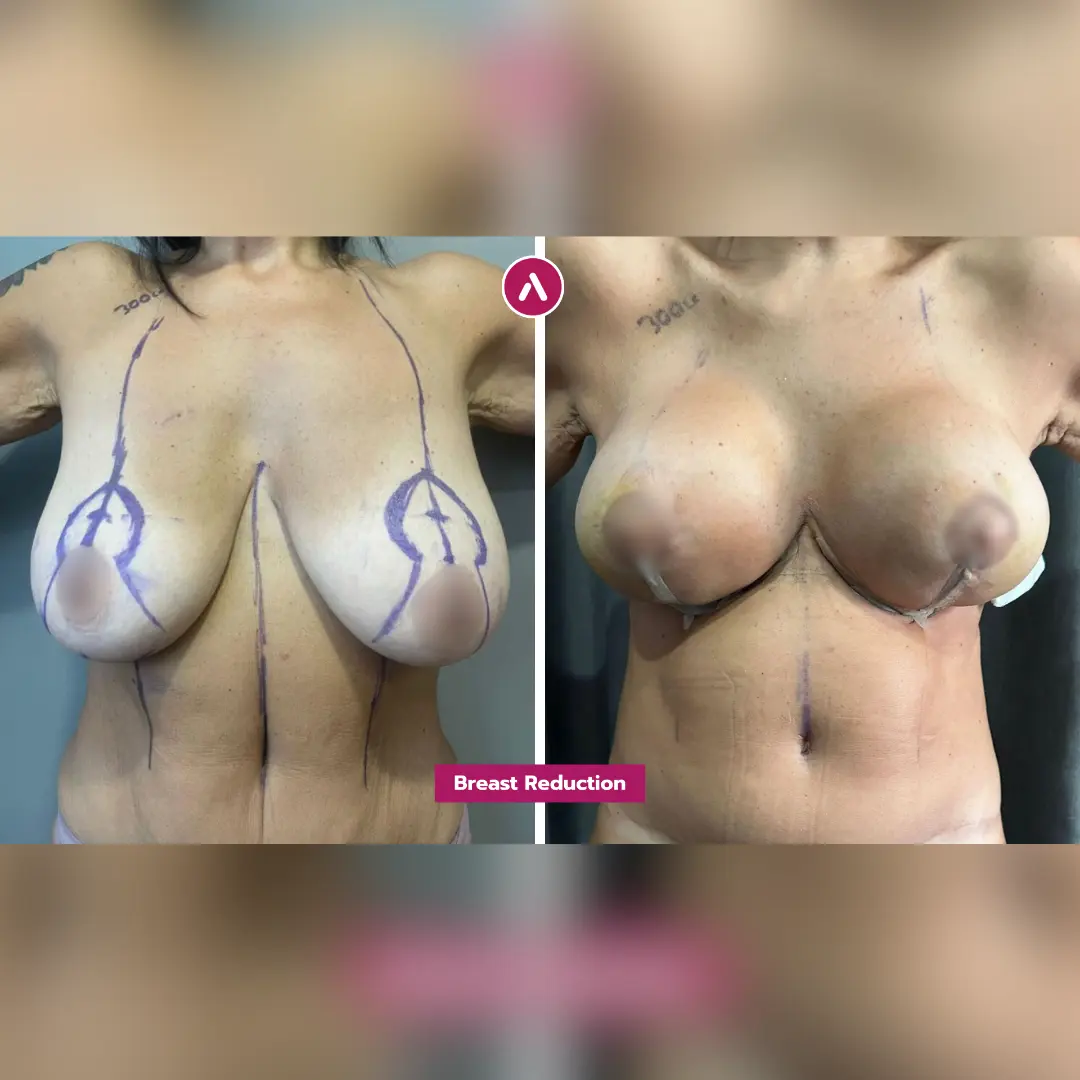
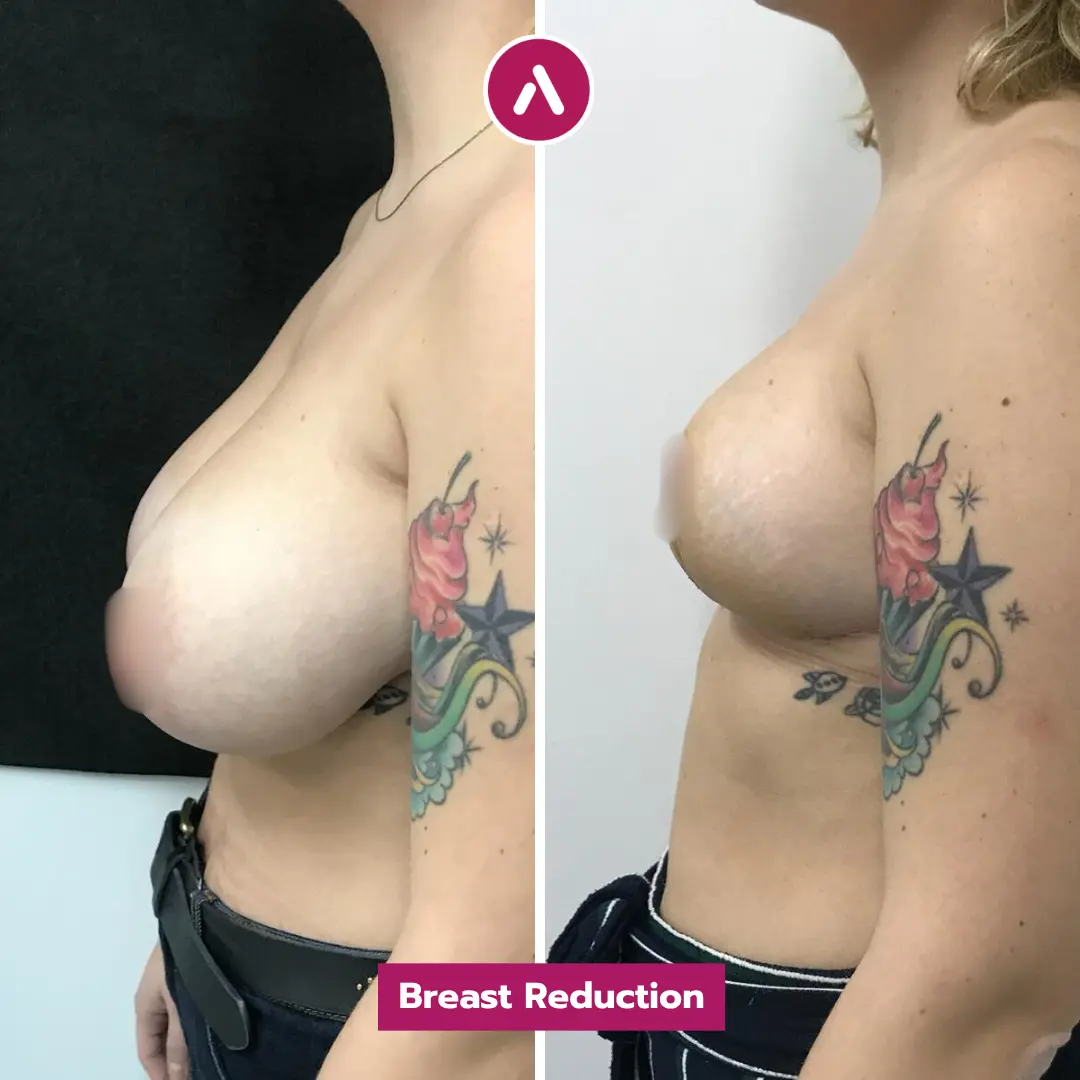
Normal breast lift healing is not pretty in the first days. Bruising can look dramatic. Swelling can make the breasts feel tight. Incisions may look pink, raised, or slightly uneven. The important point is that normal healing should gradually become calmer, not darker, smellier, hotter, or more painful.
Bruising, swelling, and redness should improve over time
Bruising after a breast lift may appear purple, red, yellow, green, or brown as the body breaks down old blood under the skin. This colour shift can be unsettling, but it usually follows a fading pattern. Swelling is also expected, especially around the lower breast and incision lines. Mild redness near a fresh incision can be normal when it stays limited and improves.
What is reassuring? The area feels a little better each day. The colour becomes lighter. The breast feels warm like the rest of the body, not unusually hot. The incision edges stay closed. Discomfort responds to the recovery plan your surgeon provided.
What is less reassuring? The colour becomes darker and more fixed. The skin looks dusky, grey, or black. Pain gets worse after initially improving. The incision opens. There is a new odour, thick drainage, or spreading redness. Those are not signs to “sleep on.”
Normal colour and sensation changes
Temporary nipple sensitivity changes are common after breast surgery. Some patients feel numbness. Others feel hypersensitivity, tingling, or electric-like zaps as nerves recover. These sensations can fluctuate during healing and do not automatically mean necrosis.
Colour can also vary. The areola may look slightly darker, lighter, or more swollen than expected in the early period. Mild asymmetry between sides can happen because each breast swells differently. The safer question is not “Does it look exactly normal today?” but “Is it improving, stable, or worsening?”
The normal healing arc
Most healthy healing follows a predictable arc: intense early swelling and bruising, then gradual softening, then scar maturation. The first week is often the most visually stressful. The second and third weeks usually bring clearer signs that the tissue is settling. Scar colour and firmness continue to change for months.
For deeper detail on what typical incision healing looks like, read the normal breast lift healing timeline. This article stays focused on necrosis warning signs, not scar maturation in general.
Warning Signs to Watch For
Warning signs after a breast lift are not about being nervous over every bruise. They are about changes that suggest the tissue may not be getting enough blood, may be breaking down, or may be infected. The most important pattern is worsening: colour that becomes darker, pain that escalates, skin that opens, or drainage that develops an odour.
Skin or nipple turning dark, blue, grey, or black
Darkening is the warning sign most patients search for first. A bruise can look purple, blue, green, yellow, or brown as it fades. Necrosis is different. The tissue may look dusky, grey, deep blue, purple-black, or black. It may also look leathery, dry, blistered, or unusually fragile.
The concern is stronger when the dark area is on the nipple, areola, T-junction, or incision edge and appears to be spreading. One small mark that your surgeon has already reviewed is different from a patch that is clearly getting darker from morning to evening. Take clear photos in the same lighting and send them to your surgical team if you are unsure.
A recent PubMed study on clinical data on compromised nipple perfusion describes compromised NAC perfusion after reduction mammaplasty or mastopexy as uncommon but potentially serious. The practical takeaway for patients is simple: early colour changes should be reviewed early, not after the tissue has clearly deteriorated.
Worsening instead of improving
Healthy recovery can be uncomfortable, but the direction should slowly improve. Swelling should become easier to tolerate. Bruising should begin to fade. Incision discomfort should gradually settle. Necrosis or infection often moves the other way: the area looks angrier, darker, wetter, more painful, or more open.
This is why the phrase “wait for it to heal” can be unsafe when the signs are moving in the wrong direction. You do not need to diagnose necrosis yourself. You need to notice the trend and ask for professional assessment.
Odour, discharge, opening, or spreading redness
A clean incision may have a small amount of light spotting or clear fluid early on, depending on your surgeon’s instructions. Thick yellow or green drainage, a strong odour, rapidly spreading redness, increasing heat, fever, chills, or an incision that opens are different. These are warning signs that need medical review.
Open areas can happen for reasons other than necrosis, including tension at the incision or delayed wound healing. They still deserve prompt contact with your surgical team, because early wound care can reduce the chance of a small problem becoming a larger one.
| What you see or feel | More consistent with normal healing | Warning sign | What to do |
|---|---|---|---|
| Colour | Bruising that shifts from purple to yellow, green, or brown and gradually fades | Skin or nipple becoming dusky, grey, blue-black, purple-black, or black | Send photos to your surgeon promptly; seek urgent care if advised or if symptoms are severe |
| Trend | Looks slightly better each day, even if swelling remains | Looks worse day by day or spreads to neighbouring skin | Do not wait for a routine follow-up; contact the surgical team |
| Pain | Expected soreness that improves with the recovery plan | Increasing pain, pressure, burning, or tenderness after initial improvement | Report the change, especially if paired with colour change or heat |
| Drainage | Minimal spotting or clear fluid if your surgeon said this can happen | Thick discharge, pus, bleeding that increases, or fluid with a strong odour | Contact your surgeon and follow wound-care instructions exactly |
| Incision | Closed edges with mild redness or tightness | Opening, black edges, blistering, or exposed deeper tissue | Cover as instructed and seek medical guidance urgently |
| Whole-body symptoms | Tiredness without fever in the first recovery days | Fever, chills, feeling acutely unwell, or spreading red streaks | Seek urgent medical care |
When dark skin is not automatically necrosis
Not every dark area is dead tissue. Bruising can look dramatic, especially on lighter skin tones where purple and yellow contrast strongly, or on deeper skin tones where bruising may appear brown, grey, or less obvious at first. Surgical marker residue, dried blood, tape irritation, and scabbing can also confuse the picture.
The safest approach is pattern-based. If the colour is stable or fading, the skin is warm, the incision is closed, and discomfort is improving, your surgeon may simply monitor it. If the colour deepens, spreads, opens, smells, or becomes more painful, it should be assessed.
Why Necrosis Happens & Who’s at Higher Risk
Necrosis is usually a blood-supply problem. After a breast lift, the skin and nipple-areola complex must survive through the vessels preserved during surgical planning. Anything that reduces circulation, adds tension, or slows healing can raise the risk. Many risk factors are manageable, which is why pre-op screening and honest disclosure matter.
Blood supply, pedicle planning, and tension
A breast lift reshapes the breast envelope and repositions the nipple. To do that safely, the surgeon protects the tissue bridge that carries blood to the nipple-areola complex. If that circulation is stretched, compressed, kinked, or already weakened, perfusion can become compromised.
Tension also matters. Very tight closure can reduce microcirculation at the skin edge. That is why careful incision planning, gentle tissue handling, and realistic lifting goals are safety decisions, not just cosmetic choices. In some patients, a more conservative lift is safer than forcing a dramatic shape change in one operation.
Patients comparing procedure options sometimes ask whether an implant-free lift changes risk. The answer depends on anatomy, skin quality, degree of sagging, and surgical design. For a broader explanation of this approach, see AKM’s overview of a breast lift without implants.
Smoking, nicotine, diabetes, and circulation
Nicotine is one of the most important modifiable risks because it narrows blood vessels and can impair wound healing. That includes cigarettes, vaping, nicotine patches, nicotine gum, and other nicotine products unless your surgeon gives different instructions. Patients often underestimate vaping because it feels less “surgical” than smoking. The blood vessels do not make that distinction.
Diabetes can also affect healing, especially if blood sugar is not well controlled. Circulation problems, clotting disorders, autoimmune disease, certain medications, and previous breast surgery may also influence risk. This does not mean every patient with a risk factor will have a complication. It means the plan should be individualized before surgery.
Major lifts, weight loss, and tissue quality
Larger lifts can place more demand on blood supply because more skin is reshaped and the nipple may need to move farther. Patients who have lost significant weight may also have thinner skin, weaker tissue support, and more extensive sagging. These patients can still be good candidates, but they need a plan that respects circulation and tension.
This is one reason post-weight-loss mastopexy should be approached carefully. If you are researching this situation, read more about breast lifts after major weight loss. The risk conversation should include scar position, tissue quality, nipple movement, and whether one-stage surgery is appropriate.
Technique and patient factors work together
Necrosis is rarely about one factor in isolation. A patient may have excellent health but need a large lift. Another may need a moderate lift but have nicotine exposure or diabetes. Another may have had previous breast surgery that changed the blood supply. The safest plan comes from combining surgical judgement with a candid health history.
This is where a board-certified plastic surgery team matters, along with documented post-op support and clear escalation steps.
It also helps to separate real safety planning from emotional reassurance. A consultation should not simply say “don’t worry.” It should explain your anatomy, your lift pattern, your risk factors, and your aftercare plan. That kind of expectation-setting is part of avoiding disappointment after breast surgery; for a related decision framework, see managing expectations around breast surgery.
Board-certified plastic surgery team note: Blood supply is planned before the incision is ever made. The safest breast lift is not the most aggressive lift possible; it is the lift that improves shape while preserving circulation, minimizing tension, and giving the patient clear instructions for early reporting.

When and How to Contact Your Surgeon
If you are worried about breast lift necrosis, the safest next step is not to search more photos online. It is to contact your surgical team with clear information. Early assessment can help your surgeon decide whether the area is normal bruising, temporary compromised perfusion, delayed wound healing, infection, or tissue that needs active care.
Do not wait if the tissue is getting darker
Contact your surgeon promptly if the nipple, areola, T-junction, or incision edge becomes progressively darker, blue-grey, purple-black, or black. The same applies if the area becomes cooler than the surrounding skin, develops blistering, opens, or looks leathery.
Use simple documentation. Take photos in natural light, from the same angle, without filters. Include the date and time. If one breast looks different from the other, photograph both for comparison. Do not apply new creams, ointments, antiseptics, heat, or pressure unless your surgeon has instructed you to do so.
What your surgeon may check
Your surgeon may ask about colour change, pain, temperature, drainage, odour, smoking or nicotine exposure, diabetes control, medication use, bra pressure, and whether the change started after increased activity. They may request photos, a video call, or an in-person assessment.
Depending on the stage, clinical management may include close monitoring, relieving tension, changing dressings, treating infection, supporting circulation, or arranging wound care. Published surgical literature on how nipple ischemia after a breast lift is managed emphasizes that timing matters because early ischemia and established necrosis are not the same clinical situation.
If you are back in Canada and your surgeon advises urgent local assessment, follow that advice. If you have fever, chills, rapidly spreading redness, severe worsening pain, significant bleeding, or you feel acutely unwell, seek urgent medical care rather than waiting for a scheduled virtual follow-up.
Why post-op access matters for travelling patients
International surgery requires a clear aftercare plan. Before leaving Istanbul, you should know which symptoms are expected, which photos to send, how quickly your team reviews concerns, and when local Canadian care is appropriate. The goal is not to make you anxious. It is to remove uncertainty.
At AKM Clinic, breast surgery is performed in Istanbul, with post-operative guidance and scheduled virtual follow-ups. The clinic’s broader patient journey includes 1-, 3-, 6-, and 12-month virtual check-ins, but urgent warning signs should be reported immediately rather than saved for routine review.
Cost questions belong on the cost page, not in a necrosis emergency
If you are still in the research stage, it is reasonable to compare planning, aftercare, and total trip value. This article is not a pricing guide, though. When the concern is tissue colour, blood supply, or wound breakdown, medical review comes first. For budgeting only, use AKM’s dedicated guide to breast lift cost in CAD.
Frequently Asked Questions: Breast Lift Necrosis
These answers are designed to help you understand patterns, not diagnose your own breast lift wound. If your symptoms are changing quickly or you are worried about necrosis, contact your surgeon directly.
What are the warning signs of necrosis after a breast lift?
What does necrosis look like after a breast lift?
Is dark skin after a breast lift normal?
Can nipple necrosis be reversed?
How soon does necrosis appear after a breast lift?
When should I call my surgeon?
Key Takeaway: Watch the Direction of Healing
Breast lift necrosis is not common, but it is not something to ignore. Normal healing usually looks better with time. Necrosis or serious wound trouble tends to look worse: darker colour, more pain, more opening, more odour, more drainage, or more spreading redness. That direction of change is the signal.
If you are researching breast lift safety from Canada, focus less on reassurance and more on systems: careful candidate screening, nicotine rules, blood-supply-conscious planning, a board-certified plastic surgery team, and clear post-op access after you travel. Those are the details that protect you before and after surgery.
Medical disclaimer: This article is for general education only and is not a diagnosis, treatment plan, or substitute for medical care. Breast or nipple colour changes after surgery should be assessed by a qualified medical professional. If you notice blackening tissue, worsening pain, pus, fever, spreading redness, wound opening, or you feel acutely unwell, contact your surgeon immediately or seek urgent medical care.
If you are considering a breast lift, ask AKM Clinic how your anatomy, lift pattern, nipple blood supply, nicotine status, and post-op follow-up plan would be reviewed before surgery.
Related Procedures




Ready to Begin Your Journey?
Join the more than 2,000 patients who have trusted Dr. Akif Mehmetoğlu and the AKM Clinic team. Your journey begins with an informative, no-obligation conversation. Contact us today from across Canada to schedule your complimentary virtual consultation.
#1: Receive Your Personalized Quote
Start with a complimentary, no-obligation virtual consultation. Share your photos, and our surgical team will provide a fully personalized treatment plan and a transparent, all-inclusive pricing package quoted in Canadian dollars (CAD). There are no hidden fees.
#2: Secure Your Procedure Date
Once you are ready to proceed, our dedicated English-speaking patient coordinators will help you secure your procedure date. We will manage your logistical bookings in Istanbul, including your five-star hotel and private airport transfers.
#3: Arrive in Istanbul & Meet Your Surgeon
Arrive at Istanbul Airport (IST), where you will be greeted by your private driver. Settle into your hotel before your comprehensive in-person consultation. You will meet your specialist surgeon to finalize the details of your procedure and ensure your goals are aligned for a natural, subtle result.