


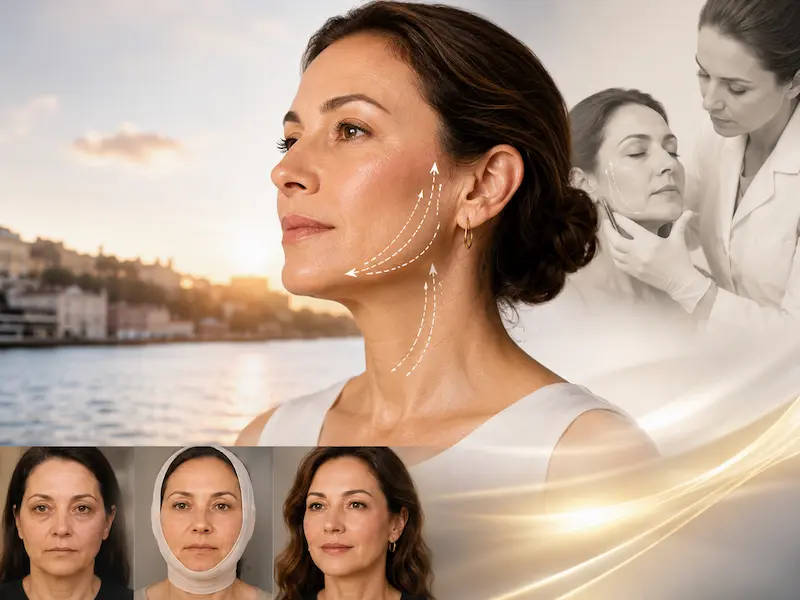
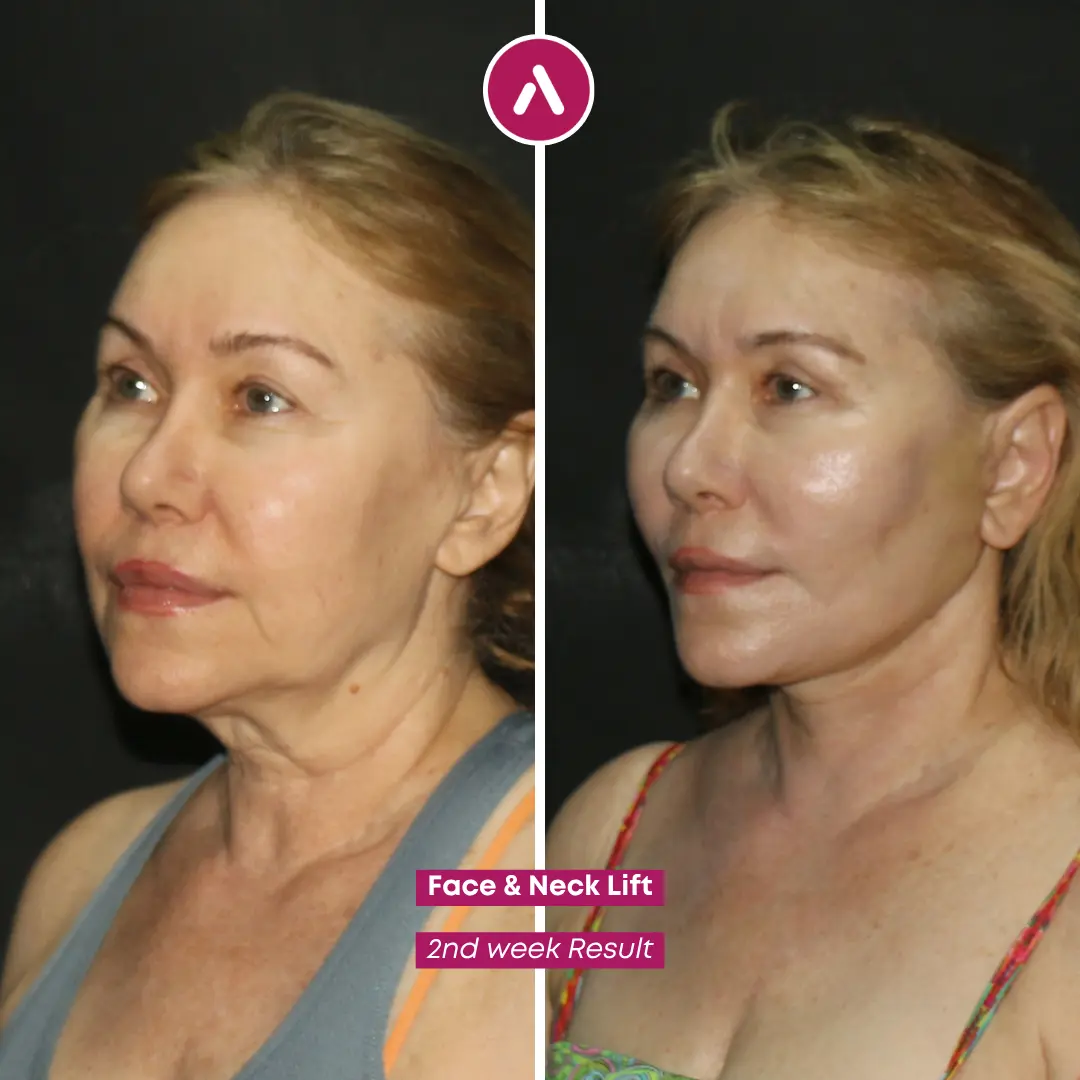
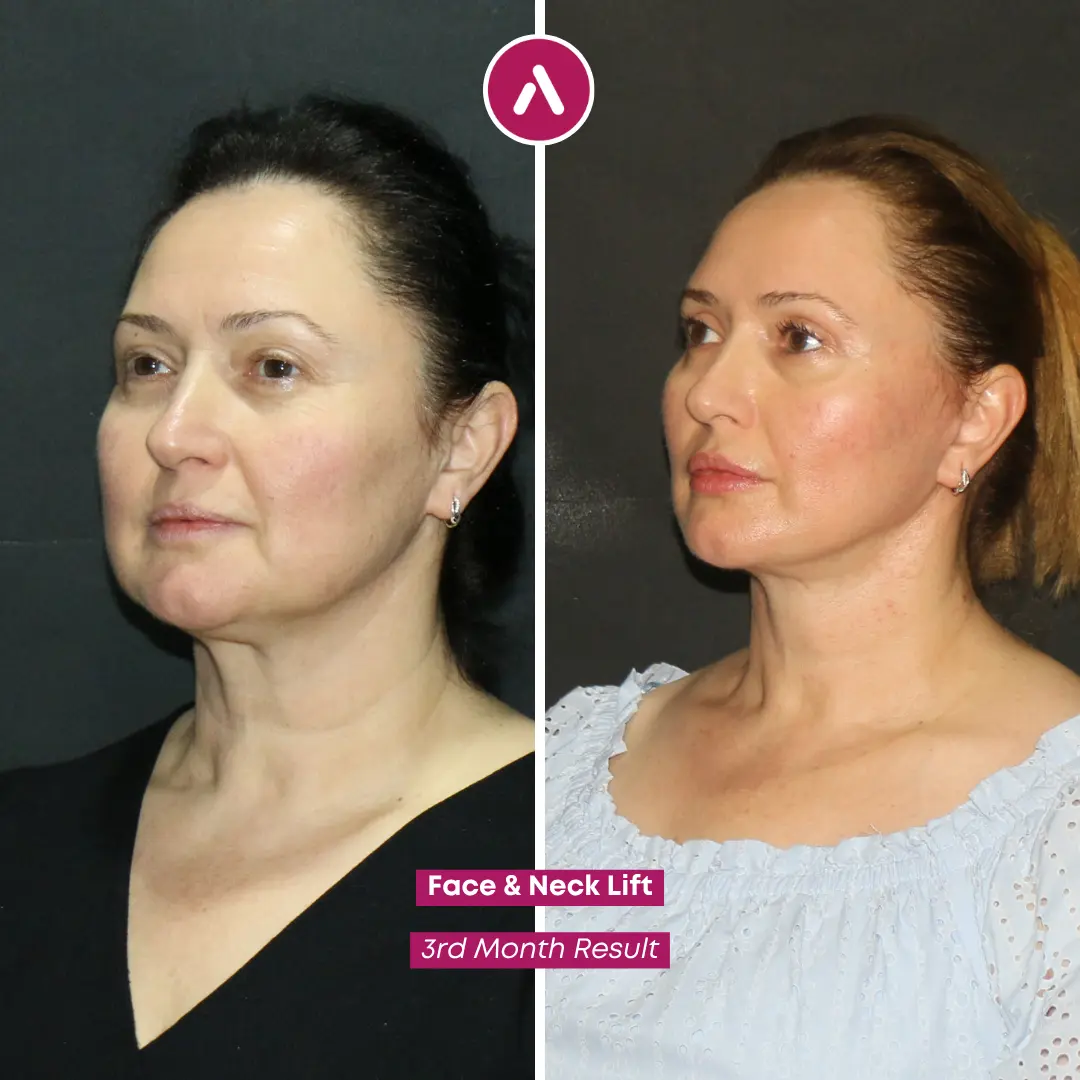
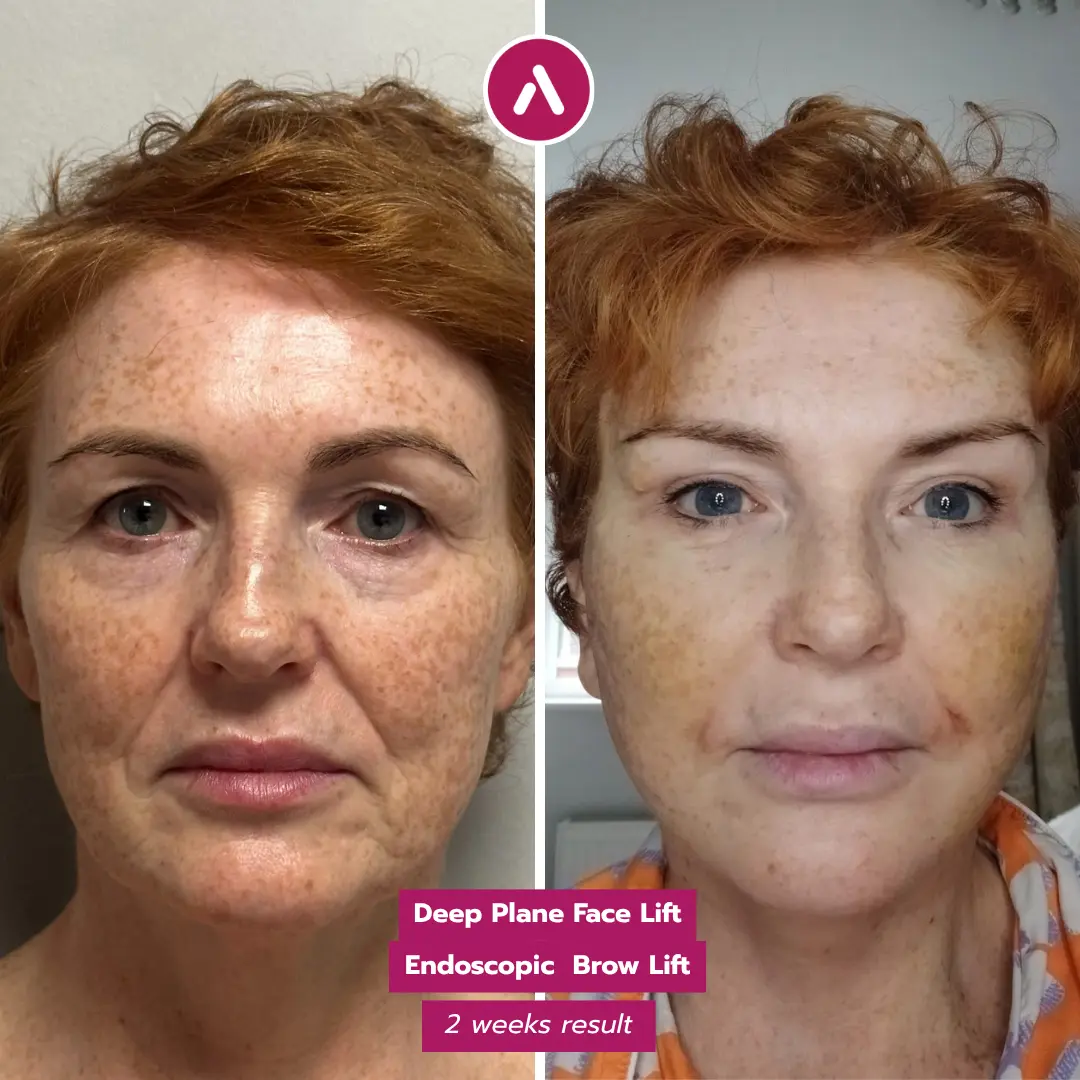
Canadian women and men in their 30s and early 40s noticing early jawline softening, mild jowls, or nasolabial fold deepening often ask a very specific question: am I too young for a facelift, but past the point where injectables can give me the result I want? A mini facelift answers that early-aging gap. At AKM Clinic in Istanbul, we offer both standard short-scar mini facelift and mini deep plane variants for patients who want a natural, lower-face refresh with a shorter recovery window than a full facelift. This guide explains how the procedure works, who it suits best, what recovery looks like for Canadian travellers, and how to compare Istanbul with private options in Toronto, Vancouver, Calgary, and Montreal.
Table of Contents
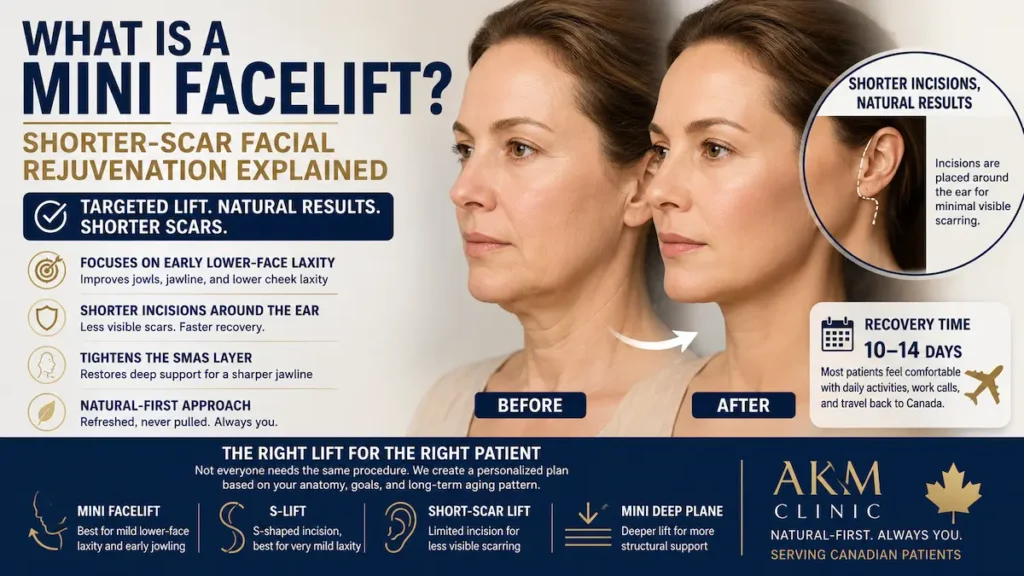
What Is a Mini Facelift? Shorter-Scar Facial Rejuvenation Explained
A mini facelift is not a full-face procedure. It belongs inside the broader facelift surgery family, but it focuses on early lower-face laxity rather than advanced facial aging. If your concern includes heavier neck laxity, mid-face descent, or deeper jowls, we may compare mini facelift with deep plane facelift during consultation.
The procedure is not a “small version” of every facelift. It is a targeted lower-face operation for patients whose main concern is early jowling, mild jawline blur, and skin laxity around the lower cheek. It does not fully correct a heavy neck, advanced mid-face descent, or deep platysmal banding. That distinction matters because the best mini facelift results come from choosing the right patient, not simply choosing a smaller operation.
At AKM Clinic, our Natural-First approach means we do not chase a pulled or over-tightened result. We use the lightest effective surgical plan that can restore structure while preserving your facial identity. For many Canadian patients, that means a short-scar mini facelift. For others, it means stepping up to a mini deep plane or full deep plane facelift when the anatomy requires more lift.
How a Mini Facelift Works
A mini facelift focuses on the lower third of the face. Through shorter incisions placed around the ear, our surgeons access the deeper support layer of the face, known as the SMAS. This layer behaves like an internal hammock for the lower cheek and jawline. When it weakens, the skin and soft tissue above it begin to sag.
In a standard mini facelift, the SMAS is tightened through plication, which means it is folded and secured with sutures rather than widely dissected. This helps sharpen the jawline without relying on skin tension alone. Skin is then gently redraped, and excess skin is removed in a conservative pattern.
Mini Facelift Medical Terminology
You may see a mini facelift described as a short-scar facelift, S-lift, lower face lift, limited-incision facelift, or short-scar rhytidectomy. These terms overlap, but they are not always identical. The incision pattern, depth of tissue release, and amount of SMAS tightening can vary from surgeon to surgeon.
This is why consultation matters. A true mini facelift should not be reduced to a marketing name. During your assessment, we evaluate skin elasticity, jowl position, cheek descent, neck laxity, scar tolerance, and your long-term aging pattern. The goal is to match the surgical method to your anatomy, not force every patient into the same labelled technique.
S-Lift, Short-Scar Lift, and Mini Deep Plane: What Is the Difference?
An S-lift uses an S-shaped incision in front of the ear and is usually best for mild lower-face laxity. A short-scar facelift uses a limited incision pattern designed to avoid long scars behind the ear or into the posterior hairline. A mini deep plane facelift goes deeper, releasing selected retaining ligaments to reposition tissue with less surface tension.
The mini deep plane option is useful for patients who are still in the early-aging category but need more structural lift than a skin-and-SMAS plication can provide. It is not necessary for everyone. In our consultation process, we explain whether your concern is primarily skin laxity, SMAS laxity, ligament descent, or neck aging.
Why Canadians Choose Mini Facelift Earlier
Many Canadian patients begin researching mini facelift in their 30s or around age 40 because they want prevention-minded rejuvenation rather than a dramatic change later. They have often tried injectables, radiofrequency, threads, or skin tightening devices and realized those options cannot restore a softening jawline permanently.
For the right candidate, a mini facelift can create a refreshed look while keeping recovery realistic. Most patients plan for 10-14 days before they feel comfortable with work calls, social plans, or the return flight to Canada. The key is honest selection. If your neck or mid-face needs more correction, we will tell you clearly before you travel.
Benefits of Mini Facelift
A mini facelift is designed for patients who want visible lower-face improvement without the recovery burden of a full facelift. It works best when facial aging is still moderate: mild jowls, early jawline laxity, and soft tissue descent that no longer responds well to fillers or energy-based treatments. For Canadian patients balancing work, travel, and family responsibilities, the shorter healing window is often a major factor. The benefit is not only a smaller operation; it is a more precise match for the right stage of aging.
At our Istanbul clinic, we use a Natural-First approach. That means we plan the smallest procedure capable of producing a meaningful structural result. We do not recommend a mini facelift if your anatomy would be better served by a full facelift, deep plane facelift, or neck lift. Good results begin with honest selection.
Shorter Recovery Than a Full Facelift
Mini facelift recovery is usually shorter than full facelift recovery because the dissection area is more limited. Most patients feel socially presentable within 10-14 days, although bruising, swelling, and incision pinkness can continue to improve over several weeks. This timeline makes the procedure attractive for Canadians who cannot step away from work or family life for a full month.
The early recovery period still requires planning. You will need to sleep elevated, wear your compression garment as instructed, avoid strenuous activity, and attend your post-operative checks before flying home. A shorter recovery is not the same as no recovery. It simply means the acute phase is usually easier to manage than a more extensive facial lift.
Shorter Scars Around the Ear
A mini facelift uses a more limited incision pattern than a traditional full facelift. The scar typically follows the natural creases around the ear, where it can be concealed as healing progresses. In many candidates, the incision does not need to extend far behind the ear or into the posterior hairline.
This matters to patients who wear their hair up, work in public-facing roles, or prefer not to explain a visible change. Scar quality depends on several factors: skin type, smoking status, tension on the closure, aftercare, and genetics. Our layered closure technique is designed to reduce tension on the skin so the scar can mature more predictably.
Sharper Jawline With Less Tissue Disruption
The main visual benefit of a mini facelift is lower-face definition. By tightening the SMAS layer and redraping loose skin, we can soften early jowls and restore a cleaner transition from cheek to jawline. This is often the change patients notice first in photos, video calls, and side-profile views.
A mini facelift does not create the same degree of neck correction as a full face and neck lift. It also does not fully reposition a descended mid-face. For early jawline laxity, however, it can offer a balanced improvement without making the face look surgically altered.
Less Anesthesia Time and a Faster Return to Routine
A mini facelift usually takes less operating time than a full facelift because the treatment area is narrower. For many patients, this means a lighter anesthesia plan, a shorter immediate recovery period, and a faster return to walking, eating, and communicating comfortably. This can be especially important for patients travelling from Canada who need to feel steady before a long-haul flight home.
At AKM Clinic, mini facelift is commonly performed with local anesthesia and IV sedation, depending on your clinical plan. You remain comfortable while our surgical team works in the lower-face tissue plane. We also complete pre-operative testing before surgery to confirm that your anesthesia plan is appropriate for your health profile.
A Natural Result for Early Facial Aging
The best mini facelift result should look like a rested version of you. It should not change your expression, distort your smile, or create a tight lower face that does not match your eyes, neck, or overall age. Our philosophy is rejuvenation, not alteration.
This is why we avoid over-pulling the skin. Skin-only tension can make the face look flat or swept backward. A structural approach works differently. By supporting the deeper SMAS layer first, we can create a cleaner jawline while allowing the skin to sit more naturally over the face.
A Better Option Than Repeating Fillers for the Wrong Problem
Many patients arrive after several years of fillers, thread lifts, or energy-based skin tightening. These treatments can help volume loss or mild skin texture concerns, but they cannot reliably reposition sagging tissue. If the lower face has begun to descend, adding more filler may make the face look heavier rather than younger.
A mini facelift addresses the mechanical problem directly. It lifts and supports the tissue that has started to fall. Some patients still benefit from small-volume fat transfer or skin resurfacing later, but the foundation is different. We correct structure first, then refine surface and volume only when needed.
A Cost-Effective Entry Point Into Surgical Facial Rejuvenation
Canadian private clinics in Toronto, Vancouver, Calgary, and Montreal often price facial surgery in separate line items: surgeon fee, facility fee, anesthesia fee, medications, and follow-up visits. This can make the final estimate difficult to predict. Our all-inclusive clinical pathway is designed to reduce that uncertainty before you book your flight.
A mini facelift is not the right choice simply because it is smaller or more accessible. It must match your anatomy. For the right patient, however, it can offer a balanced lower-face improvement, a shorter recovery timeline, and transparent pricing in one coordinated Istanbul visit.
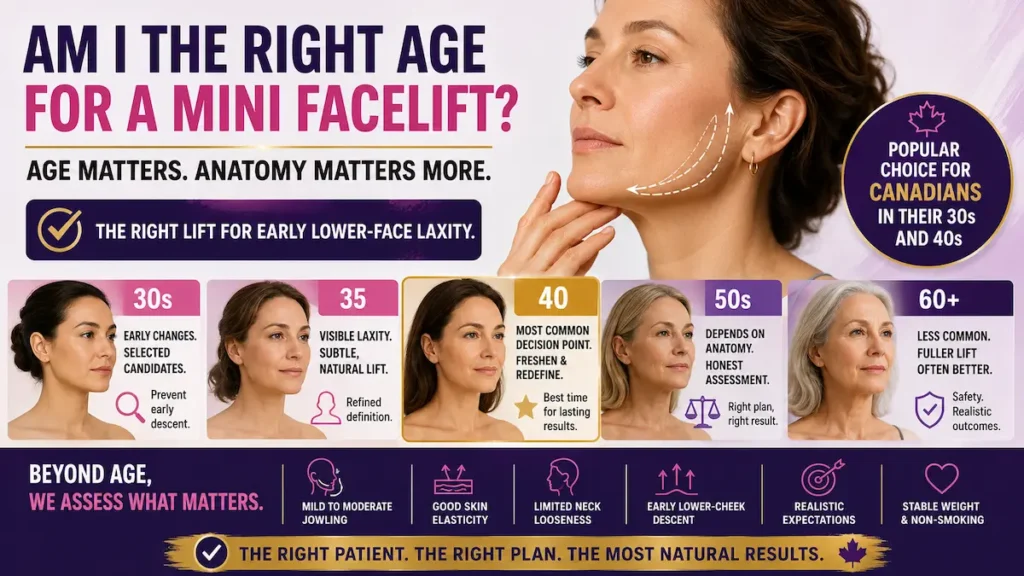
Age-Based Candidacy: Am I the Right Age for a Mini Facelift?
Age matters in mini facelift planning, but it is not the only factor. The best candidates usually have early lower-face laxity, mild jowls, good skin elasticity, and limited neck involvement. Many Canadian patients start researching a mini facelift in their 30s or around age 40 because they want to correct tissue descent before it becomes advanced.
A mini facelift is not automatically better because you are younger. It is also not automatically too small because you are older. We assess your anatomy, not just your birthday. The right question is: does your aging pattern match what a short-scar lower-face lift can realistically improve?
Mini Facelift in Your 30s
A mini facelift in your 30s is uncommon, but it can be appropriate for selected patients. These patients usually have early genetic jowling, weight-loss-related skin laxity, or premature lower-face descent that does not respond to fillers or skin tightening devices. Their neck is usually still firm.
We are conservative with patients in this age group. If your concern is mainly volume loss, skin texture, or mild facial heaviness from fillers, surgery may not be the first answer. We may recommend filler correction, fat transfer, laser resurfacing, or simply waiting until tissue laxity becomes more defined.
Mini Facelift at 35
Mini facelift at 35 is typically considered only when there is visible structural laxity. This may show as early marionette lines, lower-cheek heaviness, or a jawline that looks softer on video calls and side-profile photos. The goal is subtle correction, not dramatic lifting.
Patients at this age often worry that surgery will make them look “done.” That concern is valid. Our Natural-First planning keeps the lift limited, avoids skin over-tension, and preserves facial movement. If a surgical change would look disproportionate to the rest of your face, we will not recommend it.
Mini Facelift at 40
Age 40 is one of the most common decision points for mini facelift candidates. Skin elasticity is often still good, but the lower face may begin to show persistent jowls, early folds, or a loss of jawline clarity. At this stage, injectables can help volume but cannot reliably lift descended tissue.
For the right patient, a mini facelift at 40 can create a refreshed lower face while keeping the recovery period manageable. It may also delay the need for a larger facelift later. That said, it does not replace a full deep plane facelift when mid-face descent or neck laxity is already significant.
Mini Facelift in Your 50s
A mini facelift in your 50s depends heavily on anatomy. Some patients still have good skin quality and limited neck laxity, making them reasonable candidates for a short-scar lift. Others already need a full facelift, deep plane facelift, or neck lift to achieve a balanced result.
This is where honest diagnosis becomes essential. A mini facelift that is too small for the problem can leave the neck untreated, the mid-face unchanged, and the patient disappointed. If your aging pattern is more advanced, we will explain why a larger procedure may be more predictable.
Mini Facelift at 60+
A mini facelift at 60 or older is possible, but it is less common. Most patients in this age group have more advanced neck laxity, deeper jowls, and mid-face descent that need a full facelift or deep plane facelift for balanced improvement. A mini approach may under-correct the problem.
There are exceptions. A patient with excellent skin quality, limited sun damage, stable weight, and mild lower-face laxity may still benefit from a mini facelift. During your consultation, we compare your goals with what the shorter-scar technique can realistically achieve.
Beyond Age: What We Actually Assess
Your biological aging pattern matters more than your age alone. We evaluate the quality of your skin, the depth of your jowls, the strength of your jawline, and the amount of laxity under the chin. We also look at how your cheek tissue has shifted over time.
A good mini facelift candidate usually has:
- Mild to moderate jowling
- Good remaining skin elasticity
- Limited neck looseness
- Early lower-cheek descent
- Realistic expectations about subtle improvement
- A stable weight and non-smoking status
If your main concern is heavy neck banding, deep folds, or major mid-face descent, a mini facelift may not be enough. In that case, we may recommend a full facelift, deep plane facelift, or neck lift instead.
Lifestyle Factors That Affect Candidacy
Canadian patients often ask whether fitness level, smoking, sun exposure, or weight changes affect candidacy. They do. Smoking is one of the strongest risk factors for poor wound healing and visible scarring. Major weight changes can also reduce the durability of your result.
Sun exposure is another factor, especially for patients from outdoor-heavy lifestyles in British Columbia, Alberta, or cottage-country Ontario. If the skin has significant sun damage, a mini facelift can improve laxity but will not correct texture, pigmentation, or fine lines. We may discuss fractional laser, skin care, or LLLT-supported scar care as part of your plan.
When a Mini Facelift Is Not Recommended
We do not recommend a mini facelift when the expected improvement would be too limited. This includes patients with advanced neck laxity, severe jowls, significant platysmal bands, poor skin elasticity, or heavy mid-face descent. A smaller operation should not be used to avoid the correct operation.
Medical factors can also delay or prevent surgery. These include uncontrolled diabetes, blood-clotting disorders, active infection, recent major weight loss, high-risk smoking status, or unrealistic expectations. Your safety comes first. If you are not a candidate, we will explain why and discuss safer alternatives.
| Age / Stage | Typical Concern | Mini Facelift Fit | Possible Better Option |
|---|---|---|---|
| 30s | Early genetic jowling or weight-loss laxity | Selective candidate | Non-surgical correction, fat transfer, or waiting |
| 35-45 | Mild jowls and jawline softening | Strong candidate range | Mini deep plane if more structural support is needed |
| 50s | Moderate lower-face aging | Depends on skin and neck | Full facelift or neck lift |
| 60+ | Advanced jowls, neck laxity, mid-face descent | Less common | Deep plane facelift or face and neck lift |
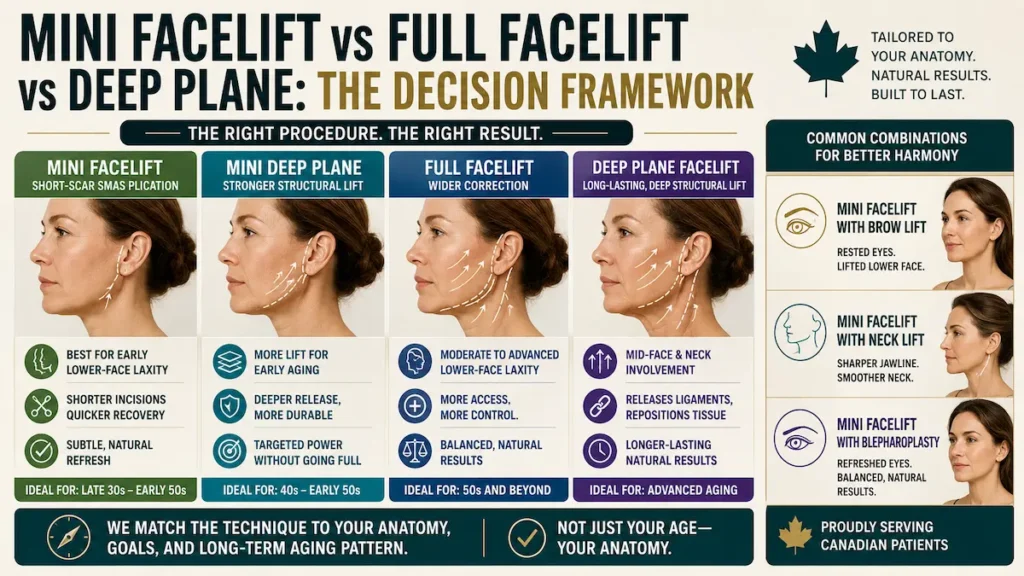
Mini Facelift vs Full Facelift vs Deep Plane: The Decision Framework
Choosing between a mini facelift, full facelift, and deep plane facelift is not a matter of choosing the “best” procedure in general. It is about matching the technique to the level of facial aging. A mini facelift can be excellent for early lower-face laxity, but it cannot deliver the same correction as a full deep plane facelift. During your consultation, we map the jawline, cheek position, neck laxity, skin quality, and scar tolerance before recommending a surgical path.
Canadian patients often arrive after searching for mini facelift vs full facelift or mini facelift vs facelift because they want clarity before committing to surgery abroad. We use a practical framework: treat the problem that actually exists today, while respecting how your face will age over the next 5-10 years. For general Canadian facial surgery context, the Canadian Society of Plastic Surgeons’ facelift overview is a useful external reference point, while our internal facelift in Turkey guide explains the broader facelift category.
The Four-Variant Decision Framework
There are four main options Canadian patients should understand. A standard mini facelift uses short incisions and SMAS plication to treat early jawline softening. A mini deep plane facelift uses a deeper release in selected patients who need more structural lift without moving into a full facial procedure.
A full facelift treats a wider lower-face area, often with more incision length and more correction. A deep plane facelift goes deeper still, releasing retaining ligaments and repositioning the facial soft tissue as a more integrated unit. This can produce longer-lasting, more natural structural rejuvenation for advanced aging patterns, especially when the mid-face and neck are involved.
Mini Facelift: Short-Scar SMAS Plication
A mini facelift is usually the right starting point when the concern is mild jowling, early marionette shadowing, or loss of jawline crispness. The incision is shorter, and the tissue dissection is more limited. The SMAS is tightened, then the skin is redraped without aggressive pulling.
This option suits patients who still have good skin elasticity and limited neck laxity. It is often chosen by patients in their late 30s, 40s, or early 50s who want a visible but subtle refresh. It is not ideal for heavy neck bands, deep folds, or major mid-face descent.
Mini Deep Plane Facelift: A Stronger Structural Option
A mini deep plane facelift is designed for patients who sit between a standard mini facelift and a full deep plane facelift. These patients may still be in the early-aging category, but their soft tissue needs more release than SMAS plication alone can provide. The goal is stronger support with a conservative treatment area.
At AKM Clinic, this hybrid option allows us to tailor the lift instead of forcing every patient into a standard mini or full facelift category. We may recommend it when the jawline needs more durable repositioning, but the neck and mid-face do not yet require a larger operation. The final decision depends on anatomy, not age alone.
Full Facelift: When a Mini Facelift Is Not Enough
A full facelift becomes more appropriate when lower-face laxity is moderate to advanced. This may include deeper jowls, loose skin extending behind the jawline, and facial descent that cannot be corrected through a limited incision. A full facelift gives the surgeon more access and more control over tissue repositioning.
Some patients choose a mini facelift because they hope for a smaller recovery, even when their anatomy needs more correction. We do not encourage that approach. A procedure that is too small may leave the neck, jawline, or lower cheek under-treated. If a full facelift will give you a more balanced and predictable result, we will explain that clearly before you make travel plans.
Deep Plane Facelift: When the Mid-Face and Neck Need More Support
A deep plane facelift is usually the stronger choice when facial aging involves more than the lower jawline. It releases selected retaining ligaments beneath the SMAS layer, allowing the cheek, jowl, and neck tissues to move in a more natural vertical direction. This is why deep plane results often last longer than mini facelift results.
For Canadians comparing a mini facelift vs deep plane facelift, the key question is not which procedure sounds more advanced. The question is which tissue layer has actually aged. If your concern includes mid-face descent, heavier folds, or neck laxity, a deep plane facelift may be more appropriate than a mini procedure.
Mini Facelift With Brow Lift
A mini facelift with brow lift may be considered when early lower-face aging appears alongside lateral brow descent. This combination can help patients who feel the lower face looks soft and the eyes look tired at the same time. It is especially relevant for patients who do not need a full facelift but want better balance between the upper and lower face.
We keep this combination conservative. A brow lift that is too aggressive can change expression, while a mini facelift that is too tight can create a mismatch with the eyes. Our planning focuses on facial harmony. The goal is a rested look, not a different identity.
Mini Facelift With Neck Lift
A mini facelift with neck lift can be useful when jawline softening is accompanied by early neck looseness. This is not the same as a full face and neck lift. It is a targeted combination for patients with mild upper-neck laxity, small submental fullness, or early banding.
If the neck is the main issue, a dedicated neck lift may be the better solution. If the face and neck have both aged significantly, we may recommend a full facelift or deep plane face and neck lift. The treatment plan should follow the anatomy, not the patient’s preferred recovery length.
Mini Facelift With Blepharoplasty
Mini facelift with blepharoplasty is one of the most common combinations for patients in their 40s. The mini facelift sharpens the lower face, while eyelid surgery addresses hooding, eyelid heaviness, or under-eye bags. Together, they can create a more complete refresh without moving into a full facelift.
This combination is especially helpful when the lower face and eyes have aged at different speeds. We assess eyelid skin, brow position, under-eye fat, and cheek support before deciding whether blepharoplasty should be included. In many cases, treating the eyes prevents the lower-face result from looking isolated.
| Procedure | Best For | Incision / Tissue Work | Typical Recovery | Typical Longevity |
|---|---|---|---|---|
| Mini Facelift | Mild jowls, early jawline softening | Short-scar incision, SMAS plication | 10-14 days | 5-7 years |
| Mini Deep Plane Facelift | Early aging with stronger tissue descent | Limited deep plane release | 10-14+ days | 7-10 years |
| Full Facelift | Moderate to advanced lower-face aging | Longer incision, wider tissue repositioning | 2-3 weeks | 8-12 years |
| Deep Plane Facelift | Mid-face descent, jowls, neck laxity | Retaining ligament release below SMAS | 2-3+ weeks | 10-15 years |
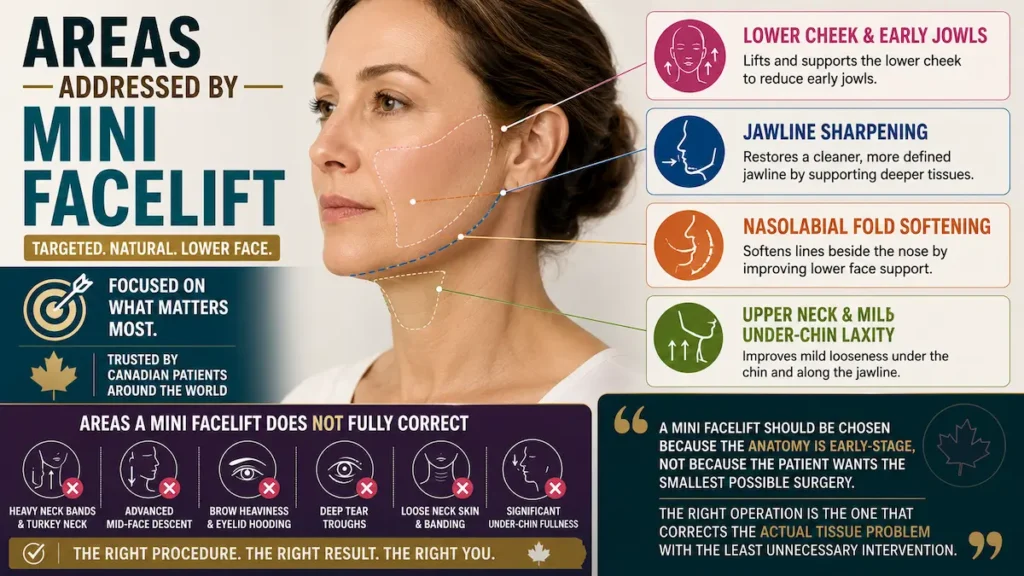
Areas Addressed by Mini Facelift
A mini facelift is a targeted lower-face procedure. It does not treat every sign of facial aging, and it should not be presented as a full-face solution. The best results come when the concern is concentrated around the lower cheek, early jowls, and jawline. We define those boundaries clearly during consultation so Canadian patients can choose the right procedure before travelling.
At AKM Clinic, we use the mini facelift to improve structure, not to over-tighten skin. If your concern extends into the neck, mid-face, eyelids, or brow, we may recommend a combined plan or a different surgical approach. Clear diagnosis prevents disappointment.
Lower Cheek and Early Jowls
The lower cheek is one of the first areas many patients notice on photos and video calls. Tissue begins to soften near the mouth corner and along the mandibular border. This can create early jowls, even when the rest of the face still looks youthful.
A mini facelift improves this area by tightening the deeper support layer and redraping the skin more smoothly. The goal is not to erase every line. It is to restore cleaner lower-face definition while keeping expression natural.
Jawline Sharpening
Jawline softening is the main reason many Canadians search for a mini facelift. Fillers can sometimes camouflage the jawline, but they cannot reposition descended tissue. In some patients, adding filler to a sagging lower face makes the area look heavier.
A mini facelift addresses the structural cause of early jawline blur. By supporting the SMAS layer, we can reduce mild jowling and create a more defined transition between the lower cheek and neck. This is usually the most visible benefit from the procedure.
Nasolabial Fold Softening
A mini facelift can soften the nasolabial folds, but it is not designed primarily for this area. These folds are influenced by cheek descent, skin quality, genetics, and facial volume. If the fold is deep because of mid-face descent, a mini facelift may only create limited improvement.
This is where consultation is important. If your main concern is the mid-face or deep folds beside the nose, we may discuss fat transfer, mid-facelift, or deep plane facelift instead. We do not promise a mini facelift result where the anatomy needs a different solution.
Upper Neck and Mild Under-Chin Laxity
A mini facelift may improve very mild upper-neck looseness near the jawline. It can help when the neck concern is secondary to early jowling. It is less effective when the neck itself has loose skin, visible bands, or significant fullness under the chin.
If the neck is a major concern, we usually evaluate a dedicated neck lift or a face and neck lift. Treating the jawline without treating a clearly aged neck can create imbalance. The goal is harmony between the lower face and neck.
Areas a Mini Facelift Does Not Fully Correct
A mini facelift does not correct heavy platysmal bands, advanced turkey neck, severe mid-face descent, deep tear troughs, brow heaviness, or eyelid hooding. These concerns may need neck lift, deep plane facelift, blepharoplasty, brow lift, or fat transfer to face.
This honest boundary is part of our Natural-First planning. A smaller procedure is only valuable when it solves the right problem. If it cannot meet your goal, we will recommend a more appropriate path.
“A mini facelift should be chosen because the anatomy is early-stage, not because the patient wants the smallest possible surgery. The right operation is the one that corrects the actual tissue problem with the least unnecessary intervention.”
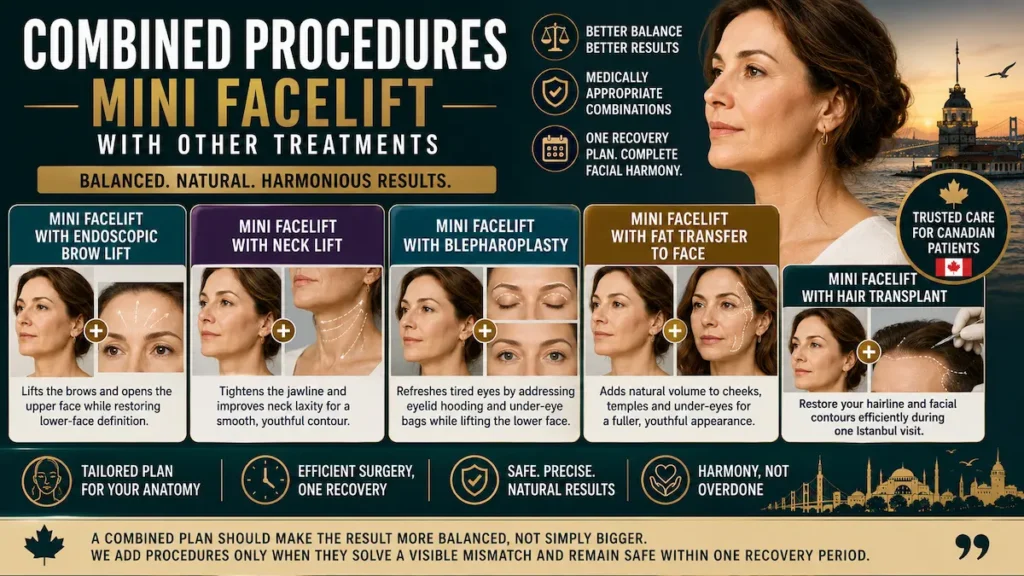
Combined Procedures: Mini Facelift With Other Treatments
A mini facelift can be performed alone, but many Canadian patients benefit from combining it with one or two complementary procedures. This is especially true when the lower face is not the only area showing early aging. The key is balance. A sharper jawline may look incomplete if the eyelids, brow, neck, or facial volume still look tired.
Combined surgery should never be treated as a shopping list. Each added procedure increases operating time, recovery needs, swelling, and travel planning complexity. We recommend combinations only when they improve harmony and remain medically appropriate.
Mini Facelift With Endoscopic Brow Lift
A mini facelift with brow lift may suit patients who have early jowling and lateral brow descent. The brow lift improves upper-face heaviness, while the mini facelift restores lower-face structure. This can create better vertical balance between the eyes and jawline.
We keep brow lift planning conservative. Over-elevating the brow can change expression and make the result look artificial. Our goal is to soften tiredness while preserving your natural eye shape and facial character.
Mini Facelift With Neck Lift
Mini facelift with neck lift may be appropriate when early jawline softening appears with mild neck looseness. The mini facelift sharpens the lower face, while the neck lift addresses skin laxity, early bands, or under-chin contour. This combination can be helpful for patients whose neck aging is too visible to ignore.
Mini Facelift With Blepharoplasty
Mini facelift with blepharoplasty is one of the most common facial refresh combinations. The mini facelift improves the lower face and early jowls, while eyelid surgery addresses hooding, upper eyelid heaviness, or under-eye bags.
Mini Facelift With Fat Transfer to Face
Some patients need lift and volume. A mini facelift can reposition early lower-face laxity, but it does not restore lost cheek volume, temple hollowing, or under-eye depletion. Fat transfer to face may help when volume loss contributes to tiredness.
Mini Facelift With Hair Transplant
Mini facelift with hair transplant can be efficient for selected patients who want facial rejuvenation and hairline restoration in one Istanbul visit. This combination is most relevant for patients who have early facial aging and visible hairline recession or thinning.
“A combined plan should make the result more balanced, not simply bigger. We add procedures only when they solve a visible mismatch and remain safe within one recovery period.”
Anesthesia for Mini Facelift: Local Anesthesia With Sedation
A mini facelift usually does not require the same anesthesia plan as a more extensive full facelift. Because the treatment area is smaller and the tissue dissection is more limited, many patients can be treated with local anesthesia and IV sedation. This keeps the surgical experience comfortable while reducing the recovery burden that can follow general anesthesia.
For Canadian patients travelling to Istanbul, anesthesia planning is part of travel safety. We review your medical history, current medications, allergies, smoking status, and previous anesthesia experiences before confirming your plan. If local anesthesia with sedation is not suitable for you, we explain why before surgery is scheduled.
Why Mini Facelift Often Avoids General Anesthesia
A mini facelift focuses on the lower face and uses a shorter incision pattern. This usually means less operating time, less tissue exposure, and a narrower surgical field. For many patients, local anesthesia with IV sedation provides enough comfort without requiring intubation.
Avoiding general anesthesia can reduce nausea, grogginess, and the slow wake-up period some patients experience after larger procedures. It can also make the early recovery phase easier to manage at the hotel. You still need medical supervision, but you may feel clearer sooner.
How Local Anesthesia and IV Sedation Work
Local anesthesia numbs the surgical area around the ear, lower cheek, and jawline. IV sedation helps you feel calm and comfortable during the procedure. Most patients do not remember the details of surgery, but they avoid the deeper airway management required with general anesthesia.
The anesthesia plan is tailored to your health profile and the exact technique being performed. A short-scar SMAS mini facelift may require less sedation than a mini deep plane variant. We adjust the plan to keep you safe, comfortable, and stable throughout surgery.
Awake Mini Facelift: When the Anesthesia Model Becomes the Main Feature
Some patients are specifically interested in an awake mini facelift. This is a related but distinct treatment page because the anesthesia model is the main differentiator. In awake procedures, the goal is to minimize sedation while maintaining comfort through precise local anesthesia and careful patient monitoring.
This page focuses on the standard mini facelift pathway. If you want to compare the awake model, including who qualifies, how discomfort is managed, and how same-day recovery differs, the dedicated awake page covers that topic in depth. For Canadian readers who want to understand anesthesia standards more broadly, the Canadian Anesthesiologists’ Society’s patient guide to anesthesia provides a useful professional reference point.
Pre-Operative Anesthesia Assessment for Canadian Patients
Before surgery, we complete pre-operative bloodwork and medical evaluation in Istanbul. We also review your medications, supplements, and history of blood pressure issues, clotting concerns, or anesthesia reactions. If you have a family physician in Canada, we encourage you to discuss your travel and surgery plans before departure.
You may be asked to stop certain medications or supplements before surgery, especially those that increase bleeding risk. Never stop prescription medication without medical guidance. We provide written instructions before travel so you can plan safely from Toronto, Vancouver, Calgary, Montreal, or any other Canadian city.
Comfort and Monitoring During Surgery
During your mini facelift, your vital signs are monitored continuously. This includes oxygen levels, heart rate, blood pressure, and sedation depth. Our anesthesia team works with the surgical team throughout the procedure, not only at the beginning.
Comfort is an important part of safety. If you are anxious, we address that before surgery rather than waiting until the operating room. Patients who are not psychologically suited to a light sedation plan may need a different anesthesia approach or a different procedure pathway.
“For mini facelift patients, anesthesia planning is not about using the lightest option possible. It is about choosing the safest option that still allows precise surgery, stable monitoring, and a calm recovery.”
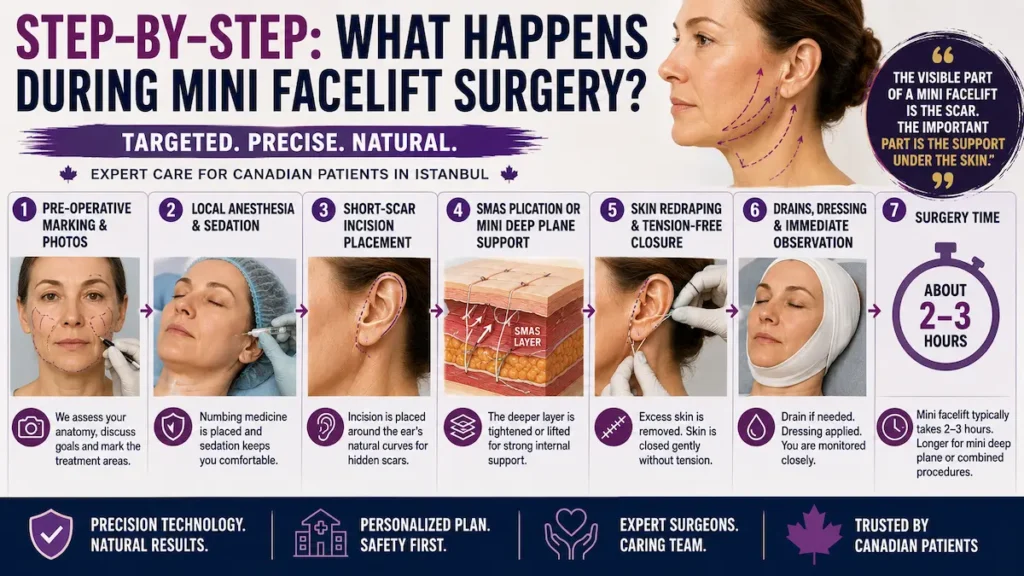
Step-by-Step: What Happens During Mini Facelift Surgery?
A mini facelift is planned in stages. The visible scar is only one part of the operation. The deeper work happens under the skin, where the SMAS layer is tightened and the lower-face tissue is supported. This is why a properly performed mini facelift looks more natural than a skin-only pull.
At AKM Clinic, your surgical plan is confirmed in person after you arrive in Istanbul. We compare your photos, video consultation notes, facial movement, skin quality, and lower-face anatomy before final marking. The plan may remain exactly as discussed online, or it may be refined once your surgeon examines you directly.
Pre-Operative Marking and Photo Documentation
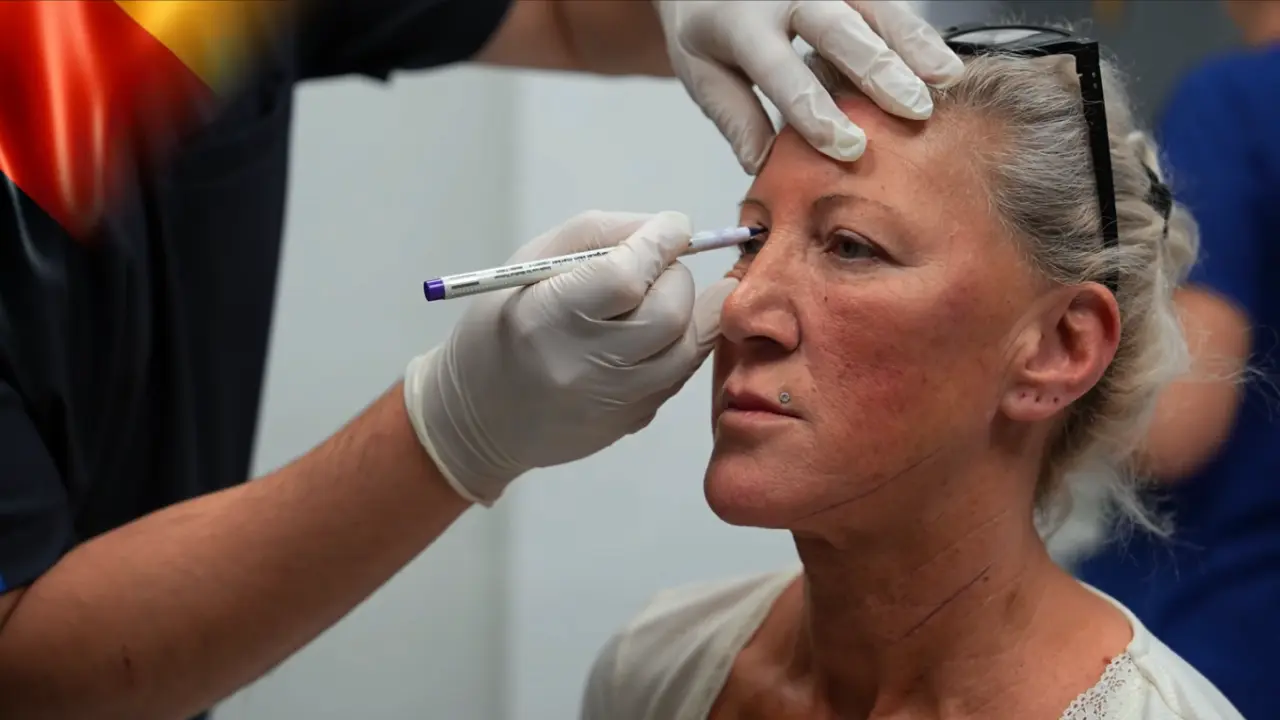
Before surgery, we take standardized clinical photos and mark the treatment area. These markings help guide incision placement, SMAS tightening, and skin redraping. We assess both sides of the face because facial asymmetry is normal, even before surgery.
This step is also where we confirm your goals one more time. We discuss how much jawline improvement is realistic, whether the neck requires separate treatment, and where the scars will sit. You should leave this conversation with a clear understanding of what the mini facelift can and cannot change.
Local Anesthesia and Sedation
Once you are in the operating room, the anesthesia team begins monitoring and sedation. Local anesthetic is placed carefully around the planned incision and tissue work areas. This creates numbness and reduces bleeding during the procedure.
Sedation keeps you calm and comfortable. The exact level depends on your health profile, anxiety level, and surgical plan. Your oxygen level, heart rate, blood pressure, and comfort are monitored throughout the operation.
Short-Scar Incision Placement
The incision is usually placed around the natural curves of the ear. In many patients, it begins near the temporal hairline or sideburn area, follows the front of the ear, and may continue around the earlobe. The goal is to place the scar where it can mature discreetly.
Incision length depends on how much access is needed. A patient with mild jowling may need a shorter incision than someone requiring stronger lower-face support. We do not shorten the scar at the expense of surgical control. A well-placed scar is better than an under-corrected result.
SMAS Plication or Mini Deep Plane Support
After the incision is made, the deeper support layer is treated. In a standard mini facelift, we use SMAS plication to fold and secure the tissue. This gives the lower face internal support before the skin is redraped.
In selected patients, a mini deep plane approach may be more appropriate. This allows a more structural lift by releasing selected deeper attachments. We use this option when plication alone would not create enough support, but a full deep plane facelift would be more than the patient needs.
Skin Redraping and Tension-Free Closure
Once the deeper layer is supported, the skin is repositioned gently. Excess skin is removed conservatively. The skin should not carry the lift. It should sit over the corrected structure with minimal tension.
This matters for both appearance and scar quality. Excessive skin tension can widen scars, distort the earlobe, or create a tight facial appearance. Our closure technique is designed to protect the natural ear shape and preserve a soft, rested look.
Drains, Dressing, and Immediate Observation
Some patients need a small drain, depending on tissue work and bleeding risk. Others do not. If a drain is used, we explain how it will be managed and when it is expected to come out.
After surgery, a compression dressing or garment is applied. You will be monitored while sedation wears off. Once you are medically stable, our team gives your post-operative instructions and coordinates your return to the hotel or hospital observation plan based on your case.
How Long Mini Facelift Surgery Takes
A standard mini facelift usually takes about 2-3 hours. A mini deep plane variant can take longer because the deeper tissue work requires more precision. Combined procedures, such as blepharoplasty or a small neck lift, also extend total surgical time.
Surgery length should never be rushed. A shorter operation is only valuable when it is still precise. We prioritize careful tissue handling, controlled bleeding, and layered closure because those details influence recovery, scars, and long-term results.
“The visible part of a mini facelift is the scar. The important part is the support under the skin. If the deeper layer is not treated correctly, the result will not last and the face may look pulled.”
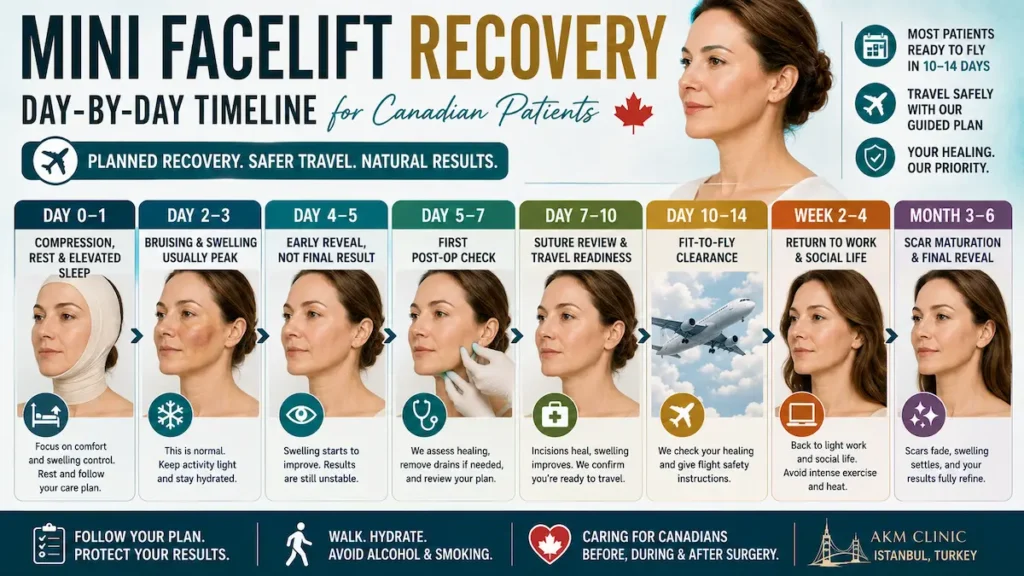
Mini Facelift Recovery: Day-by-Day Timeline for Canadian Patients
Mini facelift recovery is usually shorter than full facelift recovery, but it still requires careful planning. Most patients need 10-14 days before they feel comfortable returning to work calls, light social activity, or flying back to Canada. Bruising and swelling vary by patient, especially if the mini facelift is combined with eyelid surgery, fat transfer, or a small neck procedure.
We design your recovery plan around both biology and travel. That means incision care, swelling control, sleep position, medication timing, and fit-to-fly clearance are all planned before you leave Istanbul. You should not treat the return flight as a casual travel day. It is part of your surgical recovery.
Day 0-1: Compression, Rest, and Elevated Sleep
The first 24 hours focus on comfort, monitoring, and swelling control. You will wear a compression garment or supportive dressing as instructed. You should rest with your head elevated and avoid bending, lifting, or turning your head sharply.
Some tightness around the ears, jawline, and lower cheek is normal. Mild drainage or spotting can also occur early. Our team reviews warning signs with you before discharge, including increasing one-sided swelling, severe pain, fever, or sudden bleeding.
Day 2-3: Bruising and Swelling Usually Peak
Swelling often peaks around day 2 or 3. This is normal and does not represent the final result. The lower face may look firm, puffy, or uneven during this stage. Bruising may appear near the jawline, under the chin, or around the lower cheek.
You should keep activity light. Short, gentle walks are encouraged because they support circulation and reduce travel-related clot risk. Avoid alcohol, smoking, heat exposure, sauna, heavy meals, and intense screen fatigue. Your body needs calm conditions to heal.
Day 4-5: Early Reveal, Not Final Result
Many patients start to feel more like themselves by day 4 or 5. Swelling may begin to shift downward, and the jawline can start to appear cleaner. Some patients search for mini facelift pictures after 5 days because they want to know whether early swelling is normal. It usually is.
At this point, the result is still unstable. The face can look better in the morning and more swollen by evening. Small asymmetries are common because each side heals at a different speed. We explain this pattern in advance so you do not judge the result too early.
Day 5-7: First Post-Operative Check
Your early post-operative check allows us to assess swelling, bruising, incision healing, and comfort. If a drain was placed, it may already be removed before this stage, depending on your surgical plan. We also review how you are sleeping, walking, eating, and managing medication.
This is an important moment for Canadian patients because the return-flight plan begins to take shape. We do not clear travel based only on the calendar. We check your healing, energy level, swelling, and any procedure-specific concerns before advising flight timing.
Day 7-10: Suture Review and Travel Readiness
By day 7-10, many patients feel more comfortable walking, eating normally, and managing light daily routines. Swelling is still present, but the acute phase is usually improving. Incisions may look pink, slightly raised, or firm. This is normal early scar behaviour.
We review your incision care before you leave Istanbul. If sutures need removal, timing depends on the incision area and your healing pattern. We also check for one-sided swelling, fluid collection, infection signs, or delayed wound healing before discussing flight clearance.
Our HBOT and LLLT Recovery Protocol
Recovery speed depends on tissue oxygenation, inflammation control, and cellular repair. We use Hyperbaric Oxygen Therapy (HBOT) and Low-Level Laser Therapy (LLLT) as part of our recovery strategy when clinically appropriate. These technologies support healing after facial surgery and are especially useful for patients preparing for long-haul travel back to Canada.
HBOT increases oxygen delivery to healing tissue. LLLT uses 424 medical-grade semiconductor laser diodes at 650 nm to stimulate cellular ATP production. In practical terms, this can help reduce swelling, support incision maturation, and make the early recovery period more predictable. You can read more about our recovery systems on our technology and standards page, or review the dedicated science article on hyperbaric oxygen therapy benefits.
Day 10-14: Fit-to-Fly Clearance
Most mini facelift patients are assessed for return travel around day 10-14. Some may be cleared earlier, while others need more time because of bruising, swelling, combined procedures, or slower healing. We do not treat flight timing as a fixed promise. Your body decides the timeline.
Before a flight to Toronto, Vancouver, Calgary, Montreal, or another Canadian city, we review your swelling, blood pressure, mobility, hydration, incision status, and medication plan. We also give practical instructions for the airport and cabin: walk during the flight, avoid alcohol, stay hydrated, and keep your head supported. For a deeper travel safety guide, see our article on flight safety after surgery.
Week 2-4: Returning to Work and Social Life
Many patients return to remote work or low-intensity office work during week 2. Video calls may feel comfortable sooner than in-person social events because minor swelling can be hidden with lighting, hairstyle, or light makeup once approved. Public-facing roles may need a longer buffer.
You should still avoid heavy exercise, hot yoga, saunas, swimming, alcohol-heavy events, and facial massage unless we have cleared them. The lower face may feel tight, numb, or slightly uneven. These sensations usually improve gradually as swelling resolves and nerves recover.
Month 3-6: Scar Maturation and Final Reveal
Mini facelift results continue to refine for several months. The jawline becomes cleaner as swelling settles, and incision colour gradually fades. Scars may look pink before they become pale and flat. This stage requires patience.
By month 3-6, most patients can judge the result more accurately. The face should look refreshed, not pulled. If you had a mini deep plane variant, tissue settling may take slightly longer because the deeper support layer was treated more structurally.
Safety and Risks of Mini Facelift
A mini facelift is a smaller operation than a full facelift, but it is still surgery. It involves incisions, tissue tightening, anesthesia, swelling, bruising, and a healing process that must be respected. The safest approach is not to minimize risk. It is to identify risk early, reduce it through planning, and give patients clear instructions before and after surgery.
At AKM Clinic, we review your medical history, medications, smoking status, blood pressure, previous surgery history, and travel plan before confirming candidacy. We also explain the risks honestly. A well-informed patient is safer, calmer, and more prepared for recovery.
Common Short-Term Side Effects
Bruising, swelling, tightness, and tenderness are expected after a mini facelift. The lower face may feel firm or uneven during the first two weeks. Mild numbness around the ear or jawline can also occur because small sensory nerves are affected during tissue work.
These effects usually improve gradually. Swelling can shift downward before it resolves, which may make the jawline look puffy for a short period. This is normal. We teach you what expected healing looks like and which symptoms need urgent attention.
Mini Facelift Scars
Mini facelift scars are usually shorter than full facelift scars, but they do not disappear overnight. Early scars may appear pink, firm, raised, or slightly darker than surrounding skin. Over several months, they usually soften and fade.
Scar quality depends on incision placement, closure technique, skin type, genetics, smoking, sun exposure, and aftercare. We place incisions around natural ear curves when possible and use layered closure to reduce skin tension. You still need to protect healing scars from sun exposure, especially during the first year.
Hematoma and Bleeding
A hematoma is a collection of blood under the skin. It is one of the most important early risks after facelift surgery. Warning signs include sudden one-sided swelling, increasing pain, firmness, bruising that expands quickly, or pressure that feels different from normal tightness.
We reduce bleeding risk through pre-operative screening, medication review, blood pressure monitoring, and careful surgical technique. You also play a role. Avoiding nicotine, alcohol, certain supplements, and blood-thinning medications when medically appropriate can lower risk.
Asymmetry and Uneven Healing
Minor asymmetry during healing is common. The two sides of the face often swell differently, bruise differently, and settle at different speeds. Early unevenness does not automatically mean the final result will be uneven.
Pre-existing facial asymmetry also matters. Most patients have one side of the jawline, cheek, or mouth that differs from the other before surgery. We document this with photos and discuss it before the operation so expectations remain realistic.
Nerve Irritation or Temporary Numbness
Temporary numbness near the ear, cheek, or jawline can occur after a mini facelift. This usually reflects sensory nerve irritation rather than permanent nerve injury. Sensation often improves gradually over weeks or months.
Facial movement weakness is much rarer, but it is an important risk to discuss. Mini facelift surgery should be performed by surgeons who understand the deeper facial anatomy and the safe planes around the facial nerve. This is one reason surgeon training matters more than incision size.
Hairline or Earlobe Distortion
Poor tension control can distort the earlobe, sideburn, or hairline. This is one of the signs of an overly tight or poorly planned facelift. A natural result depends on deep support first, skin redraping second.
We avoid placing the lift on the skin alone. By supporting the SMAS layer and closing the incision in layers, we reduce the risk of stretched scars, pixie-ear appearance, and visible tension around the ear. The goal is a refreshed jawline without obvious surgical clues.
How We Reduce Risk
Risk reduction begins before surgery. We perform medical screening, plan anesthesia carefully, use sterile surgical protocols, and tailor the procedure to the patient’s anatomy. A mini facelift should never be performed just because it sounds easier or smaller.
After surgery, our patient hosts and clinical team monitor your early recovery, provide written instructions, and remain available through your return to Canada. We also schedule long-term virtual follow-ups at 1, 3, 6, and 12 months so your healing is not left unsupported after you fly home.
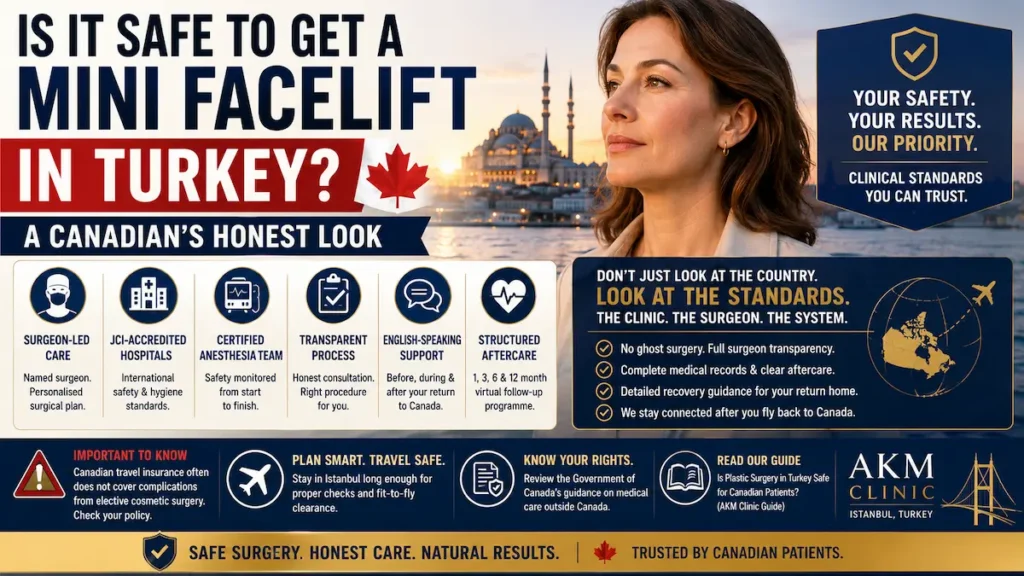
Is It Safe to Get a Mini Facelift in Turkey?: A Canadian’s Honest Look
Canadian patients are right to be cautious about surgery abroad. A mini facelift may sound less intensive than a full facelift, but it still requires proper surgeon training, sterile facility standards, safe anesthesia, transparent aftercare, and clear medical records. The country is not the only question. The clinic, surgeon, hospital, and follow-up system matter more.
Turkey has a large aesthetic surgery sector, which means patients will find both high-standard surgical teams and high-volume clinics that should be avoided. At AKM Clinic, we position ourselves on the clinical side of that difference: named surgical planning, JCI-accredited hospital partnerships, structured aftercare, and English-language communication before and after your return to Canada.
What Canadian Patients Should Verify Before Booking
Before choosing any international clinic, ask direct questions. Who is the surgeon of record? Where will the surgery be performed? Who handles anesthesia? What happens if you have swelling, bleeding, fever, wound concerns, or asymmetry after returning to Canada?
You should also ask to see before-and-after examples from patients in your age range. A mini facelift for a 39-year-old with early jowls should not be judged by the same standard as a deep plane facelift for a 62-year-old with neck laxity. Matching evidence to your anatomy is part of safe decision-making.
How We Differ From High-Volume Cosmetic Surgery Clinics
High-volume cosmetic surgery centres often rely on speed, generic packages, and limited surgeon-patient interaction. That model is not appropriate for facial rejuvenation. Small differences in incision placement, tissue handling, and closure tension can change the result dramatically.
Our approach is consultation-led. We assess whether mini facelift is appropriate before recommending it. If your anatomy needs a deep plane facelift, neck lift, or combined plan, we explain that instead of selling you the smaller procedure. This protects both safety and satisfaction.
Ghost Surgery and Surgeon-of-Record Transparency
Some Canadian patients worry about “ghost surgery,” where the advertised surgeon is not the person performing key parts of the operation. That concern should be taken seriously. Before surgery, you should know who your surgeon is, what their qualifications are, and which parts of the procedure they perform.
At AKM Clinic, facial surgery planning is surgeon-led. Your consultation, surgical plan, and operative pathway are documented. We encourage patients to ask credential questions before booking, not after arrival. For a deeper safety framework, read our guide to ghost surgery in Turkey.
Facility Standards and Sterilization
Facial surgery should be performed in a properly equipped medical environment, not a spa-like treatment room. We work with JCI-accredited hospital partners and follow strict sterile protocols for surgical instruments, operating field preparation, and post-operative monitoring. This is especially important for patients travelling internationally.
Infection risk cannot be reduced to zero, even in Canada. The goal is to reduce risk through screening, sterile technique, appropriate medication, and early response if symptoms appear. Our team gives you written instructions and warning signs before you leave Istanbul.
Medical Records and Follow-Up After Returning to Canada
One of the main concerns Canadian patients have is continuity of care. You need clear records, discharge instructions, medication details, and a way to contact the clinical team after your flight home. We provide English-language guidance so you can understand your own recovery and share relevant information with your Canadian family physician if needed.
Our long-term virtual follow-up programme includes check-ins at 1, 3, 6, and 12 months. This does not replace emergency care in Canada, but it keeps your surgical team involved as swelling settles and scars mature. You are not left to interpret every healing change alone.
Travel Insurance and Elective Surgery Reality
Canadian travel insurance often excludes complications related to elective cosmetic surgery. This is one reason patients must understand the limits of coverage before booking. You should read your policy, ask direct questions, and avoid assuming that a standard travel plan covers surgery-related issues abroad.
We discuss this openly because hidden risk creates anxiety later. The safer path is to plan your recovery carefully, stay in Istanbul long enough for proper checks, and return to Canada only after fit-to-fly clearance. Canadian patients can also review the Government of Canada guidance on medical care outside Canada. For a broader AKM-specific review, see our guide on whether plastic surgery in Turkey is safe for Canadian patients.
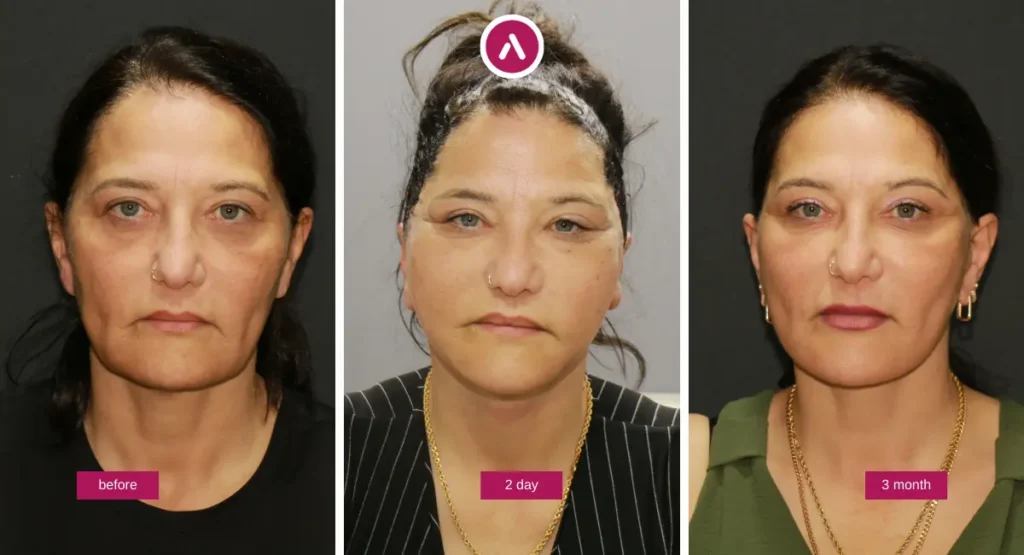
Mini Facelift Before and After: Realistic Expectations and Longevity
A mini facelift should create a cleaner, fresher lower face without making you look like you had a full facial transformation. The result is usually most visible along the jawline, lower cheek, and early jowl area. It is not designed to replace a full facelift, deep plane facelift, neck lift, brow lift, or eyelid surgery when those areas need separate correction.
We plan mini facelift results around proportion. If the jawline is improved but the neck, eyes, or mid-face still look significantly older, the result can feel incomplete. That is why we assess the whole face before recommending a mini procedure.
Mini Facelift Before and After: What Usually Changes
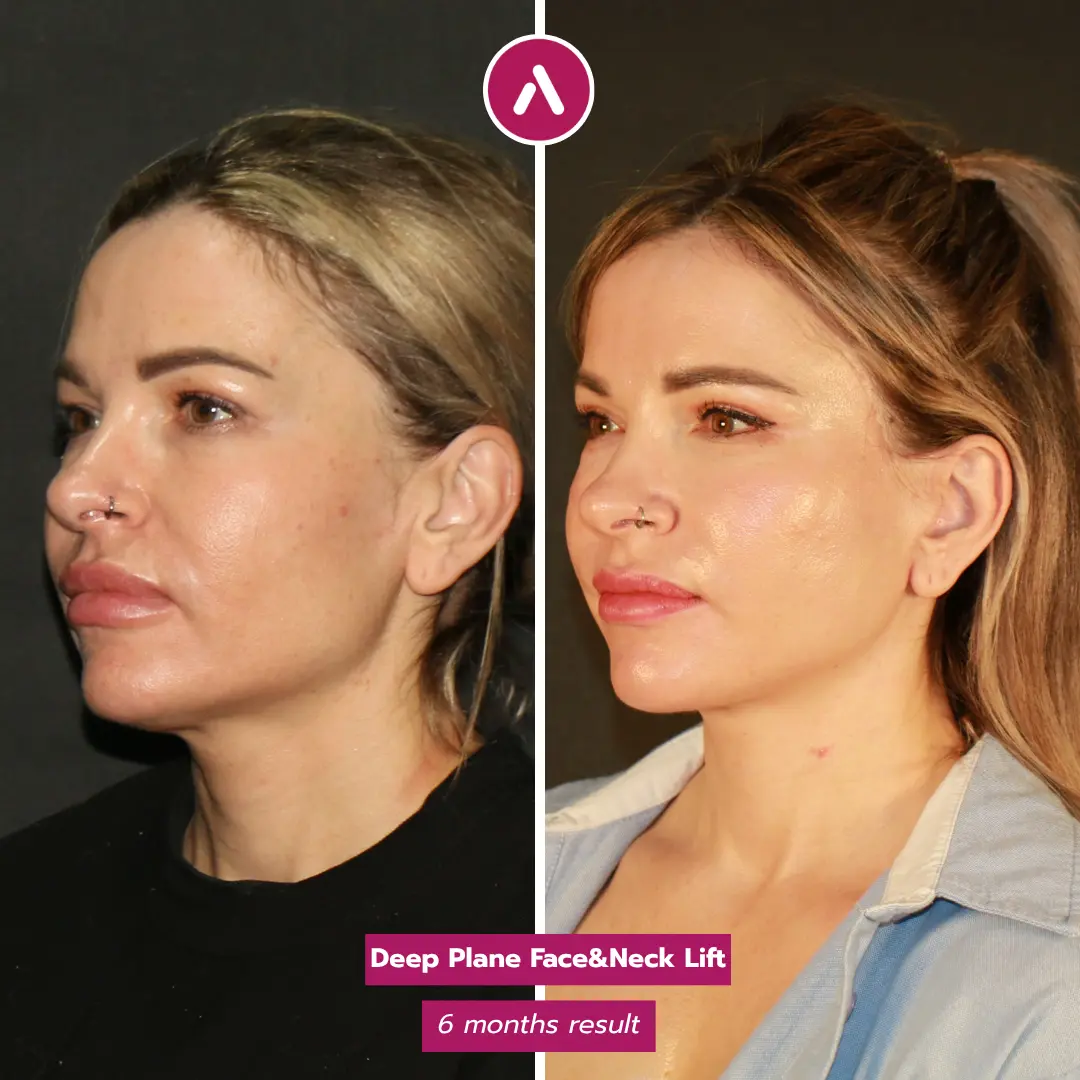
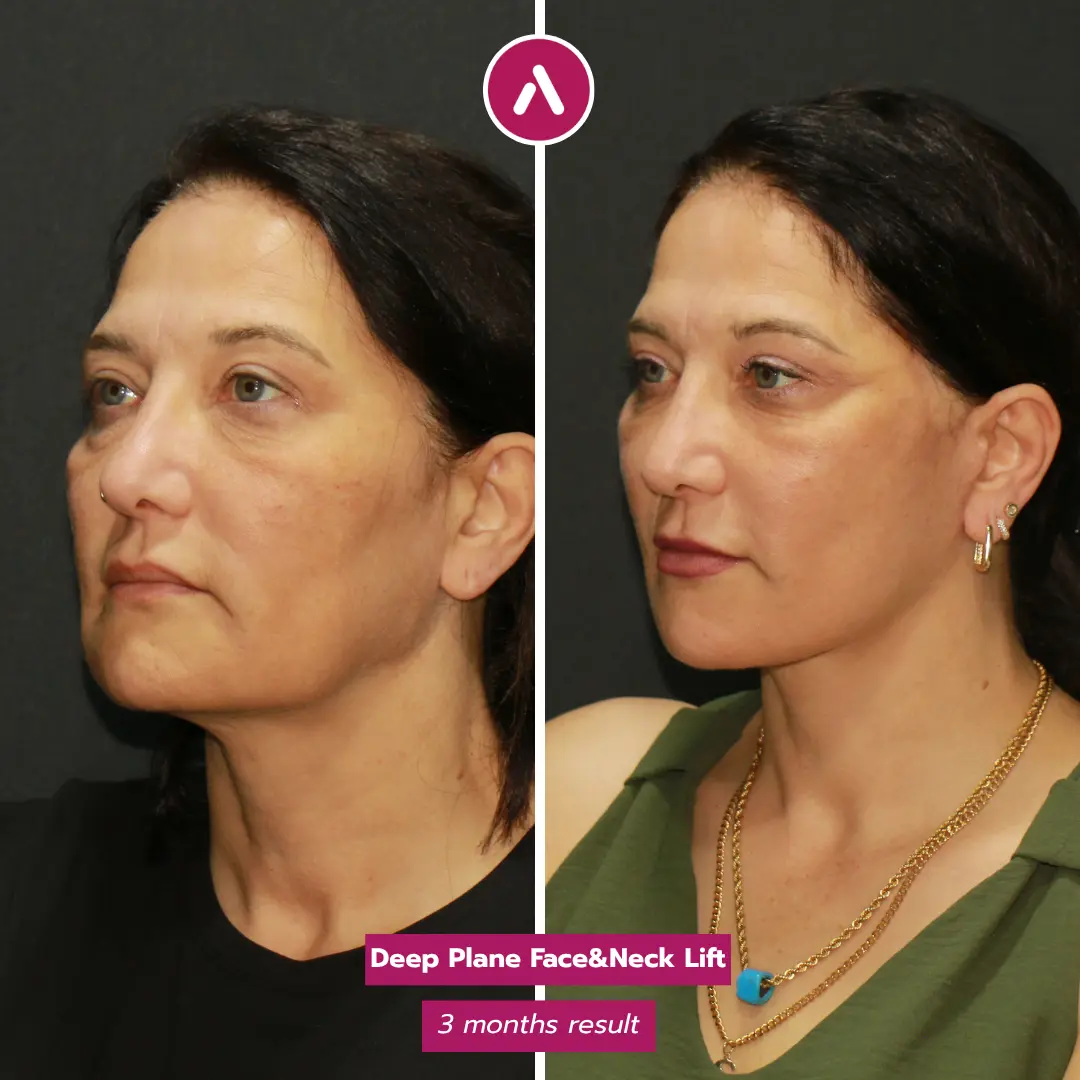
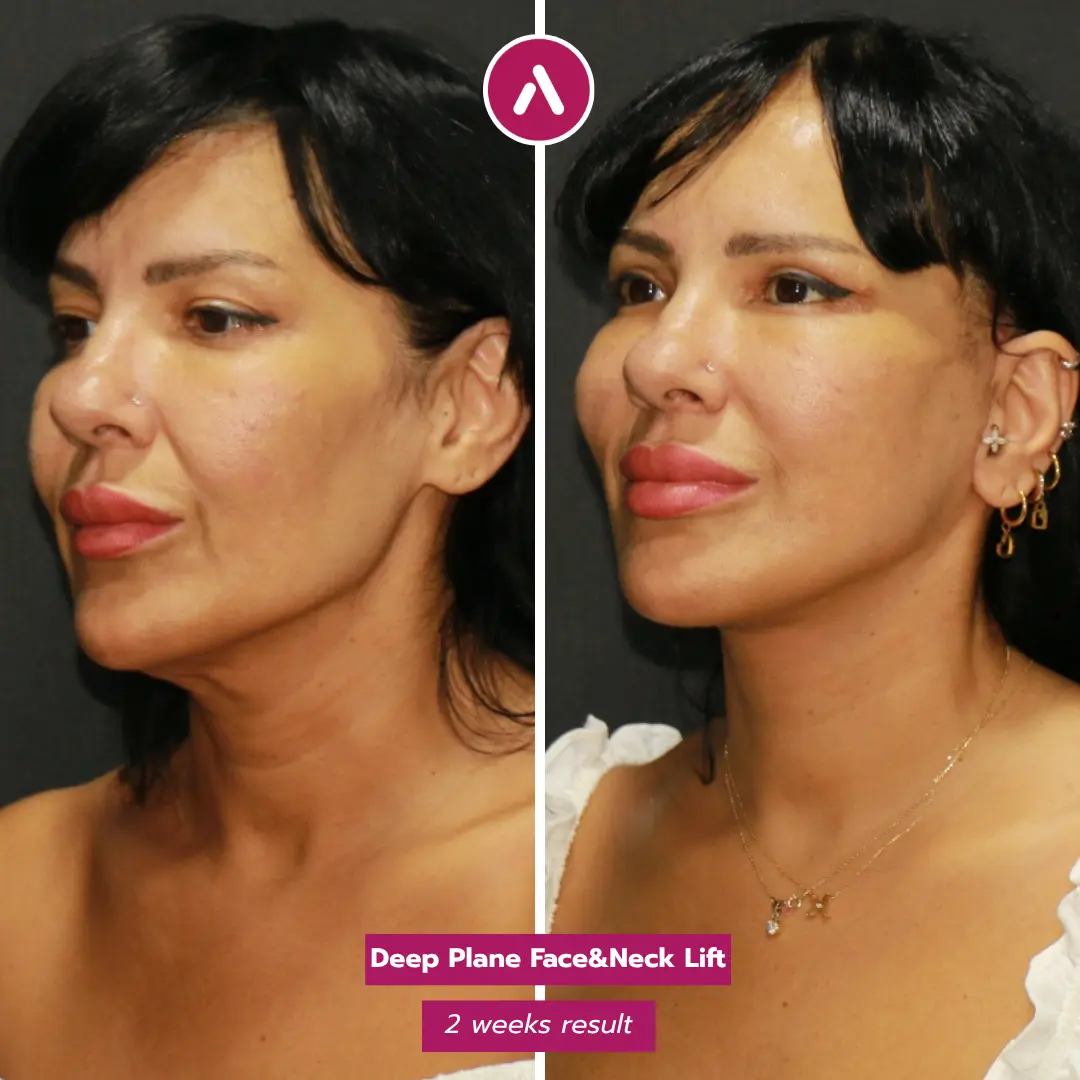
Before-and-after photos should show subtle lower-face refinement, not a tight or dramatically altered face. The jawline should look cleaner. Mild jowls should appear reduced. The lower cheek should look better supported, especially in side-profile and three-quarter views.
The change should still match your age and facial identity. A well-planned mini facelift does not remove every line, pore, or fold. It restores support where early tissue descent has started to show.
40-Year-Old Mini Facelift Before and After: The Most Common Pattern
Patients around 40 often show the clearest mini facelift pattern: early jowls, mild marionette shadowing, and a jawline that has lost definition on camera. Their skin usually still has enough elasticity to redrape well. This is why age 40 is a common decision point.
In this age group, the goal is usually preventive-looking rejuvenation. Friends or colleagues may notice that you look rested, slimmer in the lower face, or less tired. They should not immediately identify surgery.
How Long Does a Mini Facelift Last?
A mini facelift usually lasts about 5-7 years. Longevity depends on skin quality, genetics, weight stability, sun exposure, smoking, and the depth of the technique used. A mini deep plane variant may last longer in selected patients because it provides stronger structural repositioning.
No facelift stops aging. It resets part of the lower-face structure so you continue aging from a fresher baseline. Patients who protect their skin, maintain stable weight, and avoid nicotine usually preserve results longer.
Mini Facelift vs Full Facelift Longevity
A full facelift usually lasts longer than a mini facelift because it treats a wider area and allows more comprehensive tissue repositioning. A deep plane facelift can often last 10-15 years because it releases deeper retaining ligaments and repositions the face more structurally.
This does not make mini facelift inferior. It makes it different. For an early-aging patient, a full deep plane facelift may be more surgery than the face needs. For an advanced-aging patient, a mini facelift may not be enough.
When a Touch-Up or Full Facelift May Be Needed Later
Some patients choose a mini facelift in their late 30s or early 40s, then consider a larger facelift many years later. This can be a sensible staged approach when the first procedure is performed conservatively. The key is avoiding excessive tension or scar distortion during the first operation.
If you already have moderate neck laxity, deep folds, or heavy jowls, a mini facelift may simply delay the correct procedure. We will explain that before booking so you can make the decision with accurate expectations.
Before-and-After Gallery
Photos help you understand what “natural” means in practice. They also help you compare candidates by age, tissue quality, and surgical scope. Review patients who resemble your starting point rather than choosing results from a different age group or procedure category.
If the dedicated mini facelift gallery is live, use mini facelift before-and-after photos. If it is not live at publishing time, use the closest facial rejuvenation gallery fallback: deep plane facelift before-and-after gallery. During consultation, we can discuss which examples are closest to your anatomy and whether mini facelift, mini deep plane, or full deep plane is the better match.
Mini Facelift Cost 2026: Turkey vs Canada
Canadian patients researching mini facelift cost often compare private quotes in Toronto, Vancouver, Calgary, and Montreal before considering Istanbul. In Canada, facial surgery is usually billed in separate line items: surgeon fee, anesthesia, facility fee, medications, compression garments, and follow-up. This can make the first quote look different from the final invoice.
At AKM Clinic, mini facelift pricing depends on the exact technique. An S-Lift is listed at CAD $6,150, while MACS Lift and Short-Scar Facelift are each listed at CAD $8,200. A Ponytail Lift is listed at CAD $7,500. Your final recommendation depends on incision pattern, tissue laxity, anesthesia plan, and whether you need a mini deep plane approach.
By comparison, Canadian private clinics commonly quote a wider range for mini facelift or lower-face lift procedures, especially in Toronto and Vancouver. Many patients find that anesthesia, operating room, and follow-up fees are not always included in the headline number. For the full breakdown, see our mini facelift cost guide for Canadian patients.
If a dedicated mini facelift package page is live at publication time, link it here. If not, do not use an unverified package URL. Instead, direct patients to the consultation flow through your patient journey and the cost guide above.
Prices can change after in-person medical assessment if a different technique or combined procedure is medically more appropriate.
| Location / Option | Typical Pricing Context | What Patients Should Check |
|---|---|---|
| AKM Clinic S-Lift | CAD $6,150 | Technique suitability, scar pattern, anesthesia plan |
| AKM Clinic Short-Scar / MACS Lift | CAD $8,200 | SMAS tightening method, recovery timeline, hotel nights |
| Toronto / GTA private clinics | Often higher, with itemized billing | Whether facility, anesthesia, and follow-up are included |
| Vancouver / Lower Mainland | Often comparable to Toronto private pricing | Surgeon credentials, revision policy, and aftercare access |
| Calgary / Edmonton / Montreal | Varies by clinic and surgical scope | Whether the quote is mini facelift, full facelift, or neck lift |
How to Find the Best Mini Facelift Surgeon in Turkey: A Canadian Patient’s Checklist
Many Canadian patients begin with searches like mini facelift near me, mini facelift Toronto, or best facelift surgeon in Canada. That is a reasonable starting point. The next step is comparing the actual surgical framework: credentials, facial surgery volume, facility standards, technique range, and follow-up after you return home.
A mini facelift is technically smaller than a full facelift, but it still requires precise facial anatomy knowledge. A short incision does not make the procedure simple. The surgeon must understand the SMAS layer, facial nerve safety, scar placement, ear shape preservation, and how to avoid a pulled lower face.
Check Facial Surgery Credentials, Not Just Aesthetic Branding
Marketing language is not a credential. Canadian patients are used to looking for RCPSC certification, provincial college registration, and hospital privileges. In Turkey, the equivalent verification process looks different, so you should ask for international credentials and surgical facility details directly.
At AKM Clinic, our facial surgery protocols are led by European Board-Certified Surgeons working within JCI-accredited hospital partnerships. We explain credential equivalency in Canadian terms so patients can compare standards more confidently before booking travel. You can review our clinic background on the About AKM Clinic page and compare Canadian specialist credentialing through the Royal College of Physicians and Surgeons of Canada’s certification routes.
Review Age-Matched Before-and-After Results
A 38-year-old mini facelift patient and a 62-year-old deep plane facelift patient should not be compared as if they had the same goal. Ask to see cases close to your age range, skin quality, jawline concern, and procedure type. This gives you a more realistic understanding of what mini facelift can do.
Photos should show natural expression, balanced jawline improvement, and discreet scars. Be cautious with galleries that show only dramatic lighting, heavy makeup, or no early recovery examples. Good documentation should help you understand both outcome and healing. You can also review broader patient experience signals through our professional plastic surgery reviews.
| Credential / Standard | What It Means | Canadian Comparison |
|---|---|---|
| European Board Certification | Structured specialist-level surgical qualification | Comparable framework to RCPSC-style specialist verification |
| Facial Plastic Surgery Fellowship | Focused training in facial anatomy, aesthetics, and function | Comparable to advanced facial aesthetic fellowship training |
| JCI-Accredited Facility | International hospital safety and quality standard | Comparable to audited hospital-based care expectations |
| Documented Facial Surgery Volume | Experience with facelift anatomy and complication prevention | Similar to evaluating case volume at a Canadian private clinic |
Ask Whether the Surgeon Offers More Than One Facelift Technique
A strong mini facelift consultation should not start and end with one technique. Some patients need a short-scar SMAS lift. Others need a mini deep plane approach, full facelift, neck lift, or deep plane facelift. If every patient receives the same operation, the recommendation is not truly tailored.
We offer mini facelift, mini deep plane, full facelift, deep plane facelift, neck lift, and related facial procedures. This allows us to recommend the procedure that fits your anatomy rather than pushing you into the only option available.
Review Age-Matched Before-and-After Results
A 38-year-old mini facelift patient and a 62-year-old deep plane facelift patient should not be compared as if they had the same goal. Ask to see cases close to your age range, skin quality, jawline concern, and procedure type. This gives you a more realistic understanding of what mini facelift can do.
Photos should show natural expression, balanced jawline improvement, and discreet scars. Be cautious with galleries that show only dramatic lighting, heavy makeup, or no early recovery examples. Good documentation should help you understand both outcome and healing.
Verify Follow-Up Before You Leave Canada
Follow-up is one of the main differences between a safe international surgical pathway and a risky one. Before booking, ask who monitors your recovery, how long you stay in Istanbul, what happens before you fly, and how you contact the team after returning home.
Our long-term virtual follow-up programme includes check-ins at 1, 3, 6, and 12 months. Our patient hosts, including Hande, Emine, and Khadija, coordinate communication so your questions do not disappear after checkout. For broader credential guidance, see our guide to plastic surgeon board certification.
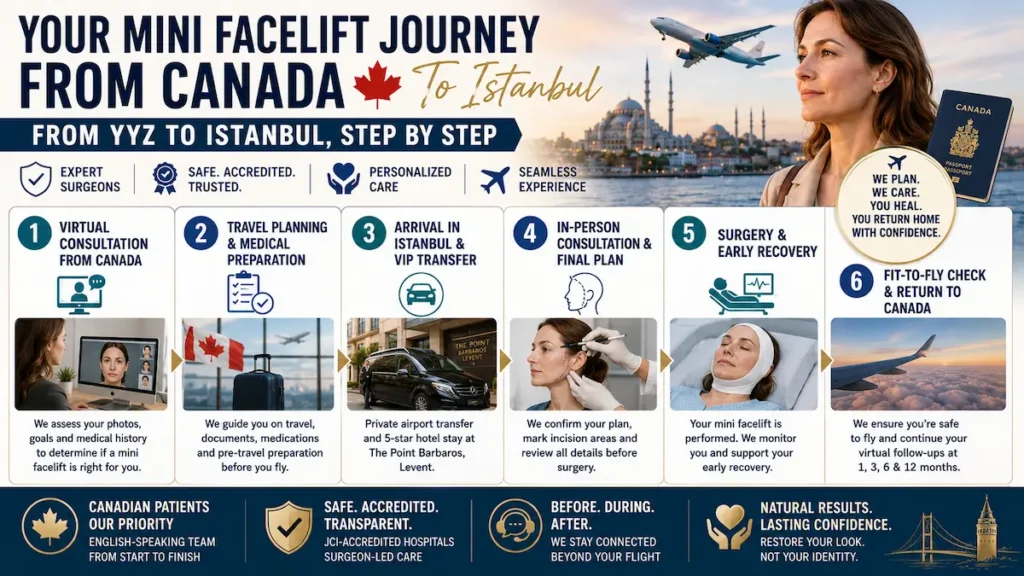
Your Mini Facelift Journey from Canada: From YYZ to Istanbul, Step by Step
Travelling for facial surgery requires more planning than booking a holiday. You need medical clearance, flight timing, hotel recovery support, transfer coordination, and a clear plan for the return flight. Our role is to reduce uncertainty before you leave Canada and support you throughout your stay in Istanbul.
Most Canadian mini facelift patients stay in Istanbul long enough for early monitoring, incision review, swelling assessment, and fit-to-fly clearance. The exact timeline depends on your healing, the technique used, and whether you combine your mini facelift with eyelid surgery, fat transfer, neck lift, or brow lift.
Step 1: Virtual Consultation From Canada
Your journey begins with a virtual consultation and photo assessment. We review your jawline, lower cheek, neck, skin elasticity, scar concerns, and previous injectable history. We also ask about smoking, medications, allergies, medical conditions, and prior surgery.
This stage helps determine whether you are a mini facelift candidate. If your anatomy points to a full facelift, deep plane facelift, or neck lift, we tell you before you travel. The goal is to prevent mismatched expectations before any booking decision.
Step 2: Travel Planning and Medical Preparation
Canadian citizens can generally enter Turkey visa-free for short stays, but you should always confirm current rules before booking. Flight schedules also change, especially from Vancouver, Calgary, Ottawa, and Halifax. Toronto and Montreal often have more direct or efficient routing options to Istanbul.
Before departure, we provide instructions about medications, supplements, nicotine avoidance, alcohol, skincare, and arrival timing. If you have a family physician in Canada, we recommend discussing your travel plans and asking whether any additional pre-travel medical checks are appropriate for you.
Step 3: Arrival in Istanbul and VIP Transfer
After you land at Istanbul Airport, your private transfer brings you to your hotel or clinic appointment according to the confirmed schedule. You do not need to navigate airport taxis, language barriers, or post-flight logistics alone. This matters after a long flight from Canada.
Our comprehensive care programme includes private VIP transfers between the airport, hotel, clinic, and hospital. The Point Barbaros, our 5-star hotel partner in the Levent district, is selected for privacy, comfort, and experience with international surgical guests. You can review the broader process on our patient journey page and the accommodation details on our hotels and VIP transfers page.
Step 4: In-Person Consultation and Final Surgical Plan
Your in-person consultation confirms the plan made online. We assess facial movement, jawline laxity, scar placement, neck involvement, and whether any combined procedure remains appropriate. Clinical photos and surgical markings are reviewed before the operation.
This is also your opportunity to ask final questions. We want you to understand the exact technique, anesthesia plan, recovery timeline, and expected limitations before surgery begins. You can learn more about the clinical environment on our Istanbul clinic page.
Step 4: In-Person Consultation and Final Surgical Plan
Your in-person consultation confirms the plan made online. We assess facial movement, jawline laxity, scar placement, neck involvement, and whether any combined procedure remains appropriate. Clinical photos and surgical markings are reviewed before the operation.
This is also your opportunity to ask final questions. We want you to understand the exact technique, anesthesia plan, recovery timeline, and expected limitations before surgery begins. Clear consent is part of safe care.
Step 5: Surgery and Early Recovery
Your mini facelift is performed according to the agreed technique: short-scar SMAS plication, S-lift, MACS lift, or mini deep plane approach when indicated. After surgery, you are monitored while sedation wears off and your immediate recovery instructions are reviewed.
Our team checks your comfort, dressing, swelling, bleeding risk, and mobility. You will receive medication guidance, sleep-position instructions, garment instructions, and emergency contact information. Your patient host remains available during your recovery stay.
Step 6: Fit-to-Fly Check and Return to Canada
Before you return to Canada, we assess your healing and travel readiness. This includes incision status, swelling, pain control, mobility, and whether there are any signs that travel should be delayed. A long-haul flight should happen only when you are stable enough to travel safely.
During the flight, we recommend hydration, short walks, head support, and avoiding alcohol. After you arrive home, your long-term virtual follow-ups continue at 1, 3, 6, and 12 months. This keeps your surgical team involved as scars mature and swelling resolves.
Frequently Asked Questions About Mini Facelift in Turkey
Canadian patients usually have practical questions before choosing a mini facelift abroad. They want to know whether they are too young, how recovery compares with a full facelift, what happens after they fly home, and whether Canadian provincial health plans cover any part of the procedure. These answers are designed to help you prepare for a safer, more informed consultation.
Am I too young at 35 for a mini facelift?
Not always. A mini facelift at 35 may be appropriate if you have clear early jowling, lower-face laxity, or jawline softening that cannot be corrected well with injectables or skin tightening. It is not recommended when the concern is mainly skin texture, mild volume loss, or temporary filler heaviness.
We are conservative with younger patients. If surgery would create more change than your face needs, we will recommend a non-surgical or delayed approach instead.
How long does a mini facelift take?
A standard mini facelift usually takes about 2-3 hours. A mini deep plane facelift can take longer because the deeper tissue support requires more precise dissection. Combined procedures, such as blepharoplasty or neck lift, also increase total operating time.
Procedure length should not be the main decision factor. A well-planned operation with careful closure is more important than speed.
How long does a mini facelift last?
A mini facelift typically lasts about 5-7 years. Longevity depends on your skin quality, genetics, smoking status, sun exposure, weight stability, and the depth of tissue support used during surgery. A mini deep plane approach may last longer in selected patients.
A full deep plane facelift generally lasts longer, often 10-15 years, because it treats deeper retaining ligaments and a broader area of facial descent.
How is mini facelift recovery different from full facelift recovery?
Mini facelift recovery is usually shorter because the incision pattern and tissue work are more limited. Many patients feel ready for light work, video calls, or low-key social activity within 10-14 days. A full facelift usually requires a longer acute recovery window.
The difference is not only time. A full facelift corrects more advanced aging, while a mini facelift treats early lower-face laxity. The right choice depends on anatomy, not only recovery preference.
When can I fly back to Canada after a mini facelift?
Many mini facelift patients are assessed for fit-to-fly clearance around day 10-14. Some may need more time if they have bruising, swelling, combined procedures, high blood pressure, or slower incision healing. We do not clear long-haul travel by calendar alone.
Before your return flight, we assess swelling, incision status, pain control, mobility, hydration, and medication needs. During the flight, we recommend walking, drinking water, avoiding alcohol, and supporting your head and neck.
Does OHIP, MSP, AHCIP, or RAMQ cover mini facelift surgery?
No. A mini facelift is considered an elective cosmetic procedure, so Canadian provincial health plans such as OHIP, MSP, AHCIP, and RAMQ do not cover it. Coverage may exist for specific reconstructive procedures after trauma, cancer, or congenital conditions, but not for cosmetic lower-face rejuvenation.
Canadian patients should budget privately for the procedure, travel, and any non-included personal expenses. We provide transparent pricing before booking so you can compare Istanbul with private options in Canada.
How much does a mini facelift cost in Toronto or Calgary compared with Istanbul?
Mini facelift pricing in Canada varies by surgeon, city, facility, anesthesia plan, and whether the procedure is truly mini or closer to a full facelift. Toronto and Vancouver private clinic quotes are often higher than Calgary, Edmonton, or Montreal, but the final invoice depends on what is included.
At AKM Clinic, S-Lift pricing is listed at CAD $6,150, while Short-Scar Facelift and MACS Lift are listed at CAD $8,200. Your quote depends on technique and whether combined procedures are needed.
Does Canadian travel insurance cover complications from elective mini facelift surgery?
Many Canadian travel insurance policies exclude complications related to elective cosmetic surgery. You should read your policy carefully and ask the insurer direct questions before booking. Do not assume a standard travel policy covers surgery-related concerns abroad.
We help reduce risk through medical screening, post-operative monitoring, written instructions, and fit-to-fly clearance before your return to Canada. Insurance limitations should still be understood before travel.
What is the difference between a mini facelift and mini deep plane facelift?
A standard mini facelift usually tightens the SMAS layer through plication and uses a shorter incision pattern. A mini deep plane facelift treats deeper tissue attachments in selected patients who need more structural support but do not require a full deep plane facelift.
The mini deep plane approach can be useful for early-aging patients with stronger tissue descent. It is not necessary for every patient. We recommend it only when anatomy supports the choice.
Will my mini facelift scars be visible?
Mini facelift scars are placed around natural ear curves when possible. Early scars may look pink, firm, or slightly raised, then soften over several months. Scar visibility depends on skin type, genetics, tension, smoking, sun exposure, and aftercare.
We use layered closure to reduce surface tension. You still need to protect scars from sun exposure and follow your incision-care instructions carefully.
Can I combine mini facelift with eyelid surgery or brow lift?
Yes, selected patients can combine mini facelift with blepharoplasty, endoscopic brow lift, neck lift, fat transfer to face, or hair transplant. The goal is facial balance, not adding procedures for volume.
Each added procedure changes recovery and travel planning. We recommend combinations only when they improve harmony and remain medically appropriate for one recovery period.
Will I need a full facelift later if I get a mini facelift now?
Possibly. A mini facelift can refresh early lower-face laxity, but it does not stop aging. Some patients choose a mini facelift in their late 30s or early 40s and consider a full facelift or deep plane facelift many years later.
This staged approach can be reasonable when the first procedure is conservative and well-planned. If your anatomy already needs a full facelift, we will not recommend mini facelift as a shortcut.
How do I know if I should choose mini facelift, full facelift, or deep plane facelift?
The decision depends on where aging appears. Mini facelift is best for mild jowls and early jawline softening. Full facelift is better for more advanced lower-face laxity. Deep plane facelift is usually preferred when mid-face descent, stronger jowls, and neck laxity are present.
Your consultation includes photo review, tissue assessment, and a discussion of recovery goals. We recommend the least invasive procedure that can still give a meaningful, durable result.
Who will support me after I return to Canada?
Our care continues after you fly home. We schedule virtual follow-ups at 1, 3, 6, and 12 months, and our patient hosts remain available for communication. You should still seek urgent local medical care in Canada if you develop severe pain, sudden swelling, fever, breathing issues, or signs of infection.
If appropriate, you can share your English-language discharge instructions with your Canadian family physician. This helps support continuity of care.
Medical disclaimer: This page is for educational purposes only and does not replace medical advice from a qualified physician. Surgical results, risks, recovery timelines, and candidacy vary by patient. Final recommendations require a direct medical assessment.