
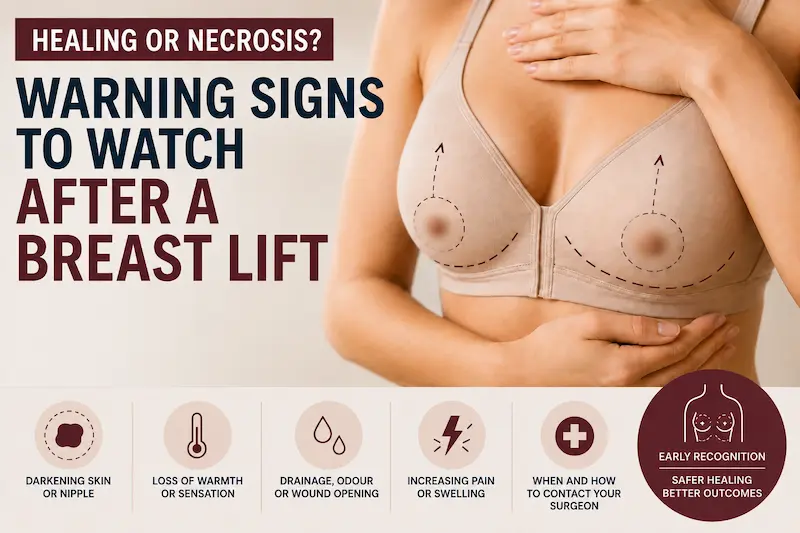
Healing or Necrosis? Warning Signs to Watch After a Breast Lift
AI Summary
- Breast lift necrosis is uncommon but serious, requiring early recognition and prompt surgical review.
- Normal healing improves gradually, while necrosis warning signs worsen over days.
- Key red flags include dark colour change, cold tissue, foul odour, wound opening or increasing pain.
- Contact your surgeon promptly if nipple or skin changes look worse, darker or unhealthy.
AI-generated summary, fact-checked by our medical experts.
Breast lift necrosis is uncommon, but it is a serious healing problem: it means part of the skin, nipple, or areola has lost enough blood supply that tissue may begin to fail. Normal healing should gradually improve. Tissue that turns dark, blue, grey, or black — especially if it worsens rather than settles — should be reviewed by your surgeon promptly.
A breast lift, or breast uplift, involves reshaping the breast and repositioning the nipple-areola complex while protecting its blood supply. That is why early changes in colour, warmth, sensation and wound appearance matter. Most bruising and swelling after a lift are part of normal healing. Necrosis is different.
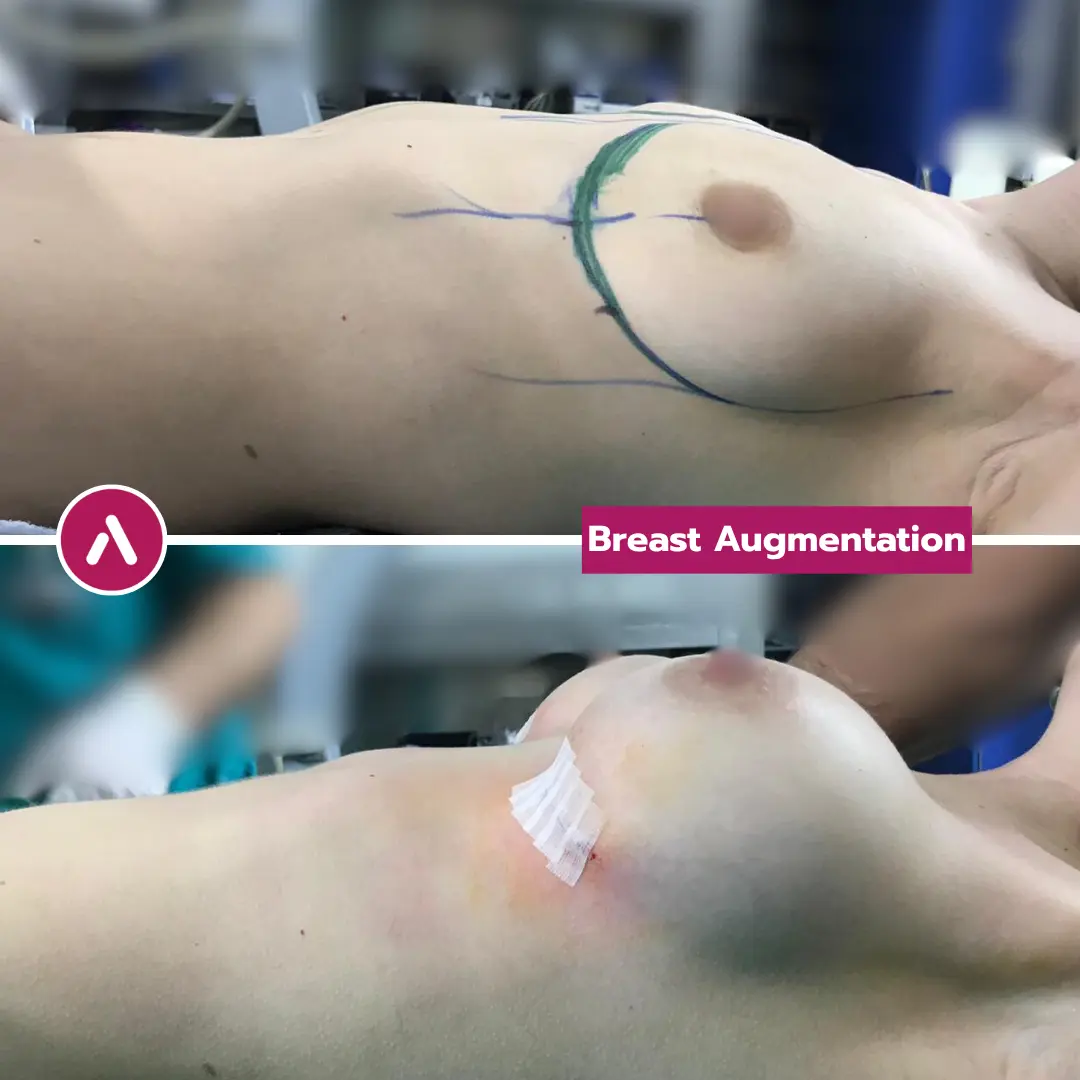
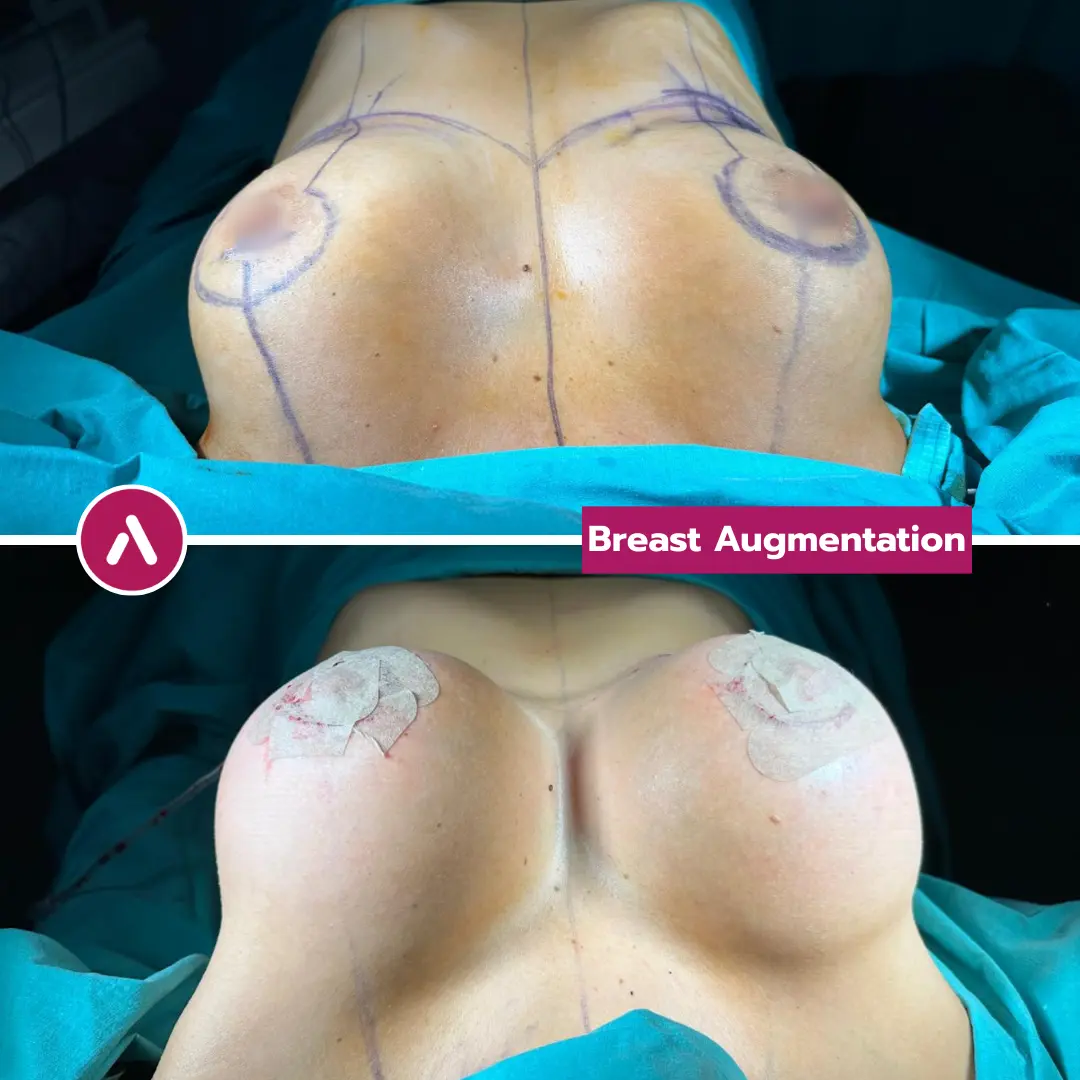
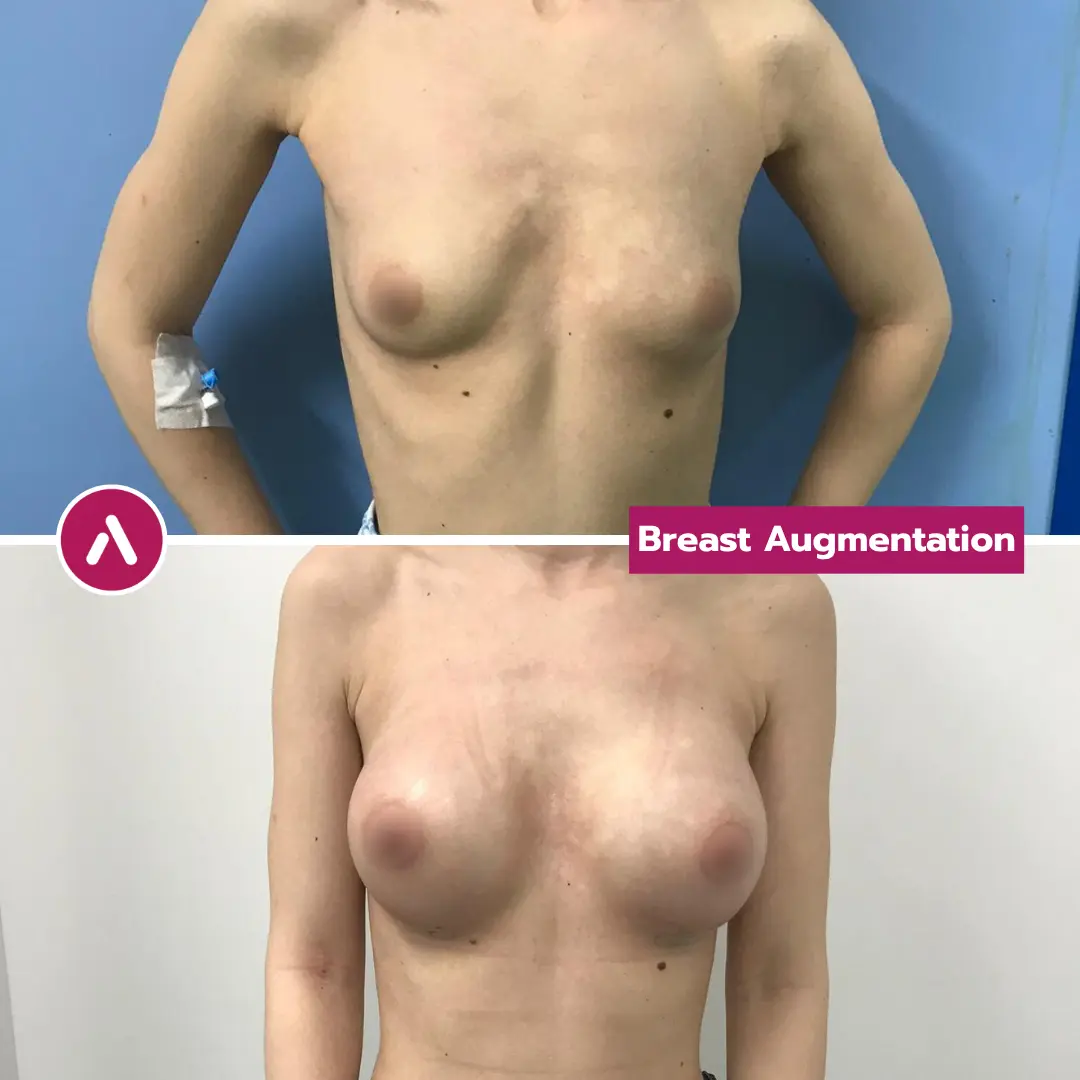
This guide is written for patients who want a clear, calm way to tell the difference between expected healing and warning signs. It does not replace medical advice. It helps you understand what to watch for, what is usually normal, and when to contact your surgical team without waiting.
If you are still researching the procedure itself, start with AKM’s breast uplift surgery approach. This article focuses only on one complication: tissue or nipple-areola complex necrosis after a breast lift.
Table of Contents
Necrosis vs Normal Healing After a Breast Lift
After any operation, the body needs time to restore circulation, repair small blood vessels, calm inflammation and close the incision lines. A breast lift is no different. Early bruising, tightness, swelling and temporary changes in nipple sensation can happen even when the healing process is healthy.
Necrosis is not simply “slow healing”. It means tissue is not receiving enough blood flow to stay healthy. In breast surgery, the area patients worry about most is the nipple-areola complex, often shortened to NAC, because its blood supply must be preserved while the breast is lifted and reshaped.
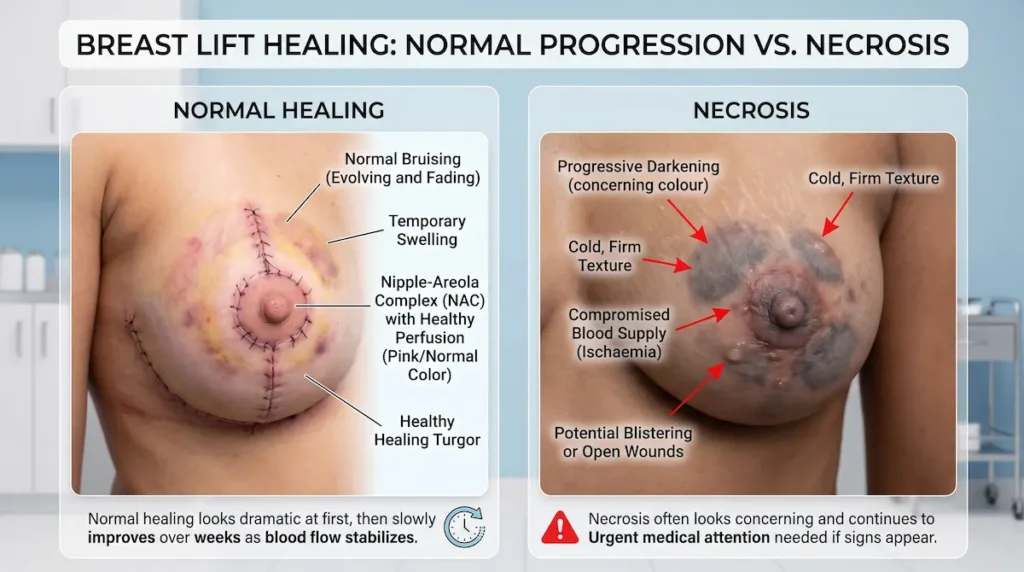
The key difference is the direction of change. Normal healing usually looks dramatic at first, then slowly improves. Necrosis often looks concerning and continues to worsen.
What necrosis means in breast lift healing
Necrosis occurs when a section of tissue loses its blood supply for long enough that the cells become damaged. In practical terms, this may appear as skin or nipple tissue becoming progressively darker, colder, firmer, blistered or open. It may also be associated with delayed wound healing.
Not every dark mark is necrosis. Bruising can look purple, brown, yellow or dark red as it changes colour. The important question is whether the area is following a normal bruise pattern and improving, or whether it is becoming darker, more painful, more open or more clearly unhealthy over time.
In a breast lift, surgeons protect blood flow by choosing the right pedicle, avoiding excessive tension, planning the incision pattern carefully and assessing patient-specific risk factors before surgery. At AKM, breast procedures are performed by a board-certified plastic surgery team, with postoperative support designed to catch healing concerns early.
Why the nipple and areola need careful monitoring
The nipple and areola are moved during many mastopexy techniques. They are not “detached” in a standard breast lift; instead, they remain connected to a bridge of tissue that carries blood supply. That tissue bridge is called a pedicle.
If the pedicle is under too much tension, if circulation is compromised, or if patient factors reduce blood flow, the NAC can become vulnerable. This is why surgeons ask about smoking, diabetes, previous breast operations, medications, weight changes and the size of the planned lift.
A large breast uplift, a revision breast operation, or surgery after major weight loss can place extra demands on the blood supply. Patients planning a lift after weight change can read more about timing and expectations in our guide to breast uplift after major weight loss.
How rare is necrosis after a breast lift?
Necrosis is considered uncommon, but it is taken seriously because early recognition can change the outcome. Small areas of superficial skin compromise may heal with careful wound care. More significant nipple or areola compromise needs urgent surgeon assessment.
UK patients sometimes search this topic because they are worried about travelling for surgery and returning home during recovery. That concern is reasonable. A safe plan should include clear instructions, wound photo review, access to the surgical team and a defined pathway for urgent concerns.
Surgeon-led perspective: “The warning sign is not simply colour. It is colour plus progression. A bruise should evolve and settle; threatened tissue usually becomes darker, less healthy-looking and more concerning over time. Early contact is the safest choice.”
Clinical literature describes compromised nipple perfusion as a time-sensitive issue after mastopexy and reduction-type breast surgery. For readers who want primary medical context, see this PubMed-indexed review on how nipple ischaemia after breast surgery is managed.
What Normal Healing Looks Like
This section is deliberately detailed because many patients panic when they see bruising, swelling or colour changes in the first days after surgery. In most cases, early breast lift healing looks more intense than patients expect. That does not automatically mean necrosis.
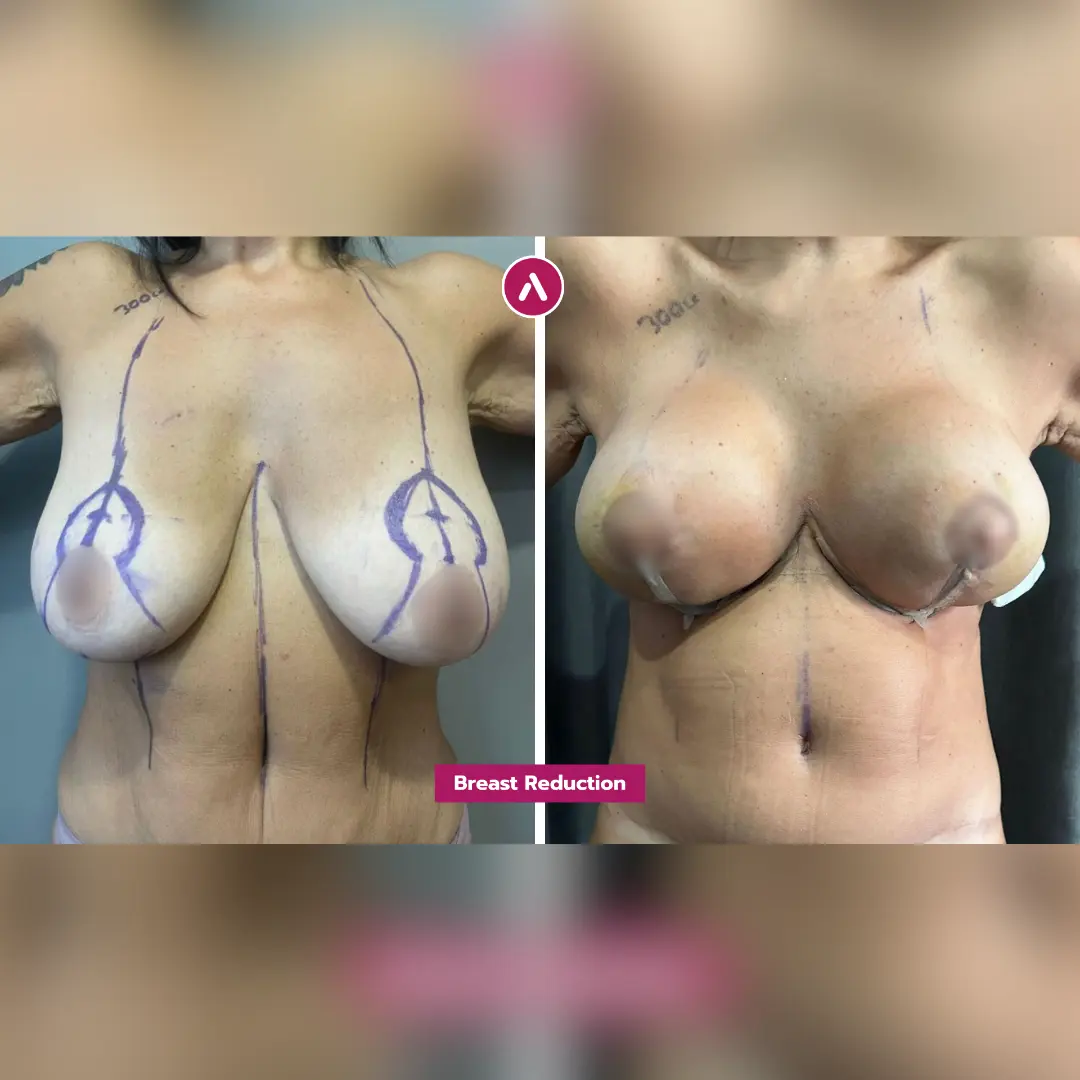
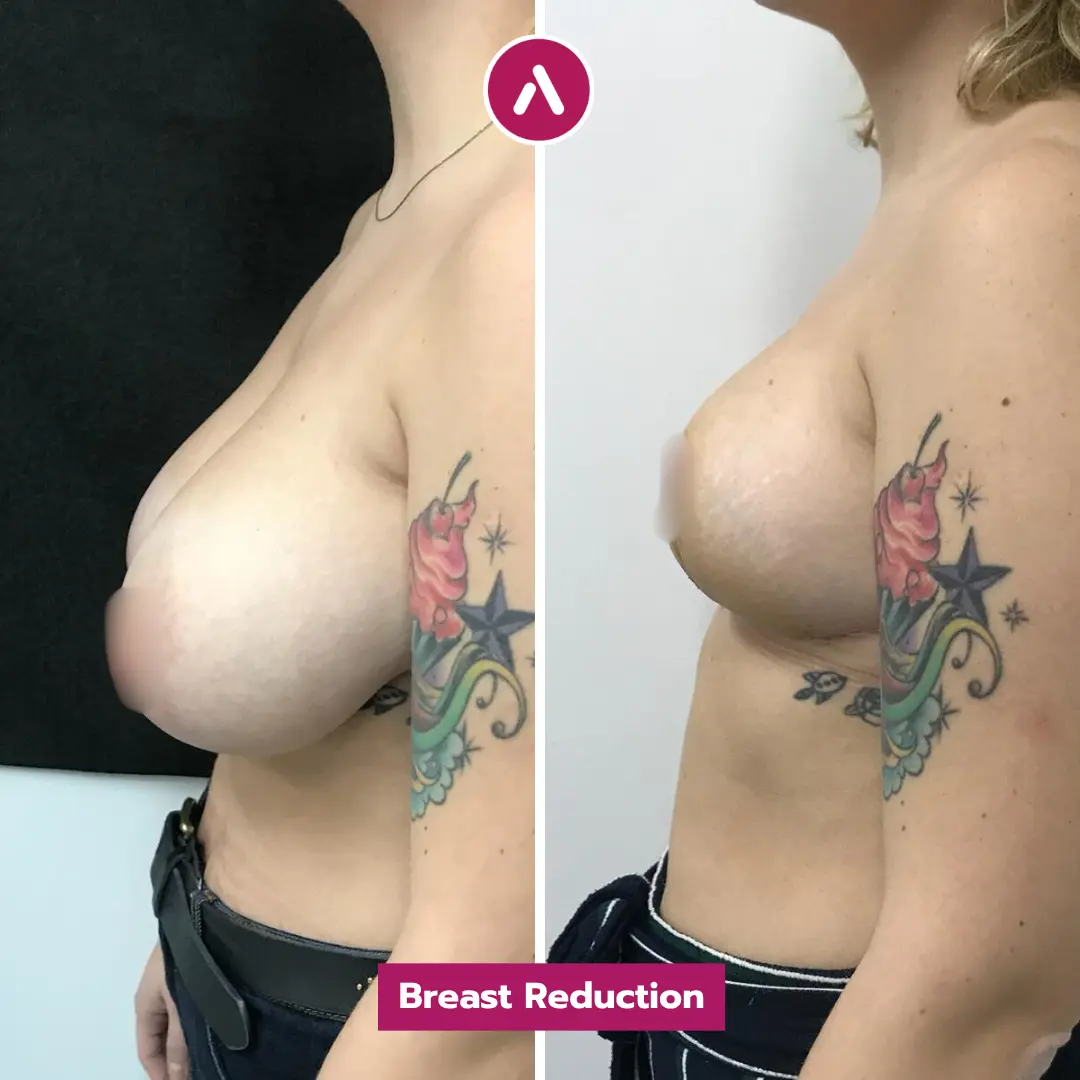
Healthy healing is not perfectly symmetrical. One breast may bruise more. One nipple may feel more sensitive or temporarily numb. Incision lines can look red, raised or firm. What matters is whether the overall pattern is moving in the right direction.
Expected bruising, swelling and redness
Bruising after a breast lift can range from mild yellow-purple patches to deeper-looking purple areas. It often changes colour as it resolves. Swelling can make the breast feel tight, shiny or high on the chest at first. Redness close to the incision can also be normal in the early inflammatory phase.
Normal healing usually follows a broad pattern:
- First few days: swelling, tightness, bruising and tenderness are often most noticeable.
- First one to two weeks: bruising should begin changing colour and swelling should slowly start to settle.
- Weeks two to six: incision lines may look pink or red, but discomfort should become easier to manage.
- After six weeks: scars and breast shape continue to mature, often for many months.
For a separate guide on scar appearance rather than tissue viability, see the normal breast lift scar healing timeline.
Normal colour and sensation changes
The nipple and areola can look slightly darker, lighter, swollen or more prominent in the early stages. Temporary numbness, tingling, hypersensitivity or reduced sensation can also happen because small nerves are irritated during surgery.
These changes should be monitored, not ignored. A nipple that is mildly bruised but warm, stable and improving is very different from tissue that becomes cold, dusky, blue-black or progressively worse.
A helpful question is: “Is this area looking better, the same, or clearly worse than yesterday?” If the answer is clearly worse, contact your surgeon. Do not wait for the next routine check-in.
The normal healing arc: improvement over time
Normal healing is rarely beautiful in the first week. It can look swollen, uneven and bruised. But it should slowly move towards less pain, less swelling, better colour and more stable incision lines.
The breast shape itself also changes over time. Early tightness and high position are expected; the breasts gradually soften and settle. That is why judging the final result too early can be misleading.
A breast lift without implants can have a different fullness and settling pattern compared with a lift combined with implants. If that is part of your decision-making, read more about a breast uplift without implants.
| Healing feature | Usually normal | More concerning | What to do |
|---|---|---|---|
| Colour | Bruising that changes from purple to yellow, brown or green as it fades | Skin or nipple turning dark blue, grey, black or increasingly dusky | Monitor normal bruising; contact your surgeon promptly if colour worsens |
| Swelling | General swelling that slowly improves over days to weeks | Rapidly worsening swelling, marked one-sided tightness or severe pressure | Follow postoperative instructions; seek review if swelling escalates |
| Sensation | Temporary numbness, tingling or increased sensitivity | Cold tissue, severe pain with colour change, or worsening numbness in a dark area | Tell your surgeon, especially if sensation changes with colour changes |
| Incision line | Pink, firm, slightly raised or itchy as it heals | Opening wound, foul smell, spreading redness or black tissue at the edge | Arrange urgent surgical advice |
Warning Signs to Watch For
This section is the heart of the article. Most patients do not need to diagnose themselves; they need to recognise when a change is outside the expected healing pattern and should be checked. With possible breast lift necrosis, the safest rule is simple: if the tissue looks darker, less healthy, more painful, or more open as the days pass, contact your surgeon.
Do not rely on a single sign in isolation. A small bruise may look alarming but behave normally. A nipple that is slightly numb may recover gradually. A wound edge that is mildly red may be part of normal inflammation. The concern rises when several warning signs appear together or progress quickly.
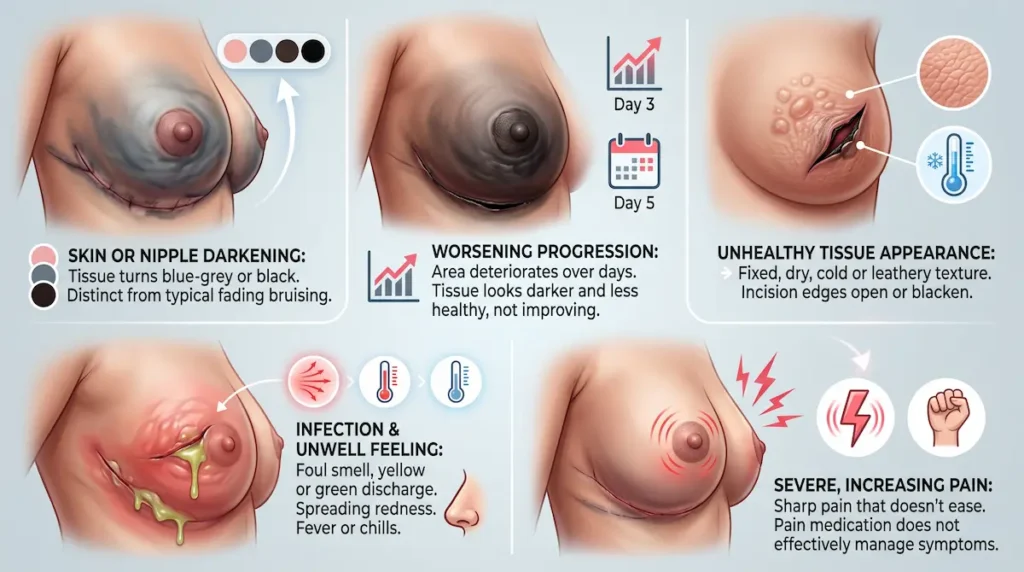
Skin or nipple turning dark, blue, grey or black
The most recognised warning sign of necrosis is tissue that becomes dusky, blue-grey, very dark brown or black. This colour change may affect part of the areola, the nipple, the skin along the incision, or a small patch where tension is high.
Normal bruising changes colour as the blood products break down. It may move from purple to green, yellow or brown. Threatened tissue is different: it tends to look fixed, cold, dry, leathery, blistered or progressively darker.
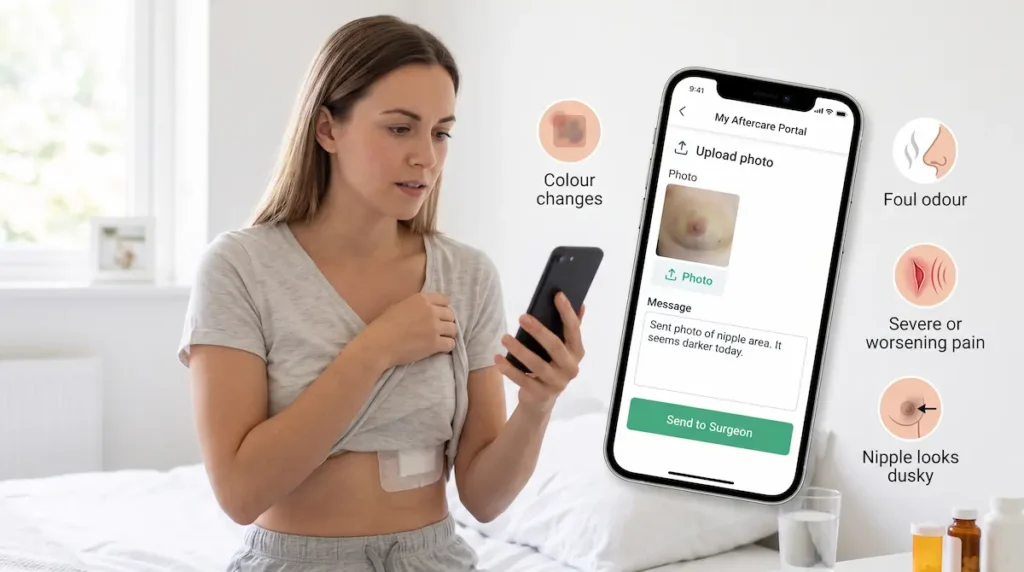
If you are unsure whether the colour is bruising or compromised tissue, take a clear photo in natural light and send it to your surgical team. Include the date, your temperature if you feel unwell, and whether pain, smell or drainage has changed.
Worsening instead of settling
Direction matters. A breast that looks bruised on day three and slightly better on day four is usually following a normal healing arc. A patch that looks dusky on day three, darker on day four and blacker on day five needs medical review.
Patients sometimes wait because they hope the area will “declare itself” or settle on its own. That can be risky. Early ischaemia may sometimes be managed before it progresses; delayed contact can reduce the options available.
Use this practical check:
- Improving: less swelling, softer bruising, warmer tissue, less pain, cleaner incision edges.
- Unchanged but stable: still worth monitoring closely and updating your team if advised.
- Worsening: darker colour, stronger pain, spreading redness, open wound, bad smell or discharge.
Foul smell, spreading redness or an opening wound
Necrosis can occur with or without infection. Still, certain signs should be treated as red flags because they may suggest infection, tissue breakdown or delayed wound healing. These include a foul smell, pus-like discharge, rapidly spreading redness, fever, chills, severe increasing pain or an incision that opens.
This is the point where “wait and see” is not the right strategy. Contact your surgeon promptly. If you cannot reach the surgical team and you feel systemically unwell, seek urgent local medical help or A&E advice.
Some mild oozing from incision lines can be normal in the early phase, especially if swelling is reducing. The concern is drainage that becomes thick, yellow-green, foul-smelling, bloody in a worsening way, or associated with increasing heat and redness.
Loss of warmth or a clearly cold patch
Healthy healing tissue is usually warm because blood is circulating through it. A patch that feels clearly colder than the surrounding skin, especially if it is also dark, firm or painful, should be reported.
Temperature differences can be subtle. Do not repeatedly press or manipulate the area trying to test it. Gentle observation is enough. If the appearance concerns you, your surgeon should assess it.
A severe pain pattern that does not match normal recovery
Some discomfort after breast uplift surgery is expected. Tightness, pressure, pulling and tenderness can all happen during normal recovery. Pain should usually become easier to manage, not sharply worse.
Severe localised pain, especially with colour change, increasing swelling, a cold patch or wound breakdown, is more concerning. Pain medication masking the symptom does not mean the tissue is safe. The visual change still matters.
| Sign | More likely normal healing | Possible warning sign | Suggested action |
|---|---|---|---|
| Bruising | Purple, yellow, green or brown bruising that slowly fades | Dusky, grey, blue-black or black tissue that worsens | Send photos to your surgeon promptly |
| Pain | Tenderness that gradually becomes easier | Severe increasing pain in one area, especially with colour change | Ask for urgent surgical review |
| Wound edges | Pink, slightly raised, firm or itchy incision lines | Opening wound, black edge, foul smell or spreading redness | Contact your surgeon; seek urgent care if unwell |
| Nipple sensation | Temporary numbness, tingling or hypersensitivity | Cold, dark, worsening nipple or areola with reduced healthy appearance | Do not wait for the next routine appointment |
For patients comparing normal scar changes with complication signs, the key distinction is that scars mature over months, while threatened tissue can worsen over days. The scar conversation belongs to normal healing; necrosis belongs to urgent assessment.
Why Necrosis Happens and Who’s at Higher Risk
Necrosis after a breast lift is usually about blood supply. The breast tissue, skin and nipple-areola complex need enough circulation after reshaping. Anything that reduces blood flow, increases tension, or slows healing can raise risk.
This does not mean every higher-risk patient will develop necrosis. It means the surgical plan must be honest, conservative where needed and matched to the patient’s anatomy. For a sceptical patient, this is where transparent risk discussion matters more than reassurance.
Blood supply, pedicles and surgical tension
During a breast lift, the nipple-areola complex is supported by a pedicle: a block of tissue that carries blood vessels and helps preserve sensation and viability. Different lift patterns use different pedicle choices, and the right choice depends on breast size, ptosis level, previous surgery and the amount of repositioning required.
If the nipple must move a long distance, if the breast is very heavy, or if the incision closure creates too much tension, blood flow can be placed under more stress. Skilled planning aims to reduce that risk before the operation begins.
This is also why a breast lift is not just “skin tightening”. It is tissue reshaping with blood supply preservation. A good result must look right and heal safely.
Smoking and nicotine exposure
Nicotine is one of the most important preventable risk factors. It narrows blood vessels and reduces oxygen delivery to healing tissue. This can increase the risk of wound breakdown, delayed healing and skin or nipple-areola compromise.
This includes cigarettes, vaping, nicotine gum, nicotine patches and some other nicotine products. Patients should follow their surgeon’s specific stop-and-restart instructions. Hiding nicotine use is dangerous; the surgical plan depends on accurate information.
Diabetes, circulation issues and healing conditions
Diabetes, vascular disease, clotting issues, immune suppression and certain medications can affect healing. Poorly controlled blood sugar can slow wound repair and raise infection risk. Reduced circulation can make tissue more vulnerable to ischaemia.
These factors do not automatically exclude surgery. They do require proper assessment, optimisation and sometimes a more cautious plan. A responsible surgical team would rather delay surgery than proceed under unsafe conditions.
Large lifts, major weight loss and revision surgery
Risk can increase when the breast lift is more complex. A very large lift may require more movement of the nipple-areola complex. Major weight loss can leave thinner, stretched tissue with weaker support. Previous breast surgery can alter scar tissue and blood supply.
This is why patients who have lost significant weight need a careful plan, not a standard template. In some cases, the safest result may involve adjusting the lift pattern, staging procedures, or accepting a more conservative nipple position.
Breast surgery decisions are also emotional. A realistic consultation should address not only what is surgically possible, but what trade-offs you are accepting. For a related expectation-setting discussion, see managing expectations around breast surgery.
Overly tight closure or excessive skin removal
Removing too much skin may appear to create a tighter lift, but excessive tension can compromise wound healing. Tightness is not the same as quality. A breast lift should reshape and support the breast without strangling the tissue.
This is where surgical judgement matters. The goal is not the tightest possible breast on the operating table. It is a natural, stable breast shape that heals well and continues to look appropriate as swelling settles.
Anaesthesia, theatre safety and postoperative monitoring
Anaesthesia itself is not the usual cause of breast lift necrosis, but safe surgery depends on the whole environment: preoperative assessment, theatre standards, surgical technique, aftercare and early communication. UK patients comparing local and overseas options should ask how postoperative concerns are reviewed once they return home.
AKM’s model includes surgery in Istanbul and long-term virtual follow-up. For wound concerns, photo review and timely escalation are especially important because early changes can be easier to manage than advanced breakdown.
For further clinical context, PubMed-indexed literature discusses compromised nipple perfusion and venous congestion after mastopexy. You can read the indexed abstract on clinical data on compromised nipple perfusion.
| Risk factor | Why it matters | What a safe plan should do |
|---|---|---|
| Nicotine use | Reduces oxygen delivery and narrows small blood vessels | Require honest disclosure and strict nicotine cessation guidance |
| Diabetes or poor circulation | Can slow wound healing and increase infection risk | Optimise medical status before surgery and monitor closely |
| Large uplift | May require greater nipple movement and more tissue tension | Choose an appropriate pedicle and avoid excessive closure tension |
| Major weight loss | Skin and soft tissue may be thinner or less supportive | Plan conservatively and discuss realistic lift patterns |
| Revision breast surgery | Scar tissue can change normal blood supply pathways | Review previous operative history and adjust technique accordingly |
When and How to Contact Your Surgeon
This final clinical section is practical: if you are worried about colour change, wound breakdown, odour, discharge, severe pain or a nipple that looks increasingly dusky, your next step is not to search more photos. It is to contact your surgeon. Early review is safer than delayed reassurance.
Patients often hesitate because they do not want to “bother” the clinic or overreact. In this situation, that instinct works against you. A responsible surgical team would rather review ten normal healing photos than miss one early circulation problem.
Do not wait for a routine check-up if tissue is worsening
If a patch of skin, nipple or areola is becoming darker, colder, more painful, more open or more foul-smelling, contact your surgical team promptly. Do not wait several days to see whether it improves, especially if the change is progressing.
Send clear, well-lit photos from the same angle each time. Add a short note: the day after surgery, your temperature if you feel unwell, whether pain is increasing, and whether there is any smell, fluid or wound opening. This helps your team judge whether you need observation, dressing advice, medication, an earlier appointment or urgent local assessment.
What your surgeon may assess
Your surgeon will look at the tissue colour, temperature, capillary refill, incision tension, discharge, wound edges and the pattern of pain. They may ask whether you have smoked, vaped, used nicotine, missed medication, increased activity too early or noticed fever or chills.
In early circulation compromise, a surgeon may consider measures such as loosening tension, changing dressings, reviewing medication, monitoring more frequently, or arranging urgent in-person care. The exact treatment depends on what is happening; it should not be guessed from photos alone if the signs are significant.
Some cases need simple wound care and time. Others need active management. That is why early communication matters.
When to seek urgent local medical help
If you cannot reach your surgical team and you feel acutely unwell, seek urgent local medical advice. In the UK, that may mean NHS 111, an urgent treatment centre or A&E depending on severity.
Seek urgent help if you have fever, chills, rapidly spreading redness, severe increasing pain, confusion, heavy bleeding, a wound opening widely, or black tissue with a foul smell. These signs may suggest infection, tissue breakdown or a complication that needs immediate assessment.
Questions to ask before travelling for surgery
UK patients considering surgery abroad should ask about aftercare before booking, not after a problem starts. Ask who reviews wound photos, how quickly concerns are answered, what happens after you fly home, and what red flags require local medical help.
You can also ask how the surgical plan protects nipple blood supply, what lift pattern is recommended for your anatomy, and whether your smoking history, diabetes, weight changes or previous breast surgery alters your risk.
Costs are a separate decision and should not be mixed into an emergency healing question. If you are comparing overall planning and budgeting, use the dedicated page on breast lift costs compared with the UK rather than trying to estimate it from a complication article.
Panic is not useful — but waiting can be risky
Breast lift necrosis is frightening to read about, but panic does not help you make good decisions. What helps is noticing a change early, documenting it clearly and contacting the right team quickly.
Normal healing can look uneven, bruised and swollen. Necrosis is about tissue viability. If the colour is worsening, the wound is opening, the tissue smells abnormal, or pain is escalating, treat it as a medical concern.
Surgeon-led perspective: “Patients should not be expected to diagnose necrosis at home. Their job is to report change early. The surgical team’s job is to assess blood supply, wound health and whether the pattern is normal or needs intervention.”
AKM’s breast surgery aftercare is built around postoperative monitoring, photo review when appropriate and long-term virtual follow-up. For a patient travelling from the UK, that communication pathway is part of the safety plan, not an optional extra.
Frequently Asked Questions: Breast Lift Necrosis
The questions below answer the most common search concerns around breast lift necrosis, normal healing and when to contact a surgeon. They are written to support decision-making, not to replace direct medical review.
What are the warning signs of necrosis after a breast lift?
What does necrosis look like after a breast lift?
Is dark skin after a breast lift normal?
Can nipple necrosis be reversed?
How soon does necrosis appear after a breast lift?
When should I call my surgeon?
Medical Disclaimer: This article is for general educational information only. It is not a diagnosis, treatment plan or substitute for medical advice from a qualified clinician. Breast lift necrosis, nipple colour change, wound opening, infection signs or worsening pain should be assessed by your surgeon or an appropriate urgent medical service. Individual risks and outcomes vary.
Next Step
If you are researching breast uplift surgery and want to understand how nipple blood supply, incision planning and aftercare are managed, request a consultation with AKM. A careful plan should consider your anatomy, medical history, smoking or nicotine exposure, previous breast surgery, weight history and how postoperative concerns will be reviewed after you return home.
Related Treatments



Ready to Begin Your Own Transformation Journey?
Join the 2,000+ patients who have trusted Dr Akif Mehmetoğlu and the AKM Clinic team. Your journey to a more confident, naturally restored you begins with a simple, no-obligation conversation. Contact us today from the UK for your free virtual consultation.
#1: Get Your Free Personalised Quote
Start with a free, no-obligation online consultation. Share your photos, and our surgical team will provide a fully personalised treatment plan and a transparent, all-inclusive price package. There are no hidden fees.
#2: Secure Your Date & VIP Booking
Once you are ready, our dedicated patient coordinators will help you secure your procedure date. We will handle all your bookings, including your 5-star hotel accommodation and private VIP airport transfers.
#3: Arrive in Istanbul & Meet Your Surgeon
Arrive at Istanbul Airport (IST) and be greeted by your private driver. Settle into your hotel and prepare for your in-person consultation, where you will meet your specialist surgeon to finalise the details for your "natural, subtle, and restored" new look.