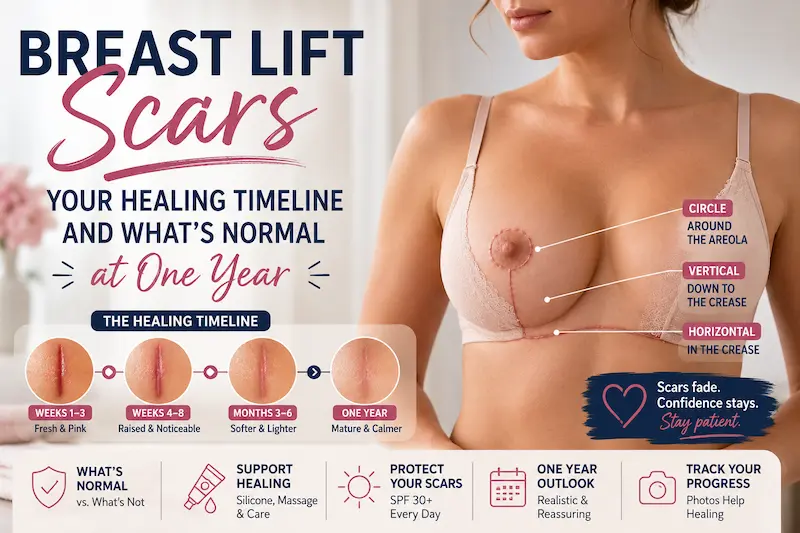
Breast lift scars usually follow a predictable healing pattern: fresh and pink in the first weeks, more noticeable around weeks 4 to 8, then flatter, softer, and lighter over the next 6 to 12 months. At one year, most scars have matured significantly, although they rarely disappear completely.
If you are considering a mastopexy, the real question is not “Will I have scars?” but “Where will they sit, how will they mature, and what is normal at each stage?” A well-planned breast lift at AKM Clinic is designed around breast shape, skin quality, nipple position, and incision placement, but every surgical lift still leaves some form of scar.
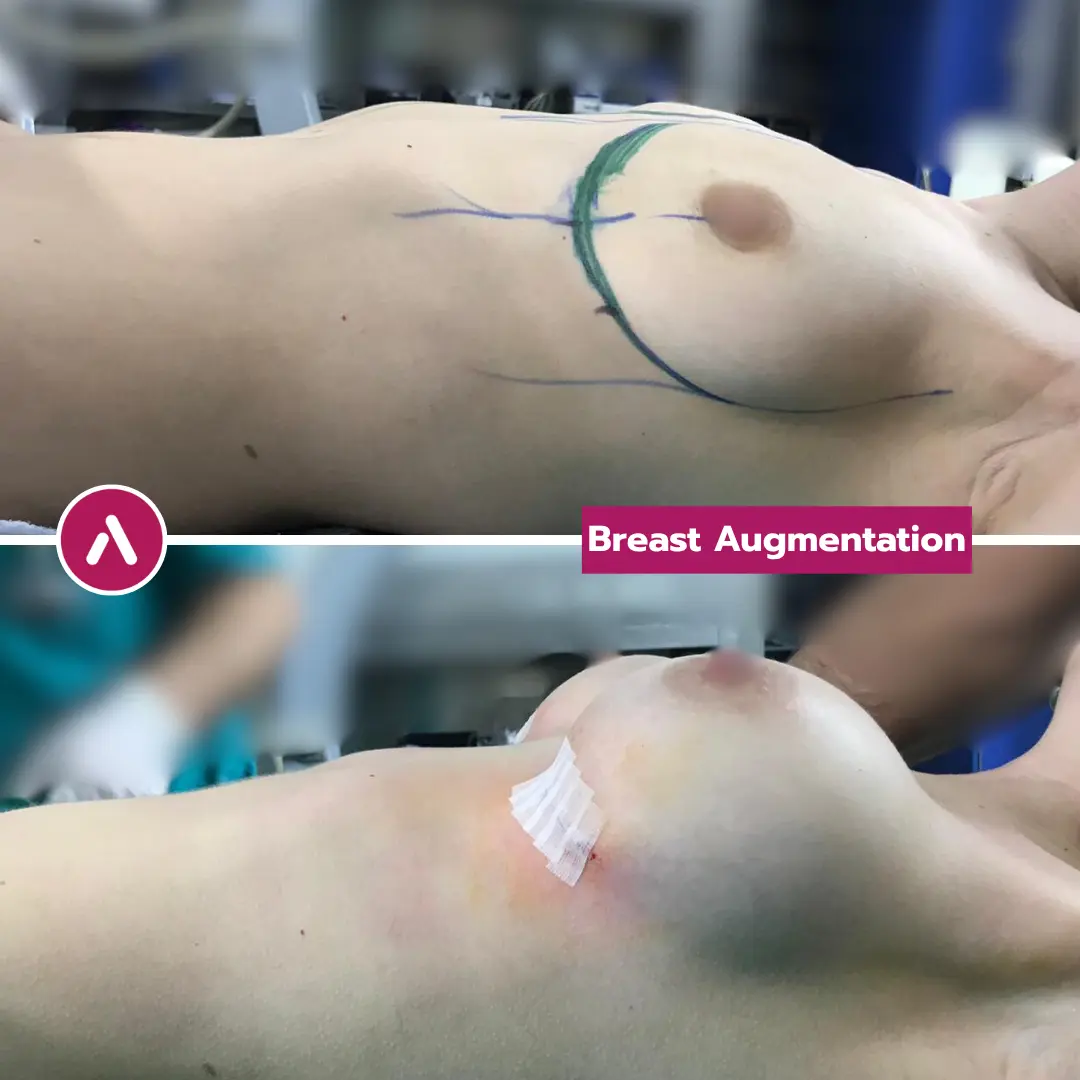
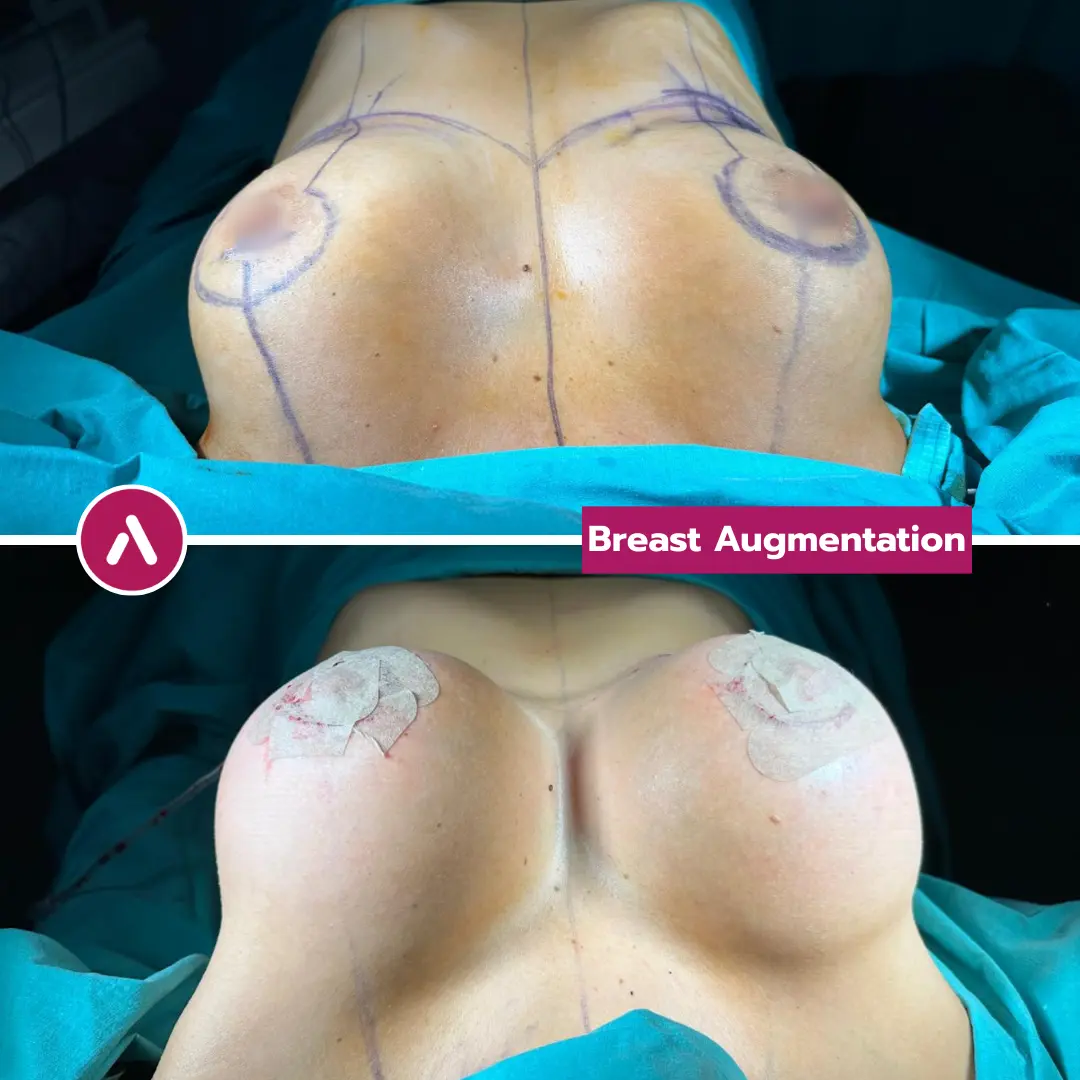
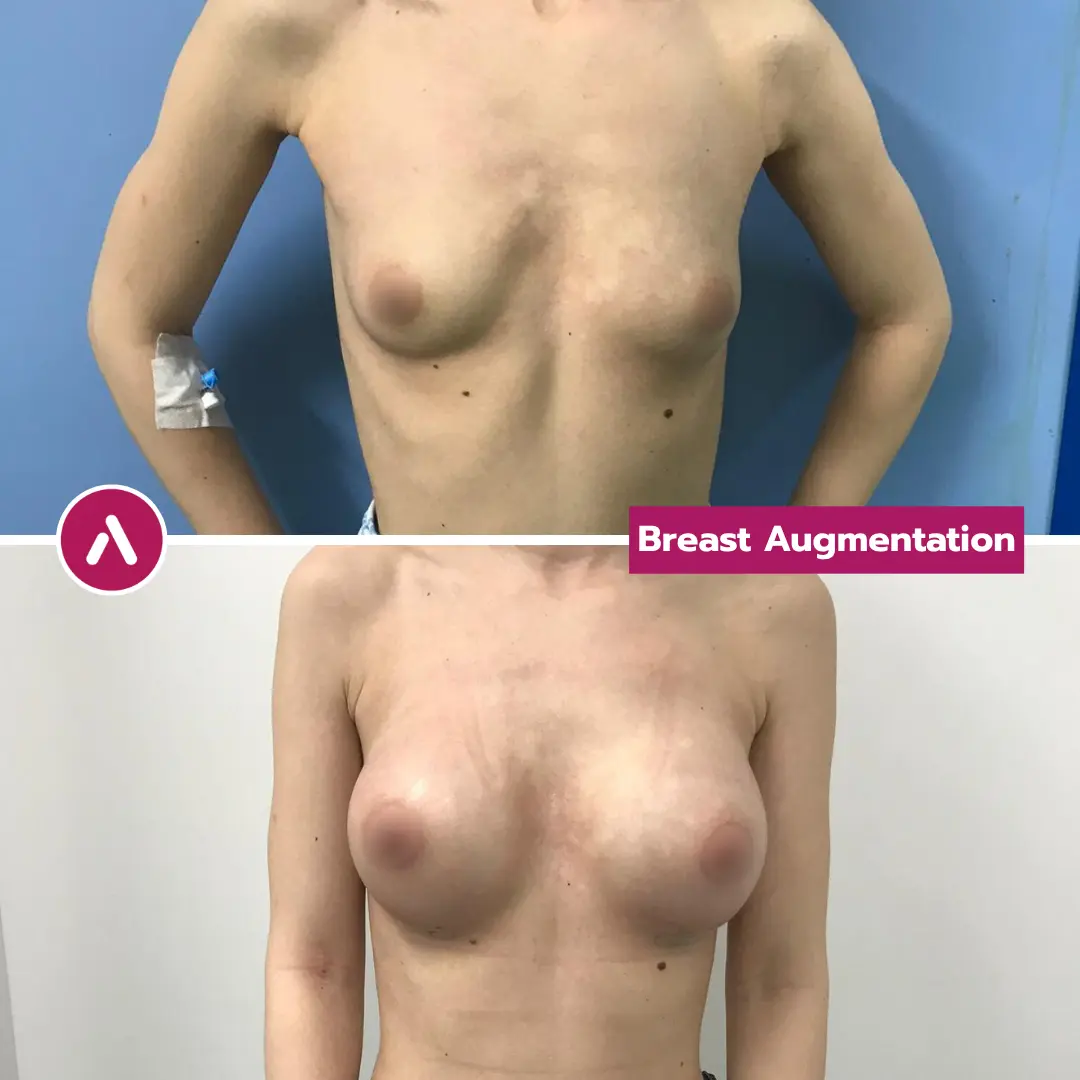
For Canadian patients comparing options from home, this guide focuses only on scar healing: donut, lollipop, and anchor patterns; what they tend to look like week by week; what a healed one-year breast lift scar can realistically look like; and which changes are worth flagging with your surgical team.
Scar healing is not a straight line. Many breast lift scars look more noticeable before they look better, especially during the raised, pink, or firm phase around the first 1 to 2 months. Patience matters because scar maturation continues quietly beneath the skin for a full year or longer.
Table of Contents
Where Breast Lift Scars Sit
Breast lift scars sit exactly where the surgeon needs access to reshape the breast envelope, move the nipple-areola complex, and remove extra skin. The more lifting and skin tightening you need, the longer the incision pattern may be. That does not mean a longer scar is automatically a worse scar; it means the scar pattern has to match the amount of sagging being corrected.
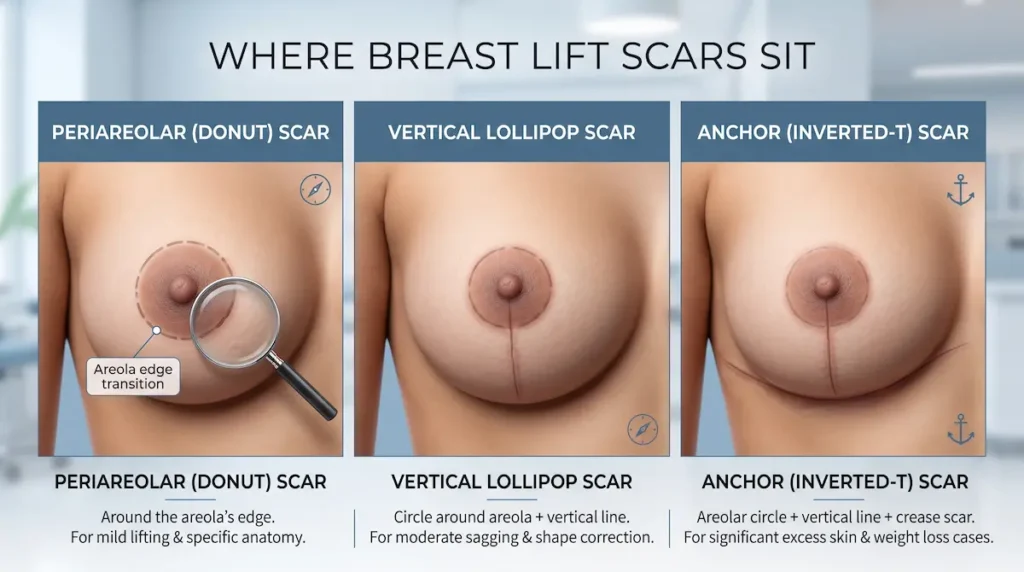
In mastopexy, the most common scar patterns are periareolar, vertical lollipop, and anchor. Each one leaves a different map on the breast. Understanding that map before surgery makes the healing process less surprising later.
Periareolar or “Donut” Scars
A periareolar scar sits around the edge of the areola, where the darker areolar skin meets the surrounding breast skin. Because this colour transition already exists, the scar can be less obvious once it matures. This pattern is usually reserved for mild lifting needs, small areolar adjustments, or carefully selected cases.
The trade-off is that a donut lift has limited lifting power. If too much tension is placed around the areola, the scar may widen or the areola can stretch. This is why surgeons do not choose this incision simply because it sounds smaller; they choose it only when it fits the anatomy.
Lollipop or Vertical Breast Lift Scars
A lollipop scar includes a circle around the areola plus a vertical line from the lower edge of the areola down to the breast crease. This is one of the most common patterns for moderate sagging because it allows meaningful reshaping without the full horizontal crease scar of an anchor lift.
The vertical line is often the scar patients watch most closely in the mirror. Early on, it can look red, tight, puckered, or slightly raised. Over time, it usually softens as swelling settles and collagen remodels.
Anchor or Inverted-T Scars
An anchor scar includes the areolar circle, the vertical lollipop line, and a horizontal line hidden along the breast crease. It is used when there is more excess skin, heavier sagging, or a larger reshaping requirement, including many post-weight-loss cases.
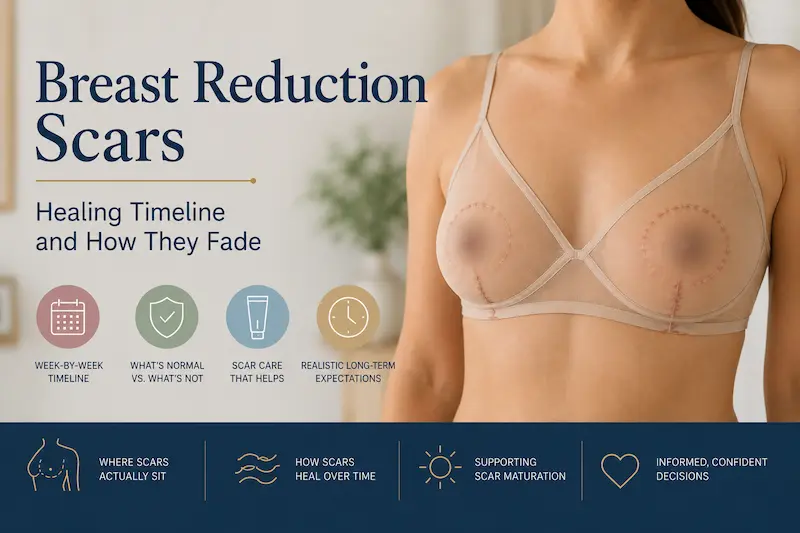
The horizontal crease scar often hides well under the breast once healed, but it can take time to flatten. If you are comparing mastopexy with breast reduction, remember that the scar map can look similar, but the procedure is different: a lift repositions and reshapes the breast, while a reduction removes more tissue for size and weight reduction. For that distinction, see our guide to how breast reduction scars differ from lift scars.
Why Your Scar Pattern Depends on Your Anatomy
No scar pattern is “best” in isolation. The right pattern depends on nipple position, skin looseness, breast volume, asymmetry, and how much lower-pole tightening is needed. A small scar that cannot properly reshape the breast may heal neatly but leave a disappointing shape. A longer scar, planned with less tension, can sometimes mature more smoothly.
This is where consultation quality matters. For Canadian patients travelling for surgery, your plan should include not only the incision type but also a clear explanation of why that pattern suits your breast anatomy and what follow-up documentation you will have once you return home.
The Week-by-Week Timeline
Breast lift scar healing happens in stages. The surface may look closed within a few weeks, but the deeper scar is still reorganizing collagen, blood supply, pigment, and tension for months. Many patients feel reassured once they understand that “more visible at one month” can still be normal.
The timeline below is a general guide, not a guarantee. Your own healing can vary based on skin tone, genetics, incision tension, smoking status, nutrition, surgical technique, and how closely you follow aftercare instructions.
| Healing stage | Typical scar appearance | Usually normal? | Supportive action |
|---|---|---|---|
| Weeks 1–3 | Fresh, pink or red, taped, mildly swollen, sometimes itchy | Yes, if the incision is closed, clean, and not worsening | Keep dressings as instructed, avoid tension, wear support garments as directed |
| Weeks 4–8 | Raised, firmer, brighter pink, red, or darker than surrounding skin | Often yes; this can be the most noticeable stage | Ask when to begin silicone, avoid sun, continue gentle support |
| Months 3–6 | Flatter, softer, less tight, colour slowly settling | Yes, gradual improvement is expected | Continue scar care consistently; photograph progress monthly |
| Months 9–12+ | More mature, lighter or closer to natural skin tone, usually less raised | Yes, although the scar may still be visible | Review long-term appearance with your surgeon before considering revision |
Weeks 1–3: Fresh, Taped, and Swollen
In the first 1 to 3 weeks, scars are new wounds. They may be covered with surgical tape, dressings, or skin glue, depending on your surgeon’s protocol. The surrounding breast tissue can feel swollen, firm, and tight. Mild itching or pulling can also happen as the surface begins to seal.
At this stage, your job is not to “treat the scar” aggressively. It is to protect the incision. That means avoiding unnecessary stretching, keeping the area clean and dry as instructed, wearing your surgical bra, and not applying scar products until your team confirms the skin is fully closed.
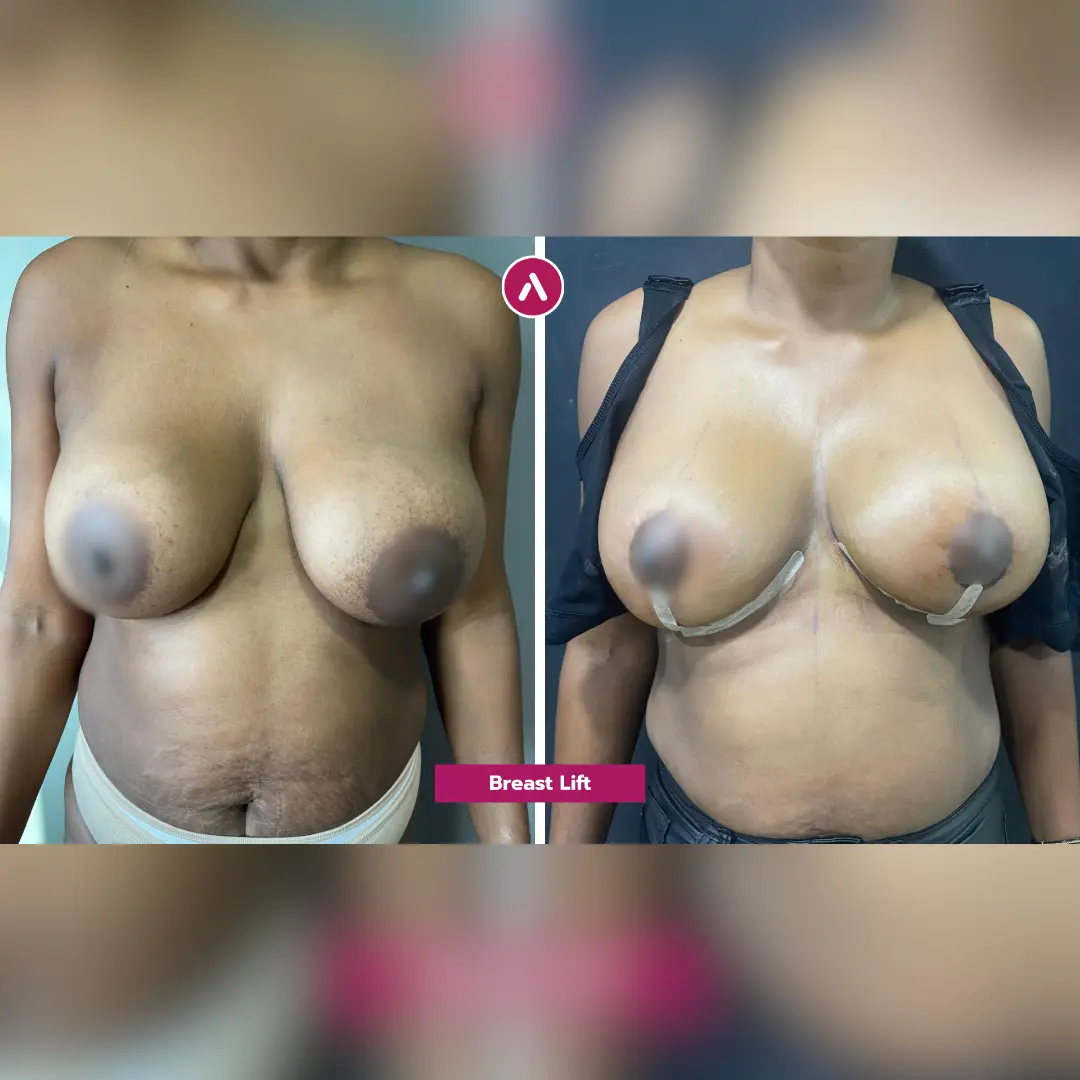
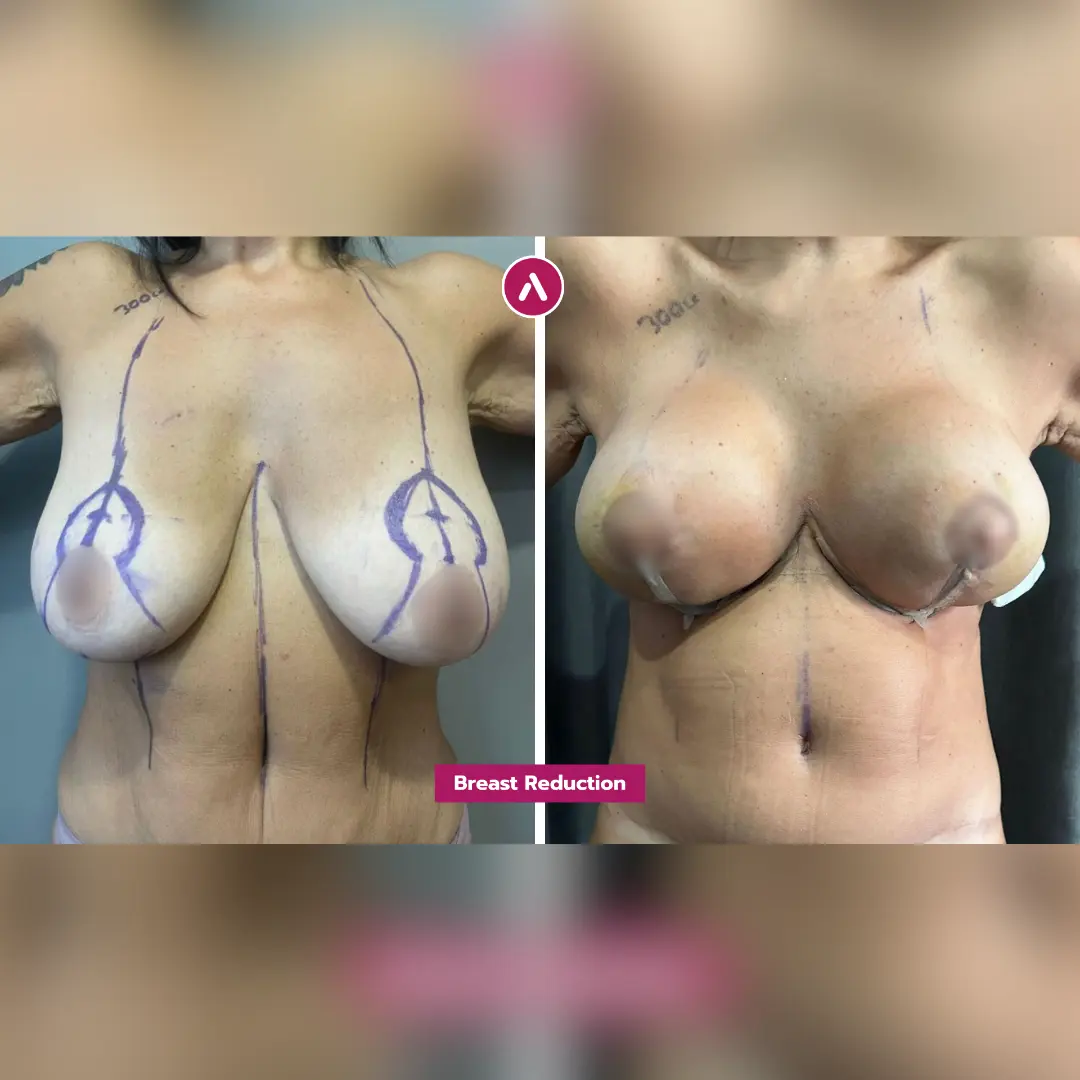
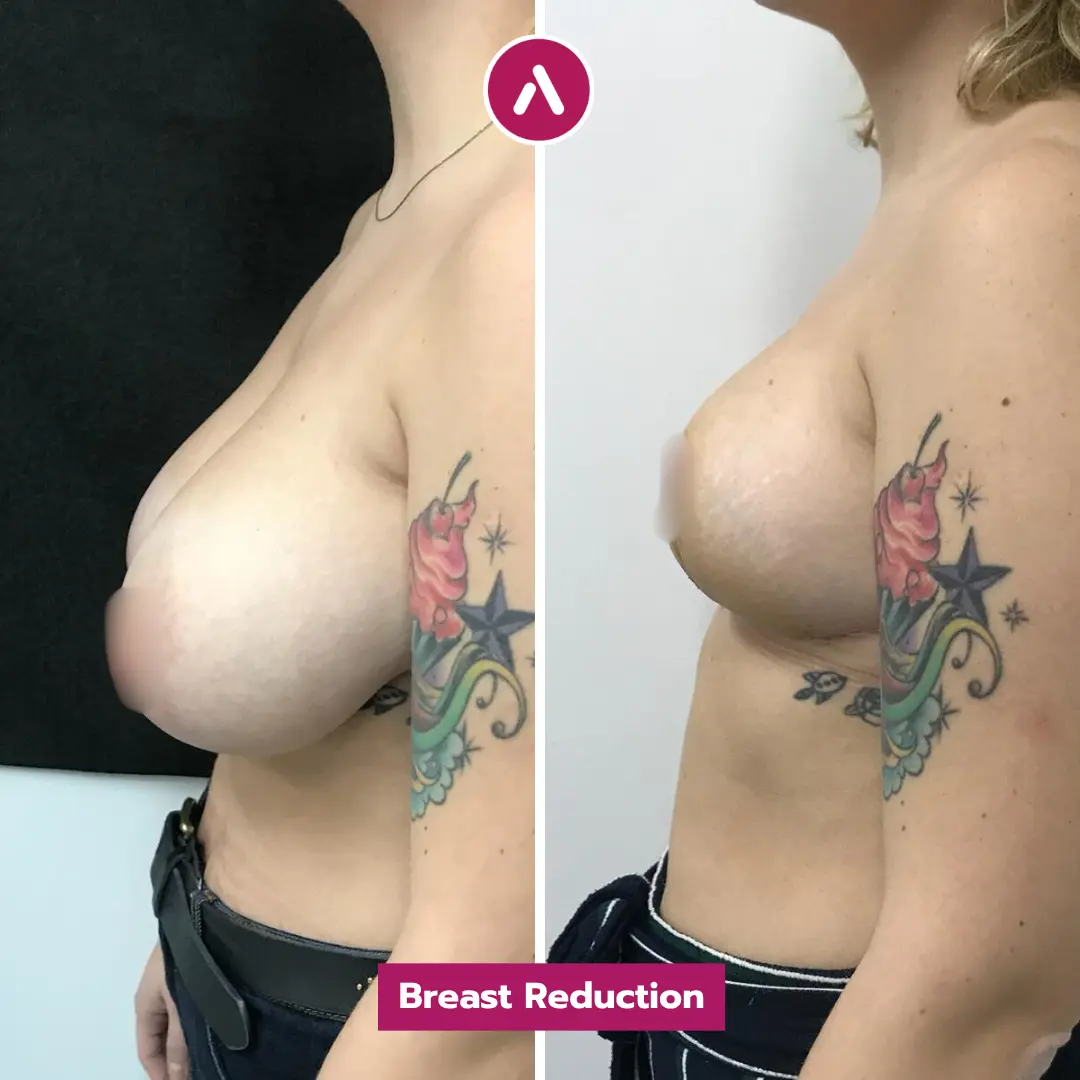
Weeks 4–8: The Raised, Pink, or Darker Peak
This is the stage that worries many patients. The scar may look thicker, brighter, or more raised than it did at 2 weeks. On deeper skin tones, it may look darker rather than pink. That change can feel discouraging, but it often reflects active collagen production rather than a poor final result.
During this phase, the breast lift scar is still biologically busy. Collagen is being laid down to strengthen the incision. Blood flow is increased. The tissue may feel firm under your fingers. If both sides are gradually improving and there are no signs of infection or wound breakdown, this stage is often part of normal healing.
Months 3–6: Flattening and Softening
Between 3 and 6 months, most scars begin to calm down. The raised edge may flatten. The vertical lollipop scar can feel less tight. Colour often starts shifting from vivid pink, red, or brown toward a softer tone, although this process is slower for some patients.
This is also when consistent scar care matters. If your incision is fully closed and your surgeon has cleared you, silicone gel or silicone sheeting may be introduced. Evidence around silicone is not perfect, but it is widely used in scar care; a Cochrane review found limited rigorous evidence for silicone gel sheeting in hypertrophic scars, so it should be framed as a supportive tool rather than a guaranteed fix. Read the Cochrane review on silicone gel sheeting for scars.
Months 9–12: What “Healed at One Year” Usually Means
By 9 to 12 months, many breast lift scars have entered the mature phase. They are usually flatter, softer, and less reactive. A healed one-year breast lift scar may still be visible, especially around the areola or along the vertical line, but it should generally look calmer than it did at 1 or 2 months.
One year is an important checkpoint, not a magic eraser. Some scars continue improving after 12 months, particularly if they were raised, darker, or slow to settle. This is why most surgeons are cautious about discussing scar revision too early unless there is a clear functional or medical concern.
What’s Normal vs Worth Flagging
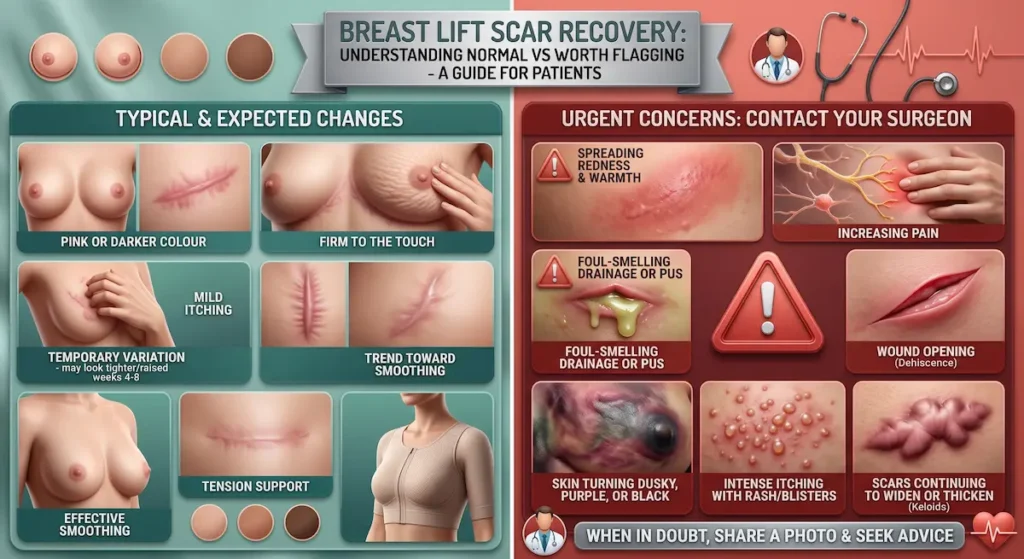
Breast lift scars can look and feel different from week to week, and that variation is part of why recovery can feel emotionally confusing. A scar that is pink, firm, or itchy may still be healing normally. A scar that is opening, draining pus, spreading redness, or turning dusky or black needs prompt review.
The safest way to think about scar healing is to separate “expected changes” from “changes that are getting worse.” Normal healing usually moves slowly in the right direction, even if it is not perfectly symmetrical. A concern is more likely when the incision becomes more painful, more inflamed, wetter, darker, or more fragile over time.
Normal Redness, Firmness, and Itch
Redness or a darker scar colour can be normal in the early months, especially around the vertical lollipop line or the lower anchor crease. The scar may also feel firm under your fingers. That firmness comes from collagen, the structural protein your body uses to strengthen the healing incision.
Itching is also common once the surface is closed. It can happen because nerves are waking up, swelling is settling, and dry healing skin is stretching. Mild itch is different from a hot, painful, spreading rash. If the itch is intense, blistering, or linked to adhesive irritation, your surgical team should know.
When a Scar Looks Worse Before It Looks Better
Many patients expect the scar to fade in a straight line: red in week 1, pale by month 2, nearly gone by month 6. Real healing is rarely that tidy. Breast lift scars often look their most obvious between weeks 4 and 8 because the incision is strengthening internally.
This can be especially noticeable in the mirror after the dressings are removed. The lollipop scar may look tight or raised. The areolar edge may look uneven. The anchor crease may feel thick. Those changes can still be normal when the incision is closed, dry, and gradually settling.
Signs Worth Raising With Your Surgeon
Some scar changes should not be watched passively. Contact your surgical team if you notice spreading redness, increasing warmth, worsening pain, foul-smelling drainage, pus, fever, a wound that is opening, or skin that becomes purple, grey, or black. These are not typical scar-maturation changes.
One rare but serious concern after breast lift surgery is compromised blood supply to the nipple, areola, or skin edge. It is not the same as a normal pink scar. If you are unsure whether a colour change is expected, use photos and ask early. Our guide to breast lift warning signs that need urgent review explains the difference in more detail.
How Skin Tone Can Affect Scar Colour
Scar colour does not mature the same way in every skin tone. Fairer skin may show pink or red scars for longer. Deeper skin tones may develop darker brown pigmentation or, in some people, raised hypertrophic scars. Neither pattern automatically means something has gone wrong.
What matters is the trend. A scar that is slowly flattening and becoming less reactive is usually moving in the right direction. A scar that keeps thickening, widening, itching intensely, or growing beyond the incision line should be assessed, especially if you have a personal or family history of keloids.
How Tension Affects the Final Scar
Scars tend to widen when the incision is under too much pull. This is why support garments, activity limits, and careful lifting restrictions matter. Even after the skin surface looks healed, the deeper layers are still gaining strength.
For a breast lift scar, tension can come from heavy lifting too early, sleeping pressure, vigorous upper-body exercise, or unsupported breast movement. Scar care is not only about creams or silicone. It is also about protecting the incision while the body builds strength beneath the surface.
Supporting Scar Maturation
Scar care works best when it is simple, consistent, and timed correctly. The goal is not to erase the scar. The goal is to help it mature as flat, soft, and calm as your biology allows. Start only when your surgeon confirms the incision is fully closed.
For Canadian patients travelling home after surgery, ask for written aftercare instructions before you leave Istanbul: when to remove or replace tape, when silicone can begin, when to send photos, and which changes require urgent contact. This documentation makes remote follow-up much easier once you are back in Canada.
Silicone Gel or Silicone Sheets
Silicone gel and silicone sheets are among the most commonly used scar-care tools after surgical incisions. They are usually introduced after the skin is sealed, not while the wound is open. Depending on the product and your surgeon’s protocol, they may be used for several weeks or months.
The evidence should be explained honestly. Silicone can support scar hydration and may help raised or firm scars settle, but it is not a guarantee that a breast lift scar will disappear. Some reviews show benefit, while higher-quality evidence remains limited. That is why silicone should be seen as one part of scar care, not the entire plan.
Sun Protection and Scar Pigmentation
UV exposure can make healing scars darker and more noticeable, even if the breast area is not usually exposed day to day. This matters during travel, summer clothing, beach holidays, tanning, or any situation where the chest may see direct sunlight.
Health Canada advises using a broad-spectrum sunscreen with SPF 30 or higher, applying it before sun exposure, and reapplying during exposure. The Canadian Dermatology Association also recognizes sunscreens that meet criteria such as SPF 30 and above and gentleness on skin. Once your incision is fully closed and your surgeon clears sunscreen use, this becomes part of long-term scar protection. Review Health Canada’s sunscreen guidance.
Massage, Taping, and Pressure
Scar massage is sometimes recommended once the incision is fully healed. The aim is to soften firmness and reduce tightness, not to aggressively break down tissue. If massage is done too early or too forcefully, it can irritate the scar instead of helping it.
Some surgeons also use paper tape, silicone tape, or supportive taping to reduce tension across the incision. Follow the exact protocol you are given. A product that works well for one patient can irritate another, especially if adhesive sensitivity develops.
Nutrition, Nicotine Avoidance, and Healing Capacity
Your scar is not healing in isolation. Protein intake, hydration, sleep, blood flow, and general health all affect tissue repair. Nicotine is particularly important because it can reduce blood supply to healing skin and increase wound-healing risks.
If you smoke, vape, or use nicotine products, be honest with your surgical team before surgery. Scar appearance is not only a cosmetic issue here. Blood supply affects wound strength, skin-edge survival, and the chance of delayed healing.
Why Conservative Planning Helps Scars Heal Better
Scar quality is influenced before the first incision is ever made. Planning a breast lift around realistic skin removal, controlled tension, and appropriate support gives the scar a better environment to mature. This is one reason “smaller incision” is not always the same as “better scar.”
Some patients are also weighing whether they need implants or a lift alone. That decision affects shape goals, breast weight, and the tension placed on healing tissue. If you are considering a breast lift without implants, the scar discussion should still include breast weight, skin quality, and how much lift is needed.
Remote Follow-Up After Returning to Canada
For international patients, follow-up should be organized before the flight home. Ask when to send photos, what angles to use, and which symptoms require same-day contact. Clear photo documentation helps your team compare changes over time instead of judging one isolated picture.
It is also reasonable to ask how your surgical records, medication list, and aftercare instructions will be shared with you. A careful clinic will not leave you guessing once you are home. That continuity matters for scar healing, especially during the first 6 to 8 weeks.

Realistic Appearance at One Year
The one-year mark is when many patients finally feel their breast lift scars have “settled.” The lines are usually flatter, softer, and less colourful than they were in the early months. Still, healed does not mean invisible. It means mature, stable, and much less reactive.
This is also the stage where expectations matter most. A breast lift changes breast position and contour, but it does not make skin heal without a trace. The best long-term result is usually a scar that sits predictably, blends reasonably with the surrounding skin, and does not distract from the improved breast shape.
How Scars Typically Look at 12 Months
At 12 months, a breast lift scar often looks pale, soft pink, light brown, or closer to the patient’s natural skin tone. The areolar scar may blend into the colour border around the areola. The vertical lollipop line may still be visible in direct light, but it is usually less raised and less firm than it was earlier.
Anchor scars can take longer to look calm because there is more incision length and more tension along the lower breast crease. That does not automatically mean the result is poor. A crease scar that is flat, comfortable, and hidden under the breast may be quite acceptable even if it is still visible up close.
Why Some Scars Keep Improving After One Year
Scar maturation can continue beyond 12 months, especially in patients whose scars were raised, dark, itchy, or slow to soften. The deeper collagen pattern may keep reorganizing quietly even after the surface looks stable.
This is why most surgeons avoid rushing into scar revision. Revising too early can restart the healing cycle and create a new scar that still needs months to mature. Unless there is a medical issue or severe distortion, it is often better to review progress over time with consistent photos.
Camouflage and Revision Are Last-Resort Options
Some patients consider medical tattooing, laser treatment, steroid injections, microneedling, or scar revision if a scar remains raised, wide, or strongly pigmented after full maturation. These options should be individualized. They are not routine steps for every breast lift scar.
The first question should always be: what type of scar is it? A flat dark scar, a raised hypertrophic scar, a widened scar, and a keloid tendency are not managed the same way. Your surgeon or a qualified local clinician may recommend different options depending on the scar’s texture, colour, thickness, and symptoms.
Setting Expectations Before Surgery
The best scar conversation happens before surgery, not after. Ask which incision pattern you are likely to need, where each line will sit, how scars usually mature in your skin type, and what your aftercare plan will look like after you return to Canada.
If your lift is related to weight loss, skin quality may be thinner, looser, or more stretched than average. That can affect both incision planning and scar tension. For a deeper look at that situation, read our guide to breast lifts after major weight loss.
What Canadian Patients Should Confirm Before Travelling
Before travelling for surgery, confirm that your care is led by a qualified surgical team. Ask which specialist certification your surgeon holds and where it was issued: a qualification earned outside Canada is not the same as certification by the Royal College of Physicians and Surgeons of Canada (RCPSC). Our guide to plastic surgeon board certification explains what Canadians should verify.
You should also ask what records you will receive: operative notes, medication list, implant details if relevant, dressing instructions, emergency contact pathway, and scheduled photo follow-ups. For a scar-focused article, cost should remain a separate topic; if you are comparing overall planning, use the dedicated page for breast lift cost in CAD rather than trying to judge value from scar length alone.
Frequently Asked Questions: Breast Lift Scars
These answers focus on scar healing only. They do not replace your surgeon’s instructions, because scar behaviour depends on your incision pattern, skin biology, wound tension, and overall recovery.
How long do breast lift scars take to fade?
Why do my breast lift scars look worse after a month?
Do silicone sheets really work for breast lift scars?
Are anchor scars worse than lollipop scars?
Do darker skin tones heal with darker breast lift scars?
Will breast lift scars ever fully disappear?
Can I use scar cream right away?
When should I worry about a breast lift scar?
Final Takeaway
Breast lift scars are part of every surgical mastopexy, but they should not stay angry-looking forever. Most move through a predictable cycle: fresh and taped in the first weeks, raised or more colourful around weeks 4 to 8, softer by months 3 to 6, and more mature around one year.
The best scar outcome comes from three things working together: a well-matched incision plan, low-tension healing, and patient aftercare. For Canadian patients, remote follow-up and clear written instructions are not extras. They are part of safe planning.
If you are comparing breast lift options, ask AKM Clinic to assess your incision pattern, scar risk, and follow-up plan during a virtual consultation. A good scar plan starts before surgery.
Medical Disclaimer: This article is for educational purposes only and is not medical advice. Surgical risks, scar healing, and results vary by patient. Always follow the instructions of your qualified surgeon or healthcare professional.