
Can You Breastfeed After a Breast Reduction? What to Know Before You Decide

AI Summary
- Breastfeeding after breast reduction may be possible, depending on preserved ducts, nerves, and glandular tissue.
- Pedicle techniques may better protect milk supply than free nipple grafts, but results vary.
- Nipple sensation and lactation support matter for let-down, supply, and supplementation planning.
- Discuss future feeding goals before surgery to align technique, timing, and Canadian follow-up care.
Summary generated by AI, fact-checked by our medical experts
Breastfeeding after breast reduction is possible for many patients, but it is not something any surgeon can promise. Your chances depend on how much milk-producing tissue remains, whether ducts and nerves are preserved, how the nipple is moved, and what kind of feeding support you have after birth.
For Canadian patients, this question often sits in the middle of a bigger decision. You may want relief from heavy breasts now, yet still hope to nurse a future baby. That tension is real. A breast reduction can improve comfort, posture, clothing fit, and confidence, but it can also change the anatomy that breastfeeding relies on.
The goal is not to push you toward or away from surgery. It is to help you ask sharper questions before you decide. At AKM Clinic, a breast reduction consultation is not only about final cup size or scar placement. It also includes a careful discussion of future pregnancy, nipple sensation, milk supply, and technique selection, especially if breastfeeding is still part of your life plan.
For the full procedure overview, including candidacy, incision options, and travel planning, see AKM’s breast reduction approach in Turkey. This article stays focused on one question: how breast reduction can affect breastfeeding later.
Table of Contents
Breastfeeding After Breast Reduction: The Honest Answer
This section gives the direct answer before we look at surgical techniques. Many people can breastfeed after a reduction, some produce a full supply, some produce a partial supply, and some are unable to breastfeed. The difference is usually anatomical, not motivational.
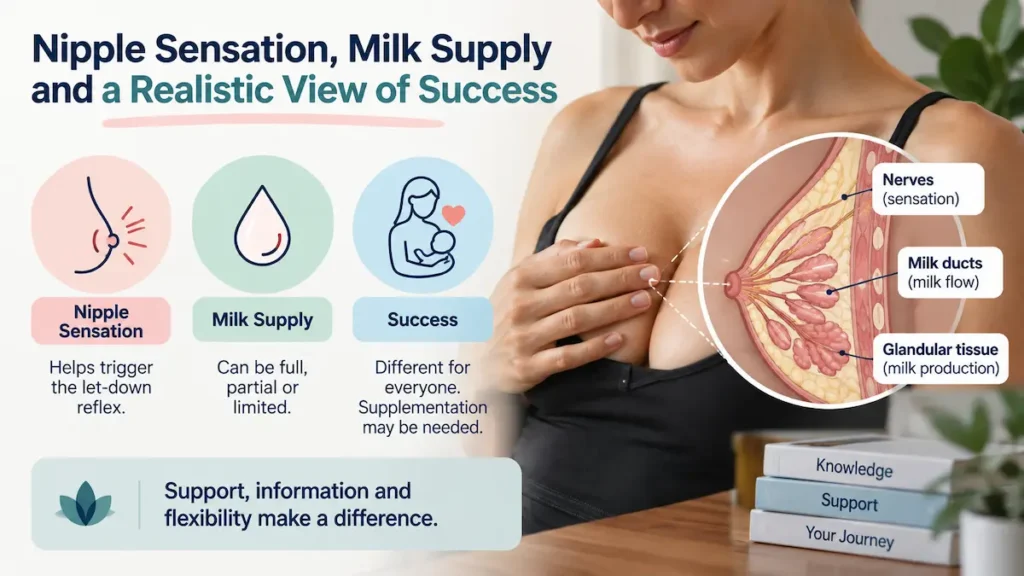
Breastfeeding depends on three main structures working together. First, there must be enough glandular tissue to make milk. Second, milk ducts need a pathway toward the nipple. Third, nerves around the nipple and areola help trigger the hormonal let-down reflex when a baby latches.
A breast reduction can affect any of these structures. During surgery, tissue is removed to reduce breast volume and weight. The nipple–areola complex may also be lifted to a higher position. If the nipple remains attached to a well-preserved bridge of tissue, blood supply, nerves, and ducts are more likely to remain functional. If that connection is cut, breastfeeding becomes much less predictable.
That is why the question is not simply, can you breastfeed after a breast reduction? A better question is: what technique will be used, and how much of the tissue beneath the nipple will stay connected?

Why “possible” does not mean guaranteed
Breast reduction and breastfeeding outcomes vary because every breast is different before surgery. Some patients naturally have more glandular tissue. Some need a small reduction; others need a much larger volume removed. Some have a nipple position that can be lifted on a preserved pedicle. Others have severe heaviness or sagging that may require more complex movement of the nipple.
Even without prior surgery, breastfeeding is not always straightforward. Latch, infant factors, hormonal health, birth recovery, medication, and early support can all affect supply. A previous reduction adds one more variable: whether the breast still has enough connected tissue, ducts, and sensation to respond well.
This is why careful counselling should avoid absolute promises. The safer language is realistic: breastfeeding may be possible, but you should plan for flexibility. Some patients nurse exclusively. Some combine breastfeeding with expressed milk, donor milk, or formula. Some find that one breast produces more than the other. Partial success is still meaningful.
What “partial success” can look like
Many patients imagine breastfeeding as all or nothing. After reduction, it is better to think in ranges. You may make a full supply. You may produce enough milk for comfort nursing and bonding, but still need supplemental feeding. You may need pumping guidance or a lactation consultant early in the first days after birth.
None of those outcomes means you failed. It means your anatomy and postpartum support plan matter. If future breastfeeding is important to you, tell your surgeon before the operation, not after. Technique decisions are made before tissue is removed.
Surgeon-led note: “Breastfeeding goals should be discussed before breast reduction surgery because the technique is chosen before tissue is removed. When future feeding matters, the priority is preserving as much functional tissue, duct connection, blood supply, and nipple sensation as safely possible.”
Which Breast Reduction Techniques Protect Breastfeeding?
This section explains why technique matters. Breastfeeding relies on continuity: the nipple–areola complex, ducts, nerves, blood supply, and glandular tissue need to function as a connected system. Preserving more of that system can improve the odds, but it still cannot guarantee milk production.
Most modern breast reductions use a pedicle technique. A pedicle is a bridge of tissue that keeps the nipple–areola complex attached to the breast. This bridge can carry blood vessels, nerves, ducts, and glandular tissue. The exact pedicle may be inferior, superior, superomedial, medial, lateral, or central, depending on your anatomy and the surgical plan.
The most useful evidence does not only compare technique names. It asks whether the column of subareolar parenchyma, the tissue connection between the nipple–areola complex and the chest wall, is preserved. In a systematic review of breastfeeding after breast reduction, Kraut and colleagues reported median breastfeeding success of 4% when this column was not preserved, 75% with partial preservation, and 100% with full preservation.
Those numbers need careful interpretation. They come from studies that did not all define “success” in the same way. They should not be treated as a personal prediction. What they show clearly is the direction of risk: preserving the tissue column beneath the nipple appears to matter.
Pedicle techniques and preserved subareolar tissue
Pedicle-preserving surgery is usually the more breastfeeding-conscious approach. The nipple is moved while remaining attached to living tissue. This may protect some duct pathways and some nerve input. It may also support blood supply, which is essential for safe healing.
Still, “pedicle” is not a magic word. A pedicle can be narrow or broad. It can preserve different amounts of tissue. A small reduction and a large reduction can use the same named pedicle but have different effects on future feeding. This is why the consultation should move past labels and into specifics.
Ask your surgeon how much tissue will likely be removed, where the nipple will move, which pedicle is planned, and whether the subareolar tissue column is expected to remain intact. Those answers matter more than a simple technique name.
| Technique or tissue pattern | Subareolar tissue column | Breastfeeding implication | Important note |
|---|---|---|---|
| Pedicle-preserving reduction | Partly or fully preserved | Breastfeeding may be possible, depending on ducts, nerves, tissue volume, and support after birth. | Ask which pedicle is planned and how much tissue beneath the nipple will remain connected. |
| Partial preservation | Some connection remains | Milk production may be partial. Supplement planning may be needed. | Partial supply can still support bonding and comfort feeding. |
| Full preservation | Column remains intact | Studies report higher breastfeeding success when this connection is maintained. | Higher reported success is not an individual guarantee. |
| Free nipple graft | Connection is severed | Breastfeeding is usually not expected because ducts and nerves are disconnected. | This may be considered in very large reductions or complex anatomy, but it changes future feeding expectations. |
Free nipple graft and why it changes the conversation
A free nipple graft is different from a pedicle technique. The nipple–areola complex is removed, resized or repositioned, and grafted back onto the breast. This can be useful in selected cases, especially very large reductions where moving the nipple on a pedicle may not be safe. But it usually cuts the duct and nerve pathways needed for breastfeeding.
If you are planning children later and breastfeeding is a priority, this point deserves a direct conversation before surgery. You can ask: “Is a free nipple graft likely in my case?” and “Is there a pedicle option that could reduce my breasts safely while preserving more feeding potential?”
The answer may still be that a free nipple graft is the safest surgical option for your anatomy. That does not make the choice wrong. It means you should make it with clear expectations, not after-the-fact surprise.
Nipple Sensation, Milk Supply, and What “Success” Looks Like
This section explains why breastfeeding after surgery is not only about milk glands. Nipple sensation, hormone signals, duct pathways, and early feeding support all influence the outcome. A technically careful operation can protect anatomy, but postpartum support still matters.
The nipple and areola are not passive parts of breastfeeding. When a baby latches, nerve signals travel from the nipple to the brain. The body then releases hormones that help milk move from the breast to the baby. This is the let-down reflex. If nipple sensation is reduced after breast reduction, that reflex may be weaker, slower, or less predictable.
Some sensation changes are temporary. Swelling, incision healing, and nerve recovery can take months. Some patients feel tingling, hypersensitivity, numbness, or a patchy return of feeling. Others have long-term reduced sensation. This is one reason the surgeon should discuss nipple sensation changes after reduction before surgery, especially if feeding a future baby is important to you.
The medical literature also supports careful counselling. A 2023 update on breastfeeding ability after reduction reviewed the subject again and reinforces the same practical message: patients should be counselled before surgery about how breast reduction can affect future breastfeeding.
How nipple sensation affects feeding
Nipple sensation can influence both latch feedback and milk release. A baby can still latch if sensation is altered, but your body may not respond as efficiently. Some people need more frequent feeds, pumping, hand expression, or guidance from a lactation consultant to encourage supply.
Reduced sensation does not automatically mean breastfeeding is impossible. It does mean you should avoid making your plan around one ideal outcome. A breastfeeding plan after reduction should include flexibility from the beginning.
Milk supply may be full, partial, or limited
Milk production after reduction exists on a spectrum. One person may produce enough milk for exclusive breastfeeding. Another may make a partial supply and use formula or donor milk to meet the baby’s full nutritional needs. A third may have very limited production, especially after a technique that disconnected ducts or the nipple–areola complex.
Partial supply is common enough that it should be discussed openly. It can still be valuable. Nursing may provide comfort, bonding, immune factors, and routine, even when supplementation is needed. The goal is a fed baby and a supported parent, not an all-or-nothing definition of success.
Canadian lactation support should be part of the plan
For patients returning to Canada, the surgery plan should connect with the postpartum plan. Before giving birth, tell your family physician, midwife, obstetrician, public health nurse, or lactation consultant that you have had a breast reduction. Bring the operative details if you have them.
A lactation consultant can help assess latch, milk transfer, pumping needs, supplementation, and infant weight gain. This is especially useful in the first days after birth, when supply is being established. Early help matters more than waiting until you feel overwhelmed.
Canadian decision note: Use a two-layer plan. Your surgical team explains anatomy, technique, and risk. Your Canadian maternity care team helps monitor latch, milk transfer, infant weight, and supplementation after birth. A cautious approach means no guarantees, clear documentation, and patient safety first.
Timing: Should You Wait Until After Children?
This section helps you weigh timing rather than giving one universal answer. Some patients prefer to wait until after pregnancy and breastfeeding. Others choose surgery earlier because symptoms are affecting daily life now. Both choices can be reasonable when expectations are clear.
If you are planning a pregnancy soon, waiting may make sense. Pregnancy and breastfeeding can change breast volume, skin stretch, nipple position, and breast shape. If you have reduction surgery first, those later changes may affect the cosmetic result. You may also be making the breastfeeding question more uncertain before you have had the chance to nurse.
That said, waiting is not always the right choice for every patient. Some people live for years with neck pain, shoulder grooves, rashes, difficulty exercising, posture strain, or emotional distress from very heavy breasts. For them, the quality-of-life benefit of surgery may outweigh the possibility of reduced breastfeeding capacity later.
Reasons to wait
Waiting can be sensible if breastfeeding is one of your highest priorities, pregnancy is likely soon, or you would feel deeply distressed if you could not produce a full milk supply. It also allows the surgeon to operate after pregnancy-related breast changes have settled.
Patients who wait may also have a clearer idea of final breast size and shape. If the breasts change significantly during pregnancy or nursing, a later operation can address the post-pregnancy anatomy directly.
Reasons not to wait
Not waiting can also be reasonable. If breast size is limiting your work, sport, sleep, clothing, or confidence, delaying surgery for years may not feel realistic. A thoughtful reduction can still be planned with breastfeeding preservation in mind, even though future feeding cannot be guaranteed.
This is where expectation-setting matters. Some people who later feel conflicted are not unhappy with the surgery itself; they are unhappy that timing, scarring, sensation, or future breastfeeding was not fully discussed before the decision. If that concern is on your mind, read more about why some patients question timing before children.
Pregnancy may change your result
Pregnancy can enlarge the breasts again. Breastfeeding may also stretch the skin envelope, especially if breast size fluctuates sharply. This does not undo every result, but it can change breast position, firmness, and upper-pole fullness.
If your main concern is sagging after major weight change or pregnancy, the conversation may involve lifting rather than reducing. That is a separate decision pathway; see lift planning after weight loss or pregnancy changes for a different but related scenario.
What to Ask Your Surgeon Before You Decide
This section turns the breastfeeding question into a practical consultation checklist. You do not need to become a surgical expert, but you should know enough to ask about ducts, nerves, nipple movement, tissue removal, and documentation before committing to a plan.
The most important question is not “Will I definitely breastfeed?” No responsible surgeon can guarantee that. A better question is: “How will this operation be planned if future breastfeeding matters to me?”

Questions about technique
- Which pedicle technique do you expect to use? Ask whether the nipple will remain attached to a tissue bridge and how that may support blood supply, nerves, and ducts.
- Will the tissue column under the nipple be preserved? This is the key anatomical concept linked with higher reported breastfeeding success.
- Is a free nipple graft likely in my case? If yes, ask what that means for future breastfeeding expectations.
- How much tissue do you expect to remove? Larger reductions may have different functional trade-offs than smaller reductions.
- What sensation changes should I expect? Ask about temporary numbness, long-term sensation change, and how likely these changes are given your anatomy.
Questions about size goals and tissue removal
Many patients arrive with a desired cup size, but cup size is not a medical measurement. Breastfeeding potential relates more to preserved tissue, duct connection, and nipple function than to the letter on a bra label. Still, the amount of tissue removed can influence both shape and function.
Use size goals as a conversation starter, not a fixed demand. A reduction that is too aggressive for your breastfeeding goals may not match your priorities. For a separate discussion of realistic size expectations, see how removal volume relates to cup size.
Questions about records and follow-up after returning to Canada
Ask for clear operative documentation. It can help your Canadian care team later if you become pregnant and want feeding support. Useful details may include the technique used, whether a free nipple graft was performed, the approximate tissue removed, and any known nipple sensation changes after healing.
If you are travelling through Istanbul and returning through YYZ or another Canadian airport, ask how follow-up will be organized after you go home. Breastfeeding may happen months or years later, but good documentation begins at the time of surgery.
Planning note for Canadian patients: If cost is part of your decision, keep it separate from the breastfeeding discussion. Review breast reduction pricing in CAD for budget planning, but use your consultation to focus on anatomy, technique, and long-term goals.
Questions about quality signals
Credentials do not remove breastfeeding uncertainty, but they help you assess how carefully that uncertainty is handled. Ask whether the surgical plan will be reviewed by a European Board-Certified plastic surgery team using an RCPSC-equivalent framework, and ask how the hospital pathway, anesthesia plan, and aftercare are documented.
AKM Clinic operates through a surgical pathway in Istanbul, and its patient reviews are publicly visible on Trustpilot. Those are trust signals, not promises of breastfeeding success. For this topic, the most relevant question remains anatomical: how much functional tissue, duct connection, and nipple sensation can be preserved safely?
Questions about results and scars
Future breastfeeding is only one part of the decision. You may also want to understand shape, lift, scar colour, and long-term settling. Those topics should be discussed honestly without turning this article into a results gallery.
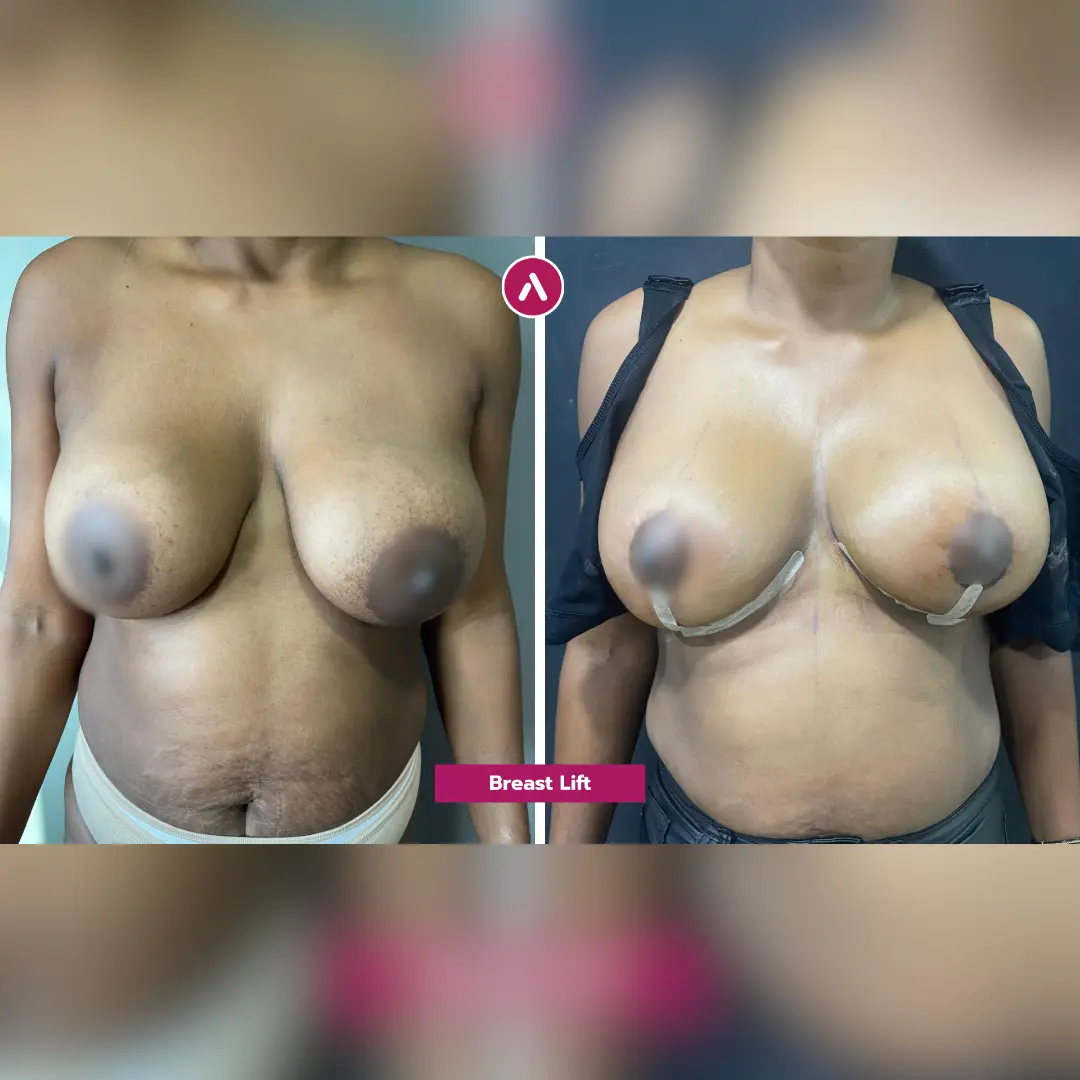
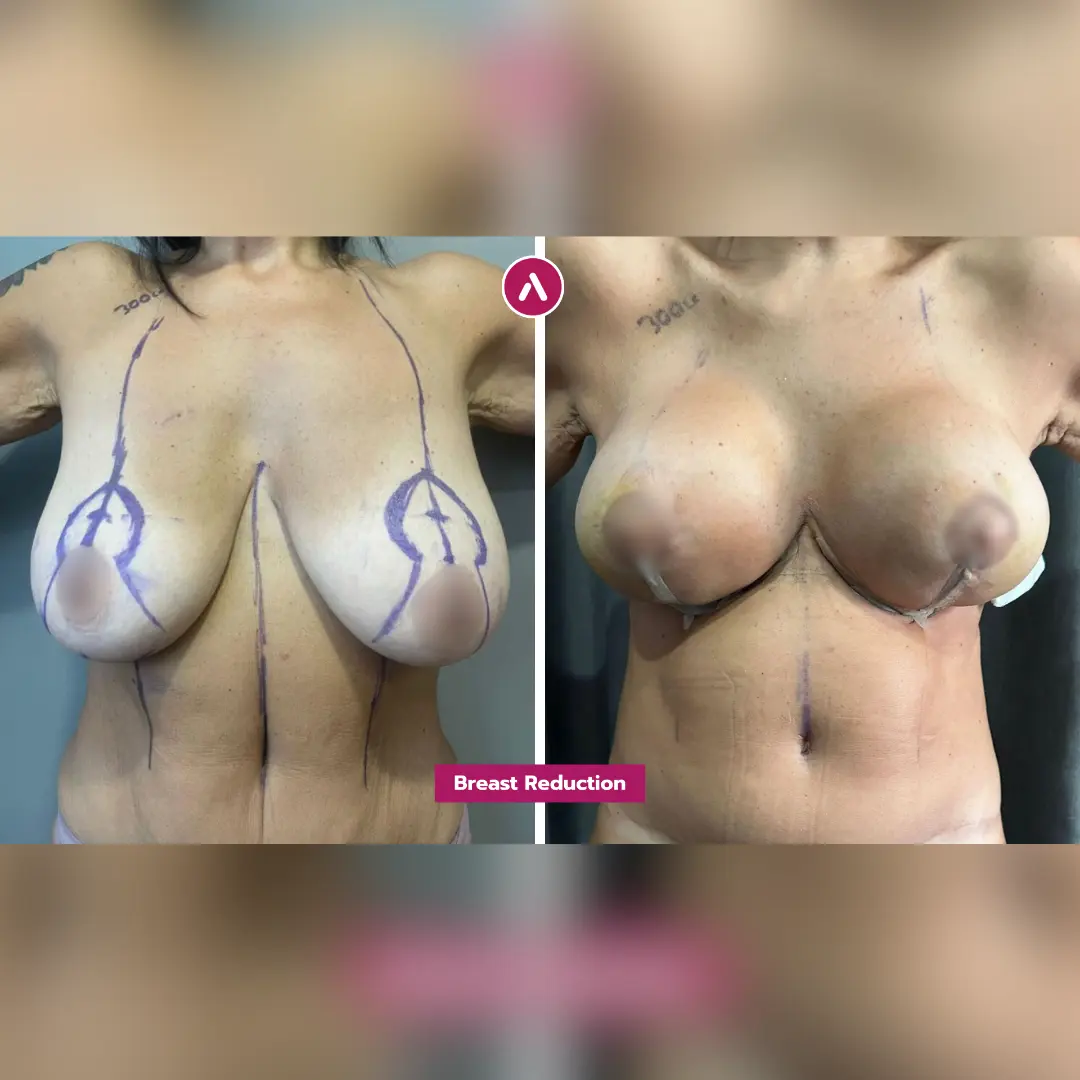
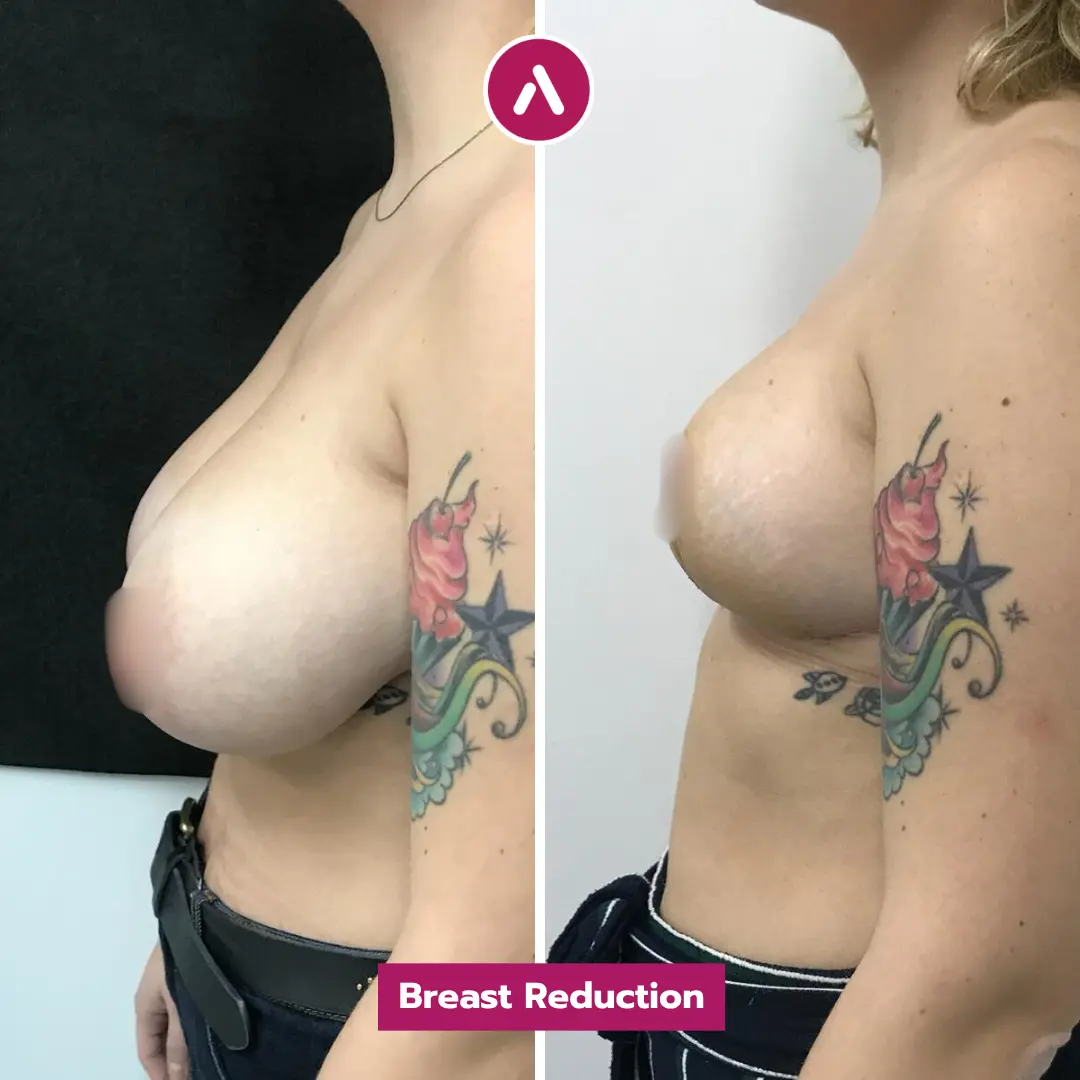
For visual context, review healed results after reduction. Keep in mind that photos show appearance, not milk supply. A beautiful result does not prove breastfeeding capacity, and breastfeeding ability does not predict final scar appearance.
Frequently Asked Questions About Breastfeeding After Breast Reduction
This section answers the practical questions patients often ask before deciding on surgery. The safest way to read these answers is as a planning guide, not a personal prediction. Your anatomy, technique, healing, pregnancy, and postpartum support all matter.
Can you breastfeed after a breast reduction?
Which breast reduction technique lets you breastfeed?
What is breastfeeding success after breast reduction?
Will I make enough milk after a reduction?
Does breast reduction affect nipple sensation?
Should I wait until after kids for a breast reduction?
Can you breastfeed after a free nipple graft?
Can a breast lift after breastfeeding be combined with reduction?
What should I tell my Canadian maternity care team later?
Making the Decision With Realistic Expectations
This final section brings the decision back to you. Breast reduction can be life-changing for the right patient, but future breastfeeding deserves a clear, non-rushed conversation. The strongest decision is not the one that ignores trade-offs; it is the one that matches your body, symptoms, values, and plans.
If your breasts are causing daily discomfort now, it may not feel fair to wait years for a possible pregnancy. If breastfeeding is central to your future, it may not feel right to accept avoidable uncertainty. Both reactions are valid. A careful consultation should make room for both.
The most useful preparation is simple. Tell your surgeon that future breastfeeding matters. Ask which technique is planned. Ask how the nipple–areola complex will remain attached. Ask whether a free nipple graft is likely. Ask what could happen to nipple sensation. Ask how the amount of tissue removed may affect function.
Then make a feeding plan that allows more than one outcome. You may breastfeed fully. You may breastfeed partially. You may supplement. You may need early lactation support. You may decide that symptom relief now is worth that uncertainty. What matters is knowing the trade-off before surgery, not discovering it later.
At AKM Clinic, Canadian patients can use the virtual consultation to discuss breast size, symptom relief, incision planning, nipple position, and future breastfeeding goals before travelling. The surgical plan should be honest and anatomy-led. Results vary individually.
Ask AKM how your breast reduction could be planned if future breastfeeding is still part of your life plan.
Medical Disclaimer: This article is for educational purposes only and does not replace medical advice. Breastfeeding capacity after breast reduction varies from person to person. If you are pregnant, planning pregnancy, or concerned about milk supply after surgery, speak with a qualified physician, maternity care provider, and lactation consultant.
Related Procedures




Ready to Begin Your Journey?
Join the more than 2,000 patients who have trusted Dr. Akif Mehmetoğlu and the AKM Clinic team. Your journey begins with an informative, no-obligation conversation. Contact us today from across Canada to schedule your complimentary virtual consultation.
#1: Receive Your Personalized Quote
Start with a complimentary, no-obligation virtual consultation. Share your photos, and our surgical team will provide a fully personalized treatment plan and a transparent, all-inclusive pricing package quoted in Canadian dollars (CAD). There are no hidden fees.
#2: Secure Your Procedure Date
Once you are ready to proceed, our dedicated English-speaking patient coordinators will help you secure your procedure date. We will manage your logistical bookings in Istanbul, including your five-star hotel and private airport transfers.
#3: Arrive in Istanbul & Meet Your Surgeon
Arrive at Istanbul Airport (IST), where you will be greeted by your private driver. Settle into your hotel before your comprehensive in-person consultation. You will meet your specialist surgeon to finalize the details of your procedure and ensure your goals are aligned for a natural, subtle result.