
Can You Breastfeed After a Breast Reduction? What to Know Before You Decide

AI Summary
- Breastfeeding after breast reduction may be possible when ducts, nerves and blood supply are preserved.
- Pedicle techniques usually offer better breastfeeding potential than a free nipple graft.
- Milk supply can vary, so partial breastfeeding and infant feeding support may be needed.
- Ask before surgery about nipple sensation, tissue removal, technique choice and future breastfeeding goals.
AI-generated summary, fact-checked by our medical experts.
Yes, breastfeeding after breast reduction is possible for some women, but no surgeon can promise it. Your chances depend on how much milk-producing tissue, duct connection, blood supply and nipple sensation are preserved during surgery. If future breastfeeding matters to you, it should be discussed before your breast reduction plan is finalised.
A breast reduction can relieve heavy breasts, bra-strap grooves, neck pain, skin irritation and the daily discomfort that affects sport, clothing and confidence. It is also a deeply personal decision if you have not yet had children, or if you may want more children later.
This guide focuses only on breast reduction and breastfeeding. For the wider surgical plan, including incision patterns, reshaping and recovery, see the reduction techniques used at AKM. Here, the focus is narrower: milk ducts, nipple sensation, pedicle choice, free nipple grafts, partial milk supply and the questions to ask before you decide.
Table of Contents
Can You Breastfeed After a Breast Reduction? The Honest Answer
The honest answer is: sometimes, yes. Some women breastfeed successfully after a reduction. Others produce only part of their baby’s milk needs, and some cannot breastfeed at all. The difference often comes down to how much of the tissue beneath the nipple and areola stays connected during surgery.
Milk production depends on glandular breast tissue. Milk transfer depends on ducts. Let-down depends partly on nerve signals from the nipple and areola. A breast reduction can affect all three because the operation removes breast tissue, reshapes the breast and usually moves the nipple to a higher position.
That does not mean the nipple is always detached. In many modern breast reduction techniques, the nipple and areola are moved while still attached to a living “pedicle” of tissue. This pedicle carries blood supply, nerves and, depending on the design, some ductal connection. That preserved connection is the key idea behind breast reduction and breastfeeding.
If the nipple is completely removed and reattached as a skin graft, the situation is different. This is called a free nipple graft. It may be needed in selected cases, especially when the breasts are very large or the nipple must be moved a long distance for safety. It can be the safer surgical option for blood supply, but it is usually the least favourable option for future breastfeeding.
So the right question is not only “Can you breastfeed after a breast reduction?” A better question is: will my chosen technique keep the nipple-areola complex connected to enough functioning tissue to give breastfeeding a realistic chance?
“If future breastfeeding is important, it needs to be part of the surgical plan from the beginning. The incision pattern matters, but the deeper question is how the nipple, ducts, nerves and blood supply are protected.”

Why “possible” does not mean “guaranteed”
Breastfeeding is never determined by surgery alone. Hormones, birth experience, baby’s latch, milk removal, support in the first days and your own breast anatomy all matter. A woman can have a technically breastfeeding-friendly reduction and still need help with supply.
Success should not be defined too narrowly. For some mothers, success means exclusive breastfeeding. For others, it means producing some breast milk while also using infant formula. That is still meaningful.
The role of the subareolar tissue column
The subareolar tissue column is the tissue pathway under the areola and nipple. It can include ducts, nerves, blood vessels and breast tissue that help lactation function. A major systematic review of breastfeeding after breast reduction found a clear pattern: breastfeeding success was much higher when this column was preserved.
That finding is useful because technique names can be confusing. You may hear terms such as inferior pedicle, superior pedicle, central pedicle, superomedial pedicle or vertical reduction. The name matters less than the practical question: what remains connected beneath the nipple?
Which Breast Reduction Techniques Protect Breastfeeding?
Technique matters because breast reduction is not one operation. It is a family of operations. Some preserve more ductal and nerve connection; others prioritise safe nipple positioning in very large reductions. For a patient who wants children in the future, this technical discussion should happen before choosing the amount of reduction and the nipple movement strategy.
Most breastfeeding-friendly reductions use a pedicle technique. A pedicle is a bridge of tissue that keeps the nipple-areola complex attached while it is moved to its new position. The more useful ductal, nerve and glandular connection this bridge preserves, the better the theoretical chance of lactation later.
| Technique or approach | What usually stays connected? | Breastfeeding outlook | What to ask your surgeon |
|---|---|---|---|
| Pedicle breast reduction | The nipple and areola stay attached to a tissue bridge containing blood supply, nerves and varying duct connection. | Often the most favourable category for future breastfeeding, especially when subareolar tissue is preserved. | “Which pedicle would you use, and how much tissue beneath the areola would remain connected?” |
| Inferior, superior, medial or superomedial pedicle | Different routes of preserved tissue, chosen according to anatomy, breast size and nipple movement. | Depends less on the name alone and more on whether functional tissue and ducts remain connected. | “How does this pedicle choice affect milk ducts, nipple sensation and blood supply?” |
| Vertical or lollipop reduction | May use a pedicle while limiting some scar length, depending on the case. | Can be compatible with breastfeeding-preserving principles, but not automatically. | “Is this scar pattern also compatible with preserving breastfeeding potential in my anatomy?” |
| Anchor or inverted-T reduction | Often used for larger reductions; the nipple may still remain attached on a pedicle. | Can still preserve breastfeeding potential if the nipple is not detached and tissue connection is maintained. | “Does the larger reduction require changes that reduce my future breastfeeding chance?” |
| Free nipple graft | The nipple is removed and reattached as a graft, so the original duct and nerve continuity is disrupted. | Usually poor for future breastfeeding and associated with major sensation changes. | “Is a free nipple graft truly necessary, and what would it mean for feeding and sensation?” |
Pedicle techniques: the breastfeeding-preserving principle
A pedicle technique aims to move the nipple safely without cutting it off from every deeper connection. The preserved tissue bridge supports blood flow first, because nipple survival is non-negotiable. When planned with future feeding in mind, the surgeon also considers ductal tissue and nerve pathways.
This does not make breastfeeding certain. It makes it more biologically plausible. The operation still removes breast tissue, and any cut through glandular tissue can reduce some milk-making capacity. The goal is risk reduction, not a promise.
A 2023 update on breastfeeding ability after reduction also reinforces the same practical point: the literature is not perfectly uniform, but technique and preservation of the nipple-areola complex remain central to the discussion.
Free nipple graft: why it changes the conversation
A free nipple graft may be recommended when the nipple must move a long distance and a pedicle may not provide safe blood supply. It is not “bad surgery”. In the right patient, it can be the safer reconstructive choice. The trade-off is function.
Because the nipple is removed and reattached, the original ductal and nerve connections are disrupted. For a patient who wants to breastfeed later, that point must be understood before consent.
If a free nipple graft is proposed, ask why. Ask whether a pedicle option is possible, whether reducing less tissue would change the plan, and whether preserving future feeding is realistic in your anatomy. A careful surgeon should be able to explain the safety reasoning without making you feel rushed.
Large reductions and the balance between relief and function
The larger the reduction, the more tissue is removed. That can be exactly what is needed if heavy breasts are causing pain, posture strain, skin irritation or major daily limitations. Yet a larger reduction may also mean more disruption to the ducts and glandular tissue that would later contribute to milk supply.
This is where values matter. Some patients would accept a lower chance of breastfeeding to gain meaningful relief now. Others would rather choose a more conservative reduction, delay surgery, or plan pregnancy first. There is no universal right answer. There is only an informed decision.
Nipple Sensation, Milk Supply, and What “Success” Looks Like
Breastfeeding after reduction is not all-or-nothing. A patient may have milk production but reduced supply. She may have supply on one side more than the other. She may need early support with latch, pumping, supplementation or baby-weight monitoring. This section defines success in a more realistic way than a simple yes-or-no answer.
Nipple sensation plays a role because sensory signals help trigger let-down. After breast reduction, sensation may be reduced, increased, altered or lost. Some changes improve as nerves recover; others may be long-term.
That does not mean every sensory change blocks feeding. Some women with reduced sensation still produce milk. Some can latch but have supply limits. What matters is close observation in the first days and weeks after birth.

Partial milk supply is still a valid outcome
Many patients imagine breastfeeding success as exclusive breastfeeding for months. That may happen for some women after reduction, but it should not be the only acceptable outcome. Producing any amount of breast milk can still be valuable.
For some mothers, the realistic plan is: try breastfeeding, monitor supply, use pumping if advised, and supplement when needed. A health visitor, midwife or lactation consultant can help assess baby’s weight gain and feeding efficiency. This support is especially important if you have had breast or nipple surgery.
Why baby-weight monitoring matters
If you have a history of breast reduction, your postnatal team should know. Not because breastfeeding is impossible, but because supply may be unpredictable. Early weight checks, wet nappies, swallowing signs and feeding frequency matter more than guesswork.
If your baby is not gaining enough weight, supplementation may be advised. That can feel emotional if you hoped to exclusively breastfeed. It is not a failure. It is safe feeding. The priority is a thriving baby and a supported mother.
If you want a deeper look at post-operative changes, including sensation and warning signs after surgery, read about nipple sensation changes and other risks of breast reduction. This article stays focused on future feeding, but sensation should be part of your pre-operative discussion.
Timing: Before or After Children?
Timing is one of the most personal parts of this decision. If you know you want children soon, waiting until after pregnancy and breastfeeding may protect your options and may also reduce the chance that pregnancy changes your surgical result. If your breast size is already causing pain, posture strain or skin irritation, waiting may feel unrealistic. Both positions are valid.
Patients often feel stuck between two priorities: relief now and feeding flexibility later. The right decision depends on how severe your symptoms are, how soon you might want children, and how much uncertainty you are willing to accept.
The argument for waiting
Waiting can make sense if you are actively planning pregnancy in the near future. Pregnancy and breastfeeding can change breast volume, skin stretch, nipple position and the way the breast settles. If you have surgery first, those changes may alter the result you paid and recovered for.
Waiting may also remove some uncertainty. You can find out how your breasts behave during pregnancy, how breastfeeding works for you naturally, and what shape or heaviness remains afterwards. After that, the surgical plan can respond to the body you actually have.
The argument for not waiting
Some women are not choosing breast reduction for appearance alone. Heavy breasts can affect sleep, exercise, work clothes, intimacy, skin comfort and confidence. For those patients, waiting years may mean years of avoidable discomfort.
If symptoms are significant, the question becomes more balanced: can a reduction be planned conservatively enough to protect future breastfeeding potential while still giving meaningful relief? Sometimes yes. Sometimes the safer or more effective operation may still reduce future feeding chances.
If timing is your main concern, it may help to read more about why some women regret timing their reduction before children. Regret is often less about the operation itself and more about expectations that were not discussed clearly enough before surgery.
Pregnancy can change the result
Pregnancy can stretch the skin and increase breast volume, even after reduction. Breastfeeding can then reduce volume again, leaving the breast softer or lower. That does not mean your reduction is “undone”, but it may mean the result changes.
Some patients later consider a lift rather than another reduction, especially if the issue after pregnancy or weight change is looseness rather than heaviness. That is a separate goal. For that distinction, see a lift rather than a reduction after weight loss.
What to Ask Your Surgeon Before You Decide
This is the section to bring into your consultation. A patient who wants to breastfeed in the future needs more than a general reassurance that “it should be fine”. You need specific answers about pedicle choice, nipple movement, tissue removal, sensation risk and whether a free nipple graft is being considered.
For an international patient, the standard should still be informed consent, realistic expectations and enough time to decide. You should leave the consultation knowing what is being protected, what cannot be protected, and what uncertainty remains.

Ask which pedicle will be used
Do not stop at the incision shape. A lollipop scar or anchor scar tells you where the skin is cut; it does not fully tell you what happens to the tissue beneath the nipple. Ask the surgeon which pedicle they plan to use and why it suits your anatomy.
Useful wording is simple: “Which pedicle would you use, and does it preserve the tissue column beneath the nipple?” If the answer is vague, ask again. Your goal is not to become a surgeon. Your goal is to understand whether the planned operation is designed with future lactation in mind.
Ask whether a free nipple graft is possible or likely
If your breasts are very large, if the nipple must be moved a long distance, or if blood supply is a concern, a free nipple graft may enter the discussion. You need to know this before the day of surgery. It changes the breastfeeding conversation.
Ask: “Is there any chance you would need to convert to a free nipple graft during surgery?” Then ask what would trigger that decision. In some cases, safety may require flexibility. Even then, you should know the possibility in advance.
Ask how much tissue will be removed
Breastfeeding depends partly on remaining milk-producing tissue. Removing more tissue may give more physical relief, but it may also reduce future milk-making capacity. This does not mean smaller reductions are always better; it means the amount removed should reflect your symptoms, body frame and future priorities.
If you are trying to understand how breast size goals relate to tissue removal, read how removal volume relates to cup size. Cup size is not a precise medical unit, and no surgeon should promise an exact bra letter.
Ask how sensation risk is handled
Nipple sensation after reduction can increase, decrease, feel altered or, in some cases, be lost. That is relevant to feeding because nipple stimulation helps the let-down reflex.
Ask what sensation changes are realistic in your case. Also ask what the surgeon does to protect nerve pathways where possible. Again, this is not a guarantee. It is part of informed consent.
Ask how breastfeeding goals will be documented
This may sound administrative, but it matters. Your notes should record that future breastfeeding is important to you. The surgical plan should reflect that priority where possible. If there is a competing safety issue, it should be explained clearly.
You can also ask for a short summary to keep for your future maternity team. Years later, if you become pregnant, it may help your midwife, health visitor or lactation consultant to know which technique was used and whether the nipple was kept on a pedicle.
Ask about cost and results
Budget matters, especially when you are comparing private surgery in the UK with surgery abroad. Still, this article is not a pricing guide. For the dedicated UK pricing page, use planning the budget for a reduction.
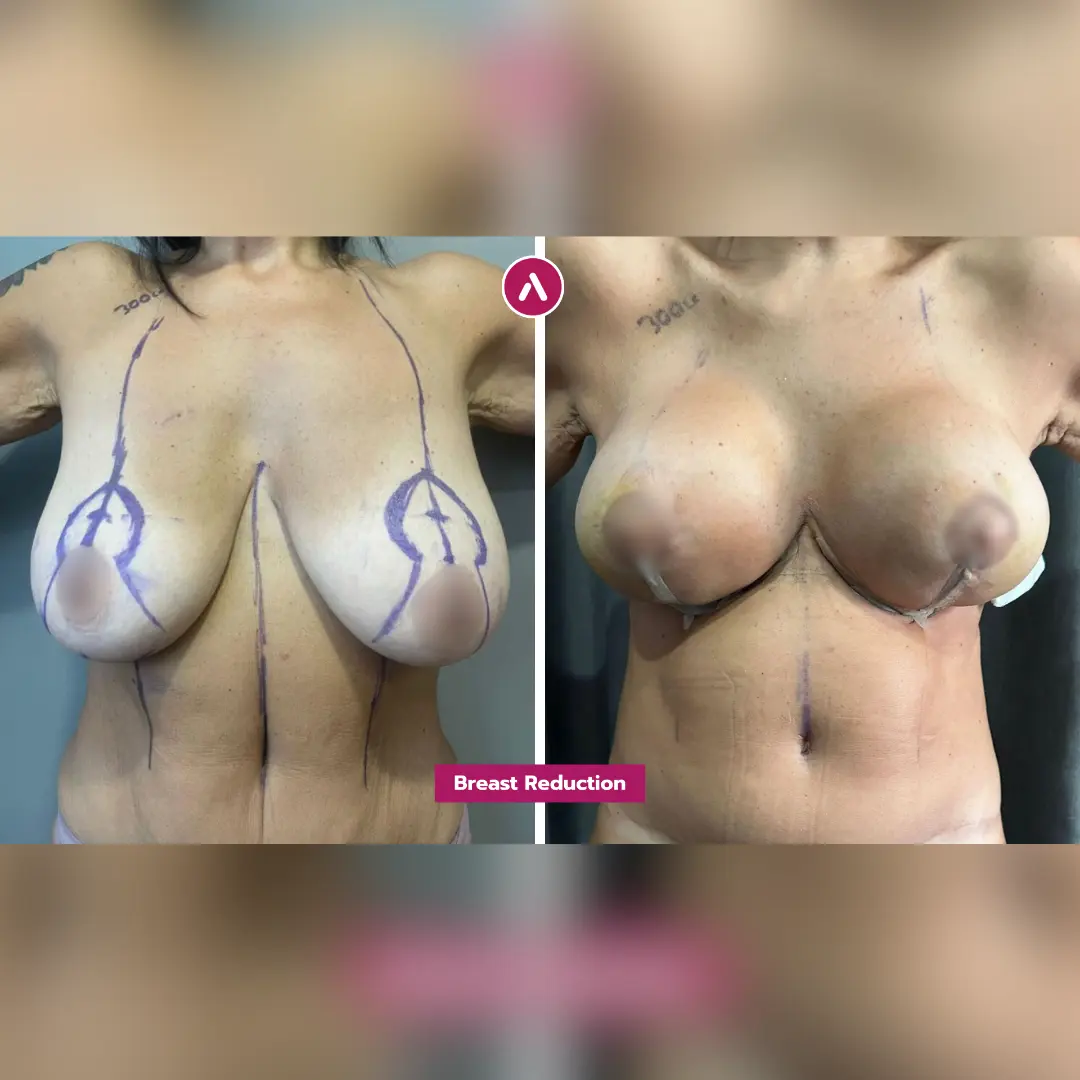
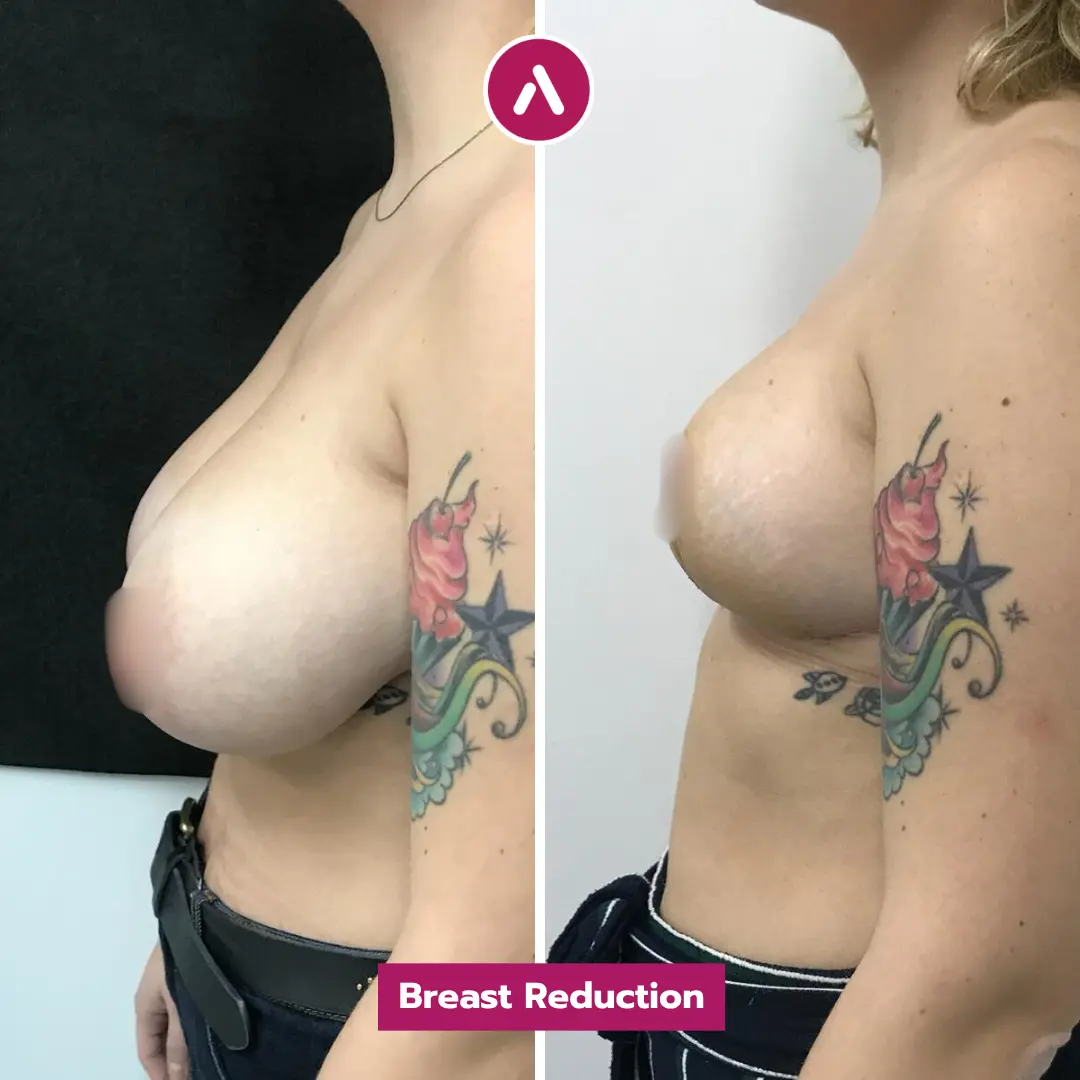
Visual research can help too, but before-and-after images do not show breastfeeding capacity. They show size, shape, scar position and proportion. Use healed reduction results in the gallery to understand aesthetic outcomes, not to predict lactation.
UK patient note: If you become pregnant after breast reduction, tell your midwife or health visitor about the operation early. Infant feeding support can help you monitor latch, supply, weight gain and whether supplementing is needed. Planning support is sensible; it does not mean breastfeeding will fail.
Consultation note: Ask for a clear explanation of the technique, the pedicle, the nipple-areola blood supply, the likely sensation changes and whether a free nipple graft is being considered. A European Board-Certified, GMC-equivalent surgical team should be able to explain these trade-offs in plain language.
Frequently Asked Questions: Breastfeeding After Breast Reduction
These questions answer the most common concerns patients raise before choosing breast reduction. They are deliberately practical: technique, supply, sensation, timing and free nipple grafts.
Can you breastfeed after a breast reduction?
Which breast reduction technique lets you breastfeed?
Will I make enough milk after a reduction?
Does breast reduction affect nipple sensation?
Should I wait until after kids for a breast reduction?
Can you breastfeed after a free nipple graft?
Making the Decision: Relief Now, Feeding Later, or a Balanced Plan?
The best decision is not always the most conservative one. It is the most honest one. If you are in pain, avoiding sport, hiding under clothing or struggling with the weight of your breasts every day, your quality of life matters now. If breastfeeding later is important to you, that matters too.
A good breast reduction consultation should hold both truths at once. It should not dismiss breastfeeding as a minor issue. It should not promise that a surgical plan can protect everything. It should help you choose a technique and reduction goal that match your body, your symptoms and your future plans.
Before you decide, tell AKM that breastfeeding matters to you. Ask which technique would be used, whether the subareolar tissue column can be preserved, whether a free nipple graft is likely, and how much tissue removal is realistic without ignoring future feeding goals.
Medical disclaimer: This article is for general information only and does not replace personal medical advice. Breastfeeding capacity after breast reduction varies by anatomy, surgical technique, pregnancy, milk supply, baby’s latch and postnatal support. If you are pregnant, planning pregnancy or struggling with feeding, speak with your surgeon, GP, midwife, health visitor or a qualified lactation consultant.
Related Treatments



Ready to Begin Your Own Transformation Journey?
Join the 2,000+ patients who have trusted Dr Akif Mehmetoğlu and the AKM Clinic team. Your journey to a more confident, naturally restored you begins with a simple, no-obligation conversation. Contact us today from the UK for your free virtual consultation.
#1: Get Your Free Personalised Quote
Start with a free, no-obligation online consultation. Share your photos, and our surgical team will provide a fully personalised treatment plan and a transparent, all-inclusive price package. There are no hidden fees.
#2: Secure Your Date & VIP Booking
Once you are ready, our dedicated patient coordinators will help you secure your procedure date. We will handle all your bookings, including your 5-star hotel accommodation and private VIP airport transfers.
#3: Arrive in Istanbul & Meet Your Surgeon
Arrive at Istanbul Airport (IST) and be greeted by your private driver. Settle into your hotel and prepare for your in-person consultation, where you will meet your specialist surgeon to finalise the details for your "natural, subtle, and restored" new look.