
Breast Reduction Size Chart: What Cup Size Can You Expect?
AI Summary
- Breast reduction size chart: grams removed guide cup-size expectations, not a guaranteed final bra label.
- 100–300 g per cup: approximate planning range varies by band size, density, anatomy, and healing.
- Surgeon-led target range: balances desired size with nipple blood supply, symmetry, proportion, and safety.
- Consultation goals matter: discuss lighter, proportionate results using reference photos and realistic cup-size ranges.
Summary generated by AI, fact-checked by our medical experts
Answer first: A breast reduction size chart can help you understand the relationship between grams of tissue removed and cup-size change, but it cannot promise a final bra size. Many patients move down one to several cup sizes, yet the result depends on band size, breast density, body proportions, healing, and surgical safety.
Most people arrive at consultation with a simple goal: “I want to be a C cup,” or “I want to go down three sizes.” That is a reasonable starting point. It gives your surgeon a direction. But breast reduction planning is more precise than choosing a letter from a bra tag.
At AKM Clinic, AKM’s breast reduction planning process focuses on proportion, symptom relief, breast shape, nipple blood supply, and long-term balance. The safest target is usually a range, not a guaranteed letter.
This guide is written for Canadian patients who want practical numbers without false certainty. You will learn how grams relate to cup size, why “sister sizes” matter, when your final size becomes clearer, and how to discuss your target result in a way your surgical team can actually use.
Table of Contents
Why There’s No Exact “Size Chart”?
A breast reduction size chart is useful only when you understand its limits. It can show patterns, but it cannot turn your body into a fixed equation. A 34G, 36G, and 40G do not contain the same breast volume, even though the cup letter looks identical.
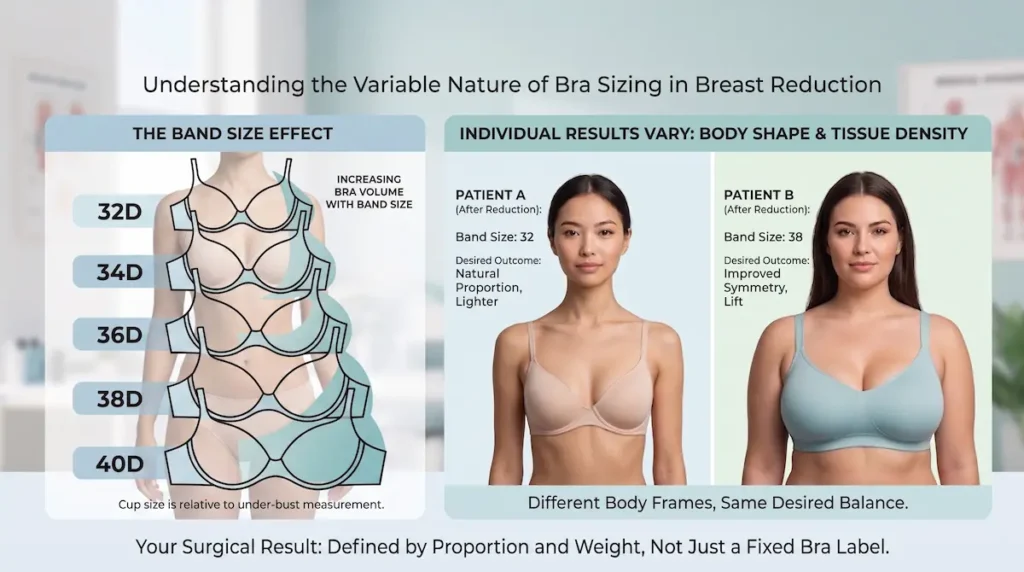
Cup size is not an absolute measurement. It is tied to band size, which means the same letter changes meaning as the ribcage measurement changes. This is the first reason a chart can guide the conversation but should never be treated as a guarantee.
Cup Size Is Not a Fixed Volume
Bra sizing is built around the relationship between the under-bust measurement and the fullest part of the bust. The cup letter describes that difference. It does not describe a universal breast volume.
For example, a D cup on a smaller band can hold less volume than a D cup on a larger band. This is why two patients can both say “I want to be a D” and still mean two very different outcomes visually.
Breast shape also changes the way size looks. A wide breast base, dense glandular tissue, softer fatty tissue, and skin elasticity all influence the final appearance. The number on the chart is only one layer of the plan.
Band Size Changes the Meaning of the Cup Letter
Band size matters because cup volume scales with it. A 34DD is not the same as a 38DD. The letter is the same, but the breast volume and garment fit are different.
This is why your surgeon may ask less about a single bra label and more about your frame, shoulder width, current symptoms, and desired proportion. For many patients, the better goal is “smaller, lighter, and balanced with my body,” rather than “exactly this cup.”
Canadian patients also need to remember that bra sizing can vary across brands. A bra that fits in one shop may feel too tight or too roomy in another. Your surgical result does not change, but the label might.
Why Two Patients Can Have Different Results From the Same Gram Removal
Removing 400 g per breast from one patient may create a dramatic size change. Removing the same amount from another patient may create a more modest shift. The difference comes from starting size, breast density, band size, and how much tissue can be safely removed while preserving shape and blood supply.
Dense glandular breast tissue weighs more for a given volume than softer fatty tissue. That means grams alone do not fully describe visible size change. A surgeon has to translate weight into shape, lift, projection, and skin envelope.
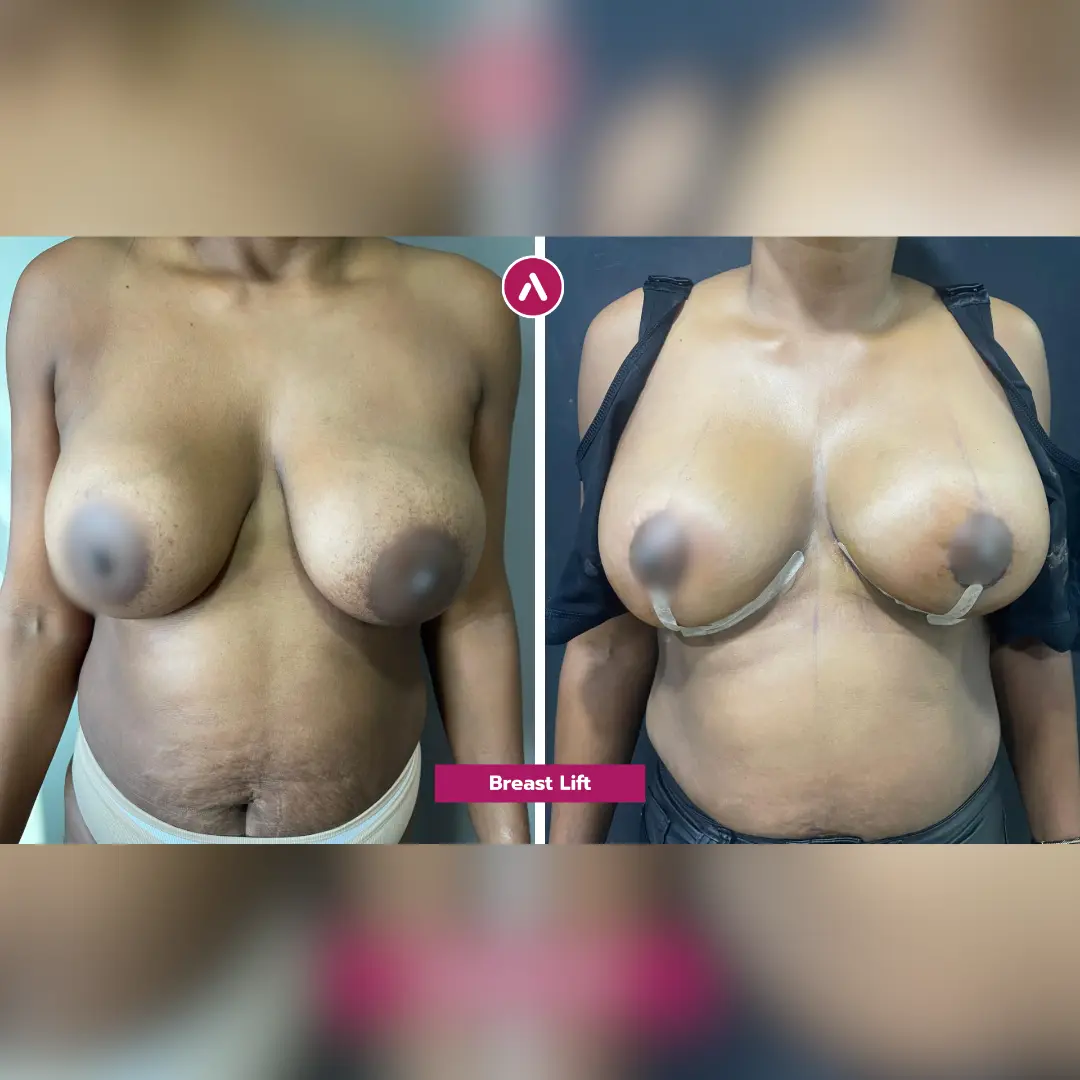
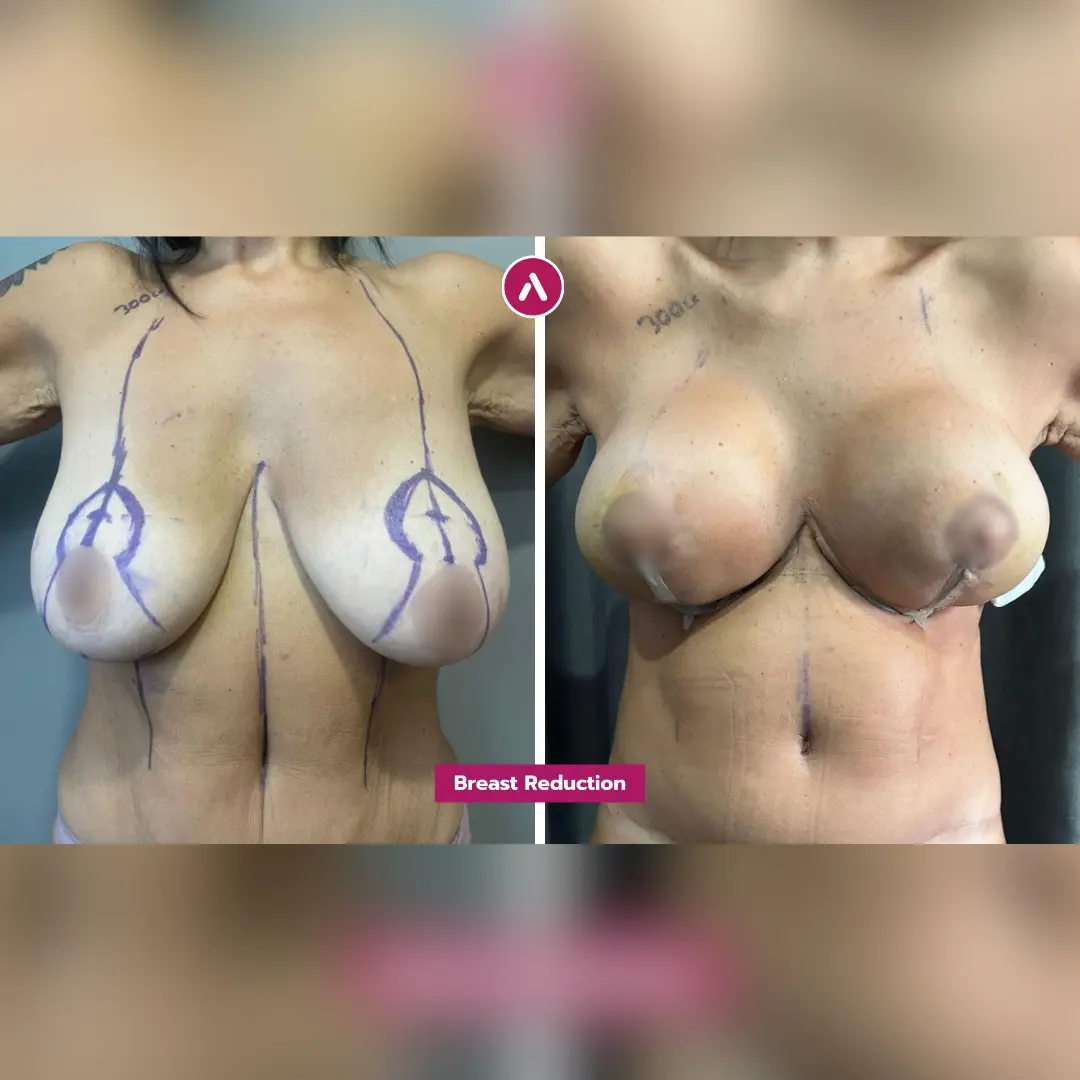
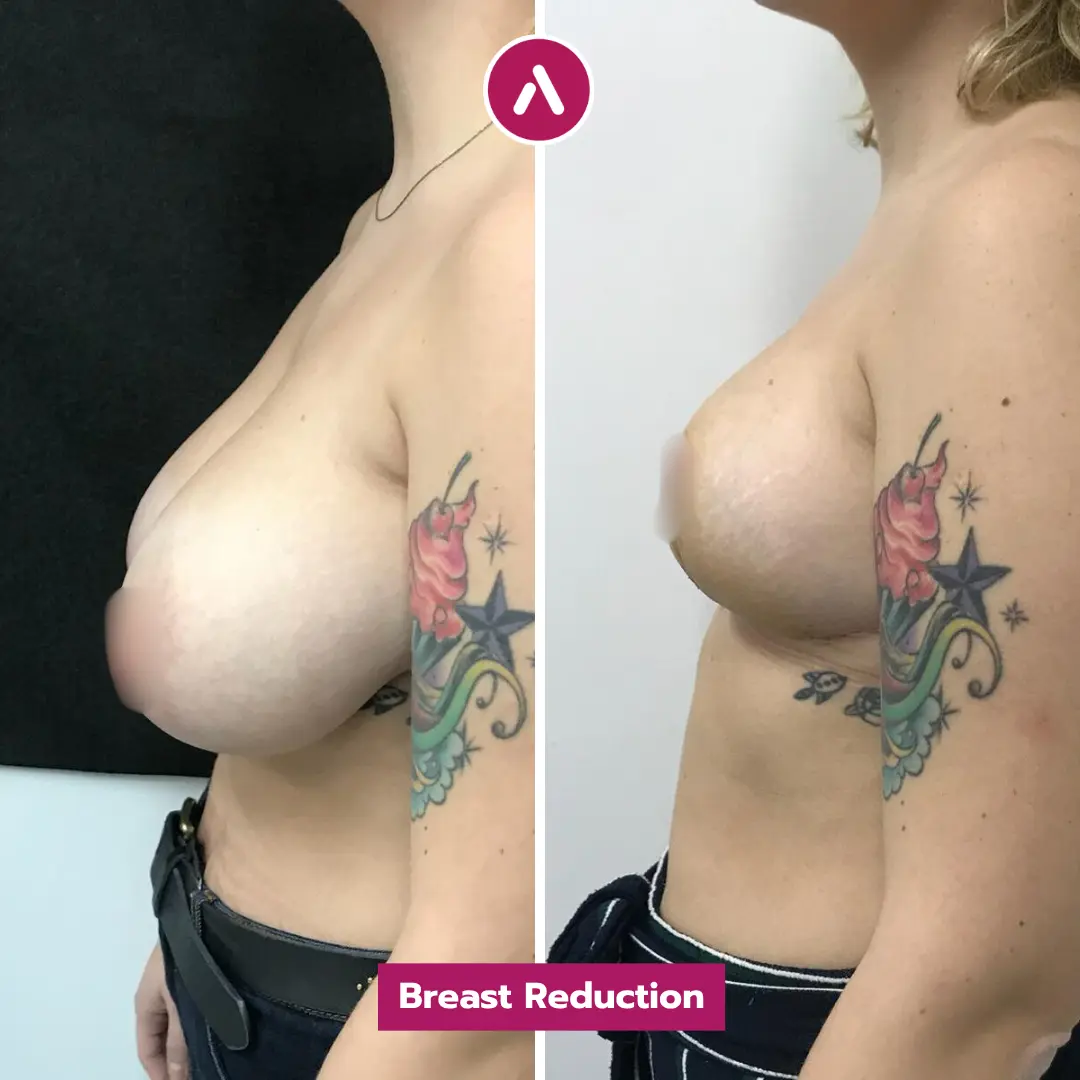
This is also why before-and-after examples can be helpful, but only when you compare patients with similar starting proportions. If you want to review visual outcomes, use them as a reference point, not a promise.
The Gram-to-Cup Relationship
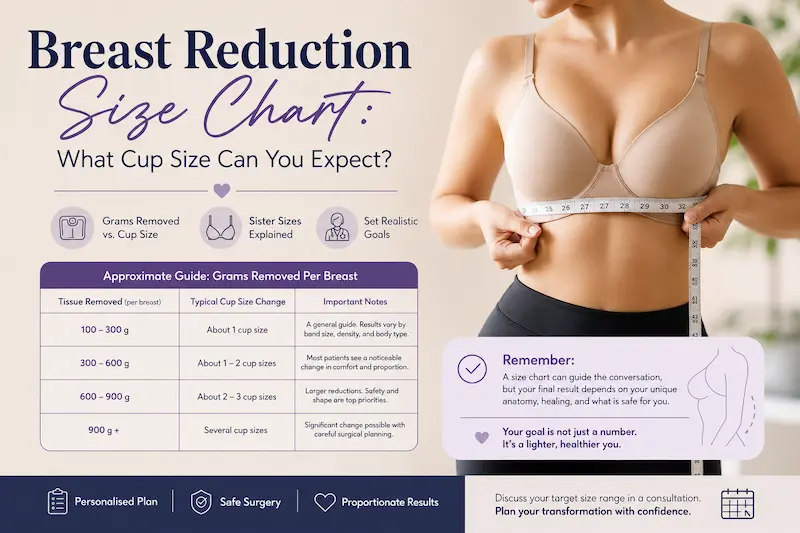
The most commonly used rule of thumb is that removing about 100–300 g of tissue per breast may reduce the breast by roughly one cup size. That range is helpful, but it is broad for a reason. Breast tissue is not identical from person to person.
ASPS patient guidance explains that cup size cannot be predicted exactly before surgery, though the 100–300 g per cup estimate is often used as a planning reference. A PRS Global Open study also explored how tissue weight can help predict cup-size change, but even that research treats prediction as a guide rather than a guarantee.
For a patient, the practical takeaway is simple: grams help your surgeon plan the reduction, but your final cup size is shaped by anatomy, healing, and bra fit. The goal is a safe and proportionate result.
The Approximate 100–300 g Per Cup Rule
Many patients want one number. The honest answer is a range. In many reduction plans, about 100–300 g removed from each breast may correspond to about one cup size down.
Smaller reductions may sit near the lower end of that range. Larger, denser breasts may require more weight removal to create the same visible cup change. Your surgeon will also consider how much tissue must remain to support the nipple-areola complex and preserve a natural breast shape.
| Approx. tissue removed per breast | Typical cup-size change | Important caveats |
|---|---|---|
| 100–300 g | About 1 cup size | Most useful as a rough planning range; band size can change how this looks. |
| 300–600 g | About 1–2 cup sizes | Visible change depends on breast density, skin quality, and starting volume. |
| 600–900 g | About 2–3 cup sizes | Often seen in larger reductions, but safety and nipple blood supply remain central. |
| 900 g+ | Several cup sizes possible | Large-volume reductions need especially careful planning for shape, healing, and symmetry. |
This table should not be used to self-prescribe a target. It is a conversation tool. The safest amount of tissue removal is determined during surgical assessment, not by matching yourself to a row.
Why the Range Is So Wide
The 100–300 g range looks imprecise because human breasts are variable. Some breasts contain more glandular tissue. Others contain more fatty tissue. Some have a wider base, while others project forward more.
Two patients can both remove 500 g and land in different bra sizes because their starting anatomy is different. One may move from an H to an F. Another may move from an F to a C or D.
Swelling also affects the early result. Your breasts may look fuller in the first weeks after surgery. Final size becomes easier to judge after swelling has reduced and tissues have softened.
How Breast Density Changes the Calculation
Breast density affects the relationship between weight and volume. Denser tissue can weigh more without looking dramatically larger. Softer tissue can create more visible volume with less weight.
This matters because a “grams removed” figure does not always predict what you will see in the mirror. It also does not predict how bras will fit after healing. Your surgeon has to combine measurements with visual judgement and safety limits.
For this reason, the best consultation language is usually: “I would like to be in this general size range, with a lighter and more proportionate shape.” That gives your surgical team a useful target without forcing an unsafe or unrealistic promise.
Research predicting cup size from tissue removed supports the idea that tissue weight can help guide planning. ASPS guidance on grams of tissue per cup size also reinforces why the final cup letter cannot be guaranteed before surgery.
How Surgeons Set Your Target Range?
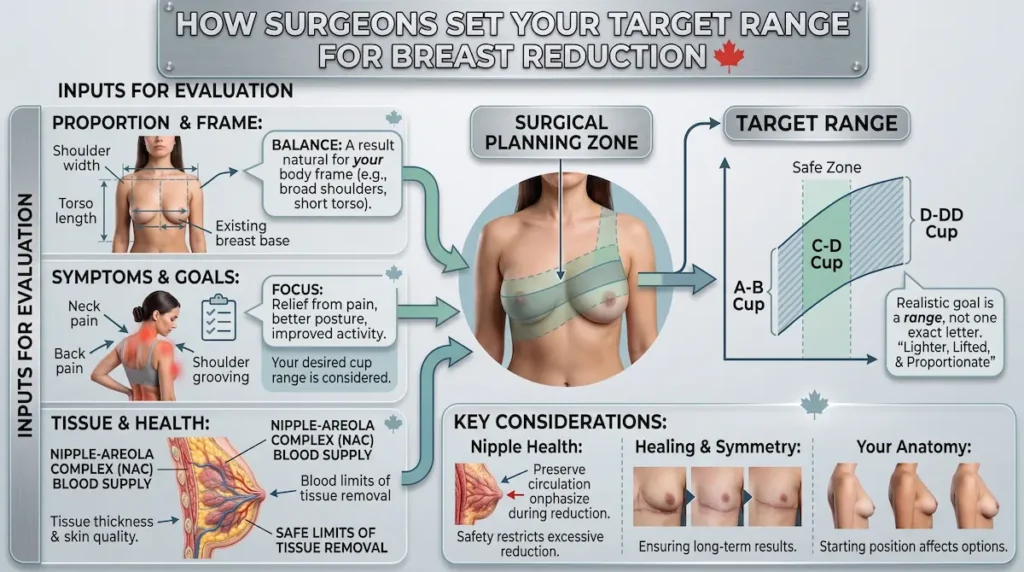
A safe breast reduction target is built from several inputs at once: your current size, your symptoms, your skin quality, your frame, and how much tissue can be removed while keeping the breast healthy. The cup size you want matters, but it is not the only factor.
For many Canadian patients, the most helpful goal is a target range. Instead of asking for one exact letter, you and your surgeon can discuss a realistic zone, such as “lighter, lifted, and proportionate, likely around this cup range after healing.” That wording leaves room for surgical safety.
Proportion to Your Frame, Shoulders, and Torso
Breast reduction is partly about size, but it is also about proportion. A result that looks balanced on a tall patient with broad shoulders may look too large on a shorter patient with a narrow frame. The reverse can also be true.
Your surgeon will assess your torso length, shoulder width, breast base, and current breast position. These details help determine how much reduction will relieve heaviness while still looking natural on your body.
This is why two patients with the same starting cup size may receive different recommendations. One may need a moderate reduction to look balanced. Another may need a larger reduction for comfort, posture, and clothing fit.
Nipple Blood Supply and Surgical Safety Limits
Going smaller is not only a cosmetic question. It is also a safety question. During breast reduction, the nipple-areola complex must keep a reliable blood supply, and that requirement can limit how much tissue is safely removed in one operation.
If a patient wants to go very small, the surgeon has to weigh that preference against tissue thickness, skin quality, nipple position, and healing risk. In some cases, removing too much can compromise shape, sensation, or circulation.
This is one reason your surgical team may recommend a slightly fuller final size than the smallest cup you had in mind. That is not a lack of precision. It is careful planning.
Medical-Need Thresholds Without Turning This Into Insurance Advice
Some Canadian patients research breast reduction because of neck pain, back pain, shoulder grooving, rashes, or activity limitations. Those symptoms matter in consultation, even when the article you are reading is focused on size planning.
However, a size chart should not be treated as insurance or provincial coverage advice. Each province has its own referral pathways, eligibility rules, and wait-time realities. Your family physician or local specialist is the right person to guide local medical-necessity documentation.
From a surgical-planning perspective, symptoms help frame the goal: not just “smaller,” but “small enough to reduce heaviness while keeping a healthy, natural breast shape.” That distinction is important.
If you are trying to understand what can affect the amount removed, review surgical factors that can affect reduction volume. If future pregnancy or nursing is part of your decision, discuss the breastfeeding trade-off to discuss first before locking in a target size.
Think of the target size as a safe landing zone, not a single letter. A good breast reduction plan balances your desired cup range with breast health, nipple blood supply, body proportion, and the way your tissues are likely to heal.
Sister Sizes and Reading Your Result
After breast reduction, many patients try on bras and feel confused because one label fits in one brand and a different label fits somewhere else. That does not mean the surgical result changed. It means bra sizing is inconsistent, and sister sizing makes the picture more complicated.
Understanding sister sizes can prevent unnecessary worry during recovery. It also helps you judge your result by comfort, proportion, and shape, not only by the letter printed on a tag.
What Sister Sizing Means
Sister sizes are bra sizes with similar cup volume but different band sizes. For example, a 34DD and a 36D can hold a similar cup volume, even though the labels look different. The band changes, so the cup letter changes too.
This is why “I want to be a C cup” needs context. A C cup on one band is not the same as a C cup on another band. Your surgeon can use your preference, but the surgical plan must account for your actual body measurements.
After surgery, your band size may also feel different because posture, swelling, and breast weight have changed. A professional bra fitting after healing can be more useful than measuring too early at home.
Why Your Bra Label May Change From Brand to Brand
Bra sizing is not perfectly standardized. Different brands use different shapes, fabrics, cup depths, and band tension. A patient may fit a D in one bra and a DD in another on the same day.
That is why the final result should not be judged by one bra. It is better to try several styles after swelling has settled. Soft wireless bras often feel more forgiving early on, while structured bras may fit better later.
The most meaningful signs of a good result are usually practical: less heaviness, better shoulder comfort, improved clothing fit, balanced shape, and a breast size that feels proportionate to your frame.
When to Measure After Full Healing
Early measurements can be misleading. Swelling, tissue firmness, and post-operative support garments can all affect how your breasts look and feel in the first weeks. Your size will continue to settle as tissues soften.
Many patients notice a clearer shape around the three-month mark, with additional refinement over the following months. Final size is usually easier to judge once swelling has reduced, scars are maturing, and the breast has settled into its new position.
If you want a visual reference, compare only with patients who started with similar body proportions and breast size. You can use verified size-change outcomes as a guide, but not as a guarantee of your exact cup result.
Setting Size Goals in Consultation
The best consultation goal is clear but flexible. You do not need to abandon cup-size language, but you should pair it with comfort goals, proportion goals, and examples of what feels too large or too small to you.
This final planning step matters because breast reduction is not just about reducing volume. It is about choosing a size that you can live with comfortably, confidently, and safely after healing.
Bring Reference Goals, Not a Fixed Demand
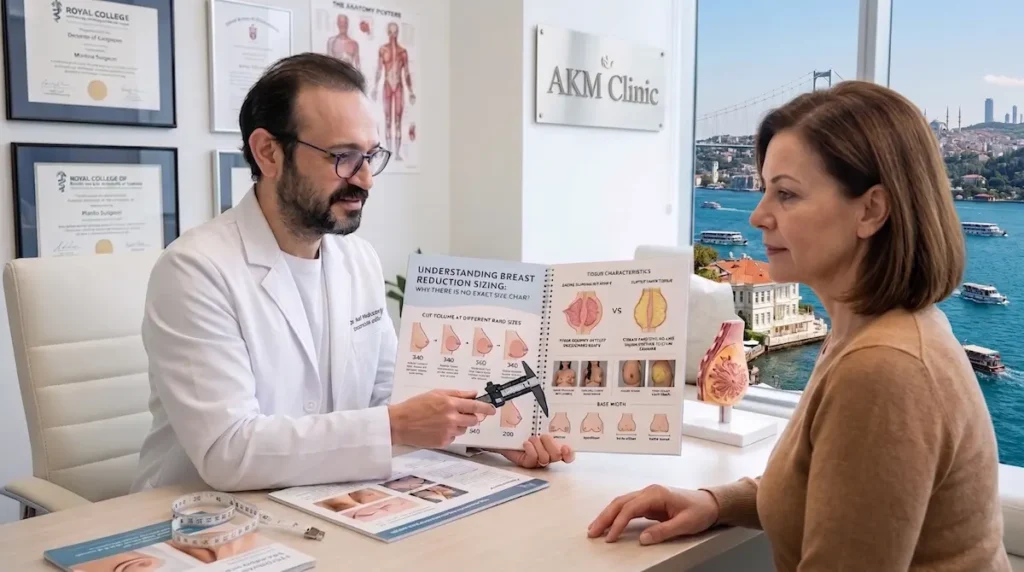
Reference images can help, especially when they show patients with a similar frame and starting breast size. They show your aesthetic preference more clearly than a cup letter alone. Still, they should be used as direction, not as a copy request.
You can also bring notes about your current problems. Do your shoulders hurt? Do you avoid certain clothing? Is exercise uncomfortable? Do you want to reduce heaviness while keeping some upper fullness? These details help the surgeon understand the real goal.
A useful phrase is: “I would like to be around this size range, but I care most about a lighter, balanced result that fits my body.” That gives your surgical team room to plan safely.
Discuss the Trade-Off of Going Very Small
Some patients want the smallest possible result because they are tired of heaviness. That feeling is understandable. Large breasts can affect posture, exercise, clothing, and daily comfort.
But going very small can involve trade-offs. It may affect shape, projection, symmetry, nipple position, and the amount of tissue needed to maintain a natural contour. In some patients, it may also require a different surgical approach.
This is where expectation-setting becomes protective. A slightly fuller result that heals well and suits your frame may be better than forcing a cup target that increases risk or looks less natural.
Questions to Ask Before Choosing Your Target Range
Before surgery, ask direct questions. “What cup range is realistic for my anatomy?” “How many grams do you expect to remove?” “What would make my desired size unsafe?” “How will you protect nipple blood supply?” “When should I measure for new bras?”
You should also ask how your plan may affect future life choices, including pregnancy, weight change, and breastfeeding. If you are still unsure emotionally, read more about setting expectations before choosing your size before you decide.
Cost should not drive the amount of tissue removed, but Canadian patients often want to understand the full planning picture. For pricing details, use the dedicated page for breast reduction cost in CAD rather than trying to compare numbers inside a size-chart article.
For Canadian Patients: What to Confirm Before Travelling
Ask whether your surgical plan will be reviewed by a board-certified plastic surgery team and European Board-Certified surgeons working within an RCPSC-equivalent standard of care. Confirm your target size range, expected grams removed, aftercare instructions, and what documentation you should bring home for local follow-up if needed.
The right breast reduction size is not the smallest possible cup. It is the safest, most proportionate size that addresses your symptoms and fits your body. That is the conversation worth having in consultation.
Ready to discuss your target size range? Book a free virtual consultation with AKM Clinic to review your photos, symptoms, body proportions, and realistic breast reduction goals before making a decision.
Frequently Asked Questions: Breast Reduction Size Chart
These answers are designed to clarify the most common size-planning questions before consultation. They are not a substitute for a medical assessment, because your safest reduction range depends on your anatomy, health history, tissue quality, and surgical exam.
How much smaller will I go after breast reduction?
A useful goal is not “exactly two cup sizes smaller,” but “a lighter, proportionate breast size that fits my frame and relieves heaviness.” Your surgeon can then translate that goal into an estimated gram-removal range.
How many grams equal one cup size?
Some patients need more tissue removed to see a one-cup change, especially if the breasts are larger, denser, or wider at the base. Others may see a noticeable change with less tissue removal.
Can my surgeon promise a specific cup size?
Your surgeon can usually discuss a realistic target range. That range should balance your preference with blood supply, nipple position, symmetry, shape, and safe healing.
What is a sister size?
This is why a post-op bra label can feel confusing. You may fit more than one size depending on the brand, cup shape, and band tension. Judge the result by comfort and proportion, not one label alone.
Will both breasts match exactly?
Your surgeon will usually plan with asymmetry in mind. In some patients, more tissue may be removed from one side to create a more balanced result.
When is my final size set?
Many patients have a clearer sense of size around three months, with continued refinement over the next several months. Bra shopping is usually more accurate once swelling has settled and your surgeon has cleared you for normal fitting.
Medical Disclaimer: This article is for general educational purposes only and does not replace medical advice, diagnosis, or treatment. Breast reduction results vary by patient, and only a qualified surgeon can assess your anatomy, medical history, surgical risks, and realistic size range.
Always follow the guidance of your own healthcare provider and surgical team. Seek urgent medical advice if you experience severe pain, spreading redness, fever, unusual discharge, sudden swelling, or any symptom that concerns you after surgery.
Related Procedures




Ready to Begin Your Journey?
Join the more than 2,000 patients who have trusted Dr. Akif Mehmetoğlu and the AKM Clinic team. Your journey begins with an informative, no-obligation conversation. Contact us today from across Canada to schedule your complimentary virtual consultation.
#1: Receive Your Personalized Quote
Start with a complimentary, no-obligation virtual consultation. Share your photos, and our surgical team will provide a fully personalized treatment plan and a transparent, all-inclusive pricing package quoted in Canadian dollars (CAD). There are no hidden fees.
#2: Secure Your Procedure Date
Once you are ready to proceed, our dedicated English-speaking patient coordinators will help you secure your procedure date. We will manage your logistical bookings in Istanbul, including your five-star hotel and private airport transfers.
#3: Arrive in Istanbul & Meet Your Surgeon
Arrive at Istanbul Airport (IST), where you will be greeted by your private driver. Settle into your hotel before your comprehensive in-person consultation. You will meet your specialist surgeon to finalize the details of your procedure and ensure your goals are aligned for a natural, subtle result.