
Breast Reduction Weight Requirements: Do You Qualify?
AI Summary
- Breast reduction weight requirements are individualized; no single kg or BMI number qualifies every patient.
- BMI guides safety planning, including anesthesia, wound healing, infection risk, and recovery support.
- Stable weight matters because major weight changes can alter breast shape, symmetry, and long-term results.
- Grams removed affect sizing and some Canadian coverage pathways, but self-pay planning prioritizes safe, realistic outcomes.
Summary generated by AI, fact-checked by our medical experts
Quick answer: Breast reduction weight requirements are not one fixed number in kg. Your BMI matters because it can affect wound healing, infection risk, anesthesia planning, and result stability. Most surgeons prefer you to be near a stable, sustainable weight, often for at least six months, before planning breast reduction.
That answer may feel less simple than a cutoff. It is also more honest.
For Canadian patients, “weight requirements” can mean two different things. The first is your body weight or BMI for breast reduction. The second is the amount of breast tissue expected to be removed, sometimes measured in grams when provincial coverage is being discussed.
Those two questions are related, but they are not the same.
This guide separates them clearly. It explains why surgeons ask about BMI, when it may be wise to lose weight before breast reduction, how weight stability affects long-term results, and why grams removed breast reduction rules do not work the same way for self-pay patients.
If you are still at the early decision stage, start with the breast reduction candidacy assessment at AKM before comparing BMI, grams removed, and timing.
Table of Contents
Breast Reduction Weight Requirements: Is There a Fixed Number?
There is usually no universal minimum or maximum body weight for breast reduction. A number on the scale cannot show breast density, shoulder strain, skin quality, medical history, or how much breast weight is affecting your daily life.
The better question is whether your current weight allows for a safe operation and a durable result.
Breast reduction is not a weight-loss procedure. It removes excess breast tissue, skin, and sometimes fat from the breasts. It can reduce heaviness and improve comfort for many patients, but it does not replace whole-body weight management.
The short answer: no exact kg number, but BMI guidance matters
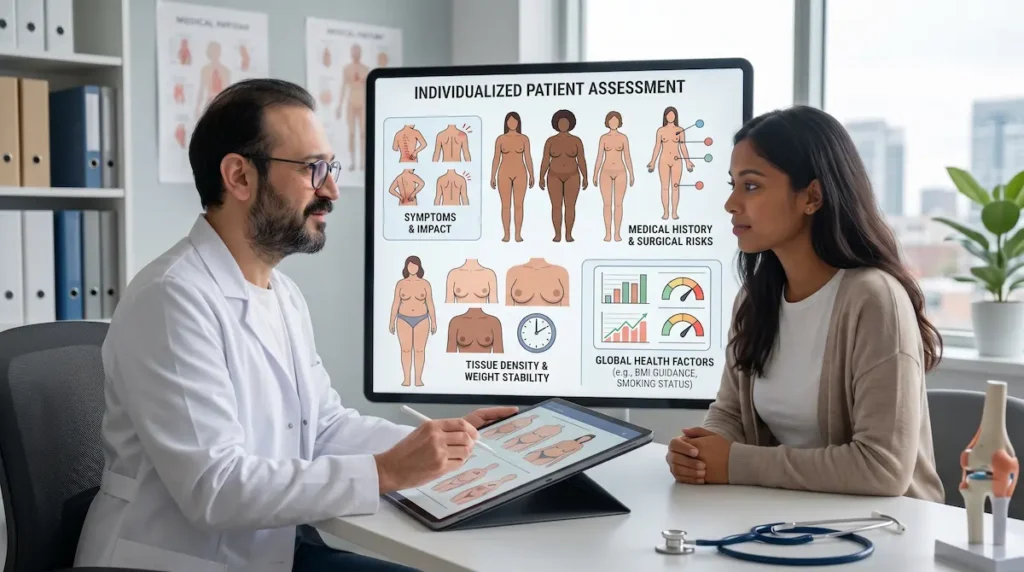
Most breast reduction requirements are built around risk assessment rather than one fixed kg number. Your surgeon will consider your BMI, smoking or vaping status, diabetes control, blood pressure, medications, previous wound-healing history, and whether your weight has been changing recently.
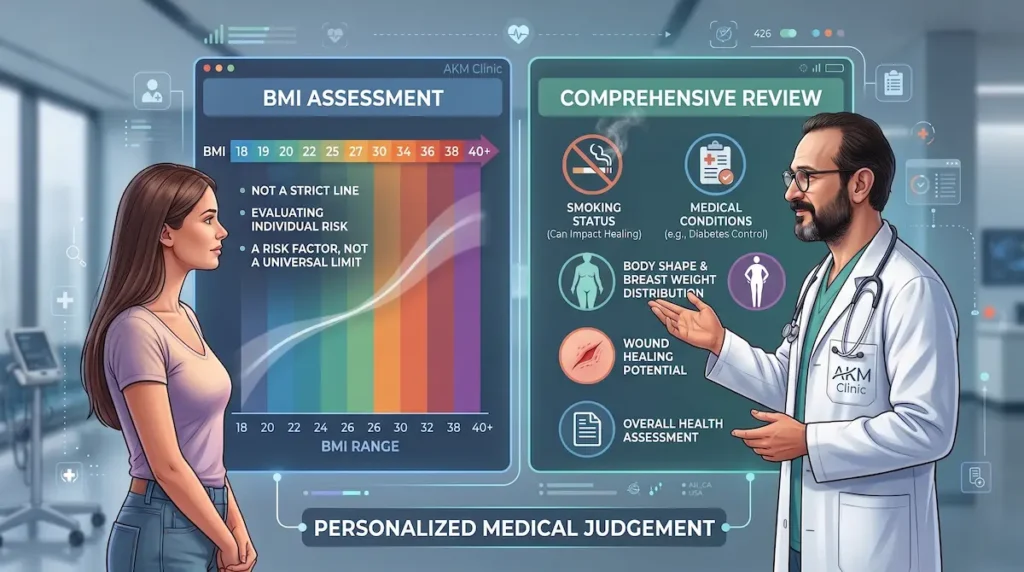
BMI is not perfect. It does not measure breast heaviness directly, and it can misread some people with higher muscle mass. Still, it gives surgeons a shared starting point for discussing anesthesia, wound healing, and clot-risk planning.
A higher BMI does not always mean “no.” It often means “we need to review risk more carefully before saying yes.”
Two meanings of “weight requirement”
Patients often use the phrase “weight requirement” in two ways. The first is personal body weight: “Do I need to lose weight before breast reduction?” The second is tissue weight: “How many grams need to be removed?”
These questions lead to different answers.
Your body weight affects surgical risk and long-term shape. Tissue weight affects how much reduction is planned and, in some Canadian public coverage discussions, whether symptoms and expected removal volume meet provincial criteria.
How AKM assesses the question
At AKM Clinic, breast reduction for Canadian patients is reviewed by a board-certified plastic surgery team using an individualized safety lens. The team looks at your photos, medical history, current medications, BMI, breast symptoms, skin quality, and realistic size goals before recommending a timing plan.
That matters if you are worried about being rejected because of your weight.
A responsible surgical review should not dismiss you with one number. It should explain whether surgery is reasonable now, whether a period of weight stabilization would make the result safer, or whether another medical issue should be handled first.
Canadian patient note: Provincial coverage rules and private self-pay surgery are different pathways. If you are seeking publicly funded surgery in Canada, your family doctor or provincial referral pathway may require documentation of symptoms, expected tissue removal, BMI, and smoking status. If you are self-paying abroad, the key question becomes surgical safety and realistic planning, not meeting a provincial gram rule.
The ASPS list of breast reduction candidates focuses on symptoms such as back, neck, or shoulder pain, shoulder grooves, skin irritation, activity limits, and general health. It does not define candidacy by one BMI number alone.
Why Surgeons Ask About Your BMI
Surgeons ask about BMI because breast reduction creates long incision lines, reshapes breast tissue, and depends on reliable healing. BMI is not a moral judgement. It is a safety signal.
Higher BMI can place more tension on healing tissue and may increase the chance of wound-related problems. That does not mean every patient with a higher BMI will have complications. It means the discussion should be specific and honest.
Wound healing, infection, fat necrosis, and seroma risk
Breast reduction incisions commonly sit around the areola, down the lower breast, and sometimes along the breast fold. These areas need good blood flow, low tension, and careful aftercare to heal well.
A large analysis of 4,545 reduction mammaplasty patients found that early complications were uncommon overall, but the risk increased with obesity class. Superficial skin and soft-tissue infection made up a large share of those complications, which is why BMI is treated as a planning factor rather than a cosmetic criticism. You can review the source here: a 4,545-patient analysis of BMI and reduction complications.
Possible concerns include delayed wound healing, small openings along the incision, infection, fat necrosis, and fluid collection. None of these is guaranteed. The point is that your surgeon should discuss them before you travel, not after you are already committed.
For a deeper look at how incision lines settle after surgery, see wound healing and how scars form.
Anesthesia and clot-risk planning
Breast reduction is commonly performed under general anesthesia. BMI can affect airway planning, medication dosing, positioning, and postoperative monitoring. It can also sit alongside other risk factors, such as sleep apnea, high blood pressure, diabetes, smoking, or a past blood clot.
One number rarely tells the whole story.
A patient with a BMI over 30, no smoking history, stable weight, good mobility, and controlled blood work may be assessed differently from a patient with the same BMI plus poorly controlled diabetes or recent rapid weight gain.
How weight changes affect the final result
Breast reduction reshapes the breast you have at the time of surgery. If your weight changes significantly afterwards, your breast size, skin envelope, and symmetry may change too.
Weight gain can add volume back to the breasts. Weight loss can reduce fullness or create more looseness in the skin. Pregnancy can also shift the result. A reduction can still be worthwhile, but the timing should match your real life.
This is also why BMI is connected to recovery. A higher-risk healing profile may require more caution with activity, garment use, and remote follow-up.
“There is no single number that makes every patient safe or unsafe. The goal is stable weight, safer healing, and a breast shape that still makes sense after your body settles.” — AKM Clinic board-certified plastic surgery team
BMI Calculator
Enter your height and weight to calculate your body mass index (BMI).
Typical BMI Guidance and Why It Is Not a Hard Line
Many patients search for a breast reduction BMI limit because they want a straight answer. That is understandable. A cutoff feels easier than a full medical assessment.
It is rarely that simple.
You may hear that some surgeons prefer BMI under 30 for elective plastic surgery, while others become more cautious above the mid-30s. Some surgical centres use a threshold for scheduling, some use it for anesthesia review, and some treat BMI as one risk factor among several.
Why BMI cutoffs vary between surgeons
A cutoff is usually a safety policy, not a universal biological law. It may reflect the facility, anesthesia setup, surgeon preference, hospital policy, or the type of case being performed.
Breast reduction also varies widely. A smaller reduction in a healthy, mobile patient is not the same operation as a very large reduction in a patient with several medical conditions.
The expected incision pattern, tissue removal, operative time, and aftercare burden all matter.
Where BMI can be misleading
BMI does not know where your weight sits. It cannot tell the difference between dense breast tissue, abdominal weight, high muscle mass, or lower-body shape. It also does not measure the weight of the breasts themselves, which may be one reason exercise feels difficult before surgery.
That is especially relevant for breast reduction.
Some patients are told to lose weight first, but their breast heaviness is part of what makes activity painful. Shoulder grooving, under-breast irritation, neck strain, and difficulty finding supportive bras can all limit movement.
If you are wondering whether fat removal alone could bypass a BMI conversation, the answer is no: liposuction-only reduction is not a shortcut around BMI.
Smoking, diabetes, and health conditions can matter as much as BMI
A lower BMI does not erase other risk factors. Smoking or vaping can reduce blood flow to healing tissue. Diabetes can slow wound healing when blood sugar is not well controlled. A history of blood clots, sleep apnea, immune suppression, or previous poor scarring can change the risk conversation.
That is why a patient with a slightly higher BMI and strong overall health may be a better candidate than someone with a lower BMI but several uncontrolled risk factors.
The safest answer is also the least dramatic: BMI is one part of the breast reduction requirements weight discussion. It should be weighed with your symptoms, exam, photos, medical history, medications, and willingness to follow aftercare instructions.
| Criterion | Why surgeons ask | Typical guidance |
|---|---|---|
| BMI | Helps estimate wound-healing, anesthesia, and clot-risk considerations. | No universal cutoff; many surgeons review risk more closely above BMI 30–35 kg/m2. |
| Weight stability | Large weight shifts can change breast size, shape, and symmetry after surgery. | A stable, sustainable weight for about six months is often preferred. |
| Smoking or vaping | Can reduce blood flow and increase wound-healing problems. | Most surgeons require stopping before and after surgery. |
| Medical conditions | Diabetes, sleep apnea, high blood pressure, and clot history may change risk. | Control and documentation matter more than hiding the diagnosis. |
| Expected grams removed | Relevant for sizing plans and some provincial coverage pathways. | Not a self-pay requirement, but useful for realistic size discussions. |
Should You Lose Weight Before Breast Reduction?
You may not need to lose weight before breast reduction, but you should be close to a weight you can realistically maintain. This is the difference between helpful preparation and a rushed diet that makes surgery harder on your body.
The question is not “How small can I get before surgery?” It is “Will my current weight give me a safe healing window and a result that still fits my body one year from now?”
If you are already near your goal weight
If your weight has been stable and you are within a range you can maintain, breast reduction may be reasonable without further weight loss. Stability matters because the operation reshapes the breast envelope you have now.
Small day-to-day changes are normal. A meaningful shift, such as planning to lose 15–25 kg after surgery, is different. In that case, your surgeon may recommend reaching a more stable weight first so the breast shape does not change too much after the reduction.
A useful rule is simple: if your future weight-loss plan would noticeably change your clothing size, it may also change your breast result.
If breast weight is stopping you from losing weight
Some patients are told to lose weight before breast reduction, but the heaviness of their breasts is one reason they struggle to exercise. Neck pain, back pain, shoulder grooves, and skin irritation can make even low-impact movement difficult.
This is where individualized assessment matters.
A surgeon may still recommend weight loss first if BMI or medical risk is high. But they should also ask whether the breast size itself is limiting activity. In some cases, reducing breast weight can help a patient move more comfortably afterwards, although it should not be framed as a weight-loss method.
How to approach weight loss safely
If your surgeon recommends weight loss first, the goal should be gradual and sustainable. Crash dieting can leave you tired, nutritionally depleted, and less prepared for wound healing.
Protein, iron, vitamins, and steady energy intake matter after breast surgery because your body is repairing long incision lines.
Rapid weight loss can also make surgical planning less predictable. If your breast size and skin quality are still changing, operating during that moving target can increase the chance that you later feel too small, too loose, or less balanced than expected.
If you are asking, “Do I need to lose weight before breast reduction?”, the answer depends on your risk profile, not pressure to reach an arbitrary body size.
Note for Canadian patients: If you are travelling from Canada, do not hide recent weight-loss medication use, crash dieting, anemia, nutritional issues, smoking, or vaping. Your surgical team needs the real picture to plan anesthesia, incision healing, and your return-home aftercare safely.
Canadian patients are used to structured specialist review. At AKM, surgical planning is led by a European board-certified plastic surgery team, with the aim of making candidacy, risk, aftercare, and travel timing clear before you commit.
The Other “Weight Requirement”: Grams Removed
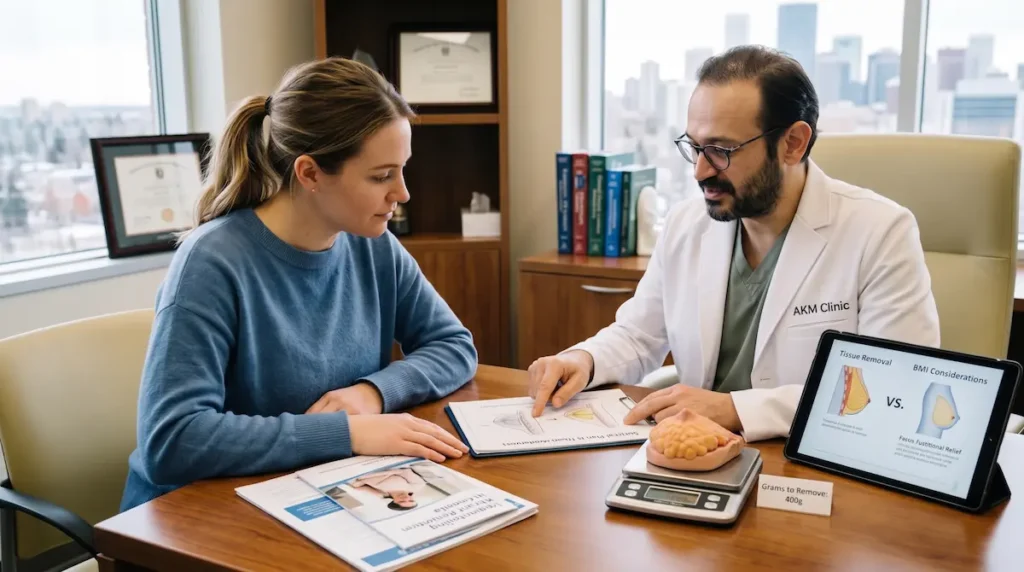
“Weight requirement” can also refer to the weight of breast tissue removed during surgery. This is usually measured in grams per breast. It is a different issue from your body weight or BMI.
That distinction matters.
A patient may be medically bothered by heavy breasts even if the planned removal is not extremely large. Another patient may have a higher expected gram removal but also higher surgical risk because of smoking, unstable weight, diabetes, or BMI-related healing concerns.
Why grams removed come up in Canada
In Canada, breast reduction may be discussed through provincial health systems when symptoms suggest functional need rather than purely cosmetic preference. Each province can use its own referral pathway, documentation expectations, and review process.
Some pathways consider expected tissue removal in grams. For example, Alberta’s adult plastic surgery referral pathway references breast reduction criteria that include quality-of-life impact and expected removal of more than 300 g per side, while also asking for BMI and smoking information. This is one provincial example, not a Canada-wide guarantee: Alberta’s adult plastic surgery referral pathway.
If you are pursuing public coverage, your family doctor or local specialist should guide you through your provincial process. AKM Clinic cannot promise eligibility for any Canadian provincial plan.
Self-pay surgery does not depend on a provincial gram threshold
For self-pay patients, the goal is not to remove enough grams to satisfy a public funding rule. The goal is to remove the right amount of breast tissue for your symptoms, body frame, circulation, nipple safety, and preferred shape.
That is a different type of planning.
Removing too little may leave heaviness unresolved. Removing too much can flatten the breast, compromise proportion, or increase risk in very large reductions. A responsible plan balances relief with breast shape and tissue safety.
If you are trying to connect grams to cup sizes, read grams, cup sizes, and what is realistic. This article will not turn grams into a guaranteed cup-size result because breast density, band size, and body frame all change the outcome.
How cost and results fit into the decision
Cost should not be used as a reason to rush surgery at an unstable weight. It should be part of transparent planning after candidacy is clear.
For Canadian patients comparing options, AKM keeps pricing discussions separate from medical eligibility. You can review breast reduction costs for self-pay patients when you are ready to compare the financial side without mixing it into the safety decision.
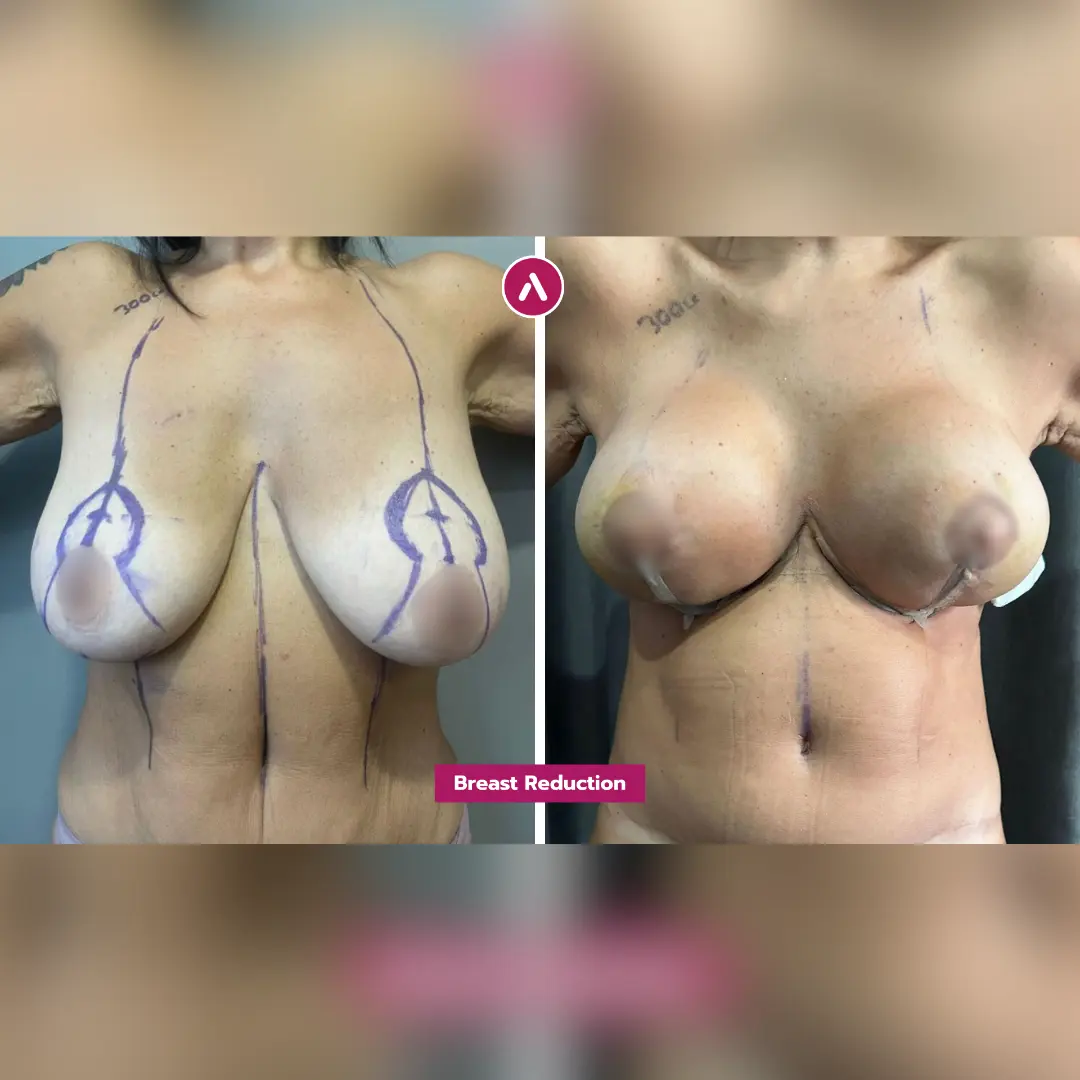
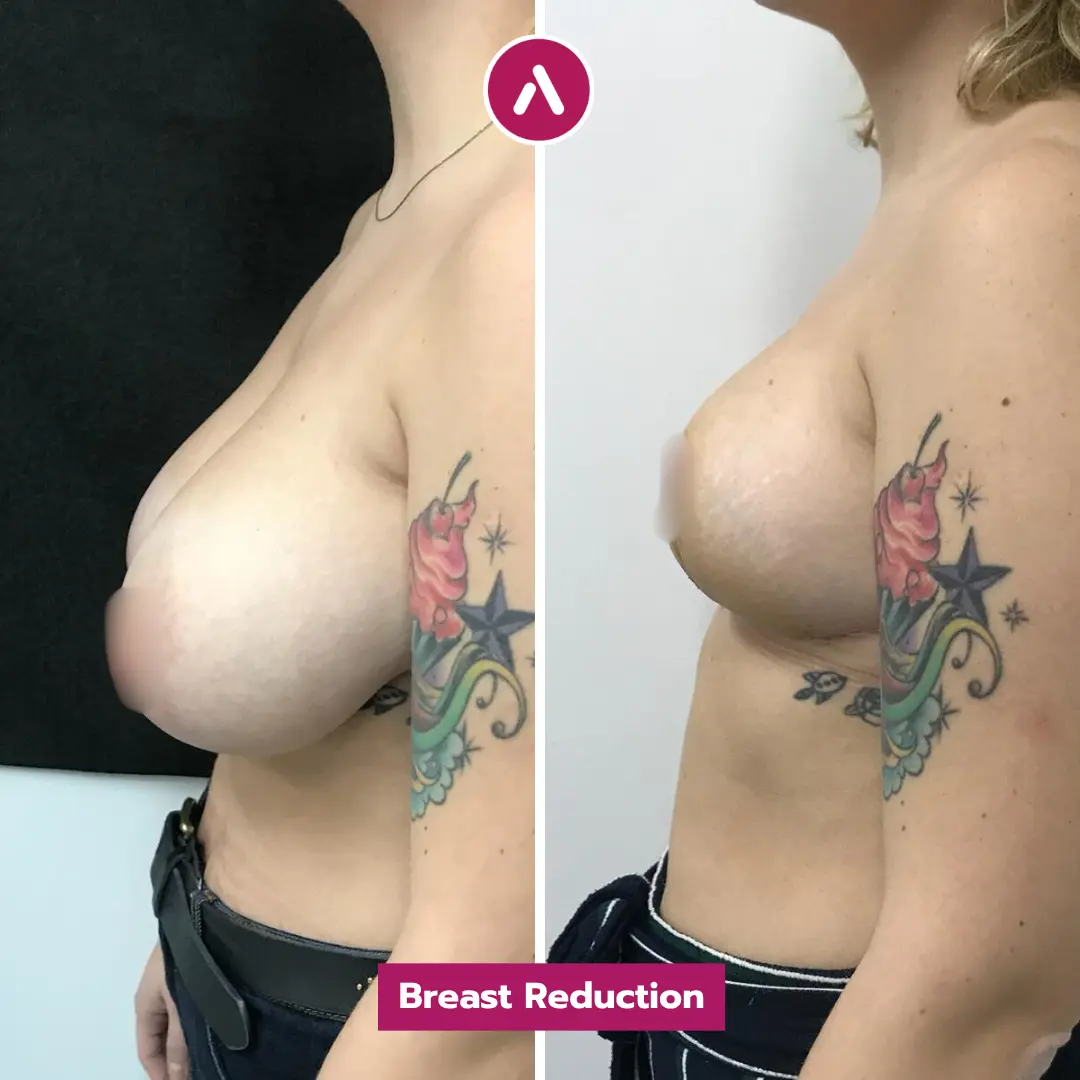
Photos can also help, but they should be used carefully. Look for body types, starting sizes, scar patterns, and proportions that resemble your own. For visual context, use results from patients of different body types as a reference point, not a promise of the same outcome.
Frequently Asked Questions: Breast Reduction Weight Requirements
These answers address the most common breast reduction weight and BMI questions Canadian patients ask before a consultation. They are educational, not a substitute for an individual surgical assessment.
Do you have to be a certain weight to get a breast reduction?
A stable, sustainable weight is usually more useful than chasing a random number.
What BMI is too high for breast reduction?
High BMI does not always mean “no.” It does mean wound healing, infection risk, anesthesia planning, and clot risk need a serious discussion.
Should I lose weight before a breast reduction?
The safest plan is individualized. Avoid crash dieting before surgery.
How many grams must be removed for a breast reduction?
For provincial coverage in Canada, gram expectations may appear in some pathways, but they vary by province and must be discussed with your Canadian healthcare provider.
Will losing weight after surgery change my results?
If you expect a major body-weight change soon, your surgeon may recommend waiting until your weight has stabilized.
Can I get a breast reduction if I am overweight?
A good consultation should explain your personal risk clearly rather than giving a generic answer.
Is breast reduction covered by provincial health plans in Canada?
AKM Clinic provides self-pay surgery in Istanbul and cannot guarantee provincial coverage decisions in Canada.
Key takeaway: Breast reduction weight requirements should help you understand timing, not make you feel judged. There is no single number that defines every patient. BMI matters because it can influence healing, anesthesia, infection risk, and result stability, but it is only one part of the full assessment.
The strongest candidates are usually medically prepared, honest about recent weight changes, and close to a weight they can maintain.
Ask AKM for an honest assessment of whether your weight and health make breast reduction safe right now.
Medical disclaimer: This article is for general education only and does not replace a personal consultation with a qualified healthcare professional. Breast reduction candidacy, BMI guidance, anesthesia planning, coverage questions, and aftercare needs vary by patient and province. Results vary individually.
Related Procedures




Ready to Begin Your Journey?
Join the more than 2,000 patients who have trusted Dr. Akif Mehmetoğlu and the AKM Clinic team. Your journey begins with an informative, no-obligation conversation. Contact us today from across Canada to schedule your complimentary virtual consultation.
#1: Receive Your Personalized Quote
Start with a complimentary, no-obligation virtual consultation. Share your photos, and our surgical team will provide a fully personalized treatment plan and a transparent, all-inclusive pricing package quoted in Canadian dollars (CAD). There are no hidden fees.
#2: Secure Your Procedure Date
Once you are ready to proceed, our dedicated English-speaking patient coordinators will help you secure your procedure date. We will manage your logistical bookings in Istanbul, including your five-star hotel and private airport transfers.
#3: Arrive in Istanbul & Meet Your Surgeon
Arrive at Istanbul Airport (IST), where you will be greeted by your private driver. Settle into your hotel before your comprehensive in-person consultation. You will meet your specialist surgeon to finalize the details of your procedure and ensure your goals are aligned for a natural, subtle result.