
Does Liposuction Leave Scars? What the Tiny Incisions Look Like
AI Summary
- Does liposuction leave scars? Yes, but they are usually tiny cannula entry-point marks.
- Strategic incision placement helps hide small scars in natural creases, folds, or clothing lines.
- Healing varies by skin type, with temporary colour changes or raised scars possible in some patients.
- Proper aftercare supports fading through wound care, silicone use, sun protection, and timely surgeon review.
Summary generated by AI, fact-checked by our medical experts
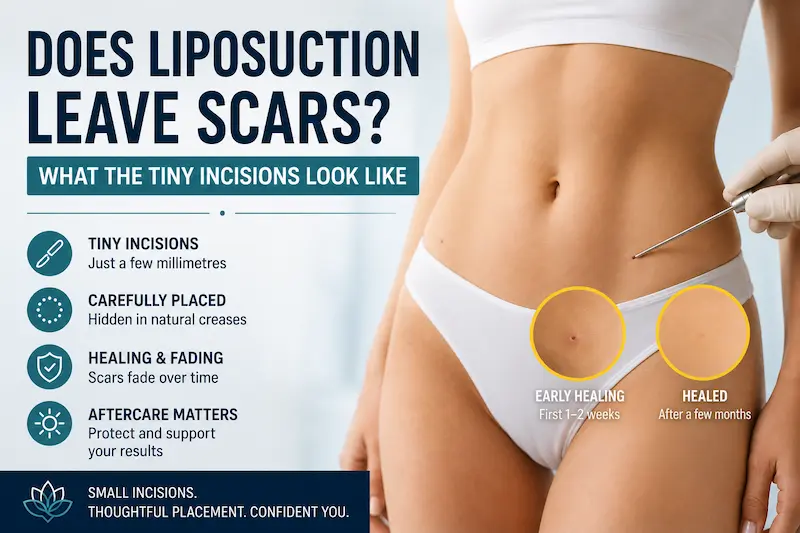
Yes, liposuction can leave scars, but they are usually tiny. Fat is removed through small cannula entry points, not long incisions, so healed marks often look like small dots, pale freckles, or faint pinpoints. With careful placement and good aftercare, most become much less noticeable over several months.
For many Canadian patients, the real question is not only does liposuction leave scars, but whether those scars will be visible in swimwear, under clothing, or in close-up photos. That is a fair concern. Liposuction is often described as “minimally invasive,” but it is not scarless. Any time skin is opened, even through a few-millimetre entry point, the body heals by forming a mark.
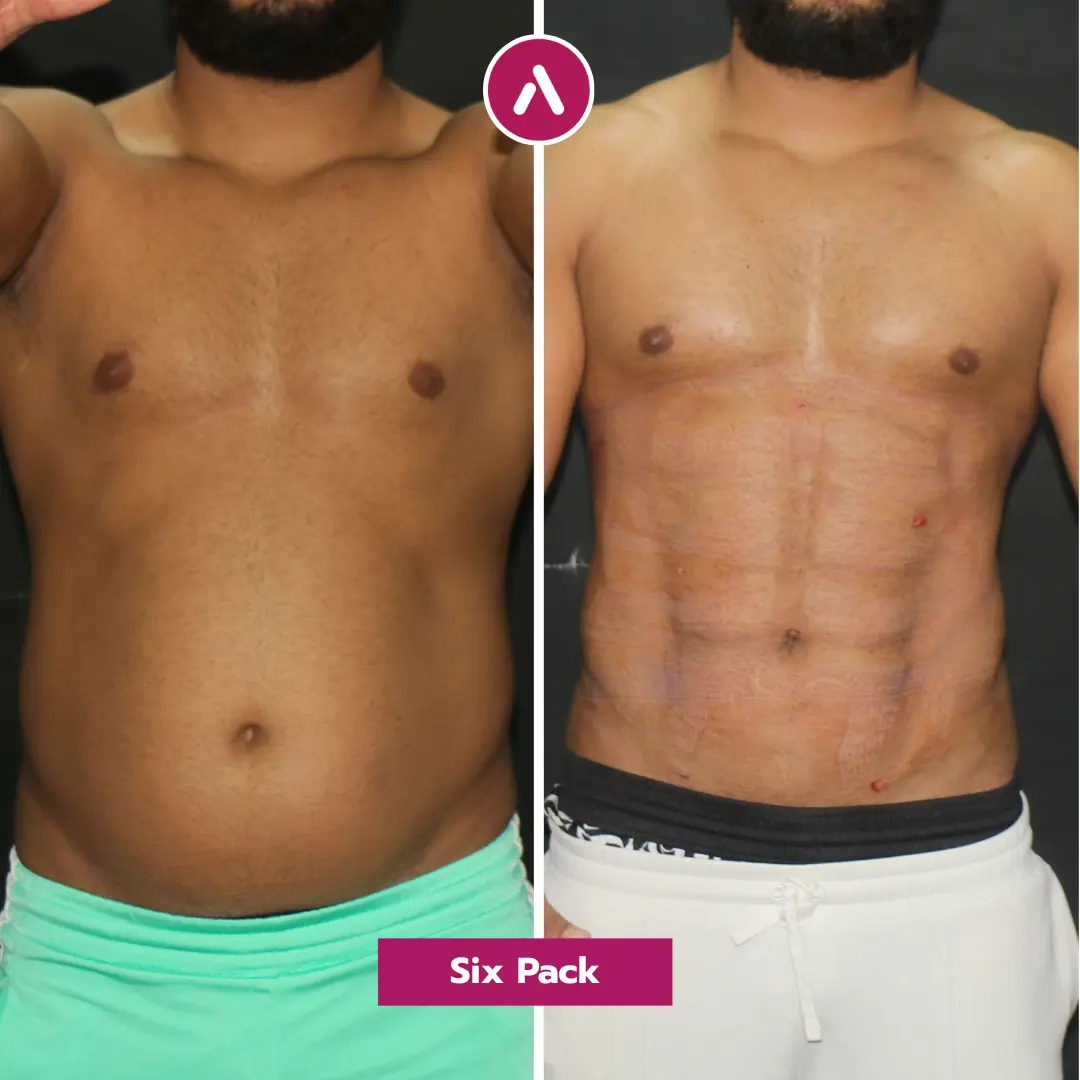
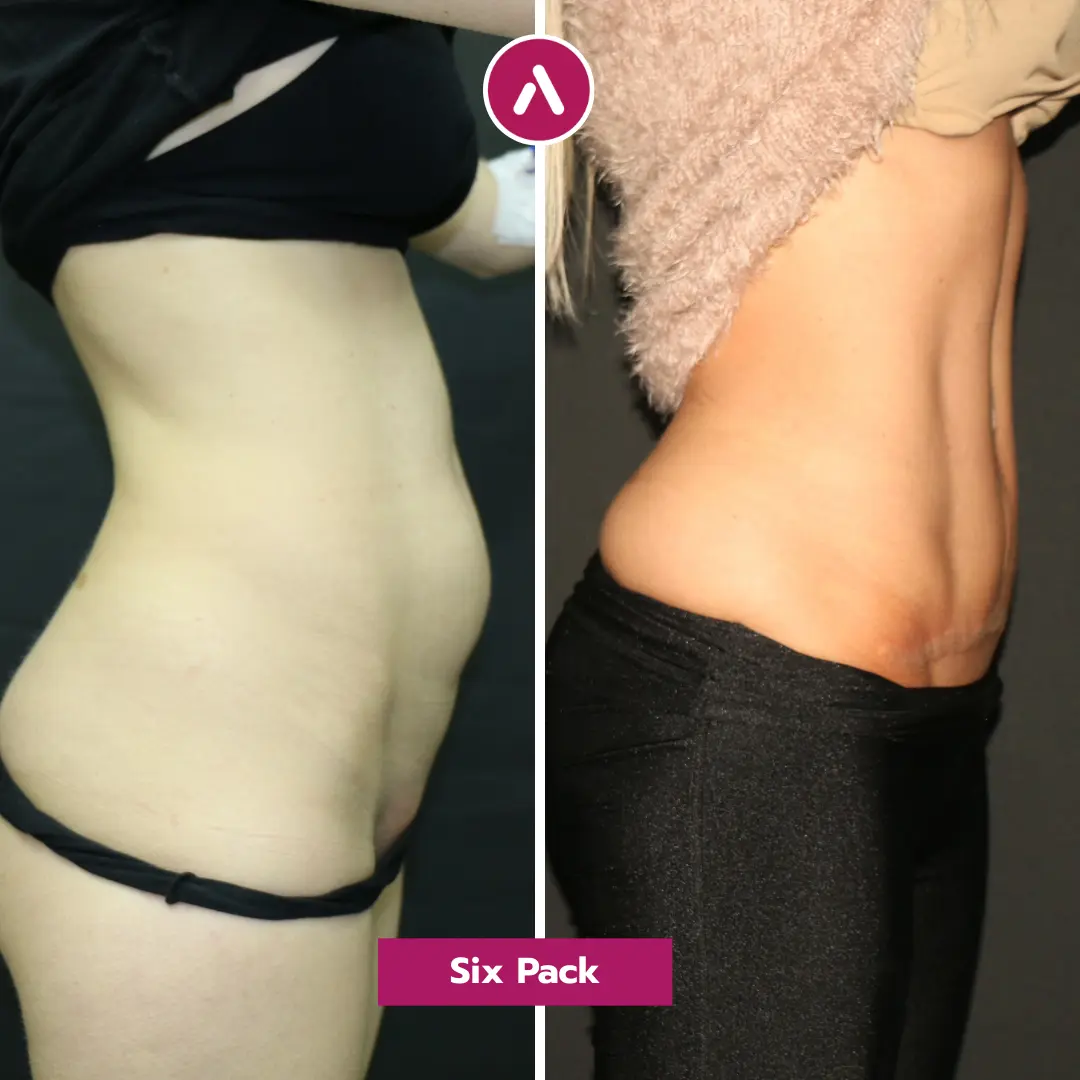
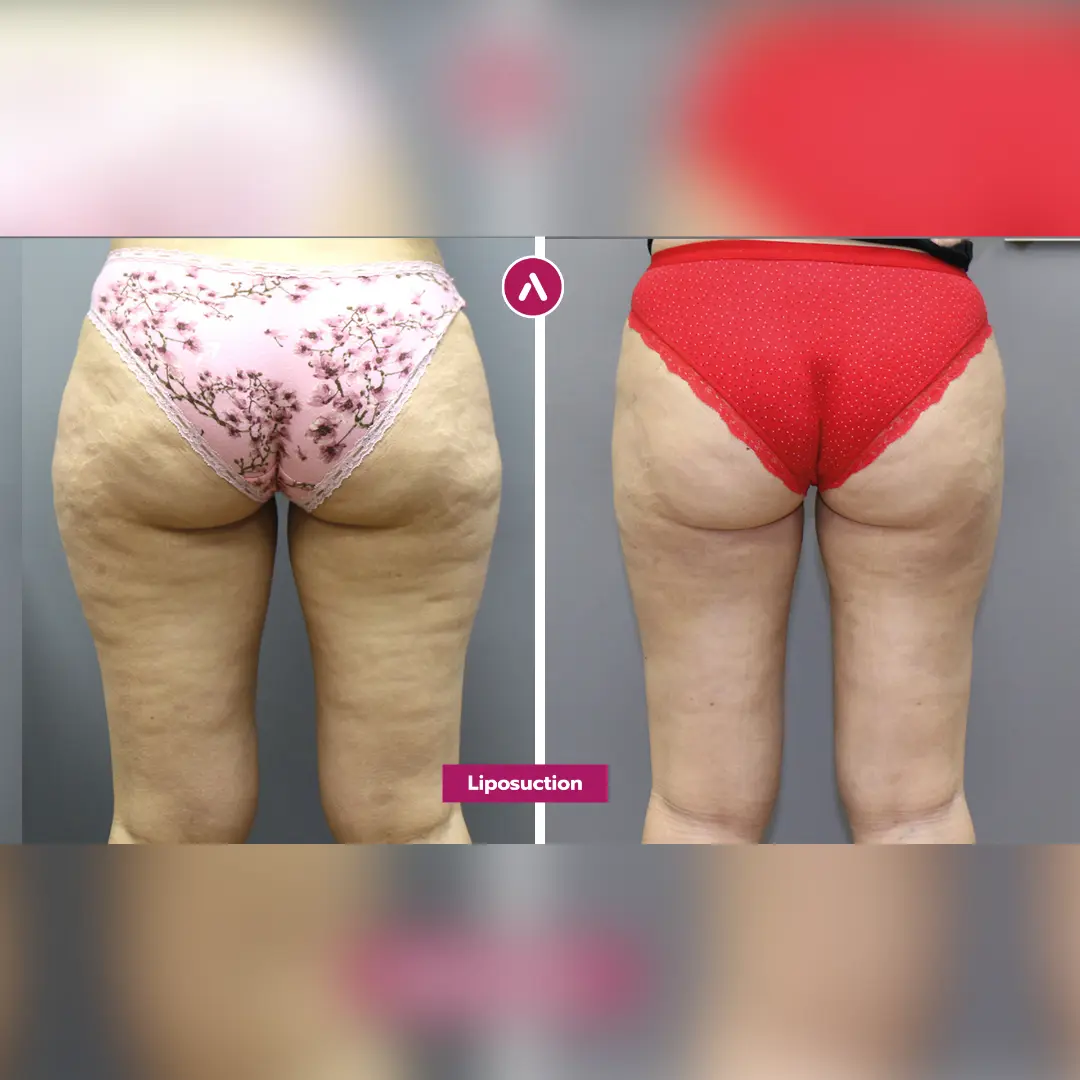
The difference is scale. A tummy tuck, body lift, or arm lift uses longer incisions to remove skin. Liposuction uses tiny openings, sometimes called adits or port sites, so a thin cannula can pass under the skin and remove fat. In a well-planned procedure, those entry points are placed in natural folds, shadowed areas, or spots usually hidden by underwear or swimwear.
This article focuses only on liposuction scars: what the small incisions look like, where surgeons place them, why some show more than others, and how to support clean fading. For the broader procedure, candidacy, anesthesia options, and body-contouring planning, see AKM’s liposuction procedure in Turkey.
Table of Contents
Does Liposuction Leave Scars? The Short Answer
Liposuction does leave small incision marks, but they are very different from the scars people imagine after larger body-contouring operations. Instead of a long line, you usually have several tiny entry points. Their final appearance depends on incision placement, skin colour, healing tendency, sun exposure, friction from the cannula, and how carefully the area is treated while it closes.
Yes, but the scars are usually tiny
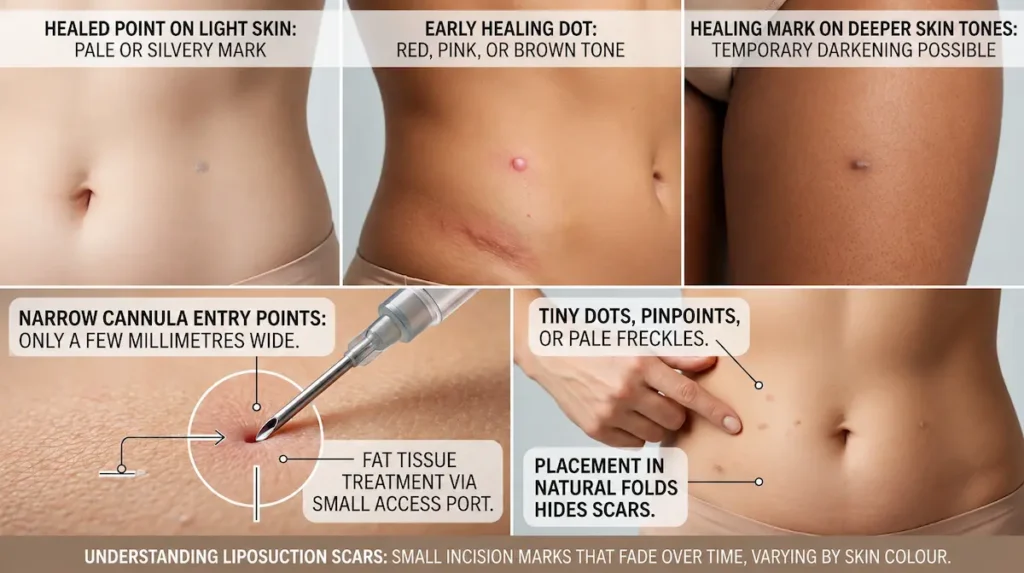
During liposuction, the surgeon needs access points for a narrow cannula. These openings are usually only a few millimetres wide. They are large enough for the cannula to enter the fat layer, but small enough that they often heal as a dot rather than a line.
Early on, the incision marks may look red, pink, brown, or slightly darker than the surrounding skin. That colour is part of normal healing for many patients. Over time, the mark usually flattens and fades. In lighter skin, it may become pale or silvery. In deeper skin tones, it may temporarily darken before gradually settling.
That temporary colour change matters for Canadian patients with more melanin-rich skin, because post-inflammatory hyperpigmentation can make even a small mark more visible for a while. A tiny scar can still feel frustrating if it sits in an obvious spot. This is why incision planning is not a minor detail; it is part of the aesthetic result.
Why liposuction incisions are small
Liposuction removes fat through a cannula, not through open surgical exposure. A clinical overview of the technique describes the use of small skin incisions to insert the cannula and treat the fat layer underneath the skin. You can read the medical background in this overview of how liposuction incisions are made.
Because the cannula works through a narrow access point, the surgeon does not need to create a long incision. The trade-off is that there may be more than one entry point. A single large area, such as the abdomen or flanks, may require several small ports so the surgeon can contour the fat evenly from different angles.
That is normal. More entry points do not automatically mean worse scarring. In some cases, a few well-placed small incisions can be safer and more precise than forcing the cannula to reach too far from one opening, which may increase tissue trauma or unevenness.
What they tend to look like once healed
Healed liposuction scars often look like tiny dots, pinpoints, pale freckles, or small flat marks. They may be easier to feel than to see. In many patients, they become difficult to notice unless you know exactly where to look.
That said, “tiny” does not mean “impossible to see.” Some marks remain visible, especially if the skin is prone to hypertrophic scarring, keloids, or lingering pigmentation. A small scar on the inner thigh may be less noticeable than the same scar on an exposed upper abdomen. Location changes perception.
It is better to think of liposuction scars as small and manageable, not nonexistent. A responsible surgeon should never promise that there will be no marks at all.
Clinical note: The goal is not to pretend liposuction is scarless. The goal is to use the fewest necessary entry points, place them thoughtfully, reduce unnecessary cannula friction, and guide the patient through scar care so the marks heal as quietly as possible.
Dreaming of a Natural-Looking Liposuction?
Our philosophy is simple — rejuvenation, not alteration. We believe the best work is the work no one can point to. See how our surgical team creates subtle, refreshed results that honour the features already making you who you are.
What the Tiny Incisions Actually Look Like
The look of a liposuction incision changes with time. In the first few days, it may look more obvious because the skin is swollen, bruised, or covered with a small dressing. As the entry point closes, it can pass through several colour and texture phases before settling. That early appearance is not the final scar.
Adit or port size: usually only a few millimetres
The small openings used for liposuction are often called adits, ports, or cannula entry points. They are typically just large enough to allow the cannula to pass through smoothly. The exact size depends on the cannula, treatment area, technique, and surgeon preference.
A tiny entry point can still look noticeable early because the surrounding tissue is inflamed. Swelling makes small marks look larger. Bruising can also spread around the incision, creating the impression of a bigger wound than the actual skin opening.
Once the bruising fades and the incision closes, the mark usually becomes much smaller visually. Patients often describe healed lipo scars as looking like a dot from an old piercing, a faint freckle, or a small pale spot.
How many entry points are used?
The number of entry points depends on the area treated and the contour goal. A small, localized area may need only one or two ports. Larger areas, such as the abdomen, flanks, back, or thighs, often need several. This lets the surgeon approach the fat from different directions and blend the contour more evenly.
For example, treating the waist from one angle alone can create uneven pull or leave transition zones. Adding a second hidden entry point may allow better feathering of the fat layer. In that situation, an extra tiny scar may be a worthwhile trade-off for smoother shape.
Good planning means the surgeon thinks about both: the contour and the scar. The best incision is not only small; it is also placed where the healed mark makes visual sense on your body.
Early appearance versus healed appearance
In the first week, incision marks may look red, slightly raised, crusted, or darker than expected. Mild fluid drainage can also occur early, depending on the technique and aftercare instructions. This phase can make the incisions feel more dramatic than they really are.
By several weeks, the skin surface is usually closed, but colour may linger. By a few months, many scars flatten and fade. Full scar maturation takes longer than most people expect; even a tiny mark can keep changing for 6–12 months.
Watch the trend. A scar that is slowly flattening, softening, and losing colour is usually following a normal path. A mark that becomes increasingly painful, raised, hot, draining, widening, or very dark should be reviewed by your surgical team.
Where Surgeons Place the Incisions
Incision placement is one of the main reasons liposuction scars are usually discreet. The entry points are small, but their location still matters. A few millimetres in the wrong direction can make a scar easier to notice; the same mark placed in a crease, shadow, or clothing line can be much harder to see.
Natural creases and folds
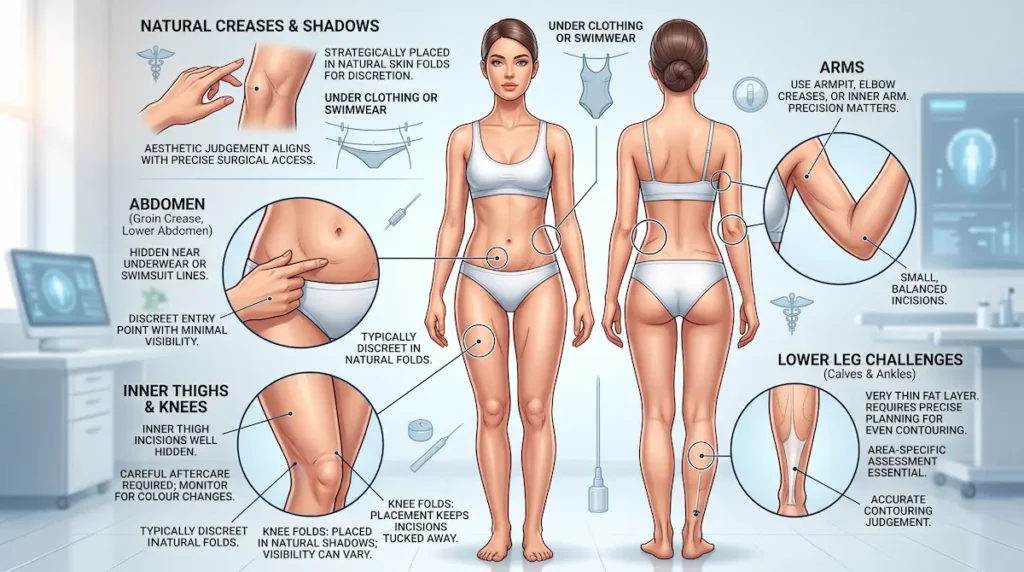
Surgeons often place liposuction entry points in areas where the body already creates a fold or shadow. These may include the lower abdomen near underwear lines, the groin crease for inner thigh work, the natural fold near the buttock, or the side of the waist where the mark can sit away from the front view.
The idea is simple: if a tiny scar has to exist, it should be placed where the eye is least likely to catch it. A flat dot on open skin can stand out more than the same dot tucked into a crease. Placement is part anatomy, part surgical access, and part aesthetic judgment.
There is also a practical side. The entry point must let the cannula move safely through the fat layer. A scar can be beautifully hidden but poorly positioned for contouring, and that is not a good trade. The best plan balances hidden placement with safe, even fat removal.
Under clothing or swimwear
For many patients, the most important question is whether the marks will show in everyday clothing, underwear, or swimwear. In abdominal and flank liposuction, entry points are often planned with waistbands and bathing suit lines in mind. For thighs, they may be placed where the legs naturally meet or where shadows make small marks less visible.
This does not mean every incision can be completely hidden. Some treatment areas, such as the arms, knees, calves, or ankles, offer fewer natural hiding places. In those areas, the surgeon’s goal is usually to make the entry points very small, balanced, and positioned away from the most visible front-facing view.
Lower-leg areas require especially careful planning because the fat layer is thinner and the skin can reveal irregularities more easily. That is why area-specific assessment matters. A patient considering liposuction of the knee area, calf liposuction incisions, or ankle contouring should expect a more precise discussion about where the tiny access points would sit.
Common incision locations by body area
The exact incision map is individual, but certain patterns are common. Abdomen and flank liposuction usually offers more hidden options. Arm and lower-leg liposuction can be more exposed. Inner thigh incisions may be hidden well, but friction during healing can affect colour change if aftercare is not followed carefully.
| Body Area | Typical Entry Point Location | Likely Visibility Once Healed |
|---|---|---|
| Abdomen | Low on the abdomen, near natural folds or underwear lines | Often well hidden; may look like a small dot if visible |
| Flanks / waist | Side of the waist or lower back crease | Usually discreet because the area is not front-facing |
| Inner thighs | Groin crease or upper inner thigh fold | Often hidden, but friction can delay fading |
| Knees | Near the inner knee or a small shadowed fold | Can be more visible because the area has less coverage |
| Arms | Near the elbow crease, armpit fold, or inner arm | Variable; placement is important because arms are often exposed |
This is why consultation photos are not just about fat volume. They also help the surgical team study skin folds, clothing lines, scar history, and the angles from which your body is usually seen.
A Well-Coordinated Liposuction Experience
From private airport transfers to comfortable, well-appointed hotel accommodation, we handle every detail of your stay. The result is a seamless all-inclusive clinical pathway in Istanbul — so you can focus on your procedure and recovery while we manage the logistics.
Why Some Lipo Scars Show More
Not every patient heals the same way. Two people can have the same incision size and very different scar visibility. Some of that comes from surgical technique, and some comes from biology: skin colour, inflammation response, genetic scar tendency, and how the incision is protected during the first months.
Skin type, pigmentation, and keloid tendency
In Canada’s diverse patient population, skin tone and scar biology need to be discussed clearly. Deeper skin tones can be more prone to post-inflammatory hyperpigmentation, where a healing mark becomes brown or darker before it fades. This does not mean liposuction is unsuitable, but it does mean scar-care planning should be more deliberate.
Some patients also have a history of hypertrophic scars or keloids. A hypertrophic scar stays within the border of the incision but becomes raised. A keloid grows beyond the original wound edge. If you have raised scars from piercings, C-sections, burns, acne, or previous surgery, tell your surgical team before treatment.
A small lipo scar can still become raised if your skin is biologically prone to it. The incision size lowers the risk, but it does not remove it. Honest pre-op assessment matters more than reassurance.
Cannula friction and port-site irritation
Scar visibility is not only about the skin cut. The cannula passes through the entry point repeatedly during contouring. If there is too much friction at the port site, the surrounding skin can become irritated, darkened, or thickened during healing.
That is why surgeons may use protective techniques, careful cannula angles, and thoughtful port placement. The goal is not just to remove fat smoothly; it is also to avoid unnecessary stress at the entry point. Published medical discussion of liposuction port-site issues includes pigmentation changes and hypertrophic scarring, which you can review in this article on documented liposuction port-site healing.
For the patient, this means a small incision that looks irritated early should be monitored, not ignored. Most marks settle, but worsening pain, spreading redness, drainage, or a raised scar that continues to grow should be reviewed.
Sun exposure and aftercare
Sun exposure can make fresh scars darker and more persistent. Even a small dot can become more noticeable if it tans, burns, or develops uneven colour while the scar is still active. This is especially relevant for patients planning surgery before summer travel or warm-weather activities.
In the first months, scars are still remodelling. They may look closed on the surface while deeper healing continues. Protecting them from sun, friction, and unnecessary pulling gives them the best chance of fading quietly.
Aftercare is also where patients have real influence. Good scar care cannot erase poor incision placement, but it can support a clean, flat, low-contrast result. Poor care can make a tiny mark more visible than it needed to be.
How liposuction scars differ from larger body-contouring scars
Liposuction scars are small access-point marks. They are not the same as skin-removal scars from procedures such as a tummy tuck, arm lift, thigh lift, or buttock implant surgery. Those procedures involve longer incisions because skin is being cut and repositioned, not only fat being removed.
That distinction matters. A patient worried about body-contouring scars may be imagining long surgical lines, while liposuction usually leaves dot-like entry marks. For comparison, a procedure such as buttock implant surgery has a different scar pattern entirely; you can read about how butt implant incisions scar if you are comparing body procedures.
Liposuction is still surgery. It still creates marks. But in most patients, the scar burden is much smaller than procedures that remove loose skin or place implants.
How to Help Lipo Scars Heal & Fade
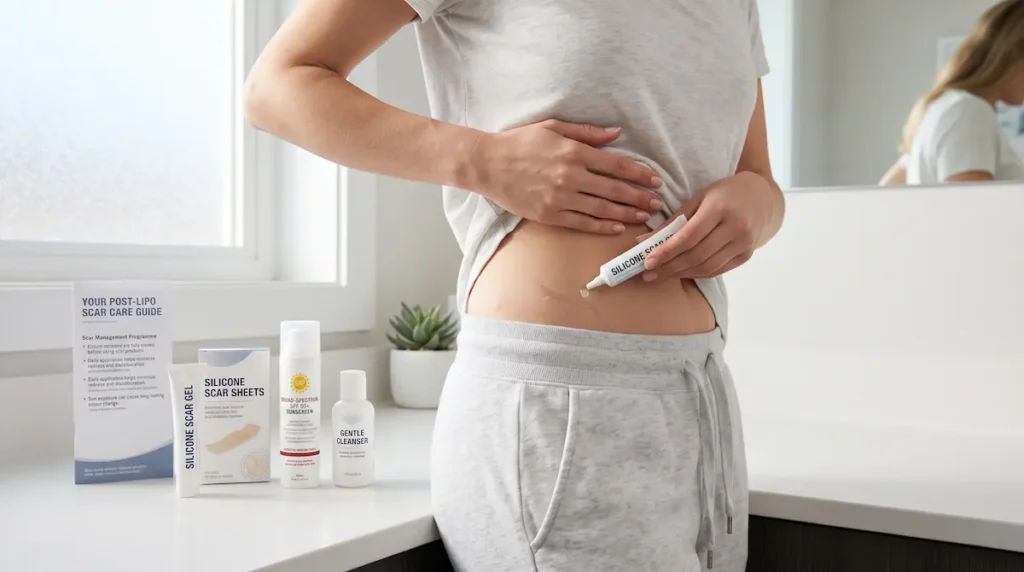
Scar care begins with good incision placement, but it does not end there. Once you leave the operating room, the way the entry points are protected, cleaned, covered, and shielded from sun exposure can affect how quietly they heal. The goal is not to “erase” scars overnight; it is to help tiny marks mature flat, soft, and low-contrast.
Follow your surgeon’s wound-care instructions first
Your clinic’s instructions should always come first because they are based on your technique, treatment areas, dressings, compression plan, and medical history. Some patients are told to keep small dressings in place for a set period. Others may be given specific cleaning instructions once drainage stops.
Do not apply creams, silicone, oils, exfoliants, or scar products to open incisions unless your surgical team has cleared them. A product that is safe for a closed scar may irritate a healing entry point. Timing matters.
For international patients, aftercare planning should be discussed before surgery. Ask how incision checks are handled before you fly home, what photos to send during virtual follow-up, and what changes should prompt medical review in Canada.
Use silicone only when the skin is fully closed
Silicone gel or silicone sheets are commonly used in scar care once the skin surface is fully closed. They can help maintain a protected healing environment and may reduce the risk of raised, thickened scars in some patients.
The key phrase is fully closed. Silicone should not be used on wet, draining, open, or irritated wounds. If the entry point is crusted, leaking, or tender, wait for your surgical team to confirm that scar care can begin.
Because liposuction scars are small, patients sometimes underestimate them and start products too early. Patience is safer. A tiny incision still needs clean closure before scar therapy starts.
Protect healing scars from sun exposure
Sun protection is one of the simplest ways to reduce long-lasting colour change. Fresh scars can darken when exposed to UV light, especially in skin that is prone to hyperpigmentation. That darkening may take months to fade.
For treated areas that are exposed, use clothing coverage first when possible. Once your surgeon says the skin is closed and sunscreen is allowed, use broad-spectrum protection consistently. If the incision sits under clothing, remember that friction and heat can still irritate it, especially around waistbands or inner thighs.
Scars do not mature on a weekend schedule. Even if the incision looks healed after a few weeks, the scar is still changing under the surface.
Know what is normal versus worth checking
Normal healing can include mild redness, temporary darkening, slight firmness, and itching as the incision closes. These symptoms should gradually improve. A scar that becomes softer, flatter, and less colourful over time is usually following a healthy path.
Contact your surgical team if an incision becomes increasingly painful, hot, swollen, draining, widening, or raised beyond the original entry point. Also ask for review if a dark mark keeps expanding rather than fading, especially if there is tenderness or discharge.
Scar revision is rarely needed for liposuction entry points, but it is possible in selected cases. More often, the issue is pigmentation, raised texture, or irritation that can be managed once the cause is identified.
Keep scar expectations separate from cost decisions
Cost should not be the only factor in choosing liposuction, especially if you are worried about visible marks. Incision planning, cannula control, aftercare access, and realistic candidacy assessment all influence the final result. If you want the financial side in Canadian-dollar context, review what liposuction costs separately rather than trying to judge quality from price alone.
For Canadian patients comparing options, ask practical scar-specific questions in consultation: where would the ports sit, how many are expected, how are they protected during surgery, and how will they be followed after you return home?
AKM planning principle: Small scars are not just a result of small incisions. They come from careful entry-point placement, controlled cannula movement, low-tension closure, and aftercare that respects how your skin heals.
Frequently Asked Questions: Does Liposuction Leave Scars?
These questions address the most common concerns patients have after asking whether liposuction leaves scars. The answers are general and cannot replace a consultation, because scar visibility depends on your skin, treatment area, medical history, and surgical plan.
Are liposuction scars permanent?
How big are liposuction scars?
Where are lipo incisions placed?
Do lipo scars fade?
Can you hide liposuction scars?
Does cannula size affect scarring?
Can darker skin tones scar more visibly after liposuction?
When should I worry about a liposuction scar?
Key Takeaway
Liposuction is not scarless, but its scars are usually tiny. The marks come from cannula entry points rather than long incisions, so they often heal as small dots or faint freckles. The best outcomes come from careful port placement, conservative tissue handling, honest scar-risk assessment, and aftercare that supports calm healing.
For Canadian patients, the right consultation should include more than “Will there be scars?” Ask where the entry points would sit, how visible they may be in your skin type, what aftercare is recommended, and how follow-up works after returning home.
Have Specific Questions About Liposuction?
Chat directly with our dedicated patient coordinators about your Liposuction. Whether you're weighing your options from Ontario, British Columbia, or Alberta, you'll get clear, personalized answers — straight from the team who will look after you, not a call centre.
Medical disclaimer: This article is for general educational purposes only and is not medical advice, diagnosis, or treatment. Surgical healing varies from person to person. If you have pain, drainage, spreading redness, fever, worsening darkening, or any concern about a healing incision, contact your surgeon or seek qualified medical care promptly.
Related Procedures

Awake Gynecomastia
Awake gynecomastia surgery in Turkey for Canadian men. Learn how local anesthesia, discreet recovery, CAD pricing, and fit-to-fly care work at AKM Clinic.

Awake Abdominal Etching
A Canadian patient guide to awake abdominal etching in Istanbul: pure local anesthesia, comfort, recovery, cost, safety, and fit-to-fly planning.

Awake Mommy Makeover
Explore awake mommy makeover in Turkey for Canadians. Learn which postpartum procedures suit local anesthesia, and AKM’s all-inclusive CAD pricing.

Awake Tummy Tuck
Awake tummy tuck in Turkey from CAD $7,500. Learn candidacy, local anesthesia limits, recovery, and Canada-to-Istanbul care.
Ready to Begin Your Journey?
Join the more than 2,000 patients who have trusted Dr. Akif Mehmetoğlu and the AKM Clinic team. Your journey begins with an informative, no-obligation conversation. Contact us today from across Canada to schedule your complimentary virtual consultation.
#1: Receive Your Personalized Quote
Start with a complimentary, no-obligation virtual consultation. Share your photos, and our surgical team will provide a fully personalized treatment plan and a transparent, all-inclusive pricing package quoted in Canadian dollars (CAD). There are no hidden fees.
#2: Secure Your Procedure Date
Once you are ready to proceed, our dedicated English-speaking patient coordinators will help you secure your procedure date. We will manage your logistical bookings in Istanbul, including your five-star hotel and private airport transfers.
#3: Arrive in Istanbul & Meet Your Surgeon
Arrive at Istanbul Airport (IST), where you will be greeted by your private driver. Settle into your hotel before your comprehensive in-person consultation. You will meet your specialist surgeon to finalize the details of your procedure and ensure your goals are aligned for a natural, subtle result.