
Does Liposuction Leave Scars? What the Tiny Incisions Look Like
AI Summary
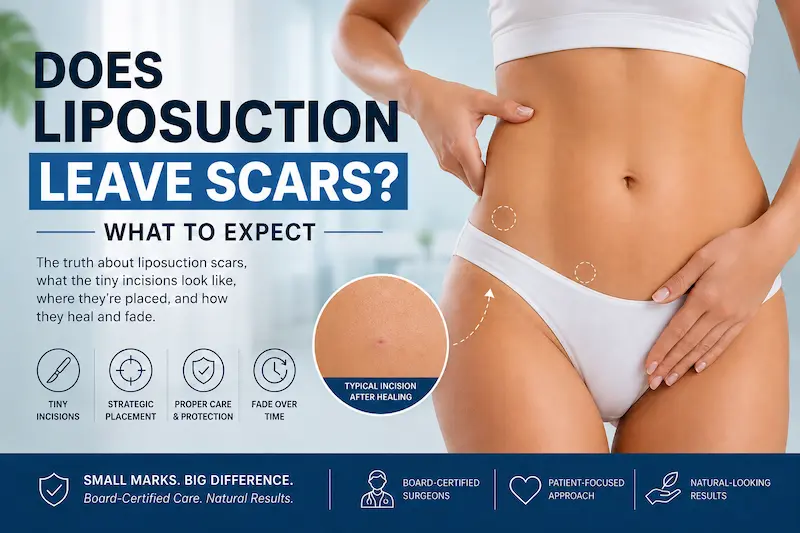
- Does liposuction leave scars? Yes, but they are usually tiny cannula entry-point marks.
- Strategic incision placement helps hide scars in natural creases, clothing lines, and body shadows.
- Scar fading takes time, with most marks flattening and softening over several months.
- Proper aftercare, sun protection, and silicone support can improve scar healing and visibility.
Summary generated by AI, fact-checked by our medical experts
Quick answer: If you are asking, does liposuction leave scars, the honest answer is yes — but they are usually tiny. Liposuction removes fat through a few millimeter-wide cannula entry points, not long surgical cuts. In most patients, these marks look like small dots or faint freckles and fade over several months with careful placement and aftercare.
Liposuction scars are different from the scars many people imagine before surgery. They are not long lines across the abdomen, thighs, arms, or waist. They come from small “port” or “adit” openings where the surgeon inserts the cannula to loosen and remove fat.
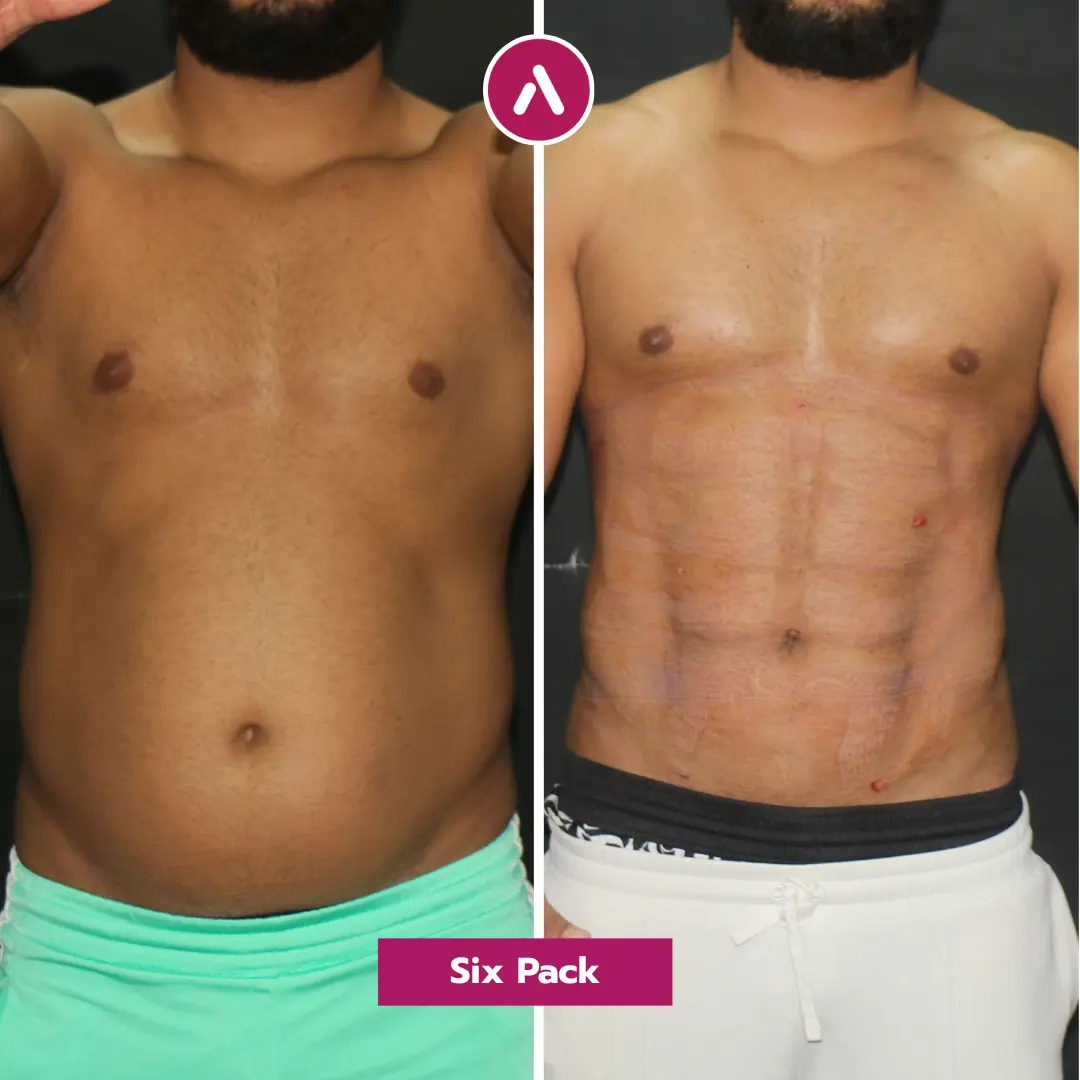
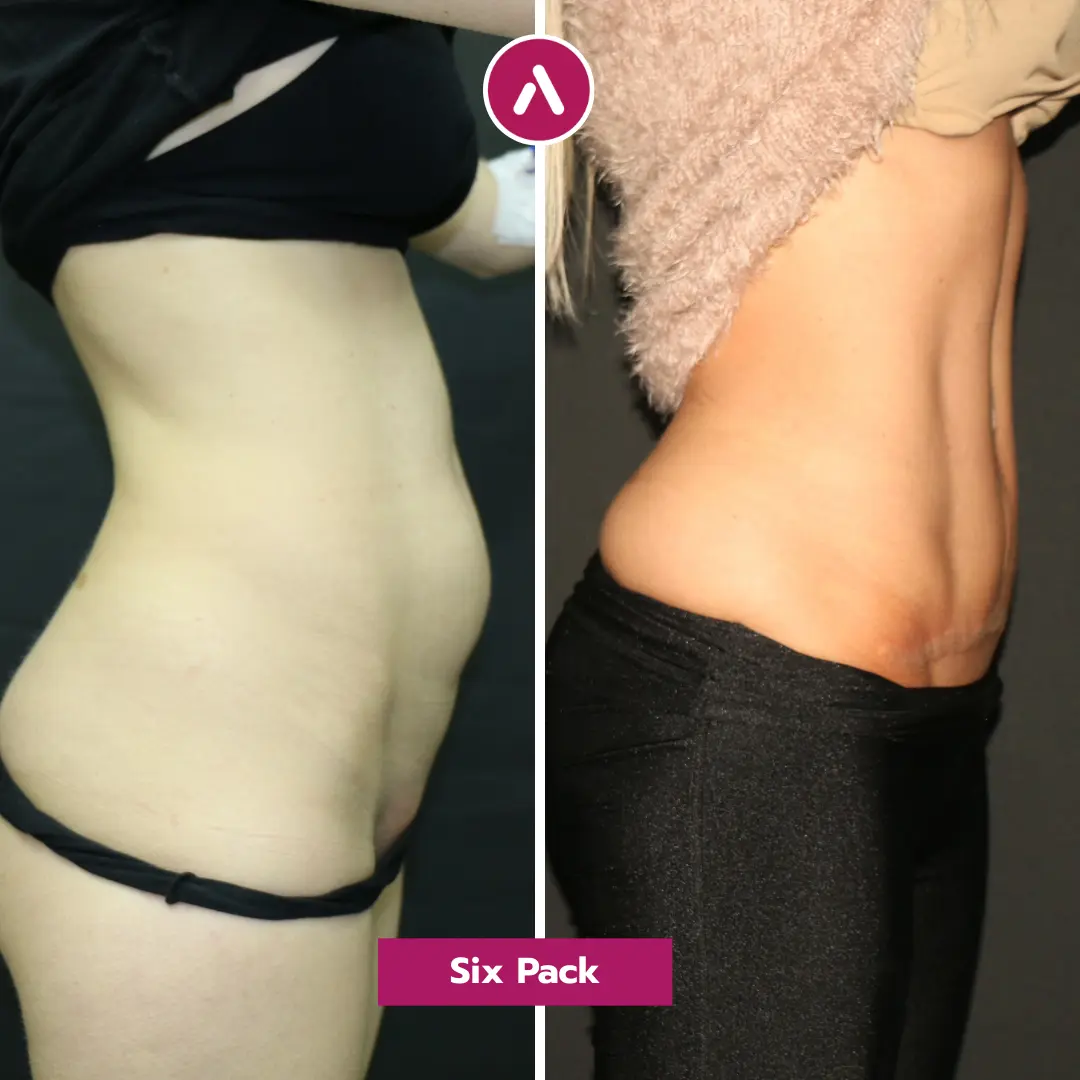
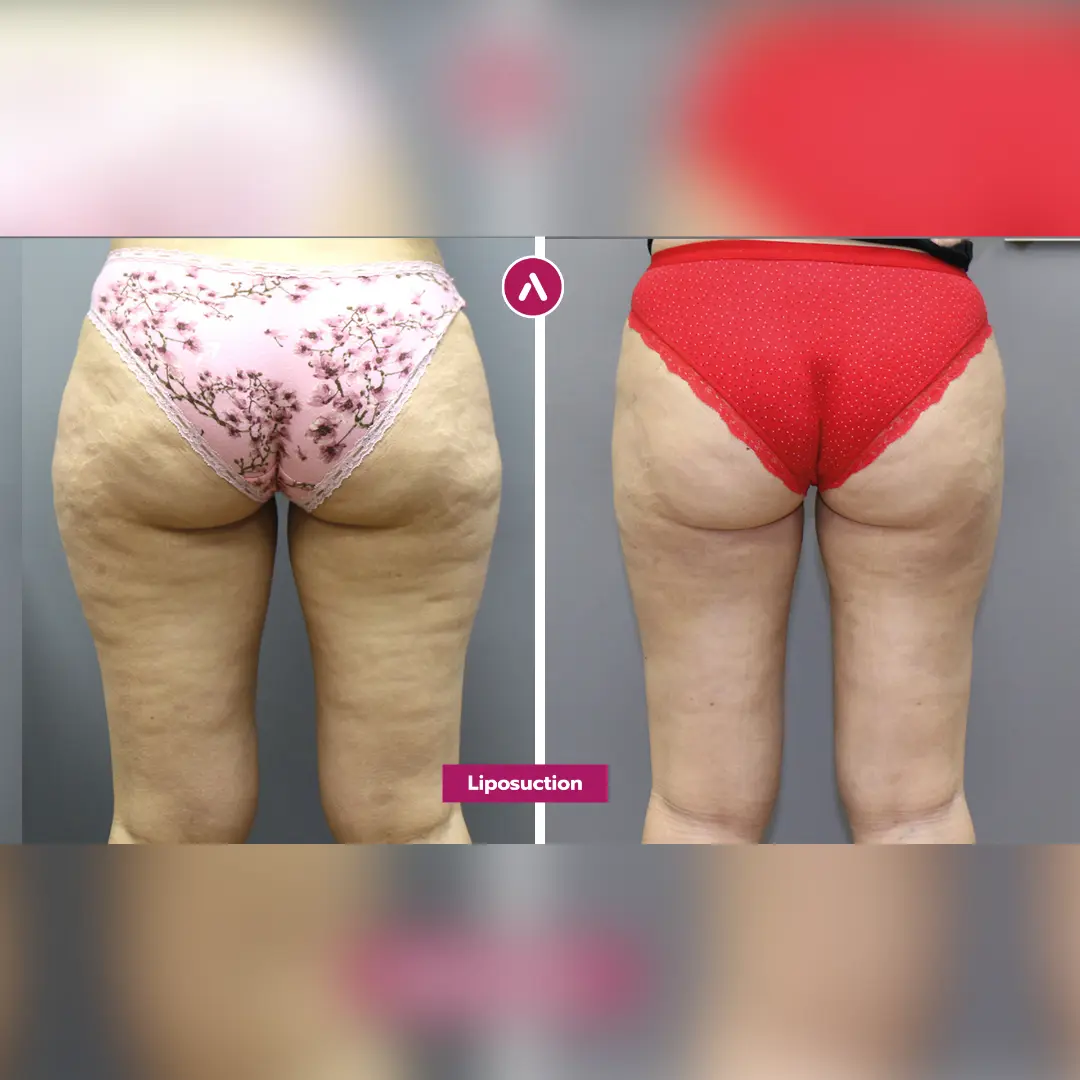
That small size matters, but placement matters just as much. A skilled team plans each entry point around natural creases, underwear lines, belly button folds, or less visible shadows of the body. If you are still comparing technique, candidacy, and how fat removal is planned overall, start with the liposuction procedure explained before focusing only on scar visibility.
At AKM Clinic, the goal is not just fat removal. It is controlled contouring, small access points, and skin-aware planning that supports a natural-looking result. For an expert patient, the useful question is not only “Will there be a mark?” but “How small is it, where will it sit, and what makes some marks heal better than others?”
Table of Contents
Does Liposuction Leave Scars? The Short Answer
Yes, liposuction can leave scars, because any opening through the skin can heal with a mark. The difference is scale. Liposuction uses tiny cannula entry points rather than long incisions, so the scar pattern is usually a few small dots instead of a visible surgical line.
Yes, But the Scars Are Usually Tiny
In standard liposuction, the surgeon makes small skin openings so the cannula can pass into the fat layer. These openings are often only a few millimeters wide. Once healed, many look like a pale dot, a small freckle, or a faint flat mark.
The word “scar” can sound dramatic. In liposuction, it usually means a tiny entry-point mark rather than a large incision. That is why many patients do not notice the scars day to day once the redness and early pigmentation settle.
Still, “tiny” does not mean “impossible to see.” Some patients heal with darker pigment, thicker scar tissue, or a small raised mark. Skin tone, genetics, sun exposure, aftercare, and surgical technique all influence the final appearance.
Why Liposuction Does Not Require Long Incisions
Liposuction is performed through narrow access points because the cannula is slim. The surgeon does not need to open the full treatment area to remove fat. Instead, the cannula works beneath the skin through controlled tunnels in the fat layer.
This is one reason liposuction scars are usually much smaller than scars from skin-excision surgery. Procedures such as tummy tuck, arm lift, thigh lift, or body lift remove loose skin and therefore need longer incisions. Liposuction removes fat only, so the skin openings can stay small.
That trade-off matters. Smaller scars are one advantage of liposuction, but liposuction also cannot remove major loose skin. If skin laxity is the main issue, a surgeon may need to discuss a different plan rather than promising that lipo alone will tighten everything.
What the Marks Usually Look Like Once Healed
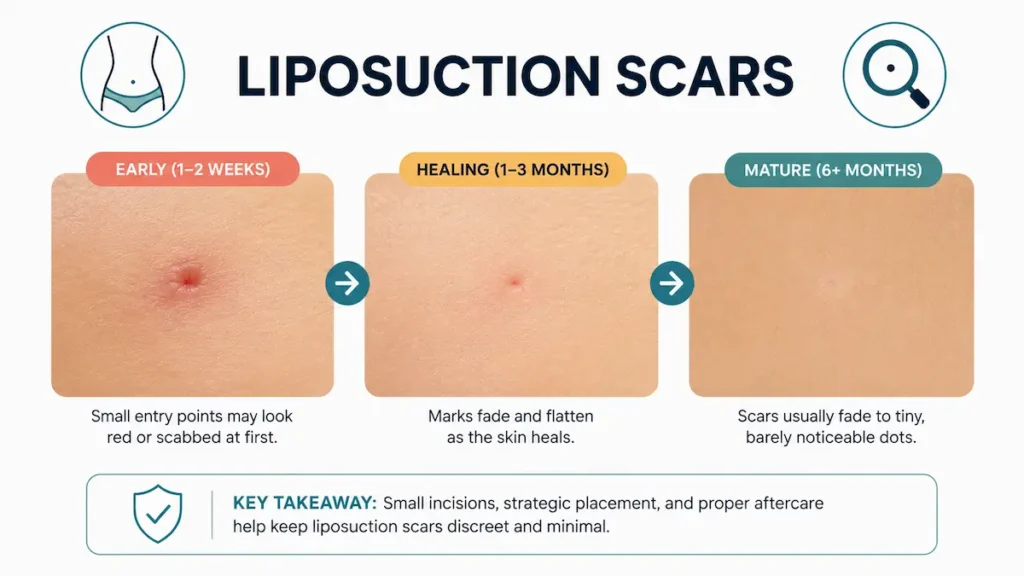
Early on, the entry points may look red, pink, brown, or slightly raised. Some may have a tiny scab. This early appearance is not the final result.
As healing progresses, the marks usually flatten and fade. On lighter skin, they may become pale or silvery. On darker or more pigment-prone skin, they may stay brown for longer before gradually softening in color.
Most patients judge their scars too early. A mark that looks obvious at four weeks may be much less noticeable at six months. Scar maturation takes time, especially in areas that move, rub against clothing, or receive sun exposure.
Dreaming of a Natural-Looking Liposuction?
Our philosophy is “Rejuvenation, Not Alteration.” Discover how our surgeons achieve subtle, revitalized results that honor your unique beauty.
What the Tiny Incisions Actually Look Like
Liposuction incisions are better understood as cannula entry points. They are small access sites, not open cuts across the treatment zone. Knowing what they look like at each stage helps prevent unnecessary worry during early healing.
Adit or Port Size: Usually Only a Few Millimeters
Surgeons often call these openings “adits” or port sites. Their job is simple: allow the cannula to enter the fat layer at the correct angle. They are made with a small blade or needle-like opening, then used carefully throughout the contouring process.
Medical references describe liposuction as being performed through small incisions that provide access for cannula movement. The exact size can vary by technique, cannula type, and treatment area, but the entry points are designed to remain minimal. You can read more about the surgical basics in how liposuction incisions are made.
In real life, a healed port site may look like a pinhead-sized dot or a very small flat mark. It may be easier to see when you know where to look. It may be hard for someone else to notice at normal social distance.
How Many Entry Points Are Used?
The number of entry points depends on the area and contouring plan. A small area may need only one or two. Larger or more three-dimensional areas may need several so the surgeon can approach the fat from different angles.
More entry points do not always mean worse scarring. Sometimes a few well-placed ports create a smoother result with less cannula friction than forcing too much work through one opening. The goal is controlled access, not simply the lowest possible number.
For example, abdomen liposuction may use entry points hidden near the belly button, lower abdomen, or underwear line. Flank liposuction may use side or lower-back access points. Thigh, knee, calf, and ankle contouring require even more precise planning because the fat layer can be thinner and the skin more visible.
Early Appearance vs Healed Appearance
In the first days, entry points can look more noticeable than expected. They may be red, swollen, crusted, or slightly bruised around the edges. A small amount of drainage can also occur early, depending on the technique and your surgeon’s aftercare protocol.
By the first few weeks, the surface usually closes and the marks begin to settle. They may still be darker than surrounding skin. This is especially common when inflammation triggers temporary hyperpigmentation.
By several months, most marks are flatter and softer. Final scar appearance can continue to improve for up to a year. Patients with a history of hypertrophic or keloid scarring should discuss that history before surgery, because their healing pattern may be less predictable.
Where Surgeons Place the Incisions
Incision placement is one of the main reasons liposuction scars can be hard to notice after healing. The surgeon is not only choosing where the cannula can work effectively; they are also choosing where a small mark will be least visible on your body.
Hidden in Natural Creases and Shadows
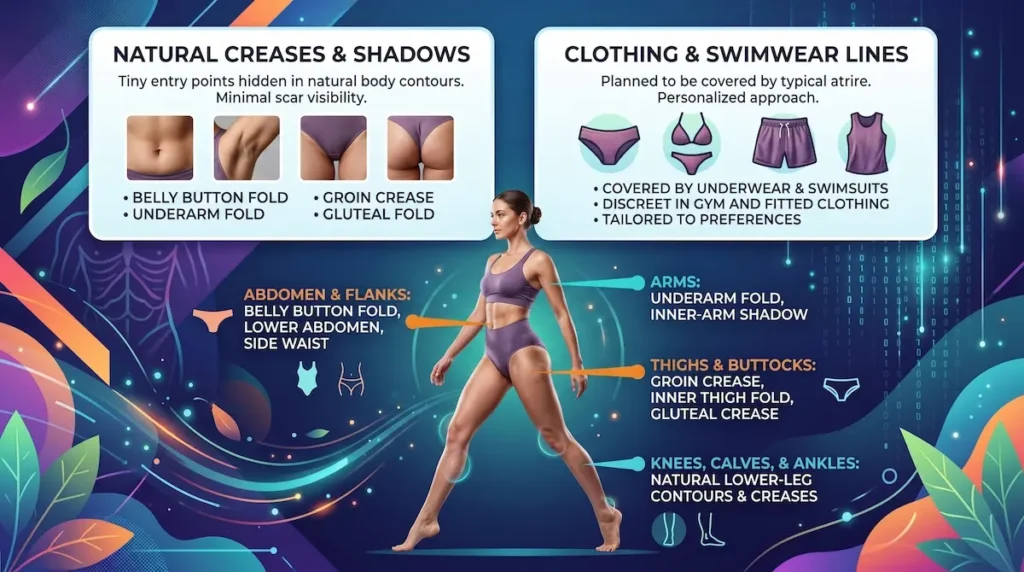
Whenever possible, liposuction entry points are placed in natural folds, creases, or shadowed areas. These may include the belly button fold, lower abdomen, bikini line, groin crease, underarm fold, or the crease where the buttock meets the thigh.
The idea is simple. A tiny scar hidden in a natural crease is much harder to see than the same scar placed on a flat, exposed surface. This is why scar planning begins before the first incision is made.
In body contouring, a millimeter can matter. A small change in entry-point position can affect both the surgeon’s access and the patient’s long-term scar visibility.
Placed Around Clothing and Swimwear Lines
For many patients, the practical question is not only whether the scar exists. It is whether it shows in underwear, swimwear, gym clothes, or fitted clothing.
For abdomen and flank liposuction, entry points may be planned around areas typically covered by underwear or a swimsuit. For thigh liposuction, they may sit near groin creases or less exposed thigh folds. For arm liposuction, the access point may be positioned where the arm naturally hides it during daily movement.
This is where a personalized plan matters. A patient who wears high-cut swimwear may need different scar-placement planning than someone mainly concerned about gym shorts, sleeveless tops, or close-up visibility in bright light.
How Placement Changes by Body Area
Different body areas require different access points. The abdomen, flanks, thighs, knees, calves, and ankles all have different fat thickness, skin quality, and visibility concerns. The best incision site is the one that gives safe cannula access while keeping the healed mark discreet.
| Body Area | Typical Entry-Point Location | How Visible It Usually Is | Planning Note |
|---|---|---|---|
| Abdomen | Belly button fold, lower abdomen, or underwear line | Often hidden by natural folds or clothing | Placement depends on upper vs lower abdominal contouring |
| Flanks | Side waist, lower back, or underwear line | Usually discreet when placed in shadowed side-body areas | Access must allow smooth contouring around the waist |
| Thighs | Groin crease, inner thigh fold, or hidden thigh crease | Can be well hidden, but friction from clothing may affect healing | Skin quality and rubbing need careful aftercare |
| Knees | Small crease near the inner knee or nearby hidden fold | Potentially more noticeable because the area has less fat | Precision is important in liposuction of the knee area |
| Calves | Small access points around natural lower-leg contours | Can show more if skin is thin or pigment-prone | Lower-leg planning is delicate; see our calf liposuction guide |
| Ankles | Small hidden points near natural ankle creases | May be more visible because the area is exposed | Conservative technique matters in ankle contouring |
| Arms | Underarm fold, elbow-adjacent crease, or inner-arm shadow | Usually subtle if placed away from flat exposed skin | Arm movement and friction can influence scar maturation |
This table is a guide, not a promise. Your exact incision locations depend on your anatomy, fat distribution, skin laxity, and the direction from which the surgeon needs to contour the area safely.
Experience a Stress-Free Liposuction Journey
From VIP airport transfers to 5-star hotel accommodations, we handle every detail. Enjoy a seamless medical travel experience in Istanbul.
Why Some Lipo Scars Show More
Most liposuction scars fade well, but not every patient heals the same way. A tiny incision can still become more visible if the skin is prone to pigment changes, if the area is irritated, or if healing is disrupted by friction, sun exposure, or inflammation.
Skin Type, Pigment, and Keloid Tendency
Some patients naturally produce more visible scars. If you have a history of keloids, hypertrophic scars, or dark marks after acne, piercings, burns, or small cuts, tell your surgeon before liposuction.
Darker skin tones may be more prone to post-inflammatory hyperpigmentation, where a healing mark stays brown for longer. Lighter skin may heal with a pale or pink mark. Neither pattern is automatically abnormal, but both should be anticipated in scar planning.
Scar history is often more useful than skin tone alone. A patient of any background can form raised scars, and a patient of any background can heal with very faint marks.
Cannula Friction and Port-Site Irritation
A liposuction entry point can become more noticeable if the cannula repeatedly rubs against the skin edge during treatment. Skilled technique helps reduce unnecessary trauma at the port site.
This is one reason surgeons may use protective methods, small access points, and careful cannula direction. The goal is not only to remove fat evenly but also to avoid irritating the skin opening more than necessary.
Published medical literature describes port-site issues such as hyperpigmentation and hypertrophic scarring as possible liposuction-related healing concerns, especially when the entry site becomes irritated or inflamed. For a more technical reference, see documented liposuction port-site healing.
Sun Exposure, Friction, and Aftercare
Fresh scars are sensitive to ultraviolet light. If a healing entry point is exposed to sun too early, it can darken and stay pigmented for longer. This is especially relevant for abdomen, flank, arm, knee, calf, and ankle liposuction if the areas are exposed during warmer months.
Friction can also slow scar settling. Tight waistbands, compression that folds incorrectly, rough seams, and repeated rubbing can irritate small healing marks. Compression garments are important after liposuction, but they must fit properly and be worn as instructed.
Good aftercare does not erase biology, but it helps. Keeping incisions clean, protecting them from sun, avoiding unnecessary friction, and following your surgeon’s scar-care timing all support better maturation.
Surgeon-led perspective: The least visible liposuction scar is usually the result of three decisions working together: a small entry point, a hidden location, and gentle cannula movement that avoids unnecessary friction at the skin edge.
When Scar Visibility Is a Technique Issue
Some visible marks are not simply “how the patient heals.” Placement and technique matter. A port site placed on a flat, exposed surface may be easier to see than one hidden in a fold. An entry point that is stretched, irritated, or repeatedly traumatized may heal more noticeably.
This does not mean every visible scar reflects poor surgery. Even excellent technique cannot fully control genetics. But a thoughtful surgeon should be able to explain why each incision is placed where it is, how they protect the port site, and what scar-care plan they recommend.
It also helps to separate liposuction scars from scars created by other body-contouring procedures. For example, implant-based or skin-excision procedures use different incision patterns and carry different scar trade-offs. That is why comparing lipo marks with how butt implant incisions scar can be misleading unless the procedure type is clearly understood.
How to Help Lipo Scars Heal and Fade
Scar care starts with good surgical planning, but it continues during recovery. Once the skin is closed and your surgeon clears you, consistent scar protection can help small entry-point marks flatten, soften, and fade more predictably.
Use Silicone Only When the Skin Is Fully Closed
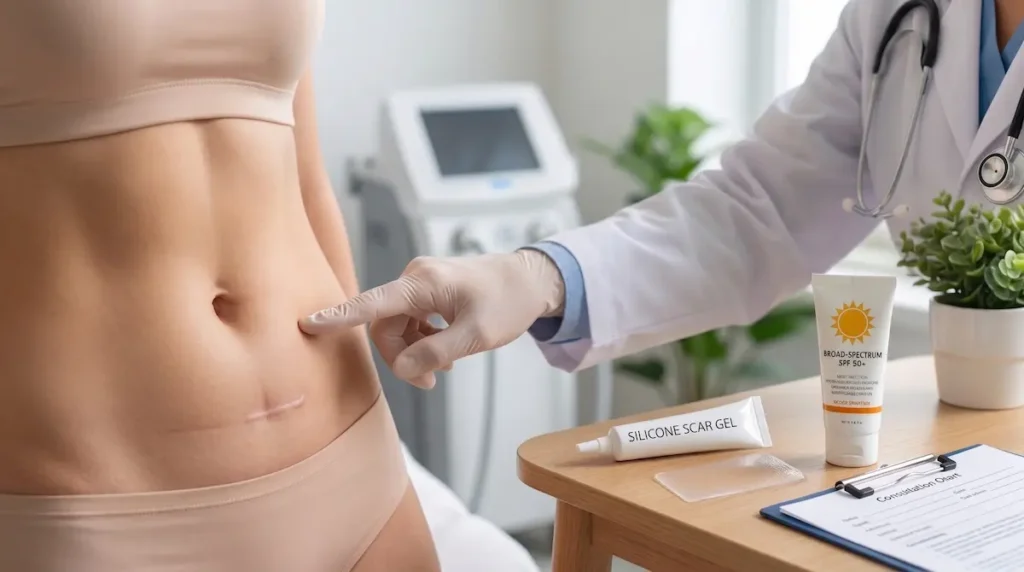
Silicone gel or silicone sheets are commonly used in scar care, but timing matters. They should not be applied to an open, draining, or scabbed entry point unless your surgical team specifically instructs you to do so.
Once the incision is fully closed, silicone may help support a flatter, softer scar environment. Use it exactly as directed. More is not always better, and irritating the area can work against healing.
If you have sensitive skin, test carefully and report itching, rash, or worsening redness. Scar care should calm the area, not inflame it.
Protect Healing Scars From the Sun
Sun protection is one of the simplest ways to reduce long-lasting discoloration. A healing scar that tans or burns can stay darker than the surrounding skin for months.
Keep fresh liposuction marks covered while they mature. Once your surgeon allows sunscreen, use broad-spectrum SPF on exposed areas and reapply as needed. This is especially important for arms, knees, calves, ankles, and any area that may be visible in swimwear.
For many patients, the scar itself is tiny; the pigment around it is what makes it noticeable. Preventing pigment change is easier than trying to correct it later.
Know What Is Normal and What Is Not
Some redness, tenderness, small scabs, and temporary pigment changes can be normal early on. The trend should be toward steady improvement.
Call your surgeon if an entry point becomes increasingly red, hot, swollen, painful, draining pus, opening rather than closing, or developing a rapidly raised scar. These changes are not something to “wait out” without guidance.
Scar concerns should be handled in context. A small dark mark at four weeks may simply need time and sun protection. A painful, widening, draining entry point needs a medical review.
When Scar Revision Becomes an Option
Most liposuction scars do not need revision. They are too small, too flat, or too well hidden to justify another procedure. But in rare cases, a raised, widened, dark, or poorly placed mark may be treated later.
Options can include silicone care, steroid injections for raised scars, laser or light-based treatments for discoloration, microneedling, or minor scar revision. The right choice depends on the scar type and your skin behavior.
Timing matters. Surgeons usually prefer to let scars mature before deciding on revision unless there is an active medical issue. For many patients, a mark that feels disappointing early becomes far less important once swelling settles and the body contour improves.
Cost should not be the focus of a scar-healing article, but it is reasonable to understand the broader treatment investment before booking surgery. For that separate topic, see what liposuction costs.
If you are worried about scar visibility, the best consultation question is specific: “Where would my liposuction entry points sit on my body, and why?” A surgeon should be able to show you the logic, not just reassure you that the marks will be small.
At AKM Clinic, incision planning is part of the contouring plan itself. The aim is to use small, well-placed entry points that give safe access to the fat layer while keeping healed marks as discreet as possible.
Ask AKM where your liposuction incisions would sit and how they would heal in your individual treatment plan.
Frequently Asked Questions: Does Liposuction Leave Scars
These are the questions patients most often ask once they understand that liposuction scars are usually tiny entry-point marks rather than long surgical incisions.
Are liposuction scars permanent?
The final appearance depends on your skin type, scar history, incision placement, sun protection, and aftercare. A small mark that looks obvious early in recovery may become much less visible after several months.
How big are liposuction scars?
The size can vary depending on the cannula, technique, and treatment area. The healed mark often looks like a tiny dot rather than a line.
Where are lipo incisions placed?
The exact location depends on the treatment area and the direction the surgeon needs for safe, even contouring. Good placement balances access with scar concealment.
Do lipo scars fade?
Fading can take several months, and some scars continue improving for up to a year. Sun protection is especially important because ultraviolet exposure can make healing marks stay darker for longer.
Can you hide liposuction scars?
After healing, most small marks are also easy to camouflage with clothing, sunscreen, or makeup if needed. If a scar remains raised or dark, your surgeon may discuss scar treatments once healing is mature.
Does the cannula size affect scarring?
A smaller opening is helpful, but careful technique matters just as much. A tiny incision can still heal poorly if it is irritated, stretched, or exposed to too much friction during recovery.
Have Specific Questions About Liposuction?
Chat directly with our dedicated patient coordinators regarding Liposuction. Get instant answers and personalized support.
Medical disclaimer: This article is for educational purposes only and is not medical advice, diagnosis, or a substitute for a consultation with a qualified surgeon. Healing and scar appearance vary from patient to patient. If a liposuction incision becomes increasingly painful, red, hot, swollen, draining, opening, or otherwise concerning, contact your surgical team or seek medical care promptly.
Related Treatments
Awake Gynecomastia Surgery in Turkey
Awake gynecomastia guide: local anesthesia vs general, technique options, recovery timeline, risks, and cost/value insights for expert patients.
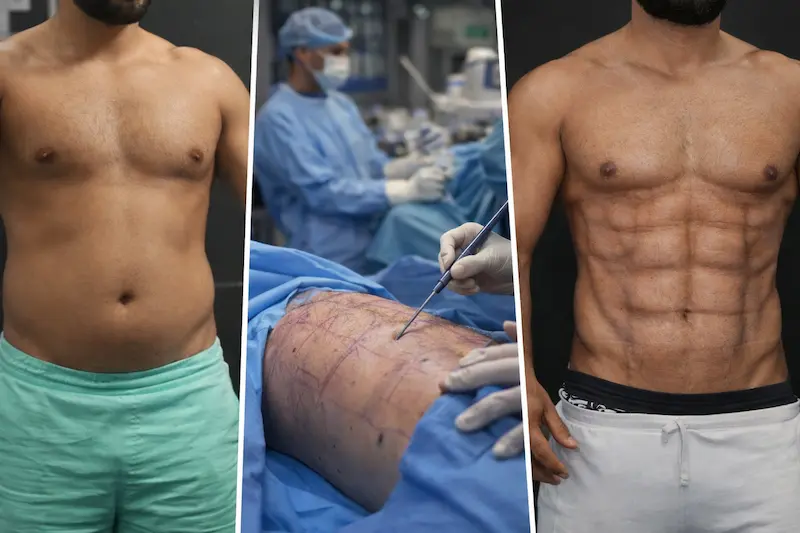
Awake Abdominal Etching in Turkey
Learn what awake abdominal etching is, who it’s for, recovery timeline, risks, and USA vs Turkey value—plus how to choose a qualified surgeon.

Awake Mommy Makeover in Turkey
Learn what an awake mommy makeover in Turkey includes, twilight sedation vs general anesthesia, recovery timeline, scars, risks, and value vs NYC/LA/Miami.
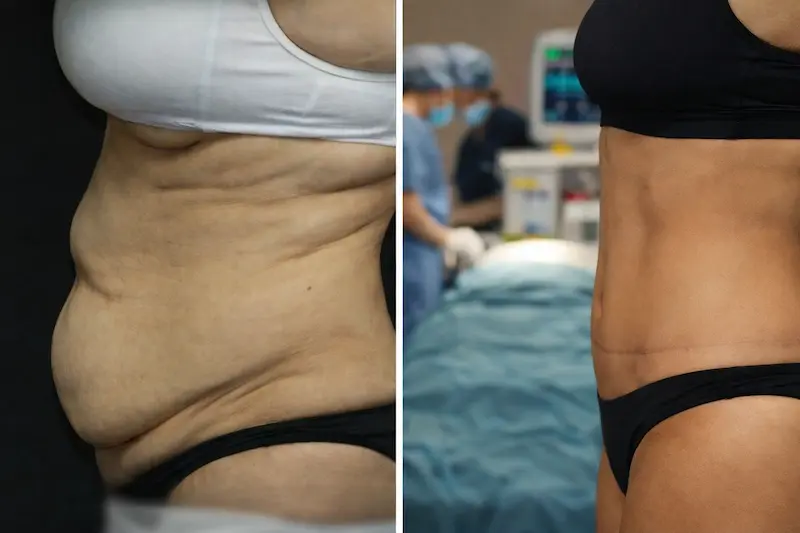
Awake Tummy Tuck in Turkey
Learn how an awake tummy tuck works, who qualifies, anesthesia options, step-by-step surgery, recovery timeline, risks, scars, and cost comparison.
Ready to Start Your Own Transformation Journey?
Join the 2,000+ patients who trusted Dr. Akif Mehmetoğlu and the AKM Clinic team. Your journey to a more confident, revitalized you begins with a simple, no-obligation conversation. Contact us today from the USA for your free virtual consultation.
#1: Get Your Free Personalised Quote
Start with a free, no-obligation online consultation. Share your photos, and our surgical team will provide a fully personalised treatment plan and a transparent, all-inclusive price package. No hidden fees.
#2: Secure Your Date & VIP Booking
Once you're ready, our dedicated patient coordinators will help you secure your procedure date. We'll handle all your bookings, including your 5-star hotel and private VIP airport transfers.
#3: Arrive in Istanbul & Meet Your Surgeon
Arrive at Istanbul Airport (IST) and be greeted by your private driver. Settle into your hotel and prepare for your in-person consultation, where you'll meet your specialist surgeon to finalise the details for your "natural, subtle, and revitalized" new look.