
How to Get Smaller Breasts: What Helps and What Does Not
AI Summary
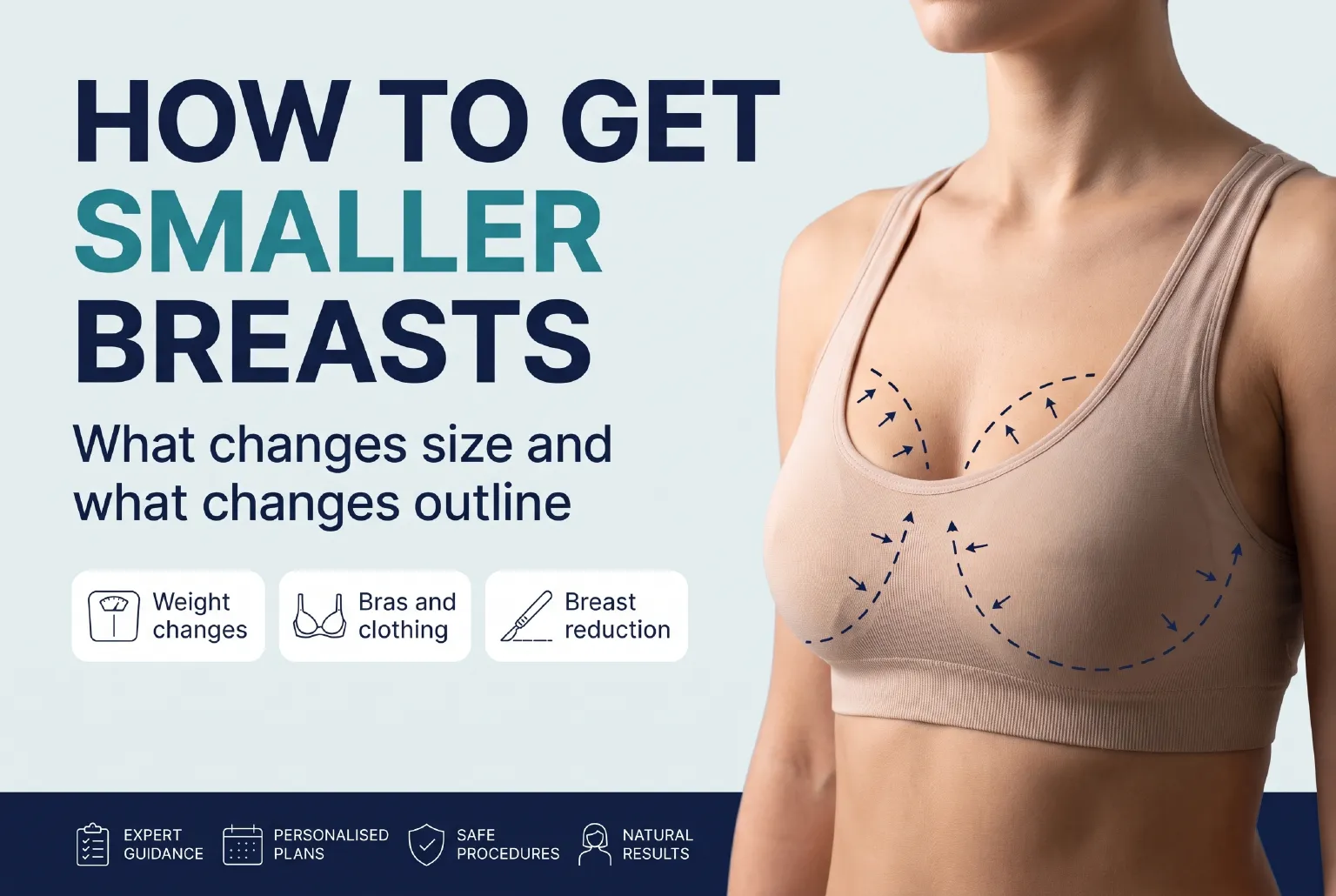
- How to get smaller breasts depends on your goal: less breast tissue, a smaller-looking outline or relief from breast-related discomfort.
- Diet, exercise, bras, clothing and binding change your weight, fitness or outline. Only breast reduction surgery directly removes breast fat, tissue and skin.
- Breast reduction brings permanent scars, recovery time and possible changes in sensation or breastfeeding. Results vary individually.
- An individual assessment should set realistic goals, confirm medical suitability and agree an aftercare plan before you commit to surgery or travel.
Summary generated by AI, reviewed by our editorial team
How to get smaller breasts depends on what you want to change. Diet, exercise, bras and clothing can change your weight, fitness or outline, but only breast reduction surgery directly removes breast fat, tissue and skin, as Mayo Clinic's overview of the procedure explains. Surgery is one option, not the default.
Start with what bothers you most. If clothes not fitting is the main issue, a different bra or a few styling changes may be enough. If you want tissue removed, our guide to breast reduction for Canadian patients covers the procedure and how care is organized.
There is no need to rush. Before you commit to anything, work out what is realistic for your body, which trade-offs you could live with and what support you would need while recovering, especially if you are travelling from Canada. A good consultation answers those questions. It should not assume surgery is your next step.
A Comprehensive Guide to Breast Reduction
From the procedure steps to your post-operative aftercare, review every detail of how our surgical team performs Breast Reduction in Istanbul. A clear, start-to-finish overview, so you know exactly what to expect before you travel.
Table of Contents
How to get smaller breasts: which options change size?
Separate three goals first: less tissue, a smaller-looking outline or more comfort. They need different tools. Naming your priority stops you judging a bra by what only surgery can do, or booking surgery for something a better fit could solve.
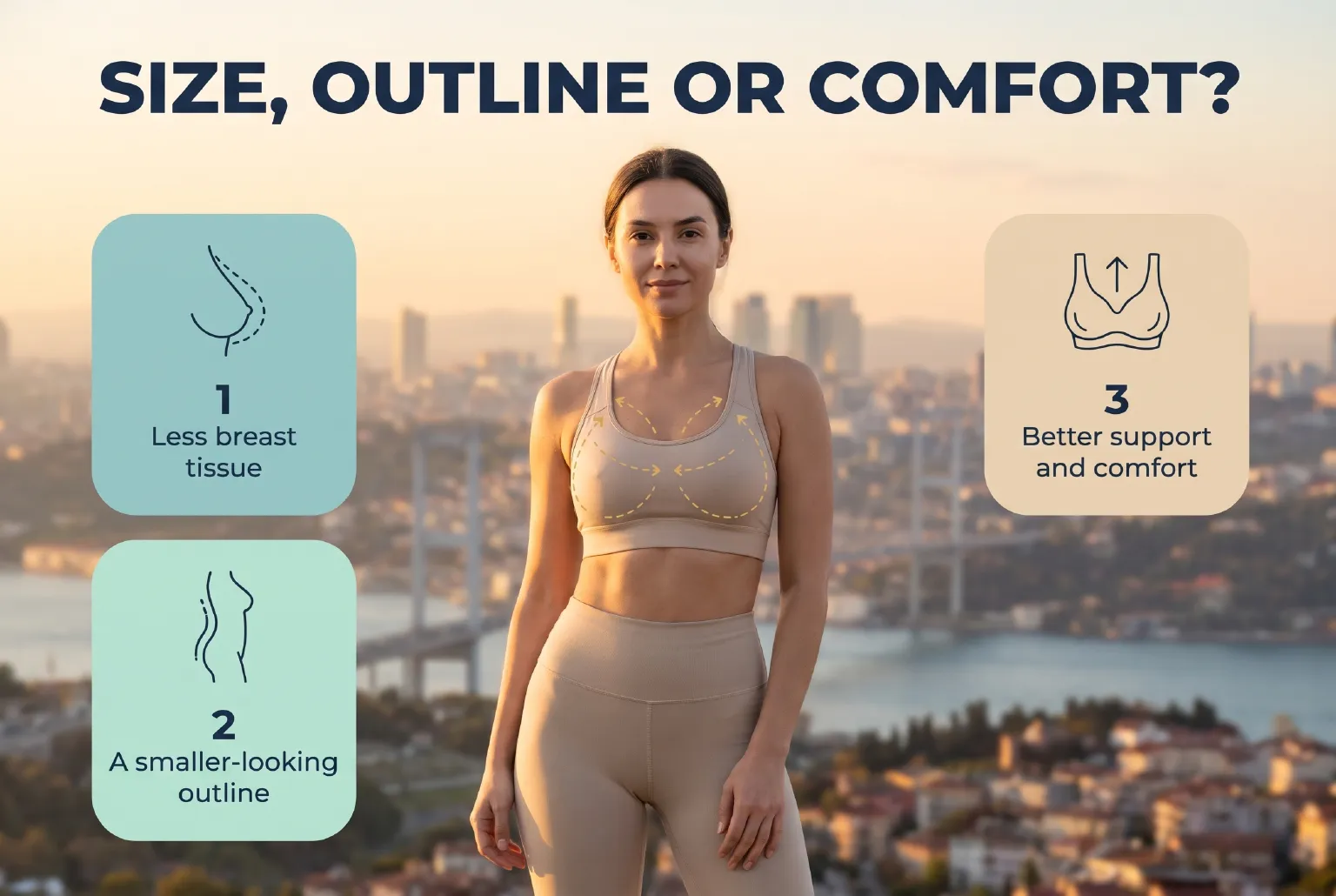
Do you want less breast tissue or a smaller-looking chest?
Be specific. Is it the volume itself, movement during exercise, clothes that never sit right or discomfort that keeps coming back? Many people have more than one reason. Choosing the one that matters most gives any consultation a clear starting point.
Why do breasts respond differently to weight changes?
Breasts contain glandular and connective tissue as well as fat, as Cleveland Clinic's guide to breast anatomy describes. The mix differs from person to person.
Your experience does not have to match a friend's. If your bra size stayed the same while your weight changed elsewhere, mention it in a consultation. It is useful context for anyone assessing you.
Which options are worth considering?
Compare each option with your actual goal. This is a way to sort choices, not a prescription.
| Option | What it can change | Main limitation | Removes breast tissue? |
|---|---|---|---|
| Weight management | Overall body composition | Breast change varies between people | No direct removal |
| Exercise | Strength and fitness | Does not target breast tissue | No |
| Supportive or minimizer bra | Support and outline under clothes | Changes how volume sits, not how much there is | No |
| Breast binding | A temporarily flatter outline | Pressure risks with tight or long use | No |
| Breast reduction | Less breast volume | Surgery, permanent scars and recovery | Yes |
You do not need to choose today. Write down what you want to change and which trade-offs you are willing to discuss, then judge each option against that list rather than by its name.
Can you reduce breast size naturally with diet or exercise?
Many of the top search results for this question suggest push-ups, swimming or diet changes. These are good habits. They are not a reliable way to pick your cup size, so keep expectations modest and choose an approach that suits your health first.
Will losing weight make your breasts smaller?
It may, but not predictably. Because breasts are a mix of fat and other tissue, nobody can tell you in advance how much of a weight change will show on your chest.
Do not assume you need to lose weight at all. If weight management makes sense for your health, plan it with your family doctor or a registered dietitian. Set a target for your health, not one chosen only to shrink your breasts.
Breast size is not a measure of effort. If your breasts stay larger than you hoped, that is not a failure. It is also not a reason to keep restricting food.
Can chest exercises target breast fat?
Spot reduction means trying to lose fat from one chosen area by exercising it. Strength and volume are separate goals.
Pick activity you enjoy and can keep up. No special workout shrinks breasts. If your breast size makes running or other exercise uncomfortable, ask a physiotherapist how to adapt it rather than pushing through pain.
Should you change medication to reduce breast size?
Never stop a prescribed medicine on your own. If you noticed a size change after starting or switching a medication, including hormonal contraception, ask the prescriber to review the timing and your options.
Bring a full list of medicines and supplements. Ask whether the change needs checking and whether an alternative would suit you. Do not experiment with hormones or online products to chase a cosmetic change.
Do breast-reduction creams, teas or supplements work?
Be cautious with creams, teas, supplements and massage that are marketed to reduce breast size. Ask for published research on the product itself. Photos and testimonials are not evidence.
Natural does not always mean harmless. Ask a pharmacist before taking any supplement, especially alongside prescription medicine.
Set yourself a review point. Are you still pursuing a change that matters to you, or repeating something because talking about other options feels uncomfortable? A consultation can lay those options out without obliging you to go ahead.
How can you make breasts look smaller without surgery?
Changing your outline is a valid goal on its own. You may simply want clothes to sit differently. Keep appearance, support and tissue reduction apart when you decide what to try.
What can a supportive or minimizer bra change?
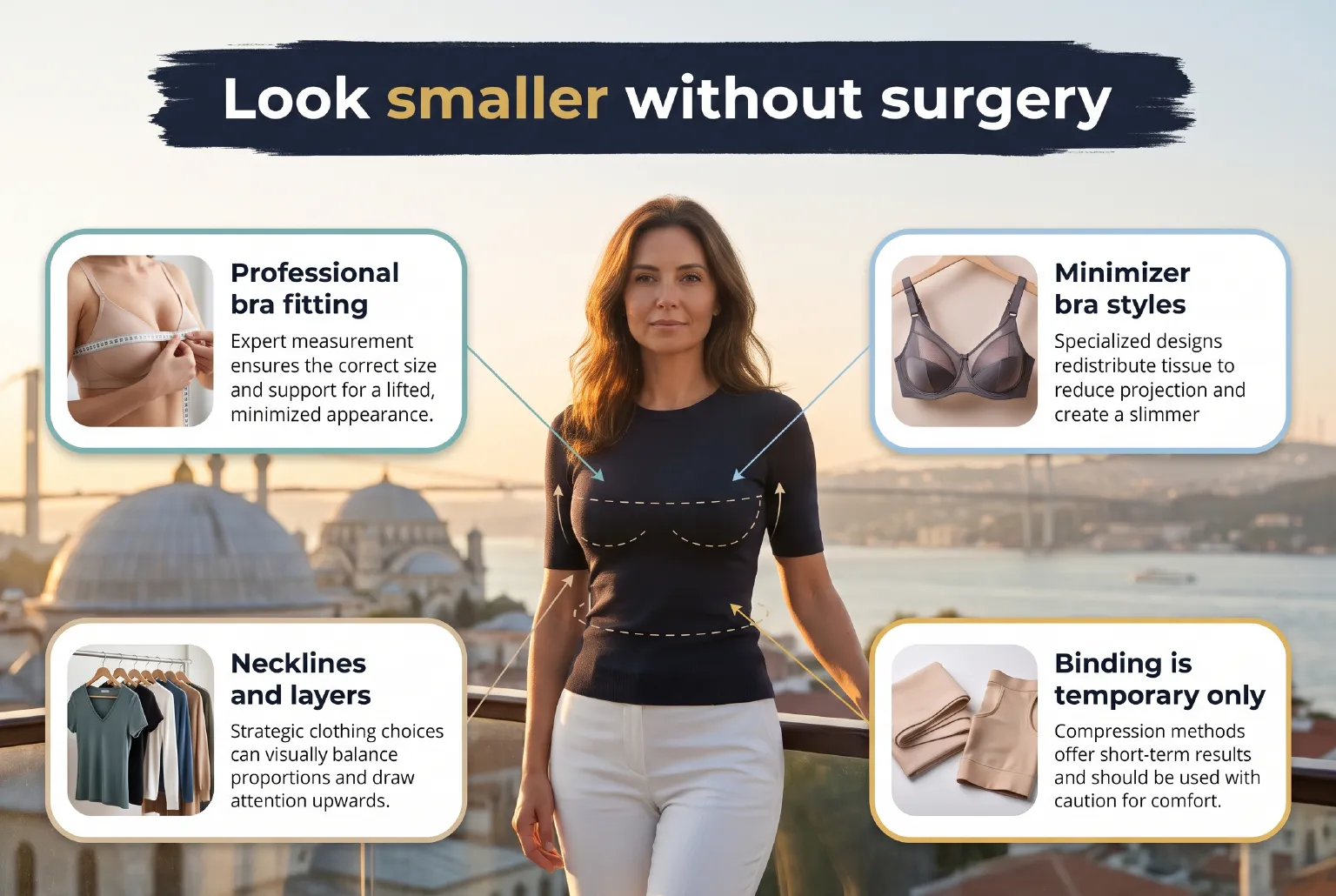
Start with fit, not the label. A professional bra fitting is a sensible first step. Bring a top you wear often so you can judge the whole outline, not just the bra.
A minimizer bra changes how your breasts sit under clothing. It removes nothing. Treat it as a styling tool, not a smaller cup size.
When you compare styles:
- Check how the band and cups sit when you move and reach.
- Try each bra under your usual clothes.
- Choose a fit you like over a smaller number on the tag.
Can clothing change how large your chest looks?
Experiment before you buy. Compare open and higher necklines, structured and draped fabrics, or a fitted top under a looser layer. These are tests, not rules.
Your own preference matters most. Look at outfits in the same mirror and light, including from the side. Choose the silhouette you like rather than assuming one colour or cut suits everyone.
Does breast binding permanently reduce breast size?
Breast binding compresses the chest only while you wear it. Take it off and nothing has been removed. It is not a lasting reduction.
More pressure does not mean more effect. Avoid DIY wrapping with bandages or tape, and never add layers to get flatter.
If you want to bind, ask a clinician about safe fit and wearing time. If you only want a different outline under clothes, try bras and styling first.
Am I a Good Candidate for a Breast Reduction?
Not sure if surgery abroad is the right step for you? Answer a few quick questions about your concerns, health history, and goals, and our team will help you understand which treatment options may suit you best — before you book a single flight.
When does breast reduction become a reasonable option?
Consider an assessment when your breast size causes ongoing problems, or when you want less tissue rather than a different outline. An assessment is not a commitment. It should help you decide whether the trade-offs fit your priorities.
Which symptoms justify a surgical assessment?
Expect questions about neck, back or shoulder discomfort, irritation under the breasts and limits on exercise or daily activity. Describe the effect on your life. Your bra size alone says little.
Concrete examples help:
- Which movements or activities do you avoid?
- When does discomfort interrupt work, sleep or exercise?
- What support or other measures have you tried, and what is still difficult?
Ask whether any symptom needs checking for another cause before it is put down to breast size.
Who may need to delay or avoid breast reduction?
Suitability matters more than speed. If you smoke, live with a significant health condition or expect a big change in weight, ask whether waiting would be wiser. Be open about all of it.
An online chat is not medical clearance. Ask which examination and tests you need, and what findings would lead the surgeon to postpone or decline surgery.
For BMI, weight and eligibility questions, see our breast reduction weight requirements guide rather than assuming one cut-off applies to everyone.
How should you describe the change you want?
Start with everyday goals. Is your priority easier movement, less prominence in clothing or a size that feels more in proportion? Say so, then ask which changes the surgeon considers realistic for you.
Describe what you want to keep, too. Explain how much change would feel welcome and what would feel like too much. Results vary individually, so an honest range is more useful than a promise.
For grams-to-cup questions, see our breast reduction size chart before that conversation.
Who assesses breast reduction patients at AKM Clinic?
Dr. Aylin Yılmaz is a plastic, reconstructive and aesthetic surgeon with a specialist certificate from the Republic of Türkiye Ministry of Health. Her focus is breast and body surgery.
The first step is a free online consultation with photos. Use it to explain your concerns and ask what remains uncertain until an in-person examination. After it, you receive a personal treatment plan and quote, with no obligation to book.
What trade-offs come with surgically smaller breasts?
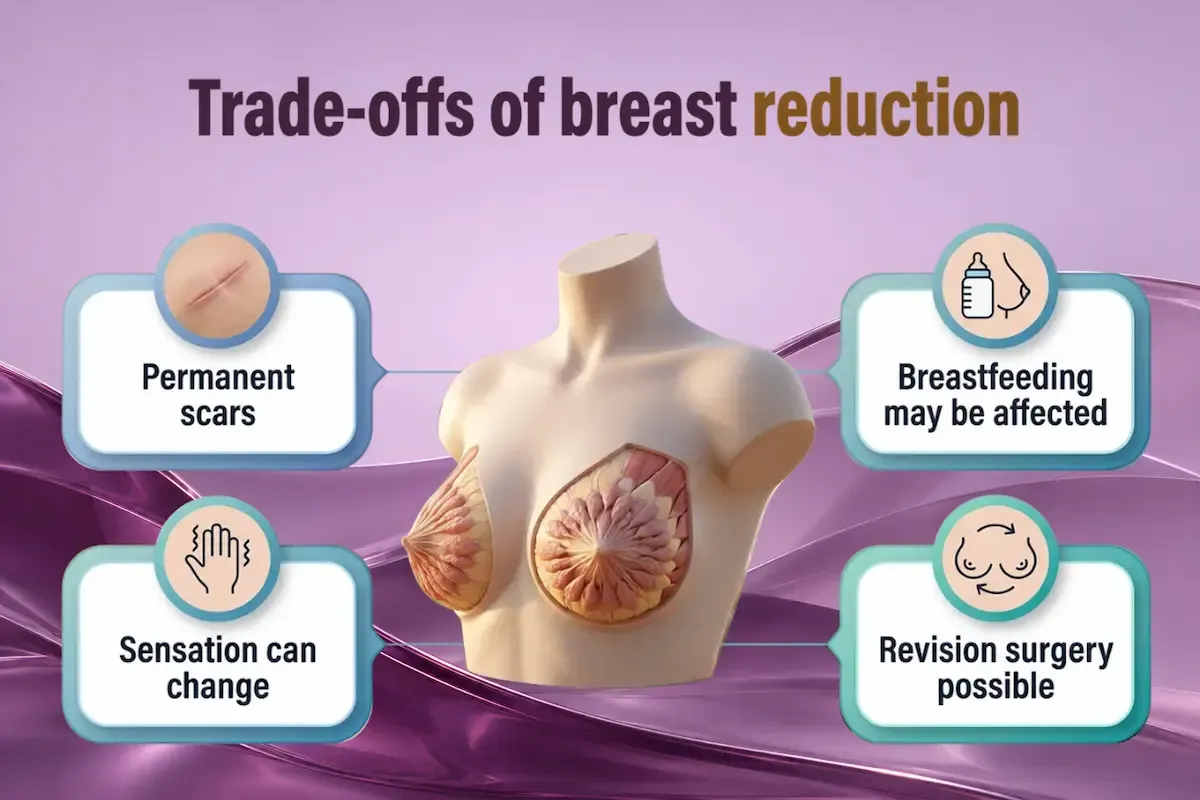
The trade-off is real. Surgery removes tissue, but it also leaves scars and carries risks. The American Society of Plastic Surgeons' list of breast reduction risks includes scarring, changes in breast or nipple sensation, possible inability to breastfeed, asymmetry, bleeding, infection, poor wound healing, loss of nipple or breast tissue, blood clots, anesthesia risks and the possibility of revision surgery. Decide which of these you could accept before you commit.
What scars and sensation changes should you expect?
Talk about lasting changes early. Permanent scars are part of reduction surgery, and the ASPS list linked above notes that sensation changes can be temporary or permanent.
Ask your surgeon to show you where the incisions would go and why. Think about how you would feel about visible scars. A smaller silhouette is only half the picture.
For how scars and results look on darker skin, see our honest look at breast reduction results for Black women.
How could reduction affect future breastfeeding?
Raise any plans for children now. Possible inability to breastfeed is on the same ASPS risk list.
Ask how the proposed technique could affect your options and whether waiting would suit you better. An intention to preserve breastfeeding is not a promise. If that uncertainty feels unacceptable, discuss postponing rather than setting the worry aside.
What if the size or shape does not match your expectations?
Results vary individually. Asymmetry and the possibility of further surgery both appear among the listed risks.
Do not consent based on an exact cup size or identical breasts. Ask your surgeon to explain the realistic limits of your plan.
Agree on next steps in advance. Ask who would examine you if you were unhappy with the outcome, how further treatment would be decided and which costs would fall outside your original agreement. Do not assume revision surgery is included.
Questions About Safety and Surgery Abroad?
Speak directly with our patient safety coordinator about anesthesia options, risk management, and the travel logistics for your safe return home to Canada after your Breast Reduction. No call centres — just a clinical coordinator who knows your file.
What happens if a complication develops?
Some problems need an examination, not a reassuring message. If bleeding, infection or a wound-healing problem appears during your stay, the medical team needs to see you in person, and further surgery may occasionally be needed.
Agree on an escalation plan before you travel:
- Know which changes your written instructions tell you to report.
- Contact the surgical team promptly and attend an in-person check when advised.
- Keep your procedure details and medication list with you for any clinician who sees you.
Emergencies cannot wait. Sudden shortness of breath or chest pain needs emergency care wherever you are, before any message to the clinic.
Before leaving Istanbul, ask how to share examination findings with the team if you need care in Canada.
What recovery would you need to plan for in Istanbul and Canada?
Recovery needs space in your calendar. Plan time off work, help at home and enough flexibility to change your arrangements if your surgeon advises it.

What does AKM Clinic list for the initial recovery?
Use these figures for planning. They are the clinic's published guidance for breast reduction, not a forecast for you.
| Part of treatment | Clinic guidance |
|---|---|
| Anesthesia | General anesthesia |
| Procedure time | 3 hours |
| Hospital stay | 1 night |
| Initial recovery | |
| Return to work |
Your own clearance comes separately. Ask your surgeon about your specific work duties, lifting, exercise and the flight home. Do not read the general estimate as permission to resume everything.
How are your stay and final check-up organized?
A dedicated Patient Host plans the practical side: your date, hotel and transfers. A private driver meets you at Istanbul Airport (IST) or Sabiha Gökçen (SAW). Recovery stays are at selected five-star hotels in Istanbul, among them the Point Barbaros Hotel.
After surgery, the medical team monitors you closely. You receive medication, compression garments and written care instructions. Before you fly home, you have a final in-person check-up with the doctor.
If you fly from Toronto (YYZ), Vancouver (YVR) or Montreal (YUL), book flights and leave only once your dates are confirmed. Our page on how each step of your patient journey is organized shows the full sequence.
What follow-up continues after you return to Canada?
Care does not stop at the airport. Your Patient Host stays reachable on WhatsApp around the clock and schedules virtual follow-ups at 1, 3, 6 and 12 months, so the doctor can check your healing and answer questions.
Keep coordination and local care separate. Before leaving Istanbul, ask whom to contact with a concern and which records to give a Canadian clinician. For anything urgent at home, see a local doctor first.
The clinic also has hyperbaric oxygen therapy (HBOT) and a low-level laser therapy (LLLT) system. Ask whether either belongs in your plan. Neither replaces follow-up, and neither is automatically part of breast reduction.
A Well-Coordinated Breast Reduction Experience
From private airport transfers to comfortable, well-appointed hotel accommodation, we handle every detail of your stay. The result is a seamless all-inclusive clinical pathway in Istanbul — so you can focus on your procedure and recovery while we manage the logistics.
What should you check before deciding on breast reduction?
Make the decision on paper before you book travel. You should understand what you want to change, what the surgeon proposes, which trade-offs you accept and how care would work if plans change.
What should you bring to a consultation?
Bring more than a preferred bra size. The surgical team needs context to discuss your priorities honestly.
- Your medical history and current medications, including supplements.
- Details and records of any previous breast procedures.
- Your main concerns, with examples of activities or clothing they affect.
- Your work commitments, support at home and limits on time away.
Ask what can realistically change, what would make surgery unsuitable and which decisions wait until the examination. Keep notes. You will want to compare the proposal with your original priorities.
How should you assess before-and-after photos?
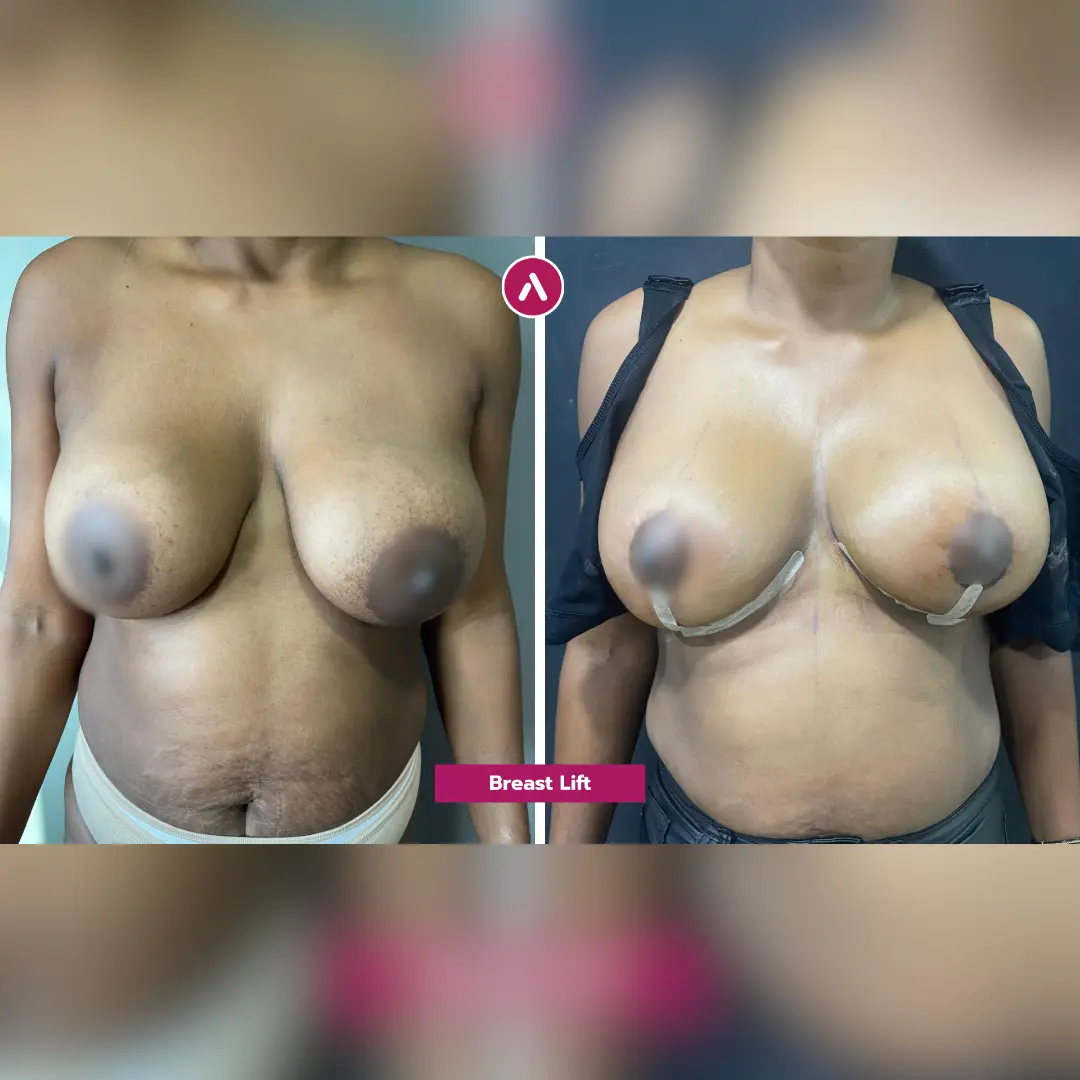
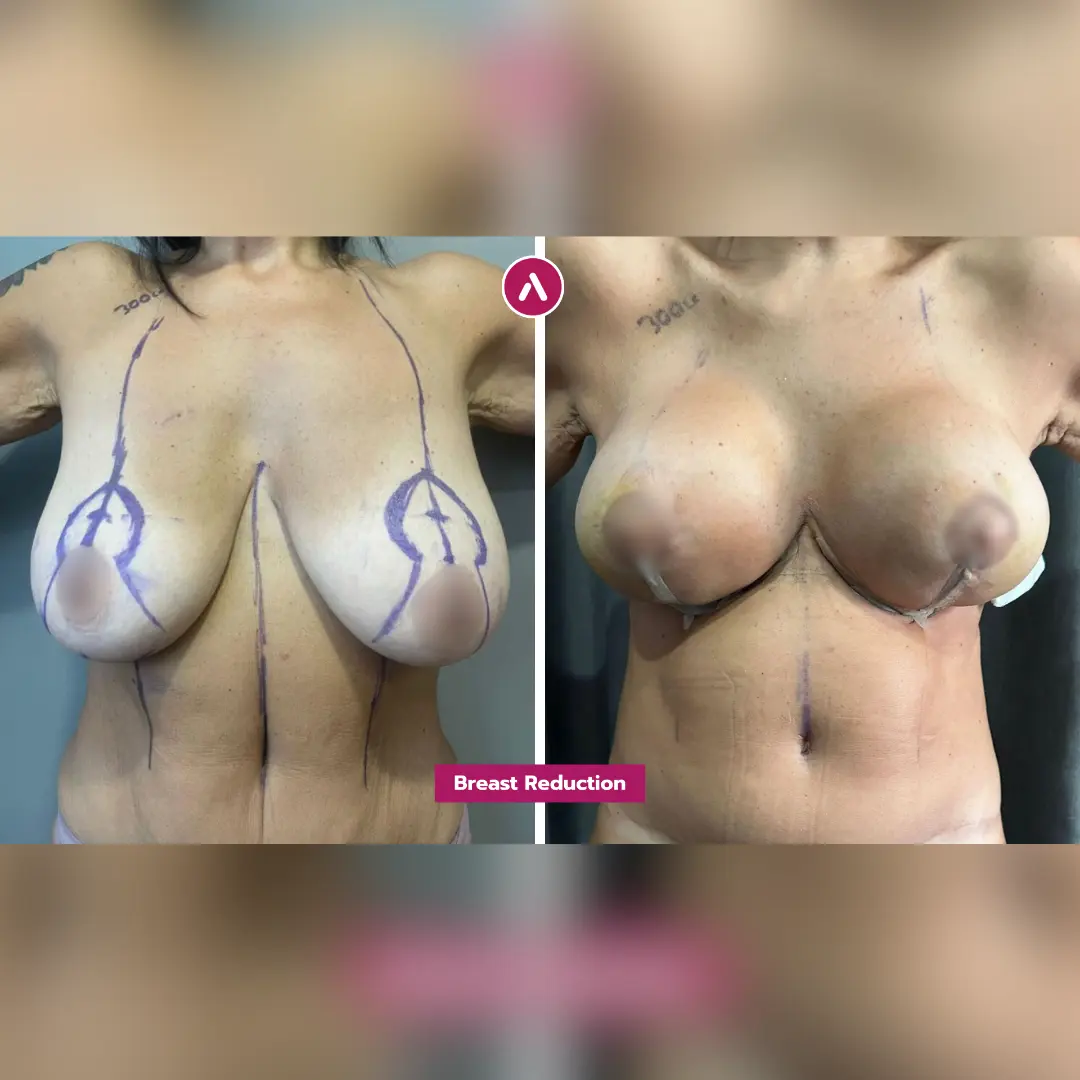
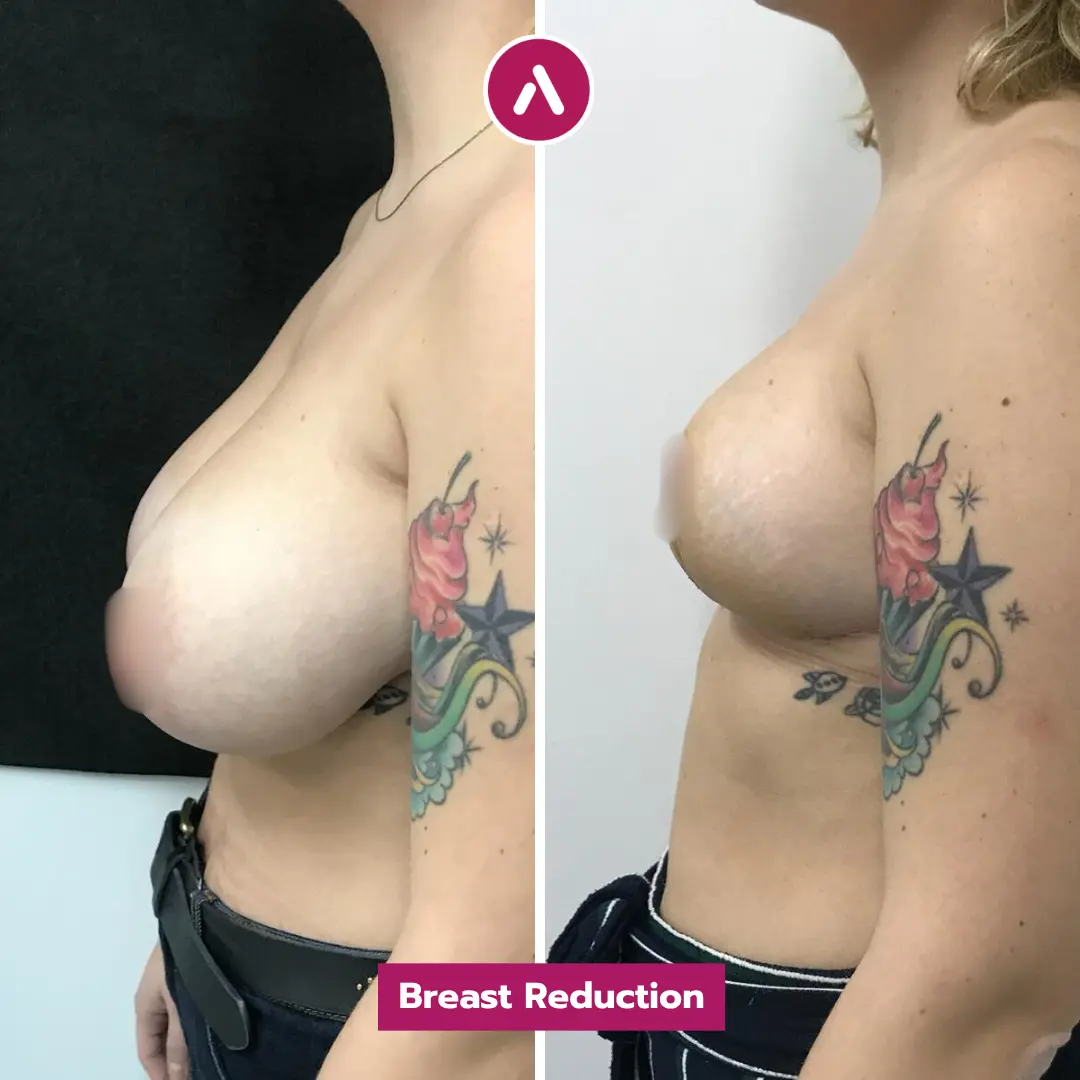
Look for context, not a body that matches yours. Treat before-and-after cases from breast reduction patients as examples of individual outcomes. They are not predictions.
Ask what stage of healing each photo shows. Notice proportion and scars rather than guessing at cup sizes.
What needs to be clear in your written quote?
Get everything in writing. Breast reduction at AKM Clinic starts from CAD $5,450, and our page on what breast reduction costs for Canadian patients explains the options. Your personal quote is what counts.
The all-inclusive package covers the surgeon's and anesthesia fees, all pre-operative tests and post-operative check-ups, a five-star hotel with breakfast, private airport and clinic transfers, and a patient coordinator with translation around the clock. Before accepting a quote, ask:
- Which services are included, and which are not?
- Who assesses and manages a complication during your stay?
- How would additional treatment or a longer stay be arranged and charged?
- What happens if you need to postpone or cancel?
Where the wording leaves room for doubt, ask. A clear answer now saves a dispute later.
When is waiting or declining surgery a valid choice?
You can take your time. Waiting, continuing with bras, styling or other non-surgical measures, or deciding against surgery are all reasonable answers to how to get smaller breasts.
If you would like an assessment, the free online consultation with photos leads to a personal treatment plan and written quote. Bring your open questions. Ask which points need an examination before you commit.
This article provides general information, not a diagnosis or an individual treatment recommendation. Results vary individually.
Frequently Asked Questions: How to Get Smaller Breasts
Can I reduce only one breast if it is larger than the other?
Sometimes, but it needs an individual assessment. Ask our surgical team whether treating one side alone would address volume, nipple position and proportion.
How can I get smaller breasts if I already have implants?
Start with an assessment of both the implants and your own tissue. Ask whether smaller implants, removal or reducing your natural tissue fits your goals. Ask how your skin and breast shape may look if the implants are removed on their own. Bring any implant records you have.
Should sudden breast enlargement be checked before trying to reduce it?
Yes. Have a doctor check any sudden change in size or shape, a new lump, skin dimpling or unusual nipple discharge before you think about cosmetic treatment. Note when it began, whether one or both sides changed and any recent medication changes.
Can breast reduction affect future mammograms?
It can. Changes from surgery can sometimes affect how mammograms look. Tell the screening team about your surgery and share earlier imaging when asked. Ask your family doctor how to fit screening around your surgical plan.
Is there a minimum age for breast reduction?
Age alone does not decide it. Breasts that are still developing can continue to change after surgery. Ask about the clinic's age and consent requirements before arranging travel; the consultation looks at your health, expectations and readiness for recovery.
Can breasts grow larger again after a reduction?
Yes. Breast size can change after a reduction, for example with pregnancy or weight gain. If you are planning a pregnancy or a large weight change, ask whether waiting suits you better. Results vary individually.
Do provincial health plans cover breast reduction in Canada?
Provincial plans do not cover cosmetic surgery. Coverage for a reduction considered medically necessary depends on your province's rules, and surgery you arrange abroad is a separate question. Ask your family doctor and confirm directly with your provincial plan before booking.
Have Specific Questions About Breast Reduction?
Chat directly with our dedicated patient coordinators about your Breast Reduction. Whether you're weighing your options from Ontario, British Columbia, or Alberta, you'll get clear, personalized answers — straight from the team who will look after you, not a call centre.
Related Procedures

Breast Reduction
Breast reduction in Turkey for Canadians: compare OHIP wait times, CAD pricing, recovery, scars, and surgeon-led care at AKM Clinic Istanbul.

Mommy Makeover
Explore Mommy Makeover in Turkey for Canadian patients: tummy tuck, breast restoration, diastasis recti repair, recovery, safety, cost, and travel planning.
Tummy Tuck
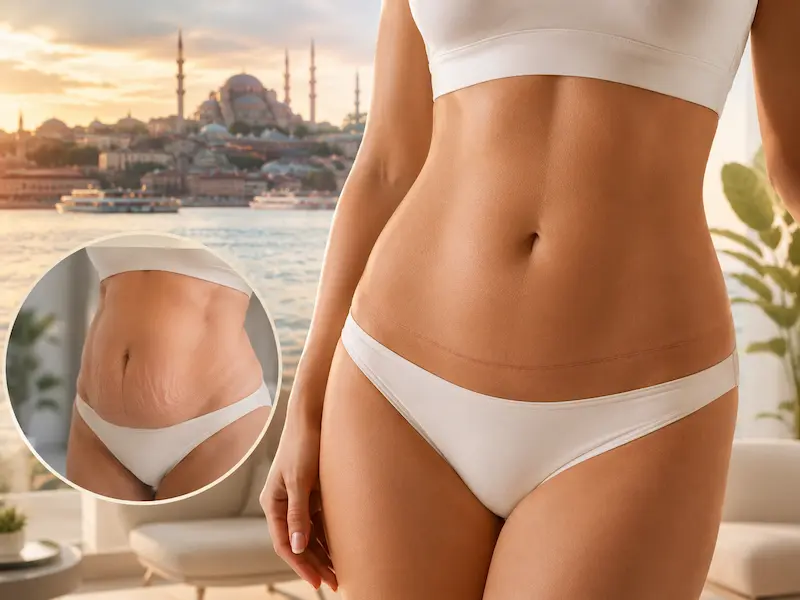
Learn about tummy tuck surgery in Turkey for Canadian patients, including abdominoplasty techniques, recovery, safety, CAD pricing and travel planning.
Liposuction
Compare liposuction in Turkey vs Canada: Lipo 360, VASER, recovery, safety, CAD pricing, and travel planning for Canadian patients.
Ready to Begin Your Journey?
Join the more than 2,000 patients who have trusted Dr. Akif Mehmetoğlu and the AKM Clinic team. Your journey begins with an informative, no-obligation conversation. Contact us today from across Canada to schedule your complimentary virtual consultation.
#1: Receive Your Personalized Quote
Start with a complimentary, no-obligation virtual consultation. Share your photos, and our surgical team will provide a fully personalized treatment plan and a transparent, all-inclusive pricing package quoted in Canadian dollars (CAD). There are no hidden fees.
#2: Secure Your Procedure Date
Once you are ready to proceed, our dedicated English-speaking patient coordinators will help you secure your procedure date. We will manage your logistical bookings in Istanbul, including your five-star hotel and private airport transfers.
#3: Arrive in Istanbul & Meet Your Surgeon
Arrive at Istanbul Airport (IST), where you will be greeted by your private driver. Settle into your hotel before your comprehensive in-person consultation. You will meet your specialist surgeon to finalize the details of your procedure and ensure your goals are aligned for a natural, subtle result.