Tummy Tuck Alternatives: What They Can and Cannot Change
AI Summary
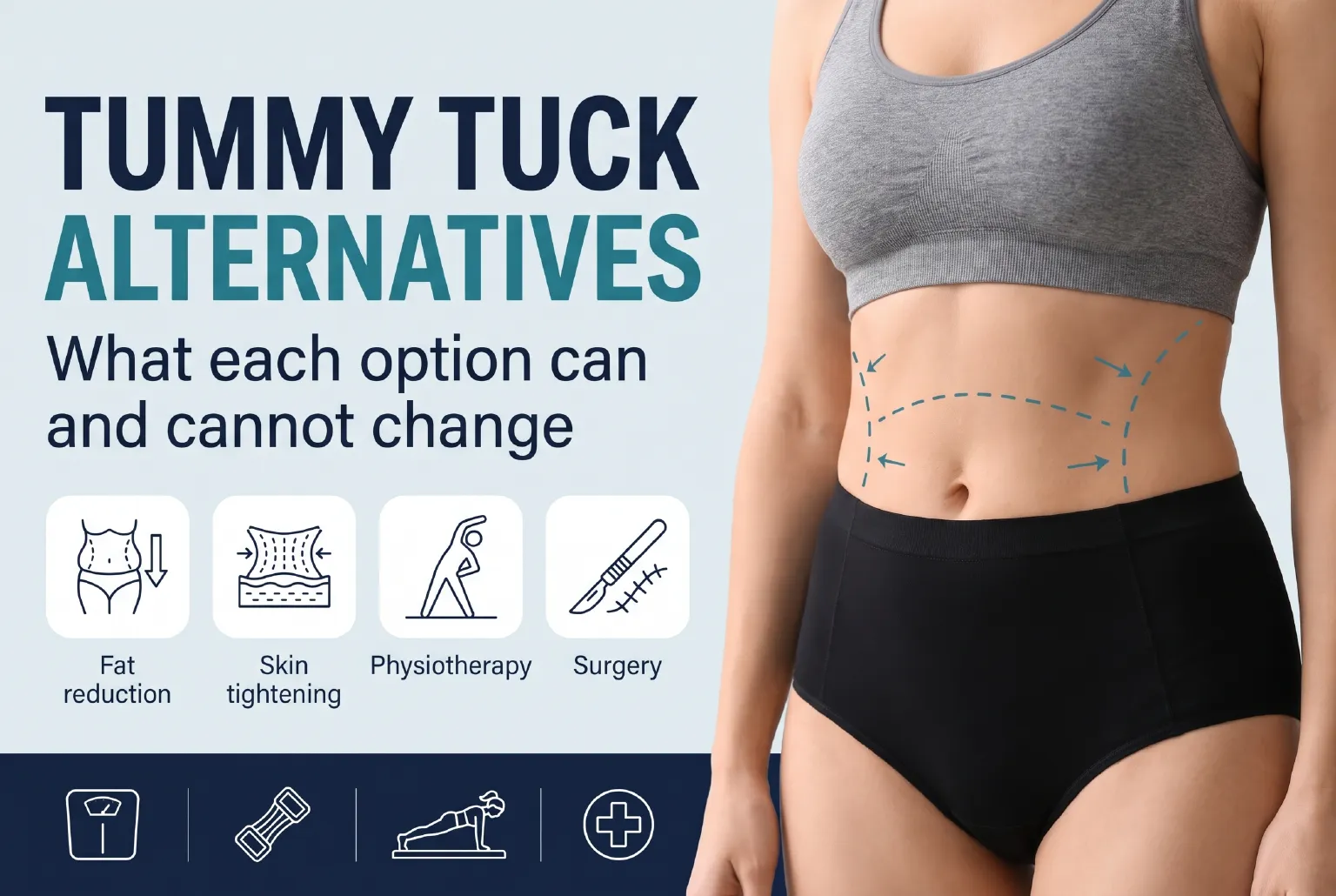
- Tummy tuck alternatives can reduce localized fat, mildly firm skin or improve separated abdominal muscles. None of them removes a fold of loose skin the way abdominoplasty does.
- Fat freezing, ultrasound and radiofrequency devices are not weight-loss treatments. They carry their own risks, including burns, nerve injury and paradoxical adipose hyperplasia after fat freezing.
- Physiotherapy-guided exercise addresses abdominal separation (diastasis recti). It targets muscle function, not stretched skin.
- AKM Clinic starts with a free online consultation based on photos, followed by a personal treatment plan and quote. Ask which options the clinic actually offers and what each would leave unchanged.
Summary generated by AI, reviewed by our editorial team
Tummy tuck alternatives can reduce a pocket of fat, mildly firm the skin or strengthen separated abdominal muscles, but none of them removes a fold of loose skin the way surgery does. The FDA's overview of non-invasive body contouring also makes clear these devices are not a weight-loss treatment. The right option depends on what bothers you most.
Start with the concern, not the treatment name. If surgery is still on the table, our guide to tummy tuck surgery in Turkey for Canadians covers the operation itself. This page looks at the other routes and is honest about where each one stops.
Provincial health plans do not pay for cosmetic body contouring. In Toronto, Vancouver, Montreal or Calgary, every option below is a private decision. That makes it reasonable to ask exactly what you are paying for, and equally reasonable to choose nothing.
A Comprehensive Guide to Tummy Tuck Surgery
From the procedure steps to your post-operative aftercare, review every detail of how our surgical team performs Tummy Tuck Surgery in Istanbul. A clear, start-to-finish overview, so you know exactly what to expect before you travel.
Table of Contents
Which tummy tuck alternatives match your actual concern?
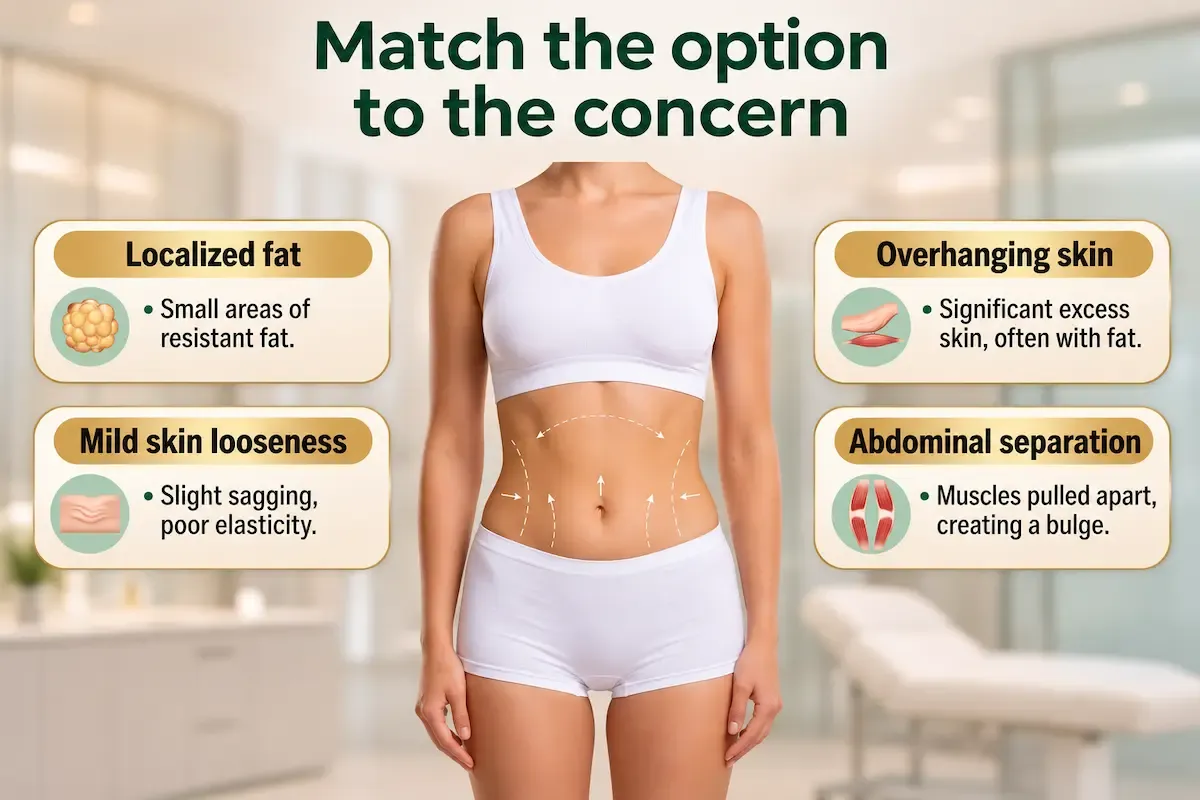
Several different concerns hide under one phrase. You may want less fullness, less loose skin, a stronger core, or simply no operation. Each concern points to a different option, and each option falls short somewhere else.
Is the change you want about fat, loose skin or abdominal separation?
These are not interchangeable. A tummy tuck, or abdominoplasty, removes excess abdominal skin and fat and can tighten the tissue over the abdominal muscles, as Mayo Clinic's abdominoplasty overview describes. No single device or exercise plan does all three.
Muscle separation is a separate question. Diastasis recti means the two vertical bands of the abdominal muscles have drifted apart. Ask for a hands-on examination, because a photo cannot show it. The physiotherapy section below covers it in more detail.
Which options deserve a place on your shortlist?
Use this table to sort your questions. It is a starting point, not a recommendation. It does not mean AKM Clinic offers every option listed.
| Main concern | Option worth discussing | Main limitation | Surgery? |
|---|---|---|---|
| Localized fat | Non-invasive fat reduction | Does not remove skin or treat obesity | No |
| Mild skin looseness | External skin-tightening device | Cannot remove a fold of skin | No |
| Overhanging skin | Assessment for skin-removal surgery | Incision and a permanent scar | Yes |
| Abdominal separation | Physiotherapy-guided rehabilitation | Improves function, not loose skin | No |
Most people have more than one concern. That is normal. It is also why a single treatment rarely answers everything.
What would count as a worthwhile improvement for you?
Write it down before any consultation. Be as specific as you can:
- Reducing one particular area of fullness.
- Dealing with skin that folds or hangs.
- Understanding symptoms or weakness in your core.
- Avoiding an operation, even if that means a smaller visible change.
You decide what is worthwhile. Ask the clinician which item on your list a treatment addresses, what it leaves alone and how you will judge the outcome together. Results vary from person to person with every method.
Accepting a smaller change is a legitimate choice. So is a second opinion. So is no cosmetic treatment at all.
Can fat freezing or ultrasound replace a tummy tuck?
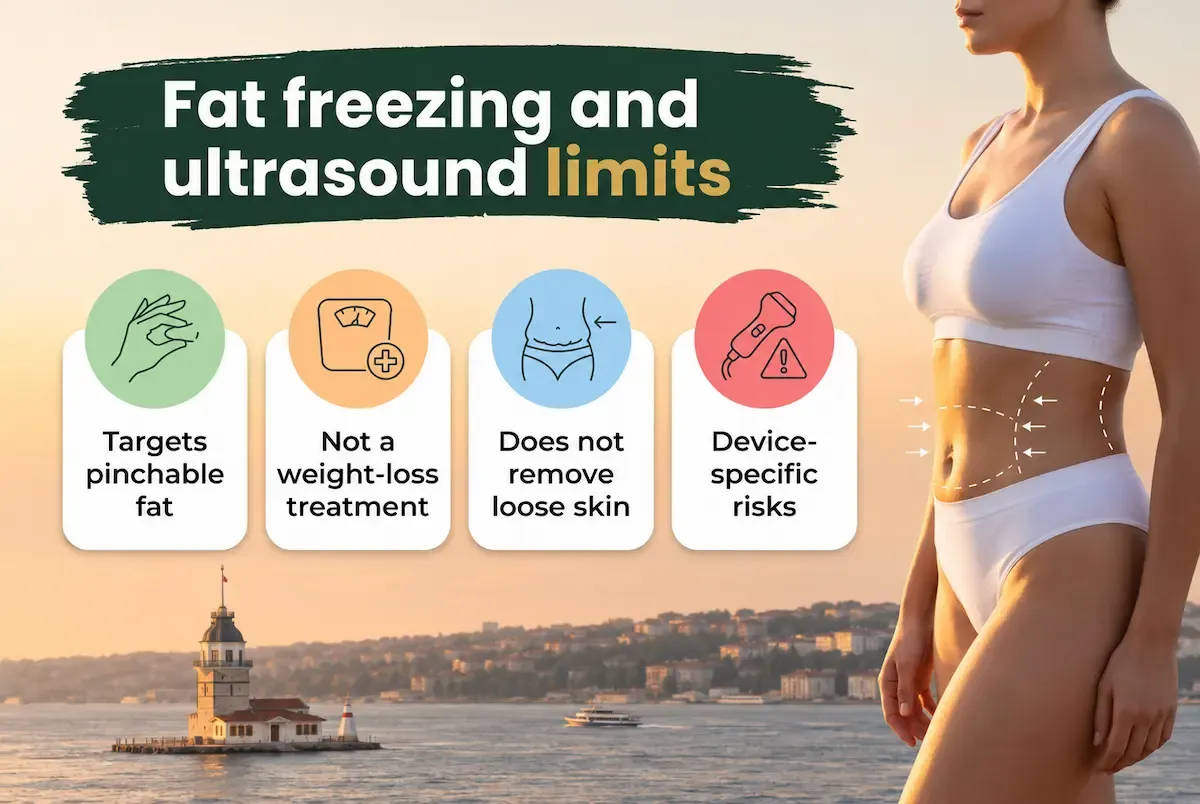
Not for loose skin. Fat freezing and focused ultrasound target a pinchable area of fat, and the FDA overview cited above describes them as contouring tools, not weight-loss treatments. Before you book, ask what would look exactly the same afterwards.
What can non-surgical fat reduction actually change?
Fat freezing, or cryolipolysis, cools a section of fat until the cells are damaged, and the body then clears them. Ultrasound devices use focused sound energy to disrupt fat cells instead. The FDA overview explains both mechanisms. Different methods carry different risks.
Ask for a specific goal. Which area would be treated, how many sessions are planned and how will the change be measured? A vague promise of a flatter stomach is not a plan. These categories appear here for comparison only, and mentioning them does not mean AKM Clinic provides them.
Who may be suitable for fat freezing or ultrasound?
It depends on the exact device and your health history. The FDA overview notes that people with certain cold-related conditions should not have fat freezing, and each technology has its own reasons not to treat. Assessment comes first.
Before agreeing, ask the treating clinician:
- What is the device called, and is it intended for my abdomen?
- Which health conditions, medicines or previous procedures could change your recommendation?
- How many sessions do you propose, and what aftercare or activity limits should I plan for?
“No downtime” does not answer any of these. Ask for written aftercare that applies to your own treatment.
What are the risks if a treatment does not go as planned?
Non-invasive does not mean free of risk. The FDA lists pain, altered sensation and cold injury after fat freezing, along with paradoxical adipose hyperplasia, in which treated fat grows larger instead of smaller and may need surgery to correct. Ultrasound devices can cause burns and nerve injury.
Separate disappointment from a complication. If the change is smaller than you hoped, ask for a reassessment before paying for more sessions. If something looks or feels wrong, such as a firm area that keeps growing or a blister, contact the treating clinician promptly and ask to be examined in person.
Get the response plan in writing. It should say who assesses problems and how to reach them. It should also say how the outcome will be judged before any further session is offered.
Can skin-tightening treatments improve a loose stomach?
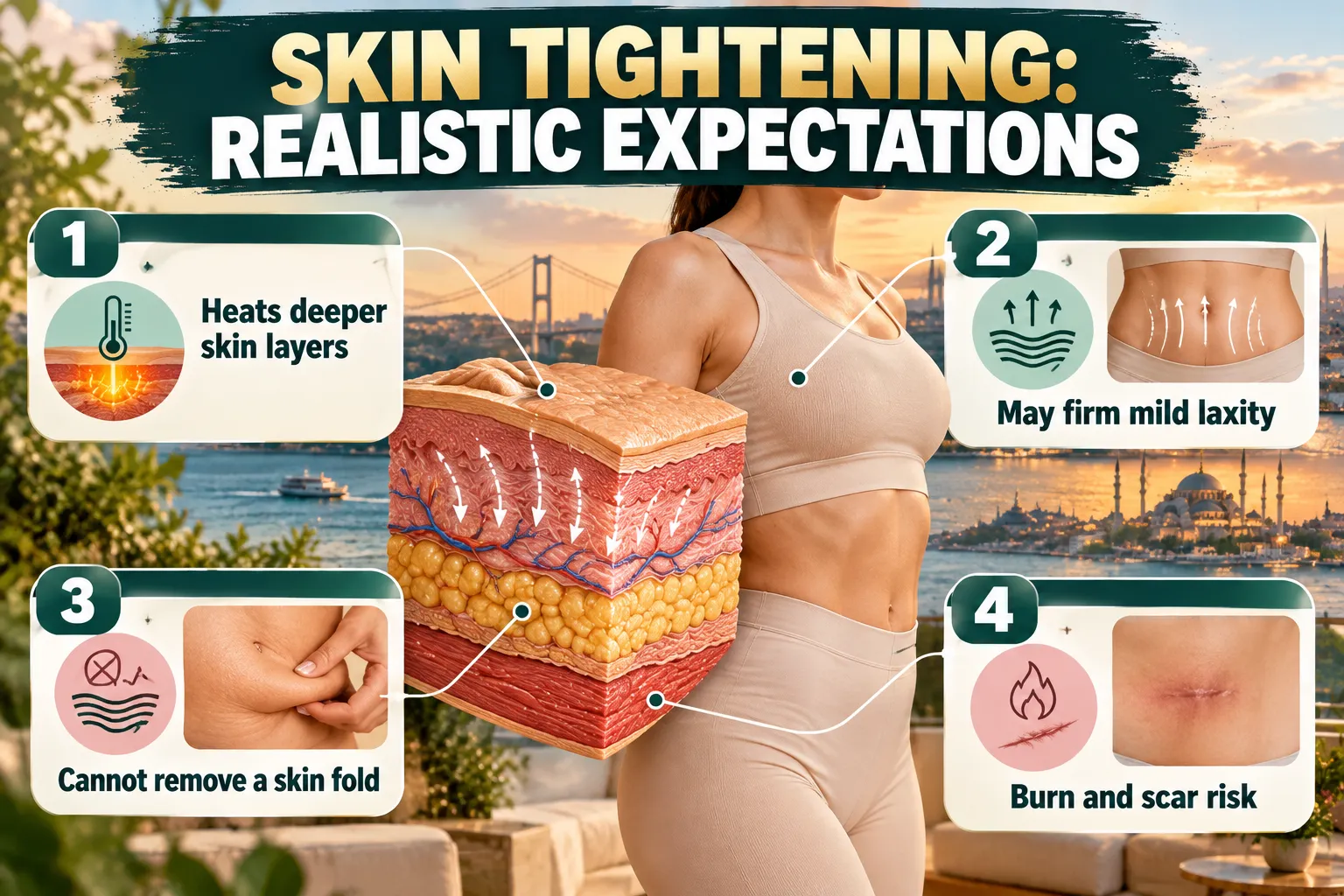
Sometimes, a little. Energy-based devices may firm mildly lax skin, but they do not remove a fold that hangs over your waistband. If that fold is the main problem, the real comparison is with surgery, not between devices.
What can radiofrequency or other external treatments do?
Radiofrequency devices heat the deeper layers of the skin, which may produce some tightening through changes in collagen. The FDA overview describes how this works and where it stops. Ask what the specific device is intended to treat and what evidence supports its use on the abdomen.
Heat carries risks. The same FDA page lists burns, blisters, changes in skin colour and scarring among possible complications. Ask the clinician to explain the risks of the actual device, not skin tightening in general.
Results vary individually, and the FDA notes that some effects may be temporary. Before agreeing, ask:
- How much loose skin do you expect to remain?
- How will we judge whether the improvement was worthwhile?
- What happens if the change is too small?
Is minimally invasive tightening still a procedure?
Read past the label. A treatment that uses an incision or places a probe under the skin is not non-invasive, however small the advertising makes the entry point sound.
Ask for the exact procedure name. Who performs it, what anesthesia is planned and what aftercare follows? These answers shape your recovery more than the marketing does.
Ask for evidence on that specific technique. Data on an external device tells you little about a different procedure done under the skin. Then ask what happens if you develop a burn, a scar or an uneven contour.
Does recovery technology change the limits of treatment?
No. AKM Clinic uses hyperbaric oxygen therapy (HBOT) and a low-level laser therapy (LLLT) system with 424 medical-grade laser diodes at 650 nm to support skin healing after a procedure. That support is for recovery. It does not remove loose abdominal skin, and it does not replace a procedure.
Ask what is proposed and why. Any recovery technology should be explained separately from the contour change you hope for. Its availability should never be the reason you choose a treatment.
Are liposuction and smaller operations genuine alternatives?
They are real options, and they are still surgery. Compare what each would change, what it would leave untreated and what recovery involves. How small an operation sounds tells you very little.
When is liposuction a different option rather than a substitute?
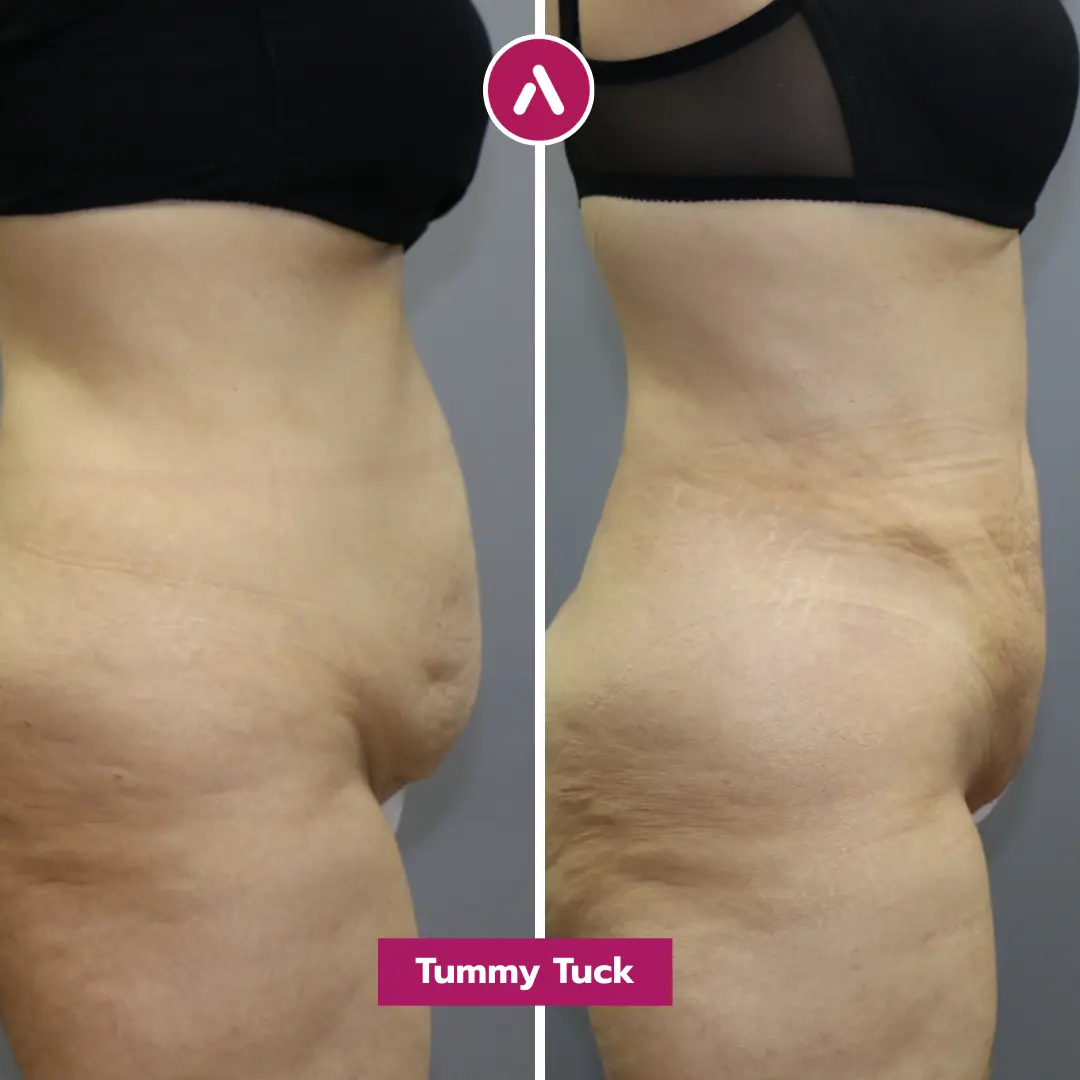
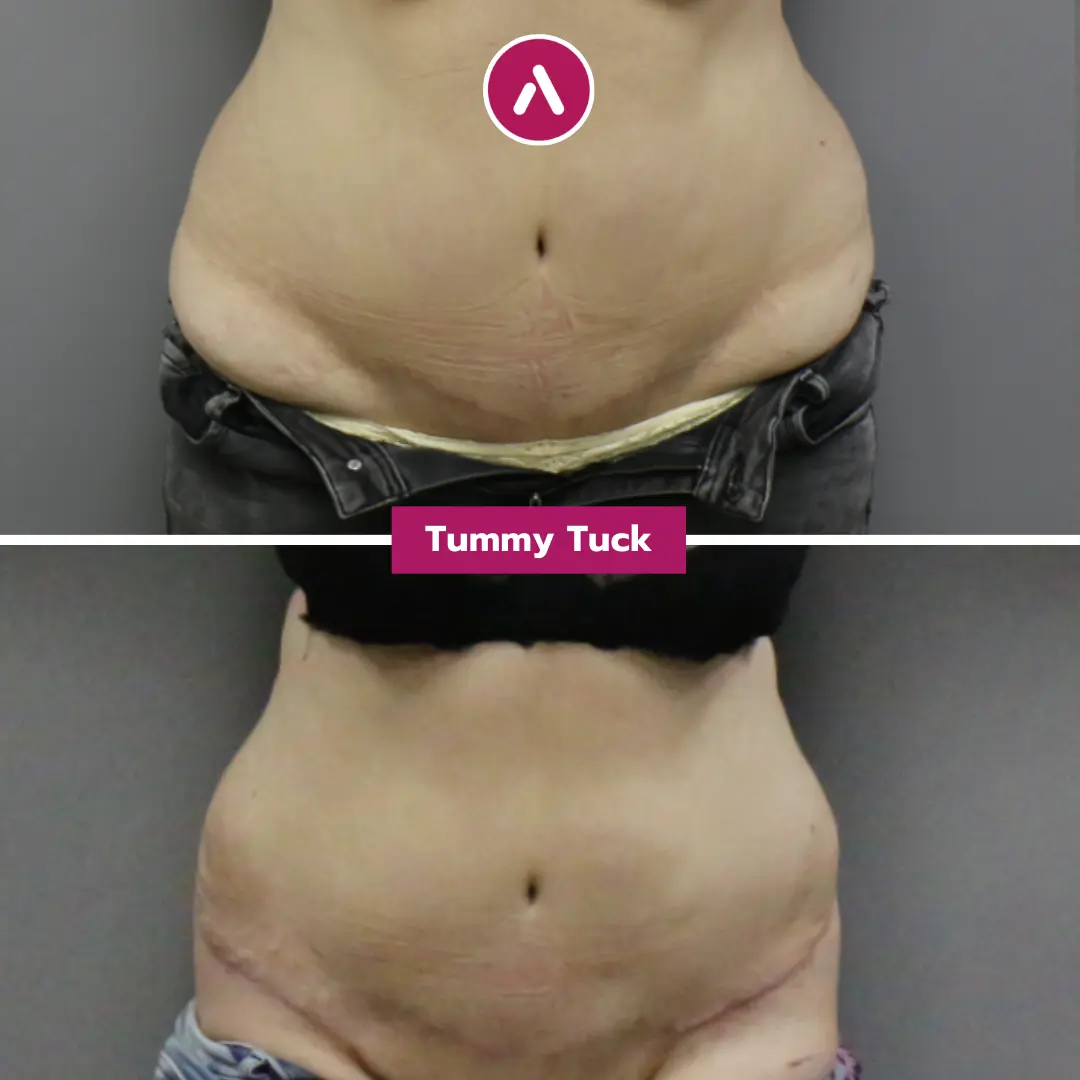
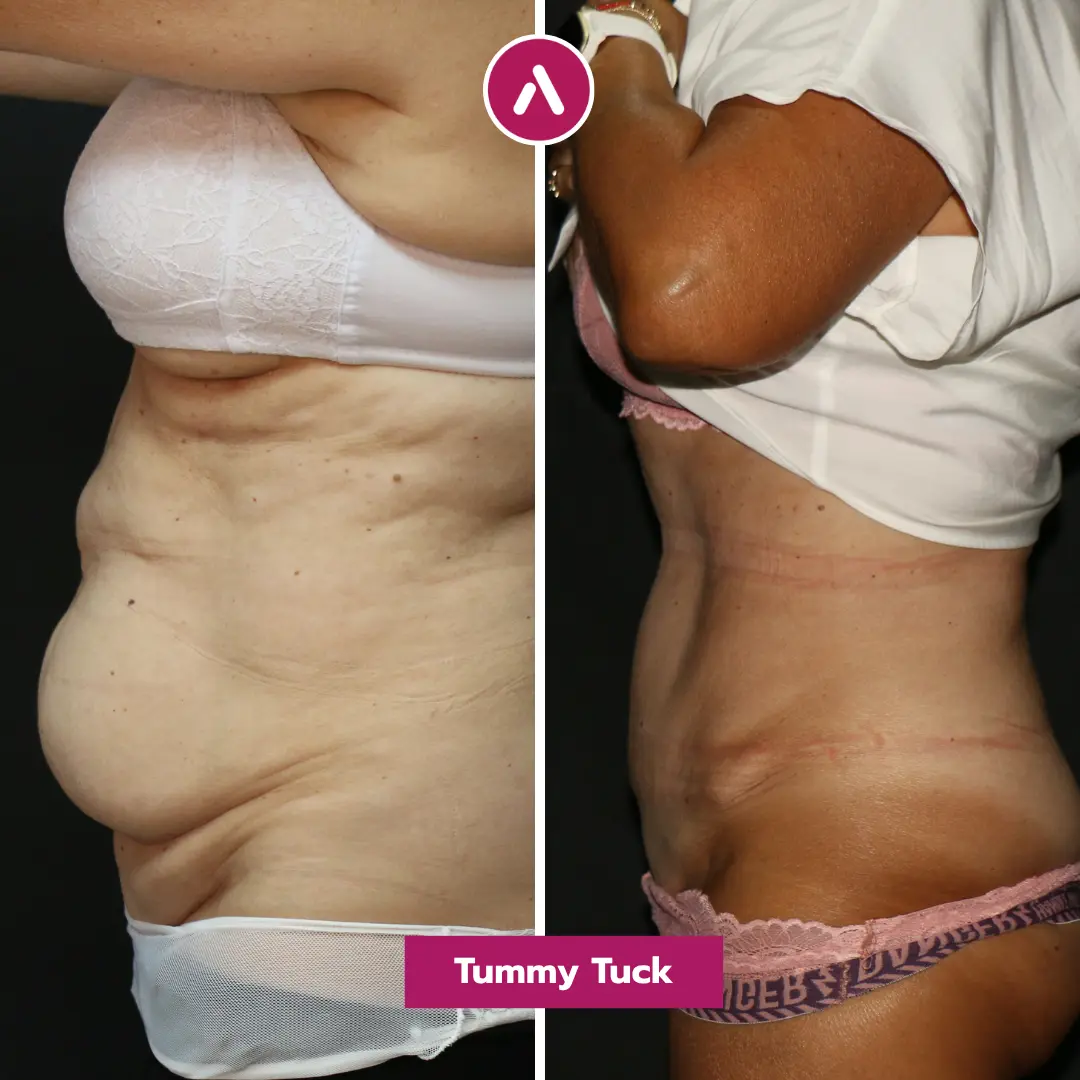
Liposuction removes fat through small incisions. It does not remove skin. Ask the surgeon how your skin is likely to behave once the fat beneath it is gone.
For the full side-by-side reasoning, see our decision tree on tummy tuck versus liposuction. Ask which part of your concern liposuction would address and what you should not expect it to change.
Does a mini tummy tuck avoid the same operation?
A mini tummy tuck is still an operation. It is aimed at loose skin limited to the area below the belly button, and an examination decides whether that describes you, not your preference for something smaller. For how the two versions compare, see our guide to choosing between a mini and a full tummy tuck.
Ask for an individual explanation. Where would the incision sit, what would be removed or repaired, and why does that plan fit your body?
A smaller operation can leave part of the concern untouched. A larger one asks more of your recovery. Ask which trade-off applies to the proposal in front of you.
Dreaming of a Natural-Looking Tummy Tuck Surgery?
Our philosophy is simple — rejuvenation, not alteration. We believe the best work is the work no one can point to. See how our surgical team creates subtle, refreshed results that honour the features already making you who you are.
Do drainless or awake labels mean non-surgical?
No. A drainless approach changes how fluid is managed after surgery, not whether surgery happens. For that angle, see our recovery facts on the tube tummy tuck. An awake approach changes the anesthesia, not the amount of tissue removed or the wound care afterwards.
For reference, a full tummy tuck at AKM Clinic is done under general anesthesia and takes several hours. Your own plan may differ.
Before agreeing to any smaller or differently named operation, ask:
- What exactly will you remove or repair?
- Which incision and which anesthesia do you propose?
- Which concerns will remain untreated?
- What help will I need at home during recovery?
- What happens if the improvement falls short of my priorities?
Can exercise or physiotherapy help you avoid a tummy tuck?
For some concerns, yes. If your priority is how your core works rather than only how it looks, a rehabilitation assessment is a sensible first step. It commits you to nothing.
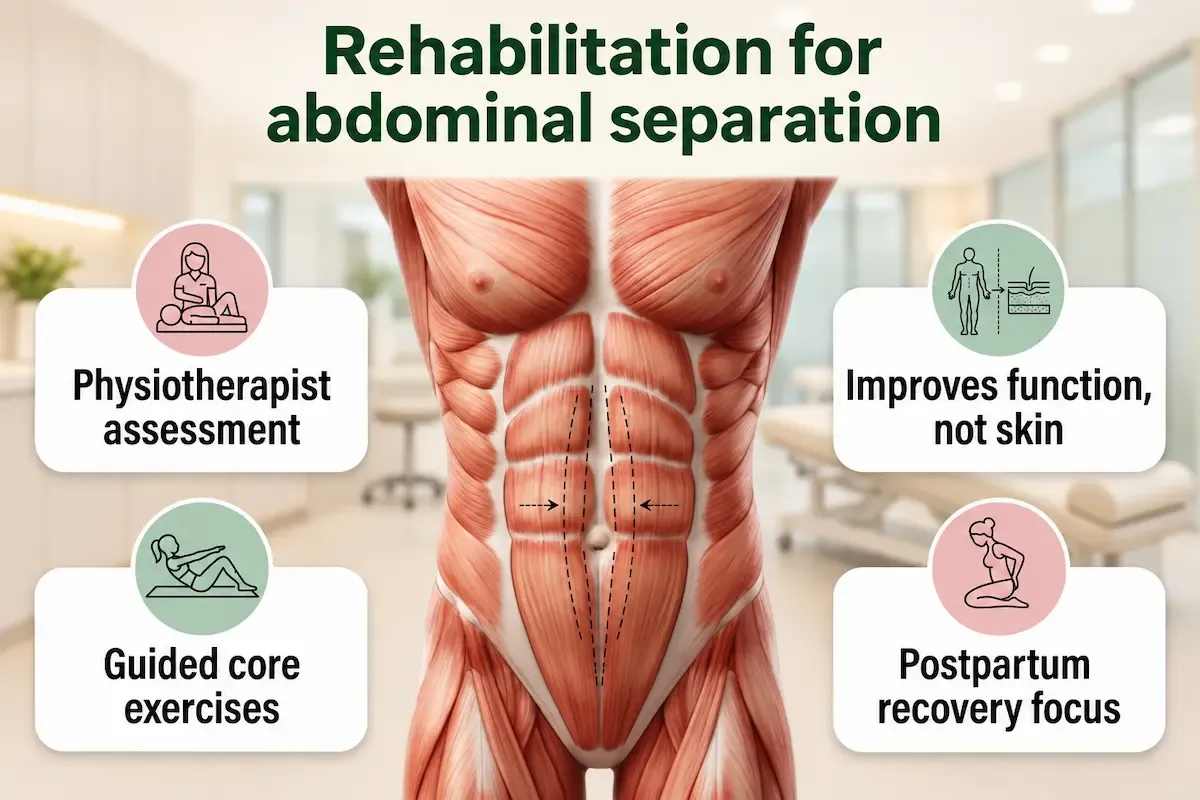
What can rehabilitation do for abdominal separation?
The target is function. Physiotherapy-guided exercise is one of the treatments for diastasis recti, according to Cleveland Clinic's guide to abdominal separation.
Skip the generic workout video. Cleveland Clinic advises working with a healthcare professional because some exercises can make the separation worse. A physiotherapist can check your technique and adjust the plan as you progress.
Ask your physiotherapist:
- Which symptoms and daily activities should we assess?
- What would meaningful progress look like for me?
- How will we decide when to change the plan?
Keep the goals separate. Rehabilitation works on the muscles. It does not remove stretched skin.
What changes can weight management support?
Think about the next few years. Mayo Clinic's overview advises a stable weight before a tummy tuck and suggests postponing surgery if you plan a pregnancy or significant weight loss. The same reasoning applies sensibly to any contouring decision.
Avoid an arbitrary target. Ask your family doctor whether weight management belongs in your plan and what support suits you. A number borrowed from someone else's photo is not a plan.
Then reassess. Once your weight is stable, is the remaining concern function, a pocket of fat or loose skin? Reaching a fitness goal does not oblige you to pursue a cosmetic one.
When is waiting or having no treatment reasonable?
No treatment is a valid choice. You can choose clothes for comfort, work on function with a physiotherapist, keep gathering information or leave your appearance as it is.
Consider pausing the decision if:
- You cannot yet describe the change that would make treatment worthwhile.
- You cannot fit the recovery around your home life or work.
- You feel pressured to commit before your questions have clear answers.
Take the time you need. A good consultation can end with a referral, a decision to wait or no cosmetic treatment at all.
Maximize Your Travel: Combine Tummy Tuck Surgery
Many of our patients combine Tummy Tuck Surgery with other procedures for more comprehensive results. Ask us about our customizable surgical packages.
How do you judge the risks and evidence before choosing?
Compare more than the treatment name. Ask what evidence supports the recommendation and how your health history changes it. Then ask who will look after you if something goes wrong.
Who needs medical assessment before cosmetic contouring?
Everyone does. A photo is not medical clearance. Mayo Clinic notes that smoking and certain health conditions affect suitability for a tummy tuck, and the FDA overview lists device-specific reasons not to treat.
Before any assessment, disclose:
- Medical conditions and previous abdominal procedures, including C-sections.
- Current medicines and supplements.
- Smoking or other nicotine use.
- Pregnancy plans.
- Implanted electronic devices such as a pacemaker, before any device-based treatment.
At AKM Clinic, Dr. Aylin Yılmaz is a plastic, reconstructive and aesthetic surgeon with a specialist certificate from the Republic of Turkey Ministry of Health. Her focus is breast and body surgery. Ask who would examine you and who would operate.
What do photographs and reviews actually tell you?
Photos help you describe what you want. Our abdominoplasty before-and-after gallery shows surgical results, not alternatives, and it cannot predict your outcome. Individual results vary.
Reviews describe experiences. They help you judge communication and logistics. They are not a study of complication rates or of how well a treatment works.
Ask for evidence on the exact treatment proposed. How was improvement measured, how long were people followed and did they have concerns like yours?
What should the complication plan include?
Get it in writing. Mayo Clinic lists infection, poor wound healing, fluid collections called seromas, scarring and blood clots among the risks of abdominoplasty. Non-surgical devices carry their own risks, described above.
Before agreeing to treatment, establish:
- Who assesses a concern, and how you reach them.
- How an in-person examination would be arranged.
- Where to get urgent care in Istanbul and after returning to Canada.
- Which procedure records and written instructions you will receive.
- Which extra treatment, responsibilities or charges fall outside the original agreement.
Some symptoms cannot wait for a message reply. Sudden shortness of breath, chest pain or fainting after any procedure means calling your local emergency number straight away, at home or abroad.
Ask separately how a disappointing cosmetic result would be reviewed. Do not assume a revision, extra sessions or their cost are included unless the written agreement says so.
Plan Your 4-5 Day Tummy Tuck Surgery Stay in Istanbul
Get a clear, day-by-day itinerary covering arrival, surgery, recovery, and your fit-to-fly clearance — built around your flight dates from Toronto (YYZ), Vancouver (YVR), or Montréal (YUL). You will know exactly what each day holds before you ever leave home.
How should Canadians discuss the options with AKM Clinic?
Start with your priorities, not a procedure name. Ask which tummy tuck alternatives, if any, the clinic offers for your concern. Keep the decision open until you understand the proposal and its limits.
What should you send for the online consultation?
Your Patient Host arranges a free online consultation based on your photos, followed by a personal treatment plan and quote. The step-by-step patient journey shows how the date, hotel and transfers are planned once you decide.
Be specific. Describe the change you want, how much intervention you would accept and what would make treatment worthwhile. Mention practical limits too, such as help at home or time off work.
Ask what the proposal will leave unchanged. Confirm that the clinic actually offers it. Do not assume every option you read about online is available.
What belongs in the treatment plan and quote?
Ask for it in writing. It should name the procedure, who performs it, the planned tests and aftercare, and anything that stays provisional until you are examined in person.
If surgery is recommended, a full tummy tuck starts from CAD $6,550. Our breakdown of tummy tuck costs in Turkey covers the different techniques. Ask for a procedure-specific quote rather than applying that figure to anything else.
The all-inclusive package covers the surgeon's and anesthesia fees, all pre-operative tests and post-operative check-ups, and a five-star hotel with breakfast. A private driver meets you at Istanbul Airport (IST) or Sabiha Gökçen (SAW), and a dedicated coordinator with translation is available around the clock. Ask your Patient Host to list the exclusions as well.
How is follow-up organized if you choose surgery?
Monitoring starts straight away. After surgery the medical team watches you closely, and you receive medication, compression garments and written care instructions. Your Patient Host is reachable on WhatsApp around the clock.
A coordinator is not an emergency service. Ask which concerns go to the Patient Host, how the doctor reviews them and where to seek urgent care in person.
Every patient has a final in-person check-up with the doctor before flying home. Back in Canada, the Patient Host schedules virtual follow-ups at 1, 3, 6 and 12 months so the doctor can check healing and answer questions.
What should be settled before booking travel?
Close the practical gaps first. Before your flight home to Toronto, Vancouver, Montreal or Calgary, ask for copies of your medical records, written instructions you can show a Canadian doctor and a plan for questions between scheduled reviews.
Use this checklist before committing:
- Your main concern and priorities are recorded.
- The proposed treatment and its limits are clear.
- The written quote lists inclusions and exclusions.
- Recovery, follow-up and complication arrangements are documented.
This article is educational. It does not replace an individual medical assessment, and results vary from person to person.
Frequently Asked Questions: Tummy Tuck Alternatives
Can tummy tuck alternatives remove stretch marks?
Usually not. Stretch marks are a type of scarring, and treatments generally make them less noticeable rather than removing them completely. Ask whether the proposed treatment targets stretch marks at all or a different concern such as fat. Ask what improvement you can realistically expect.
Can I have non-surgical abdominal contouring over a C-section scar?
Possibly, after an assessment. Tell the clinician when you had the C-section and mention any tenderness, numbness, bulging or skin breakdown. The FDA advises against ultrasound contouring over open wounds or compromised skin. Ask whether the scar lies in the treatment area and what precautions apply.
Are at-home fat-freezing devices a safe alternative to clinic treatment?
Do not count on it. The FDA states that the safety and effectiveness of home-use fat-freezing devices have not been established. Avoid improvised freezing methods, and see a qualified clinician before choosing any fat-reduction treatment.
Can a compression garment permanently flatten my stomach?
No. Cleveland Clinic notes that abdominal binders do not heal muscle separation or strengthen the core. After surgery, wear the garment your surgeon prescribes exactly as instructed. Ask what it supports and when to stop wearing it.
Can I have non-surgical abdominal treatment while breastfeeding?
Get advice on the specific device before you book. Tell the clinician you are breastfeeding, list your medicines and ask them to check the manufacturer's instructions. If they cannot explain the basis for their recommendation, postpone the treatment.
Can I have radiofrequency body contouring if I have a pacemaker?
Generally no. The FDA advises against radiofrequency body contouring for people with active implants such as pacemakers. Disclose the pacemaker before anything is booked, and check with your cardiology team as well as the treating clinician. Every energy-based device needs its own review.
Can I still have a tummy tuck later if an alternative does not give me enough improvement?
You can ask for a surgical assessment later. Suitability still depends on your health, smoking, weight stability and pregnancy plans. Bring the device names, treatment dates and any complications. Ask whether earlier treatments affect the timing or the expected result.
Have Specific Questions About Tummy Tuck Surgery?
Chat directly with our dedicated patient coordinators about your Tummy Tuck Surgery. Whether you're weighing your options from Ontario, British Columbia, or Alberta, you'll get clear, personalized answers — straight from the team who will look after you, not a call centre.
Related Procedures
Tummy Tuck
Learn about tummy tuck surgery in Turkey for Canadian patients, including abdominoplasty techniques, recovery, safety, CAD pricing and travel planning.
Mommy Makeover
Explore Mommy Makeover in Turkey for Canadian patients: tummy tuck, breast restoration, diastasis recti repair, recovery, safety, cost, and travel planning.
Liposuction
Compare liposuction in Turkey vs Canada: Lipo 360, VASER, recovery, safety, CAD pricing, and travel planning for Canadian patients.

Awake Mommy Makeover
Explore awake mommy makeover in Turkey for Canadians. Learn which postpartum procedures suit local anesthesia, and AKM’s all-inclusive CAD pricing.
Ready to Begin Your Journey?
Join the more than 2,000 patients who have trusted Dr. Akif Mehmetoğlu and the AKM Clinic team. Your journey begins with an informative, no-obligation conversation. Contact us today from across Canada to schedule your complimentary virtual consultation.
#1: Receive Your Personalized Quote
Start with a complimentary, no-obligation virtual consultation. Share your photos, and our surgical team will provide a fully personalized treatment plan and a transparent, all-inclusive pricing package quoted in Canadian dollars (CAD). There are no hidden fees.
#2: Secure Your Procedure Date
Once you are ready to proceed, our dedicated English-speaking patient coordinators will help you secure your procedure date. We will manage your logistical bookings in Istanbul, including your five-star hotel and private airport transfers.
#3: Arrive in Istanbul & Meet Your Surgeon
Arrive at Istanbul Airport (IST), where you will be greeted by your private driver. Settle into your hotel before your comprehensive in-person consultation. You will meet your specialist surgeon to finalize the details of your procedure and ensure your goals are aligned for a natural, subtle result.