
Calf Liposuction: Slimming and Reshaping the Lower Legs
AI Summary
- Calf liposuction refines fat-based calves, not muscular lower-leg bulk.
- Careful candidate assessment protects against uneven contouring and unrealistic expectations.
- Recovery focuses on compression, swelling control, walking, and staged return to activity.
- Pricing in CAD is listed on the dedicated liposuction cost page.
Summary generated by AI, fact-checked by our medical experts
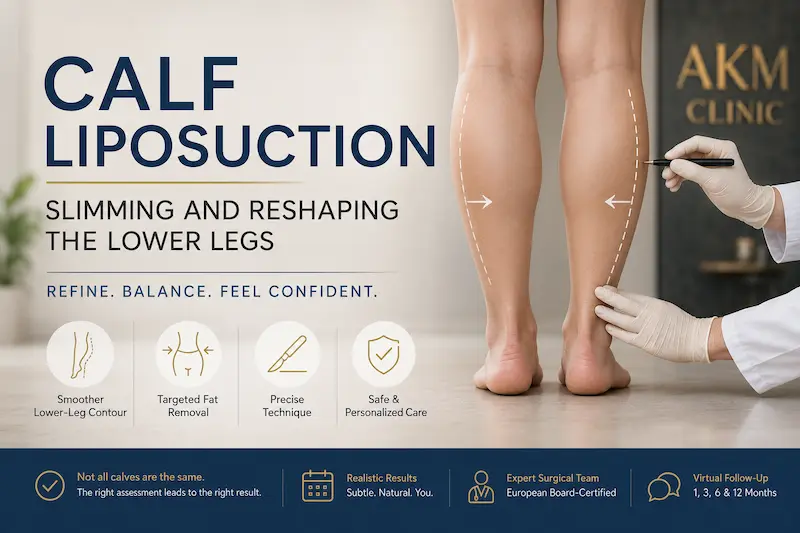
Calf liposuction can slim and refine the lower legs — but only when the fullness comes from fat, not muscle. Because much of calf shape is created by the gastrocnemius and soleus muscles, results are usually subtle, highly candidate-dependent, and best planned with a conservative lower-leg contouring approach.
For Canadian patients comparing local private options with surgery abroad, the most important question is not simply “Can calves be liposuctioned?” It is “What is making my calves look large?” Fat, muscle, fluid retention, skin quality, and ankle-to-knee proportion all change the answer.
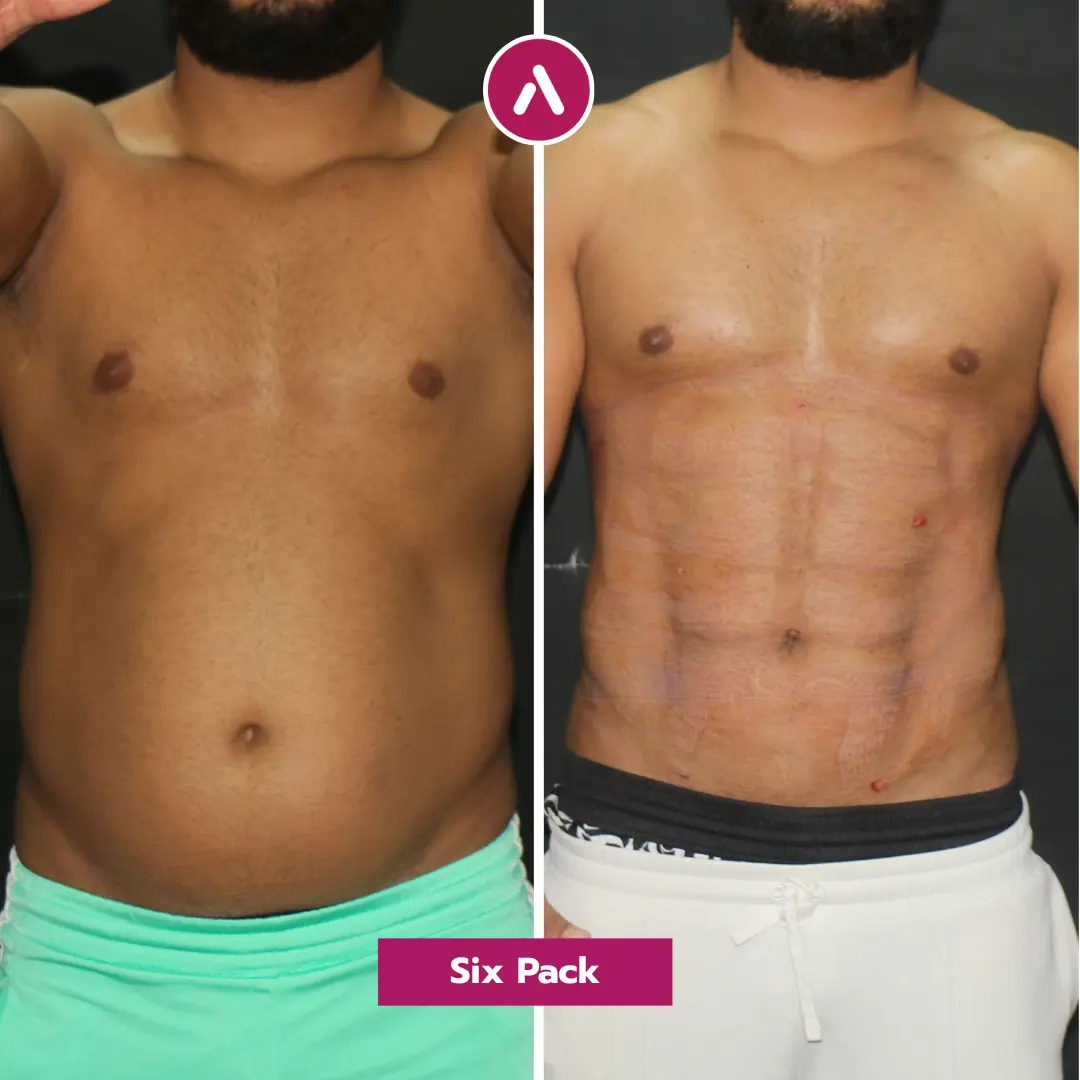
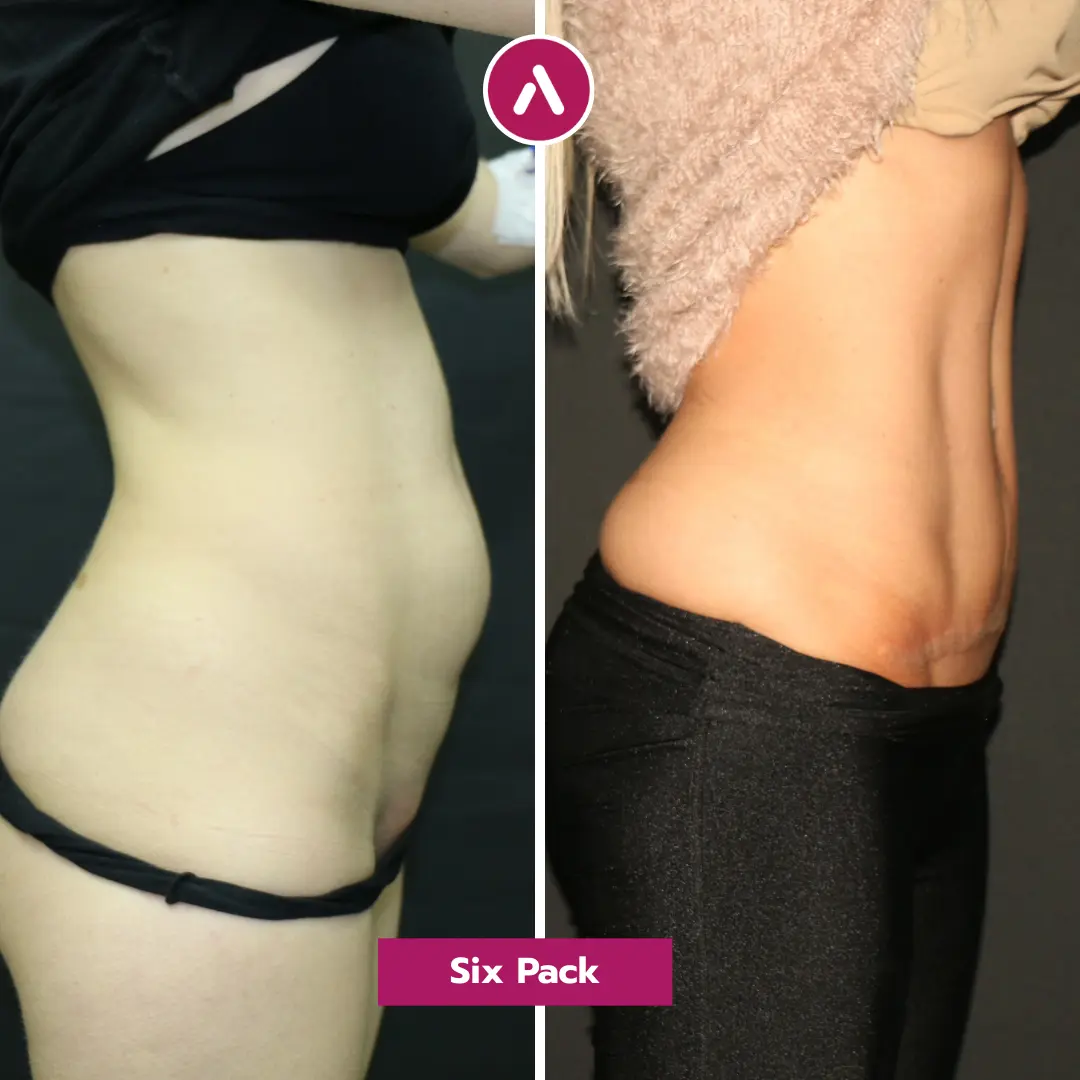
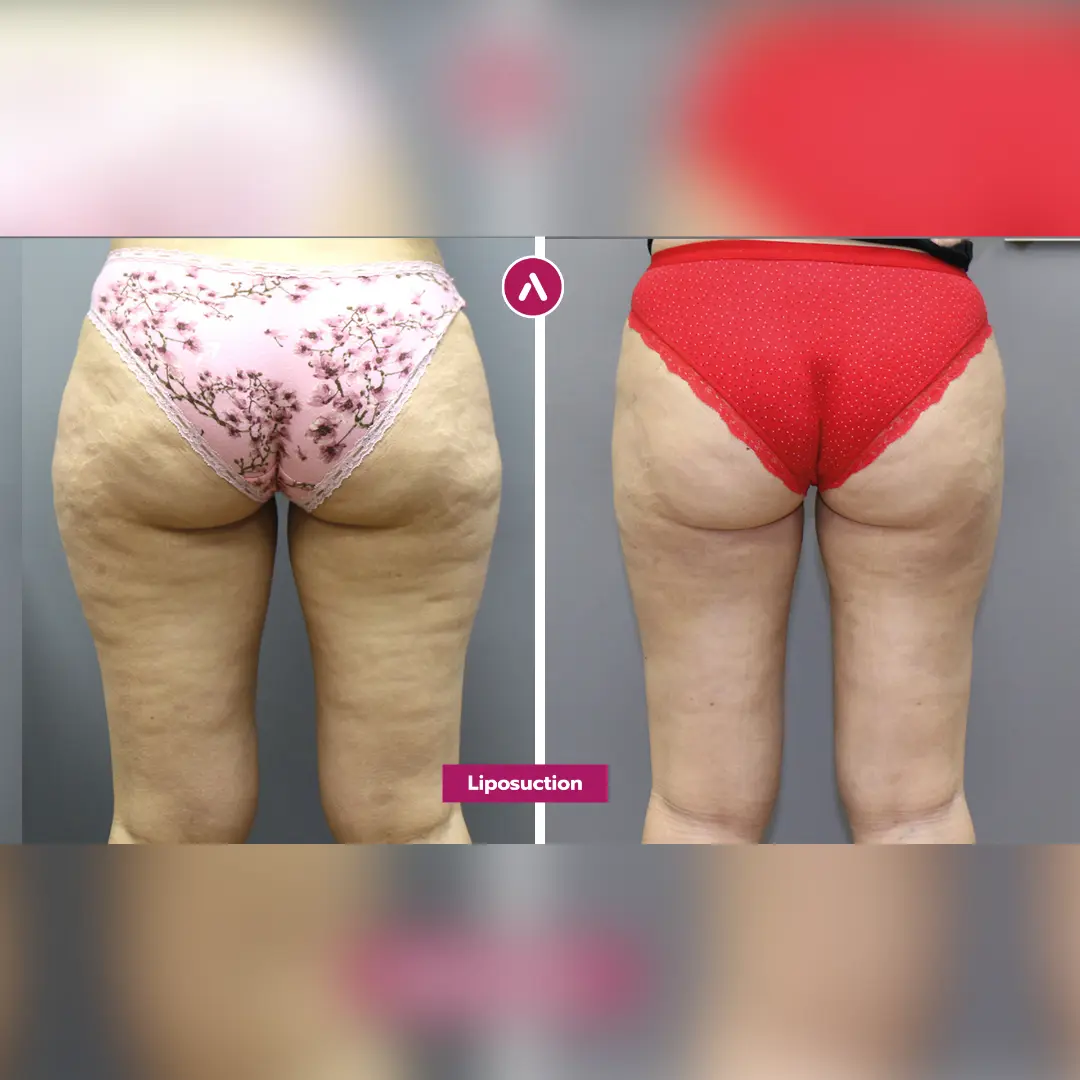
At AKM Clinic, a full overview of liposuction begins with anatomy, not assumptions. That matters in the calf. Removing too much fat from a delicate lower-leg area can create unevenness, while removing fat from a muscle-dominant calf may barely change the silhouette at all.
Calf liposuction works best when the calf looks bulky because of pinchable fat under the skin. It does not slim strong, athletic, or genetically muscular calves. The safest goal is refinement: a smoother lower-leg line, better calf-to-ankle balance, and realistic contour change rather than dramatic size reduction.
Table of Contents
Can You Liposuction Your Calves?
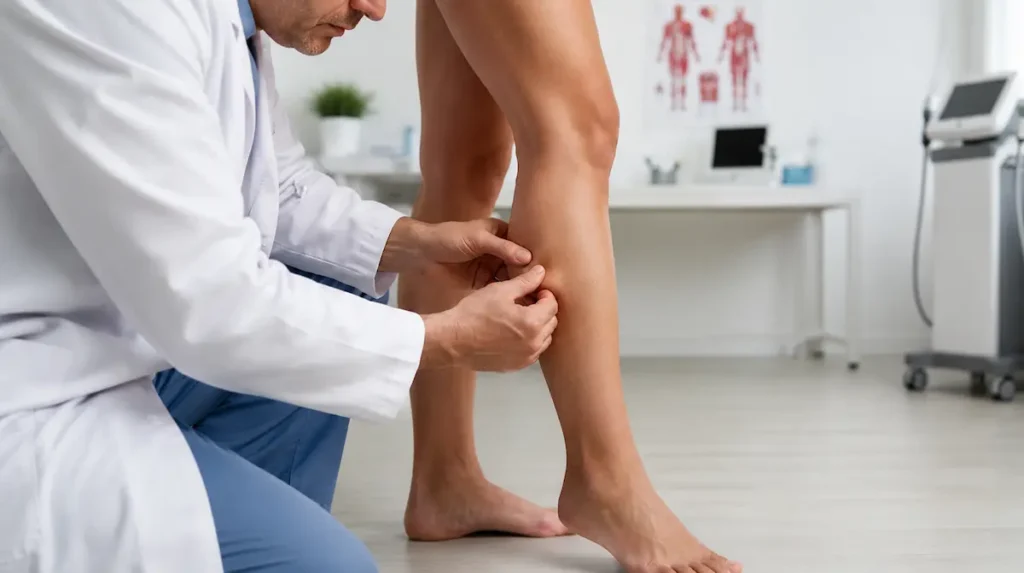
Yes, calves can be treated with liposuction in selected patients. The real issue is whether liposuction is the right tool for your specific calf shape. The calf is not like the abdomen, flanks, or outer thighs, where fat layers are often thicker and easier to contour.
In the lower leg, the fat layer is usually thinner. The underlying muscle contributes more to shape. That is why a careful consultation should separate fat-based fullness from muscle-based bulk before any surgical plan is made.
What “calf fat” really means
Calf fat usually sits as a soft subcutaneous layer between the skin and the muscle. In a good candidate, this layer can be gently reduced to smooth the transition from the knee to the ankle. You may notice fullness on the inner calf, around the lower calf, or where the calf blends into the ankle.
A simple clue is how the tissue feels. Soft, pinchable fullness may be fat. Firm, rounded bulk that tightens when you stand on your toes is more likely muscle. That distinction is not perfect, but it helps you understand why an in-person or photo-based medical assessment is needed.
Lower-leg contouring is often discussed together with contouring the knees and ankle slimming for balanced legs, because the calf rarely exists in isolation. A calf may look heavier because the knee is full, the ankle is undefined, or the transition between all three areas is abrupt.
Muscle vs fat: the critical distinction
This is the decision point. Liposuction removes fat. It does not remove or shrink muscle. If your calves are large because you have strong gastrocnemius muscles, genetics, athletic training, or a naturally short and powerful lower-leg shape, liposuction may not deliver the smaller calf you imagine.
Patients often notice this when they compare standing and relaxed positions. If the calf looks especially prominent when the muscle contracts, the shape is probably muscle-led. In that case, aggressive fat removal can make the muscle outline more obvious rather than softer.
Peer-reviewed lower-leg liposculpture literature describes the calves and ankles as an area where technique, patient selection, and conservative contouring are especially important. The lower leg has less margin for error than larger body areas, so “more removal” is not automatically better. A clinical technique for sculpting the lower legs supports the idea that this area requires precise planning rather than routine fat removal.
What liposuction can and cannot reshape here
Calf liposuction can improve soft, localized fat and make the lower leg look smoother in proportion to the knee and ankle. It may help reduce a heavy inner-calf pad or soften a column-like lower-leg appearance when the issue is fat. The change is usually measured in contour, not clothing-size transformation.
It cannot create a completely different bone structure. It cannot lengthen the leg. It cannot make a muscular calf behave like a naturally slim calf. This is where honest assessment protects patients from disappointment.
For Canadian patients, this is also a safety question. If you are travelling for surgery, you need a plan that explains what will be treated, what will be left alone, how compression will be managed, and how follow-up will work after you return home. A European Board-Certified surgical team should be able to explain that clearly before you book.
Am I a Good Candidate for a Liposuction?
Not sure if surgery abroad is the right step for you? Answer a few quick questions about your concerns, health history, and goals, and our team will help you understand which treatment options may suit you best — before you book a single flight.
Are You a Good Candidate?
The best candidate for calf liposuction has a specific pattern: localized fat, stable weight, reasonable skin elasticity, and realistic expectations. The goal is not to chase the thinnest possible leg. The goal is to refine a lower-leg contour that is genuinely fat-based.
A limited candidate is someone whose calf size comes mainly from muscle, swelling, poor lymphatic drainage, or loose skin. Those patients may need a different medical evaluation, a different body-contouring plan, or no surgery at all.
Fat-based calves vs muscle-based calves
A fat-based calf often feels soft to the touch and can be pinched gently away from the deeper structures. The fullness may be more visible around the inner calf or lower calf, and the shape may remain similar whether the muscle is relaxed or flexed. These patients may see a smoother calf line after conservative liposuction.
A muscle-based calf feels firm and changes shape when the calf contracts. It may look athletic, rounded, or bulky even in a lean body. If the volume is mostly muscle, liposuction will not reduce it in a meaningful way.
| Calf Type | Common Signs | Is Calf Liposuction Suitable? | Realistic Result |
|---|---|---|---|
| Fat-based calf | Soft, pinchable fullness; stable weight; good skin bounce | Often suitable after assessment | Subtle slimming and smoother lower-leg contour |
| Muscle-based calf | Firm bulk; stronger shape when standing on toes; athletic or genetic build | Usually not suitable for size reduction | Limited change; muscle shape remains |
| Swelling-based lower leg | Fluctuates through the day; pitting or heaviness; ankle swelling | Needs medical evaluation first | Liposuction may not address the cause |
| Loose-skin dominant calf | Thin tissue, lax skin, poor recoil after weight loss or ageing | May be limited | Fat removal may expose laxity rather than improve shape |
The pinch test: useful, but not enough
The pinch test is simple: gently pinch the calf fullness between your fingers. If there is a soft layer above the muscle, fat may be contributing to the size. If there is very little pinchable tissue, the calf is less likely to respond well to liposuction.
Still, this is only a rough guide. A surgeon also looks at skin elasticity, symmetry, ankle definition, knee fullness, previous weight changes, and whether the lower leg shows swelling. Photos taken from the front, back, and side can help, but a final plan should be based on a proper medical assessment.
This is where Canadian patients tend to be cautious, and that caution is helpful. Lower-leg liposuction is not a procedure to rush because the area is visible in shorts, skirts, dresses, and swimwear. Unevenness can be harder to hide than in larger body areas.
Why athletic calves often do not shrink with lipo
Many patients asking about calf liposuction are active. They hike, run, cycle, train, or simply have a naturally strong lower leg. In these cases, the calf may be large because the muscle is developed, not because there is excess fat to remove.
If that is your anatomy, removing a small amount of surface fat may sharpen the calf outline rather than soften it. For someone who wants a smaller, less athletic-looking leg, that can feel like the wrong direction. This is why a conservative surgeon may advise against calf liposuction even when the patient strongly wants it.
Clinical discussion of lower-leg liposuction also highlights the need for careful patient selection because contour irregularities and dissatisfaction are more likely when the indication is wrong. For this reason, the better question is not “Can fat be removed?” but “Will removing fat make this leg look better?” Why lower-leg liposuction requires careful assessment is especially relevant to this point.
Why the Lower Leg Is a Delicate Area
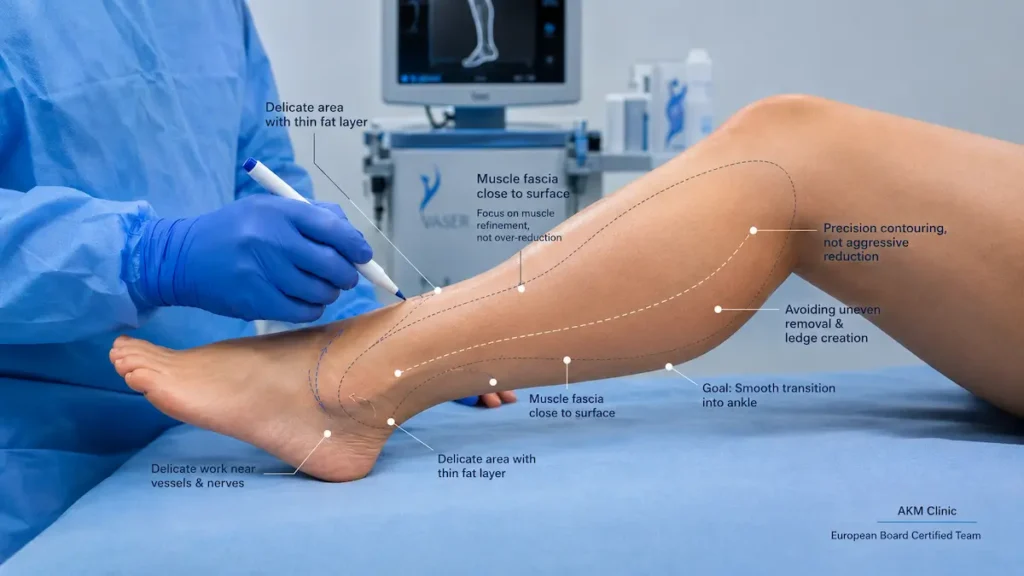
The lower leg is a precision area because there is less soft tissue to work with. The calf and ankle region has a thinner fat layer, visible surface contours, and important vessels and nerves nearby. Small changes can look elegant when planned well, but uneven removal can be more noticeable than it would be on the abdomen or flanks.
This is why calf liposuction should not be approached as aggressive fat reduction. It is a contouring procedure. A conservative plan protects the smooth line of the leg and avoids a hollowed, over-treated appearance.
Thin fat layer and nearby structures
In the calf, the surgeon is often working in a narrow layer between the skin and the muscle fascia. That layer may be only modestly thick even in patients who feel their calves are large. The closer the treatment area is to visible tendons, veins, and bony landmarks, the more precise the fat removal must be.
The inner calf and lower calf can sometimes be refined, but the surgeon must keep the contour continuous. Taking too much from one zone can create a ledge, dip, or shadow. On the lower leg, those irregularities may show when standing, walking, or wearing fitted clothing.
This also affects incision planning. Liposuction uses small cannula entry points, but their placement still matters. If scarring is a concern, review the small scars liposuction leaves before planning any lower-leg procedure.
Why conservative technique matters
A conservative technique means removing fat in a controlled, even pattern rather than chasing maximum reduction. In the calf, that can involve small cannulas, careful feathering, and frequent contour checks. The aim is to make the leg look smoother, not visibly “worked on.”
AKM Clinic’s liposuction planning may include VASER High-Definition Liposuction where appropriate. VASER uses ultrasound energy to emulsify fat before removal, which can support precise contouring and may reduce tissue trauma, but technology does not replace judgement. In the calf, the surgeon’s decision about how much to leave is just as important as how much to remove.
Patients sometimes assume a thinner leg is always a better leg. That is not true here. The most natural lower-leg result usually keeps enough soft tissue to cover the muscle and maintain a smooth transition into the ankle.
Calf shape is often more muscle than fat. Liposuction can refine the fat layer, but it cannot shrink the muscle underneath. A safe plan starts with an honest diagnosis: if the calf is muscle-based, restraint is not hesitation — it is good surgical judgement.
Experience and follow-up planning for travelling patients
For Canadian patients travelling to Istanbul, the technical plan is only one part of safety. The aftercare plan matters too. Lower-leg swelling can last longer than patients expect, and compression needs to be practical for the flight home and the first weeks after return.
Your consultation should include clear answers about compression garments, walking, flight timing, virtual check-ins, and what to do if swelling becomes one-sided, painful, or unusual. AKM’s model includes long-term virtual follow-up at 1, 3, 6, and 12 months, which is especially important for patients returning to Canada after surgery.
Credentials should also be described precisely. The surgical team is European Board-Certified, which is not the same as certification by a Canadian board. That distinction matters for trust and transparency.
There is also a body-contouring lesson from other procedures: visible incisions and tissue handling must be planned around the anatomy of the area. For example, how arm lift incisions heal shows why placement, tension, and aftercare all influence the final mark.
Dreaming of a Natural-Looking Liposuction?
Our philosophy is simple — rejuvenation, not alteration. We believe the best work is the work no one can point to. See how our surgical team creates subtle, refreshed results that honour the features already making you who you are.
What Realistic Results Look Like
Realistic calf liposuction results are usually subtle. The patient may notice a smoother inner calf, a softer transition into the ankle, or a more balanced line from knee to lower leg. Friends may not identify the procedure; they may simply notice that the legs look lighter or more proportionate.
This is a good outcome when the anatomy is right. The problem starts when patients expect calf liposuction to create a dramatic leg transformation. That expectation is rarely appropriate for the lower leg.
Subtle slimming vs dramatic reduction
The calf is not a high-volume fat-storage area for most people. Even when fat is present, the amount that can be safely removed is limited by skin smoothness, muscle shape, and the need to preserve a natural contour. The result is refinement rather than a major reduction in circumference.
A successful result may show as cleaner definition around the inner calf or a less heavy lower-leg silhouette. It should not look scooped, uneven, or sharply hollow. The best calf results often look understated.
This can be emotionally important when you are making your decision. Wanting slimmer legs is understandable. But if the desired outcome is a very narrow calf, and the anatomy is muscular, surgery may not meet that goal.
How the knee and ankle affect the calf result
The calf does not stand alone visually. A full inner knee can make the upper calf look heavier. A poorly defined ankle can make the lower calf look thicker. Sometimes the patient’s concern is really a transition problem, not a calf-only problem.
That is why the surgeon may evaluate the whole lower-leg line. In some patients, a small amount of contouring around the knee, calf, and ankle creates a more balanced effect than treating the calf alone. In others, treating only the calf is safer and more natural.
The goal is proportion. A calf that is too aggressively reduced while the knee or ankle remains full can look mismatched. A balanced lower-leg plan avoids that problem.
When the final shape becomes visible
Early results can be misleading because lower-leg swelling can linger. The calves and ankles are gravity-dependent areas, so swelling may move downward during the day. This does not automatically mean something is wrong.
You may see early contour change within weeks, but the refined shape usually becomes clearer over several months. Subtle swelling and firmness can continue to improve as the tissues settle. Patience matters.
Final results vary by anatomy, skin quality, aftercare, compression use, and how the body heals. No ethical clinic should guarantee a specific calf size or circumference reduction.
| Result Goal | When It May Be Realistic | When It May Be Unrealistic | Better Framing |
|---|---|---|---|
| Smoother inner calf | Localized soft fat with good skin recoil | Muscle-led inner calf fullness | Refinement, not muscle reduction |
| Better calf-to-ankle transition | Fat extends into the lower calf or ankle area | Thick ankle shape comes from bone, tendon, or swelling | Lower-leg balance |
| Slimmer lower-leg outline | Fat-based bulk and stable weight | Athletic calf muscle or poor skin elasticity | Subtle contour improvement |
| Dramatically smaller calves | Rarely appropriate with liposuction alone | Most muscle-dominant or genetic calf shapes | Expectation reset before surgery |

Recovery & Protecting Your Result
Recovery after calf liposuction is shaped by swelling, compression, walking, and time. Because the lower legs are gravity-dependent, swelling can feel more persistent than in some upper-body areas. A good recovery plan is practical, not rushed.
The aim is to support circulation, protect the contour, and avoid overactivity while the treated tissues settle. For Canadian patients, this also means planning the flight home and the first weeks back at work carefully.
Compression and swelling in the lower leg
Compression garments help manage swelling and support the new contour while tissues adapt. Your surgical team will tell you how long to wear them and when to remove them for hygiene or checks. Do not improvise with tight socks or shapewear unless your team approves them.
Swelling may be worse at the end of the day, especially if you stand for long periods. It may also settle around the ankles. Mild, symmetrical swelling is common; sudden one-sided swelling, calf pain, shortness of breath, fever, or marked colour change should be treated as a medical warning sign.
Because every patient’s risk profile is different, your plan should include instructions for when to contact the clinic and when to seek urgent medical care in Canada. That is not alarmist. It is responsible travel-surgery planning.
Activity timeline and returning to normal life
Light walking is usually encouraged early because it supports circulation. Strenuous lower-body workouts, running, cycling, and heavy leg training generally wait until the surgeon clears them. The exact timeline depends on how much was treated and how your swelling behaves.
Desk work may be easier to resume than jobs that require standing all day. If your work involves long shifts, lifting, or constant movement, plan more conservatively. Recovery is smoother when the return to activity is staged rather than forced.
Long flights require planning. Patients should follow clinic-specific fit-to-fly guidance, move regularly when allowed, hydrate, and understand their individual clot-risk instructions. This is one reason a personalized post-op plan matters more than a generic recovery timeline.
When the final shape is visible and how to protect it
The final lower-leg contour can take several months to settle. Early swelling can hide the result, and mild firmness can make the calf feel different before it feels natural. Progress is usually gradual.
To protect the result, maintain a stable weight and follow compression guidance. Liposuction removes treated fat cells, but remaining fat cells can still enlarge with weight gain. Muscle size can also change with training, which may affect the calf silhouette over time.
This article is not a cost guide, but budgeting is part of planning. For Canadian patients, the correct next step is to review liposuction pricing in Turkey in CAD-specific context rather than relying on exchange estimates or generic package claims.
Canadian planning note: Calf liposuction should be discussed as a medical body-contouring decision, not a quick leg-slimming shortcut. A responsible plan should confirm whether the fullness is fat-based, whether the skin has enough recoil, and how post-operative swelling will be monitored after you return to Canada.
Credential note for Canadian patients: In your consultation, ask how the surgical team’s European Board-Certified training compares with an RCPSC-equivalent standard, how lower-leg contouring is assessed, and what virtual follow-up is included. The right answer should be specific to your anatomy, not a generic promise of slimmer calves.
Frequently Asked Questions: Calf Liposuction
These answers cover the most common questions Canadian patients ask before considering calf liposuction. They are general educational answers only. Your own plan should be based on a medical assessment of your calf anatomy, skin quality, health history, and travel timeline.
Does calf liposuction work?
It works less well when the calf is large because of muscle, bone structure, swelling, or poor skin elasticity. A careful consultation should identify the cause before surgery is recommended.
Can liposuction slim muscular calves?
This is one of the most important expectation points in calf contouring. A surgeon should be willing to say no when the anatomy is not right for liposuction.
Will calf liposuction leave loose skin?
If there is already lax or crepey skin, removing fat may reveal that looseness more clearly. In those cases, liposuction alone may not be the best choice.
How long is calf liposuction recovery?
Lower-leg swelling can take longer to settle because gravity pulls fluid downward. The final contour may continue refining over several months.
Does calf lipo leave scars?
Scar visibility depends on skin type, incision placement, sun exposure, healing tendency, and aftercare. If this is a major concern, ask your surgeon exactly where the entry points would sit.
Are calf liposuction results permanent?
Stable weight, healthy activity, and realistic expectations help maintain the result. Think of calf liposuction as contour refinement, not a permanent guarantee of a specific leg size.
Ready to assess your lower-leg shape? Book a free virtual consultation with AKM Clinic to find out whether your calves are fat-based, muscle-based, or better suited to a different plan. A personalized assessment can help you avoid unnecessary surgery and set a realistic contour goal before travelling.
Have Specific Questions About Liposuction?
Chat directly with our dedicated patient coordinators about your Liposuction. Whether you're weighing your options from Ontario, British Columbia, or Alberta, you'll get clear, personalized answers — straight from the team who will look after you, not a call centre.
Medical disclaimer: This article is for educational purposes only and is not medical advice, diagnosis, or a treatment recommendation. Results vary from patient to patient. If you have calf swelling, pain, circulation concerns, sudden one-sided leg symptoms, or a history of clotting problems, seek medical advice from a qualified healthcare professional before considering cosmetic surgery.
Related Procedures
Awake Abdominal Etching
A Canadian patient guide to awake abdominal etching in Istanbul: pure local anesthesia, comfort, recovery, cost, safety, and fit-to-fly planning.

Awake Mommy Makeover
Explore awake mommy makeover in Turkey for Canadians. Learn which postpartum procedures suit local anesthesia, and AKM’s all-inclusive CAD pricing.
Awake Tummy Tuck
Awake tummy tuck in Turkey from CAD $7,500. Learn candidacy, local anesthesia limits, recovery, and Canada-to-Istanbul care.
Awake High-Def Liposuction
Awake high-definition liposuction in Turkey for Canadians. Learn how tumescent local anesthesia works, who is a good candidate, recovery time, cost vs Canada.
Ready to Begin Your Journey?
Join the more than 2,000 patients who have trusted Dr. Akif Mehmetoğlu and the AKM Clinic team. Your journey begins with an informative, no-obligation conversation. Contact us today from across Canada to schedule your complimentary virtual consultation.
#1: Receive Your Personalized Quote
Start with a complimentary, no-obligation virtual consultation. Share your photos, and our surgical team will provide a fully personalized treatment plan and a transparent, all-inclusive pricing package quoted in Canadian dollars (CAD). There are no hidden fees.
#2: Secure Your Procedure Date
Once you are ready to proceed, our dedicated English-speaking patient coordinators will help you secure your procedure date. We will manage your logistical bookings in Istanbul, including your five-star hotel and private airport transfers.
#3: Arrive in Istanbul & Meet Your Surgeon
Arrive at Istanbul Airport (IST), where you will be greeted by your private driver. Settle into your hotel before your comprehensive in-person consultation. You will meet your specialist surgeon to finalize the details of your procedure and ensure your goals are aligned for a natural, subtle result.