
Breast Reduction Weight Requirements: Do You Qualify?
AI Summary
- Breast reduction weight requirements depend on BMI, health history, symptoms, and stable weight.
- BMI matters for safety because higher BMI may increase wound, infection, anesthesia, and clot risks.
- Stable weight supports results; many surgeons prefer at least six months before surgery.
- Grams removed differ from body weight; self-pay planning focuses on proportion, relief, and safety.
Summary generated by AI, fact-checked by our medical experts
Breast reduction weight requirements are not about hitting one universal number on the scale. Most surgeons care more about your BMI, health risks, smoking status, and whether your weight has been stable long enough for safe healing and lasting results. At AKM Clinic, the breast reduction candidacy assessment at AKM is individualized rather than based on a single cutoff.
There is no single weight you must reach for a breast reduction, but your BMI does matter. Higher BMI is linked with a greater risk of wound-healing problems and infection, and results can shift if your weight changes later. Most surgeons prefer a stable weight for at least six months. The other “weight requirement” — grams removed — usually belongs to insurance rules, not self-pay surgery.
If you are worried that your weight will automatically disqualify you, take a breath. Many patients ask this question because they have lived for years with neck pain, shoulder grooves, rashes under the breasts, trouble exercising, or breasts that feel out of proportion to their frame. Those symptoms matter. So does safety.
This guide separates the two issues that often get mixed together: your body weight or BMI, and the amount of breast tissue removed during surgery. They are related, but they are not the same rule.
Table of Contents
Is There a Weight Requirement for Breast Reduction?
The first thing most patients need to know is that breast reduction candidacy is not based on one universal body weight. Your surgeon looks at weight, but also height, symptoms, medical history, nicotine use, and whether your body is ready to heal.
There is no official minimum weight for breast reduction surgery. There is also no universal maximum weight that applies to every patient in every clinic. A 5-foot patient at 180 lb and a 5-foot-10 patient at 180 lb do not carry the same surgical risk profile, so the number on the scale cannot answer the question by itself.
Surgeons usually look at the whole picture: height, weight, BMI, breast volume, symptoms, medical history, medications, nicotine use, diabetes control, blood pressure, and whether your weight is still changing. That is why breast reduction requirements are better understood as a safety checklist, not a single gatekeeping number.

The short answer: no single number, but BMI guidance matters
If you search for a minimum weight for breast reduction, you may find confusing answers. Some sources talk about body weight. Others talk about breast tissue weight. Some insurance documents focus on grams removed. Many surgeons focus on BMI because it gives a rough, standardized way to discuss weight-related surgical risk.
BMI is not perfect. It cannot tell the difference between muscle and fat, and it does not show how much of your weight comes from heavy breasts. Still, it helps surgeons estimate risk before an elective operation. That is why the question is usually not “Am I too heavy?” but “Is my current health profile safe enough for surgery right now?”
“Weight requirement” can mean two different things
Patients often hear the phrase “weight requirement” and assume it means they must lose a specific number of pounds before surgery. Sometimes that is true. If BMI is high, weight loss may reduce surgical risk and improve long-term shape stability.
But in the United States, “weight requirement” can also refer to the amount of breast tissue removed. Insurance plans may use tissue-weight thresholds to decide whether a reduction is medically necessary. That is different from your body weight. A patient may be medically bothered by heavy breasts but still not meet a specific insurance formula.
Self-pay patients are usually evaluated differently. The goal is not to remove an arbitrary number of grams. The goal is to reduce breast size safely, relieve symptoms where possible, preserve blood supply to the nipple-areola complex, and create a proportionate result for the patient’s frame.
How AKM approaches candidacy
AKM’s breast reduction planning starts with anatomy and safety. Your surgical team reviews photos, symptoms, medical history, weight stability, and your realistic size goals before recommending a plan. The question is not simply whether surgery can be done. It is whether it should be done now, and under what conditions.
That distinction matters. A responsible answer may be “yes,” “yes, but with extra risk planning,” or “not yet — stabilize your weight first.” For a risk-aware patient, the honest answer is more useful than a rushed approval.
The American Society of Plastic Surgeons lists common candidate factors for breast reduction, including physical discomfort, shoulder indentations, skin irritation, and not smoking; it does not present one universal BMI cutoff for every patient. That supports the real-world approach: the ASPS list of breast reduction candidates is symptom- and health-based rather than scale-only.
Why Surgeons Ask About Your BMI
BMI is part of breast reduction screening for practical reasons. The point is not to shame weight. The point is to understand how body composition, tissue tension, anesthesia planning, and healing risk may affect your operation.
Surgeons ask about BMI because breast reduction is not a small skin-only procedure. It involves incisions, tissue removal, reshaping, nipple-areola repositioning, and wound healing across areas that move with the chest and upper body. Higher BMI can make each of those steps more demanding.
This does not mean every patient with a higher BMI is unsafe. It means risk must be named clearly. For a cautious patient, that honesty is the point: the goal is not to make you feel judged, but to reduce the chance of avoidable complications.
Wound healing, infection, fat necrosis, and seroma risk
Higher BMI is associated with a higher risk of early complications after reduction mammaplasty. A large NSQIP analysis of 4,545 patients found that obesity class was linked with increasing early complication rates after breast reduction, especially wound-related issues. The study does not mean BMI alone decides candidacy, but it does support why surgeons take BMI seriously: a 4,545-patient analysis of BMI and reduction complications.
Several practical factors explain the concern. Larger, heavier breasts can place more tension on incision lines. Skin folds may hold moisture and friction. Healing tissue needs good blood supply. When the body is already managing inflammation, metabolic disease, or poor circulation, wounds may close more slowly.
That is also why BMI connects with scar quality. Healing is not only about the final line on the skin; it starts with how well the incision edges receive blood, how much tension sits on the closure, and how the body responds during the first few weeks. For a focused scar timeline, see how breast reduction scars heal and fade.
Anesthesia and blood clot risk
BMI also affects anesthesia planning. Patients with a higher BMI may have a greater chance of airway concerns, sleep apnea, positioning challenges, or longer operative planning. These issues do not automatically prevent surgery, but they influence how the team prepares.
Blood clot risk is another reason surgeons ask careful questions. Long flights, reduced movement after surgery, smoking, hormone therapy, prior clot history, and higher BMI can all become part of the same risk conversation. A careful clinic will ask about these details before confirming surgery.
For international patients, this planning matters even more. You are not only having an operation; you are recovering, walking, wearing support garments, attending follow-up checks, and flying home when cleared. A safe plan has to cover the full timeline.
Weight changes can shift your final result
Breasts respond to weight changes. If you lose a significant amount of weight after surgery, the breasts may become smaller, softer, or more deflated. If you gain weight, breast volume may increase again. Either direction can change the result you thought you were choosing.
This is why many surgeons prefer weight stability before breast reduction. Six months is a common practical benchmark because it shows your body has settled into a pattern rather than moving quickly up or down. It also helps the surgeon plan the amount of tissue to remove with more confidence.
BMI can shape the recovery weeks, too. Swelling, wound tension, fatigue, and activity limits all feel different when the body is under more load.
| Factor | Why the Surgeon Asks | What to Discuss Before Surgery |
|---|---|---|
| BMI | Higher BMI may raise the risk of wound-healing problems, infection, anesthesia concerns, and blood clots. | Ask whether your current BMI changes the timing, technique, or monitoring plan. |
| Weight stability | Large weight changes after surgery can alter breast size, shape, and skin tightness. | Discuss whether your weight has been stable for at least six months. |
| Smoking or nicotine | Nicotine reduces blood flow and can seriously affect incision and nipple healing. | Ask how long you must stop all nicotine before and after surgery. |
| Diabetes or high blood pressure | Poorly controlled medical conditions can slow healing and increase complication risk. | Confirm whether labs, medical clearance, or medication adjustments are needed. |
| Amount of tissue removed | Removal volume affects symptom relief, size goals, nipple blood supply, and insurance documentation. | Clarify the difference between a safe surgical plan and insurance gram thresholds. |
“There is no magic number that makes every breast reduction safe. We want a weight that is stable, a health profile that supports healing, and a surgical plan that reduces breast volume without pushing the tissues beyond what they can safely tolerate.”
— AKM Clinic board-certified plastic surgery team
BMI Calculator
Enter your height and weight to calculate your body mass index (BMI).
Typical BMI Guidance — and Why It’s Not a Hard Line
BMI can help identify risk, but it should never replace a full medical evaluation or a conversation about symptoms, breast weight, and weight stability.
Typical BMI guidance for breast reduction is a risk conversation, not a moral judgment. A lower BMI often makes surgery simpler to plan, but BMI alone does not describe your breast weight, pain level, skin quality, medical history, or how your body heals.
That is why the phrase BMI for breast reduction can be misleading if it sounds like a fixed pass-or-fail test. Surgeons may use BMI as one part of screening, but they still need to examine the patient, review symptoms, and understand the full medical picture.

Why many surgeons become more cautious as BMI rises
BMI is grouped into ranges. A BMI below 30 is often discussed differently from BMI 30–35, 35–40, or 40+. As BMI rises, the surgeon usually spends more time on wound healing, anesthesia planning, blood clot prevention, and whether surgery should happen now or after weight stabilization.
This does not mean every patient above a certain BMI is automatically declined. Some patients with a higher BMI still have surgery safely after careful clearance. Others are asked to lose weight first because the risk is too high for an elective procedure at that moment.
The most honest answer is this: a breast reduction BMI limit is often clinic-specific. It may also change depending on your health history. A patient with BMI 34, no nicotine use, controlled blood pressure, no diabetes, and stable weight may be viewed very differently from a patient with the same BMI plus smoking, uncontrolled diabetes, or recent rapid weight changes.
BMI has blind spots
BMI is useful, but it is blunt. It does not measure muscle mass. It does not show where weight sits on the body. It does not explain whether large breasts are preventing exercise. It also does not tell the surgeon how much breast tissue must be removed to create relief and proportion.
Heavy breasts can raise BMI by contributing significant body weight. They can also limit movement, create posture strain, and make exercise harder. That creates a frustrating loop: the patient is told to lose weight, but the breasts themselves may be one of the reasons exercise is painful or difficult.
Good evaluation leaves room for that reality. A surgeon may still recommend weight loss first, but the recommendation should be explained. It should be based on risk, not a generic statement that ignores your symptoms.
Other risk factors may matter as much as BMI
Nicotine use can be more dangerous to healing than many patients realize. It reduces blood flow to skin and soft tissue, which is critical when incisions are healing and the nipple-areola complex depends on a healthy blood supply. Most surgeons require patients to stop smoking and avoid nicotine products before and after surgery.
Diabetes control also matters. So do high blood pressure, clotting history, sleep apnea, immune-suppressing medications, and previous wound-healing problems. These factors can change the risk profile even when BMI looks acceptable.
That is why breast reduction planning should not sound like a calculator. The right question is not only “What is my BMI?” It is “What risks are present, which ones can be improved, and what would make surgery safer?”
Why liposuction-only reduction is not a shortcut around BMI
Some patients wonder whether liposuction can reduce breast size without the same incision pattern as a traditional reduction. It can help in select patients whose breasts contain a high proportion of fatty tissue and who have good skin elasticity, but it is not a workaround for every BMI concern.
Liposuction-only breast reduction cannot lift significant sagging, remove dense glandular tissue in the same way, or reposition the nipple-areola complex like a surgical reduction. If the issue is heavy, drooping, glandular breasts, liposuction alone may under-treat the problem.
The safest plan is the one that matches anatomy. A smaller scar is not a better trade if it leaves the real problem unsolved.
Should You Lose Weight First?
Weight loss before surgery can help in some cases, but it is not always required, and stable weight is usually more important than fast weight loss. The goal is safer timing, not punishment.
The answer depends on how close you are to your goal weight, how stable your weight has been, and whether your current breast size is making weight loss harder. For many patients, the best timing is not “as soon as possible.” It is when your body is steady enough to heal well and keep the result.
The question do I need to lose weight before breast reduction is common because patients often receive mixed advice. One surgeon may say yes. Another may focus more on symptoms and stability. The difference usually comes down to safety thresholds, technique, and the patient’s full risk profile.
When losing weight first may be the better plan
If you are actively losing weight, planning a major lifestyle change, using weight-loss medication, or considering bariatric surgery, it often makes sense to wait. Breast shape can change significantly after weight loss. Skin may loosen, breast volume may decrease, and the amount of tissue that needs to be removed may change.
Waiting can protect your result. If surgery is done too early and you lose a large amount of weight afterward, the breasts may become deflated or sag again. That can lead to disappointment, even if the original operation healed well.
Losing weight first may also lower surgical risk. Even a moderate reduction in weight can make anesthesia planning, mobility, wound tension, and post-op recovery easier for some patients. The target does not need to be extreme. It needs to be realistic and sustainable.
When weight loss may not be required before surgery
Some patients are already weight-stable, physically healthy, and strongly symptomatic. Their breasts cause shoulder grooves, upper back pain, rashes, bra strap pressure, or activity limits. For them, asking for major weight loss before breast reduction may not always be reasonable.
In these cases, the surgeon may focus on risk reduction rather than a specific number on the scale. That can include nicotine cessation, medical clearance, blood pressure control, clot prevention planning, and a technique that protects blood supply while reducing breast weight.
Symptoms matter. A patient does not need to be at an “ideal” body weight to deserve evaluation. The key is whether the operation can be planned safely and whether the result is likely to remain stable.
Why stable weight matters more than fast weight loss
Crash dieting before surgery is not a good strategy. Rapid weight loss can reduce protein intake, weaken energy levels, and leave the body less prepared for wound healing. Surgery asks a lot from the immune system and soft tissue. Your body needs nutrition, not depletion.
Many surgeons prefer weight stability for at least six months before breast reduction. This gives a clearer picture of your current breast size, skin quality, and body proportions. It also reduces the chance that the result will change soon after healing.
Stability does not mean your weight never moves by a pound. It means you are not in the middle of major, ongoing change. A small fluctuation is normal. A continuing trend up or down needs discussion.
How to prepare if your surgeon asks for weight loss
If a surgeon recommends weight loss before breast reduction, ask what the goal is and why it matters. A vague “lose weight and come back” is not very helpful. A clear safety plan is better.
Useful questions include: Is the concern wound healing, anesthesia, blood clots, long-term shape, or all of the above? Is there a BMI range the clinic uses? How long should weight be stable before surgery? Will photos be reviewed again after weight loss? Should your primary care physician provide clearance?
Good planning also protects expectations. If you lose weight first, the reduction plan may change. The surgeon may recommend a different incision pattern, a different amount of tissue removal, or a lift-focused approach if the breasts lose volume but remain low on the chest.
Patients often focus on the number removed during surgery, but proportion is just as critical. To understand how breast volume, cup size, and tissue removal relate, read grams, cup sizes, and what’s realistic.
The Other “Weight Requirement”: Grams Removed
In US breast reduction discussions, weight may refer to your body weight or to the grams of breast tissue removed. Those are very different measurements.
The second meaning of breast reduction weight requirements has nothing to do with your body weight. It refers to how much breast tissue is removed during surgery, usually measured in grams per breast. This is where many US patients get confused.
In insurance-based breast reduction, the plan may ask whether a certain amount of tissue will be removed to support medical necessity. In self-pay surgery, the question is different. The goal is not to chase a number. The goal is to remove enough tissue to improve symptoms and proportion while protecting shape, sensation, and blood supply.

What “grams removed breast reduction” means
The phrase grams removed breast reduction describes the estimated or actual weight of breast tissue taken out during reduction mammaplasty. A surgeon may estimate this before surgery based on breast size, density, symptoms, and target shape. The final number is known after tissue is removed.
One cup size does not equal one fixed gram amount. Breast density varies. Body frame varies. Bra sizing also varies by brand, band size, and measurement style. That is why a patient asking to go from a G cup to a C cup cannot be promised an exact gram number from photos alone.
This is also why gram thresholds should not drive aesthetic planning by themselves. Removing too little may fail to relieve symptoms. Removing too much may flatten the breast, compromise shape, or increase risk to the nipple-areola complex. A safe reduction balances relief with tissue viability.
Why insurance rules are different from self-pay surgery
US insurance plans may use symptom documentation, conservative treatment history, body surface area formulas, or tissue-weight estimates when deciding coverage. Those rules are administrative. They are not the same as surgical artistry or medical judgment.
A patient may want a moderate, proportionate reduction but still not meet an insurer’s expected tissue removal amount. Another patient may meet a gram threshold but still need careful risk planning because of BMI, nicotine, or medical conditions.
Self-pay patients are not usually bound to an insurer’s gram formula. At AKM Clinic, the planning conversation focuses on what is safe, proportionate, and realistic for your anatomy. If cost is part of your planning, review breast reduction costs for self-pay patients rather than using insurance gram rules as a proxy for the whole decision.
How grams, cup size, and body type come together
Two patients can have the same bra size and need very different reductions. One may have dense glandular tissue. Another may have more fatty tissue. One may want a large change. Another may want symptom relief while keeping a fuller shape.
Body type matters, too. A reduction that looks balanced on a broad rib cage may look too small on a narrow frame. A patient with a short torso may need a different proportion than someone taller. That is why realistic visual planning is more useful than a single target cup size.
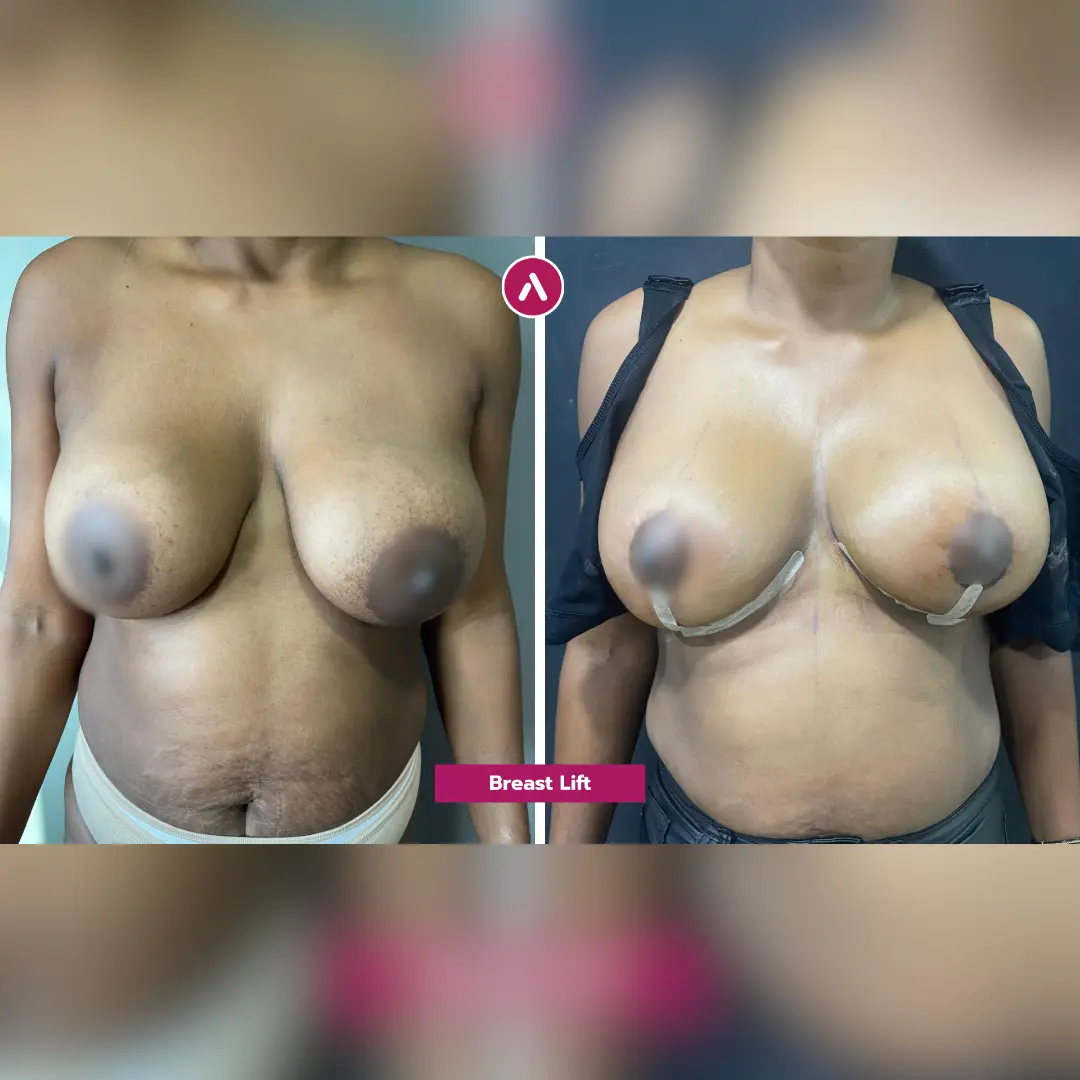
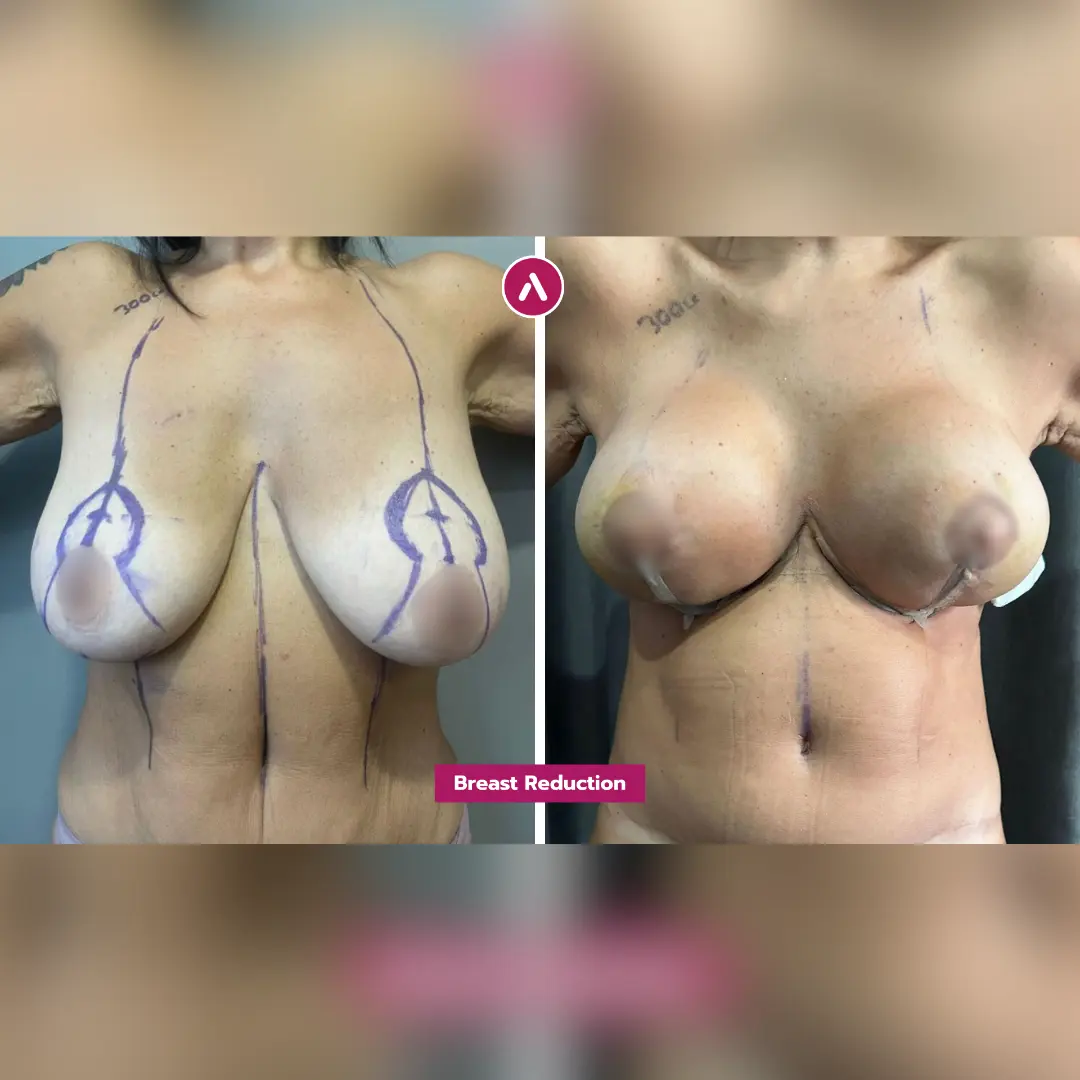
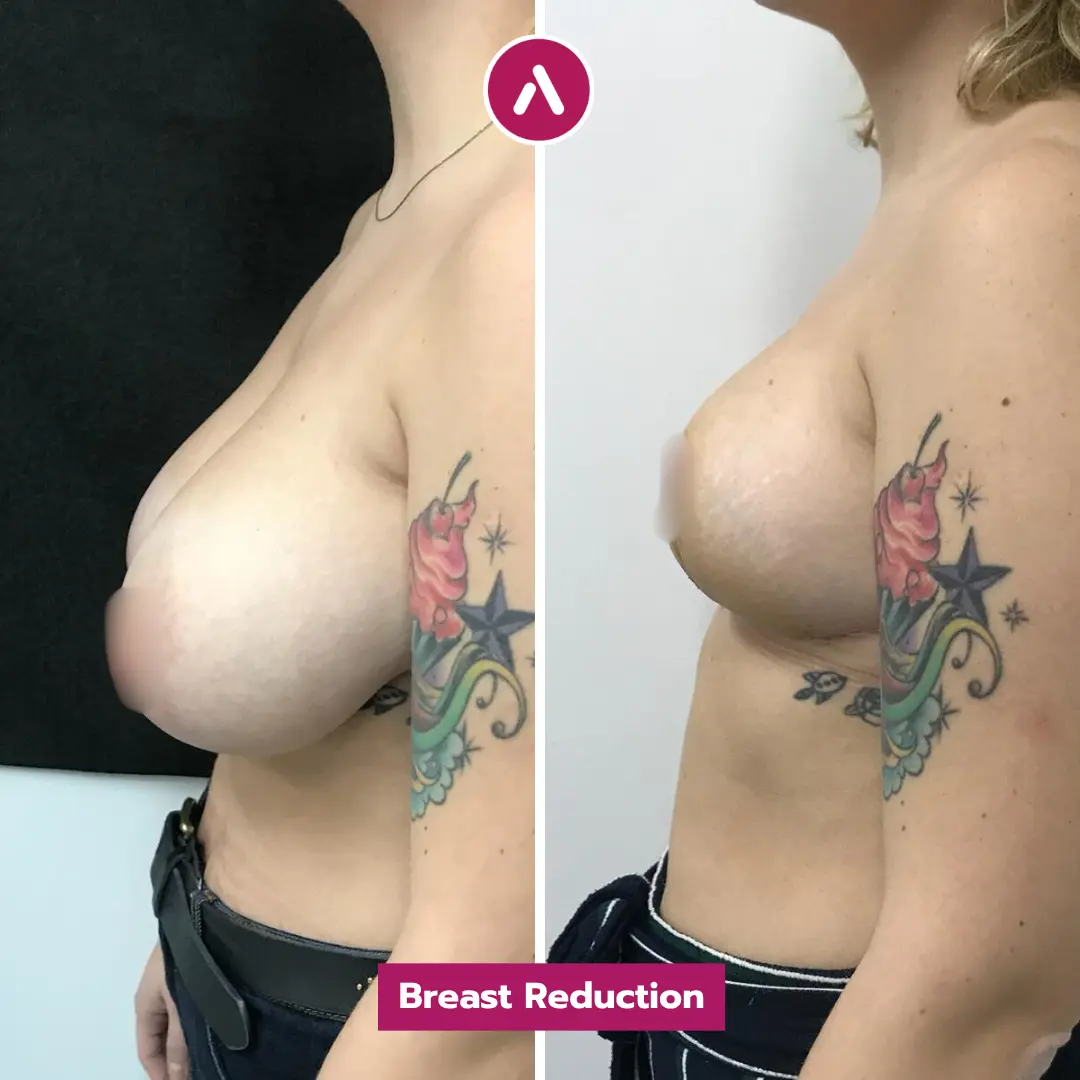
Results also vary across skin tone, scar behavior, weight stability, and tissue quality. For broader visual context without turning this article into a before-and-after gallery, see results from patients of different body types.
What to ask during your consultation
Bring direct questions. Ask whether your current BMI changes your risk level. Ask whether weight loss first would improve safety or results. Ask what size range is realistic for your frame. Ask how the surgeon protects nipple blood supply when reducing volume.
Also ask how much weight should be stable before surgery and whether your symptoms support breast reduction from a medical standpoint. If you are self-pay, clarify that you are planning around safety and proportion, not trying to meet an insurance formula.
The best consultation should leave you with a clear decision: proceed now, optimize health first, or reassess after weight loss. All three answers can be responsible. The safest answer is the one that matches your body.
Frequently Asked Questions About Breast Reduction Weight Requirements
This FAQ answers the most common US patient questions about body weight, BMI, pre-op weight loss, and tissue-weight rules before breast reduction. These answers are educational and cannot replace a personal surgical evaluation.
Do you have to be a certain weight to get a breast reduction?
What BMI is too high for breast reduction?
Should I lose weight before a breast reduction?
How long should my weight be stable before surgery?
Is there a minimum weight for breast reduction?
How many grams must be removed for a breast reduction?
Can I get a breast reduction if I am overweight?
Will breast reduction help me lose weight?
Final Thoughts: Do You Qualify?
Breast reduction qualification is not only about being accepted for surgery; it is about choosing the right timing, risk plan, and tissue reduction for your body.
Breast reduction weight requirements are less rigid than many patients fear. You do not need to match one universal number on the scale. You do need a body that is ready to heal, a weight pattern that is reasonably stable, and a surgical plan that matches your breast tissue, frame, symptoms, and safety profile.
BMI matters because it helps estimate risk. It is not the whole story. The amount of tissue removed matters because it shapes relief and proportion. It should not become a careless race toward a gram target.
If you are unsure where you stand, ask AKM Clinic for an honest assessment of whether your current BMI, symptoms, and weight stability make breast reduction realistic now — or whether a safer plan would be to optimize first and schedule later.
Medical disclaimer: This article is for educational purposes only and does not replace a personal consultation with a qualified medical professional. Breast reduction candidacy, BMI guidance, surgical risk, recovery, and results vary by patient.
Related Treatments




Ready to Start Your Own Transformation Journey?
Join the 2,000+ patients who trusted Dr. Akif Mehmetoğlu and the AKM Clinic team. Your journey to a more confident, revitalized you begins with a simple, no-obligation conversation. Contact us today from the USA for your free virtual consultation.
#1: Get Your Free Personalised Quote
Start with a free, no-obligation online consultation. Share your photos, and our surgical team will provide a fully personalised treatment plan and a transparent, all-inclusive price package. No hidden fees.
#2: Secure Your Date & VIP Booking
Once you're ready, our dedicated patient coordinators will help you secure your procedure date. We'll handle all your bookings, including your 5-star hotel and private VIP airport transfers.
#3: Arrive in Istanbul & Meet Your Surgeon
Arrive at Istanbul Airport (IST) and be greeted by your private driver. Settle into your hotel and prepare for your in-person consultation, where you'll meet your specialist surgeon to finalise the details for your "natural, subtle, and revitalized" new look.