Breast Reduction Weight Requirements: Do You Qualify?
AI Summary
- Breast reduction weight requirements depend on BMI, stable weight, health history and individual breast symptoms.
- BMI is safety guidance, helping assess anaesthesia, wound healing, infection risk and recovery planning.
- Weight loss is personal; stable, sustainable weight matters more than crash dieting before surgery.
- NHS criteria differ from self-pay surgery; grams removed do not guarantee cup-size change or eligibility.
AI-generated summary, fact-checked by our medical experts.
Breast reduction weight requirements are not about reaching one universal number on the scales. For most patients, the real questions are whether your BMI makes surgery and anaesthesia safer, whether your weight has been stable, and whether future weight changes could alter your result. In the UK, NHS criteria can add another layer, but self-pay surgery is assessed individually.
Many UK patients ask this question after being told to lose weight before breast reduction, after reading NHS or Integrated Care Board criteria, or after worrying that a surgeon may simply reject them. That concern is understandable. Large breasts can make exercise painful, bras can dig into the shoulders, and the very symptoms that make surgery appealing can also make weight loss harder.
At AKM Clinic, weight is treated as part of a wider safety assessment, not as a single pass-or-fail number. During how AKM assesses breast reduction candidacy, the plastic surgery team reviews your BMI, breast size, symptoms, weight history, smoking status, medical conditions, medication use and realistic goals before advising whether surgery is sensible now or better delayed.
This guide explains what “weight requirement” really means, why BMI matters, when losing weight first may help, and how UK-style NHS criteria differ from self-pay decision-making in Turkey.
Table of Contents
Breast Reduction Weight Requirements: Is There a Set Number?
There is no single body weight that automatically qualifies or disqualifies every patient from breast reduction surgery. A woman who is 11 stone may have a very different risk profile from another woman at the same weight because height, body composition, breast volume, smoking status, diabetes, previous surgery and general health all change the picture.
That is why responsible surgeons rarely look at weight in isolation. They usually use BMI as a starting point, then interpret it alongside the rest of your medical history. This matters for patients who are asking, “Will I be turned away?” The honest answer is that some patients are asked to lose weight first, but that decision should be based on risk, healing and likely result — not judgement.
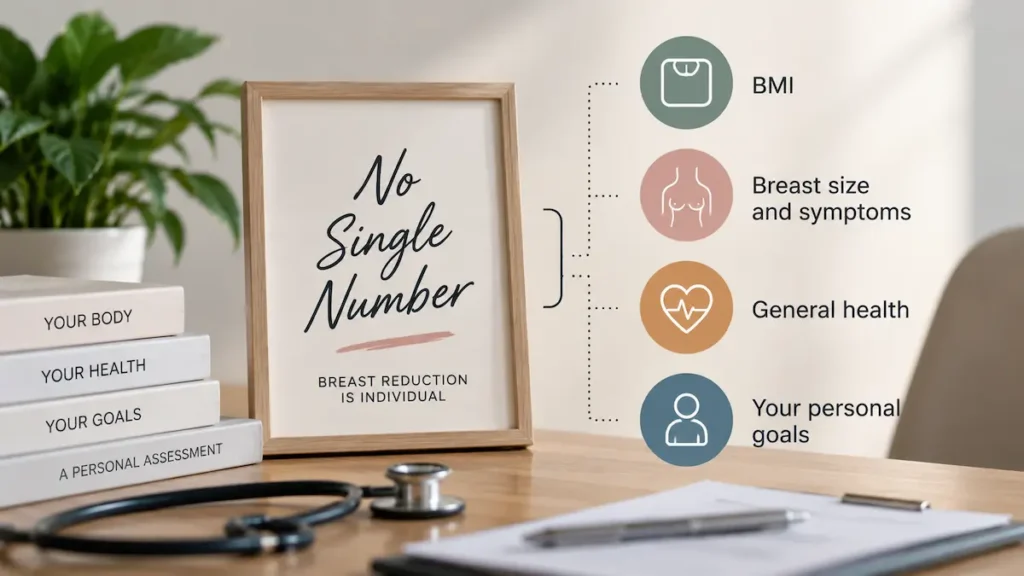
The short answer: there is no universal cut-off
For elective breast reduction, many surgeons prefer patients to be below a certain BMI range before surgery, often because higher BMI is associated with more wound-healing problems and post-operative complications. That does not mean every patient above a preferred range is automatically unsuitable. It means the consultation needs to be more careful.
A patient with a slightly raised BMI, stable weight, no smoking history and well-controlled health may be assessed differently from someone with the same BMI plus diabetes, recent major weight fluctuation and nicotine use. The number matters. The pattern around the number matters too.
“Weight requirement” can mean two different things
Searches such as “breast reduction requirements weight” often mix two separate ideas. The first is your body weight or BMI. This is the safety side of the conversation: anaesthesia planning, wound healing, infection risk, clot risk and whether your result is likely to hold.
The second meaning is the weight of breast tissue removed during surgery. In NHS and insurance-style contexts, decision-makers may refer to grams of tissue removed, symptom history, bra-strap grooving, skin irritation or shoulder and neck pain. That is not the same as your body weight. It is also not a promise that a certain number of grams will produce a certain cup size.
For self-pay surgery, the goal is not to remove tissue simply to satisfy a formula. The goal is to reduce heaviness, improve proportion, protect blood supply to the nipple-areola complex, and create a breast shape that suits your frame.
How AKM looks at weight before breast reduction
AKM Clinic does not publish a universal BMI promise for breast reduction because safe surgery depends on the individual. Instead, the board-certified plastic surgery team assesses whether your current weight supports safe healing, whether your breasts are contributing to functional symptoms, and whether you are close enough to your stable weight for the result to remain predictable.
“There is no magic number that makes breast reduction safe for everyone. We want a stable weight, a realistic target size and a healing plan that gives the incisions the best chance to settle well.”
This is also why “just remove more” is not a safe strategy. Very large reductions can require careful technique to protect nipple sensation, blood supply and breast shape. If your goals involve a major size change, that belongs in a surgical planning discussion rather than a BMI-only calculation.
Why Surgeons Ask About Your BMI
BMI for breast reduction is not used to shame patients. It is used because body mass affects surgery in practical ways. It can influence how long the operation takes, how tissues tolerate tension, how wounds heal, and how the body handles anaesthesia and recovery.
For UK patients used to NHS language, BMI may sound like an administrative hurdle. In surgery, it is also a risk-screening tool. A peer-reviewed NSQIP analysis of 4,545 patients reviewed BMI and reduction mammaplasty complications, supporting why surgeons take body mass into account before elective breast reduction.
Wound healing, infection and fat necrosis
Breast reduction creates incisions around the areola, vertically down the breast, and sometimes along the breast crease. Those incisions need blood supply, low tension and time. Higher BMI can make this more demanding because the breast envelope may be heavier, tissue tension may be greater, and the wound edges may face more stress when swelling begins.
That is why BMI is linked so closely to wound healing and reduction scars. A scar is not just a line on the skin. It is the visible end point of deeper healing. If the wound is under strain, becomes infected, opens slightly, or heals slowly, the final scar can be wider or more noticeable.
Fat necrosis is another reason surgeons care about risk factors. This means an area of fatty breast tissue loses blood supply and becomes firm, tender or lumpy during healing. It can be managed, but it may cause anxiety and extra follow-up. A careful pre-operative assessment is designed to reduce avoidable risks as much as possible.
Anaesthesia and clot-risk context
Breast reduction is usually performed under general anaesthesia. The point is straightforward: the anaesthetic plan should fit your overall health, not just your breast size.
A higher BMI can make anaesthesia planning more complex, especially if it comes with sleep apnoea, high blood pressure, reduced mobility or previous clotting problems. None of these factors automatically rules out surgery, but they change the level of planning required. This is one reason a serious clinic asks detailed questions before giving a green light.
Travel adds another layer. A UK patient flying to Istanbul should have a clear plan for movement, hydration, fit-to-fly timing and aftercare once back home. The flight itself is not the main issue for every patient; the issue is whether the whole recovery plan is matched to your risk profile.
Weight changes can alter your final result
Breast tissue responds to body weight changes. If you lose a significant amount of weight after surgery, the breasts may lose further volume or develop looseness. If you gain significant weight, the breasts may enlarge again. Neither outcome means the operation “failed”, but it can shift the result away from the shape you planned with your surgeon.
This is why a stable weight is often more valuable than chasing the lowest possible number. If you are still actively losing weight, your surgeon may advise waiting until your weight has settled. If your breast size is stopping you from exercising comfortably, the conversation becomes more nuanced. Some patients benefit from surgery before reaching an ideal target, provided the risks are clearly understood.
Higher BMI may also affect the recovery period, because swelling, wound tension, mobility and fatigue all influence the first weeks after surgery. This article will not open the full recovery timeline, but the principle matters: qualification is not only about getting through the operation. It is about healing well afterwards.
BMI Calculator
Enter your height and weight to calculate your body mass index (BMI).
BMI for Breast Reduction: Guidance, Not a Hard Line
BMI for breast reduction is best understood as guidance, not a perfect measure of whether you deserve surgery. It is a rough screening tool that compares weight with height. It does not measure breast heaviness, muscle mass, pain, bra-strap grooving, skin irritation or how much your breasts restrict movement.
Still, BMI remains useful because it gives the surgical team a quick way to spot higher-risk situations. In many private and NHS-style discussions, BMI thresholds appear because they help standardise risk decisions. The problem is that patients often read them as moral judgement. They are not.
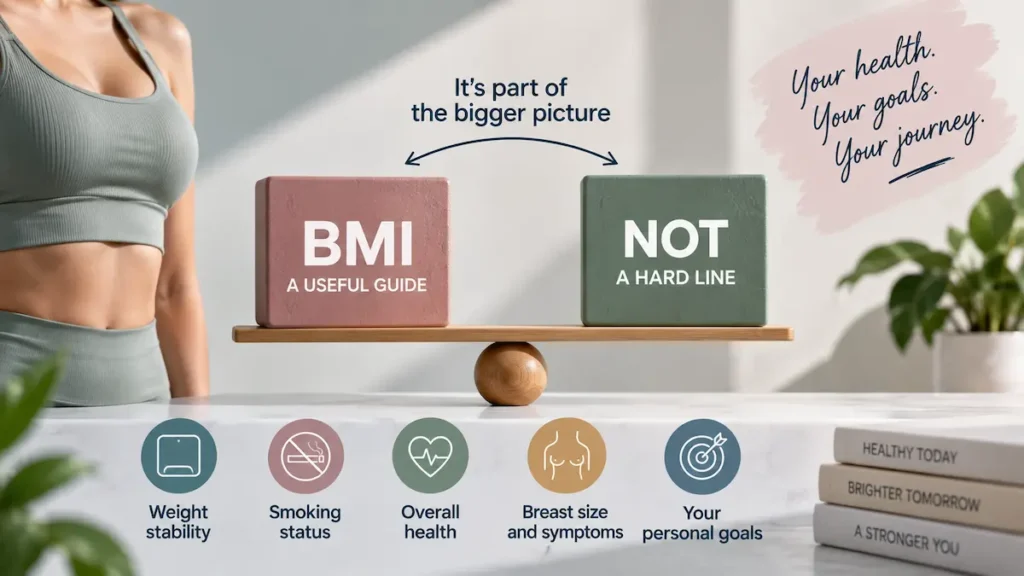
Why BMI cut-offs vary between surgeons and hospitals
Some surgeons prefer a BMI below about 35 for elective breast reduction, while others may advise aiming closer to 30 where possible. NHS Integrated Care Board policies can be stricter, especially for funded surgery. These thresholds are not identical across the UK, which is why one patient may be declined in one region and considered differently elsewhere.
For self-pay surgery abroad, the question is not “Can we copy an NHS rule?” The question is “Can you have surgery with an acceptable safety profile and a realistic recovery plan?” A responsible clinic should explain the reasoning rather than simply quoting a number.
If your BMI is above the preferred range, that does not mean the conversation ends. It may mean you need further medical checks, a weight-stability period, smoking cessation, better diabetes control, or a staged plan before surgery.
Where BMI is helpful — and where it is limited
BMI is helpful for population-level risk. It is less helpful for describing an individual body. A tall, muscular patient and a shorter patient with central body fat may have the same BMI but different surgical considerations. Breast size also complicates the calculation because very large breasts add weight to the number itself.
That is why a surgeon should also look at body shape, breast footprint, skin quality, nipple position, symptoms and lifestyle. Your photographs, measurements and medical history often tell a more useful story than BMI alone.
There is another limitation. BMI does not show whether your weight is stable. A patient at BMI 32 whose weight has been steady for a year may be easier to plan than a patient at BMI 29 who is still losing weight quickly. Stability affects shape prediction.
Other risk factors can matter as much as BMI
Nicotine use is one of the biggest issues in breast reduction planning because it can reduce blood flow and make wound healing less reliable. Diabetes, some immune conditions, previous breast surgery, clotting history, certain medications and anaemia can also change the risk profile.
This is why the consultation should feel thorough. If a clinic only asks for your desired cup size and ignores health details, that is not reassuring. Breast reduction is a functional and aesthetic operation, but it is still surgery.
| Factor surgeons assess | Why it matters | Typical guidance |
|---|---|---|
| BMI | Helps estimate risks linked with anaesthesia, wound healing, infection and recovery | Many surgeons prefer a lower-risk range before elective surgery, but thresholds vary |
| Weight stability | Large changes after surgery can alter breast volume and shape | A stable weight for several months is often preferred before final planning |
| Smoking or vaping nicotine | Can reduce blood supply and increase wound-healing concerns | Patients are usually asked to stop well before and after surgery |
| Medical conditions | Diabetes, clotting history and some medications may increase surgical risk | Optimisation and documentation may be needed before travel |
| Breast tissue to be removed | In NHS and ICB contexts, grams removed may be part of funding criteria | For self-pay surgery, tissue removal is planned around safety, symptoms and proportion |
For some patients, the right plan is breast reduction. For others, fat-dominant breast heaviness may raise the question of why liposuction-only breast reduction has limits. That option is narrower than many patients expect. It cannot lift the breast, reshape loose skin or reposition the nipple in the way a standard reduction can.
Should You Lose Weight Before Breast Reduction?
The answer depends on how close you are to your stable weight, how severe your symptoms are, and how much your breasts are stopping you from moving comfortably. A blanket instruction to “lose weight first” can be frustrating, especially when breast heaviness is part of the reason exercise hurts.
At the same time, losing weight before breast reduction can make sense if you are already on a weight-loss journey and expect a major change. Surgery is easier to plan when the body is not changing rapidly. The breasts after reduction should suit the body you are likely to keep, not a temporary point along the way.
When losing weight first may improve the result
If you plan to lose a large amount of weight, it is usually sensible to discuss whether surgery should wait. Weight loss after breast reduction can reduce breast volume further, create looseness, or make the breasts sit differently on the chest wall. That can lead to disappointment even when the original operation healed well.
Waiting may also allow your surgeon to remove the right amount of tissue more accurately. If the breast is likely to shrink with body weight, operating too early may make it harder to predict the final size and shape.
This does not mean you need to be at your lightest-ever weight. It means you should be close to a weight you can maintain. A realistic, sustainable weight is more useful than a crash-diet number reached for surgery and quickly regained.
When breast reduction may help before ideal weight is reached
There are patients for whom large breasts actively block progress. They may cause back and neck pain, make sports bras ineffective, worsen skin irritation, or create enough embarrassment that exercise becomes socially difficult. In these cases, waiting for an “ideal” BMI may not always be the most practical path.
A surgeon may still advise delay if the risk is too high. But the discussion should include your lived symptoms, not only the number. Breast reduction can sometimes make movement easier, which may support healthier habits afterwards. That possibility has to be balanced against wound-healing and anaesthesia risk.
The most honest answer to “do I need to lose weight before breast reduction?” is: possibly, but not always. You need an assessment that weighs risk against function.
Avoid crash dieting before surgery
Rapid weight loss can create its own problems. It may leave you undernourished, anaemic, low in protein, or mentally exhausted before an operation that demands healing. It can also make your weight unstable, which makes breast size less predictable.
If weight loss is recommended, it should be gradual and supervised where appropriate. Focus on nutrition, strength, walking tolerance, sleep and stopping nicotine rather than trying to force the scales down quickly. Surgery rewards preparation, not punishment.
A practical target is often weight stability rather than perfection. Many surgeons prefer several months of steady weight before final measurements are taken. Six months is a useful benchmark in many planning conversations, though your own case may differ.
What to discuss before booking surgery abroad
UK patients considering surgery in Turkey should ask direct questions before paying a deposit. What BMI range does the clinic consider? What happens if your pre-operative tests show an unexpected issue? Who reviews your photographs and medical history? What documentation will you receive for your GP or local clinician when you return?
You should also ask how your target size is chosen. A safe reduction is not only about cup size. It depends on nipple position, breast width, skin quality, blood supply and how much tissue can be removed without compromising shape or healing.
That is why the best timing is personal. If you are close to a stable weight, healthy enough for anaesthesia and clear about your goals, surgery may be reasonable. If you are in the middle of rapid weight loss, still smoking, or managing uncontrolled health issues, delaying may be the safer decision.
Breast Reduction NHS Criteria, ICB Rules and Grams Removed
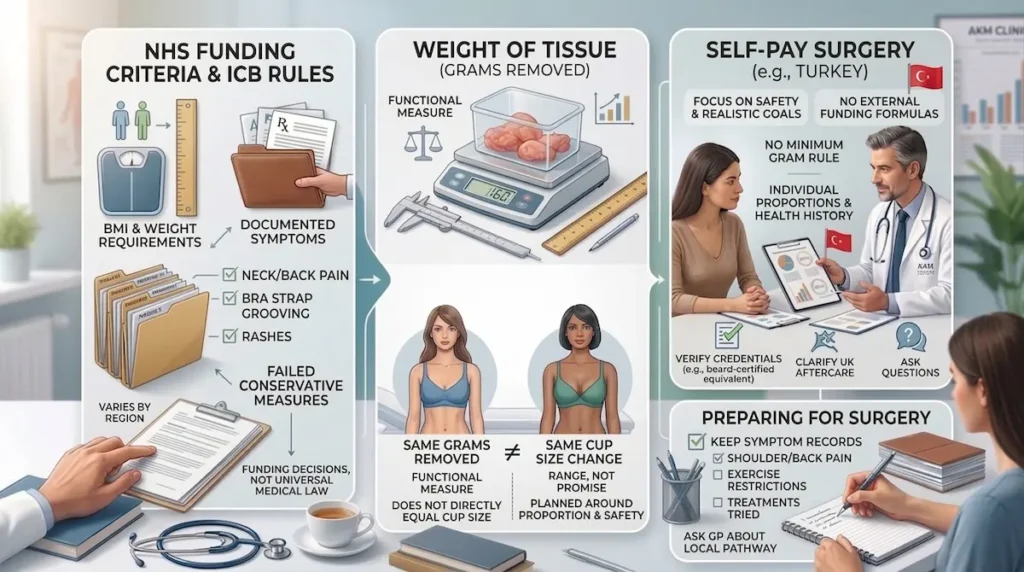
Breast reduction NHS criteria matter to UK patients because many people first learn about “weight requirements” through NHS funding rules. These rules can include BMI, documented symptoms, failed conservative measures and sometimes the expected weight of breast tissue to be removed. They are funding criteria, not a universal medical law.
This distinction is important. NHS or Integrated Care Board rules decide when publicly funded care may be approved. A self-pay breast reduction in Turkey is assessed differently: the focus is whether surgery is safe, proportionate and realistic for your body, not whether you meet a local NHS funding formula.
Why NHS and ICB criteria can feel confusing
The NHS explains that breast reduction may be available in limited circumstances and that local eligibility can vary. Its patient guidance on female breast reduction surgery also advises patients to check professional registration and provider standards when considering cosmetic surgery.
Some local policies mention BMI. Others focus on documented neck, shoulder or back symptoms, recurrent skin irritation, psychological impact, bra-strap grooving, or the amount of breast tissue expected to be removed. You may also see references to “grams removed”.
For a patient, this can feel like a maze. One page talks about symptoms. Another talks about BMI. A third may talk about a minimum amount of tissue. The safest way to read these criteria is as administrative rules for NHS funding, not as a direct answer to whether your body can safely undergo surgery.
UK context: NHS and ICB policies can vary by region. They may consider symptoms, BMI, conservative care and expected tissue removal. AKM Clinic cannot promise NHS eligibility or funding approval. For self-pay patients, assessment is based on surgical safety, health history and realistic goals.
What “grams removed” means
The weight of tissue removed is measured during breast reduction surgery. In funding systems, grams can be used as a way to judge whether the operation is functional rather than mainly cosmetic. But grams do not translate neatly into cup size.
Breast density, band size, body frame and the shape of the breast all affect what a reduction looks like. Removing the same number of grams from two patients can produce different visual changes. A small-framed patient may see a larger cup-size difference than a broad-framed patient with the same tissue weight removed.
That is why grams removed and realistic cup-size change should be discussed as a range, not a promise. A responsible surgeon plans around proportion, symptom relief, nipple blood supply and breast shape. The aim is not to chase the highest possible gram number.
Do NHS rules apply if you choose self-pay surgery in Turkey?
No. NHS breast reduction criteria do not automatically apply to self-pay surgery in Turkey. They may help you understand the language UK doctors use, but they do not decide whether AKM Clinic can operate. AKM’s plastic surgery team assesses your own photographs, measurements, medical background, BMI, weight stability and goals.
That also means there is no minimum gram rule for every self-pay patient. If a smaller reduction would suit your frame and protect the nipple-areola complex, removing more tissue just to meet an external number would not be good planning. The operation should fit the person, not the spreadsheet.
Cost is another separate topic. This article is not a price guide, but UK patients comparing private options can review breast reduction costs for self-pay UK patients without turning this BMI guide into a pricing page.
How to prepare if you are comparing NHS, UK private care and Turkey
Start with evidence. Keep records of symptoms such as shoulder pain, neck pain, rashes, bra-strap marks, exercise restriction and treatments you have already tried. If you are speaking with your GP, ask what your local pathway requires. If you are considering private or overseas surgery, ask what medical information the surgeon needs before advising you.
For surgery abroad, you should also ask how aftercare will be organised after you return to the UK, what happens if a wound concern appears, and what written information you will receive. The same principle applies wherever surgery is performed: verify credentials, ask detailed questions and avoid rushed decisions.
AKM’s plastic surgery team is European Board-Certified; it does not claim UK (GMC) registration. A surgeon operating in Istanbul is not “GMC-certified” unless they personally hold that UK status. The honest standard is to explain training and qualifications, hospital safety, surgical planning and follow-up; our guide to checking a specialist plastic surgeon’s qualifications explains what to look for.
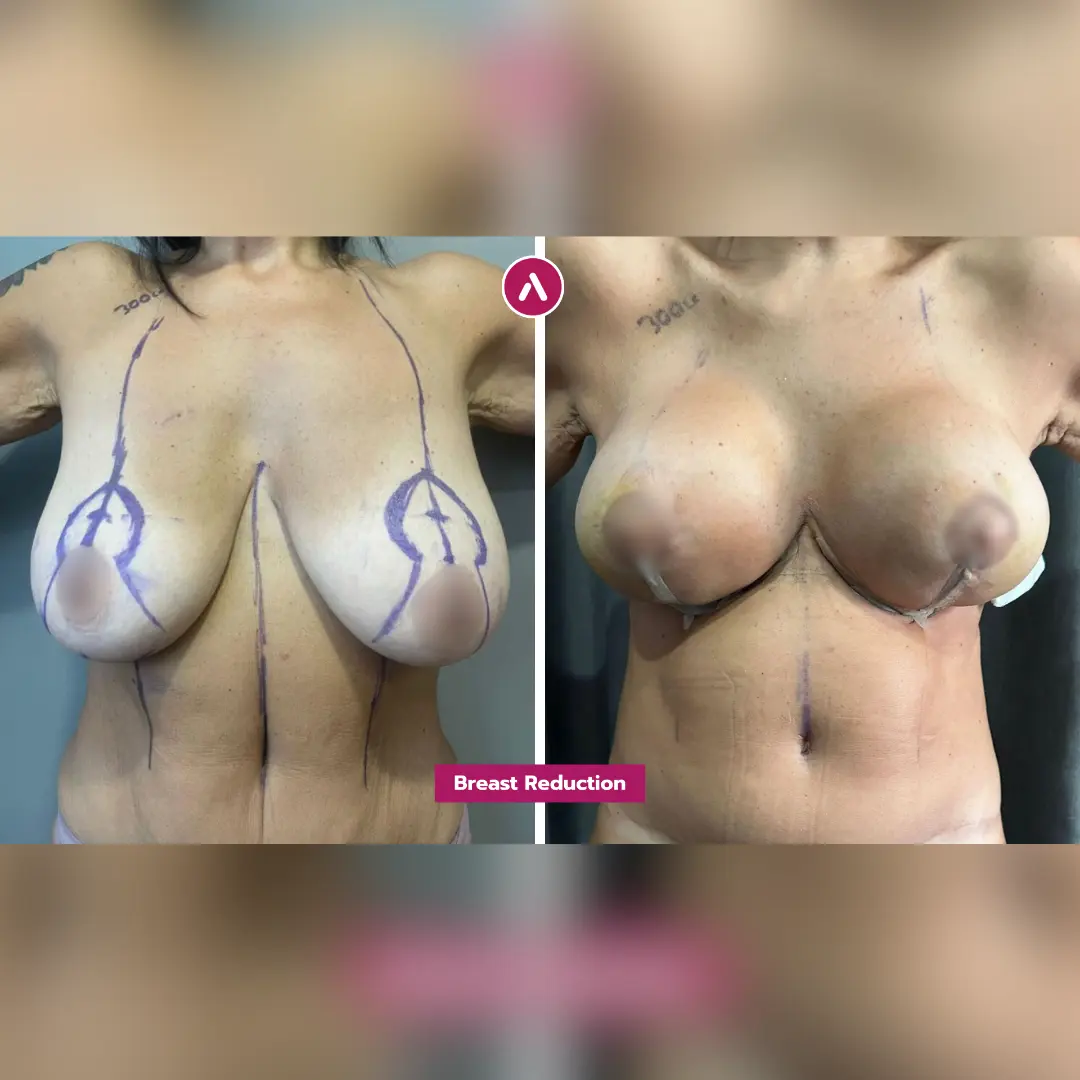
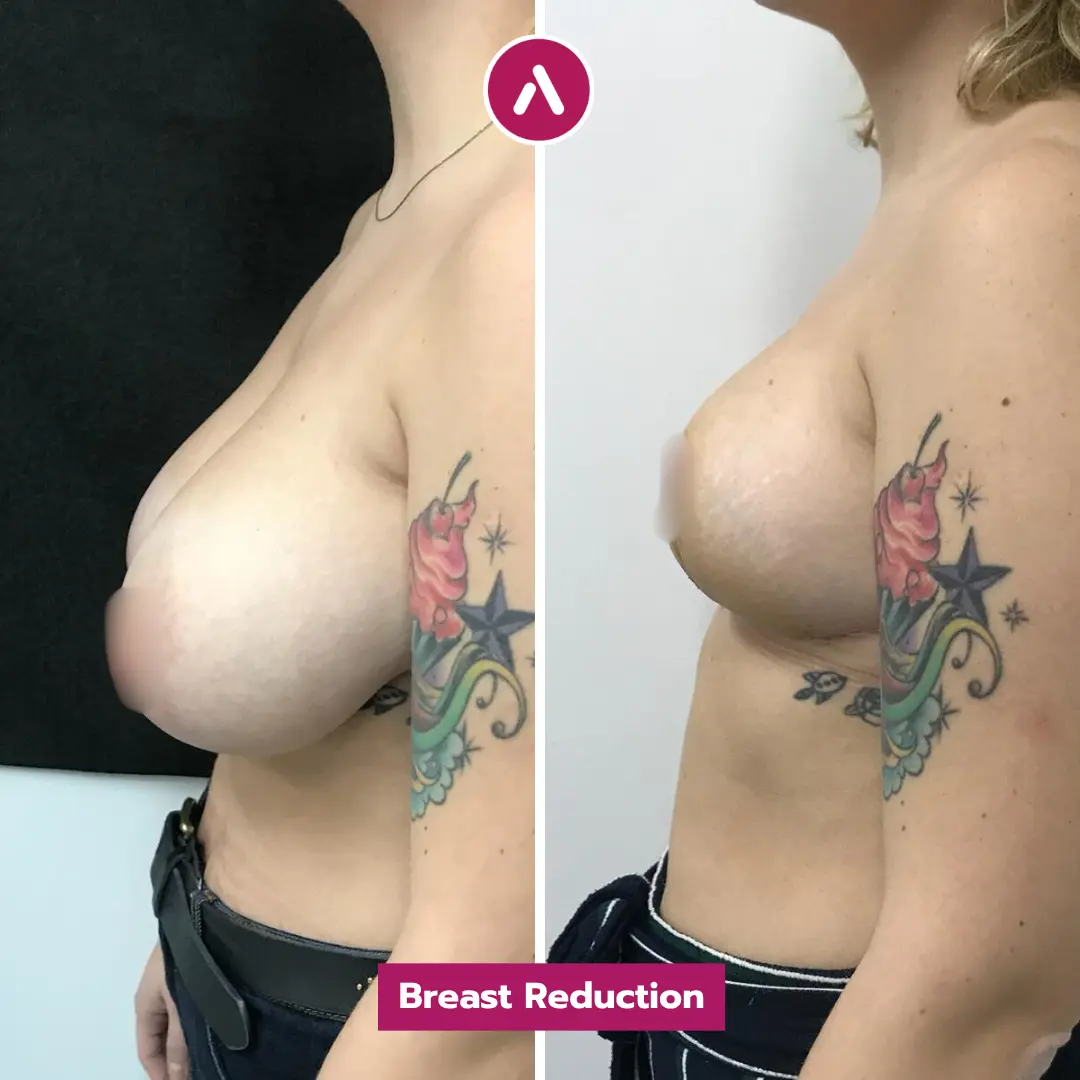
If you want to understand how real healing can look across different frames, use healed results across different body types as a visual reference, not a guarantee. Results vary from patient to patient.
Frequently Asked Questions: Breast Reduction Weight Requirements
These questions cover the points UK patients most often raise after reading about BMI, NHS rules and tissue-removal thresholds. They are general education, not a substitute for a personal surgical assessment.
Do you have to be a certain weight to get a breast reduction?
What BMI is too high for breast reduction?
Should I lose weight before a breast reduction?
Do I need to lose weight before breast reduction if my breasts cause pain?
How many grams must be removed for a breast reduction in the UK?
Will losing weight after surgery change my results?
Can I get a breast reduction if I’m overweight?
Do NHS breast reduction criteria apply to self-pay surgery in Turkey?
Ask for an Honest Weight and BMI Assessment Before You Decide
The safest answer to breast reduction weight requirements is not a number copied from a policy document. It is a personal assessment that explains your risk clearly. Your BMI, weight history, breast size, symptoms and health conditions all matter.
If your current weight makes surgery less safe, you deserve to be told that directly. If your breast heaviness is part of the reason weight loss has been difficult, that should also be taken seriously. Good advice sits between those two realities.
Ask AKM for an honest assessment of whether your weight and health make breast reduction safe right now. A virtual consultation can help you understand whether to proceed, prepare further, or wait until your weight is more stable.
Medical disclaimer: This article is for general education only and does not replace a consultation with a qualified medical professional. Breast reduction suitability, BMI guidance, anaesthesia planning and surgical risk must be assessed individually. Results and recovery vary from patient to patient.
Related Treatments



Ready to Begin Your Own Transformation Journey?
Join the 2,000+ patients who have trusted Dr Akif Mehmetoğlu and the AKM Clinic team. Your journey to a more confident, naturally restored you begins with a simple, no-obligation conversation. Contact us today from the UK for your free virtual consultation.
#1: Get Your Free Personalised Quote
Start with a free, no-obligation online consultation. Share your photos, and our surgical team will provide a fully personalised treatment plan and a transparent, all-inclusive price package. There are no hidden fees.
#2: Secure Your Date & VIP Booking
Once you are ready, our dedicated patient coordinators will help you secure your procedure date. We will handle all your bookings, including your 5-star hotel accommodation and private VIP airport transfers.
#3: Arrive in Istanbul & Meet Your Surgeon
Arrive at Istanbul Airport (IST) and be greeted by your private driver. Settle into your hotel and prepare for your in-person consultation, where you will meet your specialist surgeon to finalise the details for your "natural, subtle, and restored" new look.