
Flank Liposuction: Targeting Love Handles for a Smoother Waistline
AI Summary
- Flank liposuction targets love handles to smooth the side waist, not reduce overall weight.
- Best candidates have localized fat, stable weight, and skin with enough elasticity to contract.
- Recovery focuses on compression and swelling, with gradual waistline refinement over several weeks.
- Safe planning separates flank lipo from lipo 360, loose skin treatment, and broader contouring.
Summary generated by AI, fact-checked by our medical experts
Flank liposuction removes the stubborn fat pads above the hips, often called love handles, to create a smoother waistline from the front, side, and back. It works best for people at a stable weight with localized flank fat and skin that can still contract. It is a contouring procedure, not a weight-loss method or a full 360 treatment.
For many Canadian patients, the frustration is specific. Weight may be stable, clothing may fit almost everywhere, yet the waistline still catches on jeans, leggings, or fitted clothing. The flank area can hold fat differently from the abdomen or hips, which is why liposuction zones and techniques at AKM must be planned by anatomy, not by a generic “fat removal” template.
This guide focuses only on the flank zone. It explains what love handles are, who tends to benefit, what the result can realistically look like, how surgeons blend the area, and where the limits are. Broader lipo 360, VASER HD planning, loose skin, and cost questions are handled through separate pages so the decision stays clear.
Table of Contents
What Flank Liposuction Treats (and What Love Handles Really Are)
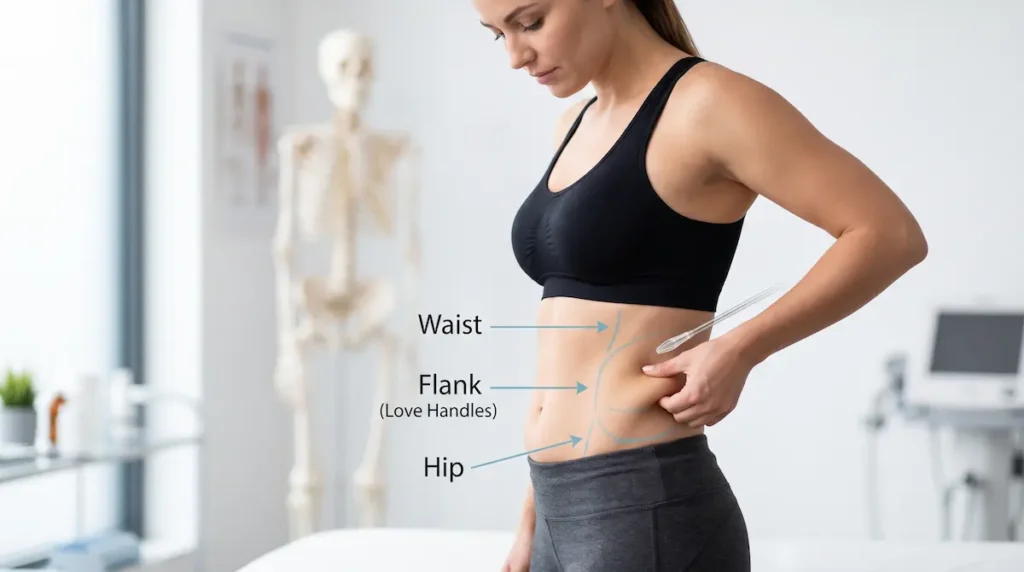
Flank liposuction treats the fat pad that sits above the hip bone and wraps toward the back of the waist. This is the area many people pinch when they say “love handles.” It is not exactly the stomach, not exactly the hip, and not the lower back alone.
That distinction matters. A patient may have a fairly flat abdomen from the front but still see a square or widened waistline from the side. Another may notice a soft roll that spills over the waistband, creating what is often called a muffin top. The surgical plan changes depending on whether the fat is mainly on the flanks, blends into the lower abdomen, or continues around the back.
The flank pad sits close to the iliac crest, the upper edge of the pelvis. In some people, it is compact and clearly defined. In others, it merges with the waist, lower back, and outer hip. A careful assessment looks at the whole contour, but the treatment goal remains narrow: smoothing the side waist without over-hollowing the hip.
Why love handles can resist diet and exercise
Flank fat can be stubborn even in active people. Diet and exercise reduce overall body fat, but they do not let you choose exactly where fat leaves first. Genetics, hormones, body shape, and previous weight changes all influence whether the flanks hold on longer than the abdomen, thighs, or chest.
This is why love handle liposuction is considered a body-contouring option rather than a fitness shortcut. It is meant for a localized deposit that remains after a reasonable effort, not for general weight reduction. If weight is still changing, the timing may be wrong.
Clinical references describe liposuction as most appropriate for patients with localized fat, reasonable skin tone, and stable weight, rather than as a treatment for obesity. For a medical overview of candidacy and safety limits, see candidate criteria for liposuction from StatPearls.
Flank vs waist vs hip: the terms patients often mix up
Patients often use “waist,” “hip,” and “flank” interchangeably. Surgeons do not. The waist is the narrower curve between the ribs and pelvis. The hip is lower and more structural, shaped by bone, muscle, and fat distribution. The flank is the soft side zone above the hip that can blur the waistline.
This difference is especially important when the concern sits near the front of the pelvis or lower abdomen. Fat in the mons pubis area, for example, is a separate anatomical issue with different planning. That topic belongs in a dedicated guide to another small, stubborn fat zone, not in a flank-only plan.
A precise consultation should map where the fullness begins and ends. The surgeon will usually look at the front, oblique, side, and back views. A good result depends on transition zones as much as the main pocket of fat.
Am I a Good Candidate for a Liposuction?
Not sure if surgery abroad is the right step for you? Answer a few quick questions about your concerns, health history, and goals, and our team will help you understand which treatment options may suit you best — before you book a single flight.
Are You a Good Candidate?
A good candidate for flank liposuction has a specific, pinchable fat deposit above the hips, stable weight, and skin that still has reasonable elasticity. The goal is a cleaner waistline, not a smaller body size. Patients who understand that difference tend to make steadier decisions.
The most useful question is not “Can fat be removed?” It usually can. The better question is, “Will the skin and surrounding contour respond well after that fat is removed?” That is where candidacy becomes more individual.
Localized fat, elastic skin, and stable weight
Flank lipo works best when the fat pad is localized. You should be able to point to the area that bothers you without describing the entire torso. If fullness is spread around the abdomen, lower back, upper back, and hips, a broader contouring discussion may be more appropriate than flank-only treatment.
Skin quality is the second filter. After fat is removed, the skin must contract enough to sit smoothly over the new contour. Younger patients often have better elasticity, but age is not the only factor. Weight cycling, pregnancy, genetics, stretch marks, and previous surgery can all affect how skin behaves.
Stable weight matters as well. If you are actively losing weight, recently postpartum, or still changing body composition, your flank result may shift. Many surgeons prefer a stable pattern before surgery so the plan is based on your real baseline, not a moving target.
The American Society of Plastic Surgeons describes good liposuction candidates as people who are near a stable target weight, have firm elastic skin, and understand that liposuction is not a weight-loss substitute. That benchmark is useful for Canadian patients comparing clinic advice across markets: who the ASPS says is a good liposuction candidate.
Men vs women: love handles, muffin top, and body shape
Flank lipo for men often focuses on a more rectangular waist that has become wider at the sides. The goal is usually a cleaner transition from the ribs to the hips, especially in shirts, tailored clothing, or athletic wear. The change can be subtle but meaningful.
For women, the same fat pad may blend with the lower abdomen, hip, or back, creating the muffin-top effect over fitted clothing. In that setting, muffin top liposuction must be planned carefully so the waist is smoothed without flattening natural hip curves. Removing too much from the wrong point can make the contour look less balanced.
Canadian patients often ask whether the technique is different by gender. The tools may be similar, but the aesthetic plan is not. Male and female waistlines usually require different endpoints, and the surgeon should mark the body while considering front, side, and back proportions.
When flank liposuction may not be enough
Flank liposuction does not remove loose skin. It also cannot repair stretched abdominal muscles, lift hanging tissue, or reshape the whole torso if the concern is circumferential. If the skin folds when you bend, hangs after weight loss, or already looks crepey, fat removal alone may leave the area softer than expected.
This is where an honest consultation is protective. Some patients are better served by a different procedure, a staged plan, or no surgery at all until weight and skin quality are more predictable. For a deeper explanation of this limit, see when the skin won’t tighten after lipo.
At AKM Clinic, the body-contouring discussion is led by the surgical team in Istanbul. The assessment should be specific: where the fat sits, how the skin recoils, what the patient expects, and how the waistline will look in motion. A smooth result matters more than maximum fat removal.
What the Results Look Like
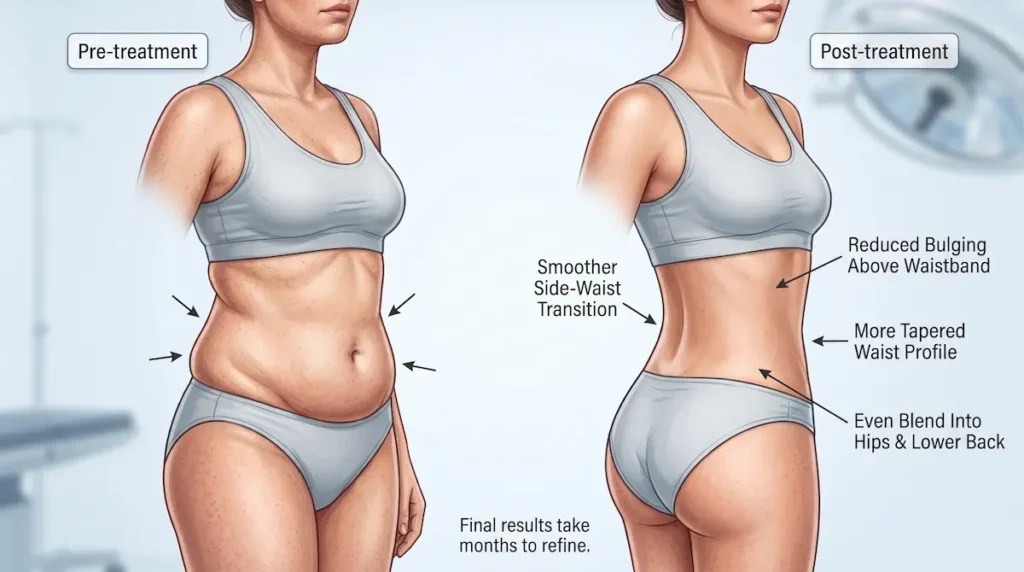
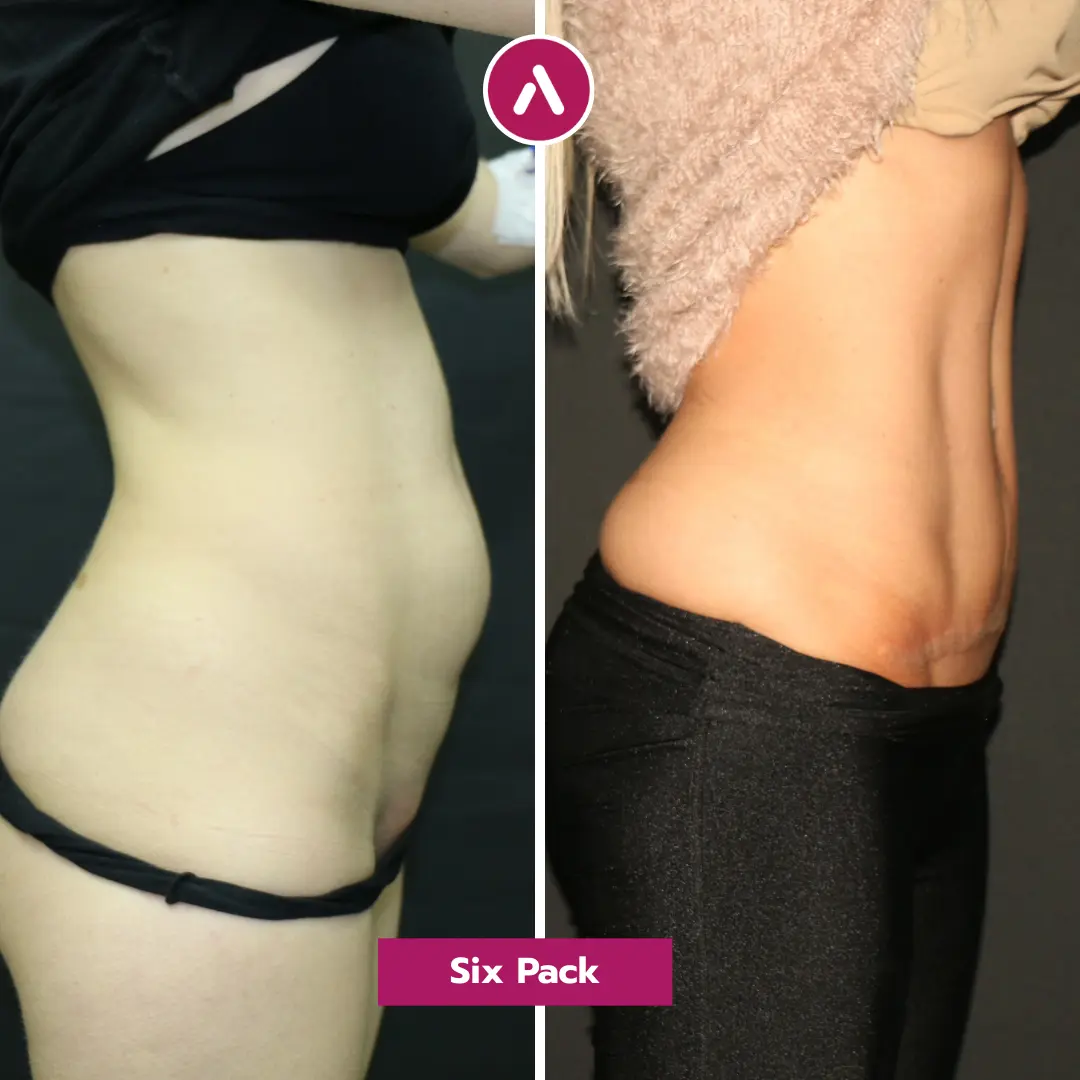
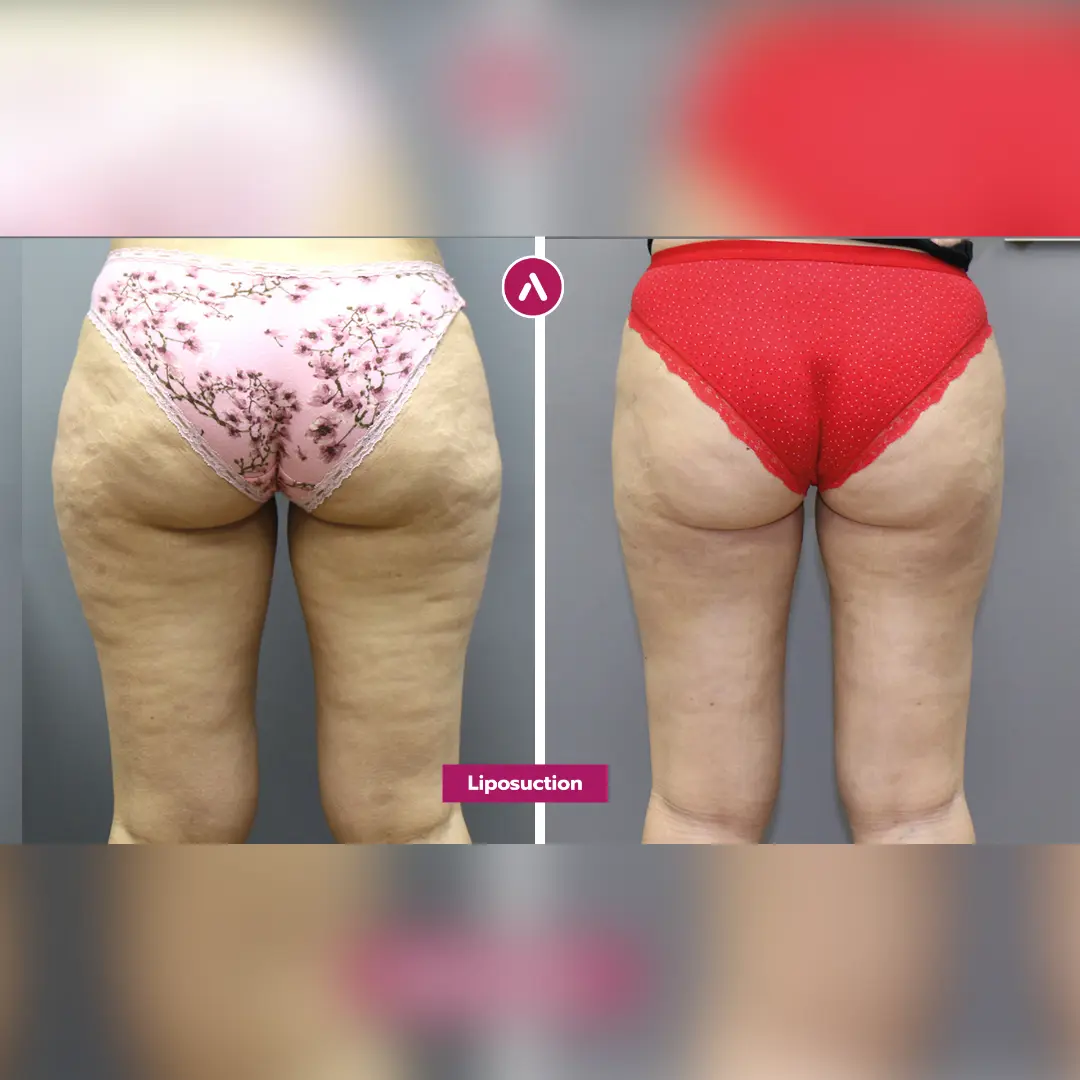
Flank liposuction can make the waistline look smoother, narrower, and better blended into the hips and lower back. The change is usually most visible in the side and three-quarter views. It is not meant to create an extreme hourglass shape or remove every trace of softness.
The most natural-looking result is often the one that looks unforced. Clothing may sit flatter at the waistband. The side waist may look cleaner in fitted tops. The back of the waist may have less bulging above pants or leggings.
Waist definition without over-hollowing
A well-planned flank result is about proportion. Removing too little may leave the love handles unchanged; removing too much may create a scooped or uneven look above the hip. The goal is controlled contouring.
Surgeons usually avoid treating the flank as an isolated circle of fat. Instead, they blend the edges so the treated zone fades into the abdomen, lower back, and hip. This transition is what keeps the result from looking like a hollow patch.
Patients sometimes expect the smallest possible waist. That can be unrealistic, especially when the rib cage, pelvis, muscle structure, and skin quality set the natural frame. Flank liposuction changes the soft-tissue layer, not the skeleton.
Front, side, and back views
From the front, the waist may look more tapered because the side bulge is reduced. From the side, the torso can look smoother where the flank used to push outward. From the back, the lower waist may look cleaner above fitted clothing.
These changes are often gradual. Swelling can hide the early result, then fade in stages over several weeks and months. Most patients see a meaningful difference before the final result, but the last refinement takes time.
It is also normal for the left and right sides to settle at slightly different speeds. The body rarely heals in exact symmetry. Persistent asymmetry, dents, or firm areas should be reviewed by the surgical team rather than judged too early.
When lipo 360 or VASER HD may make more sense
Some patients come in asking for flank lipo but actually want a full waistline change. If the abdomen, lower back, and flanks all contribute to the shape, treating the flanks alone may not match the goal. In that case, the discussion may shift toward broader torso contouring.
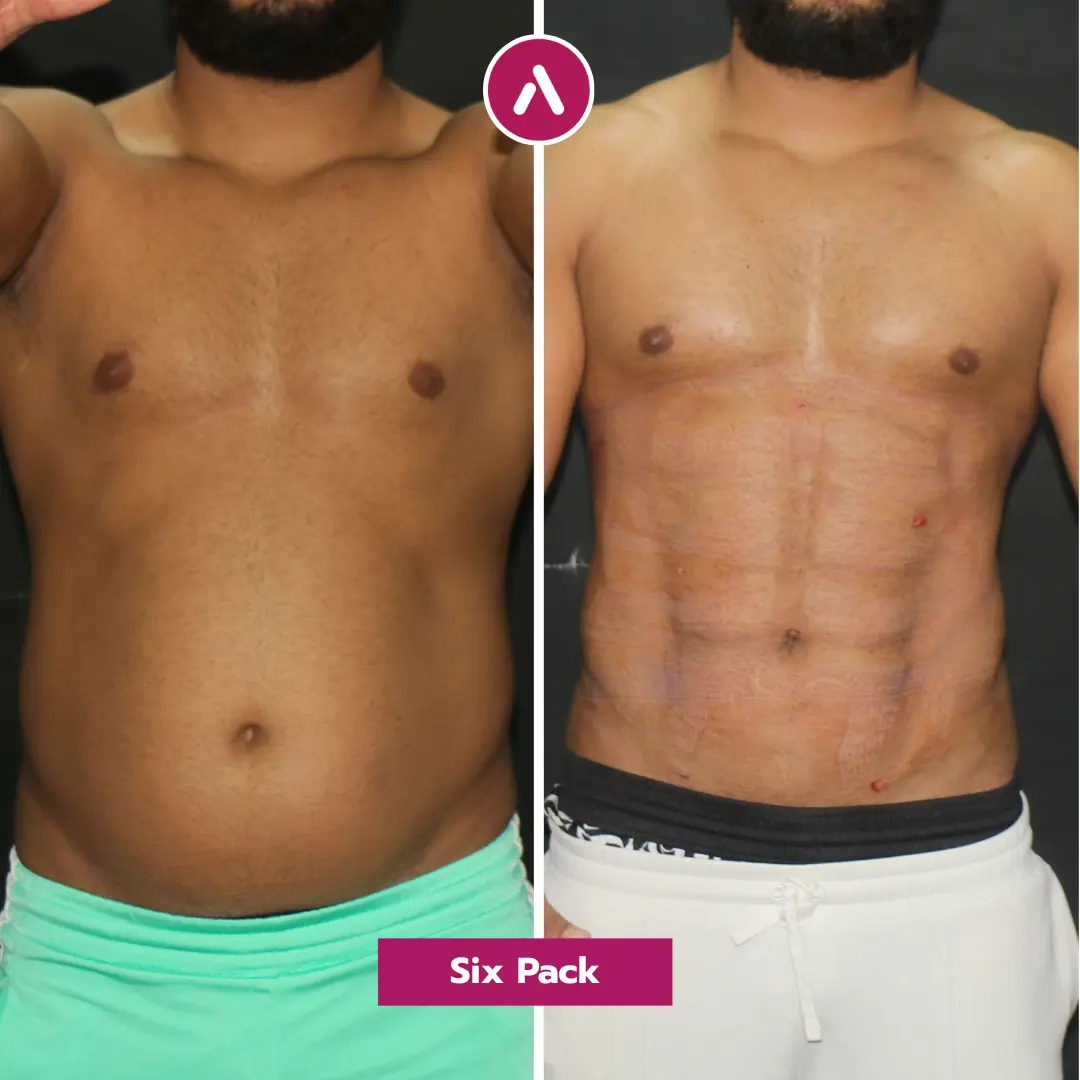
For patients who want more athletic definition, a surgeon may discuss VASER high-definition liposuction for a full 360 contour. That is a different conversation from love handle liposuction. It involves muscle-shadow design, wider zone planning, and stricter expectations about skin quality and body fat.
There is no benefit in pretending every patient needs the largest procedure. The better plan is the one that matches the anatomy. Flank-only treatment can be enough for a localized bulge; broader contouring may be more appropriate when the whole trunk needs shaping.
| Option | Scope | Who It May Suit | Recovery Focus | When It Makes Sense |
|---|---|---|---|---|
| Flank liposuction | Love handles and side-waist fullness | Localized flank fat with good skin elasticity | Compression, swelling control, side-waist settling | When the main concern is a defined fat pad above the hips |
| Lipo 360 | Abdomen, flanks, lower back, and waistline as one unit | Patients with circumferential torso fullness | Broader swelling pattern and wider compression coverage | When flank-only treatment would leave surrounding fullness untreated |
| VASER HD liposuction | More detailed torso contouring and muscle-shadow definition | Selected patients with lower body fat and strong skin quality | Precision contour settling and close follow-up | When the goal is definition, not only love-handle reduction |
“The flank is a transition zone. The aim is not simply to remove fat, but to create a smooth passage from the waist into the hip and lower back. Conservative removal, careful feathering, and realistic skin assessment are what protect the contour.”
A Comprehensive Guide to Liposuction
From the procedure steps to your post-operative aftercare, review every detail of how our surgical team performs Liposuction in Istanbul. A clear, start-to-finish overview, so you know exactly what to expect before you travel.
How the Flank Zone Is Treated
Flank liposuction is planned with the patient standing first, because love handles change shape when you lie down. Marking the body upright lets the surgical team see where the fullness sits during normal posture. The plan is then checked from several angles.
The procedure usually involves small access points placed where they can be hidden as much as possible. Through these openings, the surgeon removes fat in a controlled pattern. The technical details can vary, but the principle stays the same: reduce the bulge while preserving a smooth surface.
Positioning and access points
The flank is often treated with the patient positioned so the side waist and lower back can be accessed safely. Depending on the full plan, the team may adjust positioning to check both sides and maintain symmetry. Small changes in angle can affect the contour.
Access points are usually small, but their placement still matters. A well-placed incision allows the cannula to reach the fat evenly without creating unnecessary trauma. Poor access can make it harder to feather the edges or match both sides.
Patients often ask whether the tiny entry marks become obvious. That question belongs partly to scar care and partly to placement. Flank entry points usually heal as small marks, but skin type, pigmentation, aftercare, and tension can all influence how visible they remain.
Feathering into nearby zones
Feathering means tapering the treatment so there is no sharp border between suctioned and untreated areas. It is one of the most important parts of flank contouring. Without it, the waist can look smaller but less smooth.
The surgeon may gently blend toward the lower back, upper hip, or side abdomen, depending on the body shape. This does not mean the operation becomes a full lipo 360 by default. It means the edges of the flank zone are respected.
Devices marketed for fat reduction can create confusion here. Laser-based options, for example, may be promoted as easier or less invasive, but they do not replace proper candidacy and contour planning. For a separate discussion, see what laser lipo can and can’t do for love handles.
Symmetry and conservative fat removal
The two flanks are sisters, not twins. One side may sit higher, one hip may project more, or the spine and pelvis may subtly rotate the waist. Good planning accounts for those differences instead of removing the same amount from both sides automatically.
Conservative removal is especially important near the hip. Over-treatment can leave depressions, waviness, or a shelf-like transition. Under-treatment can be revised more safely than over-resection, so experienced teams usually prioritize balance over aggressive suction.
Contour irregularity is a known risk with any liposuction procedure. It can come from uneven fat removal, poor skin contraction, scar tissue, swelling, or unrealistic expectations. The risk is reduced by careful marking, controlled technique, compression, and follow-up, but it cannot be reduced to zero.
Why flank planning sometimes overlaps with tummy tuck concerns
The flank sits close to the outer edge of the abdomen. That is why some patients confuse love handles with the small tissue folds sometimes seen after abdominal surgery. Those folds are a different problem. They are often called dog ears.
If your concern is a side fold at the end of a tummy tuck scar, the treatment logic is not the same as flank fat removal. That belongs in a separate discussion of why flank laxity creates dog ears after a tummy tuck.
Clear naming avoids the wrong plan. Love handles are fat pads above the hips. Dog ears are tissue puckers at incision ends. Loose skin is a skin-quality issue. Each can affect the waistline, but each needs a different assessment.
Recovery and Protecting Your New Waistline
Recovery after flank liposuction is usually more about swelling, compression, and contour settling than severe pain. The flank area moves every time you twist, sit, stand, or sleep on your side, so the early weeks require patience. A smoother waistline appears gradually as swelling reduces and the tissues soften.
Most patients can walk soon after surgery, but that does not mean the body has finished healing. The treated fat layer needs time to calm down. Compression, hydration, gentle movement, and weight stability all support the final shape.
Compression garment and swelling
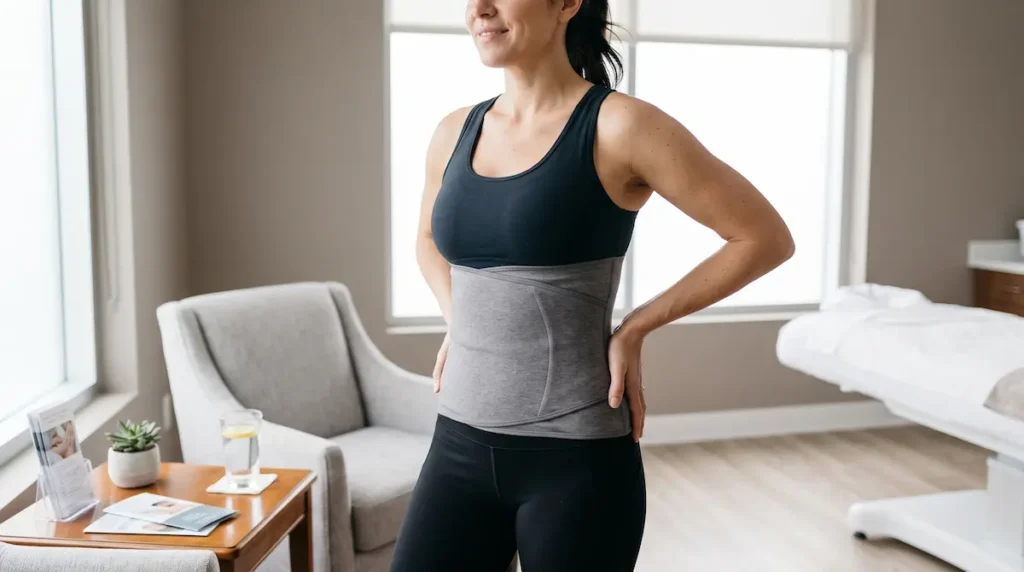
A compression garment helps control swelling and supports the treated tissues while they settle. It should feel firm, not painfully tight. If it digs into the waist or creates folds, it can mark the healing tissue instead of helping it.
Swelling after flank lipo can feel uneven. One side may look puffier. The lower back may feel firm. The waist may look smoother in the morning and fuller later in the day. These changes are common in the early recovery phase.
The important point is trend, not perfection. Bruising, tenderness, and firmness should gradually improve. Increasing redness, intense one-sided pain, fluid leakage, fever, or a sudden change in shape should be reported to the surgical team.
Returning to activity
Light walking is encouraged early because it supports circulation and reduces stiffness. Strenuous exercise should wait until the surgeon clears you. Core work, heavy lifting, intense twisting, and high-impact training can stress the healing flank tissues too soon.
For Canadian patients travelling to Istanbul, flight planning should be part of the recovery discussion before surgery. Many patients route through YYZ or another Canadian hub, then return home with written aftercare instructions and remote follow-up. The timing should be individualized.
The safest recovery plan is specific. It should tell you when to shower, how to wear compression, how long to avoid exercise, what medications to take, and which symptoms should trigger contact with the clinic. Guesswork is not aftercare.
Canadian patient note: Before you travel, ask how your flank zone will be marked, what compression garment you will need, how long you should avoid intense activity, and how remote follow-up will be handled after you return to Canada. AKM Clinic’s international care pathway includes 1-, 3-, 6-, and 12-month virtual follow-up, with treatment planning led by the surgical team in Istanbul.
Weight stability after love handle liposuction
Removed fat cells do not grow back in the same way, but remaining fat cells can still enlarge if weight increases. That means the waistline can change after surgery. Flank liposuction is best protected by a stable, realistic routine rather than extreme dieting.
A small weight fluctuation may not erase the result. Larger changes can alter the abdomen, back, hips, and untreated areas, making the waistline look different. This is why surgeons usually prefer patients to be near a maintainable weight before treatment.
Think of the procedure as contour editing, not body control. Surgery can refine a stubborn zone. It cannot replace the habits that keep the contour stable.
Cost, planning, and what belongs in a separate consultation
Cost is a valid question, but it should not dominate a flank-specific article. The fee depends on the number of zones, technique, anesthesia plan, facility, garment needs, travel logistics, and whether flank-only treatment is enough. A price table here would blur the purpose of this guide.
For the current Canadian pricing pathway, use the dedicated page for the liposuction price list. Keep the flank consultation focused on anatomy, skin quality, and whether the result you want can be achieved safely.
AKM Clinic’s body-contouring pathway includes surgery, hospital care, hotel stay, VIP transfers, post-operative medication, compression garment support, and scheduled virtual follow-up within the all-inclusive model. International flights and personal expenses are separate. Details should be confirmed in your written plan.
Frequently Asked Questions: Flank Liposuction
These questions address the most common decision points around flank liposuction for Canadian patients. The answers stay focused on love handles and the side waist, rather than general liposuction, full torso sculpting, or package pricing.
Does flank liposuction get rid of love handles?
Is flank lipo the same as lipo 360?
How much fat can be removed from the flanks?
Will my skin sag after flank liposuction?
Is flank liposuction different for men?
Is muffin top liposuction the same procedure?
How long is recovery after flank lipo?
Can flank liposuction help with waistline liposuction goals?
Final Thoughts: A Smoother Waistline Starts With the Right Zone
Flank liposuction is most useful when the problem is specific: stubborn love handles, stable weight, and skin that can contract. It can refine the side waist, improve clothing fit, and soften the transition into the hips and lower back. The best results are balanced, not overdone.
For Canadian patients, the decision should come down to anatomy and planning. Ask whether your fullness is truly flank fat, whether your skin will respond well, and whether flank-only treatment matches your goal. If the answer is yes, love handle liposuction can be a precise way to smooth the waistline.
AKM Clinic is based in Istanbul and works with an international patient pathway, and its patient reviews are publicly visible on Trustpilot. Results vary individually, and no article can replace a personal surgical assessment.
Ask AKM Clinic whether your flanks are a liposuction-only zone or part of a bigger contouring plan.
Have Specific Questions About Liposuction?
Chat directly with our dedicated patient coordinators about your Liposuction. Whether you're weighing your options from Ontario, British Columbia, or Alberta, you'll get clear, personalized answers — straight from the team who will look after you, not a call centre.
Medical disclaimer: This article is for educational purposes only and does not replace medical advice, diagnosis, or a consultation with a qualified surgeon. Every patient’s anatomy, healing process, and result are different.
Related Procedures
Awake Abdominal Etching
A Canadian patient guide to awake abdominal etching in Istanbul: pure local anesthesia, comfort, recovery, cost, safety, and fit-to-fly planning.

Awake Mommy Makeover
Explore awake mommy makeover in Turkey for Canadians. Learn which postpartum procedures suit local anesthesia, and AKM’s all-inclusive CAD pricing.
Awake Tummy Tuck
Awake tummy tuck in Turkey from CAD $7,500. Learn candidacy, local anesthesia limits, recovery, and Canada-to-Istanbul care.
Awake High-Def Liposuction
Awake high-definition liposuction in Turkey for Canadians. Learn how tumescent local anesthesia works, who is a good candidate, recovery time, cost vs Canada.
Ready to Begin Your Journey?
Join the more than 2,000 patients who have trusted Dr. Akif Mehmetoğlu and the AKM Clinic team. Your journey begins with an informative, no-obligation conversation. Contact us today from across Canada to schedule your complimentary virtual consultation.
#1: Receive Your Personalized Quote
Start with a complimentary, no-obligation virtual consultation. Share your photos, and our surgical team will provide a fully personalized treatment plan and a transparent, all-inclusive pricing package quoted in Canadian dollars (CAD). There are no hidden fees.
#2: Secure Your Procedure Date
Once you are ready to proceed, our dedicated English-speaking patient coordinators will help you secure your procedure date. We will manage your logistical bookings in Istanbul, including your five-star hotel and private airport transfers.
#3: Arrive in Istanbul & Meet Your Surgeon
Arrive at Istanbul Airport (IST), where you will be greeted by your private driver. Settle into your hotel before your comprehensive in-person consultation. You will meet your specialist surgeon to finalize the details of your procedure and ensure your goals are aligned for a natural, subtle result.