
Fibrosis After Liposuction: Why Hard Lumps Form and How They're Treated
AI Summary
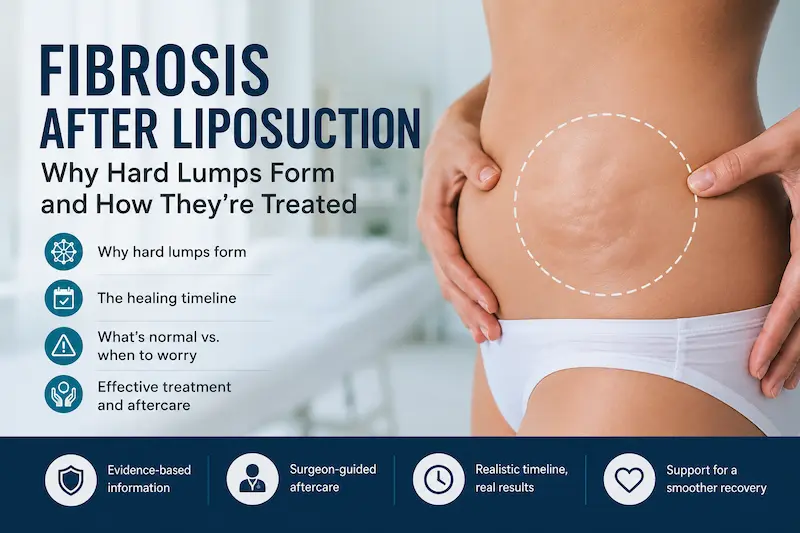
- Fibrosis after liposuction often feels like firm lumps as collagen heals beneath the skin.
- Typical recovery timeline spans weeks to months, with gradual softening often continuing up to one year.
- Safe aftercare includes surgeon-guided compression, monitoring, and approved manual lymphatic drainage when appropriate.
- Warning signs like increasing pain, heat, redness, fever, or drainage need prompt medical review.
Summary generated by AI, fact-checked by our medical experts
Fibrosis after liposuction is a firm, lumpy healing response that can happen when the treated fat layer repairs itself with new collagen. It often feels like hard patches under the skin, especially in the first weeks to months, and usually softens gradually with proper aftercare, compression, and surgeon-guided management.
Feeling hard lumps after liposuction can be unsettling, particularly when the swelling has started to go down but the tissue still feels uneven. Many patients expect the treated area to feel smooth as soon as bruising fades. In real recovery, the deeper layer can feel firm, tight, ropey, or “stuck” before it relaxes.
This guide explains what fibrosis is, why it forms, how it differs from swelling or loose skin, and what the usual lipo fibrosis timeline looks like. It is not a full procedure guide; for the surgical method itself, see AKM’s liposuction approach in Turkey. Here, the focus stays on one concern: firm post-lipo lumps and what they mean.
For Canadian patients travelling for surgery, this question matters even more. You need to know what can be watched calmly from home, what should be documented with photos, and what should be raised with your surgical team before it becomes a bigger contour problem.
Table of Contents
What Fibrosis After Liposuction Is?
Fibrosis is part of the body’s repair process after tissue has been disrupted. After liposuction, the fat layer is not just “emptied”; it has to heal. As that healing happens, temporary firmness can develop where the body lays down collagen, drains fluid, and reorganizes the treated layer under the skin.
Collagen and the normal healing response
Collagen is the structural protein your body uses to repair tissue. After a controlled surgical injury, collagen acts almost like internal scaffolding. It helps the area close, stabilize, and rebuild.
That process is useful. The problem is that early collagen can feel stiff before it matures. In the first phase of healing, the tissue may feel rubbery, ridged, or nodular. It may not hurt, but it can feel strange under your fingers.
In most patients, this does not mean something has gone wrong. It means the healing layer is still active. The key question is whether the firmness is gradually improving, staying the same, or becoming more painful, red, hot, or sharply uneven.
Why the treated layer feels firm
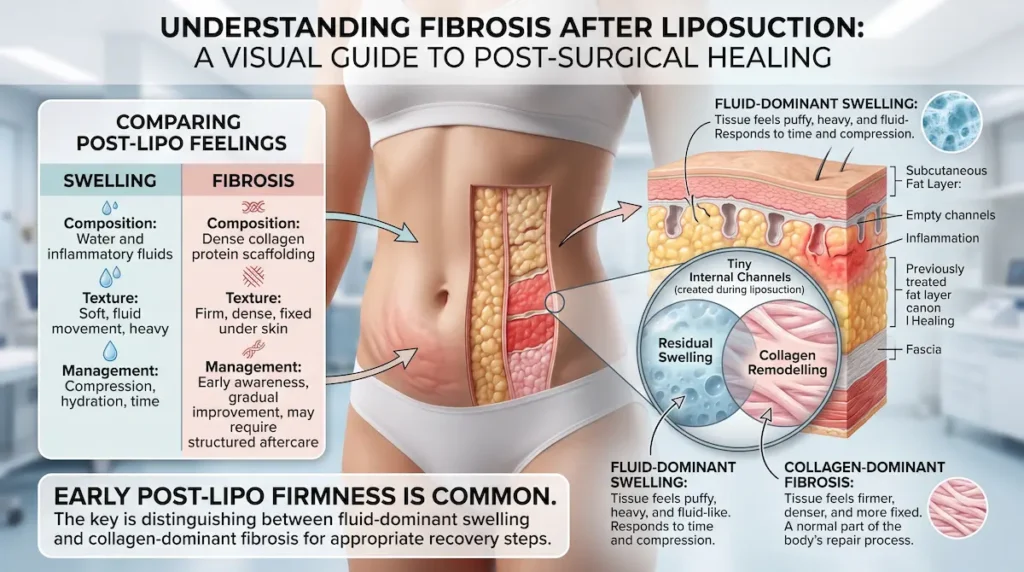
Liposuction works in the subcutaneous fat layer, which sits between the skin and the deeper muscle fascia. When fat is removed, tiny internal channels are created. The body then responds with swelling, fluid movement, inflammation, and collagen remodelling.
That combination can make the area feel firmer than expected. The skin may glide less freely over the tissue. Some spots may feel like small beads, cords, or plaques. Other areas may feel generally tight rather than individually lumpy.
Early firmness is often most noticeable when you stand, stretch, massage the area, or compare one side with the other. The feel can change during the day, especially after travel, a salty meal, long sitting, or increased activity.
Fibrosis vs swelling vs loose skin
Fibrosis, swelling, and loose skin can look similar from the outside, but they feel different. Swelling usually feels puffy, heavy, or fluid-like. Fibrosis feels firmer, denser, and more fixed. Loose skin feels soft, crepey, or empty rather than hard.
This distinction matters because each issue has a different management path. Swelling usually responds to time, compression, walking, and fluid balance. Fibrosis may need more structured aftercare. Loose skin is a separate skin-quality question, which is why we cover it separately in how loose skin differs from fibrosis.
A simple way to think about it: swelling is fluid-dominant, fibrosis is collagen-dominant, and loose skin is elasticity-dominant. Patients can have more than one at the same time, which is why a photo-only assessment can miss details that a hands-on exam would catch.
Why Hard Lumps Form?
Hard lumps form when healing tissue, swelling, uneven fluid drainage, and collagen remodelling overlap. The process is usually gradual rather than sudden. In many cases, the firmness becomes more noticeable after the first swelling wave settles, because the deeper healing texture is easier to feel.
Normal collagen remodelling
The body does not heal in a perfectly flat sheet. It repairs in layers, and those layers mature at different speeds. Some zones become soft quickly; others remain dense for longer.
This is why one side can feel smoother than the other even when the same technique was used. The body’s inflammatory response, local blood supply, lymphatic drainage, tissue thickness, and movement all affect how the collagen settles.
Early collagen is also less organized. Over months, it remodels. That is when many patients notice that firm ridges flatten, tender spots calm down, and the skin begins to move more naturally over the deeper tissue.
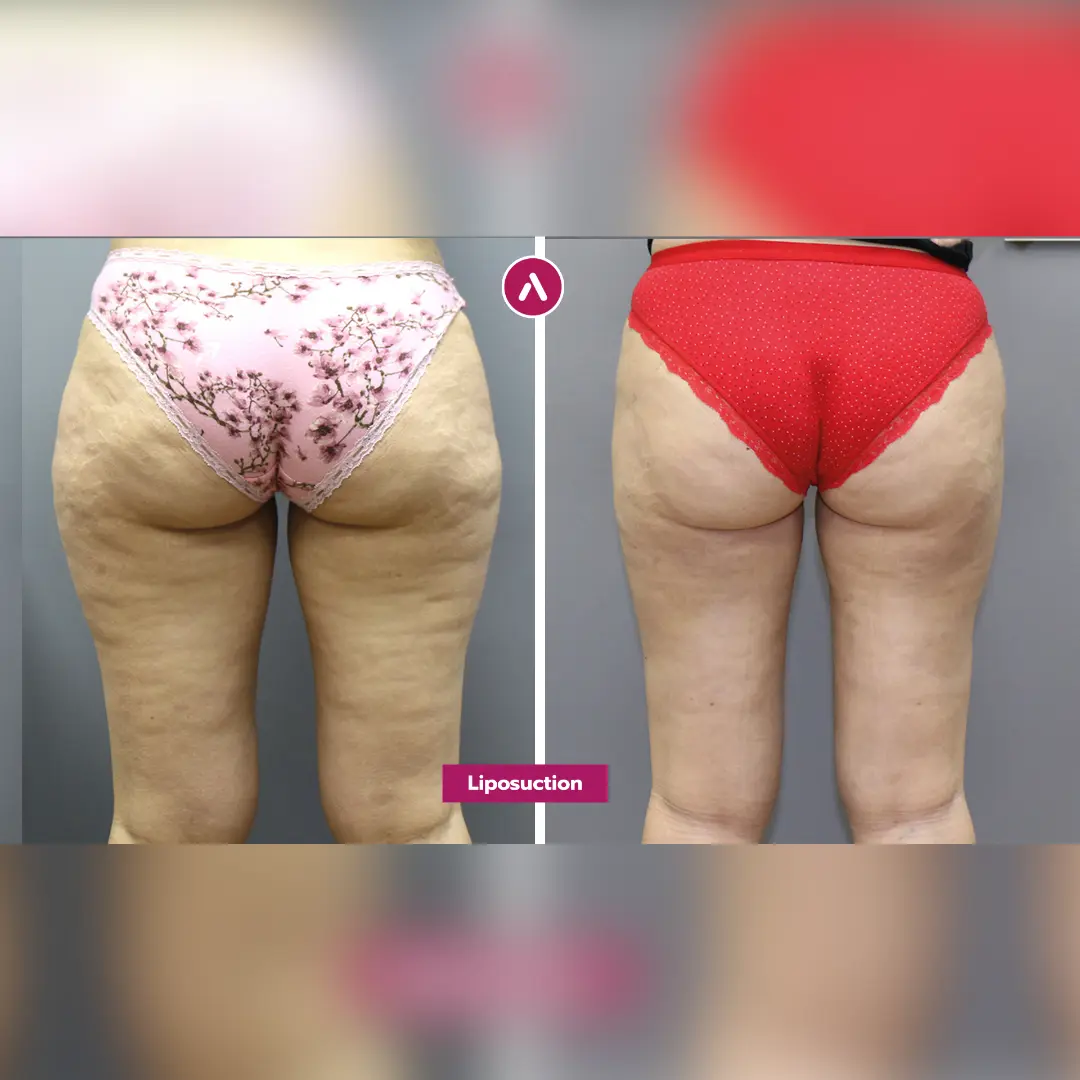
Technique, aftercare, and compression factors
Surgical technique matters. Gentle, even fat removal can reduce unnecessary trauma, while aggressive or uneven treatment can increase inflammation in the layer being contoured. That does not mean every firm patch is caused by technique. It means technique is one of several variables.
Aftercare also matters. Compression garments are usually used to support the treated layer, reduce swelling, and help the tissues settle while healing is active. Wearing the garment incorrectly, stopping too soon, or using a garment that folds into the skin can contribute to uneven pressure points.
Activity timing can also change how the area feels. Too much too soon may increase swelling and make firmness more obvious. Too little movement can slow fluid movement. The safest balance is not guesswork; it should be set by your surgical team based on the area treated, the volume removed, and your recovery progress.
Why some areas are more prone
Fibrosis can happen after liposuction in many body areas, but it is often easier to notice where the skin is thin, the contour is visible, or the tissue moves with daily activity. Arms, lower abdomen, flanks, inner thighs, and delicate pubic-area contouring can all reveal small changes in texture.
For example, arm contouring can make firmness feel more obvious because the skin is relatively mobile and the area is used constantly. We discuss the expectations for that region in area-specific liposuction results.
Delicate zones can be even less forgiving. In smaller treatment areas, a tiny amount of swelling or scar-like firmness can feel disproportionate because there is less tissue to hide it. That is why aftercare planning is especially important in sensitive zones such as fibrosis in delicate areas.
Body type also plays a role. A patient with thicker, denser tissue may feel broad firmness. A leaner patient may notice smaller, sharper lumps. Neither pattern automatically means the final result is poor; it means the healing layer needs time, monitoring, and the right level of support.
The Typical Timeline
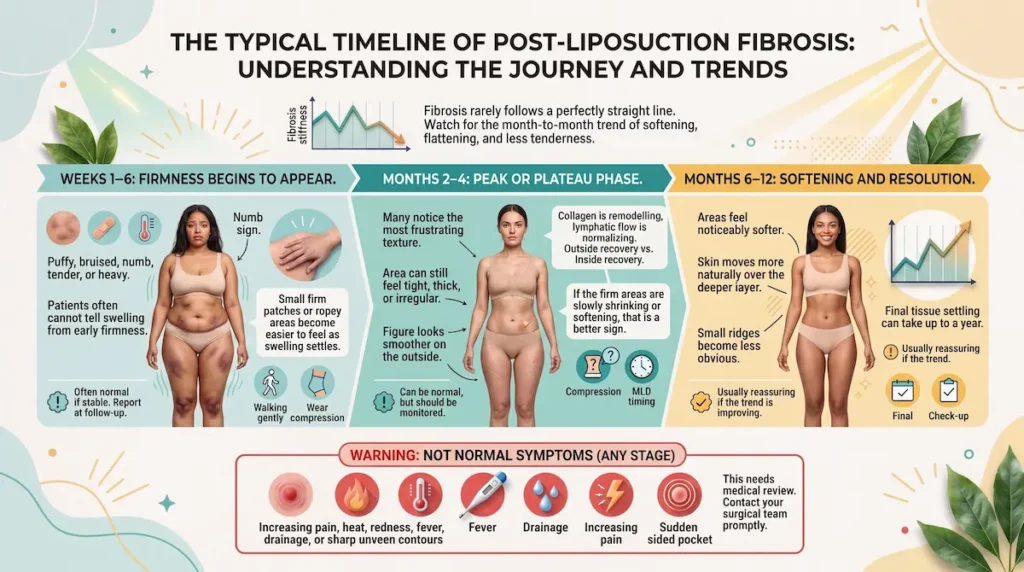
Fibrosis rarely follows a perfectly straight line. It can feel better for a few days, then tighter again after a flight, a long workday, or a change in activity. The useful pattern to watch is the month-to-month trend: the area should slowly become softer, flatter, and less tender.
Weeks 1–6: firmness begins to appear
During the first week, swelling usually dominates the picture. The area may feel puffy, bruised, numb, tender, or heavy. At this stage, patients often cannot tell what is swelling and what is early firmness because everything feels inflamed.
As the first wave of swelling settles, firmer patches can become easier to feel. This is the point where many patients say they are lumpy after lipo. The skin may look smoother in clothing, but the deeper layer feels uneven to the touch.
Firmness during weeks one to six is often expected, especially when it is mild to moderate, not worsening rapidly, and not paired with spreading redness, heat, fever, or drainage. It should still be reported at follow-up, but it is not automatically a sign of a bad result.
Months 2–4: peak or plateau phase
Many patients notice the most frustrating texture during months two to four. The bruising may be gone. The incisions may look healed. Yet the treated area can still feel tight, thick, or irregular.
This phase can feel confusing because the outside recovery looks “done” before the inside recovery is finished. Collagen is still remodelling, lymphatic flow is still normalizing, and the tissue is still adapting to its new contour.
If the firm areas are slowly shrinking or softening, that is a better sign than expecting them to disappear overnight. If they are becoming sharper, more painful, fixed in one pocket, or visibly pulling the skin inward, your surgeon should reassess them.
Months 6–12: softening and resolution
By six months, many areas feel noticeably softer. The skin usually moves more naturally over the deeper layer, and small ridges often become less obvious. Some patients continue to feel subtle firmness beyond this point, especially after larger-volume liposuction or treatment in thinner-skinned areas.
Final tissue settling can take up to a year. That does not mean every lump should be ignored until month twelve. It means the timeline needs context: gradual softening is usually reassuring, while worsening hardness or a sharply uneven contour deserves earlier review.
Canadian patients should also think practically about documentation. Clear photos in consistent lighting, notes about tenderness, and a simple timeline of when the lump appeared can help your surgical team assess progress remotely before deciding whether an in-person review is needed.
| Stage | Typical Firmness | Usually Normal? | Supportive Action |
|---|---|---|---|
| Week 1 | Puffy, bruised, swollen, tender; firmness may be hard to separate from swelling | Often normal if symptoms are stable and there are no infection signs | Wear compression as instructed, walk gently, follow wound-care directions |
| Weeks 2–6 | Small firm patches, ropey areas, uneven texture under the skin | Often normal when gradually improving | Keep follow-up photos, avoid aggressive self-massage unless cleared |
| Months 2–4 | Firmness may peak or plateau; lumps may feel more obvious as swelling drops | Can be normal, but should be monitored | Ask your surgeon about compression, manual lymphatic drainage timing, and review needs |
| Months 6–12 | Most areas soften; mild residual tightness may remain in some zones | Usually reassuring if the trend is improving | Continue scheduled follow-up; discuss persistent contour concerns |
| Any stage | Increasing pain, heat, redness, fever, drainage, sudden swelling, or one-sided fluid pocket | No — this needs medical review | Contact your surgical team promptly and seek local urgent care if systemic symptoms appear |
Most post-liposuction firmness is not judged by how it feels on one anxious afternoon. It is judged by trend: softer month by month is reassuring; hotter, redder, sharper, or more painful is not.
What’s Normal vs Worth Flagging?
The safest approach is neither panic nor dismissal. Mild firmness can be part of normal healing, but some symptoms need a surgeon’s attention. A good recovery plan gives you both: reassurance for expected tissue changes and clear thresholds for when to ask for help.
Normal firmness and unevenness
Normal post-lipo firmness tends to be broad, mildly tender, and changeable. It may feel worse at the end of the day and calmer in the morning. It may also shift as swelling moves through the area.
Common normal patterns include small firm nodules, temporary ridges, tightness when stretching, mild numbness, and uneven texture that improves slowly. The area may look slightly different from side to side, especially while swelling is still present.
Colour changes from bruising can also make the contour look more dramatic early on. In en-CA terms, patients may describe purple, yellow, or greenish bruising during the early healing phase. Bruising colour alone is less concerning than heat, spreading redness, foul drainage, or a feverish feeling.
Signs to raise with a surgeon
Contact your surgeon if firmness is getting worse rather than better, if one lump becomes sharply defined, or if the skin starts to look tethered, dimpled, or pulled inward. These signs do not always mean a serious complication, but they do deserve assessment.
You should also raise increasing pain, new warmth, spreading redness, unusual discharge, fever, or a sudden one-sided swelling pocket. These symptoms can suggest problems outside routine fibrosis, including infection, fluid collection, or another post-operative issue.
For Canadian patients recovering after travel, the threshold for communication should be low. Send photos early. Explain when the lump appeared, whether it is painful, and whether the area is changing. If you feel systemically unwell, seek local medical care rather than waiting for a virtual reply.
How it differs from a seroma or contour irregularity
A seroma is a fluid collection, so it often feels more like a soft pocket, wave, or balloon-like swelling than a dense collagen lump. It may appear suddenly or become more obvious when you change position. A surgeon may need to examine or drain it depending on size and symptoms.
A contour irregularity is a visible unevenness in shape. It can be caused by swelling, fibrosis, skin laxity, uneven fat removal, or a mix of factors. Early contour irregularity is not always final because swelling and firmness can distort the surface for months.
Fibrosis is mainly a texture issue within the healing layer. It may create visible unevenness, but the key feature is firm, dense tissue under the skin. That is why accurate diagnosis matters: treating every lump as “just swelling” can delay care, while treating every firm spot as a permanent contour problem can create unnecessary fear.
Before assuming the final result, compare the texture, pain level, skin movement, and month-to-month trend. A stable or improving area usually has a different meaning than a new, painful, enlarging lump.
How Fibrosis Is Managed?
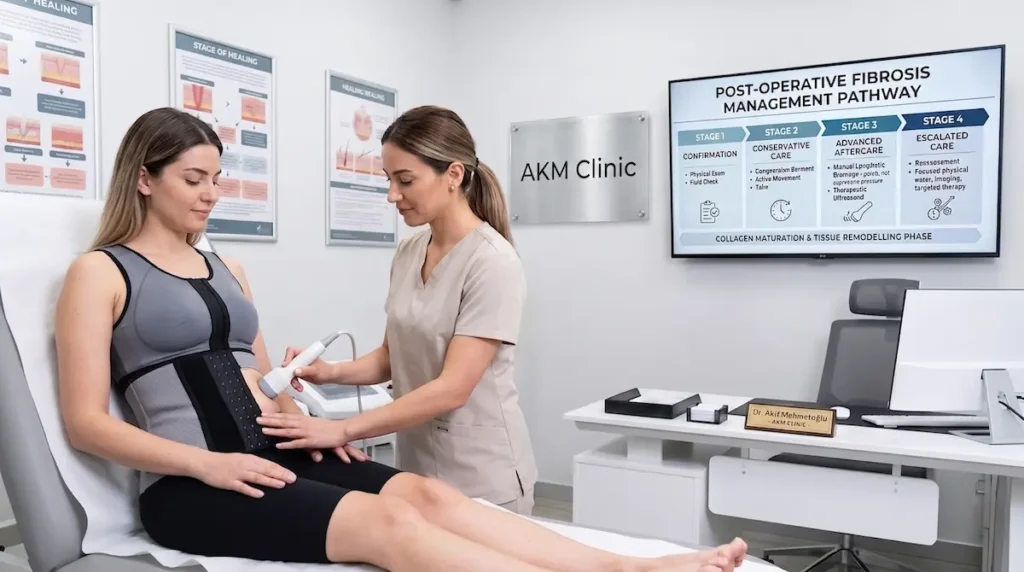
Fibrosis management is usually staged. The first step is confirming that the firmness matches normal healing rather than a fluid collection, infection, or a contour issue that needs closer review. From there, treatment is typically conservative first: time, compression, controlled movement, and surgeon-cleared therapy when appropriate.
Manual lymphatic drainage and ultrasound
Manual lymphatic drainage is a gentle, structured technique intended to support fluid movement after surgery. It is not the same as deep tissue massage. After liposuction, aggressive pressure too early can irritate healing tissue, increase swelling, or make tenderness worse.
Some surgeons recommend MLD in the early recovery period, while others adjust timing based on bruising, incision healing, treatment area, and how much fat was removed. The important point is clearance. Do not start forceful massage because a video or forum says it “breaks up fibrosis.”
Clinical literature has explored manual lymphatic drainage combined with therapeutic ultrasound after liposuction and lipoabdominoplasty, with one study reporting reduced swelling and tissue fibrosis in the post-operative period. That does not make it a universal cure, but it supports why structured, clinician-directed aftercare can matter. You can read more about the dedicated aftercare topic in lymphatic drainage massage and how it helps, and the supporting clinical study here: research on lymphatic drainage and tissue fibrosis.
Compression and time
Compression helps support the treated layer while swelling and tissue remodelling are active. It can also make the area feel more stable, especially during walking, sitting, or travel. A well-fitted garment should feel supportive, not painfully tight, folded, or cutting into the skin.
Canadian post-operative guidance from MyHealth Alberta notes that liposuction areas are often wrapped with a compression garment or elastic bandages to help reduce swelling, bruising, and pain. The exact duration should still come from your surgeon, because different areas and techniques need different plans. For a Canadian recovery benchmark, see MyHealth Alberta’s liposuction aftercare guidance.
Time is not passive. It is an active part of collagen maturation. During this period, your job is to protect the area, follow compression instructions, walk regularly, avoid smoking, stay hydrated, and keep follow-up appointments.
When a clinician escalates care
If firmness persists, worsens, or creates a visible contour issue, your clinician may reassess the area in more detail. That might include a physical exam, ultrasound imaging, modified compression, targeted therapy, or a longer observation period. The right next step depends on what the lump actually is.
Revision is not the first answer for early firmness. Most surgeons avoid judging final contour too soon because swelling and collagen remodelling can distort the result for months. Early over-treatment can create new problems.
Escalation becomes more relevant when there is persistent tethering, a clear indentation, painful scar-like bands, or a stable contour irregularity that remains after the normal settling window. Even then, the plan should be individualized rather than rushed.
Canadian patient note: Before you fly home, ask your surgical team to document your compression schedule, when MLD is safe to begin, which symptoms require urgent contact, and how virtual follow-up will work from Canada. Use an RCPSC-equivalent European Board-Certified surgical framework as your credential benchmark, not vague marketing language.
Cost can also affect aftercare planning, but this article is not a pricing guide. For procedure-specific CAD information, use the dedicated page on liposuction cost in CAD rather than estimating from unrelated packages or exchange rates.
Frequently Asked Questions: Fibrosis After Liposuction
These are the questions patients most often ask when the treated area feels hard, uneven, or slower to settle than expected. The answers below are general education only; your own surgeon’s instructions should take priority because they know your technique, treatment areas, and recovery details.
Why do I have hard lumps after lipo?
Is fibrosis after liposuction normal?
How long does lipo fibrosis last?
Will fibrosis go away on its own?
Can massage help hard lumps after liposuction?
When should I worry about a hard lump?
Final Thoughts
Fibrosis after liposuction can feel alarming, but it is often a temporary part of the deeper healing process. The most useful question is not “Do I feel anything firm?” but “Is the firmness improving, stable, or getting worse?” That trend gives your surgeon much more useful information.
A safe recovery plan should include clear compression instructions, realistic expectations about the lipo fibrosis timeline, guidance on manual lymphatic drainage, and a way to communicate concerns from Canada. This is where structured follow-up matters.
If you are planning liposuction abroad, ask AKM how post-lipo firmness is monitored, how fibrosis risk is reduced, and what aftercare steps are recommended before you return home. A virtual consultation can help you understand whether your treatment area, tissue quality, and travel schedule fit a safe recovery plan.
Medical disclaimer: This article is for general educational purposes only and is not a substitute for medical advice, diagnosis, or treatment. Recovery timelines and results vary by patient. Always follow your surgeon’s instructions and consult a qualified healthcare professional if you have concerning symptoms.
Related Procedures



Ready to Begin Your Journey?
Join the more than 2,000 patients who have trusted Dr. Akif Mehmetoğlu and the AKM Clinic team. Your journey begins with an informative, no-obligation conversation. Contact us today from across Canada to schedule your complimentary virtual consultation.
#1: Receive Your Personalized Quote
Start with a complimentary, no-obligation virtual consultation. Share your photos, and our surgical team will provide a fully personalized treatment plan and a transparent, all-inclusive pricing package quoted in Canadian dollars (CAD). There are no hidden fees.
#2: Secure Your Procedure Date
Once you are ready to proceed, our dedicated English-speaking patient coordinators will help you secure your procedure date. We will manage your logistical bookings in Istanbul, including your five-star hotel and private airport transfers.
#3: Arrive in Istanbul & Meet Your Surgeon
Arrive at Istanbul Airport (IST), where you will be greeted by your private driver. Settle into your hotel before your comprehensive in-person consultation. You will meet your specialist surgeon to finalize the details of your procedure and ensure your goals are aligned for a natural, subtle result.