Breast lift scars are permanent, but they do not stay the way they look in the early weeks. Most mastopexy scars are pink, firm, slightly raised or itchy at first, then gradually flatten and fade over 12 months or longer. At one year, they are usually much paler and softer, although final scar maturity can continue beyond that point.
If you are considering AKM's breast uplift surgery, understanding the scar timeline before you travel helps you judge your healing calmly. A breast lift, or mastopexy, reshapes and lifts existing breast tissue; it does not follow exactly the same scar pattern or healing logic as a breast reduction.
This guide focuses only on breast lift scarring: where the scars sit, how they usually change week by week, what is normal at one year, and which signs deserve a surgeon's review. It does not open the full procedure, implant choices, pricing, or before-and-after galleries.
Scar maturation is slow. The scar you see at six weeks is not the scar you should judge at one year.
Table of Contents
Where Breast Lift Scars Sit
Breast lift scars sit where the surgeon needs access to remove loose skin, reshape the breast envelope and reposition the nipple-areola complex. The more skin laxity there is, the more incision length is usually required. That does not mean a longer scar is automatically a worse scar; it means the scar pattern has to match the amount of lift needed.
In UK consultations, this is often discussed as “breast uplift” scarring. The key point is simple: the incision pattern should be chosen for your anatomy, not for the shortest-looking scar on paper.
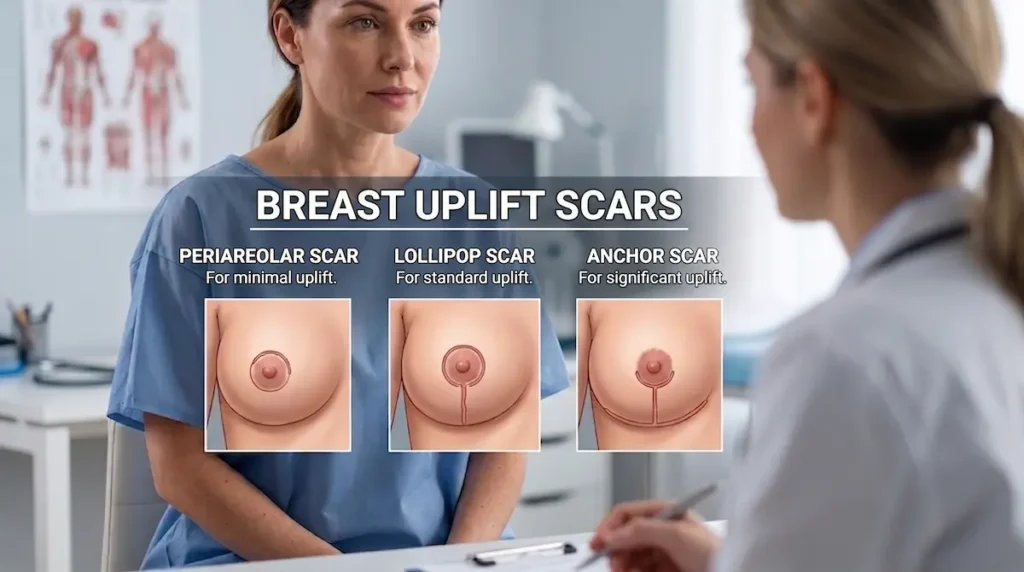
Periareolar or donut scars
A periareolar scar runs around the edge of the areola, where the colour transition between areola and surrounding breast skin can help the scar blend over time. This pattern is usually reserved for very mild lifting, because it has limited power to reshape significant sagging.
Early on, the circular scar can look puckered or slightly pleated. That can be unsettling. In many cases, this softens as swelling settles and the skin relaxes, but the final appearance depends on skin quality, tension and how the scar matures.
Lollipop or vertical scars
A lollipop scar goes around the areola and then vertically down to the breast crease. This is one of the most common breast lift scar patterns because it gives the surgeon more control over breast shape than a donut lift, without always needing a full anchor incision.
The vertical line often causes the most worry in the first few months because it is visible when you look straight at the breast. It may be pink, firm or slightly raised at first. By one year, it is often flatter and paler, although some patients continue to see improvement after 12 months.
Anchor or inverted-T scars
An anchor scar includes the areola circle, the vertical line and a horizontal scar hidden along the breast crease. This pattern is usually used when there is more significant sagging, stretched skin or post-weight-loss looseness.
Because an anchor pattern has more total scar length, it needs careful expectation-setting. The crease scar is often easier to hide in a bra or bikini top, while the vertical scar is more visible early on. If you are comparing scar patterns, it may help to understand how breast reduction scars differ, because reduction surgery removes breast volume as well as lifting tissue.
How lift technique affects scar length
Scar length is not chosen in isolation. A small lift may only need a periareolar approach, while a larger lift after pregnancy, ageing or weight loss may need a lollipop or anchor pattern to avoid a flattened, stretched or poorly supported result.
This is also where implant-free planning matters. If your goal is a lifted shape using your own tissue, rather than adding volume, your surgeon may discuss a breast lift without implants and how that affects shape, projection and scar placement.
The Week-by-Week Timeline
Breast lift scars change in phases. The first few weeks are about wound closure and swelling control. The middle months are about collagen remodelling, which can make scars look firmer or more colourful before they improve. The one-year mark is usually when patients can judge the result more fairly, although scars may keep softening after that.
The timeline below is a guide, not a promise. Your healing can vary depending on skin tone, genetics, smoking history, nutrition, tension on the incision, aftercare and whether the lift was combined with another procedure.
| Stage | Typical scar appearance | Usually normal? | Supportive action |
|---|---|---|---|
| Weeks 1–3 | Fresh incision lines, dressings or surgical tape, swelling, bruising and mild tightness | Yes, if there is no spreading redness, discharge, fever or worsening pain | Keep dressings dry as instructed, wear your support bra and avoid tension on the incisions |
| Weeks 4–8 | Pink, red or purple-looking scars; firmness, itchiness or mild raising | Often yes; this is commonly the “looks worse before better” phase | Ask your surgeon when to start silicone gel or sheets; do not treat open or irritated wounds |
| Months 3–6 | Scars begin flattening; colour slowly softens; firmness reduces | Yes, gradual fading is expected | Continue scar care consistently and protect the area from sun exposure |
| Months 9–12 | Paler, softer, flatter scars; some residual colour may remain | Usually yes | Assess progress at follow-up; avoid judging the final scar too early |
| 12–18 months | Further maturation; scars may continue becoming lighter and less noticeable | Yes, especially for thicker or darker early scars | Discuss persistent raised, painful or widening scars with your surgeon |
Weeks 1–3: fresh, taped and swollen
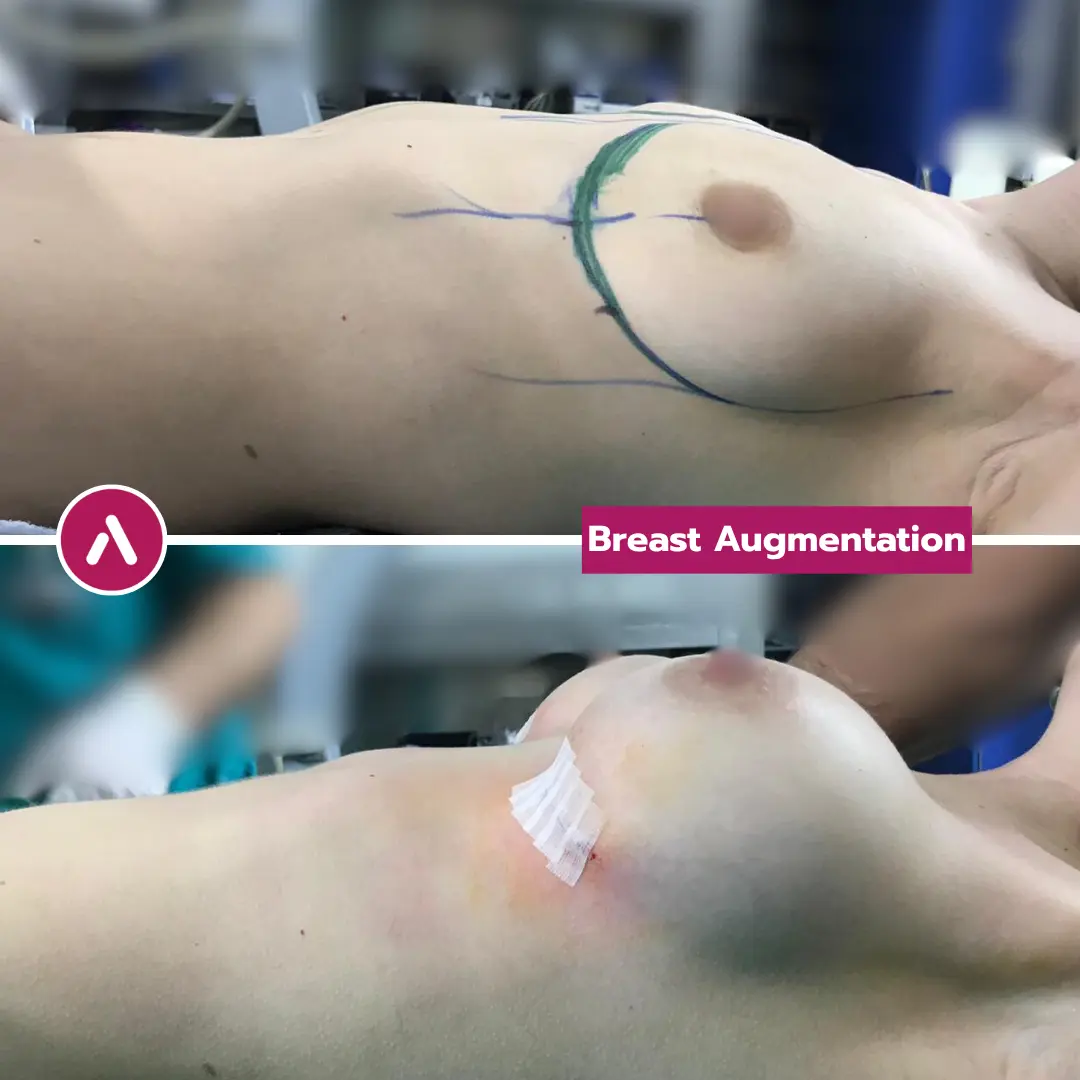
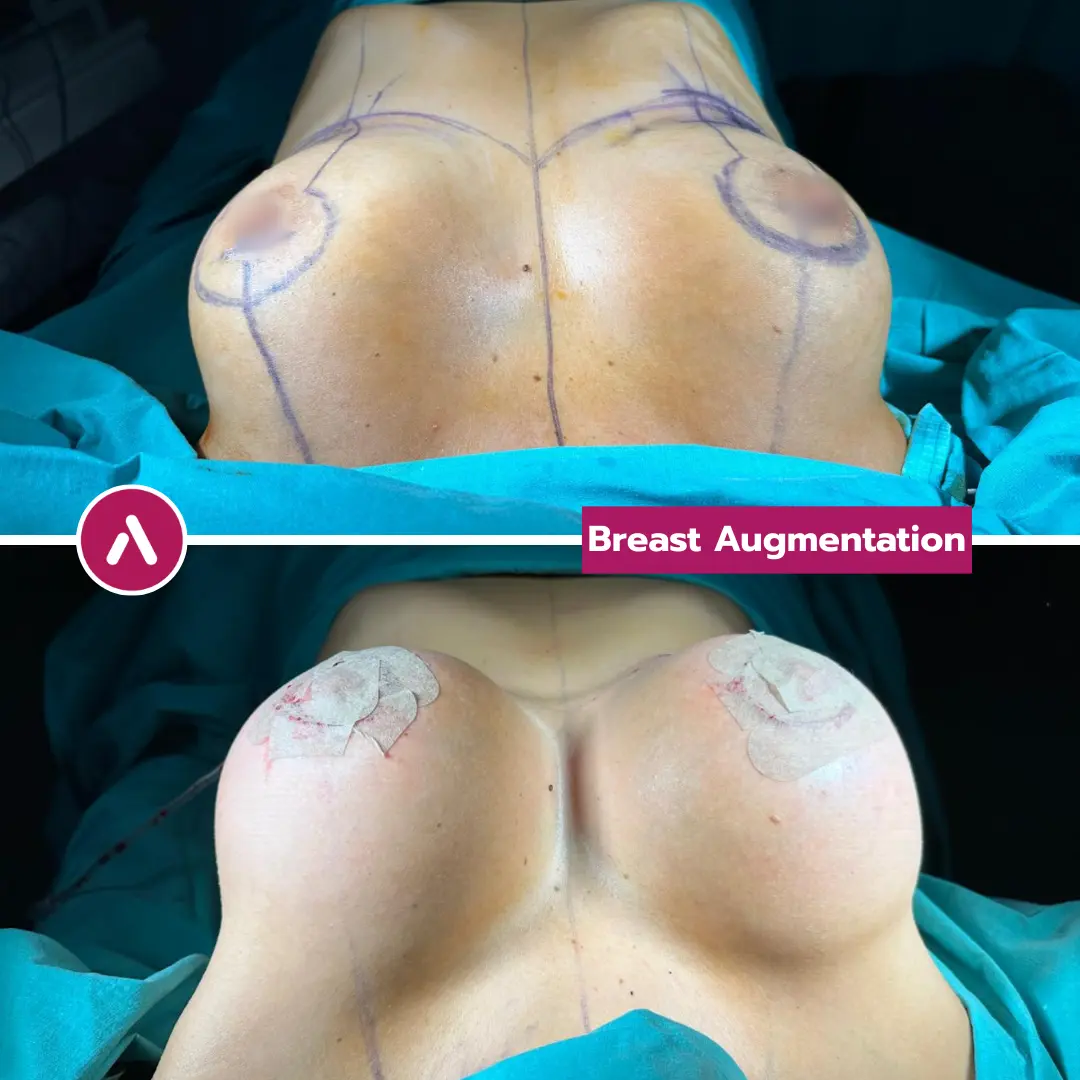
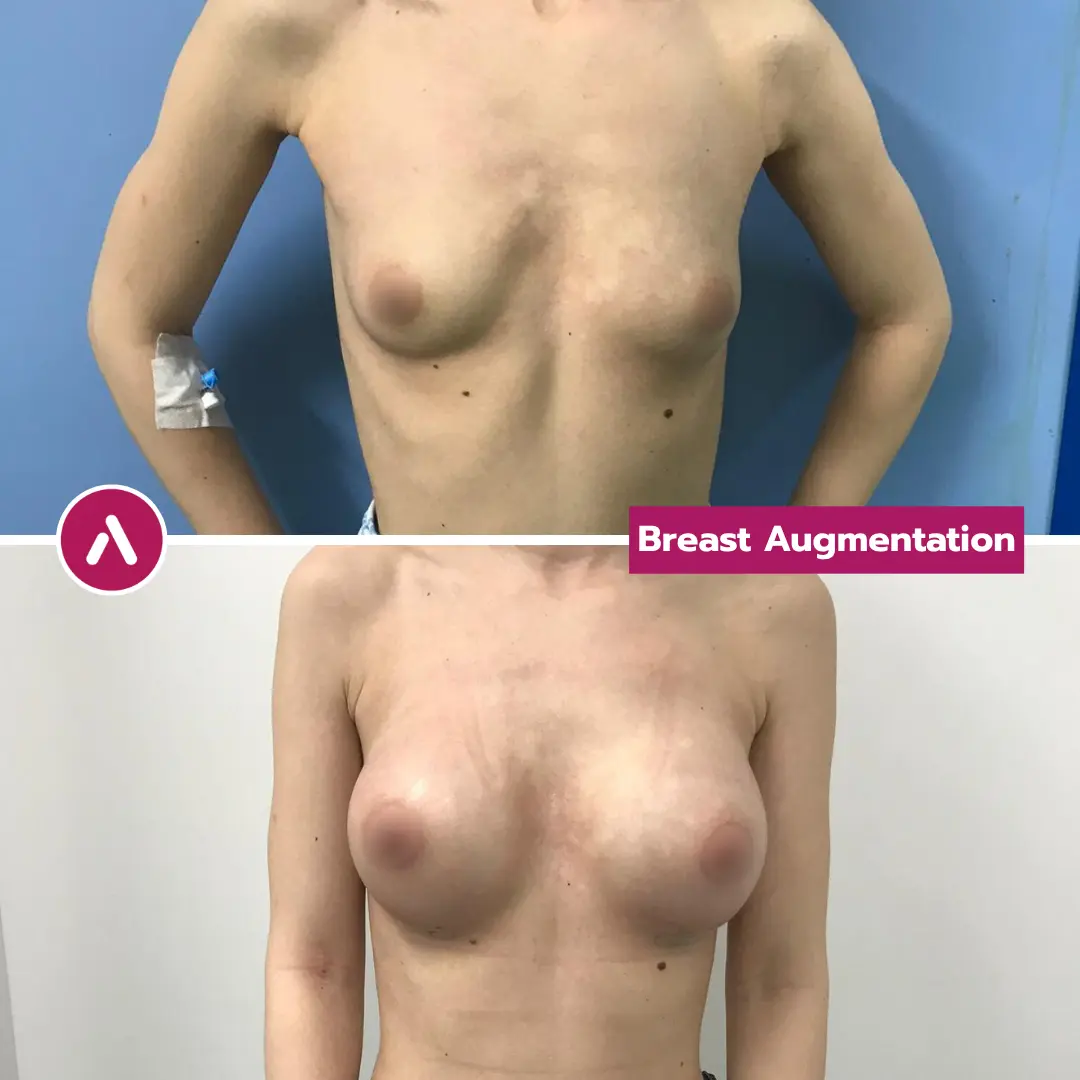
In the first three weeks, your scars are not really “scars” yet in the way most patients think of them. They are healing incision lines. They may be covered with tape, glue, dressings or a surgical bra, and the surrounding breast skin may feel tight or swollen.
Some bruising, mild oozing in the very early days and tenderness can be part of normal recovery. What you should not do is peel tape early, apply scar products before the wound is closed, or compare the incision lines to final-result photos. It is too soon.
Weeks 4–8: the raised, pink phase
This is the stage that catches many patients off guard. Just when the breast shape starts to feel more settled, the scars can look more noticeable. They may become pinker, firmer, slightly raised or itchy.
That does not automatically mean poor healing. It is often part of collagen production. The body is building strength across the incision, and that repair process can briefly make the scar look more active before it calms down.
This is also when patients who have had a lift after major weight loss may notice more tension along the scar lines because skin quality can be thinner or less elastic. In that situation, understanding how breast uplift after weight loss affects healing can help set a more realistic timeline.
Months 3–6: flattening and softening
By months three to six, many breast uplift scars start to feel less firm. The colour may shift from bright pink or purple towards a softer pink, brown or pale line, depending on your natural skin tone.
The scar may still be visible. That is expected. At this stage, the aim is steady progress, not disappearance. Consistent scar care, avoiding unnecessary friction and keeping the area protected from UV exposure all matter.
Months 9–12: judging the scar more fairly
At nine to twelve months, breast lift scars are usually flatter, paler and easier to live with. The vertical lollipop line may still be visible when you look closely, but it often blends better with the surrounding skin than it did in the early months.
One year is a useful checkpoint, not an absolute finish line. Some scars, especially anchor scars or scars in patients prone to thickened healing, can keep improving for another six months or more.
What's Normal vs Worth Flagging?
Not every red, raised or itchy scar is a problem. Breast uplift scars often look more active before they look calmer, especially during the first two months. The skill is knowing the difference between normal scar maturation and signs that should be reviewed by your surgical team.
For UK patients travelling abroad for surgery, this distinction matters even more. You should leave your consultation knowing what photo updates to send, which symptoms are urgent, and who reviews your healing once you are back home.
Normal redness, firmness and itch
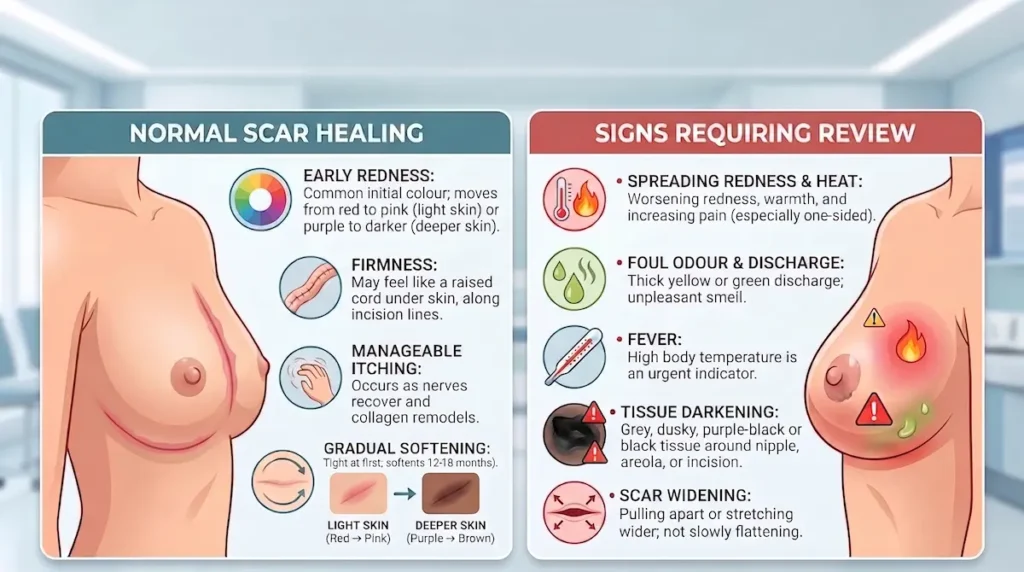
Redness is common in early breast lift scars. So is firmness. The scar may feel like a raised cord under the skin, especially along the vertical lollipop line or the horizontal anchor scar in the breast crease.
Itching can also be normal as nerves recover and collagen remodels. It should be mild to manageable, not paired with heat, spreading redness, worsening pain or discharge. A scar that feels a little tight at six weeks can still go on to soften beautifully by one year.
Colour changes are also expected. On lighter skin, scars may move from red to pink before becoming pale. On deeper skin tones, scars may look purple, brown or darker than the surrounding skin before they settle. The important pattern is gradual improvement, not instant fading.
Warning signs that need review
Some changes should not be watched passively. Contact your surgeon promptly if you notice spreading redness, increasing warmth, thick yellow or green discharge, a foul odour, fever, worsening one-sided pain, sudden swelling, wound opening or bleeding that does not settle with gentle pressure.
Darkening tissue deserves particular caution. A small scab can be normal, but grey, dusky, purple-black or black tissue around the nipple, areola or incision line needs urgent review. If you are worried about blood supply or tissue changes, read the breast lift warning signs that need urgent review and contact your clinical team rather than waiting for the next scheduled check-in.
Another reason to raise concerns early is scar widening. A scar that is slowly flattening is different from a scar that is pulling apart, stretching wider or becoming increasingly painful. Early advice can prevent a small healing issue from becoming a larger scar problem.
Skin tone and tension effects
Your natural skin biology plays a major role in breast lift scar healing. Some people form fine, pale scars with little effort. Others are more prone to thickened, raised or hyperpigmented scars, even when the surgery and aftercare are appropriate.
Tension is the other major factor. If the breast skin is under strain, the body may lay down more collagen, which can make scars wider or firmer. This is one reason your surgeon may be strict about support bras, arm movement, exercise timing and sleeping position in the early weeks.
Skin tone affects how scars are judged too. A scar can be flat and healthy but still darker than the surrounding skin at one year. That does not automatically mean the scar is abnormal. It may simply need more time, sun protection and careful monitoring.
UK patient guidance from BAAPS describes breast uplift scars as red at first, then purple, before becoming paler over roughly 12 to 18 months. That longer window is useful: one year is important, but it is not always the final word.
Supporting Scar Maturation
Scar care cannot erase breast lift scars, but it can support a better healing environment. The basics are not glamorous: closed wounds before products, low tension, sun protection, consistent support and patience. Small steps done properly tend to matter more than aggressive treatments started too early.
Always follow your own surgeon's aftercare plan first. Scar products, massage and taping should only begin when the incision is fully closed and your clinical team has cleared you to start.
Silicone gel or sheets and timing
Silicone gel and silicone sheets are commonly used in scar management once the wound has healed. They are usually intended to hydrate the scar surface and help with flattening, softening and reducing excessive scar activity.
They are not magic. A Cochrane review on silicone gel sheeting for scars found that the available trial evidence is limited, so silicone should be framed as a supportive tool rather than a guaranteed fix. Still, many surgeons use it because it is low-intervention and can be useful when applied correctly.
Timing matters. Do not place silicone over an open, weeping, infected or irritated incision. If your scar becomes rashy, macerated or uncomfortable under a silicone sheet, stop and ask your team for advice. More treatment is not always better treatment.
Sun protection and why it matters
Sun exposure can make healing scars darker and more visible. This applies even if the scars are usually covered by bras or swimwear, because holidays, sunbeds and low-cut clothing can expose the breast crease or vertical scar unexpectedly.
The NHS advises keeping scars covered in the sun for at least a year and using sunscreen with SPF 30 or higher on scar tissue. You can read the patient guidance here: NHS guidance on caring for scars.
For breast lift scars, practical protection usually means avoiding sunbeds, keeping the chest covered during strong sun, and using high-SPF protection once your surgeon confirms the wound is fully healed. If a scar darkens in the first year, it can take much longer to blend.
Massage, taping and patience
Scar massage can help some healed scars feel softer and less tight, but it should never be started on an open incision. The safest rule is to wait until the wound is fully closed and your surgeon has given permission.
When massage is appropriate, it should be gentle. You are not trying to “break down” the scar aggressively. You are encouraging mobility, softness and comfort in tissue that is still remodelling.
Taping may also be recommended in some cases to reduce tension across the scar. This is especially relevant for vertical or anchor scars where breast movement and skin pull can affect the way the scar widens. Again, use only the products and technique your team recommends.
What to confirm before travelling home
Before returning to the UK, ask your surgeon clear questions about your scar plan. When can you shower normally? When should tape come off? When can silicone start? What scar changes should trigger a photo review? What symptoms require urgent local medical care?
A GMC-registered UK surgeon would be expected to discuss risks, limitations and aftercare clearly before cosmetic surgery. When you travel abroad, you should expect the same level of seriousness. The benchmark is not just the operation; it is the follow-up plan.
At AKM Clinic, surgery is performed in Istanbul, with remote follow-up built into the patient journey. The aim is to make scar monitoring structured rather than improvised, especially for patients comparing Turkey with Harley Street-style consultation standards.

Realistic Appearance at One Year
One year is the point where most patients can judge breast lift scars more fairly. The swelling has usually settled, the scars are often flatter, and the early red or purple colour has usually softened. Still, “healed” does not always mean invisible.
A realistic one-year result is a scar that is stable, comfortable, flatter and easier to cover, even if a fine line remains. The aim is not to pretend breast uplift scars disappear. The aim is to understand what healthy scar maturity looks like.
How scars typically look at 12 months
At 12 months, a well-healed periareolar scar may blend into the border of the areola. A lollipop scar may look like a pale vertical line. An anchor scar may still be visible in the breast crease, but it is often hidden by the natural fold of the breast and by underwear.
The scar colour at one year depends on your skin tone. On fair skin, the line may be pale pink or white. On deeper skin tones, it may remain slightly darker or warmer in colour. That can still be normal if the scar is flat, soft and not painful.
If the scar is still raised, red, itchy, thick or spreading beyond the incision line at one year, it is worth discussing hypertrophic or keloid-type scarring with your surgeon. That does not mean the surgery has failed. It means your scar biology may need more targeted management.
Camouflage and revision as last resorts
Scar camouflage, medical tattooing, steroid treatment, laser or scar revision may be discussed for selected patients, but these are not first-line decisions in early healing. A scar that looks frustrating at three months may look much calmer at twelve months.
Revision should be approached carefully. Cutting out a scar creates a new wound, which means a new scar. It may be useful for a wide, tethered or poorly placed scar, but it is not a guarantee of an invisible result.
Most patients are better served by good planning before surgery, careful wound closure, tension control and consistent aftercare. If price is part of your decision-making, keep the scar conversation separate from bargain-shopping. You can review breast lift costs compared with the UK, but scar quality should be judged through surgeon credentials, aftercare and realistic planning rather than cost alone.
Setting expectations before surgery
The best time to manage breast lift scars is before the operation. Ask which scar pattern you are likely to need, why that pattern suits your anatomy, where each scar will sit, and what your one-year scar may realistically look like.
For UK patients, it is reasonable to use Harley Street standards as a benchmark for consultation quality: clear consent, honest risk discussion, no pressure, no guaranteed result language and a structured aftercare plan. When surgery is performed abroad, that aftercare plan should be even clearer.
AKM Clinic uses a board-certified plastic surgery team and performs surgery in Istanbul. For breast uplift patients, the focus is natural shaping, careful incision planning and long-term follow-up rather than a rushed cosmetic decision.
Frequently Asked Questions: Breast Lift Scars
These are the questions patients most often ask once they start comparing early scar photos, one-year results and different breast uplift incision patterns.
How long do breast lift scars take to fade?
Why do my breast lift scars look worse after a month?
Do silicone sheets really work for breast uplift scars?
Are anchor scars worse than lollipop scars?
Can darker skin tones expect different scarring?
Will breast lift scars ever fully disappear?
When should I contact my surgeon about breast lift scars?
Can I use scar cream straight after surgery?
Medical Disclaimer: This article is for general information only and is not a substitute for medical advice, diagnosis or treatment. Breast lift healing varies from person to person. Always follow your own surgeon's instructions and seek medical review if you have symptoms that concern you.