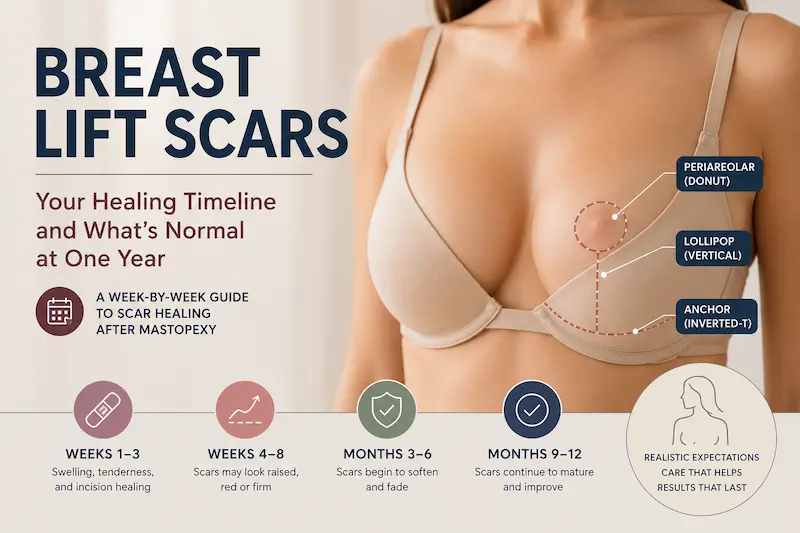
Quick answer: Breast lift scars are expected after mastopexy, but they usually soften, flatten, and fade over 12 months or longer. Early scars often look pink, firm, or raised before they improve. The final look depends on your incision pattern, skin tone, tension on the scar, aftercare, and how your body heals.
If you are researching breast lift scars, you are probably not asking whether every incision disappears. You are asking a more honest question: What will these scars actually look like on my body in a month, six months, and one year?
That is the right question. A breast lift, also called mastopexy, reshapes and repositions the breast by removing excess skin and lifting the nipple-areola complex. The trade-off is a scar pattern. At AKM Clinic, incision planning is discussed as part of AKM's breast lift technique, because scar placement matters as much as lift height when the goal is a natural, long-term result.
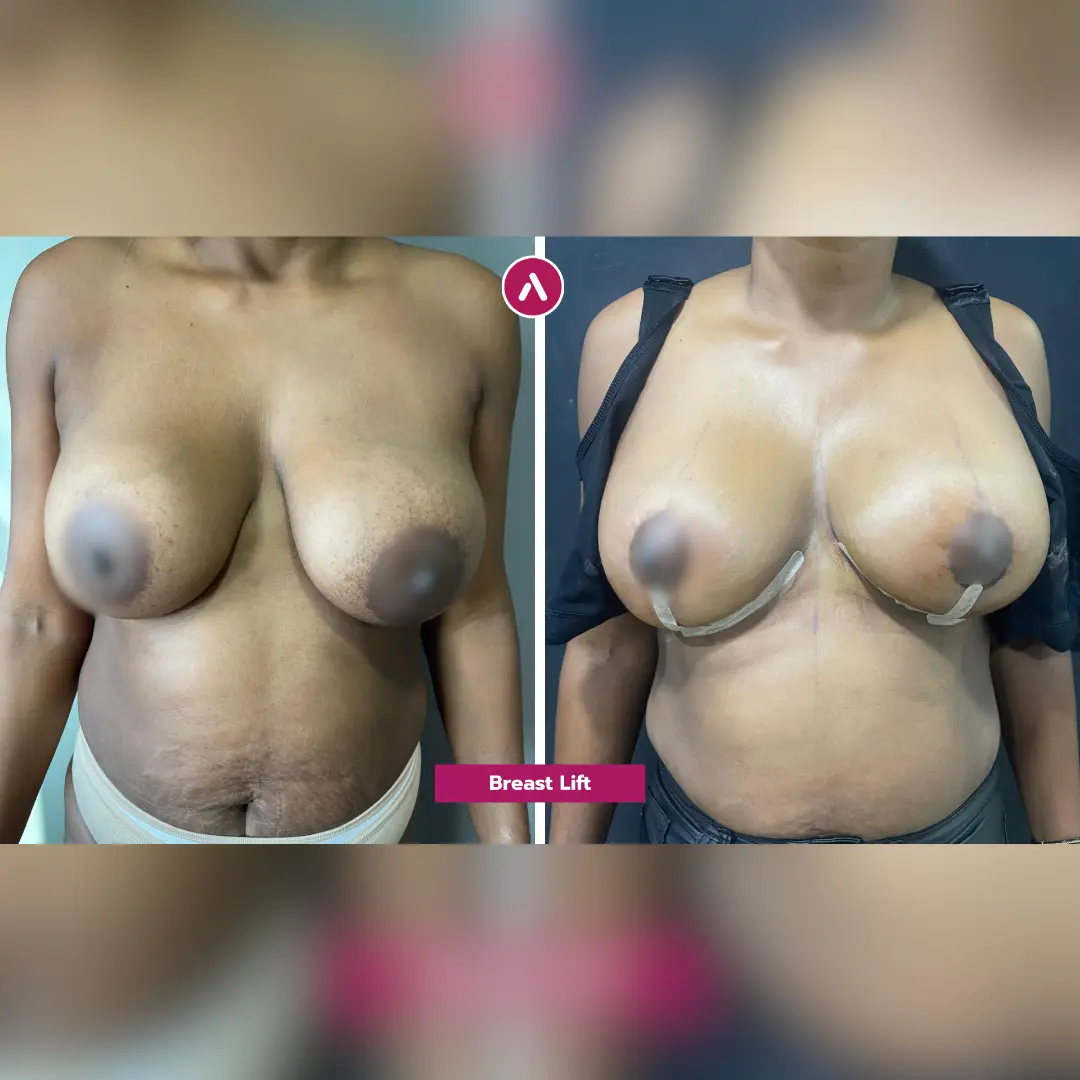
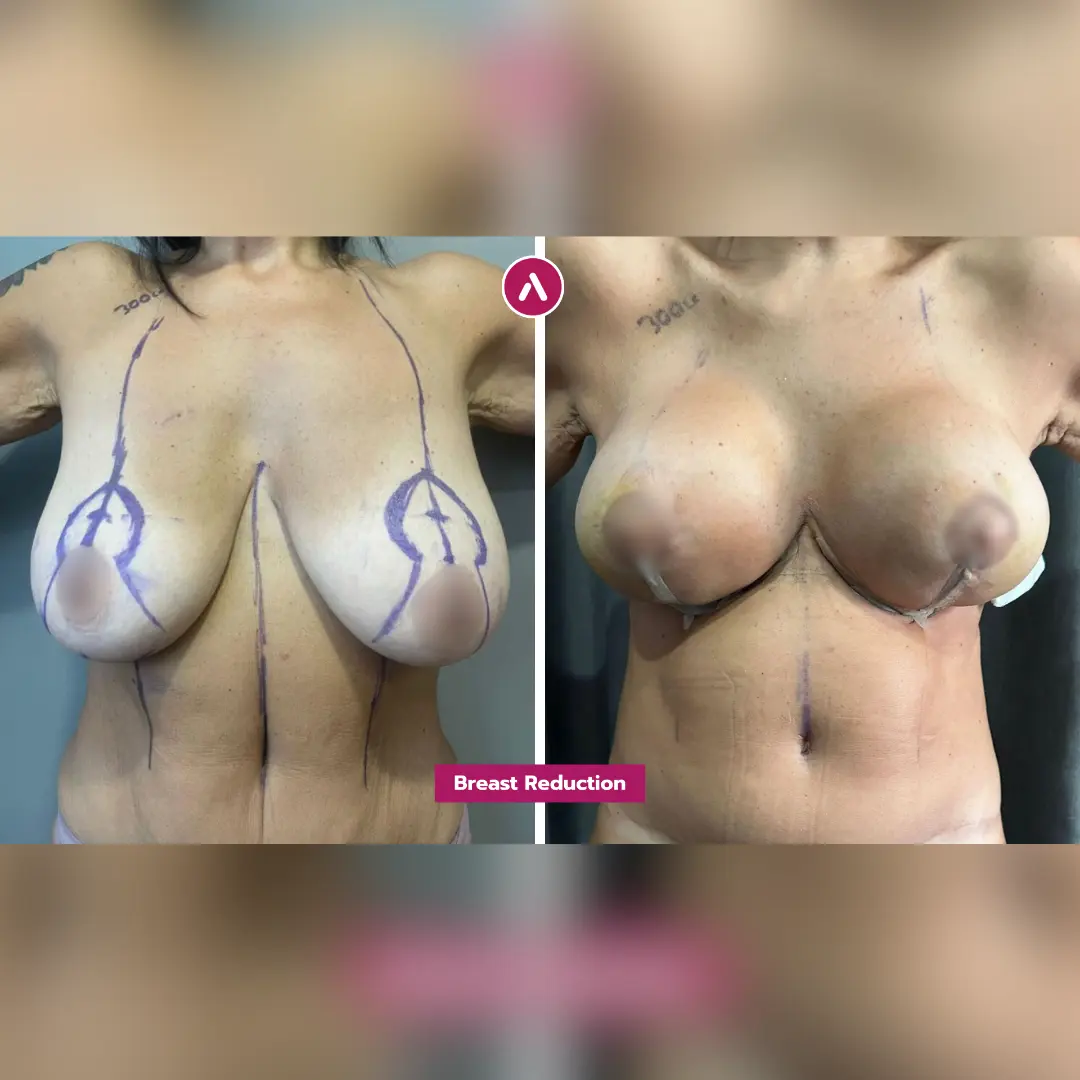
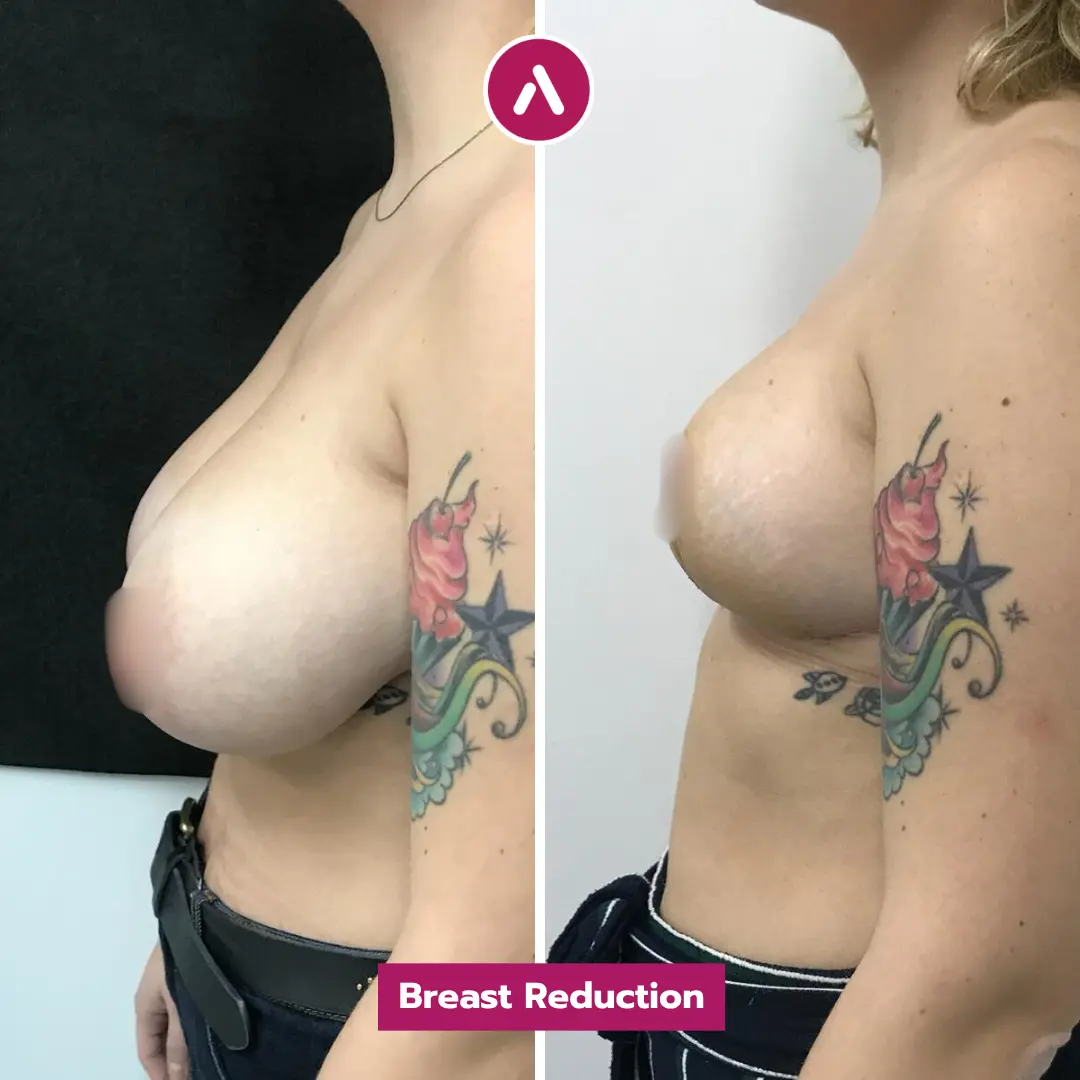
This guide focuses only on scar healing. It will not turn into a full procedure guide, implant discussion, or price breakdown. Instead, it walks you through where breast lift scars sit, how they usually change week by week, what is normal at one year, and which symptoms deserve a surgeon’s review.
Scar healing is not a straight line. Many breast lift scars look more noticeable before they look better, especially around the one-month mark. That phase can feel discouraging, but it is often part of normal scar maturation.
Table of Contents
Where Breast Lift Scars Sit
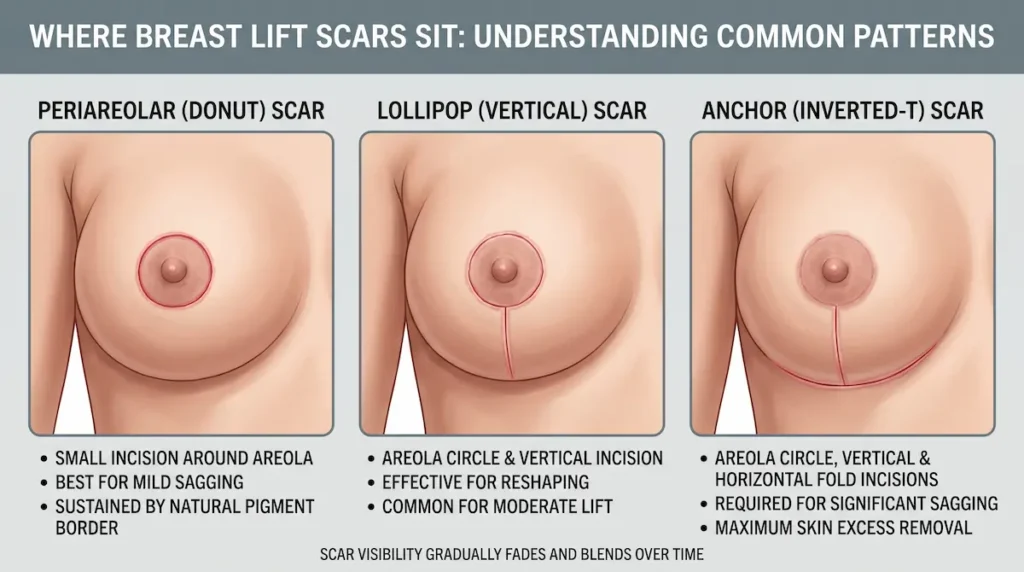
Breast lift scars sit where the surgeon needs access to remove loose skin, reshape the breast envelope, and reposition the nipple. The more lift your breast needs, the more skin must usually be tailored. That is why a small lift may leave only a short scar, while a more significant lift often requires a vertical or anchor pattern.
The goal is not simply to make the scar as short as possible. A short incision that leaves poor shape, uneven tension, or skin bunching is not a better result. A well-planned incision should match your anatomy, your degree of sagging, your skin quality, and your realistic expectations for shape and scar visibility.
Periareolar or “Donut” Scars
A periareolar scar runs around the edge of the areola. It is sometimes called a donut scar because the incision follows the circular border where areola skin meets breast skin. This border can help camouflage the scar once the color settles, especially when the areola edge has natural pigment variation.
This pattern is usually reserved for mild sagging. It can slightly lift the nipple and tighten a small amount of skin, but it has limits. When too much lift is attempted through a circular incision, the areola may widen, flatten, or develop tension around the edge.
For patients considering a lift without implants, the periareolar approach may sound appealing because the scar is shorter. Still, scar length is only one part of the decision. Shape, projection, areola position, and long-term tension matter too.
Lollipop or Vertical Scars
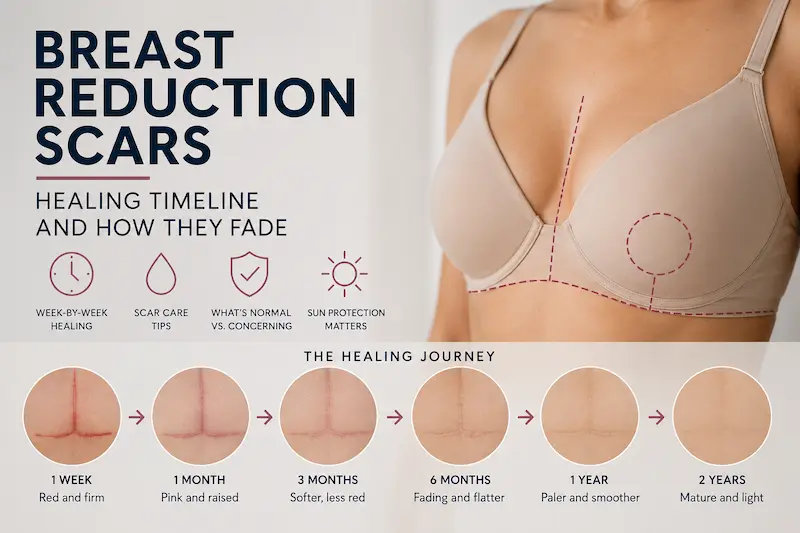
A lollipop scar includes a circle around the areola plus a vertical line from the lower edge of the areola down to the breast crease. This is one of the most common mastopexy scar patterns because it allows the surgeon to lift the nipple and reshape the lower breast more effectively than a donut incision alone.
The vertical line is often the part patients notice most in the mirror during the first few months. It may look pink, firm, or slightly raised early on. Over time, it usually flattens and blends more softly with the surrounding skin.
A vertical scar can feel emotionally difficult in the early healing phase because it is visible from the front. That does not mean it is healing badly. In many patients, this line changes dramatically between month three and month twelve.
Anchor or Inverted-T Scars
An anchor scar includes the areola circle, the vertical line, and a horizontal scar along the breast crease. It is also called an inverted-T pattern. This approach is often used when there is more significant sagging, major skin excess, or a need for stronger reshaping.
The horizontal portion usually sits in or near the inframammary fold, where the breast meets the chest wall. A bra or bikini top may hide much of it, although every body is different. The vertical part is usually more visible early on.
Anchor scars are not automatically “bad” scars. They are longer scars. That distinction matters. A longer incision that heals flat and pale can be easier to live with than a shorter incision under too much tension.
How Breast Lift Scars Differ From Breast Reduction Scars
Breast lift and breast reduction scars can look similar because both may use lollipop or anchor patterns. The difference is the surgical goal. A lift mainly removes excess skin and repositions the breast. A reduction removes breast tissue as well as skin, which can change the amount of reshaping and tension involved.
That is why breast reduction scars deserve their own discussion. The scar pattern may overlap, but the procedure, tissue removal, and healing context are not identical.
The Week-by-Week Timeline
Breast lift scar healing is slow because scars mature beneath the surface long after the skin has closed. The incision may look “healed” within a few weeks, but collagen remodeling continues for many months. This is why judging the final scar too early can lead to unnecessary worry.
A helpful way to understand the process is to think in phases: closure, inflammation, thickening, softening, and fading. These phases overlap. One section of the scar may look calm while another area feels firm or raised, especially where there is more movement or tension.
| Stage | Typical Scar Appearance | Usually Normal? | Supportive Action |
|---|---|---|---|
| Weeks 1–3 | Fresh incision lines, tape or dressings, mild redness, swelling, tightness | Yes, if redness is limited and symptoms are improving | Follow wound-care instructions, avoid strain, keep follow-up appointments |
| Weeks 4–8 | Pink, raised, itchy, or firmer scars; scars may look more noticeable | Often yes; this is a common “looks worse before better” phase | Ask your surgeon when to start silicone, scar massage, or taping |
| Months 3–6 | Scars begin flattening; color may shift from bright pink to softer pink or light brown | Yes, gradual softening is expected | Continue approved scar care and protect scars from sun exposure |
| Months 9–12 | Scars are usually flatter, smoother, and less intense in color | Yes, although some scars need longer than one year | Review persistent raised, painful, or widening scars with your surgeon |
Weeks 1–3: Fresh, Taped, and Swollen
During the first three weeks, the incision lines are still fragile. You may see surgical tape, small scabs, mild redness, and swelling around the areola, vertical line, or breast crease. The skin can feel tight. Some pulling sensations are common as the tissues settle.
This is not the stage for judging scar quality. The priority is closure. Your surgeon may ask you to keep dressings in place, avoid lifting, sleep in a supportive position, and wear a surgical bra. These details are not cosmetic extras; they reduce unnecessary tension on healing skin.
Call your care team if redness spreads outward, pain worsens instead of improving, drainage becomes thick or foul-smelling, or one area of skin turns dusky, dark, or unusually cold. Those changes move beyond normal scar appearance and need medical review.
Weeks 4–8: The Raised, Pink “Peak” Phase
This is the phase that surprises many patients. Around weeks four to eight, scars can look redder, thicker, or more raised than they did earlier. They may itch. They may feel rope-like under the fingers. For some patients, this is when anxiety spikes.
In many cases, this change reflects normal collagen activity. Your body is strengthening the incision. That extra collagen can make the scar feel firm before it begins to soften. It is frustrating. It is also common.
This is also the time when your surgeon may clear you to begin silicone gel, silicone sheets, gentle scar massage, or taping. Do not start aggressive massage on your own. A closed incision is not always ready for pressure, especially if there are small scabs or delayed-healing spots.
Months 3–6: Flattening and Softening
Between months three and six, the scar often begins to calm down. The color may become less intense. Raised areas may flatten. The breast shape may also look more settled, which can make the scar feel less visually dominant.
This is when consistency matters. Scar care does not usually create an overnight change. Silicone, sun protection, and reduced tension work slowly. Missing a day is not a disaster, but stopping completely after two weeks because the scar has not transformed is usually too early.
Patients who have had lifts after major weight loss may need extra patience. Skin quality, stretch, and the amount of excess skin removed can influence how scars behave over time.
Months 9–12: Final Fade and Maturation
By nine to twelve months, many breast lift scars are flatter, smoother, and lighter than they were in the early months. That does not mean they vanish. It means they usually become less obvious, easier to cover, and less firm to the touch.
At one year, some scars may still carry a pink or light brown tone, especially in patients prone to hyperpigmentation or thicker scar formation. A scar that is still changing gradually can continue to improve beyond the one-year mark.
A scar that is widening, painful, raised like a cord, or growing beyond the original incision line should be assessed. Waiting is reasonable for normal maturation. Ignoring abnormal scar behavior is not.
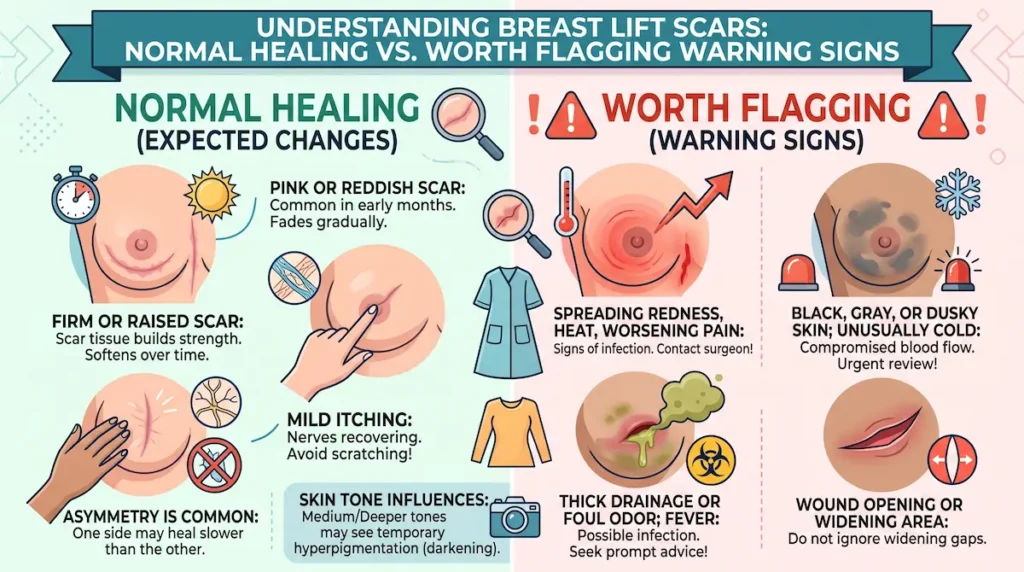
What's Normal vs Worth Flagging?
Breast lift scars do not all heal at the same speed. One part of the areola scar may look pale while the vertical line still feels firm. The breast crease scar may stay pink longer because it sits in a fold, where movement, moisture, and bra friction can affect healing.
The key is pattern recognition. Normal healing should gradually move in the right direction, even if progress is slow. A scar that becomes more painful, more swollen, darker, warmer, or starts draining needs a different level of attention.
Normal Redness, Firmness, and Itch
Mild redness is common in the early months, especially in fair skin. In deeper skin tones, the same process may look brown, purple, or darker than the surrounding skin rather than bright pink. Color alone does not automatically mean something is wrong.
Firmness is also expected. Scar tissue is collagen-rich, and collagen can feel thick before it reorganizes. A firm vertical scar at six weeks can still soften significantly by month six or one year.
Itching can happen as nerves wake up and the scar matures. Light itch without spreading redness, heat, worsening pain, or discharge is usually part of healing. Scratching is not helpful. It can irritate the incision line and worsen pigmentation.
Warning Signs That Need a Surgeon’s Review
Some symptoms should be reported promptly. These include spreading redness, increasing pain, new swelling on one side, thick yellow or green drainage, foul odor, fever, or an incision that opens. A small scab is common; a widening open area is not something to ignore.
Color changes also matter. A scar that looks pink or reddish can be normal. Skin that becomes dusky, black, gray, or unusually cold may signal compromised blood flow. Because breast lift surgery depends on healthy circulation to the nipple, areola, and skin edges, these changes deserve urgent review.
If you are trying to separate normal scar healing from a more serious issue, review the warning signs that need urgent review. That topic is separate from routine scar maturation, but it is important for patient safety.
| Symptom | Often Normal? | Why It Happens | What to Do |
|---|---|---|---|
| Pink or reddish scar line | Yes, especially early | Normal inflammation and new blood vessel activity | Monitor for gradual improvement |
| Firm or raised scar | Often yes | Collagen buildup during scar strengthening | Ask when silicone or massage can begin |
| Mild itching | Yes | Nerve recovery and scar remodeling | Avoid scratching; keep approved scar care consistent |
| Spreading redness, heat, or worsening pain | No | Possible infection or inflammation that needs assessment | Contact your surgical team |
| Black, gray, or dusky skin | No | Possible blood-flow problem | Seek urgent surgical advice |
| Thick drainage or foul odor | No | Possible infection or wound breakdown | Contact your surgeon promptly |
How Skin Tone and Tension Affect Appearance
Skin tone can influence how breast lift scars look while they mature. Lighter skin often shows pink or red scars early. Medium and deeper skin tones may be more prone to temporary darkening, called post-inflammatory hyperpigmentation, or to thicker scar patterns in patients with a personal or family tendency.
This does not mean darker skin automatically scars poorly. It means scar color may follow a different path. Some scars fade from brown to lighter brown before they blend; others may need longer than one year to settle.
Tension is another major factor. Scars that are pulled tightly by swelling, heavy breast weight, unsupported activity, or bra friction may widen or thicken. This is why supportive garments, activity restrictions, and follow-up visits are part of scar care, not just recovery rules.
When “One Side Looks Worse” Is Still Normal
Many patients heal asymmetrically. One breast may swell more. One vertical scar may feel firmer. One crease scar may stay darker. Bodies do not heal like mirrored drawings.
The question is whether the difference is stable and improving. A scar that is simply slower on one side can still be normal. A scar that is newly painful, opening, draining, or changing color quickly should be assessed.
Photos can help. Taking pictures in the same lighting once every one to two weeks gives you and your surgical team a clearer view of progress. Daily checking often makes small changes feel larger than they are.
Supporting Scar Maturation
Scar care is not about making breast lift scars disappear. It is about helping them mature as flat, soft, and evenly colored as your biology allows. Good scar care also prevents avoidable problems: excess tension, sun darkening, irritation, and delayed recognition of abnormal healing.
The basics are simple, but timing matters. Silicone should not go on an open incision. Massage should not be aggressive. Sun protection should not wait until summer. Your surgeon’s instructions come first because they know your incision pattern and healing status.
Silicone Gel or Sheets and When to Start
Silicone gel and silicone sheets are commonly recommended for surgical scars once the incision is fully closed. They create a protected, hydrated environment that may help raised or thickened scars settle over time. They are not instant scar erasers.
The evidence is useful but should be described honestly. The Cochrane review on silicone gel sheeting for scars found that silicone may improve scar appearance in some cases, but the certainty of evidence is limited. That means silicone is reasonable to discuss with your surgeon, not something to treat as a guarantee.
Practical use also matters. A silicone sheet that constantly peels off under a bra may irritate the skin. A gel that is applied to damp, broken, or scabbed skin may cause problems. Ask your surgeon when to begin, how many hours per day to use it, and how to handle sensitive skin.
Scar-care guidance: ASPS's surgical scar-care tips emphasize practical basics such as following wound-care instructions, protecting scars from sun, and discussing silicone products with a qualified plastic surgeon. AKM applies the same conservative principle: scar care should support healing, not irritate it.
Sun Protection and Why It Matters
Fresh scars are more vulnerable to color change. UV exposure can darken new scar tissue and make discoloration last longer. This is especially important for breast lift scars near the upper breast or cleavage area, where swimsuits and lower-cut tops may expose part of the incision line.
Sun protection does not mean only sunscreen. It can also mean keeping the scar covered, choosing UPF clothing, avoiding tanning, and being careful with beach or pool exposure during the first year. If your surgeon clears sunscreen use, choose a broad-spectrum formula and reapply it as directed.
The goal is prevention. Once a scar darkens from UV exposure, fading can take much longer. Protecting the scar early is easier than trying to correct pigmentation later.
Massage, Taping, and Patience
Scar massage may help some patients once the incision is sealed and strong enough. It can soften firm tissue and make the scar feel less tight. But massage that starts too early or uses too much pressure can irritate the incision.
Taping may also reduce tension across a scar in selected patients. This is especially relevant along the vertical line or breast crease, where movement and bra pressure can affect the scar. Your surgeon should show you how to tape safely if it is appropriate for your case.
Patience is not passive. It means doing the right things consistently while giving the biology time to work. Breast lift scars can change for a full year or longer, and many patients see the most reassuring improvement after the point when they were most worried.
What to Confirm Before Traveling for Surgery
If you are traveling for surgery, ask specific scar-related questions before you commit. Which incision pattern is most likely for your anatomy? Where will the vertical and crease scars sit? How is tension minimized? What scar-care products are recommended, and when should they begin?
You should also confirm how follow-up works after you return home. AKM Clinic’s breast procedures are performed by a board-certified plastic surgery team in Istanbul, with long-term virtual follow-up at 1, 3, 6, and 12 months. The goal is not just to perform the lift, but to monitor healing as the scar matures.
For US patients, it is appropriate to ask how the surgeon’s training compares with American board-certification standards. Ask exactly which specialist certification your surgeon holds and where it was issued; our guide to verifying plastic surgeon credentials in Turkey shows what to check.
Good scar care is steady, not aggressive. The best plan protects the incision, respects the healing timeline, and avoids chasing quick fixes during a process that naturally takes months.

Realistic Appearance at One Year
At one year, breast lift scars are usually much calmer than they were in the early months. They are often flatter, softer, and closer to the surrounding skin color. Still, “healed” does not mean invisible. A mature scar is a permanent mark that has settled.
This is the point where expectations matter. Some patients have pale, fine lines by twelve months. Others still have light pink, tan, or slightly raised areas that continue improving into year two. Both patterns can be normal, depending on your biology and incision tension.
How Scars Typically Look at 12 Months
By the one-year mark, the areola scar often blends better because it sits along a natural color transition. The vertical lollipop line may still be visible from the front, but it is usually flatter and less intense than it was at six weeks. The anchor scar along the breast crease may remain hidden in many bras and swimsuits.
If your scar is still changing gradually, that is a good sign. Slow fading, softening, and flattening mean the scar is still maturing. What is less reassuring is a scar that keeps getting thicker, wider, painful, or raised beyond the incision border.
Patients who are planning surgery often ask about pricing while researching scars. This article is not a cost guide, but you can review what a breast lift costs in Turkey separately without mixing price research into scar-healing expectations.
Camouflage, Tattooing, and Revision as Last Resorts
Most breast lift scars do not need revision. They need time. If a scar is still red or firm at six months, many surgeons will continue conservative scar care before discussing procedural correction.
For mature scars that remain dark, raised, or widened after adequate healing time, options may include medical scar treatment, laser therapy, steroid treatment for selected raised scars, camouflage tattooing, or surgical scar revision. These are not first-line steps during early healing.
Scar revision also creates a new scar. That is why it should be approached carefully, with a surgeon who can explain whether the problem is scar biology, incision tension, pigmentation, or wound healing history.
Setting Expectations Before Surgery
The best time to understand breast lift scars is before surgery, not after the first anxious mirror check. Ask which incision pattern is likely for your anatomy, where each scar will sit, how your skin tone may affect color changes, and what the follow-up plan looks like if one area heals more slowly.
It is also fair to ask what cannot be controlled. No surgeon can guarantee an invisible scar. A careful surgeon can plan the incision, reduce avoidable tension, give evidence-based aftercare, and monitor healing. Your body still controls the final scar biology.
For many patients, the scar becomes less emotionally dominant as the breast shape settles and the incision color fades. The trade-off becomes easier to assess with time: a lifted breast position, improved nipple placement, and a scar pattern that continues to soften.
Considering a breast lift? AKM Clinic can review your photos, explain the most likely incision pattern for your anatomy, and walk you through scar expectations before you travel. Our US Patient Support & Mailing office handles patient inquiries; your procedure is performed in Istanbul.
Frequently Asked Questions: Breast Lift Scars
How long do breast lift scars take to fade?
Why do my breast lift scars look worse after a month?
Do silicone sheets really work for breast lift scars?
Are anchor scars worse than lollipop scars?
Can darker skin tones expect different scarring?
Will breast lift scars ever fully disappear?
When should I contact my surgeon about a scar?
Medical disclaimer: This article is for educational purposes only and is not a substitute for medical advice, diagnosis, or treatment. Breast lift healing varies from person to person. Always follow your surgeon’s instructions and consult a qualified healthcare professional about your individual case.