
This barbara deep plane facelift review looks closely at one documented AKM Clinic patient: Barbara, a 60-year-old patient from the United States who underwent a deep plane facelift with neck lift. Her story is useful for Canadian readers because her concerns are familiar across North America: visible neck laxity, lower-face ageing, fear of looking “done,” and uncertainty about travelling for surgery.
Barbara’s case is not presented as a promise. No facelift result can be copied from one patient to another. Her 7-month update is valuable because it shows what many patients want to understand before booking: how the face settles after the early swelling phase, whether the result still looks natural months later, and how the recovery felt in real life.
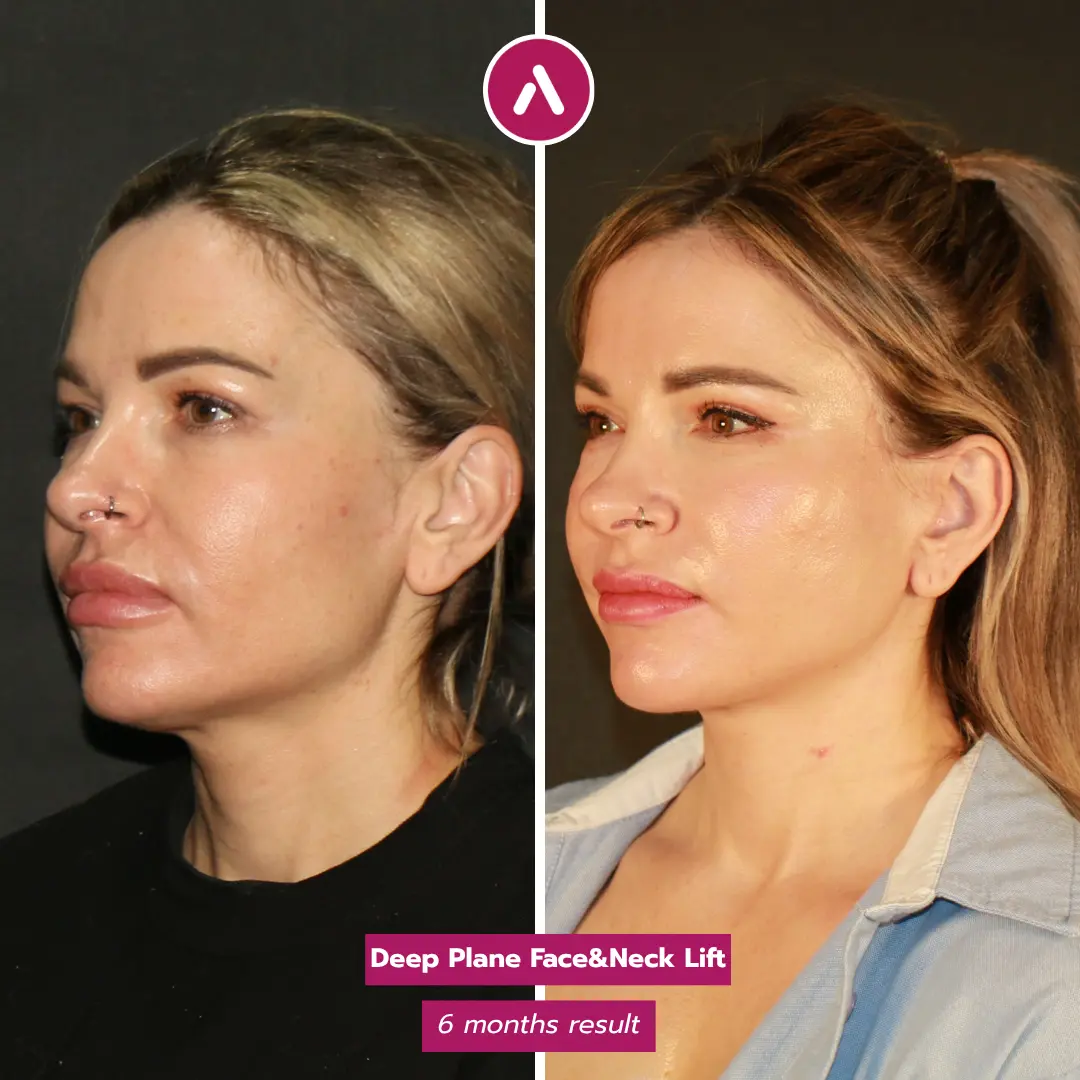
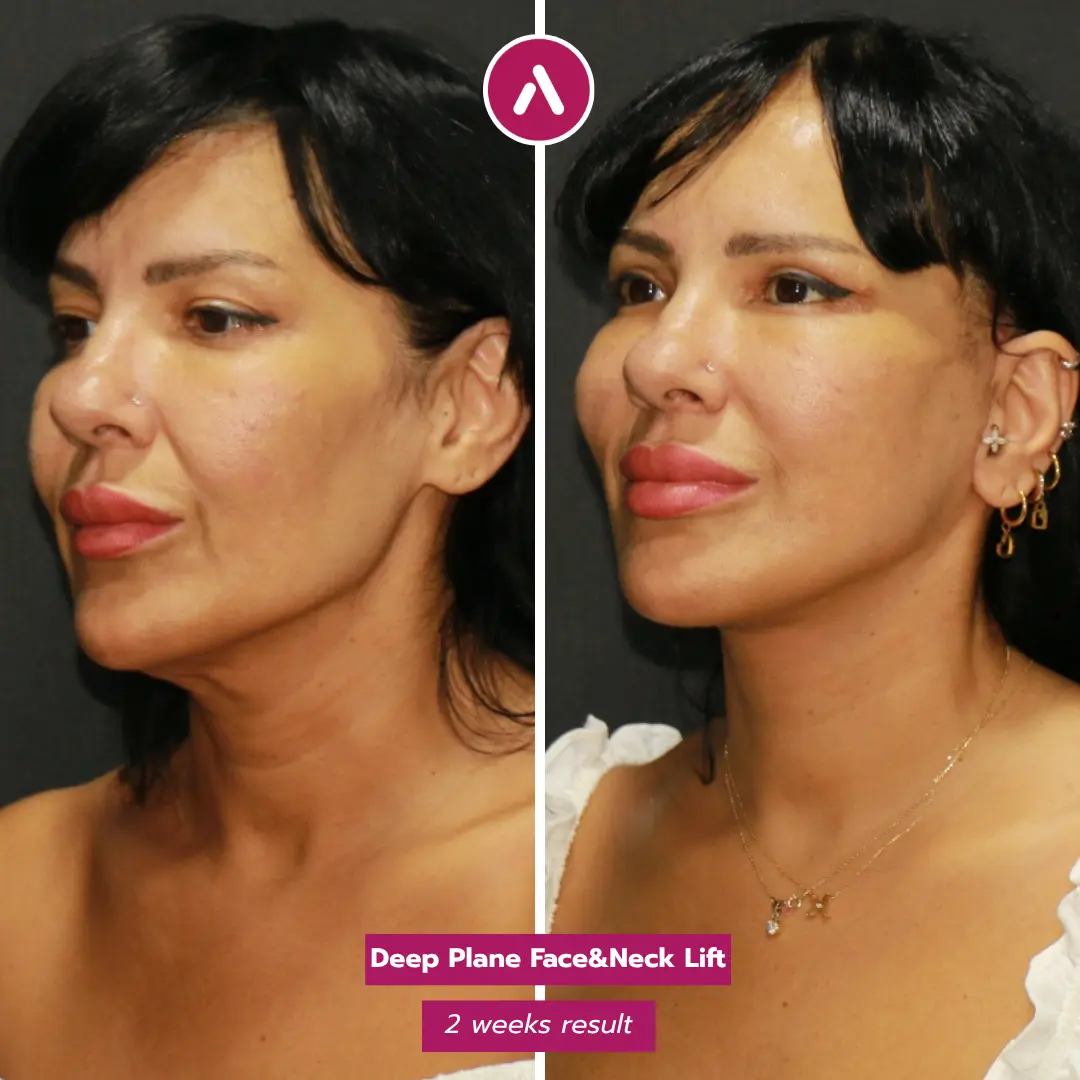
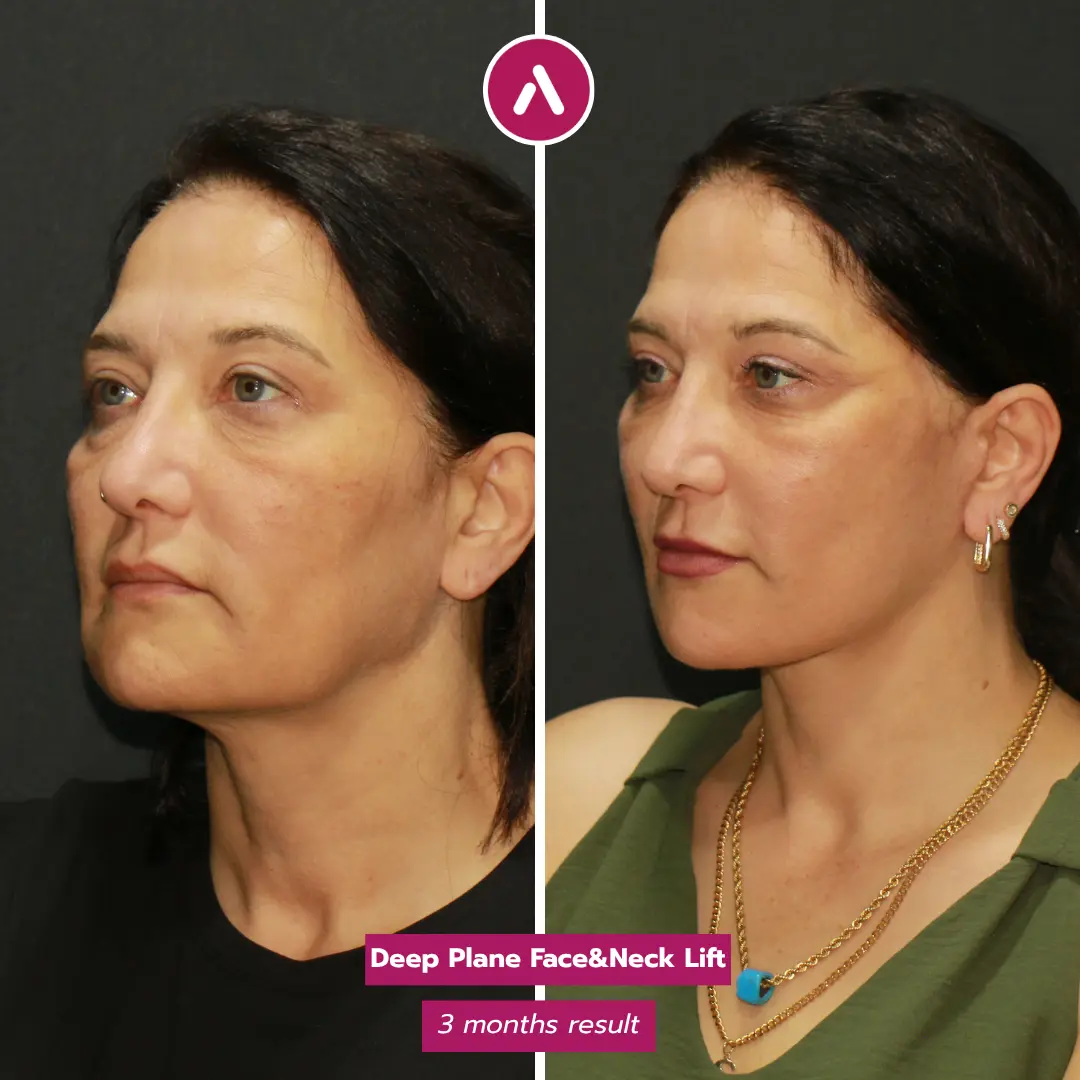
For readers still comparing techniques, AKM’s deep plane facelift technique explains why this approach focuses on repositioning deeper facial structures instead of pulling the skin alone. That distinction matters. It is one reason Barbara’s review is centred on a refreshed, settled appearance rather than a tight or wind-swept look.
Quick Summary: Barbara, a 60-year-old North American patient, had a deep plane facelift and neck lift at AKM Clinic. Her early testimonial highlighted “no pain” and the feeling that she “looked 20 years younger.” This 7-month review explains how her result settled, what changed structurally, and what Canadian patients can learn from a longer follow-up rather than an immediate post-op reaction.
Table of Contents

Barbara’s Background and Pre-Surgical State
Barbara entered the process as a mature facial rejuvenation patient, not someone seeking a dramatic change in identity. At age 60, the usual concerns are rarely limited to one feature. The jawline, lower cheeks, neck, and skin texture tend to age together, which is why a deep plane facelift with neck lift can be a more coherent plan than a smaller, isolated procedure.
For Canadian patients in Toronto, Vancouver, Montreal, or Calgary, this part of Barbara’s story often feels familiar. Many patients do not want to look younger at any cost. They want to look rested, balanced, and recognizable in family photos, work settings, and daily life.
Age 60, primary concerns at consultation
At 60, the most common facelift concerns include jowling, softening of the jawline, neck laxity, and a heavier lower face. These changes are structural. Creams, injectables, and energy devices may improve skin quality, but they cannot reposition descended deeper tissues in the same way surgery can.
Barbara’s documented procedure scope was deep plane facelift plus neck lift. That combination suggests her concerns involved both the lower face and neck. In a patient of this age group, treating one without the other can sometimes leave an incomplete result.
The practical goal is harmony. A sharper jawline with an untreated neck can look mismatched. A tighter neck with persistent jowling can also look unfinished.
Why she chose a deep plane technique specifically
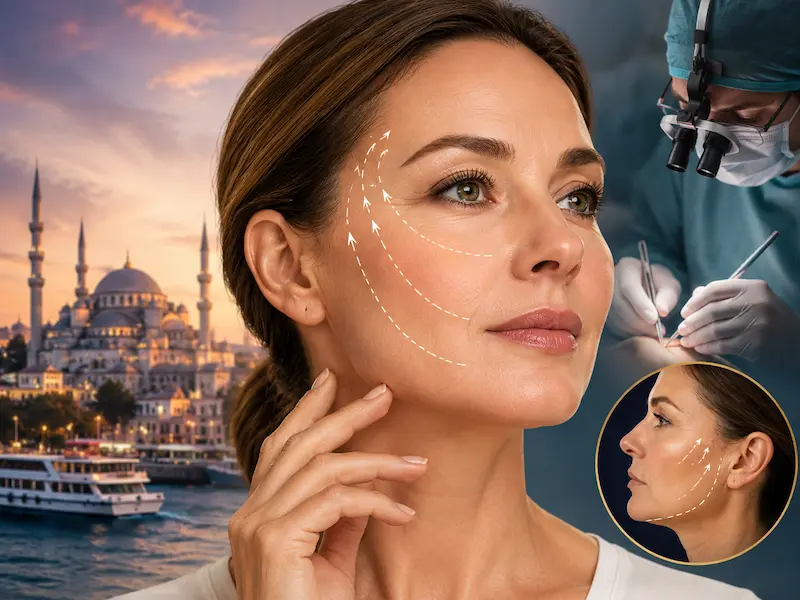
The deep plane facelift is often selected when the surgeon needs to address deeper facial descent rather than surface laxity alone. Instead of relying on skin tension, the technique works beneath the SMAS layer and releases key retaining ligaments. This allows the cheek, jawline, and lower face to be repositioned with less visible pull on the skin.
For a 60-year-old patient, this matters because the face has usually aged in several layers: skin, fat pads, ligaments, and muscle support. A skin-only lift may create a temporary tightening effect, but it can also produce the pulled appearance many North American patients want to avoid.
AKM Clinic describes its surgical philosophy as “Rejuvenation over alteration.” That phrase fits Barbara’s review because her outcome is framed around looking refreshed, not surgically changed.
How she found AKM Clinic
Barbara’s review belongs within AKM Clinic’s broader testimonial record. Canadian readers should evaluate that record with the same caution they would apply to any private medical provider. A single review is helpful, but it should not replace credential checks, consultation quality, surgical planning, and long-term follow-up access.
That is why the clinic context matters. Readers can review the AKM Clinic team, including the clinic’s natural-first approach, clinical leadership, patient host system, and 24/7 support model. For an international patient, the result is only one part of the decision. The structure around the surgery matters too.
For Canadians used to provincial healthcare systems such as OHIP, MSP, RAMQ, or AHCIP, private elective surgery abroad can feel unfamiliar. A documented patient pathway, named coordinators, and clear follow-up expectations help reduce that uncertainty.
The Surgical Day and Immediate Recovery
Barbara’s early recovery comments are central to her review because they challenge a common fear: that facelift recovery must be severely painful. Her testimonial record includes the phrases “no pain” and “looked 20 years younger.” Those words are powerful, but they should be read carefully. They describe Barbara’s individual experience, not a universal guarantee.
Still, her report is clinically plausible. Many facelift patients describe tightness, pressure, swelling, and numbness more than sharp pain. The first few days can look dramatic in the mirror, even when the physical discomfort is manageable.
Anesthesia experience and emergence
Deep plane facelift surgery may be performed with different anesthesia plans depending on the patient, procedure scope, and surgeon assessment. In Barbara’s case, the key point from the review is not the technical anesthesia model. It is how she felt immediately afterward.
Patients often worry about waking up disoriented, nauseated, or frightened by their appearance. A well-managed surgical day reduces that risk through pre-operative planning, medical monitoring, and clear communication before the patient enters the operating theatre.
For Canadian patients travelling a long distance, this planning carries extra importance. The body is already managing time-zone change, travel fatigue, and the psychological weight of having surgery away from home.
Day 1 to Day 3 reported sensations
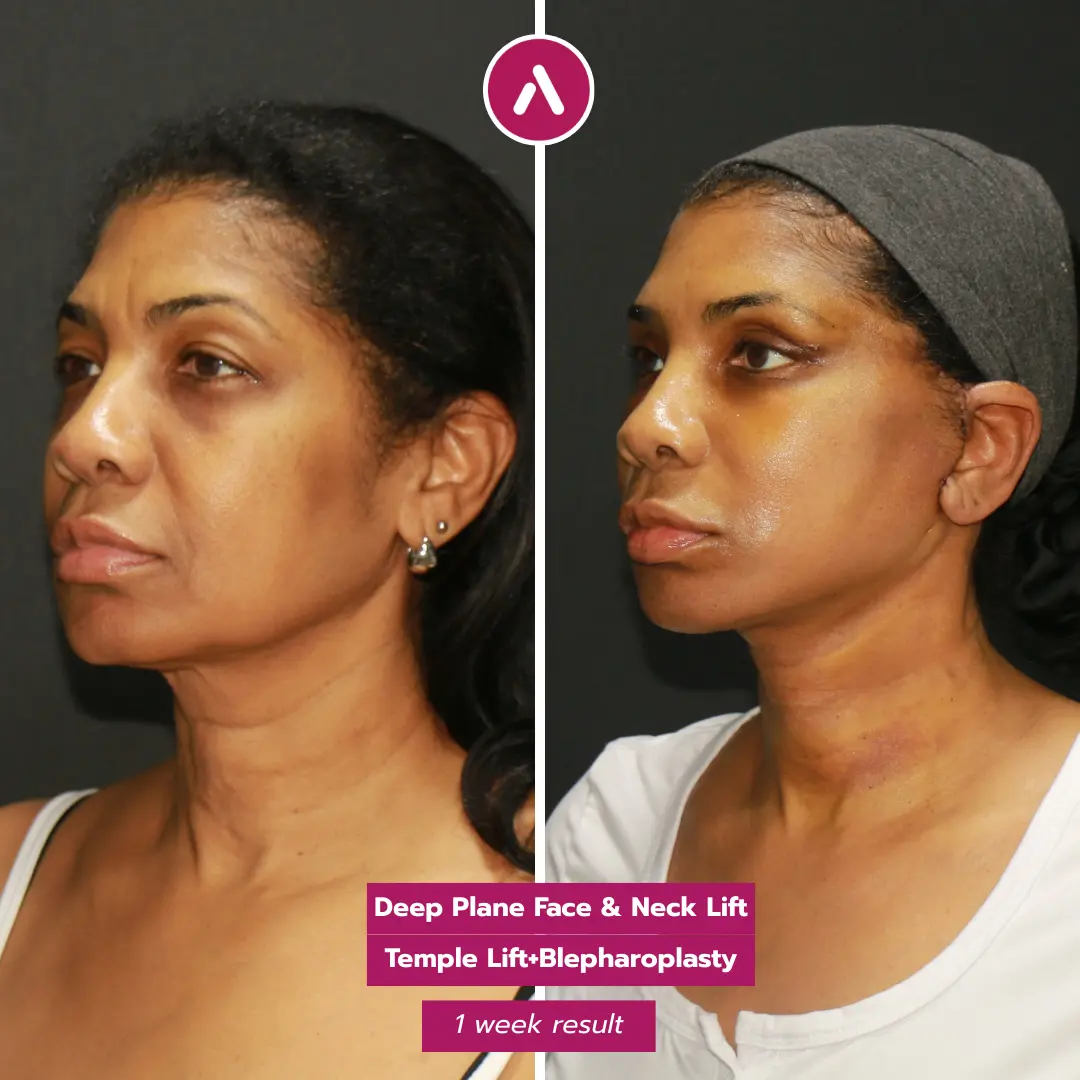
Barbara’s dominant early impression was “no pain.” In facelift recovery language, that does not mean there were no sensations. It usually means the expected tightness, pressure, and swelling did not translate into severe pain for her.
The first 72 hours are commonly when swelling and bruising become most visible. This is also the period when patients may feel the most emotionally vulnerable. The face can look unfamiliar before it looks improved.
For a visual understanding of this early phase, Canadian readers can compare Barbara’s account with AKM’s day-by-day recovery visual documentation. That separate guide owns the photo-based recovery timeline, while this article stays focused on Barbara’s individual review.
Why “no pain” was her dominant impression
There are several reasons a patient might describe facelift recovery this way. Surgical technique matters. Anesthesia planning matters. Post-operative support, medications, swelling control, and patient expectation setting also influence how discomfort is perceived.
Barbara’s testimonial record highlights “no pain” as one of her strongest early impressions after deep plane facelift and neck lift surgery.
This quote should be interpreted with restraint. Some patients need more medication than others. Some bruise more. Some feel tightness longer. Barbara’s review is encouraging because it shows that recovery can be easier than expected, but an ethical consultation should still prepare every patient for swelling, bruising, numbness, fatigue, and temporary emotional ups and downs.
For Canadian patients, the useful question is not “Will I have Barbara’s exact recovery?” A better question is: “What recovery range is realistic for my age, skin quality, procedure scope, medical history, and flight plan home?”

The 3-Month Milestone — Initial Results
Three months is an important checkpoint after a deep plane facelift because the early recovery phase has usually passed, but the final result has not fully settled. Swelling is lower. Bruising has cleared. The face begins to look less like it is “recovering” and more like it belongs naturally to the patient.
Barbara’s 3-month milestone is especially useful because her comments describe both comfort and visible outcome. She was not only relieved by the recovery. She was also responding to the visible structural change in her lower face and neck.
Structural changes observable at 3 months
At 3 months, deep plane facelift results are typically visible in the jawline, lower cheeks, mid-face support, and neck contour. The most meaningful change is often not one isolated feature. It is the way the face regains a more supported shape.
For Barbara, the combination of deep plane facelift and neck lift would be expected to target several age-related changes at once:
- Improved jawline definition
- Reduced jowl heaviness
- A smoother transition between the lower face and neck
- Better cheek support without an overfilled look
- Less visible neck laxity
These changes matter because they are structural, not just surface-level. A well-planned deep plane result should not depend on skin tension alone.
Skin quality improvements
Barbara’s main procedure was surgical lifting, but skin quality often appears better once the deeper tissues are repositioned. The face may look less tired because shadows change. The neck may look cleaner because loose tissue is no longer collecting in the same way.
This does not mean surgery reverses every skin concern. Fine lines, pigmentation, sun damage, and texture often need separate care. Canadian patients should be especially careful with UV exposure during summer, since scar protection and sunscreen discipline affect long-term healing.
At AKM Clinic, the broader recovery model may include supportive technologies such as HBOT and LLLT, depending on the patient plan. Those technologies are discussed in separate recovery guides, so this article remains focused on Barbara’s review.
Her quote: “looked 20 years younger”
Barbara’s testimonial record includes the phrase “looked 20 years younger.” That is a strong emotional statement. It captures how she felt about the visible difference at her early follow-up stage.
Barbara described her result as looking “20 years younger,” while also emphasizing that her recovery involved “no pain.”
For readers, the right interpretation is careful optimism. A 20-year difference is Barbara’s personal reaction, not a clinical guarantee. Some patients look five to ten years fresher. Others see a more dramatic change, especially when the neck and lower face are treated together.
The more useful question is whether the result looks believable. A technically strong facelift should make the patient look better rested, not like a different person.
| Milestone | Barbara-specific verified detail | Typical deep plane pattern | What Canadian readers should note |
|---|---|---|---|
| Pre-op | Age 60; deep plane facelift plus neck lift documented | Lower-face and neck laxity often treated together in this age group | Procedure scope should match anatomy, not age alone |
| Day 7 | Specific Day 7 comments not verified in the provided record | Swelling and bruising are usually improving, but still visible | Canadians should not plan public-facing work this early |
| Month 1 | Specific Month 1 comments not verified in the provided record | Most bruising has settled; residual swelling and tightness remain | Remote work may feel realistic before in-person visibility does |
| Month 3 | Reported “no pain” and feeling she “looked 20 years younger” | Major structural improvements are visible, but tissues are still settling | This is a useful milestone, not the final result |
| Month 7 | Used here as the long-term review point for settled-result analysis | Swelling is usually far lower; facial movement looks more natural | Longer reviews are more useful than immediate post-op reactions |
The 7-Month Update — Results Settled
Seven months after surgery, the story changes. The focus is no longer on bruising, dressings, or early swelling. The question becomes whether the result has settled into the patient’s normal life.
This is why longer follow-up reviews are valuable. Immediate post-op testimonials can be emotional, positive, or anxious. A 7-month update gives readers a more stable view of the outcome.
Final swelling resolution and tissue settlement
By 7 months, most visible swelling after a deep plane facelift has usually reduced substantially. Some firmness, numbness, or subtle tissue changes can still continue beyond this point, but the face is typically much closer to its stable appearance.
For Barbara, this stage is important because her early enthusiasm can be tested against time. A result that looks good at 3 months but becomes tight, distorted, or unnatural by 7 months would raise concern. A result that continues to soften and integrate is more reassuring.
Patients should remember that “settled” does not mean frozen. The face still moves. Expressions return. The best outcomes look increasingly normal as swelling fades.
How her face responded to the natural-first approach
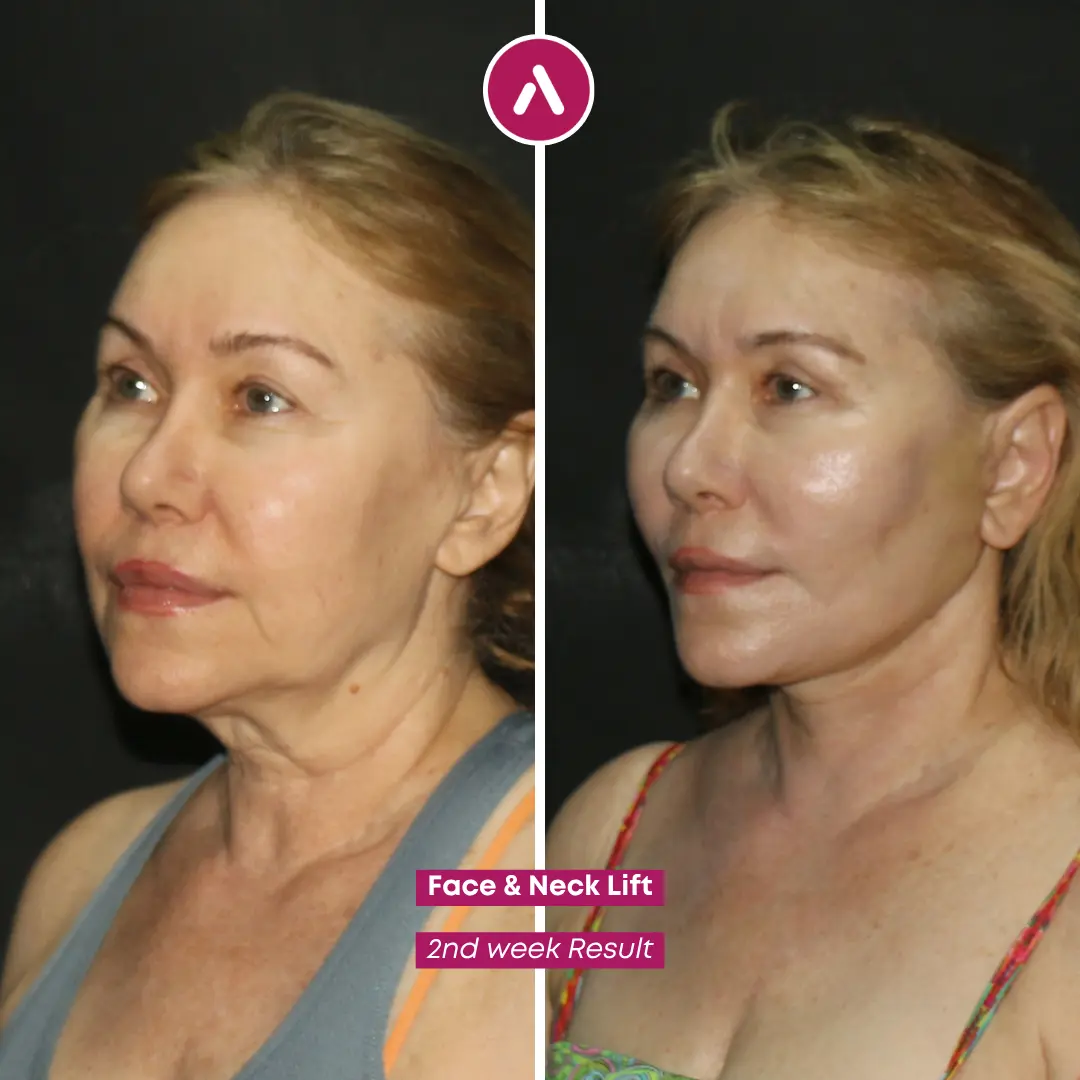
AKM Clinic’s natural-first approach is based on preserving identity while restoring support. In Barbara’s case, that means the goal was not to erase every sign of age. The goal was to improve the structural markers that made her look more tired than she felt.
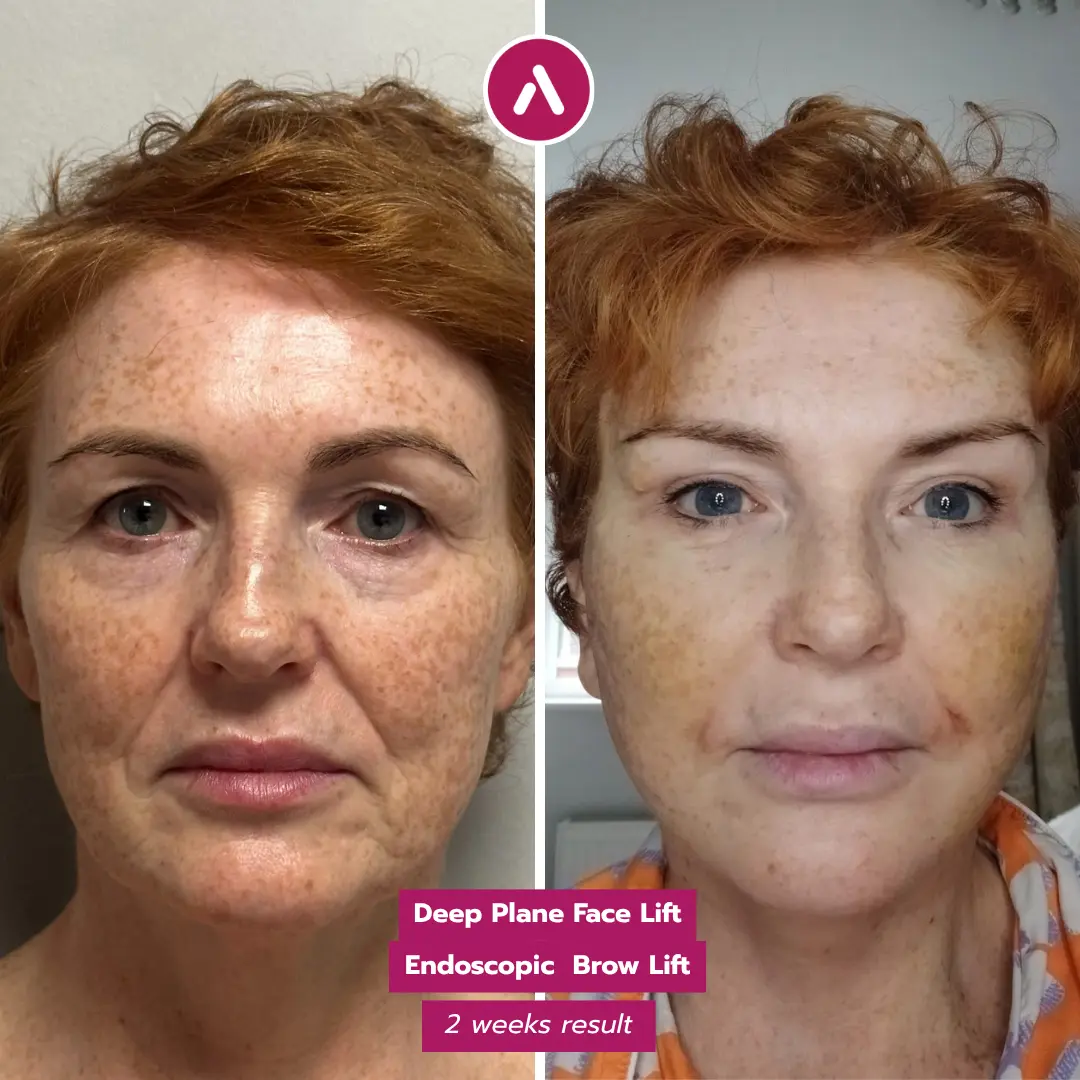
For readers comparing before-and-after examples, AKM’s more deep plane facelift outcomes can help show the range of possible changes. Photo review should always consider lighting, angle, facial expression, and the patient’s starting anatomy.
The most important visual signs of a natural result include:
- The mouth does not look stretched
- The cheeks look supported rather than inflated
- The jawline improves without a harsh pulled line
- The neck looks cleaner without appearing rigid
- The patient still looks like themselves
For a deeper explanation of this aesthetic standard, see the natural-results philosophy applied to Barbara’s case. That guide owns the broader photo-reading and natural-versus-pulled discussion.
Canadian reader note: Many Canadian facelift patients describe their ideal result as “rested” rather than “dramatic.” This quiet-luxury preference is common among patients returning to professional environments in Toronto, Ottawa, Vancouver, and Montreal.
Daily life adjustments she made or did not make
A 7-month review is also useful because it shows whether surgery still dominates daily life. Early recovery can shape every hour of the day. By 7 months, most patients are no longer organizing life around swelling control, bruising, or social camouflage.
Barbara’s documented comments focus on comfort and visible improvement. They do not suggest that her result required dramatic long-term lifestyle changes. That point matters. A successful facelift should integrate into the patient’s life, not become the centre of it.
Still, maintenance matters. Canadian patients returning home should protect scars from sun exposure, avoid smoking, maintain stable weight, and follow the clinic’s long-term virtual check-ins. Winter dryness and summer UV both matter for skin quality.
At this stage, the most useful lesson from Barbara’s experience is not that every patient will have her exact outcome. It is that a deep plane facelift can continue to look more natural as the months pass when the surgical plan respects facial structure.
Lessons for Future Patients, Including Canadians
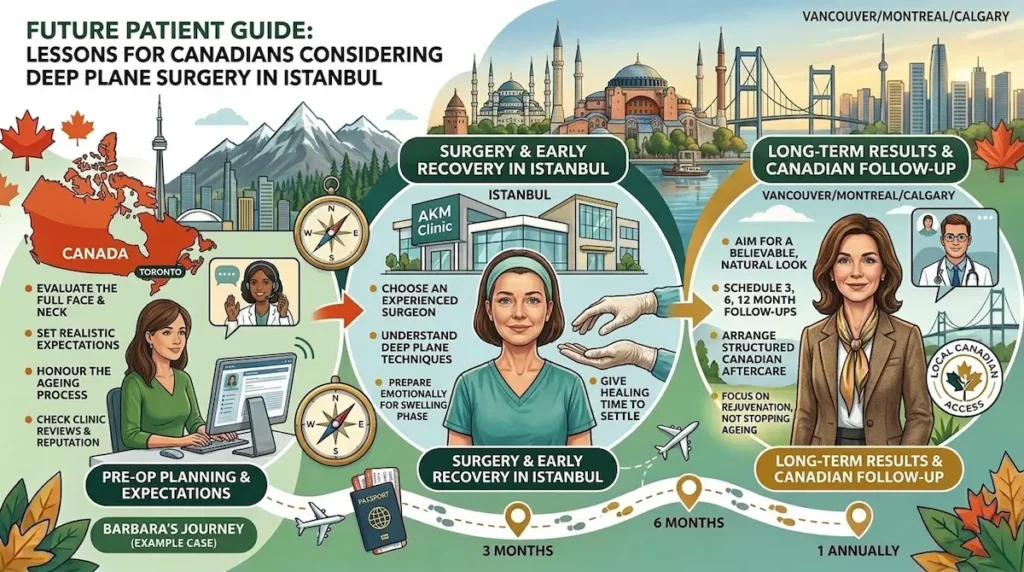
Barbara’s review is helpful because it gives future patients a longer view. It moves beyond the first emotional reaction after surgery and shows how a result can feel once healing has had time to settle. For Canadians comparing Istanbul with private options in Toronto, Vancouver, Montreal, or Calgary, this kind of follow-up is more useful than a single “after” photo.
Her case also shows why expectation setting matters. A deep plane facelift can improve the jawline, neck, and lower-face structure, but it does not stop ageing. The best result is usually one that continues to look believable as the patient returns to normal routines.
What Barbara would have done differently
The available testimonial record does not verify a specific list of things Barbara said she would have changed. That should be stated clearly. It would be misleading to invent regrets, extra advice, or private reflections that are not in the documented review.
Still, her case points to practical lessons that apply to many patients considering the same procedure:
- Evaluate the full face and neck together, not as isolated problem areas
- Ask what your result should look like at 3, 6, and 12 months
- Prepare emotionally for the early swelling phase
- Do not judge the final result during the first few weeks
- Choose a clinic that provides structured follow-up after you return home
For Canadians, the last point is especially important. Returning to Canada after surgery means your recovery must be planned across distance, time zones, and local medical access.
What she advises North American readers considering AKM
Barbara’s documented review highlights comfort, visible rejuvenation, and satisfaction with the outcome. For a North American reader, the lesson is not simply that she was pleased. The more useful lesson is that long-distance surgery should be evaluated through several filters: technique, surgeon judgement, aftercare, logistics, and review quality.
Canadian readers can compare her experience with Canadian patient experience stories from patients such as Lisa, Jammal, Ava, and Tina. Those cases are more directly relevant to readers travelling from Canada, while Barbara’s review adds another North American perspective on deep plane facelift and neck lift recovery.
Canadian review-checking note: Before booking, read both clinic-provided testimonials and independent review platforms. AKM Clinic has a public Trustpilot review profile, but Barbara’s specific review should not be assumed to appear there unless it is verified at publication time.
The role of pre-operative expectations
Barbara’s “looked 20 years younger” comment is emotionally powerful, but it should not become a universal benchmark. Age, skin quality, facial volume, neck anatomy, medical history, and healing pattern all affect the final result.
A responsible consultation should include direct answers to these questions:
- What can deep plane surgery realistically improve in my face?
- Do I also need a neck lift, eyelid surgery, or skin resurfacing?
- What will I likely look like at 2 weeks, 3 months, and 7 months?
- How will follow-up work after I return to Canada?
- What result would be considered too aggressive for my face?
That last question is often overlooked. Patients may ask for the most dramatic change, but a natural result usually comes from restraint. Barbara’s case is valuable because it supports that principle: visible improvement without making the face look surgically overworked.
To compare more long-term patient feedback before deciding, review AKM’s broader patient stories and then book a virtual consultation with a clear list of questions about your anatomy, recovery, and expected result.
Frequently Asked Questions: Barbara Deep Plane Facelift Review
These questions address the main concerns Canadian readers often have after reading a single-patient review. They are designed to separate verified facts from assumptions, which is essential when evaluating surgery abroad.
Can I read Barbara's full review on Trustpilot?
Barbara is documented in AKM Clinic’s testimonial knowledge base, but her specific review should not be claimed as a Trustpilot review unless the exact review is verified before publication. You can also read the complete AKM Clinic review collection for broader patient context.
Is Barbara a Canadian patient?
No. Barbara is documented as a patient from the United States. Her review is still useful for Canadian readers because she shares a North American context, including similar concerns about natural results, travel, recovery, and trust.
Will my results look like Barbara's?
Not exactly. A facelift result depends on your anatomy, age, skin quality, neck structure, previous procedures, and healing pattern. Barbara’s review can help you understand what is possible, but it should not be used as a template for your own face.
How does AKM verify these reviews?
AKM Clinic uses documented patient testimonials, before-and-after records, and internal follow-up material. Before relying on any review, ask whether the patient story is supported by procedure details, timeline, photos, and follow-up context.
Can I speak with Barbara directly?
Direct patient contact depends on privacy consent. Clinics cannot share a patient’s personal information without permission. If speaking with a former patient is important to you, ask AKM’s coordinator whether an approved patient reference is available.
Where can I find more long-term reviews from Canadian patients?
Look for reviews that include the patient’s procedure, timeline, recovery comments, and follow-up stage. Canadian patients such as Lisa, Jammal, Ava, and Tina are useful comparison points because their travel and aftercare concerns are closer to those of readers from Canada.
How does a 60-year-old's recovery compare to a 50-year-old's?
Age matters, but it is not the only factor. A healthy 60-year-old with good skin quality and no major risk factors may recover more smoothly than a younger patient who smokes, has unstable weight, or has had previous facial surgery. Your consultation should assess medical history, anatomy, and lifestyle together.
Ready to compare your own case? Bring Barbara’s review, your photos, and your questions to a virtual consultation. A surgeon-led assessment is the safest way to understand whether deep plane facelift and neck lift surgery fit your goals.
Medical Disclaimer: This page is provided for general educational purposes only and does not replace an in-person medical consultation, diagnosis, or personalized treatment plan. All surgery carries risks, and outcomes vary between individuals. Suitability for deep plane facelift surgery, procedure selection, and anesthesia choice can only be determined after a full clinical assessment by a qualified surgeon. Always follow your clinician’s instructions and seek urgent medical attention if you develop concerning symptoms during recovery.