



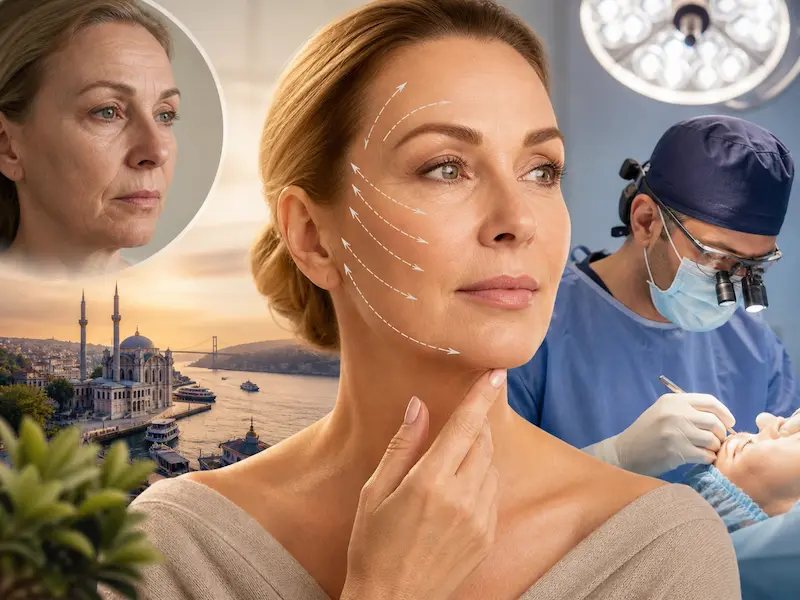
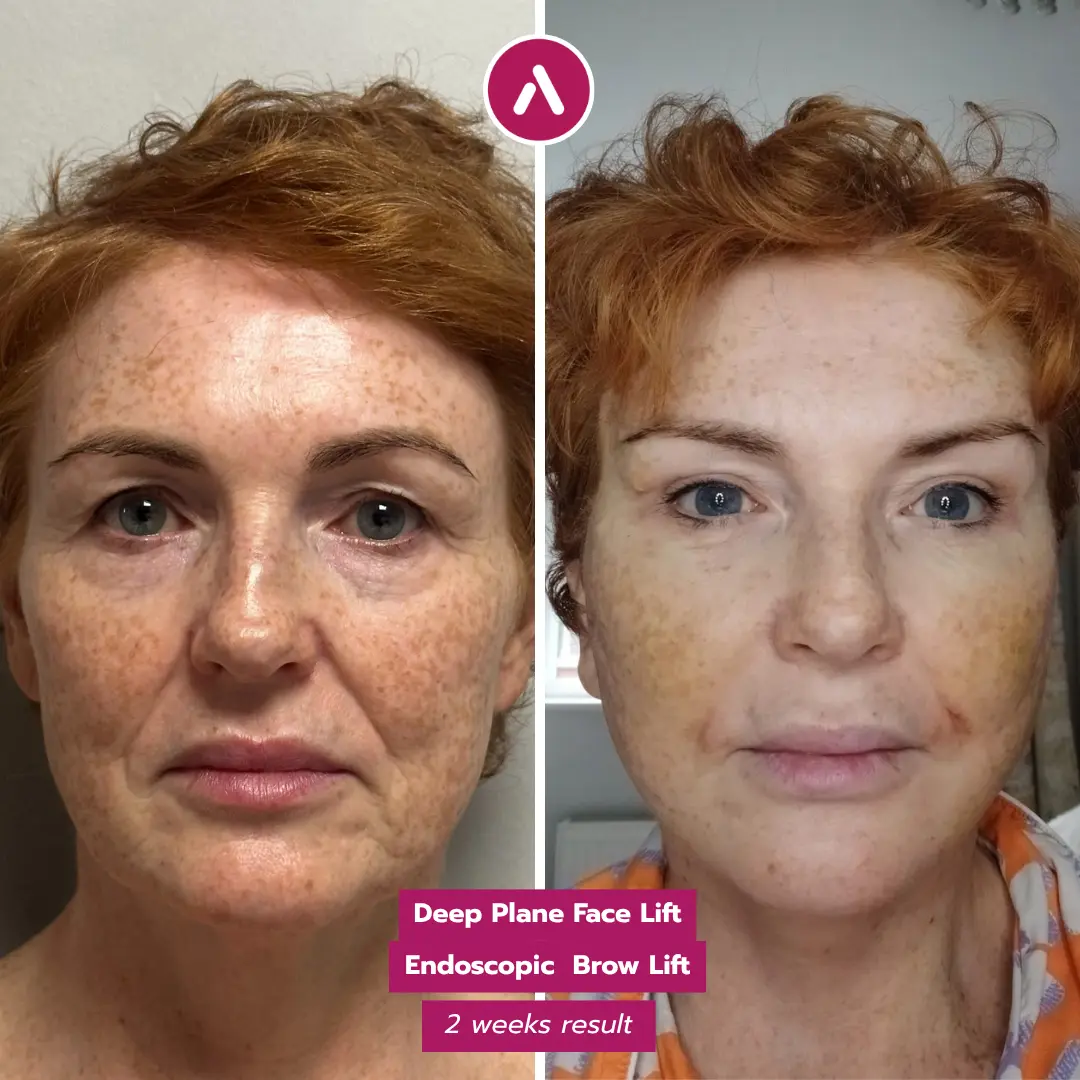
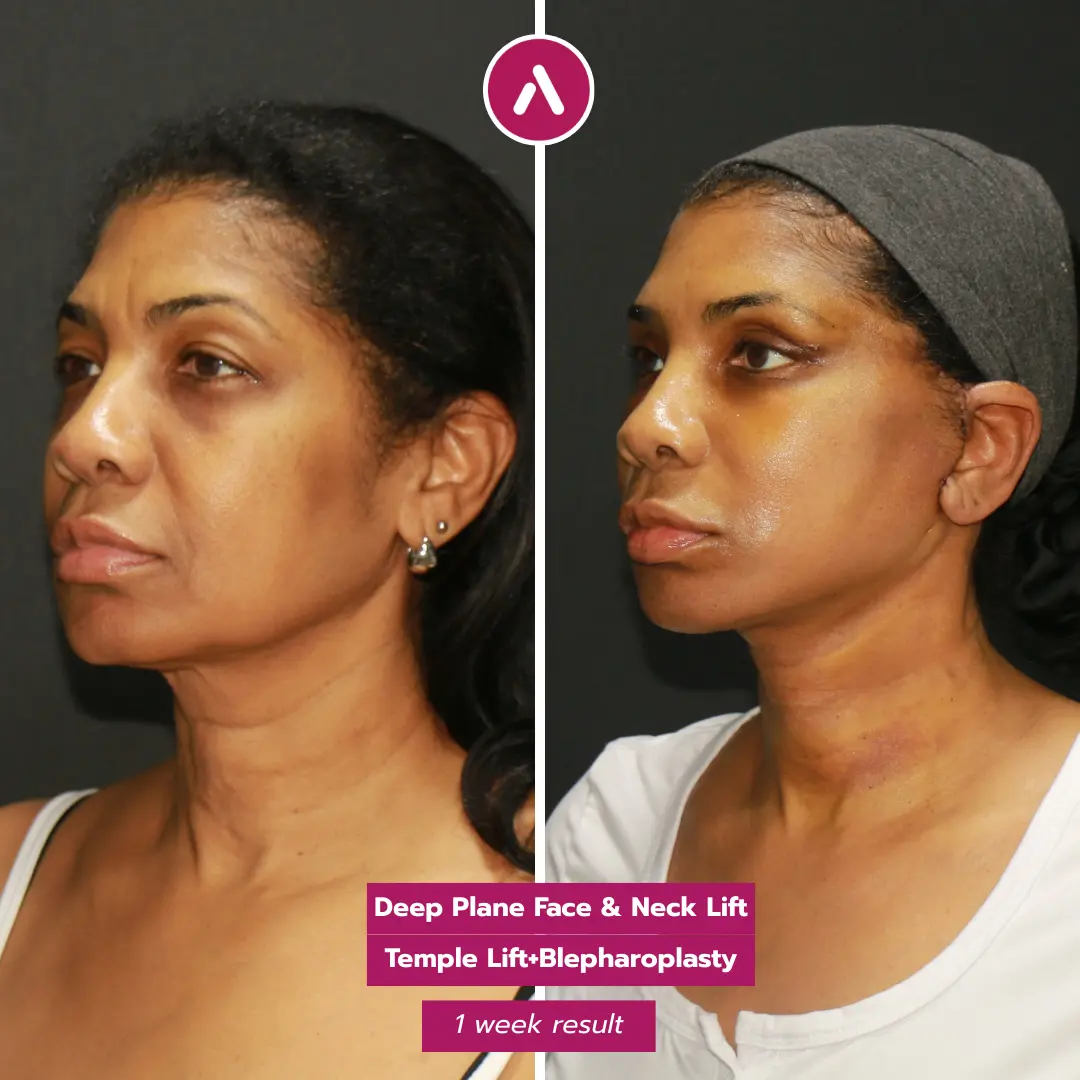
Canadian patients considering a facelift often face a practical decision: pay private-clinic prices in Toronto, Vancouver, or Montreal, wait for limited specialist availability, or evaluate an international surgical programme with clear safety standards. This guide explains facelift surgery from a Canadian patient’s perspective, including technique choices, recovery timelines, surgeon credentials, CAD pricing, and how we support patients travelling from Canada to Istanbul. Our focus is natural-looking facial rejuvenation, not an overcorrected or visibly operated-on result.
Table of Contents
What Is a Facelift? An Overview for Canadian Patients
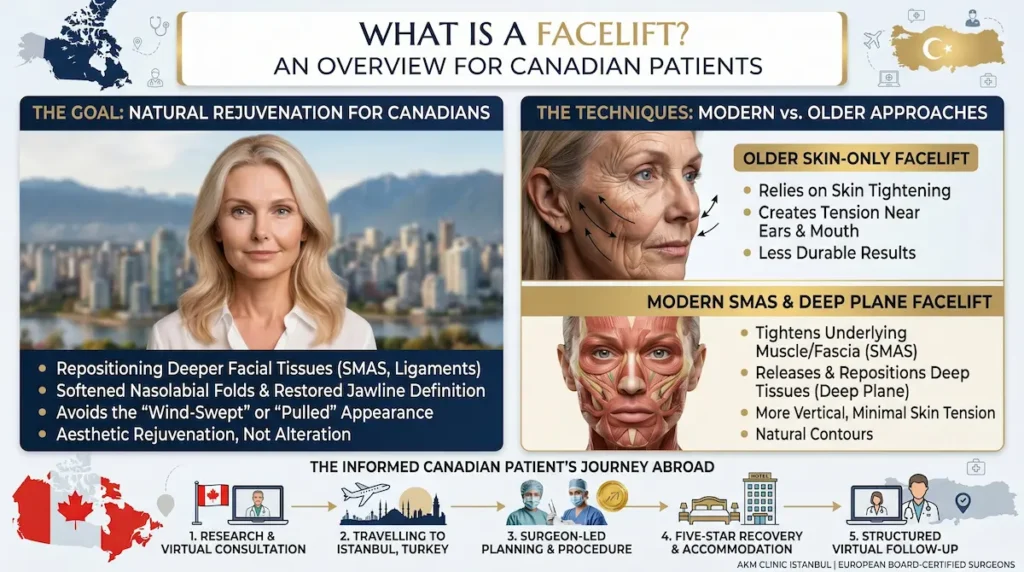
A facelift is a surgical procedure that repositions deeper facial tissues, including muscle and ligament layers, to restore a youthful, rested appearance without the “pulled” or “operated-on” look. At AKM Clinic in Istanbul, our European Board-Certified Surgeons tailor facelift techniques to each patient’s anatomy and Canadian aesthetic preferences.
The medical name for facelift surgery is rhytidectomy. Modern facelift surgery is not simply a skin-tightening procedure. It addresses the deeper support layers of the face, especially the SMAS layer, where age-related descent changes the jawline, cheeks, and lower face. This is why technique selection matters.
The medical definition of facelift surgery
A facelift, or rhytidectomy, is designed to correct visible facial aging caused by tissue descent, skin laxity, and loss of structural support. In practical terms, patients usually notice jowls, softened jawline definition, deeper nasolabial folds, and loose skin around the lower face and neck.
Our surgical planning starts by identifying which layer is causing the visible change. Some patients need SMAS lifting. Others benefit from a deep plane facelift, where the deeper facial tissues are released and repositioned with less surface tension. The goal is not to create a new face. Our philosophy is rejuvenation, not alteration.
How a modern face lift differs from older skin-only approaches
Older facelift methods often relied heavily on pulling the skin. That approach can create tightness around the mouth, visible tension near the ears, and the “wind-swept” look many Canadian patients specifically want to avoid. Modern techniques work differently.
Today, facelift surgery focuses on repositioning the underlying facial support system. SMAS facelift techniques tighten or reshape the muscle-fascia layer, while deep plane techniques release retaining ligaments beneath that layer for a more vertical lift. This deeper correction allows the skin to close with less tension, which supports a softer and more natural appearance.
Why Canadian patients increasingly research facelift options abroad
Many Canadian patients begin their research locally. Although cosmetic facelift surgery is private-pay in Canada, the broader health care context still shapes how Canadians evaluate access, timing, and specialist availability. The Fraser Institute’s 2025 wait-time report recorded a 28.6-week median wait from GP referral to treatment across surveyed specialties, which helps explain why many patients are already comfortable researching structured options beyond their province. They then compare facelift Toronto, Vancouver, and Montreal clinic options against international programmes that offer clear pricing and coordinated aftercare.
For the informed Canadian patient, travelling to Turkey is not about choosing the lowest price. It is about finding a clear clinical pathway: surgeon-led planning, a JCI-accredited hospital partner, 5-star recovery accommodation, private transfers, and structured virtual follow-up after returning home. For broader context on this trend, see our guide to why Canadians are getting facelifts in Turkey.
Benefits of a Facelift — Why Canadians Choose This Procedure
A facelift can restore facial definition in ways that injectables, threads, and skin treatments cannot reliably achieve. The main benefit is structural: the deeper facial tissues are repositioned rather than simply filled or tightened at the surface. For Canadian patients who want a discreet, age-appropriate result, this distinction is essential. A well-planned facelift should make you look rested, not visibly altered.
At AKM Clinic, we use a Natural-First approach. That means every surgical plan is built around your existing facial identity, not a standard template. We do not pursue the “pulled,” “overdone,” or operated-on aesthetic.
Restoring the jawline, cheeks, and lower face
The most common reason Canadian patients request a facelift is loss of jawline definition. As the deeper facial structures descend, the lower face can look heavier, the cheeks may flatten, and early jowls can appear. A facelift repositions these tissues so the jawline looks cleaner and the lower face appears more balanced.
For some patients, a lower face lift is enough. Others need a face and neck lift to address platysmal bands, neck laxity, or fullness under the chin. During your consultation, our surgeons assess these regions together because the face and neck age as one connected structure.
Natural-looking facial rejuvenation
Natural-looking facelift results depend on vector, tension, and restraint. If tissue is pulled sideways, the result can look tight. If the deeper tissues are lifted vertically and the skin is closed without excessive tension, the face keeps its natural expression.
This is where technique matters. SMAS lifting, deep plane facelift, and mini facelift approaches each serve different anatomy. We match the method to your facial structure, skin quality, and goals, rather than forcing every patient into the same surgical plan.
Long-term confidence without looking “done”
Canadian patients often tell us they want colleagues, friends, or family to notice they look well, not immediately guess they had surgery. That is a reasonable goal. A facelift should support your professional and personal life without making your face feel unfamiliar.
The best outcomes are measured over time. Swelling settles, scars mature, and facial movement becomes more natural as healing progresses. For many patients, the result is a quieter form of confidence: looking refreshed in photos, feeling comfortable in meetings, and recognizing themselves in the mirror again.
Am I a Good Candidate for a Facelift?
A good facelift candidate has visible facial aging that comes from tissue descent, not only surface-level skin texture. Most patients notice heaviness along the jawline, loose lower-face skin, or neck laxity that no longer responds to non-surgical treatments. Good health matters as much as anatomy. Before we recommend surgery, we review your medical history, medications, smoking status, recovery capacity, and travel-readiness from Canada.
Ideal facial aging signs
You may be a strong candidate for facelift surgery if your lower face has begun to soften or sag. Common signs include jowls, deeper folds beside the mouth, flattened cheek support, and loose skin near the jawline. Some patients also notice early neck bands or fullness under the chin.
A lower face lift may be enough when aging is concentrated around the jawline. A face and neck lift may be better when the neck and jawline have aged together. During your virtual consultation, we assess whether your concern is skin laxity, SMAS descent, volume loss, or a combination of all three.
Health requirements before surgery
Facelift surgery requires careful medical screening. We review blood pressure, cardiovascular history, bleeding risk, previous surgeries, allergies, and current medications. Patients who smoke or vape must stop before and after surgery because nicotine restricts blood flow and can compromise healing.
Stable weight is also important. Significant weight loss after surgery can loosen the result, while weight gain can change facial fullness. If you are taking blood thinners, hormone therapy, or supplements that affect bleeding, we will coordinate timing changes only under medical guidance.
Canadian-specific pre-travel medical planning
We encourage Canadian patients to speak with their family physician before travelling for elective surgery. This is especially important if you have hypertension, diabetes, thyroid disease, sleep apnea, or a history of clotting issues. Your Canadian physician can help confirm whether long-haul travel is reasonable for your health profile.
Before you fly, prepare a current medication list, allergy list, previous surgery history, and any relevant lab results. These records help our team plan safely in Istanbul. They also make follow-up easier when you return to Canada.
When a facelift may not be recommended
A facelift may not be the right procedure if your concern is mainly early fine lines, pigmentation, or mild volume loss. In those cases, laser resurfacing, injectables, skin treatments, or fat transfer may be more appropriate. Surgery should match the actual anatomical problem.
We may also decline or postpone surgery if a patient has uncontrolled medical conditions, active smoking, unrealistic expectations, or insufficient recovery time. Our role is not to operate on every patient. It is to recommend the safest plan that fits your anatomy, health, and goals.
Facelift Techniques Compared: SMAS vs Deep Plane vs Mini
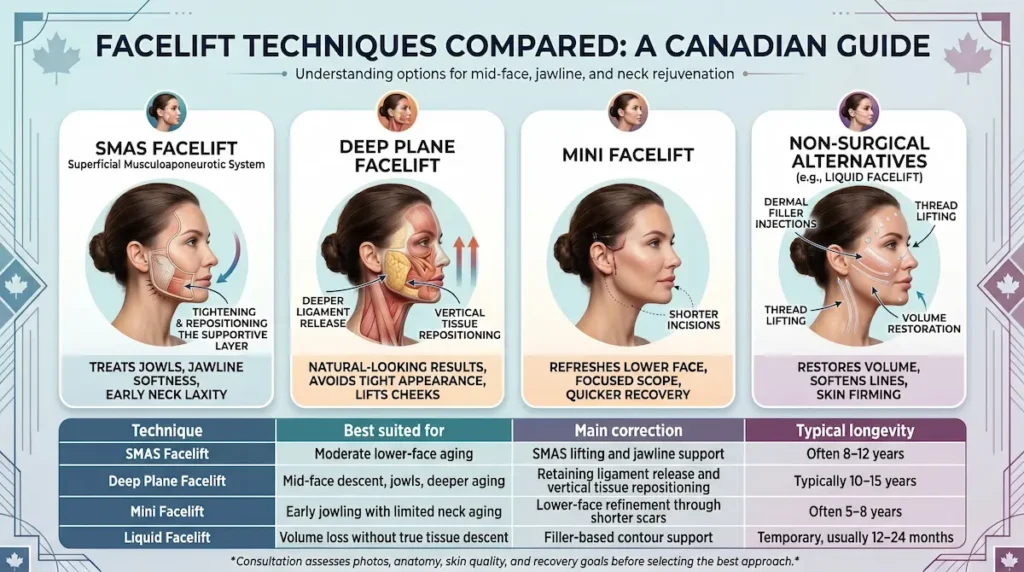
Facelift techniques differ by which facial layer they lift, how much tissue is released, and how long the result is expected to last. The Canadian Society of Plastic Surgeons’ facelift overview describes facelift surgery as a procedure commonly used for cheek sagging, aging around the mouth, loss of jawline definition, and neck aging. At AKM Clinic, we use that same anatomical framework to explain whether a SMAS facelift, deep plane facelift, mini facelift, or non-surgical option fits your face. The right choice depends on skin laxity, mid-face descent, jawline definition, neck involvement, scar tolerance, and recovery goals.
SMAS facelift
A SMAS facelift targets the superficial musculoaponeurotic system, the supportive layer beneath the skin. Instead of pulling only the surface, the surgeon tightens, folds, or repositions the SMAS layer to restore lower-face structure. This can improve jowls, jawline softness, and early neck laxity.
SMAS lifting is often suitable for patients with moderate aging who need a durable result but may not require the deeper ligament release of a deep plane facelift. Common variations include SMAS plication, SMASectomy, high-SMAS, and extended SMAS techniques. For a dedicated breakdown, visit our SMAS facelift in Turkey page.
Deep plane facelift
A deep plane facelift releases retaining ligaments beneath the SMAS layer, allowing the cheek, jawline, and lower-face tissues to move more naturally as a connected unit. This technique is often chosen for patients who want longer-lasting correction with less surface tension on the skin. It is especially useful when mid-face descent and jowls appear together.
At AKM Clinic, deep plane surgery aligns closely with our Natural-First approach because it restores structure rather than stretching the skin. Many patients choose this method to avoid the tight or wind-swept appearance associated with older methods. For a full technical explanation, see our deep plane facelift in Turkey guide.
Canadian patients often ask whether SMAS or deep plane is better. The honest answer is that the better technique depends on anatomy. Our detailed SMAS vs Deep Plane Facelift guide compares the mechanics, recovery patterns, and longevity differences in depth.
Mini facelift and short-scar approaches
A mini facelift is a narrower procedure for patients with earlier lower-face aging. It usually focuses on the jawline and lower cheeks, with shorter incisions and less tissue release than a full facelift. It may suit patients who have mild jowling but do not yet need a full face and neck lift.
The key limitation is scope. A mini facelift cannot correct significant neck laxity, heavy platysmal bands, or advanced mid-face descent. For the right candidate, it can create a subtle refresh. For the wrong candidate, it may under-correct the problem. Our mini facelift in Turkey page explains this narrower option in more detail.
Non-surgical facelift alternatives
Non-surgical options can help patients with early aging, mild volume loss, or skin quality concerns. A liquid facelift uses injectable fillers to restore volume. Thread lifting uses absorbable sutures to create a temporary lift. Energy-based devices may improve skin firmness, especially when laxity is mild.
These options do not replace a surgical facelift. A non surgical facelift cannot release retaining ligaments, reposition the SMAS layer, or correct moderate jowling with the same durability as surgery. Patients searching for a face lift without surgery should understand that these treatments are maintenance tools, not structural correction.
Facelift technique comparison table
| Technique | Best suited for | Main correction | Typical longevity |
|---|---|---|---|
| SMAS Facelift | Moderate lower-face aging | SMAS lifting and jawline support | Often 8–12 years |
| Deep Plane Facelift | Mid-face descent, jowls, deeper aging | Retaining ligament release and vertical tissue repositioning | Typically 10–15 years |
| Mini Facelift | Early jowling with limited neck aging | Lower-face refinement through shorter scars | Often 5–8 years |
| Liquid Facelift | Volume loss without true tissue descent | Filler-based contour support | Temporary, usually 12–24 months |
This table is a starting point, not a diagnosis. The best facelift technique depends on tissue position, skin quality, bone structure, neck involvement, and recovery goals. During your virtual consultation, we assess your photos from multiple angles before recommending a tailored clinical protocol.
Combined Procedures — One Trip from Canada
Many Canadian patients prefer to combine facial procedures because it creates one anesthesia plan, one recovery window, and one coordinated trip to Istanbul. The decision must still be medically reasonable. We do not combine procedures simply to shorten travel time. We combine them only when the total surgical plan supports safety, balance, and natural-looking results.
Facelift + neck lift
A face and neck lift is the most common combination for patients with jowls, loose neck skin, or platysmal bands. Treating the face without the neck can leave an uneven result when both areas have aged together. Neck lift planning may include skin tightening, platysmaplasty, or submental contouring, depending on your anatomy.
Facelift + blepharoplasty
Facelift surgery improves the lower face, but it does not correct heavy upper eyelids or under-eye bags. For patients with both lower-face aging and tired-looking eyes, blepharoplasty can create better facial harmony. This combination is often chosen by patients who want a refreshed appearance without changing their facial identity.
For patients who need a more complete facial plan, our facelift, rhinoplasty, and blepharoplasty package combines multiple facial refinements within a single clinical pathway.
Facelift + temporal lift
A temporal lift can support the outer brow and upper cheek region. It is not a substitute for a facelift, but it can complement lower-face surgery when the upper face also shows descent. Patients considering this option usually want a gentle lift at the outer eye area rather than a dramatic brow change.
Facelift + fat transfer to face
Facelift surgery repositions descended tissue. It does not replace all lost facial volume. If a patient has hollow temples, flattened cheeks, or deep volume loss, fat transfer can restore softness while the lift restores structure. The goal is proportion, not overfilling.
Facelift + arm lift or body procedures
Some Canadian patients combine facial rejuvenation with selected body procedures when their health profile and recovery capacity allow it. A common example is a facelift with arm lift for patients who have both facial aging and upper-arm laxity after weight change. For that scenario, see our facelift and arm lift package.
Combination surgery is never automatic. We consider anesthesia time, travel distance, bloodwork, healing capacity, and the support you will have after returning to Canada. A safe plan is always better than an overloaded plan.
Anesthesia — General, Twilight, or Awake?
Anesthesia planning is a key part of facelift safety, especially for Canadian patients who will take a long-haul return flight after surgery. The right model depends on the technique, the number of combined procedures, your medical history, and your comfort level. Some patients are best served with general anesthesia, while others may be candidates for twilight sedation or an awake protocol. We discuss these options during consultation so you understand both comfort and recovery implications before travelling.
General anesthesia
General anesthesia may be recommended when the surgical plan is longer, more complex, or combined with procedures such as neck lift, blepharoplasty, rhinoplasty, or body surgery. It allows the surgical and anesthesia teams to control airway safety, comfort, and monitoring throughout a multi-hour procedure.
For Canadian patients, the main consideration is recovery timing. General anesthesia can cause grogginess, nausea, or fatigue during the first day after surgery. This is why we do not rush departure. You remain under structured medical observation, and your return flight is planned only after in-person fit-to-fly assessment.
Twilight sedation
Twilight sedation uses IV medication to keep you deeply relaxed while preserving a lighter recovery profile than full general anesthesia. It can be appropriate for selected facelift patients, depending on anatomy and surgical scope. The goal is comfort without unnecessary anesthesia load.
This option may appeal to patients who want a balanced approach: strong comfort control during surgery and a smoother early recovery. It is still a medical anesthesia protocol, not a casual add-on. Our anesthesia team reviews your health history, medications, and flight timeline before recommending it.
Awake facelift options
Awake facelift surgery uses local anesthesia with light IV sedation. It is not suitable for every patient. Anxiety level, procedure length, medical history, and tolerance for being aware during surgery all matter. The awake model can reduce post-anesthesia grogginess, but it requires careful candidate selection.
Because this page is the main facelift overview, we will not go deep into awake candidacy here. For patients specifically comparing local anesthesia and standard anesthesia models, our Local vs General Anesthesia for Facelift guide explains the decision framework. If you are interested in the full awake protocol, see our dedicated Awake Deep Plane Facelift in Turkey page.
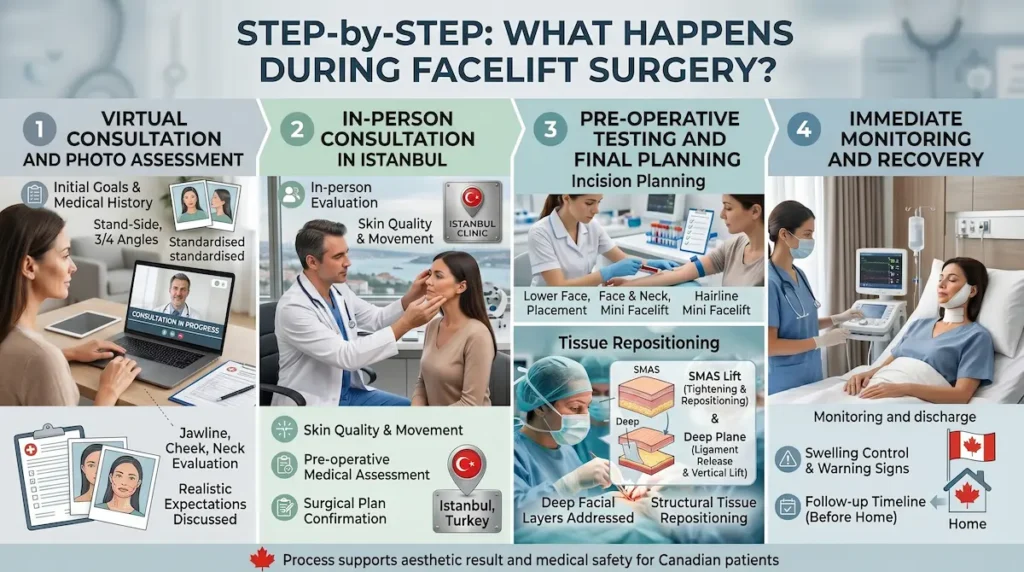
Step-by-Step: What Happens During Facelift Surgery?
A facelift is planned in stages, beginning before you leave Canada. We use your consultation, photo analysis, medical history, and in-person examination to choose the safest technique and recovery plan. The surgical day itself follows a structured sequence: preparation, anesthesia, incision planning, tissue repositioning, closure, and monitoring. This process helps us protect both the aesthetic result and your medical safety.
Virtual consultation and photo assessment
Your first step is a virtual consultation from Canada. You share your goals, medical history, medication list, and standardized photos from the front, side, and three-quarter angles. These images help us evaluate jawline laxity, cheek descent, neck involvement, scar placement options, and whether volume restoration may be needed.
At this stage, we also discuss your expectations. A facelift can reposition descended tissue, but it cannot stop aging or make every feature symmetrical. We explain which changes are realistic, which technique is likely to fit, and whether another procedure such as neck lift, blepharoplasty, or fat transfer should be considered.
In-person consultation in Istanbul
After you arrive in Istanbul, we complete your in-person examination. This visit confirms the surgical plan created during your virtual consultation. Your surgeon evaluates skin quality, facial movement, neck anatomy, hairline position, and incision placement in real time.
Pre-operative tests are also completed before surgery. These may include bloodwork, anesthesia assessment, and any additional screening recommended for your age or medical history. If something is not safe, we change the plan. Patient safety comes before the operating schedule.
Incision planning and tissue repositioning
Facelift incisions are usually placed around the ear and, when needed, into the temporal hairline or behind the ear. The exact pattern depends on whether you need a lower face lift, a face and neck lift, or a more limited mini facelift. Incision design aims to protect hairline position and keep scars as discreet as possible.
Once the incision is made, the deeper facial layer is addressed. In a SMAS facelift, the SMAS layer is tightened or repositioned. In a deep plane facelift, retaining ligaments are released so the tissues can be lifted more vertically. This is the structural part of surgery.
Closure and immediate monitoring
After tissue repositioning, the skin is closed without excessive tension. This matters because visible tightness and widened scars often come from pulling the skin too hard. A tension-conscious closure supports both scar quality and a natural facial expression.
You are then monitored during the early recovery period. Dressings are applied, medications are provided, and your care team reviews the first-night instructions. Canadian patients receive guidance on walking, head elevation, swelling control, warning signs, and the timeline for their next in-person check-up before returning home.
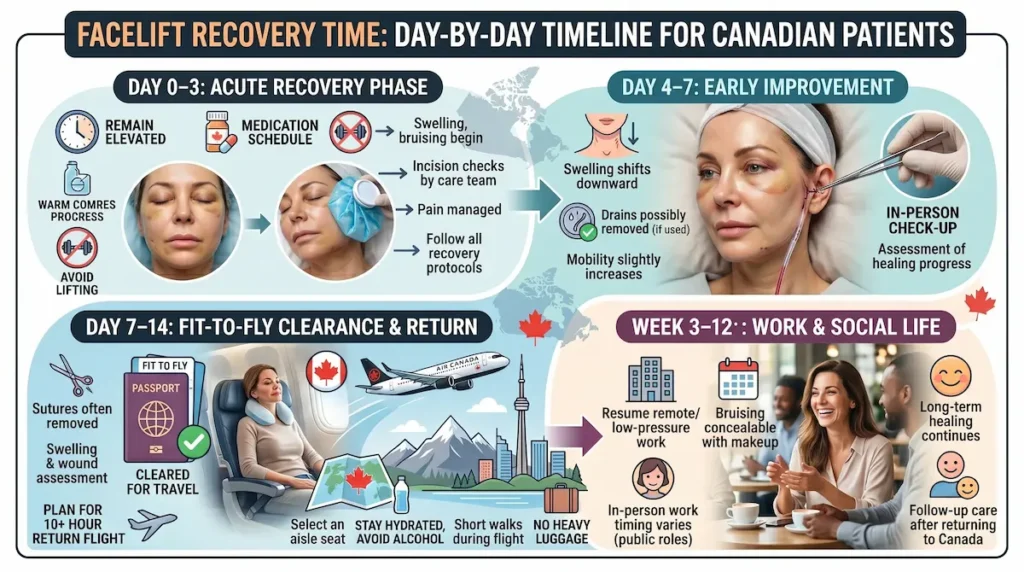
Facelift Recovery Time: Day-by-Day Timeline for Canadian Patients
Facelift recovery is a staged process, not a single “back to normal” date. Most patients move through early swelling, bruising, incision care, fit-to-fly assessment, and longer scar maturation over several weeks. Canadian patients also need a recovery plan that accounts for a 10+ hour return flight, time-zone change, and follow-up after returning home. We plan your recovery before surgery so each milestone is clear.
Day 0–3: Acute recovery phase
The first three days are the most intensive part of facelift recovery. Swelling, bruising, tightness, and mild discomfort are expected. You will rest with your head elevated, follow your medication schedule, and avoid bending, lifting, or unnecessary movement.
During this stage, your care team checks dressings, monitors early healing, and explains what is normal versus what needs attention. Pain is usually manageable with prescribed medication, but every patient heals differently. For a deeper look at comfort planning, see our Facelift Pain Management guide.
Day 4–7: Early improvement and in-person checks
By days four to seven, swelling usually begins to shift downward and bruising starts to change colour. You may feel more mobile, but this is still early recovery. The goal is controlled healing, not activity.
Your in-person check-up allows us to assess incisions, swelling, and overall recovery progress. If drains were used, removal timing depends on your fluid output and surgeon assessment. Canadian patients should not book return flights before this clearance point.
Our HBOT/LLLT Recovery Protocol
We utilize recovery technologies to support healing after facelift surgery. Hyperbaric Oxygen Therapy, or HBOT, helps deliver high oxygen levels to healing tissues. This can reduce inflammation, support tissue repair, and help the body recover from surgical edema.
Low-Level Laser Therapy, or LLLT, supports cellular repair through photobiomodulation. Our system uses 424 medical-grade semiconductor laser diodes at 650 nm to stimulate cellular ATP production without heat. For facelift patients, this can support incision maturation, reduce redness, and improve early soft-tissue recovery.
These therapies matter for Canadian patients because long-haul travel places additional stress on healing tissues. HBOT and LLLT are not shortcuts that replace rest. They are part of a structured recovery protocol designed to help you reach fit-to-fly status safely. For the science behind this protocol, see our Speed Up Facelift Recovery with HBOT guide and our technology and safety standards page.
Day 7–14: Fit-to-fly clearance and return journey
Most Canadian facelift patients are assessed for return travel around the day 7–14 window, depending on their procedure scope and healing pattern. Fit-to-fly clearance is based on swelling, blood pressure, wound status, comfort level, and whether any drains or sutures require further care.
Your return flight plan should include aisle access, hydration, short walks during the flight, and avoidance of alcohol. You should also avoid lifting heavy luggage. For flight-specific planning, our When Can You Fly After a Facelift? guide covers timing and long-haul considerations for Canadian patients.
Week 3–12: Returning to work and social life
By week three, many patients feel comfortable returning to remote work or low-pressure social settings. Bruising is usually much easier to conceal, and swelling continues to settle. In-person professional work may require more time if your role involves public-facing meetings.
Healing continues well beyond the first month. Incisions soften, facial movement becomes more natural, and residual tightness gradually improves. For visual recovery milestones, see our Deep Plane Facelift Recovery Day by Day with Photos guide.
Safety & Risks — An Honest Discussion
Every facelift is a surgical procedure, and every surgical procedure carries risk. A trustworthy clinic should explain those risks clearly before asking you to commit. Canadian patients are often especially careful because they are used to provincial regulation, transparent physician licensing, and clear follow-up pathways. We respect that caution. It leads to better decisions.
Common temporary effects
Swelling, bruising, tightness, and temporary numbness are common after facelift surgery. These effects usually improve gradually over the first several weeks. Some patients feel pulling near the ears or mild firmness along incision lines while the deeper tissues settle.
Bruising may move downward into the neck before fading. This can look concerning, but it is often part of normal healing. We explain the expected pattern before you leave Istanbul so you know what to monitor after returning to Canada.
Rare but serious risks
Rare complications include hematoma, infection, delayed wound healing, widened scars, asymmetry, temporary or permanent nerve weakness, and skin circulation problems. These risks are uncommon, but they must be discussed honestly. A facelift should never be presented as risk-free.
Risk can increase with smoking, uncontrolled blood pressure, blood-thinning medications, diabetes, previous facial surgery, and poor aftercare compliance. This is why pre-operative screening is not optional. If a risk factor is too high, we may postpone or decline surgery.
How we reduce risk
Our safety protocol begins before you travel. We review your medical history, medication list, photos, and relevant records. Once you arrive in Istanbul, your in-person assessment and pre-operative tests confirm whether the planned surgery remains appropriate.
Surgery is performed with a JCI-accredited hospital partner, sterile operating standards, and structured post-operative monitoring. We also provide English-language instructions, medication guidance, and scheduled virtual follow-up after you return home. The goal is not only a natural-looking result. It is a safe, medically responsible pathway from Canada to Istanbul and back.
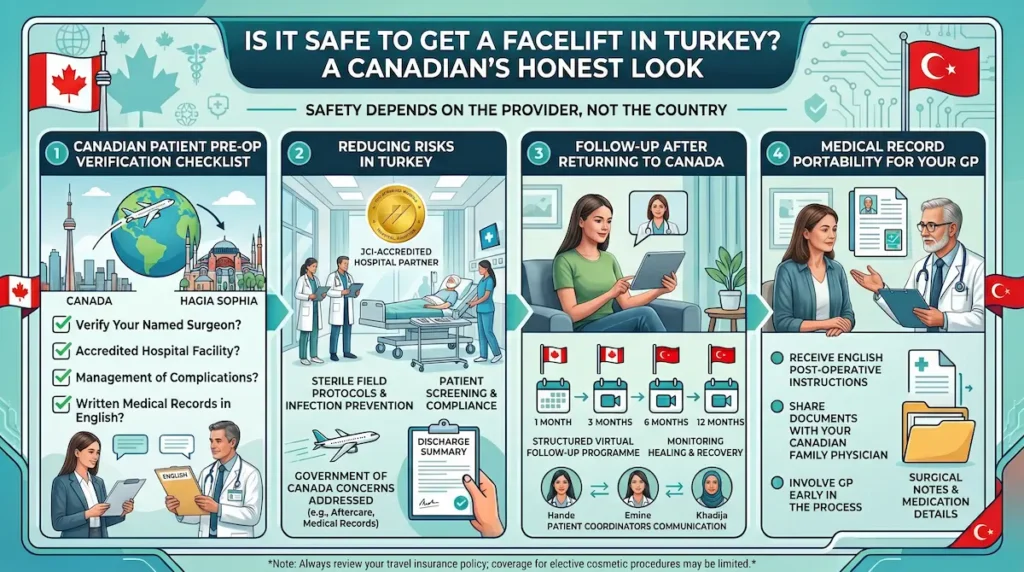
Is It Safe to Get a Facelift in Turkey? A Canadian’s Honest Look
Yes, a facelift in Turkey can be safe for Canadian patients when the clinic, surgeon, hospital, and follow-up system meet high standards. The country alone does not determine safety. The provider does. Canadian patients should evaluate credentials, facility accreditation, infection control, medical records, anesthesia planning, and aftercare before booking any international surgical programme.
What Canadian patients should verify before surgery abroad
Before choosing any clinic outside Canada, verify who will perform your surgery, where it will take place, and how complications are managed. Ask whether the surgeon is named before booking. Ask whether surgery occurs in an accredited hospital. Ask whether you will receive written medical records in English.
You should also confirm the follow-up plan after returning home. A clinic that disappears after discharge is not appropriate for Canadian patients travelling long distances. Our long-term virtual follow-up programme includes planned check-ins at 1, 3, 6, and 12 months.
Government of Canada concerns — addressed directly
The Government of Canada’s guidance on receiving medical care outside Canada advises travellers to consider issues such as proper aftercare, medical records, complication risk, and flying soon after surgery. These concerns are valid. They should not be dismissed.
Our approach is to reduce each risk through planning. We use a JCI-accredited hospital partner, provide English-language discharge information, maintain structured follow-up, and encourage Canadian patients to involve their family physician before travelling. Travel insurance for elective cosmetic procedures may be limited, so patients should review their policy carefully before booking.
Infection prevention and sterilization
Infection prevention depends on hospital standards, sterile technique, patient screening, and aftercare compliance. We follow strict sterile-field protocols and operate through a JCI-accredited hospital partner. Instruments, surgical environment, dressings, and medication protocols are managed through a formal clinical pathway.
Patients also play a role. Avoiding smoking, following wound-care instructions, attending check-ups, and reporting unusual symptoms early all reduce risk. We explain warning signs clearly before you return to Canada.
Follow-up after returning to Canada
Follow-up is one of the biggest concerns for Canadian patients considering surgery abroad. We address this with scheduled virtual check-ins at 1, 3, 6, and 12 months. These appointments allow our team to monitor swelling, scars, facial movement, and the overall healing pattern.
If a concern arises between scheduled follow-ups, you can contact your patient coordinator. Our patient hosts, Hande, Emine, and Khadija, help bridge communication between you and the clinical team. If in-person assessment is needed in Canada, we provide documentation you can share with your family physician or local urgent-care provider.
Medical records for your Canadian family physician
Before returning home, you receive post-operative instructions and relevant medical documentation in English. These records may include the procedure performed, medications used, wound-care instructions, and follow-up recommendations. This helps your Canadian physician understand what was done and what stage of healing you are in.
Medical record portability is essential for safe international care. We encourage patients to keep digital and printed copies of all documents while travelling. If you need clarification after returning to Canada, our team can help explain the surgical notes and recovery instructions.
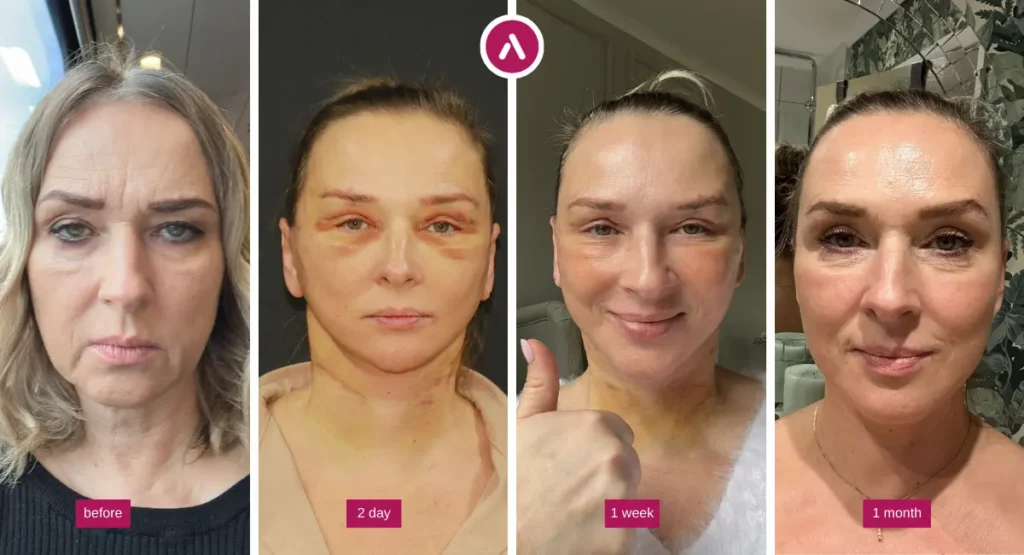
Facelift Before and After: Realistic Expectations — Our Natural-First Philosophy
A facelift should make you look rested, healthier, and more aligned with how you feel inside. It should not erase your identity. Many Canadian patients tell us they want privacy around their surgery. They want friends or colleagues to notice they look well, not immediately identify that they had a procedure.
Our Natural-First approach is built around that preference. We plan facial rejuvenation with restraint, anatomical respect, and long-term aging in mind. A good facelift result should move naturally, photograph well, and continue to look appropriate as the face matures.
What “natural-first” means
Natural-first facelift surgery avoids over-tightening, overfilling, and aggressive reshaping. The goal is to restore facial support while keeping the features that make you recognizable. This is why we focus on deeper tissue repositioning rather than surface tension.
In clinical terms, this means choosing the right lift vector, protecting the hairline, avoiding visible ear distortion, and closing the skin without excessive pull. We do not pursue a “wind-swept” or operated-on aesthetic. Our philosophy is rejuvenation, not alteration.
Facelift before and after expectations
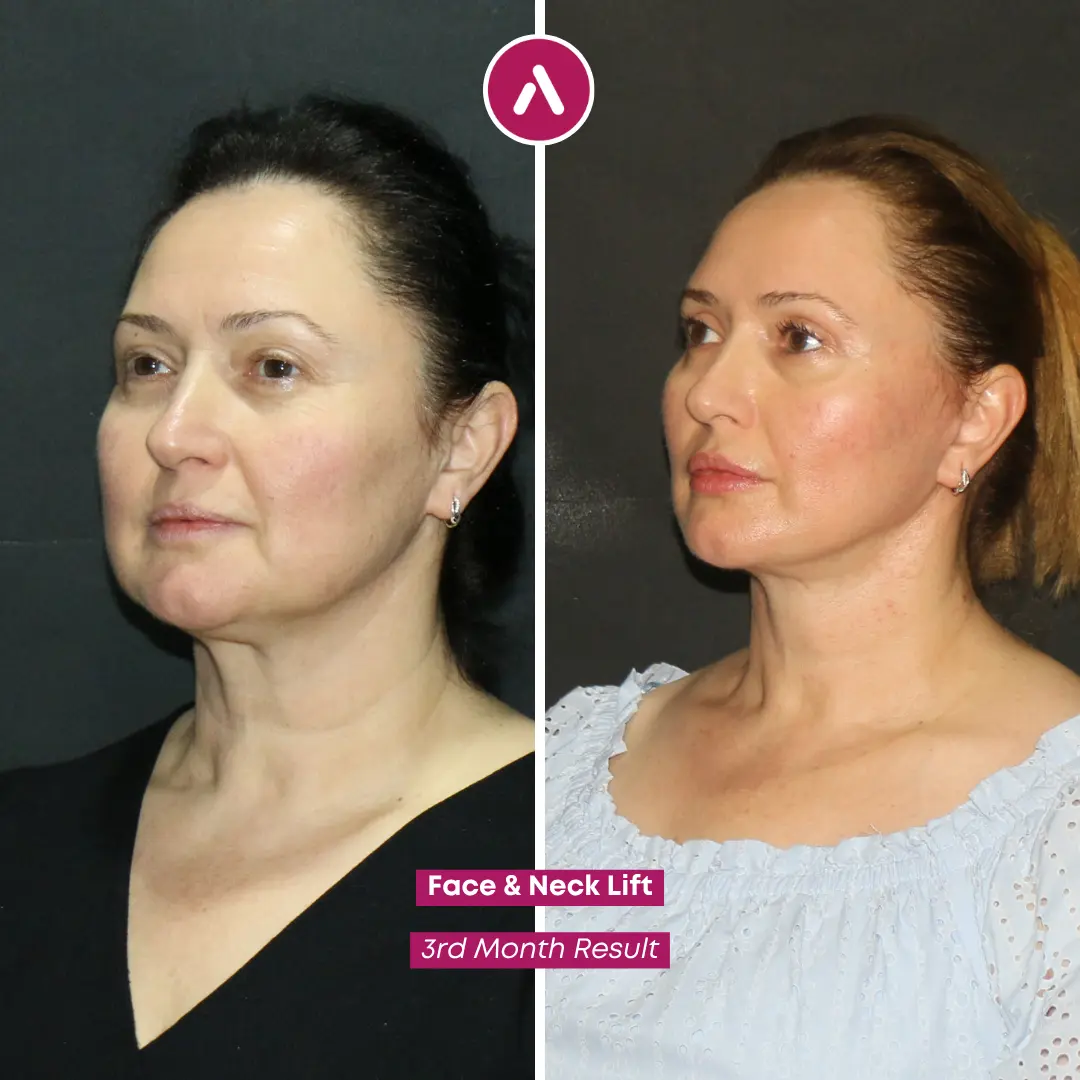
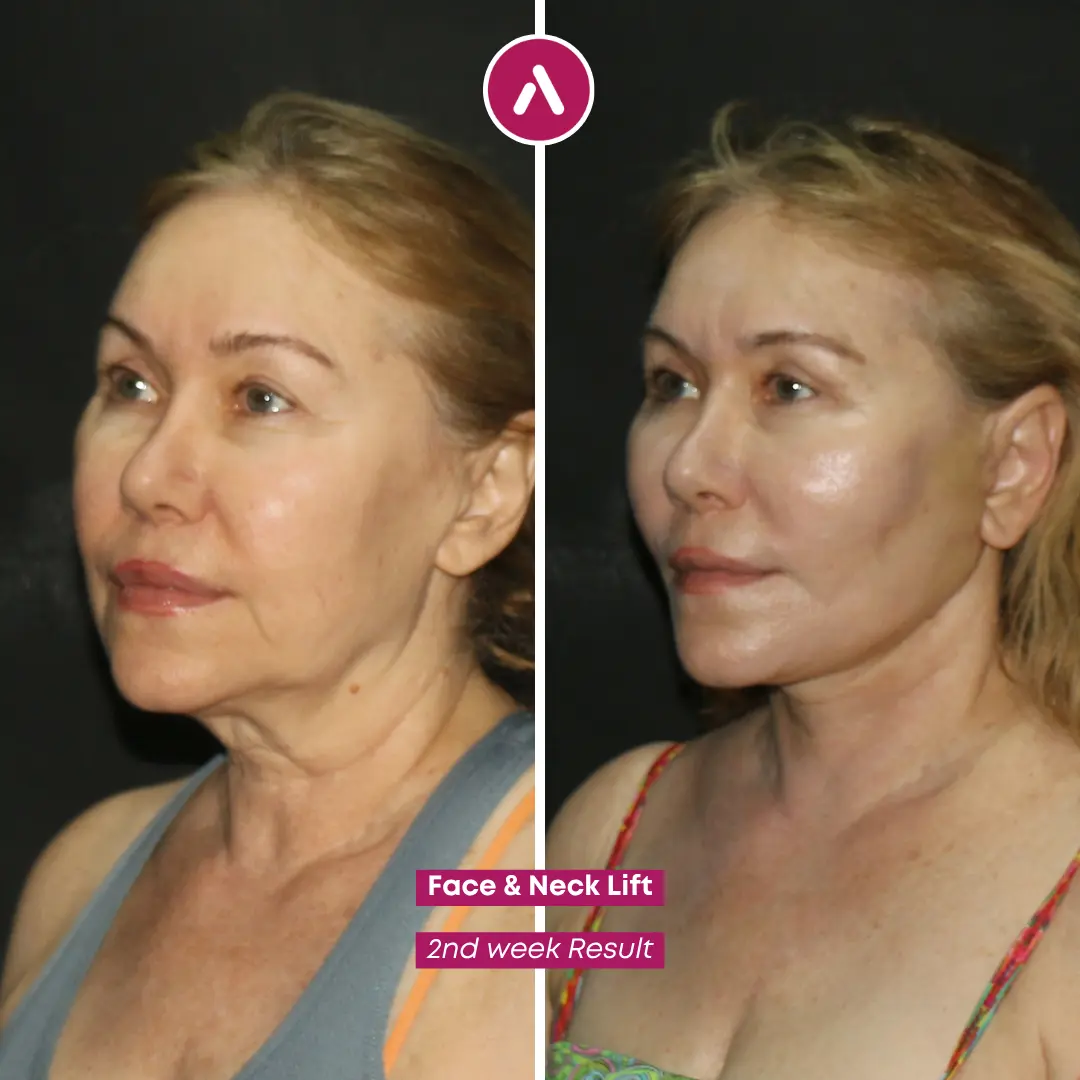
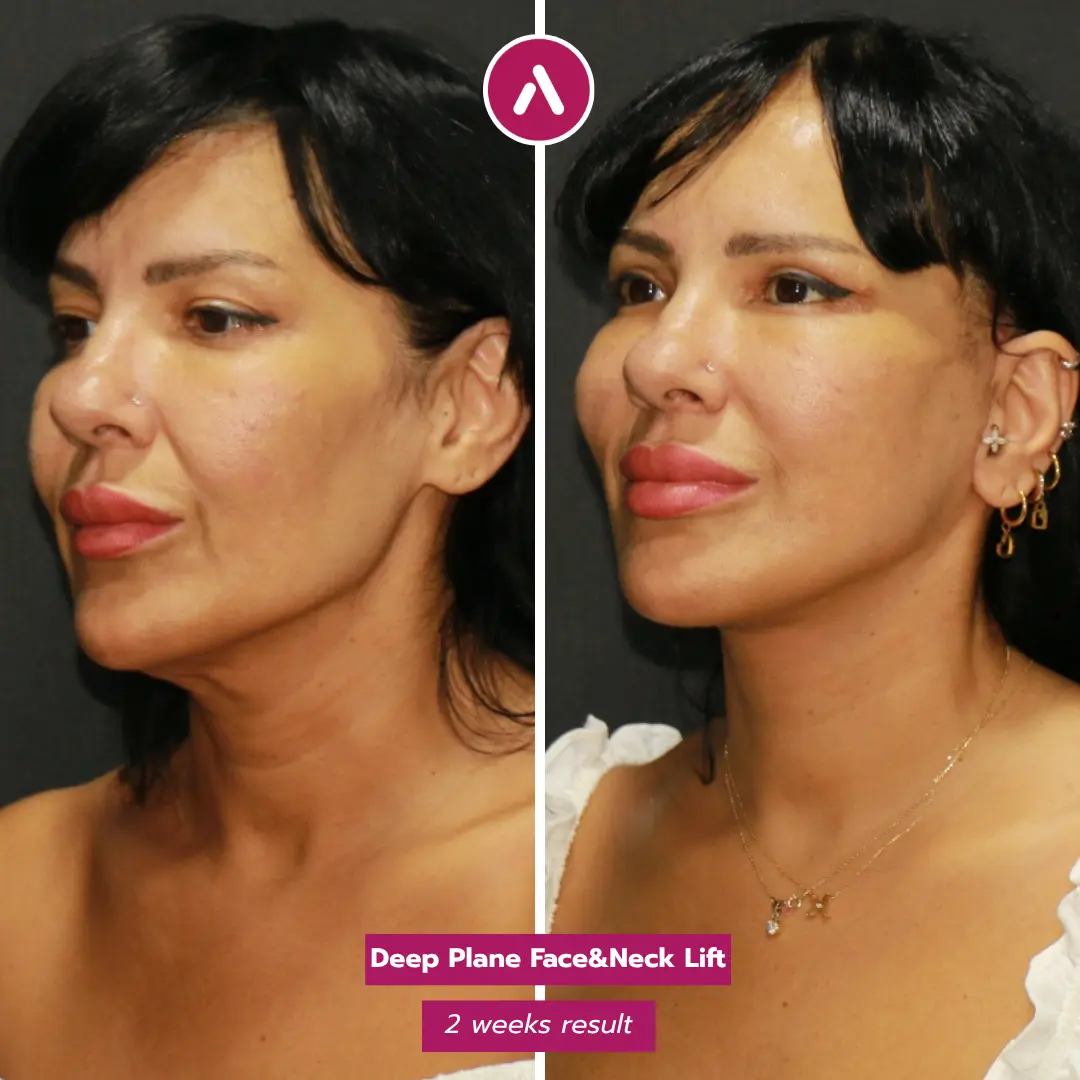
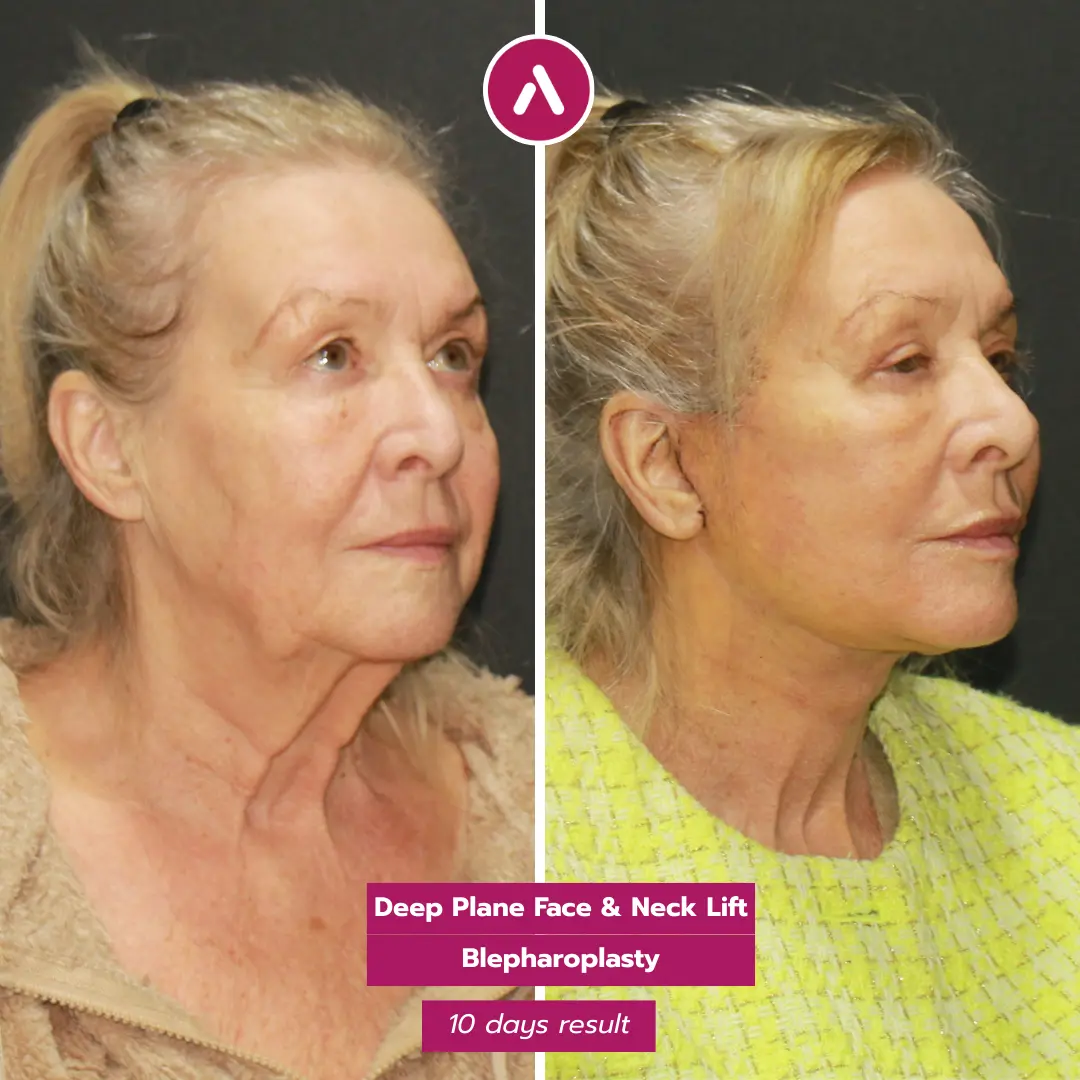
Facelift before and after photos should be reviewed carefully. Look for natural jawline definition, balanced cheeks, discreet scars, and facial expression that still looks relaxed. The best face lift before and after examples show improvement without making the patient look like someone else.
Early photos can be misleading because swelling changes the face during the first several weeks. Results become easier to judge after three months, while scars and tissue softness continue improving for up to a year. To review procedure-specific visual examples, visit our deep plane facelift before and after gallery.
For a deeper look at subtle, identity-preserving outcomes, see our Natural-Looking Facelift in Turkey case study. It explains why “natural” is a clinical planning choice, not a vague aesthetic promise.
How long facelift results typically last
Patients often ask how long does a facelift last. The answer depends on technique, skin quality, age, lifestyle, weight stability, and sun exposure. A mini facelift usually has a shorter lifespan than a deeper structural lift. SMAS and deep plane techniques generally provide longer durability.
Deep plane technique results typically last 10–15 years because the deeper facial support system is repositioned rather than only tightening the skin. That does not mean aging stops. It means you continue aging from a more refreshed structural position.
Verified Canadian patient voices
Patient stories help Canadian readers understand the emotional side of recovery. Lisa from Canada underwent a face, neck, and arm lift and described feeling supported by her coordinator, Khadija. Ava from Canada had a facelift with temporal lift and credited Hande for helping her feel confident through the process.
Jammal from Canada also shared that their face and neck lift went smoothly and thanked both the doctor and the team. We use only verified patient names in our content. We do not invent stories, cities, or outcomes.
Facelift Cost 2026: Turkey vs Canada
Canadian patients researching facelift cost Canada, price of facelift in Canada, or how much is a facelift in Canada often find that private clinic quotes in Toronto, Vancouver, or Montreal are significantly higher than an all-inclusive clinical pathway in Istanbul. The difference is not based on lowering medical standards. It reflects different operating costs, currency context, and a more integrated care model.
Our all-inclusive facelift programme starts at CAD $6,800, covering surgery, 5-star hotel accommodation, VIP transfers, and 24/7 patient advocacy. The Deep Plane Facelift All-Inclusive Package is CAD $7,500, including 4 nights at our 5-star partner hotel. By comparison, Canadian private clinics commonly quote substantially higher fees for surgery alone, with anesthesia, facility, follow-up, and aftercare billed separately.
For the full Canadian dollar cost breakdown, including hidden-fee comparison and technique-level pricing, see our detailed facelift cost guide for Canadian patients.
Several bundled options exist. Our most popular entry point is the All-Inclusive Facelift Package at CAD $6,800, while patients seeking deeper structural rejuvenation may consider the Deep Plane package. CAD figures reflect 2026 exchange context.
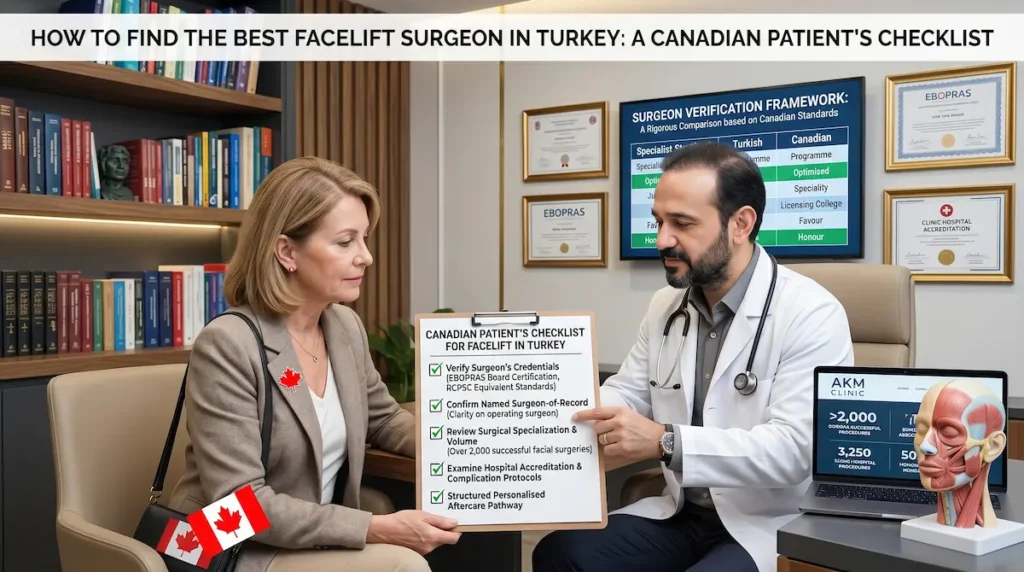
How to Find the Best Facelift Surgeon in Turkey: A Canadian Patient’s Checklist
Many Canadian patients begin their research by searching for the best facelift surgeon in Canada or best facelift Toronto clinics. After comparing surgical credentials, technique options, facility standards, and total cost, many also evaluate Istanbul as an international option. The key is not choosing a country first. The key is verifying the surgeon, hospital, technique, and aftercare pathway with the same rigour you would apply in Canada.
Credential equivalency — EBOPRAS and RCPSC
Canadian patients are familiar with the Royal College of Physicians and Surgeons of Canada, which defines certification routes for specialist physicians in Canada. In Turkey and Europe, credential structures differ, so equivalency needs to be translated clearly. European board certification, facial plastic surgery fellowship training, and hospital accreditation should be reviewed together.
At AKM Clinic, our surgical team includes European Board-Certified specialists whose credentials align with the structured specialist-training expectations Canadian patients associate with RCPSC standards. This does not mean the systems are identical. It means you should compare training depth, specialty focus, continuing education, hospital privileges, and verifiable experience rather than relying on marketing language alone.
Surgical volume and facial specialization
Facelift surgery is anatomy-intensive. The surgeon must understand facial nerves, retaining ligaments, SMAS behaviour, skin vascularity, and scar placement. A general cosmetic surgery background is not enough for advanced facial rejuvenation.
Our clinic has performed over 2,000 successful facial surgeries since 2013. That experience matters because facelift results depend on repeated judgment: how much release is safe, how much lift is appropriate, where tension should sit, and when a more conservative plan is the better plan.
Surgeon-of-record clarity
Canadian patients often worry about “ghost surgery,” where the person advertised is not the person performing the operation. This concern is reasonable. Before booking surgery abroad, you should know who your surgeon is, what they will personally perform, and how your operative plan is documented.
Ask for surgeon-of-record clarity before making a decision. You should also ask whether your consultation is reviewed by the surgical team, where the procedure will occur, and what documentation you will receive after surgery. For a deeper verification framework, see our Best Deep Plane Facelift Surgeon in Turkey checklist.
Red flags to avoid
Be cautious if a clinic cannot name your surgeon before booking, avoids discussing complications, uses only heavily edited photos, or offers aggressive pricing without explaining facility standards. Another red flag is a clinic that promises a specific result before reviewing your anatomy.
Strong clinics are transparent. The Canadian Society of Plastic Surgeons’ guidance on choosing a plastic surgeon recommends confirming surgeon training and checking the relevant licensing college. For international surgery, apply the same logic: ask for the named surgeon, facility accreditation, complication protocol, and written follow-up pathway. To understand our clinic standards and surgical philosophy in more detail, visit our About AKM Clinic page.
Your Facelift Journey from Canada: From YYZ to Istanbul, Step by Step
Travelling from Canada for facelift surgery requires more planning than booking a local appointment. You need a consultation pathway, travel schedule, hotel recovery plan, fit-to-fly timing, and follow-up after returning home. Our role is to reduce logistical uncertainty so you can focus on preparation and healing. We manage the clinical and on-ground details while you arrange your international flight.
Virtual consultation from Canada
Your journey begins with a virtual consultation. You submit photos, share your medical history, and explain your goals. We review whether facelift surgery is appropriate, whether a neck lift or eyelid procedure should be considered, and which technique may fit your anatomy.
This stage also includes transparent pricing. Canadian-dollar pricing shown for planning clarity; your coordinator will confirm the final payment details before booking. For a broader overview of the full support pathway, see our Canadian patient journey page.
Flights from Canada to Istanbul
Most Canadian patients travel through major airports such as Toronto Pearson, Montréal-Trudeau, Vancouver, Calgary, or Ottawa. Flight schedules change, so you should always confirm current routes directly with your airline before booking. Many patients choose routes into Istanbul Airport because it supports easier private transfer coordination.
Your return flight should not be scheduled too early. Facelift recovery requires an in-person post-operative assessment before you fly. Our Deep Plane Facelift Journey in Turkey guide walks through the practical timing of consultation, surgery, early recovery, and departure planning.
90-day visa-free entry for Canadian citizens
Canadian citizens can enter Turkey visa-free for short stays, which makes surgical travel planning simpler. Your passport should still be valid for the required period beyond your travel dates. If you have dual citizenship, permanent residence status, or a non-Canadian passport, confirm entry rules before booking.
Most facelift patients do not need anywhere close to 90 days in Turkey. The visa-free period simply creates enough flexibility if recovery takes longer than expected. We still recommend planning your stay around your surgical clearance, not around the maximum entry allowance.
VIP transfer and 5-star hotel stay
After arrival, private VIP transfer takes you from the airport to your hotel. Our 5-star hotel partner, The Point Barbaros in Levent, is selected for comfort, privacy, and proximity to clinical care. Recovering in a predictable environment helps reduce stress during the early post-operative period.
Your patient hosts, Hande, Emine, and Khadija, help coordinate communication, transfers, appointments, and practical questions during your stay. For more detail on the facility experience, visit our Istanbul clinic page. For hotel and transfer planning, see our hotels and VIP transfers guide.
Return flight after surgery
Your return flight is planned after the surgical team confirms that you are healing appropriately. Fit-to-fly clearance may consider swelling, incision status, blood pressure, medication use, and overall comfort. You should not lift heavy luggage, drink alcohol on the flight, or stay seated without moving for long periods.
Long-haul travel after surgery requires practical precautions: hydration, walking during the flight, aisle access when possible, and clear instructions for what to monitor once you land in Canada. For flight-specific recovery guidance, see our facelift flight safety guide for Canadian patients.
Facelift Surgery Frequently Asked Questions (FAQ):
Canadian patients usually arrive at a facelift decision after careful research. They want practical answers about provincial coverage, safety, travel, follow-up, and natural-looking results. The questions below address the concerns we hear most often from patients in Ontario, British Columbia, Quebec, Alberta, and other provinces. These answers are educational and do not replace a personal medical consultation.
Does OHIP, MSP, RAMQ, or AHCIP cover facelift surgery?
No, provincial health plans do not cover cosmetic facelift surgery. OHIP, MSP, RAMQ, AHCIP, and other provincial plans may cover medically necessary reconstructive procedures in limited circumstances, but an aesthetic facelift is considered elective. Patients should expect to pay privately whether they choose a Canadian clinic or an international surgical programme.
Do I need to tell my Canadian family doctor before travelling?
We strongly encourage it. Your family physician can help review your general health, medications, blood pressure, diabetes status, clotting history, and travel-readiness. This is especially important if you have a chronic condition or take medication that may affect anesthesia or healing.
How do I arrange follow-up after returning to Canada?
We provide scheduled virtual follow-up at 1, 3, 6, and 12 months. You also receive post-operative instructions and documentation that can be shared with your family physician if local assessment becomes necessary. If you have a concern between scheduled follow-ups, your patient coordinator can help connect you with the clinical team.
Are AKM’s surgeon credentials comparable to Canadian standards?
Credential systems differ by country, so direct comparison requires context. Our European Board-Certified Surgeons and Facial Plastic Surgery Fellows follow specialist training pathways that Canadian patients can compare against RCPSC expectations. We encourage patients to verify credentials, surgical volume, hospital standards, and follow-up protocols before booking.
What if I have complications after returning home?
If you notice unusual swelling, fever, increasing pain, wound drainage, breathing difficulty, or sudden facial weakness, you should seek local medical care promptly in Canada. You should also contact our team so we can review your symptoms and documentation. We provide operative and recovery information to help your local provider understand the procedure performed.
How long before I can fly back to Canada after a facelift?
Most facelift patients are assessed for return travel around day 7–14, depending on procedure scope and healing progress. You should not fly before your in-person post-operative check. Fit-to-fly clearance considers swelling, incision status, blood pressure, medication use, and overall comfort.
How long until I can return to work?
Many patients return to remote work within two to three weeks, depending on bruising, swelling, and job demands. Public-facing work may require more time. If your role involves presentations, client meetings, or frequent video calls, plan a longer recovery buffer.
Will my facelift look natural?
That is the goal of our Natural-First approach. Natural results depend on proper technique, restrained planning, and avoiding excessive skin tension. We aim for refreshed facial definition while preserving your identity and normal expression.
How long do facelift results last?
Longevity depends on technique, skin quality, age, weight stability, smoking status, sun exposure, and genetics. Mini facelifts usually have a shorter lifespan than deeper structural procedures. Deep plane facelift results typically last 10–15 years, though natural aging continues.
What is the difference between SMAS and deep plane facelift?
A SMAS facelift tightens or repositions the supportive SMAS layer beneath the skin. A deep plane facelift releases retaining ligaments beneath that layer, allowing deeper tissues to move more naturally as a connected unit. The right choice depends on your anatomy, degree of descent, and desired longevity.
Can I combine facelift with neck lift or eyelid surgery?
Yes, many patients combine facelift with neck lift, upper blepharoplasty, lower blepharoplasty, temporal lift, or fat transfer. Combination surgery is recommended only when it is medically appropriate. We consider anesthesia time, healing capacity, and travel timing before confirming a combined plan.
Is a non-surgical facelift a real alternative?
Non-surgical treatments can help with mild volume loss, skin quality, or early aging. They cannot reposition deeper facial tissues or correct moderate jowling the way surgery can. A liquid facelift or thread lift may be useful for maintenance, but it is not equivalent to structural facelift surgery.
How much does a facelift cost in Turkey vs Canada?
Our all-inclusive facelift programme starts at CAD $6,800. The Deep Plane Facelift All-Inclusive Package is CAD $7,500. Canadian private-clinic quotes are often much higher and may bill anesthesia, facility, and follow-up separately.
Can I travel alone for facelift surgery in Istanbul?
Many Canadian patients travel alone. Our patient hosts coordinate airport transfer, hotel logistics, appointments, and communication during your stay. That said, some patients prefer to bring a companion for emotional support. The best choice depends on your comfort level and recovery needs.
Medical Disclaimer: This page is for educational purposes only and does not replace a personal medical consultation, diagnosis, or treatment plan. Facelift surgery may not be suitable for every patient, and individual results, recovery timelines, risks, and costs can vary based on anatomy, health history, surgical technique, and aftercare compliance. Canadian patients should consult their family physician or a qualified local health care provider before travelling for elective surgery abroad, especially if they have chronic medical conditions, take prescription medication, smoke, or have a history of bleeding, clotting, or anesthesia-related concerns.