
Quick summary: Most Canadian facelift patients describe recovery as pressure, tightness, swelling, and fatigue rather than sharp or severe pain. Discomfort usually peaks in the first 48 to 72 hours, then improves steadily by day 5 when swelling begins to settle.
At AKM Clinic, facelift pain management is built around a multimodal protocol: careful pre-operative planning, local anesthetic support, structured oral medication, recovery monitoring, and inflammation-reduction strategies. The goal is comfort without unnecessary reliance on stronger medication.
For many Canadian patients, the fear of post-operative pain is one of the last barriers before booking a facelift abroad. It is a reasonable concern. You may be travelling from Toronto, Vancouver, Montreal, Calgary, or Ottawa to Istanbul, recovering away from home, then planning a long-haul return flight once your surgeon clears you.
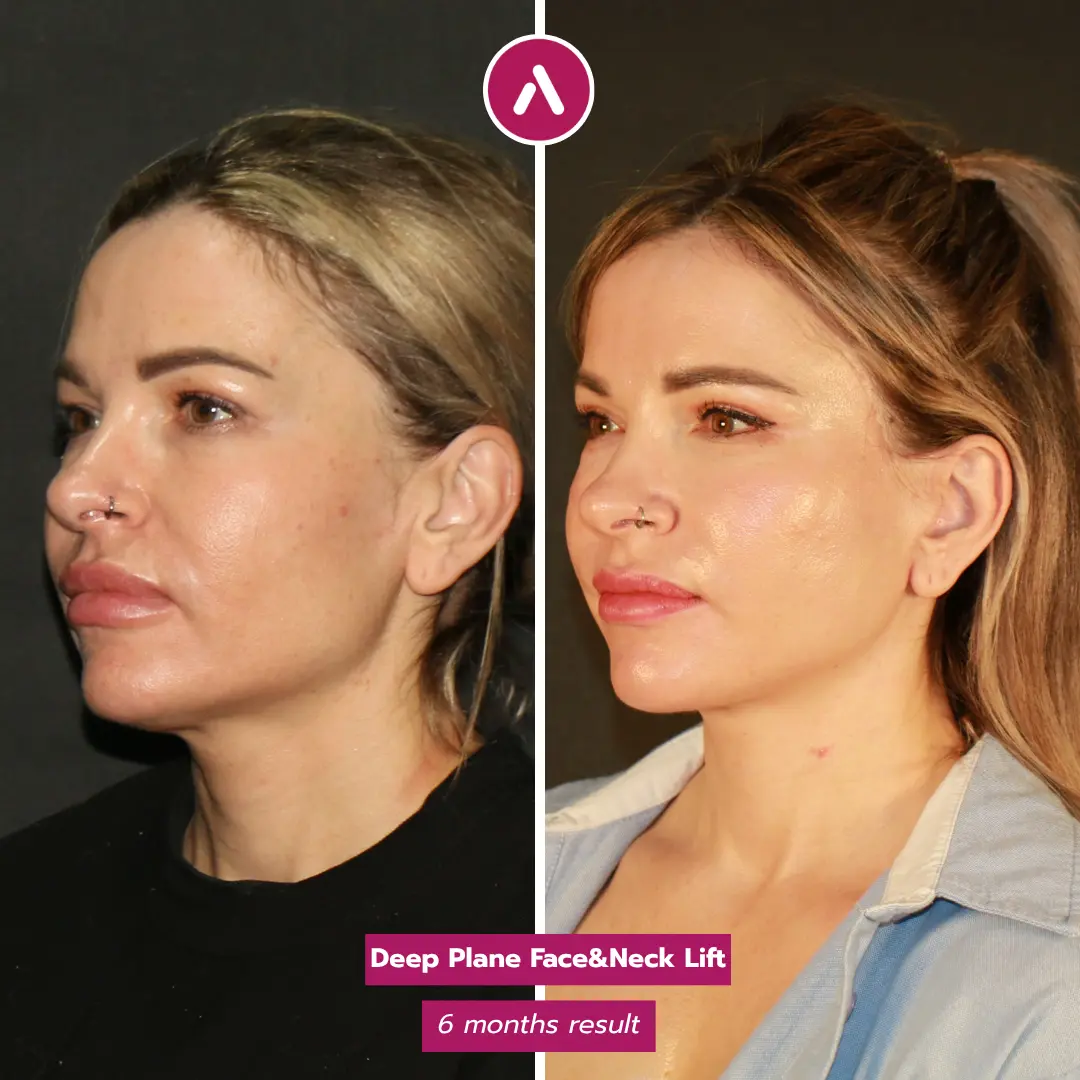
That is why facelift pain management should never be treated as an afterthought. It is part of the surgical plan. At AKM Clinic, the approach begins before the incision and continues through the first two weeks of recovery, with patient hosts, medication guidance, and virtual follow-up after you return to Canada.
This guide focuses on general facelift discomfort after traditional, SMAS, and deep plane procedures performed under general anesthesia. For the broader procedure context, see the facelift procedure overview at AKM Clinic. Awake-specific pain control is a separate topic and is covered in a dedicated guide.
Table of Contents
Understanding Facelift Pain: The Real Patient Experience
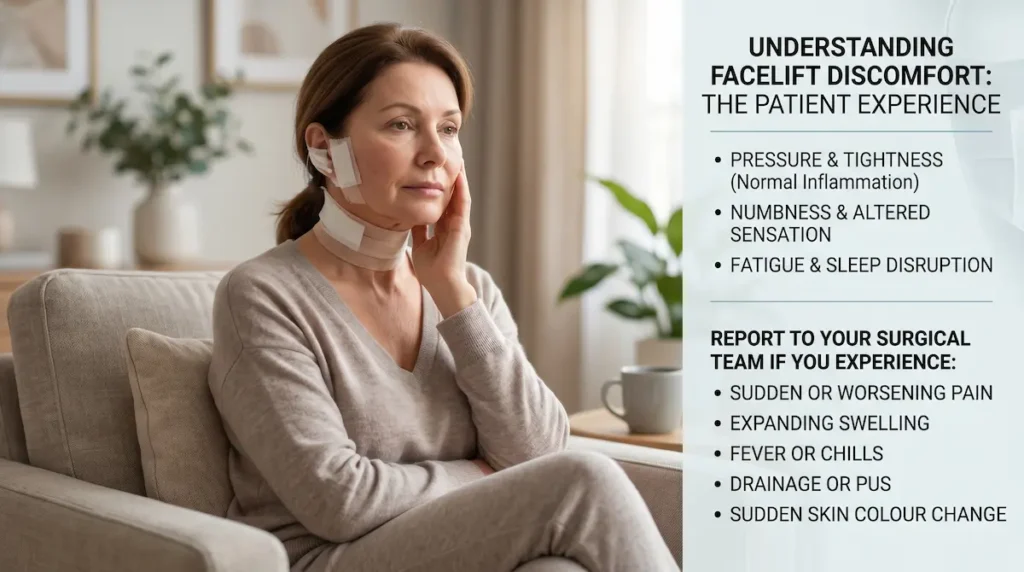
Facelift recovery is often less painful than patients expect, but it is not effortless. The first week involves swelling, bruising, tightness, limited facial movement, and disrupted sleep. Patients who understand those sensations beforehand usually feel more in control during recovery.
A useful way to think about facelift discomfort is this: the procedure does not usually create a sharp, cutting pain after surgery. Instead, patients tend to feel pressure, pulling, heaviness, and tenderness around the cheeks, jawline, ears, and neck. That distinction matters because anxiety can make normal post-operative sensations feel more alarming.
What facelift discomfort actually feels like: pressure, tightness, and swelling
Most patients describe early facelift recovery as a feeling of facial fullness. The skin and deeper tissues have been repositioned, and swelling creates a sense of firmness. The neck may feel especially tight if a neck lift or platysmaplasty was included.
This tightness is expected. It does not mean the result is too tight. It usually reflects normal inflammation, internal support sutures, and temporary swelling in the tissues.
Common sensations include:
- Pressure around the cheeks and jawline, especially when standing up or bending forward
- Tightness under the chin and along the neck, particularly after combined face and neck lifting
- Tenderness around the ears, where incisions are commonly placed
- Numbness or altered sensation, which can feel strange but is common during early nerve recovery
- Fatigue, often related to anesthesia, sleep disruption, and the body’s healing demand
Sharp, worsening, one-sided, or sudden pain is different. That should be reported to the surgical team, especially if it comes with expanding swelling, fever, drainage, or a new change in skin colour.
The 72-hour intensity curve and why day 3 can feel worst
The first 72 hours matter most. During this window, swelling increases as the body sends inflammatory cells and fluid into the surgical field. Bruising may also become more visible during this period, even if the procedure itself went smoothly.
Day 1 can feel easier than expected because local anesthetic effects and hospital-supervised medication are still active. Day 2 may bring more tightness. Day 3 is often the point when swelling, bruising, and fatigue overlap.
This is why many patients say day 3 looks or feels worse than day 1. It is not usually a sign of a setback. It is often the normal peak of the inflammatory curve.
By day 5, the direction should start to change. Swelling may still be obvious, but the heaviness begins to reduce. Many patients also need less frequent medication by this stage.
Typical patient-reported pain ratings on the 0–10 scale
Pain ratings vary by patient, procedure scope, anxiety level, sleep quality, and individual medication tolerance. Still, most facelift patients report discomfort in the mild-to-moderate range rather than severe pain.
A realistic pattern may look like this:
- Day 0: 2–4 out of 10, often controlled by surgical medication and residual anesthetic
- Day 1: 3–5 out of 10, mostly pressure and tightness
- Day 2–3: 4–6 out of 10, usually the peak period
- Day 5: 2–4 out of 10, with swelling still present but improving
- Day 7–10: 1–3 out of 10, often more numbness and stiffness than pain
Patients recovering after an awake facelift pain guide may have a different experience because local anesthesia and sedation protocols change the intra-operative and early post-operative comfort profile. This article stays focused on the general facelift recovery pathway.
Canadian patients should also remember that pain scores are not the only measure of recovery. Sleep, hydration, emotional calm, and access to the surgical team all shape how discomfort is perceived. A patient recovering alone in a hotel without support may experience the same physical sensation as more distressing than a patient with clear instructions and 24/7 access to help.
Pre-Operative Pain Mitigation Strategy
Comfort after facelift surgery begins before the operation. A good pain plan is not just a prescription handed over after surgery; it is a sequence of decisions that reduce tissue trauma, inflammation, anxiety, and medication surprises.
For Canadian patients travelling to Istanbul, this planning phase is especially relevant. You need to know what will happen during surgery, what medications may be used, what you should avoid before travel, and how your Canadian medical history affects your recovery plan.
Long-acting local anesthetic infiltration before incision
Even when a facelift is performed under general anesthesia, local anesthetic can still play a major role. The surgeon may infiltrate specific areas before incision to reduce pain signals from the surgical field. This can make the early recovery period smoother.
Local anesthetic support is especially useful around incision lines, the jawline, the cheek dissection zone, and the neck. These areas can feel tender as swelling develops. Better early control reduces the need to “chase” pain after it has already intensified.
This pre-emptive approach is one reason modern facelift recovery is different from older, opioid-heavy recovery models. The goal is to calm the pain pathway early, then maintain comfort with structured medication rather than relying on rescue medication alone.
Anti-inflammatory planning before surgery
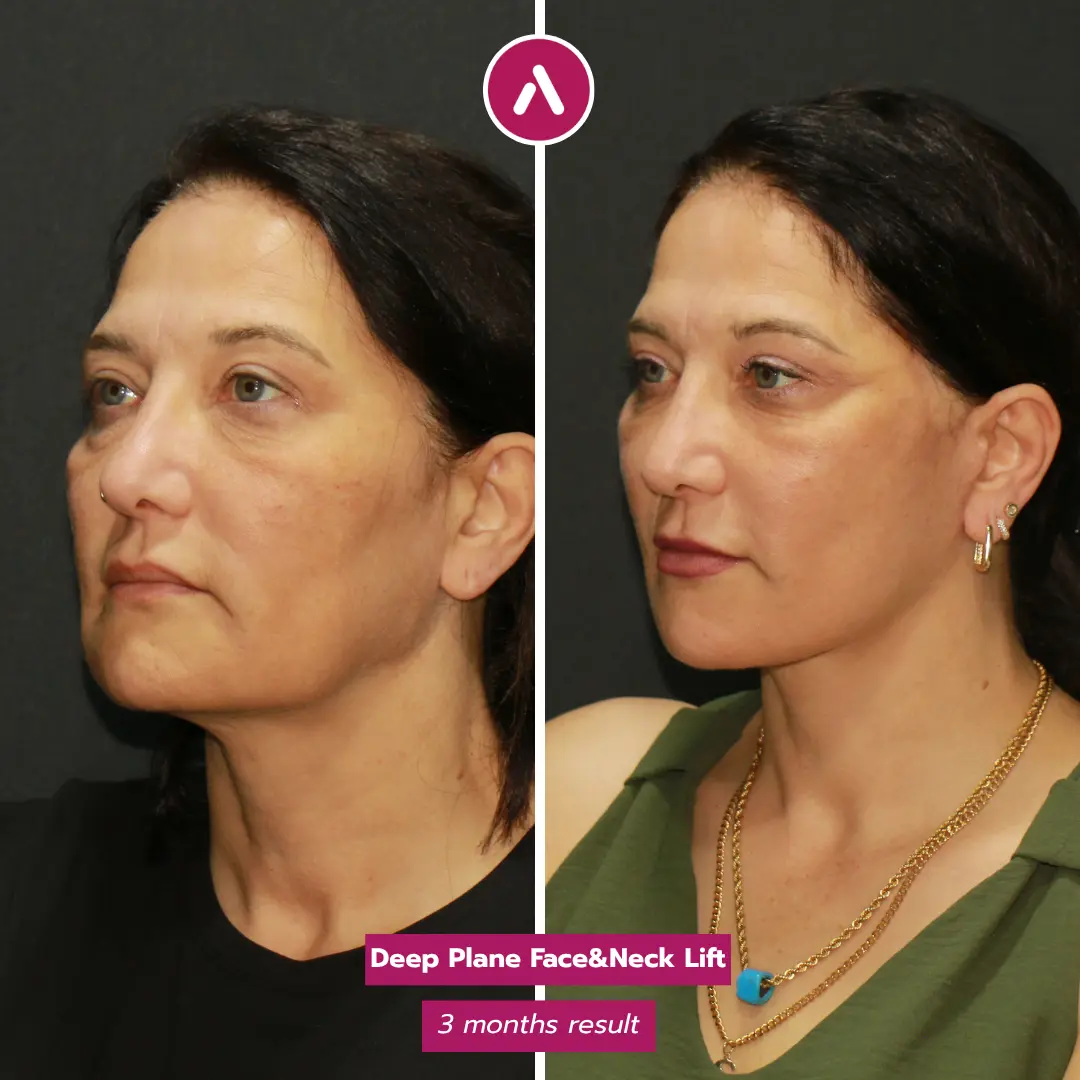
Inflammation is part of healing, but uncontrolled inflammation can increase swelling, pressure, and discomfort. Before surgery, the AKM team reviews each patient’s medication list, supplement use, bleeding risk, and medical history to decide what should be paused or continued.
This review matters. Some common supplements and over-the-counter products can increase bleeding or bruising risk. Others may interact with anesthesia or post-operative medication.
Patients should not self-start anti-inflammatory medication before surgery unless the surgical team instructs them to do so. The safest plan is individualized. A patient from Ontario taking blood pressure medication may need a different protocol than a patient from British Columbia with migraine medication or thyroid treatment.
This is also where anesthesia planning begins. Patients who want a deeper comparison can later review how surgeons compare local and general anesthesia approaches, but the key point here is simple: pain control and anesthesia planning are connected.
Hydration, nutrition, and sleep preparation for early comfort
Good recovery does not depend only on medication. Hydration, protein intake, and sleep quality influence inflammation and pain perception. A tired, dehydrated patient often feels more uncomfortable than a well-prepared patient with the same surgical result.
Before travelling, Canadian patients should aim for stable routines rather than aggressive last-minute health changes. Crash dieting, alcohol intake, and poor sleep can all work against early healing.
Helpful preparation steps include:
- Prioritizing protein-rich meals in the week before surgery
- Reducing alcohol before travel, based on the clinic’s instructions
- Arriving in Istanbul early enough to rest before the operation
- Bringing a current medication list and relevant medical records
- Planning loose, front-opening clothing for the first recovery days
Small details matter. A patient who lands at IST exhausted after multiple connections from YVR may experience more fatigue and discomfort than a patient who builds in a calmer arrival window. Travel planning is part of pain planning.
Intra-Operative Anesthesia Protocols
During facelift surgery, comfort depends on more than simply being asleep. The anesthesiology plan must protect breathing, maintain stable blood pressure, reduce nausea risk, and support a smoother wake-up after surgery. This is where careful planning makes recovery feel less abrupt.
For Canadian patients, the anesthesia conversation can feel unfamiliar because cosmetic surgery is usually outside the public system. Many patients are used to family physician referrals, provincial hospital standards, and specialist wait lists. At AKM Clinic, the goal is to make the anesthesia plan clear before the operation begins.
General anesthesia depth and emergence comfort planning
For traditional, SMAS, and deep plane facelift procedures performed under general anesthesia, the patient is fully asleep. The anesthesiology team controls the depth of anesthesia, monitors vital signs, and plans the emergence phase so the patient wakes with less nausea, less agitation, and better early comfort.
Emergence matters. A rough wake-up can increase blood pressure, coughing, nausea, and facial pressure. A calmer wake-up protects the early surgical field and may reduce the sensation of throbbing or fullness in the first hours after surgery.
Before surgery, patients should disclose any history of motion sickness, post-operative nausea, sleep apnea, high blood pressure, arrhythmia, medication sensitivity, or previous anesthesia complications. These details shape the plan. They are not minor notes.
Targeted nerve blocks for the facelift territory
Even when a patient is under general anesthesia, targeted local anesthesia can still reduce pain signals from the surgical area. This is a key part of modern facelift pain management. The aim is to reduce discomfort before the brain begins processing it after surgery.
Facelift discomfort often comes from the tissues around the ears, cheeks, jawline, and neck. Local infiltration and nerve-area support can help calm those pathways. This may reduce the need for stronger medication in the first recovery window.
It also helps patients understand why “asleep” does not mean medication-free. General anesthesia keeps the patient unconscious during surgery. Local anesthetic support helps manage tissue-level discomfort after surgery.
How AKM’s anesthesiology team plans for less post-op grogginess
Many patients worry that they will wake up confused or unable to function. Some grogginess is normal after general anesthesia, especially on the day of surgery. The goal is to reduce unnecessary sedation burden while keeping the operation safe and controlled.
At AKM Clinic, the anesthesia plan is coordinated with the surgical plan, the patient’s medical history, and the expected procedure length. Longer deep plane or combined face and neck procedures may require different planning than a shorter facelift.
Patients who want to understand the decision-making differences between anesthesia models can compare local and general anesthesia approaches. This article does not compare models in detail, because its focus is the pain-control pathway after general facelift surgery.
There is also a separate treatment pathway for patients who are candidates for an awake facelift procedure. Awake surgery has its own pain and comfort profile, so it should not be blended into a general facelift recovery discussion.
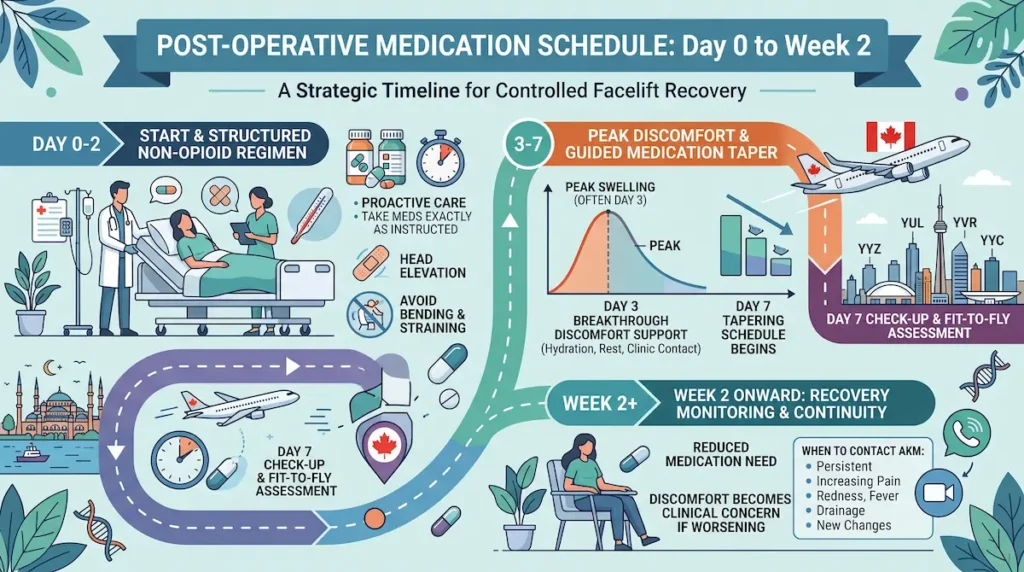
Post-Operative Medication Schedule: Day 0 to Week 2
The medication schedule after facelift surgery is designed to stay ahead of discomfort without overmedicating the patient. Good pain control should feel predictable. Patients should know what to take, when to take it, what to avoid, and when a symptom deserves medical attention.
For Canadians recovering in Istanbul before returning home, this structure is especially useful. It reduces guesswork during the hotel recovery phase and helps patients prepare for continuity of care once they are back in Canada.
Surgeon perspective: Dr. Akif Mehmetoğlu’s approach to facelift comfort is based on prevention, not rescue medication. Modern multimodal care starts before incision, continues through local anesthetic planning, and uses stronger medication only when clinically appropriate rather than as the default.
Day 0–2: structured non-opioid first-line regimen
The first 48 hours are managed proactively. Patients typically receive a structured medication plan that may include non-opioid pain relief, anti-nausea medication when needed, antibiotics if prescribed, and swelling-control instructions. Exact medication choices depend on the surgeon and anesthesiology plan.
Patients should not substitute their own medication routine unless AKM’s medical team approves it. This includes over-the-counter pain relievers brought from Canada. Some products can increase bruising risk or interact with prescribed medications.
During this stage, the patient’s job is simple:
- Take medication exactly as instructed
- Keep the head elevated while resting
- Avoid bending, straining, or lifting
- Report sudden one-sided swelling or sharp increasing pain
- Drink water regularly unless otherwise instructed
Most patients are not trying to be “pain-free” at this stage. The realistic target is controlled discomfort: mild to moderate tightness, manageable pressure, and enough comfort to sleep in short blocks.
Day 3–7: tapering schedule and breakthrough discomfort management
Day 3 is often the most uncomfortable point because swelling reaches its early peak. This does not always mean more pain. For many patients, it means more pressure, heavier facial tightness, and more visible bruising.
By day 4 or 5, medication frequency may begin to decrease if the patient is recovering well. The clinic will guide this taper. Patients should not stop all medication suddenly just to “test” their pain tolerance.
Breakthrough discomfort can happen after poor sleep, too much walking, dehydration, or a return to normal activity too early. The answer is not always stronger medication. Sometimes the correct response is rest, elevation, hydration, and a message to the patient advocate.
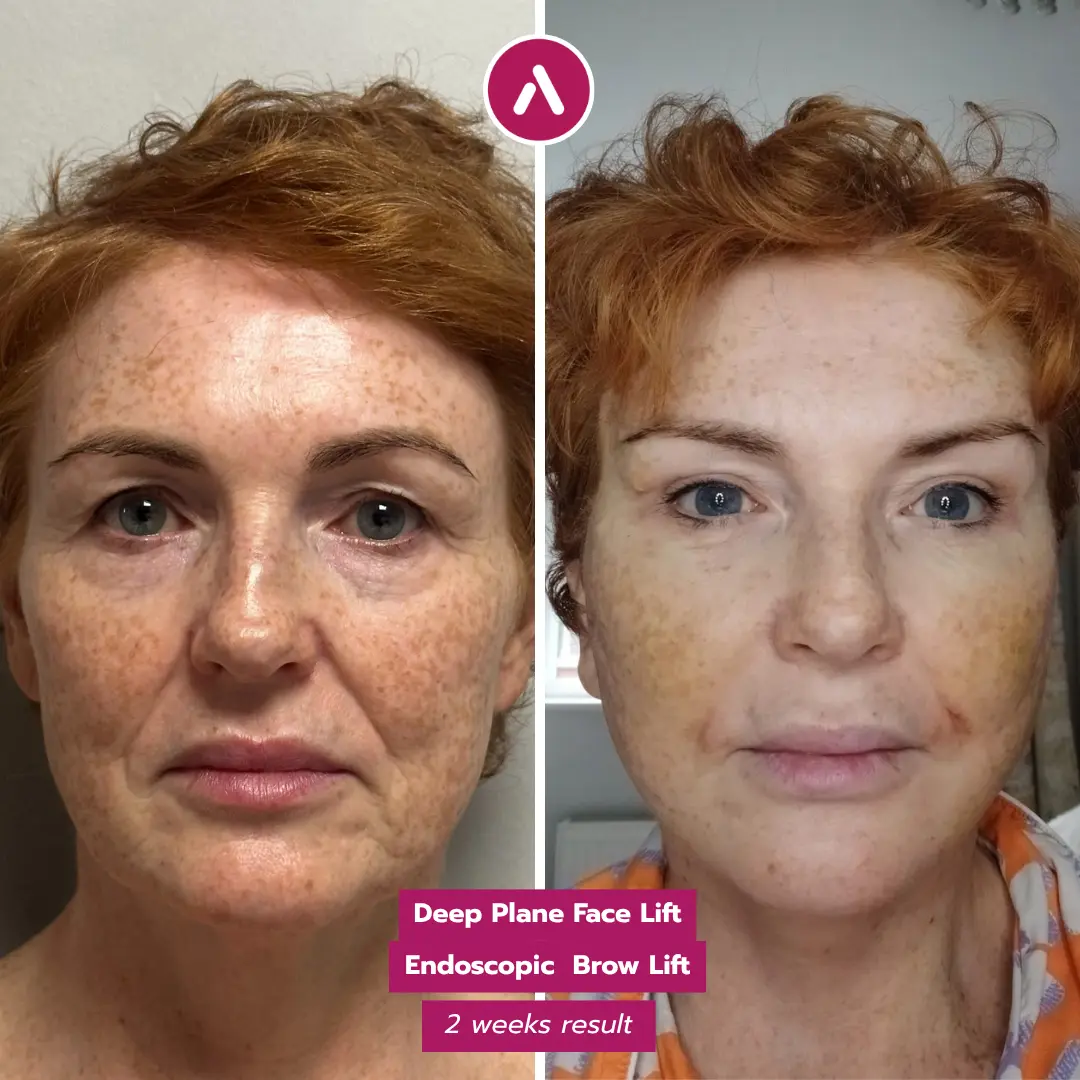
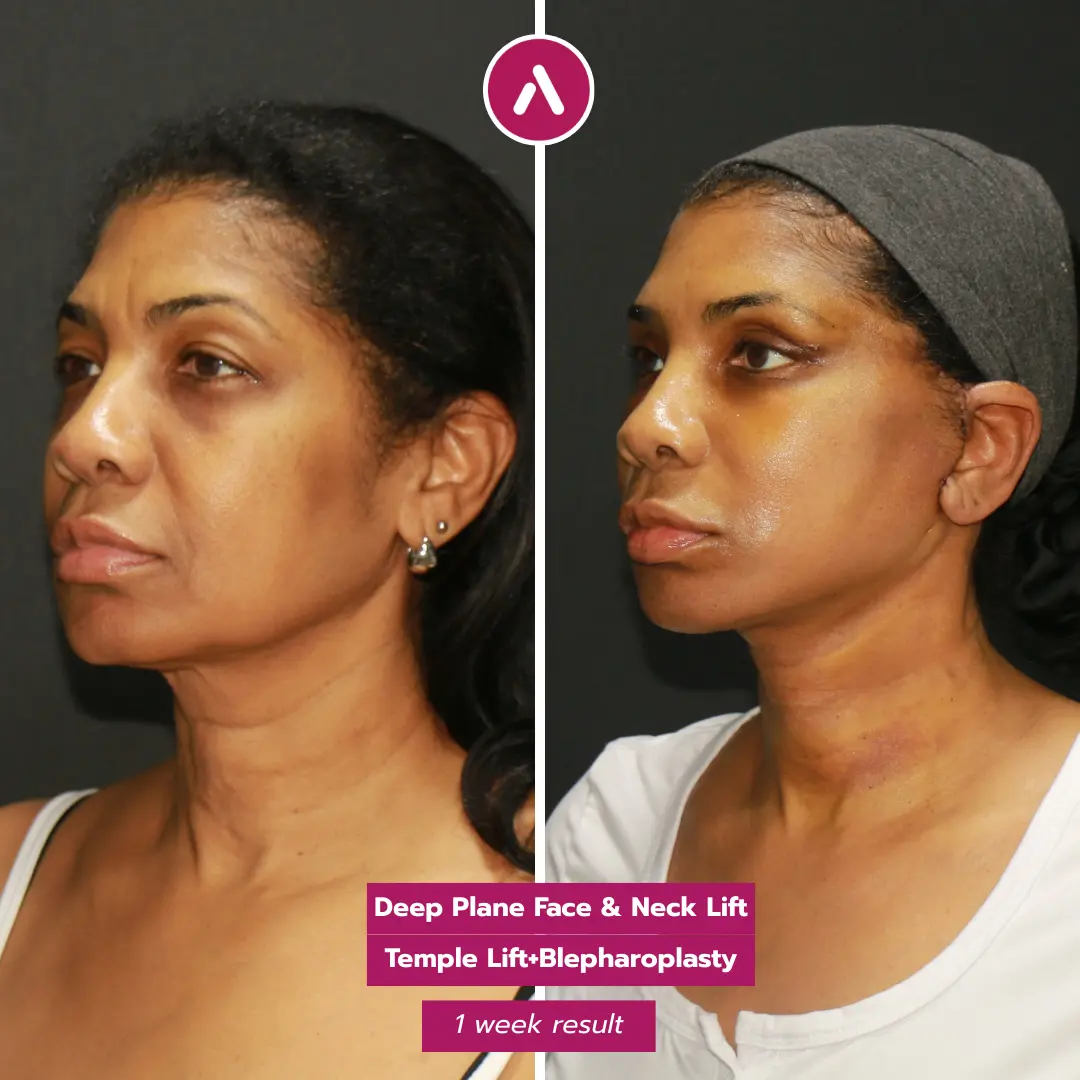
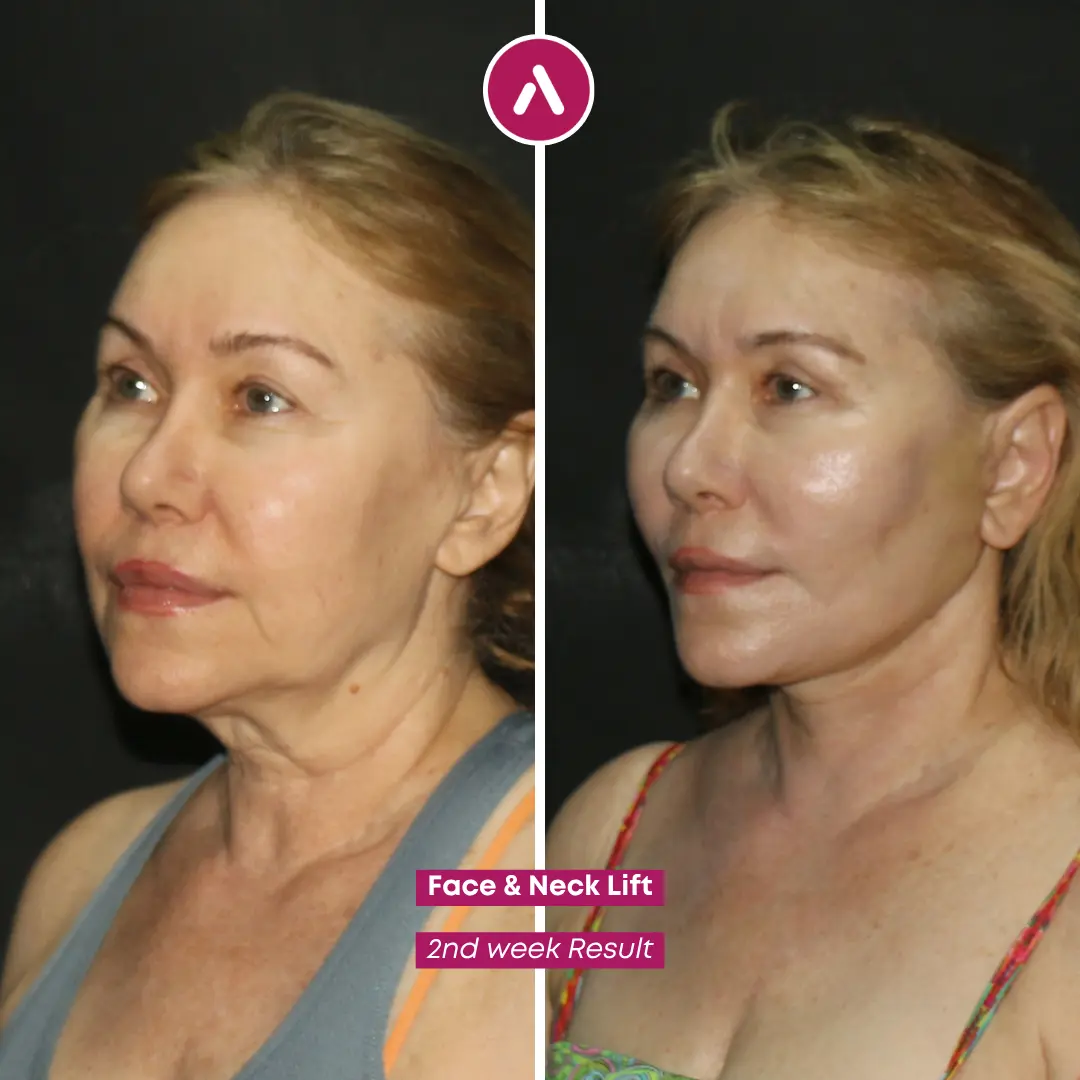
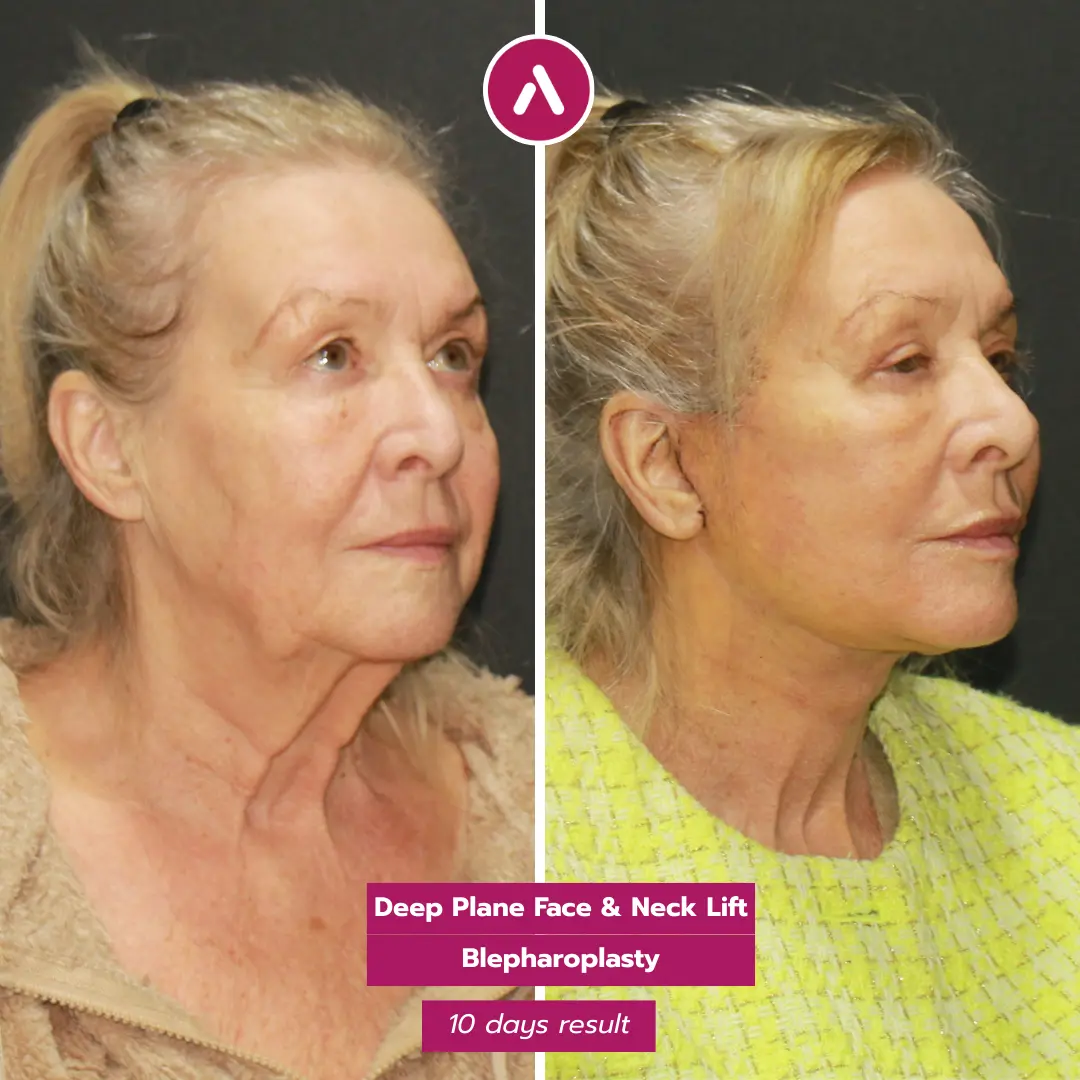
Patients who want to compare what the face may look like during this period can review the day-by-day visual recovery documentation. Looking worse on day 3 or 4 can be normal, even when pain is well controlled.
Week 2 onward: when discomfort becomes a clinical concern
By the second week, most patients should feel a clear shift. Pain should be lower. Tightness, numbness, stiffness, and intermittent zapping sensations may still occur as nerves recover. Those sensations can be annoying, but they are often part of normal healing.
Discomfort becomes more concerning when it moves in the wrong direction. Pain that suddenly increases after initial improvement should be reported. The same applies to spreading redness, fever, new drainage, worsening asymmetry, or skin colour changes.
Canadian patients should be particularly careful after the return flight. Long travel can worsen swelling temporarily. That is different from true escalating pain, but it can still feel unsettling if the patient is tired after arriving at YYZ, YUL, YVR, or YYC.
| Recovery point | Typical sensation | Medication phase | Restriction focus | When to contact AKM |
|---|---|---|---|---|
| Day 0 | Grogginess, pressure, facial heaviness | Clinic-directed post-op medication begins | Rest, head elevation, no bending | Severe nausea, sudden swelling, uncontrolled pain |
| Day 1 | Tightness, mild to moderate tenderness | Scheduled first-line medication | Short assisted walks only | Increasing one-sided pain or bleeding |
| Day 2 | Swelling increases, bruising becomes visible | Scheduled medication continues | No lifting, straining, or prolonged standing | Fever, new drainage, sudden facial pressure |
| Day 3 | Peak pressure and tightness for many patients | Breakthrough plan if prescribed | Rest and swelling control | Pain that jumps sharply or feels one-sided |
| Day 5 | Pressure begins easing; stiffness remains | Medication may start tapering if approved | Gentle movement, no social activity overload | Pain worsening instead of improving |
| Day 7 | Less pain; more numbness and tightness | Often reduced medication need | Final check-up and fit-to-fly assessment | New swelling before travel clearance |
| Day 10 | Intermittent pulling, stiffness, fatigue | Usually minimal pain medication | Protect sleep and avoid heavy activity | Redness, heat, fever, or drainage |
| Day 14 | Low pain; tightness and numbness continue | Medication often no longer needed for pain | Gradual routine return, no intense exercise | Any delayed increase in pain or swelling |
The table is a planning tool, not a diagnosis. Your surgeon’s instructions always come first. Recovery varies by technique, procedure scope, and personal medical history.
AKM Clinic’s HBOT-Supported Comfort Protocol
Medication is only one part of facelift comfort. Swelling, bruising, tissue oxygenation, sleep quality, and emotional reassurance also influence how pain feels. A patient with less inflammation often needs less medication and feels more confident during the first recovery week.
AKM Clinic supports recovery with advanced technologies, including Hyperbaric Oxygen Therapy and Low-Level Laser Therapy. These tools are not substitutes for surgical skill or medication. They are supportive recovery measures used to reduce inflammation, improve tissue repair conditions, and help international patients prepare for safe travel.
How Hyperbaric Oxygen Therapy may reduce inflammation and discomfort
Hyperbaric Oxygen Therapy, often called HBOT, exposes the patient to concentrated oxygen in a pressurized chamber. In facelift recovery, the practical goal is to support oxygen delivery to tissues that are swollen, bruised, and temporarily stressed after surgery.
Less inflammation can mean less pressure. Since much of facelift discomfort comes from swelling rather than sharp pain, reducing inflammation may improve comfort during the first recovery week. This is especially relevant for Canadian patients preparing for a long flight home.
AKM Clinic’s broader recovery infrastructure is explained in AKM’s recovery technology stack. For the dedicated science behind facelift-specific oxygen therapy, see HBOT’s role in recovery acceleration.
Canadian patient note: HBOT may be available in private settings in Toronto, Vancouver, and Montreal, but access, cost, and medical indication vary. Canadian patients should not book extra HBOT at home without asking AKM’s team whether it is necessary for their recovery stage.
LLLT for tissue repair and nerve sensitivity support
Low-Level Laser Therapy, or LLLT, uses specific light energy to support cellular repair. AKM Clinic’s system uses 650 nm semiconductor laser diodes. The aim is to encourage recovery at the tissue level without heat-based injury.
After a facelift, patients may experience numbness, tingling, tightness, or brief nerve-like sensations as tissue sensation returns. LLLT does not erase those sensations, but it may support a calmer healing environment.
This matters because nerve sensitivity can be confused with pain. Patients sometimes worry when they feel intermittent zaps or prickling. In many cases, these sensations are part of the recovery arc, not a sign that the facelift is failing.
Regenerative support can also be layered into recovery for selected patients. For that specific topic, see how stem cell augmentation effect on healing may influence bruising, swelling, and scar maturation.
The 5-star hotel recovery setting and its role in pain perception
Pain is physical, but perception is shaped by environment. A calm recovery setting reduces unnecessary stress. For patients far from home, knowing who to call and what to expect can make discomfort feel more manageable.
AKM Clinic’s all-inclusive framework includes hotel recovery, private transfers, post-operative guidance, and patient host support. The Point Barbaros setting is not only a convenience. It helps patients rest without navigating Istanbul logistics while swollen, tired, or medication-scheduled.
This support is particularly useful for patients travelling solo. A patient from Halifax or Winnipeg may not have family nearby in Istanbul, so structured support replaces guesswork. That can reduce anxiety-related pain amplification.
Comfort is not the same as luxury. In medical recovery, comfort means fewer barriers to rest, medication timing, hydration, follow-up, and safe movement.
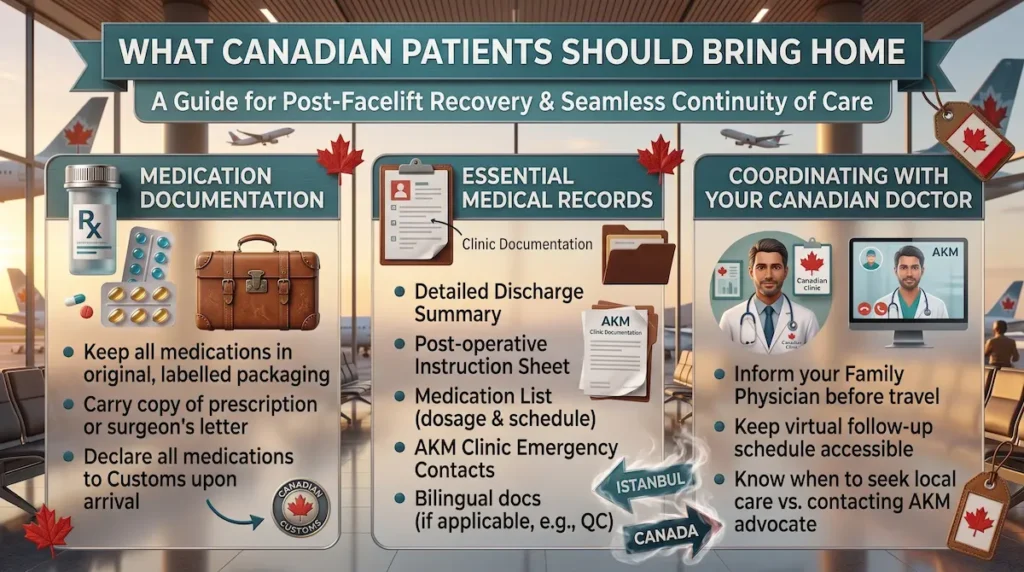
What Canadian Patients Should Bring Home?
Facelift recovery continues after the return flight. Once you are back in Canada, your swelling may fluctuate, sleep may be disrupted by jet lag, and your usual family physician may not know every detail of your Istanbul procedure. Planning this stage prevents avoidable stress.
Before leaving Turkey, patients should understand their medication list, warning signs, virtual follow-up schedule, and when to seek local care. This is where good documentation becomes part of pain management.
Medication documentation and Canadian customs considerations
Patients returning to Canada should keep all medications in original, labelled packaging. Prescription medication should travel with written instructions and, when available, a copy of the prescription or surgeon’s medication letter. Do not combine pills into unlabelled containers to save space.
Health Canada has specific rules for travelling with prescription medication that contains controlled substances. In general, the medication must be prescribed, labelled, in pharmacy or hospital packaging, and declared to customs when entering Canada. The permitted amount is limited, so patients should review official guidance before travel.
For current rules, patients can review Health Canada’s guidance on travelling with prescription medication containing controlled substances.
Canadian customs checklist: Keep medication in original labelled packaging, carry the prescription or clinic letter, declare controlled medication if required, and avoid mailing controlled medication into Canada. Place essential medication in your carry-on bag, not checked luggage.
Coordinating prescription continuity with your Canadian family physician
Before travelling, patients should tell their Canadian family physician that they are having elective surgery abroad. This does not mean the physician is responsible for the surgery. It helps create a safety bridge if medication questions or wound concerns arise after returning home.
After surgery, AKM provides post-operative instructions and virtual follow-up. Patients should keep these documents accessible. If a Canadian doctor needs to review your case, clear written information reduces confusion.
Helpful documents to bring home include:
- A discharge summary or post-operative instruction sheet
- A medication list with dose and timing
- Allergy information
- Procedure details, including whether neck work was performed
- Emergency contact information for AKM Clinic
- Photos of incision concerns if symptoms develop after travel
Patients in Quebec may also prefer bilingual documentation or a concise English summary they can explain to a RAMQ-based physician. This is worth discussing before departure if French-language care is likely after returning home.
When to contact AKM’s 24/7 advocate versus your home doctor
Most routine recovery questions should go first to AKM’s team because they know the surgical plan. This includes questions about tightness, mild swelling changes, medication timing, incision appearance, and virtual check-in expectations.
A Canadian family physician or urgent care clinic becomes more relevant when symptoms require in-person examination, local prescription support, or urgent assessment. Severe pain, spreading redness, fever, chest pain, shortness of breath, or calf swelling should not wait for a routine message.
AKM’s follow-up model is explained through AKM’s patient advocacy and follow-up model. The practical rule is straightforward: contact AKM for surgery-specific guidance, but seek local Canadian care immediately for urgent symptoms.
For many patients, the best approach is shared communication. AKM can guide the surgical context while your Canadian physician provides local examination if needed. That combination is often more useful than choosing one or the other.
For Canadian anesthesia context, patients may also review the Canadian Anesthesiologists’ Society’s Canadian anesthesia practice guidelines before their consultation. These guidelines do not replace AKM’s individual anesthesiology assessment, but they can help Canadian patients prepare more precise questions.
Frequently Asked Questions: Facelift Pain Management
These questions address the concerns Canadian patients most often raise before travelling for facelift surgery. The answers are general and should not replace a personalized surgical plan, because pain tolerance, procedure scope, anesthesia history, and medication safety vary from patient to patient.
Will I be in severe pain after my facelift?
Most patients do not describe facelift recovery as severe pain. They more often describe tightness, pressure, swelling, tenderness around the ears, and fatigue. The first 48 to 72 hours are usually the most uncomfortable.
Severe or escalating pain is different. If pain suddenly worsens, becomes one-sided, or appears with fever, expanding swelling, drainage, or skin colour change, contact AKM immediately and seek local medical care if you are already back in Canada.
What pain medication is used at AKM Clinic?
AKM Clinic provides a structured post-operative medication plan based on the patient’s procedure, medical history, allergies, and anesthesia pathway. The general approach is multimodal, meaning comfort is managed through several tools rather than one medication alone.
This may include scheduled non-opioid medication, swelling-control instructions, anti-nausea support if needed, and stronger medication only when clinically appropriate. Patients should not add Canadian over-the-counter medication unless the AKM team approves it.
When is post-op pain at its peak?
Post-operative discomfort usually peaks between day 2 and day 3. This is when swelling, bruising, tightness, and sleep disruption can overlap. Many patients feel reassured once they understand that day 3 can look or feel worse before recovery turns a corner.
By day 5, discomfort should usually start trending downward. The face may still look swollen, but the sensation often becomes more manageable.
Can I bring opioid pain medication back to Canada?
Some controlled prescription medications can be brought into Canada only when they meet Canadian rules for personal medical use. Keep medication in original labelled packaging, carry the prescription or clinic letter, and declare medication when required.
Do not mail controlled medication to yourself in Canada. If your medication supply is not enough or you need a new prescription after returning home, you may need to see a Canadian physician.
How does HBOT help with recovery comfort?
HBOT supports recovery by improving oxygen delivery to healing tissues. In practical terms, this may help reduce inflammation, support bruising resolution, and improve the comfort profile during the first week.
HBOT supports recovery by improving oxygen delivery to healing tissues. In practical terms, this may help reduce inflammation, support bruising resolution, and improve the comfort profile during the first week.
Is awake facelift more or less painful than asleep facelift?
Awake facelift pain is a separate topic because the anesthesia model is different. Local anesthesia and IV sedation change what patients feel during and immediately after surgery. Some awake patients report a very comfortable early recovery, but candidacy depends on anxiety level, procedure scope, and surgeon assessment.
This article focuses on general facelift recovery. Patients specifically considering awake surgery should discuss that pathway directly during consultation.
How long until I can return to normal daily activities?
Light daily activity usually resumes gradually during the first week, but normal does not mean unrestricted. Most patients should avoid lifting, bending, strenuous exercise, and prolonged social activity until the surgeon clears them.
Many Canadian patients can plan remote work earlier than in-person work, depending on bruising, swelling, and fatigue. Public-facing work in Toronto, Vancouver, Montreal, or Calgary often requires a more conservative timeline, especially if the patient wants to avoid visible recovery signs.
What should I do if pain increases after I return to Canada?
Contact AKM’s patient advocate first for surgery-specific guidance, especially if the symptom involves incision appearance, facial tightness, swelling fluctuation, or medication timing. Send clear photos when asked.
If pain is severe, rapidly worsening, or associated with fever, chest pain, shortness of breath, calf swelling, spreading redness, or drainage, seek urgent Canadian medical care. AKM can remain involved while a local clinician examines you in person.
CTA: If pain control is one of your main concerns, schedule a virtual consultation to review your medical history, anesthesia background, travel plan, and personal recovery expectations before booking your facelift.
Medical Disclaimer: This page is provided for general educational purposes only and does not replace an in-person medical consultation, diagnosis, or personalized treatment plan. All surgery carries risks, and outcomes vary between individuals. Suitability for facelift surgery, procedure selection, and anesthesia choice can only be determined after a full clinical assessment by a qualified surgeon. Always follow your clinician’s instructions and seek urgent medical attention if you develop concerning symptoms during recovery.