
Quick summary: Plastic surgery in Turkey can be safe when it is performed by qualified surgeons in accredited hospitals with transparent follow-up. The real question is not simply is it safe to get plastic surgery in Turkey, but whether the clinic, surgeon, hospital, and aftercare system meet the standards a Canadian patient should expect.
For patients from Toronto, Vancouver, Montreal, Calgary, and beyond, the safest approach is careful verification before booking. That means checking credentials, hospital accreditation, communication quality, complication protocols, and post-return care.
For many Canadians, Turkey is no longer a vague “medical tourism” destination. It is one of the world’s busiest centres for aesthetic surgery, with Istanbul attracting patients who want experienced surgeons, structured logistics, and more transparent private-care pricing than they often find at home.
That does not mean every clinic is safe. It means selection matters.
A safe surgical trip depends on the same fundamentals you would check in Canada: surgeon qualifications, sterile operating conditions, informed consent, emergency readiness, and follow-up. At AKM Clinic’s safety standards, the focus is on surgeon-led planning, JCI-accredited hospital partnerships, and long-term support for international patients.
This article gives Canadian patients a balanced risk analysis. No fear tactics. No glossy reassurance. Just the questions that matter before you decide whether surgery in Turkey is right for you.
Table of Contents

The Honest Answer — It Depends on Selection
There is no single safety rating for “Turkey” as a surgical destination. A country can contain excellent hospitals, average clinics, and unsafe operators at the same time. Canada is no different in principle: a procedure performed in a properly accredited private surgical centre is not the same as one performed in an under-equipped setting.
That distinction matters. A lot.
Why “Turkey” Is the Wrong Unit of Analysis
Asking whether Turkey is safe for plastic surgery is too broad to be useful. The safer question is: Who is performing the surgery, where is it being performed, and what happens if something goes wrong?
For Canadian patients, destination risk and healthcare-provider risk should be separated. The Government of Canada currently advises travellers to exercise a high degree of caution in Turkey due to terrorism and demonstrations, while also advising against travel near the borders with Iraq and Syria. That travel advisory is not the same as a medical warning against surgery in Istanbul. Government of Canada travel advice for Turkey.
Istanbul’s private healthcare environment is very different from remote border regions. Still, Canadians should check current travel advice before booking flights from YYZ, YVR, YUL, or YYC.
The Difference Between World-Class and Substandard Providers
Turkey has highly trained surgeons and internationally accredited hospitals. It also has high-volume commercial providers that may prioritize speed over patient selection. These are not the same thing.
A high-quality provider should be able to show:
- Named surgeon credentials
- Hospital accreditation or verified facility standards
- Clear informed-consent documents
- Transparent pricing in writing
- Pre-operative screening before travel
- Written recovery and complication protocols
- Post-return follow-up for Canadian patients
If a clinic cannot answer basic safety questions clearly, that is not a Turkey problem. It is a provider problem.
How Canadian Patients Control Their Own Risk
Canadian patients have more control than they may realize. The safest patients are usually not the least anxious ones. They are the most prepared ones.
Before paying a deposit, a patient should verify the surgeon, understand the hospital setting, review the aftercare plan, and compare the clinic’s process with what they would expect from a private surgical centre in Ontario, British Columbia, Quebec, or Alberta.
A patient travelling from Canada should also be realistic about long-haul recovery. Flying home after surgery requires fit-to-fly clearance, mobility planning, hydration, and clear instructions for what to do after landing.
“The question is not whether plastic surgery in Turkey is safe. The real question is whether the clinic, surgeon, and hospital meet the standards you would expect at home in Canada.”
What the Real Risks Are?
Every surgery carries risk. A safe clinic does not deny that. Instead, it identifies the risks early, screens patients carefully, uses appropriate hospital facilities, and gives patients a clear plan for recovery.
Honest risk analysis starts by separating three categories: risks that exist in every country, risks linked to travel, and risks caused by poor clinic selection.
Surgical Risks That Exist in Every Country
Plastic surgery in Canada, Turkey, Mexico, or Europe shares a core set of medical risks. These include bleeding, infection, poor wound healing, scarring, asymmetry, anesthesia-related concerns, and dissatisfaction with the result.
These risks are not eliminated by geography.
What changes risk is the quality of screening and surgical planning. A responsible clinic will assess medical history, medications, smoking status, body mass index, previous surgeries, clotting risk, and whether the patient is emotionally ready for surgery.
For Canadian patients used to provincial healthcare oversight, this step may feel familiar. It should. Elective surgery still requires medical seriousness.
Risks Specific to Travelling Abroad for Surgery
Travelling for surgery adds practical risks. The most important are long flights, recovery away from home, language barriers, and uncertainty about follow-up after returning to Canada.
A patient flying from Toronto to Istanbul faces a different recovery challenge than a local patient taking a short drive home. A patient from Vancouver or Calgary may also face connections, longer total travel time, and more fatigue.
Travel-specific risks include:
- Swelling during or after long-haul flights
- Deep vein thrombosis risk from immobility
- Difficulty carrying luggage after surgery
- Medication continuity after returning home
- Needing local Canadian care for unexpected symptoms
- Miscommunication if the clinic lacks fluent English support
These are manageable risks when the clinic plans for them. They become more serious when the patient is rushed home without proper clearance.
Risks Created by Poor Clinic Selection
The highest-risk situations usually involve poor provider selection. These risks are avoidable, but only if patients know what to check.
Common clinic-selection risks include vague surgeon identity, weak informed consent, unclear hospital setting, unverified before-and-after photos, pressure to pay quickly, and no structured follow-up after leaving Turkey.
One of the most serious concerns is when the surgeon named during consultation is not the person who actually performs the operation. For that specific issue, see our guide on how to avoid ghost surgery.
Another risk is choosing based only on price. Lower cost can reflect lower overhead, efficient medical infrastructure, and package-based coordination. It can also reflect corners being cut. The difference is verification.
Understanding the Cautionary Stories
Most Canadian patients researching surgery in Turkey find at least one alarming story. Some are real. Some are incomplete. Others involve clinics that were never properly verified before the patient booked.
The goal is not to dismiss those stories. The goal is to understand what they have in common, then avoid the same risk patterns.
Why Some Negative Stories Make Headlines
Bad outcomes are emotionally powerful. They spread quickly because they confirm the fear many people already have about travelling abroad for surgery.
But a headline rarely explains the full selection process. It may not tell you whether the surgeon was board-certified, whether the hospital was accredited, whether the patient was medically suitable, or whether the patient followed recovery instructions.
This is where Canadian patients should be cautious but not paralysed. A negative story is a reason to verify more carefully, not necessarily a reason to reject an entire country.
For a broader look at fear-based assumptions, read our guide to common misconceptions about surgery in Turkey. This article stays focused on safety risk, not myth-busting.
The Common Factors Behind Bad Outcomes
When poor surgical outcomes occur in medical tourism, several patterns appear repeatedly. They are rarely random.
- The patient chose based mainly on the lowest price.
- The operating surgeon was not clearly named in advance.
- The clinic avoided detailed medical screening.
- The hospital or operating facility was not independently verified.
- The patient was promised unrealistic results.
- The return flight was scheduled too soon.
- Follow-up after returning home was weak or unclear.
These factors can occur anywhere. They become more dangerous when the patient is far from home and lacks a clear escalation plan.
How to Avoid Becoming a Cautionary Tale
The safest patients slow the decision down. They ask direct questions and expect direct answers.
Before booking, ask for the name of the surgeon who will perform the operation. Confirm the hospital setting. Ask what happens if your surgery is delayed, if a complication occurs, or if you need care after returning to Canada.
You should also compare the clinic against a structured safety framework. For a full checklist, see our guide to evaluating clinics before booking.
Red flags do not always look dramatic. Sometimes they sound like, “Don’t worry, everything is included,” without clear documentation. A serious clinic will not be offended by verification.
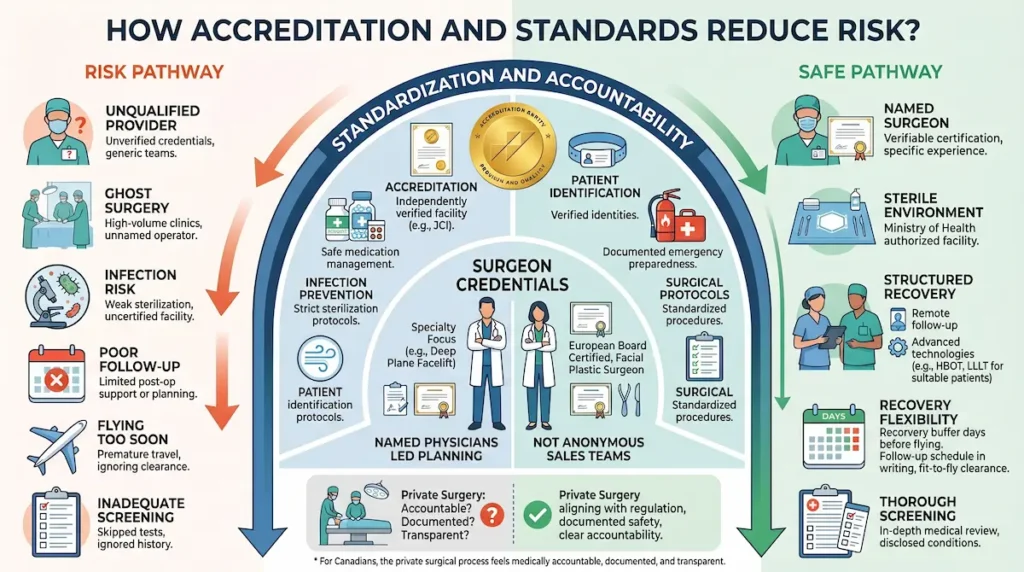
How Accreditation and Standards Reduce Risk?
Accreditation does not guarantee perfection. No credential can. What accreditation does is create external accountability, documented safety processes, and a measurable standard for the surgical environment.
For Canadian patients, this matters because the hospital is as important as the surgeon. A technically skilled surgeon still needs a safe operating theatre, trained staff, emergency protocols, and infection-control systems.
What JCI Accreditation Actually Means
Joint Commission International accreditation is one of the best-known global hospital safety benchmarks. It evaluates systems such as infection prevention, medication safety, surgical protocols, patient identification, and emergency preparedness.
For Canadians, the practical value is independent verification. You are not relying only on a clinic’s marketing language.
There is also an important wording distinction. “JCI-accredited” is not the same as “following JCI standards.” One is externally verified. The other may be a self-description.
For a deeper explanation of the facility standard, read our guide on why JCI accreditation matters. You can also verify accreditation directly through the Joint Commission International accredited organizations directory.
Why Surgeon Credentials Matter
A safe hospital does not replace surgeon qualifications. You need both.
Canadian patients should verify the surgeon’s speciality, board certification, training history, procedure focus, and case experience. A surgeon who performs a high volume of a specific procedure is not automatically better, but focused experience matters in complex aesthetic surgery.
Credentials should be understandable before you travel. If a clinic makes credentials difficult to verify, consider that a warning sign.
How AKM’s Standards Align With Canadian Expectations
Canadian patients are used to regulation, documentation, and conservative medical decision-making. They may be more sceptical than patients from fully private healthcare systems. That scepticism is useful.
AKM Clinic’s safety model includes JCI-accredited hospital partnerships, Ministry of Health authorization for international health tourism, a sterile operative-field policy, and structured recovery support. The clinic also uses advanced recovery technology and safety protocols, including HBOT and LLLT, to support healing in suitable patients.
For Canadians, the comparison is not about copying OHIP, MSP, RAMQ, or AHCIP. Those provincial systems usually do not cover elective cosmetic surgery. The comparison is about whether the private surgical process feels medically accountable, documented, and transparent.
| Risk factor | Why it happens | How risk is reduced | Patient action |
|---|---|---|---|
| Unqualified provider | Marketing hides weak credentials | Named surgeon and verifiable certification | Request the surgeon’s full name and credentials before booking |
| Ghost surgery | High-volume clinics may switch operators | Written named-surgeon commitment | Confirm who performs each surgical step |
| Infection risk | Poor sterile technique or weak facility standards | Accredited hospital and strict sterilization protocols | Ask where the operation takes place and verify the facility |
| Poor follow-up | The clinic treats surgery as a one-time transaction | Structured remote follow-up after return to Canada | Confirm follow-up schedule in writing |
| Flying too soon | Return travel is planned around convenience, not healing | Fit-to-fly clearance and buffer days | Book flexible travel and follow medical clearance |
| Inadequate screening | The clinic accepts unsuitable candidates | Pre-op tests, medical history review, and surgeon assessment | Disclose medications, smoking, medical conditions, and past surgeries |
The Data — How Turkey Compares
Safety comparisons are difficult because complication rates depend on procedure type, patient health, surgeon skill, facility standards, and reporting quality. A facelift, rhinoplasty, tummy tuck, BBL, and hair transplant do not carry the same risk profile.
The more useful comparison is not “Turkey versus Canada.” It is accredited, surgeon-led care versus poorly verified care.
High Surgical Volume and Experience Advantages
Turkey’s medical tourism sector gives experienced surgeons exposure to a high number of aesthetic surgery cases. In procedures where repetition, anatomy recognition, and refined technique matter, focused volume can be an advantage.
Volume alone is not enough. A clinic performing many procedures must still screen patients carefully, avoid unsafe combinations, and use proper operating facilities.
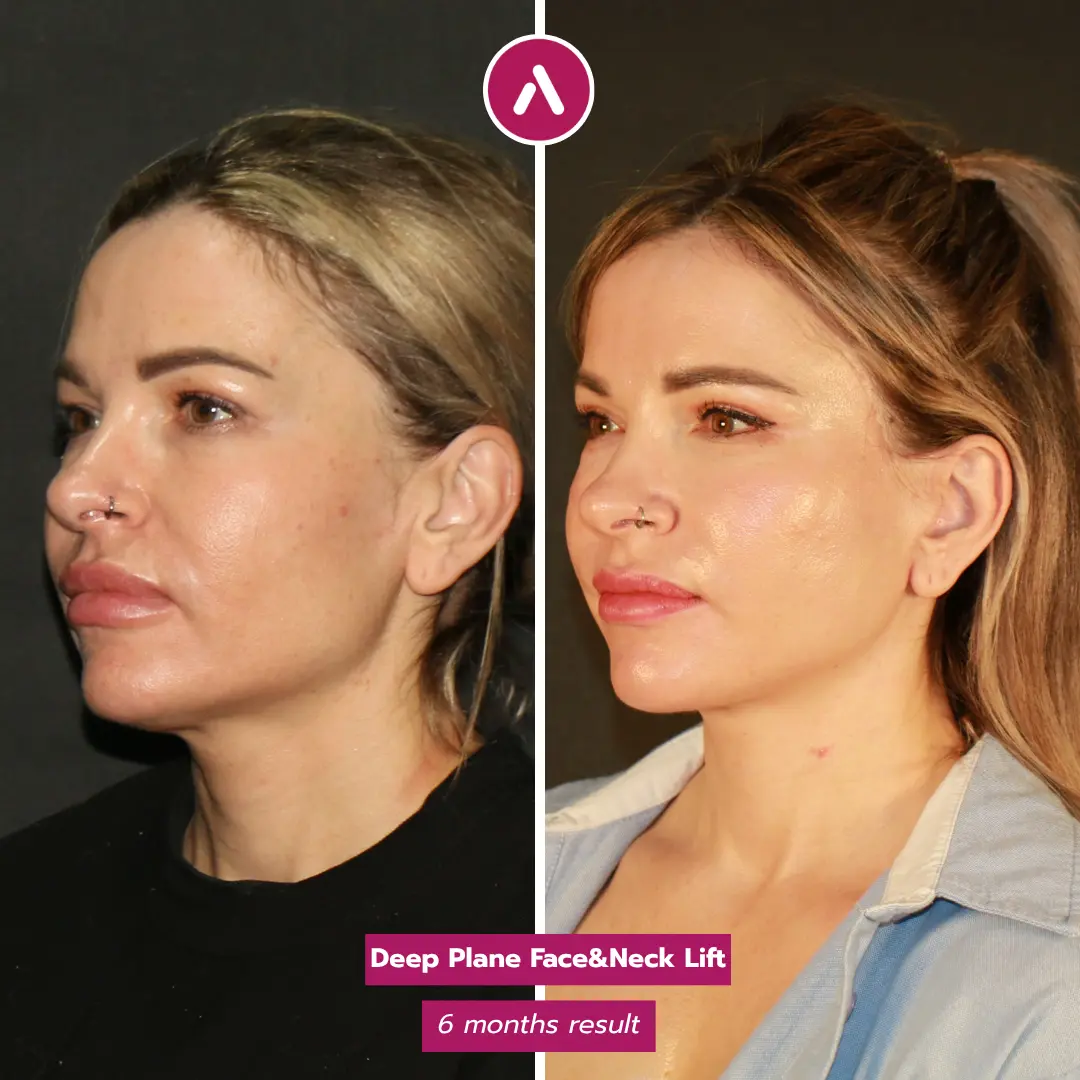
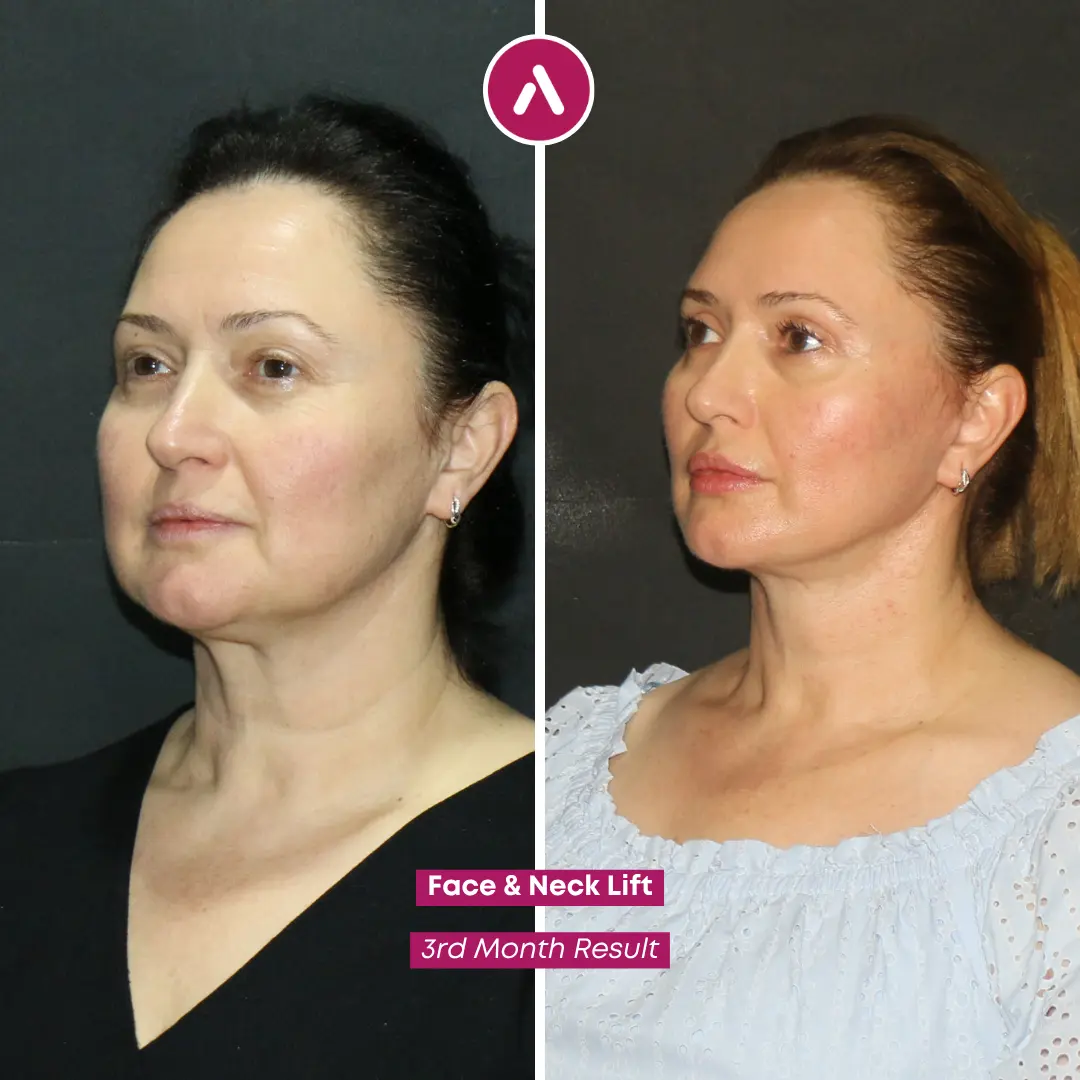
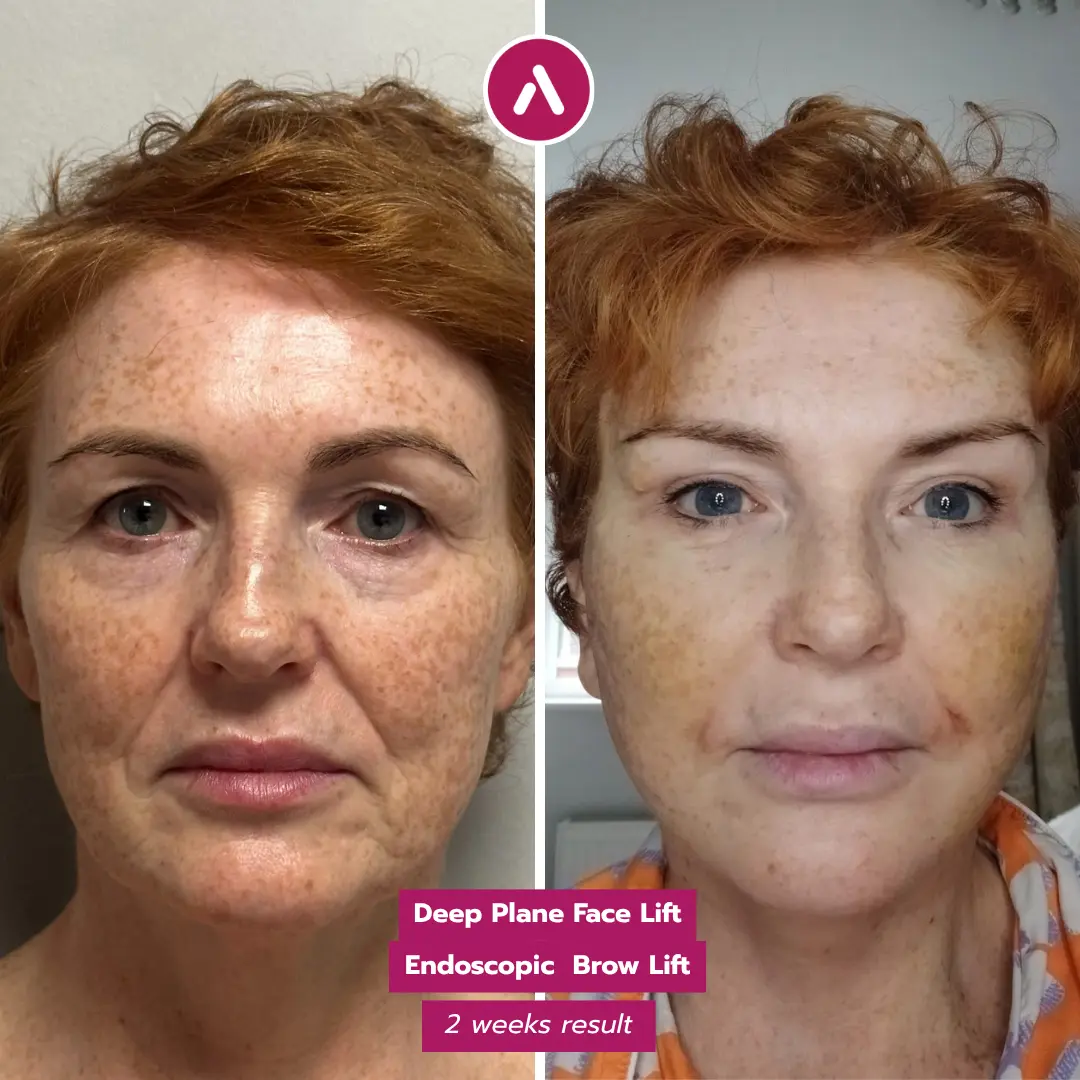
At AKM Clinic, the facial surgery record includes over 2,000 successful facial surgeries since 2013. For a Canadian patient comparing options, that kind of focused experience is more meaningful than a vague claim such as “thousands of happy patients.”
Complication Rates at Accredited Facilities
No ethical clinic should claim a zero-complication rate. Complications can happen even in excellent facilities.
The difference is preparation.
Accredited facilities reduce risk through sterile technique, patient identification systems, medication protocols, trained nursing teams, and emergency readiness. These controls do not make surgery risk-free, but they reduce preventable risk.
For Canadian patients, the key question is whether the clinic can explain its complication-management pathway. Ask what happens if bleeding, infection, wound healing delay, or unusual swelling occurs before you leave Istanbul.
Comparing Risk with Canadian Private Cosmetic Surgery
Canada has strong healthcare oversight, but elective cosmetic surgery is still private medicine. Procedures are commonly performed in private surgical facilities rather than public hospitals.
That does not make Canadian cosmetic surgery unsafe. It means patients still need to evaluate the provider, surgical setting, anesthesia plan, and aftercare.
The same principle applies in Turkey. A qualified surgeon in a properly accredited hospital is not equivalent to an unverified clinic offering unusually low prices and vague promises.
Canadian patients should also remember that OHIP, MSP, RAMQ, and AHCIP generally do not cover elective cosmetic procedures. For many patients, the decision becomes a private-care comparison rather than a public-versus-private comparison.
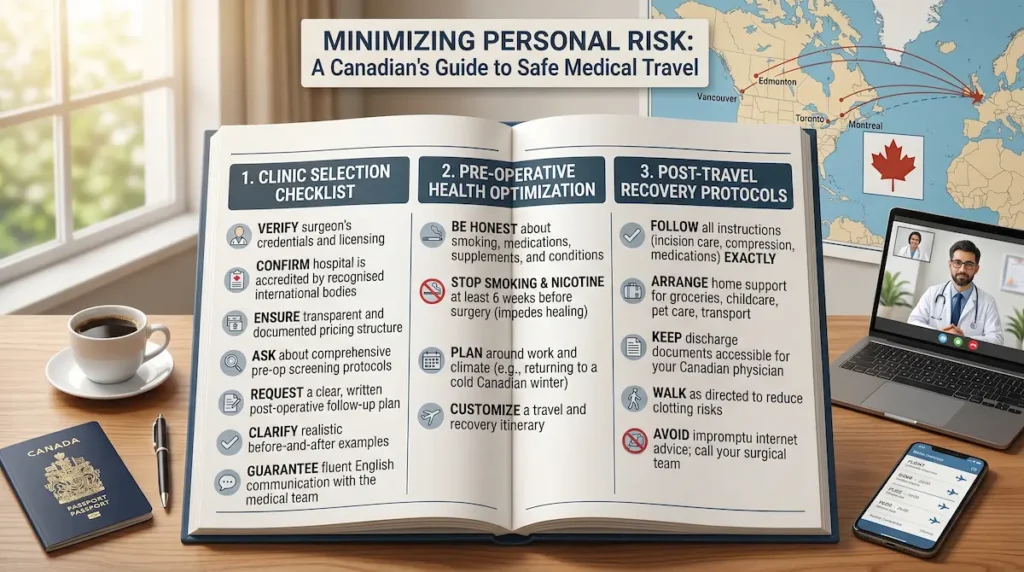
How Canadians Can Minimize Their Personal Risk?
The safest surgery plan begins before travel. Good preparation helps identify unsuitable providers, reduces preventable medical risk, and makes the return to Canada smoother.
Risk reduction is not one action. It is a chain of decisions.
The Clinic Selection Checklist
Before booking, Canadian patients should treat clinic selection like due diligence. A polished Instagram page is not enough.
Use this checklist before sending payment:
- Is the operating surgeon named?
- Can the surgeon’s credentials be verified?
- Is the hospital or surgical facility accredited?
- Is there a clear pre-op screening process?
- Are risks explained without minimizing them?
- Is pricing transparent and documented?
- Is there a written follow-up plan after returning to Canada?
- Is there clear English-language communication with the medical team?
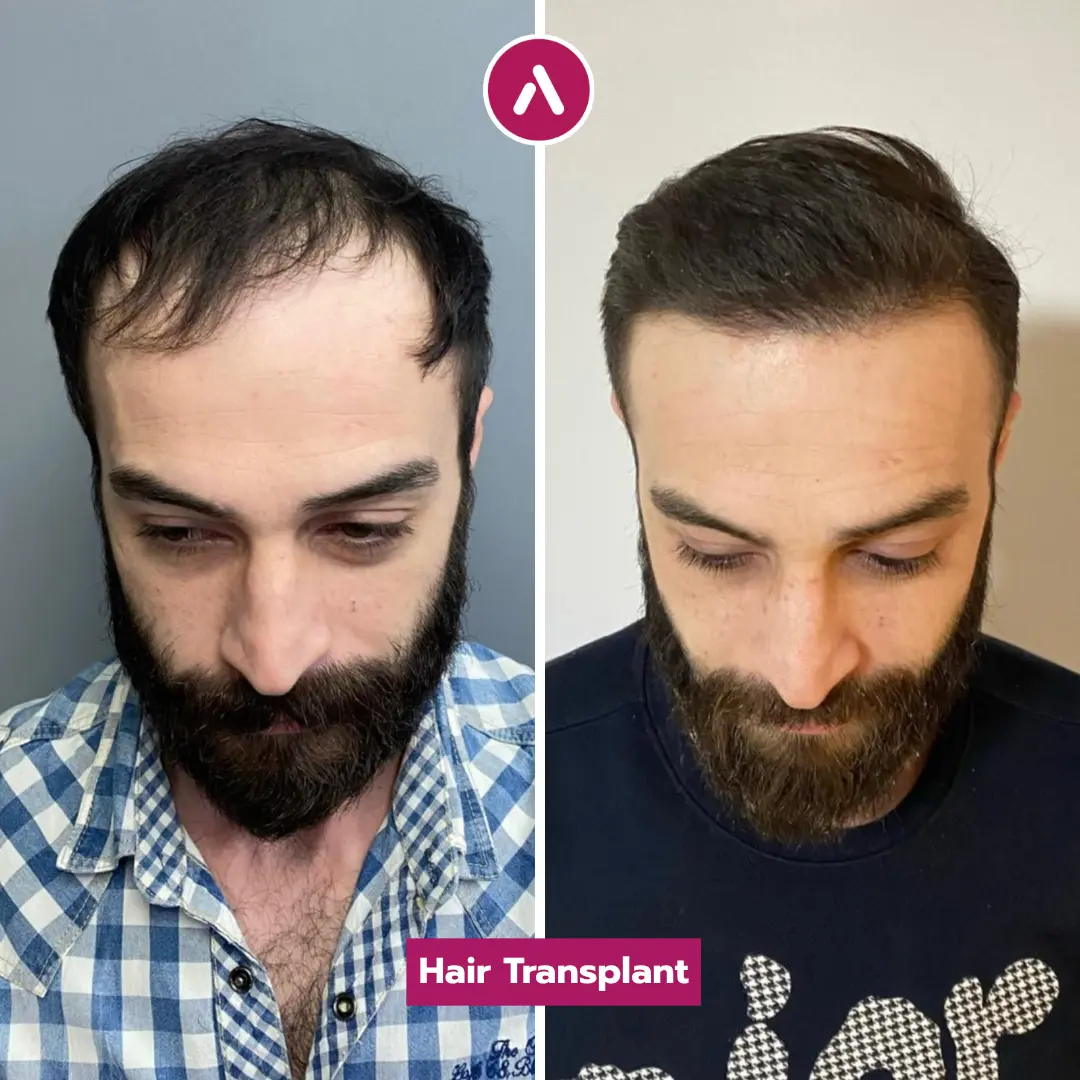
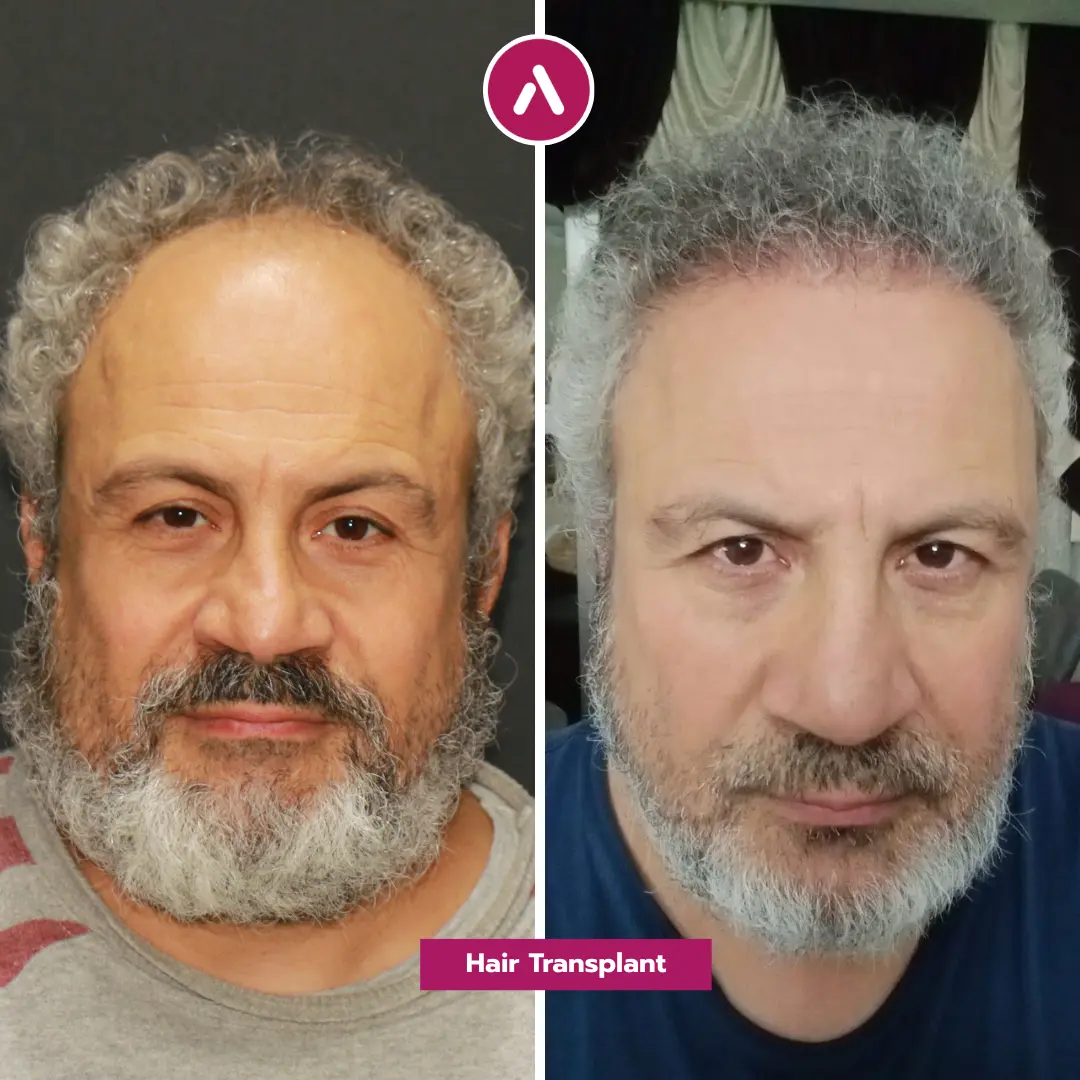
- Are before-and-after examples realistic rather than over-edited?
For medical tourism logistics, AKM outlines the complete Canadian patient journey, including consultation, arrival, surgery, recovery, and follow-up.
Pre-Operative Health Optimization
Even the best surgeon cannot remove risks created by poor pre-op preparation. Patients must be honest about smoking, vaping, medications, supplements, previous surgeries, clotting history, and chronic health conditions.
Smoking and nicotine use are especially important. They can impair blood flow and wound healing, which matters for facelifts, tummy tucks, breast surgery, and other procedures involving tissue repositioning.
Canadian patients should also plan around work and climate. Returning to Edmonton in January after facial surgery is different from returning to Vancouver in May. Cold weather, dry indoor heating, and winter travel delays can affect comfort during early recovery.
Following Recovery Protocols Before, During, and After Travel
Recovery instructions are not suggestions. They are part of the risk-management plan.
Patients should follow medication timing, incision care, garment use, walking instructions, sleeping position, and flight guidance exactly as given. If instructions conflict with something found online, ask the surgical team before improvising.
Canadian patients should also prepare for the first week back home. Arrange help with groceries, childcare, pet care, and transportation if needed. Have your discharge documents available if you need to see a family physician, walk-in clinic, or emergency department.
AKM Clinic’s Risk-Mitigation Framework
AKM Clinic’s safety model is built around three areas: the hospital environment, the surgical team, and continuity of care after the patient leaves Istanbul. For Canadian patients, that last point is especially important because recovery continues after the flight home.
The goal is not simply to complete the operation. The goal is to manage the whole surgical episode responsibly.
JCI-Accredited Hospital Partnerships
AKM performs surgeries through JCI-accredited hospital partnerships. This matters because the operating environment affects infection control, anesthesia safety, emergency readiness, and recovery monitoring.
Patients should ask any clinic where the procedure will be performed. The answer should be specific, not vague.
AKM’s all-inclusive structure also includes pre-operative medical tests, hospital facility fees, anesthesia, post-operative medications, private transfers, hotel accommodation, and dedicated patient advocacy. This reduces logistical stress during the highest-risk recovery window.
Surgeon-Led Care and Credential Verification
Safe plastic surgery requires surgeon-led decision-making. A coordinator can help with logistics, but a surgeon must determine candidacy, technique, and risk suitability.
At AKM Clinic, Dr. Akif Mehmetoğlu leads the clinic’s surgical philosophy around “Rejuvenation over alteration” and a Natural-First approach.
That distinction matters for Canadian patients who want more than a sales conversation. They need medical judgement, not just package coordination.
Long-Term Follow-Up for Canadian Patients
One of the main fears in medical tourism is being abandoned after surgery. A responsible clinic should have a plan for patients once they return home.
AKM’s model includes long-term virtual follow-up at 1, 3, 6, and 12 months. Patients can send progress photos, ask recovery questions, and stay connected with the care team after returning to Canada.
For additional reassurance, patients can review verified patient outcomes and reviews before deciding whether the clinic feels aligned with their expectations.

Why More Canadians Are Choosing Turkey?
Many Canadians consider Turkey because private cosmetic surgery at home can be expensive, wait times can be long for non-urgent procedures, and package-based international care can feel more predictable. Cost matters, but it should never be the only reason to choose a clinic.
The safer mindset is simple: value first, price second.
Private Surgery Costs in Toronto, Vancouver, and Montreal
Elective cosmetic procedures are generally not covered by OHIP, MSP, RAMQ, or AHCIP. That means patients in Toronto, Vancouver, Montreal, Calgary, and Ottawa often pay privately.
Private surgery in Canada may involve separate fees for the surgeon, anesthesia, facility use, garments, medications, and follow-up visits. This can make the final cost harder to predict.
Turkey’s all-inclusive model appeals to Canadians because it can combine surgery, hospital care, hotel accommodation, VIP transfers, medications, and patient coordination into one documented plan.
Value vs Cheapness — Understanding the Difference
Cheap surgery is not the goal. Safe value is.
A lower price can reflect different operating costs, medical infrastructure, and bundled logistics. It should not reflect weak credentials, poor screening, rushed surgery, or no follow-up.
For context on the broader trend, read our analysis of why Canadians are increasingly choosing Istanbul. The strongest decision is not emotional or impulsive. It is verified.
Why Safety and Value Can Coexist
Safety and value can coexist when the clinic invests in the right things: qualified surgeons, accredited hospitals, transparent pricing, recovery technology, and long-term follow-up.
That is the difference between a medical decision and a bargain hunt.
For Canadian patients, the safest path is to slow down, verify everything, and choose a clinic that welcomes detailed questions. If a provider pressures you to book before answering safety concerns, walk away.
Frequently Asked Questions: Is It Safe to Get Plastic Surgery in Turkey
These questions reflect the concerns Canadian patients most often raise before travelling to Istanbul for surgery. The safest answers are usually specific, documented, and verifiable.
Is plastic surgery in Turkey actually safe?
Plastic surgery in Turkey can be safe when performed by qualified surgeons in accredited hospitals with proper screening and follow-up. It is not automatically safe just because the destination is popular.
Clinic selection is the deciding factor.
What are the biggest risks of having surgery abroad?
The biggest risks include poor clinic selection, unclear surgeon identity, inadequate follow-up, language barriers, flying too soon, and not having a plan for complications after returning to Canada.
Most of these risks can be reduced before booking.
How can I verify a Turkish surgeon's credentials?
Ask for the surgeon’s full name, speciality, board certification, society memberships, hospital affiliation, and procedure experience. Then verify those claims through public registries or official organizations where possible.
A serious clinic should help you verify credentials, not avoid the question.
Are Turkish hospitals regulated?
Yes, Turkish hospitals are regulated by national health authorities. International patients should still look for additional quality signals, such as JCI-accredited hospital partnerships and clear surgical safety protocols.
Regulation and accreditation are related, but not identical.
Why do some people have bad experiences in Turkey?
Bad experiences often involve poor provider selection, unrealistic promises, unclear surgeon identity, weak screening, or inadequate aftercare. Some cases also involve patients choosing the lowest price without verifying the clinic.
Those stories should be taken seriously. They should also be analyzed carefully.
How does the risk compare with Canada?
Canada has strong healthcare oversight, but elective cosmetic surgery still requires provider evaluation. A Canadian private clinic and a Turkish clinic both need qualified surgeons, safe facilities, and clear aftercare.
The comparison should be provider to provider, not country to country.
What should Canadian patients verify before booking?
Verify the surgeon, hospital, accreditation, consultation process, written quote, procedure plan, complication protocol, fit-to-fly timing, and follow-up structure after returning to Canada.
Documentation matters.
Does AKM Clinic operate in accredited hospitals?
AKM Clinic works with JCI-accredited hospital partners and uses a structured international patient process. Canadian patients should ask for details during consultation and confirm the surgical setting before booking.
A reputable clinic should provide this information clearly.
How are complications managed after returning to Canada?
AKM provides long-term virtual follow-up, including scheduled check-ins after the patient returns home. If urgent symptoms appear in Canada, patients should seek local medical care while also contacting the AKM team for guidance.
Recovery should never depend on guesswork.
What is the safest way to choose a clinic in Turkey?
Choose based on verifiable standards, not advertising. Look for named surgeons, accredited hospitals, clear consent, realistic expectations, transparent pricing, and documented aftercare.
If a clinic cannot explain its safety process, do not book.
Medical Disclaimer: This page is provided for general educational purposes only and does not replace an in-person medical consultation, diagnosis, or personalized treatment plan. All surgery carries risks, and outcomes vary between individuals. Suitability for a plastic surgery, procedure selection, and anesthesia choice can only be determined after a full clinical assessment by a qualified surgeon. Always follow your clinician’s instructions and seek urgent medical attention if you develop concerning symptoms during recovery.