
Quick summary: A thread lift uses dissolvable sutures such as PDO, PLLA, or PCL to create a modest mechanical lift while encouraging collagen production. For Canadian patients researching thread lift Turkey, the key point is simple: threads can refresh early sagging, but they cannot replace a surgical facelift when skin laxity is advanced.
A thread lift sits between injectable treatments and surgery. It is more structural than fillers, but less powerful than a facelift. That middle position is exactly why many patients find it confusing.
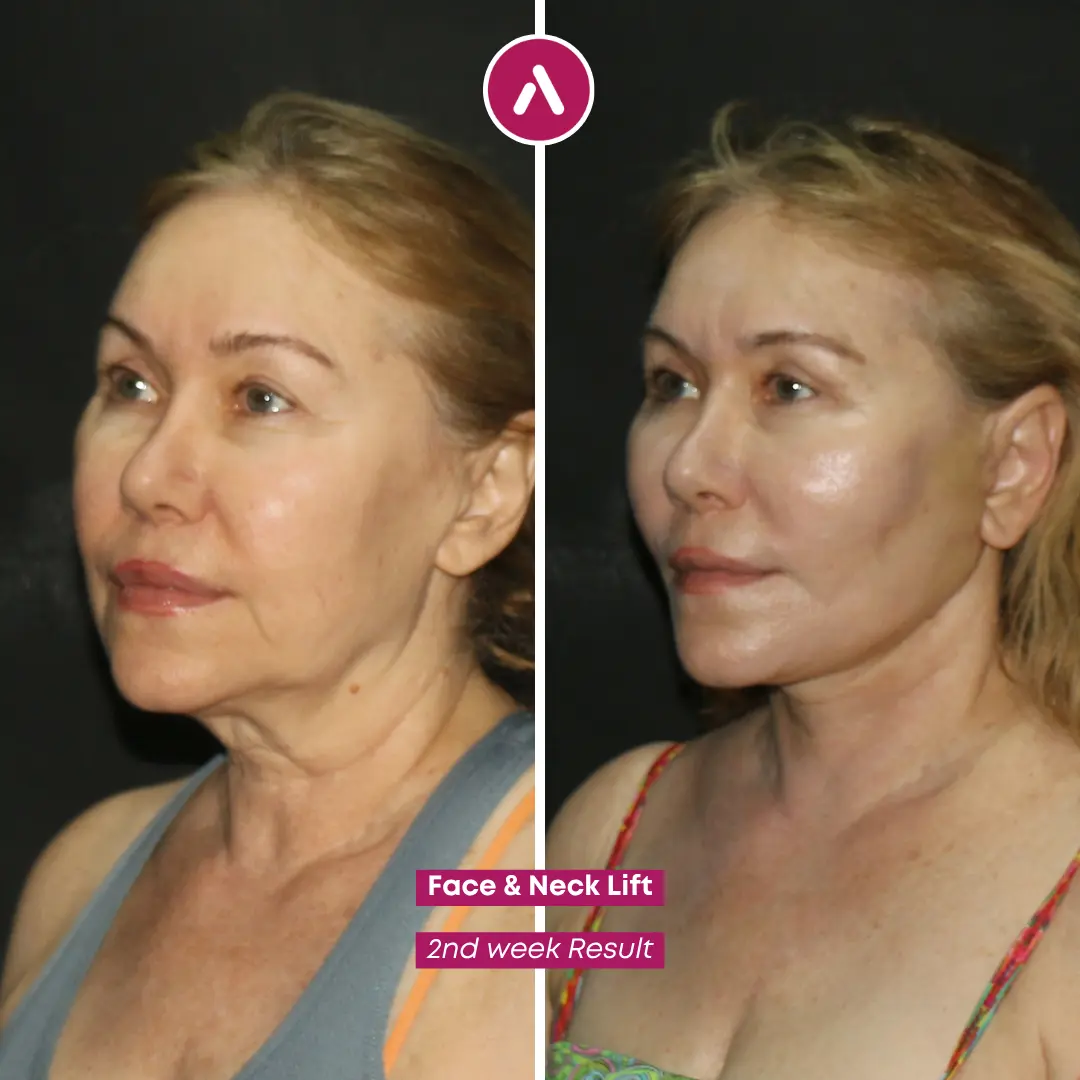
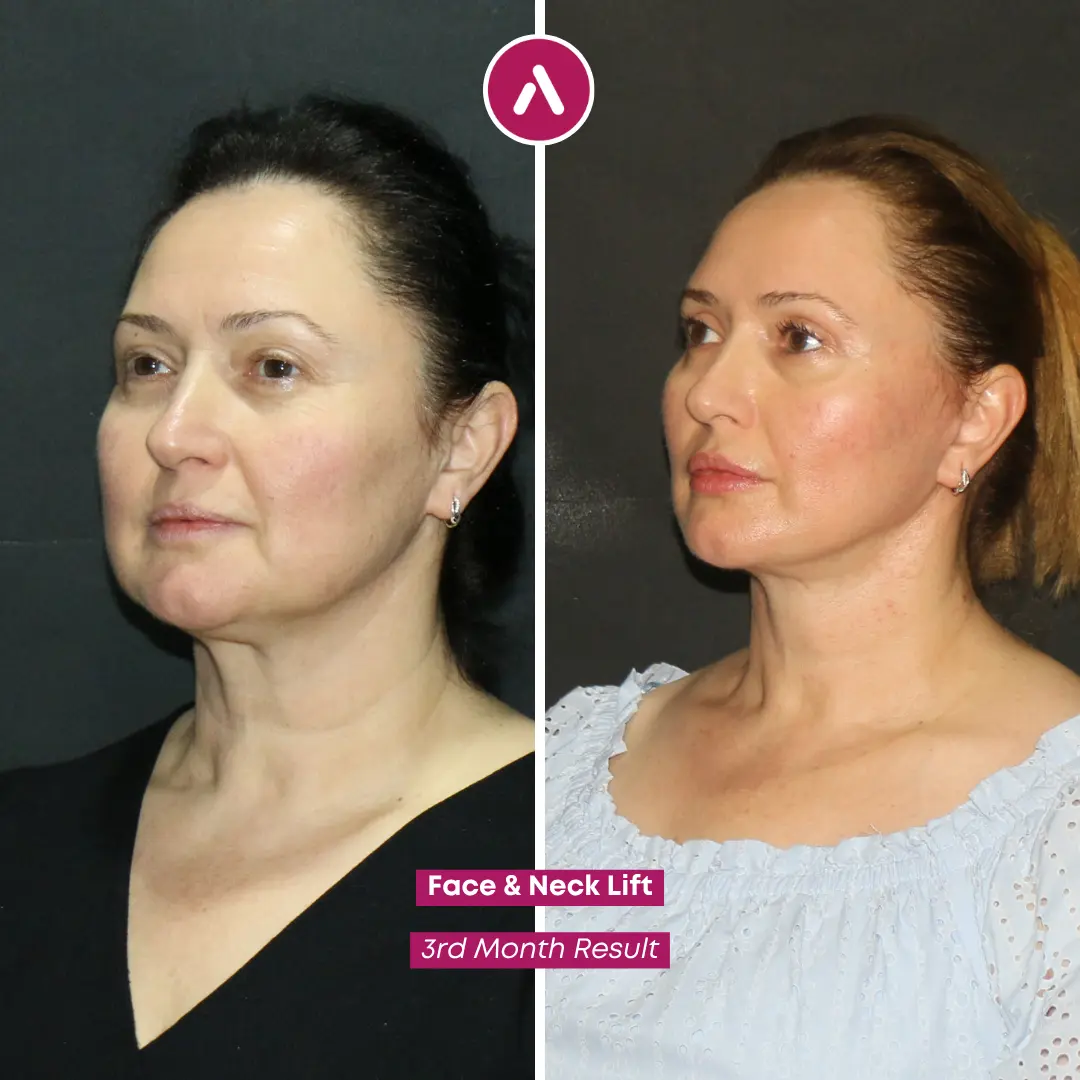
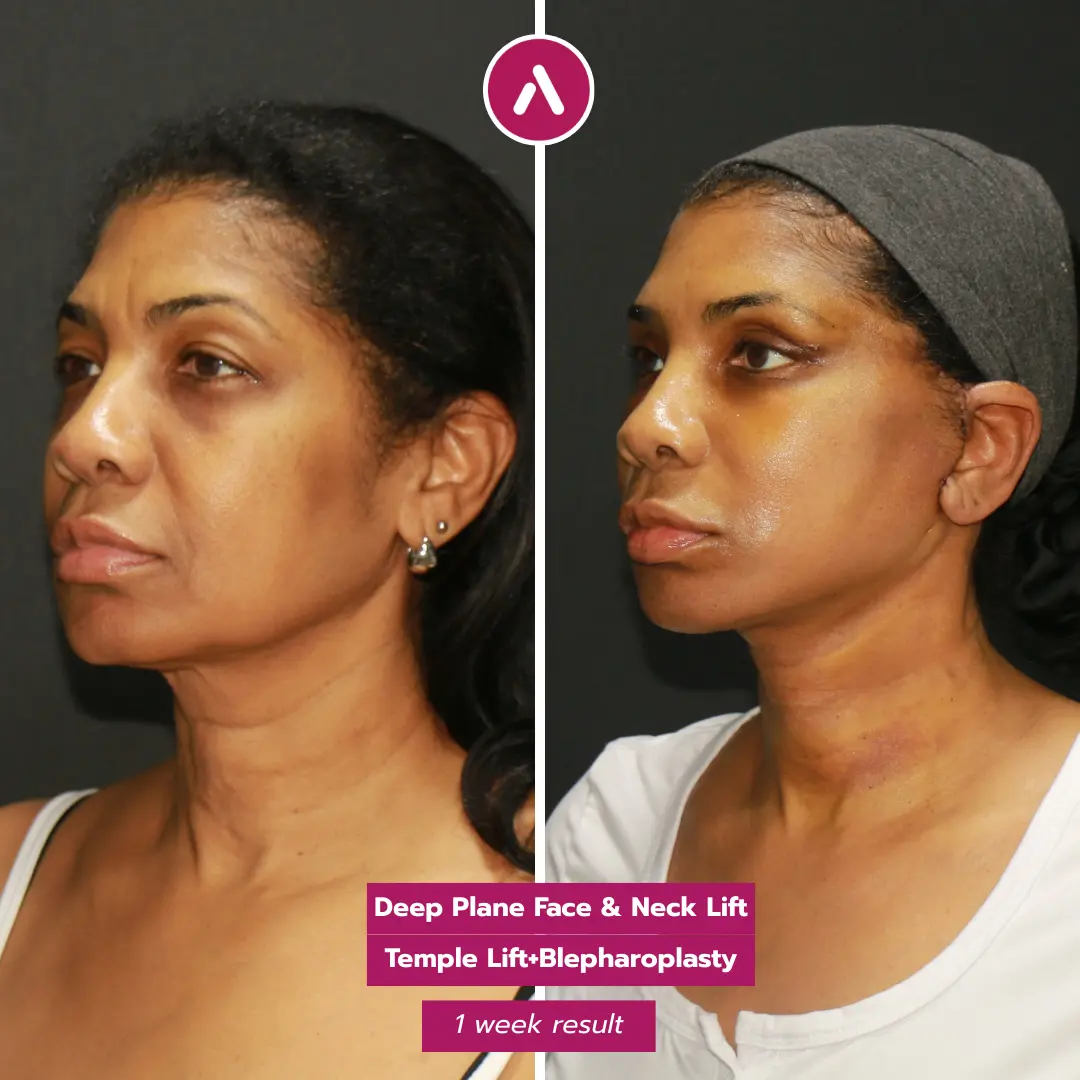
Canadian patients often compare thread lifts with surgical facelift options at AKM Clinic before deciding which path fits their anatomy, downtime tolerance, and long-term expectations. The right choice depends on skin quality, facial heaviness, age, and how much lift is actually needed.
This guide explains the main thread types, what they can realistically do, where they fall short, and how to compare their value against more durable surgical options.
Table of Contents
What a Thread Lift Is?
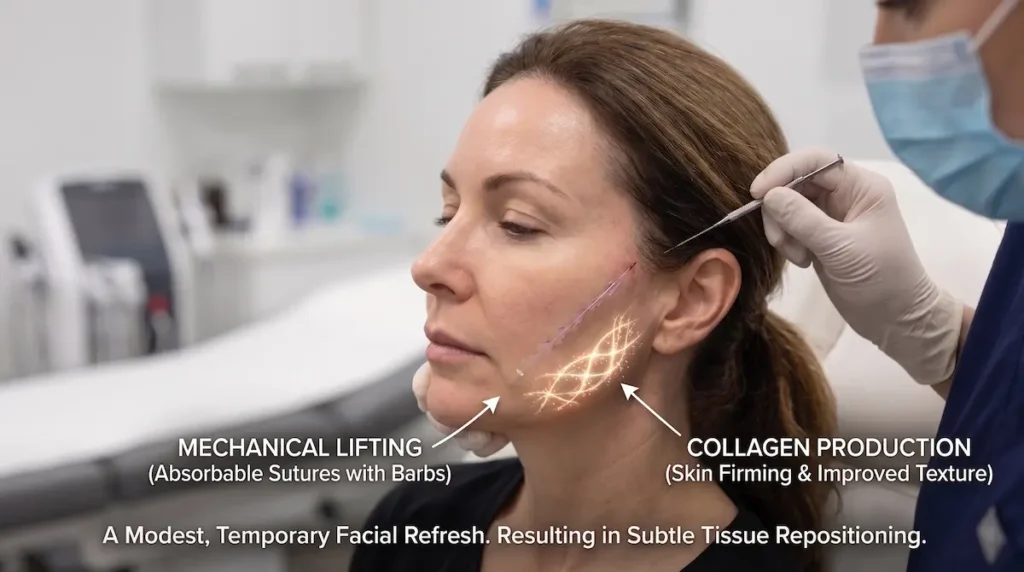
A thread lift is a minimally invasive facial rejuvenation procedure that uses dissolvable sutures placed under the skin. These threads grip soft tissue, reposition it slightly, and then gradually dissolve while stimulating collagen around the treated area.
The result is subtle. That is the point. A good thread lift should look like a small refresh, not a dramatic facial change.
Dissolvable Sutures for Mechanical Lifting
Thread lifts use medical-grade absorbable sutures inserted through small entry points. Depending on the design, the threads may contain tiny barbs, cones, or moulded structures that help catch and support the tissue.
This produces a mechanical lift. The tissue is not surgically released or deeply repositioned, so the amount of lift is limited. For early jowling, mild cheek descent, or soft jawline blurring, that limited lift may still be useful.
For heavier sagging, threads usually underperform. In those cases, a mini facelift as a surgical alternative may offer better structural support.
The Dual Action: Lift and Collagen Stimulation
Threads work in two ways. First, they create immediate tissue support. Second, as the body absorbs the material, it produces collagen around the thread pathway.
This collagen response can improve firmness and skin texture over time. However, collagen stimulation is not the same as deep tissue lifting. It supports the result, but it does not transform advanced laxity.
“A thread lift can be a useful option for the right patient, but it should be presented honestly. It is a modest, temporary lift — not a substitute for deep surgical repositioning.”
Thread Lift vs Liquid Facelift
A thread lift and a liquid facelift solve different problems. Threads aim to lift tissue mechanically. A liquid facelift restores volume and softens lines using fillers and neuromodulators.
For patients comparing non-surgical options, this distinction matters. If the face looks tired because of volume loss, fillers may help. If the issue is early tissue descent, threads may be more relevant. For the volume-based option, see our guide to liquid facelift as the volume-based option.
Some patients need both. Others need neither and are better served by surgery. A proper consultation separates marketing language from anatomy.
The Three Thread Types
Thread lifts are often discussed as one procedure, but the material matters. PDO, PLLA, and PCL threads differ in absorption time, collagen response, tissue support, and expected longevity.
None is automatically “best.” The best thread type depends on the area treated, the amount of laxity, and the patient’s expectations.
PDO Threads
PDO threads are made of polydioxanone, a material widely used in absorbable surgical sutures. They are the most common thread type and typically dissolve faster than PLLA or PCL.
PDO threads are often used for patients who want a lighter, shorter-term lift. They can be useful for early facial softening, mild jawline support, and patients testing thread lifting before committing to longer-lasting options.
The trade-off is longevity. PDO is generally the shortest-lasting of the three main thread materials.
PLLA Threads
PLLA threads are made of poly-L-lactic acid, a collagen-stimulating material also used in some biostimulatory aesthetic treatments. They tend to create a stronger collagen response than PDO.
PLLA may suit patients who want both mild lifting and gradual firmness improvement. Results are still temporary, but the collagen-remodelling effect can make the outcome feel more progressive.
These threads are not ideal for heavy tissue. They still rely on the same principle: limited support through absorbable material.
PCL Threads
PCL threads are made of polycaprolactone. They usually absorb more slowly than PDO and PLLA, which may make results last longer in selected patients.
PCL threads can be considered when the goal is longer stimulation and a slightly more durable thread-based result. They may be appropriate for patients with mild to moderate laxity who still do not need surgery.
The longer-lasting material does not mean facelift-level correction. It means the thread effect may persist longer than shorter-acting thread types.
Which Type Fits Which Goal
The material should match the clinical goal. A lighter refresh may call for PDO. A collagen-focused plan may involve PLLA. Longer support may point toward PCL.
| Thread type | Main feature | Best suited for | Longevity context |
|---|---|---|---|
| PDO | Common absorbable thread with lighter support | Early laxity and subtle refresh | Usually shortest-lasting |
| PLLA | Stronger collagen-stimulating profile | Mild lift with gradual firmness improvement | Often longer than PDO |
| PCL | Slow absorption and extended support | Mild to moderate laxity where longer stimulation is desired | Often longest-lasting |
Canadian patients should also confirm whether any thread product used is properly licensed or authorized for medical use. Health Canada’s device and product oversight is a useful benchmark when asking safety questions before treatment.

What Thread Lifts Realistically Achieve?
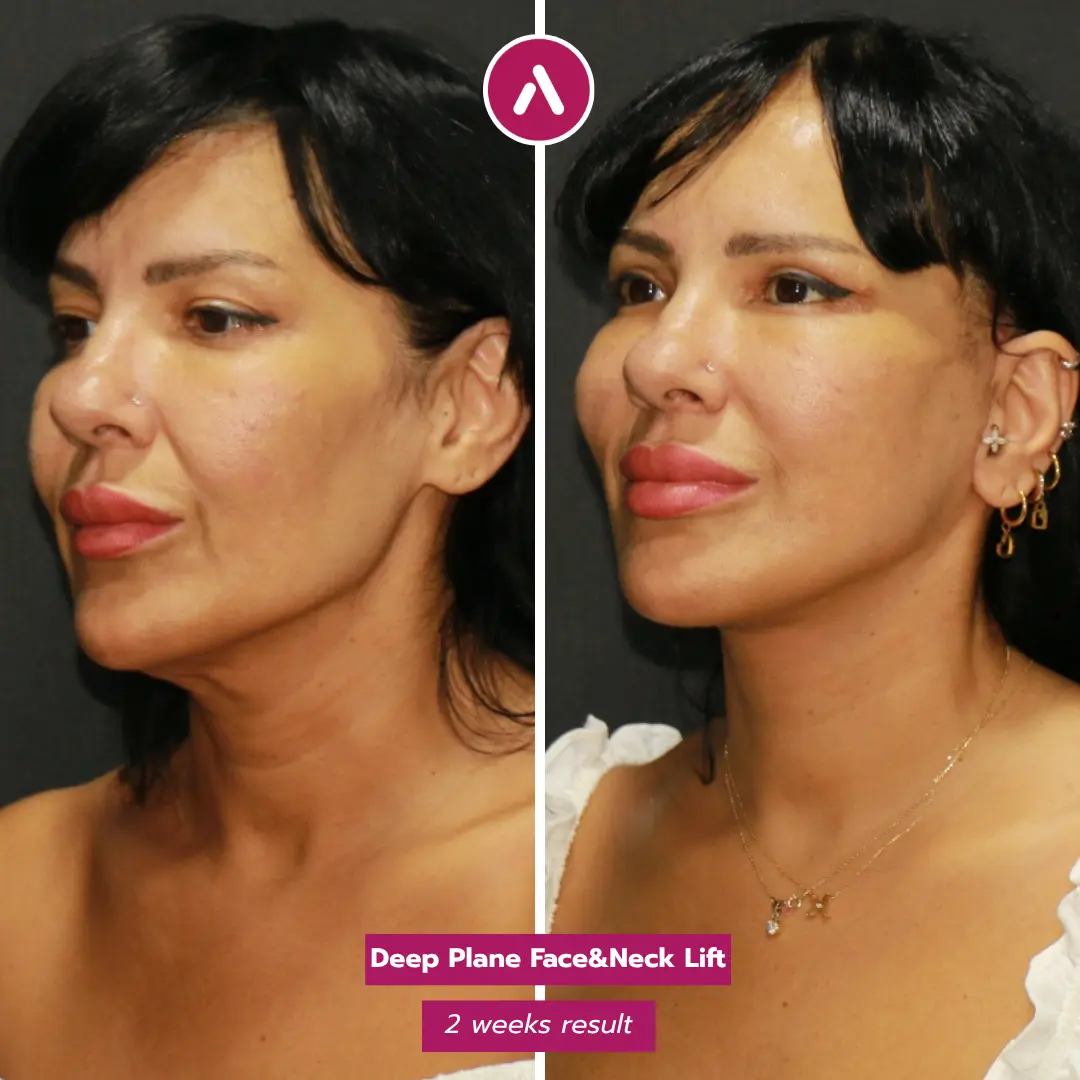
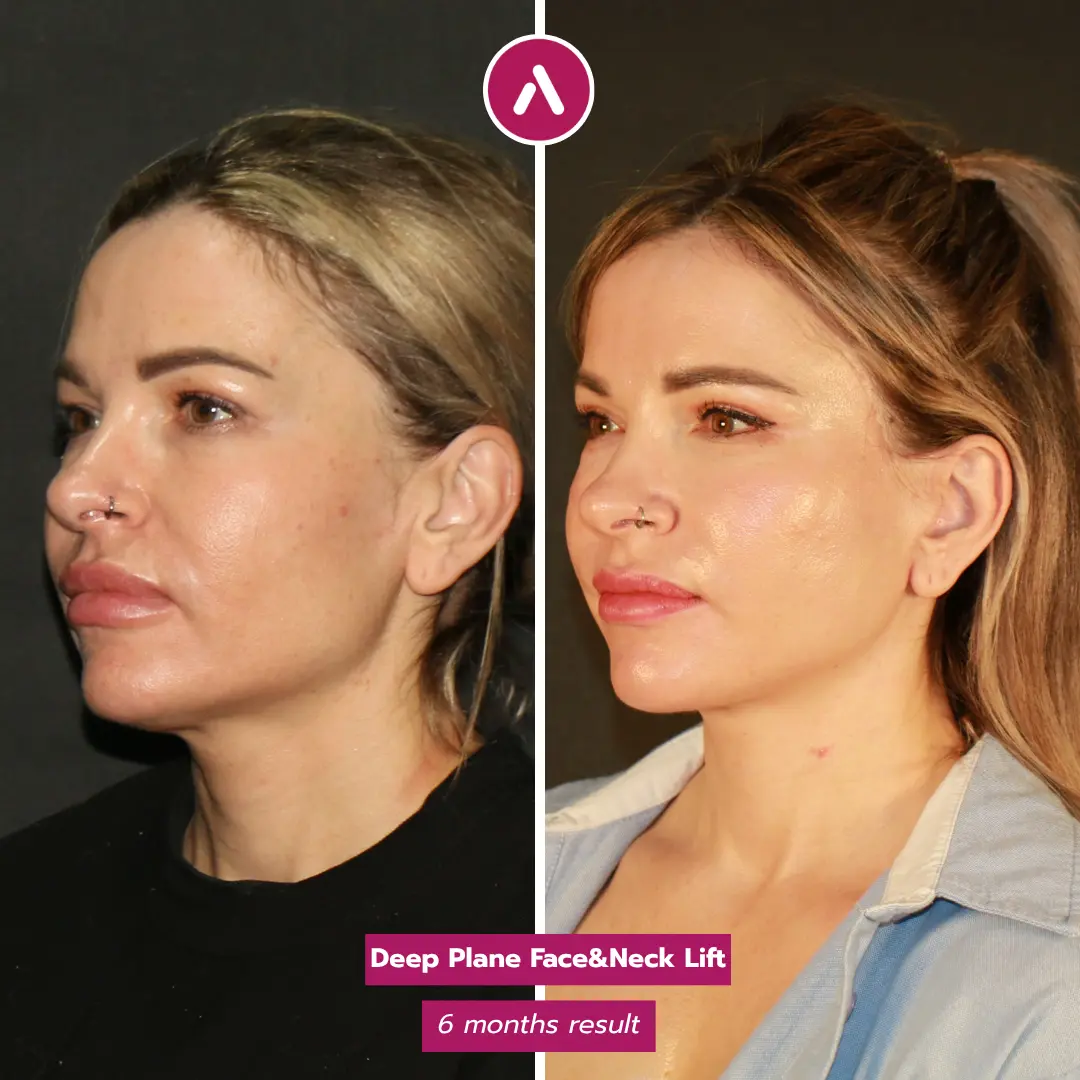
One of the biggest reasons patients become disappointed with thread lifts is unrealistic expectations. Marketing photographs sometimes create the impression that threads can replicate surgical lifting. They cannot.
A thread lift is best understood as a modest refinement procedure. For the right candidate, it can improve facial contours and create a fresher appearance. For the wrong candidate, the result may be barely noticeable.
Modest Lifting for Early Sagging
Thread lifts work best when facial ageing is still relatively mild. Patients who notice the beginning of jowl formation, slight cheek descent, or early jawline softening often achieve the most satisfying outcomes.
The procedure does not remove excess skin. It does not release deep facial ligaments. It does not reposition the SMAS layer. Those are surgical goals.
Instead, threads create a subtle upward support effect. The improvement is usually visible, but it should not be dramatic.
For many Canadian professionals, that subtlety is actually appealing. They often prefer a refreshed appearance rather than a major change that colleagues immediately notice.
Jawline and Midface Applications
The jawline is one of the most common treatment areas. Mild tissue descent along the lower face can sometimes respond well to thread placement, particularly when skin quality remains reasonably good.
The midface is another area where threads may provide temporary support. Slight cheek descent can sometimes be improved through carefully planned lifting vectors.
Results vary significantly according to anatomy. Thin faces, lighter tissues, and early ageing changes generally respond better than heavier faces with advanced laxity.
Patients considering jawline improvement should also understand where threads end and surgery begins. In some situations, a facelift remains the more predictable option for structural correction.
Collagen-Stimulation Benefits
Many patients focus exclusively on the lifting effect and overlook the collagen component. While collagen stimulation cannot replace a facelift, it can contribute to skin firmness and texture improvements over time.
The biological response continues after the threads begin dissolving. This is why some patients feel their skin quality improves gradually during the months following treatment.
Collagen stimulation is one reason threads are sometimes combined with technologies designed to improve skin quality. For example, some patients explore Morpheus8 for skin tightening alongside threads to address both tissue support and skin texture.
Canadian perspective: Patients from Toronto, Vancouver, and Montréal often seek treatments with minimal social downtime. Thread lifts appeal to this group because most people can return to professional activities much sooner than after a surgical facelift.
Honest Pros and Cons
Every cosmetic procedure involves trade-offs. The most reliable way to evaluate a thread lift is to examine both the advantages and the limitations without exaggeration.
Patients who understand the limitations beforehand tend to report greater satisfaction because their expectations align with what the procedure can realistically deliver.
Pros — Minimal Downtime and No General Anesthesia
The most obvious advantage of a thread lift is that it avoids formal surgery. There are no large incisions, no operating theatre recovery period, and typically no need for general anesthesia.
Many patients appreciate the shorter recovery period. Swelling and bruising can occur, but they are generally less extensive than after a facelift.
- Minimal incisions
- Shorter recovery period
- No general anesthesia in most cases
- Immediate return to many daily activities
- Collagen stimulation benefit
For patients who are not yet ready for surgery, these advantages can make thread lifting an attractive transitional option.
Cons — Temporary Results and Limited Lift
The biggest disadvantage is longevity. Unlike a surgical facelift that may provide improvement for many years, thread lifts are temporary.
The threads dissolve. The collagen response eventually diminishes. Ageing continues. This reality is sometimes underemphasized in promotional materials.
Another limitation is lifting power. Threads can support tissue, but they cannot reverse significant facial ageing. Patients with substantial skin laxity often see less improvement than expected.
- Temporary results
- Less powerful than surgery
- Possible asymmetry during healing
- Occasional dimpling or visibility issues
- Repeat treatments may be required
When Threads Disappoint
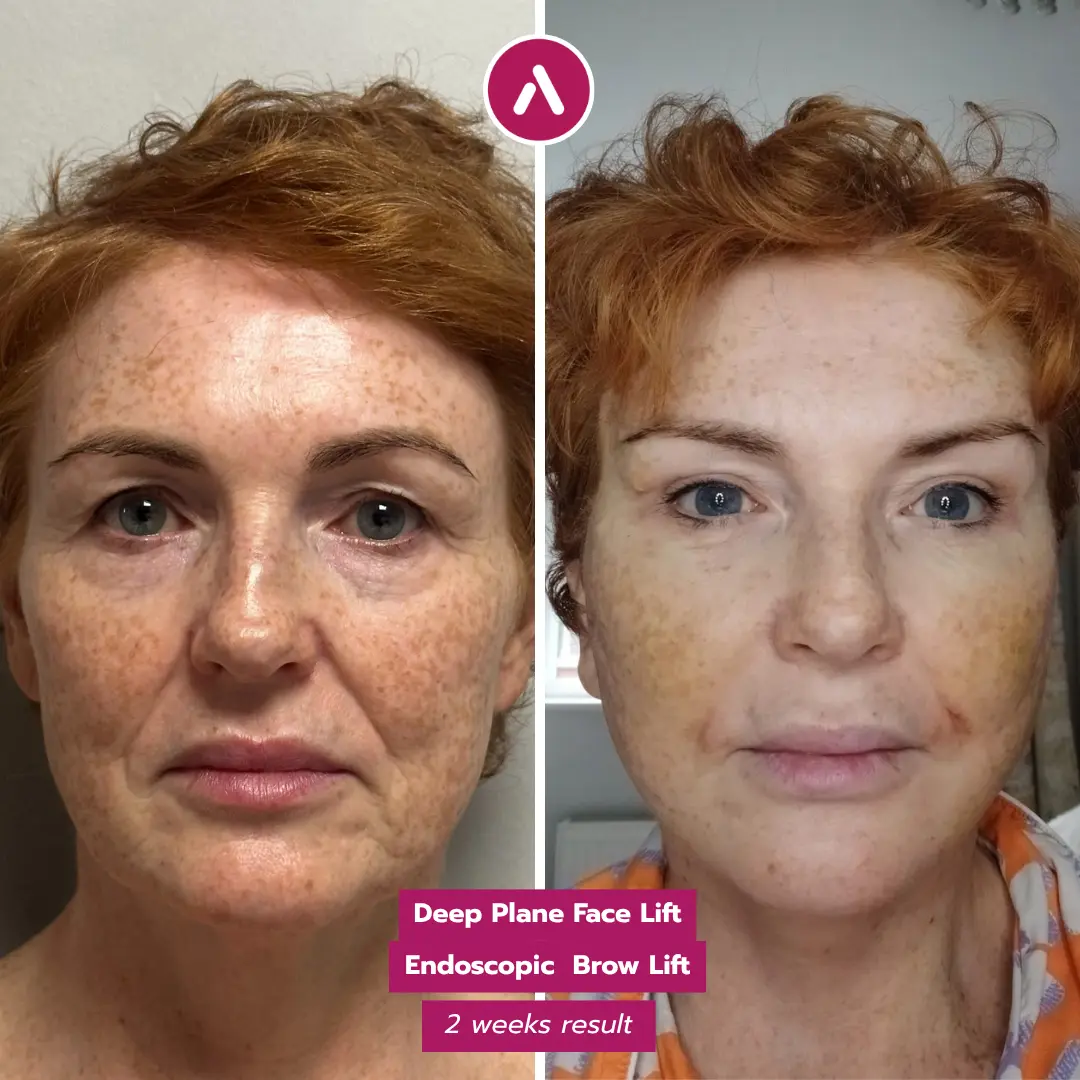
Most unsatisfactory thread-lift outcomes occur because the patient was not an ideal candidate. Advanced jowls, heavy neck laxity, significant skin excess, or substantial facial descent generally require more than thread support.
In these situations, patients sometimes spend years repeating temporary treatments while gradually approaching the cost of surgery without achieving comparable results.
This is one reason honest consultation matters. A good practitioner should be willing to explain when a thread lift is unlikely to meet the patient’s goals.
“The best thread-lift candidates are not the patients who need the most lifting. They are the patients who need the least.”
Cost-per-year consideration for Canadians: A thread lift may initially appear less expensive than surgery. However, repeated treatments every 12 to 18 months can substantially change the long-term value calculation when compared with a procedure that delivers results measured in years rather than months.
Thread Lift vs Surgical Facelift
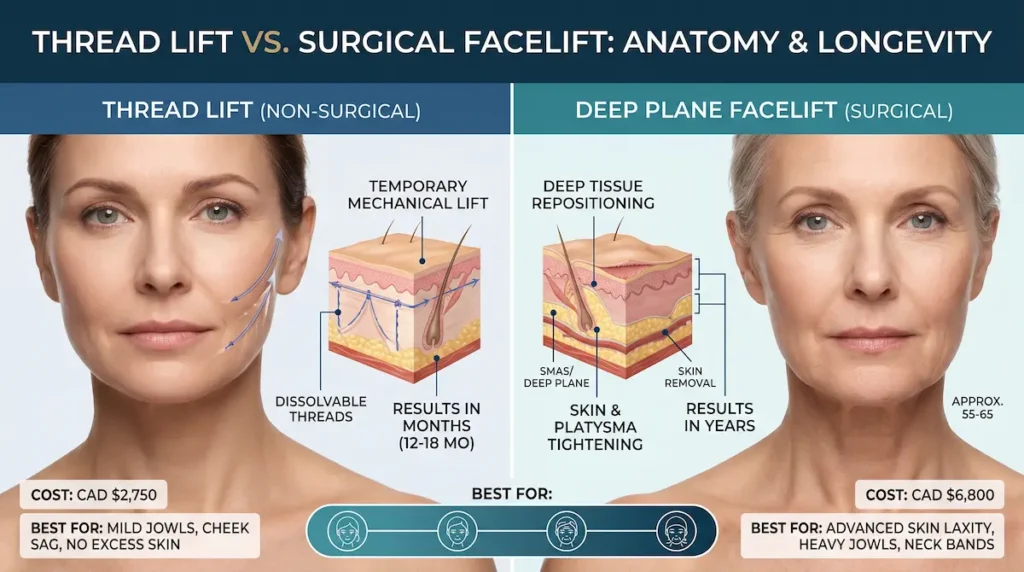
The thread lift vs surgical facelift decision is not only about downtime. It is about anatomy. Threads offer temporary support, while surgery repositions deeper tissue layers and removes excess skin when needed.
This is where many Canadian patients benefit from a candid assessment. A less invasive option is not automatically the better option if it cannot solve the actual problem.
Longevity Comparison
Thread lift results are usually measured in months. Many patients see the most visible lift early, followed by gradual softening as the threads dissolve and the collagen response matures.
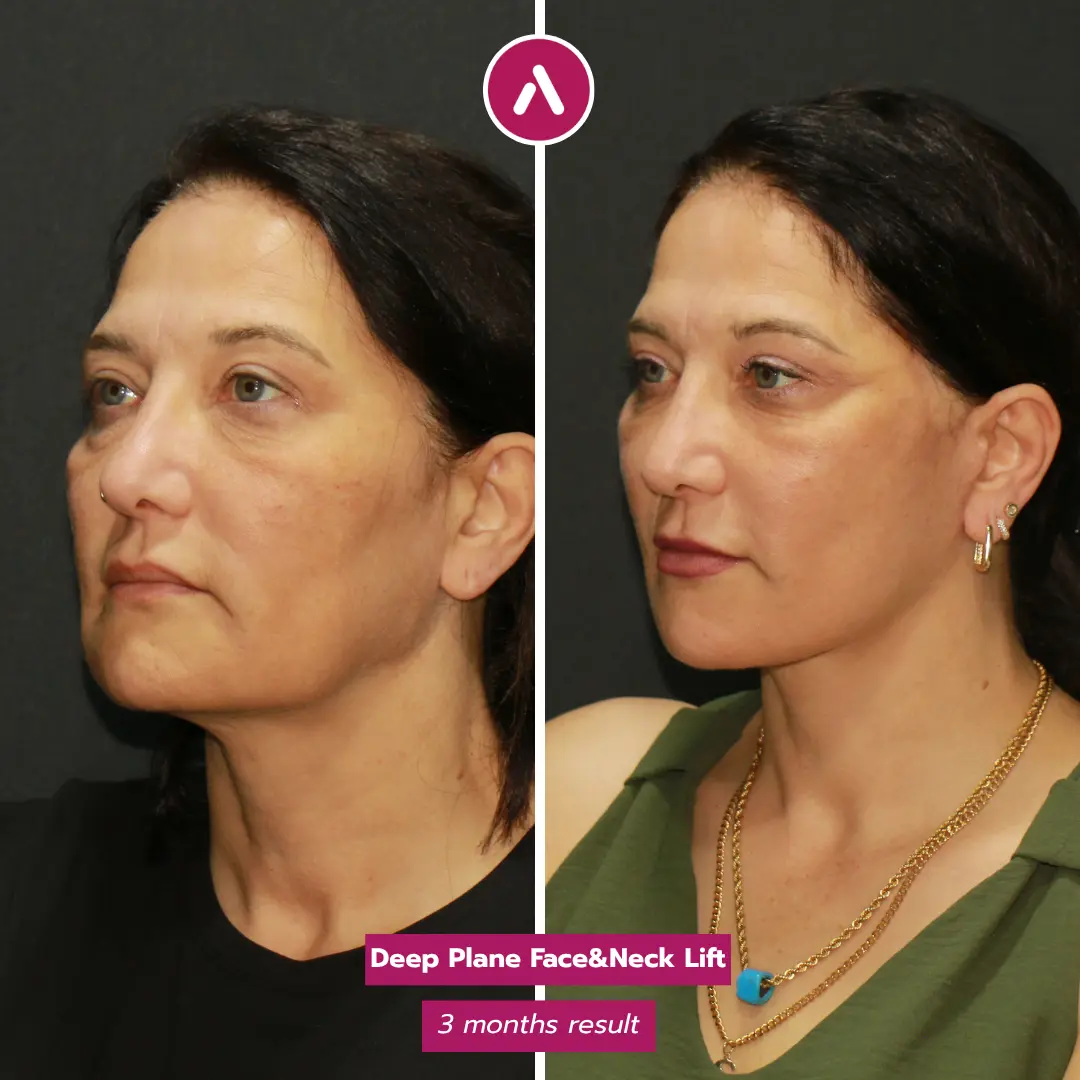
Surgical facelift results are measured in years. Deep plane facelift techniques, for example, reposition deeper facial structures rather than simply tightening the skin. For longevity data specifically, see our guide to surgical facelift longevity.
This difference matters for anyone comparing treatment plans. A temporary lift can be appropriate, but it should be chosen with full awareness of its lifespan.
Cost-per-Year Reality
At AKM Clinic, thread lift pricing is listed as CAD $2,750. Liquid facelift pricing is CAD $3,150, while a Standard Deep Plane Facelift is listed at CAD $6,800. These figures come from the AKM Clinic Treatment Techniques Cost document.
The first number is not the whole story. If threads are repeated every 12 to 18 months, the long-term cost can narrow the gap between non-surgical and surgical treatment.
| Option | Primary purpose | AKM CAD pricing | Longevity context |
|---|---|---|---|
| Thread lift | Modest mechanical lift | CAD $2,750 | Temporary, often 12-18 months |
| Liquid facelift | Volume restoration and line softening | CAD $3,150 | Temporary, depends on product and area |
| Standard Deep Plane Facelift | Deep tissue repositioning | CAD $6,800 | Longer-term surgical correction |
For a broader pricing comparison, Canadian patients can review thread lift and facelift pricing in CAD. The best value is not always the lowest initial fee. It is the treatment that best matches the problem.
Why Threads Are Not Ideal for Advanced Aging
Advanced facial ageing usually involves more than mild tissue descent. Skin laxity, jowls, neck bands, deep folds, and heavier facial tissues may all contribute to the aged appearance.
Threads cannot remove skin. They cannot tighten the platysma. They cannot create the same deep structural repositioning as a facelift.
This is why threads are often disappointing for patients who already need surgery. A realistic recommendation may point toward a facelift or mini facelift instead, even if the patient originally asked for threads.
Candidacy and Realistic Expectations
Candidacy is the most important predictor of thread lift satisfaction. The procedure can work well for a narrow group of patients, but it should not be sold as a universal solution.
A careful assessment considers age, skin quality, tissue heaviness, facial shape, previous treatments, and the patient’s tolerance for temporary results.
Ideal Thread Lift Candidate
The ideal candidate has mild early laxity, good skin quality, and realistic expectations. They want a subtle improvement rather than a dramatic lift.
This patient may be in their late 30s, 40s, or early 50s, although age alone is not the deciding factor. Skin elasticity matters more.
- Mild jowling or cheek descent
- Good skin elasticity
- No major neck laxity
- Preference for minimal downtime
- Acceptance of temporary results
For patients in Ottawa, Calgary, or Halifax who cannot take extended time away from work, this shorter recovery profile can be appealing. The trade-off is durability.
When Surgery Is Better Value
Surgery becomes the better value when the concern is structural rather than early or mild. If the patient has significant skin excess, deeper facial descent, or neck involvement, threads may only provide a limited and short-lived change.
In those cases, repeated non-surgical treatments may delay the right solution. They can also create frustration.
Patients who want a more durable correction should compare threads with surgical options rather than viewing them as interchangeable. AKM’s Natural-First approach is designed around rejuvenation over alteration, which means recommending the least aggressive option that can still meet the goal.
Combining Threads with Skin-Quality Treatments
Some patients do well with a combined plan. Threads may address mild tissue descent, while skin-quality treatments improve texture, firmness, or collagen response.
This approach can be useful when the main concern is early laxity plus mild crepiness or surface ageing. It is not appropriate when the face needs deep surgical repositioning.
Patients interested in the broader biological side of rejuvenation may also compare threads with regenerative facelift comparison content. These treatments have different goals and should not be grouped together as if they work the same way.
Recovery planning also matters. AKM Clinic integrates supportive technologies for selected procedures, and patients can learn more about AKM’s recovery technology standards when comparing non-surgical and surgical options.
Canadian decision point: If you would be disappointed by a result that lasts closer to one year than five years, a thread lift may not match your expectations. If you want a small refresh before a major event or before considering surgery later, it may be reasonable.
The safest next step is not choosing a procedure from a menu. It is having your anatomy assessed and asking whether threads, injectables, skin tightening, or surgery best matches your facial ageing pattern.
Before booking any thread-based procedure, Canadian patients should verify product safety, practitioner training, and whether the treatment is appropriate for their anatomy. Health Canada warns that only authorized absorbable threads should be used for cosmetic thread lifts, while ISAPS explains thread lift recovery and safety considerations for patients.
Frequently Asked Questions: Thread Lift Turkey
These answers address the most common questions Canadian patients ask when comparing thread lifts with injectables, skin tightening, and surgical facial rejuvenation.
How long does a thread lift last?
Most thread lift results are temporary, often lasting about 12 to 18 months. Longevity depends on thread type, facial tissue weight, skin quality, lifestyle, and how quickly your body absorbs the material.
Which thread type is best?
There is no single best thread type. PDO may suit a lighter refresh, PLLA may support collagen stimulation, and PCL may be chosen when longer-lasting support is desired. The choice should follow anatomy, not marketing claims.
Is a thread lift better than a facelift?
A thread lift is not better or worse than a facelift. It is different. Threads suit mild laxity and temporary improvement, while a facelift is more appropriate for deeper tissue descent, skin excess, and longer-term correction.
Can threads be seen or felt under the skin?
Threads should not be visibly obvious when properly placed. In some cases, patients may temporarily feel tightness, small irregularities, or tenderness. Visible dimpling or persistent thread awareness should be assessed by the treating clinician.
How much does a thread lift cost in CAD?
AKM Clinic lists Thread Lift pricing at CAD $2,750. This is from the AKM Clinic Treatment Techniques Cost document. Individual planning may vary depending on anatomy and treatment area.
Is there downtime?
Downtime is usually shorter than surgery. Patients may experience swelling, bruising, tenderness, or facial tightness for several days. Many return to desk-based work quickly, but strenuous activity and facial massage should be avoided early on.
Can I have a facelift later if threads are not enough?
Yes, many patients can still have a facelift later. Your surgeon should know about prior thread placement because residual scar tissue or thread material may affect surgical planning.
If you are comparing threads, injectables, and surgery, the most useful next step is an anatomy-based consultation. AKM Clinic can help determine whether a thread lift is enough, or whether a longer-lasting surgical plan would better match your goals.
Medical Disclaimer: This page is provided for general educational purposes only and does not replace an in-person medical consultation, diagnosis, or personalized treatment plan. All surgery carries risks, and outcomes vary between individuals. Suitability for a facelift surgery, procedure selection, and anesthesia choice can only be determined after a full clinical assessment by a qualified surgeon. Always follow your clinician’s instructions and seek urgent medical attention if you develop concerning symptoms during recovery.