
Ghost surgery in Turkey is a hidden risk Canadian patients should understand before booking any cosmetic procedure abroad. It happens when the surgeon a patient consulted is not the person who performs all, or part, of the operation.
This is not a Turkey-only issue. It can occur in any high-volume surgical setting where marketing, sales teams, and operating-room responsibility are not clearly separated. For Canadians comparing clinics from Toronto, Vancouver, Montreal, Calgary, or Ottawa, the solution is not fear. It is verification.
At a reputable clinic, you should know the name, qualifications, and role of the surgeon before you travel. That transparency should appear in your consultation, your written plan, and your consent documents.
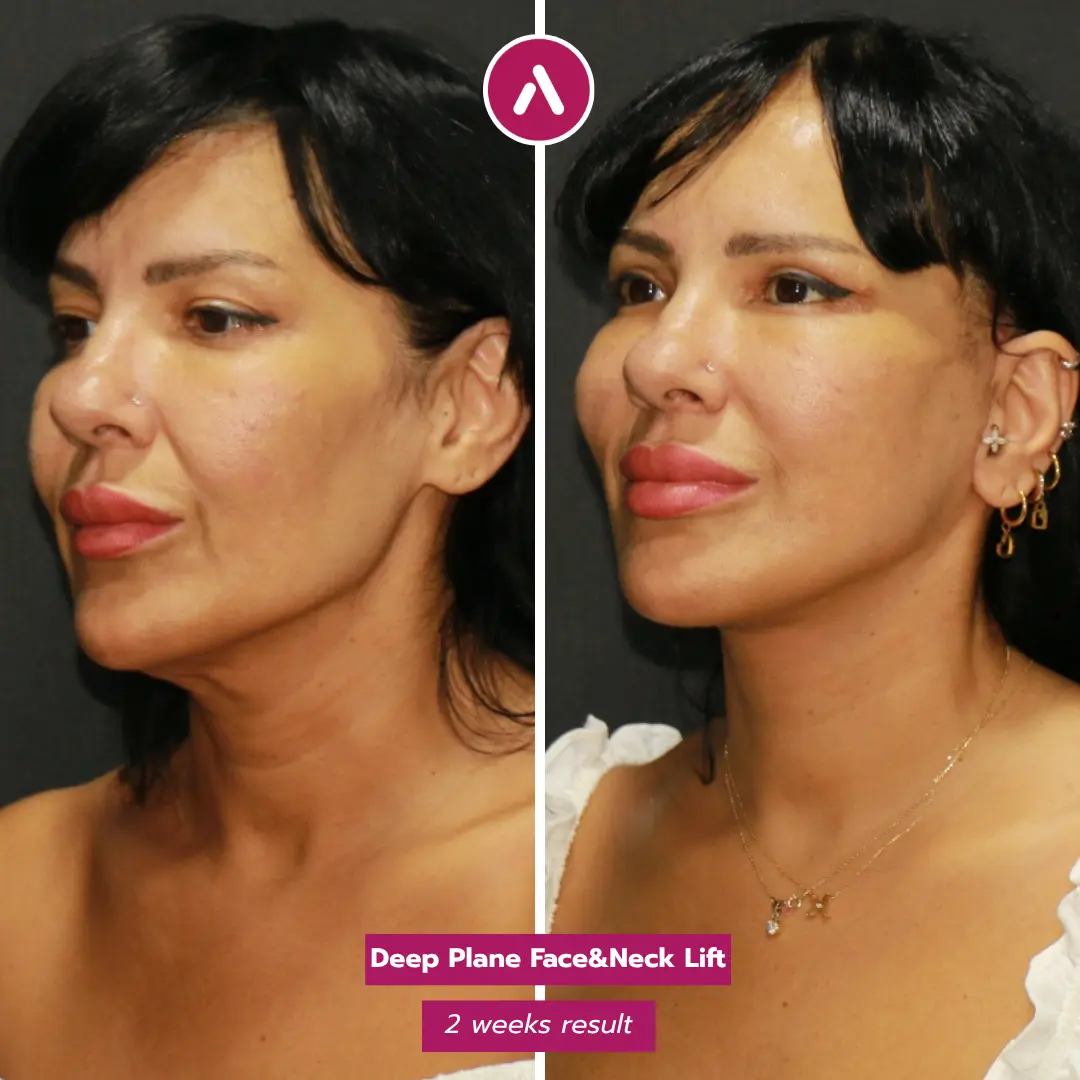
Quick Summary: Ghost surgery occurs when a patient expects one surgeon to operate, but another person performs part or all of the procedure. Canadian patients can reduce this risk by requesting a named-surgeon commitment, reviewing consent forms before travelling, and verifying credentials independently.
AKM Clinic’s approach is built around surgeon-led planning, documented responsibility, and transparent patient communication through AKM Clinic’s surgeon-performed approach.
Table of Contents
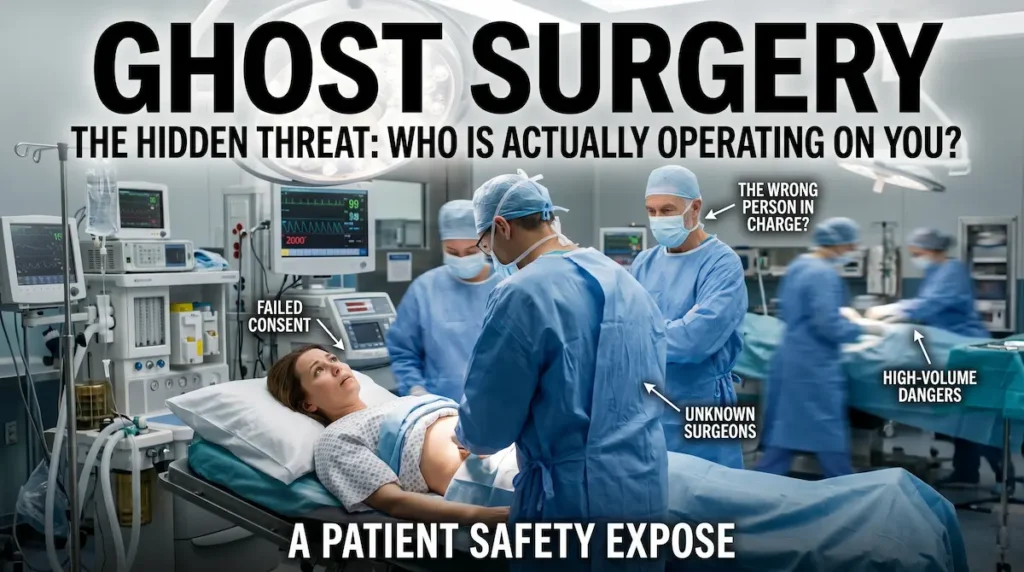
What Ghost Surgery Is?
Ghost surgery is not a minor administrative issue. It affects consent, accountability, safety, and trust. A patient cannot make an informed decision if they do not know who will actually perform the operation.
The Practice Defined
Ghost surgery means that the surgeon presented during consultation is not the same person who performs the surgical work. In some cases, another doctor operates. In more concerning cases, non-surgeon staff may perform tasks that should remain under direct surgical control.
The patient may only discover this afterward. Sometimes they never find out at all.
For a Canadian patient, this directly conflicts with the expectations most people have from provincial healthcare systems. Whether you are used to OHIP in Ontario, MSP in British Columbia, RAMQ in Quebec, or AHCIP in Alberta, the identity of the responsible physician is not optional information.
Why It Happens in High-Volume Surgical Settings
Ghost surgery risk increases when a clinic books more procedures than one surgeon can personally manage. The more patients a clinic pushes through each day, the more likely it becomes that responsibilities are delegated without clear disclosure.
Common pressure points include:
- Sales teams promising access to a famous surgeon
- Several patients booked for similar procedures on the same day
- Consent forms that use vague wording such as “our medical team”
- Limited or no direct consultation with the operating surgeon
- Unclear division between surgeon, assistant, nurse, and technician roles
Delegation itself is not always inappropriate. Every operating room has a team. The problem begins when patients are misled about who performs the critical surgical steps.
Why It Is a Serious Patient-Safety Concern
Cosmetic surgery is still surgery. ISAPS emphasizes that aesthetic procedures involve real surgical risks and should be approached with patient safety in mind. Facelift, rhinoplasty, liposuction, tummy tuck, breast surgery, and hair transplant procedures all require technical judgment, anatomical knowledge, and complication management. Review ISAPS patient safety considerations.
If the person operating is not the person you vetted, your entire decision process changes. The credentials, experience, technique, aesthetic philosophy, and complication protocol you evaluated may no longer apply.
“Patients have the right to know exactly who will perform their operation. Transparency should never be treated as a premium feature; it is a basic standard of informed consent.”
This is why ghost surgery belongs in the same conversation as facility accreditation, board certification, and follow-up care. For the wider context, Canadian patients should also review the broader safety analysis for Canadian patients.
Why Canadian Patients Should Take the Risk Seriously?
Canadian patients often approach private cosmetic surgery with healthy scepticism. That is reasonable. Most Canadians are accustomed to a public healthcare system where physician accountability, documentation, and consent are formal parts of care.
Informed Consent Standards in Canada
Informed consent is not just signing a form. It means understanding the procedure, its risks, alternatives, likely benefits, and the identity of the medical professional responsible for your care.
Canadian medical culture places strong emphasis on physician accountability. The CMPA notes that informed consent should rest with the physician carrying out the treatment or procedure. Patients expect to know who is treating them. That expectation should not disappear because the surgery happens in Istanbul. Read the CMPA consent guide for Canadian physicians.
Before travelling, you should be able to answer these questions clearly:
- Who is my operating surgeon?
- Did I speak directly with that surgeon?
- What parts of the procedure will they personally perform?
- Who assists them in the operating room?
- What happens if the named surgeon is unavailable?
If a clinic cannot answer these questions in writing, pause the booking process.
The Difference Between a Surgical Team and Ghost Surgery
A surgical team is normal. Ghost surgery is not.
In any properly run operating room, nurses, anesthesiologists, assistants, and technicians support the surgeon. Their presence improves safety and efficiency. The key issue is disclosure and role clarity.
A legitimate team model means the surgeon remains responsible for the procedure and performs the critical surgical steps. Ghost surgery means the patient was led to believe one person would operate, while a different person actually did the work.
| Scenario | Acceptable Surgical Team Model | Ghost Surgery Concern |
|---|---|---|
| Operating surgeon | Named before surgery and present for critical steps | Different person operates without clear disclosure |
| Assistants | Support under surgeon supervision | Perform surgeon-level tasks independently |
| Consent form | Names surgeon and procedure clearly | Uses vague wording such as “medical team” |
| Patient understanding | Patient knows who does what | Patient discovers role changes later |
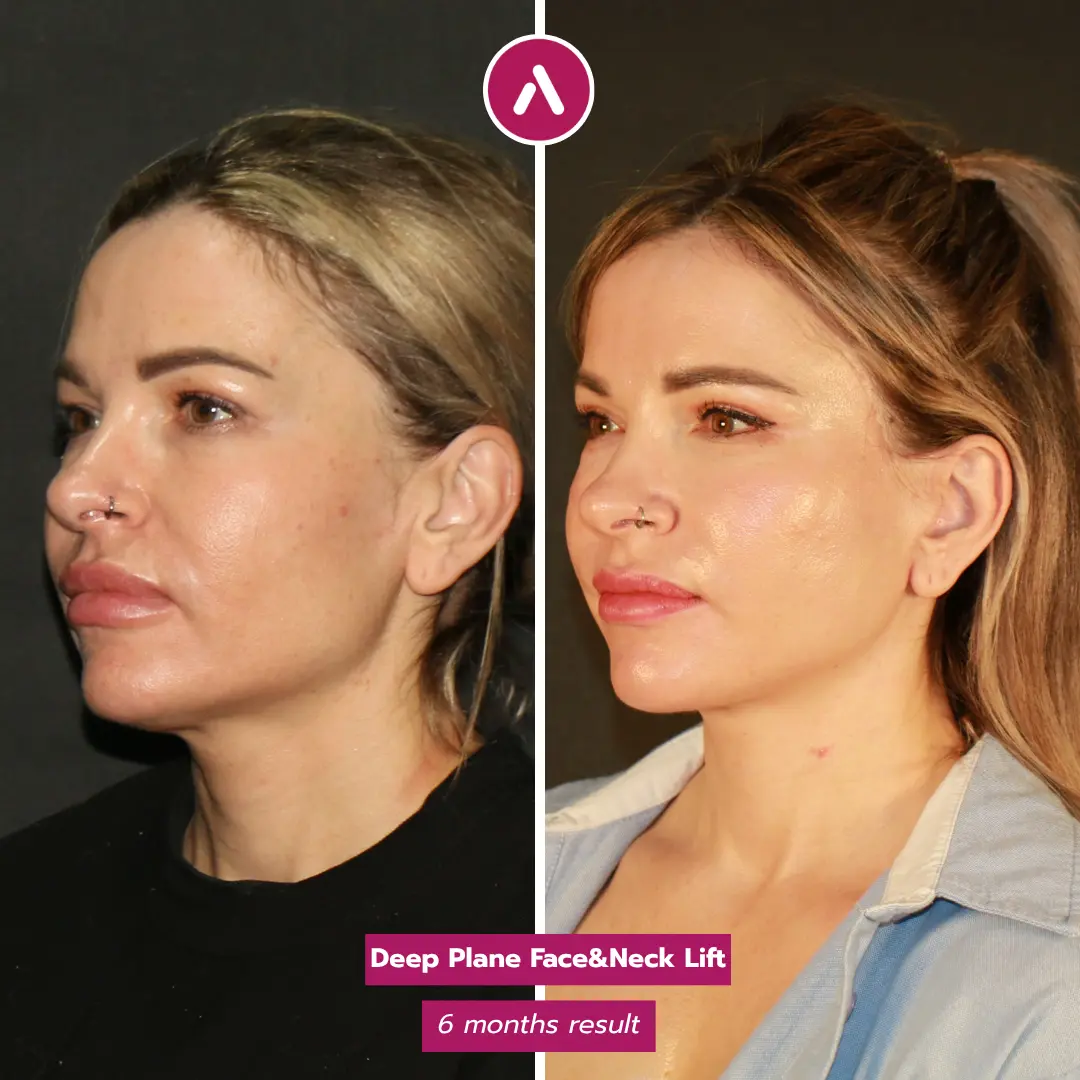
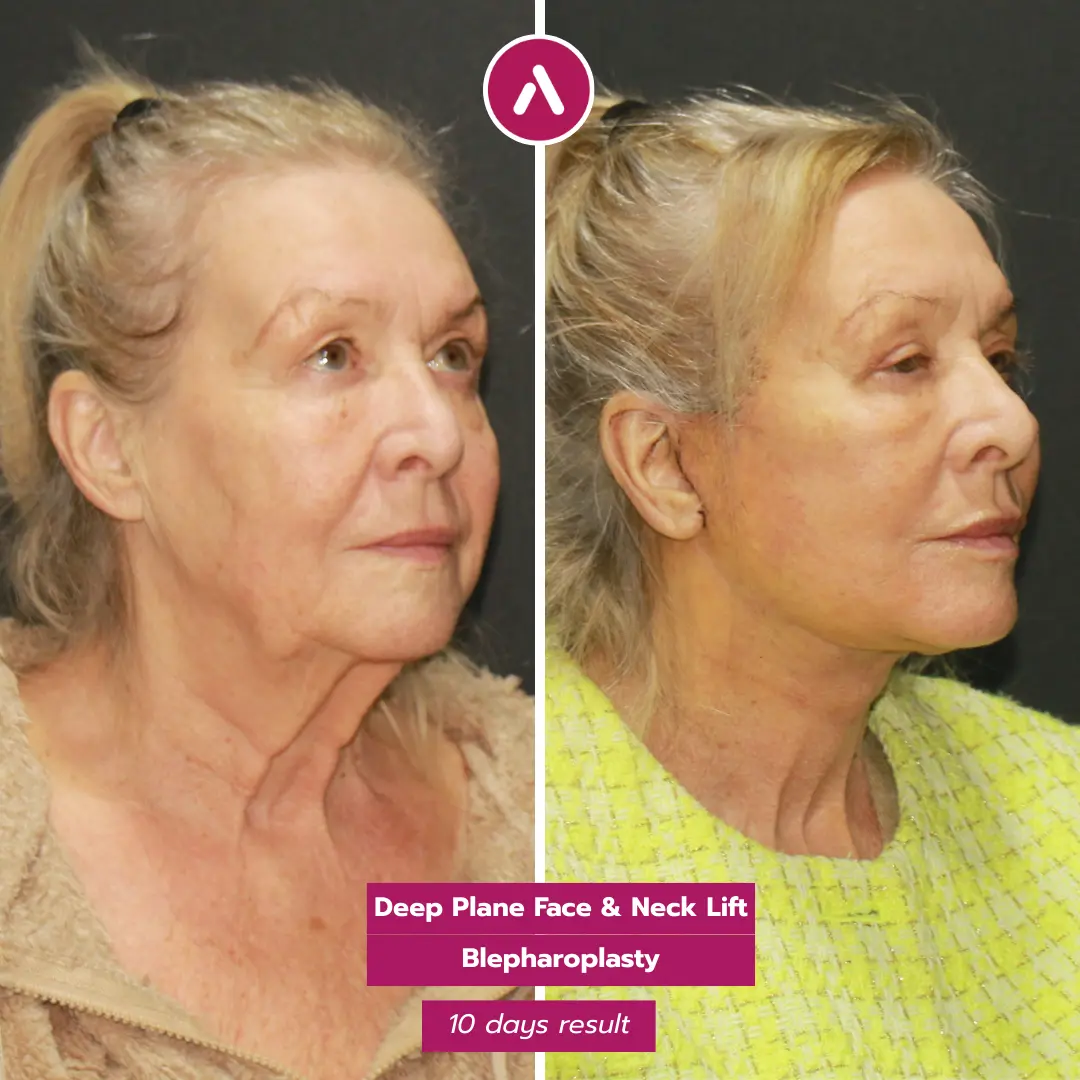
How International Patients Become More Vulnerable
International patients are often more vulnerable because they are making decisions from far away. A Canadian patient may have already booked flights, arranged time off work, paid a deposit, and travelled more than 8,000 km before meeting the surgical team in person.
That creates pressure. Once you are in Istanbul, it can feel harder to walk away from unclear answers.
This is why the key documents should be reviewed before leaving Canada. You should not be trying to clarify your surgeon’s identity on the morning of surgery.
Canadian Patient Callout: Secure Clarity Before You Fly
If you are travelling from YYZ, YVR, YUL, or YYC, your commitment begins long before surgery day. Request written confirmation of the operating surgeon before booking flights, arranging leave from work, or paying a non-refundable balance.
Warning Signs Before You Book
Ghost surgery risk is usually visible before surgery day. The warning signs appear in how the clinic communicates, how much direct access you have to the surgeon, and how specific the paperwork is.
Canadian patients should treat vague answers as meaningful. Clarity is part of safety.
Extremely High Daily Surgical Volume
A clinic that promotes very high daily surgical volume may still be safe if staffing, accreditation, and surgeon responsibility are clear. The concern begins when one named surgeon appears attached to more procedures than they could realistically perform.
Ask direct questions:
- How many surgeries does this surgeon perform per day?
- Will my procedure overlap with another operation?
- Who performs the critical surgical steps?
- Will the surgeon be present throughout the procedure?
- What role do assistants or technicians play?
If the answer feels rehearsed or evasive, keep asking. A responsible clinic will not treat these questions as offensive.
Vague Answers About Who Performs Surgery
Language matters. Phrases such as “our team will take care of you” may sound reassuring, but they do not identify the operating surgeon.
You are not only choosing a clinic. You are choosing a person with specific training, judgement, technique, and aesthetic philosophy.
| Warning Sign | Why It Matters | Protective Action |
|---|---|---|
| “Our team performs the surgery” | Does not identify the responsible surgeon | Ask for the surgeon’s full name in writing |
| No direct surgeon consultation | You cannot assess communication or judgement | Request a video consultation before booking |
| Consent form uses generic wording | Responsibility may be unclear | Request a form naming the operating surgeon |
| Salesperson answers all clinical questions | Medical judgement may be filtered | Ask to speak with the surgeon directly |
Sales Teams That Block Direct Surgeon Access
A coordinator can help with travel, scheduling, hotel logistics, and basic preparation. That support is useful, especially for Canadians travelling long-haul.
But your procedure plan should not be created only by a salesperson. Surgical decisions require medical assessment.
Be cautious if:
- You are pressured to pay before speaking to the surgeon
- The clinic refuses a surgeon-led video consultation
- Your questions are repeatedly redirected to a sales representative
- The surgeon’s name appears only in marketing material
- You cannot obtain written confirmation of surgical responsibility
For a broader list of pre-booking questions, review questions every patient should ask before surgery.

How to Verify Who Will Actually Operate?
Verification is not complicated, but it must be done before travel. The goal is to create a written trail that confirms the surgeon, the procedure, and the responsibility structure.
Do this while you are still in Canada. That gives you the power to walk away.
Requesting a Named-Surgeon Commitment
A named-surgeon commitment should identify the doctor who will perform your procedure. It should not rely on vague references to a clinic, medical team, or department.
Ask for written confirmation that includes:
- The surgeon’s full name
- The exact procedure planned
- The surgeon’s role during critical steps
- The names or roles of supporting medical staff
- The clinic’s policy if the named surgeon becomes unavailable
This is especially important for procedures where technique strongly affects outcome, such as deep plane facelift, rhinoplasty, breast surgery, tummy tuck, and liposuction.
Reviewing Consent Forms Before Travel
Consent forms should never be a surprise on surgery day. Ask to review the core consent language before you leave Canada.
The form should clearly identify the procedure and the responsible surgeon. If the document only refers to “the clinic,” “the team,” or “the doctor on duty,” ask for clarification.
This is also the right time to verify the surgeon’s qualifications. For the full process, use our guide to step-by-step surgeon credential verification.
You can also cross-check whether the surgeon’s certifications match the procedure being offered. Our guide to understanding board certification standards explains what Canadian patients should look for.
Confirming Surgeon Presence During the Procedure
The final confirmation should happen during your in-person consultation in Istanbul. Ask the same questions again.
This is not rude. It is a normal part of informed consent.
Before signing final documents, confirm:
- The named surgeon is present and has examined you
- The surgical plan matches your virtual consultation
- The consent form names the correct procedure
- You understand who performs each major part of the operation
- You know who handles aftercare and complications
Canadian Patient Callout: Keep a Documentation Folder
Before leaving Canada, save copies of your surgeon confirmation, consent forms, credential screenshots, procedure plan, payment records, and coordinator contact details. Keep digital copies in cloud storage and printed copies in your carry-on.
Surgeon vs Technician: Understanding the Difference
Not every person in the operating room has the same role. A well-run clinic uses trained support staff, but the patient must know which tasks belong to the surgeon and which tasks may be delegated.
This distinction is especially important in medical tourism. Titles can sound similar, but the responsibility is not the same.
Tasks a Technician May Legally Perform
Technicians can support the surgical process when they are properly trained and supervised. Their role depends on the procedure, the country’s regulations, and the clinic’s internal protocols.
In many clinical settings, technicians may assist with:
- Preparing instruments and equipment
- Supporting the surgical team during setup
- Taking photographs for documentation
- Assisting with non-surgical preparation steps
- Providing certain aftercare instructions under medical supervision
Support work is not the issue. Lack of disclosure is the issue.
Tasks That Should Be Performed by a Surgeon
The critical parts of cosmetic surgery require surgical judgement. That includes incision planning, tissue handling, structural correction, fat removal strategy, graft placement decisions, bleeding control, and complication management.
For facial surgery, this distinction becomes even more important. A deep plane facelift, neck lift, rhinoplasty, blepharoplasty, or revision procedure requires precise anatomical knowledge and real-time decision-making.
Canadian patients should ask which parts of the operation the surgeon personally performs. The answer should be clear.
Special Considerations in Hair Transplant and Cosmetic Surgery
Hair transplant procedures deserve special attention because technician-heavy models are common in some markets. A clinic may advertise a surgeon, while much of the procedure is performed by technicians.
That does not automatically mean the clinic is unsafe. It does mean you must understand the division of responsibility before booking.
Ask specifically:
- Who designs the hairline?
- Who performs graft extraction?
- Who creates recipient sites?
- Who implants the grafts?
- Where is the surgeon during each stage?
The same principle applies across cosmetic surgery. You are entitled to know who is doing the work.
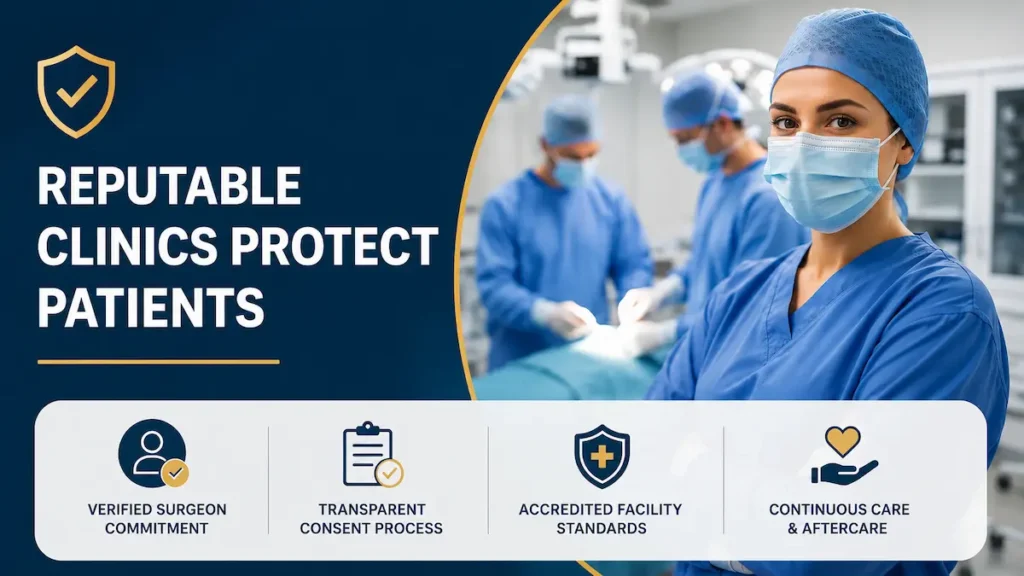
How Reputable Clinics Protect Patients?
Reputable clinics reduce ghost surgery risk through documentation, direct communication, and clear responsibility. They do not rely on vague reassurance.
They show you who is responsible before surgery day.
Transparent Surgical Responsibility
A transparent clinic explains the operating model clearly. You should know the surgeon, supporting team, facility, anesthesia plan, and aftercare pathway.
This transparency should be consistent across every stage:
- Virtual consultation
- Written treatment plan
- Pre-operative assessment
- Consent documentation
- Surgery day confirmation
- Post-operative follow-up
If the clinic’s answers change at different stages, treat that as a warning sign.
Documented Credential Verification
Strong clinics expect patients to verify credentials. They make surgeon profiles, training history, professional affiliations, and hospital standards easy to discuss.
For procedure-specific decision-making, it also helps to compare the surgeon’s background with the operation you want. For example, facial rejuvenation patients should understand evaluating surgeon expertise and credentials before choosing a deep plane facelift provider.
Credential verification does not replace a named-surgeon commitment. It supports it.
AKM Clinic’s Named-Surgeon Policy
AKM Clinic’s patient model is built around surgeon-led assessment, transparent communication, and documented care planning. Canadian patients are guided through the process by patient hosts while surgical decision-making remains medical.
This matters because international patients need both logistics and clinical accountability. Hotel transfers are helpful. Surgeon clarity is essential.
AKM Clinic’s broader trust structure includes:
- Surgeon-led treatment planning
- Named physician responsibility
- JCI-accredited hospital standards
- Direct patient coordination through Hande, Emine, and Khadija
- Long-term virtual follow-up after returning to Canada
Patients can also review verified international patient experiences to understand how communication and follow-up appear in real patient journeys.
A Canadian Patient Protection Checklist
The best protection against ghost surgery is a written checklist. Do not rely on memory, screenshots from advertisements, or verbal promises alone.
Before committing, collect clear answers.
Questions to Ask Before Booking
Use direct language. A reputable clinic will answer directly.
- Who will perform my surgery?
- Will I speak with that surgeon before paying the full balance?
- Will the surgeon personally perform the critical surgical steps?
- What parts, if any, are delegated to assistants or technicians?
- Will the surgeon’s name appear on my consent form?
- How many procedures does the surgeon perform that day?
- What happens if the surgeon becomes unavailable?
- Who handles complications during my stay?
- Who follows me after I return to Canada?
For a fuller consultation framework, use questions every patient should ask before surgery.
Documents to Obtain Before Leaving Canada
Do not wait until you arrive in Istanbul. Obtain key documents before booking flights from Canada.
| Document | What It Should Confirm | Why It Protects You |
|---|---|---|
| Written treatment plan | Procedure, surgeon, and expected scope | Creates a clear record of what was promised |
| Named-surgeon confirmation | The surgeon responsible for your operation | Reduces substitution risk |
| Credential documentation | Training, certification, and professional background | Allows independent verification |
| Consent form preview | Procedure and surgeon identity | Prevents surgery-day surprises |
| Aftercare contact details | Who to contact during recovery | Supports continuity after returning to Canada |
Red Flags That Should End the Conversation Immediately
Some warning signs are serious enough to stop the booking process. You do not need to justify walking away from an unclear medical arrangement.
End the conversation if:
- The clinic refuses to name the operating surgeon
- You are not allowed to speak with the surgeon before booking
- The consent form does not identify medical responsibility
- Staff become defensive when you ask about delegation
- The surgeon’s credentials cannot be verified
- The clinic uses pressure tactics tied to deposits or dates
- You receive different answers from different staff members
Canadian Patient Callout: Your Travel Distance Gives You Leverage Early
Once you have flown from Canada, booked recovery time, and arrived in Istanbul, it becomes emotionally harder to walk away. Use your leverage before departure. Clear documentation should come before your travel commitment.
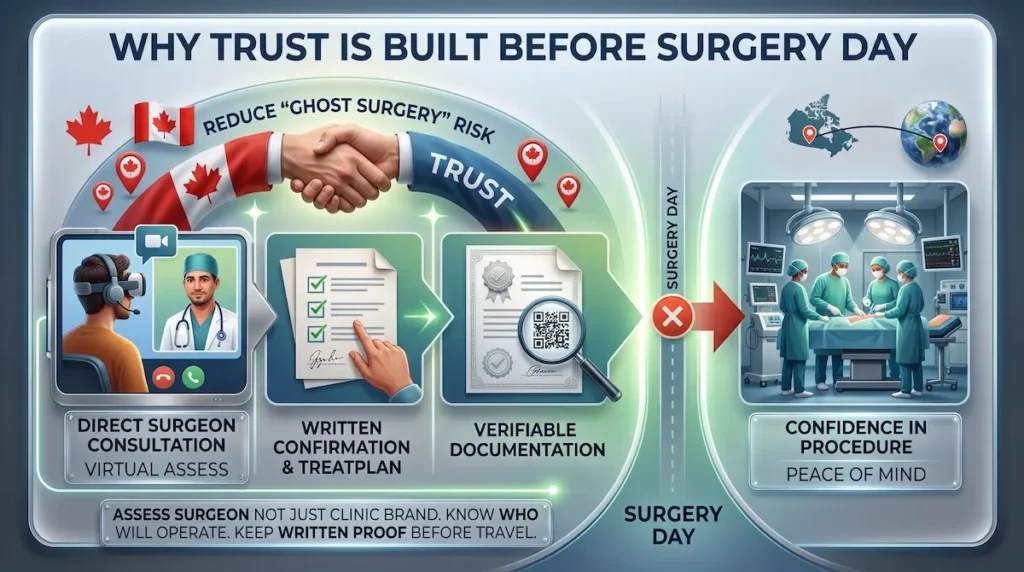
Why Trust Is Built Before Surgery Day?
Trust should not begin when you arrive at the clinic. It should be built through direct consultation, written confirmation, and verifiable documentation before you leave Canada.
That is how ghost surgery risk is reduced.
The Role of Virtual Consultations
A virtual consultation gives Canadian patients a first opportunity to assess the surgeon, not just the clinic brand. It also helps clarify whether the surgical recommendation matches your anatomy and goals.
During the consultation, ask who will operate. Then ask how that commitment is documented.
If a clinic avoids direct surgeon access, that matters. For related concerns that often shape Canadian patient fears, read common misconceptions about surgery in Turkey.
Written Transparency Versus Marketing Claims
Marketing can be persuasive. Documentation is stronger.
A polished website, dramatic before-and-after images, and fast replies from coordinators do not replace written medical responsibility. Look for consistency between the consultation, treatment plan, consent form, and surgery-day confirmation.
The best clinics do not make transparency difficult.
Building Confidence Through Verification
Verification is not distrust. It is responsible decision-making.
For Canadian patients travelling thousands of kilometres for elective surgery, a named-surgeon commitment is a reasonable expectation. If the clinic is reputable, it should welcome the question.
Your goal is simple: know who will operate, verify that person’s qualifications, and keep written proof before you travel.
Frequently Asked Questions: Ghost Surgery in Turkey
These questions summarize the most common concerns Canadian patients raise when researching ghost surgery and surgeon accountability abroad.
What is ghost surgery?
Ghost surgery occurs when a patient expects one surgeon to perform the operation, but another person performs part or all of it without clear disclosure.
Is ghost surgery common in Turkey?
It should not be treated as universal. The risk is higher in unclear, high-volume, poorly documented settings. Clinic selection and written verification are the key protections.
How can I verify who will perform my surgery?
Ask for the operating surgeon’s full name, direct consultation access, written confirmation, and consent forms that identify the responsible surgeon.
Can I request a written surgeon guarantee?
Yes. Canadian patients should request a named-surgeon commitment before booking travel. A transparent clinic should be willing to clarify surgical responsibility in writing.
What should be included in my consent form?
Your consent form should identify the procedure, the responsible surgeon, relevant risks, anesthesia plan, and what happens if the original surgical plan changes.
What is the difference between a surgeon and a technician?
A surgeon is medically responsible for the procedure and critical surgical decisions. A technician may assist with support tasks, depending on training, regulation, and supervision.
How does AKM Clinic document surgical responsibility?
AKM Clinic uses surgeon-led planning, named physician responsibility, documented care pathways, and direct patient coordination before, during, and after surgery.
What should Canadian patients verify before travelling?
Verify the surgeon’s identity, credentials, role in the operation, facility standards, consent documents, aftercare contacts, and complication-management protocol.
Is ghost surgery considered a violation of informed consent?
If a patient is misled about who will perform the operation, that raises serious informed-consent concerns. Patients must understand who is responsible for their care.
What are the biggest warning signs of a high-risk clinic?
Major warning signs include no direct surgeon access, vague consent forms, pressure to pay quickly, unclear staff roles, unverifiable credentials, and inconsistent answers.
Medical Disclaimer: This page is provided for general educational purposes only and does not replace an in-person medical consultation, diagnosis, or personalized treatment plan. All surgery carries risks, and outcomes vary between individuals. Suitability for a plastic surgery, procedure selection, and anesthesia choice can only be determined after a full clinical assessment by a qualified surgeon. Always follow your clinician’s instructions and seek urgent medical attention if you develop concerning symptoms during recovery.