
Quick Summary: Septorhinoplasty combines functional septum correction with cosmetic nose reshaping in one surgical plan. For Canadian patients researching septorhinoplasty Turkey, the main question is usually practical: can one procedure improve breathing and refine the nose without creating an over-operated look?
At AKM Clinic, septorhinoplasty is planned around two outcomes: clearer nasal airflow and balanced facial aesthetics. Patients with documented breathing concerns should speak with a Canadian ENT or family physician before travelling, especially if they want records for possible functional coverage review through their province.
Many Canadian patients start with a cosmetic concern, then realize their nasal shape is partly connected to a structural breathing issue. A crooked bridge, collapsed nasal airway, old sports injury, or long-standing blocked nostril may all point to a deviated septum. That is where septorhinoplasty differs from cosmetic-only rhinoplasty.
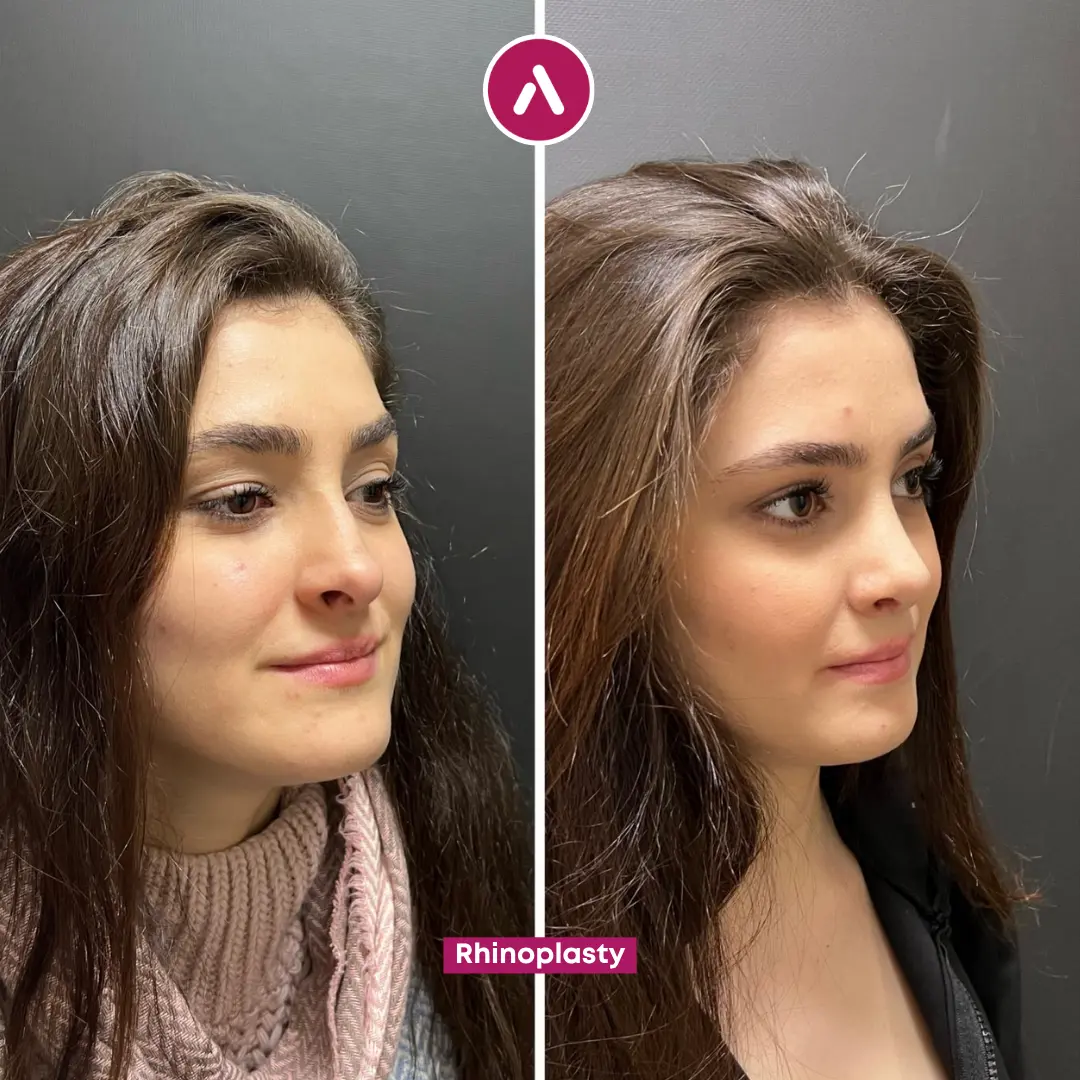
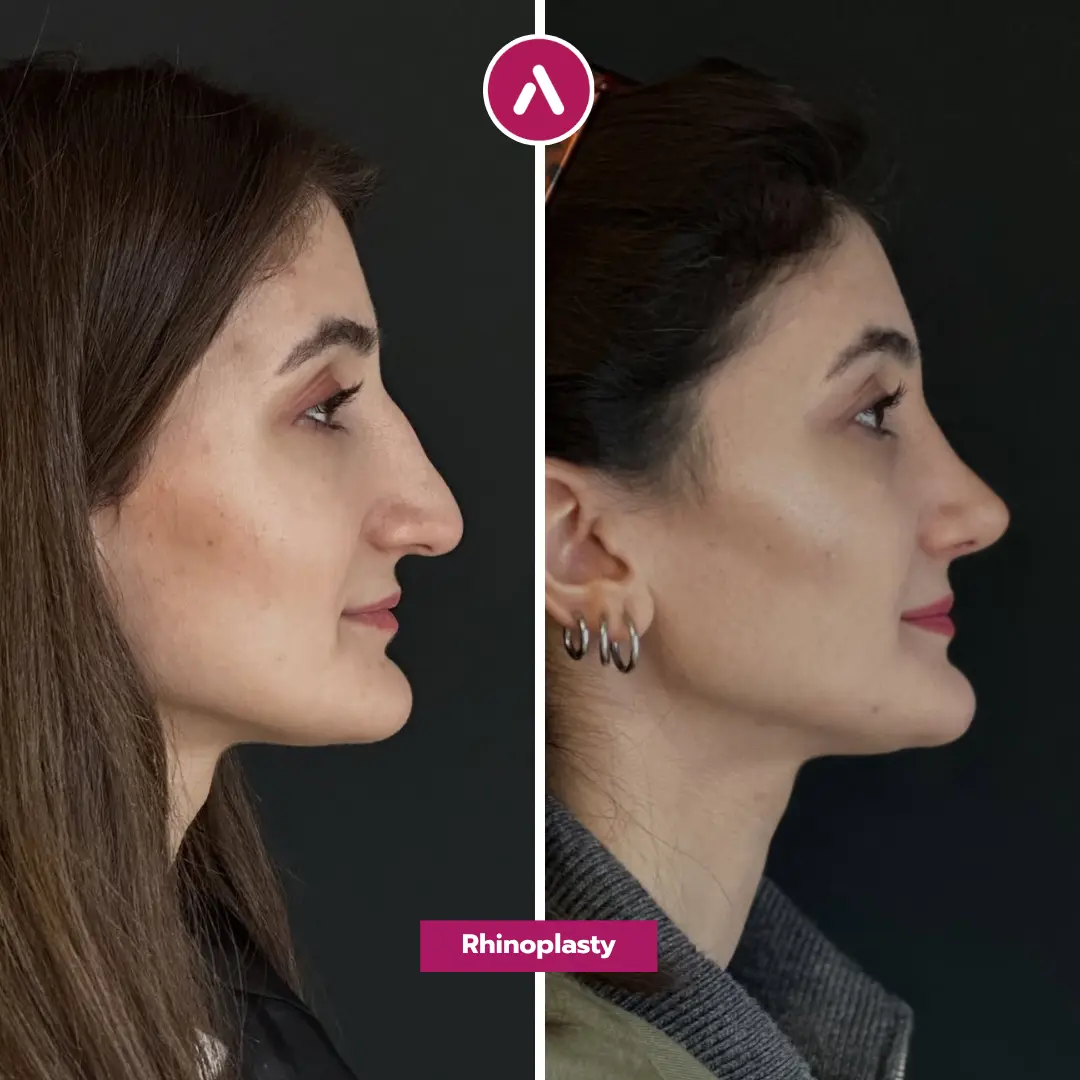
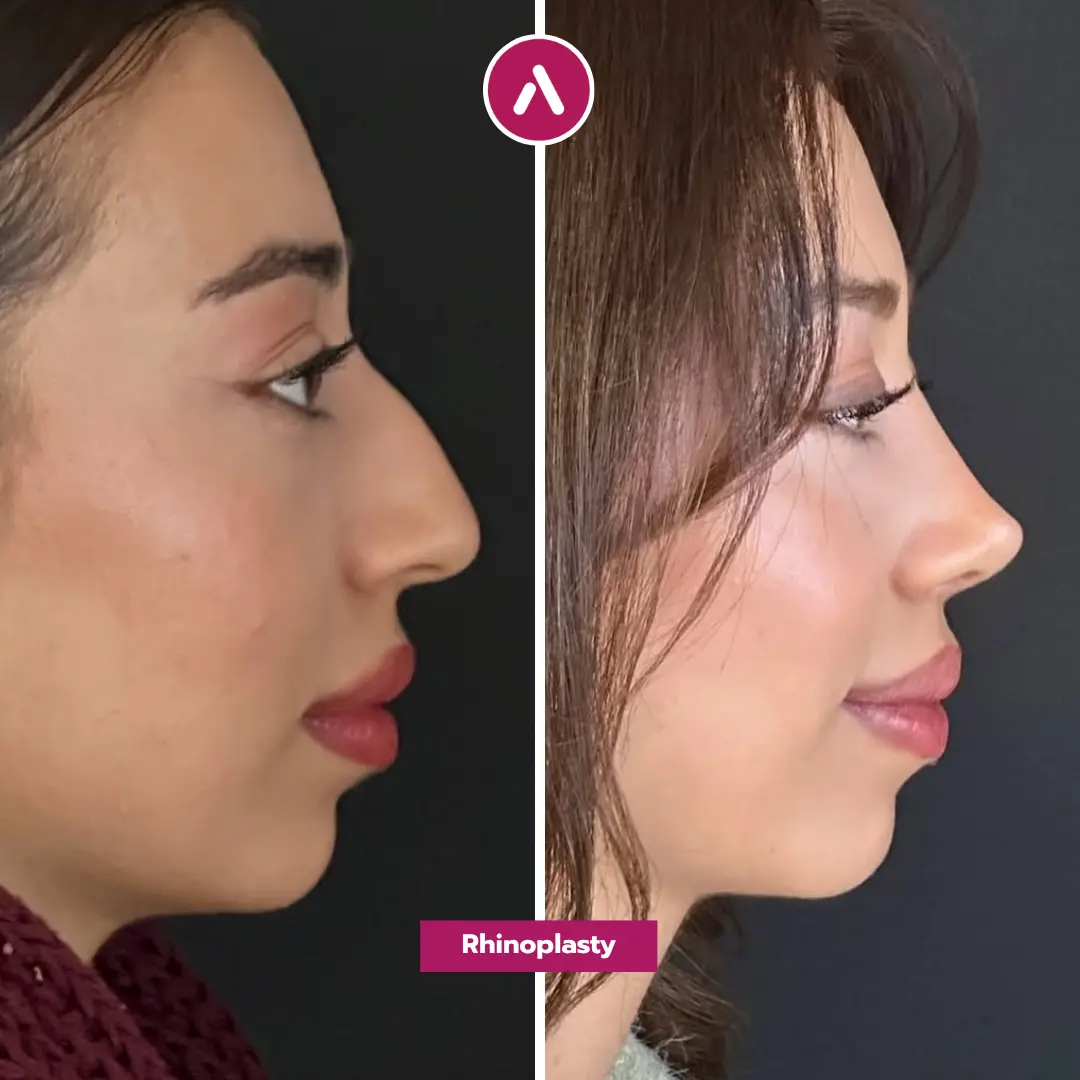
A standard cosmetic rhinoplasty focuses on external shape. Septorhinoplasty adds an internal functional layer. It corrects the septum, supports the nasal airway, and refines the visible nose in one coordinated procedure. For a full overview of related nose surgery options, see rhinoplasty options at AKM Clinic.
For Canadians in Toronto, Vancouver, Montreal, Calgary, and Ottawa, this distinction matters. Provincial plans rarely treat purely cosmetic nasal surgery as insured care. Functional nasal obstruction is different, but documentation is essential. The medical record needs to show breathing difficulty, examination findings, conservative treatments tried, and why surgery is being considered.
Table of Contents
What Septorhinoplasty Is?
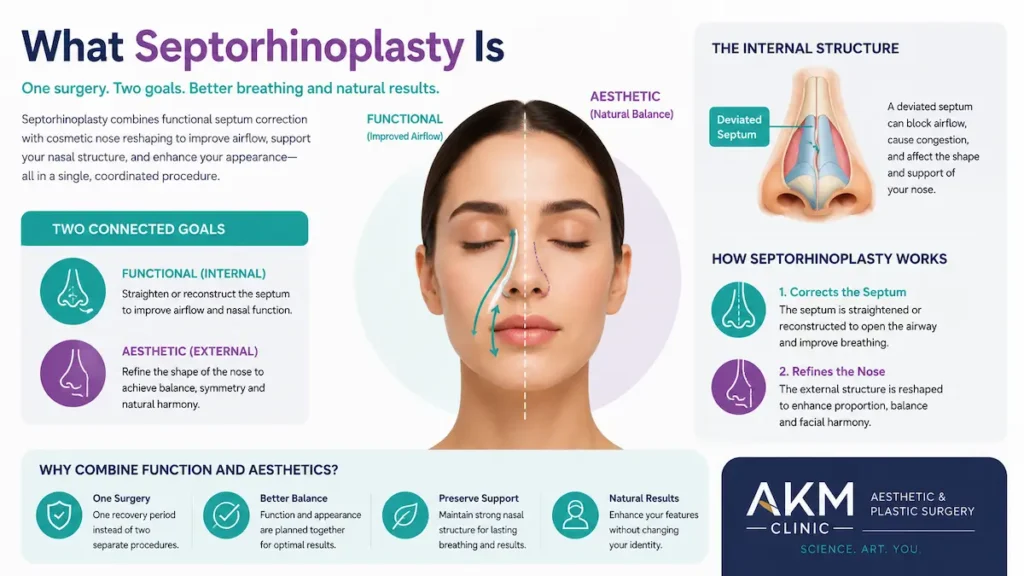
Septorhinoplasty is best understood as one operation with two linked goals. The internal goal is functional: straighten or reconstruct the septum so air can pass more evenly through the nose. The external goal is aesthetic: reshape the bridge, tip, nostril balance, or nasal symmetry so the result fits the rest of the face.
Deviated septum: anatomical definition
The nasal septum is the central wall of cartilage and bone that separates the right and left nasal passages. In an ideal structure, it sits close to the midline. In real patients, it often bends, twists, thickens, or shifts to one side.
A mild deviation can be harmless. A more significant deviation can narrow one or both airways. Some patients notice this every day; others only feel it during exercise, sleep, allergy season, or winter air exposure in Canada.
Common symptoms linked with septal deviation include:
- One-sided or alternating nasal blockage
- Mouth breathing during sleep
- Noisy breathing through the nose
- Reduced exercise tolerance because nasal airflow feels restricted
- Recurrent sinus pressure when drainage pathways are affected
- Difficulty tolerating CPAP because nasal resistance is too high
The Canadian Society of Otolaryngology — Head and Neck Surgery describes septoplasty as a procedure that addresses septal deviation, while rhinoplasty addresses external nasal shape. In septorhinoplasty, these two tracks are planned together so the airway and the visible result support each other. Canadian Society of Otolaryngology patient information
How functional septum work integrates with aesthetic rhinoplasty
Septoplasty alone focuses on the internal septum. It does not usually change the outside of the nose in a meaningful cosmetic way. Rhinoplasty focuses on the external nasal framework, including the dorsum, nasal bones, cartilage, tip, and nostril base.
Septorhinoplasty brings those plans together. The surgeon may straighten the septum, remove obstructive cartilage or bone, reinforce weak areas, and reshape the outside of the nose in the same surgical session.
This is especially important for patients whose appearance and breathing are connected. A visibly crooked nose may reflect deeper septal deviation. A previous trauma may have shifted the nasal bones and the septum. A drooping or unsupported tip may affect airflow as well as appearance.
For tip-only refinement without breathing correction, see the tip plasty guide. That article covers isolated tip reshaping, which is a different surgical scope.
Why combining the two reduces total surgical risk
Combining functional and aesthetic work can reduce the need for two separate operations. That matters because each surgery brings its own recovery period, anesthesia exposure, swelling phase, and time away from work or family responsibilities.
A combined plan also helps the surgeon avoid conflict between form and function. For example, narrowing the bridge without supporting the airway can make breathing worse in the wrong candidate. Straightening the septum without considering the external framework may leave visible asymmetry unresolved.
At AKM Clinic, septorhinoplasty planning follows a functional-first logic. Breathing support is not treated as an afterthought. The cosmetic plan is built around the structures that must remain stable after healing.
| Procedure | Main Scope | Functional Component | Typical Recovery Focus | AKM CAD Pricing |
|---|---|---|---|---|
| Septorhinoplasty | Internal septum correction plus external nose reshaping | Yes — breathing and airway support | Internal swelling, splints if used, breathing adaptation, external swelling | CAD $5,050 |
| Open Rhinoplasty | External cosmetic reshaping with full surgical visibility | No, unless combined with septal work | External swelling, bridge and tip definition, scar maturation | CAD $4,100 |
| Revision Rhinoplasty | Correction after previous nasal surgery | Sometimes, depending on the problem | Scar tissue management, structural support, longer swelling timeline | CAD $6,150 |
Pricing source: AKM Clinic Treatment Techniques (Cost). CAD figures only.
Functional Indicators — When Septum Correction Is Medically Needed?
Functional septum correction is considered when symptoms are significant, persistent, and supported by examination findings. A patient saying “I dislike my nose” is cosmetic. A patient with documented nasal obstruction, failed medical treatment, and ENT-confirmed septal deviation may have a functional surgical indication.
Documented breathing difficulty
The most common functional reason for septoplasty is nasal obstruction. Patients often describe it as a blocked nostril, poor airflow on one side, or needing to breathe through the mouth during sleep. Some feel restricted only during exercise.
For Canadian patients, documentation should begin before travel. A family physician or ENT can record symptoms, examine the nose, and note whether medications were tried. This record is useful even if provincial coverage is uncertain.
Useful documentation may include:
- Duration and severity of nasal obstruction
- Which side feels blocked, or whether the blockage alternates
- History of nasal trauma, hockey injury, skiing accident, or previous surgery
- Allergy treatment history, including sprays or antihistamines
- ENT examination notes or nasal endoscopy findings
- Sleep symptoms, if present
A Canadian patient travelling from Vancouver or Calgary should also think about post-operative continuity. The flight home is long. Having baseline records at home makes follow-up easier if nasal congestion or healing questions arise after returning to Canada.
Canadian Documentation Callout
Before booking international surgery, ask your Canadian ENT or family physician to document the functional side of the problem. Provincial plans such as OHIP, MSP, RAMQ, and AHCIP generally require medical evidence before they consider any functional component. Cosmetic reshaping remains separate.
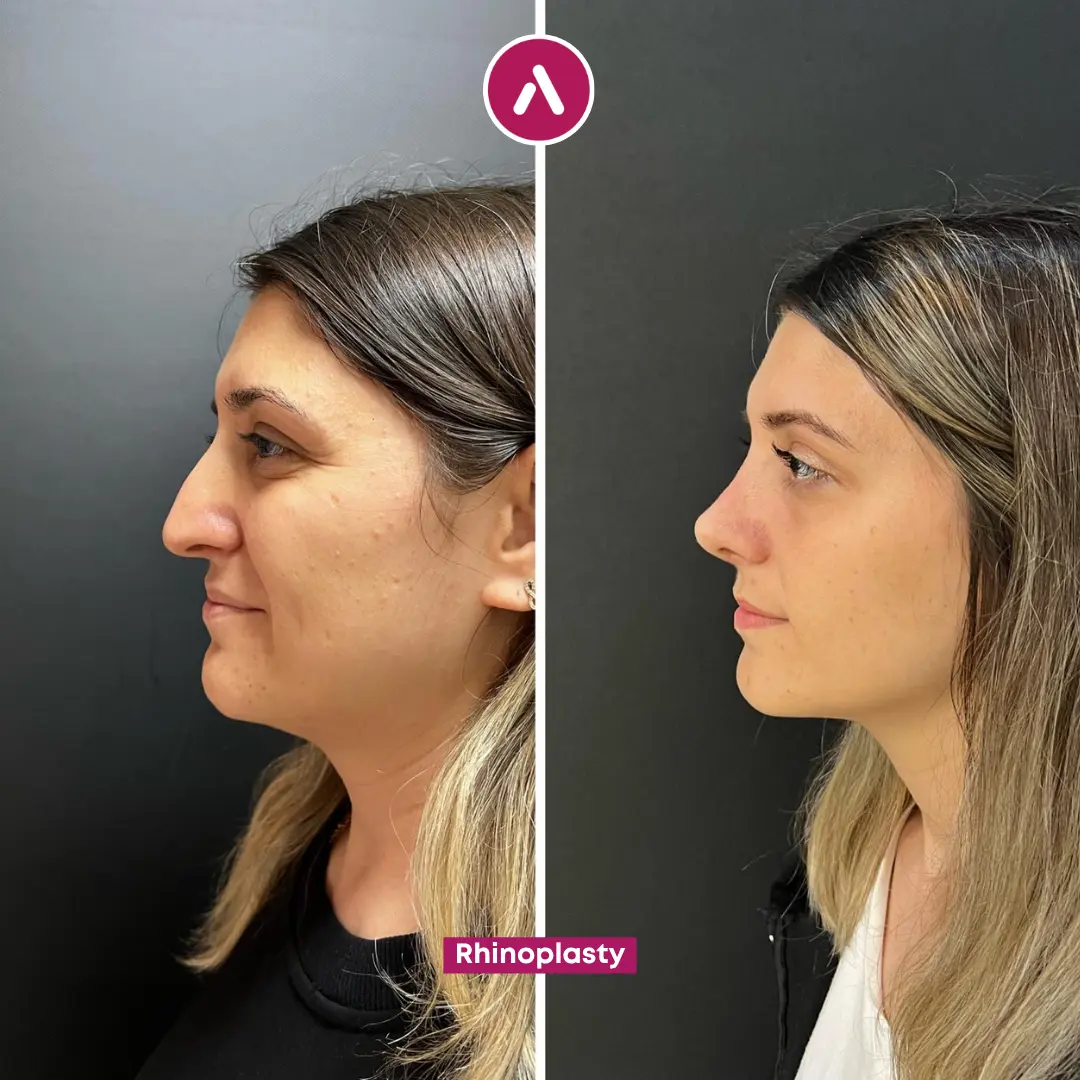
Sleep apnea contribution
A deviated septum does not automatically cause sleep apnea. It can, however, worsen nasal resistance. For some patients, that makes sleep quality worse or makes CPAP therapy harder to tolerate.
This distinction matters. Septorhinoplasty should not be presented as a guaranteed sleep apnea cure. It may improve nasal airflow, which can support better breathing mechanics or CPAP comfort in selected patients. Sleep apnea itself still needs proper assessment through a Canadian sleep clinic or physician.
Patients should disclose any sleep apnea diagnosis during the AKM virtual consultation. The surgical team needs to know whether CPAP is used, whether sedation risks are elevated, and whether airway planning requires additional precautions.
Chronic sinusitis link
Septal deviation can affect sinus drainage in some patients. The relationship is not always simple. Allergies, nasal polyps, turbinate enlargement, infections, and environmental factors can all contribute.
Canadian winters can make nasal symptoms feel worse. Dry indoor heating, cold air, and seasonal infections often increase irritation. That does not mean every sinus complaint needs surgery, but it does mean the history should be specific.
A septorhinoplasty consultation should separate structural obstruction from inflammatory disease. If the main problem is allergy-driven swelling, medication may still be part of the plan. If the septum physically narrows the airway, surgical correction may be more relevant.
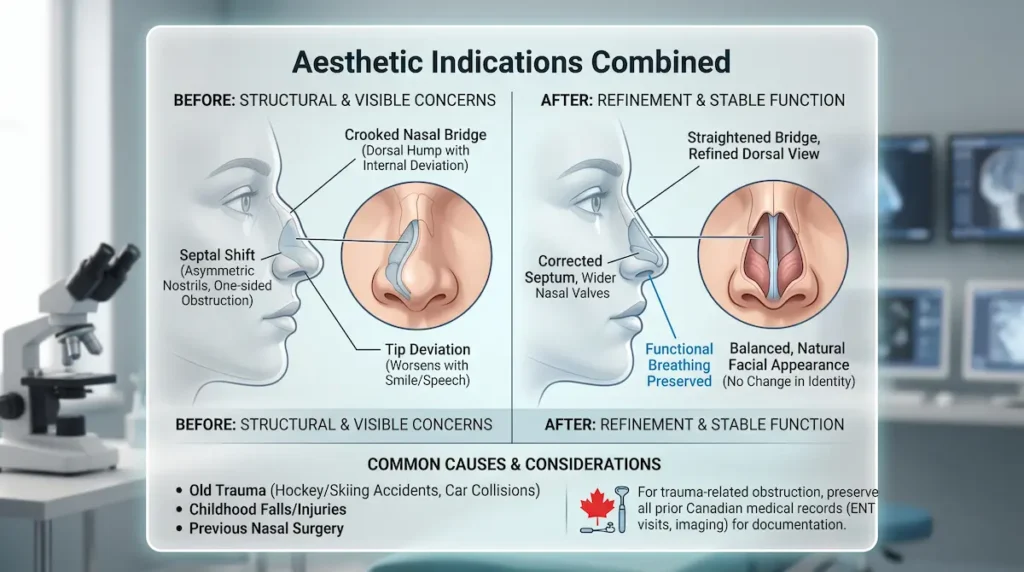
Aesthetic Indications Combined
Septorhinoplasty is often recommended when the visible nose and internal airway are part of the same structural problem. The goal is not to create a different identity. It is to refine the nose while preserving stable breathing and natural facial balance.
External nose deformities that correlate with septum deviation
A deviated septum can exist without visible crookedness. In other patients, the deviation affects the whole nasal framework. The bridge may lean, the tip may point off-centre, or one nostril may appear more compressed than the other.
These visible changes are often connected to internal support. Straightening the outside without addressing the septum may leave the airway compromised. Correcting the septum without evaluating the external nose may leave the patient with persistent visible asymmetry.
Common combined concerns include:
- A crooked nasal bridge with one-sided obstruction
- Asymmetric nostrils linked to septal shift
- A dorsal hump with internal deviation
- Tip deviation that worsens during smiling or speech
- Old trauma causing both airway restriction and visible nasal bend
Patients with a high bridge or dorsal hump may also need a more anatomy-specific plan. For the separate cosmetic angle, see aquiline nose cases often involving septum correction.
Crooked nose presentations
A crooked nose is one of the clearest situations where functional and aesthetic planning overlap. The nasal bones, upper lateral cartilages, lower cartilages, and septum all need to be evaluated. A visible bend can be caused by one structure, or by several.
This matters during consultation. A patient may ask for a straighter external nose, while the surgeon identifies internal collapse or septal deviation as the deeper reason the nose looks off-centre. A cosmetic-only plan may be incomplete in that case.
For Canadian patients, crooked nose cases often follow familiar histories: childhood falls, hockey injuries, skiing accidents, car collisions, or previous nasal surgery. Many patients adapted to restricted breathing for years before seeking care.
The surgical plan must be conservative enough to protect support. Over-narrowing a crooked nose can create new airway problems. A well-designed septorhinoplasty should make the nose look more balanced while keeping nasal valves open.
Post-trauma combined cases
Post-trauma noses can be complex. Scar tissue, bone irregularity, cartilage weakness, and septal deviation may all be present. The patient may notice both cosmetic change and functional decline after the injury.
In Canada, some post-trauma cases begin in the public system if breathing is significantly affected. Pure cosmetic refinement remains outside routine provincial coverage. Patients considering surgery abroad should bring prior imaging, ENT notes, emergency records, or operative reports if available.
Post-trauma planning usually includes a detailed photo review and airflow history. The surgeon needs to know whether the patient has trouble breathing at rest, during exercise, or while sleeping. They also need to understand which visible features the patient wants refined.
For ethnic or heritage-specific anatomy planning, the surgical conversation should stay identity-preserving. That separate topic is covered in for identity-preserving anatomy planning, see the ethnic rhinoplasty guide.
Canadian Context: Trauma History Matters
If your nasal obstruction followed an injury, keep records from Canadian emergency care, ENT visits, imaging, or previous procedures. These documents help separate medically relevant airway correction from cosmetic preference, especially when discussing provincial documentation.
The Surgical Approach
Septorhinoplasty is planned around access, structural correction, grafting, and airway stability. The right approach depends on the septum, nasal bones, skin thickness, tip support, and the patient’s cosmetic goals. There is no single template that fits every Canadian patient.
Open vs closed septorhinoplasty
Open septorhinoplasty uses a small incision across the columella, the narrow tissue strip between the nostrils. This allows the surgeon to lift the nasal skin and view the cartilage and bone framework directly. It is often preferred for complex deviation, revision work, or cases requiring detailed structural grafting.
Closed septorhinoplasty places incisions inside the nostrils. It avoids an external incision, but visibility is more limited. This approach may suit selected patients with less complex anatomy and less need for extensive graft work.
The decision is technical. It should not be based only on whether the patient prefers “no visible scar.” In many functional cases, direct visibility improves precision and helps the surgeon protect the airway while refining the shape.
At AKM Clinic, the surgical team evaluates whether each case needs open access, closed access, or a preservation-style plan. You can review the team’s broader background through AKM’s ENT and Facial Plastic Surgery specialist team.
Cartilage graft harvesting from the septum
Cartilage is often the main building material in septorhinoplasty. When the septum is corrected, usable septal cartilage may be reshaped into grafts. These grafts can support the nasal tip, straighten the bridge, reinforce the nasal valves, or rebuild weakened areas.
Strong support is especially important in functional nasal surgery. A nose can look smaller immediately after surgery yet breathe worse later if the framework is weakened. Septorhinoplasty aims to avoid that trade-off.
Common graft types include:
- Spreader grafts to support the middle vault and internal nasal valve
- Septal extension grafts to control tip position and projection
- Columellar strut grafts to reinforce tip support
- Alar batten grafts to support weak sidewalls and reduce collapse
If septal cartilage is insufficient, the surgeon may consider ear cartilage or rib cartilage in more complex cases. This is more common in revision surgery or major post-trauma reconstruction.
“A successful septorhinoplasty does not separate breathing from appearance. The aesthetic plan must respect the airway, and the airway repair must still leave a nose that belongs naturally on the patient’s face.”
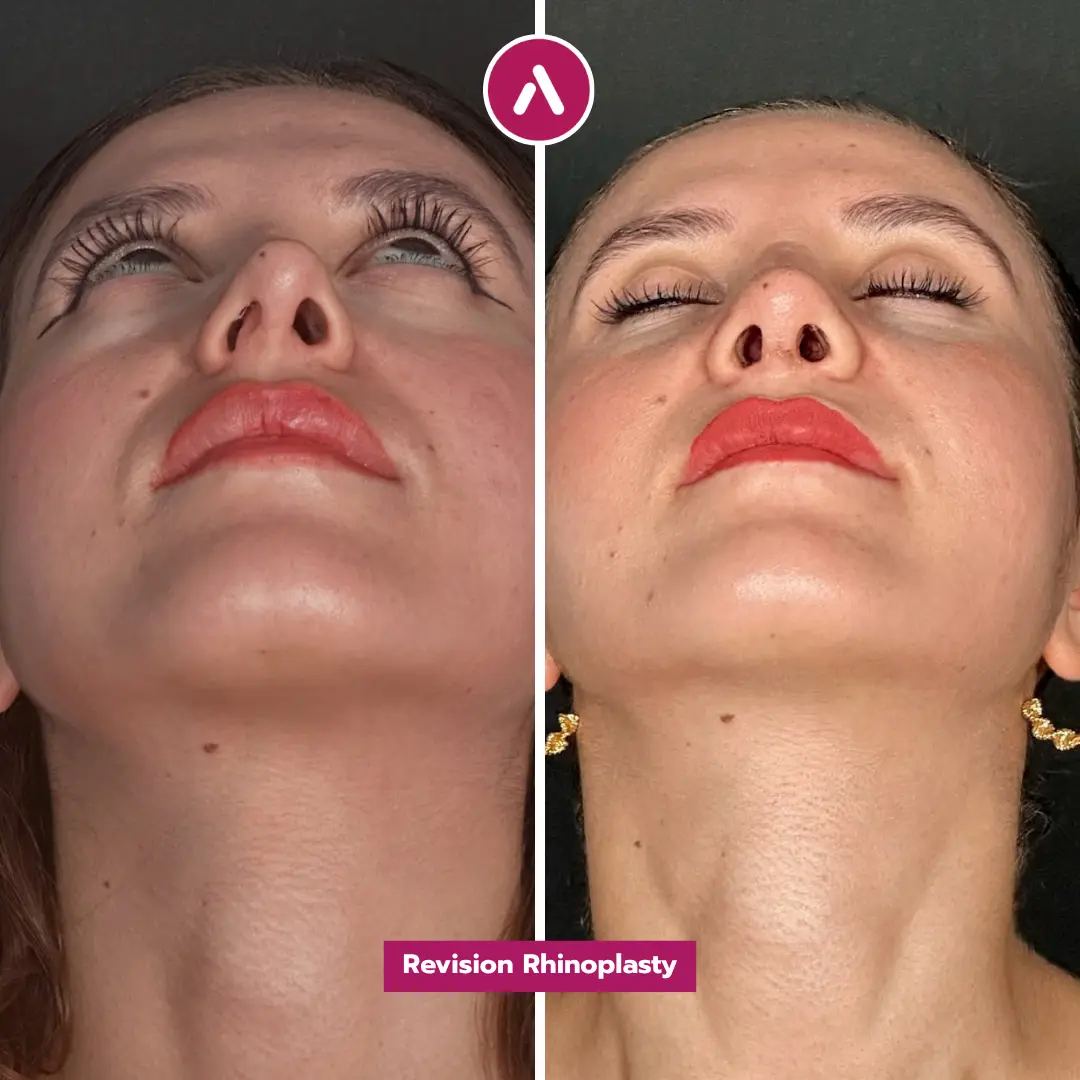
Functional + aesthetic vector planning
Vector planning means deciding the direction and amount of structural change. In septorhinoplasty, vectors affect both appearance and breathing. Straightening, narrowing, rotating, projecting, or supporting the nose can change airflow as well as facial balance.
This is where experienced planning becomes important. A small cosmetic change can have a large functional effect. For example, reducing the dorsum without supporting the middle vault can narrow the internal nasal valve. Rotating the tip without stable graft support can create long-term droop or obstruction.
Advanced tools may be used where appropriate. In bony work, the Piezo ultrasonic technique often combined with septorhinoplasty can help reshape nasal bone with controlled precision. The choice depends on whether bone work is part of the case.
Skin thickness also changes the plan. Thick skin can hide fine tip definition and hold swelling longer. For that specific planning variable, see thick skin considerations for septorhinoplasty.
The final plan should balance restraint with correction. Canadian patients often prefer a result that looks natural in professional and family settings. The aim is usually a nose that works better, photographs more symmetrically, and does not announce that surgery was done.
Canadian Provincial Insurance — Partial Coverage Reality
Canadian patients often ask whether septorhinoplasty can be partly covered because it includes functional airway correction. The honest answer is cautious. Provinces may recognize medically necessary septal surgery in specific circumstances, but cosmetic rhinoplasty is not treated the same way.
What OHIP, MSP, RAMQ, and AHCIP typically cover or do not cover
Provincial health plans are built around medical necessity. If a procedure is performed only to change appearance, it is generally considered elective cosmetic surgery. That portion is not covered by OHIP in Ontario, MSP in British Columbia, RAMQ in Quebec, or AHCIP in Alberta.
Functional septal surgery can be different. If a Canadian ENT documents significant nasal obstruction, failed conservative treatment, and medical necessity, the septal component may be assessed differently from the cosmetic component. Coverage rules vary by province and usually require prior approval for planned care outside Canada.
Ontario’s OHIP page on care outside Canada explains that out-of-country services may be funded only when criteria are met, including prior approval for non-emergency services. Patients should review the official provincial page before assuming reimbursement: OHIP coverage while outside Canada.
British Columbia requires pre-approval for elective medical care outside Canada. Alberta also requires prior approval for elective non-emergency out-of-country services. Quebec may reimburse only part of the cost in many out-of-province or out-of-country situations, depending on the service and circumstances.
Canadian Provincial Insurance Callout
Do not assume that a combined septorhinoplasty will be reimbursed because breathing is involved. Ask your provincial plan what documentation is required before travel. Cosmetic reshaping and functional septal correction may be treated as separate components.
Documentation Canadian patients need before travelling
Documentation should begin in Canada. A family physician can record symptoms and refer to an ENT if appropriate. An ENT can examine the septum, document obstruction, and note whether surgery is medically reasonable.
Patients should keep copies of all relevant records. These documents help the AKM team understand the functional side of the case. They may also support any discussion with a provincial plan or private insurer.
Useful records include:
- ENT consultation notes
- Nasal endoscopy findings, if performed
- Medication history, including nasal steroid sprays or allergy treatment
- Sleep clinic reports, if sleep symptoms are part of the concern
- Imaging reports, if trauma or sinus disease was investigated
- Previous operative reports from prior septoplasty or rhinoplasty
- Photographs documenting visible post-trauma deformity, if relevant
Documentation also protects the patient clinically. It helps separate a structural airway problem from allergy, inflammation, or temporary congestion. That distinction affects surgical planning.
How to coordinate documented insurance refunds for the functional component
Reimbursement should be discussed before surgery, not after returning home. Patients should contact their provincial plan directly and ask what is required for out-of-country planned care. Some provinces require physician submission. Some require prior approval. Some may not reimburse if the service is available in Canada.
The safest process is to treat reimbursement as uncertain unless written approval is received. That avoids financial surprises. It also keeps the consultation focused on the medical question: what does your nose need to breathe and look balanced?
For cost planning, patients can review septorhinoplasty pricing in CAD. At AKM Clinic, septorhinoplasty is listed at CAD $5,050 in the Treatment Techniques cost reference.
Patients comparing payment options, receipts, and possible reimbursement can also review Canadian financing and insurance reimbursement guidance. The key is to keep cosmetic and functional documentation separate.
| Province | Public Plan | Functional Septum Component | Cosmetic Rhinoplasty Component | Practical Step Before Travel |
|---|---|---|---|---|
| Ontario | OHIP | May require medical necessity and prior approval for out-of-country planned care | Generally not covered when cosmetic | Review OHIP out-of-country criteria and speak with an Ontario physician |
| British Columbia | MSP | Elective out-of-country medical care generally requires pre-approval | Generally not covered when cosmetic | Ask a BC specialist about documentation and pre-approval requirements |
| Quebec | RAMQ | Coverage outside Quebec may be partial and depends on eligibility and service type | Generally not covered when cosmetic | Confirm RAMQ rules before leaving Quebec and keep French or English records |
| Alberta | AHCIP | Prior approval is required for elective non-emergency out-of-country services | Generally not covered when cosmetic | Check AHCIP out-of-country funding rules before booking surgery |
This table is educational only. Provincial decisions depend on individual medical facts and the rules in place at the time of application.
Working With Your Canadian ENT
If breathing difficulty is part of your reason for surgery, ask your ENT to document the diagnosis before you travel. A clear ENT record is more useful than a cosmetic consultation note when provincial or private insurance questions arise.
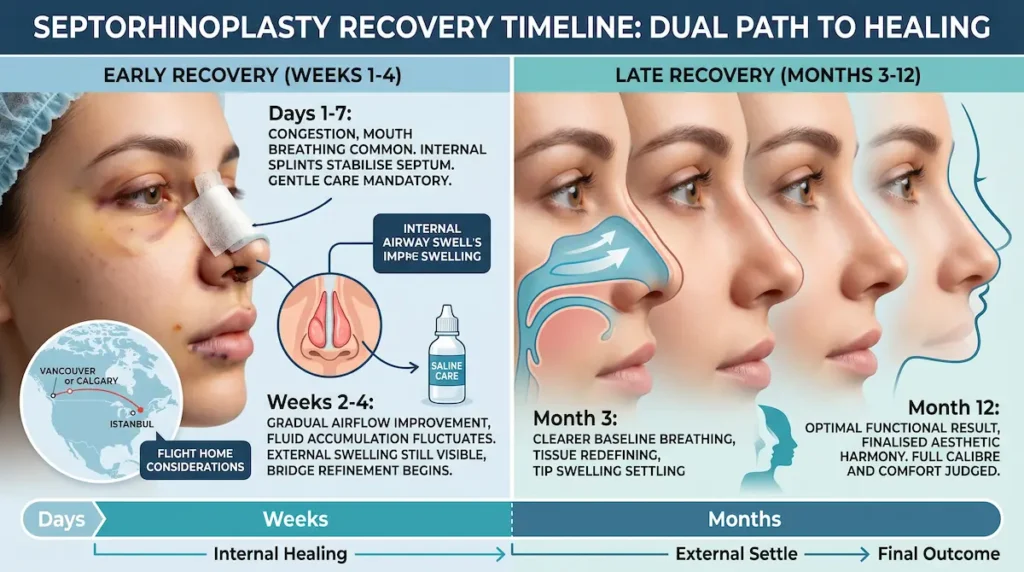
Recovery — Breathing + Aesthetic Healing
Septorhinoplasty recovery has two timelines running at once. The internal airway must heal, which can temporarily make breathing feel worse before it improves. The external nose also settles gradually, especially around the tip.
Internal splints and packing
Some septorhinoplasty patients receive internal splints. These thin supports help stabilize the septum and reduce the chance of early displacement. Packing is used less routinely in modern practice, but the exact plan depends on the procedure and bleeding risk.
While splints are in place, nasal breathing may feel blocked. That can be frustrating. It does not mean the surgery failed. Early congestion usually reflects swelling, crusting, mucus, and the presence of internal support.
During the first week, patients should expect:
- Blocked or reduced nasal breathing
- Mild pressure around the nose and cheeks
- Crusting or dried blood inside the nostrils
- Need for saline care as instructed by the surgical team
- Mouth breathing during sleep until swelling starts to reduce
Patients should not blow the nose unless cleared by the surgeon. Forceful blowing can disturb healing tissue. Gentle cleaning and saline use are safer when approved by the clinical team.
Breathing improvement timeline
Breathing improvement is not immediate for most patients. The internal airway is swollen in the early phase. Many patients breathe worse for several days, then begin noticing gradual improvement after splints are removed and swelling decreases.
A practical breathing timeline looks like this:
| Recovery Point | Breathing Experience | What It Usually Means |
|---|---|---|
| Days 1-3 | Congested, blocked, mouth breathing common | Normal early swelling and internal healing |
| Days 5-7 | Breathing may improve after splint review or removal | Airway begins opening as swelling reduces |
| Weeks 2-4 | More stable airflow, though congestion may fluctuate | Internal swelling continues to settle |
| Months 2-3 | Most patients notice clearer baseline breathing | Functional improvement becomes easier to judge |
| Months 6-12 | Final airway feel and tip refinement continue settling | Long-term structural outcome becomes clearer |
Canadian patients flying home should discuss nasal congestion, pressure, and fit-to-fly timing with the surgical team. Long-haul travel from Istanbul to Toronto or Montreal is demanding. Vancouver and Calgary patients often have connecting routes, which can add fatigue.
Aesthetic settle timeline
The outside of the nose heals more slowly than most patients expect. Bridge swelling may settle earlier. Tip swelling can last much longer, especially in thicker skin. This is normal.
Early results should not be judged too harshly. The nose may look swollen, high, stiff, or uneven in the first few weeks. A more reliable appearance usually develops over months, not days.
General milestones include:
- Week 1: splint removal phase, visible swelling and bruising still present
- Weeks 2-4: social appearance improves, but the nose still feels firm
- Month 3: bridge definition becomes clearer
- Month 6: tip swelling continues to refine
- Month 12: most patients can assess the mature result more fairly
For broader recovery expectations across rhinoplasty techniques, patients can return to the AKM Clinic nose surgery overview. Septorhinoplasty patients should still follow their personalized instructions, because airway correction can change the internal healing pattern.
Recovery is not only physical. Patients who travelled from Canada should plan quiet time after returning home. Work-from-home duties may be possible earlier than public-facing work, but swelling, nasal congestion, and fatigue can affect concentration during the first weeks.
Frequently Asked Questions: Septorhinoplasty Turkey
These answers address the most common questions Canadian patients ask when comparing septorhinoplasty, cosmetic rhinoplasty, and functional septal surgery abroad. They are general educational answers, not a substitute for medical assessment.
Does Canadian provincial insurance cover septorhinoplasty?
Canadian provincial insurance may consider the functional septal component only when medical necessity is documented. The cosmetic rhinoplasty component is generally not covered.
Patients should speak with their provincial plan before travelling. Ontario, British Columbia, Alberta, and Quebec each have their own out-of-country rules. Prior approval may be required, and reimbursement should never be assumed without written confirmation.
How is breathing affected during recovery?
Breathing often feels worse during the first few days. Internal swelling, crusting, mucus, and splints can temporarily block airflow. This is expected in many septorhinoplasty recoveries.
Most patients notice gradual improvement after the early healing phase. Breathing is usually easier to judge after several weeks, with further refinement over the following months.
Can I have functional-only without cosmetic?
Yes. A functional-only septoplasty may be appropriate if the external nose shape is not a concern. That operation focuses on the septum and airway.
Septorhinoplasty is different. It is chosen when the patient needs septal correction and wants the external nose addressed in the same surgical plan. The consultation should clarify which goal is primary.
Is septorhinoplasty more expensive at AKM?
Septorhinoplasty at AKM Clinic is listed at CAD $5,050 in the Treatment Techniques cost reference. Open rhinoplasty is listed at CAD $4,100, while revision rhinoplasty is listed at CAD $6,150.
The difference reflects the combined functional and aesthetic scope. Patients should review their specific plan through consultation because grafting, revision history, or post-trauma complexity can change the final recommendation.
How long until I can fly back to Canada?
Many rhinoplasty and septorhinoplasty patients plan to remain in Istanbul until the surgeon reviews early healing and confirms travel readiness. The exact timing depends on swelling, bleeding risk, splint status, and the patient’s overall health.
Toronto and Montreal patients may have direct long-haul routes. Vancouver, Calgary, Ottawa, and Halifax patients often face connections. That longer travel burden should be considered when choosing flight dates.
Will sleep apnea improve?
Septorhinoplasty may improve nasal airflow in selected patients. It should not be presented as a guaranteed sleep apnea treatment.
If you have diagnosed or suspected sleep apnea, discuss it with a Canadian sleep physician or ENT before travelling. Also disclose CPAP use during your AKM consultation so anesthesia and recovery planning can account for airway risk.
Can I have it covered by Canadian travel insurance?
Travel insurance usually does not cover elective surgery chosen in advance. It may cover unexpected emergencies during travel, depending on the policy.
Patients should read exclusions carefully. Planned cosmetic surgery, complications related to elective care, and pre-existing conditions may be treated differently by each insurer. Ask for written clarification before booking flights.
Submit Your Case for Septorhinoplasty Candidacy Assessment
If you are comparing breathing correction with cosmetic nose surgery, start with a structured case review. Share your photos, breathing history, prior ENT notes, and any previous nasal surgery records so the AKM team can assess whether septorhinoplasty is appropriate.
A virtual consultation helps clarify three questions: whether the septum needs correction, whether cosmetic reshaping should be combined, and what documentation Canadian patients should gather before travelling.
Medical Disclaimer: This page is provided for general educational purposes only and does not replace an in-person medical consultation, diagnosis, or personalized treatment plan. All surgery carries risks, and outcomes vary between individuals. Suitability for rhinoplasty (nose job) surgery, procedure selection, and anesthesia choice can only be determined after a full clinical assessment by a qualified surgeon. Always follow your clinician’s instructions and seek urgent medical attention if you develop concerning symptoms during recovery.