
A deep plane facelift journey Turkey search usually starts with one practical question: “What actually happens between leaving Canada and returning home after surgery?” For Canadian patients, the answer is not only about the procedure. It is about flight timing, airport pickup, hotel recovery, clinic coordination, fit-to-fly clearance, and how the first days back in Canada are planned.
This guide focuses on the logistics of travelling to Istanbul for a deep plane facelift at AKM Clinic. For surgical technique details, read the deep plane facelift overview. Here, the goal is different: to help you picture the path from Toronto, Vancouver, Montreal, Calgary, Ottawa, or another Canadian city to the clinic, hotel, and return flight.
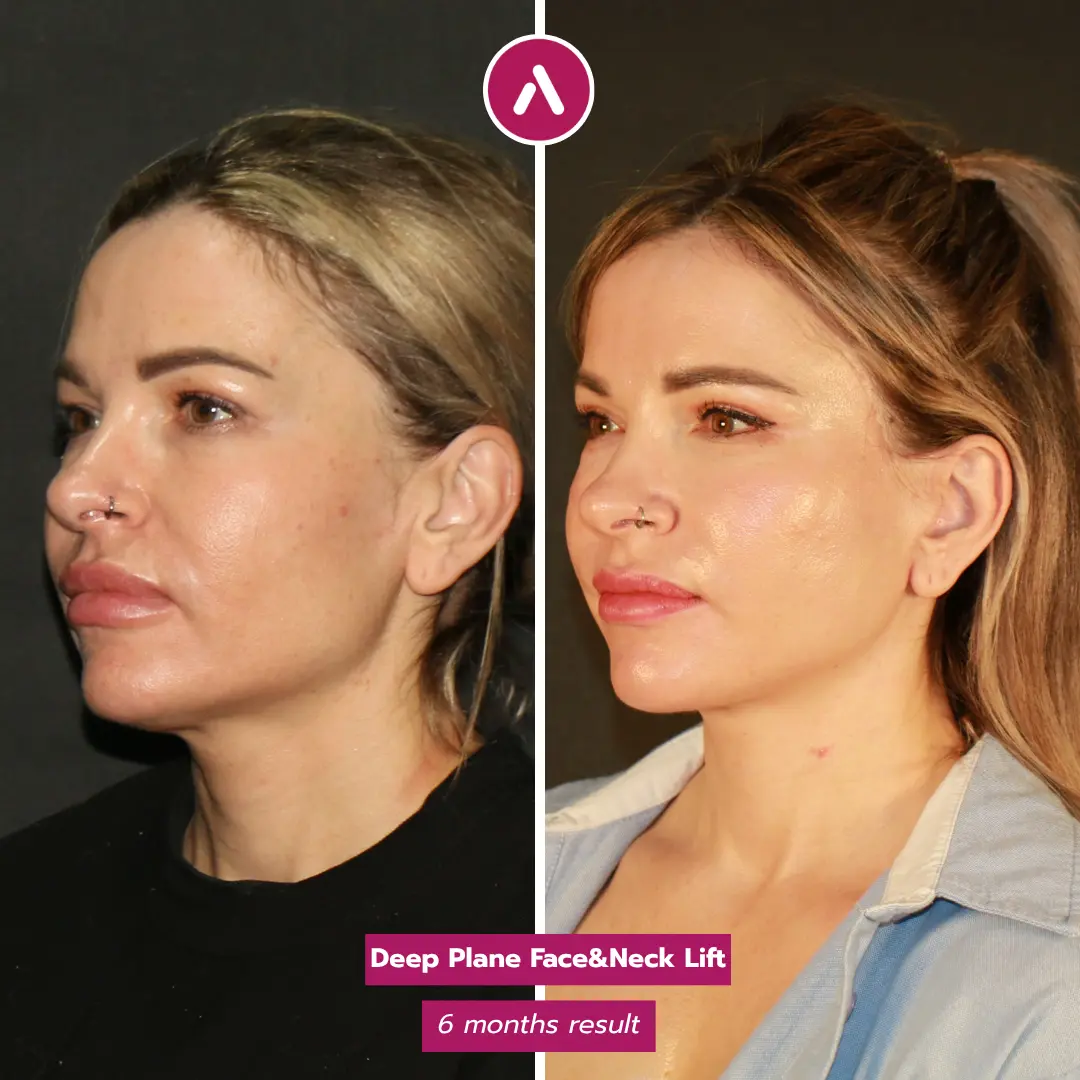
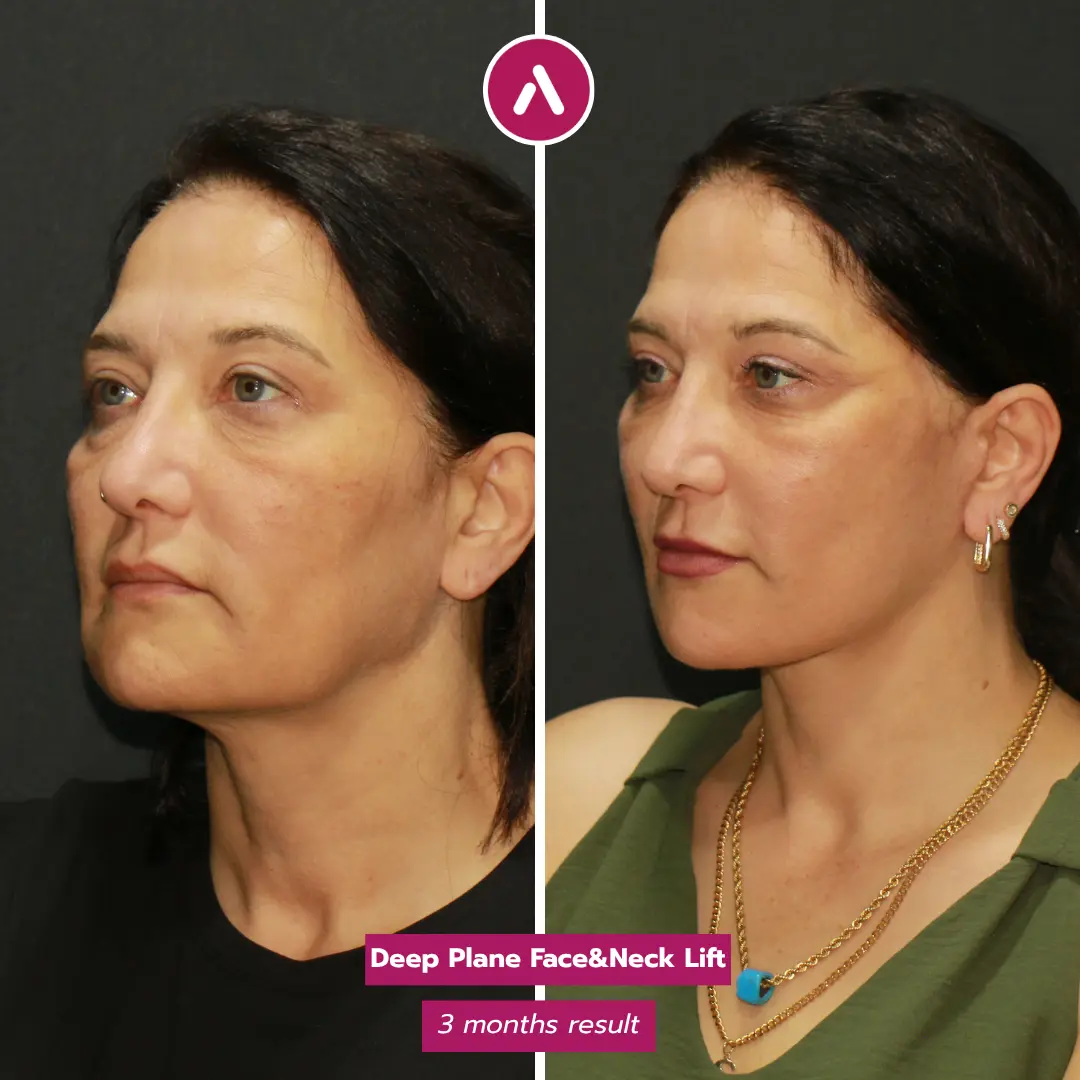
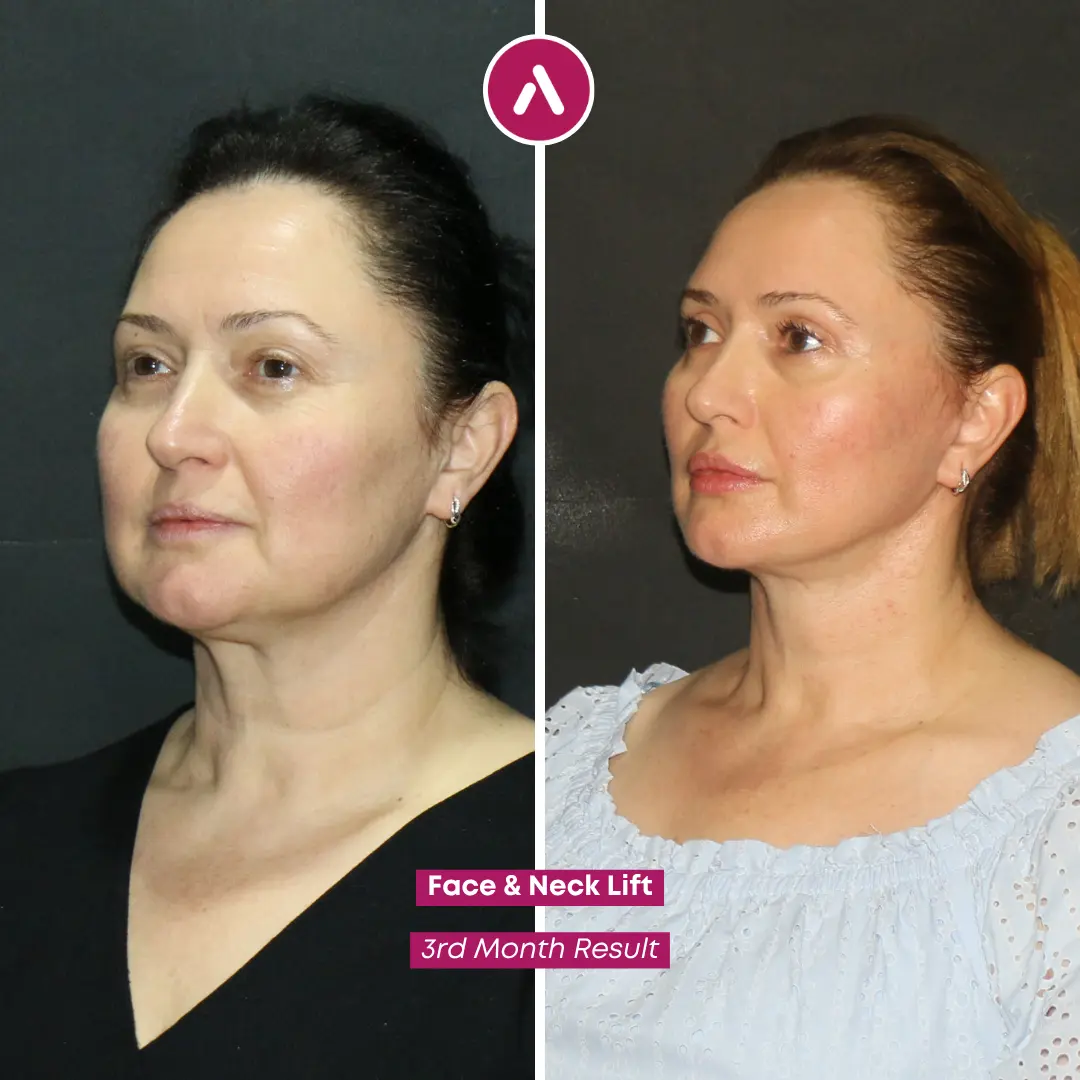
Quick Summary: A deep plane facelift journey from Canada to AKM Clinic usually spans about 10 to 14 days from departure to fit-to-fly clearance. The core path includes online consultation, travel planning, arrival at Istanbul Airport, private transfer, hotel check-in, pre-operative testing, surgery, recovery monitoring, final clinic clearance, and a carefully planned return to Canada.
The all-inclusive Deep Plane Facelift package is CAD $7,500 and includes 4 hotel nights. Many Canadian patients plan extra nights so the return flight aligns with the surgeon’s clearance window.
Table of Contents
Pre-Trip Preparation in Canada
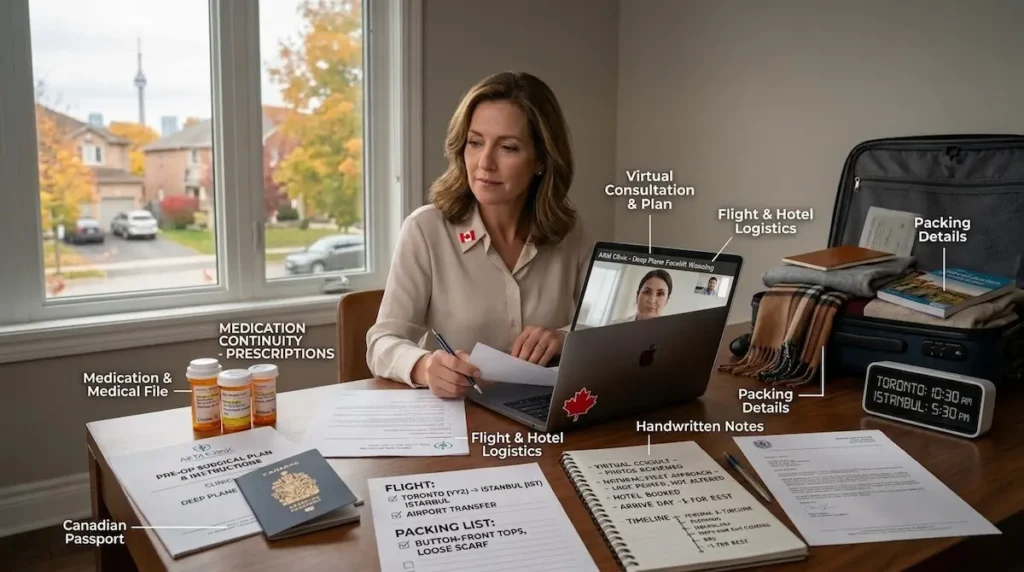
The preparation stage is where most of the anxiety should be resolved. Before a Canadian patient boards a flight to Istanbul, the surgical plan, travel dates, medication questions, and hotel logistics should already be clear. This is especially important for patients travelling from Western Canada, where connecting routes can make the trip longer than a direct YYZ departure.
For an expert patient, the goal is predictability. You should know who is reviewing your photos, who is booking your transfer, which documents you need, and how your return window is being protected.
| Journey stage | Typical timing | What happens | Canadian patient note |
|---|---|---|---|
| Online planning | 2 to 8 weeks before travel | Photo review, virtual consultation, surgical plan, travel-date coordination | Useful for patients comparing Toronto, Vancouver, or Montreal options before booking |
| Arrival in Istanbul | Day -1 or earlier | Private airport pickup, hotel check-in, rest period | Arriving at least one day before clinic testing helps reduce travel fatigue |
| Surgery day | Day 0 | VIP transfer, pre-op preparation, anesthesia consultation, procedure | Plan this day with no tourism or outside commitments |
| Early recovery | Days 1 to 3 | Monitoring, patient host check-ins, swelling control, hotel-based rest | Most patients should avoid independent sightseeing during this window |
| Progressive recovery | Days 4 to 7 | Short walks, clinic follow-up, recovery technology support if indicated | This is still recovery time, not a vacation schedule |
| Fit-to-fly review | Days 7 to 10 | Final surgeon assessment before return travel | Return flights should be booked with flexibility where possible |
| Return to Canada | Days 8 to 10 or later | Airport transfer, long-haul flight, home rest period | Arrange private pickup from YYZ, YUL, YVR, or your connecting airport |
Virtual consultation and surgical plan finalization
The first clinical step happens from home. During the virtual consultation process, Canadian patients submit photos, describe their concerns, and discuss whether deep plane facelift is appropriate for their anatomy.
The consultation should also clarify the scope. Some patients need a deep plane facelift alone. Others may be advised to combine it with a neck lift, eyelid surgery, or skin treatment. This article does not compare those techniques in detail. It stays focused on how the trip is organized once the surgical direction is clear.
AKM Clinic’s “Natural-First” approach should also be discussed early. The aim is “rejuvenation over alteration,” which matters for Canadian patients who want to return to work looking rested rather than visibly operated on.
Documentation — passport, surgeon’s letter, prescription continuity
Before booking travel, check your passport validity and confirm that your name matches across airline, hotel, and clinic records. Small administrative errors can create stress at the airport. Fix them early.
You should also prepare a simple medical file. This may include your medication list, allergies, prior surgery history, relevant lab results, and contact information for your Canadian family physician. If you take prescription medication in Ontario, British Columbia, Quebec, or Alberta, ask your local prescriber how to maintain continuity while travelling.
Keep digital and printed copies. Your phone battery is not a medical records system.
Booking flights and coordinating with AKM’s logistics team
Canadian patients should book flights only after confirming the surgical date and recommended arrival window. The all-inclusive package details for the journey help define what AKM coordinates and what the patient books independently.
The package includes the surgical procedure, anesthesia and hospital fees, pre-operative tests, 5-star hotel accommodation, private VIP transfers, patient advocacy, medications, garments, and long-term virtual follow-up. International flights are not included.
Before closing your suitcase, review what to pack for your Istanbul trip. Comfortable button-front tops, a loose scarf, printed documents, approved medications, chargers, and recovery-friendly personal items can make the first week less stressful.
Canadian airport-of-departure considerations
Toronto Pearson (YYZ) and Montréal-Trudeau (YUL) usually offer the simplest routing to Istanbul. Vancouver (YVR), Calgary (YYC), Ottawa (YOW), Edmonton (YEG), Winnipeg (YWG), and Halifax (YHZ) patients may need a connection through Toronto, Montreal, or a European hub. That extra travel time should be considered when choosing your arrival date.
Travel Day — Canada to Istanbul
Travel day should be treated as part of the medical plan. A rested arrival supports better decision-making during the pre-operative visit and reduces avoidable stress before surgery. For patients flying from Canada, the trip may include a long direct flight or a full day of connections, so pacing matters.
The smoother the arrival, the calmer the surgical week feels. AKM’s logistics structure is designed to remove the need for a newly arrived patient to manage taxis, translation, hotel directions, or clinic timing alone.
Flying from YYZ, YVR, or YUL — what to expect
Patients flying from Toronto often have the most direct route to Istanbul. Montreal may also be straightforward depending on schedule and season. Vancouver patients should plan for a longer total travel day because a connection is often required.
Choose comfort over the shortest theoretical itinerary. A 90-minute connection in a large European airport may look efficient, but it leaves little room for delays, security queues, or gate changes. A calmer connection is usually the better medical-travel choice.
If you are travelling alone, build extra margin into your schedule. For solo planning details beyond this facelift-specific journey, see our guide for solo Canadian travellers considering surgery in Istanbul.
Customs and arrivals at IST
After landing at Istanbul Airport, follow the standard passport control and baggage process. Keep your clinic contact information accessible, but do not rely only on roaming data. Screenshots of your pickup instructions are useful.
Most patients arrive tired. That is expected. The main goal is not to start exploring Istanbul immediately; it is to reach the hotel safely, hydrate, eat lightly, and rest before the clinic visit.
Canadian patients who are used to smaller airports may find IST large and busy. Give yourself permission to move slowly. You are there for surgery, not a race through arrivals.
Meeting your private driver at the airport
AKM’s private transfer system is one of the most important parts of the arrival experience. After a long-haul flight, you should not be comparing taxi prices, explaining a clinic address, or trying to translate hotel directions.
“After landing in Istanbul, the most reassuring moment was seeing the driver waiting exactly where the coordinator said he would be. I did not have to figure anything out after the flight.”Representative Canadian patient experience, based on verified AKM journey patterns
Your driver takes you from Istanbul Airport to the hotel. This creates a controlled handoff from flight mode to recovery planning. For Canadian patients travelling from smaller cities, that first organized transfer often sets the tone for the rest of the week.
The next step is hotel check-in, time-zone adjustment, and meeting the team who will support you through the clinical portion of the stay.
Hotel Check-in and Acclimatization
The hotel phase gives Canadian patients a controlled landing period before the clinical schedule begins. After a long flight, especially from Vancouver or a connecting route through Toronto or Montreal, your body needs time to adjust before surgery. A quiet check-in, light meal, hydration, and early sleep are more useful than sightseeing during the first evening.
This part of the deep plane facelift journey is intentionally simple. The aim is to reduce decision fatigue, protect your energy, and make sure you arrive at the pre-operative clinic visit rested enough to ask clear questions.
The Point Barbaros hotel for medical guests
The Point Barbaros is used as a 5-star recovery setting for AKM Clinic patients. For Canadians, the value is not only comfort. It is proximity, privacy, predictable transfers, breakfast access, and a staff environment familiar with international medical guests.
The Point Barbaros 5-star setting
The hotel is part of the patient journey rather than a separate travel detail. After facial surgery, small practical things matter: a quiet room, elevator access, easy coordination with drivers, and enough privacy to rest without explaining your appearance to strangers.
Canadian patients often compare this with domestic surgery, where accommodation is usually handled separately. In Istanbul, the hotel is coordinated as part of the broader medical travel plan. That means fewer moving parts during a week when rest should be the priority.
Ask your coordinator about room timing, breakfast, transfer pickup points, and whether a companion will be staying with you. Confirming these details before surgery helps avoid small stresses during recovery.
Time-zone adjustment and pre-surgery rest
Istanbul is several hours ahead of Canada, depending on your province and the season. Patients from Ontario and Quebec usually adjust faster than patients coming from British Columbia or Alberta, but everyone should expect some fatigue on arrival.
Avoid planning tourism, shopping, or long restaurant reservations before surgery. Your first evening should be boring in the best possible way. Drink water, eat something simple, shower if instructed, and organize your documents for the next day.
If you take regular medication, keep it in your carry-on and follow the plan discussed with your Canadian physician and AKM coordinator. Do not start or stop medication without clinical guidance.
Meeting your patient host: Hande, Emine, or Khadija
Your patient host is the bridge between the travel plan and the medical team. At AKM Clinic, Canadian patients may be supported by Hande, Emine, or Khadija. Their role is practical: timing, translation support, transfer coordination, appointment reminders, and patient advocacy.
This is especially important for patients travelling alone. After a long flight, even simple questions can feel heavy: What time is tomorrow’s pickup? Can I drink coffee? Where do I go for testing? Who do I message if I feel anxious?
A clear support channel helps. It also reduces the risk of relying on hotel staff, taxi drivers, or online forums for medical-travel questions they are not qualified to answer.
Pre-Operative Day at the Clinic
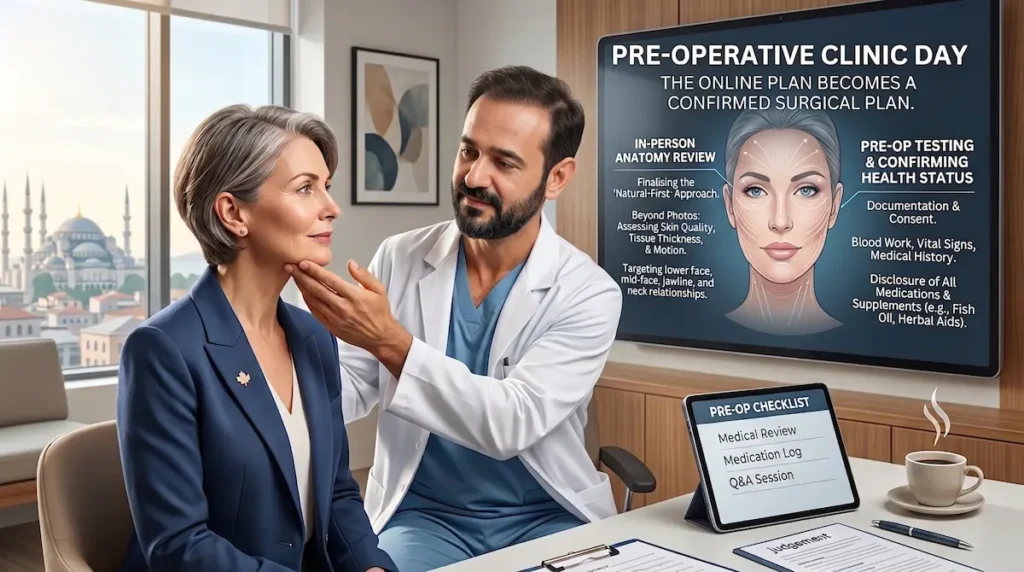
The pre-operative clinic day is where the online plan becomes a confirmed surgical plan. This is not a formality. It is the moment when the surgeon reviews your face in person, confirms your health status, aligns expectations, and finalizes the Natural-First approach before the procedure.
For Canadian patients, this day should feel familiar in its seriousness. You should expect documentation, testing, consent discussions, and time to ask questions. The tone should be calm and clinical, not rushed.
In-person consultation and final surgical plan review
Your in-person consultation compares the virtual plan with real anatomy. Photos are useful, but they cannot fully show skin quality, tissue thickness, asymmetry, neck laxity, or how your face moves during expression.
The surgeon reviews your goals and identifies what deep plane lifting can realistically improve. This may include the lower face, mid-face, jawline, and neck relationship. It may also include a discussion about what should not be changed.
That last point matters. AKM Clinic’s philosophy is Rejuvenation over alteration. The goal is not to create a different face. It is to reposition deeper tissues so the result looks refreshed, balanced, and age-appropriate.
You can read more about AKM’s clinical leadership if you want context on the surgeon-led model before this visit.
Blood work and pre-op testing
Pre-operative testing helps confirm whether surgery can proceed safely. This may include blood work, vital signs, medical history review, and anesthesia-related screening. Patients with hypertension, diabetes, thyroid conditions, clotting history, or previous anesthesia concerns should disclose everything clearly.
Bring a written medication list. Include prescription medication, over-the-counter pain relievers, supplements, herbal products, and any anticoagulant or anti-inflammatory use. Some products that seem harmless can matter before surgery.
Canadian patients should not assume that “natural” supplements are irrelevant. Fish oil, some herbal sleep aids, and certain anti-inflammatory products may affect bleeding risk. The clinical team needs the full picture.
Reviewing the Natural-First surgical map with the surgeon
The surgical map is where expectations become specific. The surgeon may discuss incision placement, lifting vector, neck involvement, facial balance, and the degree of correction that fits your anatomy.
This is also the right time to ask practical questions. Where will the tightness feel strongest? What will the dressing look like? How will the first hotel night be managed? Which changes are expected early, and which will settle over weeks?
Keep the conversation focused. This article is about the journey logistics, but the pre-operative meeting is where logistics and surgical judgement overlap. You are confirming not only that surgery is planned, but that the plan still matches your face in person.
For many Canadians, this is the moment the trip feels real. The flight, hotel, and coordination have brought you to Istanbul. The next stage is the surgery-day schedule.
Surgery Day Logistics
Surgery day should be quiet, structured, and free of unnecessary decisions. By this point, the consultation, testing, consent, hotel coordination, and transfer timing should already be confirmed. Your role is to follow instructions, arrive prepared, and let the clinical team manage the day.
For Canadian patients, this can feel different from a domestic private clinic model. Instead of arranging a ride, finding the facility, managing paperwork independently, and returning home the same day, the Istanbul journey is built around coordinated transfers, hospital flow, and post-operative monitoring.
Hotel-to-clinic VIP transfer
The day usually begins with a scheduled pickup from the hotel. Wear clothing that does not need to be pulled over your head. A button-front shirt or zip-up top is easier after facial surgery.
Bring only what you are told to bring. A phone, identification, essential documents, approved medication, and a small personal item are usually enough. Jewellery, valuables, and extra bags should stay at the hotel unless the coordinator advises otherwise.
The transfer is not just a comfort feature. It protects timing. A delayed arrival can affect the operating schedule, anesthesia preparation, and the rhythm of the day for the entire medical team.
Pre-op preparation and anesthesia consultation
Before the procedure, the team reviews your identity, medical status, consent forms, and surgical plan. You may meet the anesthesia team again, depending on the final protocol chosen for your case.
This is the time to repeat important medical details. If you forgot to mention a medication, allergy, prior reaction, or recent illness, say it now. Last-minute honesty is safer than trying to avoid a delay.
For many Canadian patients, anesthesia is one of the biggest concerns. The consultation is meant to make the plan clear: what type of anesthesia is being used, how monitoring works, and what you can expect when waking or returning to your room.
What happens during the 4–6 hour procedure window
A deep plane facelift often requires several hours because the surgeon is working in deeper tissue planes, not simply tightening skin. The exact duration depends on anatomy, whether the neck is included, and whether any additional procedures are performed.
Family members or companions should avoid expecting minute-by-minute updates. Operating room timing can shift for clinical reasons. A longer-than-expected window does not automatically mean a problem.
After surgery, the team manages dressings, immediate monitoring, comfort, and transfer into the early recovery stage. Your first job is simple: rest, follow instructions, and avoid checking your appearance repeatedly. The first mirror moment can wait.
Recovery Week at the Hotel
The recovery week is not a sightseeing week. It is a structured medical recovery period supported by hotel rest, coordinator check-ins, clinic visits, and fit-to-fly planning. The goal is to reach the final assessment safely, not to maximize tourism time in Istanbul.
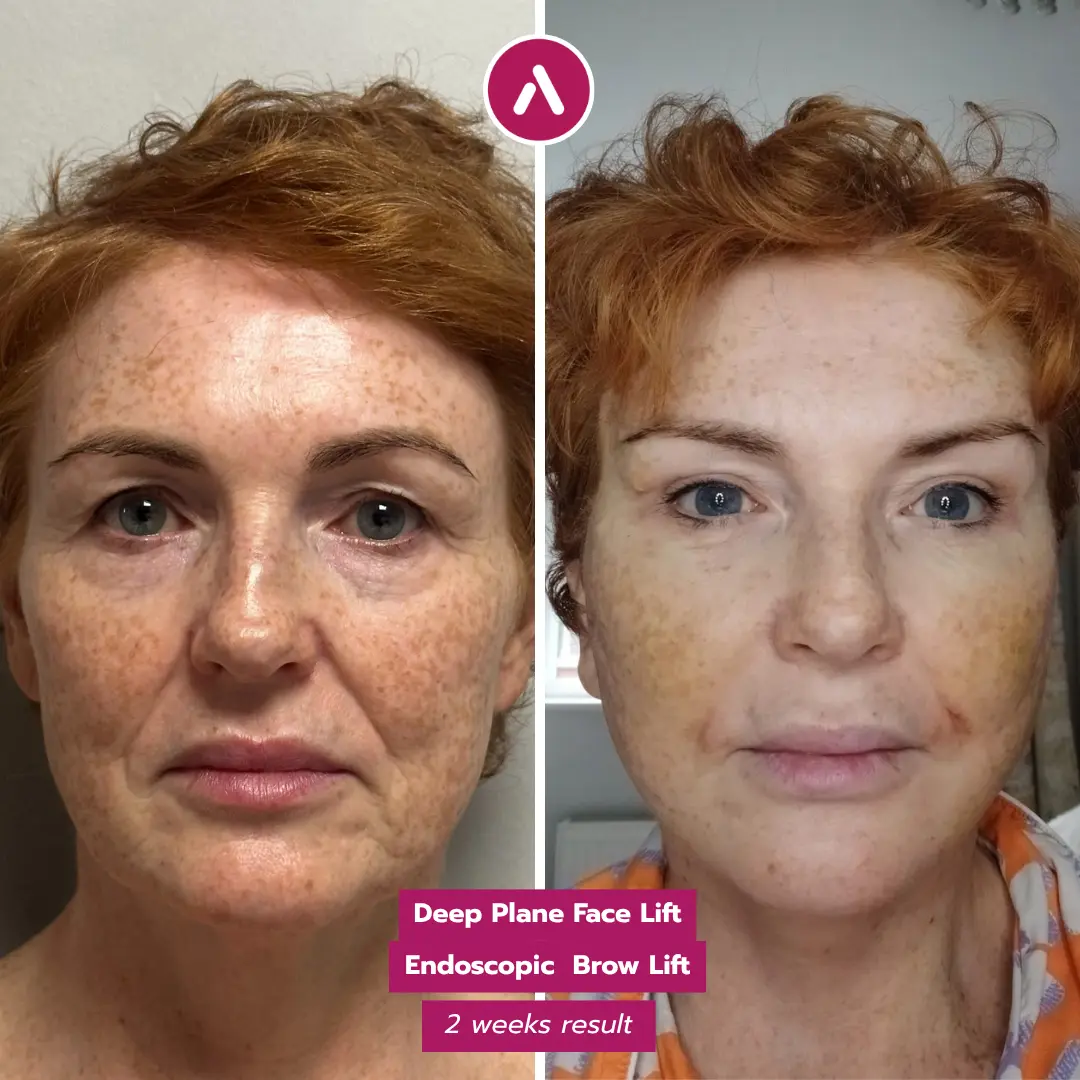
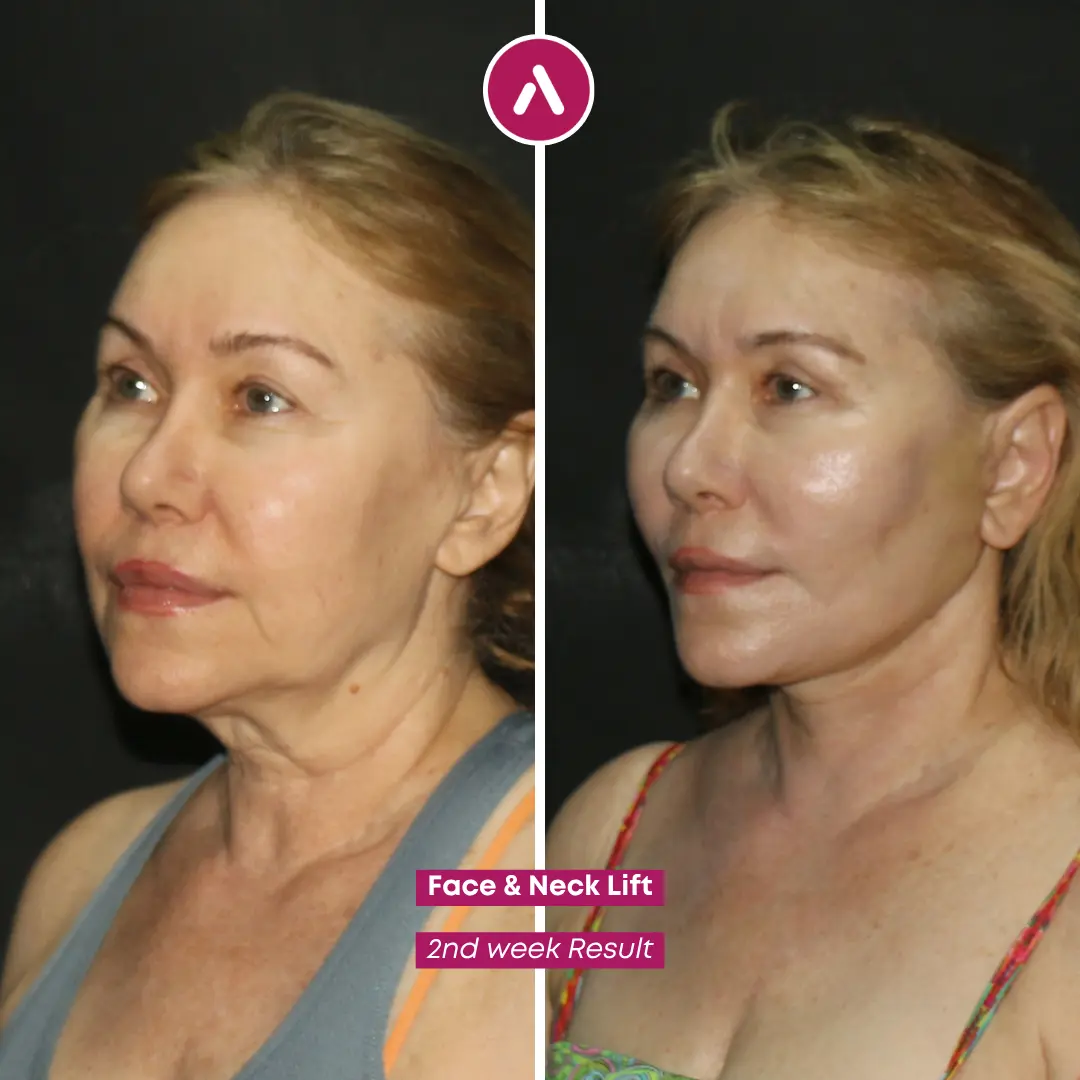
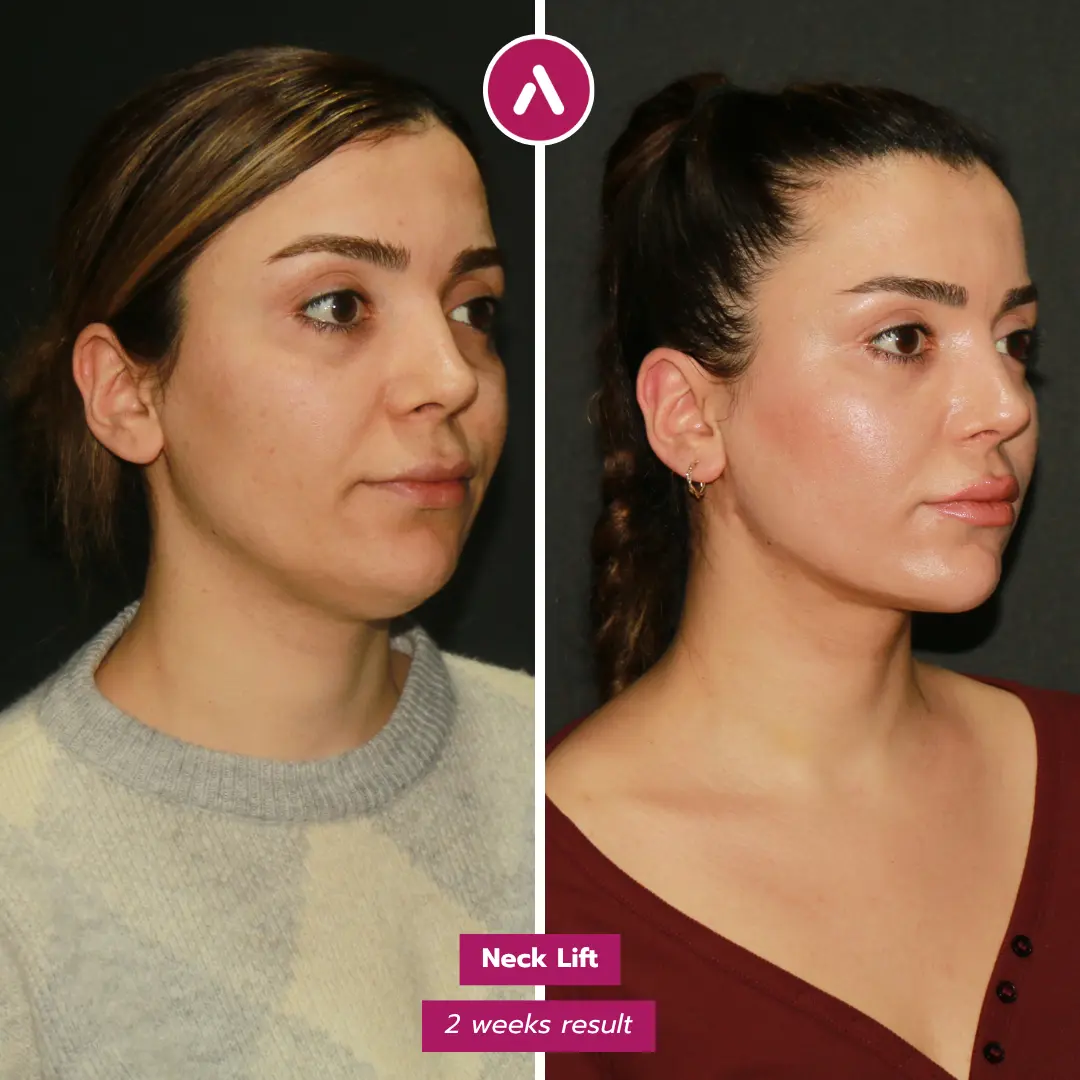
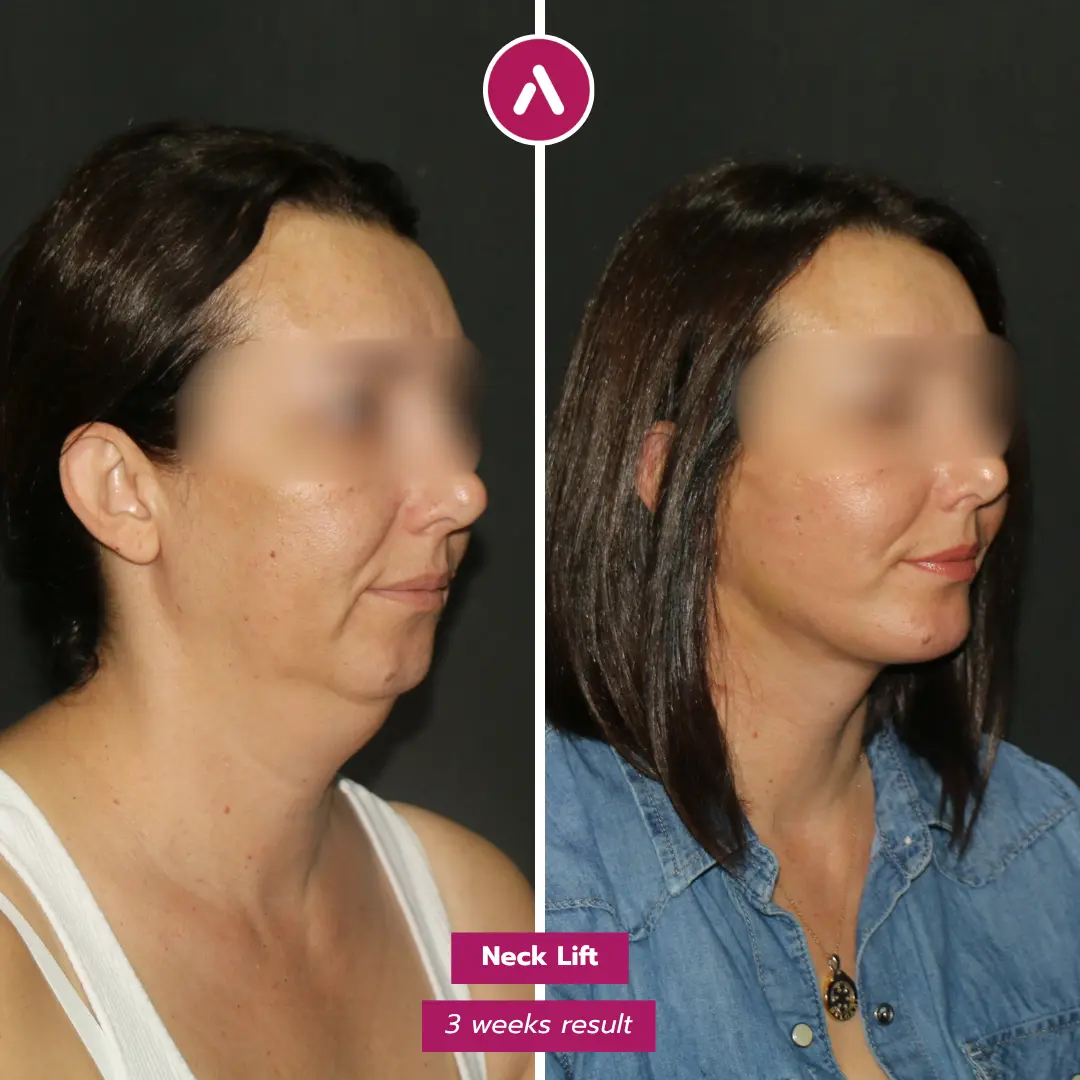
This section stays focused on logistics. For day-by-day bruising, swelling, and visual milestones, that belongs in the visual recovery guide. Here, the priority is how the week is organized around monitoring, support, and return-travel readiness.
Day 1–3 monitoring and HBOT integration
The first three days are usually the most dependent period. Patients should expect rest, limited activity, medication timing, dressing instructions, and careful communication with the patient host.
AKM Clinic may integrate Hyperbaric Oxygen Therapy into the early recovery plan for suitable patients. In this journey context, HBOT is relevant because it is scheduled as part of the recovery week, not because the patient needs to understand every cellular mechanism. For the broader clinic infrastructure, see AKM’s recovery technology standards.
During this window, keep your room calm. Walk only as instructed. Use your phone for coordinator communication, not for hours of anxious before-and-after scrolling.
Patient host check-ins and 24/7 advocate access
Hande, Emine, or Khadija may check in about medication timing, transport, appointment schedule, and general comfort. This is where the patient host system becomes practical rather than abstract.
Ask small questions early. If you are unsure whether a symptom is expected, whether you should attend a session, or when your next pickup is scheduled, message the team instead of guessing.
Canadian patients sometimes worry about being “on their own” after surgery abroad. The point of a coordinator-led model is to reduce that feeling. It gives you a clear channel for non-emergency questions and helps the clinical team identify issues that need medical review.
Day 4–7 progressive activity and final clinic check-up
By days 4 to 7, the focus usually shifts from strict rest to careful movement and preparation for assessment. Short walks may be allowed. Long outings are still not the point.
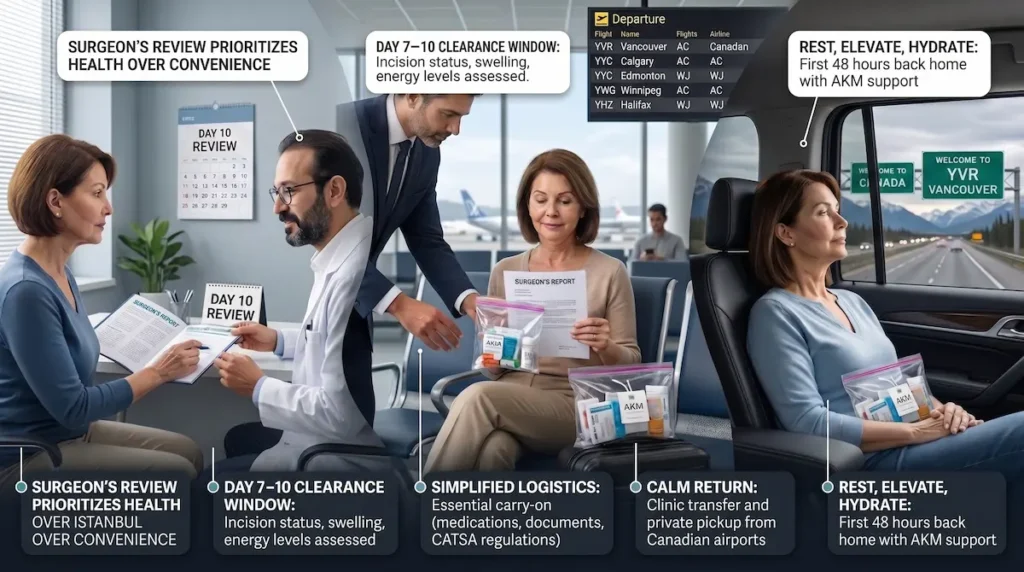
The final clinic check-up is an important milestone. The surgeon assesses healing, incision status, swelling, comfort, and whether the return plan remains appropriate. If your body needs more time, the return flight may need to be adjusted.
Do not treat Day 7 as an automatic clearance date. It is a common review point, not a guarantee. This is why many Canadian patients plan extra nights beyond the 4 included hotel nights in the package, especially when travelling back to Vancouver, Calgary, or smaller cities with connections.
The next stage is fit-to-fly clearance and the journey back to Canada.
Fit-to-Fly Clearance and the Return Journey
The return journey should be planned around medical clearance, not airline convenience alone. A Canadian patient may feel eager to leave once the first week is complete, but the surgeon’s review is what determines whether flying is appropriate. This is especially important for patients returning to Vancouver, Calgary, Edmonton, Winnipeg, or Halifax, where connections can extend the travel day.
The goal is not to rush home. It is to return when your healing, energy level, and travel plan are aligned.
The Day 7–10 clearance protocol
Most patients are reviewed around the Day 7 to Day 10 window, depending on the scope of surgery and individual healing. This visit may include assessment of swelling, incision status, bruising, comfort, blood pressure, and readiness for a long-haul flight.
This is where the journey article touches the flight question, but it does not replace a procedure-specific travel guide. For that narrower topic, see facelift-specific fit-to-fly timing.
If clearance is delayed, that should be treated as protective rather than inconvenient. Surgery abroad works best when the travel plan allows medical judgement to take priority.
Airport-to-flight logistics
Once you are cleared, the return flight should be kept simple. Use the clinic-arranged transfer or the plan confirmed by your coordinator. Avoid carrying heavy luggage yourself.
At the airport, keep medication, documents, and essential items in your carry-on. The Canadian Air Transport Security Authority allows prescription and essential non-prescription medications through security, including medically required liquids above the usual 100 mL limit when declared separately. Review CATSA’s guidance before departure through its medication and medical items page.
If the airline requests medical documentation, carry your surgeon’s letter and medication list. Turkish Airlines notes that passengers who require medical clearance may need a doctor’s report stating there is no objection to air travel, prepared in Turkish or English within the airline’s stated timing window. Check Turkish Airlines special assistance guidance before your return date.
First 48 hours back in Canada
Your first two days back in Canada should be quiet. Arrange a private pickup from YYZ, YUL, YVR, YYC, or your local airport. Do not plan to drive yourself home after a long-haul flight.
Keep your head elevated, hydrate, follow medication instructions, and send any requested update photos to AKM. If you have a Canadian family physician, know when to contact them versus when to message your AKM patient host.
For the home phase, use the dedicated guide to post-op care once you’re back in Canada. That article owns the local follow-up and home recovery planning angle.
Plan your full journey with AKM’s coordinator
A well-planned deep plane facelift journey should feel organized before you leave Canada. Ask your coordinator to review your arrival date, hotel nights, return-flight timing, companion plan, medication list, and final clearance window before you book your ticket.
Frequently Asked Questions: Deep Plane Facelift Journey Turkey
These questions focus on the logistics of travelling from Canada to Istanbul for a deep plane facelift. Medical recovery details, visual healing milestones, and surgical technique comparisons are separate topics.
How many total days should I plan in Istanbul?
Most Canadian patients should plan about 10 to 14 days in total, depending on the surgical scope and fit-to-fly clearance. The package includes 4 hotel nights, but many patients add extra nights to allow a safer return window.
When can I fly home after surgery?
Many patients are assessed around Day 7 to Day 10, but clearance depends on individual healing. Your surgeon must confirm that flying is appropriate before you return to Canada.
Are flights from Canada included?
No. International flights are not included in the all-inclusive package. Patients book their own flights, while AKM coordinates the Istanbul-side transfers, hotel logistics, clinic visits, and recovery support included in the package.
Who picks me up at the airport?
AKM arranges private VIP transfer from Istanbul Airport to the hotel. Your coordinator provides pickup details before travel so you know where to meet the driver after passport control and baggage collection.
How far is the hotel from the clinic?
The exact travel time depends on traffic and appointment timing. The important point is that hotel-to-clinic movement is coordinated through scheduled transfers, so patients do not need to manage local transportation alone.
Can a companion stay with me?
Yes, many patients bring a companion. Confirm hotel rules, transfer capacity, and companion-related costs with your coordinator before booking. A companion can be helpful, but solo patients can also be supported through the patient host system.
What if my flight is delayed and I miss surgery?
Contact your coordinator immediately. Do not wait until you land. The team can review the schedule, clinic availability, and whether the pre-operative testing window can still be protected.
Medical Disclaimer: This page is provided for general educational purposes only and does not replace an in-person medical consultation, diagnosis, or personalized treatment plan. All surgery carries risks, and outcomes vary between individuals. Suitability for deep plane facelift surgery, procedure selection, and anesthesia choice can only be determined after a full clinical assessment by a qualified surgeon. Always follow your clinician’s instructions and seek urgent medical attention if you develop concerning symptoms during recovery.