




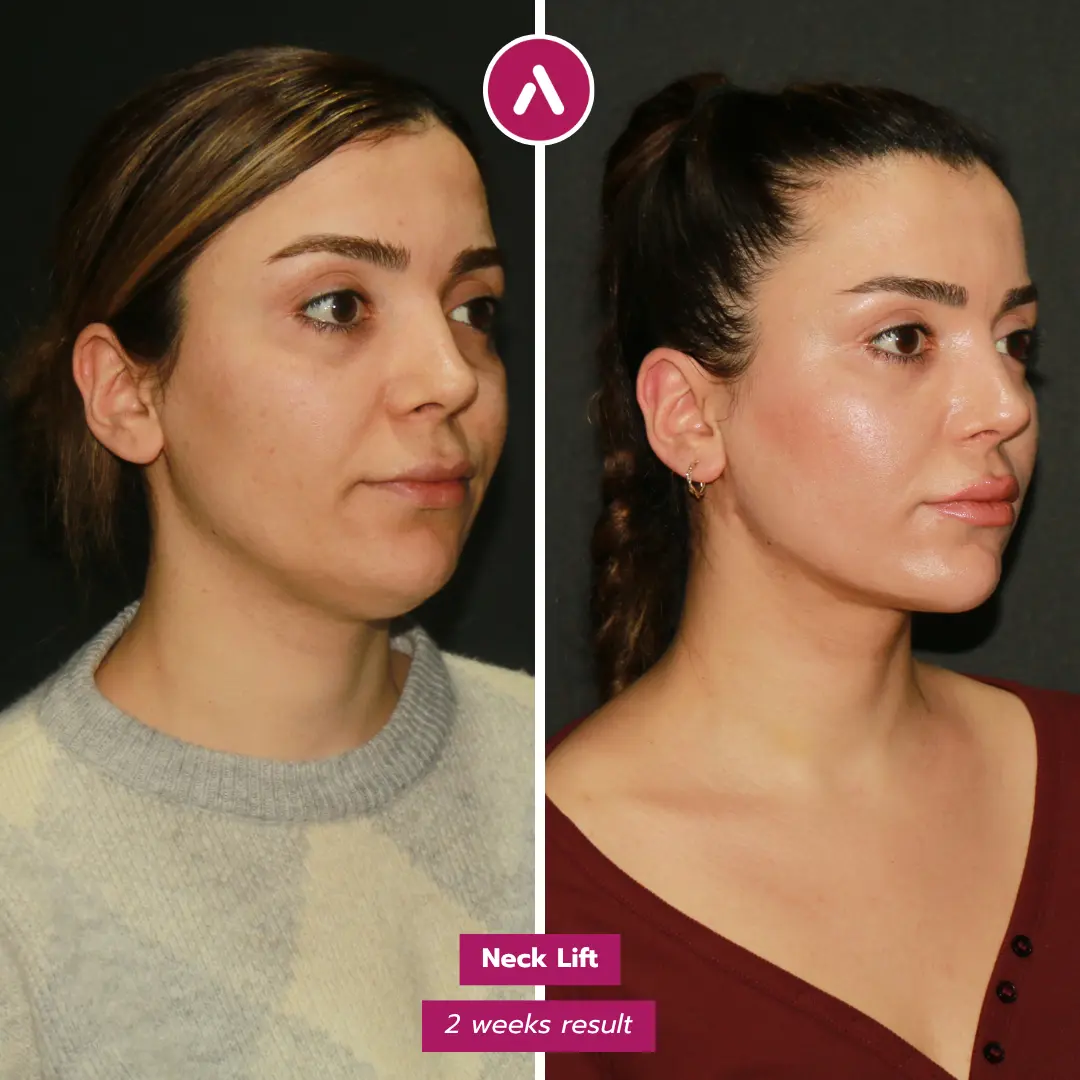
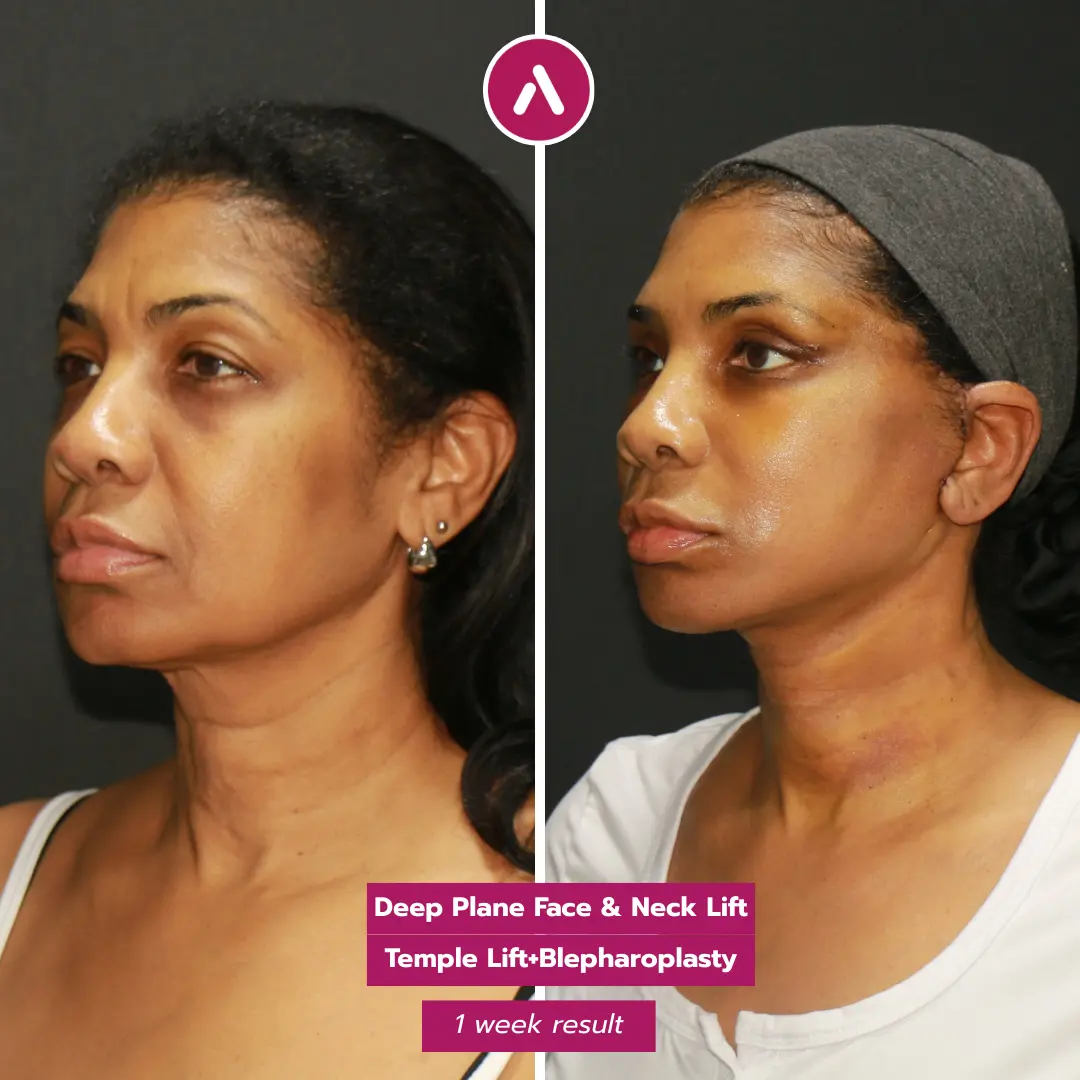
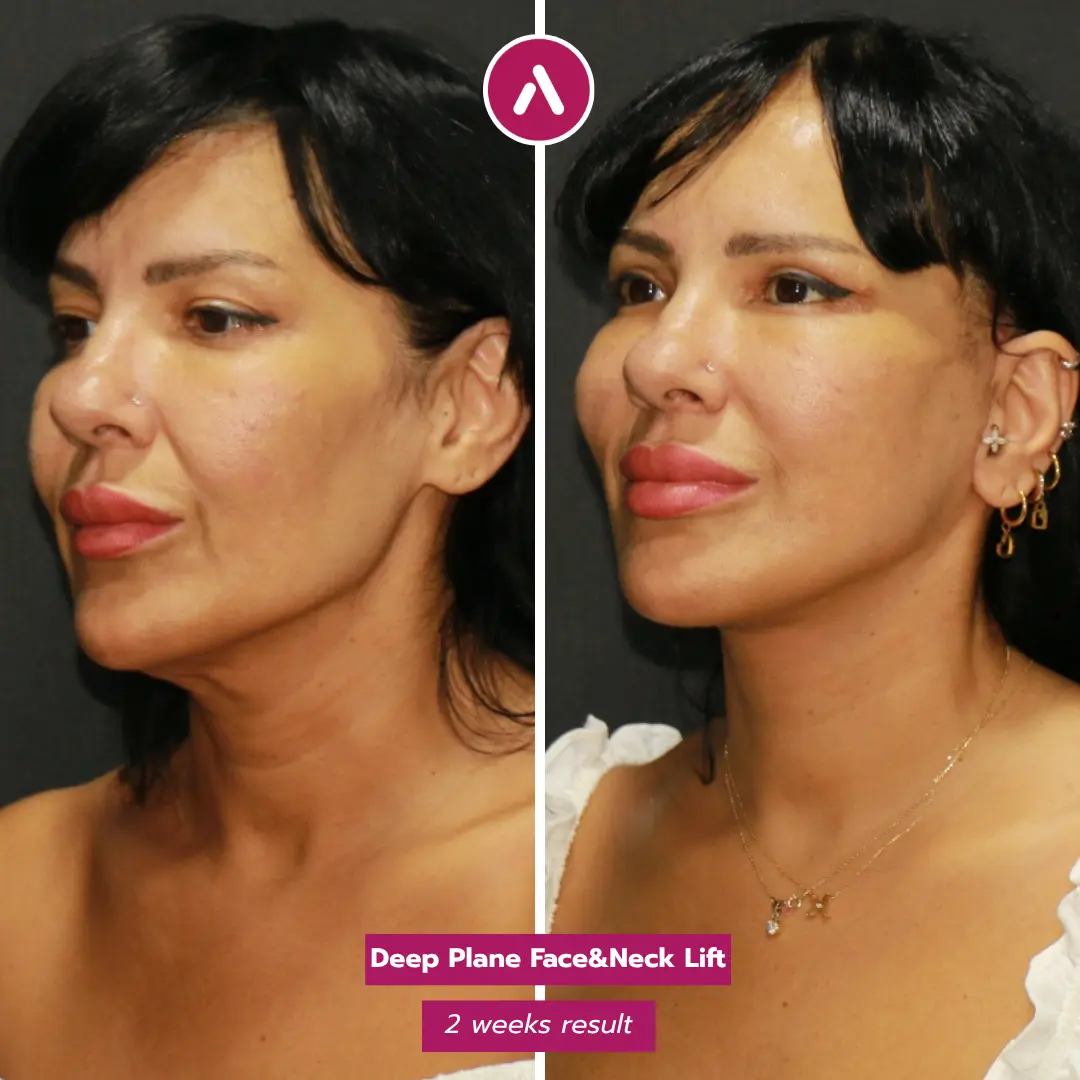
Canadian women and men addressing neck aging face a confusing decision. Nefertiti Botox, neck thread lifts, Morpheus8, and chin liposuction are often presented as “neck lift” alternatives, but each treats a different anatomical problem. A surgical neck lift, also called platysmaplasty, can correct loose neck skin, vertical platysma bands, submental fullness, and a softened jawline in one structured plan. This guide explains when surgery is warranted, when non-surgical treatment may be enough, and why many Canadians compare Istanbul with Toronto and Vancouver for longer-lasting neck rejuvenation.
Table of Contents
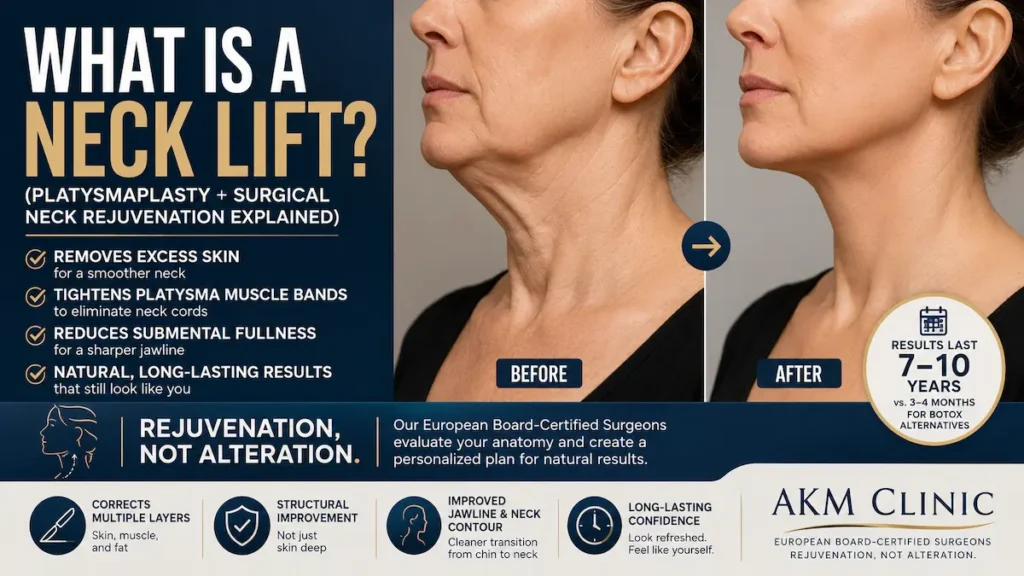
What Is a Neck Lift? (Platysmaplasty + Surgical Neck Rejuvenation Explained)
A neck lift (platysmaplasty) is a surgical procedure that removes excess skin, tightens platysma muscle bands, and addresses submental fullness to rejuvenate the neck and jawline. Standard, mini, and deep plane neck lift variants exist; results often last 7-10 years versus 3-4 months for Nefertiti Botox alternatives.
The neck can age earlier than the face. Some patients still like their cheeks and eyes but feel the neck looks heavier, looser, or more banded than the rest of their appearance. A neck lift is designed for that specific zone between the chin, jawline, side neck, and collarbone.
At AKM Clinic, our approach is “Rejuvenation, not alteration.” We evaluate skin quality, platysma muscle behaviour, submental fat, jowl overlap, and the cervicomental angle before recommending surgery or a non-surgical option.
How Neck Lift Surgery Works
A surgical neck lift improves the neck by correcting several layers at once. The visible skin is only one part of the problem. In many patients, the deeper platysma muscle separates or forms vertical cords, while fat under the chin softens the jawline-neck transition.
Depending on your anatomy, our European Board-Certified Surgeons may combine excess skin removal, platysma tightening, conservative submental fat reduction, and skin redraping. The goal is not an artificial, sharply carved neck. The goal is a cleaner transition from chin to neck that still fits your face.
Platysmaplasty Medical Terminology
Platysmaplasty means tightening or reshaping the platysma muscle. The platysma is a thin sheet-like muscle that runs from the lower face and jawline down the front of the neck. When it loosens or separates, two vertical cords may appear in the central neck.
Common methods include corset platysmaplasty, where the muscle edges are brought together in the midline, and selective release, used when bands need softening rather than simple tightening. These terms matter because a true neck lift is more than skin removal.
Brief History of Neck Lift Evolution
Older neck lift techniques focused heavily on pulling skin. That approach could improve looseness for a short period, but it often failed to correct deeper platysma banding. In some cases, excessive skin tension created visible scars or an operated-on look.
Modern neck lift surgery is more structural. Surgeons now assess the platysma, deep neck fat, skin redundancy, jawline support, and lower-face overlap. This is why platysmaplasty and deep neck refinement have become central to high-quality neck rejuvenation.
Why Canadians Choose Surgical Neck Lift Over Non-Surgical Alternatives
Non-surgical options have a role. Nefertiti Botox may soften mild dynamic banding for a few months. PDO threads may provide temporary support in selected patients. Morpheus8 or Ultherapy may improve mild skin texture or early laxity.
These treatments cannot remove redundant skin, repair separated platysma bands, or reliably correct a moderate wattle. Surgery becomes more rational when the physical problem is structural. We recommend it when the anatomy justifies it, not as a default first step.
Benefits of Surgical Neck Lift (Why Surgery When Botox + Threads Exist)
Many Canadian patients ask the same question: “Do I really need surgery, or can I do Botox, threads, or Morpheus8?” That question is sensible. Surgery requires planning, recovery, and screening. It should be considered only when the underlying problem is surgical.
A neck lift offers benefits that injectables and threads cannot match because it works on skin, muscle, fat, and contour together. For moderate or severe neck aging, that difference is significant.
Permanent Anatomical Correction vs Temporary Cosmetic Effect
Nefertiti Botox temporarily relaxes selected platysma activity along the jawline and neck. Threads provide temporary mechanical support. A surgical neck lift changes the structure itself by tightening or reshaping the deeper tissue.
This means the improvement is not dependent on repeat injections every 3-4 months or thread replacement every 6-18 months. A well-planned surgical neck lift often lasts 7-10 years, although natural aging continues.
Submental Fullness Resolution
Submental fullness is the heaviness under the chin that can blur the profile. Some patients call it a double chin. Others notice it most in side-view photos or video calls.
If fullness is mostly fat and the skin is firm, submental liposuction alone may be enough. If fat appears with loose skin or platysma banding, liposuction alone can leave the neck looking deflated. A neck lift lets us address fat, muscle, and skin together.
Platysma Banding Correction
Platysma bands are the vertical cords that appear in the front of the neck. They may show only during speech or smiling at first. Later, they may remain visible even at rest.
Botox can soften mild muscle activity in selected patients. It cannot physically repair a separated platysma. Surgical platysmaplasty directly tightens or repositions the muscle layer, which is why the result is more stable for true banding.
Jawline Definition Restoration
A youthful neck is not only about smooth skin. It is also about the angle between the jaw, chin, and upper neck. When that angle softens, the lower face can look heavier even if the cheeks have aged only mildly.
Neck lift surgery can improve jawline definition by refining the support beneath the chin and along the side neck. We avoid the over-carved look. A natural jawline should look clean, not artificial.
“A good neck lift respects the jawline, chin projection, platysma muscle, and skin quality together. The goal is not to pull the neck tight. The goal is to restore support without changing the patient’s identity.”
“Turkey Neck” / Wattle Correction
“Turkey neck” is a common patient phrase for loose skin that hangs under the chin or folds along the front of the neck. Clinically, this usually involves skin redundancy, platysma laxity, and sometimes submental fat.
Energy-based treatments may improve mild texture. They cannot remove significant extra skin. Surgical neck lift becomes more predictable when the issue is loose tissue, fixed bands, or a visible wattle.
Long-Term Stability
A neck lift does not stop aging. It can reset the anatomy so the neck ages from a more defined baseline. This matters for patients who have already spent years maintaining the area with short-term treatments.
For many Canadians, surgery involves more upfront planning but less long-term maintenance. It may be more cost-effective than repeating Nefertiti Botox or threads for years without correcting the core problem.
Am I a Good Candidate for a Neck Lift?
A good neck lift candidate is not defined by age alone. Some patients in their 40s have early platysma banding and good skin elasticity. Others in their 60s may have heavier skin laxity, jowling, and submental fullness.
We assess candidacy by anatomy, health status, expectations, and travel readiness. Canadian patients should also consider speaking with a family physician before international surgery, especially if they take blood thinners or have hypertension, diabetes, or clotting concerns.
Anatomical Indicators
You may be a strong candidate if you have visible platysma bands, loose skin under the chin, a softened cervicomental angle, or fullness that blurs the jawline. These signs may appear separately or together.
- Vertical neck cords remain visible at rest.
- Loose skin folds under the chin.
- A double-chin appearance persists despite stable weight.
- The jawline looks less defined in profile photos.
- Botox, threads, or energy treatments no longer give useful improvement.
Age-Based Candidacy
Most neck lift patients are in their 40s, 50s, or 60s. Age is only a rough guide. Genetics, weight change, sun exposure, smoking history, and skin quality often matter more.
Patients in their 40s may suit a mini neck lift if the concern is mild. Patients in their 50s often need standard platysmaplasty. Patients in their 60s or older may need a deeper neck lift or face and neck lift if jowling is also present.
Severity Assessment — Mild, Moderate, Severe
Severity determines treatment. A mild case may not need surgery. A severe case is unlikely to respond well to non-surgical treatment alone.
| Severity | Typical signs | Likely path |
|---|---|---|
| Mild | Early bands, minimal skin laxity, good elasticity | Nefertiti Botox, Morpheus8, or observation |
| Moderate | Visible bands, mild loose skin, jawline blur | Mini or standard neck lift |
| Severe | Loose folds, deep bands, wattle, jowl overlap | Standard, deep neck lift, or face and neck lift |
Skin Elasticity Requirement
Skin elasticity affects both result and scar strategy. If the skin retracts well, a smaller procedure may work. If it does not, skin removal and redraping become more important.
During assessment, we look at how easily the skin under the chin can be lifted and how well it returns. Poor recoil usually limits the value of non-surgical tightening.
Weight Stability + Lifestyle Factors
Stable weight is important before neck lift surgery. Weight gain after surgery can refill the submental area. Weight loss after surgery can loosen the skin again.
Smoking and vaping are major concerns because nicotine reduces blood flow to the skin. Sun exposure also matters, especially for scar maturation and skin quality. We give clear pre-operative instructions before confirming surgery.
Disqualifying Conditions
Some medical issues require extra clearance or may delay surgery. These include uncontrolled hypertension, poorly controlled diabetes, clotting disorders, active infection, recent cardiac events, or blood thinners that cannot be safely paused.
A safe plan starts with screening, not scheduling. For Canadian patients, involving a family physician before travel can be helpful when medical history is complex.
Post-Weight-Loss Neck Redundancy
Younger patients may need neck lift surgery after significant weight loss. In this group, the issue is often loose skin rather than age-related platysma banding.
Injectables and energy treatments may improve texture, but they cannot remove extra tissue. Post-weight-loss neck lift planning focuses on scar placement, skin redraping, and whether lower-face support is also needed.
When Non-Surgical Alternatives Are Sufficient
Non-surgical treatment may be enough when the concern is mild, skin elasticity is good, and the patient accepts temporary results. Early dynamic bands may respond to Botox. Mild skin texture may respond to energy-based treatment.
We discuss these options honestly. Surgery is not the right first step for every neck. It becomes appropriate when the physical problem exceeds what non-surgical treatments can correct.
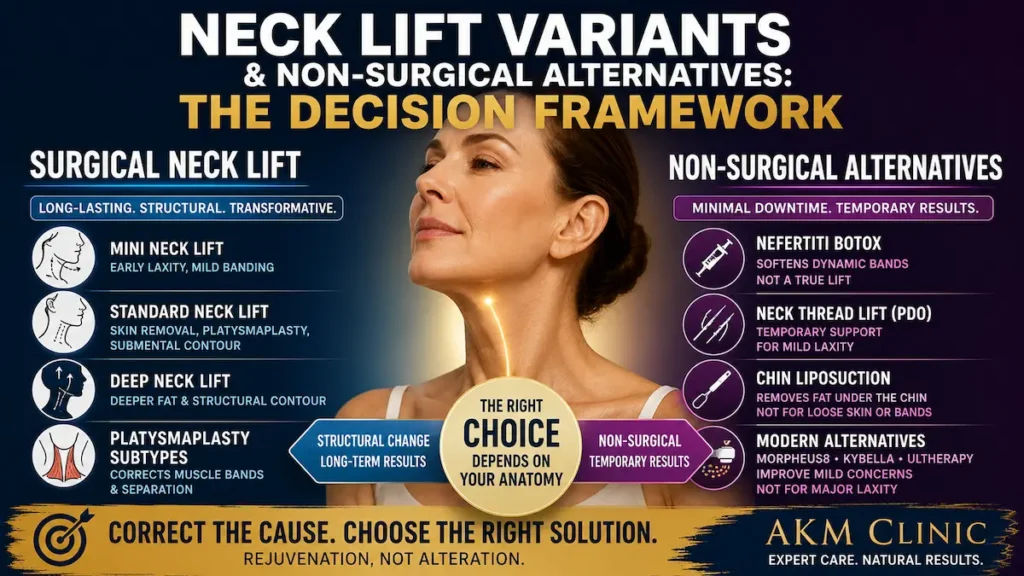
Neck Lift Variants & Non-Surgical Alternatives: The Decision Framework
Neck rejuvenation is often presented as a menu of isolated options: Botox, threads, liposuction, Morpheus8, or surgery. That framing can be misleading. Each treatment addresses a different cause.
At AKM Clinic, we separate the problem into muscle activity, skin laxity, fat fullness, structural banding, and lower-face overlap. This helps patients avoid both undertreatment and overtreatment.
The Five-Strategy Decision Framework Overview
Every neck plan starts with diagnosis. Mild platysma activity may respond to Botox. Localized fat may respond to liposuction. Loose skin and separated platysma bands usually need surgical correction.
| Method | Typical duration | Lifting capacity | Best candidate | Main limitation | AKM position |
|---|---|---|---|---|---|
| Surgical neck lift | 7-10 years | High | Moderate to severe skin laxity, bands, wattle | Requires surgery and recovery | Recommended when anatomy is surgical |
| Nefertiti Botox | 3-4 months | Low | Mild dynamic banding | No skin or fat removal | Useful for mild cases only |
| PDO thread lift | 6-18 months | Low to moderate | Mild laxity, good skin quality | Temporary support | Not a substitute for platysmaplasty |
| Chin / neck liposuction | Long-lasting if weight stable | Contour, not lift | Fat fullness with firm skin | Can worsen loose skin | Best when fat is the main problem |
| Morpheus8 / energy tightening | Variable | Low | Mild texture or early laxity | No significant skin removal | Supportive, not corrective for severe cases |
Neck Lift Variants — Mini, Standard, Deep Plane, Platysmaplasty
Not all neck lifts are the same. A mini neck lift is suited to early laxity. A standard neck lift addresses skin, platysma, and sometimes submental fat. A deep neck lift addresses deeper fullness and contour in selected patients.
| Variant | Main focus | Best candidate | Key limitation |
|---|---|---|---|
| Mini neck lift | Early skin laxity, mild banding | Younger or early-aging patients | Not enough for heavy loose skin |
| Standard neck lift | Skin removal, platysmaplasty, submental contour | Moderate neck aging | May not correct major jowling alone |
| Deep neck lift | Deeper fat and structural contour | Advanced fullness or deep-neck anatomy | Requires advanced planning |
| Platysmaplasty subtypes | Muscle band correction | Visible cords or muscle separation | Does not treat upper-face aging |
If lower-face aging is significant, review our facelift in Turkey guide or deep plane facelift guide. Neck-only patients do not need unnecessary full-face surgery.
Surgical Neck Lift vs Nefertiti Botox — Honest Comparison
Nefertiti Botox uses botulinum toxin along the jawline and upper neck to reduce downward platysma pull. In selected patients, it can soften dynamic bands and create a subtle jawline improvement. It is not a true lift.
Health Canada advises that cosmetic Botox injections should be administered by a qualified health care provider, and patients should seek medical attention if swallowing, speech, or breathing symptoms occur after treatment. Canadian patients can review Health Canada’s cosmetic injections guidance before comparing injectable and surgical options.
Nefertiti Botox may work for early banding, good skin elasticity, and mild jawline softening. It usually fails when the issue is skin redundancy, fixed platysma bands, a wattle, or significant submental fullness.
“Nefertiti Botox can help the right patient. The key is honesty. Mild muscle activity may respond to injections. Loose skin and separated platysma bands require a surgical conversation.”
Surgical Neck Lift vs Neck Thread Lift (PDO)
PDO neck threads use dissolvable sutures under the skin to create temporary support. They may help selected patients with mild laxity and good skin quality.
Threads cannot remove extra skin, repair separated platysma bands, or correct significant neck heaviness. They may be reasonable for early laxity, but they are not comparable to platysmaplasty in moderate or severe cases.
Surgical Neck Lift vs Chin Liposuction
Chin liposuction removes fat under the chin. It is useful when submental fullness is the main problem and the skin has enough elasticity to retract after fat removal.
If loose skin or platysma banding is present, liposuction alone can make the neck look more deflated. In those cases, a neck lift with conservative fat reduction may be safer. See our neck lipo vs neck lift guide for a focused comparison.
Face + Neck Lift Combo
A neck lift can be performed alone, but it is not always the best standalone choice. If jowls and lower-face descent are present, treating the neck alone may create imbalance.
A combined face and neck lift addresses both lower-face sagging and neck laxity. If your concern includes jowling, also review our mini facelift in Turkey guide.
Modern Alternatives — Morpheus8, Kybella, Ultherapy
Morpheus8 can improve mild skin texture. Kybella can reduce selected fat deposits. Ultherapy may help early skin relaxation. None of these treatments removes significant skin or repairs separated platysma bands.
They may be useful for maintenance or early changes. They are less reliable when the neck has structural aging.
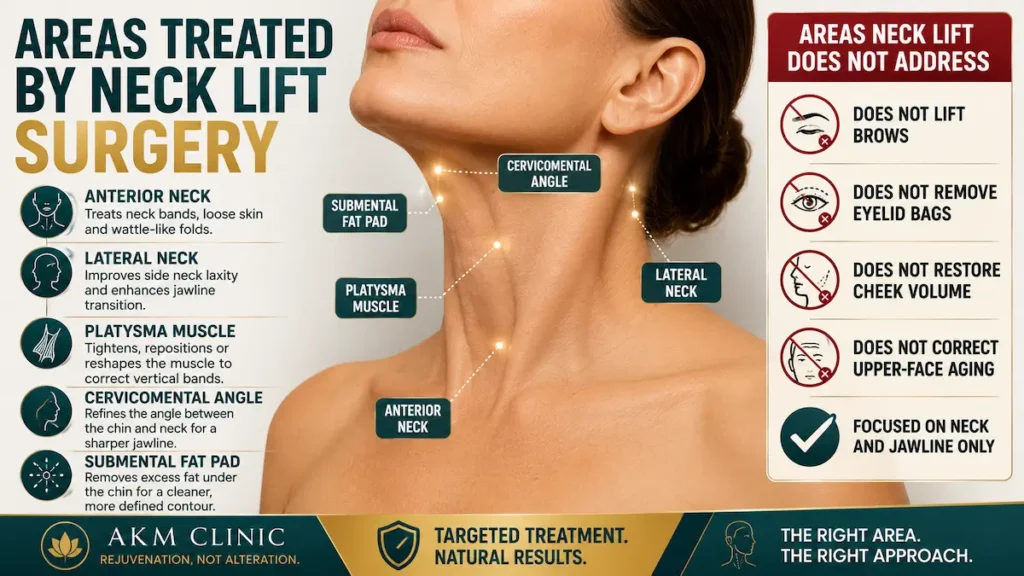
Areas Treated by Neck Lift Surgery
A neck lift treats a defined anatomical zone. It does not rejuvenate the entire face. The best results come from understanding exactly what the surgery can and cannot improve.
We evaluate the anterior neck, lateral neck, platysma muscle, cervicomental angle, and submental fat pad. We also check whether the lower face or chin contributes to the concern.
Anterior Neck
The anterior neck is the central front area from under the chin toward the collarbone. This is where vertical platysma bands, loose skin, and wattle-like folds are most visible.
When this area is the main concern, a small incision under the chin allows access for platysmaplasty and conservative contouring.
Lateral Neck
The lateral neck includes the side neck and area behind the ear. Laxity here can create folds, side-neck heaviness, and a less defined jawline transition.
When lateral correction is needed, incisions may be placed behind the ears. This allows skin redraping while keeping scars within natural contours.
Platysma Muscle
The platysma muscle is central to neck lift surgery. When it separates or becomes visible, it can form vertical cords that non-surgical treatments cannot fully correct.
Platysmaplasty tightens, repositions, or reshapes this muscle layer. Treating skin while ignoring platysma bands can lead to incomplete results.
Cervicomental Angle
The cervicomental angle is the angle between the underside of the chin and the front of the neck. A cleaner angle often makes the jawline look more defined.
Improving this angle may require fat reduction, platysma tightening, skin redraping, and sometimes chin assessment. Neck lift improves soft tissue contour, but it does not change bone structure.
Submental Fat Pad
The submental fat pad sits under the chin. Some patients have fullness here despite stable weight. During neck lift surgery, we reduce this fat only when it contributes to the contour problem.
Over-removal can create hollowing or a cobra-neck appearance. Balanced contouring is safer and more natural.
Areas Neck Lift Does NOT Address
A neck lift does not lift brows, remove eyelid bags, restore cheek volume, or correct upper-face aging. It is a neck and jawline procedure.
If those concerns are present, other procedures may be more appropriate, such as blepharoplasty in Turkey, endoscopic temporal brow lift, or fat transfer to the face. We recommend combinations only when they improve balance.
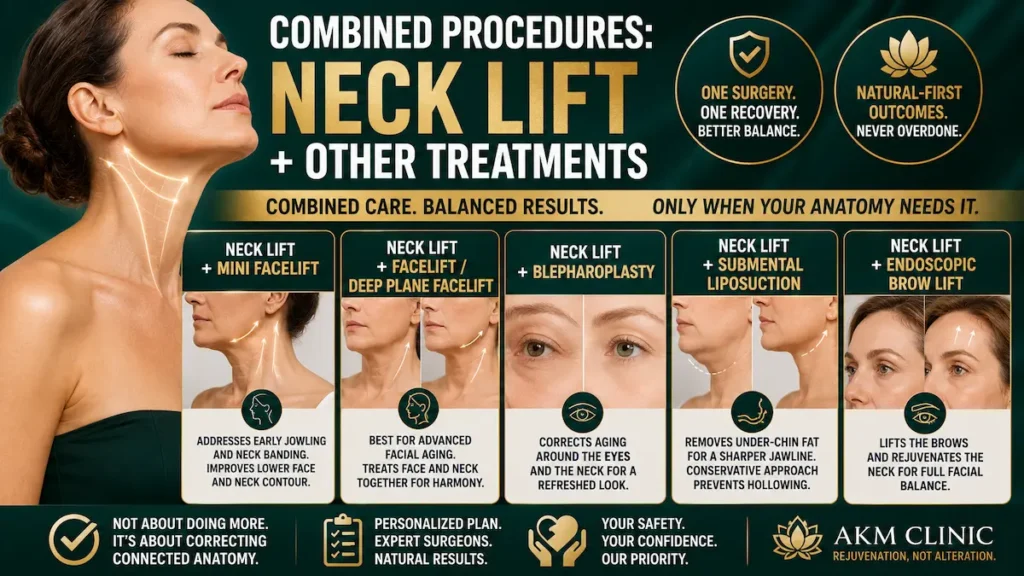
Combined Procedures: Neck Lift + Other Treatments
A neck lift can be performed alone, but some patients benefit from combining it with another facial procedure. The decision should depend on anatomy, not convenience.
Combining procedures can mean one anesthesia event and one recovery period. The risk is overtreatment. We recommend combinations only when they support a balanced Natural-First outcome.
Neck Lift + Mini Facelift
This combination is common when early jowling joins neck banding. The mini facelift improves lower-face laxity, while the neck lift addresses platysma bands and submental contour.
Neck Lift + Facelift / Deep Plane Facelift
A full face and neck lift may be better when cheeks, jowls, jawline, and neck have aged together. It is more involved than isolated platysmaplasty and requires more recovery planning.
Neck Lift + Blepharoplasty
Some patients combine neck lift with eyelid surgery because the neck and eyes are both visible aging zones. The procedures treat different anatomy and should be combined only when both concerns are present.
Neck Lift + Submental Liposuction
Submental liposuction is often added when fat contributes to fullness. It should be conservative to avoid hollowing or cobra-neck contour.
Neck Lift + Endoscopic Brow Lift
This combination may suit patients with both lower-neck aging and upper-face heaviness. For upper-face planning, see our endoscopic temporal brow lift in Turkey guide.
“Combined surgery is not about doing more. It is about correcting connected anatomy. If the neck is isolated, we keep the plan isolated.”
Anesthesia for Neck Lift: Local + Sedation Standard
Most isolated neck lifts can be performed with local anesthesia and IV sedation. This keeps patients comfortable while avoiding the deeper recovery associated with general anesthesia. Anesthesia planning still requires medical screening and monitoring.
For combined procedures, deeper anesthesia may be appropriate. A neck lift alone and a deep plane face-neck lift are not the same anesthetic scenario.
Why Neck Lift Does Not Require General Anesthesia for Most Variants
An isolated neck lift usually involves a smaller surgical field than a full facelift. Many patients can safely undergo the procedure with local anesthesia and controlled IV sedation.
This may reduce post-operative grogginess and nausea for selected patients. It can also support earlier mobility, which matters before long-haul travel back to Canada.
Local Anesthesia + IV Sedation Protocol
Local anesthesia numbs the surgical area. IV sedation helps reduce anxiety and discomfort. Patients are monitored throughout the procedure, including oxygen level, heart rate, blood pressure, and response to medication.
Many patients remember little of the procedure. They should not feel sharp surgical pain, although pressure or movement may be felt.
General Anesthesia When Deep Plane or Combined with Facelift
General anesthesia may be recommended when neck lift is combined with deep plane facelift, longer lower-face surgery, or multiple procedures. The safer choice is the anesthesia method that matches procedure length and patient health.
Awake Neck Lift Variant
Some patients ask about awake neck lift surgery. This may suit selected patients with mild-to-moderate concerns and low anxiety during medical procedures.
Awake surgery is not right for everyone. For a dedicated explanation, see our awake neck lift in Turkey page. This guide focuses on neck lift surgery overall.
AKM Anesthesiology Team Credentials + Pre-Op Assessment
Before surgery, we review your medical history and perform pre-operative testing. Our procedures are performed in a JCI-accredited hospital partner environment with appropriate monitoring and anesthesia support.
Canadian patients should share all medications, prior anesthesia reactions, nicotine use, and relevant medical history before travelling.
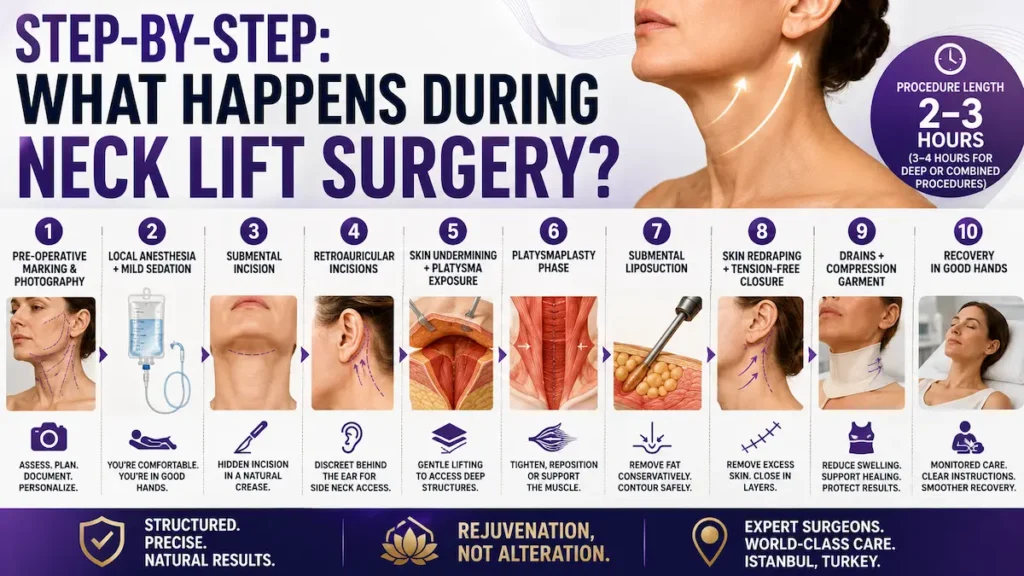
Step-by-Step: What Happens During Neck Lift Surgery?
Neck lift surgery follows a structured sequence: mark the neck, choose the anesthesia plan, place discreet incisions, access the platysma, refine fat when needed, tighten deeper support, and close the skin without excessive tension.
The sequence below describes a standard neck lift with platysmaplasty. Mini, deep, and combined procedures may adjust access points or operative time.
Pre-Operative Marking + Photographic Documentation
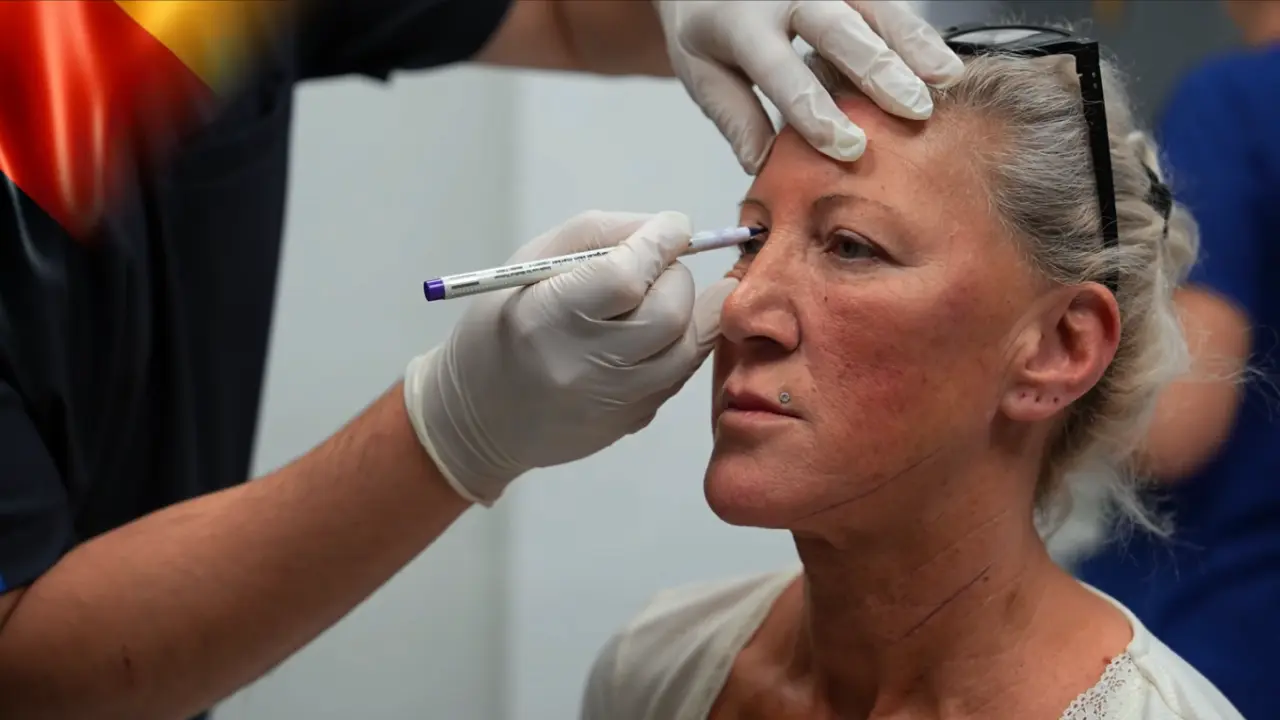
We complete an in-person assessment in Istanbul before surgery. This includes reviewing photos, examining the neck in motion, and confirming whether the main issue is skin, muscle, fat, or lower-face overlap.
Markings are made while you are upright because the neck behaves differently when lying down. Standardized photos document your baseline and support honest before-and-after comparison.
Local Anesthesia + Mild Sedation
Most isolated neck lifts use local anesthesia with IV sedation. The neck is numbed directly, while sedation keeps you calm and comfortable. If your procedure is combined with facelift or deeper work, general anesthesia may be selected.
Submental Incision
The submental incision is placed under the chin, usually within a natural crease. It allows access to the central neck, where platysma bands and submental fullness are most visible.
Through this incision, we can evaluate the fat pad, expose the platysma, and perform central platysmaplasty when needed.
Retroauricular Incisions
Retroauricular incisions are placed behind the ears when the side neck needs skin redraping or lateral support. These incisions are designed to follow natural ear and hairline contours.
Not every mini neck lift needs extensive behind-ear access. The incision plan follows your anatomy.
Skin Undermining + Platysma Exposure
The skin is gently lifted from the underlying tissue in the planned area. This controlled undermining allows smooth redraping after deeper correction.
The platysma is then identified. This step is essential when visible bands or muscle separation are present.
Platysmaplasty Phase
Depending on your anatomy, the platysma may be tightened in the centre, selectively released, or supported laterally. Corset plication reduces central banding. Lateral suspension supports side-neck contour.
“Platysmaplasty is not one manoeuvre. A thin patient with central bands needs a different plan than a patient with skin redundancy and submental fullness.”
Submental Liposuction
If submental fat contributes to fullness, conservative liposuction may be added. We avoid aggressive fat removal because over-defatting can create hollowing or an unnatural neck contour.
Skin Redraping + Tension-Free Closure
After deeper correction, the skin is redraped and excess skin is removed conservatively. The skin should not be the main structure holding the result.
Layered closure helps distribute tension and supports cleaner scar healing.
Drains + Compression Garment
Some patients need small drains to remove fluid during early healing. A compression garment is applied to support the neck, control swelling, and remind patients to limit movement.
Procedure Length
A standard neck lift usually takes about 2-3 hours. A deep neck lift or combined face-neck lift may take 3-4 hours or longer.
After surgery, you are monitored before discharge to your hotel or hospital room, depending on the anesthesia plan and procedure complexity. Your patient host and clinical team review the immediate recovery instructions with you.
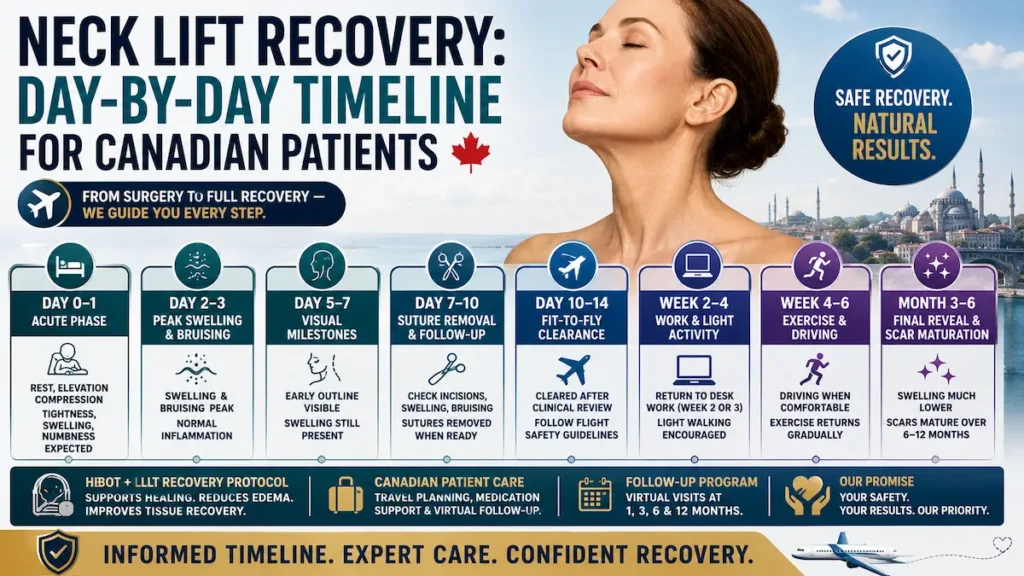
Neck Lift Recovery: Day-by-Day Timeline for Canadian Patients
Neck lift recovery is usually manageable when patients understand the timeline. Swelling, tightness, bruising, numbness, and early scar visibility are expected. They do not mean the surgery has failed.
For Canadians, return-flight planning is part of recovery. We assess incision stability, swelling, drain status, mobility, and medication needs before fit-to-fly clearance.
Day 0-1 — Acute Phase
The first 24 hours focus on rest, monitoring, and swelling control. You will wear your compression garment as instructed and sleep with your head elevated.
Expected sensations include tightness, pressure, mild soreness, and numbness. Rapid one-sided swelling, severe pain, fever, or breathing difficulty should be reported immediately.
Day 2-3 — Bruising + Swelling Peak
Swelling and bruising often peak around days 2-3. The neck may feel firm or tight. This is normal and does not reflect the final result.
Gentle walking supports circulation. Avoid heat, alcohol, heavy lifting, and strenuous movement.
Day 5-7 — Visual Milestones
By days 5-7, bruising may begin changing colour and early neck contour becomes easier to see. Swelling is still present, so symmetry should not be judged too early.
| Milestone | Common appearance | Meaning |
|---|---|---|
| Day 1 | Compression, tightness, early swelling | Acute healing |
| Day 3 | Peak bruising and puffiness | Normal inflammation |
| Day 7 | Early outline visible | Still too early for final judgment |
| Day 14 | Most social swelling reduced | Quiet routines may resume |
Our HBOT/LLLT Recovery Protocol
We utilize HBOT and LLLT to support recovery after facial and neck procedures. HBOT increases oxygen delivery to healing tissues. LLLT uses 424 medical-grade semiconductor laser diodes at 650nm to stimulate cellular ATP production.
For neck lift patients, this may help with submental edema, incision maturation, and tissue recovery after platysma work. For deeper science, see our Hyperbaric Oxygen Therapy benefits guide and technology and standards overview.
Day 7-10 — Suture Removal + First Follow-Up
By days 7-10, many patients are ready for an in-person follow-up. We check incision quality, swelling pattern, bruising, compression garment fit, and comfort. Sutures are removed when appropriate.
This visit also helps determine whether return travel timing is realistic.
Day 10-14 — Fit-to-Fly Clearance
Most Canadian patients should plan return travel only after clinical review. A long-haul flight from Istanbul to Toronto, Montreal, Vancouver, Calgary, or another Canadian city adds dehydration, swelling, and immobility considerations.
Before flying, keep medications in your carry-on, avoid heavy luggage lifting, walk periodically, hydrate well, and follow compression garment instructions. Our flight safety after surgery guide explains the broader principles.
Week 2-4 — Work + Light Activity
Many patients return to desk-based work during week 2 or 3. Remote work is easier than public-facing work if bruising persists.
Light walking is encouraged. Heavy lifting, saunas, hot yoga, and intense cardio should wait.
Week 4-6 — Exercise + Driving
Driving should wait until you can turn your head comfortably and are no longer taking sedating medication. Exercise returns gradually after clearance.
Rushing activity can increase swelling. Slow progress protects the result.
Month 3-6 — Final Reveal + Scar Maturation
By month 3, swelling is usually much lower and the neck contour looks more natural. Scar maturation continues through 6-12 months.
Our virtual follow-up programme at 1, 3, 6, and 12 months helps monitor healing after you return to Canada.
Safety & Risks of Neck Lift
Neck lift surgery has a strong safety profile when performed by qualified surgeons in accredited settings. Still, it is surgery. Bruising, swelling, scars, numbness, asymmetry, and delayed healing are possible.
The American Society of Plastic Surgeons describes neck lift surgery as a procedure that improves visible signs of aging in the jawline and neck. The ASPS neck lift overview is a useful external reference for general procedure scope, preparation, recovery, and results.
Canadian patients are right to ask direct questions about “botched neck lift” outcomes, visible scars, pixie ear deformity, hollowing, and follow-up after surgery abroad. We address these concerns directly.
Common Side Effects
Common side effects include bruising, swelling, tightness, temporary numbness, and mild asymmetry during early healing. These usually improve over time.
Warning signs include rapidly increasing swelling, severe one-sided pain, fever, spreading redness, drainage with odour, or sudden breathing difficulty.
Neck Lift Scars — Submental Incision
The submental scar sits under the chin, often within a natural crease. It may look pink or firm during early healing, then softens gradually.
Scar visibility depends on genetics, skin type, tension, sun exposure, and aftercare. We discuss scar history before surgery, especially for patients prone to raised scars.
Neck Lift Scars — Retroauricular Incision
Behind-ear scars are designed to follow natural ear and hairline contours. They may be visible early, especially with hair worn up, but usually fade over time.
Poor planning can cause hairline distortion, scar widening, or skin bunching behind the ear. Incision design matters.
Botched Neck Lift — Why It Happens
Poor outcomes often come from poor diagnosis, aggressive fat removal, excessive skin tension, or inadequate platysma correction. Treating skin when the problem is muscle or fat can create incomplete results.
“Most poor neck lift results come from forcing one technique onto every neck. The safest plan starts with diagnosis: skin, fat, platysma, jawline, or lower-face descent.”
Pixie Ear Deformity
Pixie ear deformity happens when the earlobe is pulled downward or stretched after surgery. It is usually related to excessive skin tension near the ear.
Proper deep support and tension-free closure reduce this risk.
Submental Hollow / Cobra Neck Deformity
A cobra neck deformity describes hollowing or abnormal contour under the chin, often after aggressive fat removal or poor deep-neck planning.
We prevent this by avoiding over-defatting. A natural neck still has soft tissue.
Hairline Distortion
Hairline distortion can occur when behind-ear incisions are poorly designed or excessive skin is pulled into the hairline. This matters for patients who wear short hair, ponytails, or updos.
Facial Nerve Injury
Facial nerve injury is rare but possible. The marginal mandibular branch is the main concern because it affects lower lip movement.
Most movement changes, when they occur, are temporary and related to swelling or traction. Careful anatomy-based dissection reduces risk.
Hematoma + Seroma Risk
A hematoma is a blood collection. A seroma is fluid collection. Both may require drainage or closer monitoring.
Blood pressure control, medication review, compression, drains when needed, and activity restrictions help reduce risk.
Neck Lift Regrets
Regret usually comes from mismatched expectations. Some patients expected a full facelift result from neck-only surgery. Others expected no visible scars or a very sharp angle that would not suit their anatomy.
Good counselling reduces regret. We explain what a neck lift can improve and what it cannot.
Why AKM’s Standards Reduce Risk
Risk cannot be removed completely, but it can be reduced. Our procedures are performed by European Board-Certified Surgeons in JCI-accredited partner facilities, supported by pre-operative testing and structured follow-up.
We provide long-term virtual follow-up at 1, 3, 6, and 12 months. Recovery should not end when you leave Istanbul.
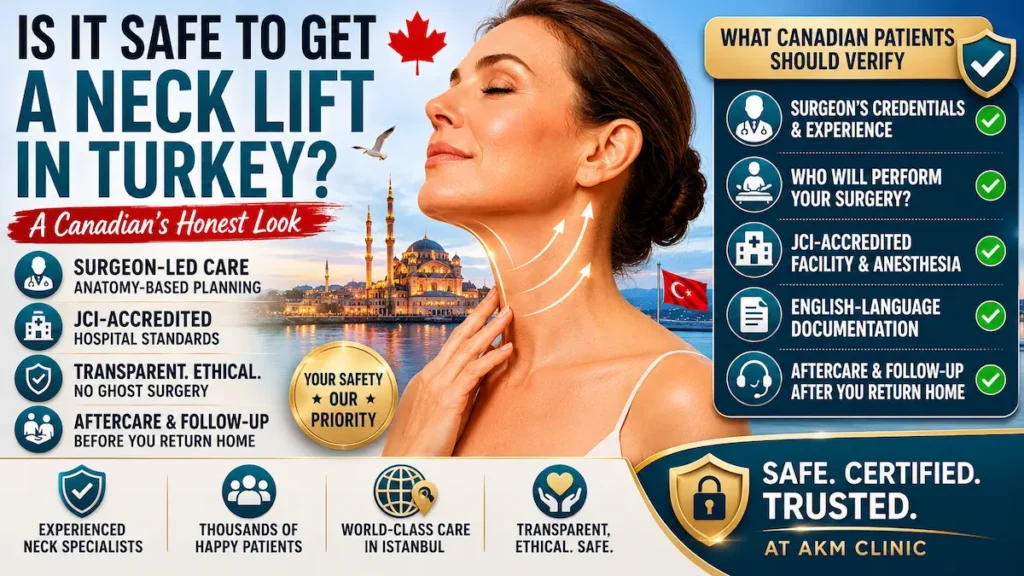
Is It Safe to Get a Neck Lift in Turkey? A Canadian’s Honest Look
Getting a neck lift in Turkey can be safe when the surgeon, facility, anesthesia support, and aftercare system meet the standards you would expect from regulated surgical care. It becomes risky when patients choose based only on price or social media photos.
Canadian patients are used to provincial regulation and specialist credentialing. Abroad, the framework is different, so verification matters.
The Turkey Cosmetic Surgery Reality — How AKM Differs
Turkey has highly experienced surgeons and advanced hospital infrastructure. It also has high-volume providers whose marketing can make every clinic look similar online.
At AKM Clinic, neck lift planning is surgeon-led and anatomy-based. We assess platysma banding, submental fat, skin redundancy, jawline support, and lower-face overlap before recommending surgery. For a broader framework, see our safety guide for Canadians considering plastic surgery in Turkey.
Surgeon Sub-Specialization in Neck Anatomy
Neck lift surgery requires knowledge of the platysma, marginal mandibular nerve, fat compartments, cervicomental angle, and scar placement. Ask how the surgeon chooses between mini, standard, deep, and combined neck procedures.
Ghost Surgery in Turkey Facial Procedures
Ghost surgery means the patient believes one surgeon will operate, but another person performs part or all of the procedure without clear consent. Canadian patients should ask for written confirmation of the surgeon of record.
At AKM Clinic, our model is surgeon-led. We provide clear communication before surgery and documentation after surgery. For details, see our ghost surgery in Turkey guide.
EBOPRAS-Certified Surgeon Verification
Canadian patients often compare credentials to RCPSC because that is the specialist framework they know. EBOPRAS is a structured European board-level signal. It is not identical to a Canadian licence, but it helps patients compare formal training systems.
| Credential | What it signals | Why it matters |
|---|---|---|
| EBOPRAS | European board-level surgical certification | Supports formal training verification |
| RCPSC | Canadian specialist certification pathway | Reference point Canadian patients recognize |
| ABFPRS | Facial plastic surgery board comparison | Useful for face and neck specialization context |
| JCI-accredited hospital | International facility safety framework | Supports sterile systems and monitoring |
AKM’s JCI-Aligned Standards + Documentation
Our pathway includes pre-operative testing, surgeon-led planning, facility monitoring, post-operative medication instructions, compression guidance, English-language documentation, and final review before travel.
This matters after you return to Canada. Your family physician can review the operative summary if needed.
What Canadian Patients Should Verify Before Booking
- Confirm the surgeon’s name and credentials.
- Ask who performs incisions, platysmaplasty, fat reduction, and closure.
- Request neck lift cases similar to your anatomy.
- Confirm facility accreditation and anesthesia support.
- Ask how follow-up works after you return to Canada.
- Request an English-language discharge summary.
- Check whether travel insurance excludes elective cosmetic complications.
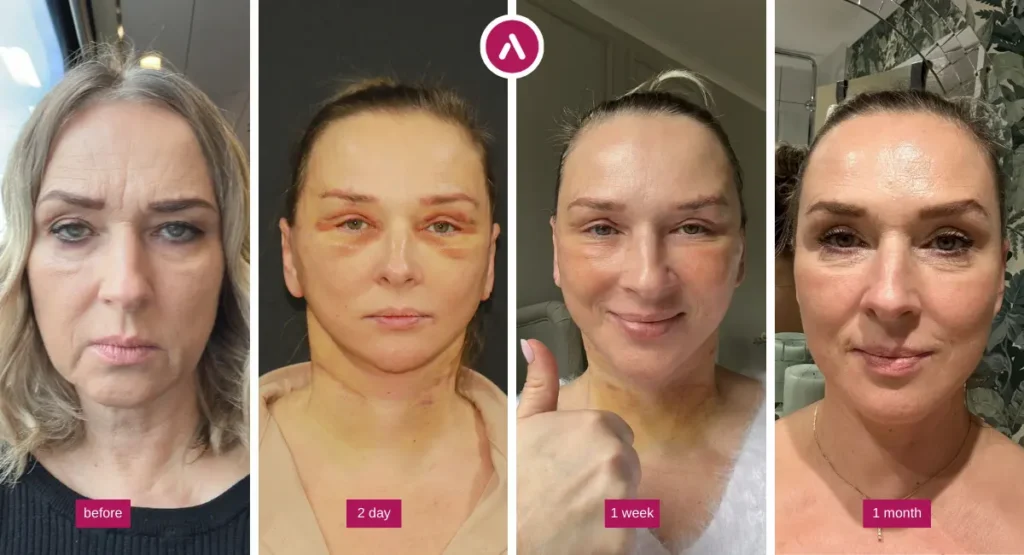
Neck Lift Before and After: Realistic Expectations & Longevity
A neck lift can refine the jawline-neck transition, reduce platysma banding, remove loose skin, and improve submental contour. It cannot stop aging, change bone structure, or replace a facelift when lower-face descent is significant.
Our Natural-First philosophy applies strongly here. A good neck lift should not look tight or theatrical. It should make the neck look smoother and more supported.
Neck Lift Before and After
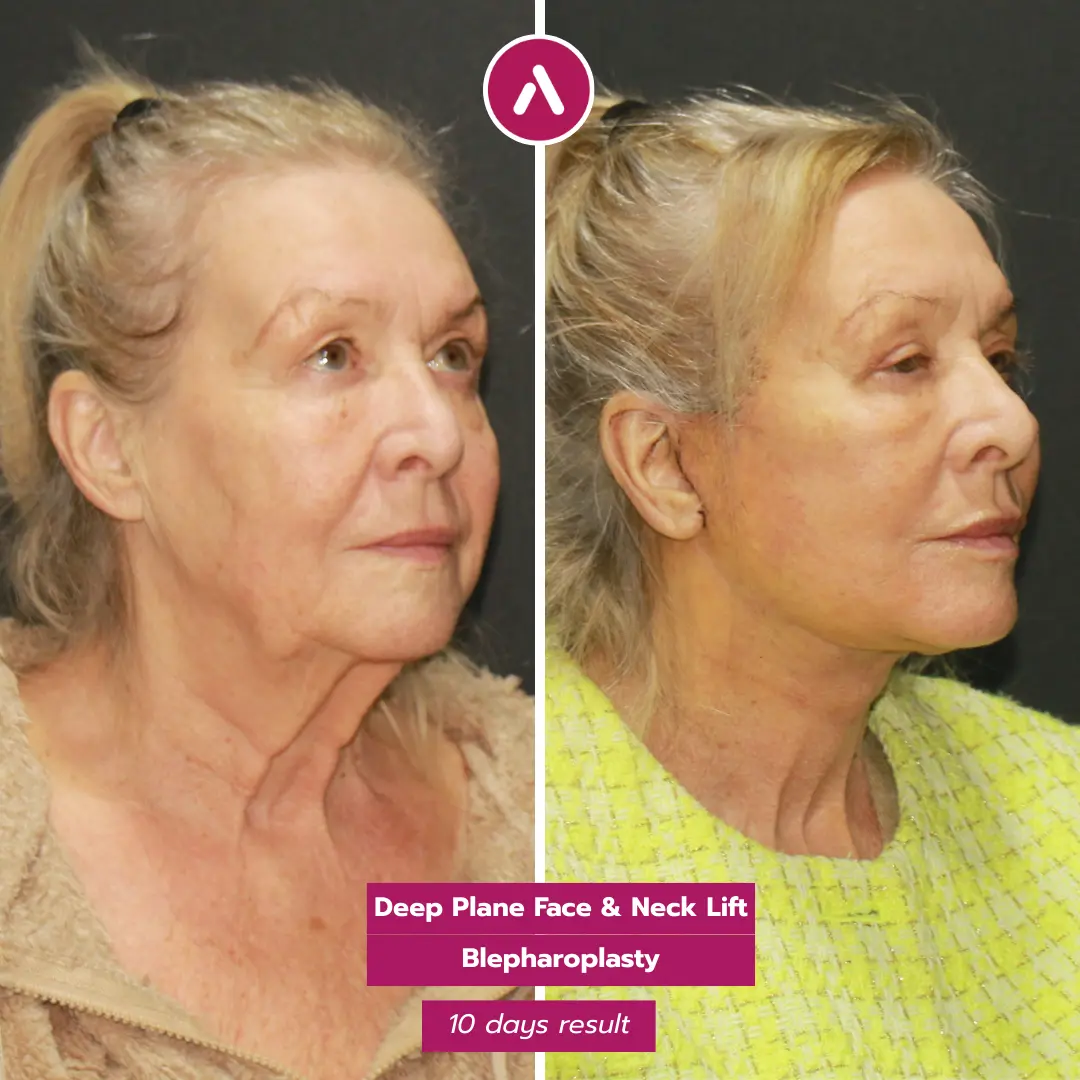
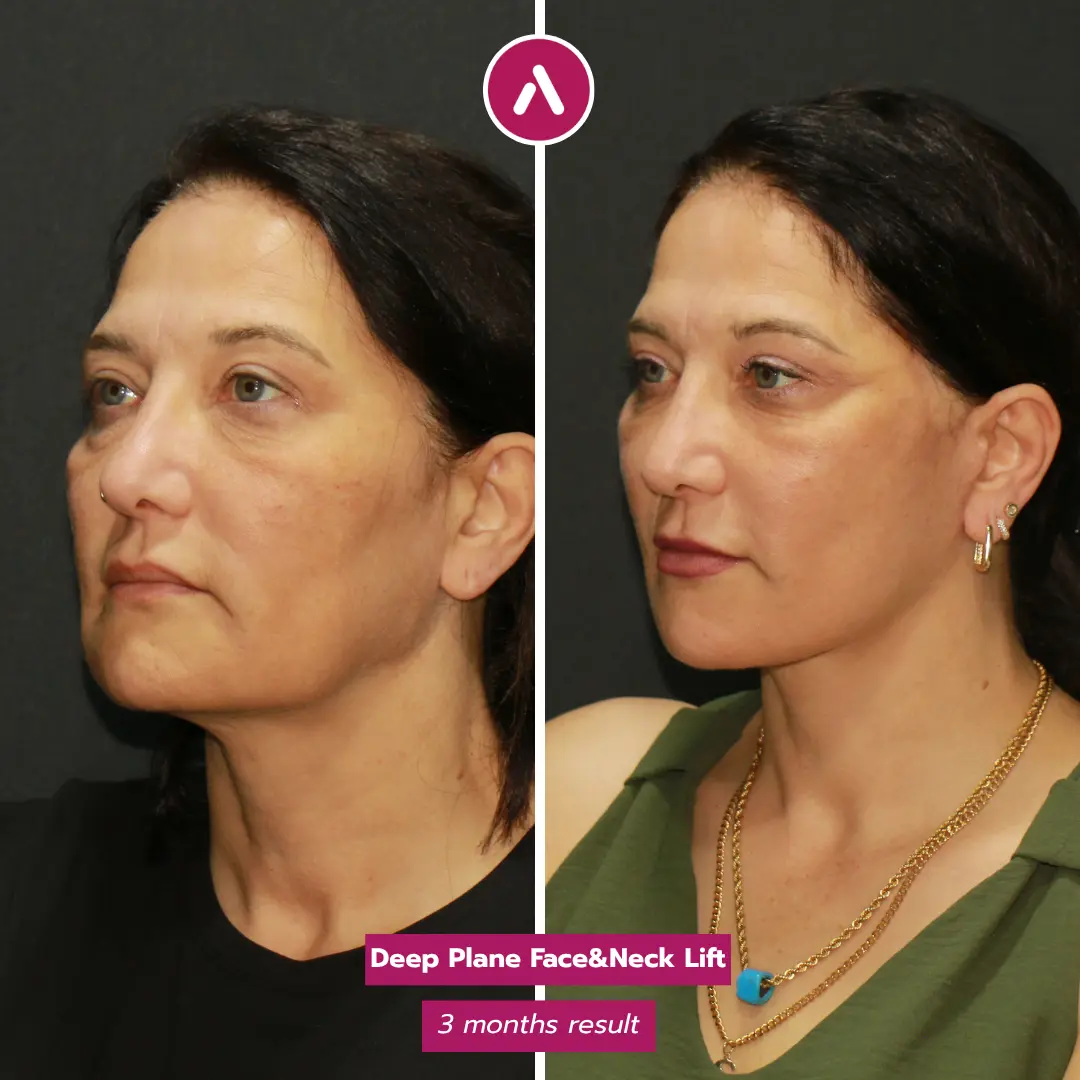
Neck lift before and after results vary because neck aging has different causes. One patient may need skin removal. Another may need platysmaplasty. Another may need conservative fat reduction or a combined face-neck plan.
Realistic improvement includes a cleaner angle under the chin, reduced bands, less loose skin, improved side-neck contour, and better jawline visibility.
Mini Neck Lift Before and After
Mini neck lift results are more subtle than standard neck lift results. They are best for early or moderate concerns, not advanced wattle correction.
A mini procedure is only better when the anatomy is truly mild. Choosing it for a severe neck can lead to undercorrection.
Nefertiti Neck Lift Before and After
Nefertiti Botox before and after photos can look appealing in mild cases. The treatment may soften downward platysma pull and create subtle jawline improvement.
The limitation is depth and duration. It does not remove skin, repair fixed bands, or reduce significant submental fullness.
| 8-year comparison | Frequency | Typical Canadian spend | Structural correction? |
|---|---|---|---|
| Nefertiti Botox | 3-4 treatments yearly | CAD $12,000-$25,000 over 8 years | No |
| PDO threads | Repeat every 6-18 months | Variable | Limited |
| Surgical neck lift | One surgical correction | Higher upfront cost | Yes |
How Long Does a Neck Lift Last?
A well-planned surgical neck lift typically lasts 7-10 years. Some patients maintain visible improvement longer, especially with stable weight, good skin care, and no nicotine use.
The neck continues to age. The goal is a structural reset, not permanent youth.
When Touch-Up or Revision Becomes Needed
Touch-up may be considered for residual skin, persistent banding, scar issues, or asymmetry after healing is complete. Most revision decisions should wait 6-12 months unless there is a clear medical issue.
Scar Maturation Timeline
| Time point | Typical appearance | Guidance |
|---|---|---|
| 2-4 weeks | Pink, firm, sensitive | Avoid sun and follow wound care |
| 3 months | Still visible but softening | Continue scar care |
| 6 months | Flatter and lighter | Most patients feel more comfortable |
| 12 months | Mature scar | Final scar quality can be judged |
Before & After Gallery
Before and after photos help patients understand realistic neck lift outcomes. Focus on patients whose anatomy resembles yours. A mini neck lift case should not be compared to a deep face-neck lift case.
You can review examples in our neck lift before and after gallery.
Neck Lift Cost 2026: Turkey vs Canada
Canadian patients searching how much for a neck lift in Canada usually find private quotes in Toronto, Vancouver, Edmonton, and Calgary well above technique-level pricing in Istanbul. Domestic quotes may separate surgeon fee, anesthesia, facility fee, medication, compression garment, and follow-up visits.
At AKM Clinic, neck lift pricing is CAD-first for Canadian readers: Platysmaplasty is CAD $6,150, Cervicoplasty is CAD $5,600, and Deep Neck Lift is CAD $6,550. Submental neck liposuction, when fat is the only issue, is CAD $3,400.
Toronto private neck lift quotes often sit around CAD $10,000-$12,000, while Vancouver pricing may reach CAD $10,500-$13,000. For the full fee breakdown, see our neck lift cost guide for Canadian patients. If your plan includes hotel stay, VIP transfers, medication, compression garment, and 24/7 coordination, our team will quote that through the comprehensive care programme after medical assessment.
| Location / option | Mini / limited correction | Standard platysmaplasty | Deep neck lift |
|---|---|---|---|
| Toronto private clinics | CAD $8,000-$9,000 | CAD $10,000-$12,000 | CAD $12,000+ |
| Vancouver private clinics | CAD $8,500-$9,500 | CAD $11,500-$13,000 | CAD $13,000+ |
| Edmonton / Calgary | CAD $8,000-$9,000 | CAD $10,000-$12,000 | CAD $12,000+ |
| AKM Clinic Istanbul | CAD $5,600 cervicoplasty | CAD $6,150 platysmaplasty | CAD $6,550 deep neck lift |
How to Find the Best Neck Lift Surgeon in Turkey: A Canadian Patient’s Checklist
The best neck lift surgeon in Turkey for a Canadian patient is not simply the surgeon with the most dramatic photos. Neck lift surgery requires technical judgment, scar planning, platysmaplasty experience, and the restraint to recommend non-surgical care when surgery is not needed.
For Canadian context, the Canadian Society of Plastic Surgeons’ facelift overview is a useful professional reference for plastic surgery standards and education. The Royal College of Physicians and Surgeons of Canada’s certification routes are the national specialist-training framework many Canadians recognize.
EBOPRAS Certification — The European Equivalent to RCPSC
Canadian patients often understand RCPSC as the gold-standard specialist pathway. In Europe, EBOPRAS certification is one structured signal that a surgeon has completed formal plastic surgery training and board-level evaluation.
This does not mean every international credential is identical to a Canadian licence. It means you should compare structured training systems rather than marketing titles. The Royal College provides the Canadian reference point. EBOPRAS provides a European board-level comparison point.
For a deeper credential framework, review our plastic surgeon board certification guide.
Facial Plastic Surgery Sub-Specialization
Neck lift surgery sits at the intersection of facial aesthetics, muscle anatomy, nerve safety, scar design, and lower-face balance. Sub-specialization matters.
The American Board of Facial Plastic and Reconstructive Surgery is a useful North American comparison reference because it focuses on facial plastic and reconstructive surgery qualifications.
Multi-Variant Capability Verification
A strong neck lift surgeon should offer more than one technique. Your neck may need a mini neck lift, standard platysmaplasty, deep neck lift, cervicoplasty, submental liposuction, or a combined plan.
If every patient is offered the same operation, that is not tailored surgical planning. It is a template.
Honest Non-Surgical Discussion Capability
The surgeon should be willing to say when surgery is not necessary. Ask whether Botox, threads, Morpheus8, or liposuction would be enough for your anatomy.
A trustworthy answer explains why or why not.
Real Patient Reviews + Before/After Documentation
Before-and-after photos should show patients with anatomy similar to yours. Look for front, side, and three-quarter views, plus clear separation between neck-only and face-neck cases.
Patient reviews also matter. AKM Clinic maintains verified international patient feedback, including Canadian patients such as Lisa, Jammal, Ava, and Tina. You can review broader patient experience through our professional plastic surgery reviews.
Aftercare Continuity from Istanbul to Canada
Aftercare is one of the main concerns Canadian patients raise about surgery abroad. Our follow-up structure includes in-person review before you fly home and virtual check-ins at 1, 3, 6, and 12 months.
Ask any clinic who answers questions after you fly home, how quickly you can send photos, and whether you receive an English-language discharge summary.
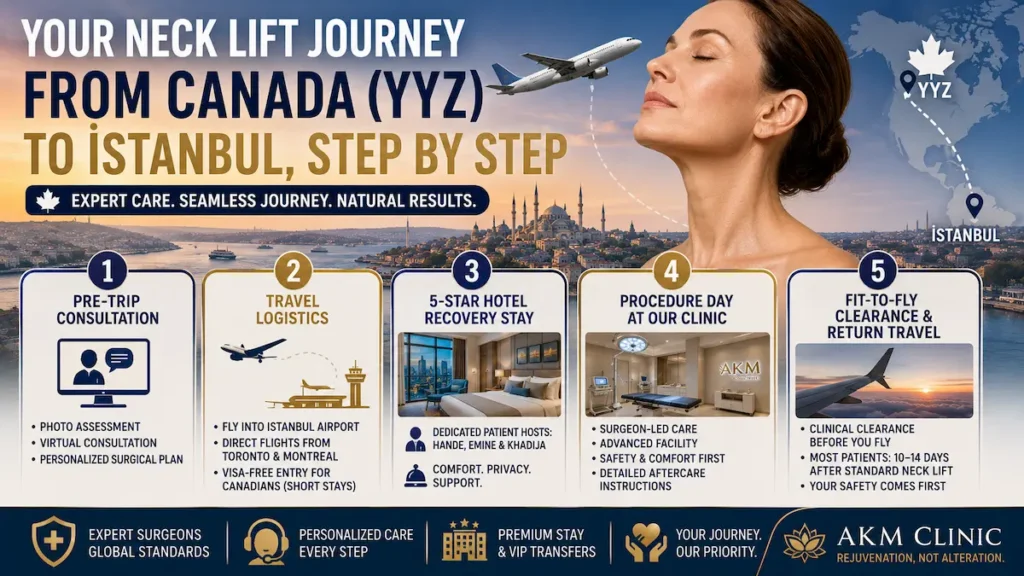
Your Neck Lift Journey from Canada: From YYZ to Istanbul, Step by Step
A neck lift in Istanbul requires medical planning and travel planning. We organize your care so the medical plan, arrival logistics, procedure day, recovery checks, and return travel fit together. You manage your international flight. Our team manages the Istanbul clinical pathway, hotel coordination, VIP transfers, and day-to-day support.
For a full logistics overview, see our Canadian patient journey guide.
Pre-Trip Consultation
Your process begins with photo assessment and a virtual consultation. We review front, side, oblique, chin-down, and neck-extension photos to assess skin redundancy, platysma bands, jawline support, and submental fullness.
We then recommend platysmaplasty, cervicoplasty, deep neck lift, submental liposuction, a combined plan, or non-surgical care if appropriate.
Travel Logistics
Most Canadian patients fly into Istanbul Airport. Toronto and Montreal often have direct options, while Vancouver, Calgary, Edmonton, Ottawa, and Halifax may require a connection depending on season and airline schedules. Always check current schedules before booking.
Canadian passport holders can usually enter Türkiye visa-free for short stays, but passport validity and entry rules should be checked before travel.
5-Star Hotel Recovery Stay
Recovery requires quiet, privacy, and support. Our hotel pathway uses The Point Barbaros in the Levent district, selected for international patient recovery needs.
Your patient hosts — Hande, Emine, and Khadija — help coordinate appointments, transfers, and practical recovery needs. You can review details through our hotels and VIP transfers guide.
Procedure Day at Our Istanbul Clinic
On procedure day, we confirm consent, review the surgical plan, perform markings, and complete final checks before anesthesia. For facility context, see our Istanbul clinic overview.
After surgery, you receive instructions for medication, garment use, sleeping position, wound care, and warning signs.
Fit-to-Fly Clearance + Return Travel
Fit-to-fly clearance is based on clinical recovery, not your preferred flight date. We review incision healing, swelling, drain status, mobility, medication needs, and general comfort.
Most patients should allow roughly 10-14 days before flying after a standard neck lift. A mini neck lift may recover faster. A deep or combined procedure may need more time.
Frequently Asked Questions (FAQ):
These are the questions Canadian patients most often ask before choosing a neck lift in Turkey. The answers below are general educational guidance, not a substitute for a personal surgical assessment. Your final recommendation depends on your neck anatomy, medical history, anesthesia suitability, travel plans, and whether your concern is best treated with platysmaplasty, submental liposuction, a combined face-neck procedure, or a non-surgical option.
How long does neck lift surgery take?
A standard neck lift usually takes about 2-3 hours. A deep neck lift or combined face-neck lift may take 3-4 hours or longer.
Will I have visible scars after neck lift?
Scars are placed under the chin and, when needed, behind the ears. They may look pink or firm early, then soften over months. No surgical neck lift is truly scarless.
How long does a neck lift last compared to Nefertiti Botox?
A surgical neck lift typically lasts 7-10 years. Nefertiti Botox usually lasts 3-4 months and does not remove loose skin or repair fixed platysma bands.
When can I return to work and exercise?
Many patients return to desk-based work after 2-3 weeks. Exercise usually returns gradually between weeks 4-6 after clinical clearance.
Does OHIP, MSP, AHCIP, or RAMQ cover neck lift surgery?
Provincial health plans generally do not cover cosmetic neck lift surgery. Coverage may exist only in rare reconstructive or medically necessary situations.
How much does a neck lift cost in Toronto or Vancouver vs Istanbul?
Toronto private neck lift pricing often sits around CAD $10,000-$12,000, while Vancouver may reach CAD $11,500-$13,000. At AKM Clinic, platysmaplasty is CAD $6,150, and deep neck lift is CAD $6,550.
Does Canadian travel insurance cover complications from elective neck lift in Turkey?
Many Canadian travel insurance policies exclude complications related to elective cosmetic surgery. Read your policy carefully and ask the insurer specific questions before travel.
At AKM Clinic, we provide complimentary complication insurance for all patients as part of our commitment to safer international surgical care. Your patient coordinator will explain what this coverage includes, how it works, and which situations may require additional local medical support after you return to Canada.
Is Nefertiti Botox a real alternative or just marketing?
It is real for selected mild cases. It can soften dynamic platysma activity, but it is not a substitute for surgery when loose skin, fixed bands, or a wattle are present.
What is the difference between mini neck lift, standard neck lift, and deep neck lift?
A mini neck lift treats early laxity. A standard neck lift addresses skin, platysma, and sometimes fat. A deep neck lift addresses deeper fullness and contour in selected patients.
Can a neck lift fix my double chin alone, or do I need liposuction too?
If the double chin is mainly fat and the skin is firm, liposuction may be enough. If fat appears with loose skin or banding, neck lift with conservative liposuction may be better.
What if my neck lift goes wrong?
Some issues improve as swelling settles. Others may need scar care, steroid treatment, or revision after 6-12 months. Prevention starts with correct surgeon selection and realistic planning.
Can I combine neck lift with mini facelift or blepharoplasty in one trip?
Yes, selected patients can combine procedures. The decision depends on anatomy, health status, procedure length, anesthesia plan, and recovery timing.
Medical disclaimer: This page is for educational purposes only and does not replace medical advice from a qualified physician. Surgical results, risks, recovery timelines, and candidacy vary by patient. Final recommendations require a direct medical assessment.