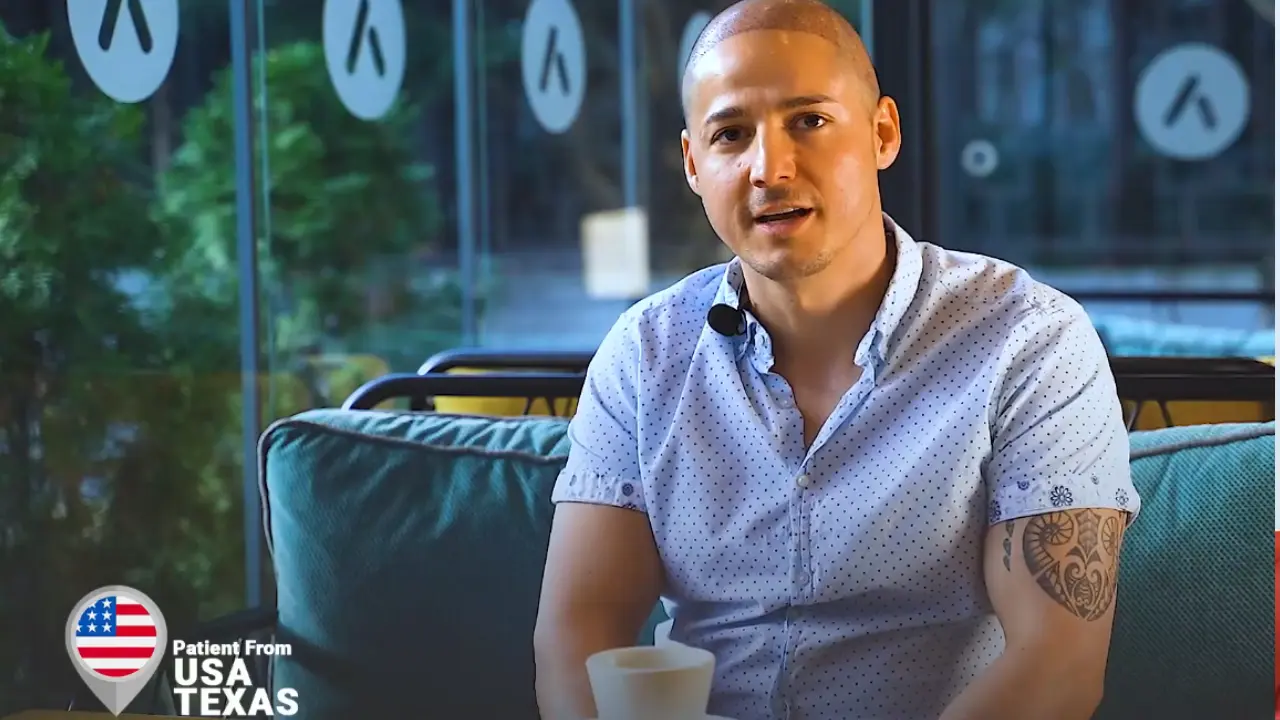





Canadian men and women researching FUE hair transplants often face the same pattern: Toronto private clinics quote high per-graft pricing, many local providers offer only one technique, and patients are left comparing FUE, DHI, Sapphire FUE, and older FUT strip methods without a clear decision framework. At AKM Clinic in Istanbul, we help Canadian patients evaluate the technique that fits their donor area, hair loss stage, and long-term density goals.
This guide explains how FUE actually works, when DHI or Sapphire FUE may be a better match, what recovery looks like before flying back to Canada, and how our surgeon-led approach differs from high-volume technician-only hair transplant centres. The goal is simple: help you make a careful, evidence-based decision before travelling for treatment.
Table of Contents
What Is an FUE Hair Transplant? (Follicular Unit Extraction Explained)
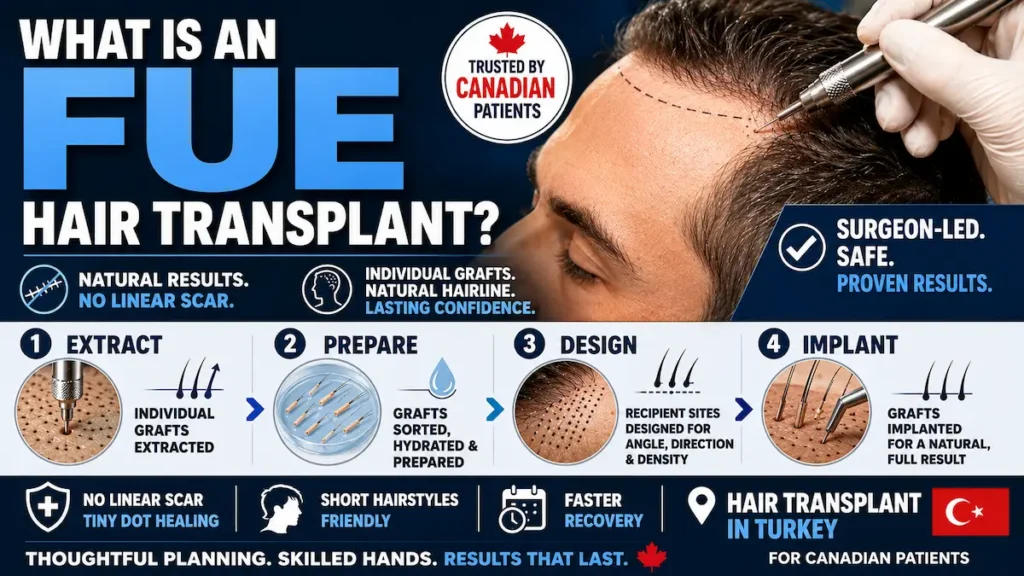
FUE, or Follicular Unit Extraction, is a modern hair transplant technique that uses a 0.7–1.0 mm micro-punch to individually extract follicular grafts from the donor area. These grafts are then manually implanted into surgeon-opened recipient sites. FUE leaves no linear scar, unlike older FUT strip methods.
For Canadian patients, FUE is often the first technique they encounter while researching hair restoration because it is widely offered in Toronto, Vancouver, Montreal, Calgary, and Istanbul. Yet “FUE” is not a single, identical procedure everywhere. The result depends on donor mapping, punch size, graft handling, recipient site angle, implantation density, and whether the surgeon or a technician controls the critical steps.
At AKM Clinic, we treat FUE as a surgical planning process, not a graft-count transaction. Our team assesses your donor area, hairline proportions, facial structure, future hair loss risk, and styling goals before recommending FUE, DHI, Sapphire FUE, or a combined approach. This is especially important for younger Canadian men with progressive thinning, where aggressive harvesting can create problems years later.
FUE is part of our broader hair transplant in Turkey programme for Canadian patients. This parent guide compares all major hair restoration techniques, while this page focuses specifically on FUE mechanics, candidacy, recovery, cost, and safety.
How Follicular Unit Extraction Works
Hair naturally grows in follicular units. A follicular unit may contain one, two, three, or sometimes four hairs. During FUE, we remove these natural units one by one from the donor area, usually the back and sides of the scalp where hair is genetically more resistant to pattern baldness.
The extraction step uses a small circular punch. The punch separates each follicular unit from the surrounding tissue while preserving the root structure. Once removed, grafts are sorted, hydrated, and prepared for implantation. Single-hair grafts are usually reserved for the frontal hairline because they create a softer, more natural edge. Multi-hair grafts are placed behind the hairline or in the crown to build density.
The recipient area is then designed with careful attention to angle, direction, and spacing. This step matters. A natural-looking FUE hair transplant is not only about the number of grafts. It is about placing each graft so it grows in harmony with your existing hair pattern.
Our philosophy is density with restraint. We never treat the donor area as unlimited. A natural result must look appropriate now and still make sense if the patient continues to lose native hair over the next decade.
FUE vs Older Strip Method (FUT)
Before FUE became common, many hair transplants used FUT, or Follicular Unit Transplantation. FUT removes a strip of scalp from the donor area, then divides that strip into grafts under magnification. FUT can still be useful in selected cases, but it leaves a linear scar across the back of the scalp.
FUE avoids that long incision. Instead, it creates small circular extraction points that heal as tiny dot-like marks. For patients who like shorter hairstyles, this is one of the main reasons FUE became the preferred modern technique. It also avoids sutures in the donor area, which can make early recovery more comfortable.
The trade-off is that FUE requires precise extraction discipline. If a clinic removes too many grafts or harvests them unevenly, the donor area can look thin or moth-eaten. This is one of the biggest risks in high-volume “hair mill” environments. A responsible FUE plan protects tomorrow’s donor area, not just today’s graft number.
Brief History of Hair Transplant Evolution
Hair transplantation has changed dramatically over the past several decades. Early “hair plug” methods often produced obvious, doll-like clusters. FUT improved graft quality but left a linear scar. FUE then changed donor-area healing by allowing surgeons to extract individual follicular units without removing a strip of scalp.
Modern FUE also led to related techniques. DHI uses a Choi implanter pen to place grafts directly, while Sapphire FUE uses sapphire blades to open refined recipient channels. Each method has a role. FUE remains the reliable foundation because it combines individual graft extraction, flexible hairline design, and strong long-term donor-area preservation when performed carefully.
For Canadian patients comparing FUE hair transplant Toronto options with FUE hair transplant Turkey options, the central question is not only price. It is whether the clinic offers a thoughtful technique match, transparent graft planning, and surgeon-led oversight throughout the procedure.
Benefits of FUE Hair Transplant
FUE hair transplant is popular because it balances natural-looking restoration with a donor-area healing profile that suits modern lifestyles. Many Canadian patients want to restore their hairline, crown, or temples without a long visible scar or a recovery period that forces them away from work for weeks. FUE supports that goal when the donor area is healthy and the graft plan is conservative.
The biggest benefit is control. Because each follicular unit is extracted individually, our surgical team can select grafts according to hair calibre, root strength, and the role each graft will play in the final design. This precision matters most at the frontal hairline, where even small errors in angle or graft size can make the result look unnatural.
No Linear Donor Scar
Older FUT strip surgery leaves a line-shaped scar across the back of the scalp. FUE avoids that incision by using small circular extraction points. These heal as tiny dot-like marks that are usually difficult to notice once the surrounding hair grows back.
This is especially valuable for Canadian men who wear shorter haircuts or fade styles. A well-planned FUE procedure allows more styling flexibility than FUT, although no surgical technique is completely scar-free. The quality of the donor-area result depends on punch size, spacing, extraction pattern, skin healing, and how carefully the donor reserve is protected.
Faster Recovery Than FUT
FUE recovery is usually more comfortable than FUT because there is no long incision and no donor-area sutures. Most patients can walk the same day, return to desk work within several days, and resume light daily activity once swelling and tenderness settle.
The recipient area still needs careful aftercare. Scabs, redness, and mild swelling are expected. The first 10 days are the most delicate period because the grafts are stabilizing in their new positions. We give every patient a written washing protocol and review it before they return to Canada.
Flexibility for Shorter Hairstyles
FUE gives patients more freedom to keep their hair shorter after recovery. This does not mean the donor area can be shaved to the skin without any visible change. It means that, compared with FUT, there is no long line scar that becomes obvious when the hair is cut short.
For patients from Toronto, Montreal, Calgary, or Vancouver who want a discreet return to work, this matters. Donor healing is still visible in the early days. By the second to fourth week, most patients can camouflage the donor area with surrounding hair, depending on their baseline density and haircut.
Permanent Hair Restoration
FUE moves hair follicles from areas that are more resistant to androgen-related hair loss. Once these follicles survive the transplant process, they usually continue to grow in the recipient area for the long term. This is why FUE can create a lasting improvement in hairline shape and crown coverage.
Permanent does not mean the rest of your native hair will stop thinning. That is why we plan for the future. A dense, low teenage hairline may look appealing in the short term, but it can become difficult to maintain if hair loss progresses. Our Natural-First approach applies to hair restoration too: the result should look age-appropriate, balanced, and believable.
Am I a Good Candidate for FUE Hair Transplant?
The best FUE candidates have stable or predictable hair loss, a strong donor area, realistic expectations, and enough scalp elasticity for safe extraction. Age alone does not decide candidacy. A 28-year-old with aggressive early hair loss may need a more cautious plan than a 45-year-old with a stable Norwood pattern.
During virtual consultation, we ask Canadian patients to submit clear photos from the front, sides, crown, donor area, and top view. These images help us estimate hair loss stage, donor density, hair calibre, scalp contrast, and likely graft range. Canadian patients who want to understand broader hair-loss education can also review the Canadian Hair Loss Council as a Canada-based professional resource.
Norwood Staging Requirements
The Norwood scale describes male pattern hair loss from early recession to advanced thinning. FUE can help many stages, but the goal changes at each level. Early-stage patients often need hairline refinement, while advanced-stage patients may need crown coverage, frontal framing, or a staged long-term plan.
| Norwood Stage | Typical Pattern | Approximate Graft Range | FUE Candidacy Note |
|---|---|---|---|
| Stage 2 | Mild temple recession | 800–1,500 grafts | Often suitable if hair loss is stable. |
| Stage 3 | Clear frontal recession | 1,500–2,500 grafts | Strong FUE candidate when donor density is healthy. |
| Stage 4 | Frontal loss plus early crown thinning | 2,500–3,500 grafts | Requires priority planning between hairline and crown. |
| Stage 5 | Advanced frontal and crown loss | 3,500–4,500 grafts | Often suitable, but donor preservation becomes critical. |
| Stage 6–7 | Extensive scalp hair loss | 4,000+ grafts, often staged | May require conservative coverage goals or multiple sessions. |
Donor Area Density Assessment
The donor area is the limiting factor in every FUE plan. A patient may want 5,000 grafts, but the scalp may only allow a safe extraction of 3,000 to 4,000 grafts without visible thinning. Ethical planning protects the donor area first.
We assess donor density, hair shaft thickness, curl, colour contrast, and previous surgery history. Coarse, wavy hair often gives better coverage than fine, straight hair at the same graft count. Patients with depleted donor areas from previous procedures may need a revision strategy rather than a standard FUE session.
Female Pattern Hair Loss: When FUE for Women Works
FUE can work for women, but female candidacy is more selective. Many women have diffuse thinning rather than a stable donor-recipient pattern. If the donor area is also thinning, transplanting those follicles may not create a reliable long-term result.
Women with traction alopecia, hairline recession, or localized thinning may be stronger candidates. In these cases, we may recommend FUE, DHI, or an unshaven approach depending on hairstyle and density goals. For a deeper gender-specific guide, see our hair transplant for women in Turkey page.
Disqualifying Conditions
FUE is not the right choice for everyone. Active alopecia areata, scarring alopecia, uncontrolled scalp inflammation, poor donor density, unrealistic density expectations, and certain medical conditions may make surgery unsafe or ineffective.
We also proceed cautiously with very young patients whose hair loss is changing quickly. A transplant should not chase every new thinning area. It should create a stable plan that can age well. When medication, observation, or staged surgery is the safer path, we say so during consultation.
FUE vs DHI vs Sapphire FUE vs FUT: Which Technique Is Right?
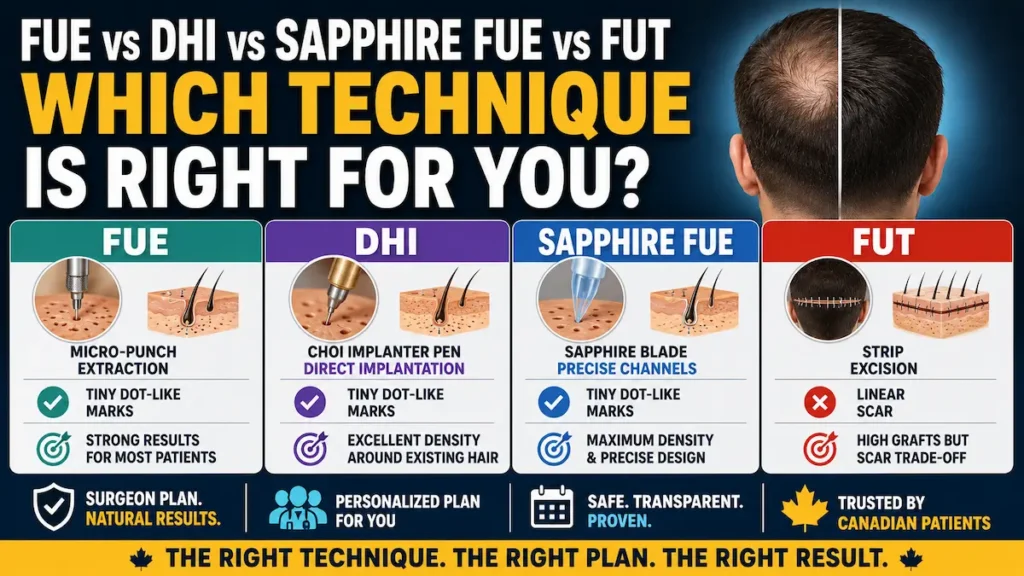
FUE is often the best-known modern hair transplant method, but it is not the only option. Canadian patients comparing FUE hair transplant Turkey options usually encounter four terms: FUE, DHI, Sapphire FUE, and FUT. These are not marketing labels. They describe different extraction, incision, and implantation methods.
The right technique depends on your donor area, hair calibre, hair loss stage, target density, hairstyle, and budget. At AKM Clinic, we do not force every patient into one preferred method. We compare the options and recommend the technique that protects the donor area while creating a natural pattern.
FUE: Manual Micro-Punch Extraction + Surgeon-Opened Sites
FUE is the standard modern benchmark for hair restoration. During FUE, we extract individual follicular units using a small micro-punch, then create recipient sites manually before implanting the grafts. This gives the surgeon strong control over angle, direction, and spacing.
This control is the main reason FUE remains widely used. It works well for hairline reconstruction, temple refinement, crown restoration, and many mid-scalp cases. The key skill investment is recipient site creation. If the sites are angled incorrectly, the hair can grow in an unnatural direction, even if the grafts survive.
FUE is not simply “taking grafts and placing them.” The art is in deciding which grafts to take, where to place them, and how to preserve the donor area for the patient’s future hair loss pattern.
DHI: Choi Implanter Pen Direct Implantation
DHI uses a Choi implanter pen to place grafts directly into the recipient area without creating all recipient channels in advance. This can be useful when density control is a priority, especially around existing hair. It may also help selected unshaven cases where discretion matters.
DHI is not automatically better than FUE. It is a different implantation system. Some patients benefit from the Choi Pen approach; others do better with classic FUE because manual recipient site creation gives the surgeon more flexibility across larger areas. For a deeper technique comparison, see our DHI hair transplant in Turkey guide.
Sapphire FUE: Sapphire Blade Recipient Sites
Sapphire FUE keeps the FUE extraction concept but changes the recipient site tool. Instead of a standard steel blade, the surgeon opens channels using sapphire blades. These blades can create refined micro-incisions, which may support dense packing in selected candidates.
Sapphire FUE may suit patients who need careful channel design, strong density, and a refined frontal zone. It still requires careful donor management. The word “sapphire” does not replace surgical judgement. Patients comparing sapphire FUE hair transplant Turkey options should ask who creates the channels, how graft density is planned, and how the donor area is protected. For details, see our Sapphire FUE hair transplant in Turkey page.
FUT: Why the Strip Method Is Outdated for Most Patients
FUT removes a strip of scalp from the donor area, then divides it into grafts. It can still produce viable grafts, but it creates a linear scar. Many modern patients reject this trade-off because they want shorter hairstyles and a less visible donor footprint.
FUT may still have a role in selected high-graft cases or revision planning, but it is no longer the preferred first-line option for most Canadian patients seeking discreet recovery. FUE, DHI, and Sapphire FUE usually offer a better balance of donor healing, styling flexibility, and natural graft distribution.
| Technique | Tool | Recipient Site Creation | Donor Scar Type | Density Capability | Best Candidate | AKM Offers |
|---|---|---|---|---|---|---|
| FUE | 0.7–1.0 mm micro-punch | Surgeon-opened sites before implantation | Tiny dot-like marks, no linear scar | Strong for hairline, temples, crown, and mid-scalp | Most patients with healthy donor density | Yes |
| DHI | Choi implanter pen | Direct implantation without full pre-made channels | Tiny dot-like extraction marks | Strong for controlled density around existing hair | Patients needing refined implantation or selected unshaven work | Yes |
| Sapphire FUE | Sapphire blade + FUE extraction tools | Sapphire blade channels before implantation | Tiny dot-like extraction marks | Strong for refined micro-incisions and dense packing | Patients seeking precise frontal design and strong density | Yes |
| FUT | Scalpel strip excision | Manual recipient sites after strip dissection | Linear donor scar | Can be high, but with scar trade-off | Selected revision or high-graft cases where scar risk is accepted | No |
No Shave / Unshaven FUE
No shave FUE, sometimes called unshaven FUE, is designed for patients who want a more discreet return to work. Instead of shaving the entire scalp, the donor and recipient planning is adapted around existing hair. This can help professionals who cannot easily take visible downtime.
The limitation is efficiency. Unshaven work can take longer and may not suit very large graft sessions. It is usually better for targeted hairline, temple, or smaller density corrections. During consultation, we assess whether discretion or graft volume should take priority.
Decision Framework: Which Technique for Which Candidate?
Patients often ask whether DHI vs FUE hair transplant results are better. The honest answer is that technique fit matters more than the label. FUE is versatile. DHI can be useful for density near existing hair. Sapphire FUE can help create refined channels. FUT is now mainly a legacy or revision option.
Our broader decision tree is covered in our DHI vs FUE hair transplant guide for Canadian patients. On this FUE page, the key point is that FUE remains a strong foundation when donor density is healthy and the surgeon controls recipient site design.
Robotic FUE Context
Robotic FUE systems can assist with mapping and extraction in selected cases. They may help identify follicular angles and standardize some parts of the process. Technology can be useful, but it does not replace surgical planning.
A robot cannot design an age-appropriate hairline, decide future donor reserve strategy, or judge how density will look against your facial structure. We view technology as a tool. The surgical plan still comes first.
Areas Treated with FUE: Crown, Hairline, Beard, Eyebrow
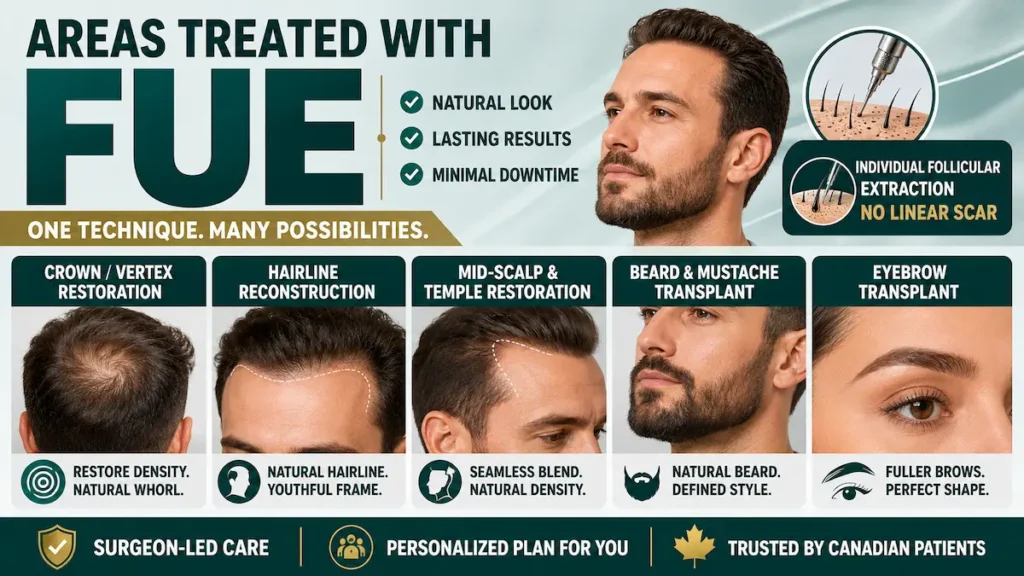
FUE is most often associated with scalp hair restoration, but the same extraction principle can also support beard, moustache, eyebrow, and selected female hair restoration cases. The recipient area changes the design strategy. A crown transplant is not planned like a frontal hairline, and an eyebrow transplant requires a much finer angle than scalp work.
At AKM Clinic, we begin with anatomy, not a fixed graft package. We evaluate where the loss is happening, how much donor reserve is available, and whether the recipient area can support the density the patient wants. This matters for Canadian patients who may be comparing FUE hair transplant near me searches with Istanbul options and trying to understand why one clinic recommends 2,500 grafts while another suggests 4,500.
Crown / Vertex Restoration
The crown, also called the vertex, is one of the most demanding areas to restore because hair grows in a spiral pattern. A natural crown transplant must recreate that rotation. Poor planning can create a flat, plug-like circle that looks obvious under overhead light.
Crown restoration often requires more grafts than patients expect. It can also produce a slower visual improvement than the frontal hairline because the growth direction is more complex and the area is viewed from above. For patients with both frontal and crown thinning, we often prioritize the frontal frame first, then plan the crown based on donor reserve.
Hairline Reconstruction
The hairline is the most visible part of an FUE result. It should never look like a straight drawn line. Natural hairlines have small irregularities, soft transitions, and single-hair grafts at the front. Multi-hair grafts placed too far forward can create the “doll head” look many patients fear.
We design the hairline according to age, face shape, temple recession, donor capacity, and future thinning risk. A 30-year-old Canadian patient should not usually receive an extremely low teenage hairline. It may look dense in the first year, but it can become difficult to maintain if hair loss progresses. For a deeper explanation, see our natural hairline design guide.
Mid-Scalp & Temple Restoration
The mid-scalp connects the frontal zone to the crown. It is often where patients first notice diffuse thinning under bright office lighting or bathroom mirrors. FUE can restore density here, but placement must blend with existing hair so the result does not look patchy as native hair changes.
Temple restoration requires restraint. Overbuilding the temples can feminize or distort the face, especially in male patients. Our Natural-First approach means we restore structure without overcorrecting. The result should look like your own hair pattern improved, not replaced by someone else’s.
Beard & Moustache Transplant via FUE
FUE can also be used for facial hair restoration. In beard and moustache work, graft angle is even more important than density. Beard hair lies close to the skin and changes direction across the cheeks, jawline, chin, and upper lip.
Patients may choose facial hair transplantation to fill patchy areas, define a goatee, improve sideburns, or restore hair after scarring. The design must match the patient’s natural facial hair pattern. For full details on facial hair restoration, see our beard and moustache transplant in Turkey page.
Eyebrow Transplant via FUE
Eyebrow transplantation uses single-hair grafts placed at very shallow angles. The brow has a different growth pattern than the scalp, so the design must account for direction, density, arch, tail shape, and facial symmetry. This is delicate work.
Eyebrow FUE may suit patients with over-plucked brows, scarring, naturally sparse brows, or hair loss from selected medical causes. It is not the same as microblading. A transplant uses living follicles, while microblading places pigment in the skin. For a procedure-specific explanation, see our eyebrow transplant in Turkey guide.
Female FUE: Density Restoration Without Full Shaving
Female FUE requires different planning than male FUE. Many women have diffuse thinning, which can make donor selection more complex. If the donor area is also thinning, a transplant may not create the density improvement the patient expects.
When women are good candidates, FUE can help restore a receding hairline, traction alopecia, localized thinning, or scarring. We may recommend partial shaving, long-hair camouflage, DHI, or staged planning depending on the case. For a full gender-specific framework, see our hair transplant for women in Turkey page.
Combined Procedures: FUE + Eyebrow / Beard / Other Treatments
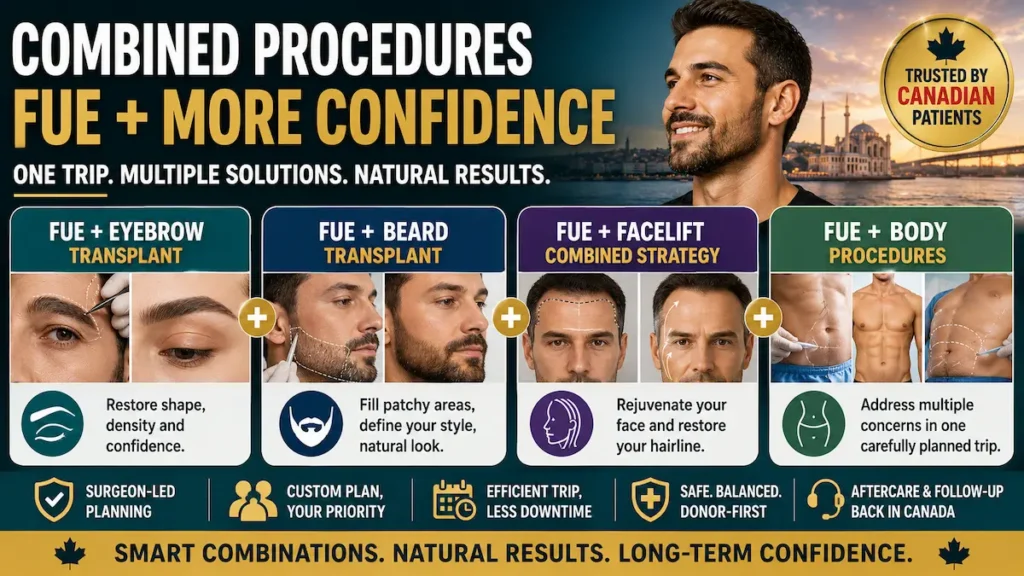
Some Canadian patients use one Istanbul trip to address more than one concern. This can be efficient when the procedures share local anesthesia, short recovery needs, or compatible aftercare instructions. It is not always appropriate. The right combination depends on graft availability, procedure length, and healing safety.
We evaluate combined procedures carefully because the donor area is still finite. Adding eyebrow or beard restoration may be sensible in some cases, but it should not compromise the scalp hairline or crown plan. Priority matters.
FUE + Eyebrow Transplant
FUE and eyebrow transplantation can be combined when the scalp donor area is strong and the eyebrow plan requires a modest number of single-hair grafts. Eyebrow work is delicate because grafts must be placed at a very shallow angle.
This combination may suit patients with sparse brows, over-plucked brows, scarring, or asymmetric eyebrow density. It is not planned like scalp work. The brow arch, tail, density, and direction need separate design.
If you are considering this combination, review our eyebrow transplant in Turkey page. During consultation, we determine whether eyebrow grafts can be safely added without weakening the scalp result.
FUE + Beard Transplant
FUE can also support beard and moustache restoration. This may appeal to patients with patchy facial hair, weak sideburns, uneven jawline growth, or scars in the beard area. Facial hair design must respect natural direction and density.
Combining scalp FUE with beard work increases procedure time and donor demand. We first protect the scalp restoration plan. If the donor area allows, beard grafts can be added in a balanced way.
For more detailed planning, see our beard and moustache transplant in Turkey guide. The same FUE extraction principle applies, but the implantation angles are different.
FUE + Facelift Combined Strategy
Some patients combine hair restoration with facial rejuvenation, especially when hairline recession and facial aging both affect the overall frame of the face. This is more complex than combining scalp and eyebrow work because facelift surgery has different recovery requirements.
Combination planning must account for anesthesia, swelling, incision placement, scalp tension, and the order of procedures. It is not right for every patient. When suitable, it can reduce total travel burden by consolidating care into one carefully managed trip.
For a deeper discussion, see our hair transplant and facelift combination guide. We only recommend this strategy when the surgical plan remains safe and recovery instructions do not conflict.
FUE + Body Procedures
FUE can sometimes be combined with selected body procedures such as liposuction, gynecomastia surgery, or abdominal contouring. These combinations require more caution because body procedures may involve compression garments, different sleeping positions, and longer recovery demands.
We do not combine procedures simply because a patient is already in Istanbul. The medical plan must make sense. If two procedures create conflicting aftercare instructions, staging them is safer.
For patients who are good candidates, a combined plan can reduce total time away from Canada, duplicate travel costs, and repeated recovery periods. The final decision is made after medical review, not by package selection alone.
Anesthesia for FUE Hair Transplant: Local Only
FUE hair transplant is performed under local anesthesia. This is one reason many Canadian patients feel more comfortable with the procedure compared with surgeries that require general anesthesia. You remain awake, breathe on your own, and do not need intubation.
Local anesthesia also supports practical travel planning. Most FUE patients can walk the same day, recover in the hotel, and prepare for return travel after the early graft-stabilization period. The procedure is long, but it is not usually systemically stressful in the same way as a major surgery under general anesthesia.
Why FUE Does Not Require General Anesthesia
FUE works on the skin and soft tissue of the scalp. The donor and recipient areas can be numbed directly, so general anesthesia is not needed for pain control. This keeps the procedure lower intensity from an anesthesia perspective.
Some patients receive mild oral or IV sedation depending on anxiety level and medical suitability. The goal is comfort, not unconsciousness. You should feel pressure or movement at times, but not sharp pain. Our medical team checks comfort throughout the procedure.
Tumescent Local Anesthesia in the Donor Area
Tumescent local anesthesia involves placing numbing fluid into the donor area before extraction. This helps reduce discomfort, creates a firmer working field, and can support more controlled graft removal. It also limits bleeding during micro-punch extraction.
The same principle is used in the recipient area before channel creation and implantation. The numbing effect is monitored throughout the session. If sensation returns in a specific area, the team can add local anesthetic safely within medical limits.
Patient Comfort During a 6–8 Hour Procedure
A typical FUE session can last 6–8 hours, depending on graft number and complexity. Patients are positioned carefully, given breaks when appropriate, and monitored throughout the day. Comfort planning is part of the surgical workflow.
Many Canadian patients bring headphones or use the time to rest. The most challenging part is often duration, not pain. We explain this in advance so the day feels predictable. You are not rushed through the process.
Why “Awake FUE” Is Not a Separate Variant
Some clinics use the phrase “awake FUE” as if it describes a special technique. In reality, FUE is inherently awake because it is normally performed under local anesthesia. The technique difference is not awake versus asleep; it is FUE versus DHI versus Sapphire FUE versus other approaches.
This distinction matters because clear terminology protects patients from marketing confusion. When you compare clinics, ask what technique is being used, who performs the extraction, who creates the recipient sites, and how donor safety is measured. Those answers matter more than the word “awake.”
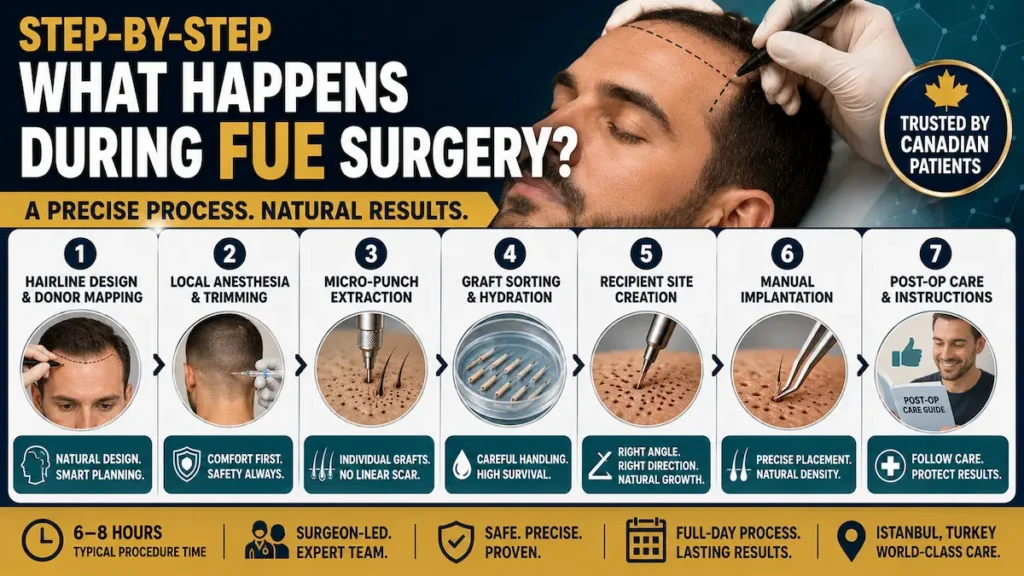
Step-by-Step: What Happens During FUE Surgery?
An FUE hair transplant is a structured surgical day, not a simple cosmetic appointment. Each step affects graft survival, donor-area appearance, and final hair direction. For Canadian patients travelling to Istanbul, knowing the sequence in advance reduces anxiety and helps the procedure day feel predictable.
At AKM Clinic, we confirm your plan in person before surgery. Your donor area, hairline design, graft range, and medical readiness are reviewed again. If your in-person assessment shows that the original plan should be adjusted, we explain why before proceeding.
Pre-Operative Hairline Design + Donor Mapping
The first step is design. We mark the proposed hairline while evaluating forehead height, temple recession, facial proportions, age, and future hair loss risk. A natural hairline should frame the face without looking artificially low or overly dense.
Donor mapping comes next. We assess the back and sides of the scalp to identify where grafts can be safely harvested. The goal is not to take the highest possible number. The goal is to take the right number while preserving the donor area for future needs.
Photos are taken for medical documentation. We also review the planned graft distribution: single-hair grafts for the hairline, stronger multi-hair grafts behind it, and density-building grafts for the mid-scalp or crown when needed.
Donor Area Local Anesthesia + Trimming
Before extraction begins, the donor area is prepared. In most standard FUE cases, the donor zone is trimmed so the surgical team can clearly see follicular angles and spacing. In selected no shave or unshaven FUE cases, the preparation is more limited.
Local anesthesia is then placed into the donor area. You may feel brief stinging or pressure during this stage, but the area becomes numb before extraction begins. We continue checking comfort during the procedure because long sessions require steady monitoring.
The donor area is positioned carefully to reduce strain on the neck and shoulders. This matters during a 6–8 hour procedure. Comfort is part of clinical quality.
Micro-Punch Follicular Unit Extraction
This is the defining step of FUE. Using a small circular micro-punch, the surgical team separates follicular units from the surrounding tissue one by one. Punch size is selected based on hair calibre, curl, skin characteristics, and graft fragility.
Extraction must be balanced across the donor area. Removing too many grafts from one zone can create visible thinning. This is why we avoid the “unlimited grafts” mindset. The donor area is finite, and protecting it is a medical responsibility.
Each graft is handled carefully to reduce transection, which occurs when the follicle is damaged during extraction. Low transection depends on experience, proper punch angle, and respect for natural follicular direction under the skin.
Graft Sorting + Hydration
After extraction, grafts are sorted according to the number of hairs they contain. Single-hair grafts are reserved for the front edge of the hairline. Two-, three-, and four-hair grafts are used behind the hairline or in density zones.
Grafts must stay hydrated while outside the body. Drying, heat, and poor handling can reduce graft survival. We keep grafts in a controlled solution and organize them so implantation follows the planned distribution.
This stage may look quiet from the patient’s perspective, but it is critical. A strong FUE outcome depends on what happens between extraction and implantation. Graft survival is built in these details.
Surgeon-Opened Recipient Site Creation
Recipient site creation is where the final growth pattern is planned. The surgeon opens tiny channels in the recipient area, setting the angle, direction, spacing, and density of each future hair. This step is one of the biggest differences between a natural result and an obvious transplant.
For the hairline, angles are usually more acute and irregular. For the crown, channels must follow the natural swirl. For the mid-scalp, grafts must blend with existing hair. The same grafts can look excellent or unnatural depending on how these sites are created.
Our priority is not maximum density at any cost. It is controlled density that respects the patient’s facial structure, donor reserve, and long-term hair loss pattern.
Manual Implantation into Pre-Made Sites
Once recipient sites are created, grafts are placed manually into the channels. The team follows the design map, using finer grafts at the front and stronger grafts behind them. Placement must be gentle. Crushing or bending a graft can affect survival.
Manual implantation also allows ongoing refinement. If the team identifies a better distribution pattern during placement, the plan can be adjusted within the agreed graft strategy. This is one reason FUE remains highly versatile.
After implantation, the recipient area is reviewed for spacing, direction, and coverage. The donor area is checked as well. You receive immediate post-operative instructions before returning to your hotel.
Procedure Length
Most FUE sessions take 6–8 hours for 3,000–4,500 grafts. Smaller sessions may finish sooner, while complex cases may take longer. The length depends on graft number, donor characteristics, technique, and whether additional areas such as beard or eyebrow restoration are included.
Canadian patients should plan for a full clinic day. You do not need to rush. The safest hair transplant is one performed at the pace the grafts require, not at the pace a schedule demands.
After the procedure, our team reviews sleeping position, swelling management, medication use, washing schedule, and what to avoid during the first 10 days. These instructions are especially important before a long-haul flight back to Canada.
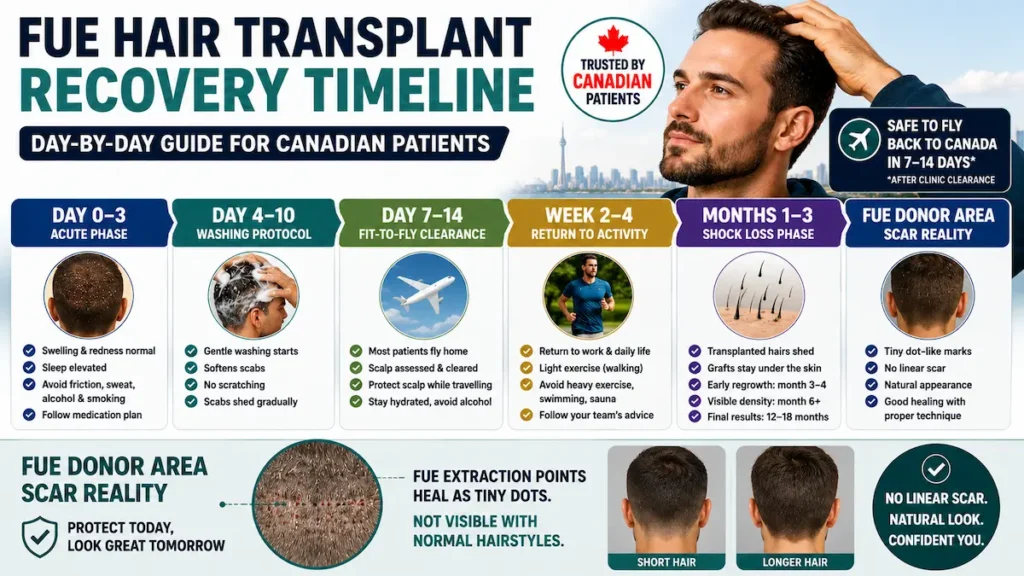
FUE Hair Transplant Recovery Time: Day-by-Day Timeline for Canadian Patients
FUE recovery is usually lighter than recovery from major surgery, but the first 10 days still require discipline. The grafts are newly placed, the donor area is healing, and the scalp must be protected from friction, sweating, scratching, sun exposure, and incorrect washing. Small mistakes can affect graft security.
For Canadian patients, recovery planning also includes travel timing. A long-haul return flight from Istanbul to Toronto, Montreal, Vancouver, Calgary, or Ottawa should happen only after the scalp has passed the early stabilization window and our team has cleared you to fly.
Day 0–3: Acute Phase
The first three days focus on swelling control, graft protection, and donor-area comfort. You may notice redness, tightness, mild oozing, and tenderness. These effects are expected. The recipient area will look dotted, and small scabs will begin to form around the grafts.
Sleeping position matters. We usually ask patients to sleep with the head elevated and avoid rubbing the grafted area against the pillow. You should also avoid bending forward, heavy lifting, alcohol, smoking, and sweating. The goal is simple: keep pressure away from the grafts.
Our team reviews your medication schedule, spray instructions, and warning signs before you leave the clinic. You will also know how to reach your patient coordinator if a question comes up at the hotel.
Day 4–10: Washing Protocol
The washing phase is one of the most important parts of FUE recovery. Washing too aggressively can disturb grafts. Washing too lightly can allow crusts to remain longer than necessary. We give each patient a structured protocol before departure.
In general, washing begins gently, using the recommended lotion or foam to soften scabs before careful rinsing. The scalp should not be scratched. Water pressure should stay low. The goal is to clean the area while allowing scabs to detach gradually.
By day 10, many patients have shed most visible crusting. This is also a common psychological turning point because the scalp begins to look less “post-procedure.” For a more detailed aftercare schedule, see our day-by-day washing hair after transplant guide.
Our HBOT/LLLT Recovery Protocol
We use advanced recovery support for selected patients because graft survival depends on oxygenation, inflammation control, and scalp microcirculation. Hyperbaric Oxygen Therapy, or HBOT, increases oxygen delivery to healing tissues. This may help reduce edema and support early tissue repair.
Low-Level Laser Therapy, or LLLT, uses 650 nm medical laser diodes to stimulate cellular activity without heat. In hair restoration, the goal is to support scalp microcirculation and create a healthier environment for graft recovery. It does not replace surgical technique. It supports healing biology.
For Canadian patients, this recovery protocol also matters because of the return flight. Long flights can increase swelling and fatigue. We use HBOT and LLLT as part of a broader plan that includes hydration guidance, movement advice, medication review, and fit-to-fly clearance. You can learn more on our technology and standards page.
Day 7–14: Fit-to-Fly Clearance for Canada
Most FUE patients can return to Canada within the day 7–14 window, depending on graft stability, swelling, donor healing, and the complexity of the session. Some patients are cleared earlier; others benefit from staying longer. We do not base flight timing on convenience alone.
Before you fly, we assess the donor area, recipient area, swelling, medication needs, and general comfort. We also review how to protect your scalp during the airport process. Avoid tight hats unless we approve them. Avoid placing luggage or travel pillows in a way that rubs the grafted zone.
During the flight, walk periodically, drink water, and avoid alcohol. Cabin pressure is not usually the main issue after FUE. The bigger concerns are swelling, dehydration, and accidental friction. Our flight safety after surgery guide explains this in more detail for Canadian travellers.
Week 2–4: Return to Exercise and Activity
By the second week, many patients can return to desk work and normal daily routines. Light walking is usually encouraged. Heavy exercise, weight training, swimming, sauna, and contact sports should wait until the scalp has healed further and your team gives clearance.
Sweating can irritate the recipient area early on. It can also make patients more likely to rub or scratch the scalp. This is why we prefer a gradual return to activity rather than an immediate return to gym intensity.
If you work in construction, emergency services, health care, food service, or any job requiring a helmet, cap, or physical exertion, tell us during consultation. Your return-to-work plan may need to be more conservative than a desk-based schedule.
Months 1–3: Shock Loss Phase
Shock loss is one of the most misunderstood parts of FUE recovery. Transplanted hairs often shed in the first few weeks. This does not usually mean the grafts have failed. In many cases, the follicle remains under the skin while the visible hair shaft falls.
For some patients, this phase feels discouraging because the scalp may look thinner before it improves. We discuss this before surgery so it does not come as a surprise. Growth is not immediate. Hair restoration is a 12-month process.
Early regrowth often begins around month 3 or 4. Density becomes more visible around month 6. Final texture, calibre, and coverage continue improving toward months 12–18. For a full visual breakdown, see our hair transplant growth timeline.
FUE Donor Area Scar Reality
FUE does not create a linear scar, but it does create small extraction points. These usually heal as tiny dot-like marks scattered through the donor area. With appropriate spacing and healthy donor density, they are difficult to notice once the surrounding hair grows back.
Visible donor scarring is more likely when too many grafts are removed, extraction is concentrated in one zone, or the patient heals with poor pigmentation contrast. Over-harvesting is preventable. It starts with respecting the donor area as a limited resource.
Our FUE planning avoids the “unlimited grafts” mindset because long-term donor appearance matters. A good transplant should improve the front without damaging the back. Both areas must age well together.
Safety & Risks of FUE Hair Transplant
FUE hair transplant is less invasive than many surgical procedures, but it is still a medical procedure. It involves anesthesia, skin punctures, graft handling, bleeding control, infection prevention, and long-term donor-area planning. Canadian patients should evaluate risk clearly rather than treating FUE as a simple beauty service.
Most side effects are temporary when the procedure is planned and performed correctly. The larger risks usually come from poor candidate selection, excessive graft extraction, weak hygiene standards, or clinics that delegate critical surgical steps to unqualified staff. The American Society of Plastic Surgeons hair transplantation resource also emphasizes surgeon selection, accredited facilities, and credential standards as part of patient safety.
Common Side Effects
Common short-term effects include redness, swelling, mild bleeding, scalp tightness, itching, tenderness, and temporary numbness in the donor or recipient areas. These usually improve during the first days to weeks. Itching can be frustrating, but scratching the grafted area too early can disrupt healing.
Some patients develop forehead swelling that moves downward before resolving. This can look alarming, but it is often part of normal fluid movement after scalp work. We explain the expected swelling pattern before you leave the clinic so you know what is normal and what needs attention.
Shock Loss
Shock loss can affect transplanted hairs and sometimes nearby native hairs. It usually appears several weeks after surgery. Patients may feel that the transplant is “going backward,” but in many cases the follicle is simply entering a resting phase before new growth begins.
This stage requires patience. New growth commonly starts around month 3 or 4, then improves steadily. By month 6, most patients see meaningful change. Final FUE hair transplant results usually continue maturing for 12–18 months.
Shock loss is not failure. We prepare patients for it because the emotional dip is easier to manage when you know the growth cycle before it happens.
Folliculitis, Infection, Necrosis
Folliculitis is inflammation around hair follicles. It may appear as small bumps or pimples during regrowth. Mild cases are usually manageable with guidance, but persistent redness, pain, pus, fever, or spreading warmth should be reported quickly.
Infection is uncommon when sterile protocols are followed, but it is possible. Necrosis, or tissue compromise, is rare and usually linked to overly dense placement, poor blood supply, smoking, or unsafe technique. This is one reason we avoid aggressive density claims that ignore scalp circulation.
Our clinical protocols emphasize sterile handling, controlled graft density, careful anesthesia dosing, and post-operative monitoring. Safety depends on many small decisions. None should be rushed.
Donor Area Over-Harvesting
Over-harvesting is one of the most important FUE risks. It happens when too many grafts are removed from the donor area or when extraction is concentrated unevenly. The result can be visible thinning, patchiness, or a depleted donor reserve for future hair loss.
This risk is often connected to “maximum graft” marketing. More grafts are not always better. A 4,500-graft session may be appropriate for one patient and unsafe for another. Donor density, hair calibre, scalp contrast, and future hair loss pattern all matter.
We do not promise unlimited grafts. That phrase should concern patients. The donor area is limited, and protecting it is part of ethical FUE planning.
How AKM’s Sterile Protocol Reduces Risk
We follow a zero-compromise hygiene approach across surgical planning, instrument handling, graft storage, and post-operative care. Our hospital partner is JCI-accredited, and our sterilization protocols are built around international safety expectations. This matters for Canadian patients who are used to regulated clinical environments.
Risk reduction also depends on aftercare. We provide written instructions, medication guidance, washing steps, warning signs, and follow-up communication. You are not expected to manage recovery alone after returning to Canada.
Our long-term virtual follow-up programme includes check-ins at 1, 3, 6, and 12 months. That structure helps us monitor growth, answer concerns, and identify issues early.
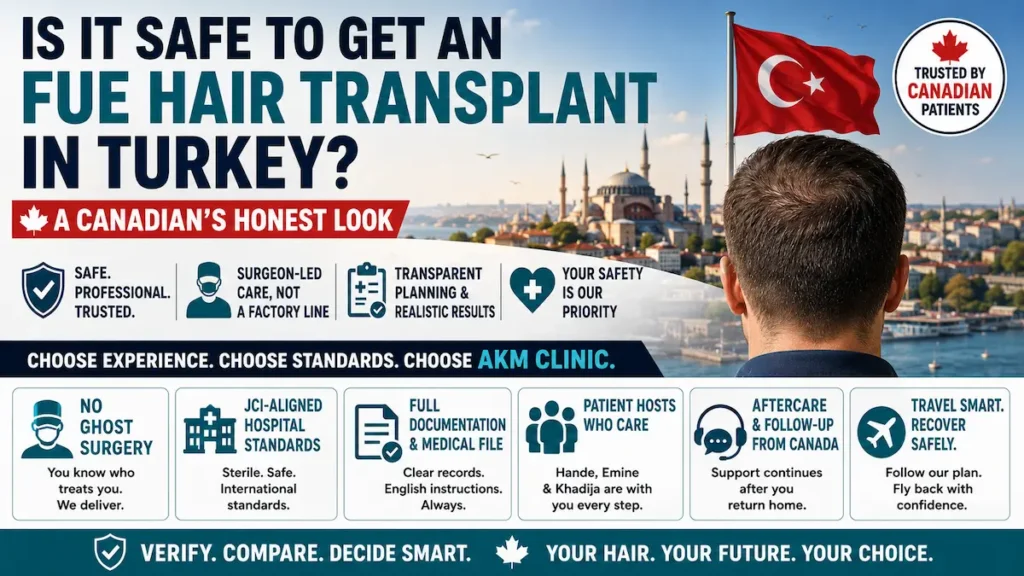
Is It Safe to Get an FUE Hair Transplant in Turkey? A Canadian’s Honest Look
Turkey is one of the world’s busiest destinations for hair transplantation. That creates two realities at once. Some clinics have deep experience, strong systems, and high surgical volume. Others operate like sales centres, moving patients through technician-led procedures with limited surgeon involvement.
Canadian patients should not choose a clinic based on country alone. The safer question is more specific: who designs the hairline, who extracts the grafts, who opens the recipient sites, what facility standards are used, and what happens after you fly home? The Government of Canada’s medical care outside Canada guidance also advises patients to consider complication risks, medical records, aftercare, and communication barriers before receiving care abroad.
The Turkey Hair Transplant Industry Reality
Turkey’s hair transplant reputation is strong because many surgeons and clinics perform a high number of cases. Experience can be valuable. It can also create a volume-driven market where some providers compete on graft count, speed, and price rather than medical judgement.
This is why Canadian patients may read both excellent stories and alarming warnings. Both can be true. The difference is usually clinic selection. A safe FUE plan requires documented medical assessment, surgeon oversight, sterile facility standards, realistic graft numbers, and structured aftercare.
Patients should be careful with clinics that advertise “all patients are suitable,” “maximum grafts,” or “guaranteed density.” These statements ignore donor-area limits and biological variation.
Why AKM Differs from Hair Transplant Mills
A hair transplant mill treats the procedure as a production line. The consultation is short, the graft number is inflated, the surgeon may appear only briefly, and technicians perform the most important parts of the procedure. That is not our model.
At AKM Clinic, we use a surgeon-led planning framework. Your hairline, donor reserve, graft distribution, and technique choice are evaluated medically. The goal is not simply to transplant many grafts. The goal is to create a result that grows naturally and preserves the donor area.
Our patient hosts, Hande, Emine, and Khadija, also help Canadian patients navigate communication, hotel recovery, follow-up, and practical questions. This matters when you are far from home.
Ghost Surgery in Turkey FUE Procedures
Ghost surgery means the person presented as your surgeon is not the person performing the meaningful surgical work. In hair transplantation, this risk can be hard for patients to detect because several team members may be present in the room.
Before booking, ask direct questions:
- Who designs my hairline?
- Who performs or supervises extraction?
- Who creates the recipient sites?
- Who is medically responsible if a complication occurs?
- Will my procedure be documented in my medical file?
Clear answers are a good sign. Vague answers are not. For Canadian patients used to provincial college accountability, this verification step is essential when choosing international care.
AKM’s JCI-Aligned Standards and Procedure Documentation
Our procedures are performed within a regulated clinical pathway supported by JCI-accredited hospital standards, sterile instrument processing, pre-operative medical testing, and post-operative monitoring. We also provide English-language instructions and follow-up communication so your care remains understandable after you return home.
Documentation matters. You should know what was done, how many grafts were used, which technique was selected, and what your aftercare plan requires. We believe transparency is part of surgical safety.
For Canadians, this also supports communication with a family physician or local health care provider if you need in-person assessment after travel. We encourage patients to keep their Canadian physician informed when appropriate.
What Canadian Patients Should Verify Before Booking
Before choosing any FUE clinic in Turkey, verify more than Instagram photos. Look for surgeon credentials, facility standards, real patient reviews, technique explanations, donor-area ethics, and aftercare continuity. Ask whether the clinic offers FUE, DHI, and Sapphire FUE or only one method. A clinic with multiple techniques can recommend based on fit rather than habit.
Canadian patients should also consider travel insurance limitations. Elective cosmetic procedures abroad may not be covered by standard travel insurance policies. Read the exclusions carefully and ask your insurer direct questions before departure.
The safest decision is not the fastest one. Take time to compare your FUE hair transplant Toronto or Montreal options with Istanbul clinics using the same framework: credentials, facility, technique, aftercare, and transparency.
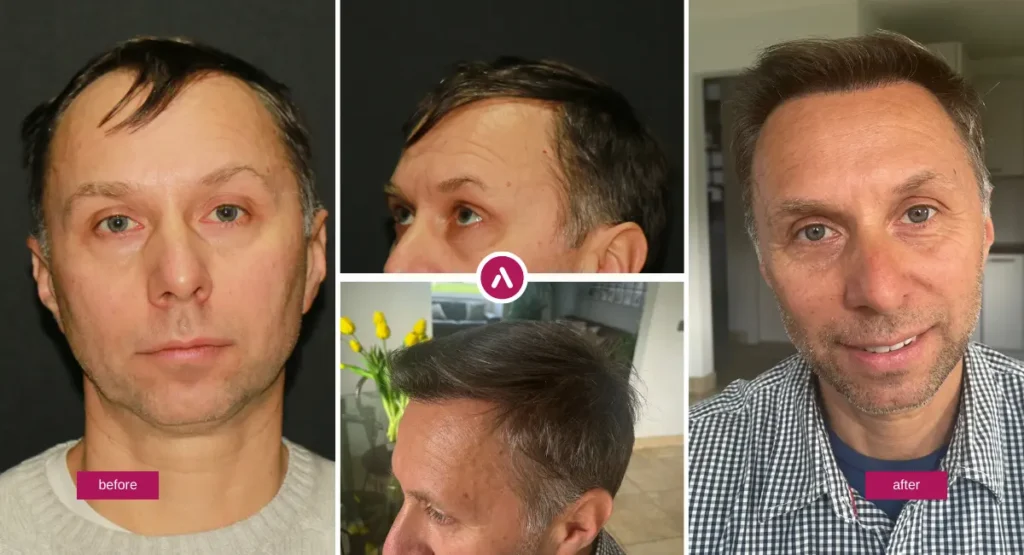
FUE Hair Transplant Before and After: Realistic Expectations & Results
FUE hair transplant results develop slowly. The procedure moves living follicles, but those follicles still follow a biological growth cycle. Canadian patients should expect visible changes over months, not days.
A strong FUE result should look natural at conversation distance, under office lighting, and in photos. It should also make sense with your age, facial proportions, donor reserve, and likely future hair loss. That is why our planning focuses on long-term balance rather than short-term density alone.
Is an FUE Hair Transplant Permanent?
FUE is considered a permanent hair restoration method because the transplanted follicles usually come from the back and sides of the scalp. These areas are more resistant to androgen-related miniaturization. Once grafts survive and begin growing, they usually continue producing hair long term.
That does not mean all hair on your scalp is protected. Native hair in the recipient area can continue thinning. A patient who restores the hairline at age 30 may need medical therapy, future maintenance, or a second session later if hair loss progresses.
This is why we design FUE results with future change in mind. A conservative, age-appropriate hairline often ages better than an overly low hairline that consumes too much donor supply early.
FUE Success Rate and Graft Survival
FUE success depends on graft survival, donor quality, surgical handling, recipient blood supply, and aftercare discipline. Strong clinics usually aim for high graft survival, but no ethical provider should promise every graft will grow. Biology varies.
Several factors influence the final outcome:
- Donor hair density and calibre
- Graft extraction quality and low transection
- Hydration and temperature control while grafts are outside the body
- Recipient site angle, depth, and spacing
- Smoking status and scalp circulation
- Following washing, sleeping, and activity instructions
We discuss these factors during consultation because they are more meaningful than a simple graft number. A carefully planned 3,000-graft procedure can look better than a poorly planned 4,500-graft session.
Natural density is not only about how many grafts we place. It is about where we place them, which grafts we choose, and whether the result will still look balanced as the patient ages.
Month-by-Month Growth Timeline
The first visible stage is not growth. It is healing. During the first 10 days, the scalp looks red, scabbed, and recently treated. By weeks 2–4, many patients look more socially presentable, but shedding may begin.
Months 1–3 are often the quietest phase. Transplanted hairs may shed, and the scalp can look similar to baseline. This is normal. Early regrowth commonly begins around month 3 or 4, with fine hairs appearing first.
By month 6, most patients see a meaningful cosmetic change. The hair is still maturing. By months 9–12, density, texture, and styling options improve. Some patients continue refining up to 18 months, especially in the crown.
For a visual breakdown of each phase, review our hair transplant growth timeline.
Before & After Gallery
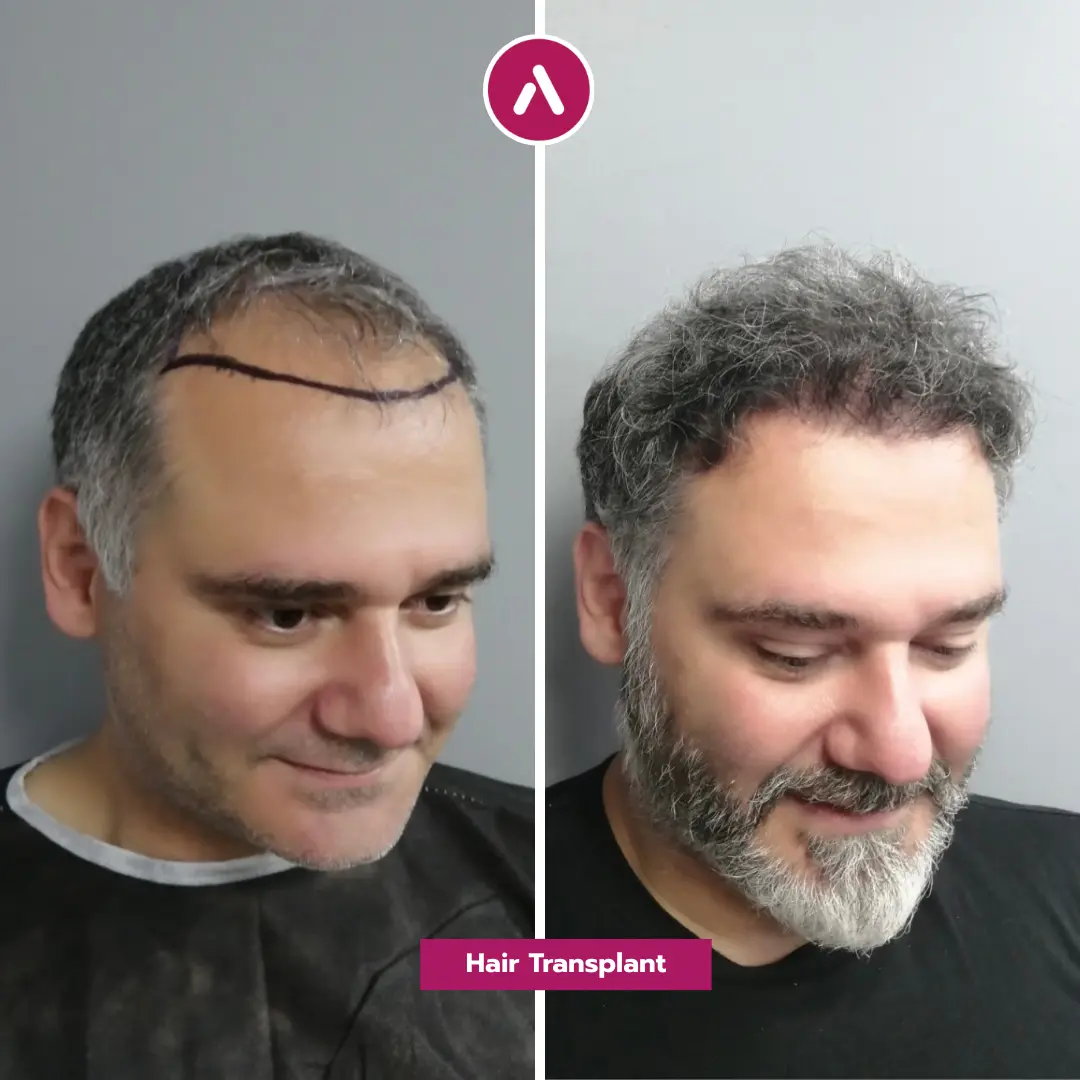
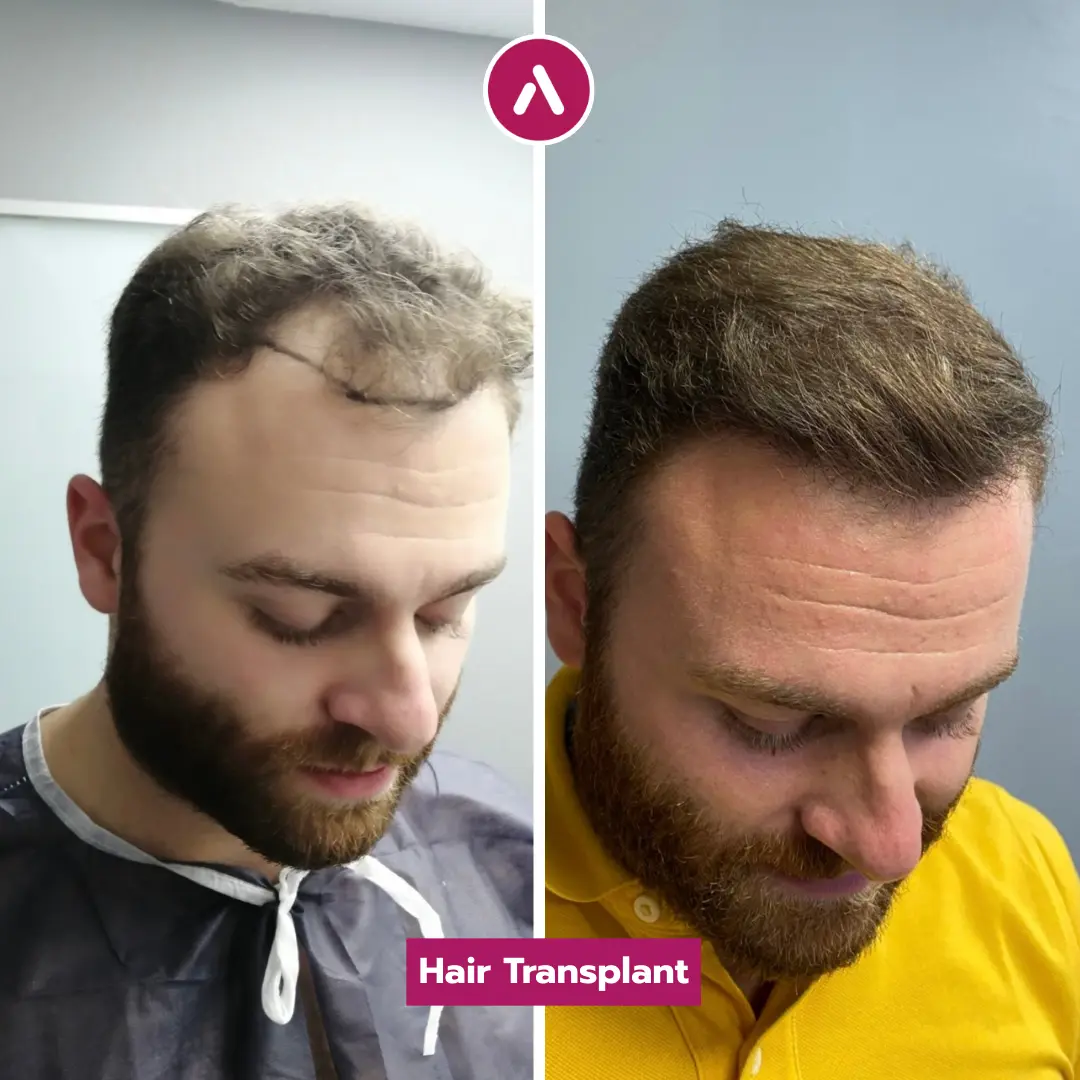
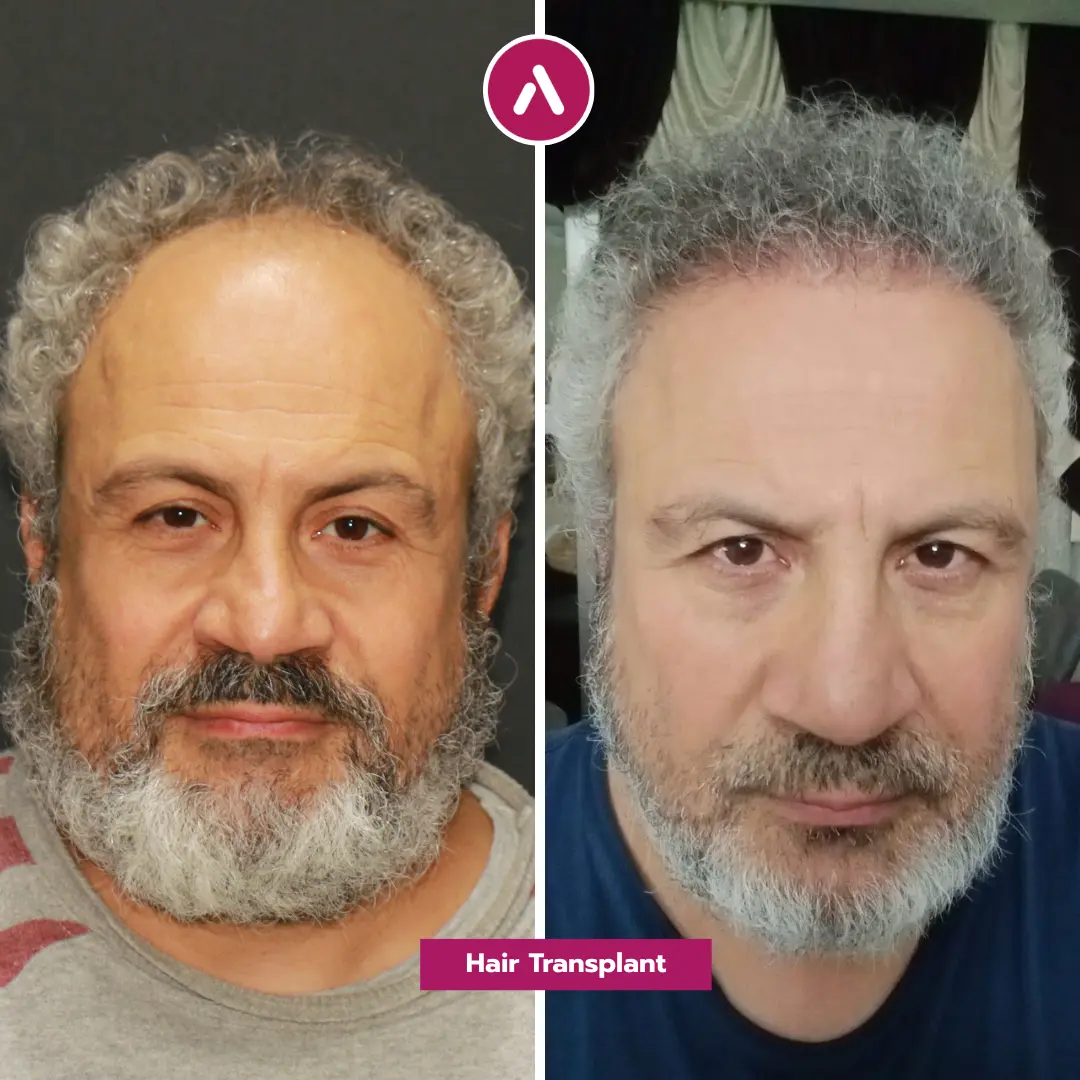
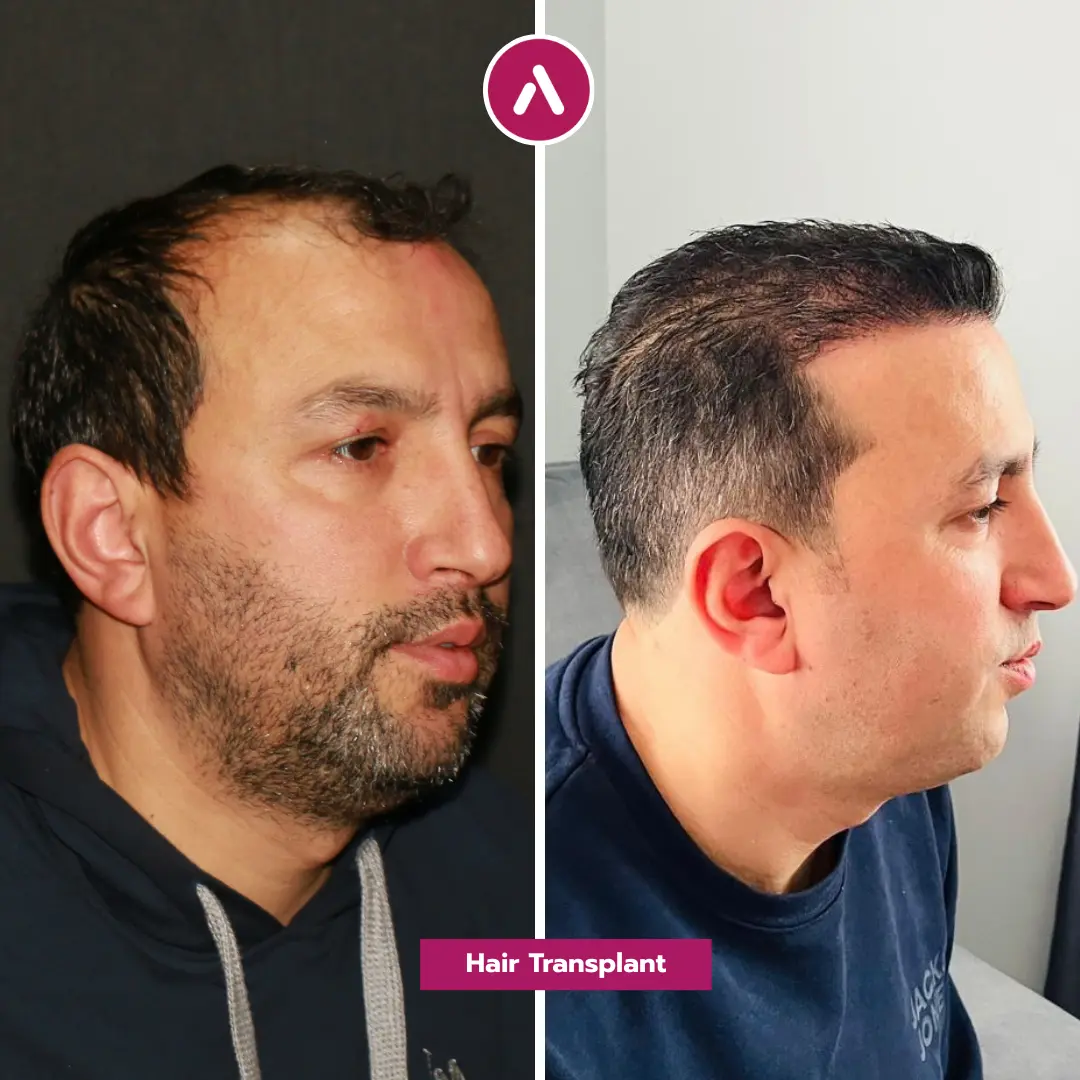
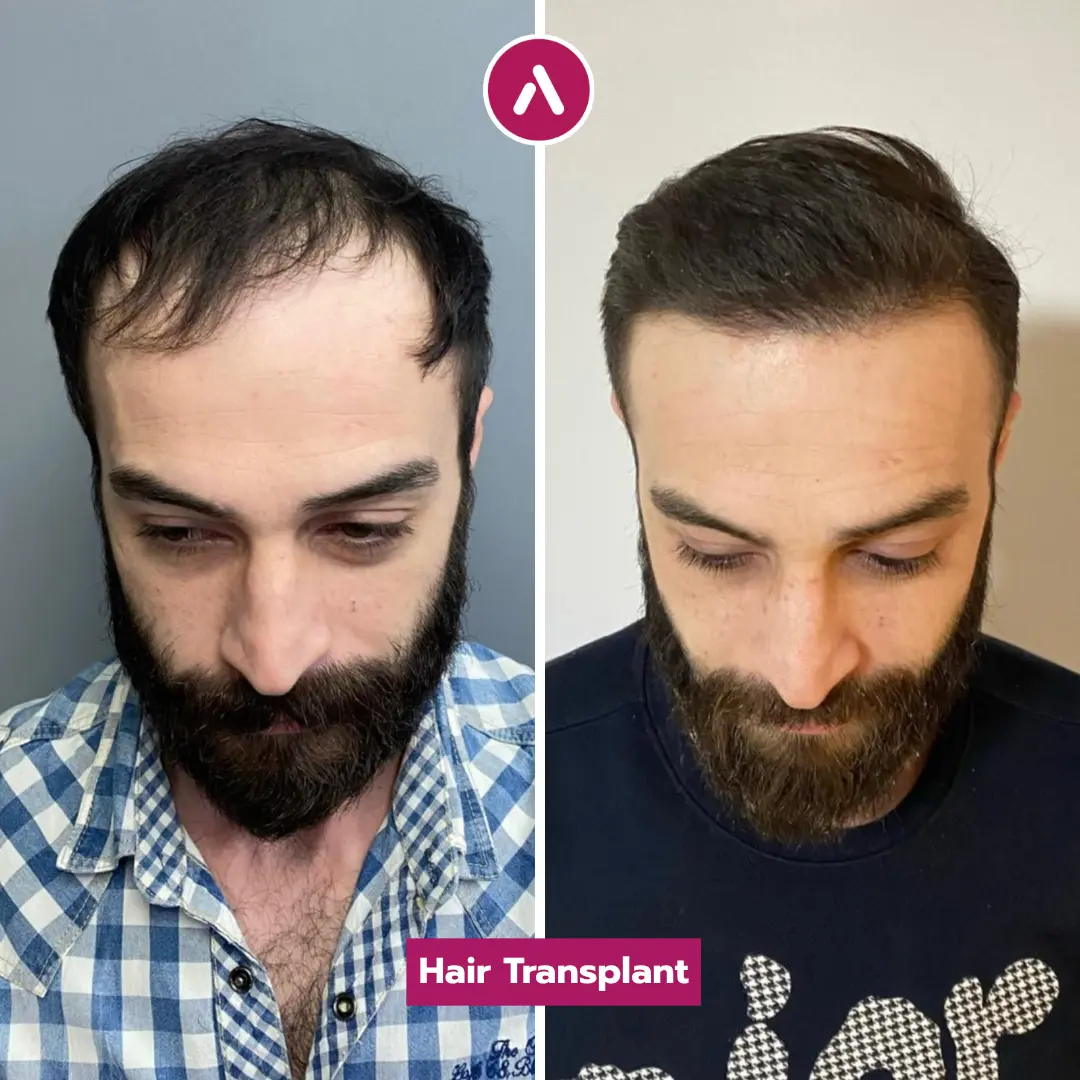
Before and after photos help patients understand what FUE can realistically achieve. They should be evaluated carefully. Look for consistent lighting, similar angles, dry hair and wet hair views when available, donor-area photos, and timelines showing at least 9–12 months of growth.
Be cautious with galleries that show only dramatic frontal views. A responsible FUE assessment should also consider the crown, temples, donor area, and side profile. The best result is not the most dramatic one. It is the one that looks believable in everyday life.
You can review our hair transplant before and after gallery to see how we frame outcomes across hairline, crown, and density restoration cases. During your consultation, we also discuss which examples are realistic for your hair loss pattern.
FUE Hair Transplant Cost 2026: Turkey vs Canada
FUE hair transplant cost is one of the main reasons Canadian patients compare Istanbul with private clinics in Toronto, Vancouver, Montreal, Calgary, and Edmonton. In Canada, FUE is often priced per graft. This can make the final invoice difficult to predict until the consultation is complete.
At AKM Clinic, the FUE Hair Transplant All-Inclusive Package is CAD $3,200, based on the 2026 exchange context. This includes the surgical procedure, pre-operative medical checks, 5-star hotel accommodation, VIP transfers, post-operative medications, and 24/7 patient coordination.
By comparison, Canadian private clinics commonly quote in the CAD $10,000–$15,000 range for 3,000–4,500 grafts, depending on city, surgeon, graft count, and whether the quote includes facility, medication, and follow-up costs. The difference is not because FUE in Turkey is a lesser procedure. It reflects Turkey’s lower operating costs, high procedural volume, and a clinical system built around international patient logistics.
This section gives only a cost overview. For a detailed breakdown of graft pricing, hidden fee questions, flights, hotel nights, and total trip budgeting, see our FUE hair transplant cost guide for Canadian patients and our total Turkey trip cost calculator.
| Location | Typical Pricing Model | Estimated 3,000–4,500 Graft Range | What Patients Should Confirm |
|---|---|---|---|
| Toronto | Per-graft or custom quote | CAD $10,000–$15,000 | Whether medication, follow-up, and facility fees are included |
| Vancouver | Per-graft or custom quote | CAD $10,000–$16,000 | Whether the surgeon performs recipient site creation |
| Montreal | Per-graft or custom quote | CAD $8,000–$13,000 | Whether the consultation includes donor density analysis |
| Calgary | Per-graft or custom quote | CAD $9,000–$14,000 | Whether travel, recovery time, and aftercare are explained clearly |
| Edmonton | Per-graft or custom quote | CAD $8,000–$14,000 | Whether the clinic offers FUE, DHI, and Sapphire FUE or only one method |
| AKM Clinic, Istanbul | All-inclusive clinical pathway | CAD $3,200 | Includes 5-star hotel, VIP transfers, medication support, and follow-up coordination |
The most important comparison is not only “FUE hair transplant Toronto vs Turkey.” It is the total value of the clinical pathway. A lower sticker price means little if the donor area is over-harvested, the hairline is poorly designed, or follow-up disappears after surgery.
Our FUE Hair Transplant All-Inclusive Package is designed for Canadian patients who want predictable logistics, English-language coordination, and structured aftercare after returning home. Flights are not included, and personal spending remains separate.
How to Find the Best FUE Hair Transplant Surgeon in Turkey: A Canadian Patient’s Checklist
Canadian patients often begin with searches like “FUE hair transplant near me” or “best FUE hair transplant Toronto.” That is a reasonable starting point. Local research helps you understand pricing, clinic models, and the questions a qualified provider should answer.
Once you compare Turkey with Canadian private options, the evaluation should become more specific. The right question is not “Which country is best?” It is “Which clinic can show surgeon-led planning, safe donor management, verified credentials, sterile clinical standards, and long-term follow-up after I return home?” International hair-restoration standards can also be evaluated through organizations such as the International Society of Hair Restoration Surgery, which provides patient-facing education on hair loss treatment and restoration.
At AKM Clinic, we encourage Canadian patients to verify every part of the pathway before booking. A strong FUE result depends on medical judgement, not marketing volume. Use the checklist below when comparing any clinic in Istanbul, Toronto, Vancouver, Montreal, or Calgary.
EBOPRAS Certification and RCPSC Equivalency
Canadian patients are familiar with physician oversight through provincial colleges and the Royal College of Physicians and Surgeons of Canada’s specialist certification framework. International credentials use different names, so the comparison can feel confusing at first. The goal is to look for structured specialist training, board certification, continuing education, and a regulated clinical setting.
EBOPRAS is a European board certification pathway in plastic, reconstructive, and aesthetic surgery. For Canadian readers, the closest comparison is the RCPSC framework: formal specialist assessment, credential review, and professional accountability. The names differ, but both exist to separate qualified specialists from unverified providers.
For hair restoration specifically, the American Board of Hair Restoration Surgery, or ABHRS, is often referenced internationally. It is not a Canadian licensing body, but it can help patients understand whether a surgeon has pursued hair-restoration-specific education. We recommend evaluating credentials together, not as isolated badges.
| Credential / Organization | What It Signals | Canadian Reference Point | Why It Matters for FUE |
|---|---|---|---|
| EBOPRAS | European board certification in plastic, reconstructive, and aesthetic surgery | Comparable in purpose to RCPSC specialist credentialing | Shows structured surgical training and specialist-level accountability |
| RCPSC | Canadian specialist certification framework | Canadian benchmark for specialist recognition | Helps Canadian patients understand what a credible specialist pathway looks like |
| ABHRS | Hair-restoration-specific credentialing body | Not a Canadian licensing body, but useful for hair transplant education context | Signals focused training interest in graft planning, donor management, and hairline design |
| Turkish Ministry of Health Licensure | National medical authorization and health tourism oversight | Comparable in function to Health Canada and provincial college oversight categories | Confirms the clinic operates within a regulated medical framework |
Before booking, ask the clinic to explain credentials in plain language. A good team will welcome this. If a clinic becomes defensive or vague, that is a warning sign.
Surgeon-Performed FUE vs Technician-Only Work
FUE involves several steps: consultation, hairline design, donor mapping, extraction, graft preparation, recipient site creation, and implantation. In many clinics, technicians assist with parts of the workflow. Assistance is normal. Lack of surgeon oversight is the concern.
The highest-risk parts are planning, donor-area strategy, and recipient site creation. These decisions determine whether the donor area is protected and whether the transplanted hair grows at a natural angle. A technician-only model can produce inconsistent results because the person making aesthetic and surgical decisions may not have specialist training.
Ask direct questions before booking:
- Who designs my hairline?
- Who decides the safe graft number?
- Who performs or supervises extraction?
- Who creates the recipient sites?
- Who is medically responsible for complications?
At AKM Clinic, our model is surgeon-led. The goal is not to move patients through a high-volume transplant line. The goal is to create a responsible plan that protects donor reserve and produces a natural result.
FUE Micro-Punch Equipment Verification
FUE quality depends partly on tools. The micro-punch must match the patient’s hair calibre, curl, skin thickness, and follicle angle. A punch that is too large can create unnecessary donor trauma. A punch that is too small or poorly angled can increase transection risk.
Patients should ask about punch size, extraction method, and how graft damage is minimized. The clinic should be able to explain this clearly without hiding behind technical language. You do not need to become a surgeon, but you should understand the basic logic.
Also ask how the donor area is distributed during extraction. Safe FUE avoids concentrating too many extractions in one zone. Even when tiny punches are used, poor spacing can create patchy donor thinning. This is why “maximum grafts” language can be dangerous.
Volume of Surgery and Real Patient Reviews
Experience matters, but volume alone is not enough. A clinic may perform many procedures and still operate with weak quality control. Canadian patients should look for consistent before and after documentation, donor-area photos, long-term growth timelines, and reviews that mention communication and follow-up.
Reviews should not be evaluated only by star rating. Read the details. Did the clinic explain the plan? Did the patient know who was performing the procedure? Was aftercare available after they returned home? Were concerns answered months later?
For fixed-price transparency and clinic comparison logic, see our guide to hair transplant clinics with fixed-price packages. The best clinic is not always the one with the lowest quote or the highest advertised graft count.
Aftercare Continuity from Istanbul to Canada
FUE recovery continues long after you leave Istanbul. The first 10 days protect graft stability. Months 1–3 bring shock loss. Months 6–12 reveal most density changes. A clinic that disappears after surgery leaves patients managing uncertainty alone.
Our long-term follow-up programme includes virtual check-ins at 1, 3, 6, and 12 months. Canadian patients can contact our team through the recovery period, and we provide English-language instructions that can be shared with a family physician when appropriate.
We also maintain North American communication support so Canadian patients can reach the clinic across time zones more easily. For patients travelling alone, this continuity matters. You should know who to contact before, during, and after your FUE procedure.
A responsible FUE clinic should be easy to evaluate before you book. If you cannot confirm the surgeon, the donor plan, the technique, the facility, and the follow-up pathway, keep asking questions.
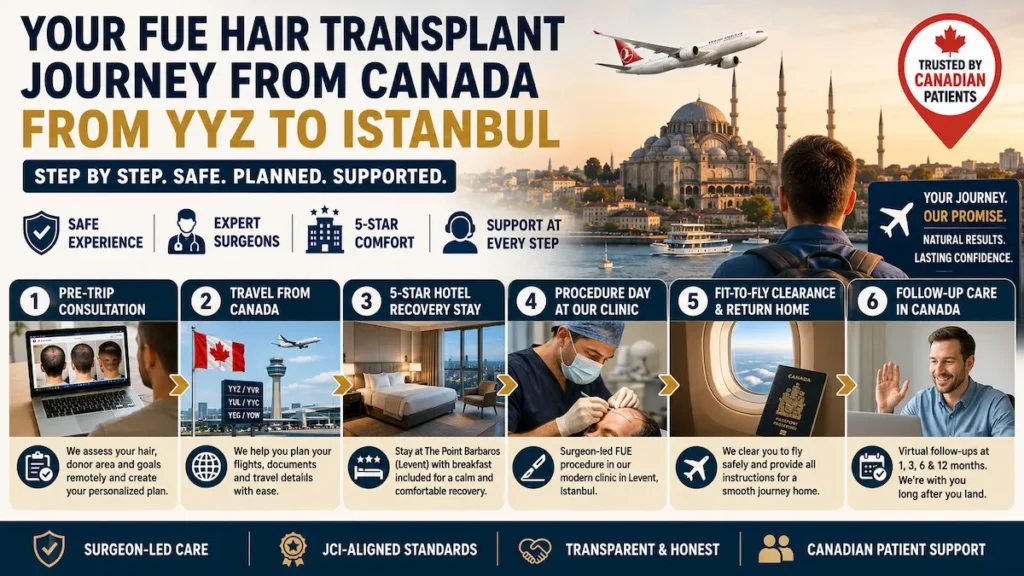
Your FUE Hair Transplant Journey from Canada: From YYZ to Istanbul, Step by Step
Travelling from Canada for FUE requires more than booking a flight and arriving for surgery. A safe international clinical pathway should include remote assessment, medical screening, airport pickup, hotel recovery, procedure-day coordination, written aftercare, and follow-up after you return home.
At AKM Clinic, we built our process for patients travelling from cities such as Toronto, Vancouver, Montreal, Calgary, Edmonton, Ottawa, and Halifax. You are not expected to navigate Istanbul alone after landing. Our team coordinates the clinical and logistical steps so you can focus on preparation and recovery.
Pre-Trip Consultation
Your journey begins with a remote assessment. We ask for clear photos of the frontal hairline, temples, crown, donor area, and side views. These photos help us estimate your Norwood stage, donor density, hair calibre, and likely graft range.
We also review your health history, medication use, smoking status, previous hair restoration procedures, and expectations. This step is important. A patient who wants full crown density may need a different graft strategy than a patient seeking frontal hairline repair.
After assessment, we provide a tailored clinical recommendation. This may include FUE, DHI, Sapphire FUE, a staged plan, or a recommendation not to proceed if the donor area is weak. A good plan should protect your future, not only your first result.
Travel Logistics from Toronto, Vancouver, Montreal, and Calgary
Canadian patients usually travel to Istanbul through major airports such as YYZ, YVR, YUL, or YYC. Flight routes and airline schedules change, so our coordinators help you plan around your surgery date rather than relying on outdated route assumptions.
You should also verify passport validity, entry requirements, medication rules, and travel insurance exclusions before departure. Elective procedures abroad may not be covered by standard travel insurance policies. Read the policy language carefully and ask your insurer direct questions.
For a fuller overview of airport arrival, transfers, and timeline planning, review our Canadian patient journey guide. We recommend organizing your work leave, return flight, and recovery expectations before you confirm travel.
5-Star Hotel Recovery Stay
After arrival, our private transfer team brings you to your hotel. The FUE all-inclusive clinical pathway includes 5-star hotel accommodation with breakfast. Our hotel partner, The Point Barbaros, is located in the Levent district, close to our clinic.
This matters after a hair transplant because the first days should be calm. You need a clean, comfortable place to rest, sleep with your head elevated, follow the spray and washing schedule, and avoid unnecessary movement through the city.
Hotel recovery also helps patients travelling alone. Your coordinator remains available, and our team gives clear instructions for medication, scalp protection, washing, and clinic visits. You can learn more about accommodations and transport on our hotels and VIP transfers page.
Procedure Day at Our Istanbul Clinic
On procedure day, you arrive at our Istanbul clinic for final confirmation, hairline design, donor review, and medical preparation. We review the plan again before starting. If the in-person assessment changes the graft strategy, we explain why.
The FUE procedure itself usually takes most of the day. You remain awake under local anesthesia while the donor area is numbed, grafts are extracted, recipient sites are created, and grafts are implanted. Breaks are built into the process when appropriate.
Our clinic is located in Levent, Beşiktaş, one of Istanbul’s established medical and business districts. For details about the facility experience, see our Istanbul clinic page.
Fit-to-Fly Clearance and Return Travel
Before you return to Canada, we check the donor area, recipient area, swelling, scabbing, and overall comfort. Fit-to-fly clearance is based on healing, not convenience. Most FUE patients travel after the early graft-stabilization window, but timing varies.
During the return flight, protect the grafted area from friction. Avoid tight hats unless our team approves them. Keep hydrated, walk periodically, and avoid alcohol. Long flights can increase swelling and fatigue, so simple precautions help.
After you land in Canada, recovery continues. Shock loss, regrowth, and density maturation unfold over months. Our follow-up programme includes virtual check-ins at 1, 3, 6, and 12 months, so your care does not end when you leave Istanbul.
Frequently Asked Questions (FAQ):
These questions reflect what Canadian patients most often ask before choosing FUE hair transplant in Turkey. Some are medical. Some are practical. All of them matter before you book flights, confirm surgery dates, or compare Istanbul with Toronto, Vancouver, Montreal, Calgary, or Edmonton.
If your question is not answered here, our coordinators can review it during your virtual consultation. You can also visit our patient FAQs page for broader guidance about travelling to Istanbul, aftercare, payment, and recovery logistics.
How many grafts can be transplanted in a single FUE session?
Most FUE sessions range from 3,000 to 4,500 grafts, depending on donor density, scalp characteristics, hair calibre, and recipient area size. Some patients need fewer grafts for hairline refinement. Others may need staged planning for larger crown or advanced Norwood patterns.
Is FUE permanent?
FUE is considered a permanent hair restoration method because transplanted follicles usually come from the back and sides of the scalp, where hair is more resistant to androgen-related hair loss. Once the grafts survive and begin growing, they usually continue producing hair long term.
How long until I see final FUE results?
Most patients begin seeing early growth around month 3 or 4. By month 6, the cosmetic change is usually noticeable. Final density, texture, and styling maturity often take 12–18 months, especially in crown cases.
The first few months can feel slow because shedding and shock loss may occur before growth begins. This is expected. Patience is part of the process.
When can I return to work, exercise, and normal activities?
Many desk-based patients return to remote or office work within several days, depending on swelling, visibility, and comfort. Exercise should return gradually. Heavy lifting, swimming, sauna, sweating, and contact sports usually need a longer pause.
If your job requires a helmet, cap, physical exertion, or outdoor exposure, tell us before surgery. Your recovery plan may need adjustment.
Does OHIP or any Canadian provincial health plan cover FUE hair transplants?
In almost all cases, no. FUE hair transplant is considered elective cosmetic care, so OHIP, MSP, AHCIP, RAMQ, and other provincial health plans do not typically cover it.
Rare reconstructive situations may be reviewed differently, such as trauma, burns, or cancer-related hair loss, but this depends on provincial rules and medical documentation. Most Canadian patients should plan for private payment.
How much does FUE cost in Toronto or Vancouver vs Istanbul?
Canadian private clinics often quote FUE in the CAD $10,000–$15,000 range for 3,000–4,500 grafts, depending on graft number, city, surgeon, and inclusions. Toronto and Vancouver are usually at the higher end of the range.
At AKM Clinic, our FUE Hair Transplant All-Inclusive Package is CAD $3,200. Flights and personal spending are separate. The package includes clinical and logistical support, including hotel stay, VIP transfers, medications, and follow-up coordination.
Does Canadian travel insurance cover complications from elective FUE in Turkey?
Standard Canadian travel insurance policies often exclude complications related to elective cosmetic procedures abroad. This varies by provider and policy wording, so you should ask your insurer directly before travel.
Do not assume coverage. Ask about elective surgery, post-operative complications, emergency care, medical evacuation, and exclusions. Keep written confirmation whenever possible.
What is the difference between FUE, DHI, and Sapphire FUE?
FUE uses micro-punch extraction and manual implantation into surgeon-opened recipient sites. DHI uses a Choi implanter pen to place grafts directly. Sapphire FUE uses sapphire blades to create refined recipient channels.
No technique is automatically best for every patient. FUE is versatile, DHI can help selected density cases, and Sapphire FUE can support refined channel creation. The right choice depends on anatomy, hair loss pattern, and donor reserve.
Is FUE safer than FUT?
FUE avoids the long linear donor scar associated with FUT strip surgery. It also avoids donor-area sutures, which can make early healing easier for many patients.
That does not mean FUE has no risks. Poor extraction, over-harvesting, infection, and unnatural direction can still occur. Safety depends on planning, sterile technique, surgical judgement, and follow-up.
Can women get FUE hair transplants?
Yes, selected women can benefit from FUE. Strong candidates include women with traction alopecia, localized hairline recession, scarring, or stable thinning in defined areas.
Women with diffuse thinning across both recipient and donor areas may not be good candidates. Female pattern hair loss requires careful diagnosis because donor stability is essential for long-term success.
Will I have visible scars after FUE?
FUE does not leave a linear scar, but it creates small circular extraction points in the donor area. These usually heal as tiny dot-like marks that are difficult to see when surrounding hair grows back.
Scarring becomes more visible when too many grafts are removed, extraction is poorly spaced, or the donor area is weak. This is why we avoid “unlimited grafts” language and use calibrated donor planning.
How do I avoid Turkey hair mill scams?
Ask direct questions before booking. Who designs your hairline? Who decides the graft number? Who performs or supervises extraction? Who creates recipient sites? Who is medically responsible for complications?
Be cautious with clinics that promise maximum grafts, guaranteed density, very low prices, or vague surgeon involvement. A responsible clinic should explain credentials, facility standards, donor-area protection, technique choice, and aftercare clearly.
Medical Disclaimer: This page is for educational purposes only and does not replace medical advice, diagnosis, or treatment from a qualified health care professional. FUE hair transplant candidacy depends on your medical history, scalp condition, donor density, hair loss pattern, medications, smoking status, and expectations.