
Scar Revision Surgery in Turkey: Improving Old Scars
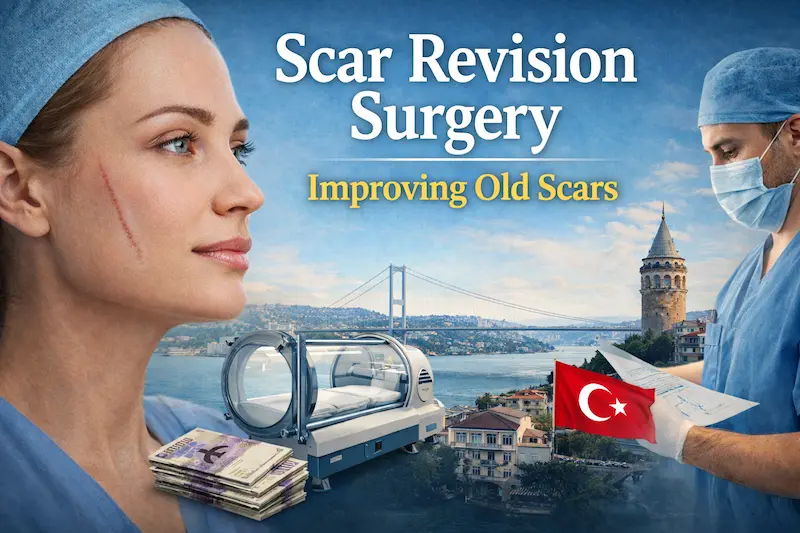
AI Summary
- Scar revision surgery in Turkey can improve old scars by refining width, contour, texture, and visibility.
- Consultant-led assessment helps match each scar to the safest, most effective revision approach.
- Realistic results matter because scar revision improves appearance rather than completely erasing scars.
- Turkey offers value through expert care, structured aftercare, and accessible private pricing for UK patients.
AI-generated summary, fact-checked by our medical experts.
For many patients, an old scar is not simply a cosmetic detail. It can be a daily reminder of previous surgery, trauma, a difficult recovery, or a result that never healed as neatly as expected. This is why scar revision surgery in Turkey has become an increasingly researched option for British patients who want expert assessment, realistic advice, and a more refined final appearance.
At AKM Clinic, the aim is not to make dramatic promises about “erasing” a scar completely. Ethical scar revision is about improving texture, width, position, contour, and overall visibility so that a scar looks calmer, flatter, finer, and more harmonious with the surrounding skin. In many cases, scar revision surgery in Turkey can help transform an old, obvious scar into one that is far less noticeable in day-to-day life.
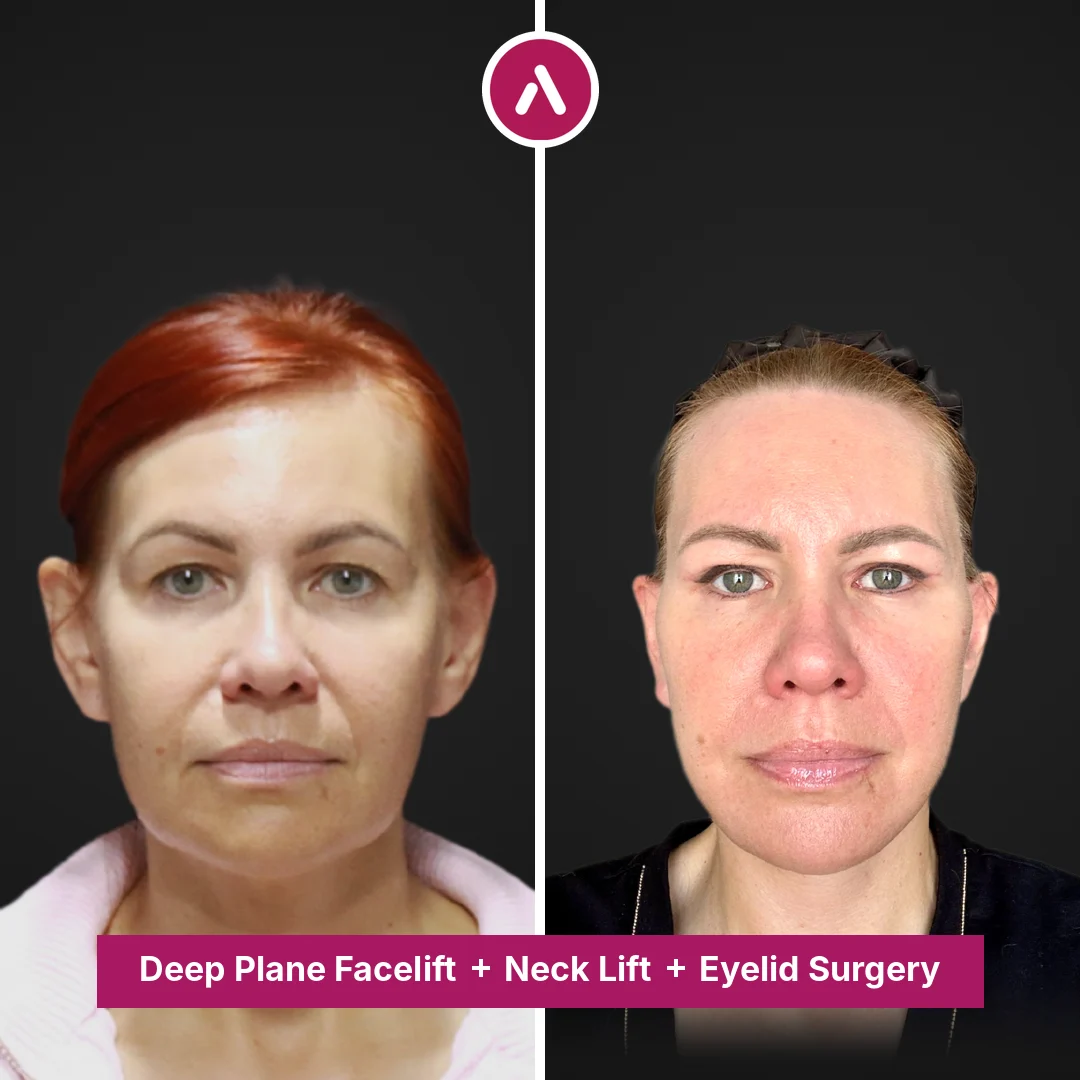
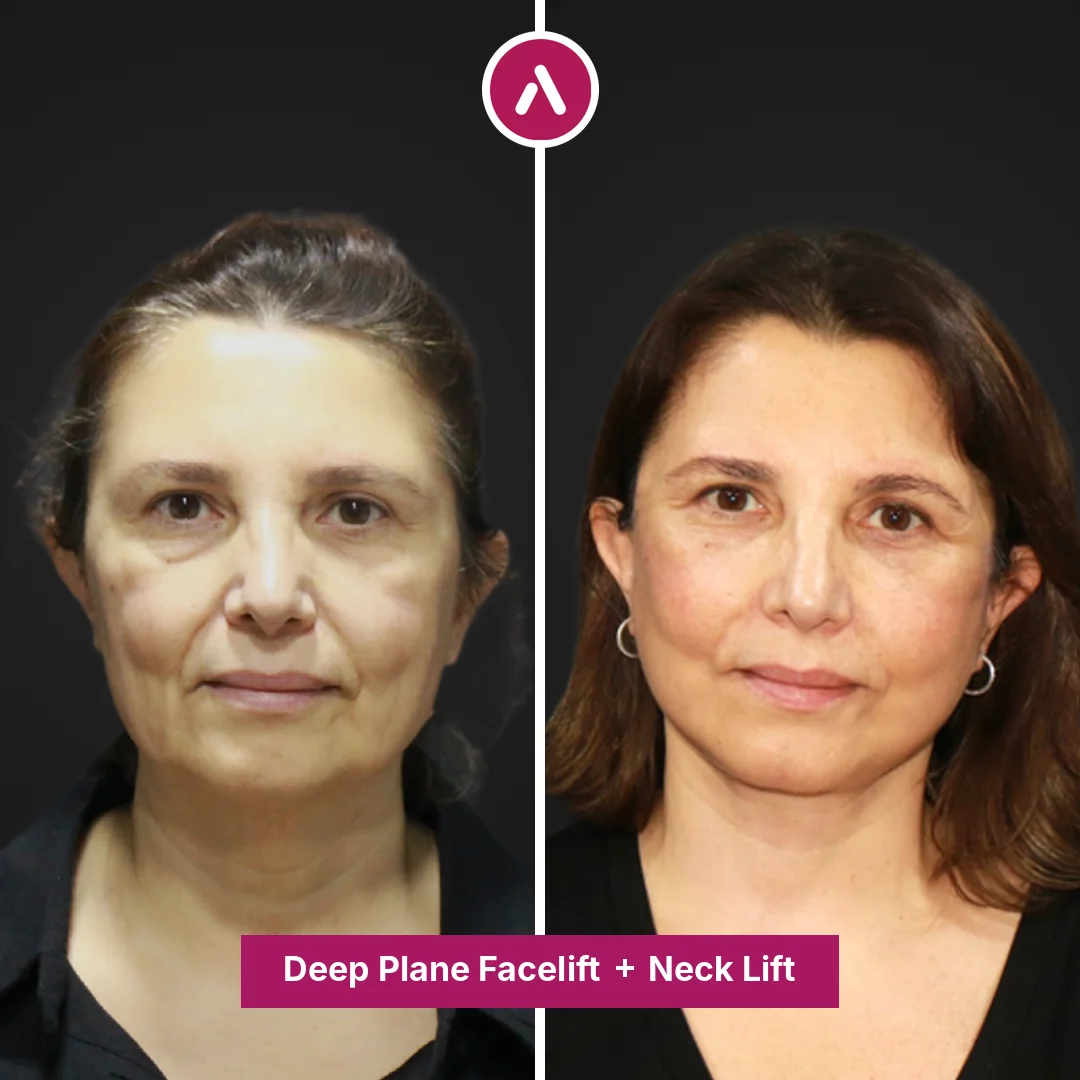
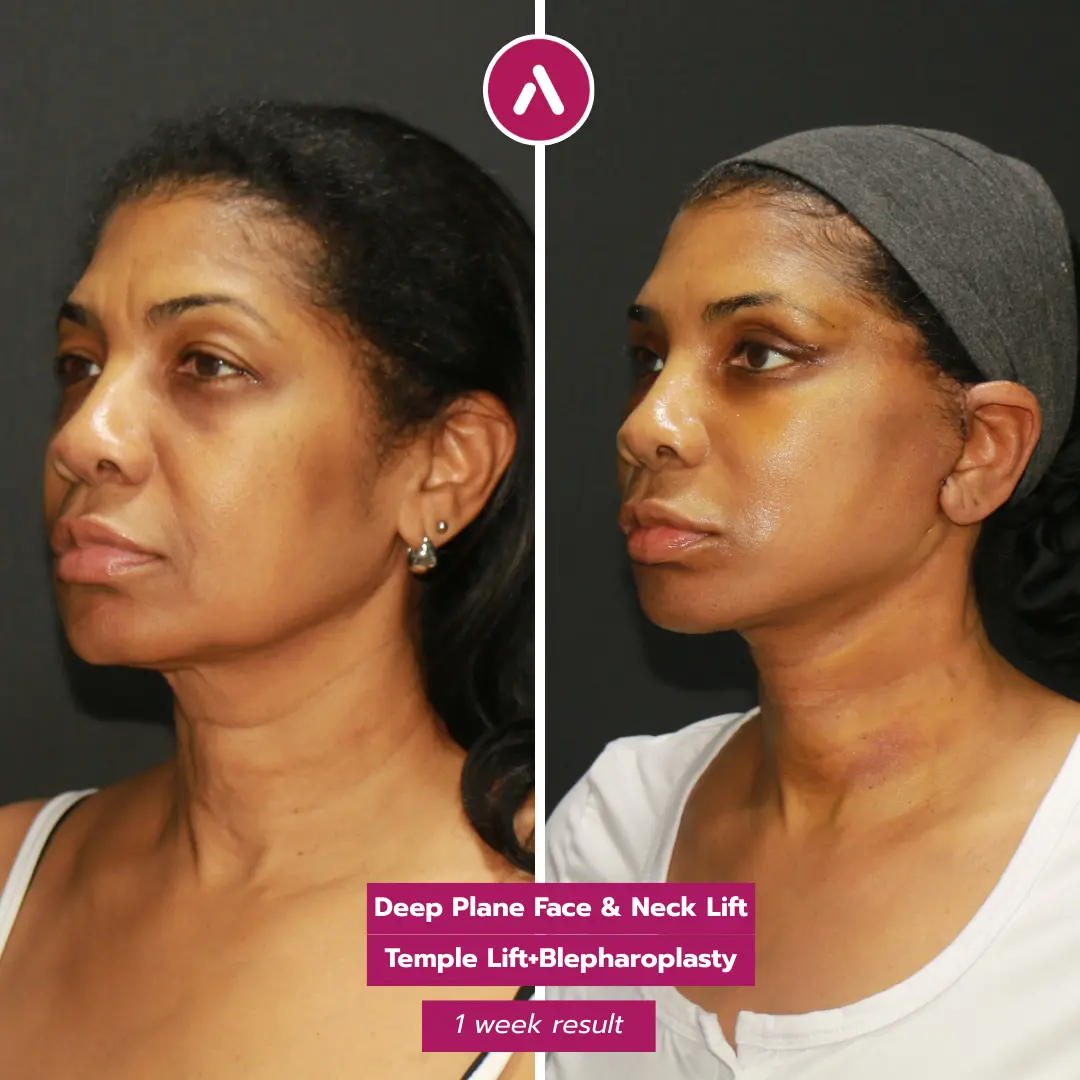
For UK patients, this topic is often highly personal. Some are seeking post-surgery scar revision after a previous cosmetic procedure. Others want help with a Caesarean section scar, an old tummy tuck scar, a facelift scar, or a wound that healed unevenly. Some patients initially search for scar removal surgery in Turkey, but the more medically accurate concept is usually scar improvement rather than complete removal. That distinction matters, because honest medicine begins with honest expectations.
Modern scar management also draws on clinical research, skin biomechanics, wound tension principles, and careful aftercare. When indicated, surgical planning may be combined with supportive technologies such as scar-focused laser strategies or low-level light support during the healing phase. This is why patients researching old scar treatment in Turkey are often looking not only for a procedure, but for a consultant-led plan based on anatomy, healing behaviour, and long-term scar maturation.
In this guide, we explain who may benefit from scar revision, which scar types respond best, what results are realistic, and why many patients consider Istanbul for carefully planned revision work.
Table of Contents
What Is Scar Revision Surgery and Who Is It For?
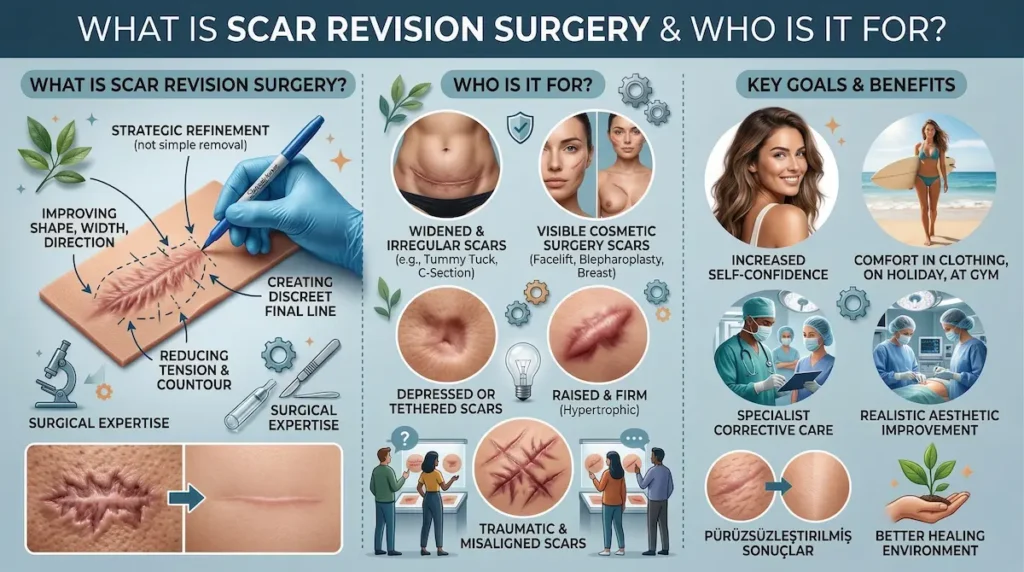
Scar revision surgery is a procedure designed to improve the appearance of an existing scar by changing its shape, width, direction, tension, or contour. Rather than simply cutting out scar tissue without strategy, the goal is to create a better healing environment and a more discreet final line. For patients considering surgical scar revision in Turkey, the most important point is that revision is highly individual. The right approach depends on how the scar formed, where it sits on the body, how mature it is, and how your skin tends to heal.
For many patients, scar revision is also part of a broader search for specialist corrective care, particularly when the scar is linked to an earlier cosmetic procedure that did not heal as expected. In such cases, choosing an experienced revision surgeon, or a revision facelift specialist when the scar follows a facelift, may offer greater reassurance, as these experts are used to working with altered tissue, previous healing problems, and the need for careful, realistic aesthetic improvement rather than overly aggressive correction.
The Difference Between a Scar That Has “Healed” and One That Has Healed Poorly
Many scars are technically healed, but that does not mean they have healed well. A scar may close safely and still remain wide, raised, indented, tight, twisted, darker than the surrounding skin, or placed in a highly visible direction. In these cases, the issue is not whether the wound has closed, but whether the final scar matured in an aesthetically favourable way.
This is where scar correction surgery in Turkey may be considered. A scar that healed under high tension, became uneven, or widened over time may benefit from surgical refinement. Likewise, a revision plan for an uneven scar may be suitable when one part of the scar is raised, another depressed, and the surrounding skin contour no longer looks smooth.
From a clinical point of view, poor scar quality can be influenced by several factors:
- Excess tension on the wound during early healing
- Infection or delayed wound healing
- Individual skin type and scar tendency
- Poor scar positioning across natural skin lines
- Previous surgery performed with limited attention to long-term scar aesthetics
In other words, a scar may be safe but still aesthetically unsatisfactory. Revision aims to improve that balance.
Common Reasons UK Patients Seek Scar Revision
British patients usually do not enquire about revision because they expect perfection. More often, they want a scar to look neater, flatter, finer, and easier to live with. Some feel self-conscious in clothing, on holiday, at the gym, or in intimate settings. Others feel the scar makes a previous operation look unfinished.
Common motivations include:
- An old tummy tuck or Caesarean scar that has widened or become irregular
- A facelift, blepharoplasty, or breast surgery scar that healed visibly
- A traumatic scar that sits awkwardly across natural skin creases
- A thick or raised scar that remains firm and obvious
- A depressed scar that creates shadowing or contour irregularity
For some patients, the search begins with terms like scar correction surgery in Istanbul or old scar revision in Turkey because they are not only looking for treatment, but for specialist reassurance after a disappointing previous experience. This is especially true for patients who value consultant-led care, clear communication, and realistic before-and-after discussions.
Which Types of Scars Can Be Improved Most Effectively?
Not every scar responds in exactly the same way, but many can be improved significantly when the treatment plan matches the scar type. In general, the best candidates are mature scars that are stable, well assessed, and causing visible aesthetic concern rather than active wound problems.
Scars that often respond well include:
- Wide surgical scars
- Depressed or tethered scars
- Misaligned scars
- Scars that cross relaxed skin tension lines badly
- Selected raised scars after proper diagnosis
However, a careful distinction must be made between different raised scars. For example, hypertrophic scar treatment may involve a different strategy from keloid scar treatment. Hypertrophic scars remain within the original wound boundary, while keloid scars may extend beyond it and can behave more aggressively. That is why a proper consultation matters: not every raised scar should be revised with the same method.
In suitable cases, the outcome can be meaningful. The scar may not disappear, but it can often become narrower, flatter, softer, and easier to conceal. That is usually the true measure of success in scar revision surgery.
Which Scars Can Be Treated with Surgical Revision?
One of the most common questions patients ask is whether their particular scar is actually suitable for revision. The answer depends on the scar’s age, maturity, location, thickness, colour, direction, and the reason it became noticeable in the first place. A high-quality assessment is essential because not all scars should be treated with surgery alone. In some cases, a combined plan involving Z-plasty scar revision, laser support, or staged care may offer a better outcome than simple excision.
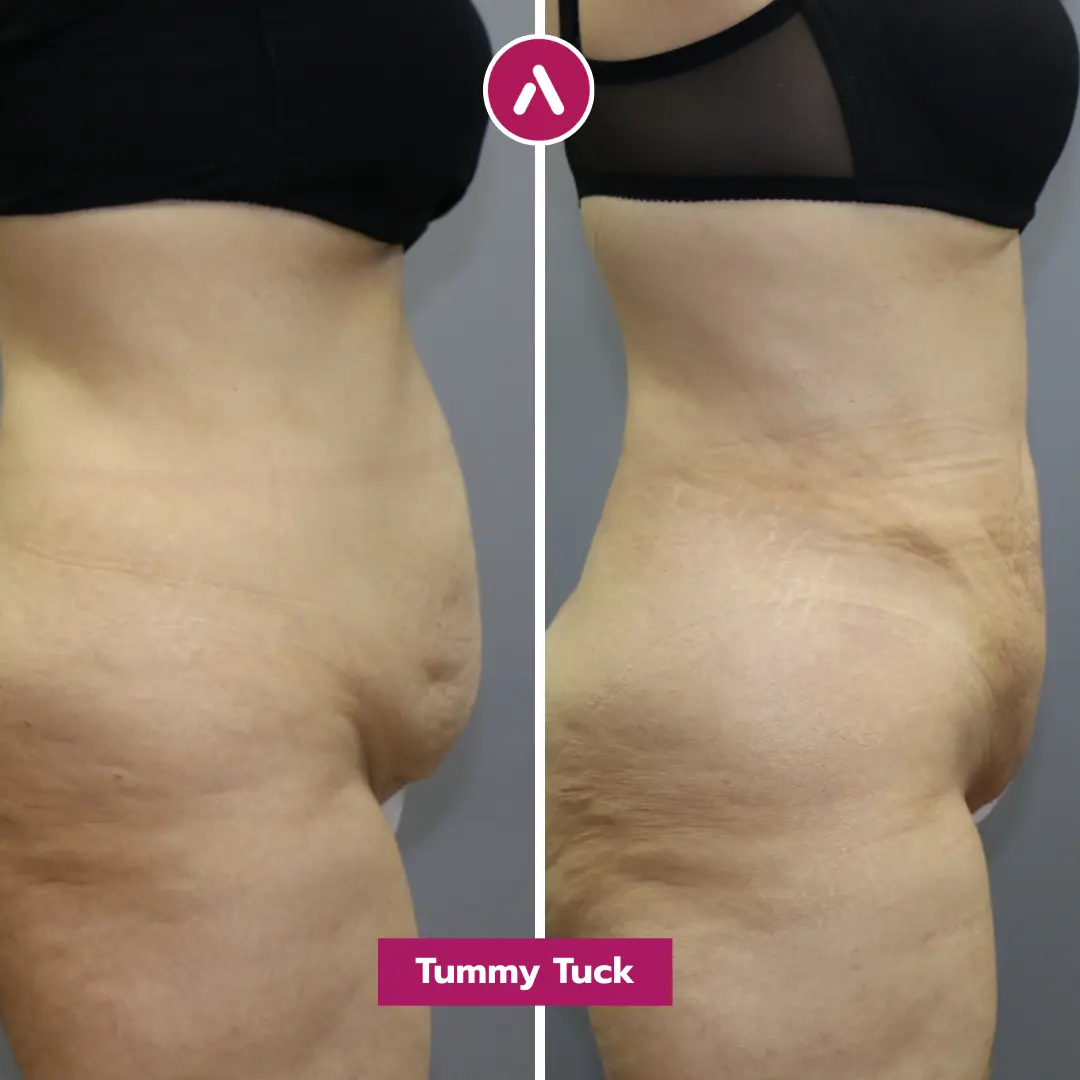
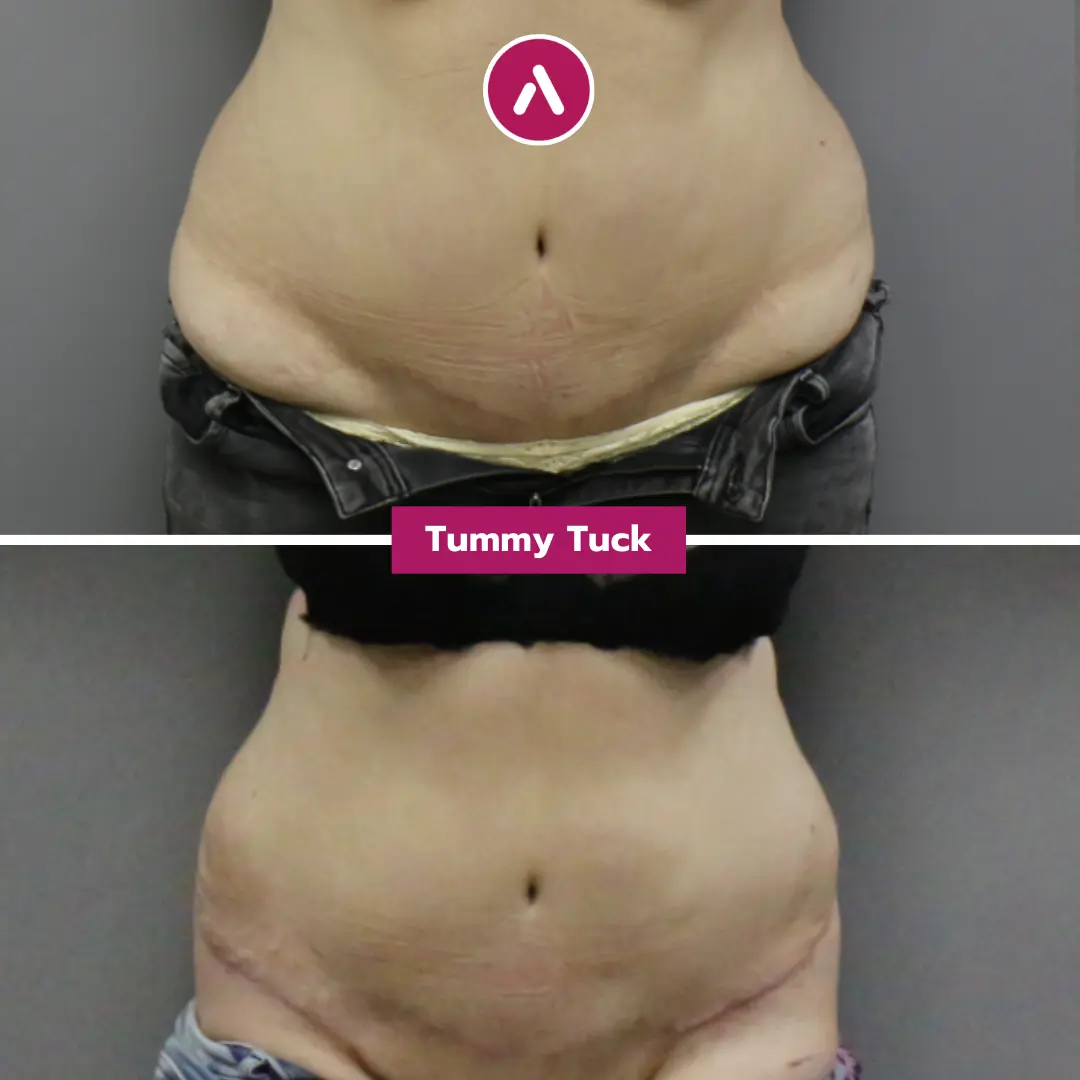
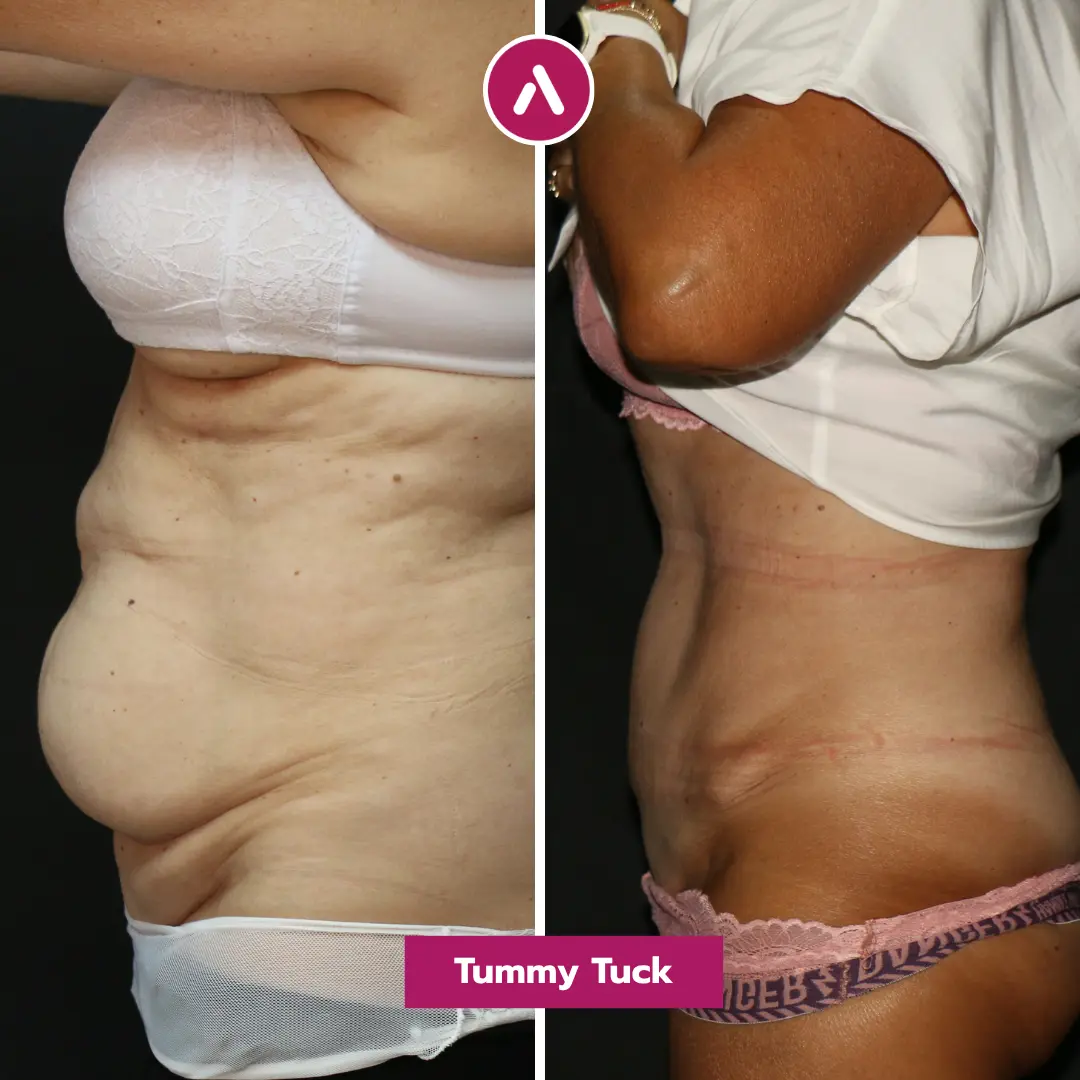
Old Surgical Scars After Tummy Tuck, Caesarean Section, Breast Surgery or Facelift
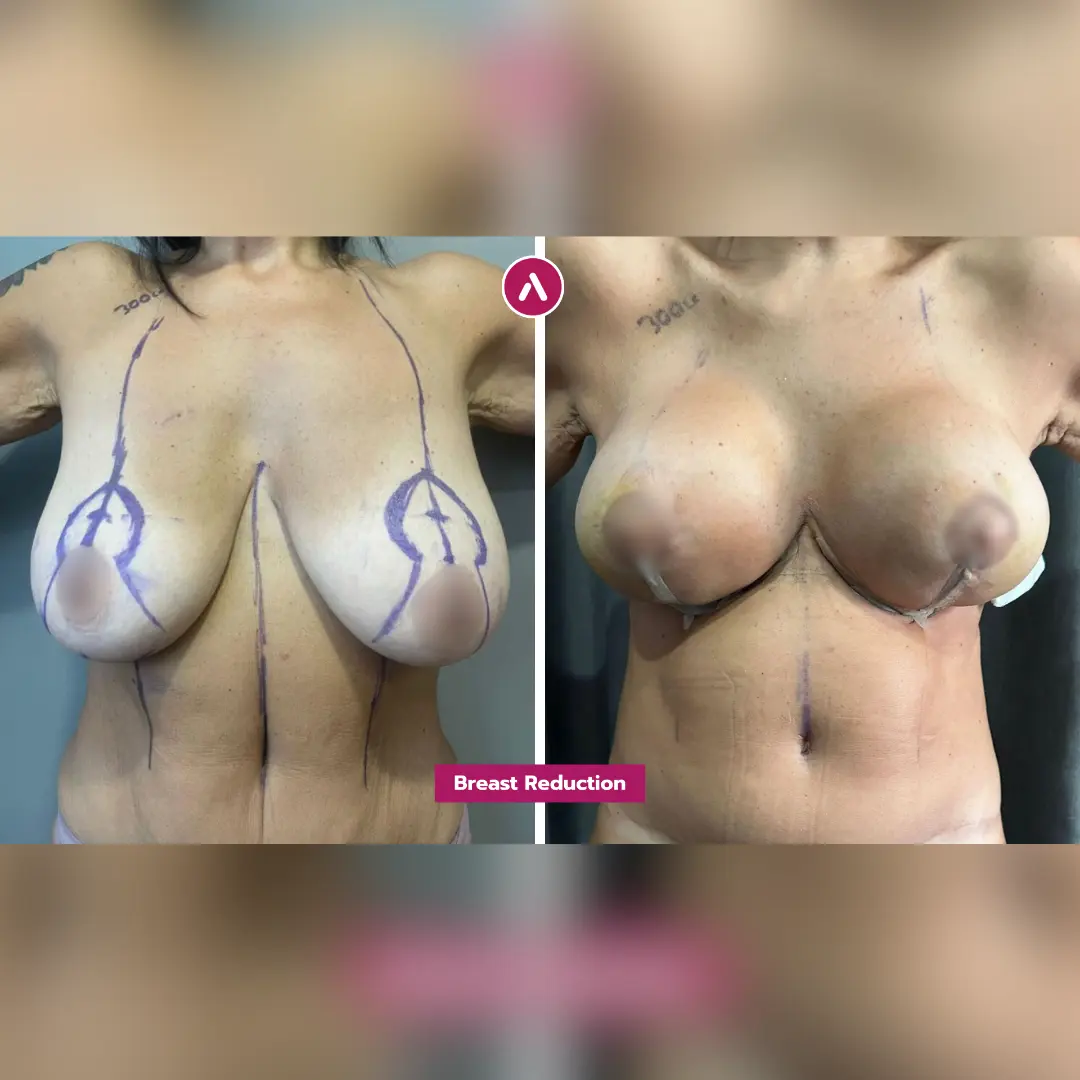
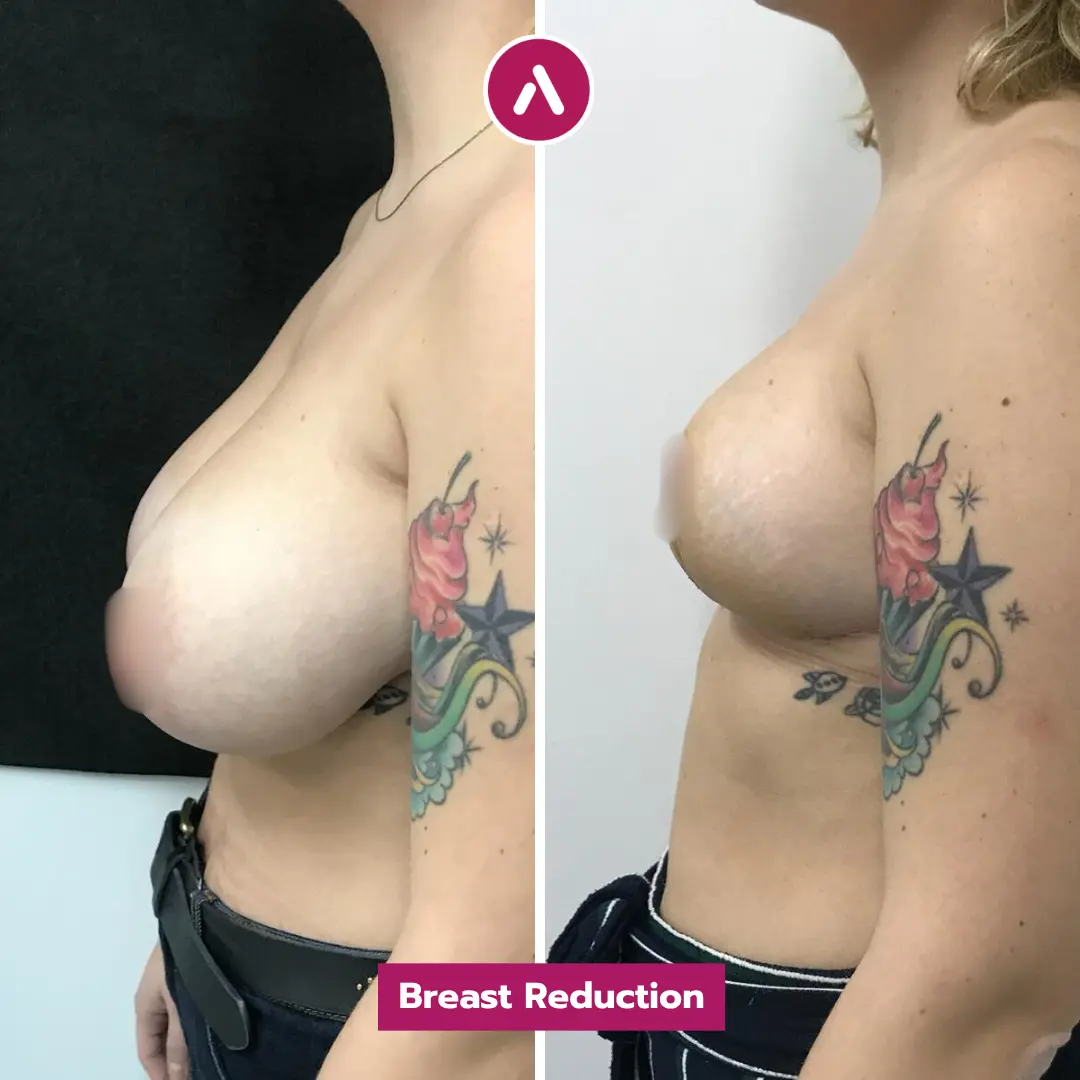
Some of the most commonly revised scars are old surgical scars. These may follow abdominoplasty, C-section delivery, breast augmentation, breast lift, reduction surgery, facelift procedures, eyelid surgery, mole removal, or other cosmetic and reconstructive operations. When the original scar has healed too wide, asymmetrically, or in a way that catches the eye, revision can often make it look more refined.
Patients researching scar revision surgery in Turkey are often particularly concerned about scars after aesthetic surgery because they expected an overall improvement and instead feel left with a visible trade-off. In these cases, post-surgery scar revision focuses not only on removing poor-quality scar tissue, but on improving the line of closure and reducing tension so the replacement scar has a better chance to mature well.
Examples include:
- A tummy tuck scar that has widened in the central area
- A breast lift scar with uneven junctions or thickened segments
- A facelift scar that is visible around the ear or hairline
- A Caesarean scar that appears tethered, indented, or irregular
In the right patient, these can often be improved with carefully planned scar revision rather than simply accepted as permanent.
Traumatic Scars, Irregular Wounds and Poorly Oriented Scars
Traumatic scars can be especially difficult because they do not always follow natural lines of skin tension. A cut caused by an accident, fall, burn, or previous wound breakdown may heal in an unpredictable pattern, leaving a scar that is jagged, widened, or visually disruptive. In these situations, scar correction surgery may involve redesigning the scar rather than merely shortening it.
One useful technique in selected cases is Z-plasty scar revision. This method can help redirect a scar so it blends more naturally with surrounding skin lines, while also improving tightness or mild contracture. Z-plasty is not needed for every patient, but it can be particularly valuable where a straight scar pulls awkwardly across a mobile area.
Patients who feel their scar looks twisted, broken, or badly aligned are often good candidates for a more advanced review. This is especially true when the scar disrupts facial harmony or body contour, rather than sitting quietly within a natural crease.
Wide, Depressed, Raised or Uneven Scars: What Makes a Scar More Noticeable?
A scar becomes noticeable for different reasons, and treatment should always address the specific problem rather than the label alone. A scar may attract attention because it is too wide, because it sinks below the skin surface, because it sits in a poor direction, or because it is raised and firm.
The main categories include:
- Wide scars: often linked to wound tension or poor support during healing
- Depressed scars: where volume loss or tethering creates a visible indentation
- Raised scars: including hypertrophic scars and selected keloid-pattern scars
- Uneven scars: where thickness, texture, or alignment varies along the line
This is why terms such as laser scar removal, hypertrophic scar treatment, or keloid scar removal should never be used interchangeably without assessment. Some scars benefit from surgery, some from energy-based support, some from pressure or injection strategies, and some from a combined sequence over time.
For patients with an uneven scar, the real value lies in identifying exactly what makes the scar stand out. Once that is understood, the treatment plan becomes much more precise and much more honest.
How Scar Revision Surgery Works
Scar revision is not a one-size-fits-all procedure. A successful plan starts with understanding why the original scar became noticeable in the first place. In some patients, the problem is width. In others, it is tension, tethering, poor direction, or excessive thickness. This is why surgical scar revision should always begin with a proper examination rather than a generic promise of “scar removal”. Modern treatment is guided by anatomy, wound-healing principles, and the practical lessons of long-term scar behaviour.
For patients researching scar correction surgery in Turkey, the key principle is simple: the aim is to replace a poor-quality scar with one that has a better chance of healing in a finer, calmer, and more discreet way.
In more complex cases, the treatment plan may benefit from the judgement of a surgeon with dedicated revision experience, especially when the scar is linked to previous cosmetic surgery. These cases often involve altered tissue planes, existing fibrosis, or compromised skin quality, which means the solution must be tailored with greater precision. This specialist perspective can help ensure that the revision strategy is both technically sound and aesthetically realistic.
Excision and Re-Closure: Replacing a Poor Scar with a Finer One
The most common method in scar revision surgery in Turkey is excision and meticulous re-closure. This means the old scar is carefully removed, the surrounding tissues are released or adjusted if necessary, and the wound is then closed with greater attention to tension, alignment, and skin edge precision.
This approach is often appropriate for:
- Wide scars after surgery
- Irregular scars with uneven edges
- Scars that healed with visible track marks or poor alignment
- Selected post-surgery scar revision cases where the original closure was under too much tension
In practical terms, the surgeon is not merely cutting out a line. The procedure involves redesigning the closure so the replacement scar is given a better biological and mechanical environment in which to heal. That is why a carefully performed revision may achieve a much finer result than the original scar, even though both are technically “scars”.
Scar Repositioning Along Natural Skin Lines
In some patients, the main issue is not the scar’s thickness but its direction. A scar that cuts across natural skin creases or sits awkwardly on a mobile part of the body can appear more obvious, even if it is not especially raised. In those cases, scar correction surgery may involve changing the scar’s orientation so it blends more naturally with surrounding tissues.
One useful technique in selected cases is Z-plasty scar revision. This is a well-established surgical method that can help break up a straight, tight, or badly positioned scar and redirect it into a less visually disruptive pattern. It may also help where a scar creates mild pulling or contracture.
Not every scar requires Z-plasty, but it can be especially valuable when:
- The scar crosses a natural fold at an awkward angle
- The scar causes visible pulling during movement
- The scar looks long, straight, and conspicuous because of its orientation
When chosen appropriately, this approach can make an old scar look less harsh and more compatible with the body’s normal lines.
Combining Surgery with LLLT Scar Healing Support for Better Maturation
Scar quality is not determined in theatre alone. It also depends on how the tissue matures in the weeks and months afterwards. This is where supportive technologies can be valuable. At AKM Clinic, scar-focused aftercare may include LLLT support, using a 650 nm soft laser to encourage fibroblast activity and help scars heal in a smoother way.
Patients often search for terms such as laser scar removal in Turkey or old scar treatment in Turkey, but it is important to be precise. Some laser-based treatments are used for colour, texture, or surface refinement, while low-level light support is used to encourage healthier scar maturation after surgery. The best plan depends on the scar itself.
| Scar Problem | Possible Approach | Main Aim |
|---|---|---|
| Wide surgical scar | Excision and meticulous re-closure | Create a finer, narrower scar line |
| Poorly oriented or tight scar | Z-plasty or scar redirection | Improve direction and reduce visual tension |
| Raised or uneven scar texture | Selected revision with tailored aftercare | Improve contour and surface quality |
| High concern about scar maturation | LLLT support during recovery | Support smoother healing and reduced visibility |
For suitable candidates, combining precise revision surgery with careful aftercare is often more effective than relying on one isolated treatment alone. This is where clinical planning, rather than marketing language, makes the real difference.
What Results Are Realistic? Improving a Scar vs Erasing It Completely
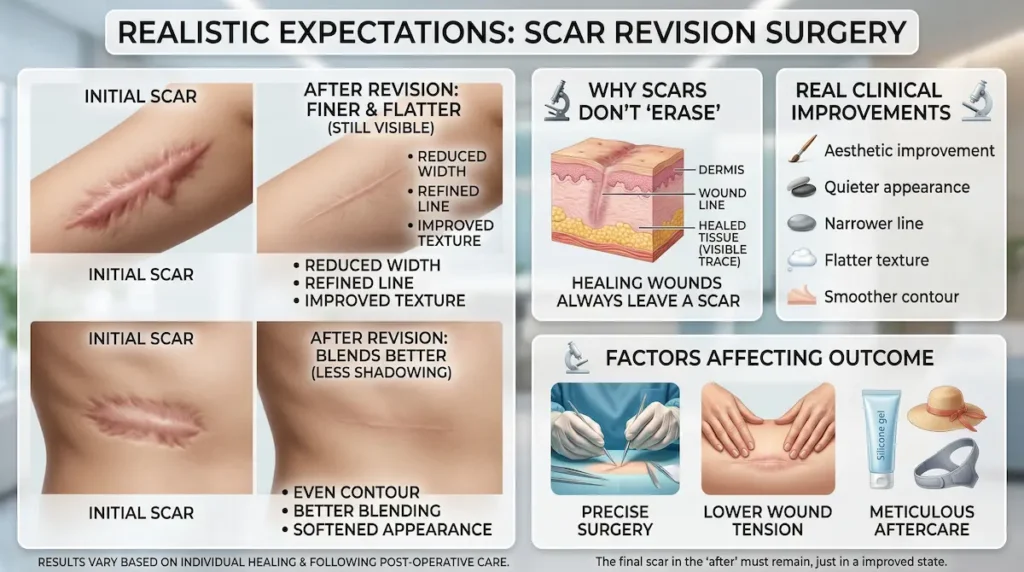
One of the most important parts of any scar consultation is expectation management. Many patients first search for scar removal surgery in Turkey because it sounds simple and definitive. In reality, ethical revision surgery is not about total erasure. It is about measurable aesthetic improvement. A scar can often become flatter, finer, softer, better positioned, and less attention-grabbing, but a completely invisible result should never be promised by a responsible surgeon.
The goal of scar revision is improvement, not fiction. The best results look quieter, softer, and far less noticeable in normal daily life.
Why No Ethical Surgeon Should Promise “Invisible” Scars
Every incision that passes through the full thickness of the skin leaves a scar. That is a basic fact of wound healing, as the NHS explains in its guidance on scars. Even when the final line becomes extremely fine, there is still a biological record of healing. What varies is how visible that record becomes over time.
A trustworthy consultation should therefore avoid phrases such as “perfect scar removal” or “completely invisible scar”. Instead, the surgeon should explain:
- What features of your scar can realistically be improved
- What cannot be fully changed
- How your skin type and healing pattern may influence the result
- Whether staged treatment may be wiser than a single intervention
This matters especially for patients who already feel disappointed by previous treatment. Honest advice builds trust. Exaggerated promises damage it.
What “Improvement” Usually Means in Real Clinical Terms
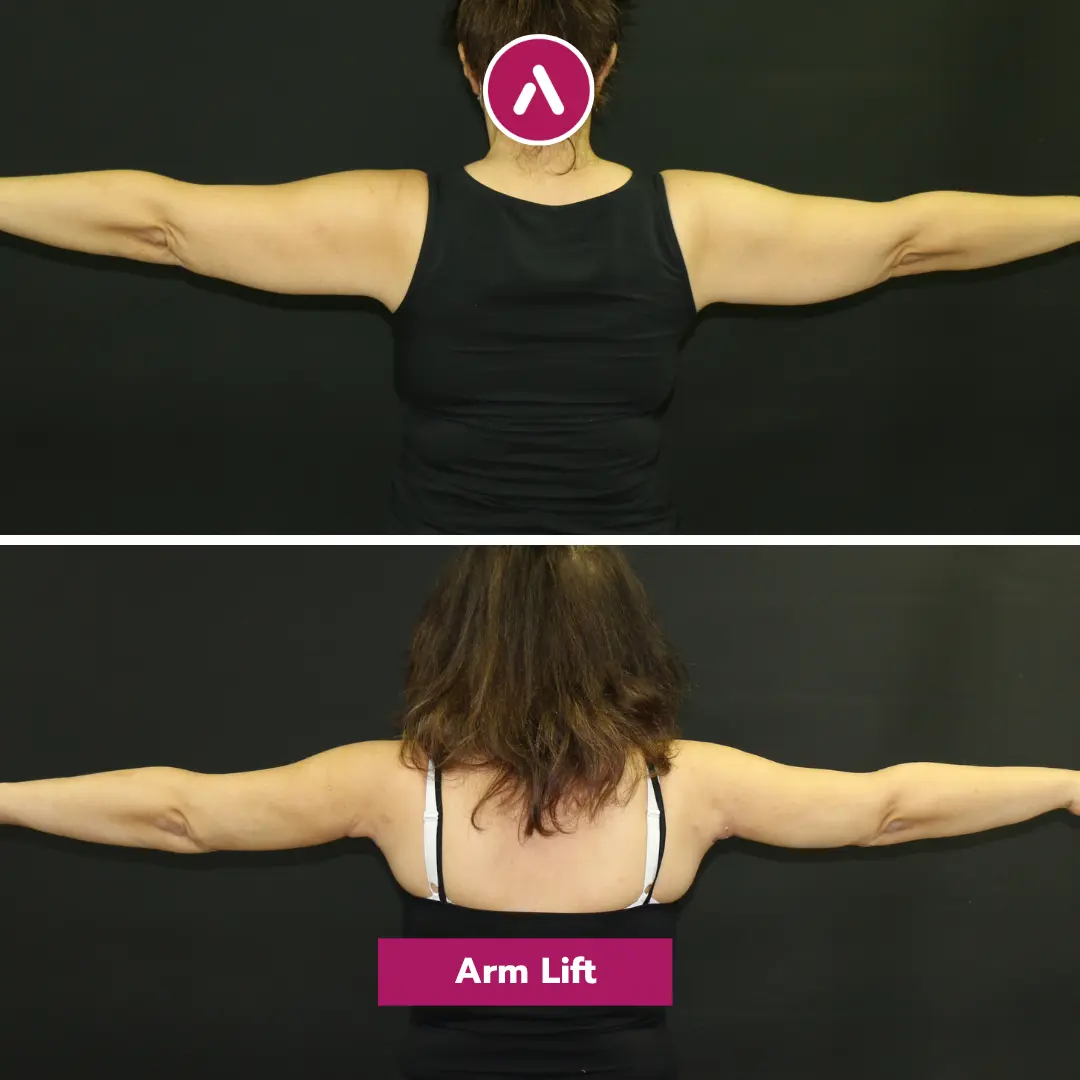
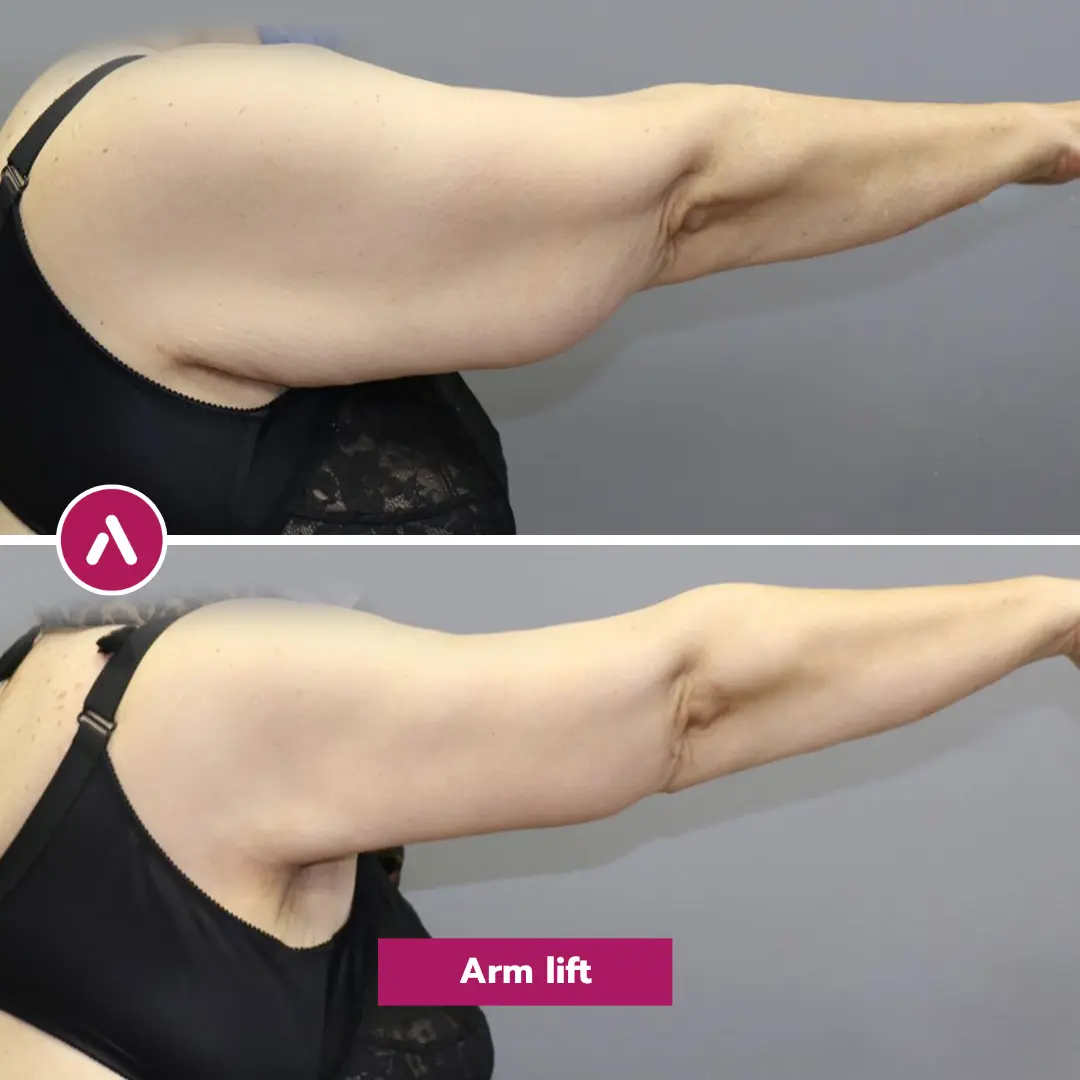
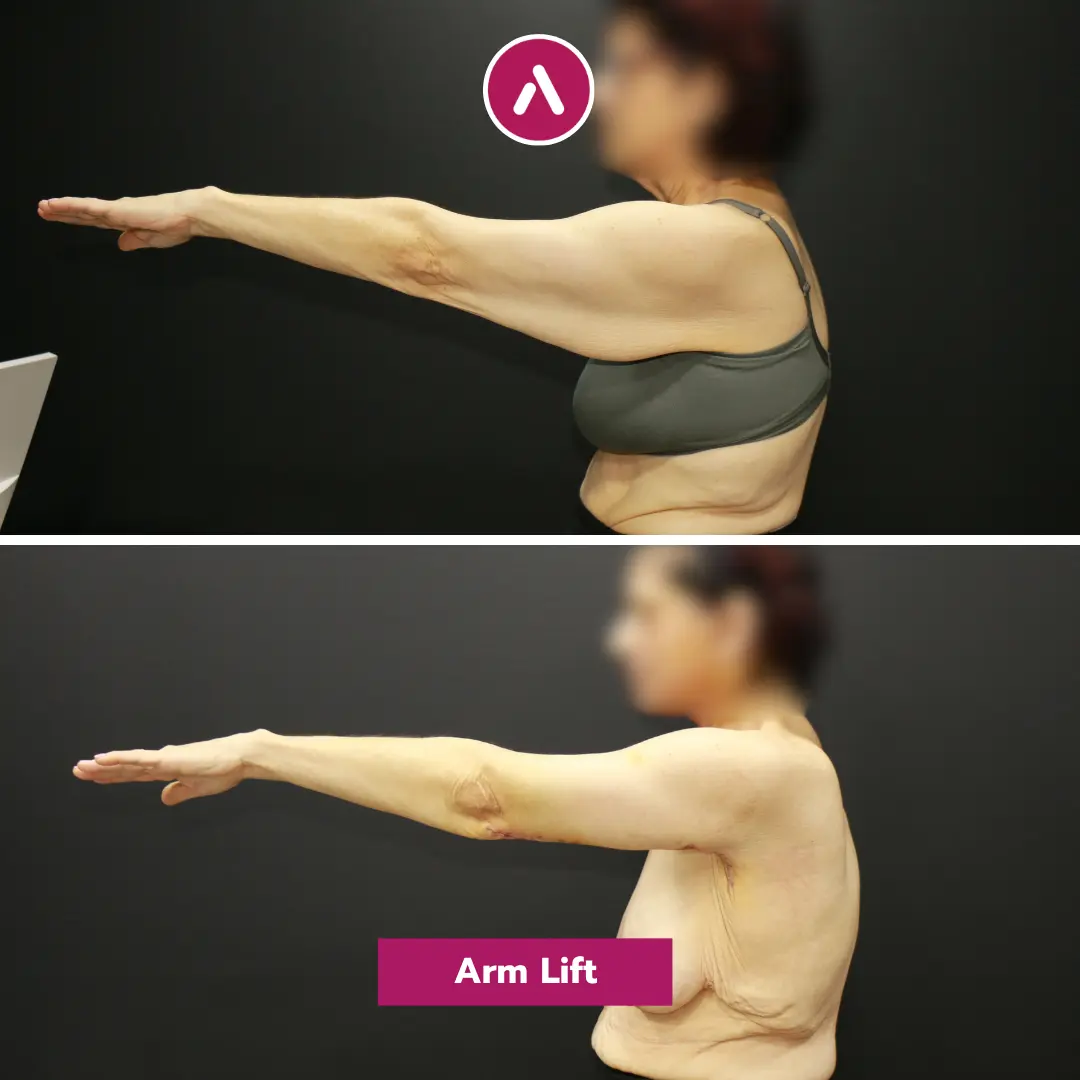
When surgeons speak about a successful outcome, they usually mean that the scar becomes less noticeable rather than non-existent. For example, an old scar may still be present on close inspection, but it may no longer be the first thing people notice. That is often a very meaningful change for the patient.
In real terms, successful scar revision surgery may lead to:
- A narrower scar line
- A flatter and softer texture
- Less irregularity at the edges
- Better blending with surrounding skin
- Reduced tethering or contour distortion
This is particularly relevant in uneven scar revision cases, where the patient is not only concerned by the scar itself, but by how it disturbs the shape of the surrounding area. A smoother contour can sometimes matter just as much as the scar line becoming finer.
| Unrealistic Expectation | Realistic Surgical Goal |
|---|---|
| The scar will disappear completely | The scar should look less visible and more refined |
| One treatment works for every scar type | Treatment must match the scar’s structure and behaviour |
| The final result is immediate | Scar maturation continues over months |
| If it is revised once, no aftercare matters | Aftercare strongly influences the final quality |
How Skin Quality, Tension and Aftercare Affect the Final Outcome
Even technically excellent surgery can be undermined by unfavourable healing conditions. Scar quality depends on a combination of factors, including skin thickness, natural collagen behaviour, body area, movement, wound tension, sun exposure, and post-operative care. This is one reason why the best outcomes come from proper planning rather than rushed treatment.
Research on wound healing supports a principle surgeons have long observed in practice: lower tension, precise closure, and careful follow-up improve the odds of a better scar. For the patient, that means following instructions matters. Silicone care, scar support, activity modification, sun protection, and review appointments all influence the final result.
In other words, surgery creates the opportunity for improvement, but healing determines how fully that opportunity is realised.
Why Patients from the UK Choose Turkey for Scar Revision
For British patients, the decision to travel is rarely about price alone. In revision work, trust matters even more than value. Patients want to know who will assess them, who will operate, how realistic the advice will be, and what happens once they return home. This is why many people looking into scar correction surgery in Turkey compare not only fees, but also communication quality, consultant involvement, aftercare, and the overall patient journey.
Many UK patients also feel more confident when their case is reviewed by a surgeon with dedicated revision experience, particularly if the scar follows a previous cosmetic procedure. This added level of expertise can be reassuring when trust has already been affected by an unsatisfactory result, as revision-focused surgeons are typically better equipped to assess tissue quality, healing limitations, and the most realistic path towards a cleaner, more refined outcome.
Access to Consultant-Led Revision Care Without Lengthy Waiting Times
Revision work is not the same as primary cosmetic surgery. It often requires a more careful eye, a more individual treatment plan, and a willingness to explain what can and cannot be changed. For UK patients, this consultant-led approach is especially important, particularly if they have lost confidence after a previous disappointing result.
AKM Clinic’s approach for UK patients is built around surgeon-led care, European Board-level credentials, and a treatment philosophy centred on natural, carefully judged outcomes rather than overstatement. For patients who are cautious about travelling abroad, that degree of clarity and leadership can be a major deciding factor.
Patients exploring old scar treatment in Turkey are often not simply buying a procedure. They are choosing a surgeon’s judgement.
Harley Street-Level Expectations with More Accessible Private Pricing
Many British patients are used to comparing private treatment against the benchmark of Harley Street or London-based cosmetic clinics. The appeal of Istanbul is not that it feels “cheap”. Rather, it can offer a more accessible route to private revision care while still meeting high expectations around planning, safety, and personalised attention.
That distinction matters. Patients researching scar revision surgery in Turkey are often value-conscious, but they are rarely looking for bargain-basement medicine. They want transparent pricing, clear inclusions, and a sense that the standard of care reflects serious private practice rather than sales-led tourism.
In that sense, Istanbul often appeals to patients who want premium value: careful surgical thinking, modern facilities, and consultant-led decision-making without the cost profile many associate with central London private care.
The Appeal of All-Inclusive Planning and Ongoing Support for UK Patients
For many patients, practical support is just as reassuring as the procedure itself. Travelling for treatment feels more manageable when logistics are organised, communication is straightforward, and aftercare does not end the moment the flight home begins. This is one reason Istanbul remains attractive to British patients considering surgical scar revision in Turkey.
Practical support for UK patients may include:
- Clear pre-operative communication in English
- Transparent treatment planning before travel
- Structured follow-up after returning home
- A direct WhatsApp, phone or email contact route to the team in Istanbul
For patients seeking post-surgery scar revision, this continuity can be particularly valuable. After all, revision surgery is not only about the operation day. It is also about how confidently and calmly the healing period is managed afterwards.
That is why many UK patients do not assess scar revision abroad purely through a cost lens. They assess it through a trust lens: expertise, honesty, planning, and support.
Recovery After Scar Revision Surgery
Recovery after scar revision depends on the size, location, tension, and complexity of the scar being treated. A small, straightforward revision may involve only mild discomfort and a short recovery period, while a more complex old scar revision procedure may require longer scar support and closer follow-up. What matters most is not only how the area looks in the first few days, but how the scar matures over the following weeks and months.
For patients considering scar revision surgery in Turkey, it is helpful to remember that scar healing is gradual. The line may look pinker or firmer before it looks better. That is normal. Good recovery is not about an instant cosmetic transformation; it is about guiding the tissues towards a calmer, flatter, more discreet final result.
What to Expect in the First Week: Dressings, Tenderness and Early Healing
In the first few days after revision, the treated area is usually protected with dressings or steri-strips. Mild swelling, tightness, tenderness, and a pulling sensation are common, especially where the wound has been re-closed under carefully controlled tension. Most patients describe discomfort as manageable rather than severe.
During this stage, patients are typically advised to:
- Keep the area clean and dry as instructed
- Avoid unnecessary stretching or friction
- Sleep in a position that does not place pressure on the revised scar
- Use only the recommended medication, such as paracetamol if appropriate
- Attend early review appointments or send progress photographs when requested
For patients having post-surgery scar revision, the early healing period is especially important because the goal is to avoid recreating the same problems that affected the original scar. A technically good revision can still be compromised if the wound is stressed too soon.
When You Can Fly Back to the UK and Resume Normal Routine
One of the most practical questions for British patients is when it is safe to return home. The answer depends on the size of the revision and the body area involved. A small facial or body scar revision may allow a relatively short stay, while a larger or more tension-sensitive procedure may require a longer recovery window in Istanbul before flying back to the UK.
In general, patients can often resume light daily activities quite quickly, but they should avoid activities that stretch the scar, increase swelling, or disrupt the closure. That includes gym training, heavy lifting, vigorous exercise, and any movement that repeatedly strains the revised area.
| Recovery Stage | What Patients Commonly Experience | Typical Advice |
|---|---|---|
| Days 1–3 | Mild swelling, tenderness, dressings in place | Rest, protect the wound, follow cleaning instructions |
| Days 4–7 | Settling discomfort, early skin healing | Avoid tension, continue review and dressing care |
| Weeks 2–6 | Scar may look pink, firm, or slightly raised | Begin scar care as advised, avoid sun and excessive strain |
| Months 2–12 | Ongoing scar maturation and softening | Continue silicone care, sun protection, and follow-up |
For UK patients, the safest answer on flying is always individual. A responsible clinic should provide guidance based on your exact procedure rather than a generic timetable.
How HBOT and Careful Follow-Up May Support Smoother Recovery
Recovery is influenced not only by the surgery itself, but by the biological environment in which the wound heals. This is where structured aftercare can make a visible difference. At AKM Clinic, supportive technologies such as HBOT may be used to help reduce post-operative oedema and support healing, while LLLT-based scar support may be considered as part of a broader scar maturation strategy.
Patients often associate scar care only with creams or silicone, but that view is incomplete. Good aftercare is a system. It may include wound monitoring, timing of dressings, scar taping, silicone-based support, careful return to activity, and selected technology-led interventions. This is one reason British patients looking into old scar treatment in Turkey often value consultant-led planning over simple “procedure sales”.
Healing is never purely mechanical. It is a biological process shaped by tissue oxygenation, inflammation control, fibroblast behaviour, and patient compliance. That is where wound-healing principles and practical aftercare come together.
Choosing the Right Clinic for Scar Revision in Turkey
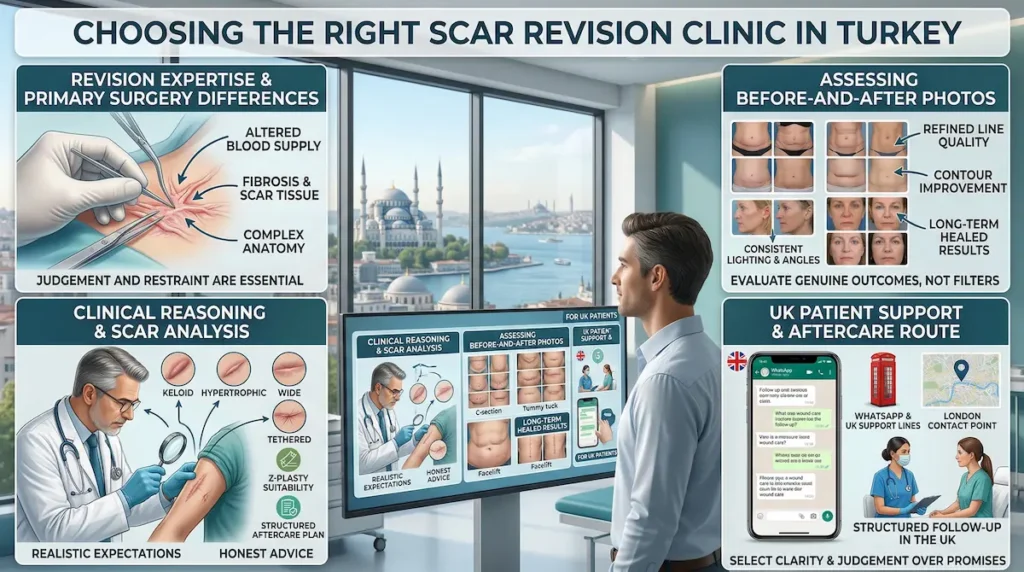
Choosing the right provider for scar revision in Turkey is often even more important than deciding to have the procedure itself. Revision work demands careful judgement, surgical restraint, and a thorough understanding of how scars heal over time. Patients who have already experienced a disappointing result are usually far more focused on who will evaluate their case, who will perform the surgery, and whether the advice is genuinely realistic. For this reason, many feel more reassured when their treatment is planned by a surgeon with dedicated revision expertise.
For anyone researching scar correction surgery in Turkey, the right clinic should offer more than a treatment quote. It should offer clinical reasoning, honest expectation management, and a structured aftercare pathway.
Why Revision Work Requires More Than Standard Cosmetic Experience
Primary surgery and revision surgery are not the same. In revision cases, the tissues may already have altered blood supply, unpredictable tension patterns, fibrosis, asymmetry, or compromised skin quality. The surgeon is not working on untouched anatomy. They are working on a result shaped by previous healing.
That is why surgical scar revision should be approached with a revision mindset rather than a routine cosmetic mindset. The surgeon must judge:
- Whether the scar is mature enough to revise
- Whether surgery is better than non-surgical support
- Whether simple excision is enough or a more advanced method is needed
- How to minimise repeat widening, tension, or irregularity
For many patients, this level of judgement is what defines genuine expertise in revision care.
What to Look for in Before-and-After Photos of Scar Cases
Before-and-after photographs can be useful, but only if they are interpreted carefully. A good scar revision portfolio should show consistency, proper lighting, and healed results rather than only very early post-operative images. Scars evolve. An immediate photograph after closure tells you almost nothing about the final quality.
When reviewing images, look for:
- Comparable lighting and camera angles
- Photographs taken after proper healing time
- Cases similar to your own scar type and body area
- Evidence of refined line quality rather than simply shorter scars
- Realistic outcomes rather than over-edited or heavily filtered presentations
This matters especially in uneven scar revision cases, where contour improvement may be just as important as the scar line itself. A strong result should look natural, not artificially perfected for marketing purposes.
Questions UK Patients Should Ask Before Booking Treatment Abroad
British patients tend to value clarity, structure, and accountability. That is a strength. Asking the right questions before treatment abroad can prevent poor decisions and reveal whether a clinic truly understands revision care.
Useful questions include:
- Who will assess my scar and who will perform the procedure?
- Am I suitable for surgery, or would another treatment be better?
- Is my scar hypertrophic, keloid, tethered, wide, or poorly oriented?
- Would I benefit from techniques such as Z-plasty scar revision?
- What kind of aftercare and follow-up will I receive after returning to the UK?
- How will I stay in contact with the team after I return home, for example by WhatsApp, phone or email?
- What is included in the quote, and what is not?
Revision patients do best when they choose clarity over sales language and judgement over promises.
For cautious patients, clear answers on who to contact after returning home and how follow-up works can add meaningful reassurance.
Cost of Scar Revision Surgery in Turkey vs the UK
Cost matters, but in scar revision it should never be viewed in isolation. The cheapest option is not necessarily the best value, especially when you are trying to correct a previous result. For most patients, the real comparison is not simply “Turkey versus the UK”, but “what level of revision care, planning, follow-up, and transparency am I receiving for the investment?”
For many patients, the quality of revision planning matters more than the headline price, particularly when a previous procedure has already led to disappointment. In these situations, being assessed by a surgeon with dedicated revision experience can offer greater value than choosing the lowest quote, because careful case selection, realistic advice, and structured follow-up often play a major role in achieving a better long-term result.
Patients often search for scar removal surgery in Turkey because they assume there is a single standard price. In reality, scar revision cost varies widely according to complexity. A short, straightforward revision under local anaesthesia is very different from a larger, more delicate revision involving contour irregularity, scar redirection, or multiple treatment stages.
What Influences the Price of Scar Revision Surgery?
The cost of scar revision surgery in Turkey usually depends on several clinical and practical factors. These include the size of the scar, the body area involved, the complexity of the closure, the type of anaesthesia, and the level of aftercare required.
Common cost factors include:
- Scar length and width
- Body area and visibility
- Need for advanced techniques such as tissue rearrangement or Z-plasty
- Whether the scar is flat, raised, tethered, depressed, or uneven
- Consultant-led surgical planning and aftercare
- Whether supportive technologies are included in the recovery plan
This is why a meaningful quotation should follow proper assessment. Without photographs or an examination, a fixed price may be more of a sales tactic than a clinical judgement.
Why Complex Revision Cases Cost More Than Simple Scar Excision
Patients are sometimes surprised that revision work can cost more than expected. However, complexity in scar revision is not based on scar length alone. A small but poorly placed scar on a high-visibility facial area may demand more precision than a longer scar in a concealed body region. Likewise, cases involving hypertrophic scar treatment, selected keloid scar treatment pathways, or contour distortion may require a more careful, staged, or combined approach.
Examples of factors that may increase cost include:
- Previous poor healing or repeat revision history
- Need for highly meticulous layered closure
- Requirement for scar redirection rather than simple removal
- Additional technology-led aftercare or laser support
- Complex body areas where tension control is difficult
In other words, revision is priced according to thought, precision, and follow-through, not just time in theatre.
Comparing UK Private Clinic Costs with Istanbul-Based Treatment Value
For UK patients, the appeal of Istanbul is usually based on value rather than bargain pricing. Harley Street and other London private clinics can be expensive, particularly when revision-level expertise and follow-up are involved. By contrast, a well-structured Istanbul pathway may offer consultant-led care, procedure planning, recovery support, and organised logistics in a more accessible package.
| Consideration | UK Private Clinics | Istanbul-Based Private Care |
|---|---|---|
| Initial pricing profile | Often higher, especially in London | Often more accessible in GBP terms |
| Consultant-led revision focus | Available, but may be costly | Can be combined with structured package planning |
| Logistics | Local travel only | Travel required, but often organised and streamlined |
| Aftercare value | Variable by clinic | May include more integrated follow-up support |
| Overall decision factor | Convenience | Balance of expertise, planning, and value |
For many patients, the right question is not “Where is the cheapest scar revision?” but “Where am I most likely to receive honest advice, refined technique, and structured aftercare for the investment I am making?”
Frequently Asked Questions (FAQ): Scar Revision Surgery in Turkey
Patients considering scar revision often have practical concerns about timing, pain, travel, and expectations. These are sensible questions, especially for UK patients travelling abroad for treatment. Below are concise answers to the most common concerns surrounding scar revision surgery in Turkey.
Can old scars really be improved years later?
Will scar revision surgery remove my scar completely?
How long should I wait before revising a scar?
Is scar revision painful?
How long does recovery usually take?
When is it safe to fly back to the UK after scar revision surgery?
How much does scar revision surgery in Turkey usually cost?
If you would like to explore related topics in more detail, you can also learn about Tummy Tuck Revision, Breast Implant Revision, Tummy Tuck Scar Treatment, How to Prepare for Cosmetic Surgery, Questions to Ask Plastic Surgeon, Ghost Surgery in Turkey, Online Plastic Surgery Consultation and English-Speaking Plastic Surgeons in Turkey to better understand your options, safety considerations, consultation process, and overall treatment journey before making a well-informed decision.
Medical Disclaimer: This page is provided for general educational purposes only and does not replace a face-to-face medical consultation, diagnosis, or personalised treatment plan. All surgery carries risks and outcomes vary between individuals. Suitability for plastic surgery, procedure selection, and anaesthesia choice can only be determined after a full clinical assessment by a qualified surgeon. Always follow your clinician’s instructions and seek urgent medical attention if you develop concerning symptoms during recovery.
Related Treatments

Ready to Begin Your Own Transformation Journey?
Join the 2,000+ patients who have trusted Dr Akif Mehmetoğlu and the AKM Clinic team. Your journey to a more confident, naturally restored you begins with a simple, no-obligation conversation. Contact us today from the UK for your free virtual consultation.
#1: Get Your Free Personalised Quote
Start with a free, no-obligation online consultation. Share your photos, and our surgical team will provide a fully personalised treatment plan and a transparent, all-inclusive price package. There are no hidden fees.
#2: Secure Your Date & VIP Booking
Once you are ready, our dedicated patient coordinators will help you secure your procedure date. We will handle all your bookings, including your 5-star hotel accommodation and private VIP airport transfers.
#3: Arrive in Istanbul & Meet Your Surgeon
Arrive at Istanbul Airport (IST) and be greeted by your private driver. Settle into your hotel and prepare for your in-person consultation, where you will meet your specialist surgeon to finalise the details for your "natural, subtle, and restored" new look.