
Upturned Nose: Causes, Correction Options and Honest Limits
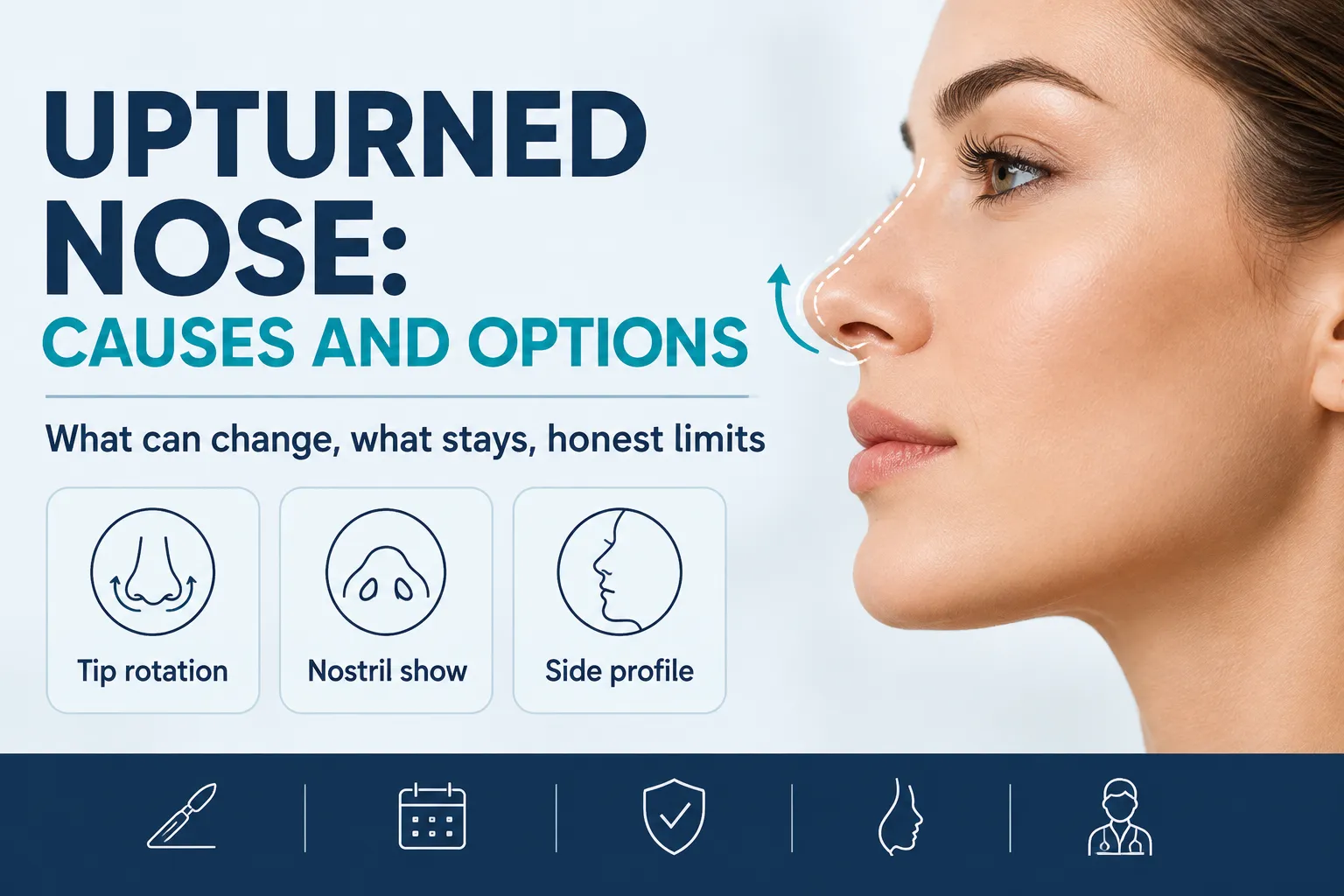
AI Summary
- An upturned nose has a tip that points upwards, which shows more nostril from the front and can make the nose look shorter. It does not need treatment by default.
- An upturned button nose is an informal label. 'Rounded' describes the tip's shape and 'upturned' describes its direction, and a surgeon assesses them separately.
- Filler adds volume but does not reposition the tip. Surgery may adjust or add tip support, and after a previous rhinoplasty the change you can achieve may be more limited.
- Before you travel, ask who will operate, what will stay unchanged, how complications are handled and how follow-up works once you are back in the UK.
AI-generated summary, fact-checked by our medical experts.
An upturned nose has a tip that points upwards, so more nostril shows from the front and the nose can look shorter in profile. It does not need treatment by default. If the shape bothers you, rhinoplasty can sometimes lower the tip, but only after an examination of your anatomy, your breathing and any previous nasal surgery.
Start by being specific. You might want less visible nostrils, a different side profile or a nose that looks less short. These are separate requests, so describe the concern and leave the choice of technique to the examination. Mention any breathing trouble too, even if appearance is what made you enquire.
This article stays with one question: the upturned tip. It covers what causes it, what can and cannot change it, and what to ask before surgery in Istanbul. For the procedure as a whole, our rhinoplasty guide for UK patients covers it in full.
Table of Contents
What does an upturned nose look like?
An upturned nose has a tip that points upwards rather than straight ahead. You may notice it in profile, in how much nostril shows from the front, or in both views. People describe the same nose in very different ways. Knowing the terms a surgeon uses makes your consultation clearer.

What does upward nasal tip rotation mean?
Nasal tip rotation describes which way the tip points: up, forwards or down. It is about direction, not size. A small nose can point straight ahead, and a larger one can point upwards.
Notice what actually catches your eye. It might be the upward angle in profile, the nostrils you see from the front, or a sense that the nose looks short. Each one is a different concern. On its own, 'too upturned' will not tell your surgeon enough.
You do not need to measure any angle yourself. Ask the surgeon which feature they are looking at and how it relates to what bothers you.
Is an upturned button nose the same thing?
Not quite. An upturned button nose is an everyday label. It usually means a small-looking nose with a rounded tip that faces upwards, and it is not a surgical diagnosis.
The two words describe different things. 'Rounded' refers to the shape of the tip and 'upturned' to its direction. A rounded tip does not always point upwards, and calling a nose button-shaped says nothing about which feature, if any, you would change.
Use the label as a starting point. Then explain what you see in your own words, so that you and the surgeon mean the same thing.
What do the front and side views show?
Each view answers its own question. A surgeon looks at your front and side views together and does not judge the nose from a profile outline alone.
- Tip direction: does the tip point upwards in profile?
- Apparent length: is your concern that the nose looks short overall?
- Nostril visibility: how much nostril do you see from the front?
Keep these observations separate. At your consultation, point out what bothers you in each view and what you would like left alone.
Why is my nose tip upturned?
Start with when you first noticed it. A shape you have always had needs a different conversation from a change that followed an injury or an operation. Bring that history with you. Photographs alone cannot show the cause.
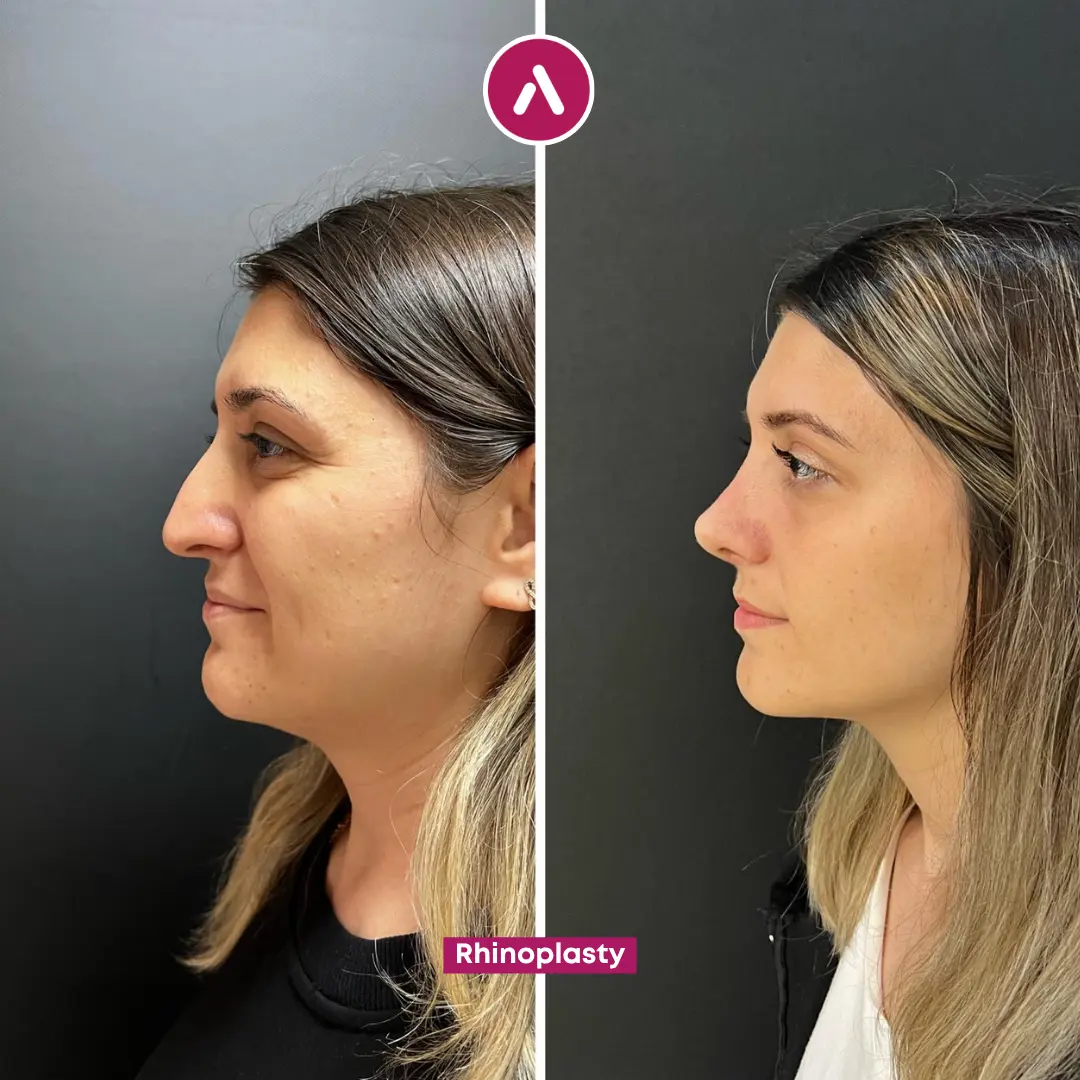
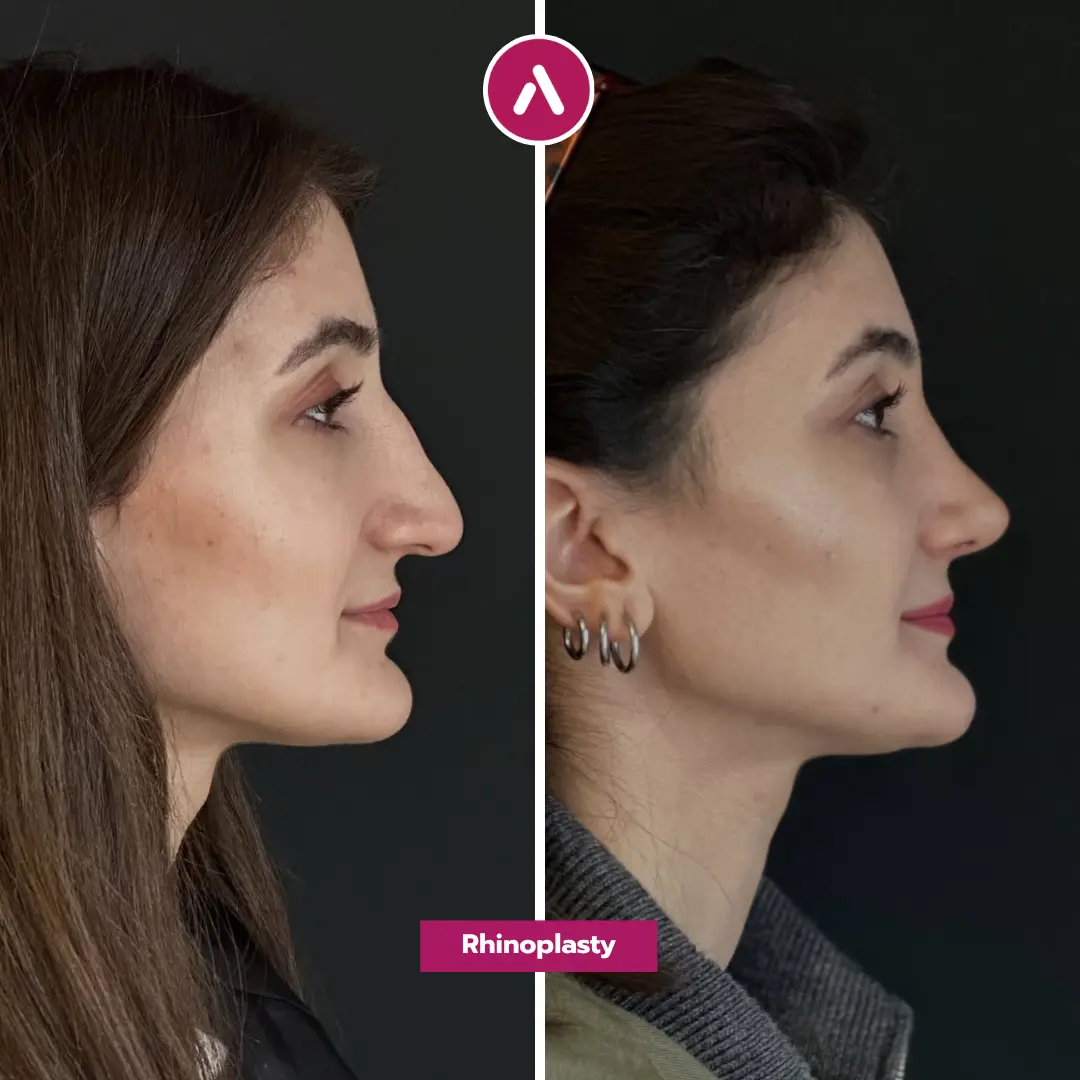
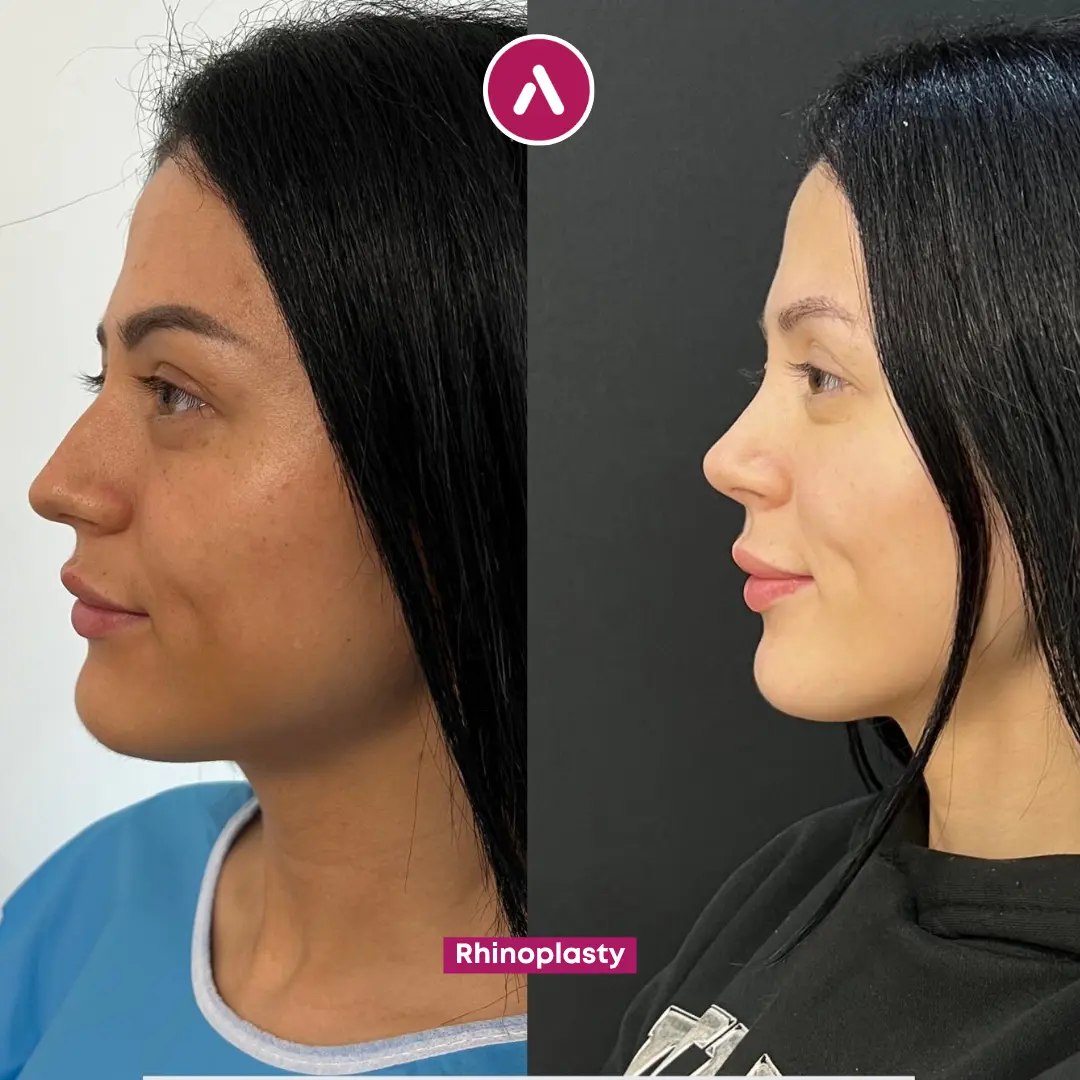
A nose shape you have always had
Your starting anatomy matters most. Inherited differences in the nasal bones and cartilage can influence the shape of your nose. If your nose has looked this way for as long as you can remember, tell the surgeon. Nothing has necessarily gone wrong.
Older photographs can help. They show what has always been there and what, if anything, has changed. Treat them as background, not as a diagnosis.
Changes after an injury or previous rhinoplasty
An earlier operation can change how the tip is supported and where it sits. Even so, an upturned look does not by itself prove that the operation went wrong. Let the examination decide that.
Injuries belong in your history too. Mayo Clinic's rhinoplasty overview lists repairing problems after an injury among the reasons for nose surgery. It also explains that assessment covers your medical history, your previous operations and the inside and outside of your nose.
Share any operation records you have. Include nasal injuries and how they were treated, even if you are unsure they are relevant. If the records are missing, say so rather than guessing.
Does an upturned tip explain blocked breathing?
Not on its own. The shape you see from outside is only part of the picture, which is why the examination covers the inside of the nose as well. Do not assume that lowering the tip will clear a blocked nose.
Before your appointment, note down:
- Whether the shape has always been there or changed later.
- Any previous nasal operations, injuries or treatment.
- Whether your breathing feels blocked, and when you notice it.
- Whether your concern is appearance, breathing or both.
Take this list to your consultation. Ask which parts, such as the septum and the airway, need an in-person examination before the surgeon can explain the cause or suggest a plan.
Can you change an upturned nose without surgery?
That depends on what you want to change. Injections add volume to selected areas. They do not reposition the tip or rebuild the cartilage that supports it. Leaving your nose as it is remains a sound choice.
Choosing not to change your nose
You do not have to change it. If the worry comes mainly from a trend label or from comparing yourself on social media, give it time before you decide that treatment suits your own preferences.
Write down what actually bothers you: the profile, the visible nostrils or how your nose meets your upper lip. Keep that separate from any treatment someone suggests. An assessment can simply help you understand your options. You can have one without committing to anything.
Can nose filler lower an upturned tip?
Dermal fillers add volume. They cannot remove tissue, so filler changes how the surrounding contours look and does not lower the tip itself. Ask the clinician to say plainly whether they are offering a visual adjustment or something that addresses your actual concern.
Filler carries real risks. The FDA's page on dermal filler safety warns that an accidental injection into a blood vessel can cause tissue death, blindness or stroke. The FDA is a US regulator, so treat this as a safety reference rather than a statement about UK approval.
An injection is not a casual trial. Before you agree, ask:
- What can this realistically change about my concern?
- Could adding volume work against my wish for a smaller-looking nose?
- Who would assess and manage a suspected complication?
Do nose clips, exercises or massage work?
Be wary of any promise of permanent reshaping. We do not recommend clips, exercises or self-massage as a way to change the shape of the nose for good.
If a product makes that claim, ask for evidence of the specific change it promises. Promotional photographs are not evidence. A short-lived change in appearance does not show a lasting change in structure.
Tie any non-surgical idea back to your original goal. If nobody can explain how it meets that goal, pause. Avoiding surgery is not, on its own, a reason to accept a different treatment.
What surgery can lower an upturned nose tip?
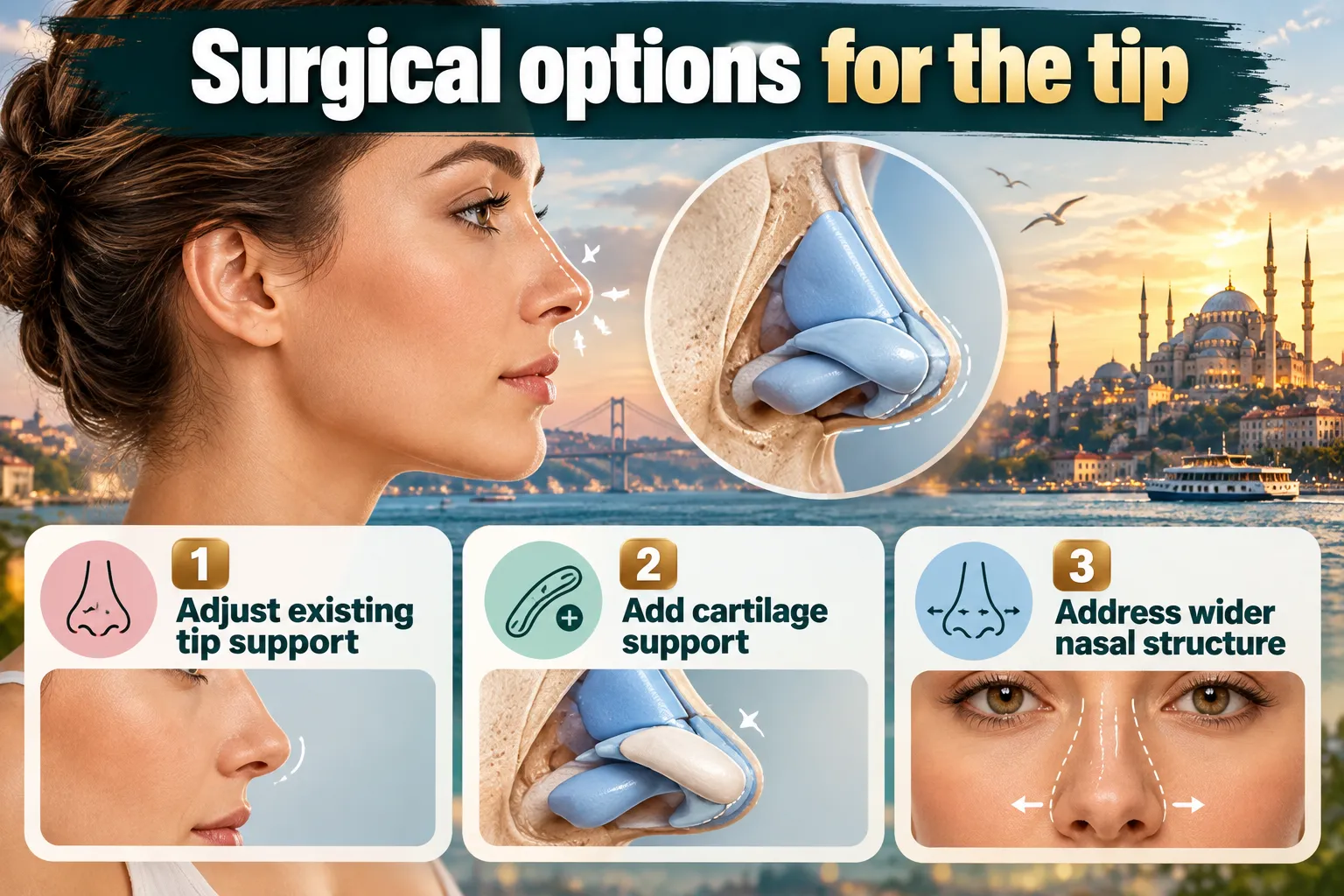
Lowering an upturned nose tip can be approached in more than one way, depending on how your nose is built. The aim has to be precise. Ask your surgeon to separate changing the tip's direction from lengthening the nose, and to explain which of the two your proposed operation would address.
When might tip surgery be enough?
Start with what bothers you. Is it the upward direction of the tip, its rounded shape or how much nostril shows? A surgeon has a clearer starting point with these answers than with a request for a 'smaller' or 'more balanced' nose.
Whether an operation on the tip alone is enough depends on the structure around it and the support it already has. A photograph cannot settle that. Ask what the examination needs to confirm before anyone recommends an approach.
For the procedure itself and its recovery, see our guide to tip plasty in Turkey.
When does correction need wider structural work?
Tip direction is one part of the assessment. A plan may also take in the overall length of the nose, the bridge, the nostril rims and the airway inside. Ask which of these matter in your case, and why.
Cartilage grafting means using cartilage to reshape or rebuild part of the nose. The Mayo Clinic overview mentioned above explains that it can come from deeper inside the nose or from the ear, and from the rib for larger changes. Ask whether your plan includes a graft and where it would come from.
Not every plan needs one. The reason behind a graft matters more than its name. Your surgeon should explain what it would do in your particular plan.
Lowering the tip and lengthening the nose are different goals. Neither one promises a set amount of nostril show. Before you agree to surgery, ask:
- Which part of my concern would this operation address?
- What would you leave unchanged, and why?
- Would the change help my front view as well as my profile?
Why can correction after previous rhinoplasty be harder?
A previous operation changes the starting point. The changes left by the earlier surgery can shape how a revision is planned and may limit how much can change. Ask your surgeon to explain those limits plainly.
Bring whatever records you have from the earlier operation. Ask what they make clear and what still needs examining. If extra cartilage is proposed, ask why.
Keep the agreed goal in view. Your surgeon should tell you what can reasonably change, what should stay the same and where uncertainty remains. Results vary from person to person. A chosen technique is not a promise of a particular final shape.
Is correcting an upturned nose worth the risks?
That depends on what bothers you, what change is realistic and which risks you are willing to accept. You do not have to go ahead. A good consultation leaves you equally free to choose surgery, to wait or to leave your nose as it is.
Who may need to postpone or avoid surgery?
Your health comes before the shape you want. A rhinoplasty assessment looks at your medical history, medicines, previous operations, an examination and your expectations. Mayo Clinic's guidance on preparing for rhinoplasty also advises against smoking, because it slows healing and raises the risk of infection.
Be honest about smoking and medicines. Then use the consultation to clarify:
- Whether your health or medicines make it wiser to postpone.
- Whether the change you want is possible without unacceptable trade-offs.
- Whether you would still want surgery if the change were smaller than you hoped.
An exact result should not be your condition for going ahead. If only one particular photograph would satisfy you, stop and talk that through. A surgeon who advises against operating should explain why. Take that advice seriously.
What could change besides the appearance?
The risks go beyond how the nose looks. The same Mayo Clinic overview lists bleeding, infection, an adverse reaction to anaesthesia, breathing difficulty, numbness, an uneven-looking nose and scarring. It also notes that some people are unhappy with the result and want further surgery.
More correction is not automatically better. Ask how the plan protects the support and function of your nose while it changes the tip. Ask which features the surgeon would deliberately leave alone.
Plan for the possibility of something going wrong. Before you sign a consent form, ask who would assess a complication, how decisions about treatment would be made and what further care could involve. The answers should cover more than the intended result.
What can results photographs and reviews really tell you?
Photographs help a conversation. They do not forecast your outcome. You can use our rhinoplasty before and after gallery to show what you like, but results vary and another person's nose does not predict yours.
Look past the profile. Check whether the photographs show the same views in similar lighting, and whether the original concern looks like yours. A photograph cannot show how someone breathes.
Reviews answer different questions. Read patient reviews for what they say about communication, organisation and follow-up. Your own risks and limits come from the surgeon's examination, not from someone else's satisfaction.
My nose looks too upturned after rhinoplasty: should I wait?
If your nose looks too upturned soon after rhinoplasty, book a review before you conclude that you need more surgery. Equally, do not assume it will drop on its own. Ask your surgical team what they expect to change and which symptoms mean you should be seen sooner.
What can early swelling make difficult to judge?
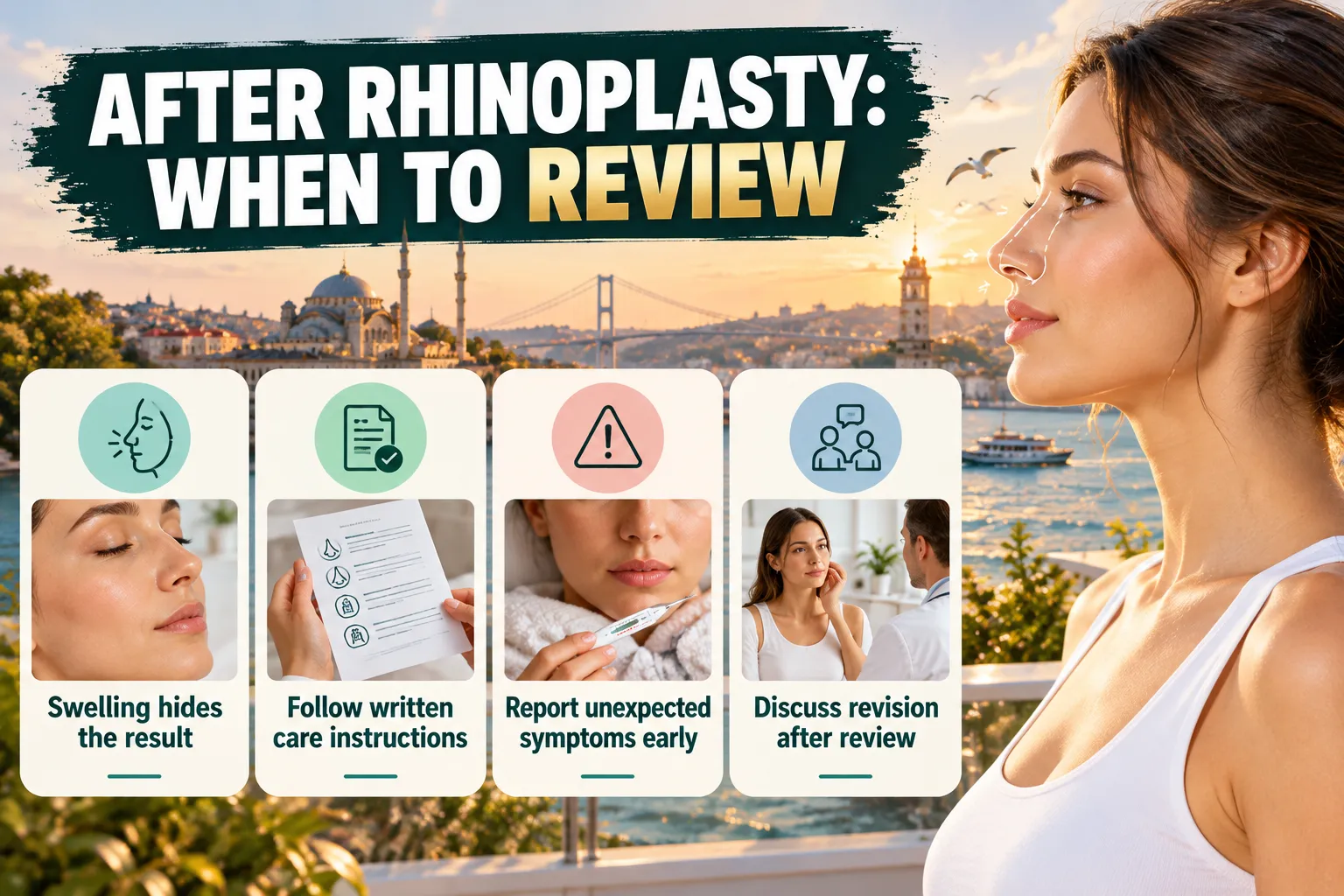
Post-operative swelling hides the final result. The Mayo Clinic overview cited above notes that swelling can take months to go down, and the shape keeps settling after that. An early photograph is not a verdict.
Use the stages below to guide your conversations with the team. They are prompts for review, not a recovery timetable.
| Stage or concern | Question for your surgical team | Practical next step |
|---|---|---|
| Early recovery | What can you assess about my tip position now? | Follow your written care instructions and attend the planned check. |
| Ongoing settling | Which changes should we monitor between reviews? | Agree how you will record and share your concerns. |
| Unexpected symptoms | Do I need an earlier examination? | Contact the team rather than waiting for the next appointment. |
| Later review | Is the remaining concern ready for assessment? | Ask for an examination before discussing further correction. |
When should you contact the surgical team?
Do not wait quietly for a scheduled review. Contact the clinic as soon as you can about severe pain, heavy bleeding, a fever or any symptom you did not expect. Tell the team what changed, when it started and whether it is getting worse.
Some situations cannot wait for a reply. If you feel seriously unwell, get urgent medical care where you are. Back in the UK, that means A&E or emergency services, and you can update your surgical team afterwards.
When can you discuss whether further correction is needed?
You can raise the concern at any review. Deciding to operate again is a separate step. Judging persistent over-rotation depends on how your own healing progresses, so ask your surgeon what needs to settle before that decision can be made.
Ask for a clear review plan. It should say what will be reassessed, how to report changes and when to come back. Waiting is not a promise of the look you want.
The clinic offers hyperbaric oxygen therapy (HBOT) and low-level laser therapy (LLLT), set out on our technology and standards page. Ask whether either is relevant to your care. Neither promises tip movement, fewer complications or a faster recovery.
How does AKM Clinic assess an upturned nose before you travel?
It starts with a clear description of your concern. Your dedicated Patient Host arranges a free online consultation with photographs, and the surgeon then prepares a personal treatment plan and a quote. Nothing is booked until you have both.

Who assesses rhinoplasty at AKM Clinic?
Ask who will assess you and who will operate. Dr Göknil Gültekin is an otolaryngologist and facial plastic surgeon. She is a Fellow of the European Board of Otorhinolaryngology-Head and Neck Surgery and a Fellow of the European Academy of Facial Plastic Surgery, and her focus is primary, revision and preservation rhinoplasty.
You can read more about the team on our About AKM Clinic page. These are European and Turkish credentials, not UK GMC registration. Ask what each one means if you want to compare them with the UK register.
What should your consultation and written plan clarify?
Ask the questions you would put to a Harley Street surgeon. Describe the change you want rather than naming a nose type, and then check these points:
- What does the surgeon consider achievable, and what should stay unchanged?
- Which parts of the plan depend on the in-person examination?
- Who would assess a complication, and where would further treatment take place?
- Which costs could arise later, including after you return home?
Get the answers in writing before you commit. The all-inclusive package covers the surgeon's and anaesthesia fees, all pre-operative tests and post-operative check-ups, a five-star hotel with breakfast, private transfers and a dedicated coordinator with translation. Confirm which of these apply to your own plan.
How are your Istanbul stay and departure organised?
Your Patient Host sets the date, the hotel and the transfers. A private driver meets you at Istanbul Airport (IST) or Sabiha Gökçen (SAW).
Recovery stays are at selected five-star hotels in Istanbul, among them the Point Barbaros Hotel. Our guide to hotels and private transfers describes that part of the stay.
After surgery, the medical team monitors you closely. You receive medication and written care instructions. Every patient has a final in-person check-up with the doctor before flying home.
What happens if you need help after returning to the UK?
Keep your written instructions within reach. Your Patient Host is on WhatsApp around the clock and schedules virtual follow-ups at 1, 3, 6 and 12 months, so the doctor can check your healing and answer questions.
Coordination is not emergency care. For a serious, sudden problem, get local medical help first. Read through how the patient journey and follow-up work before you travel.
For your consultation, gather photographs, any records from previous operations and a clear description of your concern. This article offers general information, not a diagnosis or a treatment recommendation for you.
Frequently Asked Questions: Upturned Nose
Is an upturned nose rare?
We have not found a reliable figure for how common it is, so calling it rare would be guesswork. The label is broad. People use it for a gently raised tip, a short-looking nose or visible nostrils. At consultation, describe the feature that concerns you rather than how unusual it might be.
Is a slightly upturned nose attractive?
That is a personal judgement, not a medical one. You do not need to change a feature because an online trend praises or criticises it. Tell the surgeon what you like about your nose as well as what bothers you, and ask them to cover leaving it unchanged alongside any treatment.
Can an upturned nose tell you someone's ethnicity?
No. Nose shapes vary from person to person, and one feature is not an ancestry test. If you are thinking about a change, tell the surgeon which parts of your appearance and identity you want to keep. Avoid asking for a template based on online nose categories.
Why does my nose look more upturned in selfies?
The distance of the camera and the angle of the head can change how the nose looks in a photo. A selfie is not a diagnosis. Compare photos taken with a neutral expression and steady positioning, and ask the clinic for its consultation photo instructions.
Is upturned nose correction different for men?
There is no single plan for men. Planning considers your facial features, your nasal skin and the change you want. Tell the surgeon which features you want to keep. Do not assume that everyone wants a traditionally masculine or feminine profile.
Can I ask for the same upturned nose as a celebrity?
You can bring a reference photo to explain what you like. Treat it as a conversation starter. Pin down what appeals to you, such as the tip direction, the bridge or the overall proportions. Surgery is planned around your own anatomy and results vary, so another person's nose cannot predict yours.
Can smiling make an upturned nose look different?
Yes, it can. Smiling can change how the tip and nostrils of the nose appear. Mention it during your assessment, and ask whether photos at rest and while smiling would help.
Related Treatments


Ready to Begin Your Own Transformation Journey?
Join the 2,000+ patients who have trusted Dr Akif Mehmetoğlu and the AKM Clinic team. Your journey to a more confident, naturally restored you begins with a simple, no-obligation conversation. Contact us today from the UK for your free virtual consultation.
#1: Get Your Free Personalised Quote
Start with a free, no-obligation online consultation. Share your photos, and our surgical team will provide a fully personalised treatment plan and a transparent, all-inclusive price package. There are no hidden fees.
#2: Secure Your Date & VIP Booking
Once you are ready, our dedicated patient coordinators will help you secure your procedure date. We will handle all your bookings, including your 5-star hotel accommodation and private VIP airport transfers.
#3: Arrive in Istanbul & Meet Your Surgeon
Arrive at Istanbul Airport (IST) and be greeted by your private driver. Settle into your hotel and prepare for your in-person consultation, where you will meet your specialist surgeon to finalise the details for your "natural, subtle, and restored" new look.