
Online Plastic Surgery Consultation: How Accurate Is It?
AI Summary
- Online plastic surgery consultation offers a practical first assessment for UK patients considering treatment in Istanbul.
- Good photographs and video calls help assess anatomy, expectations, suitability, and provide a realistic provisional quote.
- In-person examination still matters for final planning, tissue assessment, safety checks, and confirming the most suitable procedure.
- Transparent GBP pricing and aftercare build trust, especially with surgeon-led consultations and clear remote support after returning home.
AI-generated summary, fact-checked by our medical experts.
For many British patients, an online plastic surgery consultation is now the first real step in planning treatment abroad. It offers convenience, privacy, and a practical way to understand whether surgery may be suitable before paying for flights or taking time away from work. Yet one question comes up again and again: how accurate is an online plastic surgery consultation when important decisions about your face or body are involved?
The honest answer is that a plastic surgery online consultation can be highly useful and surprisingly accurate for the right purpose, but it must also be handled with clinical honesty. Good-quality photographs, a detailed medical history, and a video call consultation with a plastic surgeon can help identify visible concerns, likely treatment options, and whether you appear to be a suitable candidate. However, no responsible surgeon should claim that an online review replaces a full in-person examination.
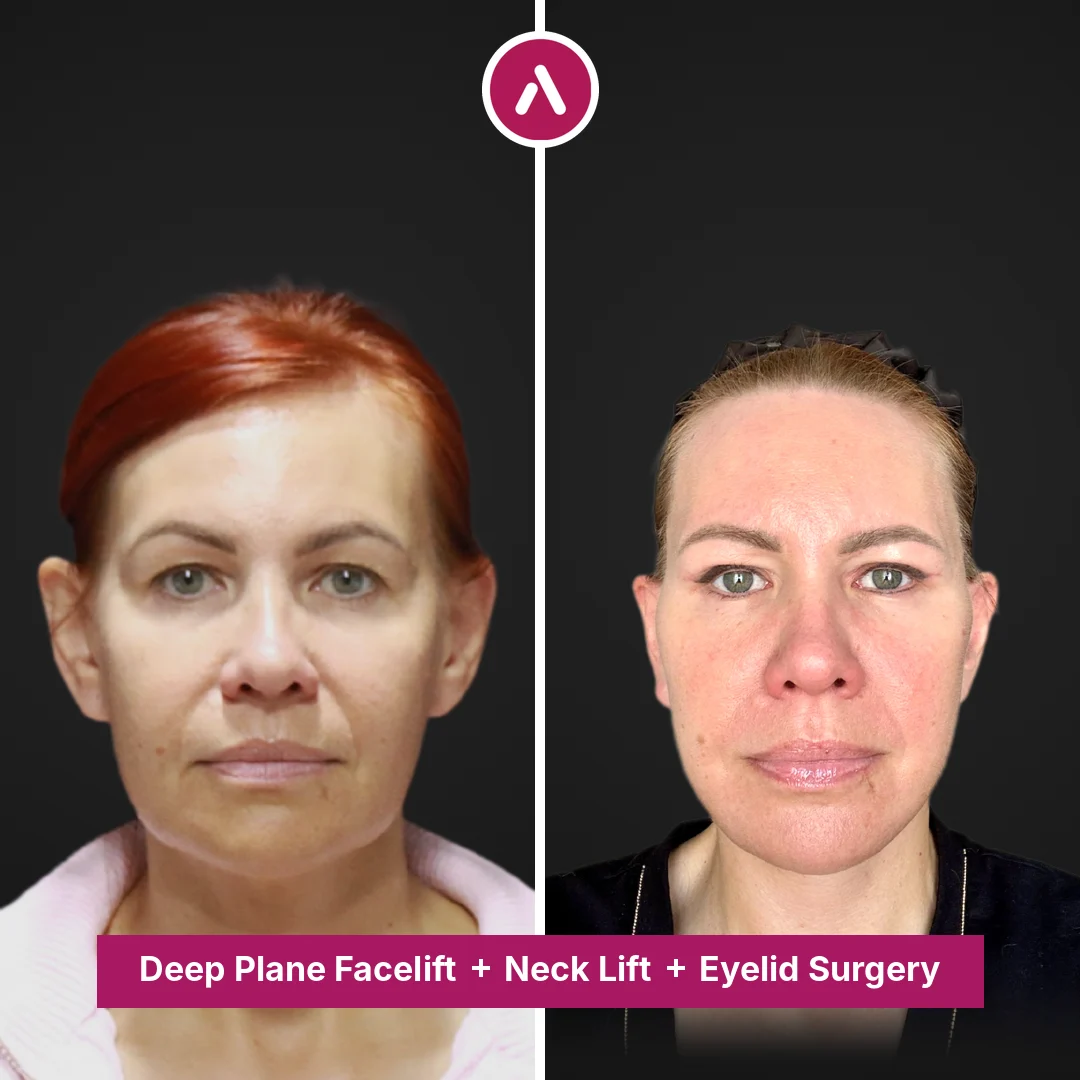
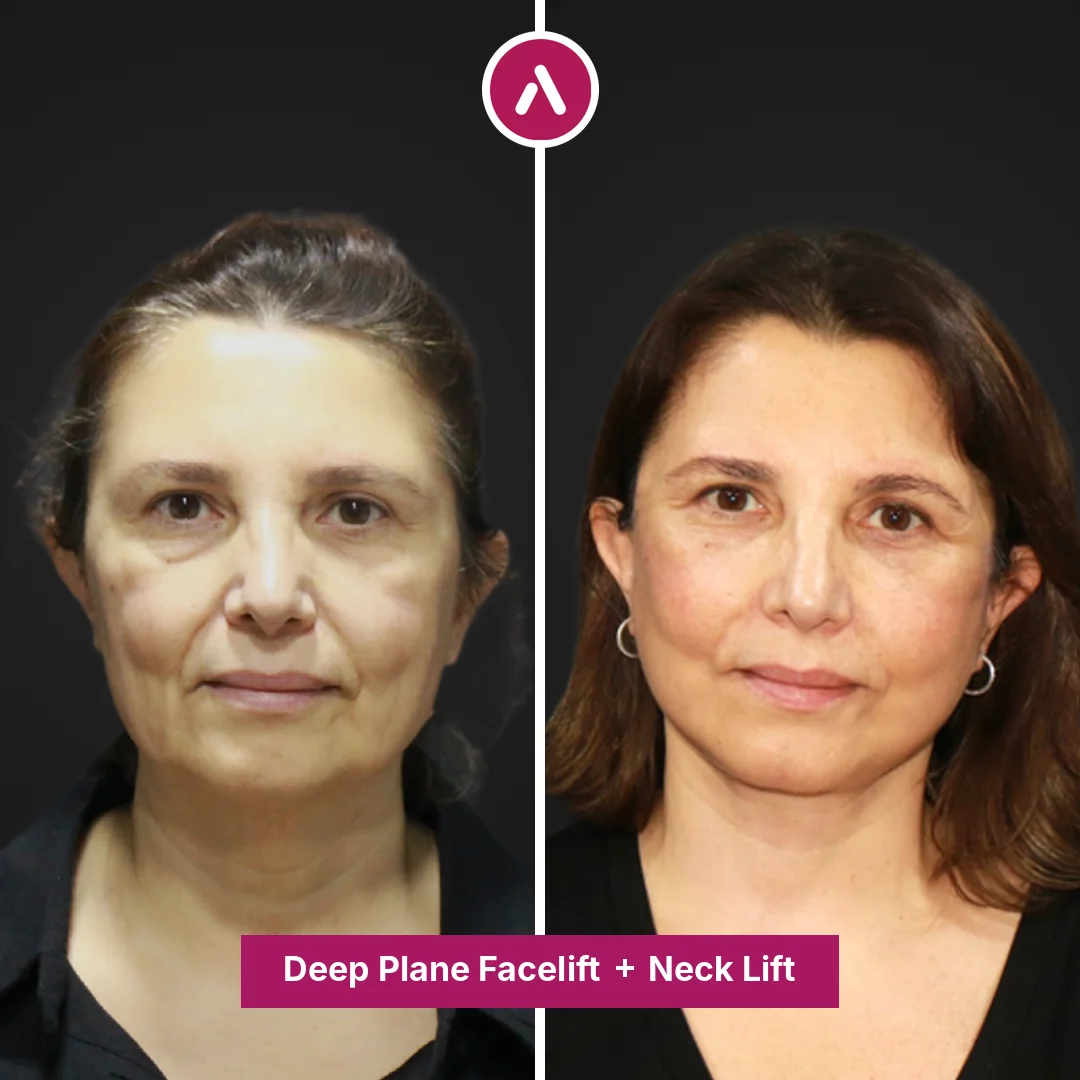
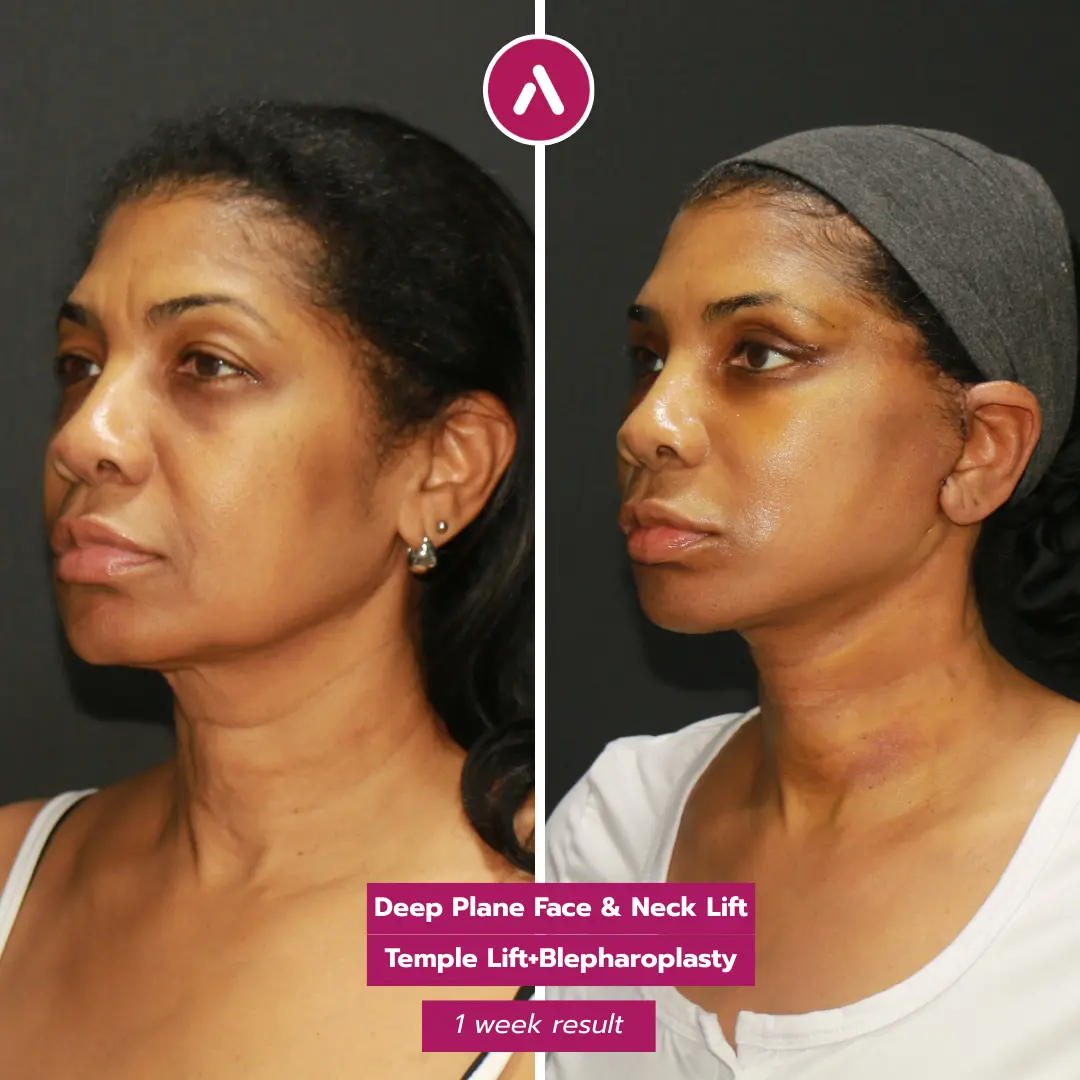
For UK patients comparing London, Harley Street, and Istanbul, this matters even more. A proper virtual plastic surgery consultation in Turkey should not feel like a rushed sales call. It should feel like a structured medical pre-assessment that explains what can be judged remotely, what must wait until arrival, and how an initial plastic surgery quote online is calculated. That level of transparency is what builds trust.
At AKM Clinic, we view digital consultations as the beginning of a careful patient journey rather than a shortcut. That means discussing expectations, reviewing previous procedures where relevant, and using clear medical reasoning supported by clinical experience and evidence-based planning. For the right patient, an online cosmetic surgery consultation in Turkey can provide meaningful clarity before travel. For the wrong patient, it should also be able to identify limitations early and prevent disappointment.
Table of Contents
Why Online Plastic Surgery Consultations Have Become So Popular for UK Patients
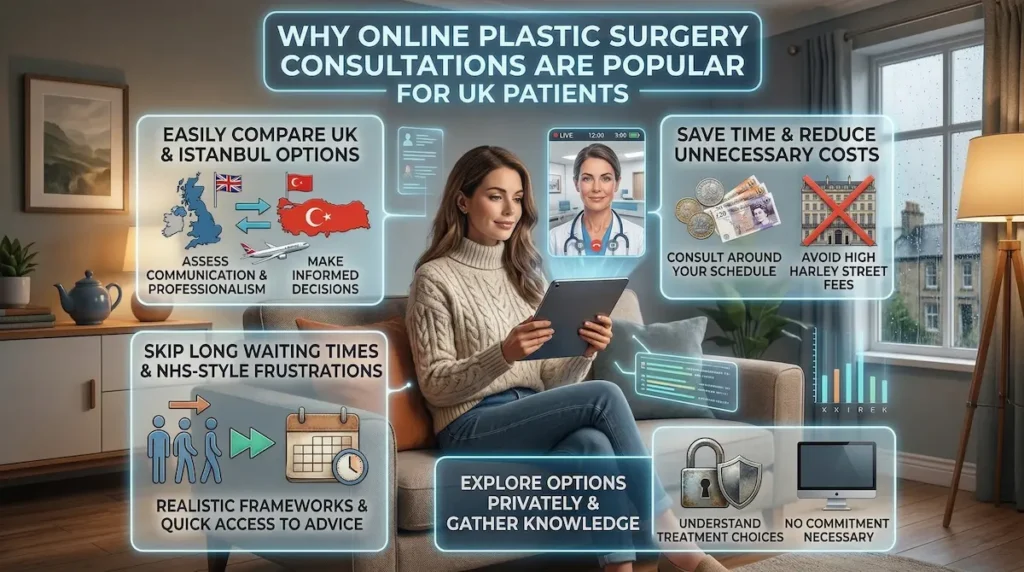
Online consultations have become increasingly popular because they solve several practical problems for British patients at once. They save time, reduce unnecessary appointment costs, and allow people to explore treatment options privately before making a larger commitment. For someone comparing private UK care with treatment in Istanbul, a remote first step often feels more manageable than arranging an immediate face-to-face meeting.
Avoiding unnecessary Harley Street consultation fees before travelling
Private consultations in the UK can be expensive, especially in central London. Many patients do not want to pay premium Harley Street consultation fees simply to hear that they may need a different procedure, a staged plan, or a more realistic budget. A no obligation online consultation gives patients a sensible starting point. It allows them to understand likely options before investing further time and money.
This is particularly relevant for the British patient who is not looking for the cheapest route, but for the smartest one. In that context, a remote consultation is not about cutting corners. It is about gathering quality information before making a serious decision. When handled properly, it helps patients compare value, surgeon expertise, and likely outcomes with more confidence.
A practical first step for patients comparing the UK and Istanbul
Many UK patients are not deciding whether to have surgery at all; they are deciding where to have it. That is why a virtual plastic surgery consultation in Turkey can be so useful. It gives patients a chance to compare communication quality, professionalism, and treatment logic before travelling abroad.
Rather than relying on social media alone, patients can present their own concerns directly, ask specific questions, and receive a structured opinion. For instance, someone considering facial rejuvenation may want to know whether their main issue is skin laxity, volume loss, jowling, or heavy upper eyelids. A thoughtful online review can often identify these visible patterns and explain the likely direction of treatment.
For British patients, this early clarity reduces uncertainty. Instead of relying on guesswork, they begin to understand whether Istanbul is genuinely offering Harley Street-level thinking, or merely attractive marketing. That distinction is crucial.
How online consultations help patients skip long decision delays and NHS-style waiting frustrations
Although cosmetic procedures are not typically an NHS pathway, many British patients are already used to long waiting times in wider healthcare. That experience shapes expectations. People want quicker access to professional advice, especially when they are researching surgery in parallel with work schedules, childcare, or holiday planning.
A remote plastic surgery assessment in Turkey makes the early research stage far more efficient. Instead of waiting weeks for an initial meeting, patients can often begin with photographs, medical forms, and a scheduled call. This gives them a realistic framework sooner: whether they appear to be a candidate, which procedure categories may be relevant, and what level of budget they may need to consider.
That speed should never come at the expense of safety. The best online consultations are efficient, but never careless. They shorten the path to information, not the standard of clinical judgement.
Surgeon-led principle: An online consultation should help you understand your options clearly, but it should never pressure you into booking before the limits of remote assessment have been explained properly.
What an Online Consultation Can Assess Accurately
A well-run online consultation can assess more than many patients expect. While it cannot replace touch, physical examination, or certain detailed measurements, it can still provide meaningful clinical insight. In many straightforward cases, visible anatomy, previous surgical history, and patient goals give a surgeon enough information to form a strong preliminary opinion and a sensible provisional plan.
How photographs can help surgeons evaluate facial proportions, skin laxity, and visible asymmetry
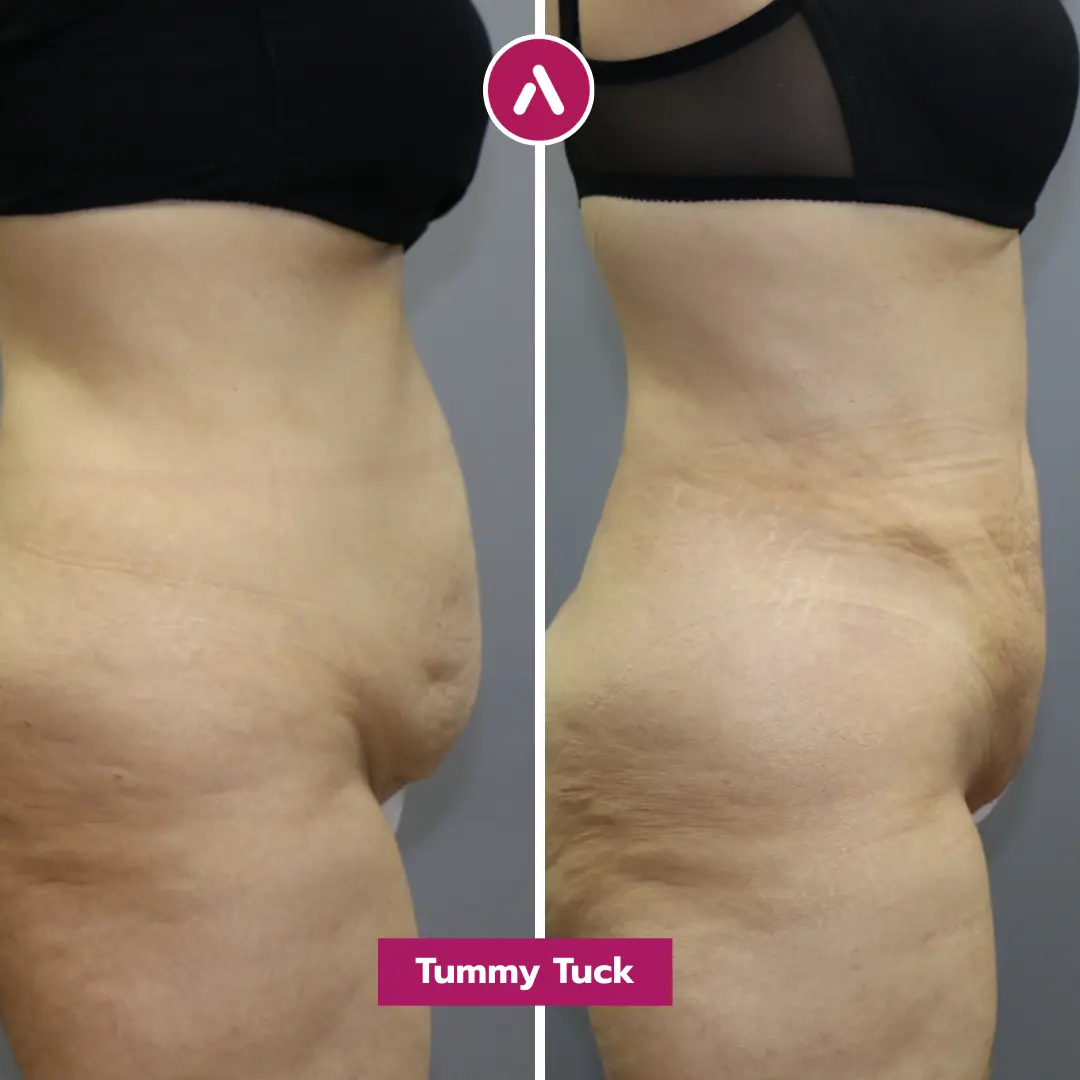
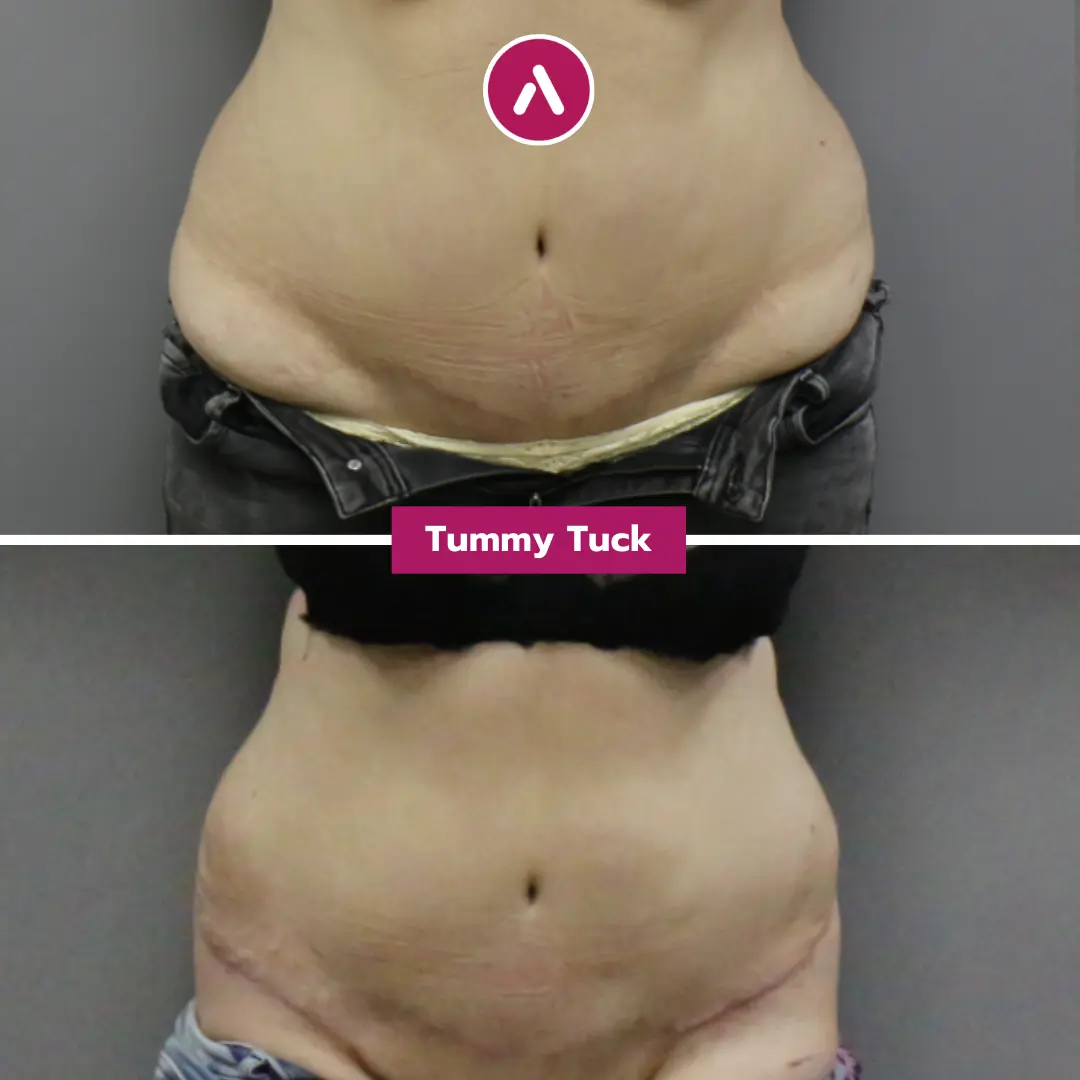
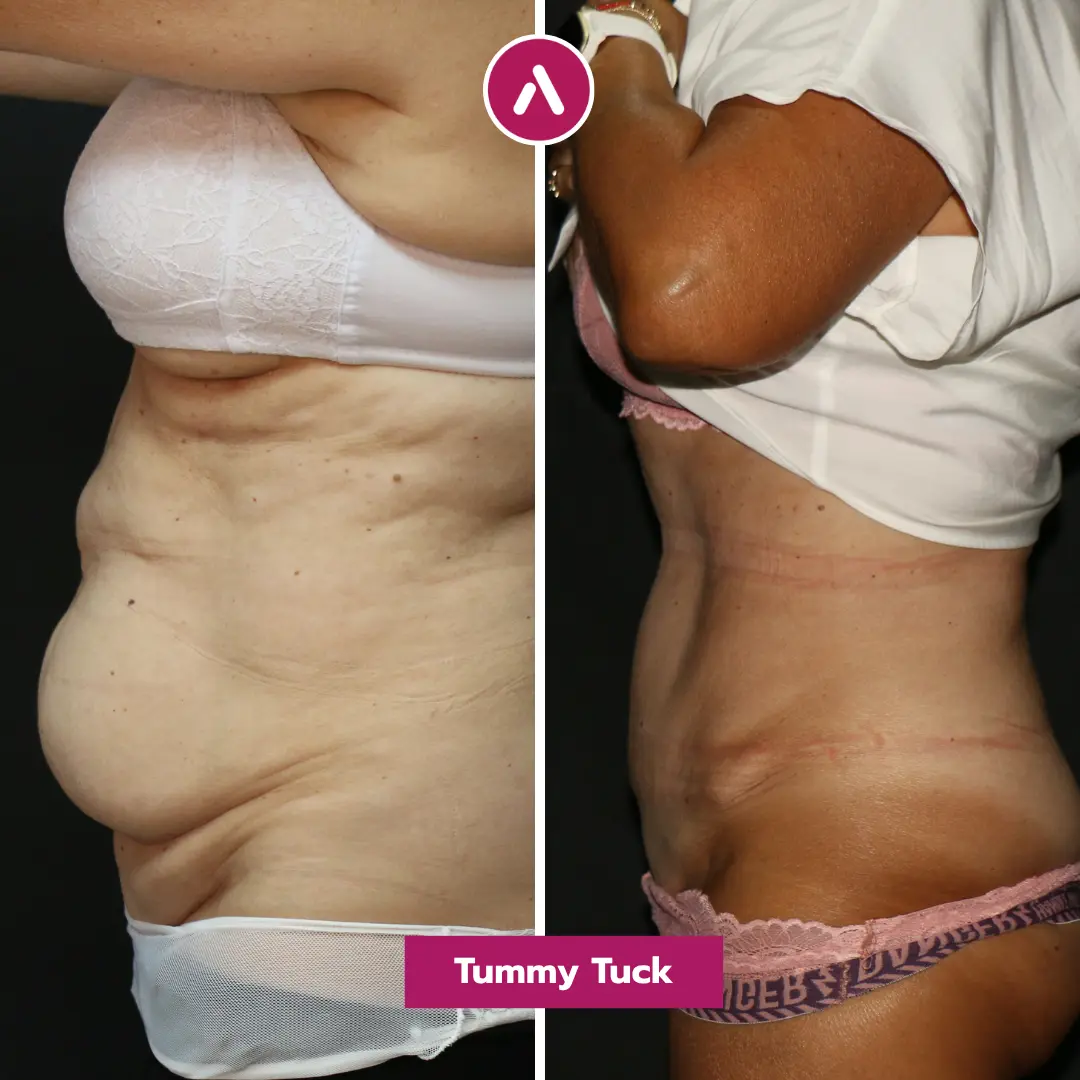
Clear photographs remain one of the most useful parts of a digital assessment. Front, profile, and three-quarter images often reveal a great deal about facial balance, jowl formation, neck definition, skin redundancy, eyelid hooding, and visible asymmetry. In body procedures, photographs may also show abdominal skin excess, breast position, flank fullness, or contour irregularities after previous surgery.
This is one reason why an online cosmetic surgery consultation in Turkey can be more accurate than sceptical patients assume. A skilled surgeon is not simply “looking at pictures”; they are assessing patterns of anatomy, proportion, and tissue behaviour that are visible even before physical examination. In facial work especially, experience matters enormously because subtle differences in ageing, symmetry, and skin quality can influence the treatment plan.
That said, accuracy depends heavily on the quality of the images. Poor lighting, filters, strong make-up, extreme camera angles, or hair covering key areas can all reduce the usefulness of the assessment. Online consultation is only as informative as the material provided.
When medical history forms reveal whether you may be a suitable candidate
Photographs tell only part of the story. A proper medical questionnaire is equally important because it helps identify whether surgery is likely to be appropriate and safe. Smoking status, previous operations, allergies, regular medication, bleeding history, weight changes, and chronic conditions all affect planning.
In this sense, a plastic surgery online consultation is not merely visual. It is also a risk-screening process. A patient may appear to be an excellent candidate in photographs, yet become less suitable once their medical history is understood. Equally, someone worried they are “too old” or “not good enough” for a procedure may discover that they are actually a very reasonable candidate once the wider picture is reviewed properly.
This is where clinical knowledge and day-to-day surgical judgement meet. Good decision-making does not come from images alone; it comes from combining visible anatomy with medical background, recovery considerations, and realistic expectations.
How a video consultation helps assess goals, expectations, and communication clarity
A video call consultation with a plastic surgeon adds another layer of accuracy because it shows how a patient looks while speaking, smiling, and moving naturally. Static photographs are useful, but facial animation, posture, and expression can also influence planning. In body cases, live conversation helps the surgeon understand the patient’s priorities and whether their desired result is realistic.
This is also where the discussion around face-to-face vs online consultations for cosmetic surgery becomes more nuanced. An online review is not just about whether a surgeon can “see enough”. It is also about whether both sides understand each other clearly. If a patient says they want a “natural” result, what does that actually mean to them? Refreshed? Less tired? More defined? Smaller? Lifted? The consultation helps turn vague wishes into clinically meaningful goals.
Communication quality matters especially for UK patients travelling abroad. A trustworthy consultation should leave the patient feeling informed, not dazzled. They should understand what seems possible, what remains provisional, and what may still change after in-person examination in Istanbul.
| What can often be assessed online | What may still require in-person examination |
|---|---|
| Visible skin laxity and facial ageing patterns | Exact tissue thickness and skin quality on palpation |
| General facial or body proportions | Fine structural details felt during examination |
| Obvious asymmetry or contour concerns | Final operative markings and definitive procedure planning |
| Basic suitability based on medical history | Anaesthesia clearance and certain pre-operative findings |
| Provisional treatment direction and initial quote range | Confirmed final plan after face-to-face review |
In other words, the question is not whether online consultations are “real” or “fake”. The real question is whether they are being used properly. When expectations are honest and the process is surgeon-led, an online consultation can be a highly valuable first stage in treatment planning.
What Cannot Be Confirmed Properly Without an In-Person Examination?
Even the best remote review has limits, and reputable surgeons should explain those limits clearly. This is where the debate around face-to-face vs online consultations for cosmetic surgery becomes important. An online consultation can provide a strong preliminary opinion, but it cannot confirm every detail with complete certainty. Physical examination still matters when final surgical planning, tissue handling, and safety decisions are being made.
Why skin quality, tissue thickness, and deeper structural issues may need physical assessment
Photographs can show visible ageing, contour, and symmetry, but they cannot always reveal the full story beneath the surface. Skin thickness, elasticity, scar tissue from previous operations, cartilage strength, and the feel of deeper structures may only be appreciated properly during an in-person assessment. This is particularly relevant in revision surgery, rhinoplasty, and facial rejuvenation cases where subtle differences in tissue behaviour can change the most suitable plan.
For example, a patient may appear to have straightforward skin laxity in photographs, yet on examination the surgeon may find more fibrotic tissue, weaker support, or anatomical factors that alter the surgical approach. This does not mean the online consultation was inaccurate. It means it was preliminary, which is exactly how a responsible remote plastic surgery assessment in Turkey should be framed.
This distinction is important for trust. Patients should be wary of anyone who presents a remote opinion as though it were a final diagnosis. Clinical integrity means recognising what can be estimated online and what must be confirmed in person.
Why final surgical planning can change after a face-to-face examination in Istanbul
Final planning often changes not because the first consultation was poor, but because the second one is more detailed. Once the surgeon examines you in person, takes direct measurements, checks tissue quality, and reviews your anatomy from multiple angles in real clinical conditions, they may refine the procedure choice, incision strategy, or recovery expectations.
In facial surgery, a patient might initially believe they need only eyelid surgery, when in fact brow descent or midface laxity is contributing more strongly to the tired appearance. In body surgery, someone considering liposuction alone may learn that skin redundancy is significant enough to require a different approach for a better result. These refinements are part of good planning, not a warning sign.
That is why patients should think of a plastic surgery online consultation as a medically useful first stage rather than a binding final blueprint. It should narrow the path, not pretend to complete it.
Why honest clinics never promise a definitive plan from photos alone
An ethical clinic will explain that photographs and a video call consultation with a plastic surgeon can provide a strong initial direction, but not an irreversible promise. If a clinic guarantees a fixed surgical plan without mentioning the need for in-person confirmation, that should raise concerns.
Honest communication is especially important for British patients who may already be cautious because of negative media stories about surgery abroad. Trust is built when the clinic says, clearly and confidently, “This is our best professional assessment based on the information you have provided, and we will confirm the details once we examine you properly.” That is the language of responsible medicine.
Clinical transparency matters: the most trustworthy online consultation is not the one that promises the most, but the one that explains its limits without hiding them.

How Accurate Is Online Pricing for Plastic Surgery?
One of the main reasons patients request a plastic surgery quote online is to understand affordability before committing to travel. This is completely reasonable. However, pricing accuracy depends on how detailed the assessment is, how complex the case appears, and whether the clinic gives a broad estimate or a carefully structured provisional quotation. For UK patients, transparent pricing in pounds sterling is especially important because it makes comparison with private UK clinics far easier and more meaningful.
When a photo-based quote is usually reliable as a starting estimate
For many straightforward primary cases, a photo-based quote can be a reliable starting point. If the procedure category is clear, the anatomy is visible, and the patient’s medical history is uncomplicated, the clinic can often provide a meaningful estimate based on experience. This is one reason why online cosmetic surgery consultations in Turkey have become so popular: patients gain budget clarity early in the decision-making process.
Examples include patients with obvious upper eyelid hooding, visible neck fullness, clear abdominal skin excess, or a straightforward interest in a single procedure. In such cases, the online quotation is often accurate enough to help the patient decide whether to continue to the next step.
That said, reliable does not mean absolute. A good quote should be presented as professionally informed, yet still subject to final confirmation after in-person review and pre-operative assessment.
Why procedure complexity, combined surgery, and anaesthesia plans can affect the final quotation
Pricing becomes less predictable when the case is more complex. Revision surgery, combined procedures, unusual anatomy, extensive asymmetry, or the need for longer operating time can all affect the final treatment plan and therefore the quotation. Anaesthesia arrangements may also influence cost, particularly where sedation requirements, hospital stay, or additional monitoring needs differ from the original assumption.
In some cases, what begins as a request for one procedure may evolve into a more appropriate combined plan. For instance, a patient asking about neck liposuction may actually require a more comprehensive facial rejuvenation strategy for a balanced result. Likewise, someone enquiring about a breast procedure may need a different operative approach once skin quality and tissue position are assessed more closely. These are not pricing tricks; they are part of careful surgical planning.
For this reason, patients should value clarity over false certainty. A reputable clinic will explain exactly what the quote includes, what assumptions it is based on, and under what circumstances it might change.
Why transparent all-inclusive GBP pricing matters to British patients
British patients are often comparing several options at once: private UK treatment, Harley Street consultations, and medical travel to Istanbul. That comparison only works if the financial picture is clear. Transparent all-inclusive pricing in GBP helps remove confusion around hidden extras, shifting exchange assumptions, or vague package descriptions.
When a clinic offers a clear quotation in pounds sterling, patients can compare value more rationally. They are not simply asking, “Is Turkey cheaper?” They are asking, “What standard of care, communication, and aftercare am I receiving for this investment?” That is a much better question.
| Pricing feature | What trustworthy clinics usually do | What should raise concern |
|---|---|---|
| Currency | Quote clearly in GBP for UK patients | Vague prices without clear currency context |
| Scope of package | Explain what is included in writing | Unclear “from” prices with no detail |
| Status of quote | State that final confirmation follows examination | Present an online estimate as a guaranteed final cost |
| Complex cases | Flag possible revisions after in-person review | Pretend every case fits the same package |
So, is a plastic surgery quote online accurate? Often yes, as a well-informed starting figure. Completely final in every case? No, and honest clinics should never claim otherwise.
How to Make Your Online Consultation More Accurate
The quality of a digital consultation depends not only on the clinic, but also on the information the patient provides. Even a highly experienced surgeon cannot assess what they cannot see or what they have not been told. If you want your virtual plastic surgery consultation in Turkey to be as accurate as possible, it is worth treating the process seriously and preparing your materials properly.
The best way to take clear front, profile, and three-quarter photographs
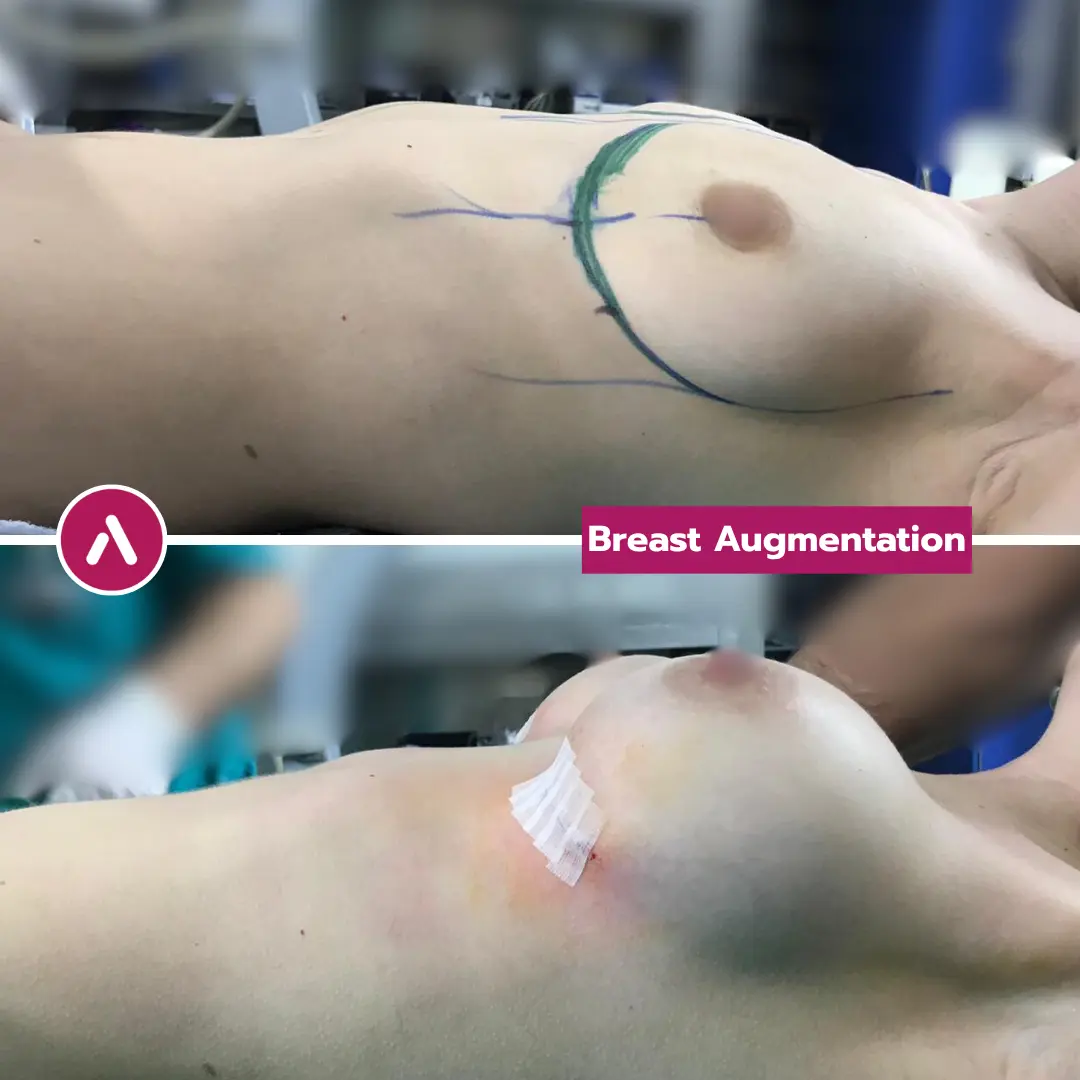
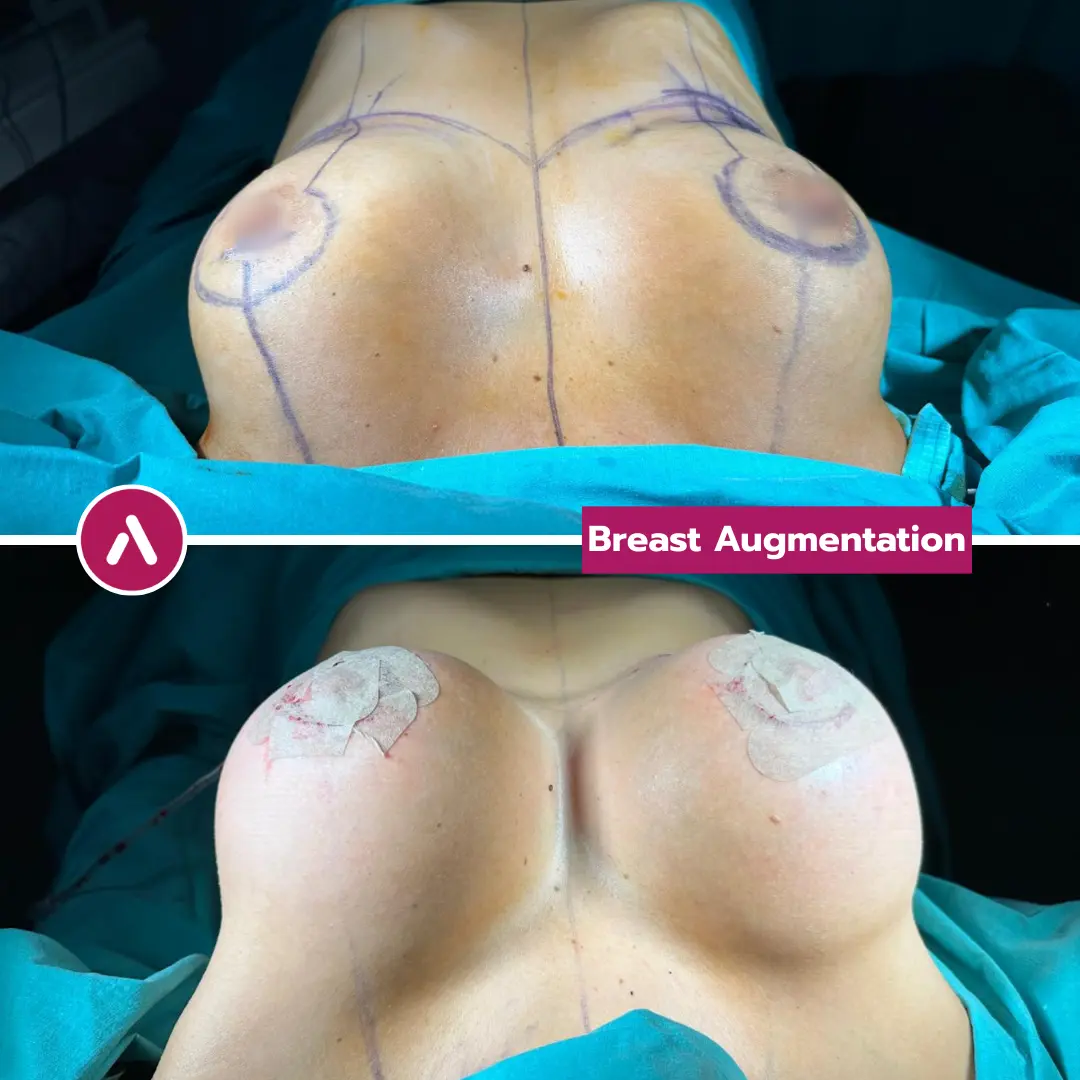
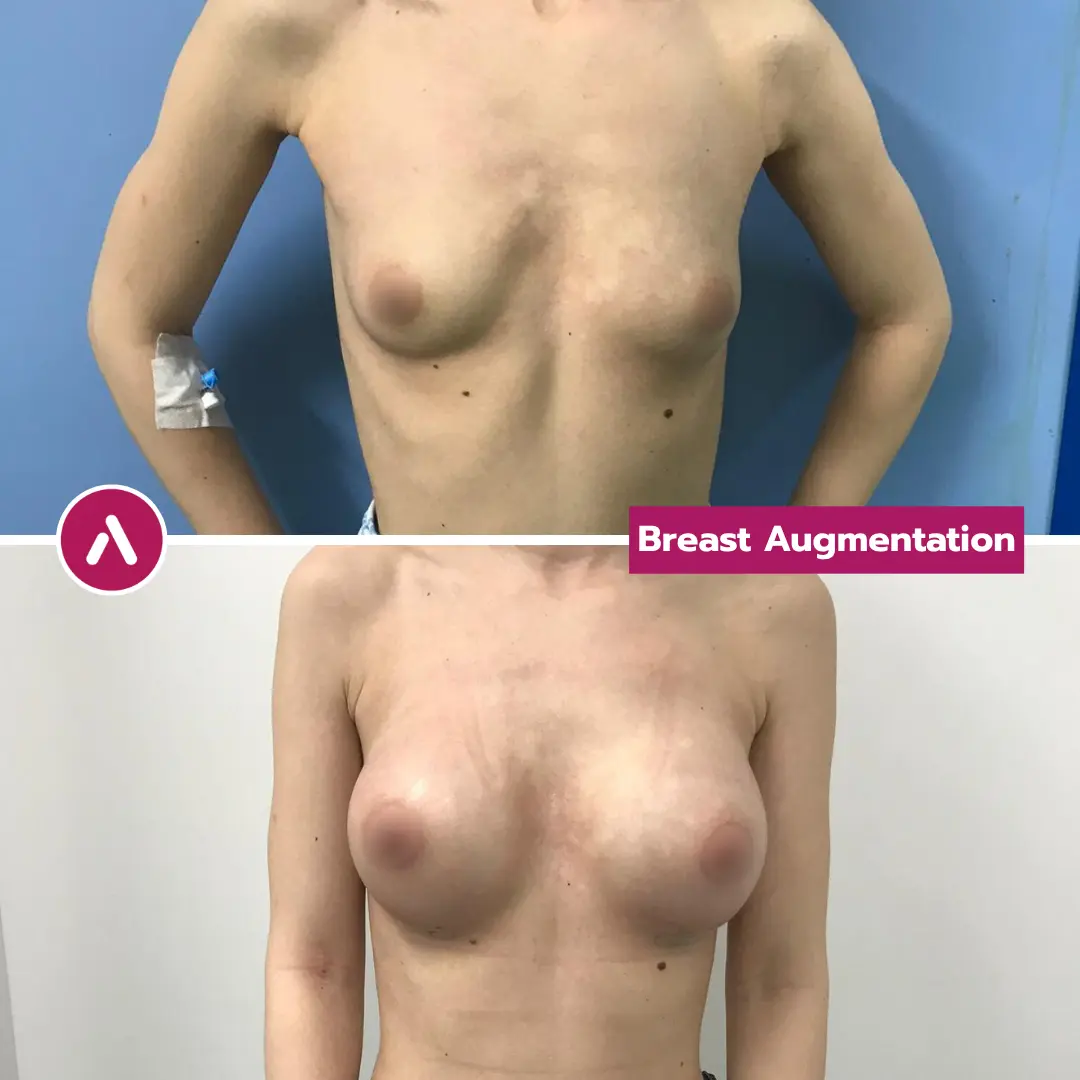
Good photographs improve accuracy dramatically. Images should be taken in natural or even lighting, against a plain background, without beauty filters, heavy make-up, or strong shadows. Hair should be tied back where relevant, and the camera should be held at a neutral level rather than from above or below. Front, left profile, right profile, and three-quarter angles are usually the most useful.
For body procedures, fitted clothing or underwear that allows the relevant area to be seen properly is often necessary. Loose garments, poor lighting, and awkward angles can hide the very details the surgeon needs to evaluate. A remote consultation should not feel casual; it should feel clinically informative.
When patients send high-quality photographs from the beginning, the value of an online plastic surgery consultation improves significantly. Better images lead to better judgement, more useful advice, and a more reliable provisional quotation.
Which medical details UK patients should disclose, including smoking, medication, and previous surgery
Accuracy depends just as much on honesty as it does on image quality. Patients should disclose smoking or nicotine use, regular medication, blood-thinning treatment, allergies, chronic illnesses, previous operations, past complications, and significant weight changes. These details affect not only candidacy, but also healing, surgical planning, and expected recovery.
Previous surgery is especially important. A patient who has had earlier rhinoplasty, liposuction, breast surgery, or facial treatment may have scar tissue or altered anatomy that cannot be fully appreciated from photographs alone. Mentioning these facts early allows the surgeon to assess your case more realistically and advise whether extra caution or a staged approach may be required.
On this point, the NHS advice on preparing for a cosmetic procedure is worth reading, because risk is not based on appearance alone. It is shaped by biology, healing patterns, and the interaction between your medical background and the proposed procedure.
Why being honest about your desired result prevents disappointment later
Many online consultations become less accurate not because the surgeon misjudges the anatomy, but because the goal itself has not been expressed clearly. Saying you want to look “better” or “snatched” is not enough. A useful consultation requires more precise language: younger, fresher, less heavy around the jawline, more refined in profile, flatter in the lower abdomen, or more balanced overall.
British patients often prefer subtle change rather than a dramatic, overdone look. Saying that clearly matters. If your priority is to look refreshed rather than obviously operated on, that should guide the entire consultation. The same applies if you are willing to accept a modest improvement in exchange for a gentler recovery, or if you want to avoid visible scarring above all else.
A good no obligation online consultation should make space for this discussion. It should not rush you into naming a procedure before your actual aesthetic concerns have been understood.
- Use clear, unfiltered photographs in good lighting.
- Provide a full and honest medical history.
- Explain any previous cosmetic or reconstructive surgery.
- Be specific about the kind of result you want.
- Ask what remains provisional until face-to-face examination.
How to Tell Whether an Online Plastic Surgery Consultation Is Trustworthy
Not every digital consultation is equally reliable. The real issue is not simply whether the appointment happens online, but whether it is conducted with proper clinical structure, transparent communication, and accountable medical leadership. A trustworthy plastic surgery online consultation should leave you better informed, not emotionally pressured or confused by vague promises.
Look for UK board-certified equivalent credentials and European board standards
Credentials matter even more when you are assessing a clinic remotely. If you are travelling from the UK, you should look for surgeons whose qualifications reflect rigorous European standards and whose professional background can be explained clearly. Patients often look for a virtual plastic surgery consultation in Turkey because they want convenience, but convenience should never replace due diligence.
A serious clinic should be able to explain the surgeon’s experience, specialist focus, and how their credentials relate to the level of reassurance British patients are used to seeking at home. This is particularly important in facial procedures, revision cases, and combined surgery, where judgement and technical skill influence not only the result but also whether the initial online assessment proves reliable in practice.
In short, a polished website is not enough. The online consultation should be rooted in clinical authority, not marketing language. That is one of the clearest signs that the opinion you are receiving is worth trusting.
Check whether you are speaking directly with the surgeon or only a coordinator
Many patients do not realise how important this point is until later. Some clinics offer only a sales-led conversation at the beginning, with little or no meaningful surgeon input. That can reduce the value of the consultation significantly, especially if detailed questions about candidacy, limitations, asymmetry, revision concerns, or recovery are involved.
A coordinator can be helpful for logistics, travel planning, and gathering records, but clinical decisions should remain surgeon-led. A proper video call consultation with a plastic surgeon allows your goals, anatomy, and expectations to be discussed with the person ultimately responsible for the treatment plan. That is a very different experience from receiving a generic message after sending photographs through a website form.
If your questions about scars, tissue quality, likely recovery, or procedural alternatives are not being answered medically, the consultation is probably not giving you the depth of assessment you need. In a field where subtle judgement matters, surgeon access is not a luxury. It is part of safety.
Look for clear contact options and a written aftercare pathway
British patients often feel more reassured when a clinic demonstrates genuine understanding of the UK patient journey. That means more than writing in English. It means providing a clear communication pathway before travel, during treatment, and after the patient has returned home.
Useful signs include a named patient coordinator, direct contact by phone, email or WhatsApp, and a practical explanation of how questions will be handled after surgery. These details matter because online consultations are not only about diagnosis and price. They are also about continuity of care. Patients want to know that if they need reassurance, advice, or follow-up guidance after returning to the UK, they will not be left navigating the situation alone.
| Trust signal | Why it matters for UK patients |
|---|---|
| Surgeon-led consultation | Shows that medical planning is not being delegated to a sales team |
| Clear explanation of limitations | Suggests honesty rather than over-promising |
| Named patient coordinator | Gives you one accountable point of contact before and after travel |
| Direct phone, email or WhatsApp contact | Makes post-operative communication feel easier and more immediate |
| Written aftercare pathway | Demonstrates that support continues after you return home |
When these elements are present, a remote plastic surgery assessment in Turkey feels far more credible. You are not simply being invited to buy a package. You are being guided through a structured medical process.
The AKM Clinic Approach to Online Consultations for British Patients
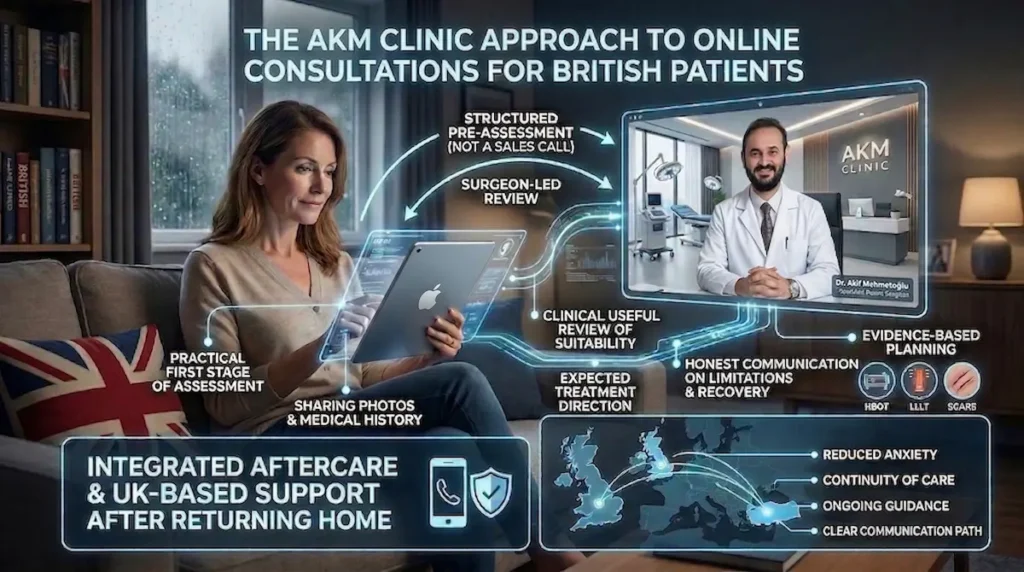
At AKM Clinic, online consultations are designed as a practical, surgeon-led first stage for British patients considering treatment in Istanbul, giving you time to check who will do your procedure before you commit. The aim is not to make exaggerated promises from a few photographs, but to provide a clinically useful review of suitability, likely treatment direction, and expected next steps. This approach reflects a broader commitment to clarity, accountability, and evidence-based planning.
A structured pre-assessment process rather than a rushed sales call
A useful online consultation begins with good information. That includes photographs, medical history, previous surgery details where relevant, and a clear understanding of the patient’s concerns. When those details are reviewed properly, the consultation becomes far more than a quick conversation about price.
For British patients, that structure matters. Many are actively comparing Harley Street thinking with treatment options in Istanbul, and they want to feel that the clinic is approaching their case with seriousness. A well-run online cosmetic surgery consultation in Turkey should therefore explain not only what procedure may help, but also why that conclusion is being reached and what still needs to be confirmed in person.
That kind of structure supports better decision-making. It also helps separate meaningful clinical assessment from generic online sales funnels, which is especially important for cautious first-time patients.
Clear communication about suitability, limitations, and likely recovery
Patients deserve plain, honest answers. That includes whether they seem to be a good candidate, what limitations may exist, and how recovery is likely to affect work, family life, and travel back to the UK. In many cases, patients also want to know whether a more conservative option may achieve the subtle result they prefer.
At AKM Clinic, this discussion is especially relevant for facial procedures, where natural-looking change matters greatly to British patients. Surgeon-led planning focuses on harmony, proportion, and realistic improvement rather than an overdone result. Where appropriate, the consultation may also explain how recovery-support technologies such as HBOT and LLLT fit into the wider treatment journey, particularly for patients who are concerned about visible oedema, bruising, or scar quality.
This is where clinical reasoning matters in a very practical sense. Good consultation is not about persuading a patient to want surgery. It is about using anatomy, clinical experience, and realistic recovery planning to decide whether surgery is appropriate and how to do it responsibly.
How remote contact support and ongoing aftercare reduce anxiety after returning home
For many British patients, the greatest anxiety is not the flight to Istanbul. It is the question of what happens afterwards. A remote consultation becomes far more meaningful when it forms part of a wider aftercare system that continues once the patient is back in the UK.
This is why UK-focused support matters so much. A patient who knows there is a clear communication line after surgery will usually feel more confident during the decision stage as well. The consultation is no longer a stand-alone interaction; it becomes the first step in an organised pathway.
That reassurance is reflected in patient experience too. UK patient stories often highlight not only the surgical result, but also the comfort of knowing support remained available after returning home. For some, transparent communication and practical contact options were just as important as the initial plastic surgery quote online.
As one UK patient story makes clear, feeling supported after returning home can be just as important as the operation itself. That continuity of care is often what turns a convenient online enquiry into genuine long-term trust.
Who Is an Ideal Candidate for an Online Consultation — and Who May Need More Than One Review?
An online consultation works best when the case is visually clear, the medical history is straightforward, and the patient’s goals are realistic. However, not every case fits that description. Some patients are excellent candidates for a single remote review, while others benefit from more than one stage of assessment before a safe and accurate plan can be confirmed.
Straightforward primary cases with clear goals
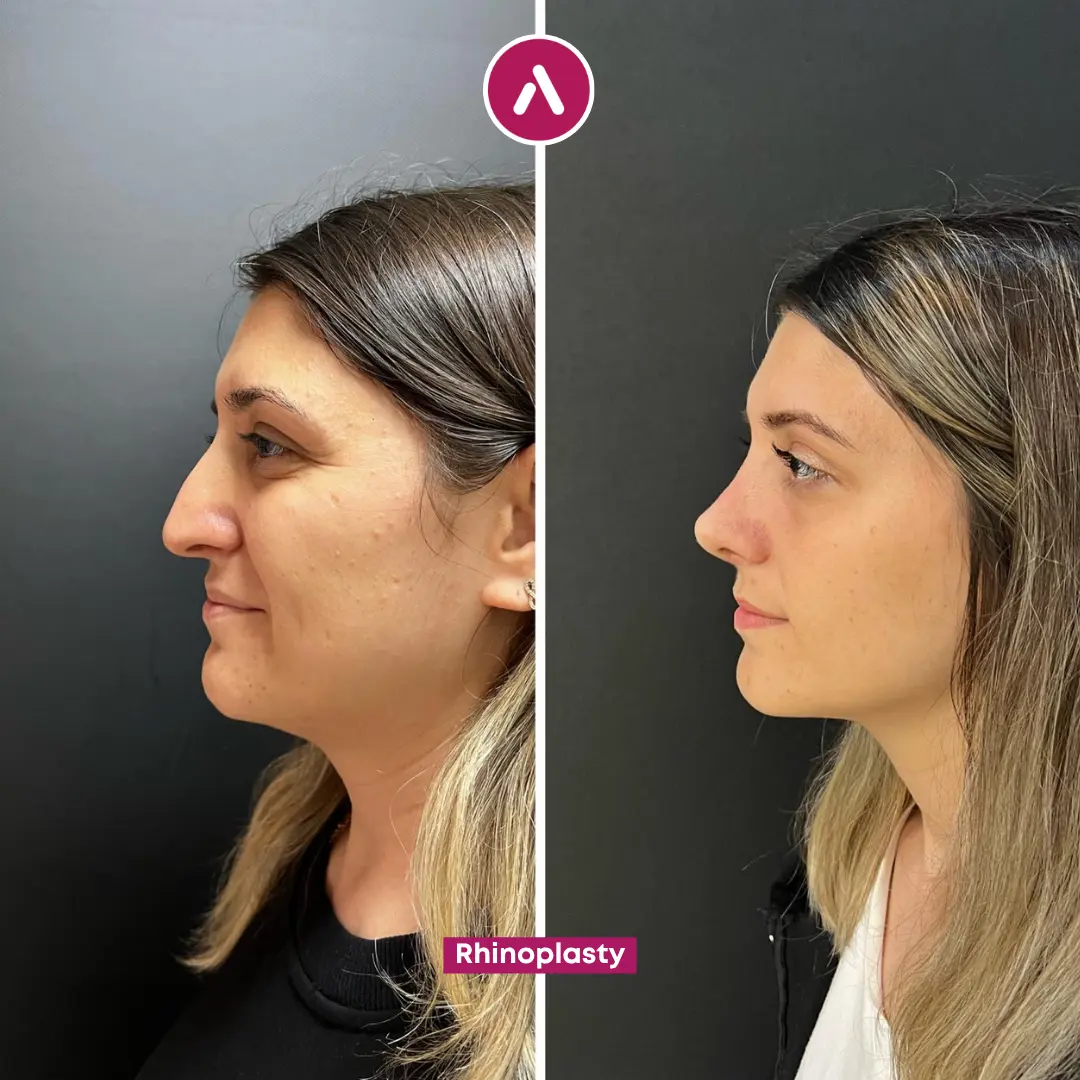
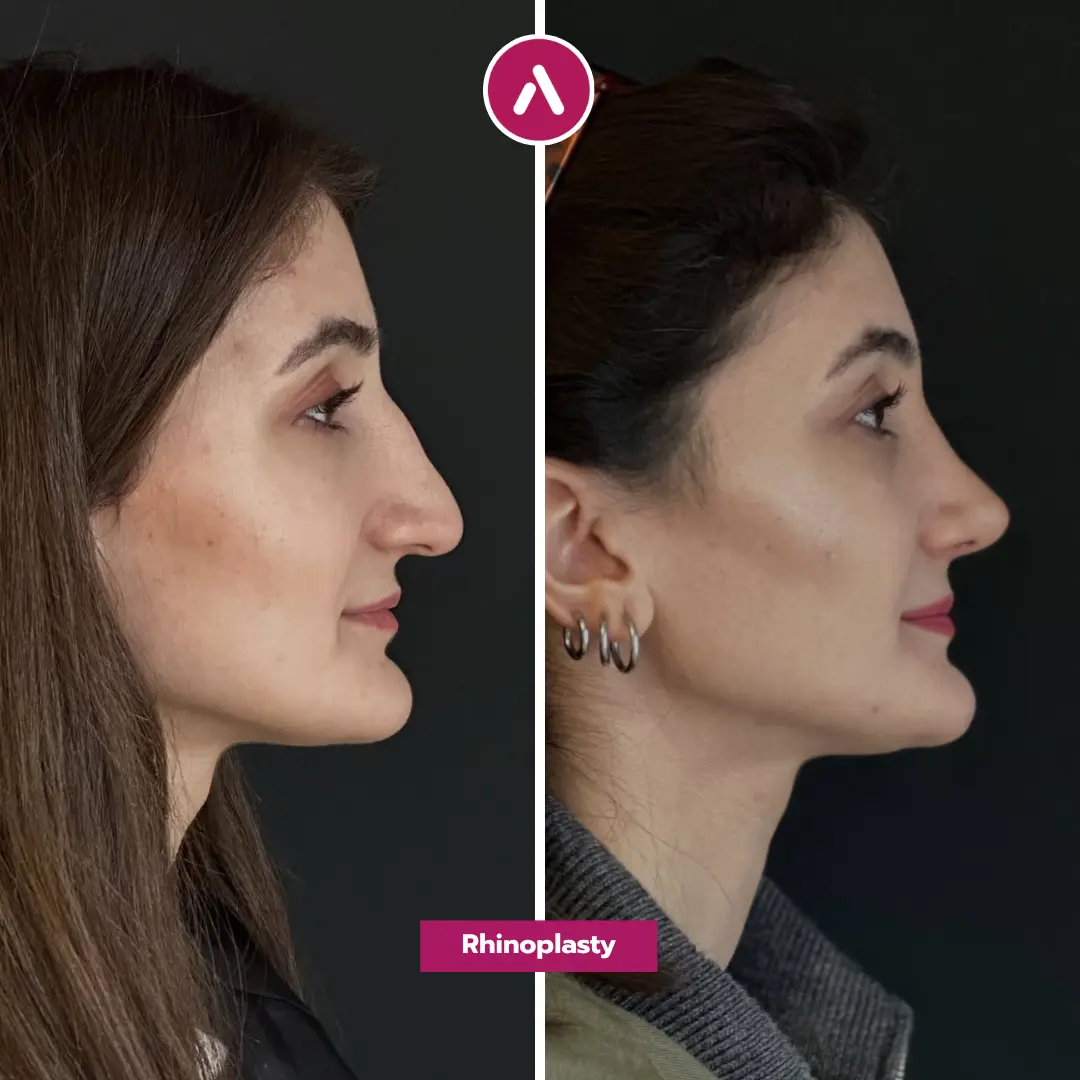
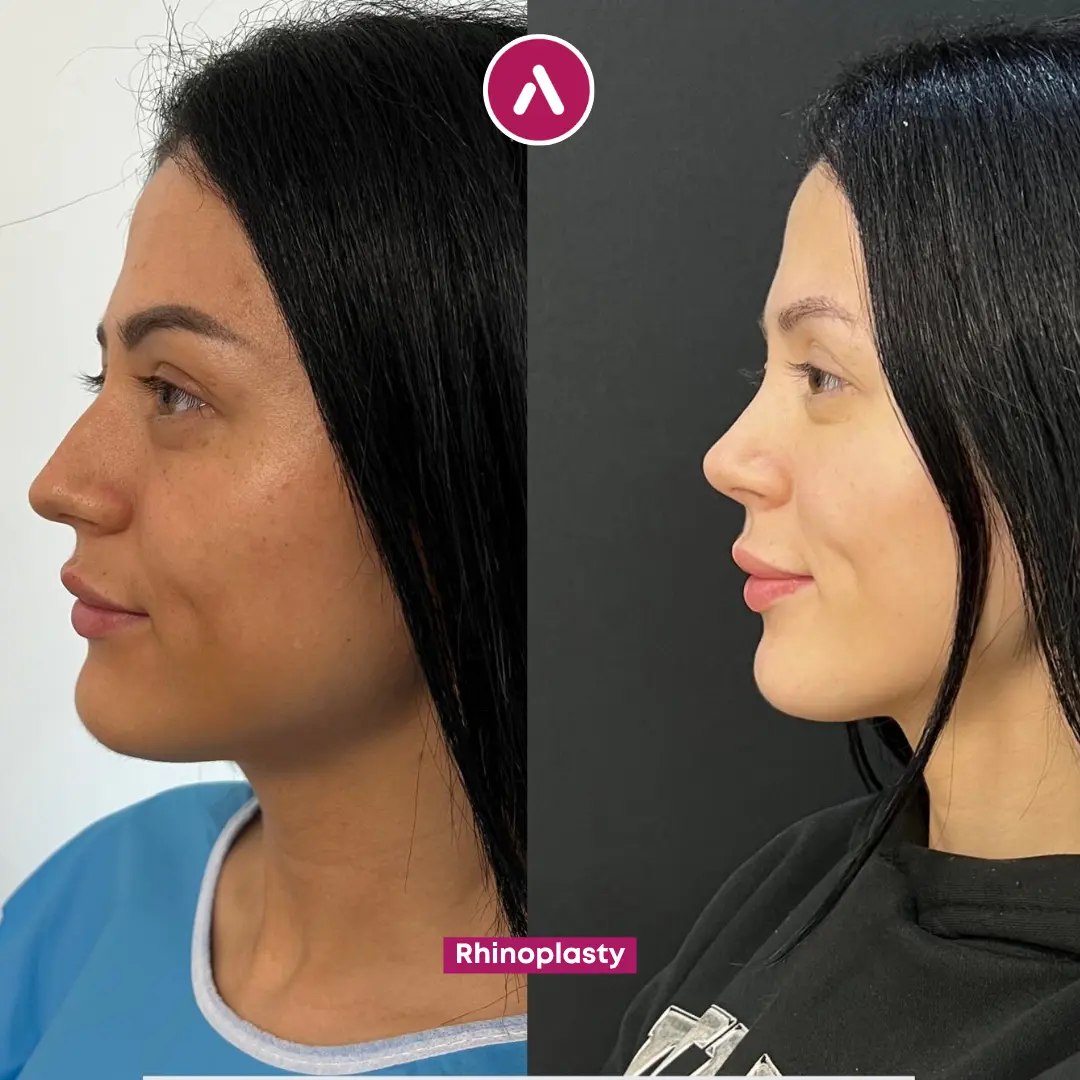
Patients seeking a first-time procedure with visible, uncomplicated concerns are often ideal candidates for a remote first assessment. Examples may include upper eyelid hooding, early jowling, moderate neck fullness, abdominal skin excess after pregnancy, or interest in a clearly defined breast procedure. In these situations, photographs and medical history often provide enough information for a useful preliminary recommendation.
These are also the cases where a no obligation online consultation can be particularly helpful. It gives the patient a way to understand likely treatment options, budget expectations, and recovery considerations without making an immediate commitment. For people balancing work, childcare, or travel planning, that efficiency is valuable.
Revision patients or medically complex cases that require extra caution
Patients with previous surgery, significant asymmetry, known scar tissue, major weight fluctuations, or chronic medical conditions often need more caution. Their photographs may not tell the full story, and a single digital review may not be enough to establish a dependable final plan.
In these cases, the online consultation still has value, but it should be seen as the beginning of a deeper review rather than a quick green light. Additional photographs, prior operation notes, extra medical information, or a more detailed face-to-face examination may be required. This is particularly true in revision rhinoplasty, secondary body contouring, and previous facelift or eyelid surgery cases.
Here, caution is a mark of professionalism. A clinic that recommends further review is not being evasive. It is usually showing better clinical judgement.
Patients seeking subtle, natural-looking results rather than unrealistic transformations
The most satisfied patients are often those who want improvement rather than reinvention. British patients, in particular, frequently prefer to look fresher, less tired, or more balanced, rather than obviously altered. That preference actually suits online consultation well, because it encourages a more thoughtful discussion about proportion, realism, and technique.
By contrast, patients seeking dramatic changes based on filtered photos, celebrity comparisons, or highly stylised social media expectations may need a more careful conversation. The issue is not that their wishes are unimportant, but that surgery must remain grounded in anatomy, healing capacity, and realistic outcomes.
In that sense, one of the most useful functions of an online plastic surgery consultation is expectation-setting. It helps identify not only whether surgery is possible, but whether the patient and surgeon are aligned on what a good result actually looks like.
Frequently Asked Questions (FAQ): Online Plastic Surgery Consultation
The questions below address the issues British patients ask most often when considering a remote consultation for surgery in Istanbul. Clear answers at this stage can make the entire decision-making process feel more grounded and less stressful.
Can a surgeon really assess me properly from photos alone?
Will my final price change after I arrive in Istanbul?
What photos should I send for an online plastic surgery consultation?
Is a video consultation better than sending photographs only?
Can I receive a treatment plan and recovery timeline before I travel?
How do I know I am speaking to a qualified surgeon?
What happens if the in-person examination shows I am not a suitable candidate?
If you would like to explore the subject in more detail, you can also find additional guidance on topics such as Specialist Plastic Surgeon Turkey, Questions to Ask Plastic Surgeon, Ghost Surgery in Turkey, English Speaking Plastic Surgeons in Turkey, and Finance for Plastic Surgery in Turkey. These resources can help you compare surgeons, understand communication standards, explore payment options, and make more confident decisions about planning your treatment journey from the UK to Istanbul.
Medical Disclaimer: This page is provided for general educational purposes only and does not replace a face-to-face medical consultation, diagnosis, or personalised treatment plan. All surgery carries risks and outcomes vary between individuals. Suitability for plastic surgery, procedure selection, and anaesthesia choice can only be determined after a full clinical assessment by a qualified surgeon. Always follow your clinician’s instructions and seek urgent medical attention if you develop concerning symptoms during recovery.
Related Treatments



Ready to Begin Your Own Transformation Journey?
Join the 2,000+ patients who have trusted Dr Akif Mehmetoğlu and the AKM Clinic team. Your journey to a more confident, naturally restored you begins with a simple, no-obligation conversation. Contact us today from the UK for your free virtual consultation.
#1: Get Your Free Personalised Quote
Start with a free, no-obligation online consultation. Share your photos, and our surgical team will provide a fully personalised treatment plan and a transparent, all-inclusive price package. There are no hidden fees.
#2: Secure Your Date & VIP Booking
Once you are ready, our dedicated patient coordinators will help you secure your procedure date. We will handle all your bookings, including your 5-star hotel accommodation and private VIP airport transfers.
#3: Arrive in Istanbul & Meet Your Surgeon
Arrive at Istanbul Airport (IST) and be greeted by your private driver. Settle into your hotel and prepare for your in-person consultation, where you will meet your specialist surgeon to finalise the details for your "natural, subtle, and restored" new look.