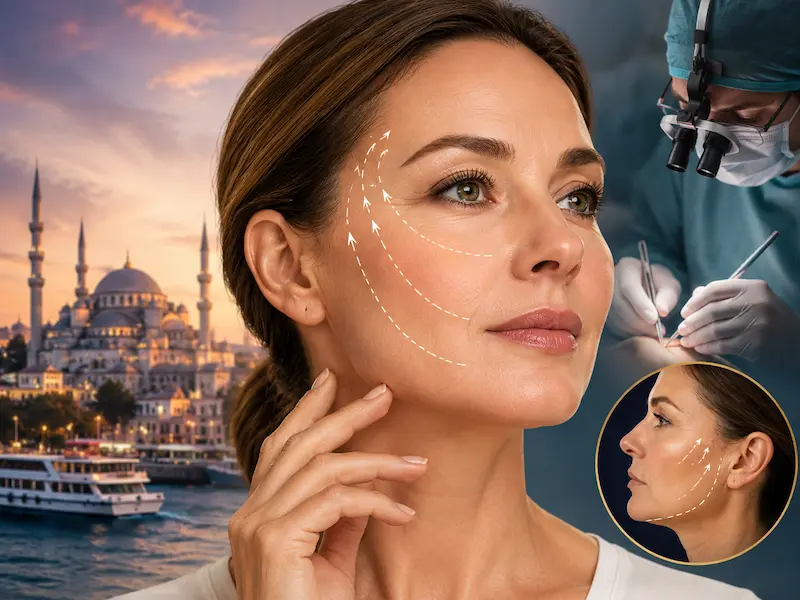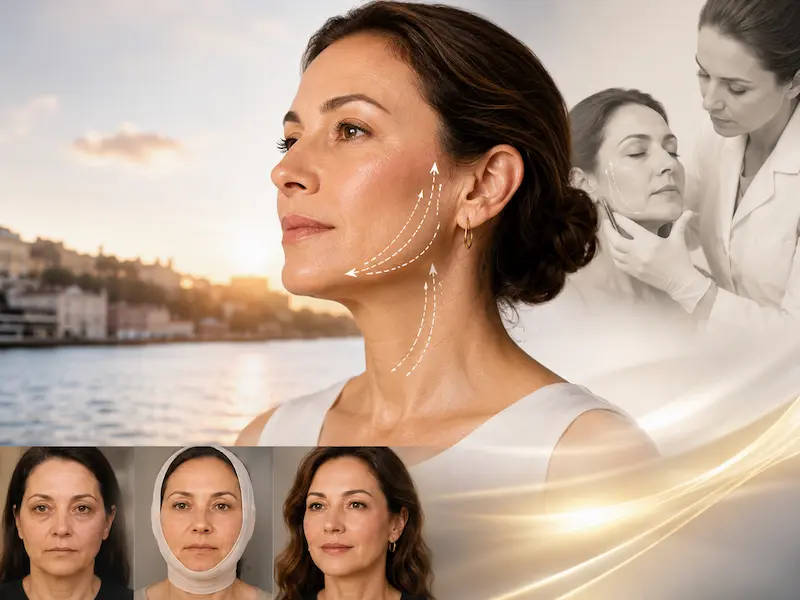

Stem cell assisted facelift surgery is a hybrid approach that combines a surgical facelift with regenerative cell delivery from the patient’s own fat tissue. At AKM Clinic, it is best understood as an enhancement to structural facial rejuvenation, not a replacement for a properly planned facelift. Canadian patients researching their options can begin with AKM’s broader AKM Clinic facelift options before deciding whether regenerative support fits their anatomy.
The phrase can be confusing. Some clinics use “stem cell facelift” to describe a non-surgical injection, while others use it to describe a surgical lift supported by fat-derived regenerative cells. This guide uses the more precise term: stem cell assisted facelift. The “assisted” part matters.
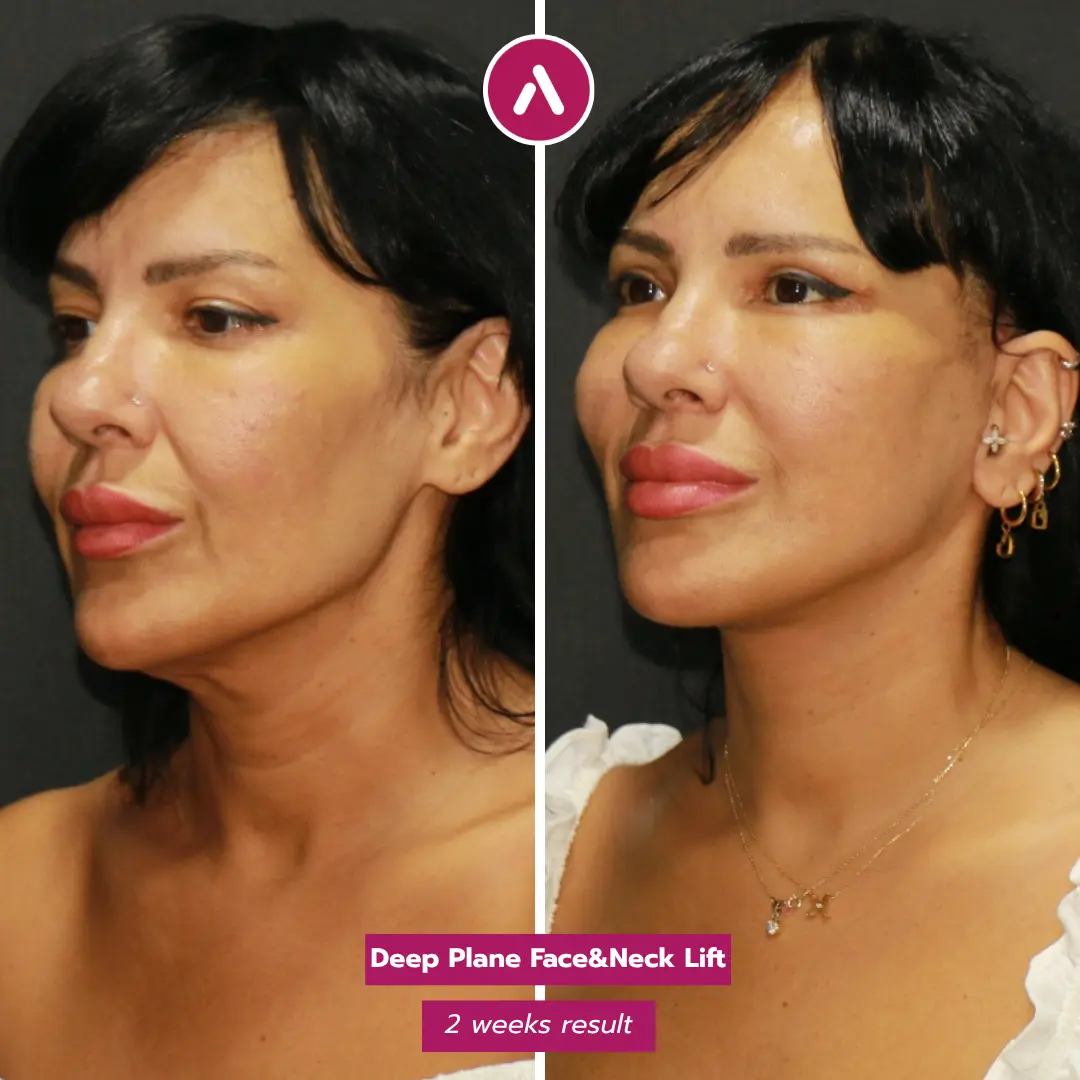
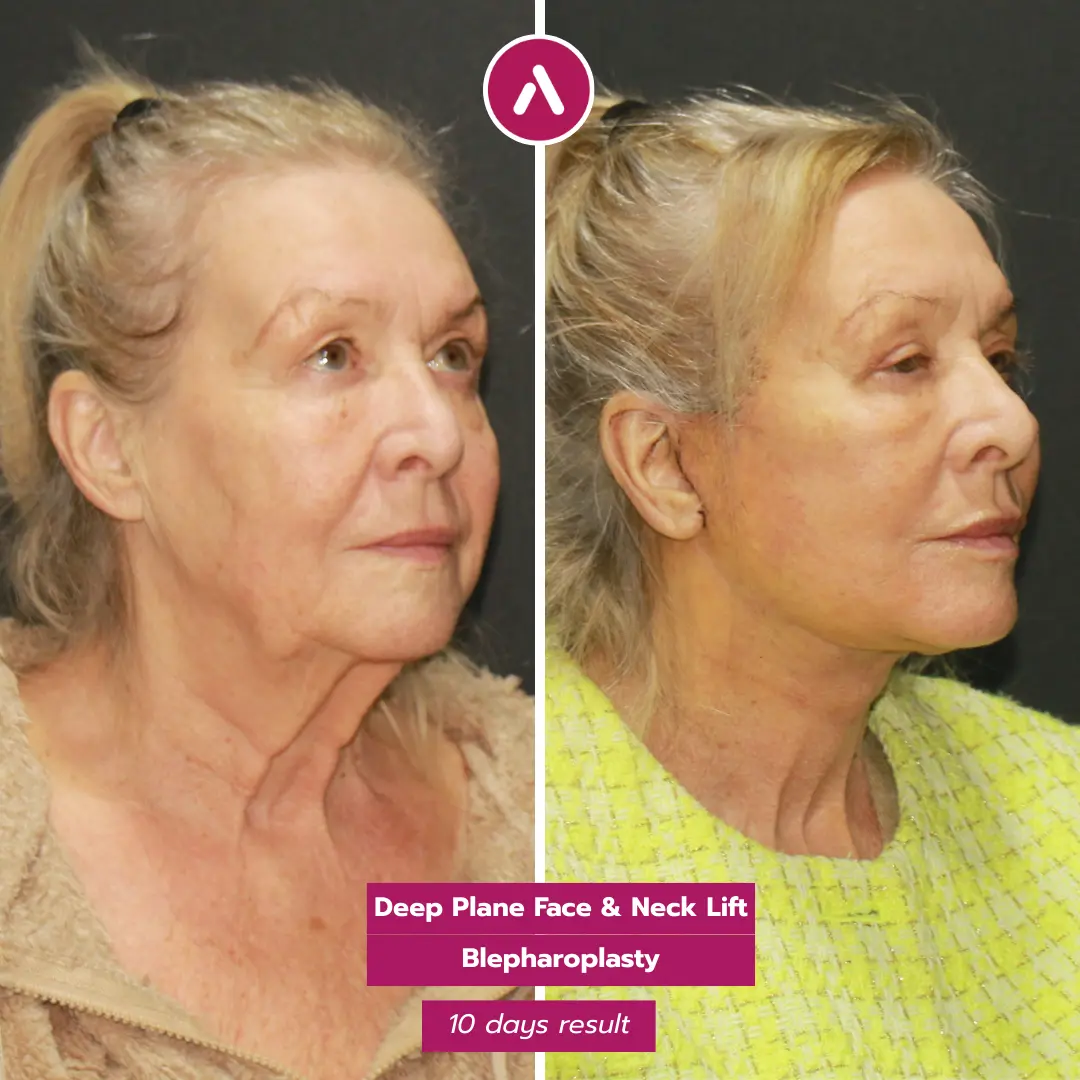
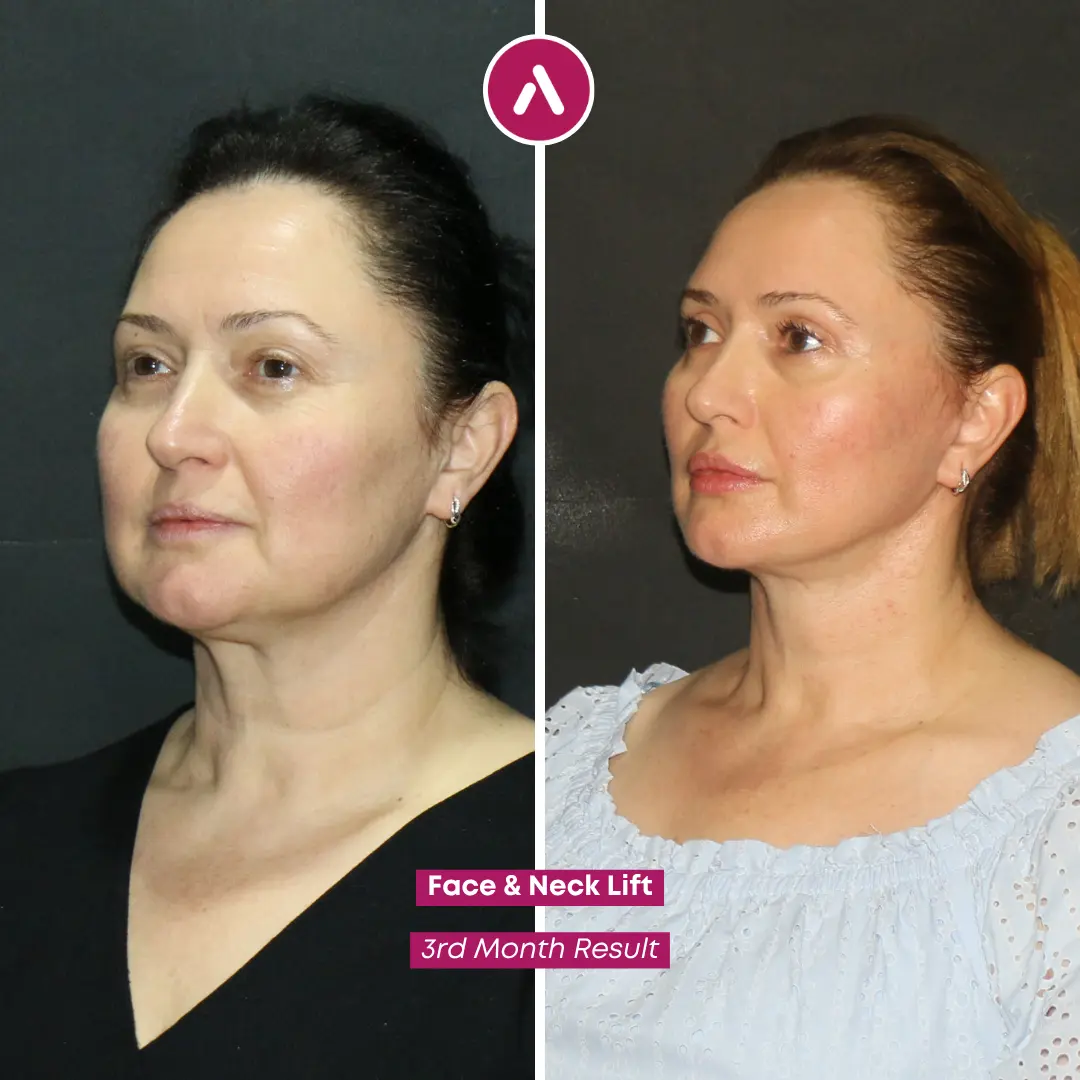
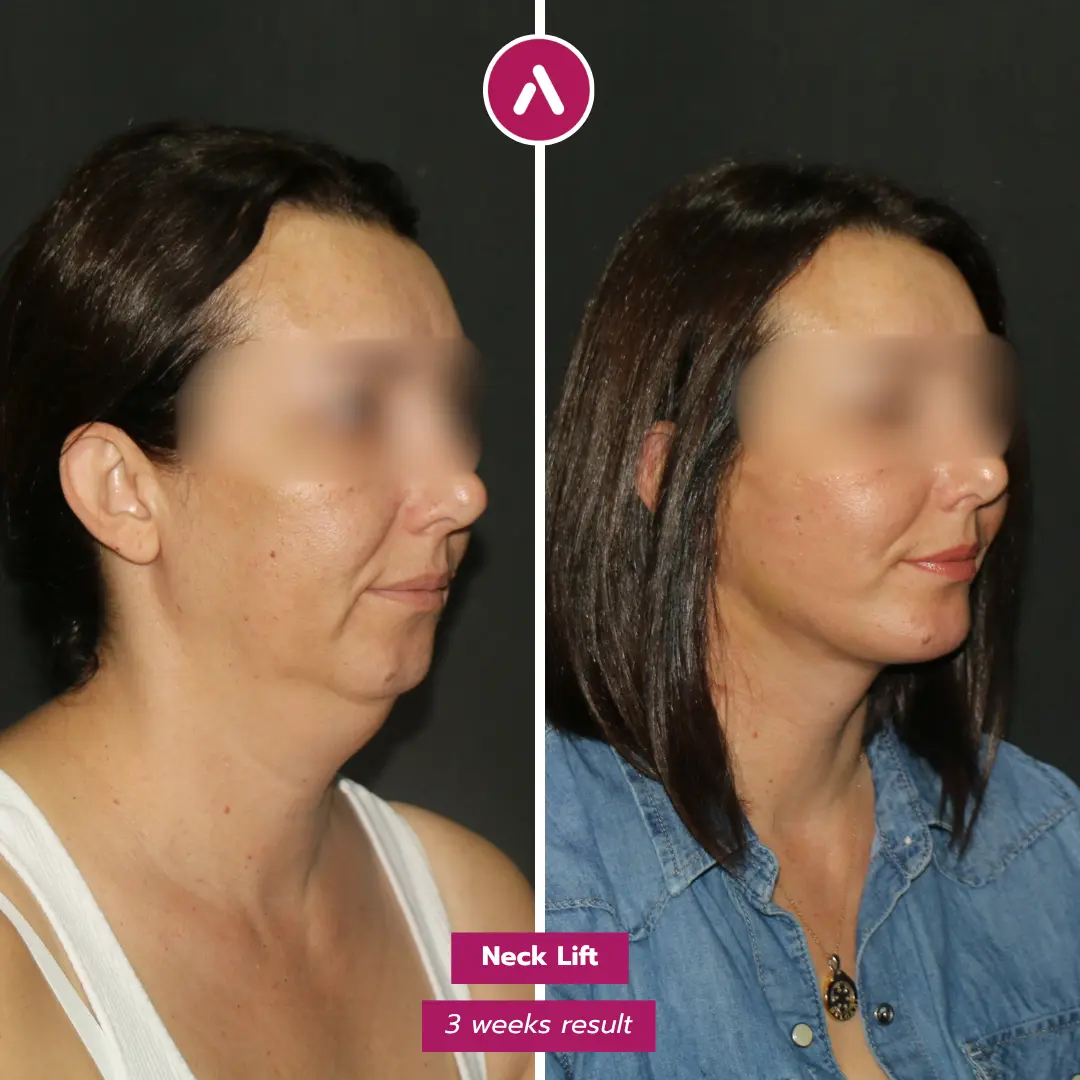
This article focuses only on definition and mechanism. It explains what the procedure is, how cells are harvested, how they are processed, and where they fit into the surgical sequence. For technique comparison with a standard facelift, see for technique comparison with traditional facelift, see our comparison guide.
Quick Summary: Stem cell assisted facelift is a hybrid surgical technique that combines structural lifting with autologous regenerative cell delivery. The cells are harvested from the patient’s own adipose tissue, processed into stromal vascular fraction, and reintroduced during surgery to support tissue quality and cellular repair. This guide explains the mechanism step by step.
Table of Contents
Defining Stem Cell Assisted Facelift Surgery Precisely
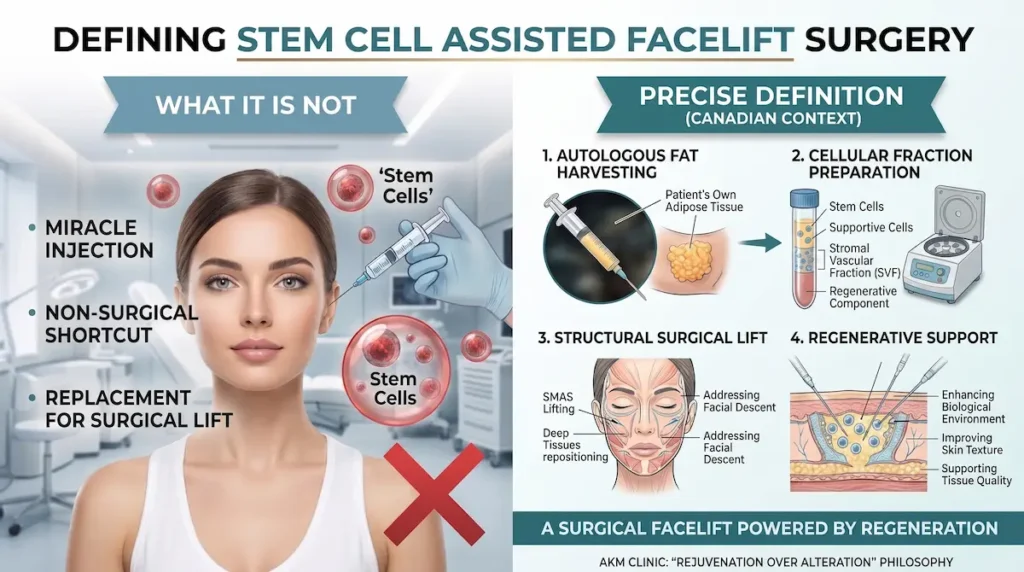
A useful definition starts by removing the marketing fog. Stem cell assisted facelift surgery is not a miracle injection, a skin tightening shortcut, or a substitute for surgical lifting. It is a facelift procedure with an added regenerative component, usually derived from the patient’s own fat tissue.
For Canadian patients, this distinction matters because the word “stem cell” carries a strong medical and regulatory meaning. It should not be used casually. A precise definition helps separate responsible regenerative medicine from vague aesthetic claims.
What stem cells in this context actually are
In facial aesthetic surgery, “stem cells” usually refers to regenerative cell populations found in adipose tissue, or body fat. These may include adipose-derived stromal/stem cells, endothelial cells, immune cells, pericytes, and other supportive cells within the stromal vascular fraction.
They are not embryonic cells. They are not donor cells. They are also not laboratory-grown cells that have been expanded outside the body over many days or weeks. In most cosmetic surgical settings, the relevant source is the patient’s own fat, harvested during the same operative session.
This is why the term autologous appears so often in regenerative medicine. Autologous means the material comes from you and is returned to you. For a Toronto, Vancouver, or Montreal patient, that wording is one of the first details to confirm during consultation.
What the procedure is and is not
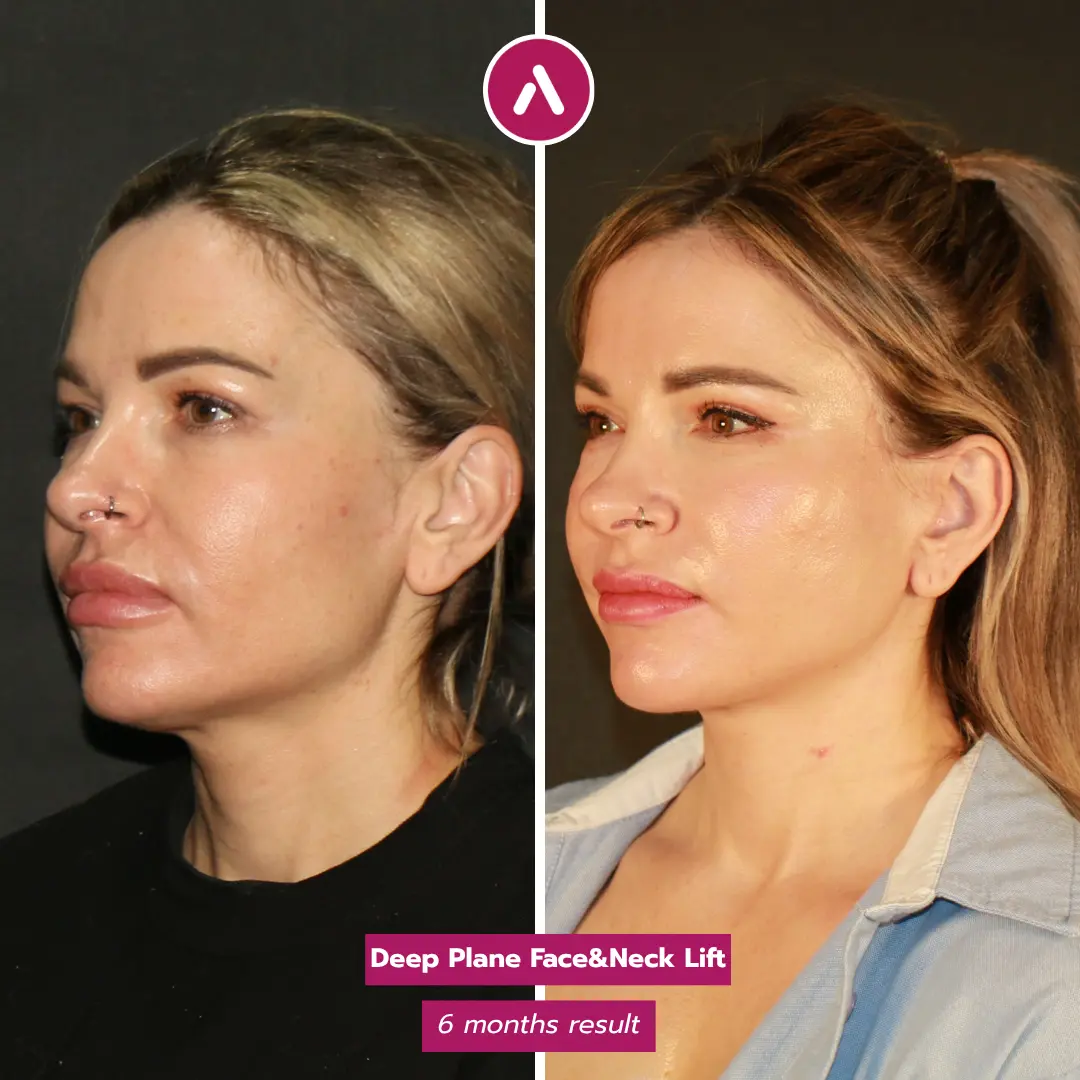
Stem cell assisted facelift surgery begins with the same core principle as any effective facelift: the surgeon must address the structures causing facial descent. Regenerative cells cannot lift a jowl, reposition the mid-face, or tighten deep neck tissues on their own.
The regenerative component is added to support tissue quality. It may be used to improve skin texture, support dermal repair, and enhance the biological environment around surgically treated tissue. That is different from claiming that cells alone create a facelift result.
- It is: a surgical facelift supported by regenerative cell delivery.
- It is: usually based on the patient’s own adipose tissue.
- It is: designed to support tissue quality, not replace structural lifting.
- It is not: a non-surgical alternative to deep plane or SMAS facelift.
- It is not: an instant skin tightening injection.
- It is not: a guarantee of a specific outcome for every patient.
At AKM Clinic, this fits the clinic’s “Rejuvenation over alteration” philosophy. The surgical lift restores position. The regenerative component supports the skin and soft tissue environment around that lift.
Common terminology confusion in the global cosmetic market
The global cosmetic market uses “stem cell facelift” in several different ways. Some providers use the phrase for fat transfer alone. Others use it for platelet-rich plasma, nanofat, SVF, or even topical products that do not involve surgery. The overlap creates confusion for patients who are trying to compare options carefully.
A more accurate phrase is “stem cell assisted facelift” because it clarifies the hierarchy. The facelift is the main procedure. The regenerative cells assist the tissue environment. That wording is more honest and easier for a sceptical Canadian reader to evaluate.
Canadian context: If a clinic describes a “stem cell facelift” without explaining the cell source, processing method, surgical plan, and regulatory context, that is a reason to pause. Ask what is harvested, how it is prepared, where it is injected, and who performs each step.
Surgeon perspective: The safest language is “stem cell assisted facelift,” because the regenerative component supports a facelift rather than replacing the surgical lift. The structure still comes from surgical planning, anatomy, and technique.
The Biology: Why Adipose Tissue Is the Source
Adipose tissue is used in regenerative facial surgery because it is accessible, familiar to aesthetic surgeons, and biologically active. It contains more than fat cells. When processed correctly, it can provide a cell-rich fraction that supports tissue repair signals within the treated area.
This is also where stem cell assisted facelift surgery overlaps with other regenerative facial procedures. Patients who are researching fat transfer to face procedures will often see related terms such as microfat, nanofat, and stromal vascular fraction. They are related, but they are not identical.
Mesenchymal stem cell density in adipose tissue
Mesenchymal stem/stromal cells are adult cells associated with tissue repair, signalling, and support of the local healing environment. In aesthetic medicine, adipose tissue is commonly selected because it can be harvested through a small-volume liposuction step and processed during the same surgical session.
The donor site is usually an area with accessible fat, such as the abdomen or flank. This does not mean the harvest is performed for body contouring. The goal is to obtain enough adipose tissue for processing while keeping donor-site impact modest.
For many Canadian patients, this is reassuring because it keeps the regenerative component within the same surgical plan. The material comes from the patient’s own tissue, not from an outside donor source.
Stromal vascular fraction and its components
Stromal vascular fraction, often abbreviated as SVF, is the cell-rich component obtained after adipose tissue is processed. Scientific definitions describe SVF as a heterogeneous population rather than a single purified cell type. It can include stromal/stem cells, endothelial cells, pericytes, immune cells, and other cells involved in tissue signalling.
The International Federation for Adipose Therapeutics and Science and the International Society for Cellular Therapy have published terminology guidance for adipose-derived stromal vascular fraction and culture-expanded adipose-derived stromal/stem cells. Patients who want the technical basis can review the IFATS and ISCT definitions for adipose-derived SVF.
In simpler terms, SVF is not “pure stem cells.” It is a biologically active mixture. That mixture is one reason precise language matters in any medical tourism consultation.
How these cells contribute to tissue regeneration
The value of adipose-derived regenerative cells is largely linked to signalling. These cells can release growth factors, cytokines, and other molecular signals that influence inflammation, microcirculation, collagen activity, and the local repair environment.
This is often called paracrine signalling. The cells do not need to become new skin or new facial tissue to matter. Their main role is to influence nearby cells and support the biological conditions in which healing and tissue renewal occur.
That mechanism also explains why the regenerative component should be discussed with restraint. It supports the environment around the surgical result. It does not create the lift itself.
Patients who want a narrower explanation of nanofat’s skin-level role can read more about nanofat grafting and its regenerative properties. In this article, the focus stays on the broader mechanism of stem cell assisted facelift surgery.
Step One — Adipose Harvesting
The first practical step in stem cell assisted facelift surgery is adipose harvesting. The surgeon needs a small amount of the patient’s own fat tissue before any regenerative processing can happen. This is usually done through a limited liposuction-style harvest, not a full body-contouring procedure.
The goal is controlled tissue collection. For a Canadian patient flying from Toronto, Vancouver, or Montreal, this step should be explained clearly before travel so there are no surprises on surgery day. The harvest site, expected soreness, and donor-site dressing should all be part of the pre-operative discussion.
The mini-liposuction harvest site
The harvest site is commonly the lower abdomen, flank, or another area with enough accessible adipose tissue. The surgeon chooses a site that offers adequate tissue while keeping the added procedure modest. It is not selected for visible cosmetic reshaping.
A small cannula is used to collect fat through a discreet incision. The incision is typically only a few millimetres long. Most patients notice the donor site as mild tenderness rather than a major second recovery area.
The donor-site choice may be adjusted for slimmer patients. Someone with a lower body-fat percentage may need a different harvest plan than a patient with more available abdominal tissue. This is one reason photo assessment alone is useful but not complete.
Volume harvested and patient impact
The amount of fat required depends on the planned regenerative technique. A stem cell assisted facelift does not usually require the same volume as a large-volume fat transfer. The surgeon is collecting enough adipose tissue to process into the desired regenerative fraction.
Patients often ask whether this harvest will change the shape of the abdomen or flank. In most cases, the answer is no. The volume is too small to create a meaningful body-contouring result.
The main patient impact is temporary. There may be bruising, firmness, or tenderness at the donor site. A small dressing or light compression may be used, depending on the harvest location and the surgeon’s preference.
Anesthesia for the harvesting phase
The harvesting step is performed under the same overall anesthesia plan as the facelift. If the facelift is performed under general anesthesia, harvesting occurs while the patient is already asleep. If the procedure is performed under local anesthesia with IV sedation, the harvest site receives local numbing as part of the surgical plan.
The patient should not feel sharp pain during adipose harvesting. The main sensation, in awake or lightly sedated cases, is usually pressure or movement. That distinction is important for patients with procedure anxiety.
At AKM Clinic, anesthesia planning is discussed before surgery rather than decided casually on the day. Canadian patients should use the virtual consultation to ask how the harvest phase fits into the full operative sequence.
Step Two — Cell Processing
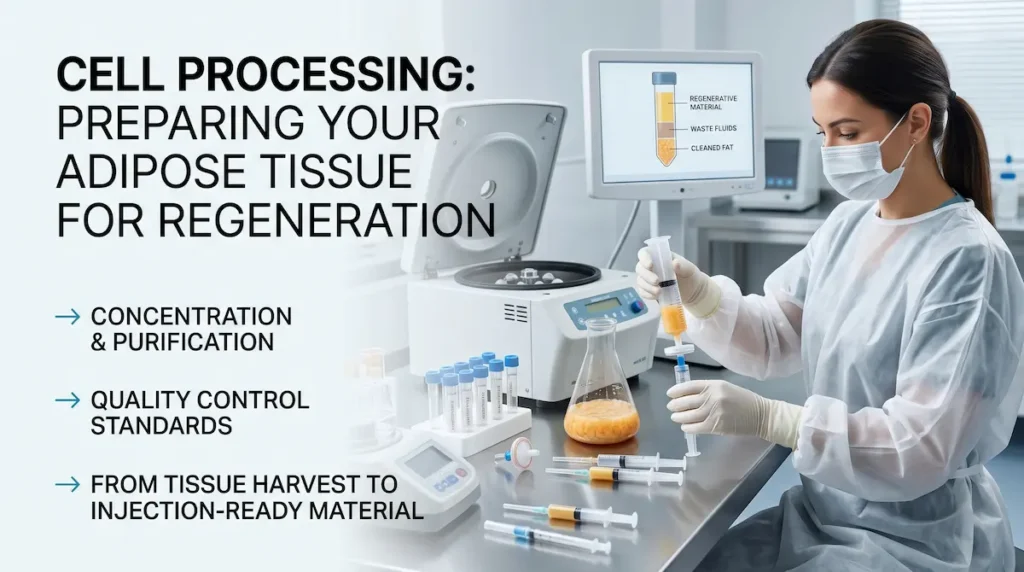
After harvesting, the adipose tissue must be prepared before it can be reintroduced. Processing is the bridge between “fat collected from the body” and “regenerative material suitable for targeted surgical use.” This is where terminology becomes especially important.
Processing methods vary between clinics, countries, and regulatory environments. The key questions are simple: how is the tissue handled, how much manipulation occurs, and what quality controls are used before reinjection?
Mechanical or enzymatic processing methods
Adipose tissue can be processed through mechanical or enzymatic methods. Mechanical processing may involve washing, filtering, emulsification, or centrifugation. Enzymatic methods use specific agents to separate cellular components from the surrounding tissue matrix.
Both categories have different regulatory implications. Patients should not assume that every “stem cell” procedure uses the same method. The technique must be explained in plain language.
For aesthetic facial surgery, mechanical processing is often discussed in the context of microfat or nanofat. Enzymatic SVF preparation is a more complex regulatory topic. This is why responsible clinics avoid vague promises and describe the actual workflow.
Concentration and purification standards
Once adipose tissue is processed, the surgeon or clinical team assesses whether the prepared material is appropriate for injection. The aim is to remove unwanted fluid, blood residue, and larger tissue fragments while preserving the biologically useful components.
The word “purification” should be used carefully. This is not the same as manufacturing a pharmaceutical product in a laboratory. In a surgical setting, it usually refers to preparing the patient’s own harvested tissue into a usable form for reinjection.
Patients should ask whether the material is being used immediately, whether it is culture-expanded, and whether any outside laboratory is involved. Same-session autologous preparation is different from lab-expanded cell therapy.
Quality control before reinjection
Before reinjection, the prepared material should be assessed for consistency, sterility handling, and suitability for the intended tissue plane. This is not a step to rush. A regenerative component only makes sense if the preparation process respects surgical safety.
Quality control also includes accurate labelling and maintaining a closed or controlled workflow where possible. The tissue should remain traceable to the same patient. That may sound obvious, but it is essential in international medical care.
For Canadian patients, this is where clinic infrastructure becomes relevant. A surgeon’s technique matters, but so does the clinical environment around the procedure. AKM Clinic’s broader safety framework includes sterile protocols, regulated surgical settings, and patient-support systems designed for international care.
Step Three — Surgical Integration
The regenerative component is integrated into the facelift after the surgical plan has already been established. The lift must still be designed around anatomy, facial descent, skin quality, and the patient’s natural ageing pattern. Cells do not replace that judgement.
This is where stem cell assisted facelift surgery becomes a true hybrid procedure. The structural lift and the regenerative delivery are planned together, but they perform different jobs. The lift repositions tissue; the regenerative material supports the biological environment around the result.
When in the facelift sequence the cells are injected
The timing depends on the surgeon’s workflow. In many cases, regenerative material is introduced after the main surgical lifting and tissue repositioning steps are completed. This allows the surgeon to map injections around the final tissue position, not the pre-lift anatomy.
That sequencing matters. If the face is lifted after injection mapping, the regenerative material may not sit exactly where intended. By waiting until the anatomy is repositioned, the surgeon can distribute material more logically.
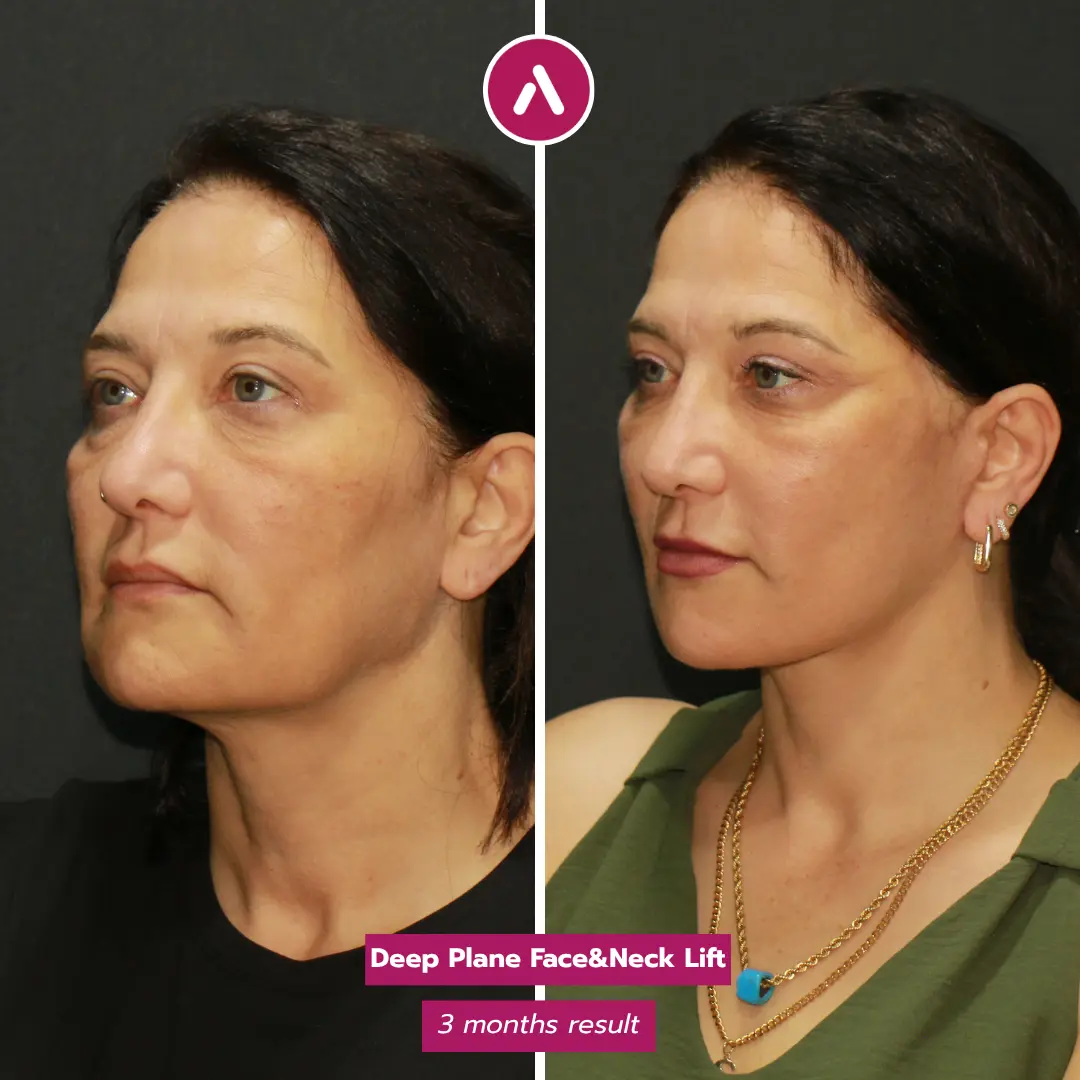
For patients undergoing a deeper structural lift, this sequence may be paired with a deep plane surgical baseline. The deep plane component addresses descent at the structural level, while regenerative material is used more selectively for skin and soft-tissue support.
Target tissue planes for delivery
Injection planes depend on the purpose of the regenerative component. Some material may be placed superficially for skin quality. Other portions may be used in deeper soft-tissue zones where the surgeon wants to support contour, texture, or tissue vitality.
This should not be random. A careful surgeon maps the face by region: cheeks, nasolabial area, jawline transition, lower face, and areas of skin thinning. The plan should respect vascular anatomy and avoid unsafe injection zones.
The tissue plane also depends on whether the material behaves more like nanofat, microfat, or SVF-rich preparation. Smaller-particle preparations are more suited to skin-quality work. Larger fat parcels are more useful for volume restoration.
Volume injected and distribution mapping
Volume is individualized. A patient with thin skin, sun damage, and crepey texture may need a different distribution pattern than someone whose main issue is jowling. The regenerative portion should be tailored to the problem it is meant to address.
More is not automatically better. Over-injection can create puffiness, contour irregularity, or an unnatural transition between treated and untreated regions. The best results often come from restraint.
Distribution mapping is also part of AKM Clinic’s Natural-First approach. The aim is not to create an exaggerated or “filled” appearance. The goal is to support a face that looks rested, balanced, and recognizably yours.
| Process step | What happens | Purpose | Patient-facing question to ask |
|---|---|---|---|
| Step 1: Harvest | A small amount of adipose tissue is collected from a donor site such as the abdomen or flank. | Provides the patient’s own tissue for regenerative preparation. | Where will my fat be harvested, and how will that area feel afterward? |
| Step 2: Process | The harvested tissue is filtered, refined, or otherwise prepared for targeted use. | Creates a usable regenerative material from adipose tissue. | Is the preparation mechanical, enzymatic, or another method? |
| Step 3: Integrate | The prepared material is injected into selected tissue planes during the facelift. | Supports skin quality and soft-tissue vitality around the surgical result. | Which facial zones will receive the regenerative component? |
| Step 4: Cellular activity | The delivered cells and signalling factors influence the local repair environment. | Supports tissue quality through paracrine signalling and microvascular effects. | What changes should I expect in skin quality versus lifting? |
What the Cells Do in the Tissue?
Once the prepared regenerative material is placed into selected tissue planes, its role is biological rather than mechanical. The cells do not pull tissue upward. They influence the local repair environment around the surgical result.
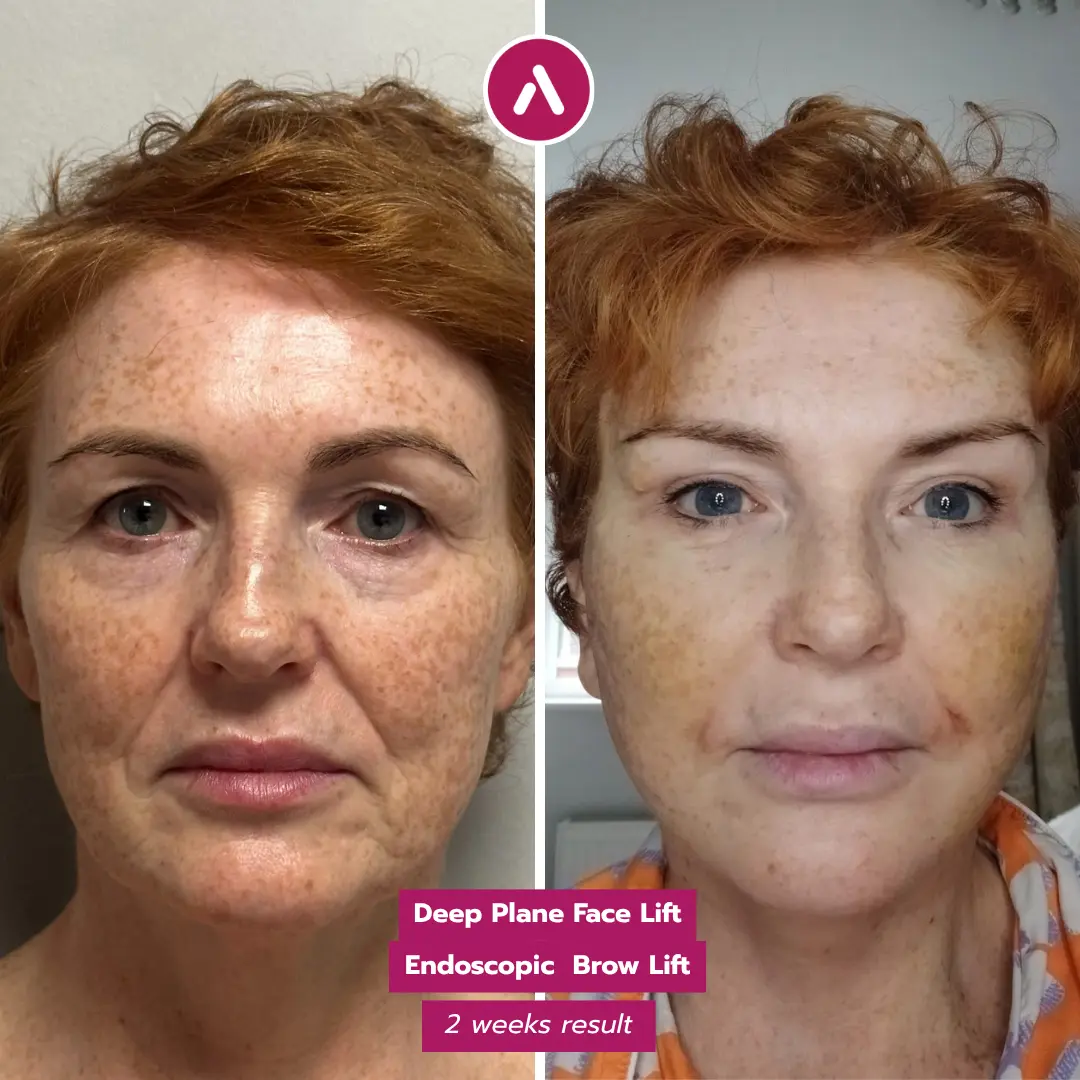
This is the point where expectations must stay realistic. Stem cell assisted facelift surgery may support skin quality and tissue vitality, but the visible lifting effect still depends on the facelift technique. The regenerative component works at the cellular level.
Paracrine signalling and the regenerative cascade
Paracrine signalling means that cells release molecular signals that affect nearby cells. In regenerative facial surgery, this signalling may influence inflammation, collagen behaviour, vascular response, and tissue remodelling. It is one of the main reasons adipose-derived preparations are discussed in facial rejuvenation.
The cells are not simply “turning into new skin.” That wording is too simplistic. A more accurate explanation is that they help shape the local environment in which repair and renewal occur.
For an expert patient, this distinction is important. It helps separate evidence-aware regenerative medicine from exaggerated claims. Good consultation language should describe signalling, support, and tissue response rather than promising cellular magic.
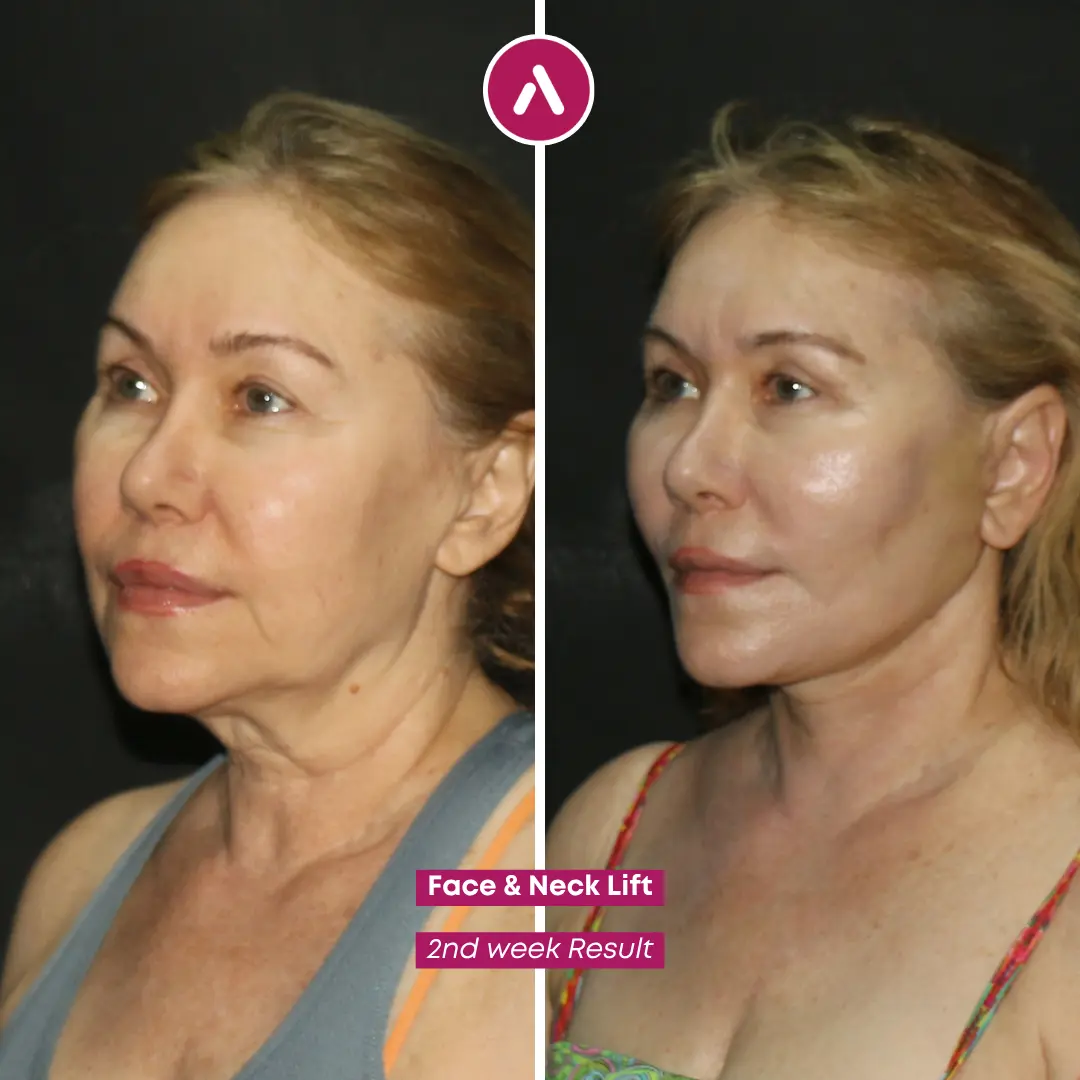
Microvascularisation and tissue oxygenation
Facelift surgery temporarily changes the soft-tissue environment. Blood flow, swelling, and inflammation all shift during the early healing period. Regenerative cell delivery may support microvascular activity, which refers to the behaviour of tiny blood vessels within the treated tissue.
Better microvascular support can matter in delicate facial tissue. The face has strong blood supply, but surgical dissection still creates temporary stress. A regenerative component is designed to support the tissue environment during that transition.
AKM Clinic also uses Hyperbaric Oxygen Therapy and Low-Level Laser Therapy in its wider recovery model. Those technologies have separate mechanisms. For recovery timeline specifics, see for recovery timeline specifics.
Skin quality and dermal regeneration
The most logical aesthetic target for regenerative support is skin quality. Patients may be seeking improvement in fine texture, crepey skin, mild thinning, dullness, or areas that look biologically “tired” even after structural lifting. This is different from volume replacement.
Regenerative preparations can be placed more superficially when the goal is dermal support. The surgeon may treat areas where texture is more important than contour. This must be mapped carefully because the skin is thin, visible, and unforgiving.
Patients often ask whether this changes how long the result lasts. That is a separate question. For longevity data specifically, see for longevity data specifically.
The Regulatory Landscape
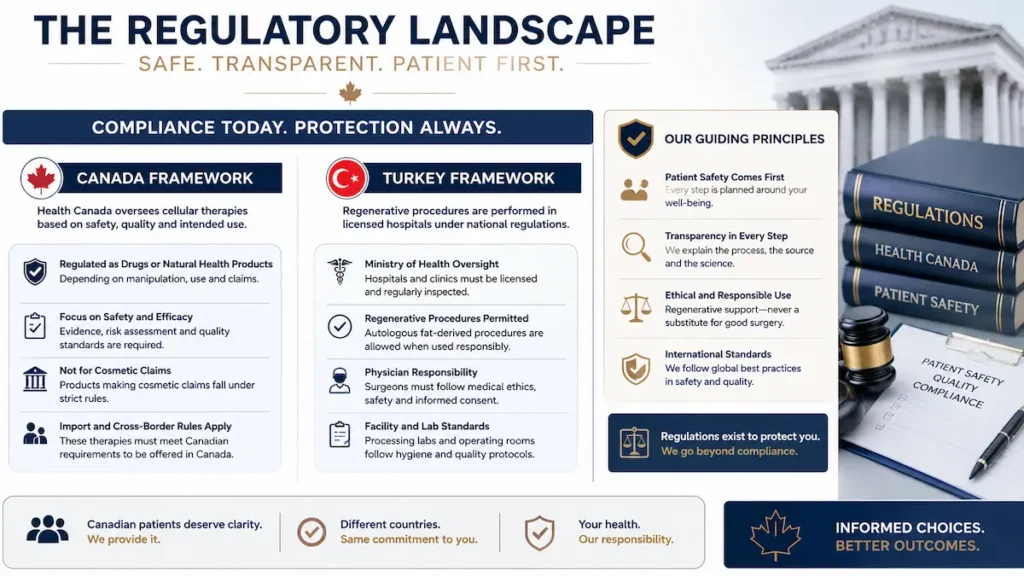
Regulation matters whenever the word “stem cell” appears in a cosmetic procedure. Canadian patients are used to Health Canada oversight, provincial medical colleges, and a public healthcare culture that treats private claims with caution. That scepticism is useful here.
The safest approach is to ask how the clinic defines the procedure, what tissue is used, how it is processed, and which rules apply in the country where treatment occurs. A responsible clinic should be able to answer without vague language.
Health Canada position on autologous regenerative use
Health Canada has published policy guidance on autologous cell therapy products. The guidance discusses risks, federal product safety rules, and how autologous cell therapies are approached within the Canadian regulatory context. Canadian patients can review the Health Canada policy position on autologous cell therapy products.
This does not mean every autologous aesthetic procedure is treated the same way. Details matter. The source of cells, degree of manipulation, intended use, and clinical claim all affect regulatory interpretation.
Canadian callout: If a provider claims that a cosmetic stem cell procedure is “approved in Canada” without naming the exact product, indication, and regulatory pathway, ask for written clarification. Broad approval language can be misleading.
Turkish Ministry of Health regulatory framework
Turkey regulates international health tourism through the Ministry of Health. Facilities that serve international patients are expected to operate within the international health tourism framework, including authorization, patient information standards, and oversight requirements.
This matters for Canadians because the procedure is being performed outside their provincial system. OHIP, MSP, RAMQ, and AHCIP do not supervise a clinic in Istanbul. The relevant local authority is Turkish, while your Canadian family physician may become part of follow-up once you return home.
AKM Clinic’s medical tourism model is built around that cross-border reality: licensed international care in Turkey, structured patient advocacy, and virtual follow-up after the patient returns to Canada. The North American support line also helps reduce time-zone friction for patients in Toronto, Calgary, Vancouver, and Montreal.
International scientific evidence base
The evidence base for adipose-derived regenerative procedures is developing. Some mechanisms are well described in the scientific literature, especially around adipose-derived stromal cells and stromal vascular fraction. Specific cosmetic claims need more caution.
Patients should distinguish between mechanism and guaranteed outcome. A published biological mechanism does not automatically prove that every cosmetic protocol produces the same result. Surgical technique, patient biology, processing method, and injection mapping all influence the final outcome.
Pricing should be discussed with the same precision. AKM’s fat transfer technique schedule lists nanofat, microfat, macrofat, SNIF, and FAMI Technique at CAD $3,400 each. Patients comparing broader regenerative options can review regenerative medicine pricing in Canadian dollars or the more specific fat transfer pricing in Canadian dollars.
The right question is not “Do you offer stem cells?” A better question is: “What exactly are you harvesting, how are you processing it, where are you injecting it, and what outcome is realistic for my skin?”
Clinical perspective: Regenerative language should be specific enough that a patient can understand the cell source, preparation method, and purpose. If the explanation sounds too broad, the claim may be too broad.
Frequently Asked Questions: Stem Cell Assisted Facelift Surgery
Canadian patients usually arrive at this topic with detailed questions. That is appropriate. Stem cell assisted facelift surgery uses medical language that can be misunderstood, so each answer below separates mechanism, regulation, pricing, and realistic clinical use.
Are the stem cells my own or donor cells?
In the context described in this guide, the regenerative material comes from your own adipose tissue. This is called autologous use. The fat is harvested from your body, processed, and reintroduced during the same overall surgical plan.
Donor-derived cells are a different category. They involve different safety, compatibility, and regulatory questions. A cosmetic facelift consultation should make the source of the cells completely clear.
Is the procedure approved in Canada?
A procedure performed in Turkey is not “approved in Canada” in the same way a medical product or clinical indication may be authorized by Health Canada. Canadian regulation depends on the exact cell product, level of manipulation, intended use, and claim being made.
For a Canadian patient, the safer question is more specific: “How would this procedure be categorized in Canada, and what rules apply in Turkey?” AKM Clinic should explain the surgical workflow, the cell source, and the Turkish regulatory setting before you travel.
How much extra time does the harvesting add?
The harvesting step usually adds time because the surgeon must collect adipose tissue before processing begins. The exact duration depends on the donor site, patient anatomy, and the preparation method used. It should be discussed during your surgical planning call.
Most patients should think of it as an added step within the same operative day, not a separate surgery. The donor site may feel tender afterward, but it is generally much smaller in scope than a body-contouring liposuction procedure.
Is there a separate fee for the regenerative component?
It depends on the final surgical plan. AKM’s treatment technique schedule lists fat-transfer-related techniques such as nanofat, microfat, macrofat, SNIF, and FAMI Technique at CAD $3,400. A combined facelift plan may be priced differently based on scope.
For Canadian patients, the correct approach is to request a written CAD quote. The quote should state what is included, what is not included, and whether the regenerative component is bundled into the facelift plan or priced separately.
Can I have stem cells without a facelift?
Some regenerative fat-derived procedures may be performed without a facelift, especially when the main concern is skin quality, fine lines, texture, or mild tissue thinning. That is a different treatment goal from correcting jowls, neck laxity, or deeper facial descent.
If the face needs structural repositioning, cells alone will not replace a facelift. If the concern is mainly skin quality, a standalone regenerative procedure may be discussed. The consultation should identify which problem you are actually trying to solve.
What is SVF?
SVF stands for stromal vascular fraction. It is the cell-rich fraction obtained from processed adipose tissue. It is not a single pure stem cell product.
SVF can contain several cell types, including adipose-derived stromal/stem cells, endothelial cells, pericytes, immune cells, and other supportive cells. This mixture is one reason serious clinics explain SVF carefully instead of using it as a vague marketing label.
Does AKM Clinic perform this procedure routinely?
AKM Clinic evaluates regenerative fat-derived techniques within facial rejuvenation planning, but candidacy is individual. A patient with thin skin, texture concerns, or quality loss may be a stronger candidate than someone whose only concern is structural sagging.
The clinic’s core facial surgery philosophy remains “Rejuvenation over alteration.” That means the regenerative component should be used because it fits the anatomy, not because it sounds advanced. Ask during consultation whether it is recommended for your case and why.
Is this the same as PRP?
No. PRP stands for platelet-rich plasma. It is prepared from blood and contains concentrated platelets and growth-factor signals. It is not the same as adipose-derived SVF or fat-derived regenerative cell preparation.
Both PRP and adipose-derived regenerative procedures may be discussed in aesthetic medicine, but they are biologically different. They are sourced from different tissues and prepared through different workflows. A clear treatment plan should not use these terms interchangeably.
Can I see published research on stem cell facelift?
You can ask to review the scientific basis for adipose-derived stromal cells, SVF, nanofat, and regenerative facial procedures. Published research can help explain mechanism, terminology, and potential tissue effects. It does not prove that every commercial protocol is equivalent.
The strongest consultation is one that separates evidence levels. A biological mechanism is one layer of evidence. Clinical results, patient selection, processing method, and surgeon experience are separate layers.
How does this differ from the marketing term “stem cell facelift”?
The marketing term “stem cell facelift” is often too broad. It may refer to fat transfer, nanofat, SVF, PRP, topical products, or non-surgical injections. That makes comparison difficult.
Stem cell assisted facelift surgery is more precise. It describes a surgical facelift supported by autologous regenerative cell delivery. The facelift creates the structural change; the regenerative component supports the tissue environment around that change.
For a research-led assessment, ask AKM Clinic how surgical technique and regenerative biology would be combined in your specific case. The answer should be anatomical, practical, and written in clear CAD-inclusive terms before you make travel plans from Canada.
Medical Disclaimer: This page is provided for general educational purposes only and does not replace an in-person medical consultation, diagnosis, or personalized treatment plan. All surgery carries risks, and outcomes vary between individuals. Suitability for facelift surgery, procedure selection, and anesthesia choice can only be determined after a full clinical assessment by a qualified surgeon. Always follow your clinician’s instructions and seek urgent medical attention if you develop concerning symptoms during recovery.