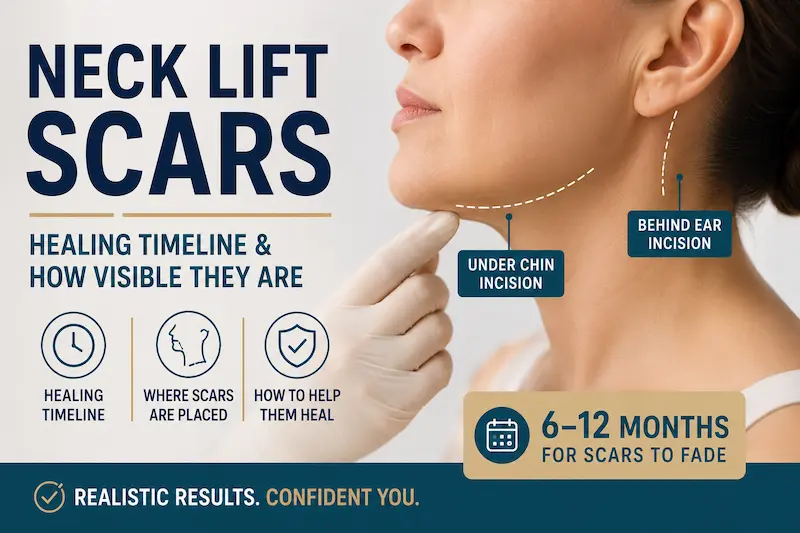
Neck lift scars are usually placed where the eye is least likely to catch them: in the natural crease under the chin and, for a full neck lift, behind the ears around the hairline. A mini neck lift may leave fewer visible marks, but it also corrects less. Most scars soften, flatten, and fade over 6–12 months, although final scar quality depends on incision planning, skin healing, tension, sun exposure, and aftercare.
For Canadian patients comparing local private surgery with travelling abroad, the real question is not whether a neck lift leaves any scar at all. It does. The better question is where those incisions sit, how they mature, and whether the trade-off matches the amount of neck correction you need.
At AKM Clinic, neck lift planning follows a Natural-First philosophy: the goal is not a tight, pulled, or “operated-on” neck, but a cleaner jawline and neck contour with incisions designed to hide within normal shadow lines. You can read more about the procedure itself in AKM’s neck lift approach; this guide focuses specifically on scar placement, visibility, and healing.
Table of Contents
Where Neck Lift Scars Actually Sit?
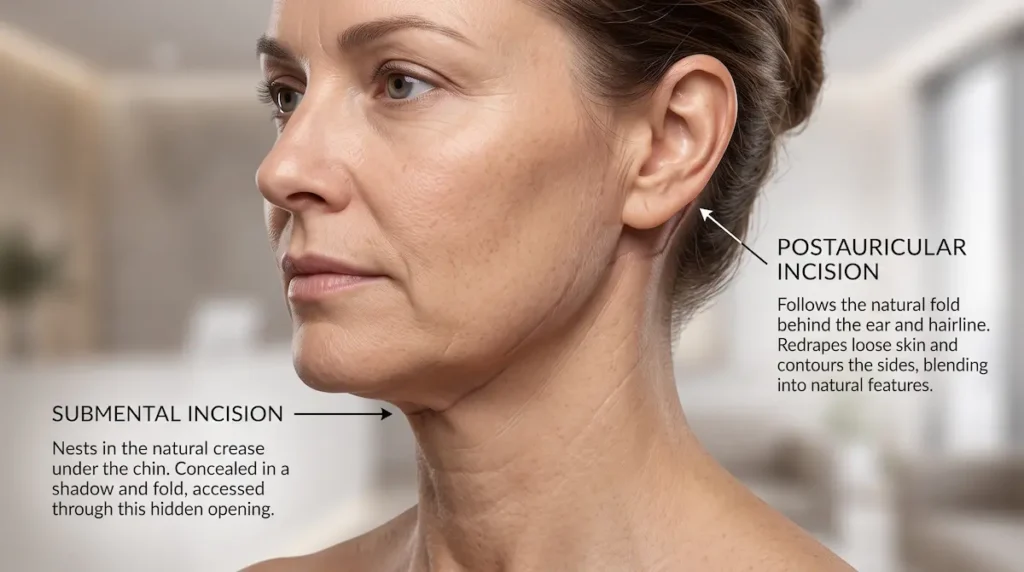
Neck lift scars are planned around the anatomy of the lower face, chin, ear, and hairline. Their exact position depends on whether the surgeon is tightening the platysma muscle, removing loose skin, reducing deeper neck fullness, or combining several steps. In most cases, the most important scar locations are the submental crease under the chin and the postauricular area behind the ear.
The submental incision under the chin
The submental incision is a small opening placed in the natural crease just beneath the chin. This is the scar many patients notice first when reading about neck lift surgery, because it sounds exposed. In practice, it is often well hidden because it sits in a shadowed fold that is not visible from a normal conversational angle.
This incision gives the surgeon access to the central neck. It may be used to tighten or repair the platysma muscle, refine fullness under the chin, or improve the angle between the chin and neck. Once healed, the scar usually looks like a fine line tucked into the chin crease rather than a long mark across the neck.
Early on, it may look pink, firm, or slightly raised. That does not mean it will stay that way. Scar tissue changes slowly. The first few weeks show healing; the following months show maturation.
The postauricular incision behind the ear
A full neck lift often needs an incision behind the ear, sometimes extending into or along the hairline. This is called the postauricular area. Its purpose is different from the under-chin incision: it allows the surgeon to redrape loose skin and control the neck contour from the sides, not only the centre.
When planned well, this scar is hidden by the natural fold behind the ear and by the hairline. It is usually more visible to the patient during cleaning and aftercare than it is to other people in daily life. Someone standing face-to-face with you should not easily see it once it has healed.
Hairline design matters here. If the incision is placed carelessly, it can distort the hairline, create a visible step-off, or make the scar more noticeable when hair is tied back. This is why scar visibility is not only a healing issue; it is also a surgical planning issue.
Why a full neck lift may need both incision areas
A full neck lift usually addresses more than one layer of the neck. Loose skin, muscle banding, soft-tissue descent, and fullness under the chin may all contribute to the aged or heavy neck appearance. One small incision under the chin cannot always correct all of these problems by itself.
The under-chin incision helps with the central neck. The behind-ear incision helps manage skin and contour along the sides of the neck. Together, they allow a more complete correction, but they also mean more scar sites than a mini neck lift.
That trade-off should be discussed honestly before surgery. A smaller scar pattern can be appealing, but it may not be strong enough for moderate or advanced skin laxity. A larger scar pattern can sound intimidating, but it may create a smoother and more durable neck contour when the anatomy truly requires it.
“The best neck lift scar is not the one that is promised to disappear. It is the one placed with enough planning that, as it matures, it blends into a crease, shadow, or hairline instead of drawing attention to the surgery.”
Mini vs Full Neck Lift — The Scar Difference
A mini and a full neck lift do not leave the same scar pattern because they do not correct the same amount of anatomy. A mini approach usually means fewer or shorter incisions, while a full neck lift often needs more access to tighten deeper structures and remove or redrape extra skin. The right choice is not simply “less scar is better”; it is whether the scar pattern is strong enough for the correction your neck actually needs.
Mini neck lift scars
A mini neck lift is usually considered when the concern is mild to moderate: early skin laxity, a soft jawline, or a small amount of fullness under the chin. Because the correction is more limited, the incision pattern may also be more limited. Some mini approaches rely mainly on a submental incision under the chin, while others use shorter incisions around the ear.
This can make a mini neck lift appealing to patients who are mainly worried about visible scarring. Less access can mean fewer scars. It can also mean less power to correct loose side-neck skin, stronger platysma bands, or more advanced sagging.
That is the trade-off. A short scar that cannot correct the real problem may leave the patient disappointed. For a deeper look at where the mini approach fits, see how a mini neck lift differs.

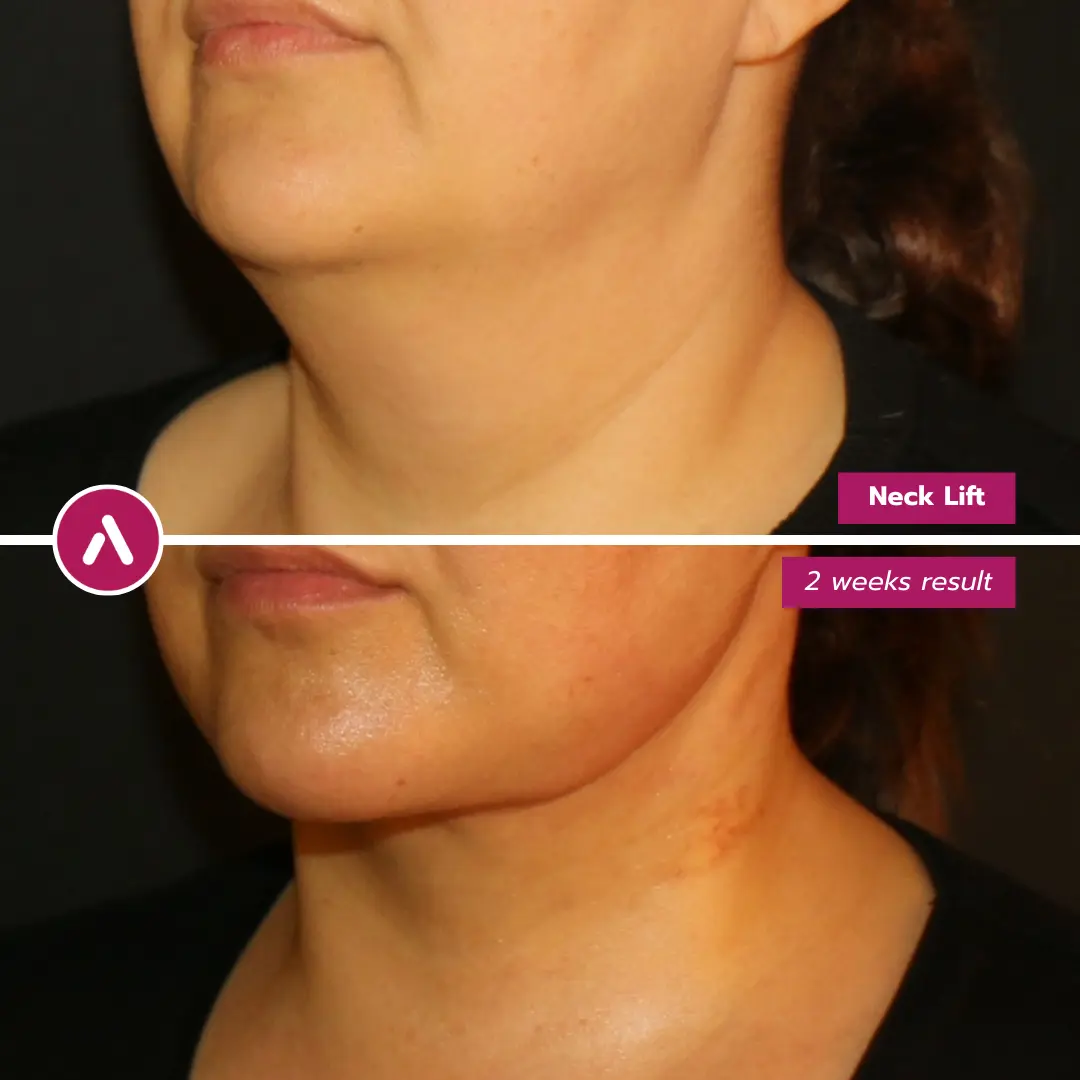
Full neck lift scars
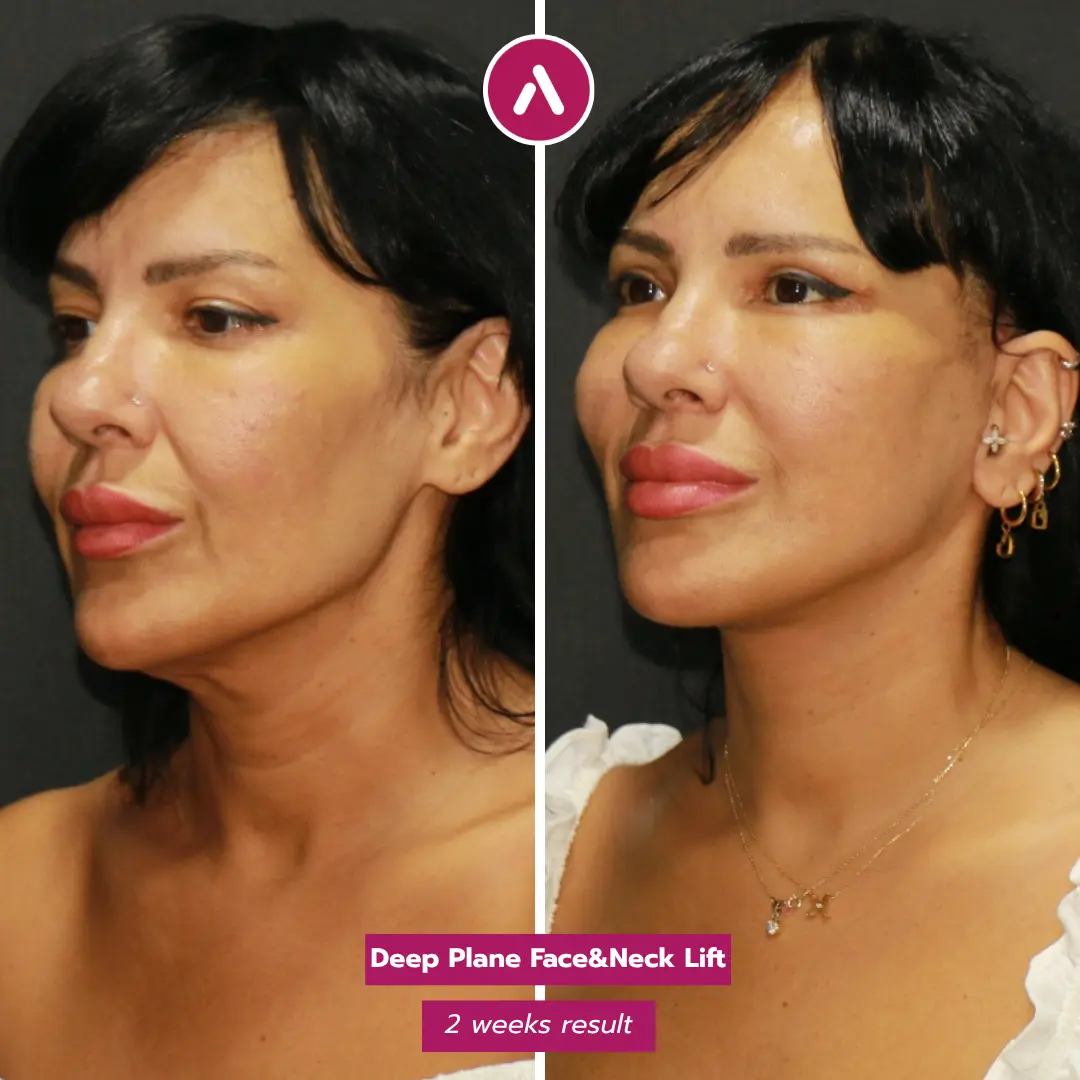
A full neck lift usually involves a more complete incision pattern. This may include the small crease under the chin plus incisions behind the ears, often placed within natural folds and hairline transitions. The goal is to access both the central neck and the side neck so the skin and underlying support can be adjusted more evenly.
For patients with moderate to significant loose skin, a full neck lift may create a cleaner result than a mini lift. The cost is a larger scar map. The benefit is more control over the neck contour.
This is where realistic planning matters. A full lift does not mean obvious scarring when it is done well. It means the surgeon has chosen the access points needed to create a natural, stable correction rather than forcing a limited incision to do more than it can.
The role of the platysma muscle
Scarring is only one part of the decision. The platysma muscle, a thin sheet-like muscle in the neck, often contributes to vertical bands and looseness. If that layer needs repair, the incision plan may need to support deeper access rather than only skin tightening.
Some patients focus only on the skin they can see in the mirror. A surgeon also evaluates what is happening underneath. If platysma banding is a major part of the problem, scar placement may be designed around muscle correction as well as skin redraping. You can learn more about this distinction in the role of the platysma muscle.
| Approach | Typical Scar Location | Visibility Once Healed | Correction Capacity |
|---|---|---|---|
| Mini neck lift | Often under the chin and/or shorter ear-area incisions | Usually lower, if the patient is a good candidate | Best for mild to moderate concerns |
| Full neck lift | Under the chin plus behind the ears and near the hairline | Usually well hidden, but more scar sites exist | Better for moderate to advanced laxity |
| Limited scar approach used on the wrong candidate | Shorter scar pattern | The scar may be smaller, but the result may be weaker | Can under-correct loose skin or bands |
The Neck Lift Scar Healing Timeline
Neck lift scar healing is not a straight line from red to invisible. Scars pass through stages: sealing, inflammation, early thickening, softening, and maturation. Many patients feel reassured once they understand that a scar can look more noticeable before it starts to fade.
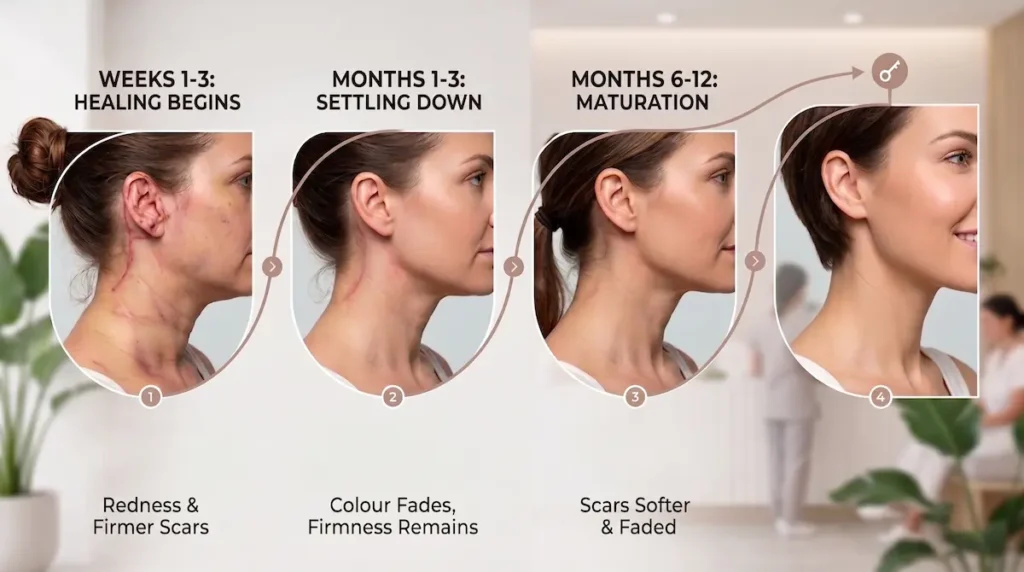
Weeks 1–3: redness, firmness, and tightness
During the first few weeks, neck lift scars are fresh. The incision lines may look pink or red, feel firm, and sit slightly raised. There may also be tightness under the chin or behind the ears, especially when turning the head.
This is usually normal early healing. The skin is closing, inflammation is active, and the body is producing collagen to strengthen the wound. Bruising and swelling around the lower face and neck can also make the scar area look more dramatic than it will later.
At this stage, the goal is simple: protect the incision. Avoid pulling, rubbing, sun exposure, and any product your surgical team has not cleared. Scar creams and silicone are generally discussed after the incision is fully closed, not while the wound is still fresh.
Months 1–3: colour begins to soften
By the first to third month, the scar usually begins to settle. Redness may soften into a lighter pink or pale line, depending on skin tone. Firmness can still be present. Some itching or sensitivity may occur as nerves and scar tissue recover.
This is also the stage when patients may become impatient. The swelling has improved enough that the neck contour is easier to judge, but the scars may not yet look refined. That mismatch can be frustrating. It is normal for scar quality to lag behind the visible contour improvement.
Canadian patients travelling home after surgery should have a clear follow-up plan before leaving Istanbul. Photos, scheduled virtual check-ins, and written scar-care instructions help your surgical team judge whether healing is on track.
Months 6–12: scar maturation
Most neck lift scars continue to fade and flatten between six and twelve months. The colour becomes calmer, the texture softens, and the incision line blends more naturally into nearby creases and shadows. In many patients, the under-chin scar becomes difficult to notice unless the chin is lifted and the area is inspected closely.
Behind the ear, the scar often becomes less visible because it is broken up by natural folds, hair, and shadow. People who wear very short hair or frequently tie their hair high may pay closer attention to this area. That should be discussed during planning, not after surgery.
A scar can still improve after one year, but the biggest changes usually happen within the first 6–12 months. If a scar remains raised, wide, itchy, or darker than expected after adequate healing time, revision or scar therapy can be discussed with your surgeon.
How Visible Are They, Really?
Neck lift scar visibility depends on more than incision length. Placement, skin tone, scar biology, tension, hairline position, sun exposure, and aftercare all matter. A well-placed scar can be longer but less noticeable than a shorter scar placed under tension or in the wrong visual line.
Why the under-chin scar is often well hidden
The submental scar sits in a crease that already creates a shadow under the chin. That is why it often heals discreetly, even though patients worry about it before surgery. It is not usually visible when someone looks at you from the front.
It may be easier to see when you tilt your head back, shave the area, apply skincare, or inspect it closely in bright light. That does not mean other people notice it in normal social settings. Scar visibility in a mirror is not the same as scar visibility across a room.
The under-chin scar can become more noticeable if it widens, thickens, darkens, or heals with too much tension. Careful closure, avoiding early strain, and following scar-care instructions all help reduce that risk.
Why behind-ear scars are usually camouflaged
Behind-ear scars are hidden by several natural features: the fold where the ear meets the head, the curve behind the ear, the hairline, and normal shadow. This makes them difficult to see once mature, especially when the hair is worn down.
They may be more visible for patients with very short hair, thin hair around the ear, a high hairline, or a habit of wearing hair tightly pulled back. These details should be discussed before surgery. A good scar plan respects how you actually wear your hair, not only how the incision looks in a textbook diagram.
For Canadian patients planning surgery abroad, this is one of the most practical consultation questions: “Where exactly will the behind-ear incision sit with my hairline?” A clear answer is more useful than a generic promise that scars will be hidden.
What can make neck lift scars more noticeable
Some scar factors are surgical. Excess tension, poor incision placement, aggressive skin pulling, or hairline distortion can make a scar stand out. This is why a natural-looking neck lift should not rely on skin tension alone.
Other factors are biological. Some patients form thicker or darker scars because of genetics, skin tone, past scarring history, or inflammatory healing. Patients who have had hypertrophic scars or keloid-like scars before should tell their surgeon early in the consultation process.
Aftercare also matters. Sun exposure can deepen scar colour and make redness or pigmentation last longer. Rubbing, smoking or nicotine use, skipping follow-up, or returning too quickly to strenuous activity can also affect healing.
Normal visibility vs a scar worth reviewing
A pink, firm, slightly raised scar in the first few months can be normal. A scar that gradually softens, fades, and becomes less sensitive is usually moving in the right direction. The trend matters more than the exact look on one particular day.
A scar should be reviewed if it becomes increasingly painful, opens, drains fluid, develops spreading redness, smells unpleasant, or becomes progressively thicker and more raised. A scar that pulls the earlobe, distorts the hairline, or looks very widened after the early healing phase also deserves a surgeon’s opinion.
This article focuses on normal scar healing. If your concern is not scar maturation but a result that looks pulled, uneven, over-tightened, or poorly healed, read signs of a poorly healed neck lift for the complication-focused discussion.
Helping Your Scars Heal Well
Good scar care starts before the first incision. It begins with candidate selection, incision planning, tension control, and clear follow-up. After surgery, the patient’s role becomes important: protect the incision, avoid early stress, follow the scar-care schedule, and report changes that do not feel right.

Follow the scar-care timeline, not internet shortcuts
Fresh incisions should not be treated like mature scars. In the first stage, the priority is keeping the wound clean, protected, and undisturbed according to your surgical team’s instructions. Applying products too early can irritate the incision or interfere with closure.
Once the incision is fully sealed, your surgeon may recommend silicone gel or silicone sheeting. Silicone is commonly used in scar management because it helps support a hydrated healing environment and may improve the look and feel of raised or thick scars in suitable patients.
Scar massage may also be introduced later, but timing matters. Massage too early can irritate healing tissue. Massage at the right stage can help soften firmness and improve comfort. Your surgeon should tell you when to start, how much pressure to use, and when to stop.
Protect scars from sun exposure
Sun exposure can make healing scars darker and more noticeable. This matters for both the under-chin scar and the behind-ear scar, especially if you spend time outdoors, drive frequently, or wear your hair up.
Physical coverage is often the simplest protection early on: shade, hats, scarves, and avoiding direct exposure while the scar is active. Once cleared by your surgeon, sunscreen can become part of longer-term scar protection.
Scar colour can take months to settle. Protecting the area during that window is one of the simplest ways to prevent a faint scar from becoming a more visible line.
Keep follow-up simple and consistent after returning to Canada
A strong post-op plan is especially important for patients travelling home. Before leaving Istanbul, you should know what photos to send, when the virtual check-ins happen, which scar changes are expected, and which symptoms need a prompt message to the clinic.
AKM’s patient journey includes long-term virtual follow-up at 1, 3, 6, and 12 months. That matters for scar maturation because scars change slowly. A two-week check can confirm that incisions are closing; a six-month check can judge how the scars are truly settling.
This is also where documentation helps. Keep your surgical notes, aftercare instructions, medication list, and follow-up photos organised. If you ever need local medical review in Canada, having clear information makes communication easier.
When to ask about scar revision
Scar revision is not usually discussed in the first few weeks unless there is a wound-healing problem. Most scars need time to mature before anyone can fairly judge them. A scar that looks raised or pink at eight weeks may look much calmer at eight months.
If a scar remains wide, thick, tethered, uncomfortable, or clearly visible after a reasonable maturation period, your surgeon may discuss options. These can include continued silicone therapy, steroid treatment for thick scars, laser-based care, or surgical revision in selected cases.
Revision should be a last step, not the first reaction to normal healing. The goal is to separate temporary scar activity from a scar that has genuinely matured in an unfavourable way.
Cost questions belong on the cost page
Scar-focused articles should not turn into pricing guides. The cost of a neck lift depends on the technique, anatomy, surgical plan, and whether the case is mini, full, deep, or combined with other work. For that reason, this article keeps the focus on scar placement and healing.
For Canadian readers comparing options, use the dedicated cost page for pricing context: the cost of a neck lift. Keeping scar information separate from pricing helps you evaluate the medical trade-offs clearly.
If you are also comparing other facial scar patterns, it can help to read how scars heal on other facial procedures. The principles are similar: incision placement, tissue tension, scar biology, and patient aftercare all work together.
For additional clinical context, neck lift incision planning is described in medical literature as involving access through the submental region and, when needed, the area behind the ear. You can review a clinical overview of how neck lift incisions are placed, as well as PubMed research discussing why a full neck lift needs both incisions.
Frequently Asked Questions: Neck Lift Scars
These are the questions Canadian patients most often ask when they are trying to picture what neck lift scars look like in real life. The key point is that scars should be judged by location, healing stage, and trend over time — not by how they look in the first few weeks.
Where are neck lift scars?
Neck lift scars usually sit in two main areas: under the chin and behind the ears. The under-chin scar is placed in the submental crease. Full neck lifts may also use postauricular incisions behind the ears, often extending toward the hairline.
A mini neck lift may use a shorter or more limited scar pattern, depending on the patient’s anatomy. The exact plan should be shown during consultation, ideally with your own hairline, chin crease, and skin laxity considered.
Are neck lift scars visible?
They can be visible early in healing, especially when they are pink, firm, or slightly raised. Once mature, they are usually difficult to notice because they are placed in shadowed creases and behind the ear.
Visibility depends on incision placement, skin tone, scar biology, hairline position, sun exposure, and tension on the wound. No ethical surgeon should promise that scars will vanish completely, but good planning can make them discreet.
How long until neck lift scars fade?
Most neck lift scars improve noticeably over 6–12 months. The first few weeks are about closure and early healing. Months 1–3 usually bring softer colour and texture. Months 6–12 are when the scar becomes flatter, paler, and more blended.
Some scars continue to improve beyond one year. If a scar remains raised, wide, painful, or unusually dark after it has had time to mature, your surgeon may recommend scar therapy or revision options.
Does a mini neck lift leave less scarring?
Often, yes. A mini neck lift can involve fewer or shorter incisions than a full neck lift. That does not automatically make it the better option.
If your neck has only mild laxity, a mini approach may be enough. If you have stronger platysma bands, more loose skin, or heavier side-neck laxity, a full neck lift may be more appropriate despite a larger scar pattern.
Can neck lift scars be hidden?
Usually, yes. The under-chin scar hides in the natural crease beneath the chin. Behind-ear scars are camouflaged by the ear fold, hairline, and shadow.
Hair habits matter. If you wear your hair very short or pulled back tightly, ask exactly where the behind-ear incision will sit. A good scar plan should fit your real lifestyle, not only the surgical diagram.
When should I worry about a neck lift scar?
Contact your surgical team if the scar opens, drains fluid, becomes increasingly painful, develops spreading redness, smells unpleasant, or is associated with fever. You should also ask for review if a scar becomes progressively raised, thick, or distorted rather than gradually settling.
A scar that is pink or firm in the first few months is not automatically a problem. The trend is what matters. Improving scars are usually observed; worsening scars should be reviewed.
Conclusion: Neck Lift Scars Are a Trade-Off, Not a Surprise
Neck lift scars are real, but they should be planned, explained, and placed with purpose. The under-chin incision gives access to the central neck. Behind-ear incisions help manage skin and contour along the sides. A mini neck lift may reduce the scar pattern, while a full neck lift may provide stronger correction when skin laxity is more advanced.
For Canadian patients, the safest mindset is evidence-first. Ask where each incision will sit, why it is needed, how it will be followed after you return home, and what scar-care steps are expected at each stage. A vague reassurance is not enough. You deserve a clear scar plan.
AKM Clinic’s facial surgery approach is built around Natural-First rejuvenation, not a pulled or wind-swept look. The surgical team uses European Board-Certified Surgeons in an RCPSC-equivalent framework, with surgery performed at a JCI-accredited facility in Istanbul and long-term virtual follow-up after travel.
If neck lift scars are one of your biggest concerns, use the consultation to map the incision plan before making a decision. Ask where the scars would sit on your anatomy, whether a mini or full approach fits your neck, and how scar maturation would be monitored once you are back in Canada.
Medical disclaimer: This article is for educational purposes only and is not a diagnosis, treatment plan, or substitute for advice from a qualified medical professional. Healing varies from person to person. If you notice wound opening, spreading redness, worsening pain, discharge, fever, or any symptom that concerns you after surgery, contact your surgeon or seek appropriate medical care promptly.