JCI accreditation hospital safety is one of the most practical ways Canadian patients can judge whether a surgical facility abroad is working under independently reviewed standards. For patients comparing Istanbul with private surgery options in Toronto, Vancouver, Montreal, or Calgary, accreditation helps move the conversation away from marketing and toward verifiable hospital safety.
At AKM Clinic, facility quality is part of the broader safety framework described in AKM’s facility and technology standards. Surgeon skill still matters. So does the environment where anesthesia, sterilization, operating room protocols, medication handling, and recovery monitoring take place.
Quick Summary: JCI accreditation means a hospital has been evaluated against international patient-safety and quality standards. For Canadian patients travelling for plastic surgery, it is a facility-level trust signal that covers infection control, surgical safety, medication safety, emergency readiness, and patient identification.
It does not guarantee a perfect surgical result. It does, however, help confirm that the hospital environment follows a structured safety system.
Table of Contents
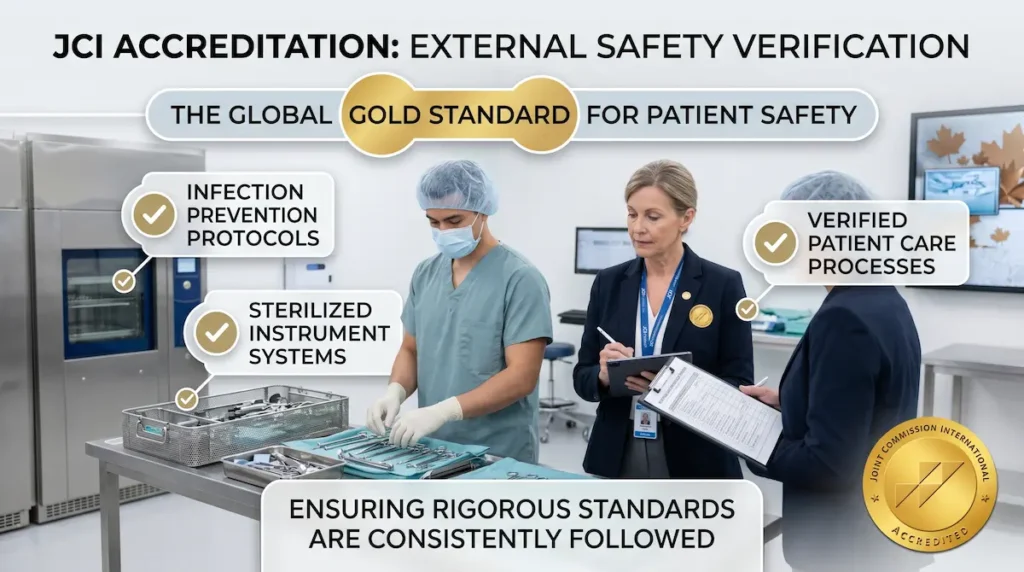
What JCI Accreditation Is?
JCI accreditation is a third-party hospital evaluation system used internationally. It is designed to assess whether a healthcare organization follows recognized patient-safety and quality processes, rather than simply relying on internal promises. JCI publishes hospital accreditation standards for organizations seeking or maintaining accreditation. Joint Commission International
Understanding Joint Commission International (JCI)
Joint Commission International, often shortened to JCI, is the international arm associated with Joint Commission standards. Its work focuses on improving healthcare quality and patient safety in hospitals and medical centres outside the United States.
For a Canadian patient, the key point is simple. JCI is not a clinic’s own badge. It is an external accreditation framework.
Why JCI Is Considered the Global Gold Standard
JCI is often called a global gold standard because it evaluates the systems that make safe care repeatable. These include patient identification, infection prevention, surgical protocols, medication management, staff processes, and emergency response.
That matters in medical tourism. A polished website cannot tell you whether instruments are sterilized correctly, whether the operating room follows safety checklists, or whether staff know how to respond if a complication occurs.
How JCI Differs from Local Licensing Requirements
Local licensing means a hospital is legally allowed to operate in its own country. Accreditation goes further by reviewing safety and quality processes against a defined standard.
For Canadians, this distinction is important. You would not assume that every private surgical facility in Canada is equal simply because it is licensed. The same logic applies abroad.
What JCI Accreditation Actually Evaluates?
JCI accreditation is not about interior design, luxury rooms, or concierge service. It evaluates the underlying safety architecture of a hospital. That includes how the facility prevents infection, prepares for surgery, identifies patients, manages medication, and responds to emergencies.
Infection Prevention and Sterilization Standards
Infection control is one of the most important safety concerns in surgery. JCI-style evaluation looks at how a hospital reduces healthcare-associated infection risk through sterilization systems, hand hygiene, environmental cleaning, instrument processing, and staff training.
This is especially relevant for Canadians travelling home after surgery. A long-haul flight from Istanbul to Canada is easier to manage when the early recovery period starts in a controlled, hygienic surgical environment.
Surgical Safety Checklists and Operating Room Protocols
Operating room safety depends on repeatable processes. This includes confirming the correct patient, procedure, surgical site, anesthesia plan, equipment, and team readiness before surgery begins.
These checklists may sound basic. They prevent serious errors.
Medication Safety and Patient Identification Systems
Medication safety is another core hospital concern. JCI-accredited environments use processes to reduce the risk of incorrect dosage, medication mix-ups, allergy errors, and communication gaps between teams.
Patient identification is part of the same safety culture. The goal is to ensure that the right patient receives the right treatment at the right time.
Emergency Response and Critical Care Preparedness
Even low-risk elective surgery requires emergency planning. A safe facility must be prepared for unexpected bleeding, anesthesia concerns, allergic reactions, cardiovascular events, or respiratory issues.
Accreditation does not remove all risk. It helps confirm that the hospital has systems in place when fast decisions matter.
| JCI Safety Category | What It Evaluates | Patient Benefit |
|---|---|---|
| Infection control | Sterilization, hygiene, cleaning, staff practices | Lower infection risk |
| Surgical safety | Operating room checklists and procedure verification | Reduced risk of preventable surgical errors |
| Medication safety | Medication labelling, dosage checks, allergy review | Lower risk of drug-related mistakes |
| Patient identification | Identity checks before care steps | Correct patient, correct procedure, correct treatment |
| Emergency preparedness | Response systems for complications or urgent events | Faster escalation if unexpected problems occur |
“Accreditation does not replace surgical expertise, but it creates the institutional environment where safe surgery can consistently occur.”
Why JCI Matters for Canadian Patients?
Canadian patients are used to hospital care being regulated, structured, and system-driven. That expectation does not disappear when someone considers elective plastic surgery abroad. JCI accreditation gives Canadians a way to evaluate whether the facility behind the procedure follows recognizable safety principles.
Comparing JCI Standards to Canadian Hospital Expectations
Canada has its own healthcare accreditation ecosystem, including national and provincial quality frameworks. Accreditation Canada is one familiar reference point for Canadian healthcare quality standards.
JCI is not the same organization. Still, the logic is similar: independent review, structured standards, and continuous improvement. For a patient from Ontario, British Columbia, Quebec, or Alberta, that makes JCI easier to understand as a hospital-safety benchmark.
Canadian patient note: JCI accreditation should not be treated as a replacement for due diligence. Think of it as one layer of review, similar in spirit to checking whether a Canadian facility follows recognized hospital-quality standards.

Reducing Uncertainty in International Medical Travel
Medical travel creates uncertainty. Patients are crossing borders, entering a different healthcare system, and often recovering before a long flight home.
That is why facility verification matters. A Canadian patient flying from YYZ, YVR, YUL, or YYC needs confidence not only in the surgeon, but also in the hospital environment supporting the procedure.
For a broader discussion of country-level and clinic-level risk, read our detailed safety analysis for Canadian patients.
Why Independent Accreditation Builds Trust
Independent accreditation is useful because it is not based on sales language. It asks whether the hospital’s systems can be evaluated against defined standards.
That is particularly important for an expert patient. A cautious Canadian patient does not need vague reassurance. They need verifiable signals.
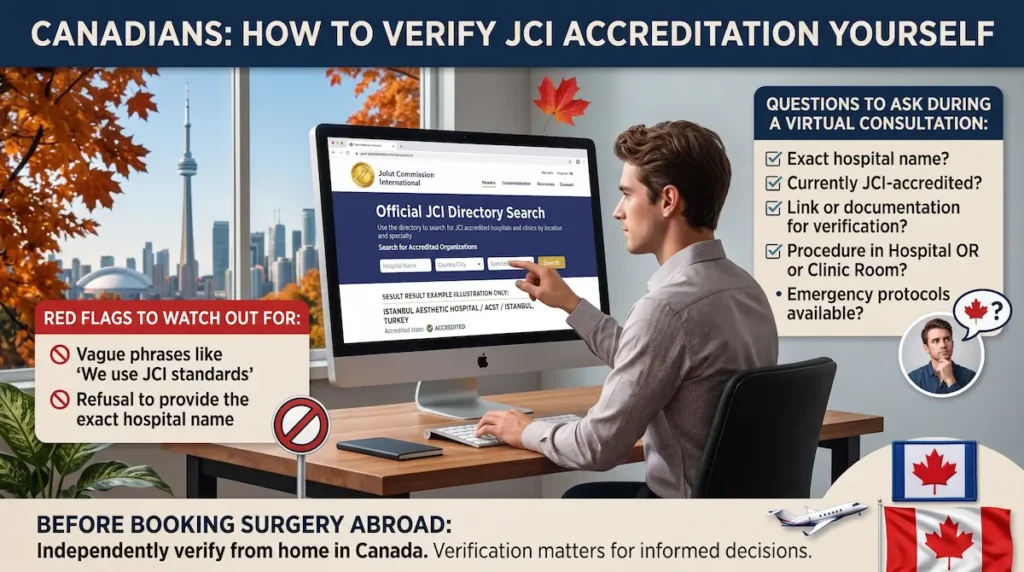
How Canadians Can Verify JCI Accreditation Themselves?
Patients should never rely only on a clinic saying “we use JCI standards.” Verification matters. Before booking surgery abroad, Canadians can ask direct questions and use public accreditation tools to confirm whether the hospital involved is genuinely accredited.
Using the Official JCI Directory
The most direct method is to check the official JCI resources and confirm whether the named hospital appears as accredited. Patients should ask the clinic for the exact hospital name, not just a general statement.
Do this before travelling. It is easier to verify from home in Toronto, Vancouver, Montreal, Calgary, Ottawa, or Halifax than after arrival in Istanbul.
Questions to Ask During a Consultation
During a virtual consultation, Canadian patients should ask clear questions. The answers should be specific.
- What is the exact name of the hospital where my surgery will be performed?
- Is that hospital currently JCI-accredited?
- Can you provide documentation or a link for verification?
- Will my procedure be performed in a hospital operating room or a clinic procedure room?
- What emergency protocols are available during surgery?
These questions are not impolite. They are part of informed decision-making.
Red Flags When a Clinic Uses “JCI Standards” Language
Be careful with vague phrases. “JCI standards” is not the same as “JCI-accredited.” A facility may claim to follow similar protocols without holding current accreditation.
That does not automatically mean the facility is unsafe. It does mean you should ask more questions.
Verification tip for Canadians: Ask for the hospital name in writing before booking. Then confirm its status independently before paying a deposit or booking flights from Canada.
Hospital Safety Beyond Accreditation
JCI accreditation is important, but it is not the only safety factor. Canadian patients should evaluate the full clinical system: the hospital, the surgeon, anesthesia planning, recovery monitoring, communication, and post-operative follow-up. Safe surgery depends on all of these working together.
The Relationship Between Facility Safety and Surgeon Skill
A skilled surgeon needs a safe hospital environment. A safe hospital also needs qualified surgeons using sound clinical judgement.
These two standards support each other. Facility accreditation helps protect the surgical setting, while surgeon credentials help protect the technical quality of the procedure.
For procedure-specific facility evaluation, see facility evaluation in a deep plane facelift setting.
Why Both Accreditation and Board Certification Matter
Accreditation is facility-level. Board certification is surgeon-level. They answer different questions.
JCI accreditation asks, “Is the hospital environment structured for safe care?” Board certification asks, “Has the surgeon met recognized professional training and examination standards?”
Canadian patients should check both. For surgeon-level due diligence, read our guide to understanding surgeon board certification.
The Importance of Post-Operative Infrastructure
Hospital safety does not end when the procedure is finished. Post-operative monitoring, nursing support, medication management, discharge planning, and emergency access all matter.
This is especially relevant for patients returning to Canada. The first days after surgery shape whether a patient is ready for a long return flight and continued healing at home.
AKM Clinic and JCI-Accredited Hospital Partnerships
AKM Clinic’s safety model places emphasis on accredited facilities, strict hygiene, and structured recovery support. For Canadian patients, this helps bridge the gap between choosing surgery abroad and expecting a hospital environment that feels familiar in its safety priorities.
Why AKM Operates Within JCI-Accredited Facilities
AKM Clinic performs surgeries through JCI-accredited hospital partnerships as part of its international patient safety framework. This aligns with the clinic’s broader focus on surgical planning, facility standards, and post-operative support.
You can learn more about AKM Clinic’s accredited hospital partnerships and how the clinic structures care for international patients.
Infection Control, Sterility, and Safety Protocols
AKM Clinic’s internal standards emphasize a zero-compromise approach to hygiene, sterilization, and patient safety. The clinic’s technology and standards documentation describes multi-stage sterilization protocols, WHO-aligned hygiene principles, and autoclave use for surgical instruments.
For Canadians, these details matter because infection prevention is not a luxury feature. It is a basic safety requirement.



Recovery Infrastructure for International Patients
AKM’s recovery model also includes patient advocates, private transfers, post-operative medications, support garments, and long-term virtual follow-up. These details reduce logistical stress during the early healing phase.
They also help Canadian patients stay connected after returning home. Patients who want to understand the experience side of care can review verified patient experiences.
“For international patients, hospital safety is not just about the operating room. It is about the entire system surrounding surgery, recovery, and safe return home.”

What Canadians Should Check Before Booking Surgery Abroad?
JCI accreditation is a strong starting point, but Canadian patients should treat it as one part of a complete safety checklist. Before booking, verify the facility, the surgeon, and the aftercare plan. Each layer matters.
Facility Accreditation Checklist
Ask for the exact hospital name and confirm whether it is currently JCI-accredited. Avoid accepting vague language without proof.
- Confirm the hospital name in writing.
- Check current accreditation status before booking.
- Ask where the procedure will physically take place.
- Confirm whether the facility has emergency response capacity.
Surgeon Credential Checklist
Facility safety does not replace surgeon due diligence. Canadians should verify training, certification, experience, and who will personally perform the procedure.
For a practical step-by-step process, review independently verifying surgeon credentials.
Questions Every Canadian Patient Should Ask
Before committing, ask direct questions about accreditation, the operating room, infection control, anesthesia support, aftercare, and complication management. A credible clinic should answer clearly.
If you are comparing multiple options, our guide on how Canadians evaluate plastic surgery clinics gives a broader framework beyond accreditation alone.
Frequently Asked Questions: JCI Accreditation Hospital Safety
These questions address the most common concerns Canadian patients have about JCI accreditation, facility safety, and surgical care abroad.
What does JCI accreditation mean?
JCI accreditation means a healthcare facility has been evaluated against international patient-safety and quality standards. It covers systems such as infection control, surgical safety, medication safety, emergency preparedness, and patient identification.
Is JCI accreditation recognized internationally?
Yes. JCI is widely recognized as an international hospital accreditation framework. It is especially relevant for patients comparing care across countries.
How do I verify a hospital's JCI status?
Ask for the exact hospital name, then check the official JCI directory or request documentation from the clinic. Do this before booking flights or paying a deposit.
Is JCI accreditation similar to Canadian hospital standards?
It is not the same as Canadian accreditation, but the safety logic is similar. Both focus on structured quality systems, independent review, and patient-safety processes.
Does accreditation guarantee a good surgical result?
No. Accreditation supports facility safety, but surgical results also depend on surgeon skill, patient anatomy, procedure choice, healing, and aftercare.
Why does facility safety matter as much as surgeon experience?
Surgery depends on both the surgeon and the environment. Sterilization, anesthesia support, operating room protocols, and emergency preparedness all influence patient safety.
Are AKM Clinic procedures performed in JCI-accredited hospitals?
AKM Clinic works with JCI-accredited hospital facilities as part of its international patient care model. Patients can ask the coordination team to confirm the hospital details during consultation.
How often are JCI-accredited hospitals re-evaluated?
Accredited hospitals must maintain compliance with ongoing standards and undergo re-evaluation cycles. Patients should verify current status rather than relying on old accreditation claims.
What should Canadians verify besides JCI accreditation?
Canadians should also verify surgeon credentials, who performs the surgery, anesthesia support, aftercare access, complication protocols, patient reviews, and the clinic’s communication process.
Medical Disclaimer: This page is provided for general educational purposes only and does not replace an in-person medical consultation, diagnosis, or personalized treatment plan. All surgery carries risks, and outcomes vary between individuals. Suitability for a plastic surgery, procedure selection, and anesthesia choice can only be determined after a full clinical assessment by a qualified surgeon. Always follow your clinician’s instructions and seek urgent medical attention if you develop concerning symptoms during recovery.