The hair transplant growth timeline can feel confusing because the early weeks often look worse before they look better. Transplanted hairs may shed, the scalp may look thinner for a short period, and visible density usually takes months to appear.
This does not mean the transplant has failed. In most cases, the follicles are simply moving through the normal post-transplant cycle: healing, shedding, dormancy, first growth, thickening, and final maturation. For Canadian patients travelling from Toronto, Vancouver, Montreal, Calgary, or Ottawa, understanding this timeline helps reduce unnecessary worry after returning home.
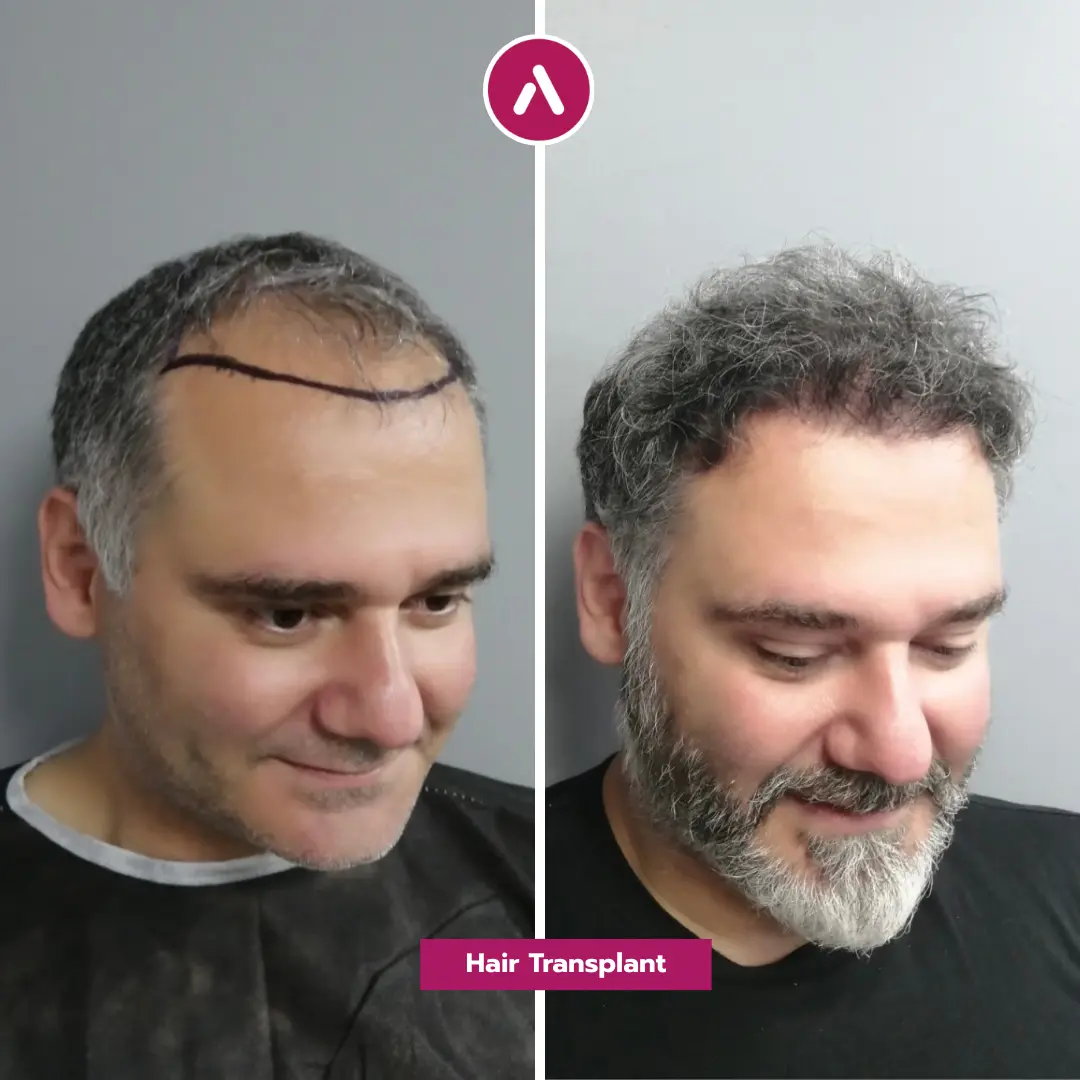
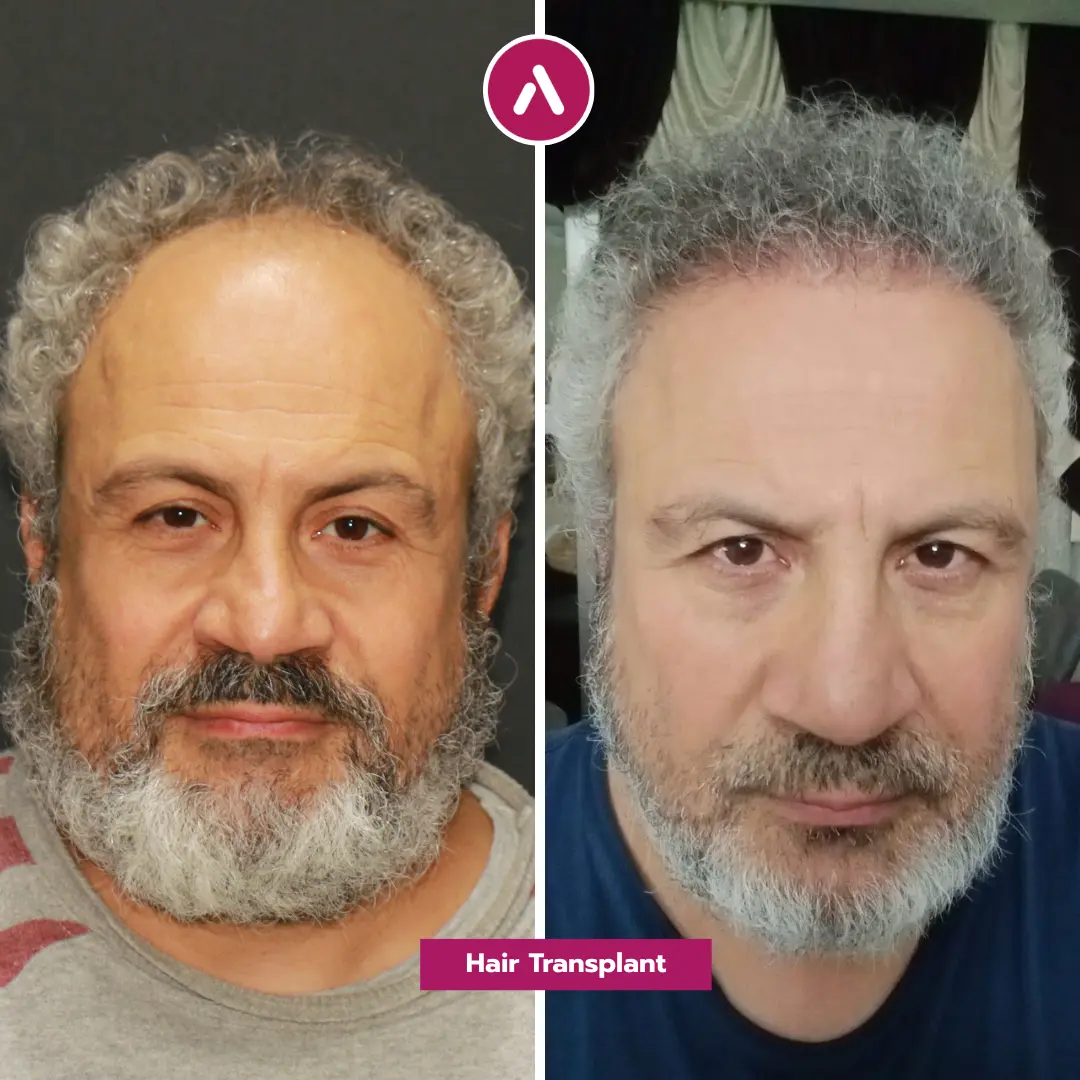
This guide focuses only on the month-by-month visual journey after a hair transplant at AKM Clinic. For washing instructions, technique comparison, or hairline planning, we will point you to the dedicated guides instead of repeating those topics here.
Crown timeline in one paragraph: after a crown hair transplant, transplanted hairs usually shed within the first 4–6 weeks, the follicles stay dormant through months 2–4, first visible growth appears for most patients between months 5 and 7, and density builds through months 8–12. The crown is normally judged at month 12 and finalised closer to month 18 — roughly 3 to 6 months behind the frontal hairline.
Quick Summary: Hair transplant results develop slowly. The transplanted hairs often shed within the first few weeks, rest for several months, then begin visible growth around month 4.
Most patients see meaningful improvement between months 6 and 12. Final density usually settles between months 12 and 18, especially in dense-packing or DHI cases.
Table of Contents
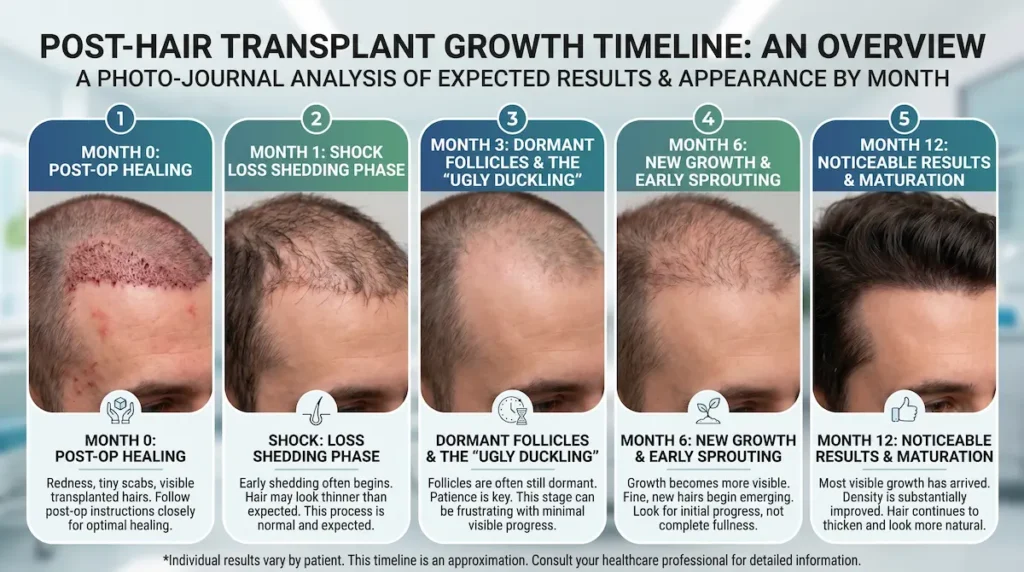
Hair Transplant Growth Timeline at a Glance
This table gives a practical photo-journal view before the detailed month-by-month sections. It is meant to help you compare what you see in the mirror with what is usually expected at that stage.
| Timeline | What Is Happening | Typical Appearance | Patient Action |
|---|---|---|---|
| Month 0 | Grafts are placed and the scalp begins healing. | Redness, tiny scabs, visible implanted hairs. | Protect the grafts and follow clinic instructions closely. |
| Month 1 | Early shedding often begins. | Hair may look thinner than expected. | Do not judge the result. Shedding is usually normal. |
| Month 3 | Follicles are often still dormant. | The “ugly duckling” phase may be at its most frustrating. | Send follow-up photos if your clinic requests them. |
| Month 4 | Early new growth may appear. | Fine, thin, uneven hairs begin emerging. | Look for progress, not density. |
| Month 6 | Growth becomes more visible. | Coverage improves, but density is still incomplete. | Compare photos under the same lighting. |
| Month 9 | Hair shafts thicken and mature. | The result starts looking more natural in daily life. | Keep tracking changes monthly. |
| Month 12 | Most visible growth has arrived. | Density is substantially improved. | Review before-and-after photos with your clinic. |
| Month 18 | Late maturation completes. | Final texture, direction, and fullness are clearer. | Judge the final outcome at this stage. |
Why the Timeline Matters for Expectations?
The hardest part of a hair transplant is often not the procedure itself. It is the waiting period afterward. Patients see the grafts on day one, imagine that early look becoming permanent, and then panic when the transplanted hairs begin to shed.
A clear timeline prevents that reaction. It explains why a weak-looking month 2 can still become a strong month 12. It also gives Canadian patients a practical way to plan work, travel, social events, and follow-up photography from home.
The “Ugly Duckling” Phase Reality
The “ugly duckling” phase is the stretch when the scalp looks less impressive than it did immediately after surgery. It usually happens after early shedding, before new growth has gained enough length or thickness to create coverage.
This phase can feel discouraging. Your hairline may look patchy. The crown may look quiet. Some patients wonder whether the grafts disappeared. In most cases, they have not.
The visible hair shaft can shed while the follicle remains alive beneath the scalp. That distinction matters. The shaft is temporary; the implanted follicle is the structure that produces future growth.
“The emotional challenge is that patients judge the transplant during the quietest biological phase. We remind them that shock loss is not the final result. It is a stage the follicle often passes through before real growth begins.”
Why Most Patient Panic Is Unnecessary
Most anxiety comes from comparing the current month to the wrong milestone. Month 2 should not be compared with month 12. Month 4 should not be expected to look like final density.
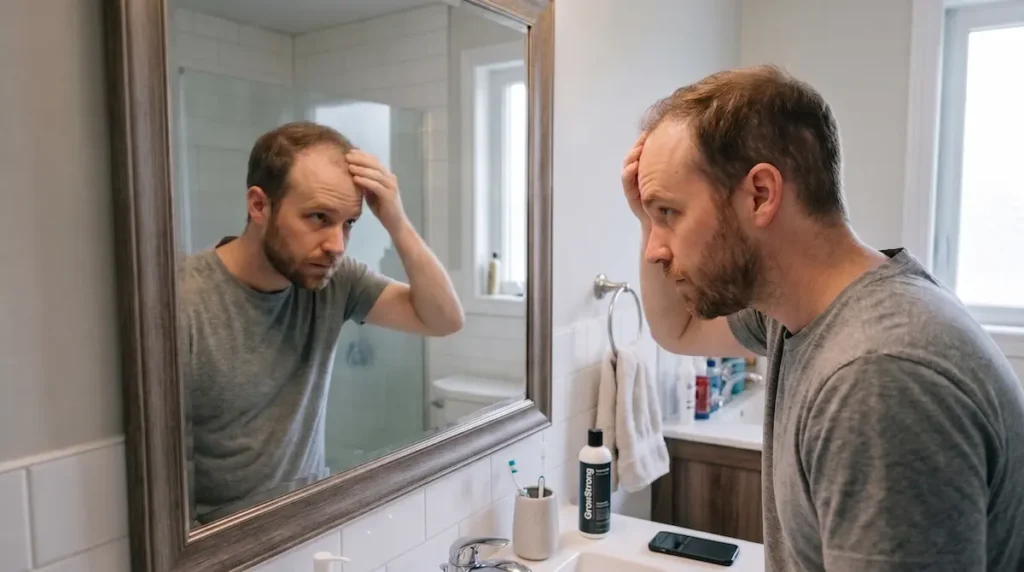
Photos help when they are taken consistently. Use the same room, the same angle, and similar lighting. A bathroom mirror under harsh ceiling light can make normal early thinning look more dramatic than it really is.
For Canadian patients, AKM’s follow-up process can be handled remotely through progress photos. The clinic’s long-term virtual monitoring is part of AKM’s hair restoration follow-up programme, which helps patients keep perspective once they are back in Canada.
The Full 12–18 Month Horizon
A hair transplant should not be judged at three months. It should not even be judged fully at six months. Those are progress points, not final verdicts.
Most patients see the most visible change between months 6 and 12. Texture, calibre, and density continue to refine after that. Some cases, especially dense-packing or DHI plans, may continue improving closer to month 18.
This is why value-conscious patients should evaluate the clinic’s planning, follow-up structure, and clarity before booking. For cost context, review hair transplant pricing in CAD, and for pricing model evaluation, see choosing a fixed-price clinic for predictable results.
Canadian patient note: plan around real life, not wishful timing
If you are presenting at a Toronto office, attending a wedding in Vancouver, or returning to client-facing work in Montreal, avoid planning around “final results” before month 12. Early coverage can look good earlier, but final density takes longer.
Month 0–1 — Immediate Post-Transplant
The first month is visually busy. The scalp changes quickly: redness softens, scabs form and clear, the donor area calms, and the implanted hairs may still be visible before the shedding phase begins.
This is not the stage for outcome judgement. The priority is graft protection, calm healing, and clean documentation. Month 0–1 sets the foundation for the growth that will arrive later.
Initial Appearance With Grafts in Place
Immediately after the transplant, the recipient area usually looks full because the newly placed hair shafts are still sitting in the graft sites. This can create a false sense of instant density.
The scalp may show redness, tiny dots, and early crusting. This is most noticeable in the frontal hairline and crown under direct light. Patients with fair skin may notice redness longer; patients with darker skin tones may notice more colour contrast around the graft sites.
At this stage, the hairline shape is visible, but the final result is not. The design is a map. Growth still needs to happen.
Scab Formation and Shedding
Small scabs usually form around graft sites during the early healing period. They are part of the surface recovery process. The key is to avoid picking, rubbing, or trying to force them off.
Because this article is focused on growth, not washing technique, detailed cleansing instructions belong in the day-by-day washing and aftercare protocol. That guide explains when washing usually begins, how scabs are softened, and which movements to avoid.
Some shedding can start before the end of month 1. This can look alarming, especially if tiny hairs come away with crusts. In many cases, the follicle remains anchored while the visible shaft sheds.
The Transplanted Hairs Before Shock Loss
Before shock loss, the transplanted hairs may look like a preview of the result. They are not. They are temporary shafts that often shed as the follicles reset.
Patients sometimes take photos during week 1 and assume that the density shown there will simply grow longer. A better interpretation is this: week 1 shows placement, not maturity.
By the end of month 1, the scalp may look calmer but less full. That change is expected. The growth timeline has only started.
Month 1–3 — Shock Loss and Dormancy
Months 1 to 3 are usually the least satisfying part of the hair transplant growth timeline. The scalp may look healed on the surface, yet the visible hair can seem thinner than expected. This is the stage where many patients start checking the mirror too often.
The main events are shock loss and follicle dormancy. These terms sound worrying, but they often describe a normal biological reset after graft relocation. The follicle is adjusting beneath the skin before producing a stronger new shaft.
Why Transplanted Hairs Fall Out
Shock loss means that the visible transplanted hair shaft sheds after surgery. It does not automatically mean the graft has failed. The hair shaft and the follicle are not the same thing.
The follicle is the living unit placed into the scalp. The shaft is the visible hair growing from it. After transplantation, many follicles release the existing shaft and pause before restarting growth.
This usually creates a frustrating visual pattern. The hairline looked promising at week 1, then appears weaker by week 6 or week 8. Patients may feel as if they are moving backwards.
That emotional reaction is understandable. Still, the biology is usually moving forward. Hair restoration societies such as the International Society of Hair Restoration Surgery describe hair restoration as a staged process, not an instant cosmetic change.
The Dormant Follicle Phase
After shedding, many follicles enter a quiet period. The scalp may look calm, but there is limited visible growth. This is the dormant phase.
During dormancy, patients often see very little day-to-day change. That can feel disappointing. It is also why monthly photos are more useful than daily mirror checks.
A good photo journal should include front, temple, crown, and donor-area views when relevant. Keep the camera distance consistent. Harsh lighting can distort progress, especially under Canadian winter indoor lighting.
At this stage, the most useful question is not “Do I look good yet?” A better question is: “Does this still fit the expected timeline?” In most cases, month 2 and month 3 are too early for judgment.
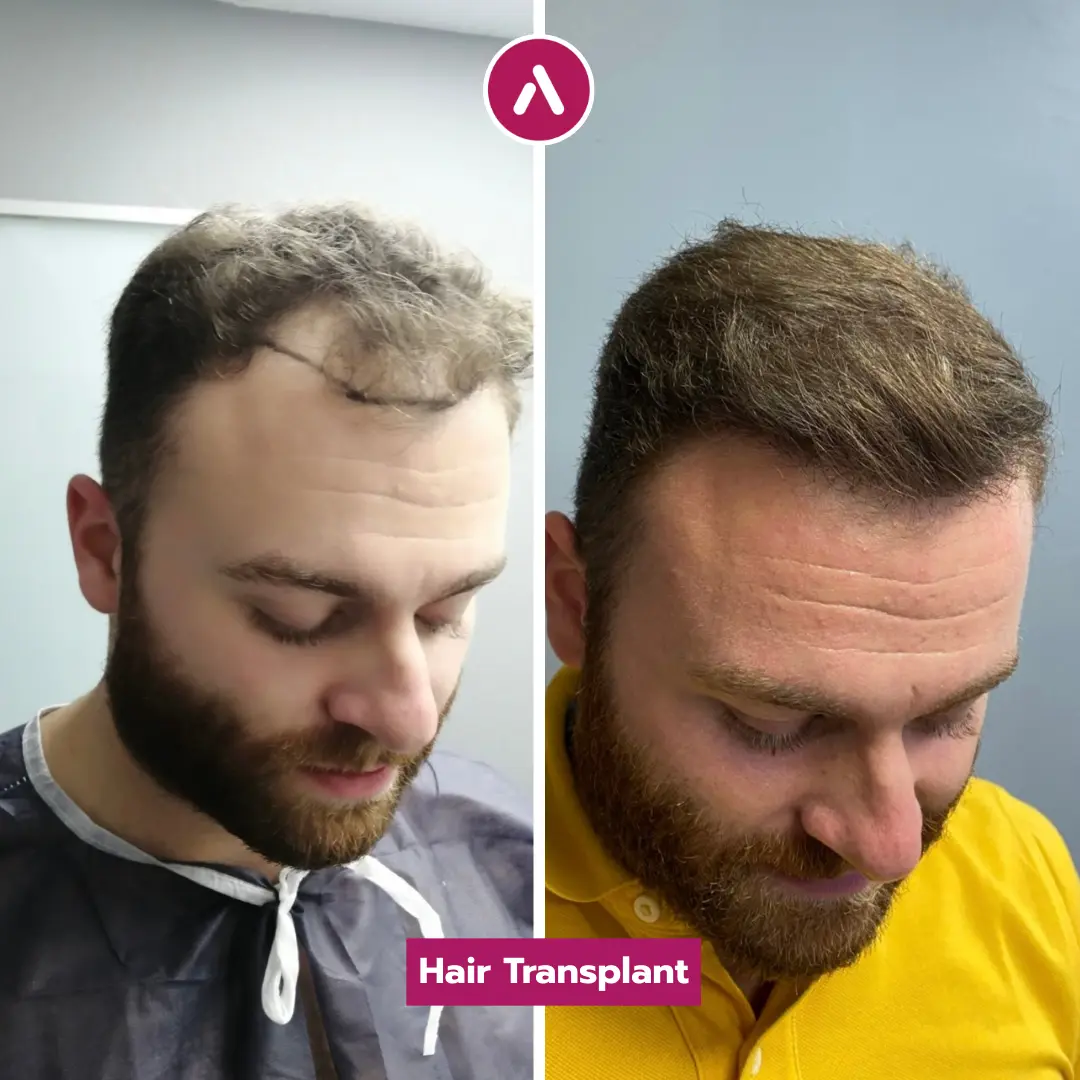
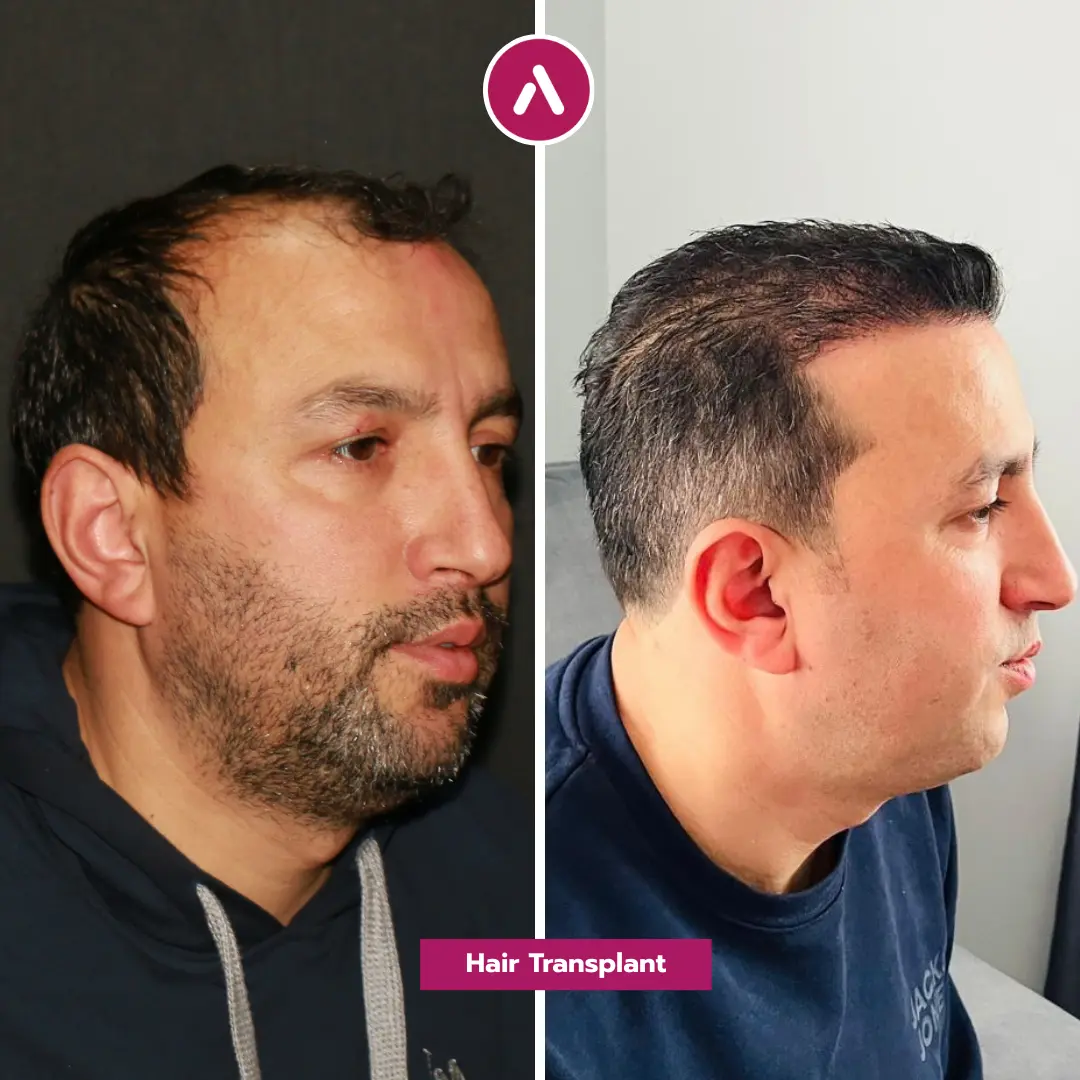
Managing the Emotional Low Point
Months 1 to 3 can be emotionally difficult because the visible reward has not arrived yet. Patients may also be back at work, seeing friends, and trying to explain why the result looks unfinished.
Canadian patients in public-facing roles often benefit from planning this phase before surgery. Teachers, sales professionals, healthcare workers, government employees, and consultants may want to schedule the procedure away from major presentations or seasonal events.
There are practical ways to reduce stress during this stage:
- Take progress photos once every two to four weeks, not every day.
- Use the same lighting, angle, and camera distance each time.
- Avoid comparing month 2 photos with someone else’s month 12 result.
- Send concerns to the clinic instead of relying on online forums.
- Remember that uneven early appearance is common.
Canadian patient note: remote follow-up matters most during the quiet phase
Once you are back in Canada, the clinic cannot assess your scalp in person every week. Clear progress photos become the bridge. Patients in Toronto, Vancouver, Montreal, Calgary, and smaller cities can still receive timeline guidance by sending structured photo updates.
Many patients worry that no visible growth by month 3 means failure. In most cases, it is still too soon. Concern becomes more meaningful if there is no visible activity closer to month 5 or month 6, especially when compared with consistent photos.
Month 4–6 — First Growth Emerges
Months 4 to 6 are when the waiting period starts to feel more hopeful. The new hair may begin to appear, although it often looks thin, soft, and uneven at first. Do not expect full density yet.
This stage is best understood as emergence, not completion. The follicles are starting to produce visible shafts again. Those shafts still need time to thicken, lengthen, and blend with surrounding hair.
New Hair Shafts Appearing
Around month 4, some patients begin to see short new hairs emerging from the transplanted area. They may be easier to feel than to see at first. Texture can be fine or slightly wiry.
The new hairs rarely appear all at once. One side may start earlier than the other. The frontal hairline may activate before the crown, or the crown may remain slower for several more months.
This unevenness can create another round of worry. Patients may ask why one temple is growing faster. In many cases, the answer is simple: follicles do not restart on an identical schedule.
Initial Thin, Wispy Texture
Early growth often looks underwhelming. The hairs may be wispy, pale, soft, or inconsistent in length. They do not yet create the density patients imagined when they approved the surgical plan.
This is normal. Early shafts are not always the final calibre. Over the next several months, they usually thicken and darken as the follicle continues cycling.
Think of month 4 as the first visible signal. Month 6 is usually a stronger checkpoint. Month 12 is closer to the true evaluation point.
This distinction is important for anyone planning social events. A patient from Ottawa attending a summer wedding at month 4 may still need styling support. A patient at month 9 is likely to have more visible coverage and confidence.
Uneven Early Growth Patterns
Patchy growth between months 4 and 6 is common. It does not automatically mean the graft placement was patchy. It may simply reflect follicles waking up at different speeds.
The crown can be particularly slow. Crown hair grows in a whorl pattern, and visual density depends heavily on angle, lighting, and surrounding native hair. The frontal hairline is often easier to assess earlier.
Why the crown is 3–6 months behind the hairline
Four reasons come up repeatedly in crown cases:
- Whorl geometry. Hair leaves the crown in a spiral, so light hits the scalp from more angles and the same graft count looks thinner than it would at the hairline.
- Surface area. A balding crown is a circle, and circles consume grafts fast. The same 2,000 grafts that rebuild a hairline may only partially cover a Norwood 5 crown.
- Blood supply and healing. The vertex sits at the top of the scalp’s vascular network; follicles here often restart their cycle a little later.
- Native thinning underneath. Crown loss is frequently still progressing, so transplanted growth and ongoing miniaturisation happen at the same time.
None of these change the outcome by month 18. They change what month 6 looks like.
Patients should compare photos carefully. A month 5 photo under bright bathroom lighting may look weaker than a month 4 photo taken near a window. Consistency matters more than perfect photography.
During this phase, patients also begin to understand why initial design choices matter. For the design side rather than the growth side, see how the hairline was designed for natural final density.
Canadian patient note: plan around calendars, not impatience
If your procedure is in January, early growth may begin around spring, while stronger cosmetic change may arrive in summer or autumn. If you are timing the transplant around work reviews, weddings, conferences, or holiday photos, build your expectations around the 6–12 month window rather than month 4.
By month 6, many patients can see meaningful progress. It is still not final. The result is beginning to declare itself, but density and texture have more time to mature.
Month 7–12 — Progressive Thickening
Months 7 to 12 are usually the most rewarding part of the hair transplant growth timeline. The transplant begins to look less like “new growth” and more like hair that belongs naturally in the area.
The change is not only about the number of hairs. It is also about calibre, length, texture, and how well the transplanted region blends with existing hair. This is when many patients begin receiving quiet comments such as, “You look different,” rather than obvious questions about surgery.
Density Building Month Over Month
By month 7, many follicles that were dormant earlier have entered visible growth. Coverage improves gradually. The hairline begins to frame the face more clearly, and thinning zones may look less exposed under normal lighting.
Density still builds unevenly. Some areas may look stronger than others. This is especially common when the transplant includes both the frontal hairline and crown because those zones often mature at different speeds.
Patients should continue taking monthly photos. The difference between month 7 and month 8 may feel small in the mirror, but side-by-side images often show steady improvement.
For Canadian patients who have already returned home, structured photo updates are useful during this period. You can keep sending progress images as part of your follow-up, especially if you are also managing sending recovery photos after returning to Canada.
Texture Maturation
New transplanted hair may not match the surrounding hair immediately. It can start as fine, uneven, or slightly wiry. Over time, the shaft usually becomes stronger and more consistent.
Texture maturation matters because density is not just a count. A thicker shaft reflects more light, covers more scalp, and blends better with native hair. That is why month 9 often looks much better than month 6, even if the number of active follicles has not dramatically changed.
The hair may also become easier to style. At earlier stages, short new hairs can stick out or fall in different directions. By months 9 to 12, length and texture usually give patients more control.
The Canadian Dermatology Association provides general education on hair and scalp health through its patient resources at dermatology.ca. For transplant-specific concerns, however, your surgical team’s timeline guidance should remain the primary reference.
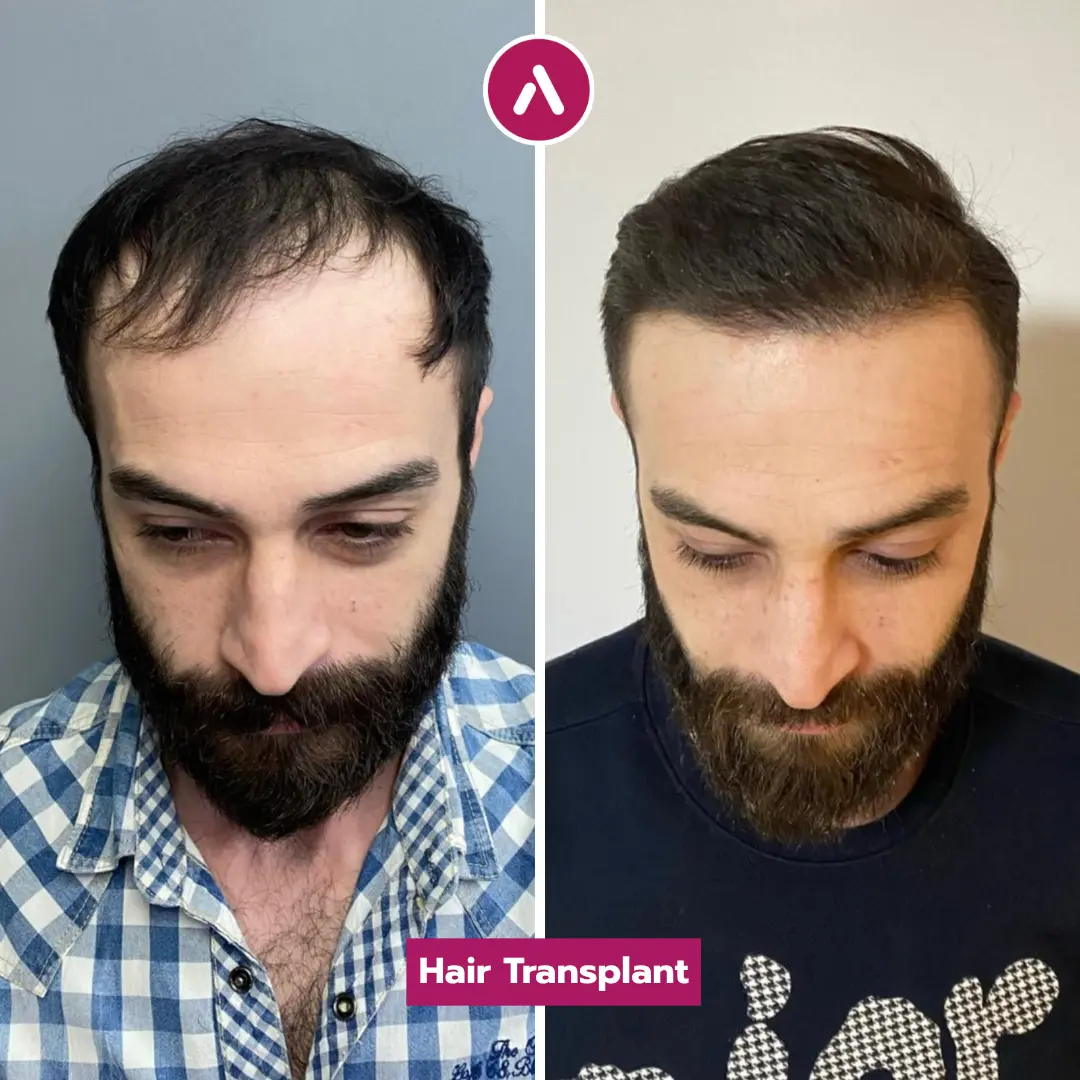
When the Result Becomes Socially Obvious in a Positive Way
There is often a turning point between months 8 and 12. Before that, patients are watching for growth. After that, other people may begin noticing that the face looks more balanced or youthful, without knowing why.
This is especially true when the frontal hairline was restored. A stronger frame around the forehead can change how the face is perceived in photos, video calls, and professional settings.
For patients in Toronto, Vancouver, Montreal, or Calgary who work in client-facing roles, this is usually the phase where confidence improves. Zoom calls feel easier. Harsh office lighting feels less stressful. Haircuts become more enjoyable again.
Canadian patient note: professional calendars matter
If you want your result to look strong for a major work event, conference, wedding, or holiday season, plan around month 9 to month 12 rather than month 4 to month 6. Earlier growth can be encouraging, but the social payoff usually comes later.
Patients should still avoid calling the result final at month 9. It may look good, but more refinement is still possible. Month 12 is a stronger review point, and month 18 may be more accurate for final judgement.

Month 12–18 — Final Density
Months 12 to 18 are when the transplant reaches its mature appearance. By this stage, most visible growth has emerged, the shafts have thickened, and the transplanted hair is easier to evaluate in real-world conditions.
This is the proper window for comparing before-and-after photos. Earlier photos are useful for tracking progress, but the final result should not be judged too soon. Patience matters here.
Final Maturation
At month 12, many patients have reached a substantial portion of their visible result. The hairline looks more settled. The crown may show improved coverage. The donor area has usually blended well unless it was overharvested elsewhere in a previous procedure.
Between months 12 and 18, late maturation continues. This may include subtle improvements in shaft thickness, direction, softness, and styling control. The changes are slower than months 4 to 9, but they can still matter.
Final density should be evaluated under several conditions:
- natural daylight;
- standard indoor lighting;
- wet hair;
- dry hair;
- styled hair;
- close-up photography;
- normal social distance.
Wet-hair photos often look thinner than dry-hair photos. That is normal. A good result should be assessed across conditions, not from one harsh image.
Why DHI and Dense-Packing Cases Can Peak Later
Some patients see continued improvement closer to month 18. This is especially possible in dense-packing cases or when the treatment plan used DHI-style placement. The reason is not that the transplant is delayed in a problematic way. It is that maturation can continue gradually.
Technique can influence the timeline, but this article is not a DHI versus FUE comparison. For that decision pathway, see how DHI and FUE growth timelines differ.
Dense placement can also make early unevenness more noticeable. When patients expect every graft to grow at the same pace, normal variation feels like a problem. It usually is not.
By month 18, the result is much easier to judge. If a patient still has clear concerns at that point, the clinic can review whether the issue is density, donor limitation, native hair loss progression, or expectation mismatch.
The Before-and-After Comparison Reality
Before-and-after photos should be honest. The same angle matters. The same hair length matters. Similar lighting matters even more.
A transplant that looks excellent in a styled, dry, front-facing image may look different under top-down bathroom light. That does not mean the result is poor. It means hair coverage is always affected by light, length, and contrast.
The most useful comparison is not the best photo against the worst photo. It is a fair pre-op image beside a fair month 12 or month 18 image. That gives the patient and clinic a realistic view of the outcome.
For reference points taken at comparable stages, the hair transplant before and after gallery shows documented cases with pre-op and post-growth images side by side.
Hairline quality also becomes easier to judge in this window. The irregularity, density gradient, and age-appropriate placement should now be visible. For the design logic behind that final appearance, review how the hairline was designed for natural final density.
Canadian patient note: native hair can keep changing
A transplant restores selected areas, but it does not freeze future hair loss. Canadian patients should continue discussing long-term maintenance, medical therapy when appropriate, and follow-up photography so the transplanted result can be evaluated separately from ongoing native hair thinning.
By the end of month 18, most patients have a stable view of the result. This is the right time to evaluate density, styling flexibility, and whether future planning is needed.
Beyond month 18: what changes in years 2 to 5
The transplanted grafts themselves are usually stable after month 18. Three things can still move:
- Native hair around the grafts may continue to thin, which shifts the contrast between treated and untreated zones.
- Shaft calibre can improve slightly into year 2 in dense-packed crown cases.
- Grey conversion changes how light reflects, which often reads as more coverage rather than less.
If a patient books a second session, the usual planning point is month 12–18 of the first result, not earlier — donor capacity and the maturity of the first graft set both need to be visible before anything further is designed.
Crown Hair Transplant Growth Timeline: Month by Month
The crown runs on a slower clock than the hairline. Patients who had both areas treated in the same session often see the frontal zone fill in while the crown still looks unchanged, and that gap is the single most common reason for a month-7 panic email.
| Stage | Crown appearance | Hairline appearance at the same point |
|---|---|---|
| Month 0–1 | Redness and crusting are more visible because the whorl exposes scalp under overhead light. | Similar healing, but the frame of the design is easier to read. |
| Month 1–3 | Shock loss can look heavier here; the swirl pattern makes any gap obvious from above. | Thinner than week 1, but shape still readable. |
| Month 4–5 | Often still quiet. Early sprouts may be felt before they are seen. | First fine hairs usually visible by month 4. |
| Month 5–7 | First meaningful growth in most crown cases. Coverage is patchy and direction is uneven. | Coverage is building steadily. |
| Month 8–12 | Density climbs, but the whorl still scatters light and can read thinner in photos than it looks in person. | Close to a fair assessment point. |
| Month 12–18 | Shafts thicken and the swirl starts to lie in one direction. This is the crown’s honest review window. | Mostly mature; only fine refinement left. |
Practical rule for the crown: assess at month 12, judge at month 18. Comparing a month-6 crown photo with a month-6 hairline photo is comparing two different biological schedules.
Tracking Your Growth Timeline From Canada
Hair transplant recovery is easier when patients understand what they are tracking. The goal is not to inspect every new hair daily. The goal is to document the overall pattern month by month.
For Canadian patients, this is especially important because most of the visible growth happens after returning home. You may have surgery in Istanbul, but you will experience the quiet phase, early growth, and final maturation in Canada.
How to Take Useful Follow-Up Photos
Good follow-up photos do not need professional equipment. They need consistency. A smartphone camera is usually enough if the angle, distance, and lighting are repeated.
Take photos of the same areas each time:
- front hairline;
- left temple;
- right temple;
- top view;
- crown, if treated;
- donor area, if your clinic asks for it.
Do not rely on one dramatic image. Hair looks different under bathroom lighting, office lighting, direct sun, and cloudy Canadian winter light. A consistent photo set is more useful than a perfect photo.
When to Contact the Clinic
Most timeline concerns are normal, but some questions deserve review. If you see unusual redness, persistent irritation, sudden patchy loss outside the expected area, or no visible growth after the usual early-growth window, send photos to your clinical team.
Do not self-diagnose from forums. Online examples are often poorly lit, badly timed, or unrelated to your technique and graft plan. Your surgeon and follow-up team know your case.
This is also why trip planning should include long-term communication, not only the surgery date. For travel budgeting beyond the procedure itself, see planning the full hair transplant trip budget.
What the Timeline Can and Cannot Tell You
The timeline can tell you whether your progress broadly matches normal growth stages. It cannot predict your exact density at month 12. It cannot separate transplanted growth from ongoing native hair loss without clinical review.
That is why context matters. Age, donor capacity, native hair quality, graft distribution, scalp contrast, and hair calibre all influence the final look. Two patients can follow the same timeline and still have different outcomes.
The most reliable approach is simple: track monthly, compare fairly, and wait long enough before judging the final result.
Track Your Expected Timeline in a Virtual Consultation
If you are considering a hair transplant, a virtual consultation can help you understand your expected growth pattern before you travel. AKM Clinic can review your photos, donor area, hairline goals, and timeline expectations so you know what to watch for after returning to Canada.
Discuss your hair transplant timeline with AKM Clinic.
Frequently Asked Questions: Hair Transplant Growth Timeline
The questions below address the concerns patients most often have during the slowest parts of the hair transplant growth timeline. Use them as a practical checkpoint, not a substitute for personalised medical advice.
When will my transplanted hair start growing?
Early visible growth often begins around month 4, but it may be fine, thin, and uneven at first. Some patients notice small new hairs earlier, while others need more time.
Meaningful cosmetic improvement usually becomes clearer between months 6 and 12. Final maturation can continue until month 18.
Is shock loss normal?
Yes, shock loss is common after a hair transplant. It means the visible hair shafts shed while the follicles reset beneath the scalp.
This can look alarming, especially after the early post-op period seemed promising. In many cases, the follicle remains healthy and begins producing new hair later in the timeline.
When will I see the final result?
Most patients can assess a strong version of the result around month 12. Some patients continue improving until month 18, especially when the crown, dense packing, or DHI-style placement is involved.
Do not judge the result at month 3. That stage is often too early and may still fall within dormancy.
Why does my transplant look worse before it looks better?
The transplant can look worse before it improves because the initial hair shafts often shed. After that, the follicles may rest before producing new hair.
This creates a temporary gap between the early “placed graft” appearance and the later mature result. The gap is frustrating, but it is often part of the normal timeline.
Can I speed up the growth?
You cannot force transplanted follicles to skip their biological cycle. You can support recovery by following post-op instructions, protecting the scalp, attending follow-ups, and avoiding behaviours your clinic has restricted.
Some patients may be advised to use medical hair-loss support, but this should be discussed with your physician or surgical team. Do not start treatments without guidance.
When can I get a haircut?
Haircut timing depends on your healing, graft security, and the clinic’s instructions. Many patients can trim non-transplanted areas earlier, but the recipient area needs more caution.
Ask your clinic before using clippers directly over the transplanted area. The safest timing can vary based on technique and healing speed.
What if I see no growth by month 4?
No visible growth by month 4 does not automatically mean failure. Some patients start later, especially in slower-maturing areas such as the crown.
If you see no activity by month 5 or month 6, send clear photos to your clinic for review. Use consistent lighting and angles so your team can compare accurately.
Does the crown grow slower than the hairline?
Often, yes. Crown results can appear slower because of the whorl pattern, lighting exposure, and the way hair direction affects visual coverage.
A crown transplant may need more patience than a frontal hairline transplant. It should still be tracked with the same monthly photo method. If you are still deciding how the crown will be treated, the technique pages set out placement density and graft planning in more detail: DHI hair transplant planning and graft placement and FUE hair transplant technique and graft counts.
Will everyone know I had a hair transplant?
During the early healing period, people close to you may notice redness, scabbing, shaving, or shedding. Later, if the design is natural and the growth matures well, the result should become less obvious.
Most patients are not trying to look different overnight. They want a gradual improvement that fits their age, face, and existing hair.
What is the best month to compare before-and-after photos?
Month 12 is usually a fair comparison point. Month 18 is even better for final judgement, especially when late maturation is expected.
Use comparable photos. Match lighting, camera distance, hair length, and styling as closely as possible.
How long does a crown hair transplant take to grow?
Most crown patients see the first fine hairs between months 5 and 7, useful density between months 8 and 12, and mature coverage between months 15 and 18. If you had the hairline and crown treated together, expect the crown to trail the front by roughly one to two quarters.
What should crown results look like at 8 months?
At month 8 the crown usually shows scattered new growth with visible scalp between the shafts, especially under overhead light or in top-down photos. Shafts are often still finer than surrounding native hair. Patchiness at this stage is common and is not, on its own, a sign of poor graft survival.
Do DHI and FUE follow different growth timelines?
The biological stages are the same. What differs is placement density: DHI and dense-packing plans can look more uneven in months 4–7 and often keep improving closer to month 18, while standard FUE sessions frequently plateau nearer month 12–15.
What happens to a hair transplant after 5 years?
Transplanted follicles taken from the donor zone generally keep growing long term. What changes over five years is the native hair around them — continued thinning can make a stable transplant look less dense. This is why maintenance therapy and periodic photo reviews are discussed at the 12-month follow-up rather than left until a problem appears.
Medical Disclaimer: This page is provided for general educational purposes only and does not replace an in-person medical consultation, diagnosis, or personalized treatment plan. All surgery carries risks, and outcomes vary between individuals. Suitability for a hair transplant, procedure selection, and anesthesia choice can only be determined after a full clinical assessment by a qualified surgeon. Always follow your clinician’s instructions and seek urgent medical attention if you develop concerning symptoms during recovery.