
Hair Transplant Growth Timeline: What to Expect Each Month (From Healing to Full Results)
AI Summary
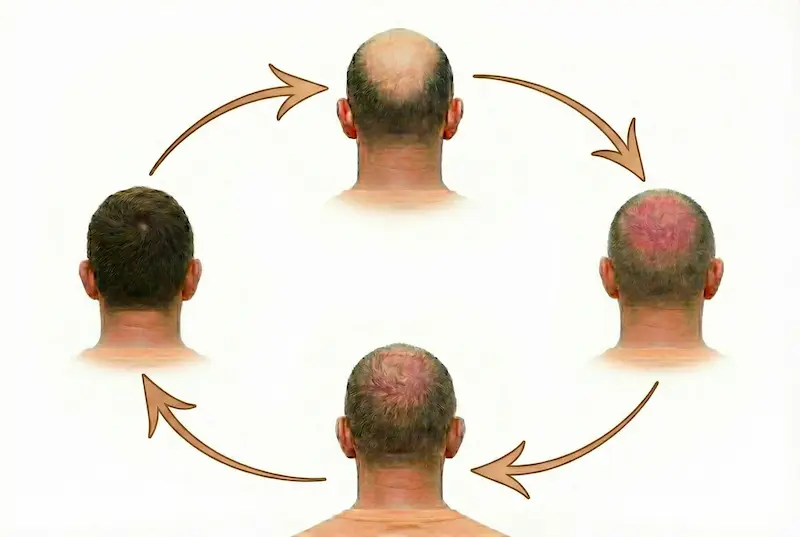
- Hair transplant growth timeline explained month-by-month: healing, shedding, regrowth, and maturation through 12 months.
- Realistic recovery expectations for days 0–14 help patients plan work, travel, hats, and workouts safely.
- Normal vs. red-flag symptoms clarify when to monitor at home versus contacting the clinic urgently.
- Evidence-based aftercare support highlights gentle cleansing, medical options, and recovery tech like LLLT/HBOT.
Summary generated by AI, fact-checked by our medical experts
If you’re researching a hair transplant growth timeline, you’re probably not looking for hype—you want a realistic, month-by-month picture of what you’ll actually see in the mirror. This guide is written for detail-focused patients who track progress closely and want clear benchmarks: healing, shedding, early sprouts, visible density gains, and when it’s finally fair to judge results.
Throughout this article, you’ll see the same concept described in a few common ways—transplant hair growth timeline, hair transplant new hair growth timeline, and the hair transplant timeline growth phases—because patients often search using different terms. The goal is the same: set accurate expectations, reduce anxiety, and help you spot what’s normal versus what needs medical attention.
The month-by-month growth picture is one half of the decision; the other half lives in technique selection, candidacy fit, hairline density planning, and total trip cost. If you're earlier in your research process, those questions deserve their own dedicated reference — separate from this guide's recovery-and-growth focus.
The procedural decision framework covering candidacy, technique trade-offs, and the full Istanbul pathway: comprehensive hair restoration hub.
Key takeaway: A “slow start” is usually normal. Most patients feel impatient during the early weeks—especially during shedding—yet that phase is often part of the expected hair transplant growth timeline.
Table of Contents
What “Normal” Hair Growth Looks Like After a Hair Transplant
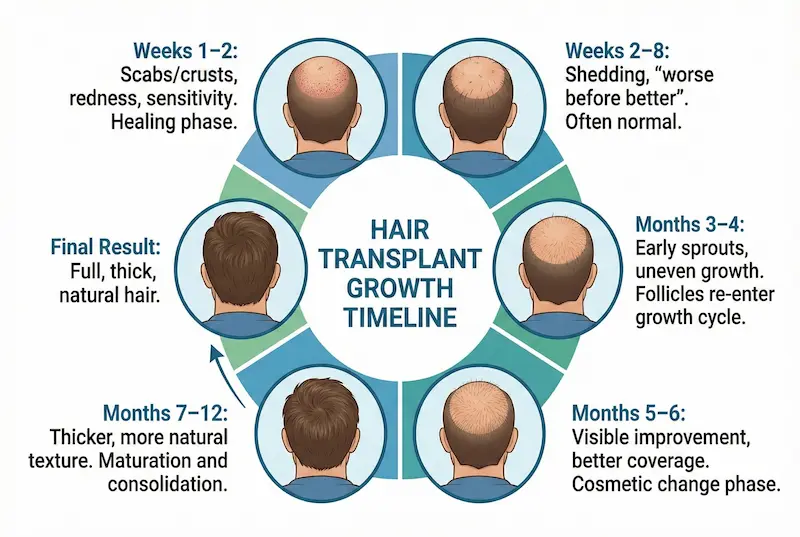
Before you judge day-to-day changes, it helps to understand what “normal” means in a hair transplant growth timeline. The timeline is not linear: your scalp heals first, then many transplanted hairs shed, and only after that do follicles begin producing new hair in a steady, maturing pattern. Knowing the pattern upfront prevents the most common mistake—assuming shedding means failure.
Why your “final result” takes 9–12+ months
Even when grafts are placed successfully, the visible result takes time because follicles need to settle, recover from the procedure, and re-enter active growth cycles. In most cases, you’ll see meaningful cosmetic improvement over months—not weeks. This is why comparing your week-2 photos to someone’s month-10 photos is misleading when evaluating your hair transplant growth timeline.
The 3 phases of growth: healing → shedding → regrowth
Most patients experience the same broad hair transplant timeline growth phases:
- Healing phase: redness, swelling, scabbing, and scalp sensitivity gradually settle.
- Shedding phase (“shock loss”): many transplanted hairs fall out, often causing panic—yet follicles typically remain under the skin.
- Regrowth and maturation: new hairs appear, then thicken and gain texture over time.
Why your timeline can differ from someone else’s (baseline, technique, aftercare)
Your hair transplant growth timeline can vary based on factors like your baseline hair loss pattern, scalp health, whether you had prior shedding or inflammation, the technique used (e.g., FUE vs DHI), and how closely aftercare instructions are followed. Two people can have excellent outcomes—yet reach “looking good” milestones at different months.
Two FUE patients with identical donor density can still hit "looking good" milestones in different months. Technique parameters like punch diameter, extraction sequencing, recipient-site density, and graft handling protocol all shift the curve — even before aftercare adherence enters the picture. The dedicated FUE technique reference covering punch logic, donor-area patterning, and graft-survival variables: FUE technique deep-dive page.
The DHI growth curve looks broadly similar to FUE at the calendar level — same shedding window in weeks 2-8, same early sprouts at month 3, same maturation through month 12. The differences are in spacing density at the frontal edge and the slightly heavier crusting that can stretch the donor-side healing window by a few days. The dedicated DHI implantation logic with case selection criteria: DHI method reference page.
| Milestone | What You Typically Notice | What It Usually Means |
|---|---|---|
| Weeks 1–2 | Scabs/crusts, redness, sensitivity | Healing phase is underway |
| Weeks 2–8 | Shedding, “worse before better” look | Often normal in the timeline |
| Months 3–4 | Early sprouts, uneven growth | Follicles re-enter growth cycle |
| Months 5–6 | Visible improvement, better coverage | Cosmetic change phase |
| Months 7–12 | Thicker, more natural texture | Maturation and consolidation |
This table is a simple “timeline hair transplant growth chart” snapshot. Later in the guide, we’ll expand it into a more detailed month-by-month view and explain what photos can (and can’t) tell you.
Days 0–14: The Immediate Healing Timeline (What You’ll See in the Mirror)
The first two weeks of a hair transplant growth timeline are mostly about protecting grafts and allowing the scalp to calm down. Most concerns in this window are cosmetic (redness, crusting, puffiness), not “growth.” If you focus on the right goal—safe healing—you set yourself up for better regrowth later.
The Days 0-14 window above touches washing technique briefly because it's a recovery topic, not a growth-timeline topic — but the link between the two is direct. Friction or pressure during the first wash can shift a graft's stability, and that single moment can pull a 12-month growth picture off-track in ways the mirror won't show until month 6.
The day-by-day washing protocol covering foam application, low-pressure rinse, and pat-dry technique: post-op washing protocol guide.
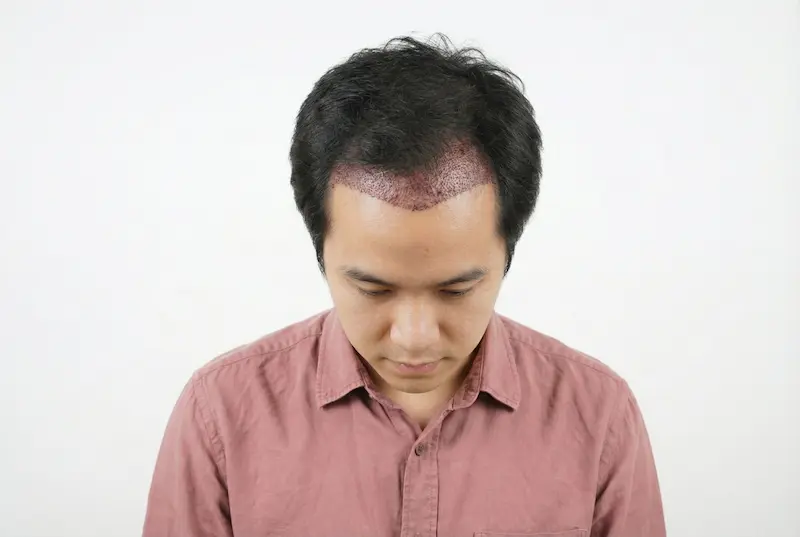
Days 0–3: redness, swelling, and the “fresh graft” period
In the first 72 hours, it’s common to see mild to moderate redness around the recipient area and some swelling—sometimes moving down toward the forehead. The top priority is avoiding friction or pressure on the grafts. Don’t interpret this early appearance as your future density; it’s too soon in the hair transplant growth timeline to read results.
Days 4–7: scabbing/crusting + safe cleansing milestones
Scabbing or crusting often peaks in this window as tiny wounds seal. Many patients worry that scabs mean “grafts are falling out,” but scabs are typically part of normal healing. Washing technique matters here—gentle cleansing helps remove buildup without disturbing grafts. If you’re comparing your progress to a hair transplant growth timeline infographic online, remember: photos can vary based on lighting, skin tone, and how quickly redness resolves.
Days 8–14: scab removal expectations + “social downtime” tips
By the end of week two, most scabs are loosening or have been removed according to aftercare guidance, and the scalp generally looks calmer (though some pinkness can linger). Many patients choose this period as the end of their “public downtime,” especially if their work is camera-facing. Still, this is only the foundation of your hair transplant new hair growth timeline; the visible hair changes are mostly later.
The recovery-acceleration toolkit referenced in the HBOT callout above sits inside a broader technology stack — LLLT chambers, hospital-grade sterilization protocols, monitored anesthesia equipment, and the surgical microscope tooling that drives single-hair frontal placement. The growth-timeline benefit isn't from any single device; it's the layered protocol that compresses the friction-risk window in weeks 1-4.
The complete technology and standards documentation behind the recovery protocol: recovery technology platform.
The Month-by-Month Photo Journal: What 1 Year of Growth Really Looks Like
Instead of generic timelines, the best way to understand the process is through a visual photo journal. Forget the day-to-day mirror checks; here is exactly what you should expect at the most critical milestones: Month 1, Month 3, Month 6, and Month 12.
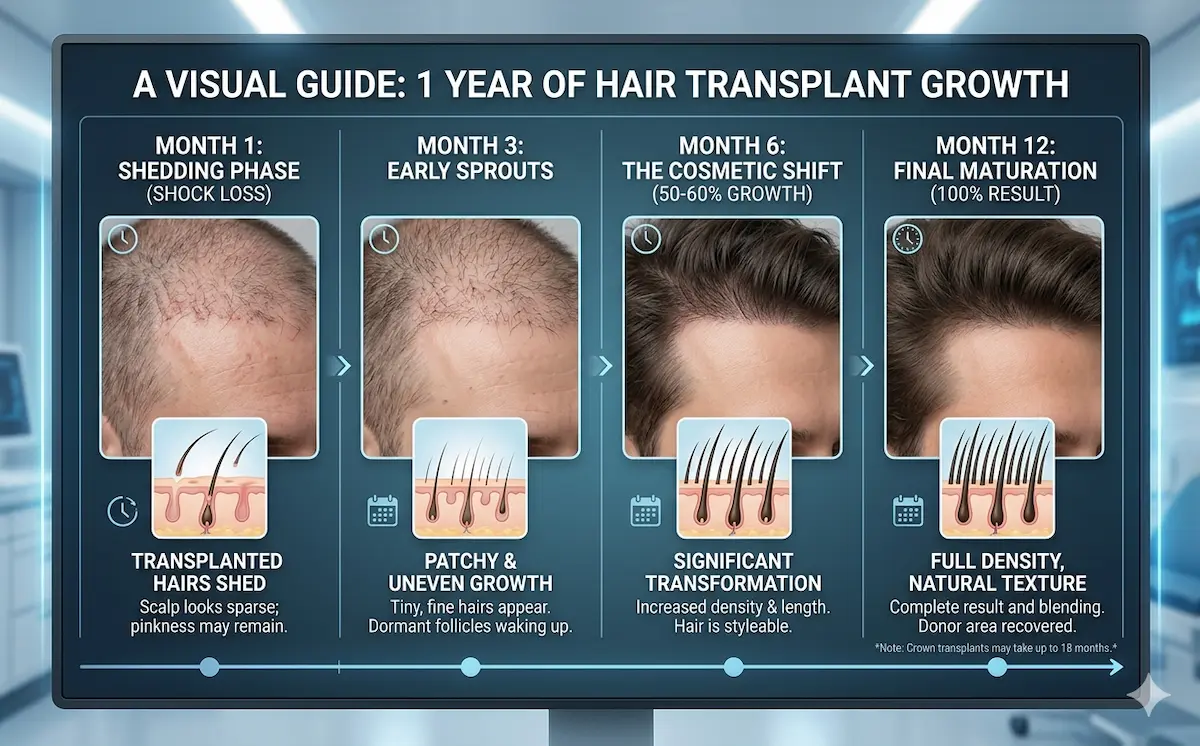
📸 Month 1: The Shedding Phase (Shock Loss)
What you see in the mirror: Your newly transplanted hairs will likely fall out. Your scalp may look exactly like it did before surgery, or even slightly thinner. Mild pinkness might still be visible.
What is actually happening: The follicles are safely anchored under the skin, but the trauma of the move causes the hair shafts to detach and shed. This is the most psychologically difficult month, but it is 100% normal. Don't panic.
📸 Month 3: The "Ugly Duckling" Ends & Early Sprouts
What you see in the mirror: Tiny, fine, often unpigmented hairs begin to break through the scalp. The growth is usually patchy and uneven. The new hairline starts to frame your face faintly.
What is actually happening: The dormant follicles are finally waking up. Because each follicle operates on its own independent cycle, they don't grow at the same time. Patchiness is expected.
📸 Month 6: The Cosmetic Shift (50-60% Growth)
What you see in the mirror: A massive visual transformation. You finally have enough length and density to style your hair. The hairs are getting thicker and darker, though they might still feel a bit wiry or wild.
What is actually happening: The majority of the grafts have sprouted, and the hair caliber (thickness) is increasing. You are officially out of the hiding phase and enjoying the results.
📸 Month 12: The Final Maturation (100% Result)
What you see in the mirror: Full density, natural texture, and seamless blending with your native hair. The hairline looks completely natural, and the donor area is fully recovered and undetectable.
What is actually happening: The hair shafts have reached their mature thickness. Note: For crown (vertex) transplants, this maturation phase can sometimes extend up to Month 15 or 18 due to lower blood circulation in that area.
"The hairline looks completely natural" at Month 12 is the visible outcome; the upstream cause is design discipline at Month 0 — single-hair grafts angled to match native exit direction, irregular micro-zones along the leading edge, and density that builds backward rather than front-loading. If you're 4-6 weeks pre-op, the design conversation deserves equal weight to technique and graft count.
The dedicated hairline design reference with angle, density, and irregularity logic: natural hairline design principles.
A Quick “Expectation Table” (Density, Texture, and Styling by Month)
If you want a fast reference, this table functions like a simplified timeline hair transplant growth chart. It’s not a promise—people vary—but it’s a practical way to interpret the hair transplant growth timeline without spiraling over daily changes. Use it alongside consistent monthly photos.
What % of visible growth is typical at 3, 6, 9, and 12 months
Because individuals vary, it’s safest to think in ranges. Also note: “visible growth” and “final density” are not the same—hair thickness and styling behavior continue to mature after new hairs appear.
| Checkpoint | What Many Patients Notice | Often Described As |
|---|---|---|
| Month 3 | Early sprouts; patchy or thin appearance | “It’s starting, but it’s not cosmetic yet.” |
| Month 6 | Visible improvement; better framing and coverage | “Now I can see real change.” |
| Month 9 | Stronger density; more natural texture; easier styling | “This looks like me again.” |
| Month 12 | More consolidated look; refined hairline; stable styling | “This is close to the final.” |
When hair starts to feel thicker (caliber changes)
Hair often starts as finer, softer strands when it first reappears. Over subsequent months, many patients notice thicker shafts and better “coverage effect,” which is why month 9–12 can look significantly fuller than month 4–6 even if the area already had visible hairs. This maturation is a core part of the hair transplant timeline growth phases.
When you can realistically judge the hairline and overall design
Early hairline impressions (months 3–5) can be misleading because new hairs may stand up, grow at uneven rates, or appear thinner. A more realistic evaluation often comes later—when the hair has length, direction, and thickness. If you’re analyzing symmetry, density, and “naturalness,” use month 9–12 as a more meaningful checkpoint in your hair transplant growth timeline.
What Can Slow Down (or Speed Up) Your Growth Timeline
Once you understand the month-by-month pattern, the next question is: “What can shift my hair transplant growth timeline?” This is where a realistic transplant hair growth timeline becomes personal. Technique details, your baseline scalp health, and day-to-day aftercare habits can all influence how quickly you move through the hair transplant timeline growth phases.
Technique variables: FUE vs DHI, graft handling, and placement strategy
Two patients can share the same “month” on a timeline hair transplant growth chart but look different because the details of graft handling and placement matter. Variables that can affect the visible pace of your hair transplant new hair growth timeline include:
- Graft quality and survival conditions: how grafts are harvested, stored, and protected from dehydration.
- Placement planning: hairline design, angle/direction control, and distribution (front vs mid-scalp vs crown).
- Recipient-site trauma control: minimizing unnecessary trauma can support smoother early healing.
Important nuance: A “slower-looking” month 3 doesn’t automatically mean a worse long-term outcome—especially if healing was clean and shedding was typical.
Patient variables: smoking, scalp inflammation, anemia/iron, stress, sleep
Your biology can meaningfully influence the hair transplant growth timeline. Some factors are modifiable, and addressing them early can protect your investment:
- Smoking/vaping: nicotine-related vascular effects can interfere with circulation, which matters during healing and early regrowth.
- Scalp inflammation: chronic dandruff/seborrheic dermatitis, folliculitis, or uncontrolled irritation can make your scalp less “friendly” for calm healing.
- Iron deficiency/anemia and overall nutrition: suboptimal levels can impact hair quality and recovery resilience.
- High stress + poor sleep: can worsen shedding and slow perceived progress.
Aftercare variables: washing, sun exposure, sweating, and “too-early” gym
Aftercare doesn’t “force” growth, but it protects grafts while your scalp stabilizes—especially during the vulnerable early chapters of your hair transplant growth timeline. The biggest timeline-disruptors are usually mechanical and environmental:
- Too much friction: aggressive rubbing, tight hats too early, or rough towel drying.
- Excess sun/heat exposure: increases irritation and redness; some people stay “pink” longer.
- Sweating too early: heavy workouts before you’re cleared can inflame the scalp and increase risk of irritation or folliculitis.
- Picking scabs: a common cause of unnecessary trauma during the healing phase.
Practical mindset: Your job in the first 2–4 weeks isn’t “making hair grow.” It’s protecting grafts and keeping the scalp calm so the hair transplant timeline growth phases can unfold without setbacks.
| Timeline Stage | What Helps | What Often Slows Things Down |
|---|---|---|
| Weeks 0–2 (Healing) | Gentle cleansing, no friction, clean environment | Picking scabs, tight headwear, overheating |
| Weeks 2–8 (Shedding) | Staying consistent with instructions, patience | Panic-driven over-washing, harsh products, scratching |
| Months 3–6 (Early regrowth) | Scalp calm, good sleep, nutrition support | Smoking, unmanaged inflammation, high stress |
| Months 7–12 (Maturation) | Long-term consistency, realistic photo tracking | Constant “micro-judging,” inconsistent routine |
If you prefer visuals, you can think of this as the “behavior layer” that sits on top of your hair transplant growth timeline infographic.
How to Support Better Growth (Evidence-Based Aftercare Habits)
Patients often ask for a “growth booster,” but the most reliable way to protect your hair transplant growth timeline is simpler: reduce inflammation, protect grafts, and support your scalp environment. Below are the highest-yield habits that tend to keep the timeline on track—without falling into gimmicks.
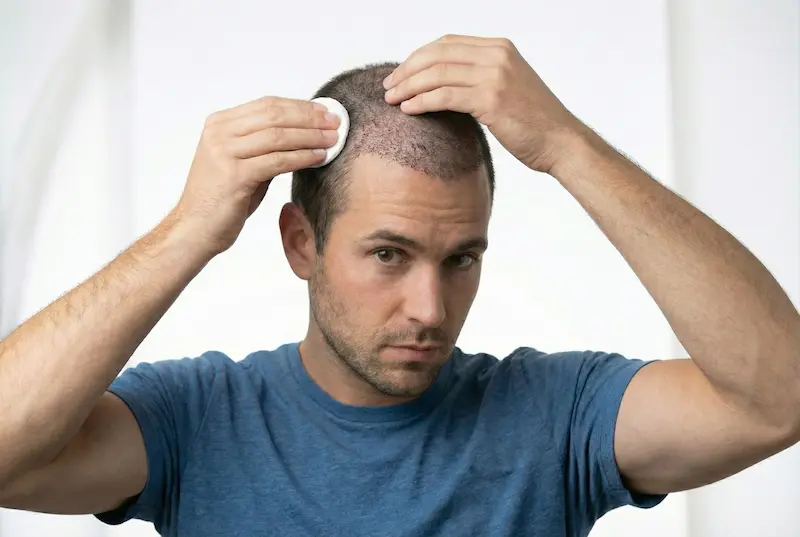
Scalp care routine: cleansing, moisturizing, and itch control
Early scalp care should be gentle and consistent. Your clinic will tailor instructions, but the universal principles are:
- Gentle cleansing: remove buildup without rubbing aggressively.
- Hands-off mindset: no picking, no scratching, no “testing” grafts.
- Itch management: itching can be normal; the goal is to calm it safely instead of scratching.
As you move into months 1–3, avoid harsh “anti-hair-loss” shampoos or aggressive exfoliants unless your medical team approves—irritation can make the shedding phase feel worse and complicate your hair transplant new hair growth timeline.
Medical support: when doctors consider minoxidil/finasteride (who should avoid)
Some patients are candidates for medications that support native hair and overall appearance during the transplant hair growth timeline. However, these options are not “one-size-fits-all,” and they should be discussed with a qualified physician who reviews your health history, goals, and risk tolerance.
- Minoxidil: sometimes used to support hair cycling and visual density in certain patients.
- Finasteride (or alternatives): sometimes considered to help stabilize ongoing male-pattern hair loss.
Important: these medications have contraindications and potential side effects. For an expert-patient approach, the right question isn’t “Should everyone use them?”—it’s “Do the benefits outweigh the risks for me?”
Recovery technology: how LLLT and HBOT can support healing
This is where many patients look for a “timeline edge” and search for things like hair transplant growth timeline infographic or “how to speed up hair transplant results.” While nothing replaces biology and time, certain clinic-grade recovery protocols are designed to support healing conditions that help follicles transition smoothly into regrowth.
LLLT (Low-Level Laser Therapy): In advanced post-procedure protocols, LLLT is used to support scalp microcirculation, calm inflammation, and help follicles transition from a resting phase into an active growth phase. In practical terms, this can make the early months feel more organized and may support a steadier path through the hair transplant timeline growth phases.
The AI Summary above flags LLLT/HBOT as recovery-tech inputs, and that pairing isn't accidental on a growth timeline. LLLT's mechanism — wavelength-driven mitochondrial activation in dermal papilla cells — is most useful exactly when transplanted follicles are trying to re-enter anagen after the shock-loss shed, which is the months 3-6 window described in Section 3.
The LLLT protocol foundation covering wavelength selection, session cadence, and mechanism of action: LLLT growth-phase activation reference.
Advanced oxygen-based recovery (HBOT): Some surgical recovery programs use pressurized oxygen therapy to support tissue healing and reduce swelling by increasing oxygen availability in healing tissues. While it’s more commonly discussed in the context of broader surgical recovery, the underlying concept—supporting tissue recovery and lowering complication risk—aligns with what patients want during the earliest chapter of a hair transplant growth timeline.
The HBOT callout in Section 2 references downtime reduction in a single line; the actual mechanism is dissolved-oxygen tension driving VEGF expression, angiogenesis, and the early vascular re-integration that determines whether grafts settle smoothly through weeks 1-4 or stay inflamed longer. For a growth timeline, "smoother early healing" is the closest thing to a leverage point you have during the months when the mirror doesn't yet show progress.
The full HBOT protocol reference covering session structure, ATA pressure, and clinical evidence: HBOT downtime reduction adjunct.
The evidence base for adjunct therapies that shape the growth timeline continues to mature, with a December 2025 scoping review from the International Society of Hair Restoration Surgery (ISHRS) consolidating five years of research.
Published in Medical Sciences (Gupta et al., 14(1): 5 — December 22, 2025), the review evaluated platelet-rich plasma, photobiomodulation (LLLT), stem cells, and exosomes as adjuncts to hair transplantation across the 2020-2025 literature: regenerative therapy scoping review. The ISHRS Ad Hoc Committee on Regenerative Medicine drew on PubMed, Embase, and the Cochrane Controlled Register of Trials, deliberately excluding combination protocols to isolate single-modality evidence quality. Photobiomodulation (LLLT) and PRP showed the strongest evidence base; stem cell and exosome data remain earlier-stage with regulatory ambiguity flagged.
Important caveat: this is a scoping review (not a systematic review or meta-analysis), and combination therapies — which is how LLLT and HBOT are often delivered clinically — were excluded by design. The single-modality evidence quality is the framework, not a clinical prescription. The fundamental growth-timeline expectations described in this guide hold regardless of which adjunct (if any) is added.
How to use this information: Technology should be framed as a clinical recovery protocol—not a “miracle growth hack.” The purpose is to support healing conditions so your natural timeline can progress without preventable setbacks.
What’s Normal vs. What’s a Red Flag
One of the biggest sources of anxiety in a hair transplant growth timeline is not knowing what’s “expected weird” versus what’s genuinely concerning. This section gives you a practical checklist: common, usually self-limited issues that many patients experience, and red flags that deserve prompt medical review. When in doubt, it’s safer to ask—especially if symptoms are getting worse rather than gradually improving.
Normal: pimples/folliculitis, temporary numbness, “ugly duckling” weeks
Many normal post-transplant experiences look alarming if you’re seeing them for the first time. Common examples include:
- “Ugly duckling” phase: patchiness, shedding, and an underwhelming look in months 1–3. This is a classic chapter in the hair transplant timeline growth phases.
- Temporary numbness or altered sensation: mild numbness or tingling can occur as nerves recover.
- Small bumps/pimples: sometimes linked to trapped hairs or mild follicular irritation as new hairs attempt to emerge.
- Itching: often a sign of healing; scratching is the problem, not the itch itself.
- Persistent pinkness: redness can linger longer in some skin types, especially with sun/heat exposure.
Reality check: A temporary “worse before better” look is often built into the hair transplant growth timeline, especially during months 1–2 shedding and months 3–4 early uneven regrowth.
Concerning: infection signs, excessive pain, spreading redness, fever
Red flags are typically defined by escalation—pain, warmth, swelling, or redness that gets worse day by day instead of settling. Contact your medical team promptly if you notice:
- Fever or feeling systemically unwell
- Spreading redness that continues to expand
- Increasing warmth and worsening swelling after an initial improvement
- Pus-like drainage, foul smell, or significant tenderness
- Severe pain that is out of proportion or suddenly intensifies
These concerns are not about “being impatient” with your transplant hair growth timeline—they are about preventing complications and protecting healing tissue.
When to contact the clinic urgently—and what photos to send
If you need help, you’ll get a better answer faster by sending structured information. When contacting your clinic, consider including:
- Clear photos of the recipient area and donor area in natural light
- Close-up + wider shots (so your team can judge pattern, not just detail)
- Your timeline details: the exact day/week post-op (e.g., “Day 10” or “Week 5”)
- Symptoms list: pain level, temperature, drainage, itch, swelling, and what changed
| Symptom | Often Normal | More Concerning |
|---|---|---|
| Redness | Gradually fading over days/weeks | Spreading, worsening, hot to touch |
| Swelling | Improves steadily after early peak | Sudden increase + pain/heat |
| Bumps/pimples | Small, mild, localized | Painful, spreading, pus-like drainage |
| Pain | Mild to moderate, improving | Severe or escalating pain |
This table isn’t a diagnosis tool. It’s a practical “triage” guide so you can act appropriately while your hair transplant growth timeline unfolds.
Evidence-based aftercare during the growth timeline isn't a single instruction sheet — it's a sequence of structured touchpoints: weekly photo check-ins during weeks 1-4, monthly progress reviews through month 6, then quarterly cadence through month 12. The "no abandonment" model means you have a clinical contact for normal-vs-red-flag judgment calls without scrolling forum threads at 2am.
The complete patient journey breakdown with all 12-month touchpoints: 12-month follow-up framework.
Planning Your Life Around the Timeline (Work, Hats, Haircuts, Travel)
Most “timeline stress” comes from real-life logistics: When can I be on camera? When can I wear a hat? When can I work out? This section translates the hair transplant growth timeline into planning decisions so you can schedule work, travel, and social life without guessing. Always follow your clinic’s instructions if they differ—your case may have specific factors.
When most patients return to desk work vs physical work
Many patients with desk-based jobs return relatively quickly, especially if swelling is mild and they can control their environment (avoid heat, sun, dust). Physically demanding work may require more caution because sweating, friction, and bump risk can irritate the scalp in the earliest stage of the hair transplant timeline growth phases.
- Desk work: often feasible sooner if you can avoid rubbing/pressure and manage appearance concerns.
- Physical work: may require a longer buffer depending on sweating, head protection needs, and exposure to dust/heat.
Hats/helmets, haircuts, and camouflage fibers: what’s safe and when
Headwear and grooming choices can either protect or irritate the scalp. The key idea is timing: early on, pressure and friction can be risky; later, these concerns ease. Many patients also ask about camouflage products during the shedding phase—because month 1–3 can be visually discouraging in the hair transplant new hair growth timeline.
- Hats: ask your clinic when pressure becomes safe; the goal is zero rubbing on grafts in the earliest window.
- Helmets: higher-risk than hats due to pressure and friction—clear this explicitly before returning to cycling/motorcycling.
- Haircuts: clipping/shaving the recipient area too early can irritate; gentle trimming rules vary by clinic protocol.
- Camouflage fibers: often discussed for the “ugly duckling” stage; use only when the scalp is fully closed/healed and your clinic approves.
Planning life around a 12-month growth timeline means budgeting beyond the procedure itself — flights, hotel, transfers, possible second-stage refinement, LLLT and HBOT session inclusions, and 12-month follow-up coordination. The "all-inclusive package price" only delivers if every aftercare layer is bundled into the line item rather than billed separately later.
The full pricing structure with line-item inclusions for the Istanbul Hair Restoration pathway: complete pricing breakdown reference.
The work-and-travel scheduling logic above assumes one Istanbul trip with coordinated follow-up after you fly home. That works for most patients, but graft count, density target, and donor-area capacity sometimes drive a 2-stage plan — which changes hotel nights, transfer count, package tier, and the cost framework's bottom line.
The package framework covering single-trip vs 2-stage options for Hair Restoration: long-stay recovery package layout.
Planning tip: If your job is public-facing, the most challenging visual period is often not week 1—it can be months 1–3, when shedding and uneven early regrowth happen. Build your personal timeline hair transplant growth chart around that reality.
Flying and travel logistics + long-term virtual follow-ups (1, 3, 6, 12 months)
Travel planning should match the phase you’re in. In the earliest days, you may want simpler logistics: comfortable lodging, easy access to supplies, and minimal stress. Longer-term, structured check-ins help you interpret progress realistically—especially because the transplant hair growth timeline is slow enough that memory can mislead.
| Timeline | What to Plan For | What to Avoid |
|---|---|---|
| Days 0–7 | Rest, gentle routine, low-stress schedule | Heat, friction, crowded/tight transit |
| Weeks 2–8 | Normalize shedding expectations; consistent photos | Overreacting to shedding; harsh products |
| Months 3–6 | Track early regrowth; plan social events realistically | Judging final outcome too early |
| Months 7–12 | Evaluate maturation; refine styling; follow-up review | Comparing to mismatched online “infographics” |
If you like visuals, you can turn these milestones into your own “hair transplant growth timeline infographic” using monthly photos in consistent lighting—your most accurate chart will always be your own.
How to Track Your Hair Transplant Growth Timeline With a Simple Photo Routine
A consistent photo routine is the fastest way to understand your hair transplant growth timeline without overreacting to daily mirror checks. When lighting, angles, and hair length change, progress can look “better” or “worse” even when growth is normal. By standardizing your photos, you create your own timeline hair transplant growth chart—often more accurate than any generic hair transplant growth timeline infographic online.
Photo rules that make comparisons fair
Take photos every 2–4 weeks in the same place, same time of day, and same lighting (natural light is best). Use the same camera distance and keep your head position consistent. Capture four angles: front hairline, top, left, and right. If possible, keep hair length similar at each checkpoint so density changes are easier to see.
How to interpret month-to-month changes
Expect the “ugly duckling” period in months 1–2 (shedding), early sprouts in months 3–4, clearer coverage in months 5–6, and maturation through months 7–12. Don’t compare week 2 to month 6; compare month 3 to month 6, then month 6 to month 9 for a fair read.
What to record alongside photos
Write down your post-op week/month, any shedding changes, itching, redness, new pimples, and how you’ve been washing hair after transplant. Also note lifestyle factors that can influence your transplant hair growth timeline—smoking, heavy sweating, sun exposure, and sleep.
When to share your chart with your clinic
Send your photo set if you notice worsening pain, spreading redness, fever, or drainage—or if growth looks stalled after month 6. A structured update helps your team interpret your hair
Ready to Start Your Own Timeline?
Now that you know what the 12-month journey looks like, it's time to take the first step. Discover our advanced FUE & DHI techniques, maximum-graft strategies, and transparent pricing in Istanbul.
👉 Explore our complete clinic guide: Hair Transplant in Turkey
Frequently Asked Questions (FAQ): Hair Transplant Growth Timeline
Below are the most common questions patients ask while tracking their hair transplant growth timeline. Keep in mind: individual variation is normal, so use these answers as guidance and always follow your surgeon/clinic’s specific instructions for your case.
When do transplanted hairs start growing?
When does shedding (shock loss) start, and how long does it last?
Why does my hair look patchy at month 3–4?
When can I wear a hat after a hair transplant?
When can I go back to the gym, swimming, or sauna?
Do I need minoxidil or finasteride after a transplant?
When is it too early (or finally okay) to judge my final result?
Is it normal if the transplanted hair grows at different speeds in different areas?
Why does my scalp feel tight or sensitive weeks after the procedure?
When can I safely color my hair during the hair transplant growth timeline?
Do crowns take longer to show results compared to the hairline?
Medical Disclaimer: This page is provided for general educational purposes only and does not replace a face-to-face medical consultation, diagnosis, or personalised treatment plan. All surgery carries risks and outcomes vary between individuals. Suitability for a hair transplant, procedure selection, and anesthesia choice can only be determined after a full clinical assessment by a qualified surgeon. Always follow your clinician’s instructions and seek urgent medical attention if you develop concerning symptoms during recovery.
Related Treatments

Ready to Start Your Own Transformation Journey?
Join the 2,000+ patients who trusted Dr. Akif Mehmetoğlu and the AKM Clinic team. Your journey to a more confident, revitalized you begins with a simple, no-obligation conversation. Contact us today from the USA for your free virtual consultation.
#1: Get Your Free Personalised Quote
Start with a free, no-obligation online consultation. Share your photos, and our surgical team will provide a fully personalised treatment plan and a transparent, all-inclusive price package. No hidden fees.
#2: Secure Your Date & VIP Booking
Once you're ready, our dedicated patient coordinators will help you secure your procedure date. We'll handle all your bookings, including your 5-star hotel and private VIP airport transfers.
#3: Arrive in Istanbul & Meet Your Surgeon
Arrive at Istanbul Airport (IST) and be greeted by your private driver. Settle into your hotel and prepare for your in-person consultation, where you'll meet your specialist surgeon to finalise the details for your "natural, subtle, and revitalized" new look.