
Quick Summary: Breast reduction results for Black women should be planned with skin tone, scar behaviour, areolar healing, and keloid risk in mind. The best before-and-after outcomes are not just smaller breasts; they show balanced shape, functional relief, carefully placed scars, and a scar-care plan built for melanin-rich skin.
The phrase breast reduction before and after black women often reflects a very specific concern: “Will my result look natural on my body, and how will my scars heal on darker skin?” That is a valid question. Generic breast reduction galleries do not always show the details Black women need to evaluate, especially scar colour changes, areolar borders, and long-term maturation.
At AKM Clinic, breast reduction at AKM Clinic is planned through a Natural-First lens: relief, proportion, and shape without ignoring the realities of skin healing. For Canadian Black women travelling from Toronto, Montreal, Calgary, Vancouver, Ottawa, or Halifax, the consultation should include both aesthetic goals and a direct conversation about scar risk.
Disclosure:
Case patterns in this article reflect composite, anonymized outcome patterns. Identifying details are not used, and no named patient is invented.
Table of Contents

Why Demographic-Specific Planning Matters?
Breast reduction is a highly individualized operation. For Black women, the planning conversation must include skin tone, scar tendency, breast weight, areolar size, breast footprint, and the patient’s desired final shape. A good result respects all of these factors.
Skin healing variability and melanin-rich skin
Melanin-rich skin can heal beautifully after surgery, but the visible healing process may look different. Early scars may appear darker, red-brown, purple-brown, or more pigmented than the surrounding skin before they gradually soften.
This is why long-term before-and-after photos matter. A six-week photo may show swelling and active pigmentation. A 12-month photo gives a more honest view of scar maturation.
Keloid and hypertrophic scar predisposition
Keloids and hypertrophic scars are both raised scars, but they behave differently. Hypertrophic scars remain within the original incision line. Keloids can grow beyond the incision edge.
Black patients and other patients with skin of colour can have a higher predisposition to keloid formation, a pattern discussed in Canadian dermatology literature on keloids in skin of colour. That does not mean keloids are guaranteed. It means scar history should be discussed before surgery, especially if you have had raised scars after piercings, acne, C-sections, or previous procedures.
For a related example of identity-aware surgical planning in another procedure, see our guide to demographic-affirming surgical planning in another procedure.
Why a surgeon’s multicultural experience matters
Multicultural case experience matters because scar planning is practical, not theoretical. A surgeon should understand how incision tension, breast weight, areolar border design, and post-operative care may affect darker skin.
During consultation, ask direct questions. How do you handle keloid-prone skin? Which incision pattern suits my anatomy? What scar-care protocol do you recommend after I return to Canada?
Canadian Context:
Canada’s Black communities are diverse, including African Canadian, Afro-Caribbean, Black Nova Scotian, and newer immigrant populations. A good consultation should not treat “Black skin” as one category. Your personal scar history matters more than assumptions.
Technique Selection for Optimal Scarring
The surgical technique affects both shape and scar pattern. For Black women, the goal is not simply to choose the smallest scar. The goal is to choose the incision and pedicle design that creates reliable nipple support, balanced breast shape, and low-tension closure.
Pedicle technique choices
A pedicle is the tissue bridge that keeps the nipple-areola complex connected to blood supply and nerves during reduction. Common options include superior, inferior, and other pedicle designs.
For larger reductions, the pedicle choice becomes especially important. It influences nipple position, breast projection, and sensation risk. It also affects how much reshaping can be done safely.
Incision pattern: anchor vs vertical trade-offs
The two most common incision patterns are the anchor pattern and the vertical, or lollipop, pattern. The anchor pattern adds a horizontal incision in the breast crease. The vertical pattern uses an incision around the areola and down the lower breast.
Many patients prefer the idea of a shorter scar. That is understandable. Still, a shorter scar is not always the better choice if the breasts are heavy, wide, or significantly ptotic. A poorly chosen shorter scar can create tension, shape problems, or widened healing.
| Technique | Best suited for | Scar pattern | AKM CAD pricing |
|---|---|---|---|
| Anchor / Inverted-T Reduction | Significant size reduction and reshaping | Around areola, vertical line, breast crease | CAD $5,450 |
| Vertical / Lollipop Reduction | Moderate reduction with suitable skin elasticity | Around areola and vertical line | CAD $5,450 |
| Superior Pedicle Technique | Selected reductions where upper blood supply is preferred | Depends on incision pattern | CAD $5,450 |
| Inferior Pedicle Technique | Larger reductions needing reliable nipple support | Usually vertical or anchor pattern | CAD $5,450 |
| Liposuction-Only Breast Reduction | Fat-dominant breasts without major skin excess | Small liposuction access points | CAD $4,100 |
For a full price breakdown, see breast reduction pricing in CAD.
Areolar healing considerations
Areolar resizing is often part of breast reduction. For Black women, the areolar border should be planned carefully because contrast between areola and surrounding skin can make scar placement more visible in early healing.
Precise circular design, careful closure, and low tension around the areola help protect the final look. The areolar scar often takes months to soften.
Keloid and Hypertrophic Scar Prevention
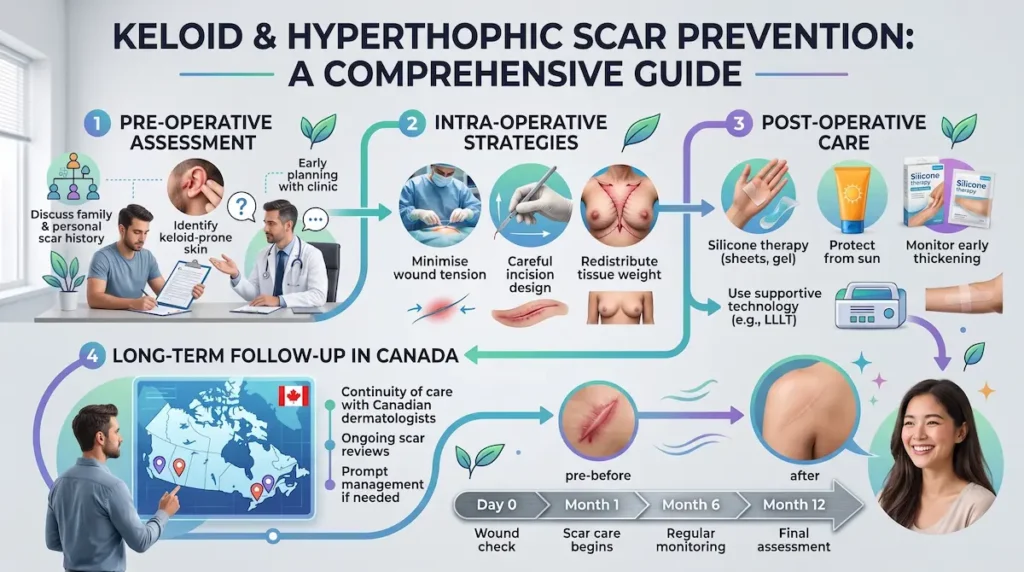
Scar prevention starts before surgery. It continues through incision design, closure technique, early wound care, and long-term follow-up after the patient returns to Canada. This is especially relevant for keloid-prone skin.
Pre-operative risk assessment
Your surgeon should ask about personal and family scar history. Tell the clinic if you have developed raised scars after ear piercings, tattoos, acne, burns, C-sections, or previous operations.
If you already know you are keloid-prone, your plan may include earlier scar monitoring, silicone therapy, and coordinated dermatology follow-up in Canada.
Intra-operative tension management
Scar quality is strongly influenced by wound tension. A breast reduction removes weight, reshapes tissue, and lifts the nipple position, so closure must be planned without over-tightening the skin.
“For keloid-prone patients, the question is not only where the scar sits. We plan how much tension the skin will carry, how the breast weight is redistributed, and how the patient will care for the scar for the full year after surgery.”
Post-operative scar care protocol
Post-operative care may include silicone sheets or gel, sun protection, gentle scar massage when cleared, and monitoring for early thickening. AKM’s recovery planning may also include supportive technologies such as LLLT scar minimization technology.
If scars thicken despite prevention, options may include steroid injections, laser-based treatment, pressure therapy, or surgical scar revision in selected cases. For that specific pathway, see keloid and scar revision options.
| Timeline | Scar-care focus for melanin-rich skin | Expected appearance |
|---|---|---|
| Day 0 | Protected dressings, low-tension wound support | Incisions covered; swelling expected |
| Week 2 | Wound check, early scar monitoring | Scars may look dark, pink-brown, or raised in places |
| Month 1 | Silicone therapy if cleared; avoid friction | Pigmentation may become more noticeable |
| Month 3 | Assess thickening; consider dermatology input if needed | Some firmness and colour change may persist |
| Month 6 | Continue sun protection and scar review | Scars usually soften but may still be darker |
| Month 12 | Final scar assessment; revision only if truly indicated | Mature scar is flatter, softer, and less active |
Canadian Context:
Once you are back in Canada, a dermatologist in Toronto, Vancouver, Montreal, Calgary, or your local city can help monitor raised scars. This continuity matters most if you already know you scar aggressively.
Realistic Before-and-After Expectations
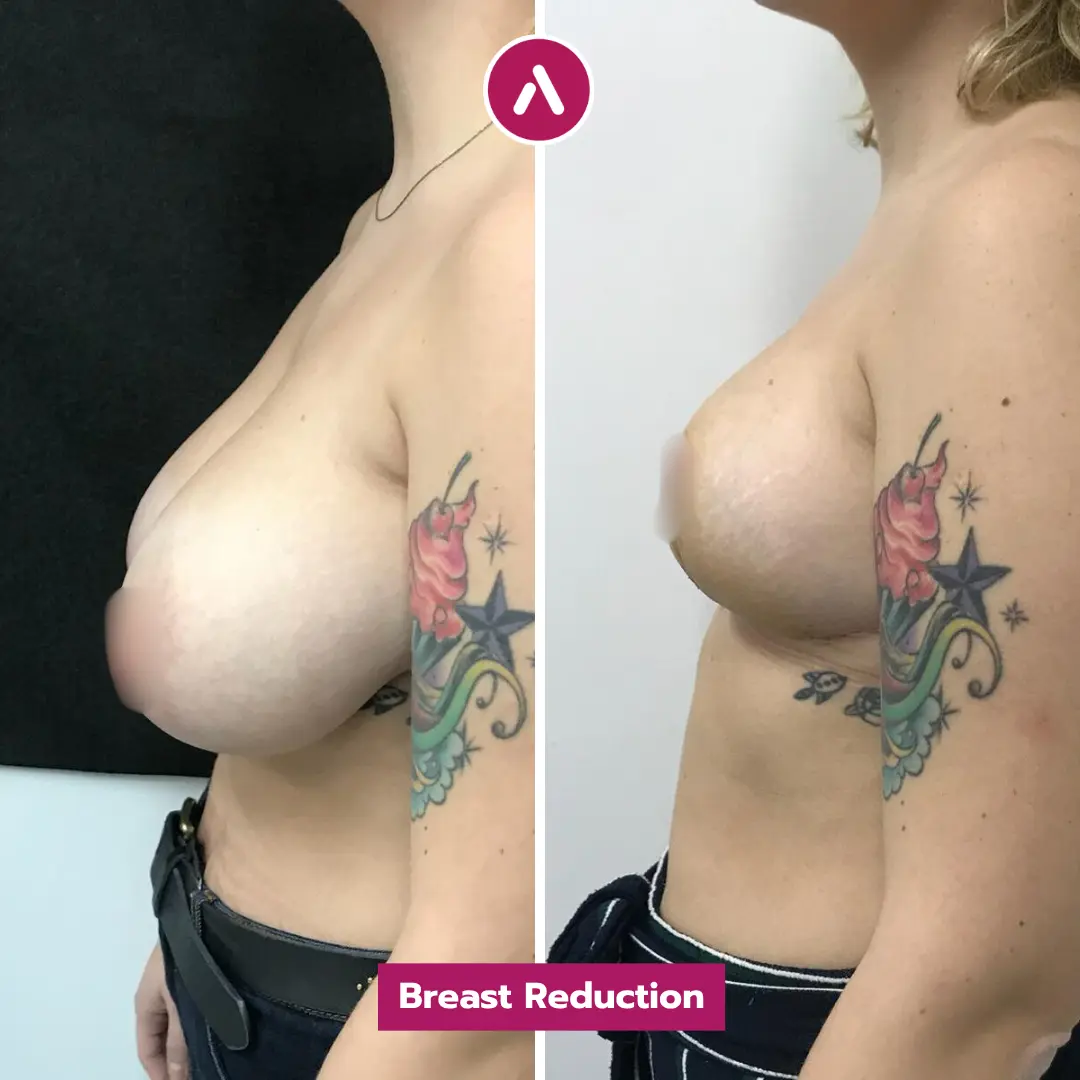
Before-and-after photos should be read with context. A result is not simply “good” because the breasts are smaller. You should evaluate proportion, nipple position, breast shape, scar visibility, symmetry, and functional relief.
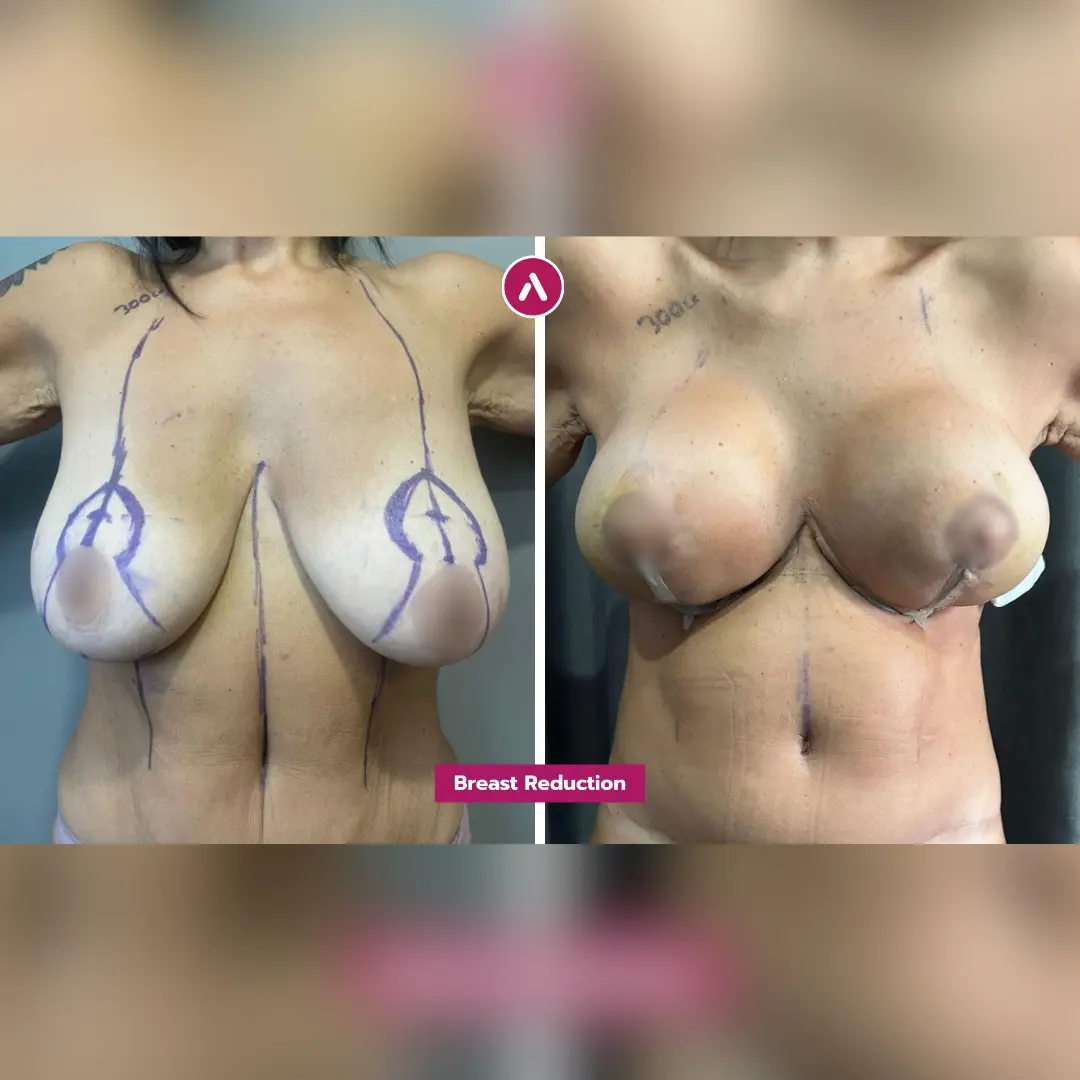
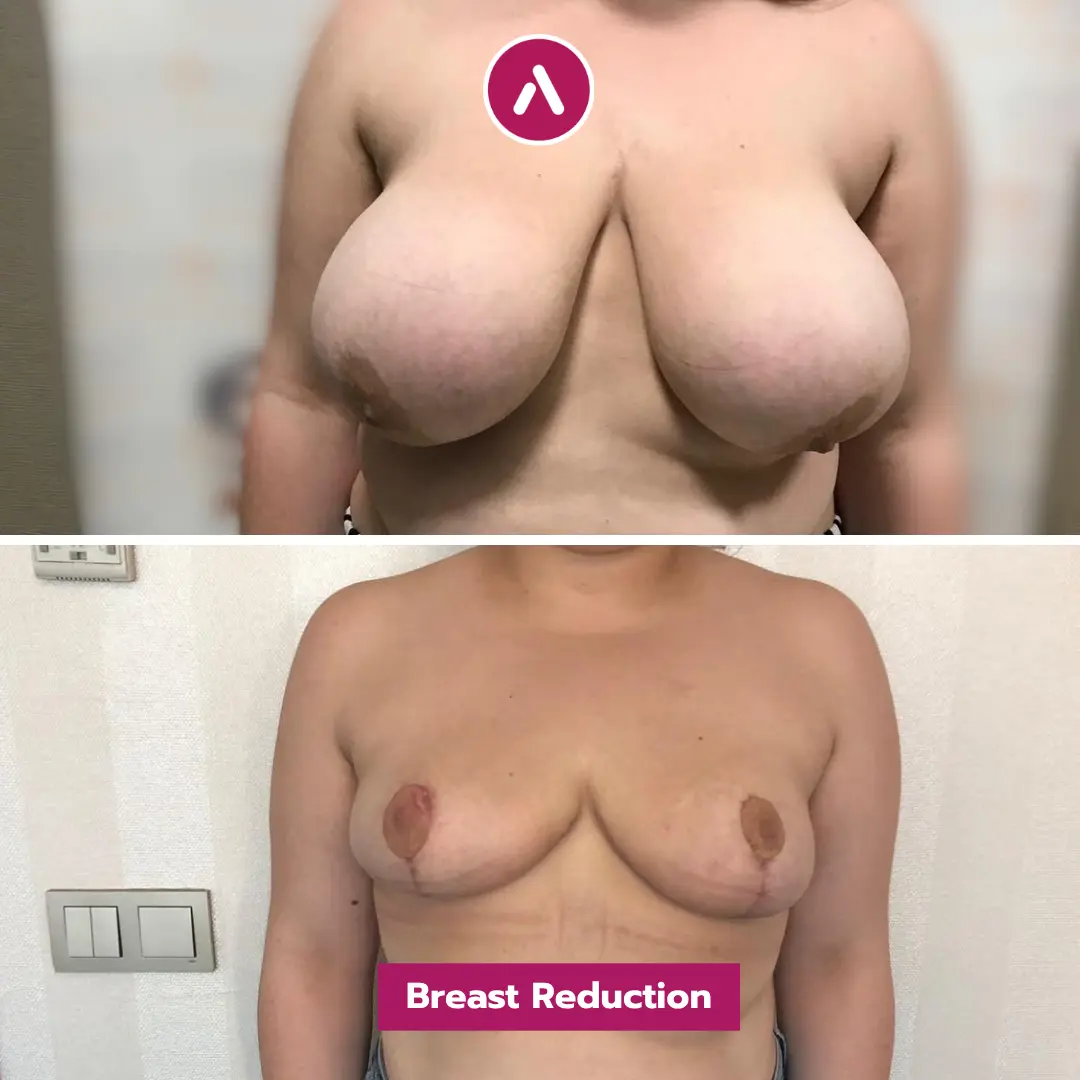
What the gallery shows: composite patterns
In Black women, strong outcomes often show reduced breast weight, lifted nipple position, smaller areolas, improved upper-body proportion, and better clothing fit. Scars may still be visible early, especially around the areola and vertical incision.
For more visual context, review the breast reduction before-and-after gallery. During consultation, ask whether the clinic can show cases closer to your skin tone, breast size, and desired reduction level.
Scar maturation timeline for melanin-rich skin
Darkening around incision lines can be part of normal healing. It does not automatically mean a poor outcome. The more useful question is whether the scar is flattening, softening, and becoming less active over time.
Photos at 3 months, 6 months, and 12 months are more useful than very early photos. Early images show swelling. Later images show the true relationship between scar, shape, and breast position.
Functional relief: back pain, posture, clothing comfort
Breast reduction can improve physical comfort by reducing breast weight. Many patients seek surgery because of neck pain, shoulder grooving, back strain, rashes under the breast fold, exercise limitations, or difficulty finding supportive bras.
For Black women, the emotional outcome can also be meaningful. The goal may be to feel lighter, more proportionate, and more comfortable without feeling that the body has been made unfamiliar.
Canadian Black Women’s Considerations
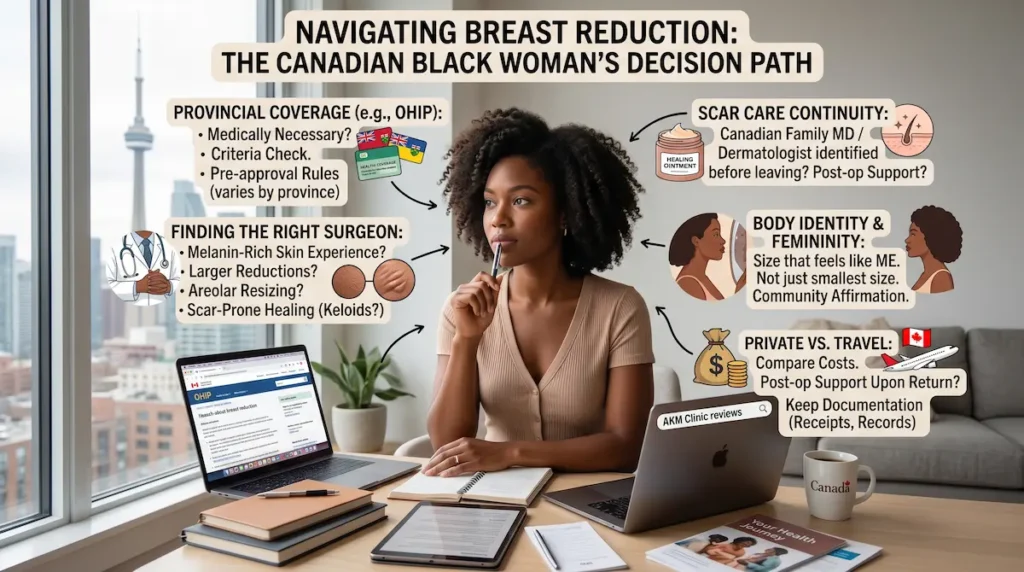
Canadian patients often compare private surgery, provincial coverage pathways, and international medical travel before making a decision. For Black women, the decision should include both access and surgeon fit.
Finding surgeons with relevant experience
Ask for experience with melanin-rich skin, larger reductions, areolar resizing, and scar-prone healing. Do not settle for vague reassurance. Ask what happens if scars thicken and how the clinic supports you after you return home.
Patient experience also matters. For broader social proof, review AKM Clinic patient reviews.
Post-op scar care continuity in Canada
Before leaving Canada, identify a local family physician, walk-in clinic, or dermatologist who can help if you need scar assessment. This is especially sensible if you have had keloids before.
If your provincial plan considered the reduction medically necessary, keep your documentation organized. If your procedure is private, keep receipts and medical records for your own files.
Community and identity affirmation
Some Black women worry that breast reduction will make their body feel less feminine or less connected to how they have always seen themselves. That concern deserves respect.
The best plan is not the smallest possible size. It is the size and shape that improves comfort while still feeling like you.Canadian Coverage Note:
Provincial coverage may be possible when breast reduction is medically necessary, but criteria vary by province and approval rules are not the same across Canada. For example, Ontario’s OHIP guidance notes that some services, including breast reduction outside Ontario, may require written approval before the service is provided. Cosmetic-only reductions are generally private, so Ontario, British Columbia, Quebec, and Alberta patients should confirm requirements with their physician or provincial health plan before assuming coverage.
Frequently Asked Questions: Breast Reduction Before and After Black Women
These answers address the questions Canadian Black women most often raise before booking breast reduction surgery. They are general educational answers, not a substitute for a medical consultation.
Will I develop keloid scars after breast reduction?
No surgeon can promise that you will not develop keloids. A personal history of keloids increases concern, but risk is not certainty. The safest approach is early disclosure, low-tension closure, silicone-based scar care, and regular monitoring.
Can I see before-and-after photos of Black women?
You should ask. A gallery with similar skin tone, breast size, and reduction goals is more useful than a generic gallery. If public images are limited for privacy reasons, ask during consultation whether anonymized examples are available.
How is scarring minimized for darker skin?
Scarring is minimized through incision planning, tension control, careful closure, silicone therapy, sun protection, and follow-up. LLLT may also support scar maturation in selected recovery protocols.
Does Canadian provincial insurance cover breast reduction?
Sometimes. Coverage depends on medical necessity and provincial criteria. Symptoms such as neck pain, back pain, shoulder grooving, recurrent rashes, and functional limitation may support assessment, but each province decides coverage differently.
How long does scar maturation take?
Plan for 12 months. Some scars continue improving beyond that. Melanin-rich skin may show longer-lasting colour changes, even when the scar is healing normally.
Will I lose nipple sensation?
Nipple sensation can change after breast reduction. Some patients experience temporary numbness. Others may have long-term change, especially after very large reductions or techniques requiring greater nipple movement.
Can I breastfeed after a reduction?
Breastfeeding may still be possible after some breast reductions, but it is not guaranteed. If future breastfeeding matters to you, raise it during consultation because technique selection can affect glandular tissue and duct preservation.
What is the CTA for next steps?
Review outcomes, ask about scar planning for your skin type, and book a consultation when you are ready to compare your anatomy with realistic case patterns. Start with the breast reduction before-and-after gallery, then request a personalized assessment.
Ready to evaluate your own result potential?
Book a virtual consultation with AKM Clinic to discuss breast size, scar history, incision options, keloid risk, and realistic before-and-after expectations for your body.
Medical Disclaimer: This page is provided for general educational purposes only and does not replace an in-person medical consultation, diagnosis, or personalized treatment plan. All surgery carries risks, and outcomes vary between individuals. Suitability for a breast reduction surgery, procedure selection, and anesthesia choice can only be determined after a full clinical assessment by a qualified surgeon. Always follow your clinician’s instructions and seek urgent medical attention if you develop concerning symptoms during recovery.