
Breast Reduction Before and After Black Women: Tailored Techniques for Best Results

AI Summary
- Breast reduction before and after Black women results improve when combined procedures are tailored to anatomy and goals.
- Safer outcomes come from conservative planning that protects healing, scar quality, and travel-ready recovery timelines.
- Liposuction/lipo options can refine bra-line or torso proportion; awake lipo/awake liposuction may suit select candidates.
- Balanced shape choices may include breast lift or case-dependent breast augmentation for natural, stable long-term results.
Summary generated by AI, fact-checked by our medical experts
If you're researching breast reduction outcomes specifically for Black women, you deserve information that's grounded in skin biology, scar response, and demographic-specific technique adjustments—not generic "one-size-fits-all" advice. This guide focuses on the demographic layer: how melanin-rich skin behaves during healing, why scar planning starts before the first incision, and what photo timelines actually reveal. The procedural-level scope—technique variants, candidacy criteria, recovery framework, and cost—belongs on a dedicated page.
The full procedural breakdown: breast reduction procedural overview.
In this guide, you’ll see what drives breast reduction results black women want most—lighter symptoms, better proportion, and a natural shape—while addressing the most common concern: scars and hyperpigmentation. We’ll also outline what a trustworthy photo timeline should include, what to ask in consultation, and how to plan recovery (including modern post-op support options) using principles supported by medical science and scientific research.
Table of Contents
Why “Before and After” Looks Different in Black Women (And Why That’s Normal)
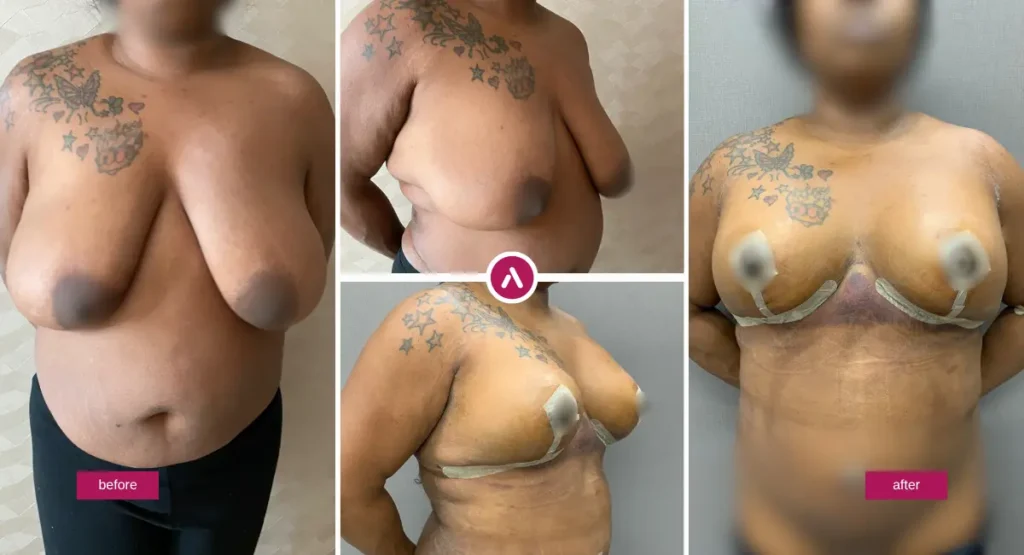
Online galleries can be misleading if they don’t account for skin tone, lighting, swelling stage, or scar maturity. When patients search black women breast reduction before and after or breast reduction before and after dark skin, they’re often comparing photos taken at different healing phases. A meaningful “after” photo should reflect a similar timeframe (often months, not weeks), consistent lighting, and a clear view of scar evolution. The goal is not perfection on day 10—it’s a safe, balanced reduction with a stable, natural contour as healing completes.
Skin biology basics: melanin, inflammation, and scar behavior
Melanin-rich skin can respond to inflammation with more noticeable pigment changes (post-inflammatory hyperpigmentation). This is why scar planning matters from the start: minimizing tension, preventing prolonged inflammation, and using evidence-based scar care can influence how scars mature. It’s not about “Black skin scars more”—it’s about understanding how biology can affect the visibility and color of scars during healing.
Common aesthetic goals: shape, projection, and upper-pole fullness
Most patients want relief from heaviness while keeping a proportional, feminine silhouette. For natural breast reduction results black women, this typically means:
- Balanced projection (not overly flattened)
- Improved symmetry while respecting natural differences
- Lifted, centered nipple–areola position that matches chest anatomy
Your surgeon’s technique choices—especially how breast tissue is reshaped and supported internally—are key to achieving results that look “like you,” just lighter and more comfortable.
What patients often don’t see in photos (lighting, swelling, timeline, bra support)
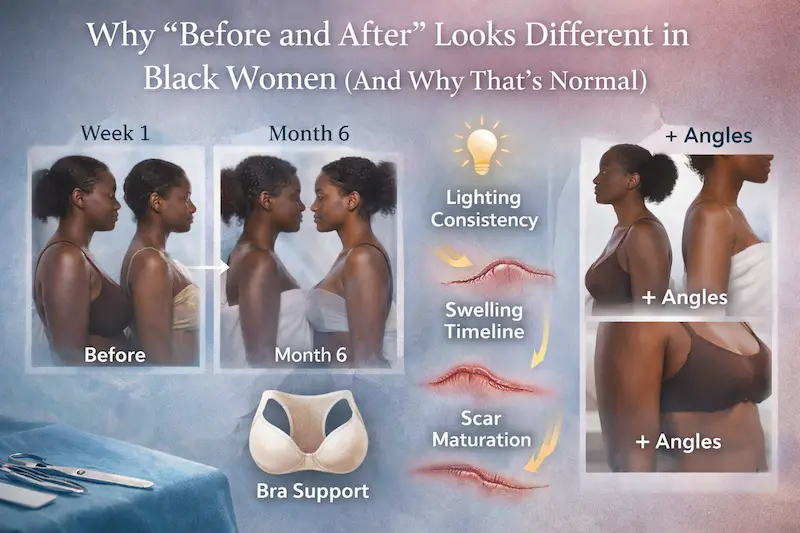
Two “after” photos can tell completely different stories if one is taken at 2 weeks and the other at 9 months. Early swelling can make the breast look boxy or overly high; later, tissues soften and settle. Also, camera lighting can exaggerate scar color changes on dark skin. When reviewing breast reduction before and after dark skin galleries, look for:
- Consistent angles and lighting
- Time stamps (e.g., 6 months, 12 months)
- Multiple examples on similar skin tones
- Clear scar visibility (not cropped or blurred)
This helps you evaluate true technique quality—not just photography.
The #1 Concern: Scars, Hyperpigmentation, and Keloid Risk—How Surgeons Plan for It
Short answer: On melanin-rich skin, breast reduction scars usually darken before they lighten. Post-inflammatory hyperpigmentation peaks in the first 6–12 weeks, then the line softens and flattens through months 3–12. Most patients judge the mature scar somewhere between 12 and 24 months, not at the 6-week photo.
| Stage | What the scar line typically looks like on black skin | What to do |
|---|---|---|
| Weeks 0–6 | Fresh, flat to slightly firm, often darker than surrounding skin | Tension protection, wound checks, no sun, no friction |
| Months 2–3 | Darkest phase for many patients; line may feel firm or slightly raised | Silicone once cleared by the surgeon; report thickening early |
| Months 6–12 | Flattening begins; pigment starts to shift back toward surrounding tone | Continue silicone and sun protection; scheduled review |
| Months 12–24 | Softer, paler line in most patients; residual pigment can persist | Assess whether any thickened segment needs treatment |
For many patients, the real question isn’t “Will I have scars?”—because any breast reduction involves incisions. The real question is: How will my scars heal on my skin tone, and what is the plan if pigment changes or thickening occurs? Searches like breast reduction scars before and after black skin are common because scar color and thickness can change over months. A good surgical plan reduces risk factors (tension, infection, delayed healing) and pairs technique with a proactive scar protocol.
The evidence base for scar outcomes in melanin-rich skin has matured into systematic reviews with explicit demographic stratification—not just expert consensus or single-center case series. An April 2025 systematic review in Plastic and Reconstructive Surgery Global Open (Vardanian et al, UCLA David Geffen School of Medicine) synthesized evidence on surgical scar management and outcomes specifically in racial/ethnic minorities: ethnic scar outcomes review. The conclusion was that patients with darker skin tend to experience increased prevalence of adverse surgical scarring and poorer treatment response compared to White patients, but tailored protocols and demographic-aware planning measurably influence outcomes.
Important caveat: this is a systematic review synthesizing existing literature, not a new RCT. It validates the demographic-aware framework but specific technique-by-technique optimization in Black women's breast reduction outcomes remains an active research need.
Hypertrophic vs. keloid scars: what increases risk
Not all raised scars are keloids. Hypertrophic scars stay within the incision line; keloids extend beyond it. Risk can be influenced by genetics, previous scar history, incision tension, and prolonged inflammation. If you’ve had thick scars before (ears, chest, shoulders), that matters. In a high-quality consultation, the surgeon should ask about your scar history and incorporate that into technique selection and follow-up planning—this is where science-informed surgical decision-making matters.
Incision placement strategy to minimize visible scarring
Scar visibility is partly determined by where incisions sit relative to natural contours and bra lines. Common patterns (like “lollipop” or “anchor”) are chosen based on how much tissue must be removed and how much lifting is needed. The best approach is the one that safely achieves shape and symptom relief while managing tension. Precision in closure technique and layered support can reduce widening and thickening—critical for optimizing breast reduction results black women.
Pigment changes and scar-care planning from day one
In melanin-rich skin, scar color can shift before it fades. A structured plan often includes:
- Early wound support to reduce inflammation and prevent delayed healing
- Silicone-based scar care once incisions are closed and cleared by your surgeon
- Sun protection to limit hyperpigmentation (yes—even under clothing, depending on exposure)
- Planned follow-ups to address early thickening before it becomes stubborn
Some clinics also integrate supportive recovery technologies (where appropriate) aimed at reducing swelling and supporting tissue healing—helpful when your goal includes the best possible scar maturation over time.
Consultation Checklist: How to Plan for the Most Natural, Scar-Aware Outcome
If you’re comparing before-and-after photos and thinking seriously about next steps, a structured consultation is where confidence is built. The most successful journeys start with clear goals, realistic timelines, and surgeon-led planning that accounts for skin response, incision tension, and long-term scar maturation. This is especially important for patients researching black women breast reduction, where evaluating “relevant results” means understanding what photos don’t always show: swelling stages, lighting differences, and scar evolution over months.
Bring the right information (so your plan is truly personalized)
Arrive with a brief medical history and a list of your top concerns—comfort, shape, scarring, and travel logistics if applicable. Share any history of thick scars or hyperpigmentation. Bring reference photos that reflect your body type and desired proportion, not a single “ideal” image. A good consult for breast reduction surgery black women should include measurements, discussion of incision options, and an explanation of why a specific technique fits your anatomy.
Ask for a scar plan—not just a size estimate
Request a step-by-step scar protocol: when silicone starts, how follow-ups are scheduled, and what the clinic does if thickening or pigment changes appear. Ask how closure tension is reduced and how inflammation is managed in the early weeks. This is where tailored technique and aftercare directly influence how “after” results look over time.
Verify safety and accountability before you commit
Confirm who will perform the surgery, where it will be done, and how complications are managed. Ask about post-op check-ins, remote follow-up, and clear travel guidance. Choosing a provider who can explain these details calmly is a strong sign you’re in the right place for breast reduction black women outcomes that prioritize both aesthetics and safety.
Tailored Surgical Techniques for Safer, More Natural Results
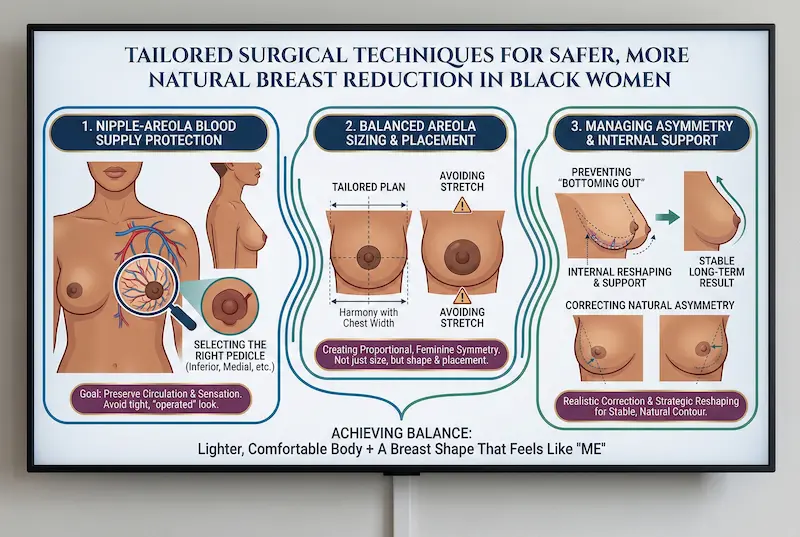
When patients search breast reduction results black women or natural breast reduction results black women, they’re usually looking for two things at once: (1) a lighter, more comfortable body and (2) a breast shape that still feels like “me.” Achieving that balance is not just about removing tissue—it’s about how the breast is reconstructed internally, how the nipple–areola complex is protected, and how the surgeon plans incision tension to support clean healing and better scar outcomes. A truly tailored approach uses principles that are consistent with scientific research and medical science: protect blood supply, reduce wound tension, control inflammation, and support predictable tissue remodeling.
Choosing the right pedicle/technique to protect nipple–areola blood supply
One of the most important safety decisions in breast reduction is how the nipple–areola complex remains connected to a healthy blood supply during reshaping. Surgeons choose a technique (often described by “pedicle” planning) based on your anatomy, degree of reduction needed, and skin quality. The goal is to preserve circulation and sensation as much as possible while creating an uplifted, natural position. If you’re evaluating black women breast reduction before and after photos, strong results often share a common trait: a well-supported nipple position and a breast shape that maintains a natural slope—not a tight, overly “operated” look.
Areola sizing and shape: creating a balanced, natural look
For many patients, “natural” is not just the size—it’s the proportion. Areola planning includes size, shape, symmetry, and placement. A tailored plan avoids a “stretched” areola look by carefully managing tension at closure and by placing the areola in harmony with your chest width and breast base. This is one reason why the best breast reduction results black women tend to look balanced from the front, profile, and ¾ angles—not just in a single posed image.
Managing asymmetry and “bottoming out” risk with internal support
Almost everyone has natural asymmetry. A high-quality reduction plan acknowledges it and corrects what’s safe and realistic to correct. Another key goal is preventing “bottoming out” (where the lower breast looks heavier over time). Surgeons can reduce this risk by reshaping tissue strategically, using internal suturing techniques for support, and ensuring the skin closure is not carrying all the load. This is essential for patients seeking natural breast reduction results black women that still look stable months after surgery—not just at the early “after” photo stage.
| Technique Priority | Why It Matters | What It Can Improve |
|---|---|---|
| Protect blood supply | Supports nipple–areola safety and healing | Safer recovery, better tissue health |
| Reduce closure tension | Lower tension supports cleaner scar maturation | Less widening/thickening risk |
| Internal support shaping | Prevents shape changes as swelling resolves | More stable “after” results |
Key takeaway: Great outcomes come from planning the “internal architecture” of the breast—not just choosing a smaller cup size.
Combined Procedures with Breast Reduction
For many patients, breast reduction is not only about going smaller—it’s about achieving a balanced, natural silhouette. In the same surgical plan, some women consider combining breast reduction with other contouring procedures to address areas that often change together (breast shape, body contouring with liposuction, and waist definition). The key is choosing combinations that are medically appropriate for your health profile, travel timeline, and recovery capacity—especially when long-term scar quality and predictable healing are priorities.
Breast reduction + breast lift
A breast reduction inherently includes elements of lifting, but in some cases a more defined breast lift approach may be emphasized to improve nipple position and upper-pole shape. This can be helpful if your primary goal is a more youthful contour rather than a dramatic size decrease. Your surgeon will decide the safest incision pattern and internal reshaping plan to support stable results while minimizing tension—an important factor for scar outcomes.
"Reduction inherently includes lifting" sounds like a technical detail until you map the decision tree: how much size decrease vs. how much shape correction is the primary goal. For some patients, the answer points away from reduction altogether and toward a focused mastopexy plan—especially when the main complaint is sagging rather than weight-related symptoms. The choice between reduction-with-lift, lift-only, or lift-with-volume-restoration shapes scar pattern, recovery timeline, and long-term stability.
The full breast lift comparison: mastopexy comparison reference.
Breast reduction + liposuction (lipo) for improved proportion
Adding liposuction (often called lipo) can refine surrounding areas such as the bra-line, lateral chest, or upper back to improve overall harmony. For the right candidates, these targeted adjustments can make the “after” result look more proportional and natural. In some settings, awake lipo or awake liposuction may be discussed as a technique option for body contouring, depending on the clinical plan, patient comfort, and safety protocols.
"Liposuction for proportion" in a reduction plan isn't about removing fat where there's already breast work—it's about contouring adjacent areas (bra-line, lateral chest, upper back) so the new breast size sits in visual balance with the surrounding silhouette. For some demographics, this proportion adjustment matters more than headline reduction volume; a moderate reduction with refined surrounding contour often reads as more natural than an aggressive reduction without contour work.
The full liposuction technique reference: liposuction proportion adjustment.
Breast reduction + breast augmentation (less common, case-dependent)
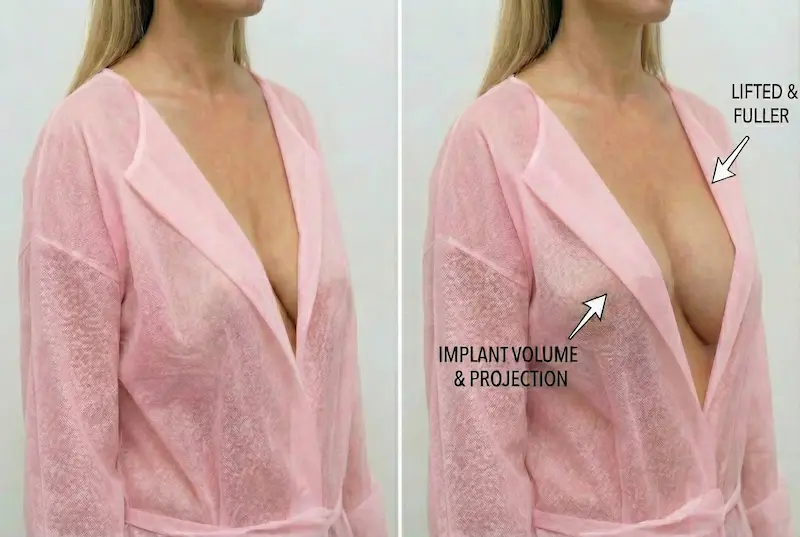
Combining reduction with breast augmentation is less common but may be considered in select situations—usually when a patient wants a smaller overall breast but desires more upper-pole fullness. This requires careful surgical judgment to protect blood supply, avoid excessive tension, and keep the result looking natural. If this is a goal, it’s essential to discuss implant vs. non-implant options, and how each affects scarring, recovery, and long-term maintenance.
Removing volume and adding it back in the same operation is rare, but it has a logic: a woman whose breast is heavy at the bottom and empty at the top can end up flat and under-projected after a straight reduction. The tradeoff is real. An implant adds a second tension source to an already long incision; fat transfer avoids that but delivers less predictable volume. Staging the two — reduction first, volume restoration once the scar has matured — is often the safer answer, and a surgeon who suggests staging is not stalling you.
The full breast augmentation reference: breast augmentation candidacy reference.
What “Great Results” Actually Mean: A Realistic Before-and-After Timeline
Many people expect a single dramatic “after” moment. In reality, the best breast reduction before and after dark skin outcomes unfold over time. Early photos can look tight, high, or swollen, and scar color can appear darker before it improves. If you’re comparing breast reduction before and after black women images online, make sure you’re comparing the same stage of healing. Below is a realistic timeline that helps you interpret photos and set calm, accurate expectations.
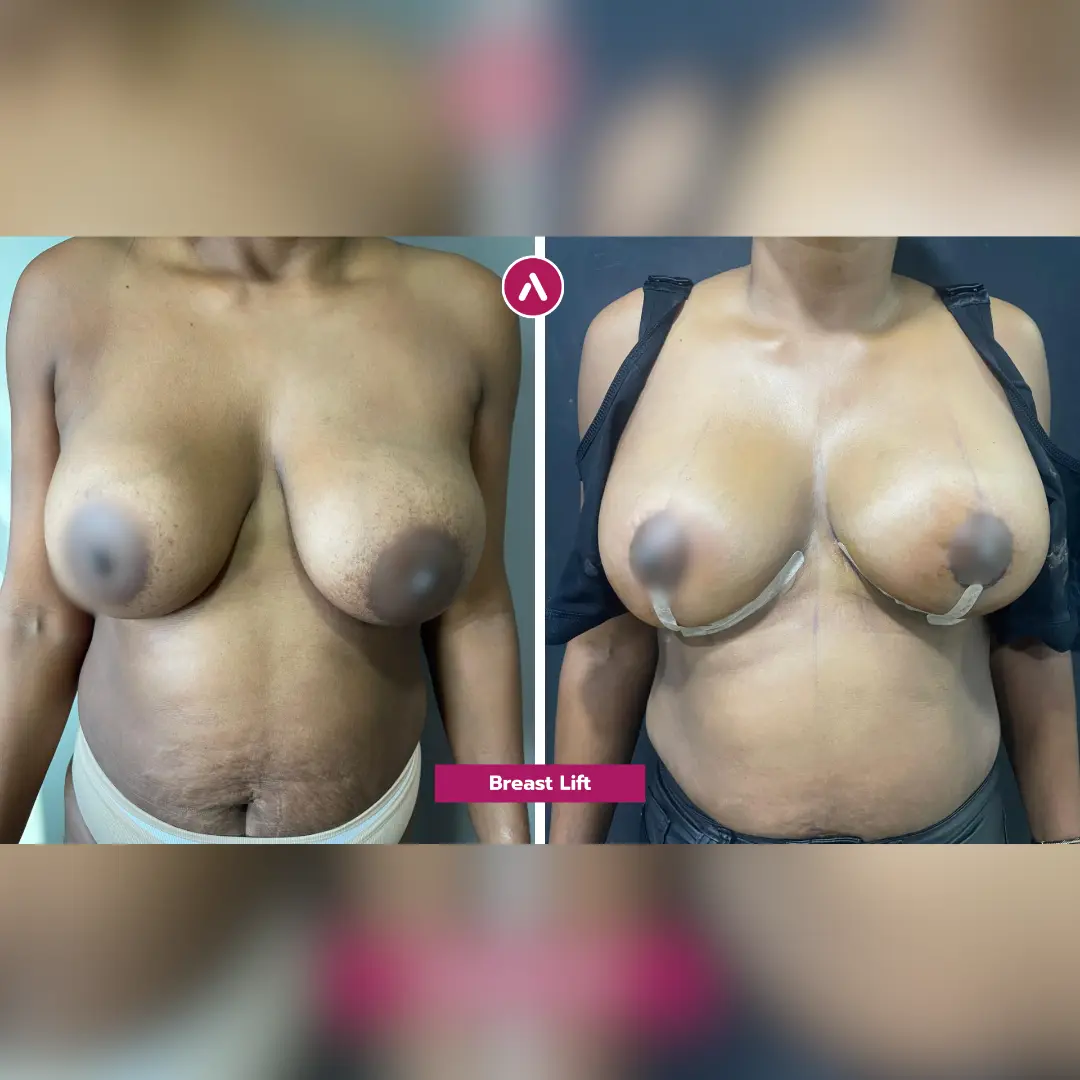
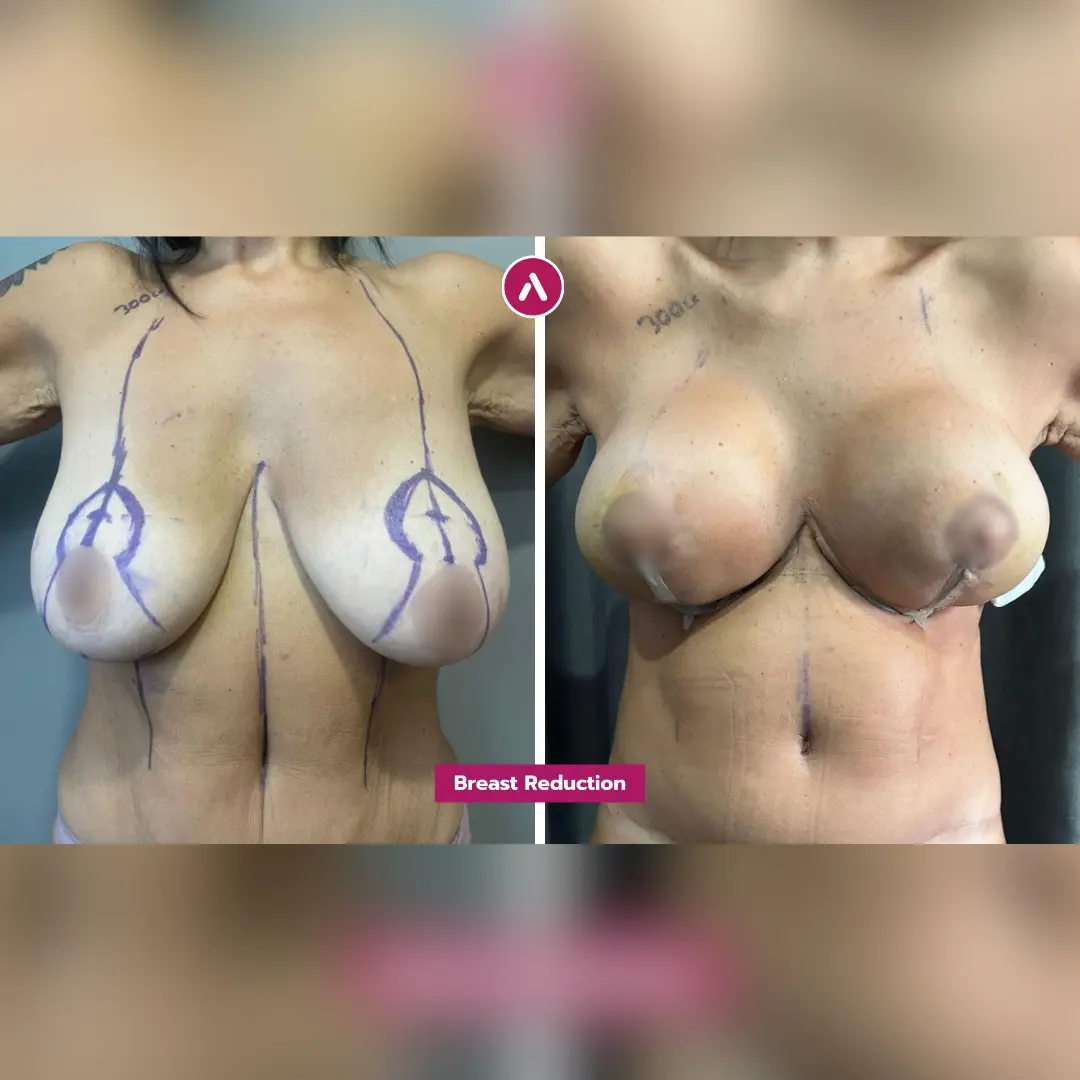
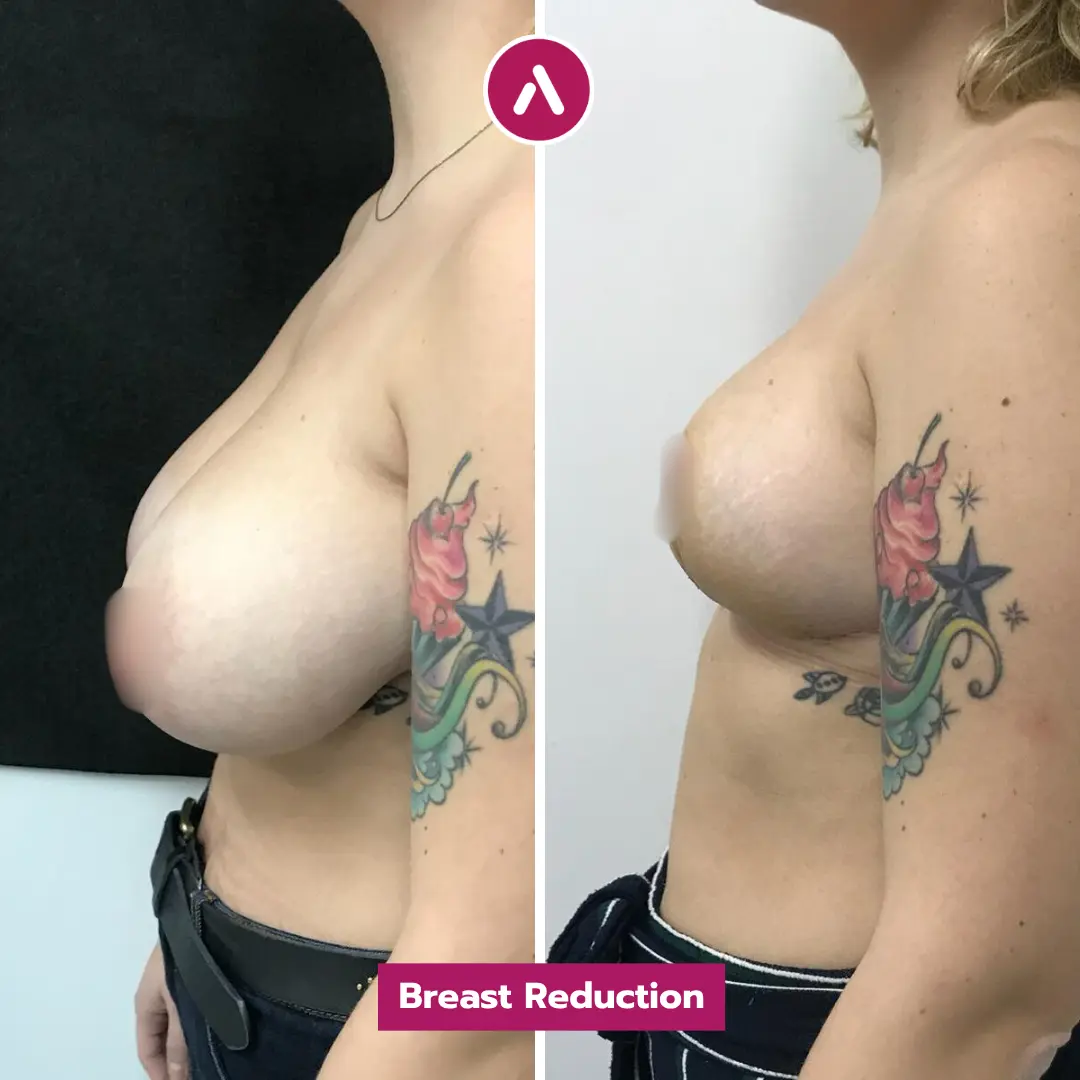
Photo evaluation skill matters more than collection size. A reliable gallery shows multiple time points (3, 6, 12 months), consistent lighting, similar skin tones, and visible scar lines rather than cropped images—because what fades, settles, and lightens over months is exactly what early "after" photos can't show. Curated outcomes with multi-timepoint documentation give you a realistic baseline for what mature reduction results actually look like on melanin-rich skin—not just early healing.
The procedure-specific outcome reference: breast reduction outcome library.
Week 1–2: swelling, bruising, and what’s “expected”
In the first two weeks, swelling is normal and the breasts can sit higher than expected. Bruising is common. Many patients feel immediate relief in heaviness even this early, but the shape is not “final.” Scar lines are fresh and may look more visible on dark skin at this stage—this is not a verdict on the final scar. It’s simply early healing.
Weeks 3–8: shape settling, scar maturation begins
Swelling gradually reduces, and the breasts start to soften and settle. This is when “before and after” comparisons begin to make more sense. Scar maturation also begins—scars may feel firm, look darker, or appear raised briefly. This is why searches like breast reduction scars before and after black skin are best answered with photos that show several months of progression, not just early recovery.
Months 3–12: final contour + scar fading milestones
This is where the most meaningful transformation occurs. Breast shape becomes more natural and stable, and scars typically continue to flatten and lighten (though every body heals differently). Hyperpigmentation can also improve over time with consistent scar care and sun protection. The most reliable “final result” photos for breast reduction results black women are often in the 6–12 month range.
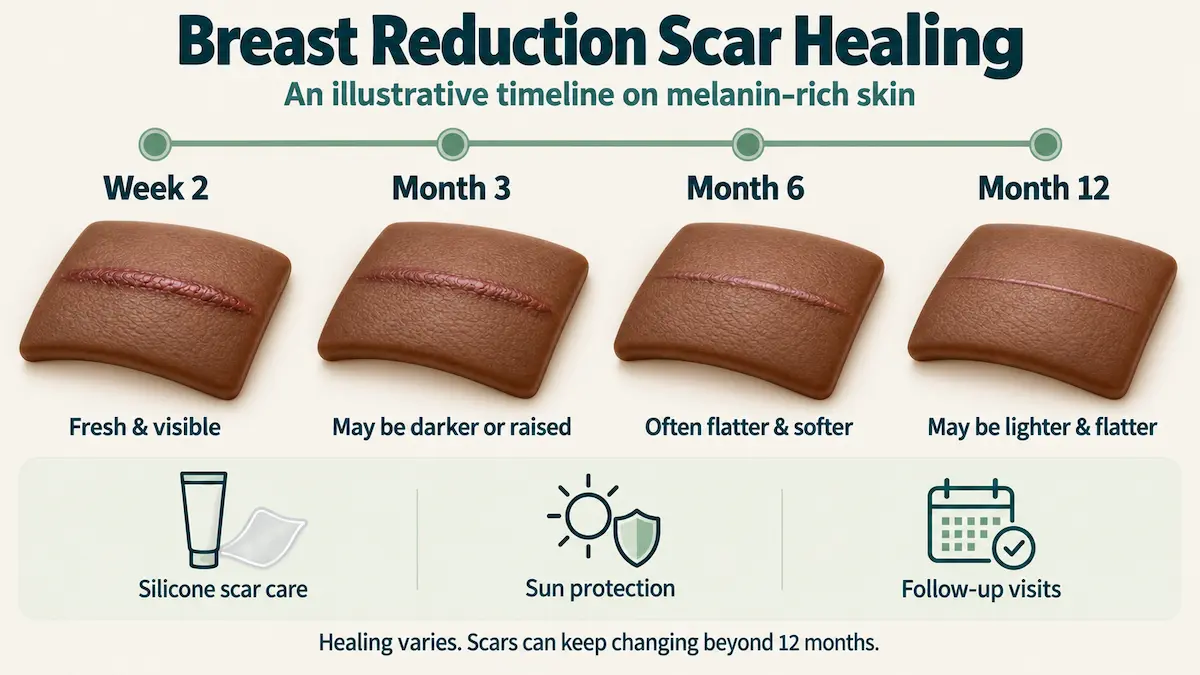
| Time Point | What You’ll Likely Notice | What’s Not Final Yet |
|---|---|---|
| 0–2 weeks | Immediate relief, swelling, early incision healing | Final shape, scar color |
| 3–8 weeks | Softening, settling, early scar maturation | Scar fading, full contour stability |
| 3–12 months | Most “true after” appearance; ongoing scar refinement | Minor scar changes can still continue |
Photo tip: When you evaluate black women breast reduction before and after images, prioritize galleries that show multiple time points (3, 6, 12 months) and consistent lighting.
Candidate Checklist: Who Benefits Most From Breast Reduction (Especially If You’re Traveling)
Not everyone needs the same reduction amount—or the same surgical plan. If you’re reviewing black women breast reduction before and after photos and thinking, “I want that kind of natural balance,” the next step is confirming you’re a good candidate medically and practically (especially if you’re traveling internationally). The safest outcomes come from matching expectations, anatomy, and health factors to a personalized surgical strategy—then planning recovery logistics so you’re not rushing the healing phase.
Symptoms that signal medical necessity (neck/back pain, rashes, bra grooves)
Many patients pursue reduction for a combination of physical and lifestyle reasons. Common signs that reduction may be appropriate include:
- Chronic neck, shoulder, or upper back pain
- Shoulder grooving from bra straps
- Skin irritation, rashes, or recurrent infections under the breast fold
- Difficulty exercising or finding supportive clothing
If your goal is both comfort and aesthetics, you can still achieve natural breast reduction results black women—the key is defining the right “target size” for your frame, not copying someone else’s photo.
Weight stability, pregnancy plans, and breastfeeding considerations
Breast size can change with significant weight fluctuations, pregnancy, and hormonal shifts. A stable weight helps results last. If you plan to become pregnant soon, you may still be a candidate—but it’s important to understand that future changes can affect shape and volume. Breastfeeding after reduction may be possible for some patients depending on technique and how glandular connections are preserved, but it cannot be guaranteed. A trustworthy surgeon will walk you through the tradeoffs clearly before proceeding.
Red flags to discuss: prior scars, history of keloids, smoking, anemia
Because scar behavior and pigment changes matter so much in breast reduction before and after dark skin outcomes, it’s essential to be upfront about:
- Personal or family history of keloids (especially chest/shoulders)
- Smoking or vaping (nicotine affects blood flow and healing)
- Anemia or conditions affecting clotting/healing
- Previous breast surgery (can influence blood supply and scar planning)
If you’ve searched breast reduction scars before and after black skin and noticed wide variation, this is why: individual biology + surgical tension + aftercare adherence can change the final scar story.
Patient-first mindset: The best consultation is the one where the surgeon talks as much about risk management and scar planning as they do about cup size.
How to Evaluate a Clinic for Black Women’s Breast Reduction (Avoiding “One-Size-Fits-All”)
If you’re an “expert patient,” your decision usually comes down to trust: “Will they understand my skin? Will they show me relevant results? Who is accountable if something goes wrong?” This is where many people feel stuck when searching breast reduction results black women online—because some clinics show beautiful outcomes but don’t explain technique, scar strategy, or follow-up. A high-quality provider should demonstrate surgeon-led decision-making, transparent standards, and a plan tailored to melanin-rich skin healing patterns.
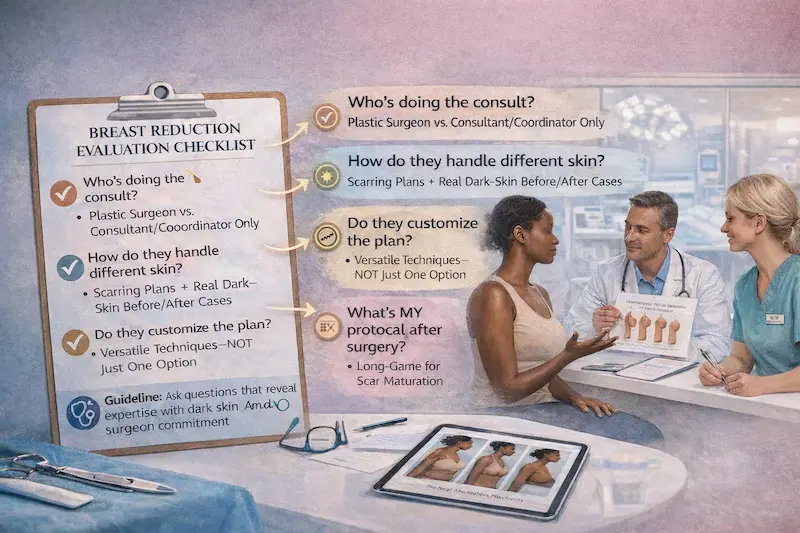
What to ask in a consult: technique, scar plan, and complication management
Use these questions to separate “marketing” from real surgical competence:
- Which incision pattern do you recommend for my anatomy, and why?
- How do you manage tension at closure to reduce widening and thickening?
- What is your scar protocol for darker skin (timing, products, follow-up)?
- If I develop thickening or hyperpigmentation, what is the step-by-step plan?
- How are emergencies handled, and which hospital standards do you work with?
These questions directly impact the quality of natural breast reduction results black women—and they’re especially important for medical tourists who want a clear safety pathway.
The photo standard: what “relevant before-after” should include
When evaluating black women breast reduction before and after galleries, don’t just look for “wow.” Look for clinical honesty:
- Similar skin tones and body frames
- Multiple angles (front, side, ¾)
- Time stamps (at least one set at 6–12 months)
- Visible scar lines (not filtered, not cropped out)
- Consistency (not only one “perfect” case)
For queries like breast reduction scars before and after black skin, the most useful galleries show scar evolution across time—not just early post-op results.
Surgeon-led care vs. “agency model” risks (who is accountable?)
One of the most overlooked risks in medical tourism is fragmented responsibility. In a surgeon-led model, the medical team owns the plan: pre-op assessment, operative technique, and structured follow-up. In an “agency-first” model, communication can be less clinical, and accountability can feel unclear if complications arise. If your goal is safe, natural, long-term results—especially when scar management is central—choose a pathway where the surgeon is directly involved in planning and post-op decisions.
| What to Evaluate | What You Want to Hear | Potential Red Flag |
|---|---|---|
| Scar planning for dark skin | Specific protocol + follow-up checkpoints | “Scars are the same for everyone” |
| Before/after relevance | Time-stamped cases on similar skin tones | Only early photos; scars hidden |
| Accountability | Named surgeon + hospital standards + emergency plan | Unclear who manages complications |
The difference shows up at week six, not on the booking call. Someone has to answer the message that says “this part of my scar is raised and darker than the rest” — and either adjust the protocol or say it is normal. In a surgeon-led pathway that answer comes from the person who closed the incision. In an agency-first pathway it often comes from a coordinator who forwards a photo and waits. For scar trajectories on darker skin, where the window to treat early thickening is measured in weeks, that lag is the whole difference.
The verified patient testimonials reference: verified patient testimonials hub.
Recovery & Scar Protocol: The Details That Protect Your Final Outcome
The difference between an “okay” result and an excellent, long-lasting result often comes down to recovery discipline and a structured scar protocol. This is especially important for patients searching breast reduction before and after dark skin or breast reduction scars before and after black skin, because scar thickness and pigment shifts can evolve over months. The goal is not to “erase” scars (that’s not realistic), but to support clean healing, reduce inflammation, and guide scar maturation with an evidence-based plan—rooted in medical science and consistent follow-up.
Compression bra strategy and activity timeline
A supportive surgical bra helps control swelling, reduces tension on incisions, and stabilizes the reshaped breast. While your exact timeline should be surgeon-specific, a typical framework looks like this:
| Recovery Phase | What You Should Do | What to Avoid |
|---|---|---|
| Days 1–7 | Wear surgical bra as directed, short walks, hydration, sleep elevated | Lifting, arm strain, heat exposure, smoking/vaping |
| Weeks 2–4 | Gradually increase walking, continue compression, attend follow-ups | High-impact exercise, heavy lifting, underwire bras |
| Weeks 4–8 | Transition per surgeon guidance, gentle return to routine | Intense chest workouts unless cleared |
| Months 2–6+ | Scar care consistency, sun protection, stable weight habits | Skipping scar care, tanning, friction on scars |
This structure supports the kind of stable, natural contours patients hope for when they search breast reduction results black women and compare long-term “after” photos.
Scar-care plan: silicone, massage, sun protection, and follow-ups
A strong scar plan is proactive, not reactive. Once your surgeon confirms incisions are closed and ready (timing varies), many protocols include:
- Silicone gel or silicone sheets (a common, research-supported approach in scar care)
- Gentle scar massage at the appropriate stage to support pliability
- Sun protection to reduce post-inflammatory hyperpigmentation and color persistence
- Planned checkpoints so early thickening is treated early (before it becomes difficult)
The scar protocol—silicone, gentle massage, sun protection, planned checkpoints—is the same framework across procedures, but the demographic layer changes its weight. For melanin-rich skin, the silicone timing and sun protection discipline carry more outcome weight than they do on lighter complexions, because post-inflammatory hyperpigmentation has a longer color-shift window. Reading the same protocol applied to abdominal incisions reveals which steps are universal scar biology and which need demographic-specific adjustment in timing or intensity.
The parallel scar protocol with abdominal-specific timing: scar protocol architecture.
If your search focus is breast reduction scars before and after black skin, consistency is your advantage. Many patients underestimate how much scar maturation improves between month 3 and month 12—especially when the plan is followed without interruption.
Accelerated healing supports (HBOT & LLLT) and why they matter for scars
Some advanced recovery programs include supportive modalities such as Hyperbaric Oxygen Therapy (HBOT) and Low-Level Laser Therapy (LLLT). In simple terms, these are used in some settings to support tissue oxygenation, reduce inflammation, and encourage more efficient recovery—factors that can indirectly help scars mature more predictably by improving overall wound environment. While these modalities are not “magic,” they can be valuable adjuncts for certain patients, particularly when minimizing prolonged swelling and supporting tissue healing is a priority.
LLLT specifically for scar quality has an evidence base focused on inflammation modulation and collagen behavior—exactly the mechanisms that matter most when melanin-rich skin is healing from a breast reduction incision. The realistic delta is incremental, not transformational; it sits alongside silicone, sun protection, and tension control as part of a layered protocol. For Black women specifically, the "early intervention" window for thickening or pigment shift is where LLLT integration earns its place—not as a substitute for technique, but as a reinforcement of the scar protocol's discipline.
The full mechanism integrated into post-surgical scar care: LLLT scar minimization guide.
HBOT in breast reduction recovery targets a specific challenge: tissue perfusion at incision edges where closure tension can compromise microcirculation. Pressurized oxygen reaches these zones directly through plasma, bypassing the hemoglobin transport bottleneck that limits standard recovery. For Black women, where prolonged inflammation can extend post-inflammatory hyperpigmentation windows, this perfusion support sits alongside silicone and sun protection as part of the integrated scar protocol—not as a standalone "miracle treatment."
The full mechanism with realistic outcome boundaries: tissue oxygenation mechanism.
Scar strategy mindset: Your surgeon’s technique starts the scar story, but your recovery protocol often determines how that story finishes.
Planning Your Trip to Istanbul: The Patient Journey (What to Expect Step-by-Step)
Medical travel works when it's structured and fails when it's improvised. For Black women specifically, the travel-and-recovery logic isn't just about flight booking—it's about ensuring enough time for early scar checks before flying home, because the first 2-3 weeks shape whether hyperpigmentation patterns develop predictably or unpredictably. The pre-op-to-fly-home pathway needs to align with the scar protocol timeline: arrival assessment, hospital window, hotel recovery days, in-person follow-up, and structured remote check-ins after return.
The complete travel and aftercare structure: international travel pathway.
Budget and stay length are planned in the same conversation as the surgical plan, because the two are linked: a longer stay means one more in-person scar check before you fly. Figures are kept on the dedicated pages — breast reduction cost in Turkey and, for what a stay actually includes, the breast surgery overview.
Pre-op: remote photo review + surgical planning
Before you fly, you should receive a clear plan based on medical intake, photos, and goals. This is also the best time to discuss:
- Your scar history (especially if you’ve had thick scars before)
- Your preferred “after” look (proportion, projection, and lift—not just cup size)
- How your surgeon approaches dark-skin scar planning
When you’re searching black women breast reduction before and after, the most confident decisions usually come from a consult that explains the “why” behind the technique—not just the promise of a smaller size.
In Istanbul: consultation, hospital setting, and safety standards
On arrival, an in-person assessment should confirm your plan and ensure you’re medically cleared. This is where surgeon-led care matters most: physical exam, measurements, and final decision-making happen here. Ask to review your scar protocol again and confirm what “normal” looks like in the first 2–4 weeks so you don’t panic at expected swelling or early scar redness/darkening.
Post-op: hotel recovery, check-ins, and remote follow-up after you fly home
Plan enough time for early recovery support and at least one meaningful post-op review before your flight home. After you return, structured remote follow-up is essential—especially if your main concern includes breast reduction scars before and after black skin and you want guidance on when to start silicone, when to massage, and what scar changes are normal vs. concerning.
| Travel Planning Item | Why It Matters | What to Confirm |
|---|---|---|
| Length of stay | Ensures early checks and safe flying plan | Minimum days recommended by surgeon |
| Post-op support | Reduces stress and prevents recovery mistakes | Check-in schedule + emergency contact pathway |
| Scar protocol timeline | Improves predictability of scar maturation | When to start silicone/massage; sun protection guidance |
Breast Lift Scars on Black Skin: How They Compare to Reduction Scars
A large share of patients who start out reading about reduction actually want a lift. The scar question changes with it. A mastopexy removes skin, not much volume, so closure tension is concentrated around the areola and the vertical limb — and that is exactly where widening and pigment change show up on melanin-rich skin.
Why breast lift scars on dark skin behave differently
- Periareolar segment: the most tension-loaded part of a lift. If the areola is being reduced at the same time, a purse-string closure spreads load and helps keep the ring from stretching.
- Vertical limb: sits under load when the breast settles. Internal support sutures take the weight off the skin so the line does not widen at month 3–6.
- Inframammary line (anchor pattern): hidden in the fold, but it is the segment patients report as the last to flatten.
Lift or reduction if you mainly want shape?
If bra-strap grooving, rashes under the fold and neck pain are driving the decision, reduction is the honest answer. If the breast volume is acceptable and the complaint is position and emptiness in the upper pole, a lift — with or without volume restoration — keeps the scar pattern shorter and the recovery lighter. Your surgeon should mark both options on you at consultation and tell you which scar pattern each one costs.
Time-stamped lift and reduction cases side by side: breast surgery before and after gallery. Package and stay structure for a lift: all-inclusive breast lift package.
Frequently Asked Questions (FAQ): Breast Reduction Before and After Black Women
These are the most common questions we hear from patients comparing breast reduction before and after black women outcomes—especially those focused on scars, pigment changes, and natural shape.
Do Black women have a higher risk of keloids after breast reduction?
What incision pattern leaves the least visible scarring?
How long until I can see my “real” final breast shape?
Will my nipples lose sensation after surgery?
Can I breastfeed after a reduction?
How do I reduce hyperpigmentation on scars?
How long should I stay in Istanbul before flying back?
Do breast reduction scars look different on darker skin over time?
What can I do if my scars start to thicken after surgery?
Is a breast lift a better option than reduction for Black women who mainly want shape improvement?
How should I evaluate before-and-after photos specifically for scar expectations?
Do breast reduction scars ever go away completely?
Why is my surgery scar turning black?
How long until breast reduction scars turn white?
What is the lollipop scar on a breast reduction?
Medical Disclaimer: This content is for educational purposes only and does not replace medical advice, diagnosis, or treatment. Surgical options, anesthesia choices, risks, costs, and recovery vary by individual. Always consult a qualified, board-certified clinician for personalized guidance. If you have urgent symptoms, seek emergency care.
Related Treatments



Ready to Start Your Own Transformation Journey?
Join the 2,000+ patients who trusted Dr. Akif Mehmetoğlu and the AKM Clinic team. Your journey to a more confident, revitalized you begins with a simple, no-obligation conversation. Contact us today from the USA for your free virtual consultation.
#1: Get Your Free Personalised Quote
Start with a free, no-obligation online consultation. Share your photos, and our surgical team will provide a fully personalised treatment plan and a transparent, all-inclusive price package. No hidden fees.
#2: Secure Your Date & VIP Booking
Once you're ready, our dedicated patient coordinators will help you secure your procedure date. We'll handle all your bookings, including your 5-star hotel and private VIP airport transfers.
#3: Arrive in Istanbul & Meet Your Surgeon
Arrive at Istanbul Airport (IST) and be greeted by your private driver. Settle into your hotel and prepare for your in-person consultation, where you'll meet your specialist surgeon to finalise the details for your "natural, subtle, and revitalized" new look.