Quick Summary: An arched or aquiline nose has a prominent dorsal hump along the bridge. Surgery can soften this profile through either reduction rhinoplasty, which removes part of the hump, or preservation rhinoplasty, which lowers the nasal framework while keeping the natural bridge more intact.
For Canadian patients researching arched nose surgery Turkey, the key decision is not simply “remove the bump.” It is whether the nose should be fully corrected or refined in a way that preserves facial identity, ethnicity, and long-term dorsal stability.
An aquiline nose can be striking, elegant, and deeply tied to family resemblance. Many patients do not dislike the feature itself. They dislike how strongly the dorsal hump dominates their side profile, especially in photos.
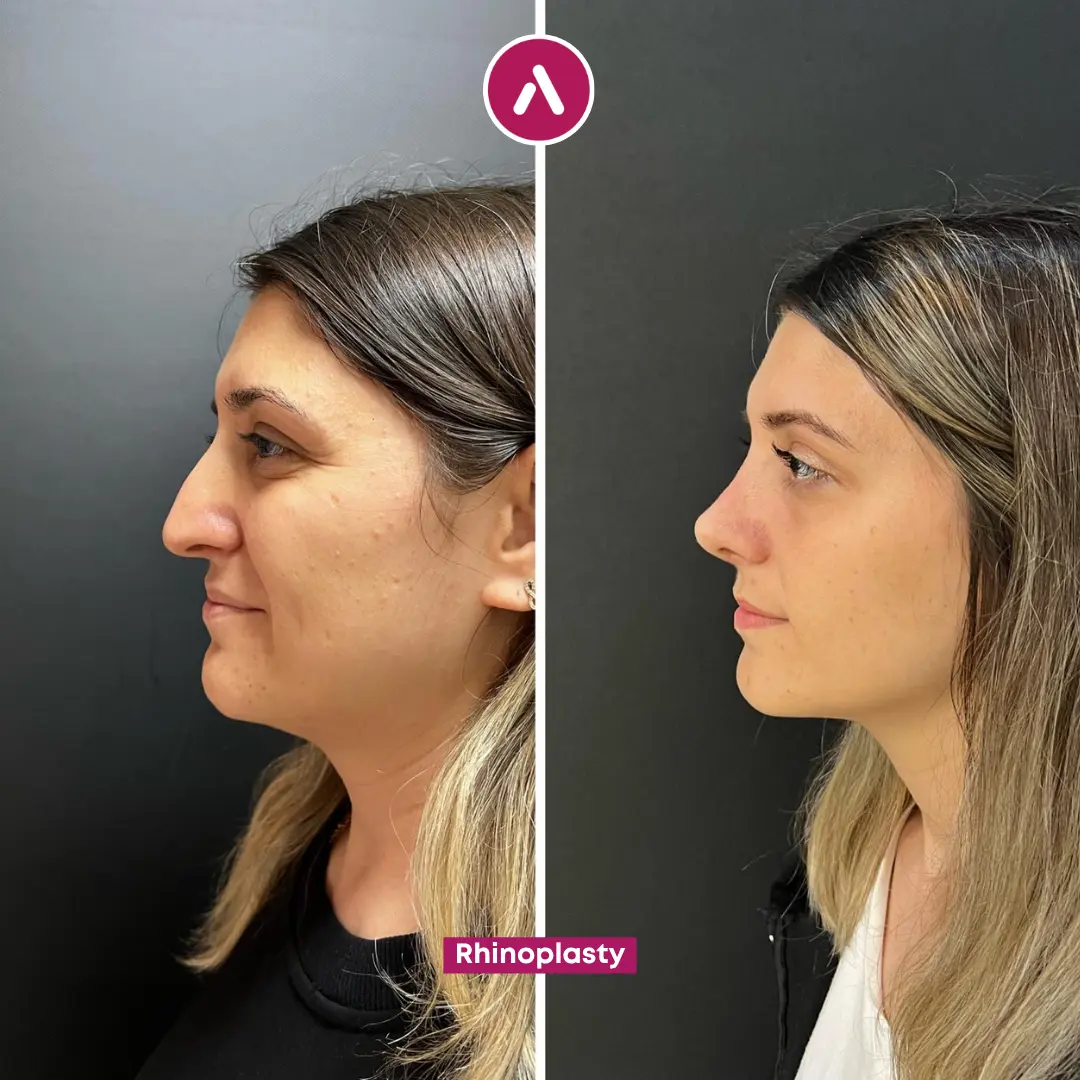
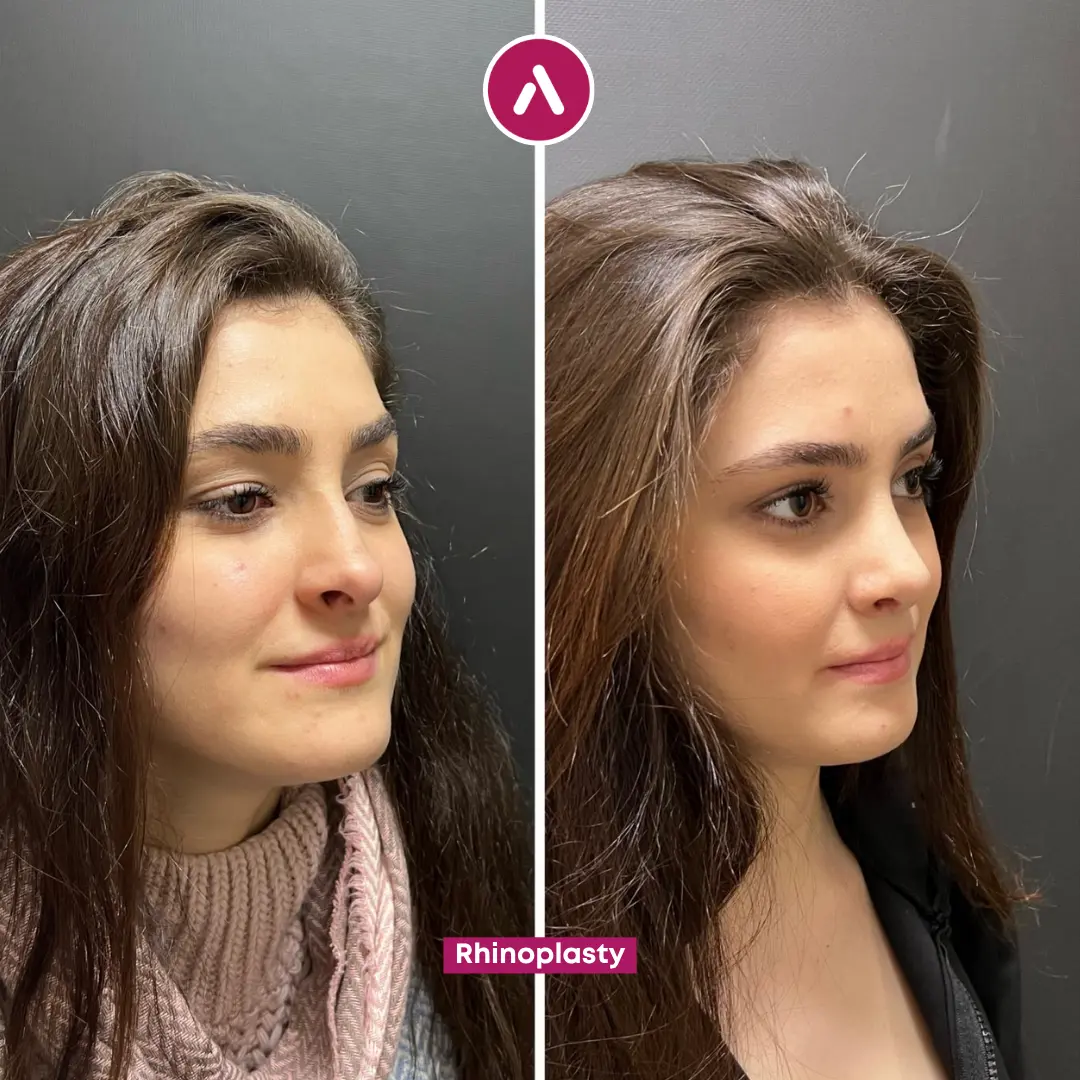
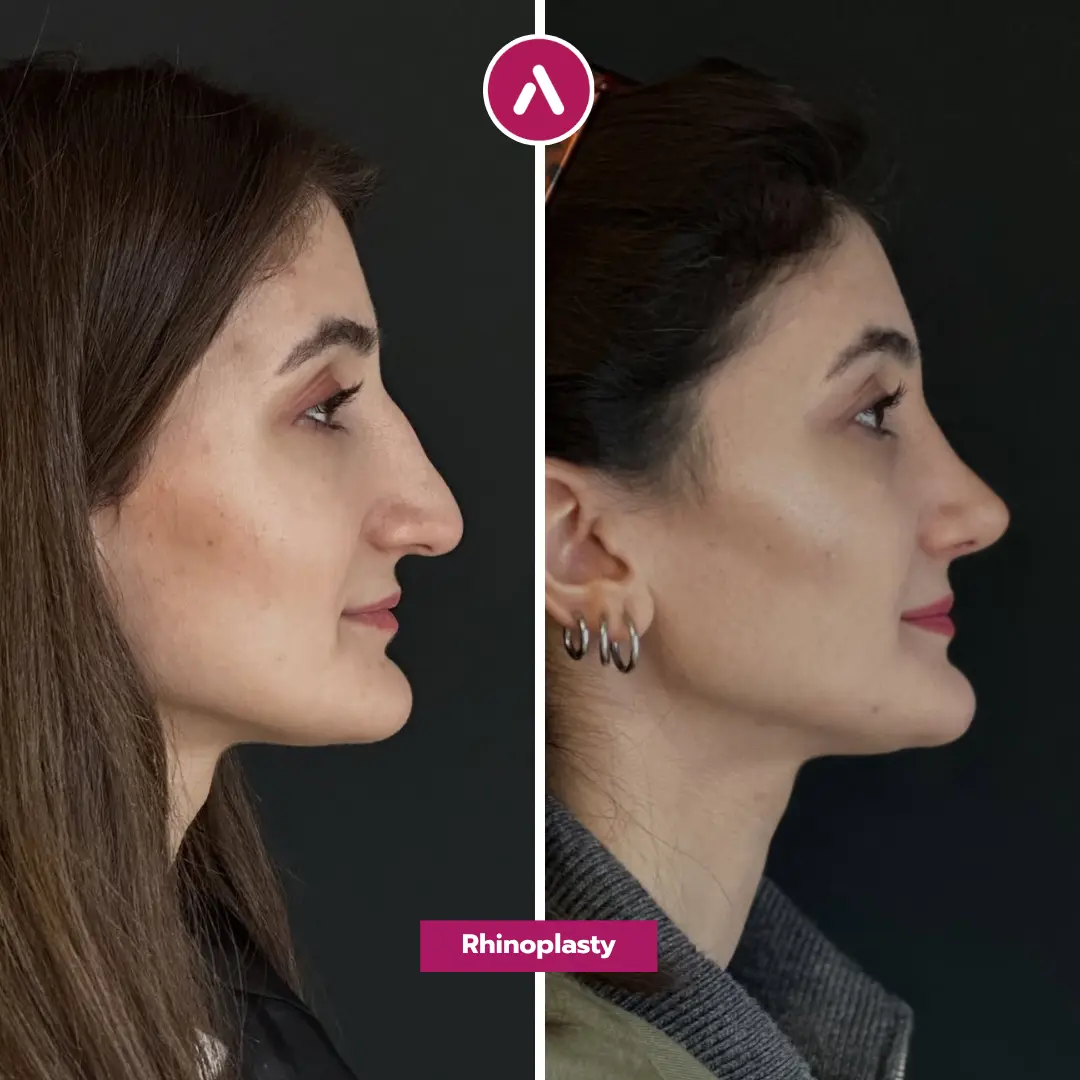
At AKM Clinic, rhinoplasty options at AKM Clinic are planned around this distinction. The goal is not to erase character. It is to decide how much refinement will bring the nose into balance with the rest of the face.
This matters for Canadian patients from Toronto, Vancouver, Montreal, Calgary, and Ottawa, where multicultural facial features are part of everyday identity. A Middle Eastern, Mediterranean, Eastern European, South Asian, or mixed-heritage patient may want profile refinement without losing the bridge shape that feels familiar. That is where the choice between traditional hump reduction and preservation rhinoplasty becomes important.
In this guide, we will focus only on aquiline and arched nose correction. General rhinoplasty planning, tip-only surgery, breathing correction, and ethnic rhinoplasty are separate topics. Here, the central question is clear: how should the dorsal hump be treated?
Table of Contents
What an Aquiline (Arched) Nose Is?
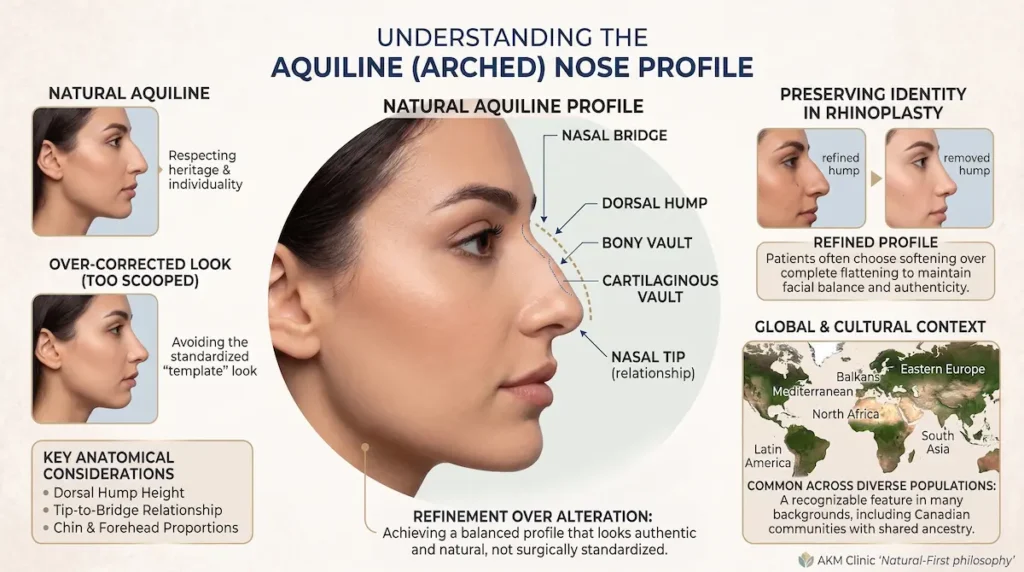
An aquiline nose is defined by a visible convexity along the nasal bridge. In medical language, this is usually called a dorsal hump. The hump may be made of bone, cartilage, or both, and it can be mild, moderate, or dominant enough to change the whole facial profile.
Not every arched nose needs surgery. Many patients keep a slight curve by choice because it protects identity and avoids an over-corrected look. The surgical plan should begin with anatomy, not with a standard “slope” template.
Anatomical definition of a dorsal hump
The nasal dorsum is the bridge of the nose. It runs from the upper nasal bones near the eyes down toward the cartilage-supported tip. A dorsal hump forms when the bony or cartilaginous part of this bridge projects forward more than the patient wants.
Most aquiline noses have three anatomical components:
- Bony height in the upper third of the nose.
- Cartilage height in the middle third of the bridge.
- Tip relationship, because a drooping or under-projected tip can make the hump look stronger.
This is why a good consultation does not focus only on the bump. The surgeon must analyze the forehead-to-nose angle, the bridge, the nasal tip, the upper lip relationship, and the chin. A small chin, for example, can make the nose look more projected than it truly is.
Cultural and ethnic distribution of aquiline noses
Aquiline noses are common across many populations, including Mediterranean, Middle Eastern, North African, South Asian, Balkan, Latin, and Eastern European backgrounds. In Canada, this matters because many rhinoplasty patients come from families where the arched bridge is a recognizable inherited feature.
The consultation should respect that context. A patient may say, “I want the hump softened, but I still want to look like myself.” That is a legitimate surgical goal.
For multicultural Canadian patients, the nose is not just an isolated structure. It sits within a broader face, family identity, and community expectation. This is why aggressive bridge flattening can look technically smooth but personally wrong.
Why aquiline noses are not “wrong” — they are a feature
A dorsal hump is not a flaw by default. It can add strength, maturity, and definition to the profile. Surgery becomes appropriate when the feature feels out of proportion to the patient’s face or when it draws attention away from the eyes, lips, and overall facial balance.
The most natural aquiline nose corrections often leave a bridge that is not perfectly scooped. A very slight dorsal line can look more authentic than a fully concave profile, especially in male patients or patients with strong ethnic facial structure.
At AKM Clinic, this aligns with the Natural-First philosophy: rejuvenation and refinement over alteration. The patient should look more balanced, not surgically standardized.
Two Surgical Philosophies
Arched nose correction usually follows one of two philosophies. The first is traditional reduction rhinoplasty, where the surgeon removes part of the hump and reconstructs the bridge. The second is preservation rhinoplasty, where the natural dorsum is kept more intact and the nasal framework is lowered from underneath.
Neither method is automatically better. The right option depends on hump size, nasal bone structure, cartilage strength, skin thickness, breathing function, and the patient’s preference for either stronger correction or identity-preserving refinement.
Reduction Rhinoplasty — remove bone and cartilage
Reduction rhinoplasty treats the dorsal hump directly. The surgeon removes or shaves down the excess bone and cartilage that create the convex bridge. After the hump is reduced, the nasal bones may need to be narrowed and stabilized to recreate a smooth dorsal line.
This approach is useful when the hump is severe, irregular, post-traumatic, or too large for preservation methods. It gives the surgeon direct control over the bridge shape. For some patients, especially those who want a clearly straighter profile, this is the correct plan.
The trade-off is structural. Once the hump is removed, the bridge may require reconstruction to prevent an open-roof deformity, irregularity, or an overly flat appearance. This is why dorsal hump surgery should be planned by a surgeon who understands both aesthetic and functional anatomy.
Preservation Rhinoplasty — push-down without removal
Preservation rhinoplasty takes a different route. Instead of removing the visible bridge from the top, the surgeon preserves the natural dorsal aesthetic lines and lowers the bridge by adjusting the supporting structures beneath it. This is often called a push-down or let-down technique.
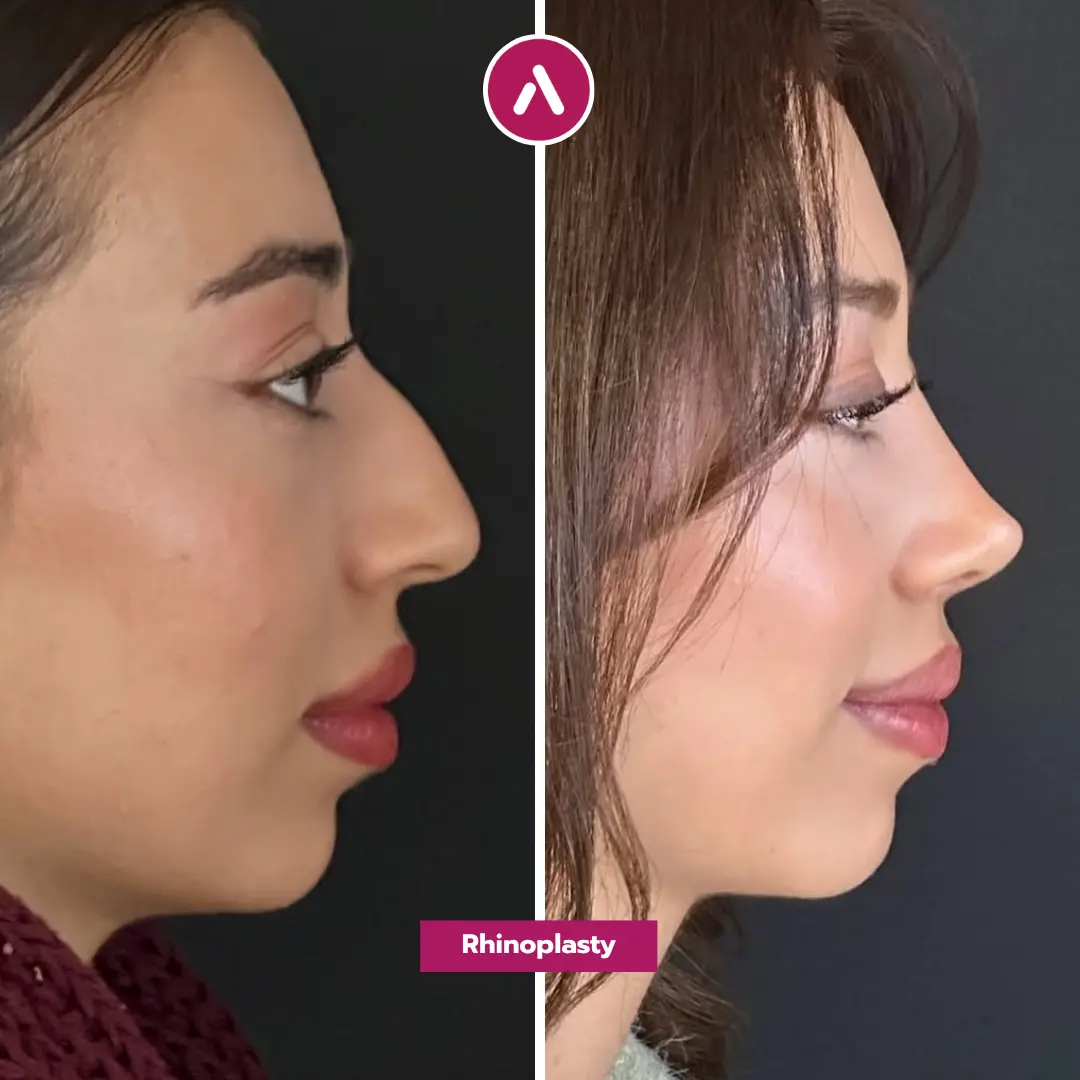
The advantage is subtlety. Because the natural bridge surface is maintained, the result can look less operated-on. Many aquiline nose patients prefer this because it softens the hump without creating a generic ski-slope profile.
For Canadian patients who value understatement, preservation rhinoplasty is often appealing. It supports a refined profile while keeping the face recognizable. The goal is not to hide heritage; it is to make the nose sit more calmly within the face.
Why preservation is gaining global preference
Preservation rhinoplasty has become more widely discussed because patients increasingly want natural results. A straight but artificial-looking bridge is no longer the preferred aesthetic for many well-informed patients.
Surgeons also value preservation when anatomy allows it. Keeping the original dorsal surface can reduce certain irregularities, protect bridge continuity, and support a smoother long-term profile. It can also be combined with precise bone work, including Piezo ultrasonic technique applied to preservation work, when the nasal bones need controlled reshaping.
International rhinoplasty societies such as ISAPS have contributed to a broader global discussion about technique selection and surgical education. For patients, the practical lesson is simple: ask what the surgeon plans to preserve, what they plan to reduce, and why.
| Comparison Point | Preservation Rhinoplasty | Reduction Rhinoplasty |
|---|---|---|
| Main goal | Lower and refine the bridge while preserving the natural dorsal line | Remove the dorsal hump and reconstruct a straighter bridge |
| Best suited for | Mild to moderate humps with good dorsal structure | Moderate to severe humps, irregular bridges, or post-traumatic deformity |
| Identity preservation | High, when anatomy is suitable | Variable, depending on how much hump is removed |
| Bruising and swelling | Often less, especially when combined with careful bone handling | May be more noticeable when extensive bony work is required |
| AKM CAD pricing reference | CAD $4,800 | Open Rhinoplasty: CAD $4,100; Closed Rhinoplasty: CAD $4,800 |
“The most important question is not whether we can remove the hump. It is how much of the bridge should remain for the result to look balanced, stable, and still connected to the patient’s identity.”
This is the central decision in aquiline nose surgery. Some patients need full hump reduction. Others need controlled softening. The best result depends on choosing the philosophy that matches the face, not the trend.
Preservation Rhinoplasty Technique
Preservation rhinoplasty is especially relevant for aquiline noses because it changes how the hump is treated. Instead of simply removing the visible bridge height from above, the surgeon works beneath the dorsum to lower the nasal framework in a controlled way.
This technique is not suitable for every patient. It requires the right anatomy, careful pre-operative analysis, and a surgeon who is comfortable with both structural rhinoplasty and dorsal preservation. At AKM Clinic, this assessment is guided by the patient’s profile goals, nasal function, and facial identity.
Subdorsal cartilage removal mechanism
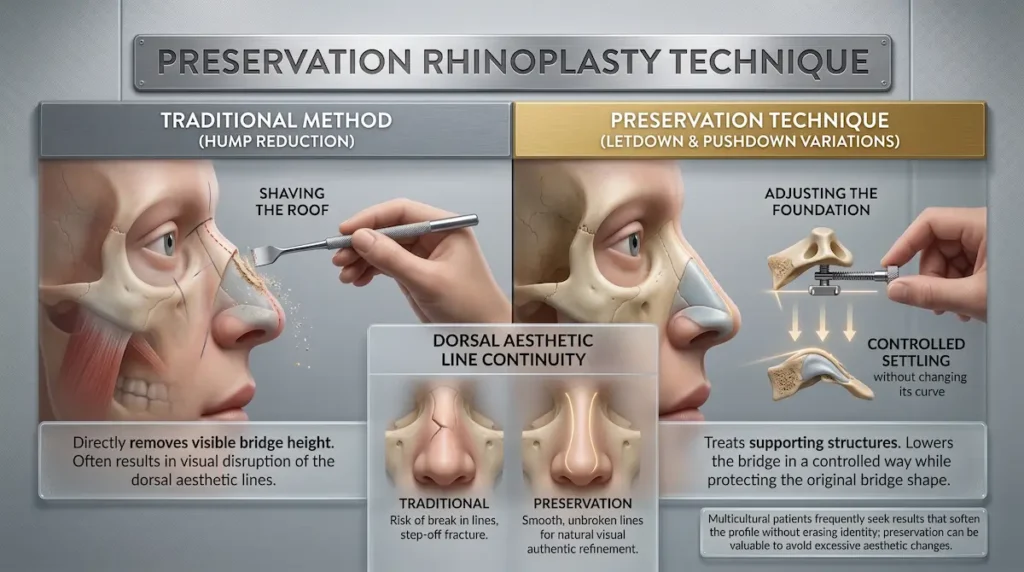
In traditional hump reduction, the surgeon directly removes the high point of the bridge. In preservation rhinoplasty, the visible bridge is protected as much as possible. The surgeon removes or adjusts supporting cartilage and bone beneath the dorsum so the bridge can settle downward.
This is sometimes described as treating the “foundation” rather than shaving the “roof.” The natural dorsal aesthetic lines remain more continuous. For an aquiline nose, this can create a smoother profile without making the bridge look surgically flattened.
The subdorsal approach is useful because many aquiline noses have a bridge shape that suits the face but sits too high. Lowering that structure can soften the hump while keeping the nose visually authentic. This is one reason preservation techniques appeal to patients who want refinement rather than a completely new nose.
Letdown vs pushdown variations
Preservation rhinoplasty includes two commonly discussed variations: pushdown and letdown. Both aim to lower the nasal dorsum while preserving the natural bridge surface. The difference lies in how the nasal bones and supporting structures are mobilized.
In a pushdown technique, the nasal pyramid is lowered after specific internal adjustments. In a letdown technique, the surgeon may remove small wedges of bone from the sides of the nasal framework to allow a more controlled descent. The choice depends on hump size, nasal width, bone strength, and the patient’s breathing anatomy.
These are technical decisions. Patients do not need to memorize the surgical steps, but they should ask the right question during consultation: “Is my hump suitable for preservation, or would direct reduction be safer and more predictable?”
Dorsal aesthetic line continuity advantages
The dorsal aesthetic lines are the subtle lines that run from the brow area down the bridge of the nose. In an attractive profile, these lines look smooth and uninterrupted. Preservation rhinoplasty tries to protect those lines rather than recreate them after removing the hump.
This is important in arched noses because over-reduction can break the natural relationship between the upper bridge, middle vault, and nasal tip. A bridge that is too low may look soft from the side but weak or unnatural from the front.
For patients seeking subtle profile refinement, dorsal continuity is often the reason preservation is preferred. The result can look less “operated-on” because the original bridge surface has not been aggressively dismantled.
AKM’s rhinoplasty planning is led by surgeons with facial plastic and functional nasal expertise. Patients can review AKM’s Preservation Rhinoplasty specialist background before deciding whether Istanbul is the right setting for their procedure.
Canadian Callout: Why subtle bridge preservation often suits multicultural patients
Many Canadian patients considering aquiline nose correction come from Middle Eastern, Mediterranean, Eastern European, South Asian, or mixed-heritage families. For these patients, a slight bridge strength may be part of facial identity. Preservation rhinoplasty can be valuable when the goal is to soften the profile without erasing ethnic or family resemblance.
When Reduction Is Still the Right Choice?
Preservation rhinoplasty is powerful, but it is not a universal answer. Some aquiline noses need direct hump reduction because the bridge is too high, too irregular, or structurally unsuitable for preservation. A good surgeon should be willing to recommend reduction when it is safer or more predictable.
This is where surgical honesty matters. The most natural result is not always the most conservative technique. Sometimes removing and reconstructing the hump gives better balance than trying to preserve a structure that should not be preserved.
Severe humps beyond preservation scope
Large dorsal humps may exceed what preservation techniques can lower safely. If the bridge projects strongly and the nasal bones are prominent, direct reduction may offer better control over the final profile. This is especially true when the patient wants a clearly straighter nose.
In these cases, the surgeon reduces the bony and cartilaginous hump, then reconstructs the bridge to maintain support. The aim is not to make the nose small. It is to create a smoother profile while protecting breathing and avoiding dorsal collapse.
Patients with severe humps should be cautious about clinics that promise preservation for every case. Technique should follow anatomy. Marketing should not lead the plan.
Combined deformities
Aquiline noses sometimes come with other nasal concerns. These may include a crooked bridge, deviated septum, drooping tip, wide nasal bones, or previous trauma. When several problems exist together, direct reduction may need to be combined with other structural corrections.
For example, if a patient has an arched nose and breathing difficulty, hump surgery alone may be incomplete. The internal septum may also need correction. In that situation, patients should review septorhinoplasty for aquiline noses with breathing concerns, because function and aesthetics must be planned together.
If the bridge is acceptable but the tip is the main concern, full hump surgery may be unnecessary. In that case, tip-only refinement when the dorsum is acceptable may be more appropriate. The key is accurate diagnosis before travel.
Bone composition factors
The composition of the hump matters. Some dorsal humps are mostly cartilage. Others are mostly bone. Many are mixed. The surgical method changes depending on which tissue creates the projection.
A bony hump may require controlled osteotomies, which are precise bone cuts used to reshape and narrow the nasal framework. A cartilaginous hump may require middle-vault work to prevent instability. Thick nasal bones, asymmetry, or trauma history can also influence whether preservation is feasible.
This is where technology can help, but it does not replace judgment. Piezo instruments can make bone work more controlled, yet the surgeon still decides whether the hump should be preserved, lowered, reduced, or reconstructed.
Canadian Callout: Subtle correction can age better than aggressive reduction
Canadian patients often prefer results that do not attract attention at work, family gatherings, or professional settings. A conservative bridge refinement may look more natural over time than aggressive hump removal, especially in faces with strong ethnic or structural features. The best correction should still look believable in 10 years.
“A small remaining dorsal strength can sometimes be the most natural result. The goal is not to remove every sign of an aquiline bridge, but to decide how much bridge belongs to that face.”
Reduction rhinoplasty remains an important option. It should not be viewed as outdated or inferior. For the right patient, it is the most accurate way to correct a dominant hump and restore facial balance.
Canadian Patient Decision Framework
For Canadian patients, aquiline nose surgery is rarely just a technical choice. It is usually a balance between profile refinement, family resemblance, ethnic identity, recovery logistics, and cost transparency. The right plan should be specific enough to answer all of those concerns before you book a flight.
A strong consultation should clarify three points: how much hump should be softened, whether the bridge should be preserved or reduced, and whether the tip, septum, or nasal bones also need work. Without that framework, patients risk choosing a technique before understanding their own anatomy.
Identity preservation vs full correction
Some patients want the dorsal hump removed completely. Others want the hump softened while keeping a strong bridge. Both choices can be valid, but they lead to different surgical plans.
Identity-preserving refinement is especially relevant for patients who feel their arched nose connects to family, culture, or facial character. The nose may feel too dominant from the side, but not “wrong.” In that situation, preservation rhinoplasty or conservative reduction may be a better match than aggressive bridge lowering.
Full correction is more appropriate when the hump is the patient’s main concern and they want a noticeably straighter profile. This may be the case for severe humps, post-traumatic noses, or noses where the dorsal height overwhelms all other facial features.
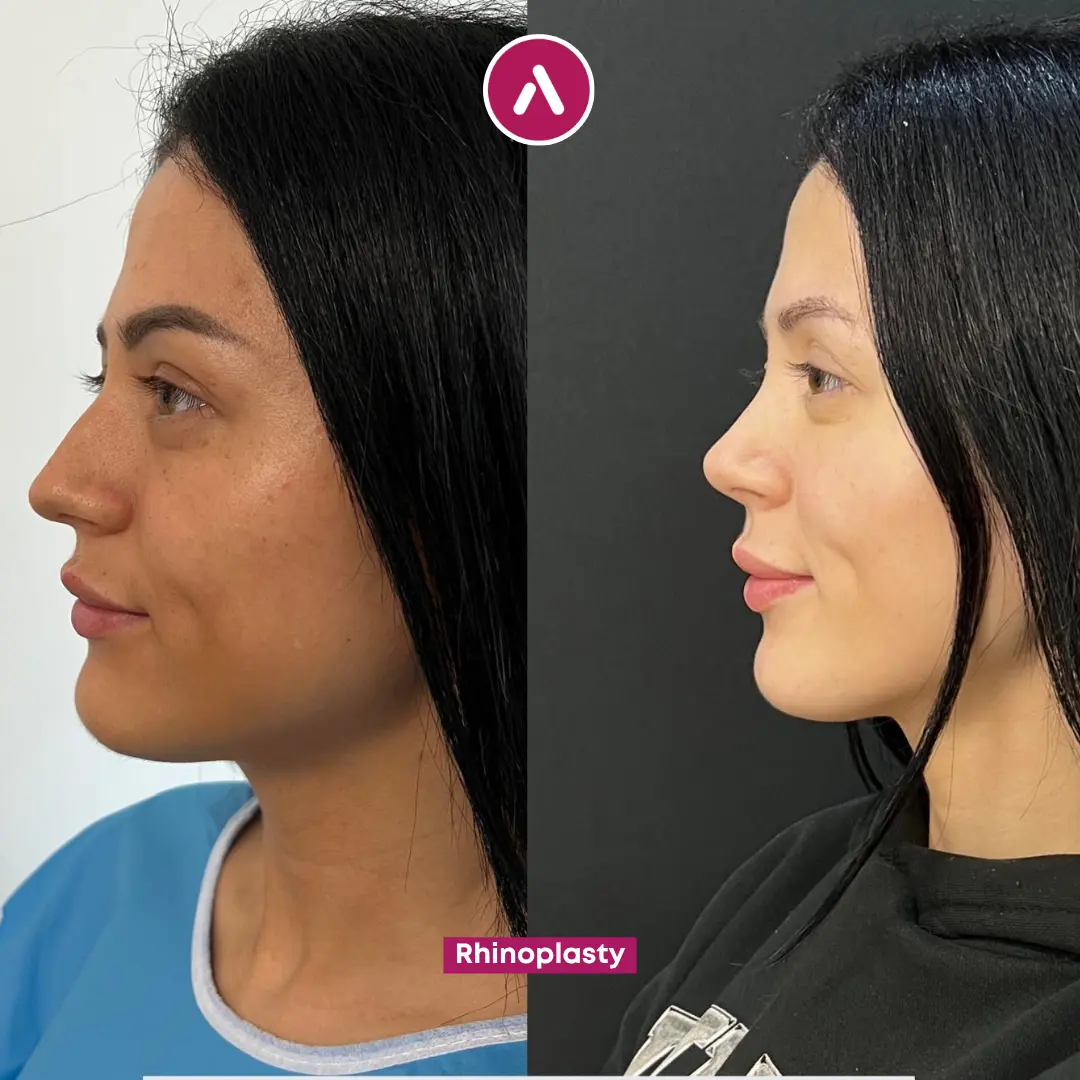
How much hump softening you actually want
Before choosing surgery, patients should decide how much of the aquiline shape they want to keep. This is not a cosmetic detail. It changes the surgical map.
A practical way to think about it is by profile category:
- Softened aquiline profile: the hump is reduced but a slight bridge strength remains.
- Straight profile: the dorsal line becomes smoother and more linear.
- Concave or sloped profile: the bridge is reduced more dramatically, which may not suit every face.
Most Canadian patients seeking natural results choose either a softened aquiline profile or a straight profile. A pronounced slope can look attractive in selected faces, but it may appear artificial in patients with strong bone structure, thicker skin, or ethnic features.
Multi-cultural Canadian context
Canada’s patient population is highly multicultural. That changes the conversation around rhinoplasty. A result that looks balanced for one face may look overcorrected for another, even if both patients have a similar dorsal hump.
Patients from Middle Eastern, Mediterranean, Balkan, South Asian, Eastern European, or mixed-heritage backgrounds often ask for refinement without westernization. For that broader identity-preservation discussion, see ethnic rhinoplasty considerations for multicultural Canadian patients.
Canadian professional culture also tends to favour understated outcomes. Many patients want colleagues to notice that they look more balanced, not that they had surgery abroad. This is why a careful dorsal plan matters as much as the technical execution.
Patients can also review Canadian aesthetic surgery context through the Canadian Society for Aesthetic Plastic Surgery. It gives a useful reference point for patients comparing specialist-led aesthetic care, even when they are considering treatment outside Canada.
| Patient Goal | Likely Surgical Direction | Best-Fit Candidate Pattern |
|---|---|---|
| Keep character, soften the hump | Preservation rhinoplasty or conservative reduction | Mild to moderate hump, strong identity-preservation preference |
| Create a straight profile | Reduction rhinoplasty or preservation, depending on anatomy | Moderate hump, clear desire for profile change |
| Correct a severe or irregular hump | Traditional reduction with structural reconstruction | Large bony hump, trauma history, asymmetry, or bridge irregularity |
| Improve both profile and breathing | Septorhinoplasty with dorsal hump correction | Deviated septum, chronic obstruction, or post-traumatic nasal change |
Recovery and Outcome
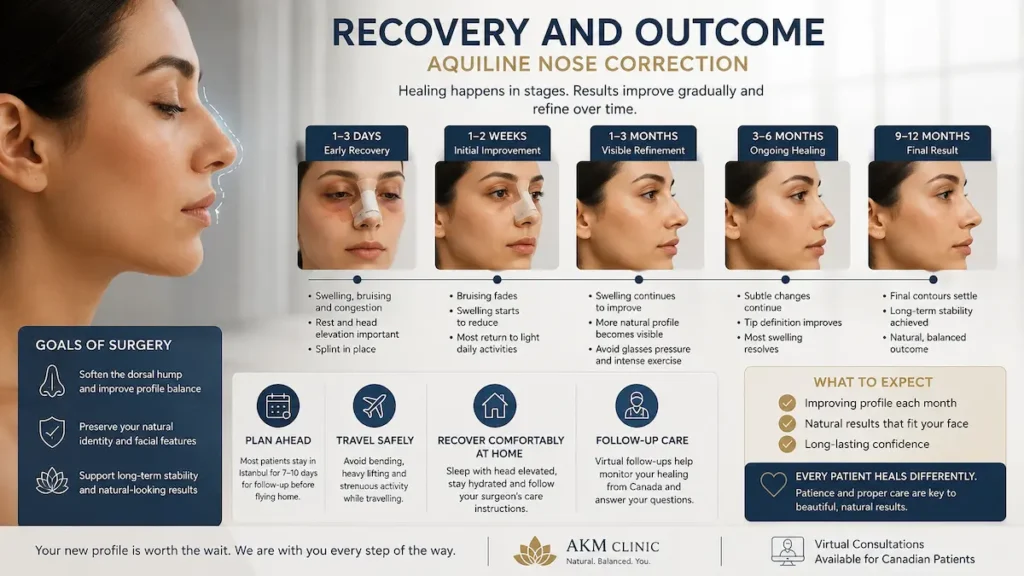
Recovery after aquiline nose surgery depends on how much bony and cartilaginous work is performed. A mild preservation case may look socially acceptable sooner than a major reduction case with extensive osteotomies. That said, all rhinoplasty swelling evolves over months.
Canadian patients should plan recovery around both the Istanbul stay and the return home. The early phase happens in Turkey, but refinement continues after returning to Toronto, Vancouver, Montreal, Calgary, Ottawa, or another Canadian city.
Preservation typically has less bruising
Preservation rhinoplasty may involve less visible bruising than aggressive bony reduction because the bridge surface is handled more conservatively. When Piezo bone instruments are used, the surrounding tissue may also experience less trauma than with traditional tools.
This does not mean bruising is impossible. Skin thickness, bone work, surgical extent, and individual healing all matter. Some patients bruise easily despite conservative technique.
For Canadians flying home after surgery, less bruising and swelling can make the return journey more comfortable. It can also make airport movement less stressful, especially for patients travelling through YYZ, YUL, or a connecting European airport.
Long-term dorsal stability
A stable dorsal result requires more than a smooth side profile at one month. The bridge must remain supported as swelling decreases and scar tissue matures. This is why structural planning is essential in both preservation and reduction rhinoplasty.
Preservation rhinoplasty may support long-term dorsal continuity because it avoids dismantling the original bridge in suitable patients. Reduction rhinoplasty can also be stable when the bridge is properly reconstructed. The issue is not the label of the technique; it is whether the structure is respected.
Patients should expect the nose to change gradually. The bridge often looks refined earlier than the tip, while tip swelling can persist longer, especially in thicker skin. A final profile assessment is usually more reliable around the 12-month mark.
Revision rate comparisons
No rhinoplasty technique eliminates revision risk. Revision may be needed because of residual hump, over-reduction, asymmetry, breathing issues, scar response, or patient preference. This is why realistic pre-operative planning matters.
Preservation techniques may reduce some risks related to dorsal irregularity in suitable cases, but they can create different challenges if used in the wrong anatomy. Traditional reduction can be highly reliable, but it requires careful reconstruction to avoid an unnatural or unstable bridge.
The best way to reduce revision risk is not to chase the newest method. It is to match the method to the patient. That includes reviewing facial photos, breathing function, skin thickness, bridge height, tip support, and expectations in detail.
Patients comparing recovery, technique, and cost can also review rhinoplasty pricing in CAD before finalizing their surgical plan. Clear pricing should support the medical decision, not drive it.
Canadian Callout: Plan for visible recovery and long-term refinement
Most Canadian patients can return home once the surgeon clears them for travel, but the nose will not be “finished” at that stage. Bruising may fade early, while swelling can continue to refine for months. Patients returning to professional settings should plan around video calls, in-person meetings, and social events rather than assuming one fixed recovery date.
“A stable aquiline nose correction is judged in stages. The early profile should look balanced, but the final result depends on how the bridge, tip, and skin settle together over time.”
Frequently Asked Questions: Arched Nose Surgery Turkey
Canadian patients researching aquiline nose correction often have the same concern: “Will I still look like myself?” These questions focus on profile change, preservation technique, recovery, cost, and whether a slight dorsal strength can remain by choice.
Will my profile look completely different?
It depends on the surgical plan. If you choose full dorsal hump reduction, your side profile may look noticeably straighter. If you choose preservation rhinoplasty or conservative reduction, the result can be softer while still keeping some bridge character.
A well-planned aquiline nose correction should improve proportion without making the face look unfamiliar. During consultation, you should be clear about whether you want a subtle refinement or a stronger profile change.
Is preservation rhinoplasty available at AKM?
Yes. AKM Clinic evaluates suitable patients for preservation rhinoplasty, especially when the patient has a mild to moderate hump and wants to protect the natural dorsal aesthetic line. Not every aquiline nose is suitable for preservation, so candidacy must be assessed individually.
If the hump is severe, irregular, post-traumatic, or functionally linked to septal deviation, traditional reduction or septorhinoplasty may be the better choice.
How long is recovery for aquiline correction?
Most patients should expect visible swelling and bruising during the first 1 to 2 weeks. The bridge often looks presentable sooner than the nasal tip, but the final result continues to refine for several months.
Canadian patients should plan for the early recovery period in Istanbul, followed by longer-term refinement once back home. If your work involves frequent in-person meetings, allow extra time before major professional or social events.
Does Piezo help with aquiline noses?
Piezo can help when the aquiline nose correction involves precise bone work. It uses ultrasonic energy to shape bone with less disruption to surrounding soft tissue than traditional instruments in selected cases.
Piezo is not a separate surgical goal. It is a tool. The main decision remains whether your dorsal hump should be preserved, reduced, or reconstructed.
Can my Middle Eastern or Mediterranean nose be refined naturally?
Yes, when the surgical plan respects ethnic and facial identity. Many Middle Eastern, Mediterranean, Balkan, and Eastern European patients want the hump softened without losing a strong bridge. That is a reasonable and common request.
The most natural result is usually not the smallest possible nose. It is the nose that fits your forehead, cheeks, lips, chin, and overall facial structure.
Is the dorsal hump permanent after surgery?
Once the bone and cartilage framework has been surgically corrected, the original dorsal hump should not “grow back.” However, swelling, scar tissue, cartilage memory, and healing patterns can affect how the bridge looks over time.
This is why follow-up matters. AKM Clinic’s long-term virtual follow-up programme helps patients monitor healing after returning to Canada.
Can a small hump remain by choice?
Yes. Some patients intentionally keep a very slight dorsal strength because it looks more natural on their face. This is especially common among patients who want refinement without a fully westernized or overly softened profile.
You should discuss this clearly before surgery. A small intentional bridge strength is different from an under-corrected hump. The surgeon needs to know your aesthetic preference in advance.
Aquiline nose surgery should not begin with a trend. It should begin with your anatomy, your profile goals, and your preference for either full correction or identity-preserving refinement.
AKM Clinic can assess your photos virtually and explain whether preservation rhinoplasty, reduction rhinoplasty, Piezo-assisted bone work, or septorhinoplasty is the best fit for your case. Canadian patients can request a personalized consultation before planning travel to Istanbul.
Medical Disclaimer: This page is provided for general educational purposes only and does not replace an in-person medical consultation, diagnosis, or personalized treatment plan. All surgery carries risks, and outcomes vary between individuals. Suitability for rhinoplasty (nose job) surgery, procedure selection, and anesthesia choice can only be determined after a full clinical assessment by a qualified surgeon. Always follow your clinician’s instructions and seek urgent medical attention if you develop concerning symptoms during recovery.