
A filler removal eye rejuvenation mini facelift plan is not a standard mini facelift with a few extras added on. It is a combined facial strategy that asks one surgical team to understand filler behaviour, eyelid anatomy, and short-scar lifting at the same time.
For Canadian patients comparing options in Toronto, Vancouver, Montreal, or Istanbul, this distinction matters. A surgeon may be excellent at lifting the lower face but less experienced with migrated filler or lower eyelid fat repositioning. The safest choice is not simply “the best mini facelift surgeon”; it is the surgeon who can judge how all three areas interact.
This guide explains what to verify before booking, including the questions to ask during consultation, how to read before-and-after photos, and why mini facelift options at AKM Clinic are planned around facial balance rather than isolated correction.
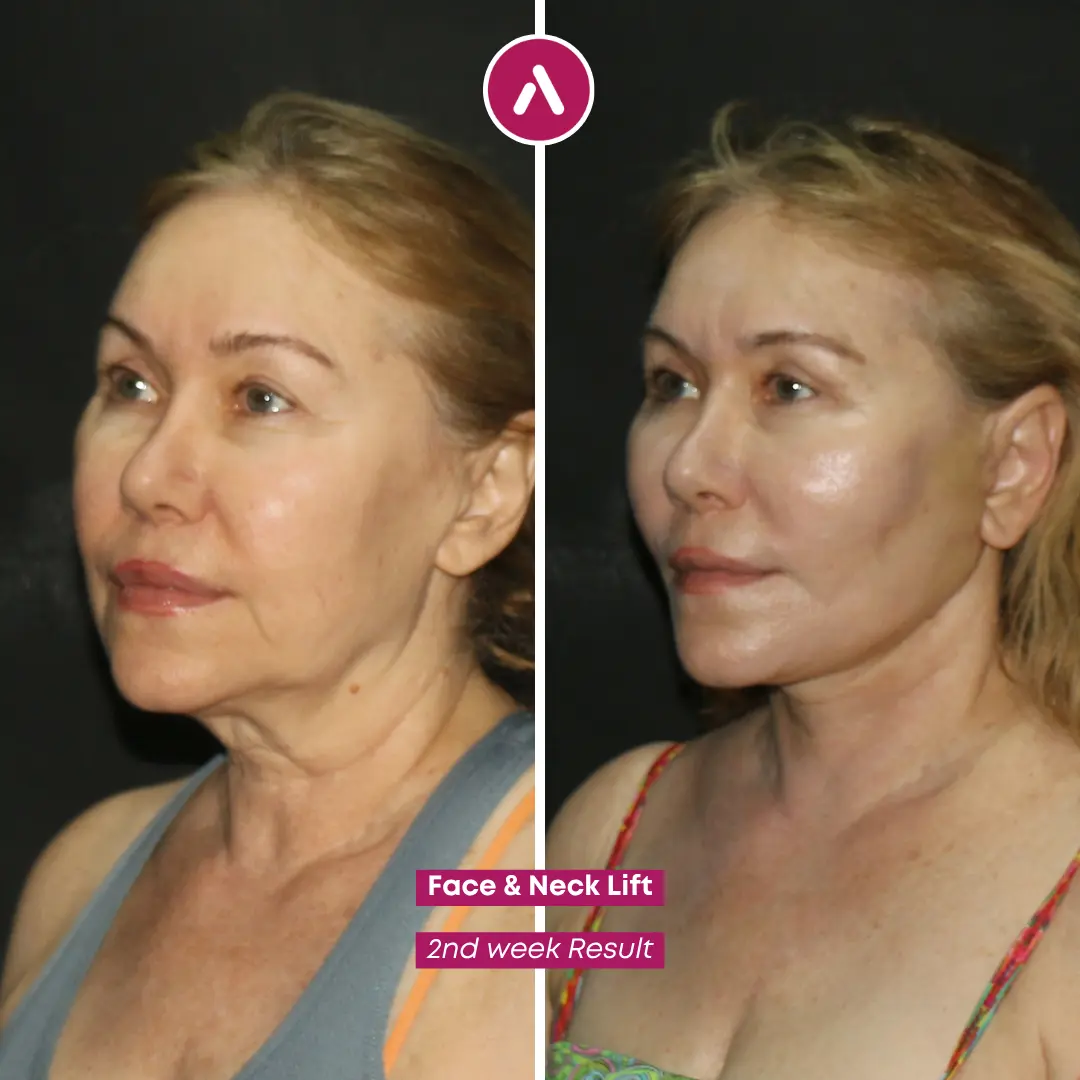
Quick Summary: Patients seeking filler removal combined with eye rejuvenation and a mini facelift need a surgeon with three distinct skill sets: hyaluronidase technique, blepharoplasty mastery, and short-scar lifting. For Canadian patients, the safest decision is to verify experience in the combined sequence, not just in one procedure.
At AKM Clinic, this type of case is evaluated as a full facial plan. The goal is to dissolve or correct old filler first, refresh the eyes with precision, and use a mini facelift only when the lower face anatomy supports a natural result.
Table of Contents
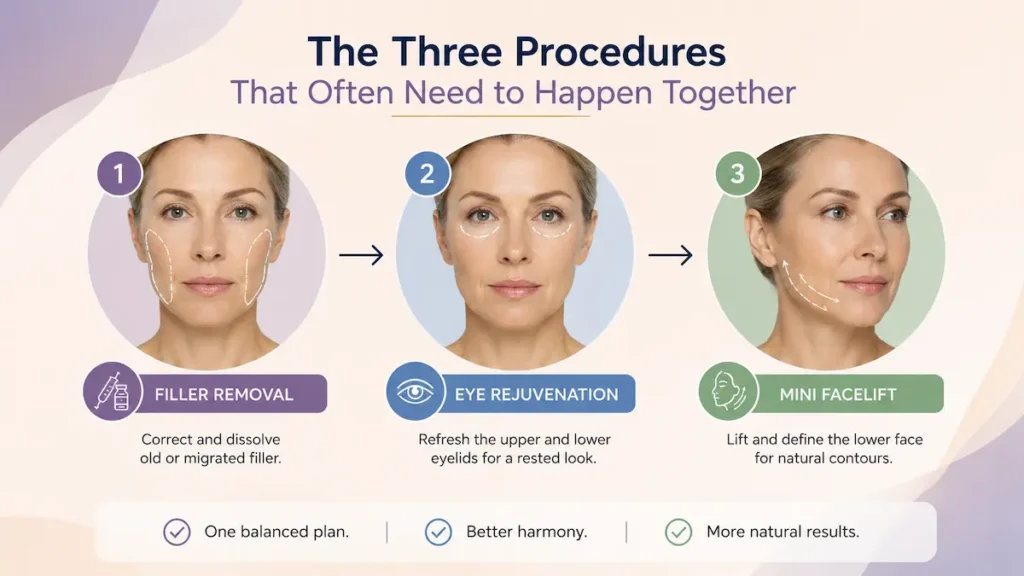
The Three Procedures That Often Need to Happen Together
Many patients arrive at consultation thinking they need one procedure. In reality, the face often shows several overlapping patterns: old filler changing the midface, tired-looking eyelids, and early jowling along the lower face. Treating only one area can make the untreated areas more visible.
This is why a combined plan can be more precise. The surgeon must decide what should be removed, what should be repositioned, and what should be lifted. That sequence affects the final result.
Why filler removal precedes surgical planning
Old dermal filler can distort the face in ways that are difficult to judge from casual photos. It may create puffiness under the eyes, heaviness in the midface, or an unnatural transition between the cheek and lower eyelid. In some patients, the filler has simply outlived its original purpose.
Filler removal should usually be assessed before final surgical mapping. If the surgeon plans a lift around migrated filler, the result can look overfilled after the tissues are repositioned. That is a common reason patients end up feeling that their surgery looks “done” rather than refreshed.
For Canadian patients who have had years of injectable treatments at different clinics, a careful filler history is essential. Bring the product names if you have them. Bring dates as well.
Eye rejuvenation as the next visible age marker
The eyes often reveal ageing before the lower face does. Upper eyelid hooding, lower eyelid bags, tear trough hollows, and skin laxity can make the face look tired even when the jawline is still relatively strong.
Eye rejuvenation may involve upper blepharoplasty, lower blepharoplasty, fat repositioning, skin pinch, or a conservative combination. The right choice depends on whether the issue is skin, fat, muscle tone, volume loss, or filler-related puffiness.
For patients considering eye rejuvenation surgery, the key question is not “upper or lower eyelid surgery?” It is “which part of the eyelid complex is creating the tired look?”
Mini facelift completing the lower face
A mini facelift addresses early jowling, soft jawline definition, and mild lower-face laxity. It is usually best for patients who do not yet need the deeper release of a full deep plane facelift.
The limitation is important. A mini facelift cannot fix heavy neck laxity, significant midface descent, or advanced skin excess. It also cannot correct filler-related swelling unless that issue is managed first.
In the right patient, however, a mini facelift can complete the facial refresh. The eyes look rested, the filler distortion is reduced, and the lower face regains cleaner definition without an obvious surgical look.
Canadian Patient Note: One Istanbul Trip Versus Three Separate Visits
In Canada, this combination may require separate appointments with an injector, an eyelid surgeon, and a facelift surgeon. That can mean multiple consultations, separate recovery windows, and repeated time away from work. A single Istanbul plan can reduce logistical fragmentation, but only when the clinic has genuine expertise across all three areas.
Filler Removal — The Hyaluronidase Skill Set
Filler removal is often treated like a quick injection visit. In surgical planning, it deserves more respect. A poorly timed or incomplete dissolution can change the surgical plan, affect eyelid decisions, and leave the patient with avoidable swelling or asymmetry.
Health Canada notes that hyaluronic acid products are the most commonly used dermal fillers in Canada, with licensed HA filler products available for sale. This matters because Health Canada’s cosmetic injections guidance helps patients understand why filler type affects removal strategy.
What hyaluronidase actually dissolves
Hyaluronidase is an enzyme used to break down hyaluronic acid filler. It is not a universal eraser. It will not reliably dissolve calcium hydroxylapatite, poly-L-lactic acid, silicone, or other non-HA materials.
This is why the product history matters. If the patient does not know what was injected, the surgeon may need to judge by exam, imaging, old records, or staged treatment response.
For patients researching filler-based facial rejuvenation alternatives, the distinction is critical. Adding filler and removing filler are different skill sets.
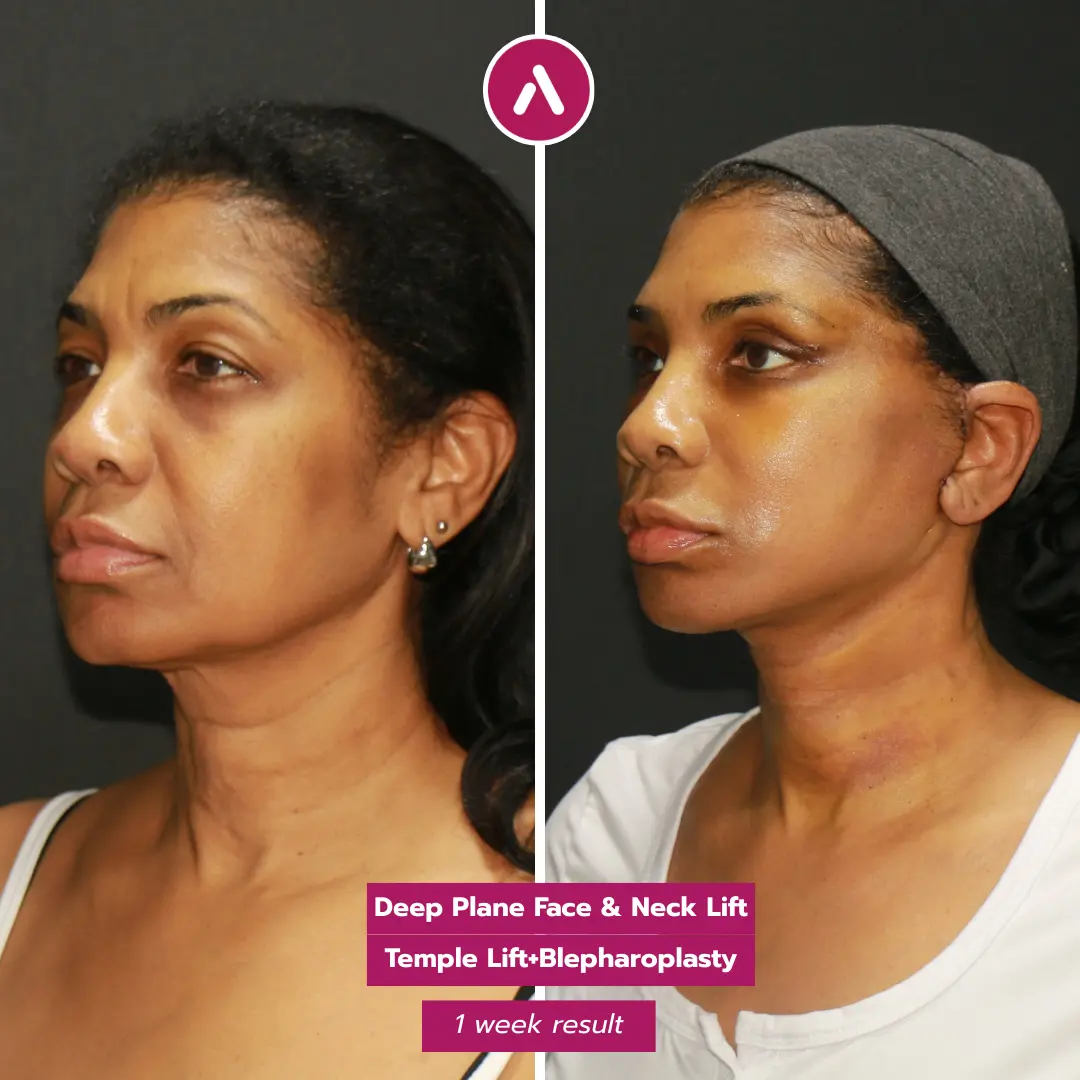
Migration patterns and removal complexity
Filler does not always stay exactly where it was placed. Over time, it can spread across tissue planes, collect in the tear trough, or create a soft, puffy midface. This is especially common when patients have had repeated treatments over several years.
Migration can be subtle. A patient may say, “I just look tired,” while the surgeon sees a filler-shadow problem below the lower eyelid. In other cases, migrated filler makes the cheek look heavier and reduces the benefit of a lower-face lift.
The removal plan should be conservative. Over-dissolving can create sudden hollowing, while under-dissolving can leave the surgical result looking inflated.
Why incomplete removal leads to surgical complications
Incomplete filler removal does not usually create a classic surgical complication, such as bleeding or infection. The risk is aesthetic and planning-related. The surgeon may lift tissue into a position that looks appropriate during surgery but appears too full once swelling settles.
This is especially relevant around the lower eyelids. Residual filler can mimic fat bags, exaggerate hollows, or interfere with decisions about fat repositioning.
“Filler removal and surgical planning should be treated as one continuous decision. If we do not understand what the filler is doing to the eyelid and cheek, we cannot plan a balanced mini facelift or eye rejuvenation.”
Canadian Patient Note: Health Canada Context
Canadian patients should ask what type of filler was used, whether it was licensed in Canada, and whether the clinic has records. Health Canada provides public guidance on cosmetic injections and licensed dermal fillers, which can help patients understand why product type affects removal strategy.
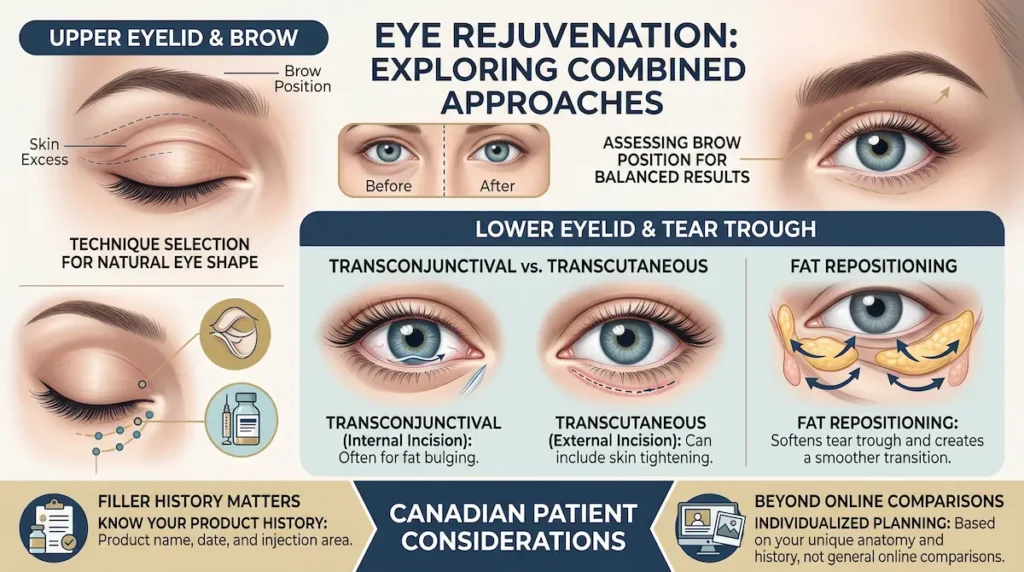
Eye Rejuvenation Combined Approaches
Eye rejuvenation is rarely a one-size-fits-all procedure. The upper eyelid, lower eyelid, brow tail, cheek junction, and old filler history can all affect how tired or heavy the eyes appear.
Before recommending surgery, the surgeon should separate skin excess from fat bulging, hollowing, muscle laxity, and filler-related puffiness. This is where combined facial planning becomes more accurate than treating the eyes in isolation.
Canadian patients should also be careful with online before-and-after comparisons. A patient with true lower eyelid fat bags needs a different plan than someone whose under-eye fullness is caused by migrated filler.
Upper blepharoplasty technique selection
Upper blepharoplasty removes or repositions excess upper eyelid skin and, in selected cases, small amounts of fat. The purpose is not to create a hollow upper lid. It is to restore a clean eyelid platform while preserving natural eye shape.
The surgeon must also assess brow position. If the brow has descended, removing too much eyelid skin can make the eyebrow look heavier. This is why upper blepharoplasty should be planned with the brow and forehead in mind.
For patients with uneven brow height, asymmetric brow considerations during eye work may change the plan. One eyelid may not need the same amount of correction as the other.
Lower blepharoplasty — transconjunctival vs transcutaneous
Lower blepharoplasty can be performed through an internal incision, called a transconjunctival approach, or through an external incision just below the lashes, called a transcutaneous approach. The best choice depends on skin quality, fat position, and eyelid support.
The transconjunctival method is often used when the main concern is fat bulging without significant loose skin. The transcutaneous method may be more appropriate when skin tightening or a conservative skin pinch is also needed.
This decision matters for patients who also want filler removal. Residual filler can make the lower eyelid look fuller than it truly is, which may lead to an overly aggressive blepharoplasty plan if it is not recognized first.
Fat repositioning for under-eye hollows
Some lower eyelid patients do not need fat removed. They need existing fat repositioned into the hollow area beneath the eye. This can soften the tear trough without adding more filler.
Fat repositioning is especially useful when the patient has a sharp lid-cheek junction. It can create a smoother transition between the lower eyelid and upper cheek, which is difficult to achieve with lifting alone.
For Canadian patients who have had under-eye filler before, this is an important discussion. The surgeon must decide whether the hollow is true volume loss, filler shadowing, or a structural transition that needs repositioning rather than more injectable product.
Canadian Patient Note: Product History Matters
If you had filler placed in Canada, ask your injector for the product name, treatment date, and injection area. Health Canada guidance on cosmetic injections can help patients understand why product type and placement history are important before surgery.
The Mini Facelift Decision
A mini facelift can be the right procedure when lower-face aging is mild to moderate. It is not a smaller version of every facelift. It has a specific role, a specific incision strategy, and clear limitations.
The decision becomes more complex when eye rejuvenation and filler removal are part of the same plan. The surgeon must determine whether a mini facelift will harmonize with the refreshed eye area or whether a more comprehensive lift is needed.
When mini is sufficient vs when full is required
A mini facelift may be sufficient when the main concerns are early jowling, mild lower-face looseness, and subtle jawline softening. These patients often still have reasonable neck definition and do not need extensive deep tissue release.
A full facelift or deep plane facelift may be more appropriate when there is heavier neck laxity, deeper midface descent, or significant skin redundancy. Choosing a mini facelift in that situation can under-treat the problem.
The consultation should include a direct explanation of the trade-off. A smaller procedure may mean a shorter recovery, but it should not be chosen if it cannot deliver the correction the patient is asking for.
Short-scar techniques and their limitations
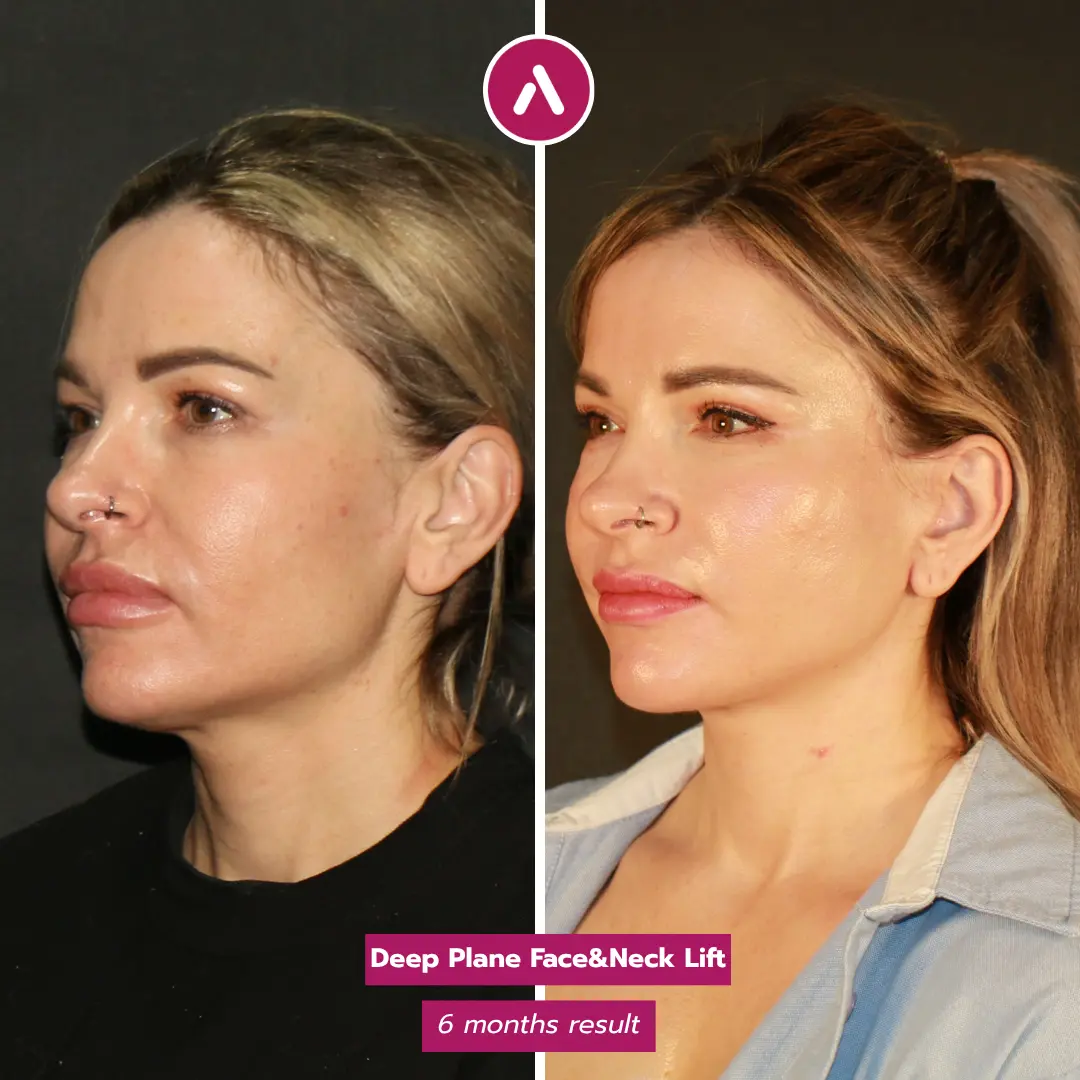
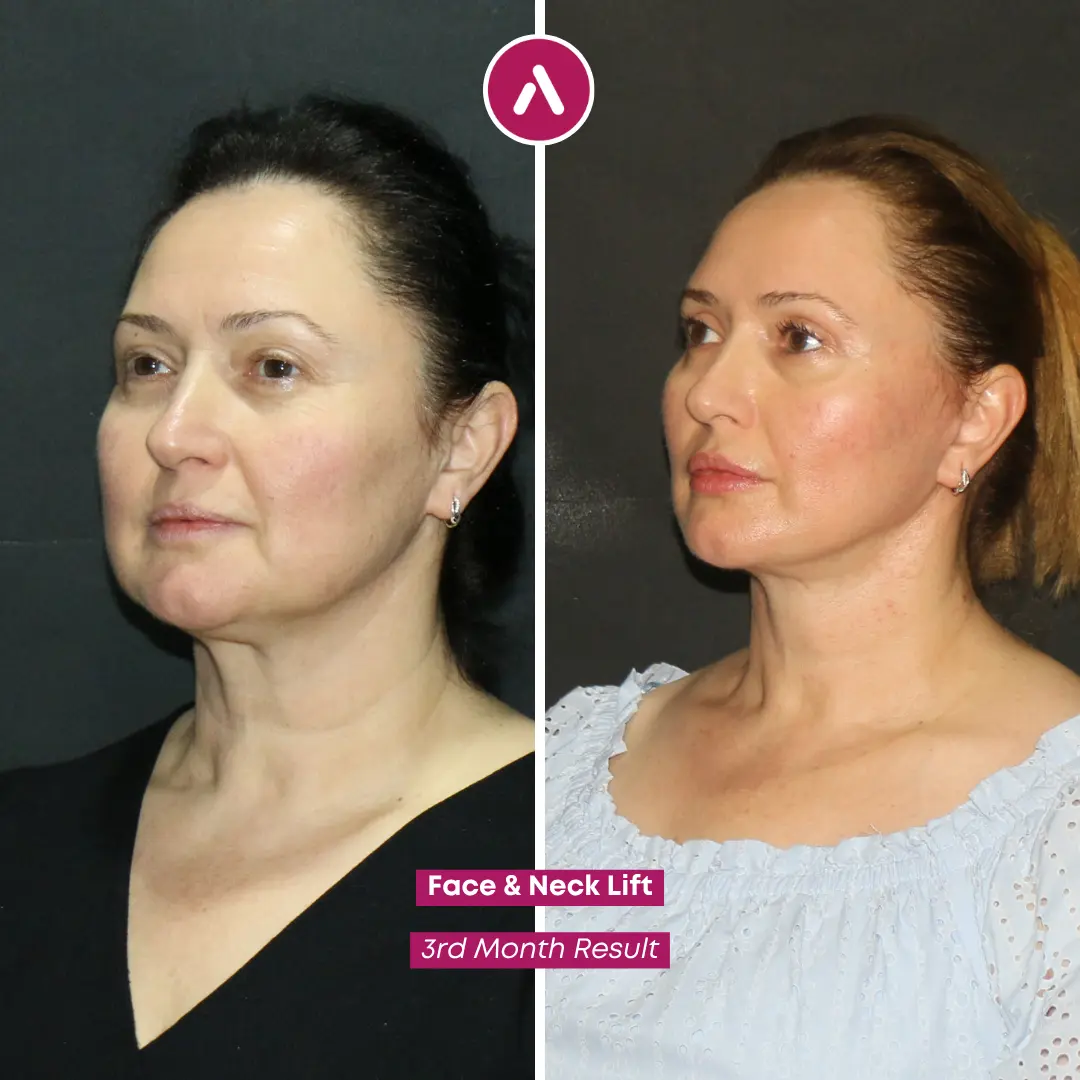
Short-scar techniques are designed to reduce visible incision length while improving early lower-face laxity. They can be useful for patients who want a discreet correction and do not require extensive neck work.
The limitation is that scar length is not the only factor in a natural result. Tissue tension, vector direction, and skin quality all influence how the face settles. A short scar with poor vector control can still look tight.
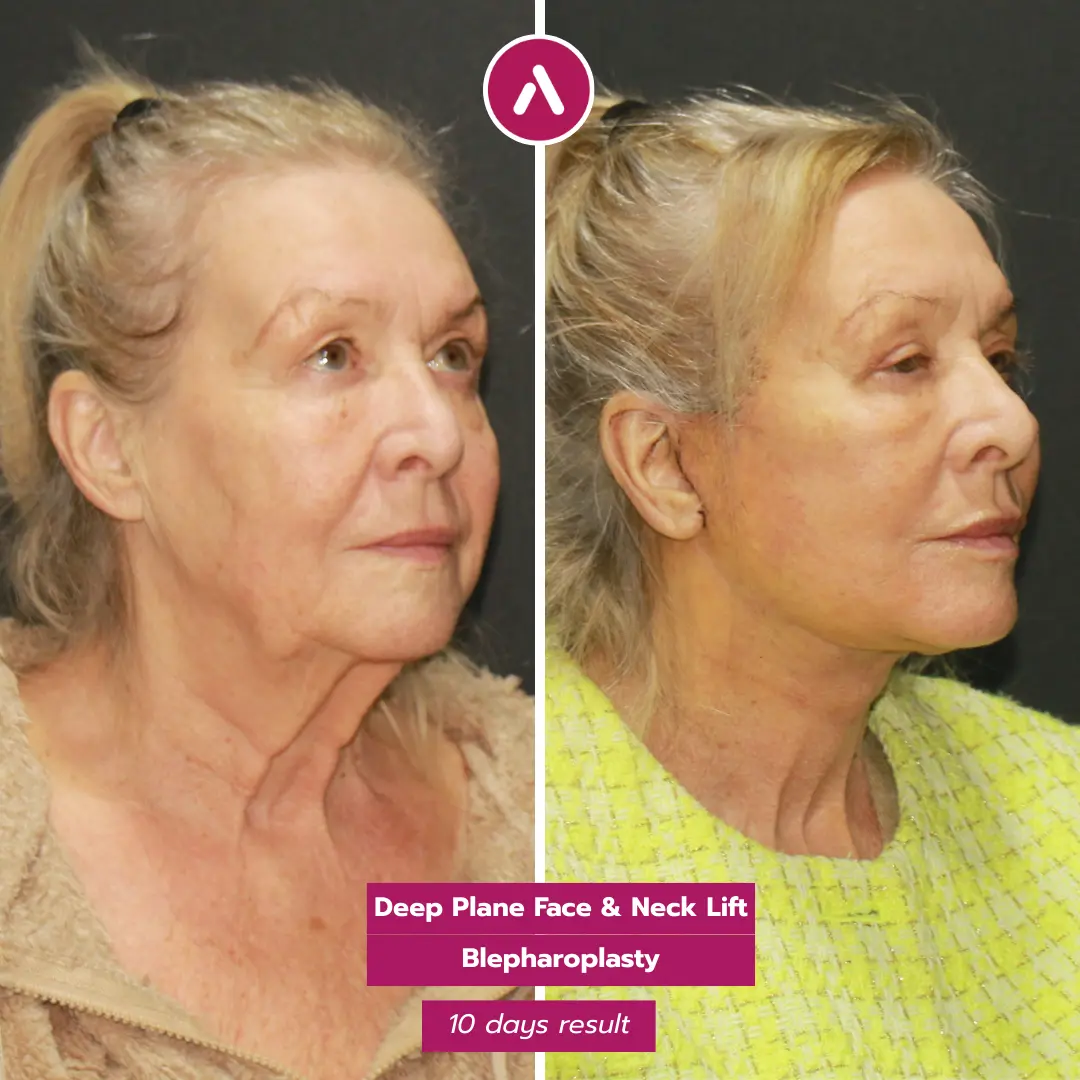
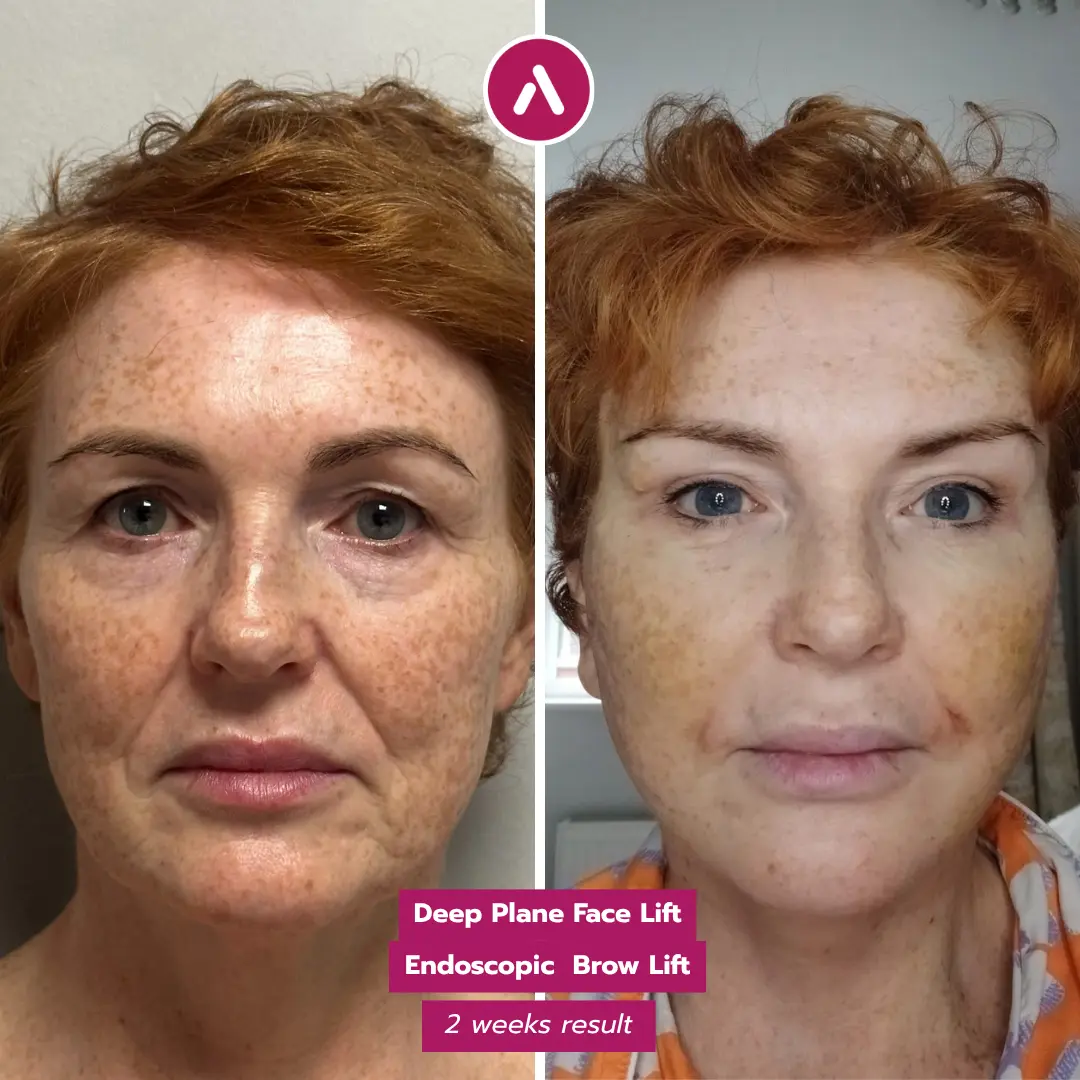
Patients should ask to see before-and-after photos of cases with similar anatomy. A good mini facelift candidate should see realistic examples, not dramatic full-facelift outcomes used as marketing.
Combining mini with eye work in one operation
Combining a mini facelift with eyelid surgery can be efficient because the face is being planned as one unit. The eyes look more rested, while the lower face looks cleaner and more supported.
Sequencing matters. The surgeon should avoid over-lifting the lower face if the eye area is being treated conservatively. The goal is balance, not maximum change.
Some patients may also need brow evaluation before committing to eyelid surgery alone. For patients comparing upper-face procedures, brow procedures sometimes paired with mini facelift can clarify whether the outer brow, full brow, or eyelid is the true source of heaviness.
Canadian Patient Note: Recovery Planning Around Work
Many Canadian patients plan surgery around limited vacation time, March break, summer leave, or a quieter work period. Combining procedures can reduce repeated downtime, but the recovery window should be planned honestly. A combined eye and mini facelift procedure usually needs more social recovery time than filler dissolution alone.

Surgeon Evaluation for the Combined Procedure
The best surgeon for a combined filler removal, eye rejuvenation, and mini facelift case is not always the surgeon with the most dramatic facelift photos. The stronger indicator is judgement: knowing what to dissolve, what to preserve, and when a smaller lift is enough.
For Canadian patients, this evaluation should feel more like a medical review than a sales consultation. The surgeon should ask about previous filler, examine eyelid support, assess brow position, and explain why each procedure belongs in the sequence.
Verifying expertise in all three areas
Ask direct questions. A qualified surgeon should be able to explain hyaluronidase use, upper and lower eyelid technique selection, and mini facelift limits without avoiding the details.
The evaluation should include:
- Experience with migrated or overfilled hyaluronic acid filler
- Upper and lower blepharoplasty case examples
- Short-scar, S-lift, MACS lift, or awake mini facelift experience
- Ability to identify when a mini facelift is insufficient
- Clear complication management and follow-up protocol
For credential review, Canadian patients should use a structured process rather than relying on social media. AKM’s related guide to step-by-step credential verification explains how to check training, society membership, and clinic transparency before booking.
ISAPS advises patients to confirm that the surgeon they choose is properly trained and qualified for the aesthetic procedure being considered. For Canadian patients comparing Istanbul clinics, ISAPS guidance on choosing your surgeon is a useful external safety reference.
Single-surgeon vs team approach
A single-surgeon approach can work well if the surgeon is genuinely experienced in all three areas. It offers continuity: one person understands the filler issue, the eyelid plan, and the lifting vector.
A team approach can also be appropriate, especially when responsibilities are clear. For example, one facial specialist may focus on eyelid and structural planning while another supports skin, filler, or regenerative decisions.
The risk is fragmentation. If the injector, eyelid surgeon, and facelift surgeon do not communicate, the patient may receive three technically acceptable treatments that do not create one balanced face.
Why combined-procedure case volume matters
Combined-procedure experience matters because the face changes differently when multiple areas are treated at once. Removing filler can reveal hollowing. Blepharoplasty can make lower-face laxity more noticeable. A mini facelift can improve the jawline but cannot compensate for poor eyelid planning.
Ask to see cases that resemble your situation. A patient with old tear trough filler, lower eyelid bags, and early jowls should not be shown only full facelift results or isolated blepharoplasty photos.
Pricing should also be discussed transparently. The following CAD-only reference table uses AKM Clinic’s published treatment and package pricing. Filler dissolution pricing is not listed as a published line item, so it should be confirmed during consultation.
| Procedure or package | Published CAD reference | Planning note |
|---|---|---|
| Filler dissolution with hyaluronidase | Clinic confirmation required | Not listed as a published CAD line item; depends on filler type, amount, and staging. |
| Upper blepharoplasty | CAD $2,750 | Used when upper eyelid skin excess is the main concern. |
| Lower blepharoplasty | CAD $3,850 | Used for under-eye bags, puffiness, or selected lower eyelid ageing patterns. |
| Pinch blepharoplasty | CAD $2,350 | Used for conservative lower eyelid skin removal in selected patients. |
| Lower + upper eyelid surgery package | CAD $5,250 | Package reference for patients treating both eyelid areas together. |
| S-Lift | CAD $6,150 | Shorter-scar mini facelift option for selected lower-face laxity. |
| Awake mini facelift | CAD $6,150 | Mini facelift performed under local anesthesia in suitable candidates. |
| MACS Lift / short-scar facelift | CAD $8,200 | Vertical short-scar lifting strategy for appropriate anatomy. |
Canadian Patient Note: What “All Together” Should Mean
A combined plan should not mean doing every possible procedure. It should mean sequencing only the procedures that fit your anatomy. For a patient travelling from Ottawa, Calgary, or Halifax, this can reduce repeat downtime, but it should still be clinically conservative.
Frequently Asked Questions: Filler Removal Eye Rejuvenation Mini Facelift
These questions reflect the concerns Canadian patients most often raise when they are considering filler removal, eye rejuvenation, and a mini facelift in one surgical plan. The answers should be confirmed during a virtual consultation because filler history and eyelid anatomy can change the recommendation.
Can I have all three procedures in one trip?
Yes, many patients can have filler removal assessment, eye rejuvenation, and a mini facelift planned within one Istanbul trip. The exact sequence depends on the filler type, how much needs to be dissolved, and whether the surgeon wants a staged waiting period before surgery.
If the filler is minimal or clearly hyaluronic acid-based, the plan may be simpler. If filler has migrated significantly, the surgeon may recommend dissolving first and reassessing before committing to the final surgical map.
How long does a combined procedure recovery take?
Most patients should plan for a longer social recovery than filler dissolution alone. Eyelid surgery and mini facelift swelling often overlap, especially during the first week.
Canadian patients returning to office work should avoid planning a major presentation or public-facing event immediately after flying home. Remote work may be realistic earlier than in-person meetings, but bruising and swelling vary.
What is the cost in CAD at AKM?
ublished AKM references list upper blepharoplasty at CAD $2,750, lower blepharoplasty at CAD $3,850, S-Lift at CAD $6,150, awake mini facelift at CAD $6,150, and MACS Lift / short-scar facelift at CAD $8,200. The lower + upper eyelid surgery package is listed at CAD $5,250.
Filler dissolution is not listed as a published CAD line item, so it should be confirmed with the clinic after photo review and product-history assessment. For the lower-face portion, review mini facelift pricing in CAD before your consultation.
Can I have filler dissolved without surgery?
Yes. Some patients only need filler correction and do not need surgery. This is especially true when the main issue is puffiness from migrated hyaluronic acid filler rather than true skin laxity.
A careful surgeon should be willing to say this. If filler removal alone can solve the concern, surgery should not be presented as inevitable.
Is mini facelift right for me?
A mini facelift may be right if you have early jowling, mild lower-face laxity, and relatively good neck support. It may not be enough if you have significant neck laxity, heavy midface descent, or advanced skin excess.
The surgeon should explain the boundary clearly. A smaller procedure is only valuable when it matches the anatomy.
How does AKM coordinate the three?
AKM evaluates the face as one plan: filler history, eyelid anatomy, brow position, cheek support, and lower-face laxity are reviewed together. This helps the team avoid treating each concern as a separate cosmetic problem.
The patient host system also matters for international patients. Canadian patients need a clear itinerary, hotel recovery support, post-operative instructions, and access to follow-up after returning home.
Do I need both upper and lower blepharoplasty?
Not always. Some patients need only upper eyelid correction. Others need lower eyelid work, fat repositioning, or filler dissolution before any eyelid surgery is considered.
A good consultation should show you what each eyelid contributes to the tired look. Treating both lids without a clear reason can create an over-corrected appearance.
Submit your case for a combined-procedure consultation. Share your filler history, eyelid photos, and lower-face concerns so AKM Clinic can assess whether filler removal, eye rejuvenation, and mini facelift planning belong in one treatment sequence.
Medical Disclaimer: This page is provided for general educational purposes only and does not replace an in-person medical consultation, diagnosis, or personalized treatment plan. All surgery carries risks, and outcomes vary between individuals. Suitability for facelift surgery, procedure selection, and anesthesia choice can only be determined after a full clinical assessment by a qualified surgeon. Always follow your clinician’s instructions and seek urgent medical attention if you develop concerning symptoms during recovery.