
Quick Summary: A well-executed deep plane facelift typically lasts 10-15 years before a major revision becomes relevant. Because the technique repositions deeper facial tissues rather than tightening skin alone, results tend to age more naturally and hold longer than many superficial facelift methods.
For Canadian patients asking how long does deep plane facelift last, the answer depends on surgical technique, skin quality, lifestyle, age at surgery, and long-term maintenance. The value question is also practical: how many years of visible improvement does the procedure deliver for the CAD investment?
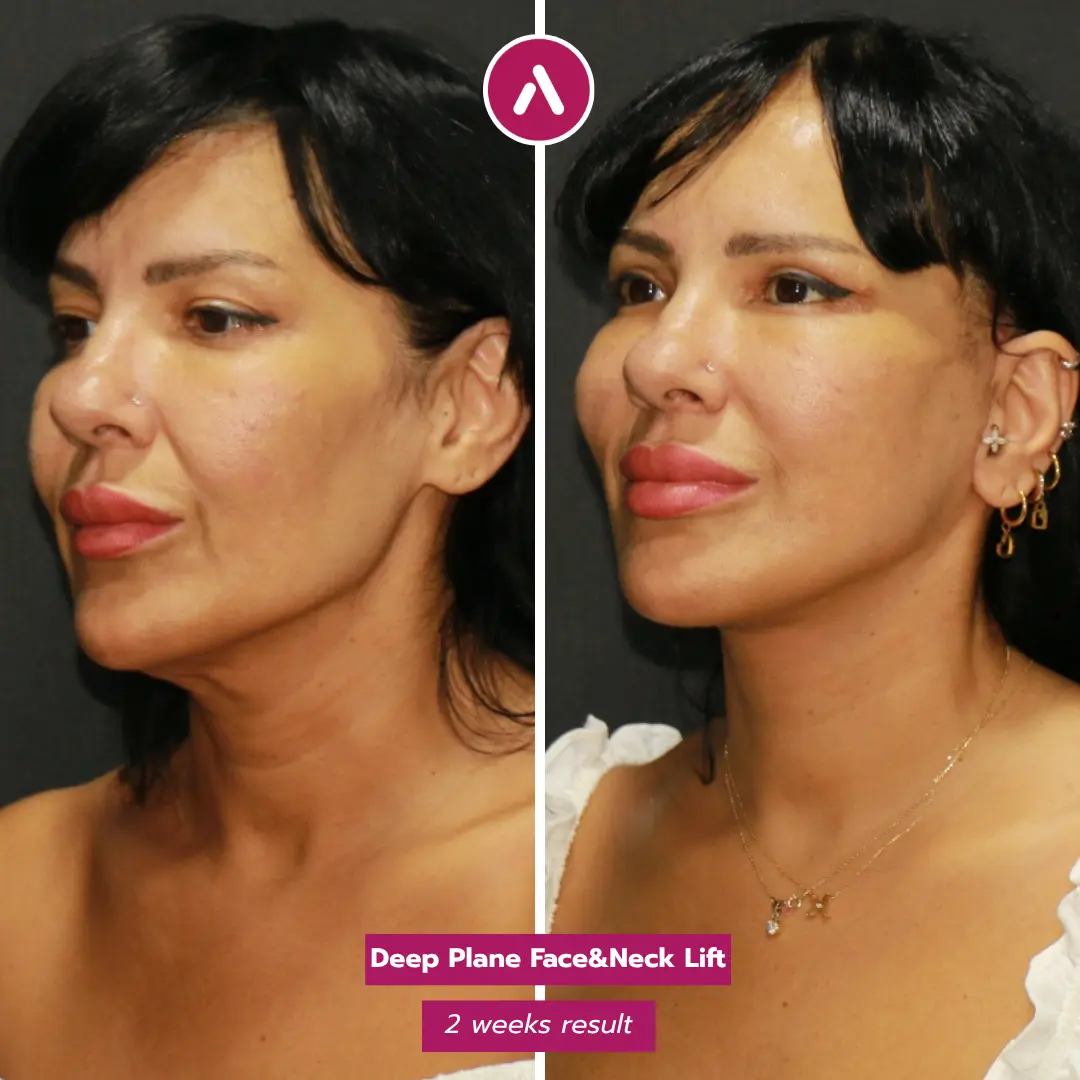
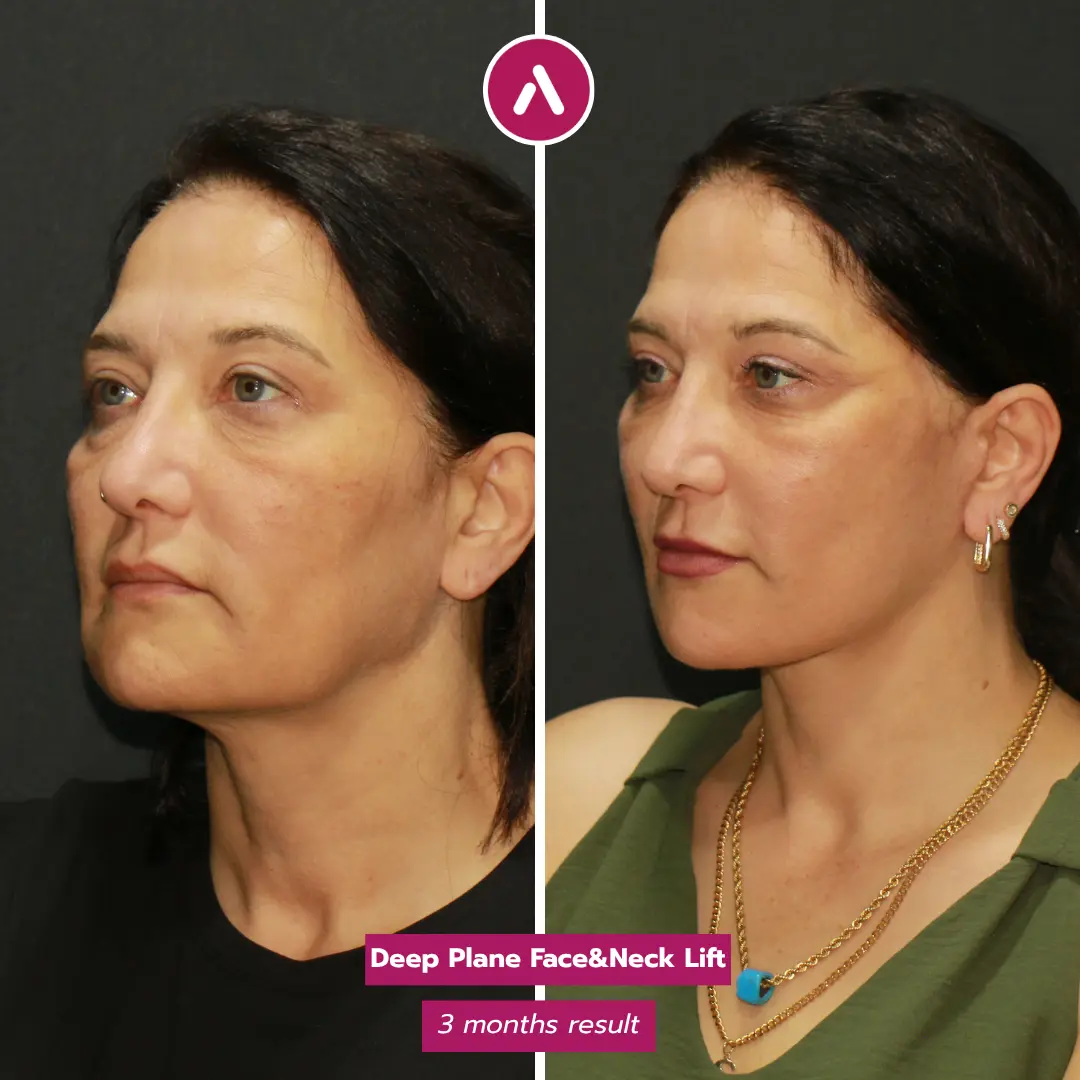
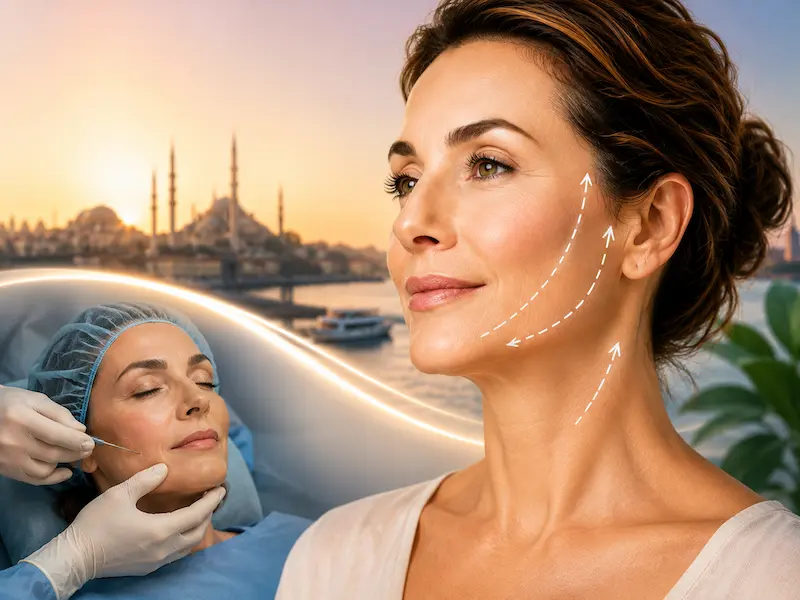
Most Canadian patients researching a deep plane facelift technique at AKM Clinic are not looking for a temporary change. They are usually comparing longevity, safety, and cost-per-year value before travelling to Istanbul from Toronto, Vancouver, Montreal, Calgary, or Ottawa.
The deep plane approach is designed for structural facial aging. Instead of pulling the skin tighter, the surgeon releases and repositions deeper facial tissues that have descended over time. This is why the result can look more rested and less “done” than tension-based techniques.
Still, no facelift stops aging. A deep plane facelift resets the visible aging curve; it does not freeze it. The best way to understand longevity is to look at the 5-year, 10-year, and 15-year windows separately.
Table of Contents
Why Deep Plane Lasts Longer Than Other Techniques?
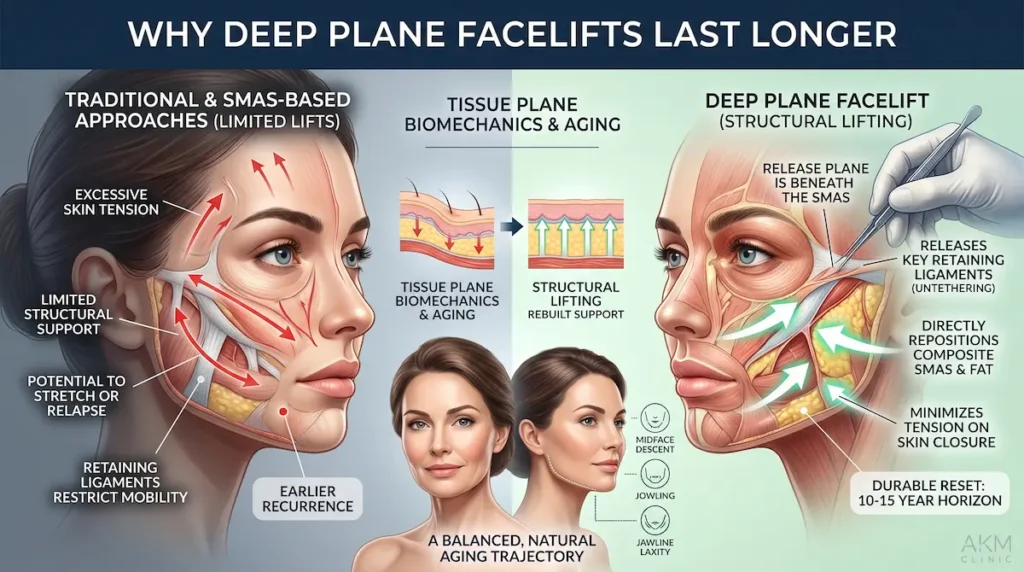
Deep plane facelift longevity comes from the anatomical level being treated. The technique works beneath the superficial musculoaponeurotic system, known as the SMAS, and releases key retaining ligaments that limit facial mobility during a lift.
This deeper release allows the surgeon to reposition the midface, lower face, and jawline more directly. The skin is then closed with less tension. That difference matters because skin under tension stretches over time.
Medical references describe the deep plane facelift as a technique that lifts a composite tissue layer beneath the SMAS, improves flap vascularity, releases retaining ligaments, and allows more durable repositioning of descended facial soft tissues. The same anatomical logic explains why many surgeons consider it especially useful for jowling, midface descent, and lower-face laxity. NCBI StatPearls describes these deep plane principles in its clinical overview.
Tissue plane biomechanics and aging trajectory
The face ages in layers. Skin loses elasticity, fat pads descend, retaining ligaments become more visible, and the jawline gradually softens. A skin-only lift addresses the outer layer, but the deeper structures continue to pull downward.
A deep plane facelift changes that balance. By repositioning the deeper mobile layer, the surgeon restores support where aging started. This helps the result hold because the lifted tissue is not relying on skin tension alone.
Think of it as rebuilding the support frame before smoothing the surface. The surface still ages, but it ages over a better foundation. That is the core reason deep plane outcomes are often discussed in the 10-15 year range.
Why structural lifting outperforms skin tightening
Skin tightening can look impressive early. It can also fade faster because skin is elastic tissue. If too much tension is placed on it, it may stretch, widen scars, distort the ear shape, or create the “pulled” look that many Canadian patients want to avoid.
Structural lifting is different. It moves the descended support layer and lets the skin settle over it. This produces a more natural resting expression and a more stable jawline over time.
For a technical comparison of why depth matters, see the SMAS vs deep plane longevity comparison. For the aesthetic philosophy behind that decision, see the natural-aging philosophy behind deep plane results.
Longitudinal patient cohort observations
Long-term facelift data is not as abundant as patients expect. Many studies measure satisfaction at a few months or a few years, while true longevity requires follow-up over a decade or more.
A commentary in Facial Plastic Surgery & Aesthetic Medicine discussing 30 years of deep plane facelift outcomes refers to revision timing around the 11-year mark as a useful benchmark. That does not mean every patient needs another surgery at 11 years. It means the average point at which revision becomes worth discussing often falls near that decade-plus window. The journal commentary provides the long-term revision framing.
“In long-term follow-up, we do not judge a deep plane facelift by whether the patient still looks exactly as they did at month six. We judge it by whether the face continues to age in a balanced, natural way at year five, year ten, and beyond.”Composite surgeon perspective, AKM Clinic
At AKM Clinic, the longevity discussion is framed honestly. The goal is not to promise permanence. The goal is a durable reset that respects the patient’s facial identity and gives a realistic 10-15 year planning horizon.
The 5-Year Window — What to Expect
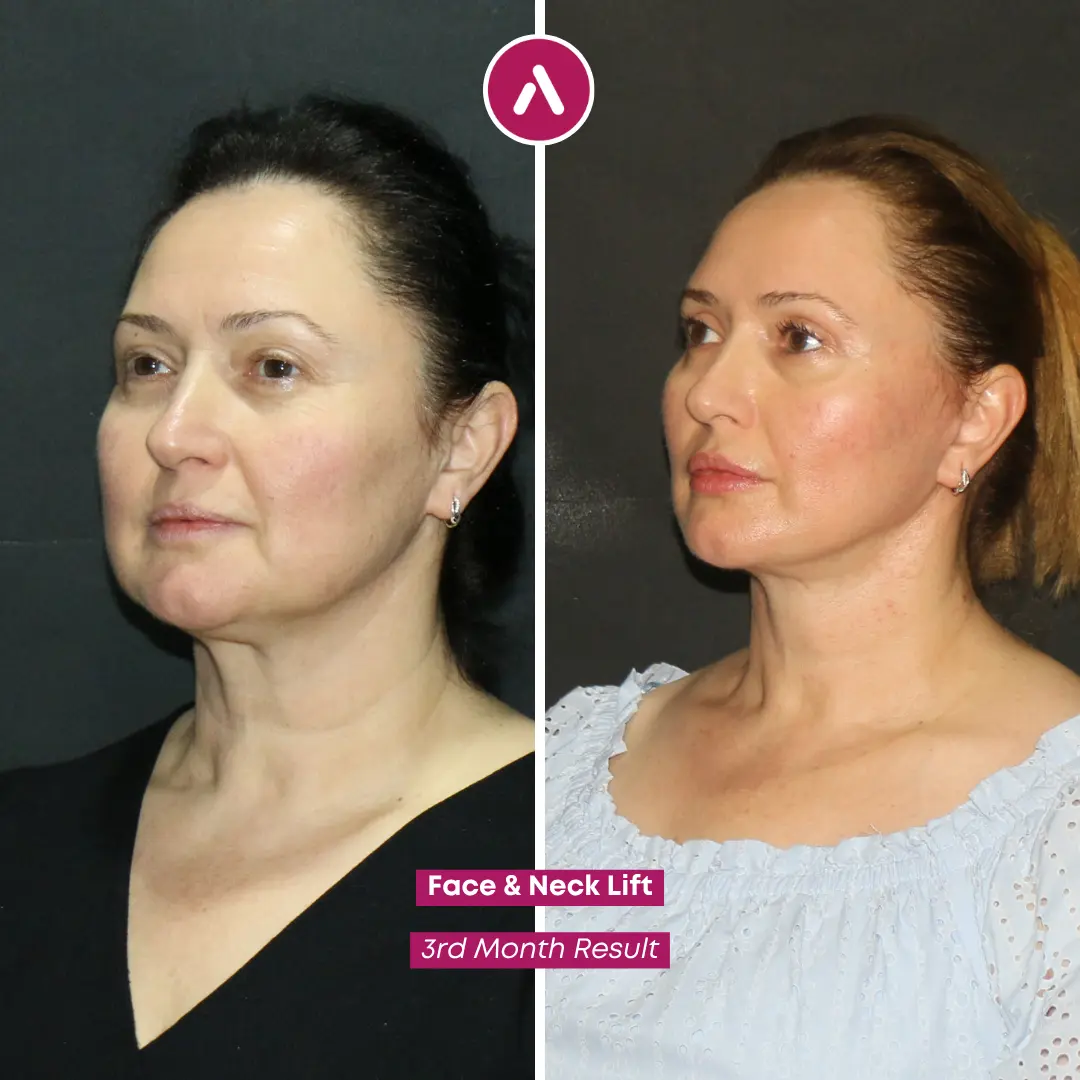
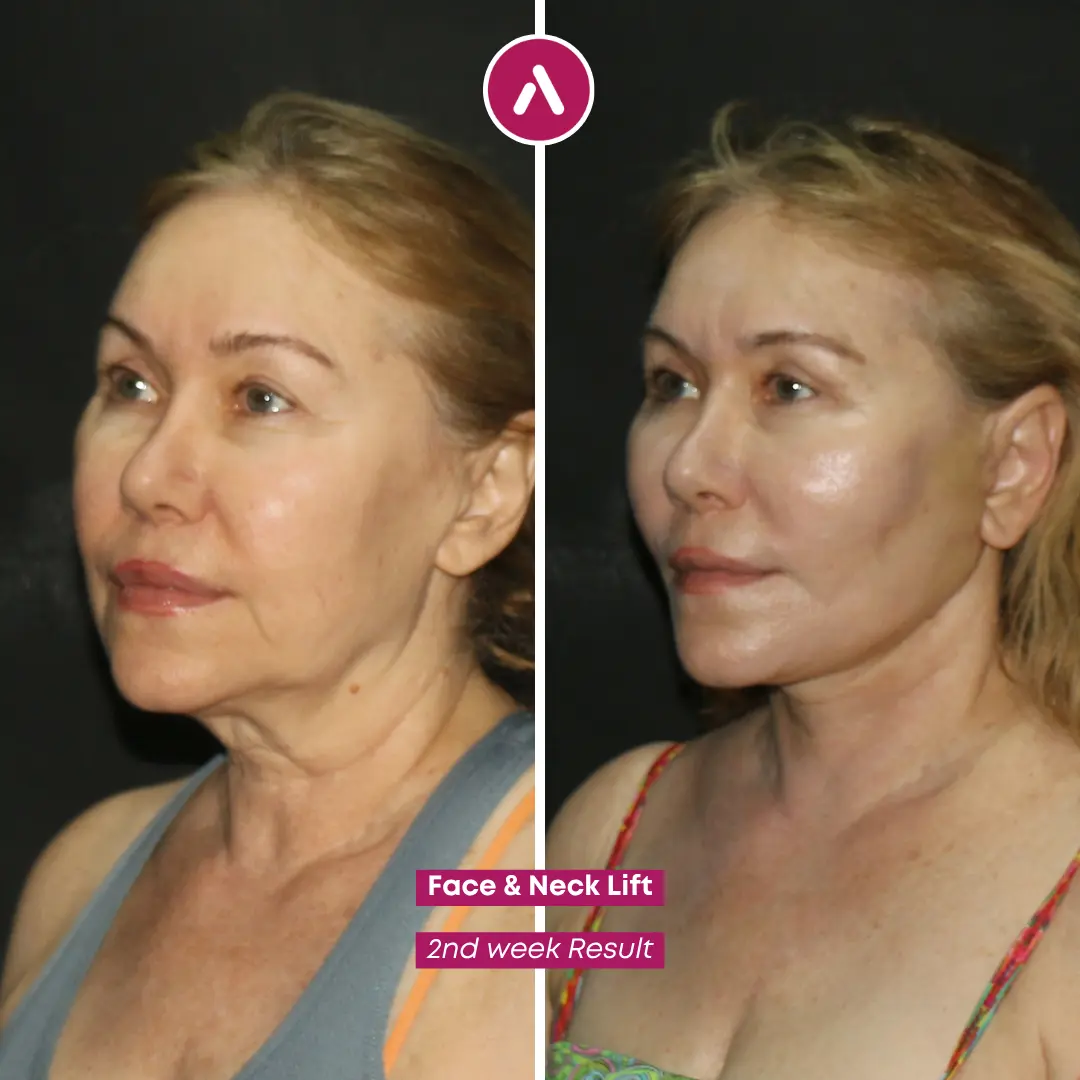
At five years, most well-executed deep plane facelift results still look clearly improved compared with the pre-operative baseline. The jawline is usually better defined, jowling remains reduced, and the midface often keeps a softer, more supported shape.
The result will not look identical to the early post-op “honeymoon” stage. That is normal. By year five, the face has settled into a more natural version of the surgical result.
This is often the stage where Canadian patients feel the value of choosing a deeper technique. The result should not look tight. It should look believable.
Typical structural state at year 5
By the fifth year, the strongest benefit is usually structural. The lower face still tends to hold better than it would have without surgery. The jawline may not be as sharply defined as it was at month six, but it is usually far ahead of the original aging pattern.
Patients who had early or moderate jowling often remain very satisfied at this point. Patients who had heavier neck laxity or more advanced skin quality concerns may start considering non-surgical support earlier, especially if the neck was not treated comprehensively.
Age at surgery matters. A patient who has surgery at 48 and maintains stable weight often ages differently than a patient who begins at 67 with more advanced tissue laxity. Both can do well, but their 5-year photographs may tell different stories.
Skin quality observations
The deep plane facelift repositions tissue; it does not directly reverse every skin-quality issue. Fine lines, pigmentation, sun damage, and texture changes can continue, especially in patients with high UV exposure or inconsistent skin care.
This is why many patients combine surgery with skin-focused treatments or disciplined topical care. In Canada, scar and skin protection requires year-round thinking. Winter snow can reflect UV, while summer UV risk rises sharply, especially in southern Ontario and coastal British Columbia.
Health Canada advises sun protection when the UV Index is 3 or higher, including protective clothing, sunglasses, and broad-spectrum water-resistant sunscreen with SPF 30 or higher. That guidance is highly relevant after facial surgery because UV exposure can affect scars, pigmentation, and visible skin aging.
Canadian skin-care discipline after facelift
For Canadian patients, post-facelift skin protection is seasonal. In July, Toronto and Vancouver patients need strict SPF and shade habits. In February, Calgary or Montreal patients should still think about reflected UV from snow, especially during skiing, winter walking, or sunny commutes.
Patient satisfaction patterns at the 5-year mark
Five-year satisfaction is usually strongest when the patient understood the purpose of surgery before booking. A deep plane facelift is not meant to make someone look 25 again. It is meant to reposition descended tissues so the face looks rested, supported, and authentic.
Patients who expected natural aging tend to be happier than those expecting permanent stillness. Facial movement continues. Skin continues to change. The value lies in the slower, more graceful visible decline after the reset.
At this stage, maintenance may be light. Many patients focus on skin care, sun protection, stable weight, and occasional non-surgical treatments rather than revision surgery.
The 10-Year Window — The Average Longevity Mark
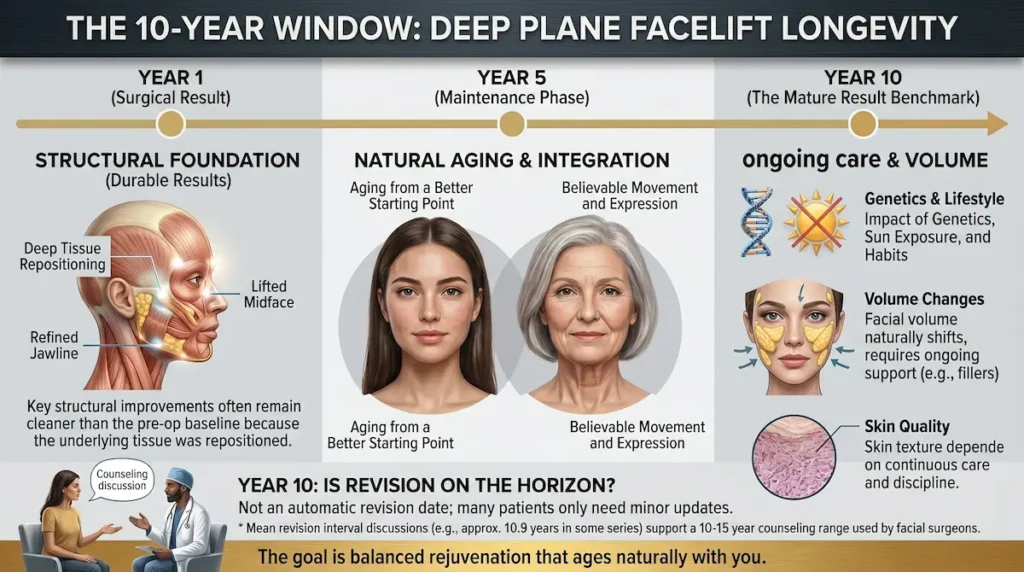
By year ten, the deep plane facelift result has usually moved from “fresh surgical outcome” into “mature long-term result.” This is the point where patients can judge whether the lift aged naturally, whether the jawline remains meaningfully improved, and whether maintenance is still minor or becoming more surgical.
For many Canadian patients, the 10-year mark is the most useful planning benchmark. It is long enough to measure real durability, but not so far out that every change can be blamed on surgery. Genetics, sun exposure, weight changes, menopause, smoking history, and skin-care discipline all become visible by this stage.
Recent long-term commentary on deep plane facelift outcomes has discussed a mean revision interval of about 10.9 years in one revision-focused patient series, with younger patients often waiting longer before a secondary lift is considered. This supports the practical 10-15 year counselling range used by many experienced facial surgeons.
Where most well-executed deep plane outcomes stand
At ten years, a good deep plane result should not look like the face has stopped aging. It should look like the patient is aging from a better starting point. The jawline may soften again, but it often remains cleaner than the original pre-op baseline.
The most durable areas tend to be those corrected structurally. Jowls, midface descent, and lower-face heaviness often remain improved because the deeper tissue layer was repositioned rather than camouflaged. Skin texture and fine lines, however, depend more heavily on ongoing care.
This is why the answer to how long does deep plane facelift last is not a single number. A patient may retain a strong structural improvement for 12 years, while their skin quality starts needing support at year five or six. Those are different forms of aging.
Volume changes and natural aging integration
Facial volume continues to change after any facelift. Cheek fat pads, temples, under-eye support, and jawline fullness can shift with time. A deep plane lift repositions descended tissue, but it does not prevent future volume loss.
That can actually be positive. A result that continues to move and age naturally is usually more believable than a face that looks tight but flat. The aim is balanced rejuvenation, not permanent immobility.
If regenerative augmentation is part of the treatment plan, longevity may involve a separate discussion. For that distinct topic, see for longevity data with stem cell augmentation, see the dedicated stem cell guide.
Whether revision is on the horizon at year 10
Year ten is not an automatic revision date. Some patients simply update skin quality, add volume, or address neck laxity. Others begin asking whether a smaller surgical refresh would be worthwhile.
The key question is not “Has aging returned?” Aging always returns. The better question is: “Has the improvement fallen below the point where I still feel the original procedure gives value?”
Many patients do not need a full secondary facelift at this stage. Some need no procedure at all. Others may consider a limited refinement if jowling, neck laxity, or lower-face descent has become visible again.
Beyond 15 Years — When Revision Becomes Relevant
Beyond 15 years, the original deep plane facelift has usually delivered its main structural value. Some patients still look significantly better than their pre-operative trajectory would have predicted. Others are ready for a smaller or more targeted correction.
This stage is highly individual. A patient who maintained stable weight, avoided smoking, protected the skin from UV exposure, and used sensible maintenance may continue to age gracefully without surgery. A patient with heavier skin, major weight fluctuations, or significant sun damage may want intervention earlier.
At AKM Clinic, the revision conversation is framed carefully. The goal is not to chase the face at month six. The goal is to decide whether a new procedure would produce enough visible and emotional value to justify surgery.
Tuck-up procedures and what they correct
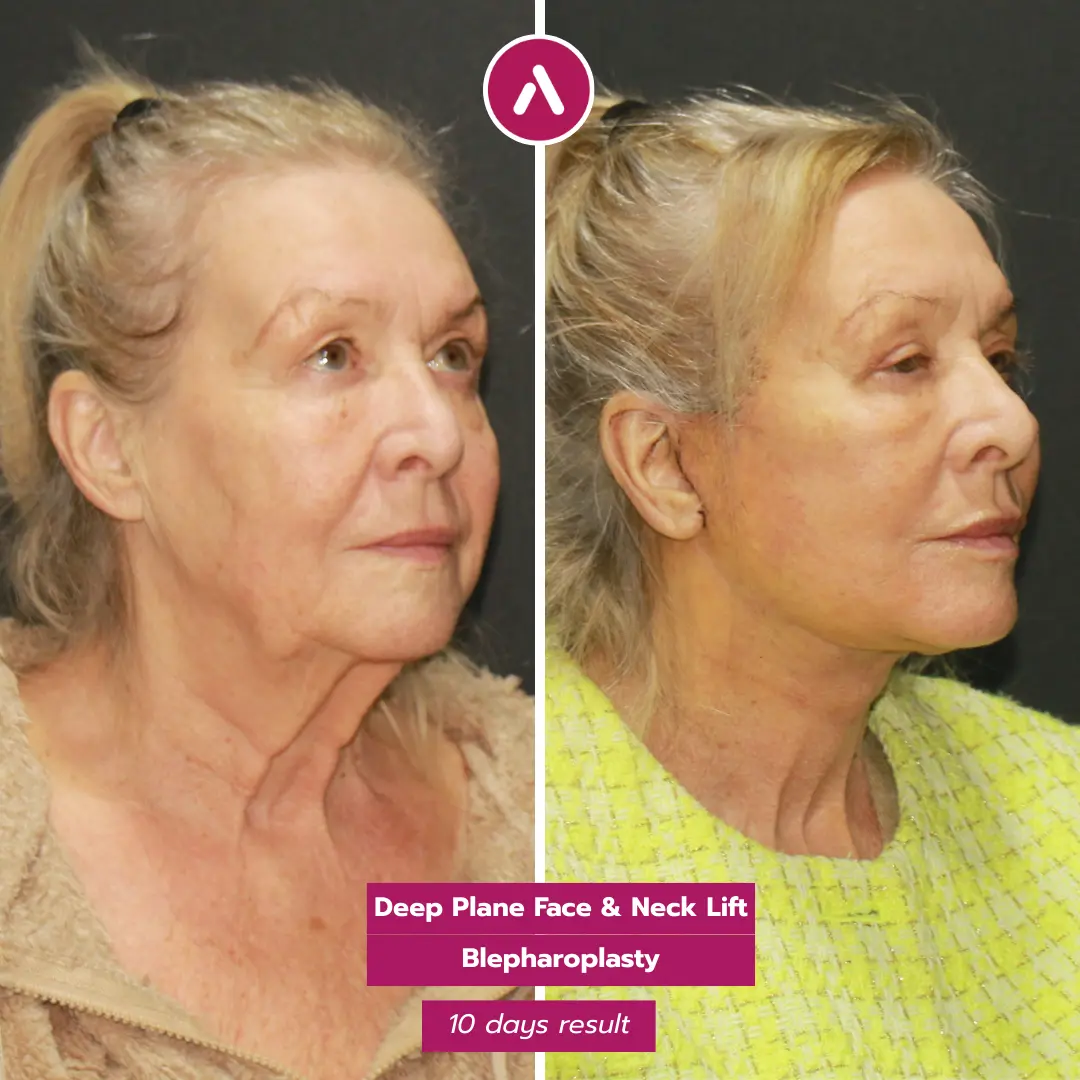
A tuck-up procedure is a smaller secondary lift performed years after the original surgery. It usually targets recurrent laxity rather than rebuilding the entire face. It can be appropriate when the original deep plane result remains mostly strong, but the jawline or neck needs refinement.
According to the AKM Clinic Treatment Techniques Cost Schedule, a tuck-up procedure is listed at CAD $7,500. This is a technique-level fee, not the same category as an all-inclusive package.
Patients who need more complex correction may require a true secondary deep plane lift instead. For patients evaluating that path, revision facelift options for long-term maintenance explain why scar tissue, altered anatomy, and previous surgical vectors require specialist planning.
Non-surgical maintenance options
Non-surgical maintenance can help when the issue is mild volume loss, early skin laxity, or surface aging. It cannot replace a structural facelift. It can, however, extend the period before revision becomes attractive.
Common options include filler-based support, neuromodulator treatment, energy-based skin tightening, laser resurfacing, medical skin care, and carefully selected thread procedures. The right choice depends on the problem being treated.
For filler-based maintenance, see non-surgical maintenance options after facelift. For mechanical lifting in carefully selected patients, see thread lift as a post-facelift maintenance option.
Maintenance pricing in CAD versus Canadian metro pricing
Canadian patients often compare maintenance in Toronto, Vancouver, or Montreal with a return trip to Istanbul. The important point is not the cheapest single session. It is whether the plan solves the actual problem. Mild skin aging may suit non-surgical care; recurrent jowling usually needs structural assessment.
Why some patients never require revision
Some patients never return for a secondary facelift. They may still age, but they remain satisfied with the long-term reset. This is more common when the first operation was well-timed, technically sound, and conservative enough to age naturally.
Others simply prefer non-surgical upkeep. A patient who looks rested at 68 may not want another surgery, even if the jawline is softer than it was at 58. Satisfaction is personal.
The most successful long-term patients usually share one trait: they do not treat the facelift as a one-time escape from aging. They treat it as the foundation of a long-term facial maintenance plan.

Lifestyle Factors Affecting Personal Longevity
The surgical technique sets the foundation, but lifestyle determines how well that foundation holds. Two patients can have the same deep plane facelift at the same age and look very different ten years later because their skin, weight, health habits, and sun exposure are different.
This is especially relevant for Canadian patients. The face is exposed to dry winter air, strong summer UV, reflected light from snow, and seasonal changes in activity. A durable result depends on treating the facelift as the beginning of a maintenance strategy, not the end of one.
For most patients, the biggest modifiable factors are sun protection, smoking avoidance, weight stability, alcohol moderation, and consistent medical-grade skin care. None of these replaces surgery. They protect the surgical result.
Sun exposure and the Canadian seasonal UV reality
UV exposure is one of the most predictable ways to shorten the visible life of a facelift. It damages collagen, worsens pigmentation, accelerates fine lines, and can make scars more visible. This matters even if the deeper lift remains structurally strong.
Health Canada recommends using sun protection when the UV Index is 3 or higher, including protective clothing, sunglasses, and broad-spectrum water-resistant sunscreen with SPF 30 or higher. That advice applies in cloudy weather as well as direct sun.
Canadian patients often underestimate winter UV. Snow reflection, high-altitude ski trips, and bright February days in Calgary, Ottawa, or Montreal can still affect healing skin. Summer is more obvious, but winter is not risk-free.
Canadian UV protection after a facelift
After a deep plane facelift, daily SPF is not cosmetic advice. It is result protection. A practical Canadian plan includes SPF 30 or higher, sunglasses that cover the incision area near the temples, a brimmed hat in summer, and extra caution during snow reflection in winter.
Smoking, alcohol, and skin care discipline
Smoking is one of the clearest threats to facelift longevity. It reduces oxygen delivery, affects microcirculation, slows wound healing, and can compromise skin quality. A patient who smokes after surgery is working against the biological conditions needed for a long-lasting result.
Alcohol can also affect skin quality when intake is frequent or heavy. It may worsen dehydration, redness, inflammation, and facial puffiness. Occasional social use is different from repeated inflammatory stress.
Skin care does not need to be complicated. A stable plan usually includes gentle cleansing, moisturizer, SPF, retinoid or retinol if tolerated, and pigment management when needed. Patients with rosacea, melasma, or significant sun damage should discuss a plan before travelling home.
Weight stability and the rebound effect
Weight changes can alter facelift results because facial fat shifts with the body. Significant weight gain can soften jawline definition. Significant weight loss can create new looseness, especially around the lower face and neck.
This does not mean every patient must maintain the exact same weight for 15 years. Normal variation is expected. The issue is repeated large fluctuation, especially after major weight-loss medication use or rapid lifestyle changes.
A practical target is stability, not perfection. Patients planning substantial weight loss should discuss timing with the surgeon before booking. In some cases, it is better to reach a stable weight first, then proceed with surgery.
Cost-Per-Year Value Calculation in CAD
Longevity matters because it changes the real value of the procedure. A lower upfront price is not necessarily better if the result fades quickly. A higher-quality structural result may deliver stronger value when measured over the years it remains visible.
For an expert patient, the useful question is not only “What does the procedure cost?” It is “What does each year of meaningful improvement cost?” This is where the 10-15 year deep plane longevity range becomes financially relevant.
According to the AKM Clinic Packages List, the Deep Plane Facelift All Inclusive Package is CAD $7,500 and includes 4 hotel nights. Patients reviewing procedure costs can also compare deep plane facelift pricing in CAD before deciding whether an all-inclusive package or technique-specific quote applies to their case.
AKM all-inclusive deep plane: CAD $7,500 over 12 years = CAD $625/year
If the all-inclusive deep plane package is CAD $7,500 and the result is valued across 12 years, the cost-per-year is CAD $625. This is a simple planning calculation, not a guarantee that every patient will get exactly 12 years of the same visible effect.
The 12-year midpoint is useful because it sits inside the common 10-15 year range. It gives Canadian patients a realistic way to compare long-term value. It also avoids overstating the 15-year ceiling as if it applies to everyone.
That figure becomes more meaningful when patients include what the package covers: surgery, anesthesia, hospital facility fees, pre-operative tests, 5-star hotel accommodation, VIP transfers, medications, support garments, patient advocacy, and long-term virtual follow-up.
Toronto private equivalent: CAD $32,000 over 12 years = CAD $2,667/year
For comparison, an illustrative Toronto private-market deep plane facelift quote of CAD $32,000 spread across the same 12-year period equals about CAD $2,667 per year. This is not presented as a universal Canadian price. Domestic pricing varies by surgeon, facility, anesthesia, and whether the quote includes neck work, eyelids, follow-up, or facility fees.
The calculation still helps. It shows why Canadian patients often think beyond the sticker price. They want to know what is included, what is excluded, and whether the surgical result is durable enough to justify the plan.
In Canada, private cosmetic surgery quotes may separate surgeon fees, operating room costs, anesthesia, garments, medications, and follow-up visits. That makes direct comparison difficult unless every line item is clarified.
| Scenario | Illustrative CAD price | Longevity assumption | Cost per year | What the number means |
|---|---|---|---|---|
| AKM Clinic Deep Plane Facelift All Inclusive Package | CAD $7,500 | 12 years | CAD $625/year | Based on AKM package pricing and a midpoint longevity assumption |
| Illustrative Toronto private-market quote | CAD $32,000 | 12 years | CAD $2,667/year | Useful for comparison only; inclusions vary by clinic and quote |
| AKM tuck-up procedure later in life | CAD $7,500 | Case-dependent | Not calculated | Relevant only if a smaller secondary lift is clinically appropriate |
| Liquid facelift maintenance | CAD $3,150 | Shorter-term maintenance | Not calculated | Useful for volume or soft-tissue support, not structural relapse |
| Thread lift maintenance | CAD $2,750 | Shorter-term maintenance | Not calculated | May help selected patients, but does not replace a deep plane lift |
Why the value comparison favours AKM before maintenance is considered
The value comparison favours AKM because the all-inclusive package starts with a much lower CAD figure while still aiming for the same 10-15 year deep plane longevity window. The calculation becomes stronger when package inclusions are considered.
That does not mean every patient should choose surgery abroad. Medical travel requires careful planning, adequate time in Istanbul, post-op support, and confidence in the clinic’s safety infrastructure. A lower cost-per-year is only meaningful when the clinical standard is also appropriate.
For the right candidate, the value proposition is clear: a durable structural result, transparent CAD pricing, and a lower long-term annualized cost than many Canadian private-market options. The decision should still be anatomy-led.
What Canadian patients should compare before booking
Ask each clinic what is included in the quoted price. A useful comparison should cover surgeon fees, anesthesia, facility fees, hotel or recovery setting, medications, garments, follow-up access, and complication-management planning. A single number is not enough.
Frequently Asked Questions: How Long Does Deep Plane Facelift Last
These answers are designed for Canadian patients who want a realistic planning range, not a marketing promise. The deep plane facelift is durable, but every patient ages differently. Your anatomy, health history, skin quality, and maintenance habits all affect the final timeline.
Can a deep plane facelift last 20 years?
Some patients still look meaningfully improved 20 years after surgery, but that does not mean the original result remains unchanged. A more realistic counselling range is 10-15 years for a well-executed deep plane facelift.
At 20 years, aging will be visible again. The better question is whether the face still looks more balanced than it would have without the original procedure. In some patients, the answer is yes.
When should I plan for a revision?
Most patients should not plan revision surgery by calendar alone. A revision becomes relevant when recurrent laxity, jowling, neck looseness, or facial descent bothers the patient enough to justify another procedure.
For many people, that conversation begins around the 10-15 year window. Some patients consider a smaller tuck-up. Others prefer non-surgical maintenance or no further intervention.
What lifestyle factors shorten longevity?
The main factors that can shorten visible longevity are smoking, high UV exposure, major weight fluctuation, poor skin care, heavy alcohol use, and unmanaged medical conditions that affect healing. Genetics also matters.
Canadian patients should pay special attention to UV habits. Summer sun, winter snow reflection, and travel to warmer destinations can all affect skin quality and scar appearance over time.
Is maintenance required every year?
No. Annual maintenance is not mandatory after a deep plane facelift. Some patients choose periodic skin treatments, injectables, laser resurfacing, or medical-grade skin care, but the right schedule depends on anatomy and goals.
A patient with excellent skin quality may need very little support. A patient with sun damage, volume loss, or pigmentation may benefit from earlier maintenance. The plan should be individualized.
Does AKM offer revision pricing for previous patients?
Revision needs are assessed case by case. AKM Clinic lists a tuck-up procedure at CAD $7,500 in its Treatment Techniques Cost Schedule, but the appropriate procedure depends on the patient’s anatomy, scar tissue, and previous surgical history.
Patients considering revision should submit updated photographs and surgical records when available. The goal is to determine whether a limited refinement or a more formal revision facelift is appropriate.
What does a tuck-up procedure cost in CAD?
The AKM Clinic Treatment Techniques Cost Schedule lists a tuck-up procedure at CAD $7,500. This figure should not be confused with the initial all-inclusive deep plane facelift package, which is a separate package category.
A tuck-up may be suitable years after the original surgery if the main issue is limited recurrent laxity. It is not automatically the right choice for every long-term facelift patient.
Will Canadian winters affect my results?
Canadian winters do not directly shorten the structural lift. Cold weather will not undo the deep plane repositioning. The bigger concern is skin quality: dryness, wind exposure, indoor heating, and reflected UV from snow can affect the skin surface.
A simple winter plan helps. Use a barrier-supporting moisturizer, continue SPF on bright days, avoid aggressive exfoliation while healing, and protect incisions from irritation from scarves, hats, or collars.
If you are still asking how long does deep plane facelift last for your own face, the most useful answer comes from an anatomy-specific assessment. AKM Clinic can review your photographs, age, skin quality, lifestyle factors, and goals to calculate a realistic longevity and cost-per-year plan in CAD.
Schedule a virtual consultation with AKM Clinic to calculate your personal deep plane facelift longevity and CAD cost-per-year value.
Medical Disclaimer: This page is provided for general educational purposes only and does not replace an in-person medical consultation, diagnosis, or personalized treatment plan. All surgery carries risks, and outcomes vary between individuals. Suitability for deep plane facelift surgery, procedure selection, and anesthesia choice can only be determined after a full clinical assessment by a qualified surgeon. Always follow your clinician’s instructions and seek urgent medical attention if you develop concerning symptoms during recovery.