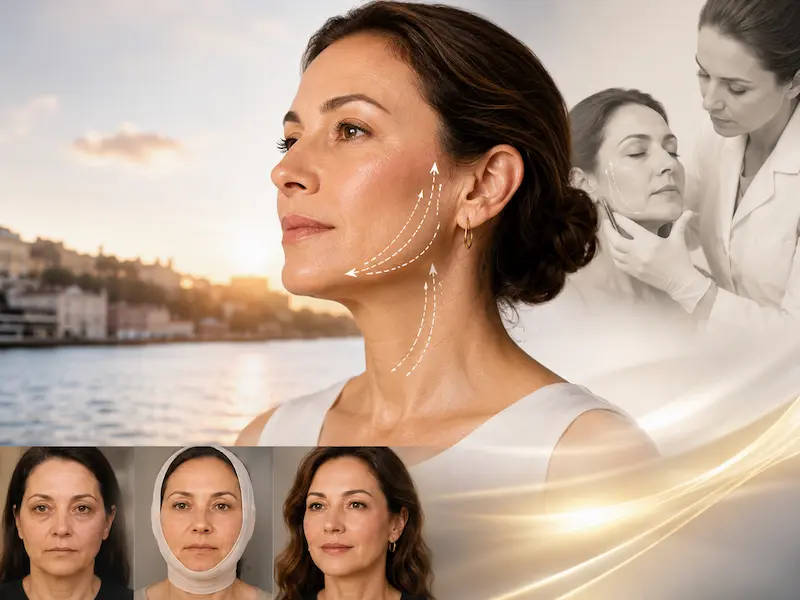

Facelift recovery with stem cells is designed to support the body during the earliest and most visible stages of healing: swelling, bruising, tissue repair, and scar maturation. For Canadian patients travelling to Istanbul, the value is not only aesthetic. A more predictable recovery plan can make the return to Toronto, Vancouver, Montreal, Calgary, or Ottawa feel less uncertain.
At AKM Clinic, regenerative support is not treated as a shortcut or a promise of instant healing. It is part of a structured recovery strategy that may be combined with surgical precision, careful aftercare, Hyperbaric Oxygen Therapy (HBOT), and Low-Level Laser Therapy (LLLT). Patients researching facelift options at AKM Clinic should understand where stem cell support fits into the healing timeline, and where its limits are.
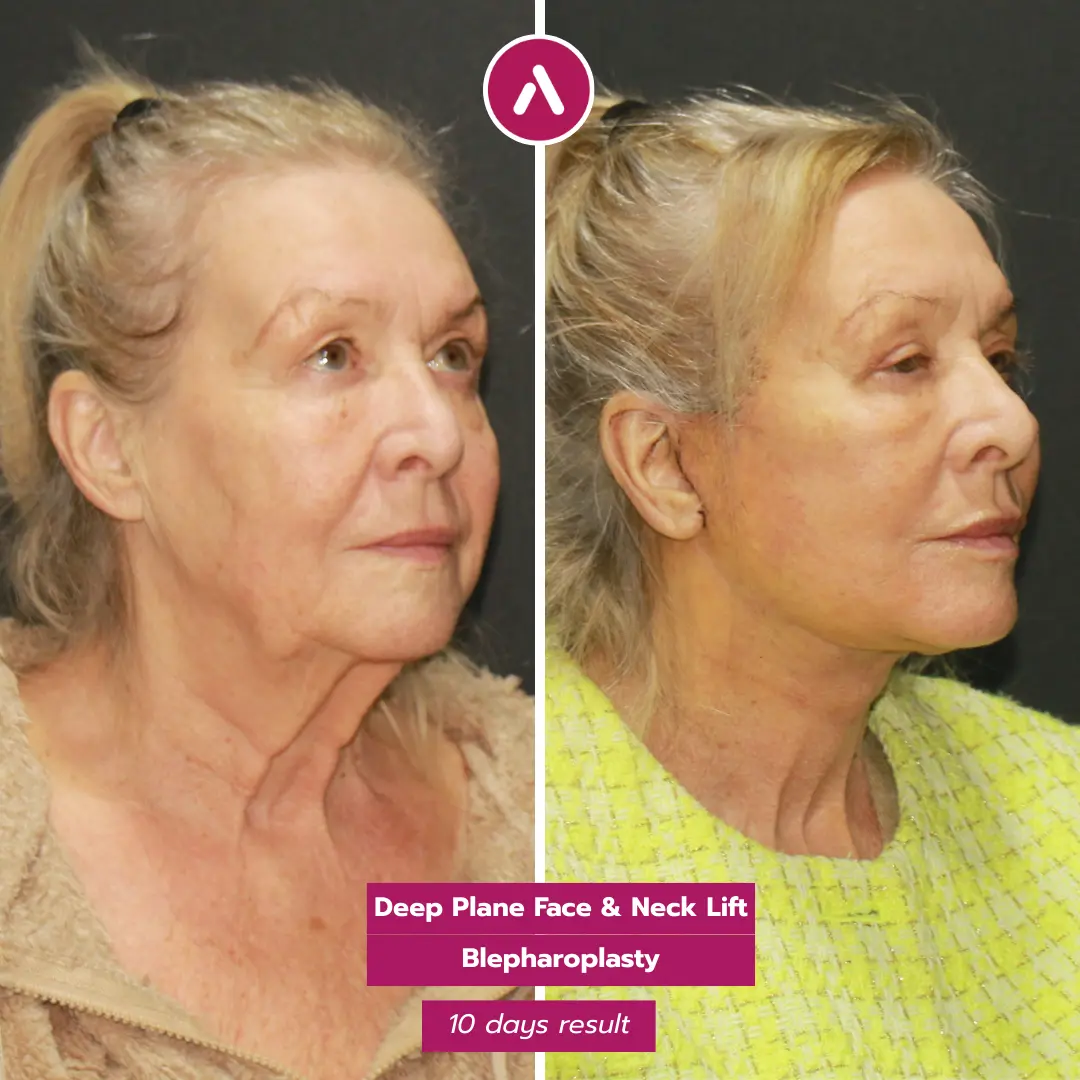
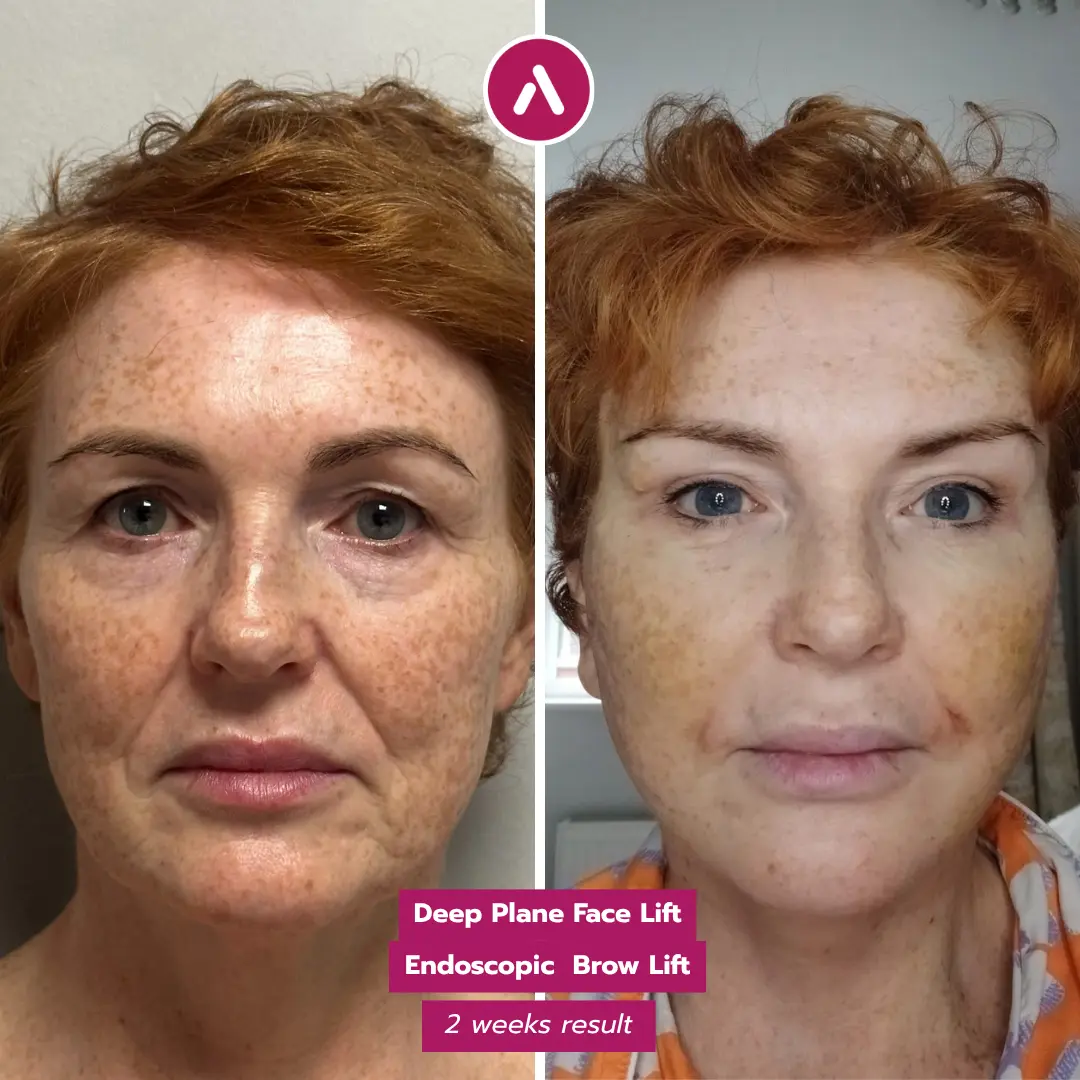
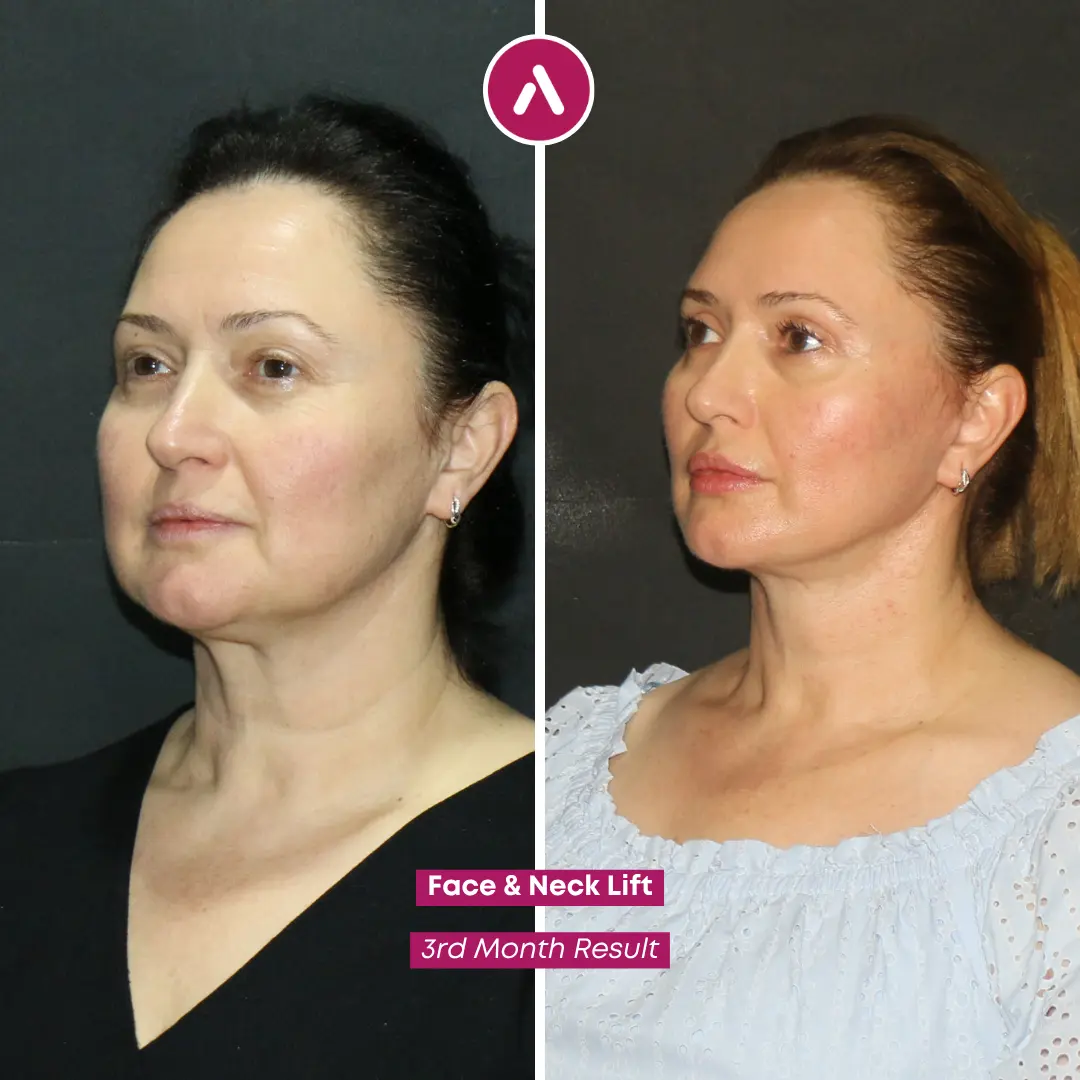
This article focuses only on recovery. It does not compare stem cell facelift with traditional facelift in detail, and it does not analyse long-term longevity. Those are separate decisions. Here, the goal is simple: to explain what may look and feel different during the first days, weeks, and months after surgery.
Quick Summary: Stem cell-augmented facelift recovery may support faster swelling resolution, reduced bruising intensity, and earlier scar maturation compared with traditional recovery alone. At AKM Clinic, regenerative support can be combined with HBOT and LLLT to help Canadian patients move through the early healing window with a more structured plan.
Table of Contents
How Stem Cells Influence Wound Healing?
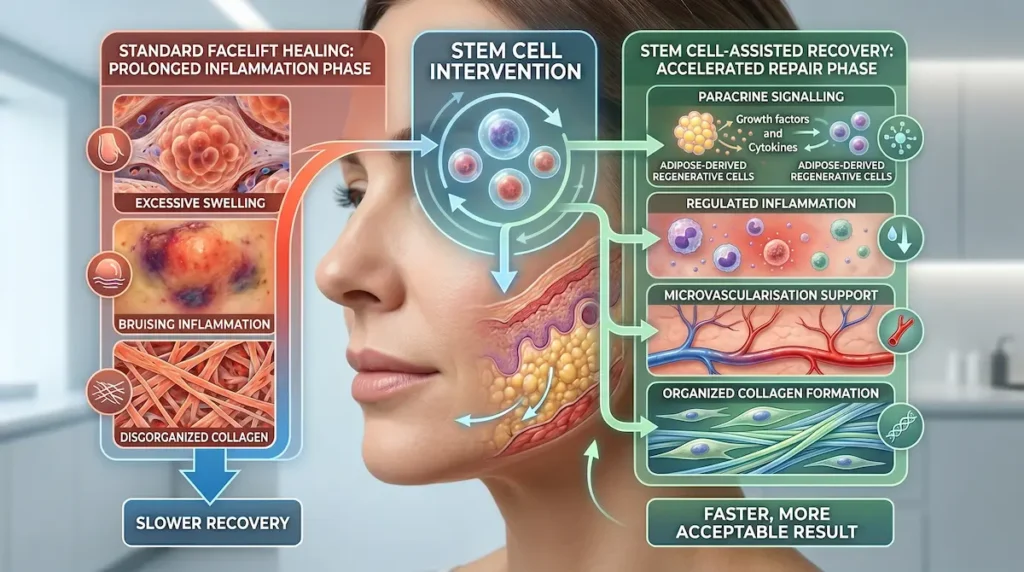
The first stage of healing after a facelift is biologically active. Tissue has been lifted, repositioned, and closed under controlled surgical conditions. The body then begins a repair sequence involving inflammation, blood vessel response, collagen signalling, and scar formation.
Stem cell-assisted recovery aims to support that sequence. In aesthetic surgery, the regenerative component is usually linked to adipose-derived cells, stromal vascular fraction, or nanofat-style regenerative fat processing. The clinical aim is not to replace the facelift itself. It is to improve the environment in which the surgical tissues heal.
Paracrine signalling and inflammation modulation
Paracrine signalling is one of the main reasons regenerative tissue support is studied in surgical recovery. Cells release biochemical signals that influence nearby tissue behaviour. These signals may help regulate inflammation, support repair cells, and encourage a more organized healing response.
That matters after a facelift because early inflammation affects swelling, tightness, bruising, and tenderness. Some inflammation is necessary. Too much can prolong the visible recovery window and make the first week more uncomfortable.
For the full biology behind harvesting, processing, and reintroducing regenerative cells, see our complete guide on stem cell assisted surgery. This recovery article stays focused on what patients may notice after the procedure.
Microvascularisation and oxygen delivery
Facelift recovery depends heavily on microcirculation. The tiny blood vessels in the skin and deeper tissue planes deliver oxygen, remove waste products, and support collagen-building cells. Better oxygen availability can help tissue move from the inflammatory phase into the repair phase more efficiently.
This is where regenerative support and oxygen-based recovery technology can work in the same direction. Stem cell signalling may support tissue repair activity, while HBOT increases oxygen availability in blood plasma. They are different tools. They are often discussed together because they target related recovery problems.
Canadian readers should also understand the regulatory language. Health Canada provides public information on biologics, radiopharmaceuticals, and genetic therapies, including cell-related therapeutic products, through its official drug and health product framework. In a surgical tourism context, this reinforces why clinics should use careful language and avoid exaggerated claims about regenerative procedures.
Health Canada’s biologics and cell therapy information is a useful Canadian reference point for patients who want to understand how cell-related terminology is handled in a regulated healthcare system.
Why the regenerative cascade speeds the early phase
The earliest phase of recovery is where patients usually notice the biggest difference. The face may feel tight, swollen, heavy, or bruised. If regenerative support helps reduce the intensity or duration of that response, the benefit is practical.
Patients are often less concerned with abstract cellular terminology and more concerned with one question: “Will I look acceptable sooner?” The honest answer is that healing still varies by age, skin quality, smoking status, surgical scope, nutrition, and adherence to aftercare. Stem cell support may improve the healing environment, but it does not erase recovery.
For the technique-level decision between regenerative augmentation and standard facelift surgery, see our technique comparison vs traditional facelift. That comparison belongs to the surgical planning stage. Recovery is the patient experience after that decision has already been made.
Patients who want a broader scientific reference on adipose-derived regenerative research can also review the International Federation for Adipose Therapeutics and Science. IFATS describes itself as a scientific society focused on adipose biology and related technology, and it does not endorse specific treatments or practitioners.
IFATS adipose biology resources can help research-driven Canadian patients separate scientific terminology from marketing language.
Day 0 to Day 3 — Acute Healing Phase
The first 72 hours after facelift surgery are usually the most intense visually. This is when swelling builds, bruising begins to show, and the face can feel firm or tight. Patients from Canada often find this phase emotionally challenging because they are recovering far from home while still adjusting to Istanbul time.
Stem cell-supported recovery does not remove this acute phase. It may make the inflammatory pattern less aggressive and more organized. The goal is a smoother transition through the first few days, not a bruise-free or swelling-free face.
Reduced inflammation intensity and swelling pattern
Day 0 begins in the clinical recovery setting. Patients may have dressings, compression support, and a feeling of pressure around the cheeks, jawline, or neck. Swelling is expected. It often increases before it improves.
With regenerative support, the inflammatory response may be more controlled. Patients may still look swollen, but the tissue can feel less angry or tense. This distinction matters for someone planning a long-haul return to Canada because fit-to-fly decisions depend partly on whether swelling is settling in a predictable way.
At AKM Clinic, the first few days are monitored closely. The patient does not need to interpret every change alone. This is especially important for solo travellers from cities such as Edmonton, Winnipeg, Halifax, or Ottawa who may not have a companion in Istanbul.
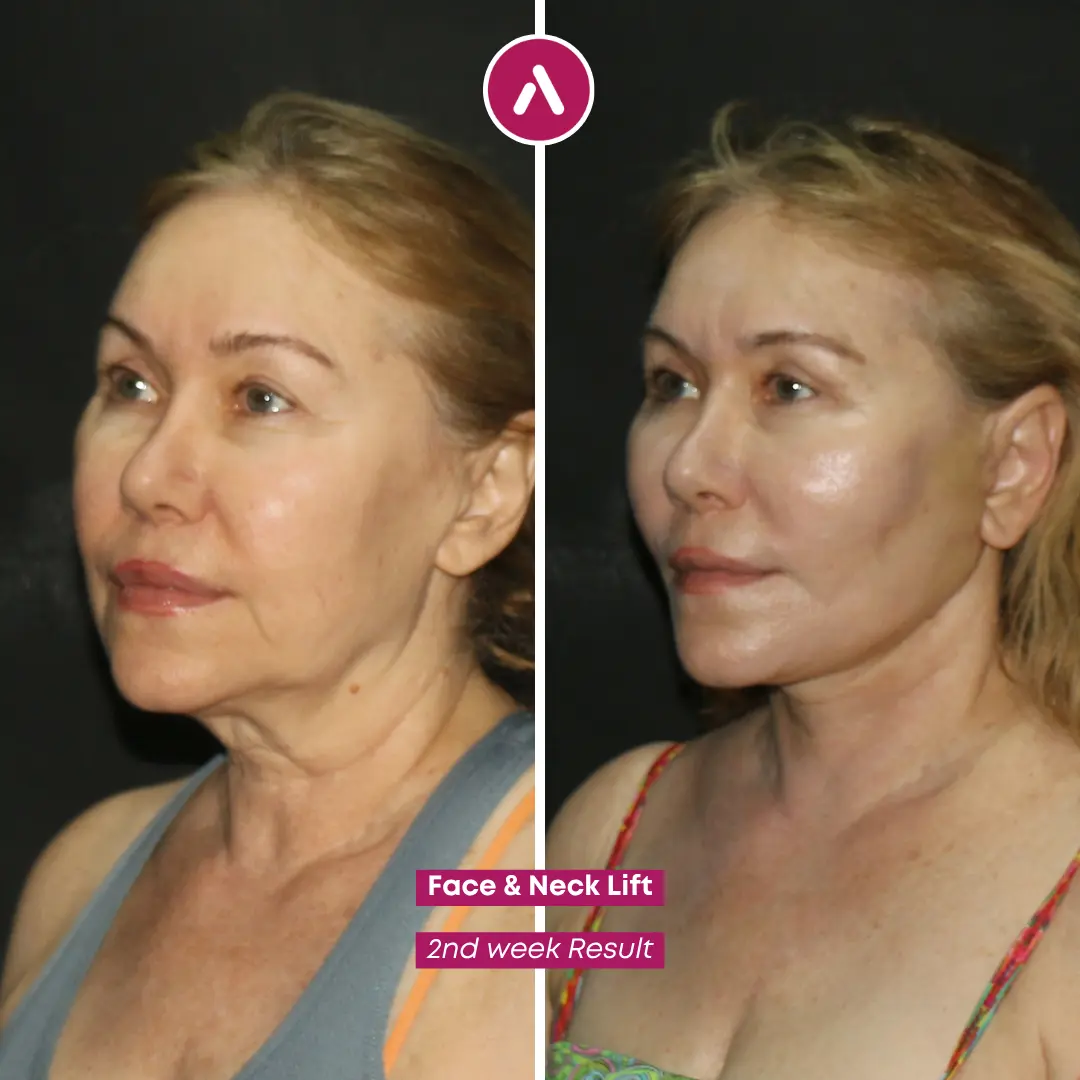
Bruising onset with stem cell support
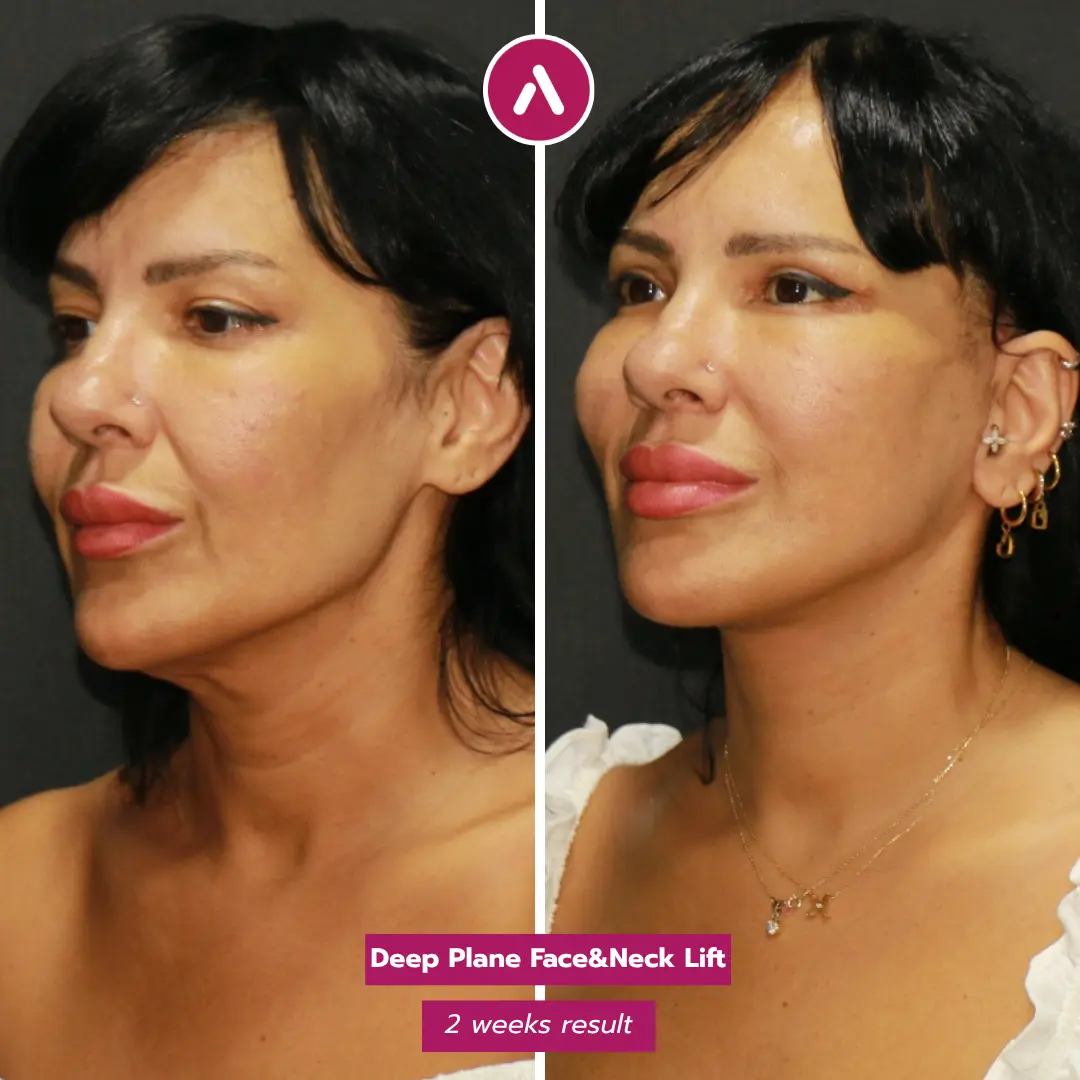
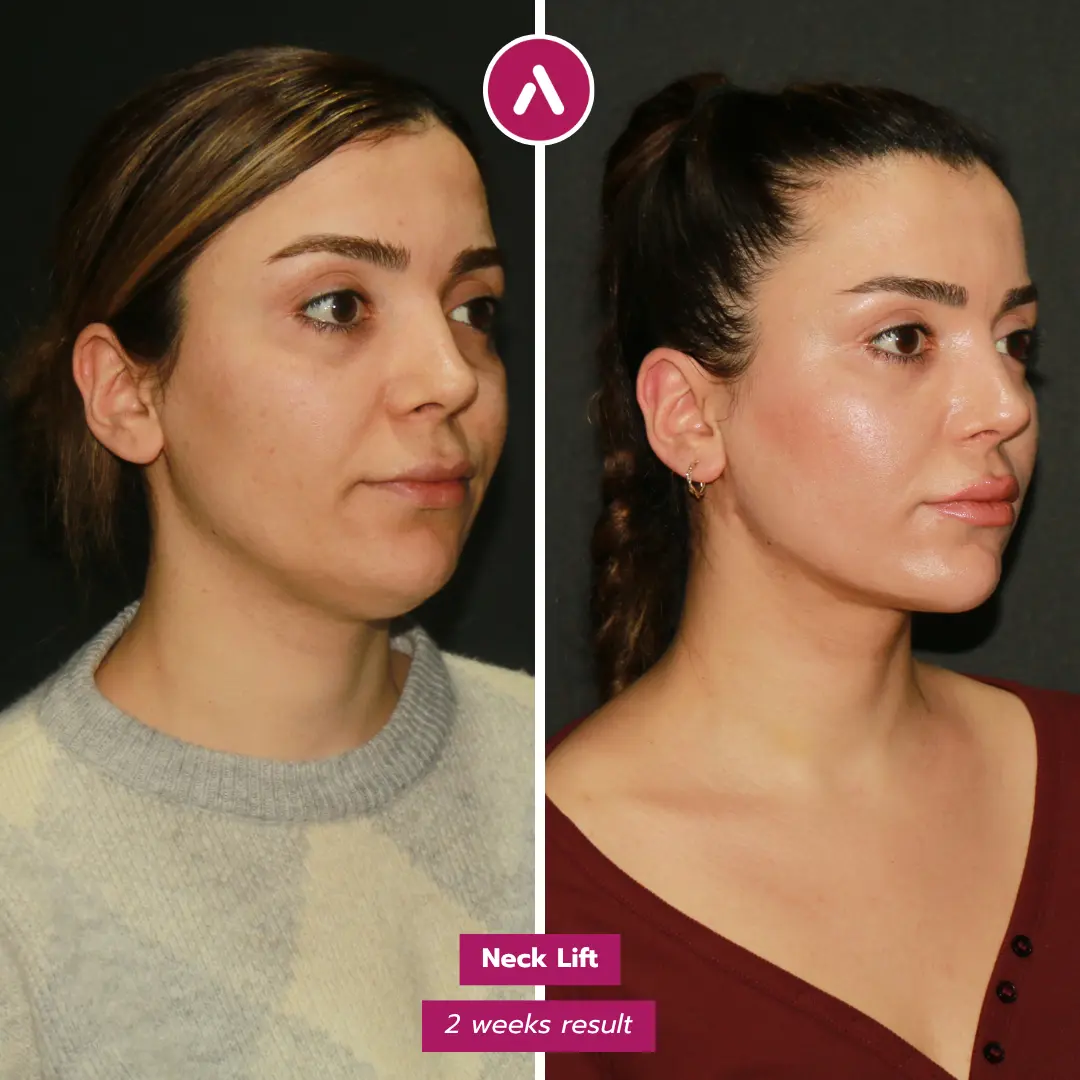
Bruising after facelift surgery commonly appears in stages. It may begin around the cheeks, lower face, neck, or under the jaw before migrating downward as the body clears blood pigments. The colour can shift from purple to green or yellow as healing progresses.
Stem cell-supported recovery may help the tissue clear bruising more efficiently. It does not mean no bruising. It means the visible bruising phase may be shorter or less intense for suitable patients.
For patients who want to see what the face can look like at specific milestones, our day-by-day visual recovery documentation explains the typical appearance at Day 1, Day 3, Day 7, Day 14, and beyond.
Pain perception differences in the first 72 hours
Most modern facelift patients describe the first days as pressure, tightness, or heaviness rather than sharp pain. Stem cell support is not a painkiller. Its potential comfort benefit is indirect: less inflammatory intensity can mean less tissue pressure.
Patients still need a structured medication plan. They also need rest, head elevation, hydration, and realistic expectations. Canadian patients should not compare their first 72 hours with someone else’s filtered recovery photo online.
The better comparison is clinical: Is swelling moving in the right direction? Is bruising following the expected colour pattern? Is pain manageable with the prescribed plan? These are the signs that matter most in the acute phase.
Day 4 to Day 14 — Subacute Phase
The second recovery phase is often easier emotionally because visible changes begin to move in the right direction. Bruising starts to clear, swelling becomes less heavy, and incision lines begin to feel more stable. For many Canadian patients, this is also the point where the return-flight timeline starts to feel realistic.
Stem cell-supported healing may be most noticeable during this window. The early inflammation phase has already started to settle. The tissue is now shifting into repair, circulation, and collagen organization.
Faster bruising resolution data
Bruising does not disappear in a straight line. It usually fades in patches and changes colour as the body clears blood pigments. One cheek may look better than the other for several days.
With regenerative support, many patients describe a quicker transition from dark bruising to lighter yellow or green tones. This matters because deep purple bruising is harder to camouflage, while lighter bruising can often be covered once the surgeon approves gentle makeup use.
“By the second week, the bruising looked much softer than I expected. I still looked like I had surgery, but I no longer felt worried every time I looked in the mirror.”Representative composite patient comment based on AKM Clinic follow-up patterns
This is not a guarantee. Patients who smoke, have fragile capillaries, take blood-thinning medication, or undergo more extensive neck work may still bruise for longer. A careful pre-operative review helps the surgeon predict those factors before surgery.
Earlier confidence in incision integrity
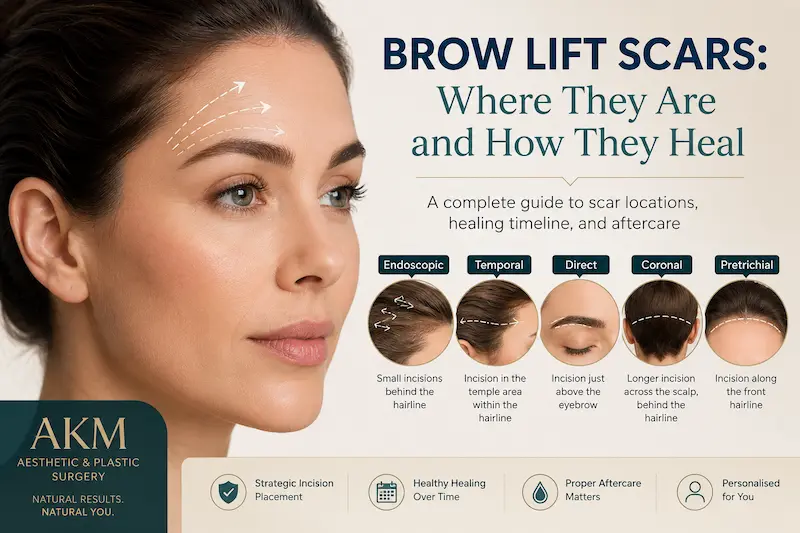
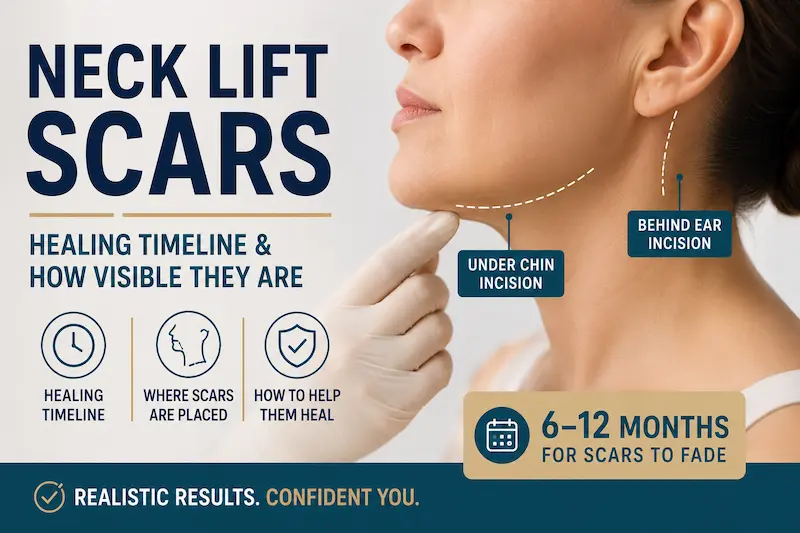
Incision healing is one of the most important parts of facelift recovery. In the first week, patients are usually protective of the incision lines around the ear, hairline, and under the chin if neck work was included. By the second week, the goal is not perfection. It is stability.
Stem cell-supported healing may contribute to better tissue quality around the incision environment. LLLT may also support cellular energy production at the skin level. Together, these measures may help the incision move toward early maturation with less prolonged redness.
Patients should still avoid pulling, scratching, aggressive hair washing, sauna heat, and any massage not approved by the surgical team. Incisions need time. Regenerative support can help the environment, but patient behaviour still protects the result.
Skin quality changes Canadian patients notice at week 2
By Day 10 to Day 14, some patients begin noticing that the skin looks less dull. The face may still be swollen, but the skin can appear calmer and better hydrated. This is often subtle.
For Canadian patients returning to colder climates in November through March, skin dryness can make early healing feel tighter. A gentle, surgeon-approved skincare plan matters. Harsh actives, retinoids, acids, exfoliation, and strong vitamin C products should wait until the surgical team clears them.
Canadian recovery callout: Patients flying back to Toronto, Vancouver, Montreal, or Calgary should plan for dry cabin air and dry winter indoor heating. Hydration, head elevation, and surgeon-approved moisturization can make the second week more comfortable.
| Recovery Milestone | Traditional Facelift Recovery | Stem Cell-Augmented Recovery |
|---|---|---|
| Day 3 | Swelling and bruising often look most intense. The face may feel tight, heavy, and uneven. | Swelling is still expected, but inflammation may feel more controlled in suitable patients. |
| Day 7 | Bruising begins to migrate and soften. Many patients still look visibly post-operative. | Bruising may shift colour sooner, with a calmer tissue appearance when healing is uncomplicated. |
| Day 14 | Social recovery often begins, though makeup or hairstyle camouflage may still be needed. | Some patients feel more confident with light camouflage and approved skincare by this stage. |
| Day 30 | Most swelling is improved, but residual firmness and numbness may remain. | Scar maturation and skin texture may appear more settled, though deeper remodelling continues. |
This table describes typical recovery patterns rather than a fixed medical promise. A mini facelift, standard facelift, deep plane facelift, and facelift with neck lift do not heal identically. Your surgeon’s assessment matters more than any online timeline.
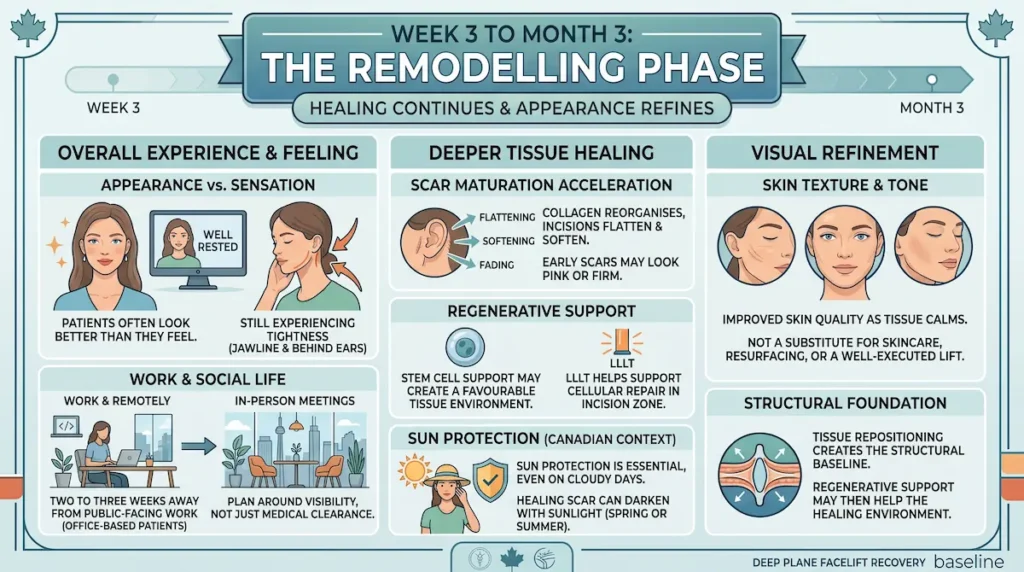
Week 3 to Month 3 — Remodelling Phase
The remodelling phase is where recovery becomes less dramatic but still clinically active. Bruising may be mostly gone, yet deeper swelling, firmness, numbness, and scar changes continue. Patients often look much better than they feel.
This stage is especially relevant for Canadian patients who return to work before their tissues have fully settled. A person may look “well rested” on camera while still experiencing tightness along the jawline or behind the ears. That does not mean recovery has failed. It means the deeper healing process is still unfolding.
Scar maturation acceleration
Scar maturation is the gradual process in which incision lines flatten, soften, and fade. Early scars may look pink or firm. Over time, collagen reorganizes and the scar becomes less visible.
Stem cell support may help create a more favourable tissue environment for scar remodelling. LLLT may also help by supporting cellular repair in the incision zone. These effects matter most when the patient follows scar-care instructions precisely.
Sun protection is essential. Canadian patients returning in spring or summer should protect incision lines from UV exposure, even on cloudy days. A healing scar can darken with sunlight, and that pigmentation can last longer than the swelling itself.
Skin texture and tone improvements
By Week 3, many patients are no longer focused only on swelling. They begin looking at skin texture, tone, and the way light reflects off the cheeks and jawline. Regenerative support may improve the appearance of skin quality as the tissue calms.
This should be framed carefully. Stem cells do not replace resurfacing, skincare, or a well-executed lift. They may support dermal repair and recovery quality, especially when combined with a facial rejuvenation plan based on anatomy rather than skin tension alone.
For patients who underwent a deep plane procedure, tissue repositioning creates the structural baseline. Regenerative support may then help the healing environment around that result. Patients researching the surgical foundation can review the deep plane facelift recovery baseline before deciding how much regenerative support belongs in their plan.
Return to normal social and work life in Canadian context
Many Canadian patients plan around work calendars, school breaks, or winter travel windows. A common pattern is to work remotely first, then return to in-person meetings once bruising and swelling are easier to manage. For office-based patients in Toronto, Ottawa, Calgary, or Vancouver, two to three weeks away from public-facing work is often more realistic than one week.
By Month 3, most patients feel more socially normal. Scars continue to mature, residual numbness can remain, and small areas of firmness may still soften over time. The face usually looks more integrated than it did in the first month.
Canadian return-to-work callout: If your role involves client meetings, teaching, healthcare work, public service, or video calls, plan your calendar around visibility, not just medical clearance. Looking camera-ready and being fully healed are different milestones.
For long-term result duration, this article does not go into detail. That topic belongs in our stem cell facelift longevity guide, which focuses on how results age over time.
AKM’s Combined HBOT, LLLT, and Stem Cell Recovery Protocol
Stem cell support is most useful when it sits inside a complete recovery system. At AKM Clinic, regenerative support may be combined with Hyperbaric Oxygen Therapy, Low-Level Laser Therapy, careful wound monitoring, and structured post-operative guidance. The purpose is to create a better healing environment from several directions at once.
This matters for Canadian patients because recovery is not happening at home. You may be preparing for a long-haul flight from Istanbul to Toronto, Montreal, Vancouver, Calgary, or another Canadian city. The recovery plan has to account for swelling, fatigue, cabin dryness, medication timing, and virtual follow-up once you return.
Why all three modalities are stacked
HBOT, LLLT, and stem cell-supported recovery do not do the same job. That is why they can be clinically complementary. Each targets a different part of the healing process.
- Stem cell-supported recovery may help regulate inflammation and support repair signalling in treated tissue.
- HBOT increases oxygen availability in blood plasma, supporting tissues that need oxygen during early healing.
- LLLT uses specific light energy to support cellular activity, scar maturation, and surface-level repair.
AKM Clinic’s technology standards include HBOT as a recovery tool and LLLT with 424 medical-grade semiconductor laser diodes at a 650 nm wavelength. These are not consumer spa add-ons. They are recovery technologies selected to support post-surgical tissue repair.
Patients who want the broader technology background can review AKM’s HBOT and LLLT recovery infrastructure. For a facelift-specific explanation of oxygen therapy, see HBOT science behind faster recovery.
Synergistic effects on healing speed
The term “synergy” should be used carefully. It does not mean guaranteed faster healing for every patient. It means the tools may support related healing pathways at the same time.
After a facelift, the body needs oxygen delivery, controlled inflammation, lymphatic clearance, collagen organization, and careful incision repair. HBOT may help with oxygen availability and swelling control. LLLT may support cellular energy and scar behaviour. Stem cell-supported recovery may influence tissue signalling and repair activity.
Together, this can create a recovery environment that feels more structured. Patients often appreciate that there is a plan for swelling and bruising rather than a vague instruction to simply wait it out. That difference can reduce anxiety, especially for expert patients who want to understand the clinical reasoning behind each step.
What patients experience during the recovery week
The recovery week usually includes clinical check-ins, dressing review, swelling assessment, medication guidance, and progressive activity instructions. If HBOT or LLLT is part of the patient’s plan, sessions are scheduled around the healing timeline and surgical team’s judgement.
Patients should expect the first sessions to feel calm and controlled. HBOT involves breathing oxygen in a pressurized chamber. LLLT is non-thermal and does not feel like a resurfacing laser. Most patients experience these therapies as part of a recovery routine rather than as separate procedures.
Pricing should also be framed accurately. A regenerative component such as nanofat grafting is listed at CAD $3,400 in AKM Clinic’s treatment technique pricing. Combined facelift and regenerative planning should be confirmed directly with the coordinator because the final surgical plan depends on anatomy, procedure scope, and whether additional treatments are medically appropriate. Patients comparing regenerative add-ons can review regenerative augmentation pricing in CAD.
Canadian access callout: HBOT and LLLT may be available in some Canadian metro areas, but access, indication, cost, and provider oversight vary. If you want continued therapy after returning to Canada, ask AKM’s team what is clinically useful before booking private sessions in Toronto, Vancouver, Montreal, or Calgary.
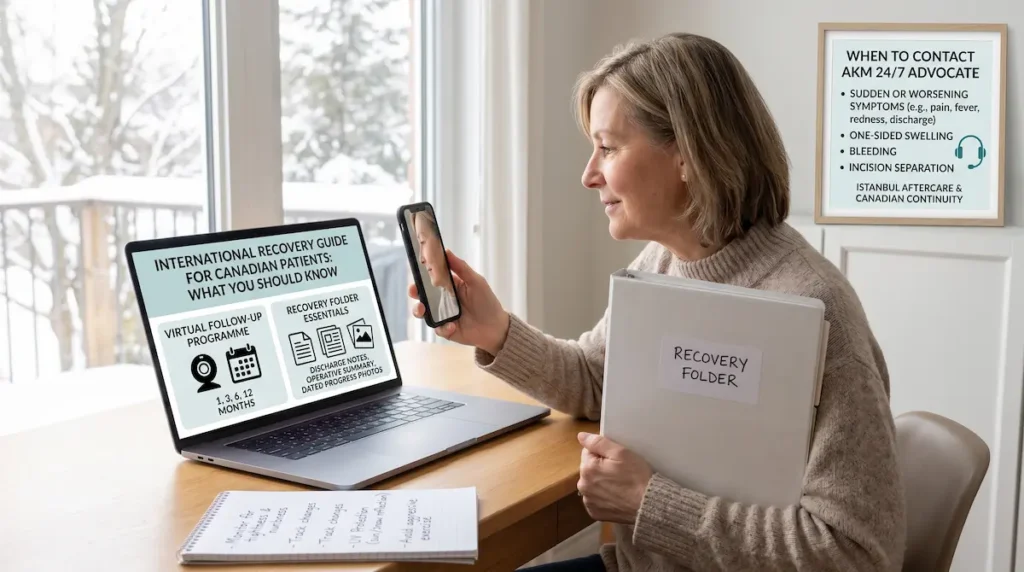
What Canadian Patients Should Know?
Recovery does not end when you board the flight home. For Canadian patients, the practical healing plan continues across time zones, changing weather, work obligations, and local healthcare access. A good international surgery plan includes both Istanbul aftercare and Canadian continuity.
This is where AKM’s long-term virtual follow-up structure matters. Patients need to know what is normal, what deserves a photo update, and what requires urgent medical attention. Clear thresholds reduce stress.
Continuity of recovery after returning home
Once back in Canada, patients should continue following the surgeon’s restrictions. That includes sleep position, skincare limits, scar protection, activity progression, and medication instructions. A family physician can be useful for general health concerns, but the surgical team should remain involved in procedure-specific questions.
AKM Clinic’s all-inclusive model includes long-term virtual follow-up at 1, 3, 6, and 12 months. This is important because swelling, numbness, scar texture, and tissue firmness can continue changing well after the visible bruising has faded.
Patients should keep a simple recovery folder. Include discharge notes, medication list, allergy information, operative summary if provided, and dated photos. This is helpful if you need advice from AKM or a Canadian clinician after returning home.
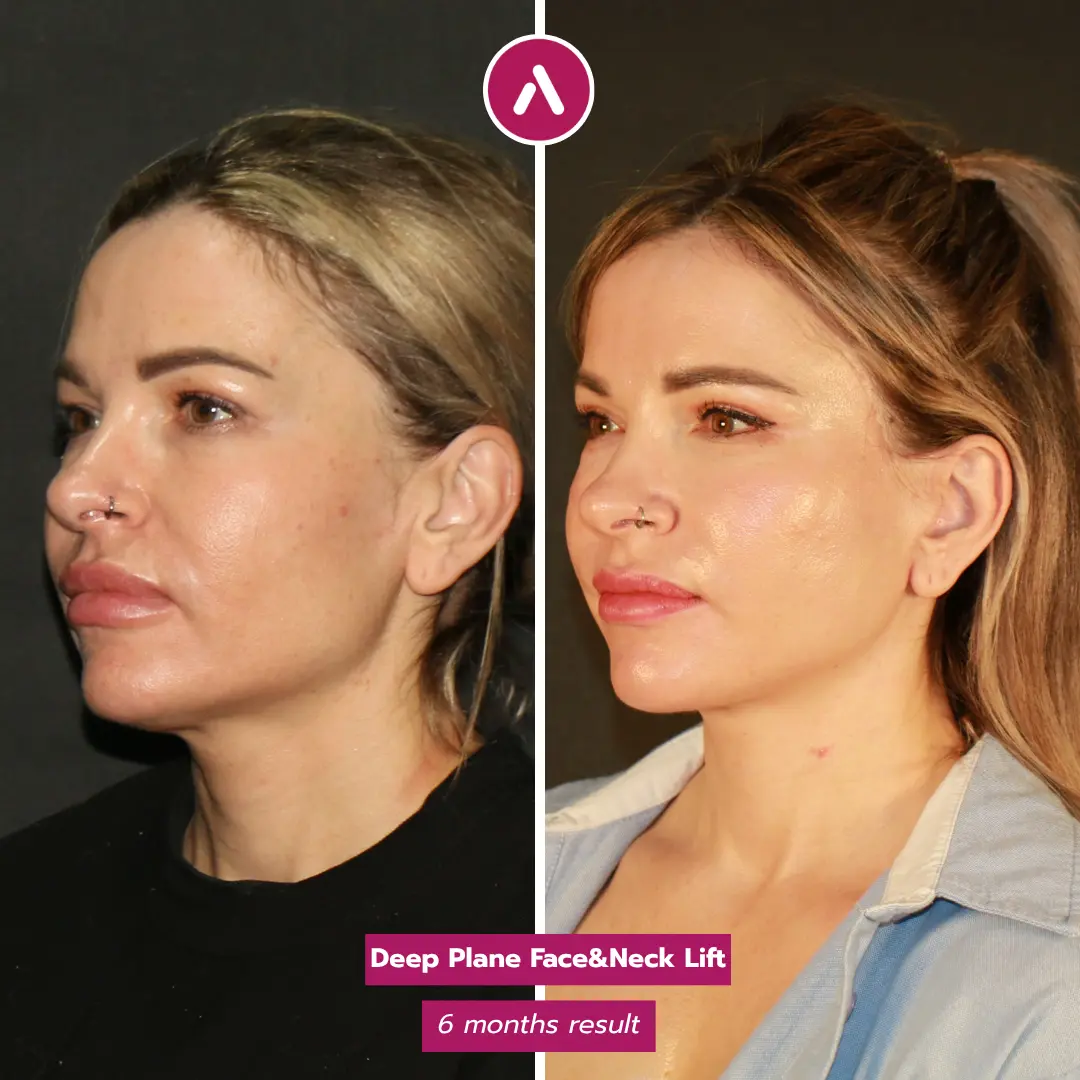
What to monitor in weeks 2-6 in Canada
Weeks 2 to 6 can feel deceptively normal. Many patients look presentable, yet deeper healing is still active. The most common sensations include numbness, tightness, mild asymmetry from uneven swelling, and sensitivity around the ears or neck.
Track changes rather than isolated moments. A slightly swollen morning face may be normal. Sudden worsening, one-sided heat, increasing redness, fever, drainage, or sharp escalating pain should be reported.
- Take progress photos in consistent lighting once or twice per week.
- Protect scars from UV exposure, including winter sun reflected from snow.
- Avoid aggressive exercise until cleared.
- Do not restart active skincare without approval.
- Report new swelling, increasing redness, or unusual discharge promptly.
Canadian winters can make healing skin feel dry and tight. Summer brings a different issue: UV exposure. Both seasons require discipline. Scar care is not just a cosmetic detail; it is part of protecting the surgical result.
When to contact AKM’s 24/7 advocate
Patients should contact AKM’s 24/7 advocate whenever a change feels clinically unusual or emotionally difficult to interpret. Early communication is better than guessing. A photo, short video, and symptom timeline can help the team decide whether reassurance, an adjustment, or local medical evaluation is appropriate.
Contact the team promptly if you notice increasing one-sided swelling, new bleeding, fever, worsening pain, incision separation, drainage, or sudden facial weakness. These issues are uncommon, but they deserve rapid attention. International patients should never feel they have to manage uncertainty alone.
The final H2 before the FAQ is also a good place to separate recovery from long-term outcomes. This article focuses on healing. For duration and maintenance questions, see our stem cell facelift longevity guide.
If your main concern is the day-by-day appearance of bruising and swelling rather than the biology behind recovery, the visual recovery photo guide will be more useful.
Frequently Asked Questions: Facelift Recovery with Stem Cells
Canadian patients researching facelift recovery with stem cells usually want practical answers, not vague reassurance. The questions below focus on recovery expectations, aftercare, and how regenerative support fits into a medically supervised plan.
Will stem cells reduce my recovery time?
Stem cell-supported recovery may help reduce the intensity or duration of swelling, bruising, and early tissue inflammation in suitable patients. It does not remove the normal recovery process.
You should still expect visible swelling, temporary tightness, some bruising, and gradual scar maturation. The goal is a more supported healing environment, not an instant return to normal.
Is bruising really less with stem cell augmentation?
Bruising may be less intense or may clear faster for some patients, especially when regenerative support is combined with careful surgical technique, HBOT, and LLLT. Your baseline bruising risk still matters.
Patients with fragile capillaries, smoking history, certain medications, or more extensive neck work may bruise longer. A virtual consultation helps the surgical team assess these risks before you travel.
Do I need additional aftercare back in Canada?
Most patients continue recovery at home with virtual follow-up, scar care, activity restrictions, and photo updates. You may also coordinate with your Canadian family physician for general health issues, medication questions, or local evaluation if needed.
Procedure-specific questions should still go to AKM’s surgical team. The person who performed the operation is best positioned to interpret expected healing versus a concern.
Can I combine HBOT and stem cells?
Yes, they can be used together when clinically appropriate. Stem cell-supported recovery targets tissue repair signalling, while HBOT supports oxygen delivery and inflammation control.
LLLT may also be added to support cellular repair and scar behaviour. The final plan depends on your procedure scope, health profile, and surgeon’s assessment.
How long until I look social-ready?
Many facelift patients begin feeling socially presentable around two to three weeks, especially with hairstyle planning and approved camouflage. This varies by surgical scope and bruising pattern.
Canadian patients with public-facing jobs should avoid planning a rushed return. Medical clearance, social confidence, and camera-readiness are not the same milestone.
Is stem cell recovery covered in the package price?
Regenerative components are planned case by case. AKM Clinic lists nanofat grafting at CAD $3,400, but a combined facelift and regenerative plan should be confirmed directly with the coordinator.
This is because recovery support may differ depending on whether you are having a standard facelift, deep plane facelift, neck lift, fat transfer, HBOT, LLLT, or a combined plan.
What does the recovery feel like differently?
Patients may notice that swelling feels less tense, bruising changes colour sooner, and skin appears calmer earlier than expected. These are subtle recovery differences, not dramatic overnight changes.
The most reliable sign is steady progress. If each week looks and feels better than the last, your recovery is usually moving in the right direction.
Medical Disclaimer: This page is provided for general educational purposes only and does not replace an in-person medical consultation, diagnosis, or personalized treatment plan. All surgery carries risks, and outcomes vary between individuals. Suitability for facelift surgery, procedure selection, and anesthesia choice can only be determined after a full clinical assessment by a qualified surgeon. Always follow your clinician’s instructions and seek urgent medical attention if you develop concerning symptoms during recovery.