
Quick summary: A liquid facelift Turkey treatment combines dermal fillers and neuromodulators to restore facial volume, soften wrinkles, and refresh the face without incisions. It can suit Canadian patients with early facial aging, but it cannot replace surgery when jowls, loose neck skin, or deeper tissue descent are the main concerns.
At AKM Clinic, the goal is not to overfill the face. The approach follows the clinic’s Natural-First philosophy: subtle correction, facial balance, and clear guidance on when injectables are enough versus when facelift options available at AKM Clinic may be more appropriate.
A liquid facelift is often attractive to Canadian patients who want facial rejuvenation without the recovery period of surgery. Patients from Toronto, Vancouver, Montreal, and Calgary often ask whether fillers and Botox can create a lifted look before they commit to a surgical plan.
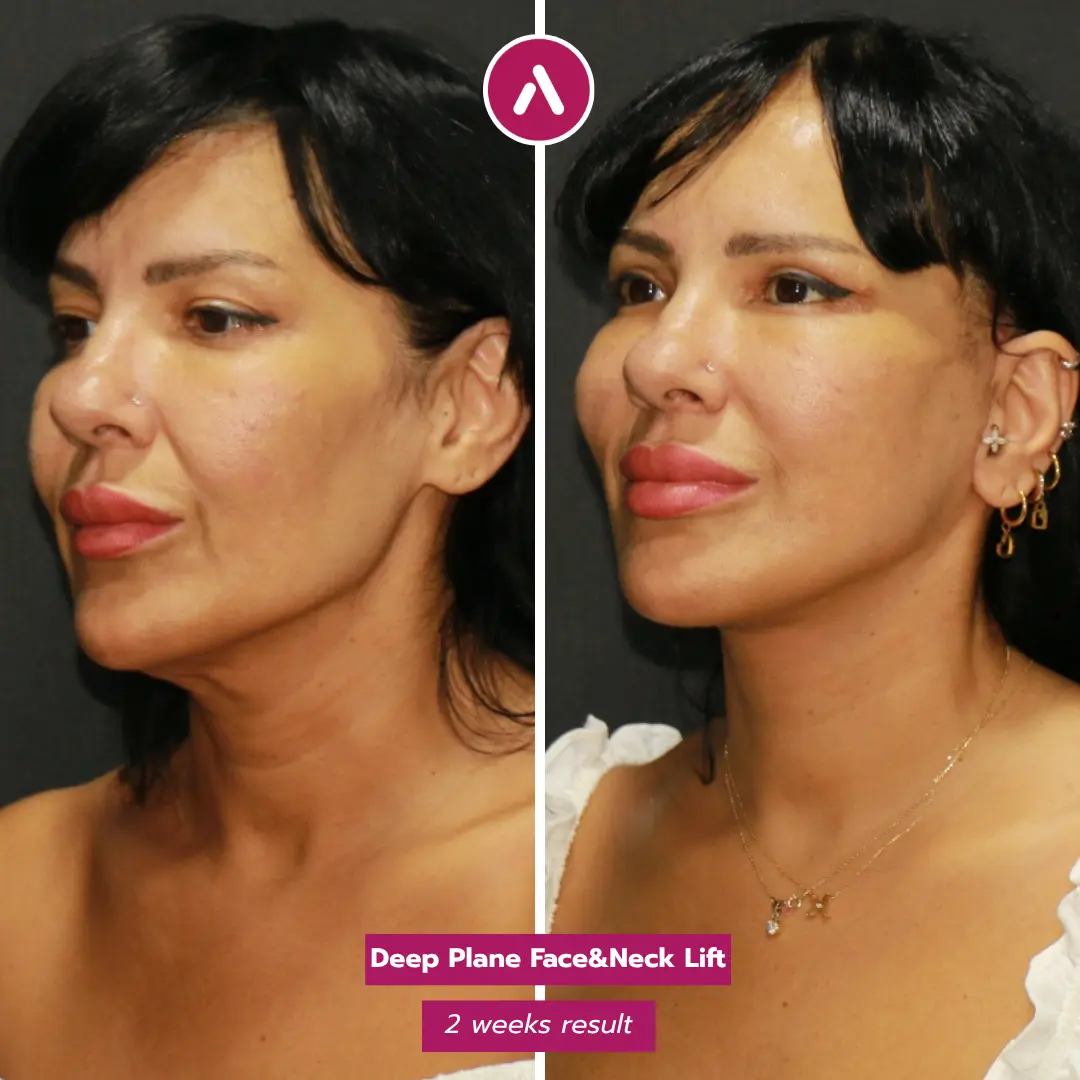
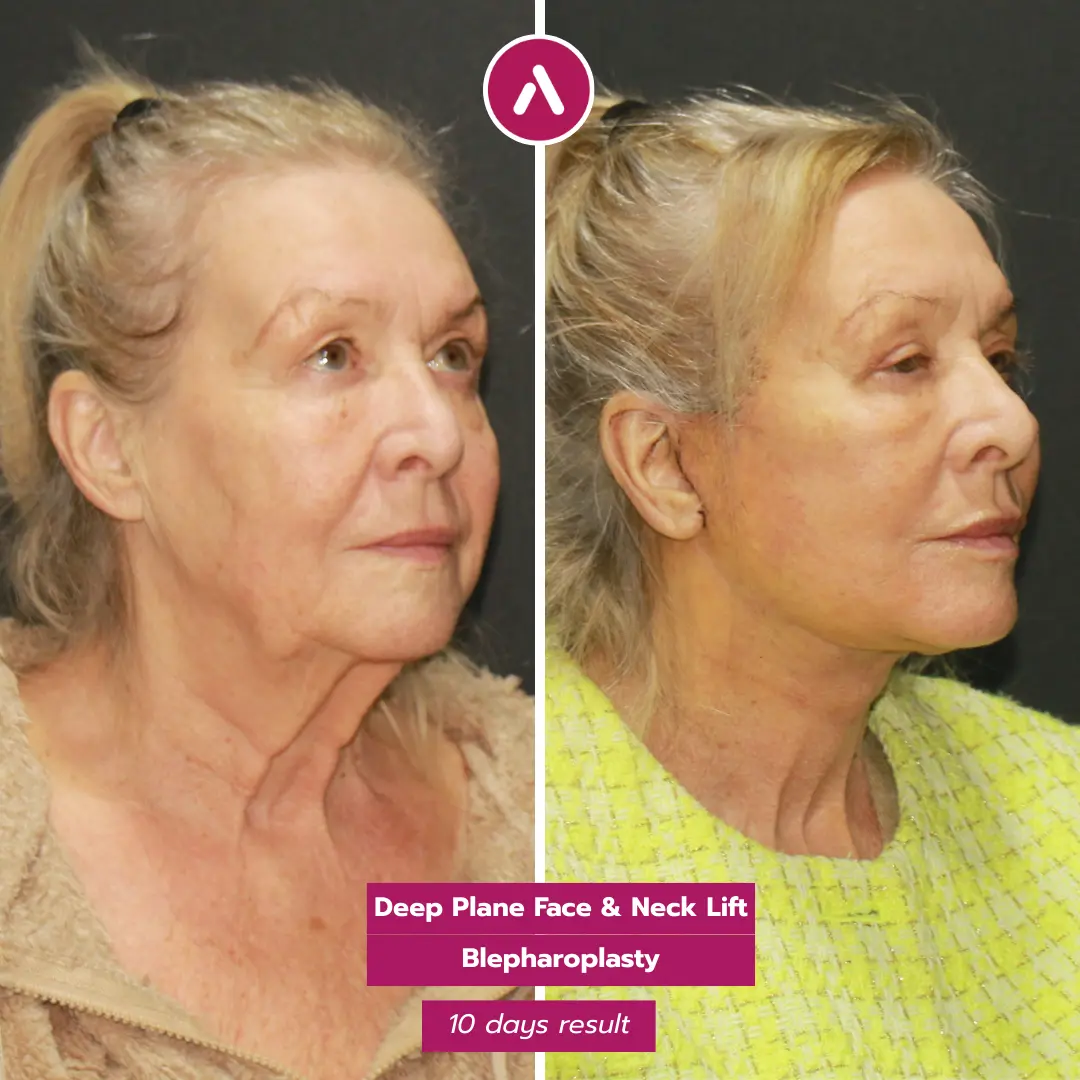
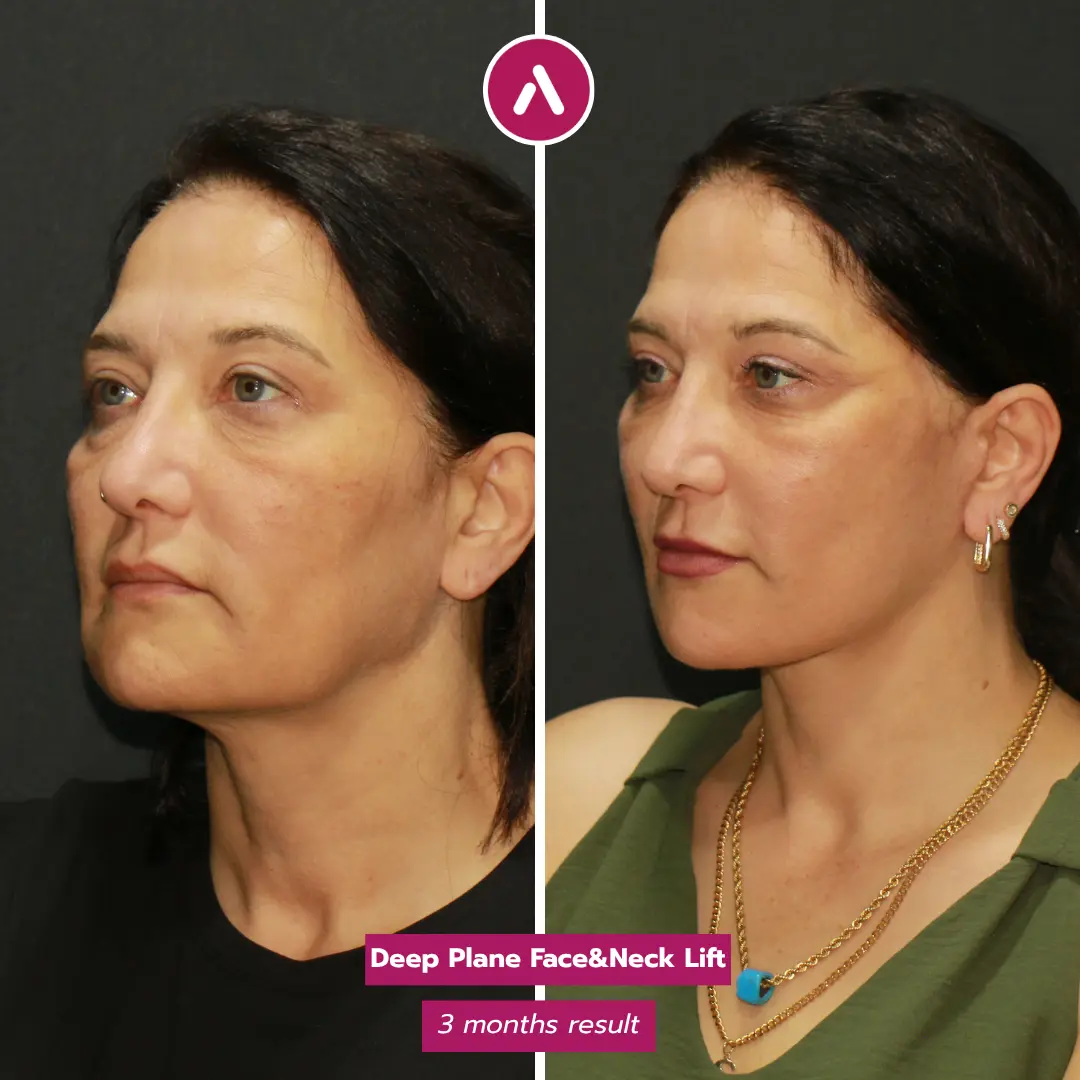
The honest answer is anatomy-dependent. Fillers can restore volume and improve contour. Neuromodulators can soften expression lines. Neither can reposition descended facial ligaments or remove loose skin.
That distinction matters. A well-planned liquid facelift can look refined and natural in the right patient. In the wrong patient, repeated filler can create heaviness, puffiness, or the overfilled appearance many Canadians specifically want to avoid.
Table of Contents
What a Liquid Facelift Is?
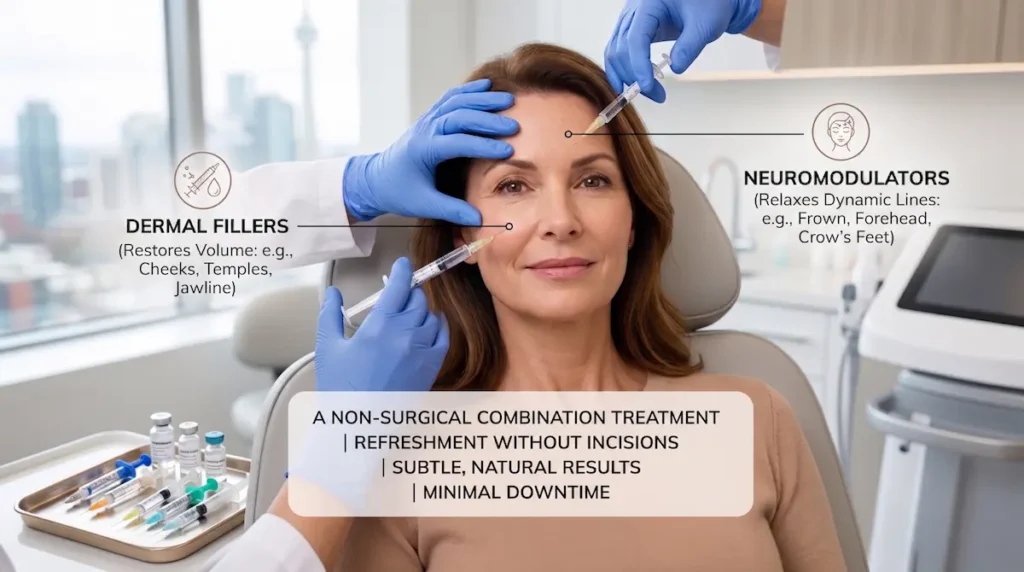
A liquid facelift is a non-surgical facial rejuvenation treatment using injectable products rather than incisions. It usually combines dermal fillers for volume restoration and neuromodulators, commonly referred to as Botox-type treatments, for dynamic wrinkles.
The phrase can be misleading. Despite the name, it is not a true facelift. It refreshes and supports selected areas of the face, but it does not surgically lift deeper facial structures.
Patients should ensure that injectable products are sourced from reputable manufacturers and used appropriately. Health Canada provides regulatory oversight for many aesthetic medical products used by Canadian practitioners.
Dermal fillers and neuromodulators working together
Dermal fillers are commonly used to restore volume in areas such as the cheeks, temples, tear troughs, chin, and jawline. Many modern fillers are based on hyaluronic acid, a substance used widely in aesthetic medicine.
Neuromodulators work differently. They relax selected muscles that create dynamic expression lines, such as frown lines, forehead lines, and crow’s feet. Botulinum toxin remains one of the most common non-surgical aesthetic procedures worldwide, according to the ISAPS Global Statistics Report.
Used together, fillers and neuromodulators can improve facial balance. Filler restores support. Neuromodulators reduce muscle-driven creasing.
Volume restoration versus true tissue lifting
A liquid facelift mainly restores volume. This can create the impression of lift because fuller cheeks and better contour can soften shadows and folds.
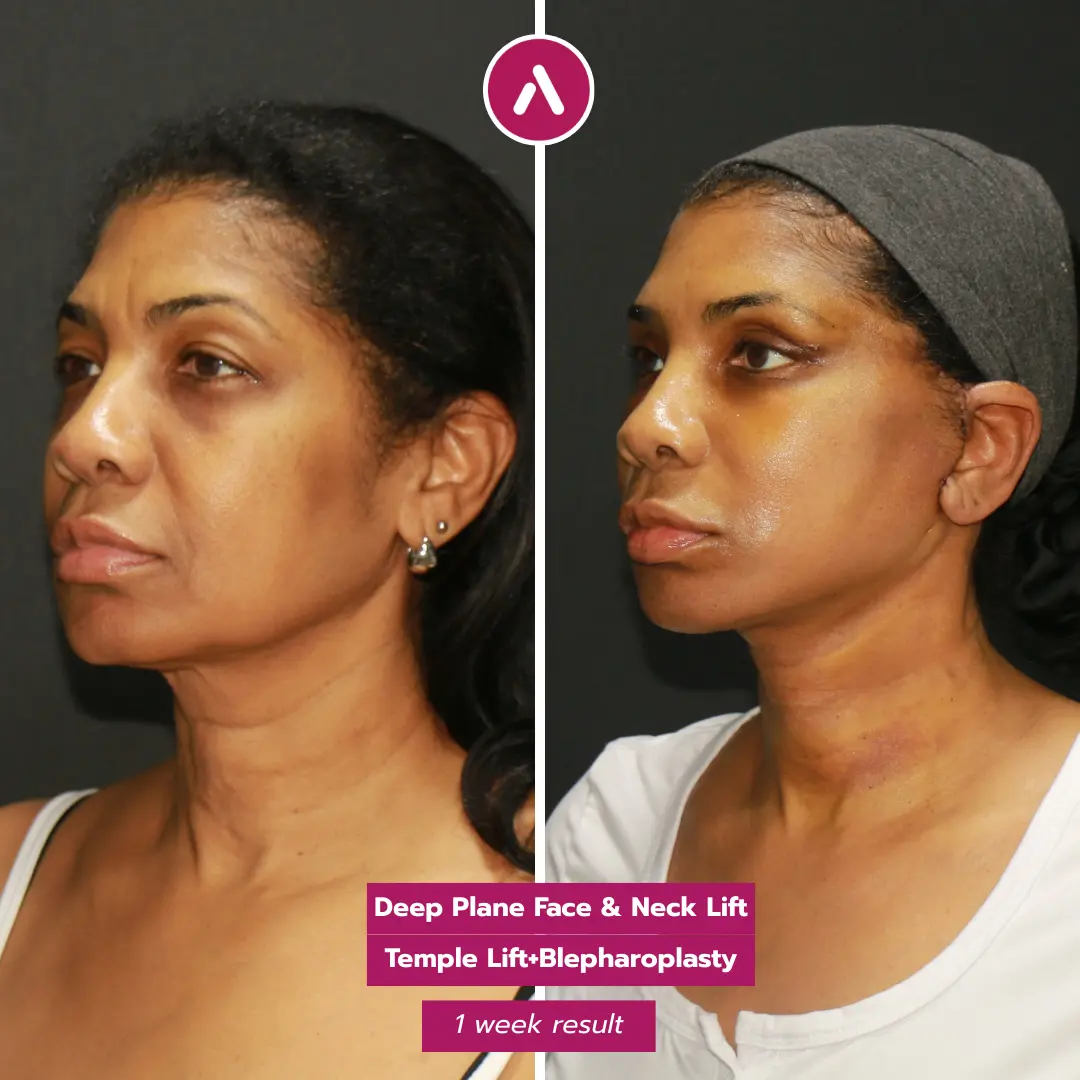
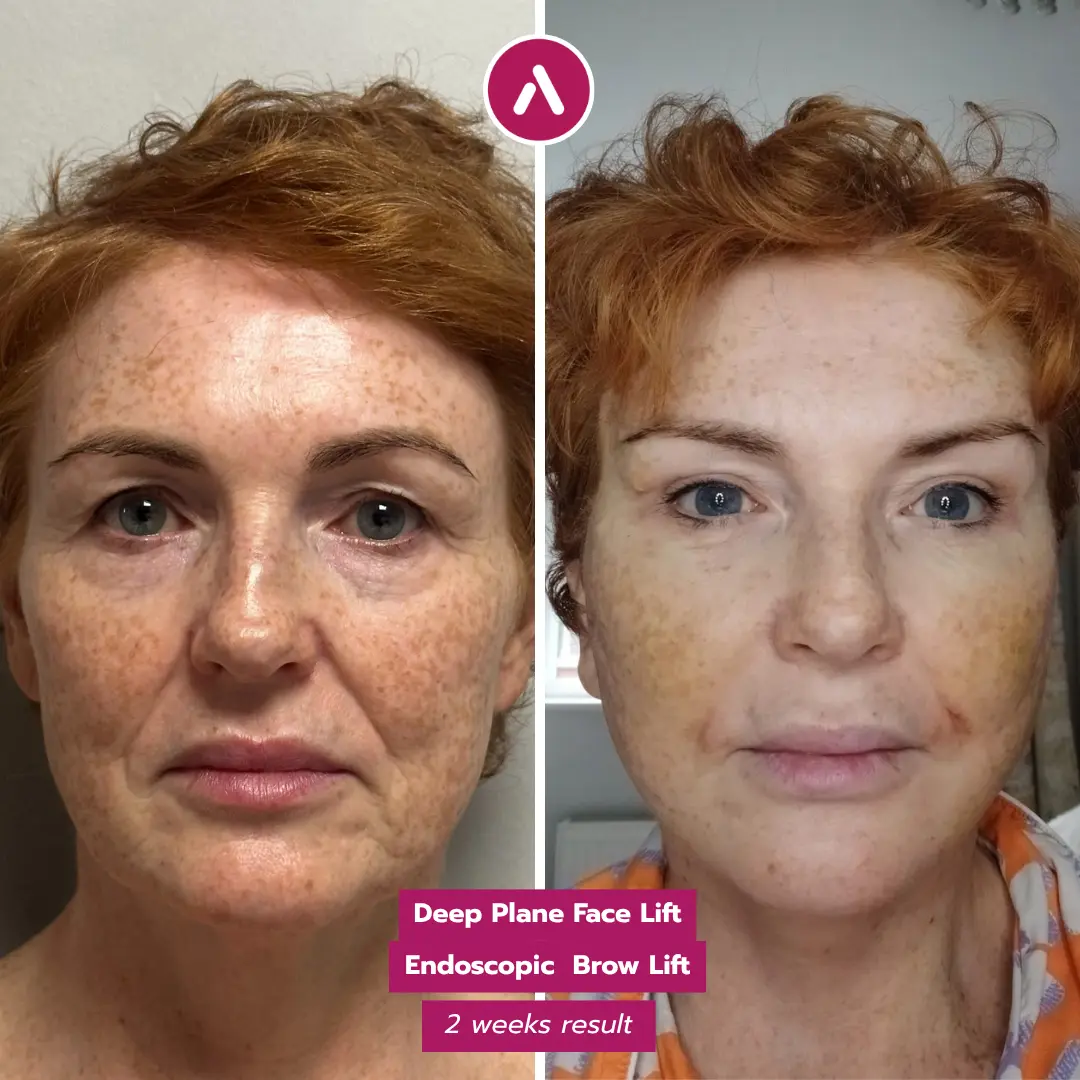
True lifting is different. A surgical facelift repositions deeper tissues, especially when techniques such as the Deep Plane Facelift are used. AKM Clinic’s facial surgery philosophy focuses on “Rejuvenation over alteration,” with a Natural-First approach designed to avoid a pulled or operated-on look.
This is why patient selection is so important. Mild hollowing may respond well to injectables. Loose skin and jowls usually need a surgical discussion.
Why Canadians are interested in non-surgical rejuvenation
Canadian patients often value understated results. Many do not want colleagues or family members to immediately identify that they had treatment.
A liquid facelift can match that preference when the goal is subtle refinement. There is usually minimal downtime, no general anesthesia, and no surgical incision.
Health Canada oversight also matters to Canadian readers. Patients should ask whether the injectable products being used are properly authorized and appropriate for their indication, especially when travelling for care. Health Canada maintains regulatory information on licensed health products and medical devices, including products used in aesthetic medicine.
Canadian patient note
Before receiving fillers or neuromodulators abroad, ask for the exact product names, the injector’s qualifications, and whether the products are approved by the relevant regulator. This is a safety question, not a formality.
What a Liquid Facelift Can Achieve?
A liquid facelift can be effective when the problem is volume loss, mild contour change, or expression-related lines. The best results look quiet. Friends may notice that you look rested, not treated.
According to the International Society of Aesthetic Plastic Surgery (ISAPS), injectable facial rejuvenation remains one of the most commonly performed non-surgical aesthetic procedures worldwide.
At AKM Clinic, this fits the broader “Natural-First” standard used across facial rejuvenation. The same principle applies whether the treatment is injectable, regenerative, or surgical.
Restoring mid-face volume loss
The mid-face is one of the most common treatment zones. As facial fat pads shift and volume decreases, the cheeks can look flatter and the lower face can appear heavier.
Careful cheek filler can restore support. This may soften the nasolabial folds and improve the transition between the lower eyelid and cheek.
The key word is careful. Too much filler in the mid-face can distort natural expression and create a rounded appearance that does not suit most Canadian patients seeking subtle rejuvenation.
Softening facial folds and wrinkles
Injectables can soften several common concerns:
- Nasolabial folds caused by volume loss and shadowing
- Marionette lines around the mouth
- Forehead lines and frown lines caused by muscle movement
- Crow’s feet around the eyes
- Early chin and jawline contour irregularities
Fillers are not used the same way in every zone. Some areas require structural support. Others require delicate surface correction.
This is why injector experience matters. A qualified clinician should know when not to inject.
Creating subtle contour improvements without surgery
A liquid facelift can improve facial contour in selected areas. Chin filler can improve profile balance. Jawline filler can sharpen definition in patients without heavy skin laxity. Temple filler can reduce hollowing that makes the upper face look tired.
These refinements can be useful for patients not ready for surgery. They can also support long-term facial maintenance after surgery.
For more advanced facial aging, however, injectables may become less efficient. That is where comparison with surgery becomes essential, especially for patients weighing cost, longevity, and recovery.
“Injectables can be an excellent tool for early facial aging, but they should not be used to chase a surgical result. The most natural outcome comes from matching the treatment to the anatomy, not forcing filler to do the job of a facelift.”
What a Liquid Facelift Cannot Do?
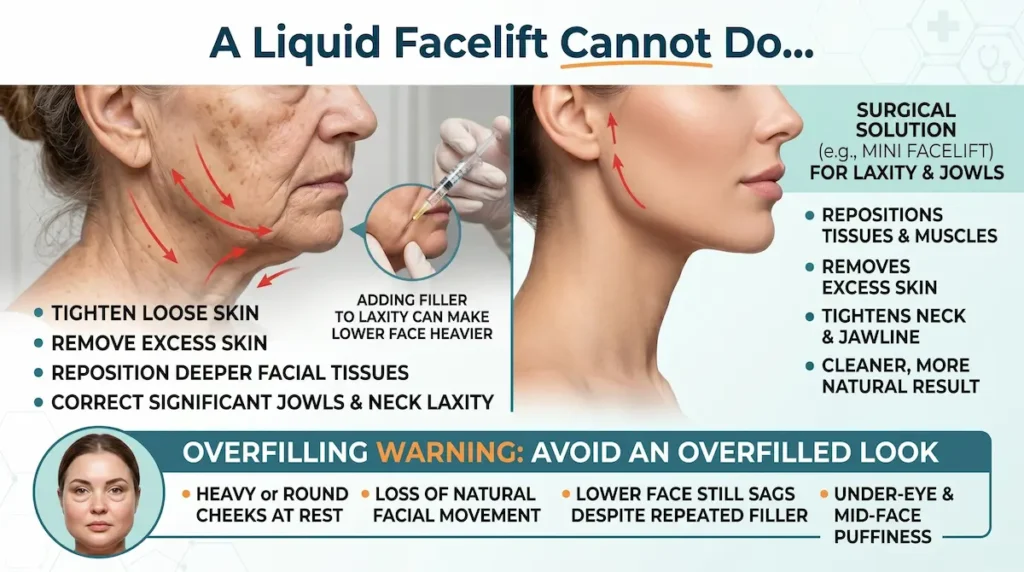
A liquid facelift has clear limits. It can improve shape, volume, and surface lines, but it cannot remove excess skin or reposition deeper facial tissues.
This distinction protects patients from unrealistic expectations. It also prevents the common mistake of adding more filler when surgery would create a cleaner, more natural result.
Why fillers cannot correct significant skin laxity
Skin laxity means the skin has stretched beyond what volume replacement can correct. Filler can support the face from underneath, but it cannot tighten loose skin.
Adding filler into lax tissue may create temporary fullness. It does not restore the original ligament and muscle position.
In patients with moderate or advanced laxity, a surgical option may be more appropriate. This is where a mini facelift as a surgical alternative may enter the discussion for earlier lower-face aging.
The limitations for jowls and neck aging
Jowls form when lower-face tissues descend and collect along the jawline. Neck aging can include loose skin, muscle banding, and deeper structural changes.
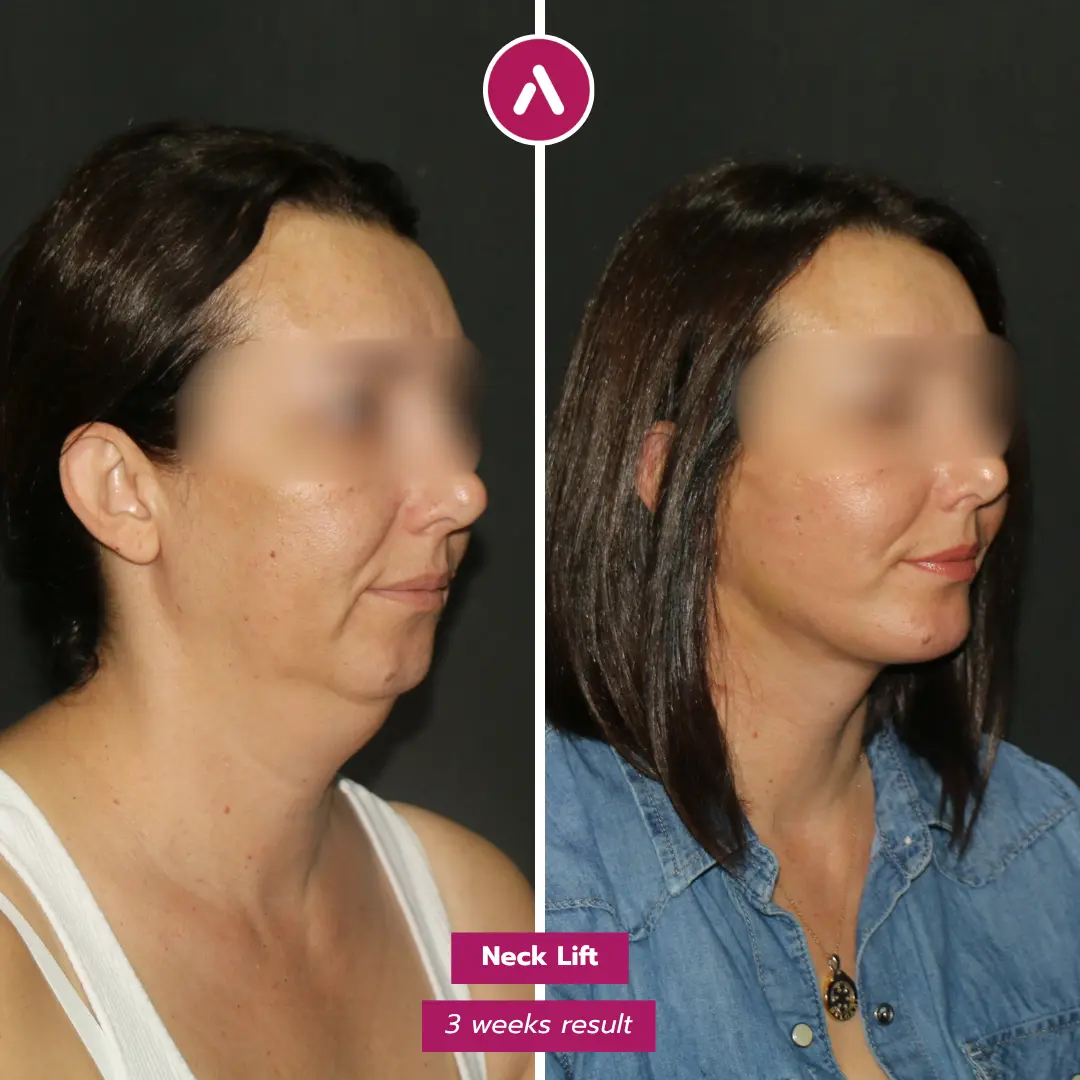
Filler cannot reliably correct these issues. In some cases, adding volume near jowls can make the lower face look heavier.
A liquid facelift may sharpen the chin or jawline slightly in the right patient. It should not be presented as a solution for a true neck lift or surgical facelift concern.
When injectables stop delivering natural-looking results
Injectables stop looking natural when they are used to compensate for problems they cannot correct. This is often how patients develop an overfilled appearance.
Warning signs include:
- Cheeks that look round or heavy at rest
- Loss of natural facial movement
- A lower face that still sags despite repeated filler
- Under-eye or mid-face puffiness
- A face that looks fuller but not younger
For patients dealing with old or excessive filler, AKM’s related guide on managing filler complications and overfilling explains when dissolving filler and reassessing anatomy may be wiser than adding more product.
Liquid Facelift vs Surgical Facelift
The comparison between liquid facelift and surgical facelift is not about which treatment is “better.” It is about which treatment matches the anatomy, timeline, and goal.
Injectables work best for early aging and volume loss. Surgery works best for structural descent, loose skin, and longer-term repositioning.
Differences in candidacy
A liquid facelift may suit patients who have mild hollowing, early folds, and good skin elasticity. These patients usually want refinement rather than major change.
A surgical facelift may suit patients with jowling, neck laxity, deeper folds, or facial tissues that have visibly descended. These patients often notice that filler no longer creates a clean result.
Some patients sit between the two categories. A detailed assessment helps clarify whether injectables, surgery, or a staged plan is most appropriate.
Longevity comparison: months versus years
Liquid facelift results are temporary. Longevity depends on product type, treatment area, metabolism, and facial movement.
Surgical facelift results last longer because the deeper tissues are repositioned rather than simply volumized. AKM Clinic’s facial rejuvenation philosophy emphasizes structural correction rather than temporary volume replacement. Patients interested in long-term facial rejuvenation can learn more about how long a Deep Plane Facelift can last, with results often remaining visible for 10–15 years when properly planned.
This does not mean every patient needs surgery. It means patients should compare longevity honestly before deciding.
Cost-per-year analysis for Canadian patients
For Canadian patients comparing options, the upfront cost is only one part of the decision. Repeated injectable maintenance can become more expensive over time than expected.
According to AKM Clinic’s facelift pricing guide in CAD, a Liquid Facelift is priced at CAD $3,150, a Thread Lift at CAD $2,750, and a Standard Deep Plane Facelift at CAD $6,800, allowing patients to compare non-surgical and surgical facial rejuvenation options side by side.
Patients considering surgery can review facelift pricing in CAD to compare technique-specific costs and decide whether short-term injectables or longer-term surgery makes more sense.
| Treatment | Main mechanism | Best candidate | Typical longevity | Verified AKM pricing |
|---|---|---|---|---|
| Liquid Facelift | Dermal fillers and neuromodulators restore volume and soften lines | Early aging, mild volume loss, minimal skin laxity | Months to over a year, depending on product and area | CAD $3,150 |
| Thread Lift | Dissolvable threads create modest mechanical lift | Mild sagging with reasonable skin elasticity | Temporary, often around 12–18 months | CAD $2,750 |
| Standard Deep Plane Facelift | Deeper facial tissues are surgically repositioned | Jowls, deeper facial descent, neck and lower-face aging | Long-term structural result | CAD $6,800 |
For patients comparing injectable lift with thread lift treatment explained, the key difference is mechanism. Liquid facelift restores volume. Thread lift provides modest mechanical support with dissolvable threads.
For the thread-specific comparison, see AKM’s guide to mechanical lifting with dissolvable threads.
Canadian cost perspective
Patients from Toronto or Vancouver often compare one-time surgery with repeated maintenance treatments. A lower initial price does not always mean better long-term value, especially if injectables are repeated every year.
Liquid Facelift as a Bridge or Maintenance Strategy
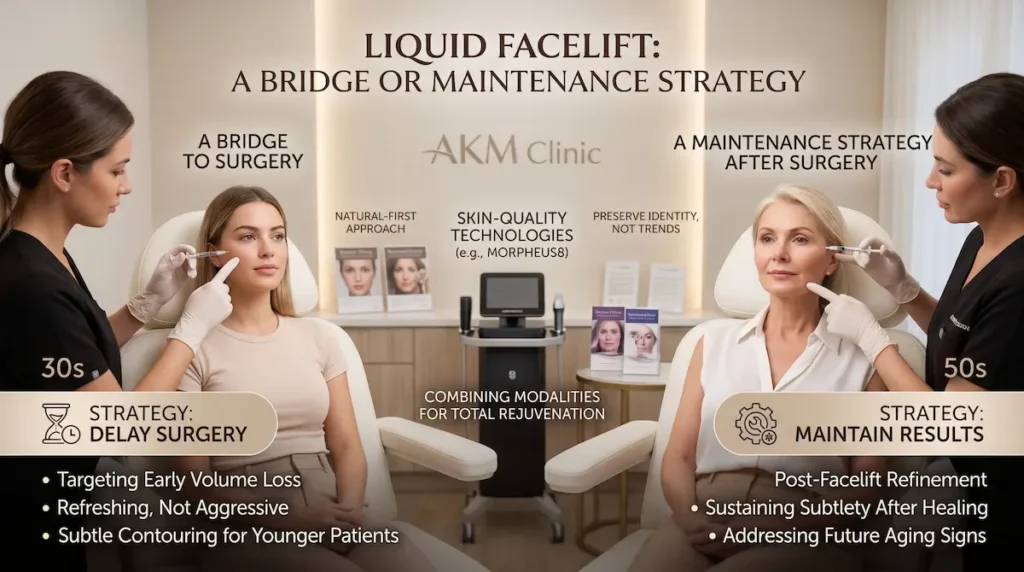
A liquid facelift does not have to compete with surgery. In many patients, it works best as part of a staged facial rejuvenation plan.
It may delay surgery for younger patients. It may also help maintain subtle balance after a surgical facelift has healed.
Delaying surgery in younger patients
Patients in their 30s or early 40s may not have enough laxity to justify surgery. For them, a liquid facelift can restore early volume loss and soften expression lines.
This can be a reasonable bridge. The key is avoiding aggressive filler that changes the face rather than refreshing it.
At AKM Clinic, the Natural-First approach favours conservative planning. The goal is to preserve identity, not chase trends.
Maintaining results after a facelift
After a facelift, injectables may still have a role. Surgery repositions tissues, but it does not stop future aging or replace every type of volume loss.
Small amounts of filler can support temples, lips, chin, or fine contour needs after healing. Neuromodulators can continue to soften expression lines.
Maintenance should be conservative. A good facelift should not require heavy filler to look balanced.
Combining injectables with skin-quality technologies
Injectables address volume and muscle movement. They do not directly improve skin texture, pores, or collagen quality.
For skin tightening and texture, AKM’s technology cluster includes Morpheus8 skin-tightening technology, which is a separate treatment category from fillers. Regenerative and surgical comparisons are also discussed in the guide to regenerative facelift approaches.
Combining modalities can be useful, but only when each treatment has a clear purpose. More treatment is not automatically better.
Who Is the Ideal Candidate?
The ideal liquid facelift candidate has early or moderate facial aging, good skin elasticity, and realistic expectations. The goal should be refinement, not a dramatic reshaping of the face.
This is especially important for Canadian patients who prefer subtle, professional-looking results. A good outcome should look rested and balanced, not obviously treated.
Early-stage facial aging
Liquid facelift works best when the main concern is early volume loss. This may include flatter cheeks, mild hollowing at the temples, early folds around the mouth, or small contour changes in the chin and jawline.
These concerns can often be improved without surgery. The treatment can make the face look fresher while preserving normal movement.
Patients with heavier lower-face descent usually need a different plan. Filler may still help selected areas, but it should not be used as the main lifting strategy.
Patients seeking minimal downtime
Many Canadian patients consider injectables because they want to return to work quickly. A liquid facelift usually involves less disruption than surgery.
There may still be swelling, tenderness, or bruising. Patients flying back to Canada should plan carefully, especially if they have visible treatment around the lips, under-eyes, or cheeks.
A virtual consultation can help clarify timing. Patients from Vancouver or Calgary with connecting flights may want extra recovery time before travelling home.
Avoiding the “overfilled” appearance
The most important candidacy factor is restraint. Patients who want a natural result should be comfortable with gradual correction.
Overfilling often happens when injectables are used to chase lifting. The result can look round, puffy, or heavy.
At AKM Clinic, the “Rejuvenation over alteration” standard helps guide this decision. If filler would distort the face, surgery or another treatment category may be recommended instead.
Cost of a Liquid Facelift in Turkey (CAD)
Cost matters, but it should be evaluated with longevity and treatment purpose. A liquid facelift has a lower initial price than surgery, but it is a maintenance treatment.
All Canadian-facing pricing should be reviewed in CAD only. AKM’s Canadian pricing guides are designed to display costs exclusively in Canadian Dollars, without using other currencies or exchange-rate references.
Verified AKM Clinic pricing
The AKM Clinic facelift pricing guide in CAD lists a Liquid Facelift at CAD $3,150.
This is a technique-level price. It should not be confused with an all-inclusive surgical package unless the package document specifically states that a bundle is included.
For Canadian patients, the practical question is not only “What does it cost today?” It is also “How often will I need to repeat it?”
Comparing liquid facelift and thread lift costs
The same AKM pricing source lists Thread Lift at CAD $2,750.
These treatments are sometimes compared, but they do different things. Liquid facelift uses injectables to restore volume and soften wrinkles. Thread lift uses dissolvable threads for modest mechanical support.
Patients with mild hollowing may be better suited to liquid facelift. Patients with mild sagging but good skin elasticity may ask about threads. A careful assessment is required.
Comparing liquid facelift and surgical facelift costs
Standard Deep Plane Facelift is listed at CAD $6,800 in the AKM Treatment Techniques list.
At first glance, liquid facelift costs less. Over several years, however, repeat maintenance can narrow the difference.
That does not make surgery automatically better. It means the best value depends on anatomy, longevity goals, and whether the concern is volume loss or tissue descent.
Canadian value note
Elective cosmetic procedures are generally not covered by provincial health plans such as OHIP, MSP, RAMQ, or AHCIP. Patients should compare private options based on qualifications, safety, aftercare, and realistic longevity, not price alone.

Why Canadian Patients Consider Turkey for Non-Surgical Rejuvenation?
Canadian patients often associate Turkey with surgical medical tourism, but non-surgical rejuvenation can also be part of a broader facial plan. Some patients choose injectables alone. Others combine them with consultation, skin technology, or future surgical planning.
The priority should be clinical judgement. A qualified team should explain what injectables can achieve and where their limits begin.
Access and convenience
Private aesthetic care in Canada can involve high out-of-pocket costs and limited access to experienced injectors in smaller cities. Patients outside Toronto, Vancouver, and Montreal may have fewer local options.
Travelling to Istanbul can allow patients to combine consultation, treatment, and planning in one trip. This is most useful when the clinic provides clear communication before arrival.
Convenience should never replace safety. Patients should ask who performs the injections, what products are used, and what follow-up is available after returning to Canada.
Combining treatment with travel
Some Canadian patients plan non-surgical treatment while visiting Istanbul for another procedure. Others use a liquid facelift consultation as a lower-commitment way to understand their facial aging pattern.
Timing matters. Injectables should not be casually added immediately before or after surgery without medical approval.
If a patient is already considering a surgical facelift later, the injectable plan should avoid distorting the anatomy that the surgeon will eventually assess.
Choosing qualified injectors and surgeons
The injector’s judgement matters as much as the product. A conservative clinician knows when to inject, when to dissolve, and when to recommend surgery instead.
AKM Clinic’s broader identity is built around AKM Clinic’s Natural-First philosophy, including subtle facial rejuvenation and avoidance of the pulled or operated-on aesthetic. This same standard applies to non-surgical treatments.
Canadian patients should also verify that the team can communicate clearly in English and provide practical follow-up instructions. This is part of informed consent.
Frequently Asked Questions: Liquid Facelift Turkey
Canadian patients researching non-surgical facial rejuvenation often ask the same practical questions. The answers below summarize the most common concerns discussed during consultations.
Is a liquid facelift the same as a surgical facelift?
No. A liquid facelift uses dermal fillers and neuromodulators to restore volume and soften wrinkles. A surgical facelift repositions deeper facial tissues and addresses skin laxity. The two treatments solve different problems.
How long does a liquid facelift last?
Longevity varies depending on the products used, the treatment area, facial movement, and individual metabolism. Most patients require maintenance treatments because injectables are temporary by nature.
Can fillers replace surgery permanently?
No. Fillers can be an excellent option for early aging, but they cannot permanently replace surgery when significant tissue descent, jowling, or neck laxity develops.
Is a liquid facelift painful?
Most patients tolerate treatment well. Modern fillers often contain local anaesthetic, and additional numbing methods can be used when appropriate. Temporary tenderness or swelling is more common than significant pain.
What does a liquid facelift cost in CAD?
According to AKM Clinic's facelift pricing guide in CAD, a Liquid Facelift costs CAD $3,150. Patients comparing non-surgical rejuvenation with surgery can review the full pricing breakdown to understand the long-term value of each option.
What are the risks of overfilling?
Overfilling can create facial heaviness, puffiness, and loss of natural contour. The risk increases when injectables are repeatedly used to compensate for skin laxity rather than volume loss.
Can I combine a liquid facelift with Morpheus8?
Yes, in appropriate candidates. Injectables primarily address volume and muscle activity, while Morpheus8 focuses on skin quality, collagen stimulation, and mild tightening. Each treatment should have a distinct purpose.
Is there downtime after treatment?
Downtime is usually limited. Some patients experience mild swelling, bruising, or tenderness for several days. Recovery is generally shorter than with surgical procedures.
Can a liquid facelift maintain facelift results?
In selected patients, conservative use of fillers and neuromodulators can help maintain facial balance after a surgical facelift. Maintenance should be individualized and not excessive.
How do I know if I need surgery instead?
If your primary concerns are jowls, loose neck skin, significant facial descent, or recurring dissatisfaction despite repeated fillers, a surgical consultation may be appropriate. The most effective treatment depends on anatomy rather than age alone.
“The best facial rejuvenation plan is rarely about choosing the most treatment. It is about choosing the right treatment at the right stage of aging. Sometimes that is filler. Sometimes it is surgery. Often, it is a thoughtful combination over time.”
For patients comparing all available options, the most productive next step is a detailed assessment of facial anatomy, skin quality, and long-term goals. A treatment plan should explain not only what can be achieved, but also what should not be attempted with injectables alone.
Whether you are considering a liquid facelift, thread lift, regenerative facial treatment, or surgery, the objective should remain the same: natural rejuvenation that respects your existing features rather than altering them.
CTA: Determine whether injectables or surgery best matches your anatomy during a virtual consultation with the AKM Clinic team.
Medical Disclaimer: This page is provided for general educational purposes only and does not replace an in-person medical consultation, diagnosis, or personalized treatment plan. All surgery carries risks, and outcomes vary between individuals. Suitability for a facelift surgery, procedure selection, and anesthesia choice can only be determined after a full clinical assessment by a qualified surgeon. Always follow your clinician’s instructions and seek urgent medical attention if you develop concerning symptoms during recovery.