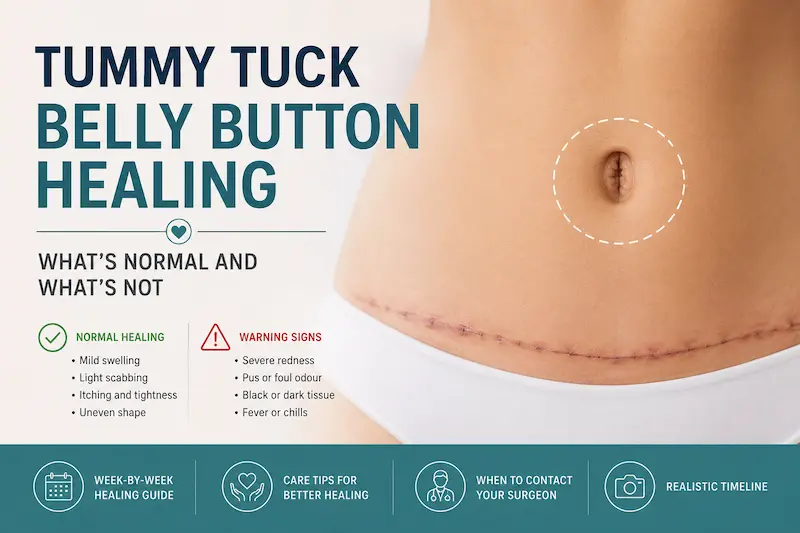

Mommy makeover recovery with kids is not just a medical recovery plan. It is a household logistics plan, a childcare plan, a sleep plan, and, for many Canadian moms, a travel plan layered on top of surgery.
A mommy makeover may include a tummy tuck, breast surgery, liposuction, muscle repair, or other body-contouring procedures. The exact combination matters, and so does the age of your children. A parent recovering around a nursing infant has a very different challenge than a parent with two school-age children and a busy carpool schedule.
This guide is written for Canadian mothers planning mommy makeover at AKM Clinic who need practical, realistic help. It does not replace your surgeon’s instructions. It helps you build the support system that makes those instructions possible.
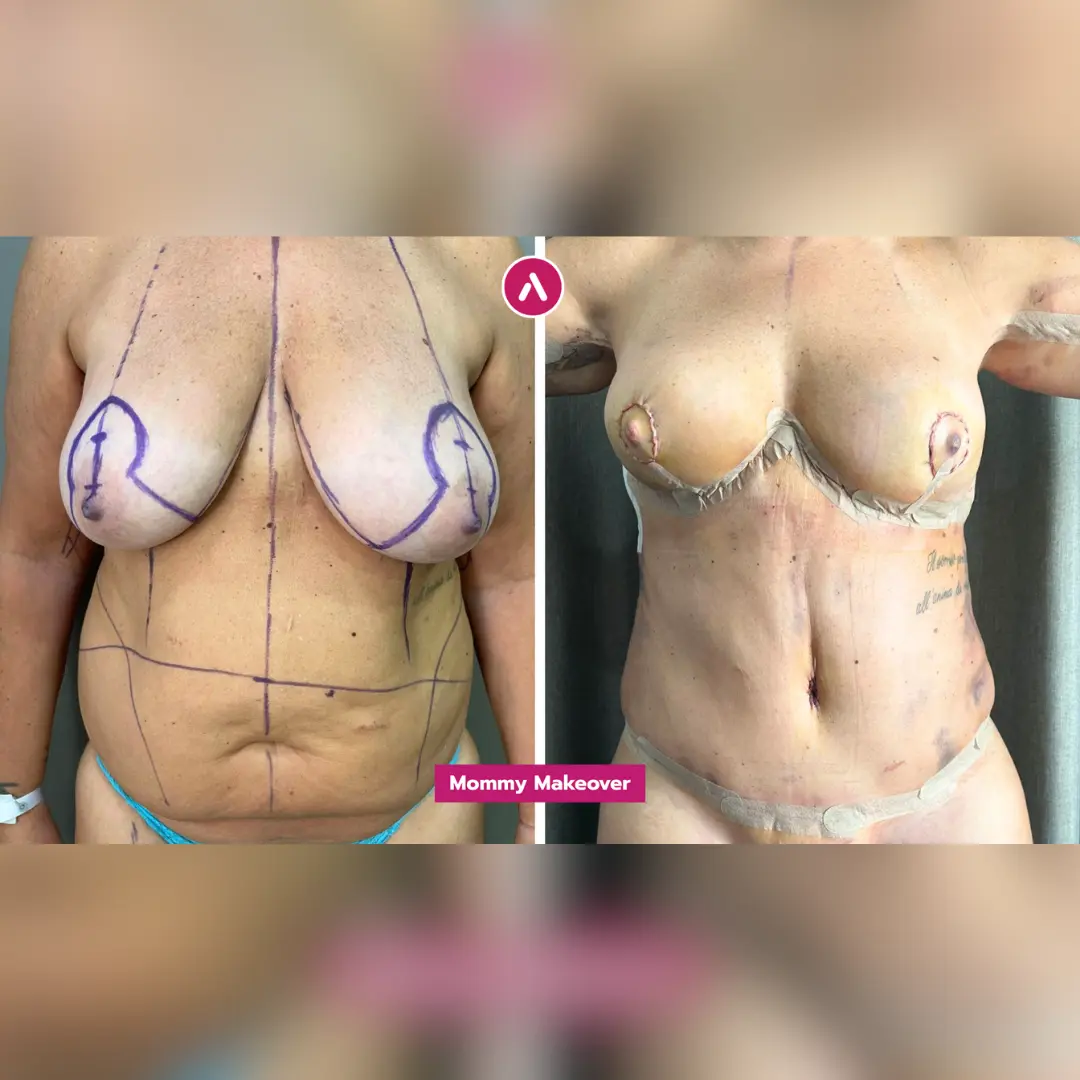
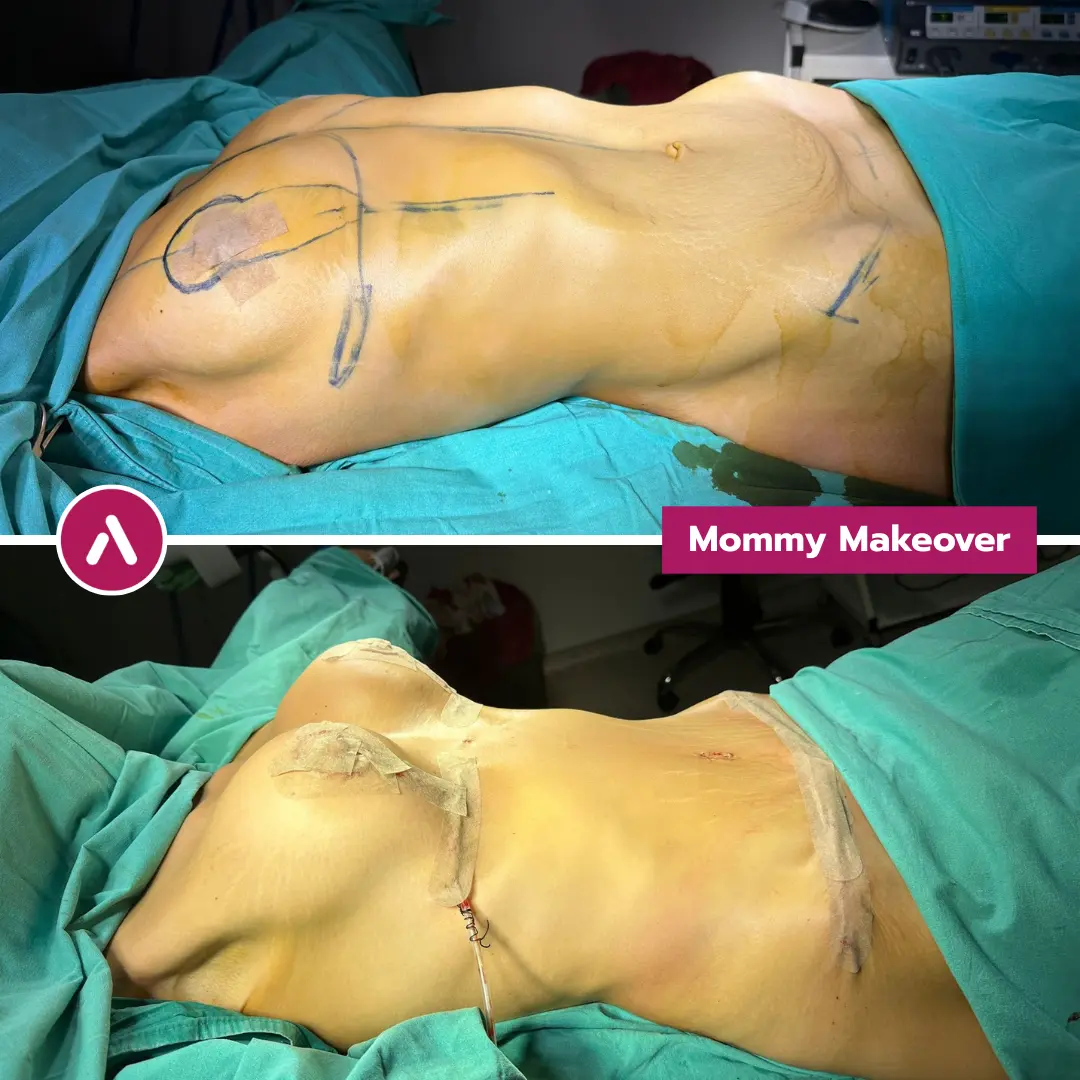
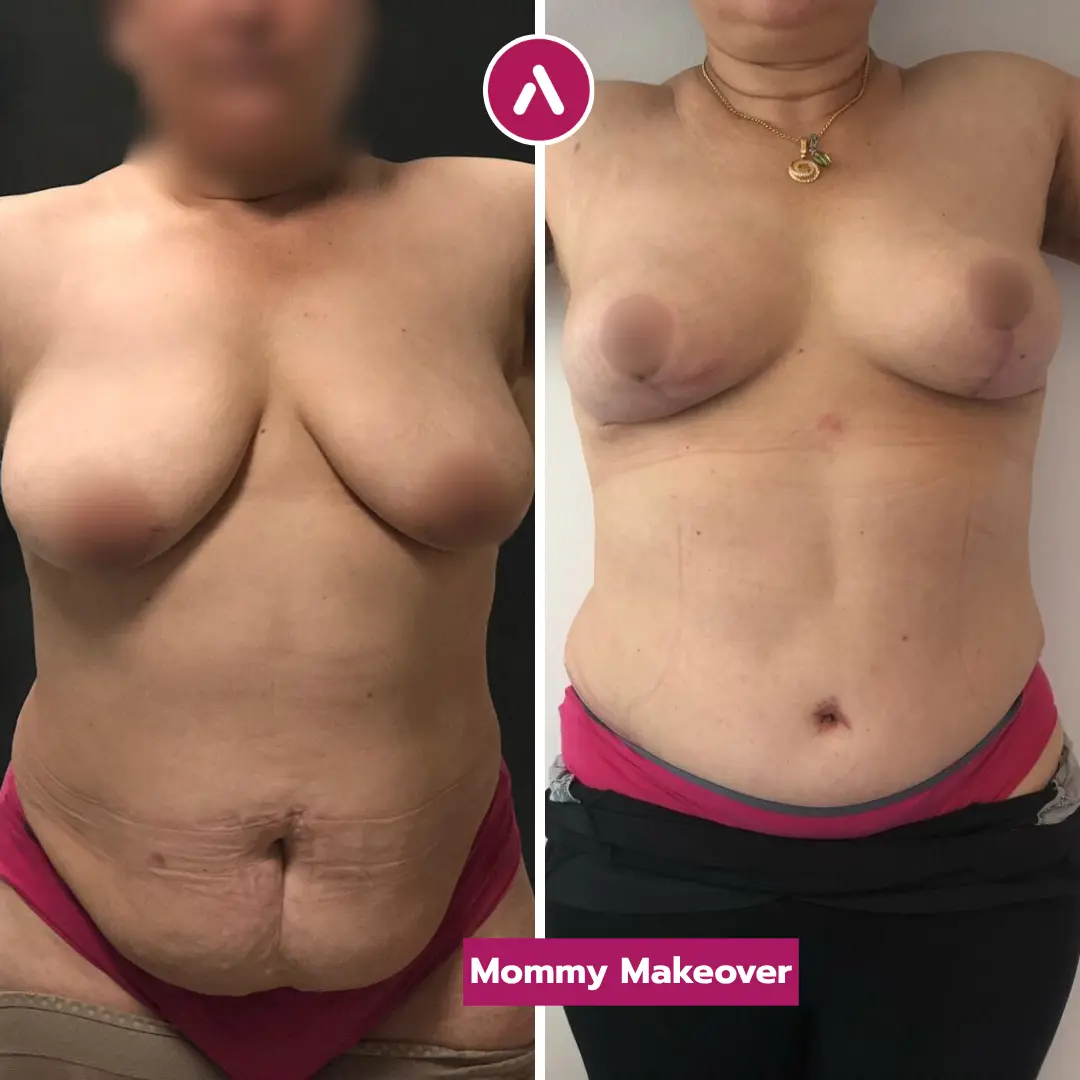
Quick Summary: Mommy makeover recovery with kids requires planning before you leave Canada. The biggest challenges are lifting restrictions, school and daycare logistics, sleep protection, meal planning, and keeping young children from climbing onto you during the first few weeks.
Most moms need reliable hands-on help for at least the first two weeks after returning home, with reduced lifting and household duties for 4 to 6 weeks depending on the procedure combination. Your exact limits must come from your AKM surgeon.
Table of Contents

Why Mom Recovery Is Different?
Recovery after surgery is already structured. Recovery as a parent is less predictable because children do not follow post-op instructions. They need comfort, meals, rides, bedtime routines, school forms, and attention even when you are sore, swollen, tired, or moving slowly.
The goal is not to disappear from parenting. The goal is to parent differently for a short period. That means planning your home, your helpers, and your children’s expectations before the surgery date.
Lifting Restrictions — No Children Over About 7 kg for 4–6 Weeks
The most important parenting restriction is lifting. After a mommy makeover that includes abdominal surgery, most patients are told to avoid lifting anything heavier than a small bag or light household item until cleared by the surgical team. A toddler can easily exceed that limit.
As a practical planning benchmark, assume you may not be able to lift a child over about 7 kg for several weeks. Your surgeon may adjust that limit based on whether you had a tummy tuck, muscle repair, breast surgery, liposuction, or a more limited combination.
This does not mean you cannot comfort your child. It means comfort needs a different setup. Sit on the couch with pillows around you. Let the child climb carefully beside you with another adult nearby. Use hugs, hand-holding, reading, and quiet routines instead of picking them up.
Household Management While Recovering
Most moms underestimate how much lifting is hidden in daily life. Laundry baskets, grocery bags, diaper pails, backpacks, car seats, wet towels, and even opening heavy sliding doors can strain healing tissues.
Before surgery, list every task you normally do in a day. Then mark which tasks involve bending, twisting, carrying, driving, reaching overhead, or managing an upset child. These are the jobs that need reassignment.
For many Canadian households, the hardest gap is not medical care. It is the 4:00 p.m. to 8:00 p.m. window: pickup, dinner, homework, baths, and bedtime. Build support around that period first.
Why Preparation in Canada Matters More Than Recovery in Istanbul
In Istanbul, your recovery environment is structured. At AKM Clinic, the patient journey includes coordinator support, hotel recovery, transfers, and clinical check-ins. The home phase in Canada is less controlled.
That is why preparation before you fly matters. You should know who is handling daycare pickup, who is preparing meals, who is sleeping near younger children, and who will drive if a child needs urgent care.
If your mommy makeover includes abdominal muscle repair, you may also want to review diastasis recti repair, a common mommy makeover component. Muscle repair often affects lifting, posture, and return-to-activity timing more than patients expect.
For a broader view of procedure combinations, see our guide to what is actually included in mommy makeover. This article stays focused on recovery with children at home.
The Pre-Trip Canadian Preparation Checklist
The best recovery plan is built before your suitcase is packed. Canadian families often juggle school calendars, daycare policies, work leave, grandparents in another city, and long winter commutes. The earlier you map those pieces, the safer your recovery feels.
Think of the first 6 weeks as a temporary family operating system. Everyone needs to know their role. Children need simple explanations. Adults need written instructions, not vague promises to “help out.”
Childcare Arrangements — Family, Daycare, Hired Support
Start with your children’s ages. Infants and toddlers require lifting help. Preschoolers need supervision and emotional reassurance. School-age children may be physically easier, but they still need transportation, lunches, activities, and bedtime structure.
If your child attends daycare, speak with the provider early. Ask whether they can temporarily extend hours, allow an alternate pickup person, or help with transition moments when your child may be more emotional. The Canadian Child Care Federation provides family and early learning resources that may help parents think through care needs and communication with providers.
Do not rely on one helper. Build at least two layers of support: a primary caregiver and a backup. If your partner is the primary helper, arrange a secondary adult for evenings, illness, traffic delays, or work emergencies.
Partner and Grandparent Involvement Plan
Many moms hear, “Don’t worry, I’ll handle everything.” That is kind, but it is not a plan. A real recovery plan assigns tasks by day and by time.
Write down who handles morning wakeups, breakfast, daycare drop-off, school pickup, dinner, bath time, bedtime, laundry, grocery runs, pets, and weekend activities. Put it in a shared calendar. Make the invisible work visible.
“The surgery was not the hardest part. The hardest part was realizing how many times a day my toddler wanted to be picked up. I wish I had trained everyone at home for that before I left Canada.”— Composite Canadian mommy makeover patient reflection
Grandparents can be very helpful, but only if the expectations are realistic. A grandparent may be comfortable reading stories and preparing snacks, but less comfortable lifting a toddler into a car seat or managing a full bedtime routine. Assign tasks based on ability, not just willingness.
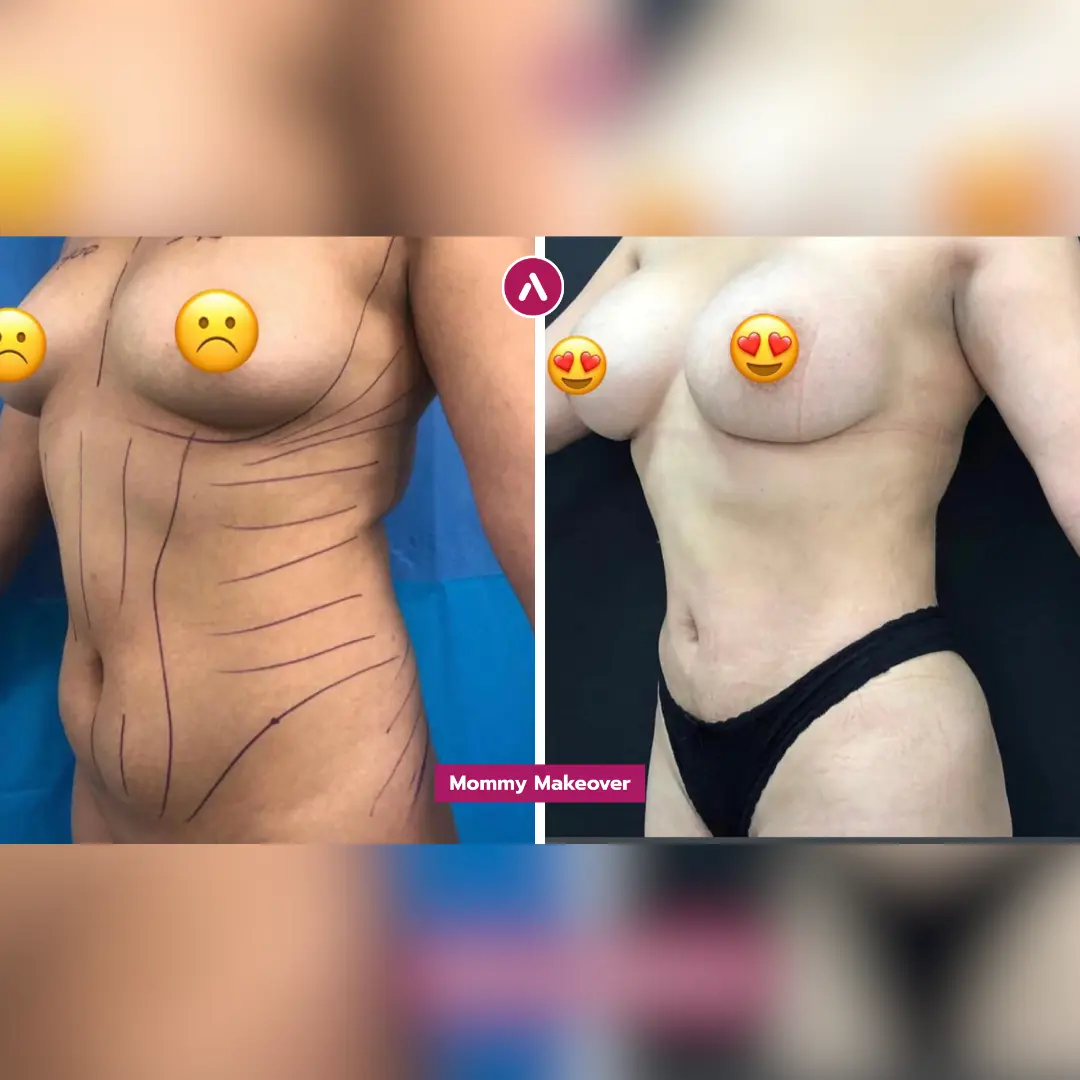
Meal Prep, School Lunches, and Transportation
Food planning protects recovery. It also prevents decision fatigue. Before travelling, prepare freezer meals, grocery delivery lists, school-lunch templates, and snack bins children can access without your help.
If you usually drive, arrange transportation before surgery. You may not be able to drive while taking certain medications, and turning your torso to check blind spots can feel uncomfortable after abdominal work. Ask your surgeon when driving is safe for your exact procedure mix.
For children in school or activities, create a transportation grid. Include pickup names, phone numbers, backup drivers, car seat location, and any school authorization requirements. This matters in Toronto, Vancouver, Montreal, Calgary, and smaller communities where one missed pickup can create a stressful chain reaction.
Emergency Contact Tree
Every recovery plan needs a simple emergency contact tree. It should be printed and shared with the adults helping you.
- Your AKM patient coordinator contact
- Your Canadian family doctor or local walk-in clinic
- Nearest emergency department
- Daycare or school office
- Primary childcare helper
- Backup childcare helper
- Neighbour or nearby friend who can help quickly
This is also the right time to review general surgical recovery principles. Canadian patient resources, including HealthLink BC’s post-surgical activity guidance, note that after abdominal surgery, heavy lifting and strenuous exercise may be restricted while the abdomen heals, with return to usual routines often measured in weeks rather than days. Always follow your AKM surgeon’s instructions for your specific operation.
Parenting Recovery Map: Weeks 1–8
The table below gives a practical planning framework. It is not a medical clearance schedule. Your surgeon’s instructions override any general timeline.
| Recovery Period | Child-Related Restrictions | Usually Safer Parenting Options | Support Needed |
|---|---|---|---|
| Week 1 | No lifting children; limited bending; fatigue is expected | Video calls, seated reading, short supervised conversations | Full-time adult support |
| Weeks 2–3 | Avoid lifting infants or toddlers; avoid car seats and laundry baskets | Seated cuddles, homework help, meal planning, gentle supervision | Daily hands-on childcare help |
| Weeks 4–6 | Gradual return only if cleared; avoid sudden child impact to abdomen or chest | School routines, light meal prep, short walks with children | Part-time support for lifting-heavy tasks |
| Weeks 7–8 | Some lifting may resume only with surgeon approval | More active parenting, errands, structured outings | Backup support for high-energy days |
Canadian parent callout: daycare flexibility varies by province, provider, and centre policy. Ask about alternate pickup rules early, especially if your child attends a licensed centre with strict identification requirements.
Support callout: extended family help and hired childcare solve different problems. Family may offer emotional familiarity. Hired support may offer schedule reliability. Many recovering moms need both.
Week 1 — The Istanbul Phase
The first week is not the time to manage family life from a distance. Your job is to recover, walk gently as instructed, attend post-op checks, take medications properly, and let the adults at home run the household.
That does not mean you disappear from your children’s emotional world. It means you stay connected in a way that protects your energy. The right communication plan can reassure your children without turning every video call into a recovery setback.
Communication With Kids While Away
Children usually cope better when they know what to expect. Before leaving Canada, tell them who will be helping, where you will be sleeping, when you will call, and when you expect to come home. Keep the explanation simple.
You do not need to describe every surgical detail. Younger children may only need to hear, “Mom is going to see doctors so her body can heal, and Grandma will help while I am away.” Older children can handle more detail, especially if they are already aware that pregnancy or weight changes affected your body.
Use the same language each time. Predictability helps. A child who hears a calm, repeated explanation from you, your partner, and caregivers will usually feel safer than a child hearing a different story from every adult.
Video Call Routines That Work With Surgical Recovery
Video calls can help, but they can also drain you. The first few days after surgery may include swelling, fatigue, limited movement, and a lower tolerance for noise. Keep calls short and planned.
A helpful structure is one call per day at a predictable time. Five to ten minutes may be enough. Choose a quiet moment, not the chaos before school or bedtime.
You can prepare children for how you may look. Say, “My face and body may look puffy for a little while, but the doctors are taking care of me.” This prevents surprise. It also keeps the call from becoming a long reassurance session when you need rest.
- Use the same call time each day when possible.
- Ask children to show one drawing, toy, or school item.
- Avoid calls when pain medication makes you sleepy.
- End the call before your energy drops.
- Let another adult manage tears or tantrums after the call ends.
Tips for Kids Who Miss Their Mom
Missing you is normal. It does not mean the trip was a mistake. It means your child is attached to you, and the adults around them need to hold the routine steady.
Before travelling, prepare small “mom notes” for each day. These can go into lunchboxes, bedtime books, or morning backpacks. A short handwritten message often reassures children more than a long emotional video call.
For toddlers and preschoolers, record a few short voice messages or bedtime stories before your trip. The caregiver can play them at night without needing you to be awake in Istanbul. This protects your rest while keeping your presence in the routine.
Using AKM’s Coordinator Support Without Overloading Yourself
International recovery can feel emotionally intense because you are healing away from home. This is one reason structured patient coordination matters. You need medical and logistical support in Istanbul so your family support system in Canada does not become your only safety net.
AKM Clinic’s patient hosts help coordinate clinic visits, transfers, and communication during the early recovery phase. You can read more about AKM’s Canadian patient coordinator support and the broader patient-care structure before planning your trip.
Use that support clearly. Save clinical questions for the AKM team. Save childcare questions for your home support team. Mixing the two can create unnecessary anxiety.
Week 2–3 — Returning to Canada With Restrictions
The return home is often emotionally comforting and physically challenging. Your children are excited to see you. You may be happy to be back in your own bed. At the same time, your recovery restrictions are still real.
These two weeks are where many moms accidentally overdo it. They feel better than expected, see household tasks piling up, and start helping too much. Protecting this phase is essential.
Customs and Clearance With Kids Waiting
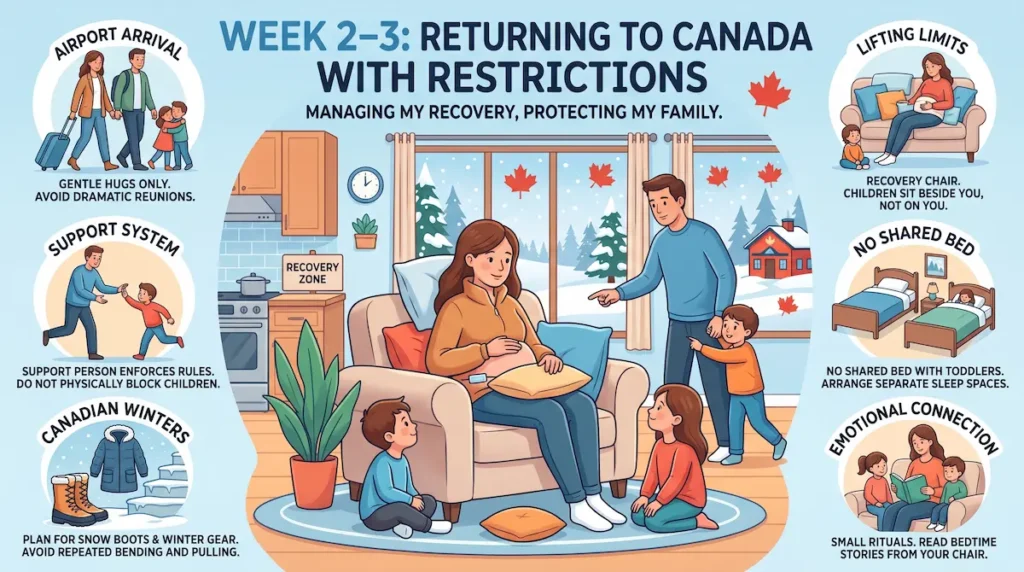
Plan your arrival day carefully. After a long flight, you may be swollen, tired, and moving slowly. Do not schedule a dramatic airport reunion with children climbing into your arms.
Ask another adult to meet you at the airport or drive you home. If your children come, explain in advance that they can hug you gently while you are seated or standing still. No running jumps. No being picked up.
Keep documents and medications organized in your carry-on. You should have your surgery letter, medication list, and any post-op instructions available. Once you land, the priority is getting home safely, hydrating, and resting.
For a broader plan for the first days after landing, see our guide to post-op care once you’re back in Canada.
First Days Back Home With Lifting Limits
Most children test limits unintentionally. A toddler may reach up to be carried. A preschooler may climb onto your lap. A school-age child may forget and lean hard into your abdomen. These moments need a plan.
Set up a recovery chair or couch zone before you travel. Keep pillows nearby to protect your abdomen and chest. Children can sit beside you, not on you. If you had breast surgery, protect your upper body from sudden pressure as well.
Use clear phrases children can remember:
- “Gentle hugs only.”
- “Climb beside me, not on me.”
- “Ask Dad before you sit with Mom.”
- “Mom can cuddle, but Mom cannot lift yet.”
Your support person should enforce these rules, not you. You should not have to physically block a child while healing. Place another adult between you and high-energy moments whenever possible.
Sleep Coordination — No Shared Bed With Toddlers Temporarily
Sleep is one of the most overlooked parenting issues after mommy makeover surgery. Many Canadian parents co-sleep occasionally, especially during illness, travel disruption, or toddler wakeups. After surgery, this can be risky.
A toddler rolling into your abdomen or kicking near incision areas can cause pain and stress. If you had breast surgery, a child pressing into your chest can also be uncomfortable. For the first few weeks, arrange separate sleep spaces.
If your child usually comes into your bed at night, move the caregiver closer to the child instead of bringing the child to you. A mattress on the child’s floor or a temporary grandparent sleepover can protect everyone’s routine.
Consider your own sleep positioning too. Many tummy tuck patients sleep in a slightly flexed “beach chair” position during early recovery. For detailed body-positioning guidance, review tummy tuck recovery tips applied to moms.
Managing Emotional Guilt During the Restricted Phase
Many mothers feel guilty when they cannot lift, drive, cook, or manage bedtime normally. That guilt can push them into doing too much too soon. Recovery does not improve because you suffer through chores.
Children benefit from seeing adults recover responsibly. You are modelling boundaries, patience, and respect for medical care. That is still parenting.
Use small rituals to stay emotionally present. Read one bedtime story from your recovery chair. Help choose school clothes from the couch. Watch a quiet show together. Connection does not require lifting.
Early Home Setup Checklist
Prepare your home before departure so the return feels calm rather than reactive. Place commonly used items at waist height. Remove tripping hazards. Set up water, medications, charging cables, and pillows near your recovery area.
| Home Area | Before You Travel | Why It Helps With Kids |
|---|---|---|
| Bedroom | Set pillows for elevated or flexed sleeping | Reduces night-time repositioning and child-related disruption |
| Living room | Create a recovery chair or couch zone | Allows seated cuddles without lifting |
| Kitchen | Move snacks and dishes to reachable shelves | Children and helpers can access basics without asking you |
| Entryway | Organize backpacks, shoes, and winter gear | Reduces bending and rushed school-morning stress |
| Bathroom | Keep toiletries and wound-care items accessible | Protects privacy and avoids repeated stair trips |
Canadian winter note: if you return during November to March, plan for snow boots, heavy coats, icy walkways, and children needing help with layers. These small tasks can involve more bending and pulling than they seem.
Week 4–6 — Progressive Activity Return
Weeks 4 to 6 often feel like the “almost normal” phase. That can be deceptive. You may be walking better, sleeping more comfortably, and feeling more like yourself, but deeper tissues may still be healing.
This is the stage where parenting tasks return gradually. The safest approach is to separate emotional parenting from physical parenting. You can be more present, but you may still need help with lifting, carrying, pushing, pulling, and sudden child-related movement.
School Drop-Off and Pickup Logistics
School routines usually resume before full physical strength returns. That means drop-off and pickup need to be simplified. If another adult can manage transportation through Week 4, that is often the easiest option.
If you are cleared to drive, keep trips short at first. Avoid twisting sharply to reach into the back seat. Let children buckle themselves if they are old enough, or have another adult handle car seats until your surgeon clears bending and lifting.
Winter adds a Canadian layer. Snowbanks, icy sidewalks, heavy backpacks, and bulky jackets can make school drop-off more physically demanding than it looks. Ask older children to carry their own bags and put on their own boots.
- Use kiss-and-go lanes only if you can avoid rushing.
- Ask the school about temporary accessibility parking if needed.
- Arrange walking groups with trusted neighbours.
- Keep backpacks light during your recovery window.
- Delay volunteer duties, field trips, and classroom support until cleared.
Slow Return to Playground and Active Parenting
Playground parenting is more physical than most people realize. Children may need help onto swings, slides, climbing structures, or bicycles. They may also run toward you unexpectedly.
During Weeks 4 to 6, choose low-risk outings. A short walk, library visit, craft activity, or seated park visit is usually more realistic than a playground session with a toddler. If you do go to a playground, bring another adult who can handle lifting and chasing.
Set rules before leaving the house. Tell children, “I can watch and cheer, but I cannot lift or catch yet.” Simple language prevents disappointment and protects your recovery.
When You Can Lift Your Child Again
Lifting clearance depends on your procedure combination. A mommy makeover with a tummy tuck and muscle repair often requires stricter lifting limits than breast surgery alone. Liposuction areas can also remain tender with pressure and movement.
Do not test your healing by lifting “just once.” Children move unpredictably. A child who wiggles, twists, or suddenly leans away can strain your abdomen, chest, or incision areas.
When your surgeon does clear lifting, start gradually. Lift from a seated position first if possible. Keep the child close to your body. Avoid lifting while twisting, reaching, or bending from the waist.
Chores That Still Need Delegation
By Week 4, many moms feel pressure to reclaim the house. That pressure is understandable. It is also one of the most common reasons recovery becomes harder than necessary.
Heavy chores should remain delegated until you receive clearance. This includes carrying laundry, vacuuming, mopping, lifting grocery bags, changing heavy bedding, moving bins, shovelling snow, and carrying children’s sports equipment.
Use this phase to return to light organizing, planning, and seated tasks. You can fold small laundry items at a table, help with homework, manage online groceries, and supervise routines without taking over the physical load.
| Parenting Task | Weeks 4–6 Planning Approach | Safer Alternative |
|---|---|---|
| Daycare pickup | Avoid carrying toddlers or bags | Have caregiver bring child to car or send another adult |
| Playground | Avoid lifting, catching, and climbing assistance | Bring another adult or choose quiet activities |
| Groceries | Avoid heavy bags and trunk lifting | Use delivery or curbside pickup with helper unloading |
| Laundry | Avoid baskets and repeated bending | Fold small loads seated at table height |
| Bedtime | Avoid lifting children into bed | Use step stools and seated cuddles |
Work, Parenting, and Energy Budgeting
Returning to work while parenting can create a second recovery cliff. You may feel fine after a quiet morning, then feel exhausted by school pickup and dinner. Energy budgeting matters.
For the first week back at work, keep evenings simple. Use prepared meals, skip non-essential activities, and protect bedtime. If possible, return to work mid-week rather than on a Monday, so the first stretch is shorter.
Canadian moms working in healthcare, education, government, retail, or shift-based roles should be especially careful. Standing, commuting, lifting, and long days can affect swelling and fatigue. Ask your employer about temporary modifications before surgery, not after.
Week 7–12 — Approaching Full Activity
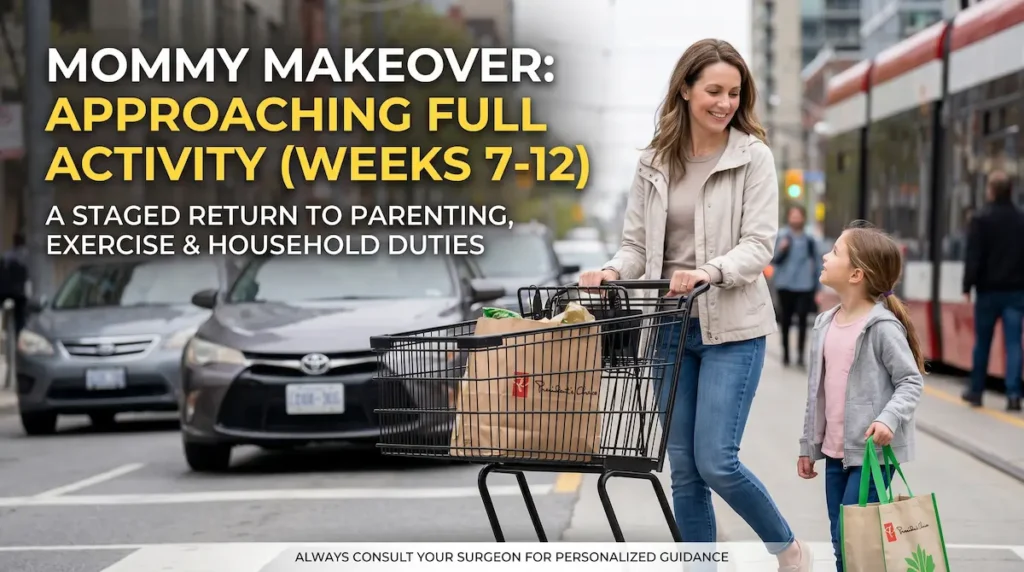
By Weeks 7 to 12, many patients are transitioning from “restricted recovery” to “rebuilding normal life.” This is encouraging, but it should still be guided by surgical clearance. A mommy makeover is not a single-procedure recovery for every patient.
Your body may look more settled, but swelling can still come and go. Parenting, household duties, exercise, and intimacy should return in stages rather than all at once.
Resuming Swimming and Pool Time
Swimming can be physically gentle later in recovery, but it is not an early activity. Incisions must be fully closed, and your surgeon must clear you before pools, lakes, hot tubs, or public change rooms.
This matters for Canadian families planning summer recovery. If your surgery is in spring, do not assume you will automatically be ready for June pool season. Scar protection from sun exposure also matters, especially after tummy tuck or breast incisions.
When cleared, start with supervision rather than active water play. Sit poolside. Walk in shallow water. Avoid lifting children in and out of the pool until you are fully approved for that movement.
Carrying Groceries and Household Lifting
Household lifting returns slowly. Grocery bags, Costco runs, laundry baskets, strollers, diaper bags, and pet food can all exceed early lifting limits. Even at Week 8, “I can lift” does not always mean “I can carry awkward weight through the house.”
Use a staged return. Start with light bags close to the body. Avoid carrying weight up stairs until cleared. Split loads into smaller amounts, even if it takes longer.
If you had abdominal muscle repair, be extra careful with twisting while carrying. The movement pattern matters as much as the weight itself.
Athletic Activities and Full Return
Many Canadian moms want to return to running, Pilates, yoga, skiing, cycling, gym training, or recreational sports. The timeline depends on the procedure mix and your surgeon’s assessment.
Low-impact walking usually returns before core work, resistance training, running, and sports. Abdominal exercises often require the most patience, especially after muscle repair. Do not rush planks, crunches, heavy squats, or high-intensity classes.
Cold-weather activities deserve special caution. Carrying skis, shovelling snow, pulling sleds, and managing children’s winter gear can strain the body even when they do not feel like “exercise.”
Rebuilding Normal Parenting Without Overcorrecting
After weeks of needing help, some moms try to prove they are fully back by doing everything at once. That is not necessary. A staged return is still a strong return.
Choose one major parenting responsibility to reclaim each week. For example, Week 7 may be school pickup. Week 8 may be meal prep. Week 9 may be solo bedtime. This method lets you monitor swelling, fatigue, and comfort.
Keep your helpers involved for longer than you think you need. Recovery is easier when support fades gradually rather than disappearing overnight.
Cost Planning and Recovery Support
Recovery support has a practical cost, even when the surgery plan itself is clear. Childcare, extra meals, grocery delivery, companion travel, and extra hotel nights may need a place in your budget.
If you are comparing procedure planning and inclusions, review mommy makeover pricing in CAD alongside your childcare and home-support plan. The surgical quote is only one part of the full recovery budget for parents.
International flights, companion travel, personal spending, and extra childcare are separate from the all-inclusive package. Being clear about those items before booking helps avoid stress later.
When to Ask AKM Before Doing More
Any new pain, sudden swelling, incision concern, fever, shortness of breath, calf pain, or unusual asymmetry should be taken seriously. Contact your AKM coordinator or seek local medical care in Canada depending on urgency.
For activity questions, send specifics. “Can I lift?” is less useful than “Can I lift my 12 kg toddler from the crib?” or “Can I carry two grocery bags up one flight of stairs?” Details help the care team give safer guidance.
Recovery is not a test of toughness. It is a sequence of cleared steps.
Frequently Asked Questions: Mommy Makeover Recovery with Kids
These questions focus on the parenting realities of recovery. Your surgeon’s instructions should always guide your final timeline, especially if your mommy makeover includes abdominal muscle repair, breast surgery, liposuction, or multiple combined procedures.
How long can I not lift my children?
Many mommy makeover patients need to avoid lifting children for several weeks, especially after tummy tuck or muscle repair. A practical planning window is 4 to 6 weeks, but your exact clearance depends on your procedure combination and healing progress.
Plan as if you will not lift infants, toddlers, car seats, strollers, or heavy backpacks during the early recovery phase. It is easier to reduce support later than to scramble for help after returning home.
Can I drive carpool during recovery?
You should not drive until your surgeon clears you, you are off medications that impair reaction time, and you can comfortably turn, brake, and manage the seatbelt. Carpool also includes bending, loading bags, helping with buckles, and responding quickly to children.
Even after driving is cleared, keep the first trips short. If you have toddlers in car seats, arrange another adult for buckling and lifting until you are specifically cleared for that movement.
What if my child gets sick during my recovery?
This is where your backup plan matters. A sick child may need lifting, night care, medication, comfort, and transportation to a clinic. You should not be the only adult available for that scenario.
Before surgery, choose one person who can handle illness-related childcare. Keep your child’s health card, medication list, school or daycare contact, and local clinic details in one accessible place.
How do I explain my surgery to young children?
Keep the explanation simple, calm, and age-appropriate. You might say, “Mom is having a doctor help her body heal, and I will need gentle hugs for a while.” Avoid language that makes children feel responsible for your discomfort.
For older children, you can explain that pregnancy, skin changes, or muscle separation affected your body and that surgery is part of your personal care. You do not need to share details beyond what feels appropriate for your family.
Can my partner take all childcare during recovery?
Possibly, but only if the plan is realistic. A partner may be able to manage childcare, meals, driving, cleaning, school communication, and bedtime for a short period. Doing all of it while working full-time can be difficult.
Build a second layer of support. A grandparent, sibling, friend, neighbour, nanny, babysitter, or meal-delivery plan can reduce pressure on the primary caregiver.
How do I sleep when I can’t be climbed on?
Create a separate sleep plan before surgery. If your child usually comes into your bed, have another adult respond during the night. A temporary mattress in the child’s room can help preserve comfort without putting pressure on your healing body.
Use pillows to protect your abdomen and chest. If you had a tummy tuck, you may need a slightly flexed sleeping position during the early phase. Ask your AKM team what sleep position is safest for your procedure mix.
When can I return to playground active parenting?
Watching from a bench usually returns before lifting, chasing, pushing swings, or catching a child. Many moms need another adult at playgrounds until they are cleared for sudden movement and child lifting.
Start with low-risk outings. Short walks, libraries, seated park visits, and quiet activities are better early choices than busy playgrounds with toddlers.
Can I cook for my family during recovery?
Light meal preparation may be possible once you feel comfortable and are cleared for basic activity. The issue is not only cooking. It is lifting pots, bending into the oven, carrying groceries, unloading dishwashers, and standing for too long.
Prepare freezer meals before travelling. Use grocery delivery, simple breakfasts, school-lunch bins, and help from family or friends. Make recovery boring on purpose. Boring is safer.
What should I arrange before flying to Istanbul?
Arrange childcare, school pickup permissions, meal support, sleep routines, transportation, backup caregivers, and emergency contacts. Also prepare your home recovery area with pillows, medications, water, chargers, easy snacks, and child-safe boundaries.
You should also review what is included in your surgical plan and what is not. Flights, companion travel, extra childcare, and personal spending are separate planning items.
Who should I contact if I am worried after returning to Canada?
For non-urgent recovery questions, contact your AKM coordinator and follow the clinic’s virtual follow-up process. For urgent symptoms, such as shortness of breath, chest pain, calf swelling, fever, sudden bleeding, or severe new pain, seek immediate local medical care in Canada.
International surgery recovery works best when you know which concern belongs where. AKM can guide your surgical recovery, while urgent medical issues in Canada require local assessment without delay.
Planning Your Recovery Before You Plan the Surgery Date
A mommy makeover can be planned around family life, but it cannot be squeezed into family life without support. Children need predictability. Your body needs protection. The two can work together when the household plan is clear before you travel.
Start with the practical questions: Who lifts the toddler? Who drives to daycare? Who sleeps near the child who wakes at night? Who handles school lunches? Who can step in if someone gets sick?
Once those answers are written down, your recovery becomes calmer. You are not stepping away from motherhood. You are giving your body enough structure to heal safely.
To build a recovery plan around your procedure combination, travel dates, and family setup, speak with AKM’s Canadian patient team and request a personalized recovery itinerary.
Medical Disclaimer: This page is provided for general educational purposes only and does not replace an in-person medical consultation, diagnosis, or personalized treatment plan. All surgery carries risks, and outcomes vary between individuals. Suitability for a mommy makeover surgery, procedure selection, and anesthesia choice can only be determined after a full clinical assessment by a qualified surgeon. Always follow your clinician’s instructions and seek urgent medical attention if you develop concerning symptoms during recovery.