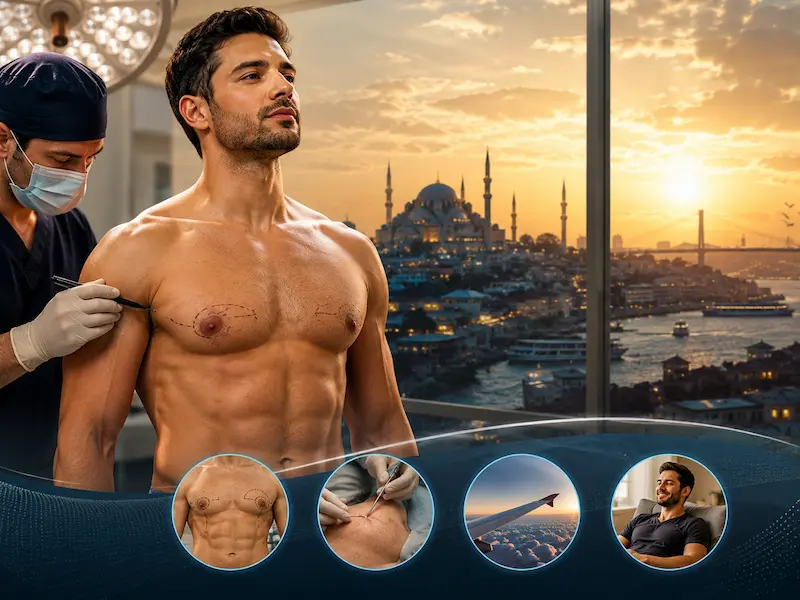

Quick Summary: Awake liposuction at AKM Clinic uses tumescent local anesthesia with IV sedation rather than full general anesthesia. This approach can support earlier mobility, less post-anesthesia grogginess, and real-time communication during contouring decisions.
For Canadian patients comparing surgical options abroad, awake lipo Turkey is most relevant when the goal is precise fat sculpting with a shorter early recovery profile. It is not suitable for every patient or every treatment area, so candidacy must be assessed by the surgical team.
For many Canadian patients, awake lipo Turkey is not simply a lighter version of standard liposuction. It is a different anesthesia model, built around tumescent local anesthesia, controlled IV sedation, and patient comfort without full general anesthesia. At awake high-definition liposuction at AKM Clinic, the technique is used for selected body-contouring patients who want precision, safety, and a recovery pathway that fits long-haul travel planning.
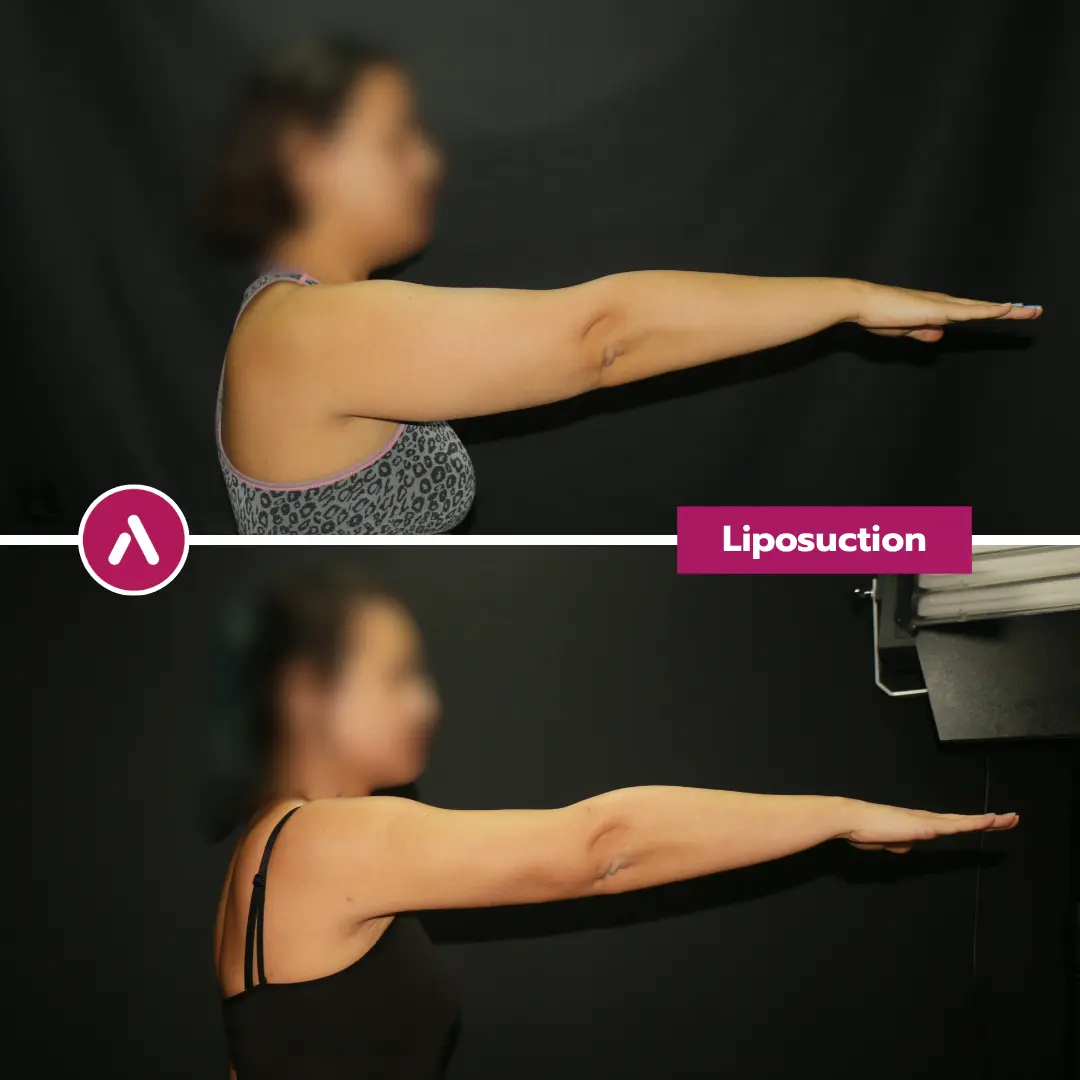
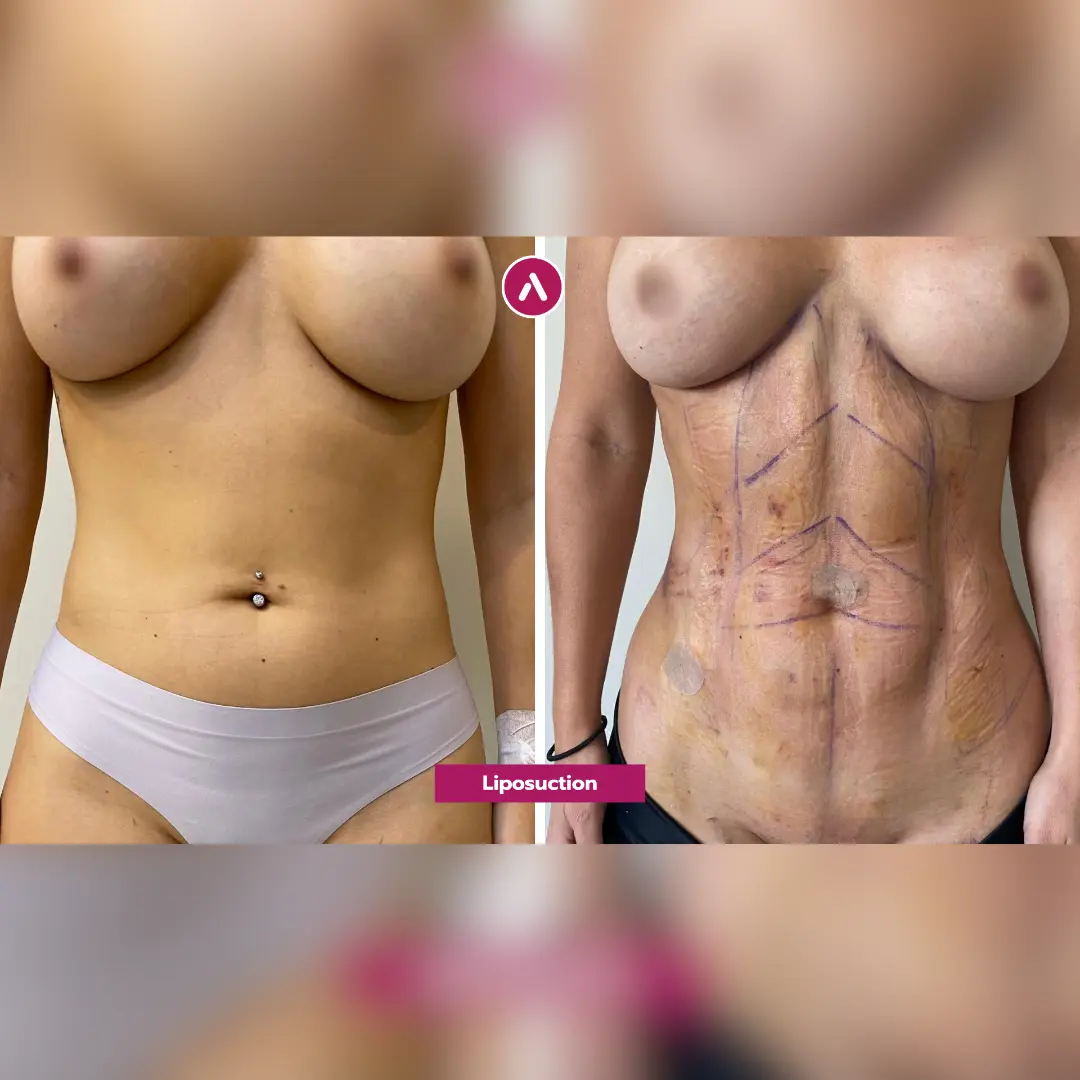
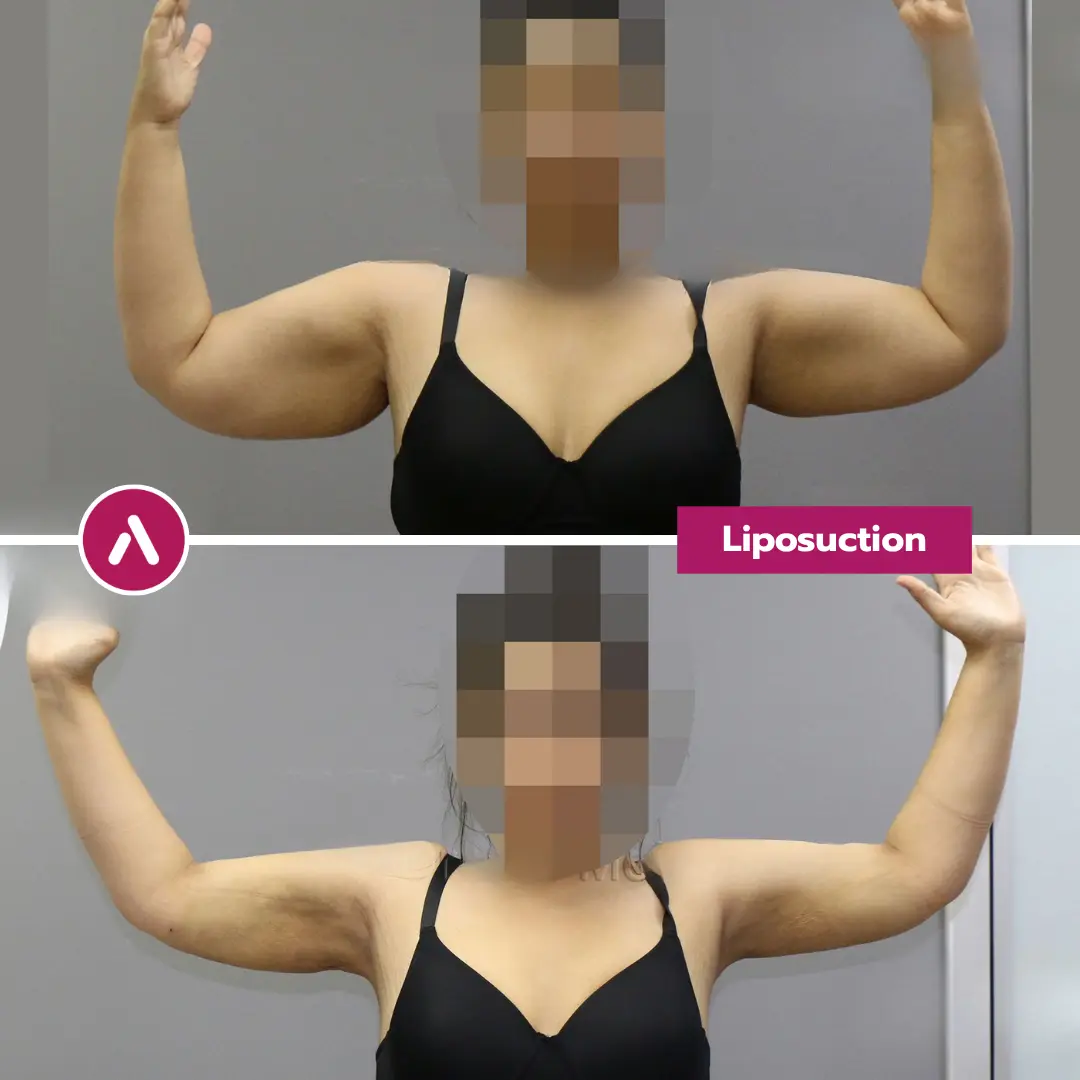
The appeal is practical. A patient flying from Toronto, Vancouver, Montreal, or Calgary is not only asking, “Will the result look natural?” They are also asking, “How quickly can I walk, eat, sleep normally, and prepare for the return flight?” Awake liposuction addresses that question by reducing the burden of full anesthesia while preserving the technical goals of liposuction.
This does not mean the procedure is casual. It is still surgery. The safest outcomes come from careful screening, realistic scope selection, and a clinic that knows when awake technique is appropriate and when general anesthesia is the better option.
Table of Contents
What “Awake” Lipo Actually Means?
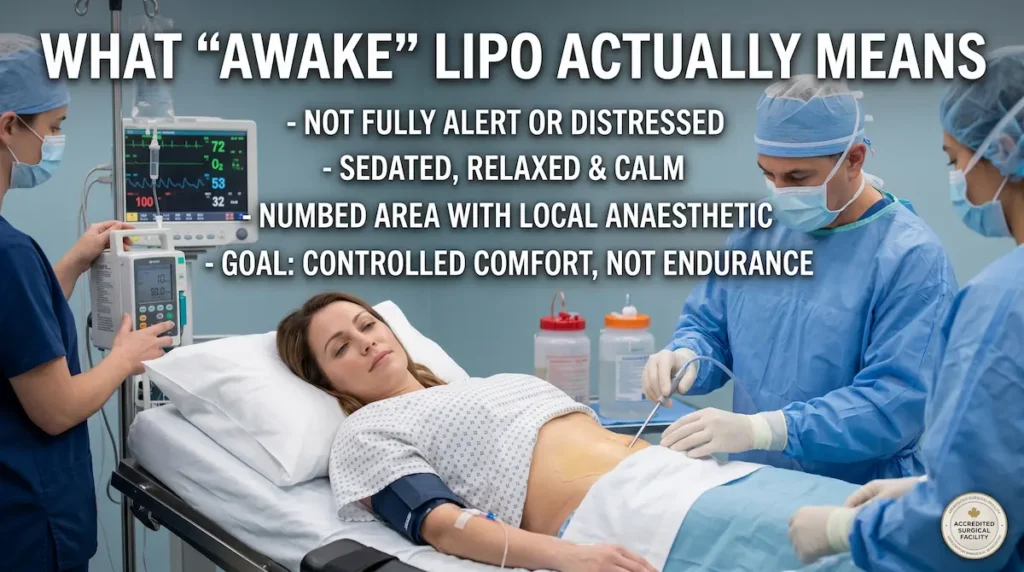
Awake lipo means the treatment area is numbed with a large-volume local anesthetic solution while the patient receives IV sedation for comfort. The patient is not expected to tolerate pain. The goal is controlled comfort, not endurance.
This section explains the anesthesia mechanics behind awake liposuction. It also clarifies a common misunderstanding: “awake” does not mean fully alert, anxious, or uncomfortable throughout the procedure.
Tumescent local anesthesia mathematics
Tumescent anesthesia is the foundation of awake liposuction. The surgeon injects a carefully calculated fluid solution into the fatty layer before fat removal begins. This solution usually contains saline, local anesthetic, and a vasoconstrictor to help reduce bleeding and bruising.
The tissue becomes swollen, firm, and numb. That firmness is part of the technique. It separates tissue planes, helps the cannula move more predictably, and allows the surgeon to remove fat with less trauma than dry techniques.
ISAPS describes tumescent and super-wet liposuction as techniques where targeted fat cells are infused with fluid containing local anesthetic and adrenaline to support easier fat removal and reduce post-operative discomfort, bruising, and swelling. In a properly selected awake case, that same principle is used to create a safer local-anesthesia field. ISAPS patient education on liposuction provides a useful overview of this mechanism.
The “mathematics” matters because local anesthetic dosing must be calculated against body weight, treatment area, expected absorption, and total operative plan. This is not a guess. For Canadian patients used to structured medical protocols, this is one of the most important questions to ask during consultation: how is the local anesthetic dose calculated and monitored?
IV sedation depth and conscious comfort
Awake liposuction does not usually mean the patient is fully alert in the way they would be during a dental cleaning. IV sedation creates a calmer state. Many patients feel drowsy, relaxed, and detached from the procedure.
The exact sedation depth is tailored. Some patients need only mild sedation. Others need a deeper level of monitored comfort while still avoiding the airway control and recovery profile of full general anesthesia.
This is where clinic experience matters. Sedation must be enough to reduce anxiety and discomfort, but not so heavy that it removes the practical advantages of the awake model. For the wider anesthesia decision framework, see the broader local vs general anesthesia comparison.
Canadian patients often ask whether they will remember the procedure. Some remember brief moments of positioning, pressure, or conversation. Others remember very little. The clinical goal is not memory removal; it is safety, stability, and comfort.
Why “awake” does not mean “uncomfortable”
The word “awake” can sound more intimidating than the experience itself. Patients imagine feeling every movement. That is not the intended protocol.
During awake lipo, the numbing solution blocks pain in the treatment area. IV sedation lowers anxiety. The patient may feel pressure, vibration, movement, or tugging, but sharp pain should not be part of the expected experience.
For the awake methodology applied to facial surgery, see for the awake methodology applied to facelift, see our awake facelift pain guide. The anatomy and procedure are different, but the patient concern is similar: “Will I feel pain?”
Awake lipo is also not a test of emotional toughness. A patient with severe procedural anxiety may not be the right candidate. In those cases, general anesthesia can be safer and kinder.
Canadian Patient Note: Ask About Monitoring, Not Just Numbing
Patients from Ontario, British Columbia, Quebec, and Alberta often compare overseas protocols with Canadian expectations for sedation safety. Ask how vital signs are monitored, who manages IV sedation, and how the team responds if anxiety or discomfort increases during surgery.
Recovery Acceleration: The Awake Advantage
The main recovery advantage of awake lipo is not that the body skips healing. Tissue still swells. Bruising can still happen. Compression and aftercare still matter.
The difference is the early recovery window. Patients who avoid full general anesthesia may eat sooner, walk sooner, and feel mentally clearer during the first day after surgery. For an international patient, that early clarity can make the hotel recovery period easier to manage.
Same-day mobility and oral intake
After general anesthesia, many patients spend the first hours dealing with grogginess, nausea, chills, or delayed appetite. Awake lipo reduces that anesthesia burden. Many suitable patients can drink, eat lightly, and walk with assistance on the same day.
Movement matters. Gentle walking supports circulation, reduces stiffness, and helps patients regain confidence in their body after surgery. This is especially relevant for Canadians staying in Istanbul for a short surgical travel window.
Same-day walking does not mean normal activity. Patients should not shop, tour the city, climb stairs repeatedly, or treat early mobility as permission to overdo it. Recovery is still structured.
No post-anesthesia grogginess
The first evening after surgery is often easier when a patient is not recovering from deep general anesthesia. They may feel tired, sore, or emotionally drained, but they are less likely to experience the heavy “fog” that some patients associate with full anesthesia.
That clarity can help with simple tasks: drinking water, eating a light meal, understanding medication instructions, communicating with the patient host, and sleeping in the recommended position. Small things matter after surgery.
For Canadian patients travelling alone, this point is especially important. A patient flying from Vancouver or Ottawa may not have a companion in Istanbul. Earlier mental clarity can make the first recovery night feel more controlled.
Faster fit-to-fly clearance for Canadian return
Fit-to-fly clearance is never automatic. It depends on swelling, bruising, drainage, mobility, hydration, and the surgeon’s in-person assessment. Awake technique can support the early recovery pathway, but it does not replace medical clearance.
For a patient returning to Toronto Pearson, Montréal-Trudeau, or a connecting route through Europe to Vancouver, the goal is to be mobile, stable, and comfortable before the long-haul flight. The fewer anesthesia-related side effects in the first days, the easier that planning can become.
The return flight is still a medical logistics issue. Patients may need compression garments, walking intervals during the flight, hydration discipline, and help with luggage. Awake lipo makes early recovery simpler for some patients, but it does not make the return journey risk-free.
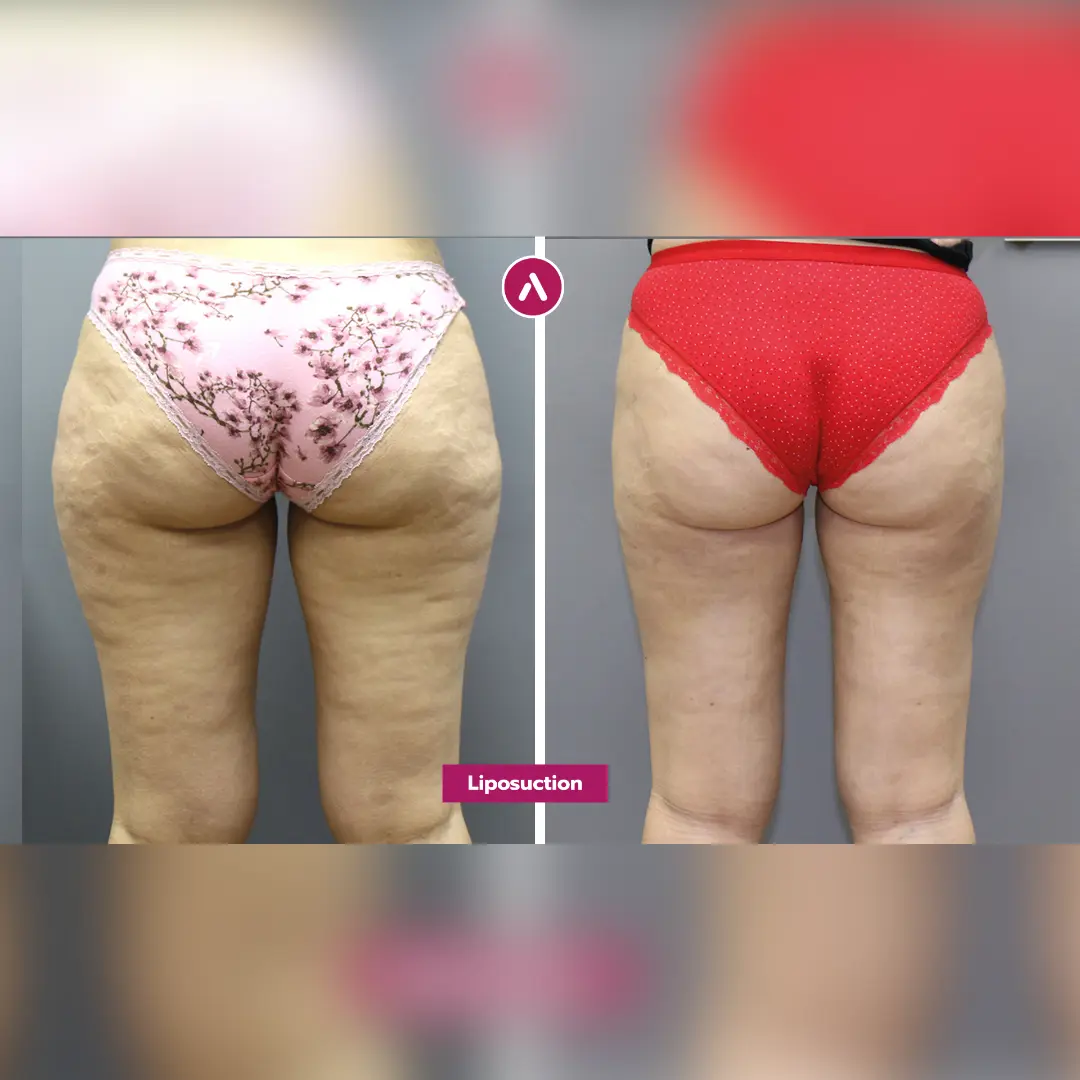
Canadian Return-to-Work Context
Canadian patients often schedule surgery around limited vacation time, especially professionals in Toronto, Calgary, Vancouver, and Montreal. Awake lipo can make the first week feel more manageable, but most patients should still plan remote work or lighter duties before returning to full in-person routines.
| Comparison Point | Awake Lipo | Asleep Lipo |
|---|---|---|
| Anesthesia model | Tumescent local anesthesia with IV sedation | General anesthesia with deeper systemic sedation |
| Early mobility | Often easier same-day walking with assistance | May be delayed by grogginess or nausea |
| Patient awareness | Pressure or movement may be felt, but pain should be blocked | No intra-operative awareness expected |
| Best suited for | Selected treatment areas, stable patients, manageable anxiety profile | Larger-scope cases, high-anxiety patients, or procedures requiring complete stillness |
| Recovery advantage | Less post-anesthesia fog and earlier oral intake for many patients | Useful when procedure scope is too large for awake comfort |
| AKM CAD pricing reference | Tumescent Liposuction: CAD $5,200 VASER Lipo: CAD $5,450 High-Definition Lipo: CAD $5,450 | Pricing follows technique and scope, not anesthesia alone. Power-Assisted Lipo: CAD $4,900 |
Pricing source: AKM Clinic Treatment Techniques (Cost). CAD figures are shown for Canadian readers. Individual surgical plans may require case-specific assessment.
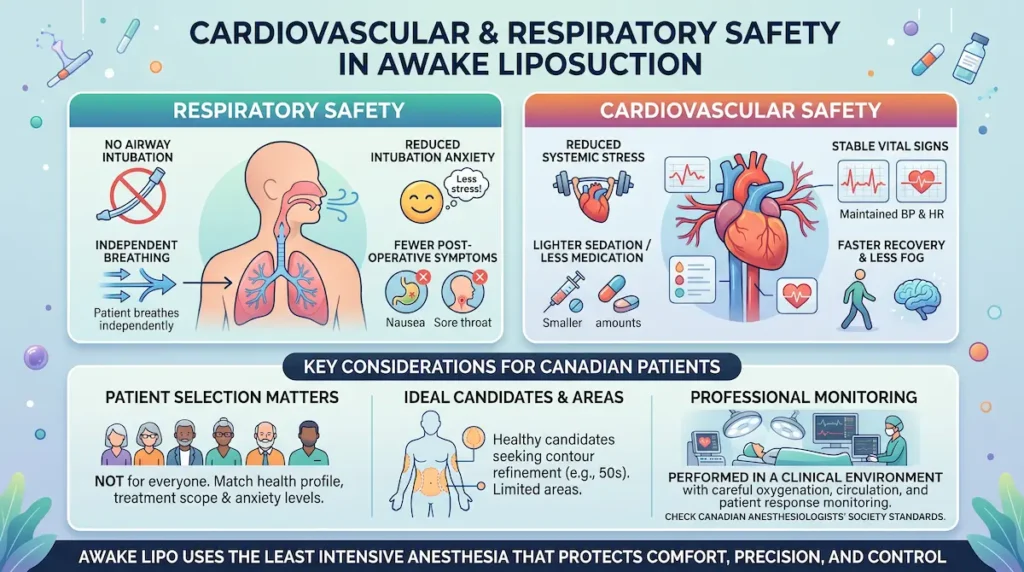
Cardiovascular and Respiratory Safety
Awake lipo is often discussed as a comfort choice, but the stronger clinical argument is safety selection. By avoiding full general anesthesia in suitable patients, the surgical team can reduce some of the respiratory and cardiovascular burdens associated with deeper anesthesia.
This does not mean awake liposuction is automatically safer for everyone. Patient screening still matters. The safest anesthesia plan is the one that matches the patient’s health profile, treatment scope, anxiety level, and expected surgical duration.
No airway intubation
General anesthesia often involves airway control, which may include intubation depending on the procedure and anesthetic plan. Awake lipo usually avoids this step because the patient breathes independently under local anesthesia and IV sedation.
For many Canadian patients, that difference feels meaningful. Intubation anxiety is common, especially among patients who have had nausea, sore throat, or difficult emergence after previous surgery. Avoiding airway instrumentation may reduce those specific concerns in properly selected cases.
Independent breathing still requires careful monitoring. Sedation can affect respiratory drive, even without full general anesthesia. This is why awake lipo should be performed in a clinical environment that monitors oxygenation, circulation, and patient response throughout the procedure.
The Canadian Anesthesiologists’ Society publishes national guidance on anesthesia practice and monitoring standards. Canadian patients reviewing overseas clinics can use these principles as a comparison point when asking how sedation is supervised. Canadian Anesthesiologists’ Society anesthesia guidelines are a useful reference for that discussion.
Reduced cardiac stress
General anesthesia affects the body globally. Blood pressure, heart rate, airway reflexes, temperature regulation, and medication metabolism all need active management. In healthy patients, this can be very safe. It is still a larger physiologic event than local anesthesia with lighter sedation.
Awake liposuction can reduce that systemic load. The patient does not need the same depth of unconsciousness. There is usually less medication burden, less emergence stress, and less early post-operative fog.
This matters most for patients who are medically stable but cautious. A 52-year-old patient from Toronto with well-controlled blood pressure may not be “high risk,” but they may still favour a technique that avoids unnecessary anesthesia intensity. The key word is unnecessary.
If the procedure is extensive, general anesthesia may still be the safer choice. Large-volume liposuction, multi-area treatment, or combined procedures can push beyond the comfort and safety limits of awake surgery. Honest selection protects the result.
Why this matters for older patients, especially 50+
Many liposuction patients in their 50s are not chasing a dramatic change. They want contour refinement around the abdomen, flanks, back, arms, or waist after hormonal changes, pregnancy, weight fluctuation, or slower metabolism. They often want a cleaner silhouette, not an extreme aesthetic.
This group also tends to ask better safety questions. They want to know how anesthesia will affect blood pressure, sleep, nausea, mobility, and flight readiness. Awake lipo gives the surgical team another option for suitable patients who want fat reduction without full anesthesia.
Age alone does not decide candidacy. A healthy 58-year-old may be a better awake candidate than a highly anxious 32-year-old. The medical profile matters more than the birth date.
Canadian Callout: Compare the Monitoring Standard, Not the Marketing Term
Canadian patients should not accept “awake” as a safety claim on its own. Ask who administers sedation, what monitoring is used, how emergency escalation works, and whether the surgical facility can convert the anesthesia plan if needed.
“Awake liposuction is not a shortcut. It is a clinical preference for the right patient, the right treatment area, and the right safety environment. The value is not simply avoiding general anesthesia; it is using the least intensive anesthesia model that still protects comfort, precision, and control.”
Real-Time Surgeon-Patient Collaboration
One of the more practical advantages of awake lipo is communication. Body contouring is visual and three-dimensional. Small asymmetries can appear differently when the patient is lying down compared with standing.
Awake technique can allow the surgeon to check contour, symmetry, and proportion with more flexibility during the procedure. This is especially useful in high-definition liposuction, where the goal is sculpting rather than simple fat removal.
Standing mid-procedure for symmetry verification
In selected cases, the patient may be repositioned or briefly assessed in a more natural posture during the procedure. This can help the surgeon evaluate how the abdomen, flanks, waist, or back contours behave under gravity.
This is not possible in the same way under full general anesthesia. A sleeping patient cannot provide positional feedback, shift posture voluntarily, or participate in symmetry checks. The surgeon still uses experience and anatomical landmarks, but the awake model adds another layer of assessment.
Standing checks are not used for every patient. They depend on treatment area, patient comfort, sterile-field management, and surgical judgement. Safety comes first.
Conscious feedback during contour decisions
Awake lipo does not mean the patient directs the surgery. The surgeon remains responsible for the plan. However, conscious feedback can help with subtle contour decisions, especially when refining areas that matter to the patient’s daily clothing fit.
A patient may explain that one flank bothers them more in fitted workwear, or that a lower-abdomen pocket is visible in leggings. Those details are usually discussed before surgery. During awake lipo, they can sometimes be confirmed as the contour develops.
This feedback is especially relevant for Canadian patients seeking understated results. The goal is often a smoother waistline, better clothing fit, or a more athletic outline. It is rarely about looking “done.”
Why this produces more natural results
Natural body contouring depends on proportion. Removing too much fat in one area can make another area look heavier. Over-etching can look artificial, especially on patients who do not have the muscle structure to support that look.
Real-time assessment helps the surgeon avoid those mistakes. The awake model supports restraint. It allows contour to be checked as an evolving shape rather than a purely theoretical plan.
This principle also appears in other awake body procedures. For a procedure-specific example, see awake methodology in BBL context, where posture and symmetry assessment can influence final shape.
Awake lipo fits AKM Clinic’s broader “Natural-First” philosophy. The purpose is not maximum fat removal. It is controlled refinement that still looks compatible with the patient’s frame, lifestyle, and age.
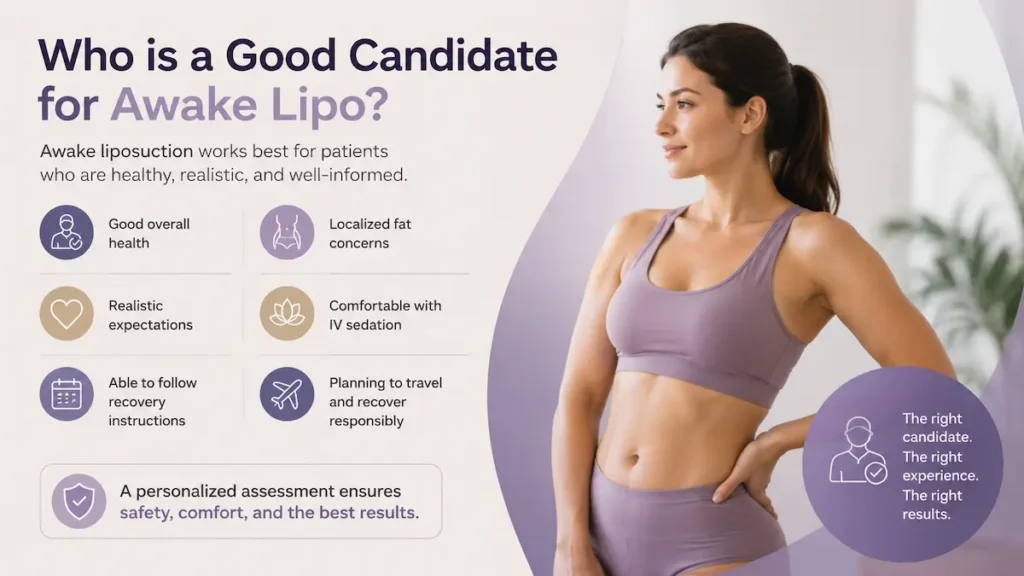
Patient Candidacy for Awake Lipo
Awake lipo is a strong option for selected patients, not a universal replacement for standard liposuction. The decision depends on anatomy, treatment scope, comfort with light awareness, and the surgeon’s ability to achieve the desired contour without extending the procedure beyond safe limits.
This is where candidacy matters. A patient may like the idea of local anesthesia, but the surgical plan still needs to make clinical sense. At AKM Clinic, the goal is to match the anesthesia model to the patient, not force the patient into a trend.
BMI and tissue characteristics
Awake liposuction works best when the treatment plan is focused. Patients with stable weight, good skin elasticity, and localized fat deposits are usually better candidates than patients needing large-volume fat removal.
Body mass index is only one part of the assessment. The surgeon also evaluates skin quality, fat density, prior scarring, muscle tone, and whether the patient’s goal is realistic. A patient with dense fibrous fat may benefit from VASER or power-assisted technique, but the treatment scope must still remain manageable under local anesthesia.
Patients comparing awake lipo with standard body contouring should also review the general liposuction procedure overview. That broader guide explains the full range of liposuction options, including cases where general anesthesia may still be preferred.
Skin quality deserves special attention. Liposuction removes fat; it does not remove loose skin. If the lower abdomen has significant laxity, stretch-damaged skin, or muscle separation, a tummy tuck may be more appropriate than liposuction alone.
Anxiety profile assessment
Anxiety is one of the most important awake-lipo screening factors. Some patients feel reassured by knowing they will avoid general anesthesia. Others feel more anxious at the thought of being partially aware during surgery.
Neither reaction is wrong. The question is whether the patient can remain calm enough for the awake protocol to work safely. IV sedation helps, but it is not meant to override severe panic.
During consultation, patients should be honest about previous surgical experiences, panic attacks, claustrophobia, medication sensitivity, and fear of medical settings. This is especially important for Canadians travelling long distance, because travel stress can amplify procedural anxiety.
A patient who feels strongly uneasy after discussing the awake process may be better suited to general anesthesia. Choosing general anesthesia in that situation is not a failure. It is appropriate clinical matching.
Scope limitations: when general anesthesia is needed
Awake lipo has limits. Larger treatment areas, longer procedure times, multiple combined surgeries, or extensive contour correction may require general anesthesia. Comfort and stillness matter when the procedure becomes more complex.
Examples that may push toward general anesthesia include extensive 360 liposuction, major revision contouring, multi-zone body surgery, or combination cases involving tummy tuck, breast surgery, or BBL. In those situations, a deeper anesthesia model may protect both the patient and the surgical result.
Male patients can be strong candidates for awake lipo, particularly for focused abdomen, flank, or chest contouring. However, dense male fat and athletic etching goals require careful planning. For anatomy-specific criteria, see male liposuction candidacy.
The honest rule is simple. Awake technique is valuable when it improves the patient experience without compromising precision, safety, or surgical efficiency.
Canadian Callout: Awake Lipo Is Best for Focused Goals
Patients from Toronto, Vancouver, Montreal, Calgary, and Ottawa often plan surgery around limited vacation time. Awake lipo can help with early recovery, but it should not be used to compress an overly ambitious treatment plan into a shorter trip.
AKM Clinic’s Awake Lipo Protocol
AKM Clinic’s awake lipo protocol is built around structured preparation, local anesthesia dosing, controlled IV sedation, careful contouring, and recovery support after surgery. The protocol is designed for international patients who need both surgical precision and practical travel planning.
For Canadian patients, the value is not only the procedure itself. It is the surrounding system: virtual assessment, in-person examination, VIP transfers, hotel recovery, patient-host communication, compression planning, and long-term virtual follow-up.
Pre-op anxiety management
Awake lipo preparation starts before the patient arrives in Istanbul. During the virtual consultation, the surgical team reviews photos, goals, medical history, prior anesthesia experiences, and anxiety concerns. This helps determine whether the awake model is realistic.
Patients should prepare clear questions before consultation. Useful questions include:
- Which areas can safely be treated awake in my case?
- How will my local anesthetic dose be calculated?
- Who monitors my sedation during surgery?
- What happens if I become uncomfortable or anxious?
- Could my case require conversion to a different anesthesia plan?
On arrival, the in-person consultation confirms the plan. The surgeon reassesses tissue quality, marks the body, reviews expectations, and explains what the patient may feel during surgery. Clear expectation-setting reduces anxiety more effectively than vague reassurance.
Surgical day flow
On surgery day, the patient is transferred from the hotel to the clinical setting. Pre-operative checks are completed first. The team confirms the treatment areas, reviews consent, checks vital signs, and prepares the patient for sedation and local anesthesia.
The tumescent solution is introduced slowly into the treatment area. Once the tissue is numb and prepared, the surgeon begins fat removal and contour refinement. The patient may feel pressure, vibration, or movement, but sharp pain should be reported immediately.
Because the patient is not under full general anesthesia, communication remains possible. The surgeon may ask about comfort, positioning, or sensation. In selected cases, body position may be adjusted to evaluate symmetry.
After surgery, the patient is placed in compression garments and monitored before returning to the hotel. The early goal is simple: stable walking, controlled discomfort, hydration, and clear instructions.
Recovery week considerations
The recovery week after awake lipo still requires discipline. Patients should expect swelling, drainage, bruising, tenderness, and fatigue. Awake anesthesia can reduce early grogginess, but it does not erase the tissue-healing process.
Compression garments are central to recovery. They help control swelling, support the new contour, and reduce fluid accumulation. Patients should wear them exactly as instructed, even when swelling makes the garment feel tight.
Manual lymphatic drainage can also support post-lipo recovery. For the specific timing, technique, and continuity plan after returning home, see post-lipo MLD recovery.
Canadian patients should also plan for the first week back home. That means arranging help with luggage, avoiding heavy lifting, scheduling lighter work, and continuing compression during long sitting periods. Winter patients should be careful with layered clothing that presses unevenly on treated areas.
Canadian Callout: Plan the First 72 Hours Back Home
Patients returning through YYZ, YUL, YVR, or YYC should arrange private transport from the airport, avoid carrying heavy bags, and keep compression garments accessible. A smooth return day protects the early contouring result.
The AKM Clinic model also includes patient-host support, post-operative medication guidance, and virtual follow-up after the patient returns to Canada. That continuity matters. A good awake-lipo result depends on surgery and aftercare working together.
Frequently Asked Questions: Awake Lipo Turkey
Awake lipo questions usually centre on three concerns: comfort, safety, and whether the technique can deliver the same contouring result as standard liposuction. The answers depend on patient selection and surgical scope. A focused awake case can be efficient and comfortable, but a larger or more complex case may still need general anesthesia.
Will I feel anything during awake lipo?
You may feel pressure, vibration, pulling, or movement. You should not feel sharp pain. The tumescent local anesthesia numbs the treatment area, while IV sedation helps reduce anxiety and keeps the experience more comfortable.
If discomfort increases during the procedure, the team can adjust local anesthesia, sedation, positioning, or the surgical plan. Patients should never feel they have to “push through” pain.
Is awake lipo safer than asleep lipo?
Awake lipo can reduce some risks linked to general anesthesia, including airway intubation, deeper medication exposure, and post-anesthesia grogginess. For selected patients, that can be a meaningful safety advantage.
It is not automatically safer for every patient. Large treatment areas, severe anxiety, complex revision work, or combined procedures may be safer under general anesthesia. The right choice is made after medical screening.
Does awake lipo cost more at AKM?
At AKM Clinic, pricing is based mainly on technique, treatment area, and surgical scope rather than the word “awake” alone. Canadian patients should review the specific procedure tier during consultation.
Current CAD pricing references include:
Tumescent Liposuction: CAD $5,200
VASER Lipo: CAD $5,450
High-Definition Lipo: CAD $5,450
Power-Assisted Lipo: CAD $4,900
For a broader procedure-by-procedure breakdown, review liposuction pricing in CAD.
Why don’t all clinics offer awake?
Awake liposuction requires more than local anesthesia. It requires the right patient selection, sedation monitoring, local anesthetic dosing discipline, and a surgeon comfortable working with patient feedback during contouring.
Some clinics prefer general anesthesia because it allows longer procedures, full patient stillness, and larger combined treatment plans. That can be appropriate. The problem is not general anesthesia itself; the problem is using one model for every patient.
Can I have HD-lipo awake?
Some high-definition liposuction cases can be performed awake, especially when the scope is focused and the patient has suitable anatomy. The treatment plan must be realistic.
HD-lipo requires precision. If the case involves multiple zones, extensive etching, or prolonged operating time, the surgeon may recommend general anesthesia to protect comfort and technical control.
How long is the awake lipo recovery?
Many awake-lipo patients walk the same day and resume light daily movement quickly. Swelling, bruising, compression garment use, and tenderness still continue for weeks.
Most patients should plan the first week around rest, short walks, hydration, compression, and follow-up checks. More visible contour refinement usually appears gradually as swelling resolves over several weeks to months.
Can I fly back to Canada sooner?
Possibly, but only after surgeon clearance. Awake lipo may reduce early grogginess and support faster mobility, which can help with flight readiness. It does not remove the need for post-operative assessment.
Canadian patients returning through YYZ, YUL, YVR, YYC, or connecting European routes should plan the return flight around swelling control, walking ability, hydration, compression garment comfort, and luggage support. A long-haul flight is still a recovery stressor.
Discuss Awake Lipo Candidacy With AKM Clinic
Awake lipo is best understood as a patient-selection tool. It can offer faster early mobility, less anesthesia burden, and more real-time contour assessment for the right candidate. It is not the right answer for every body type or every surgical plan.
For Canadian patients, the next step is a virtual consultation that reviews photos, health history, treatment goals, travel timing, and anesthesia comfort level. AKM Clinic’s team can then recommend whether awake liposuction, standard liposuction, VASER, HD-lipo, or another body-contouring approach fits your anatomy.
Discuss awake lipo candidacy in a consultation before choosing a technique, booking flights, or building your recovery schedule around a specific anesthesia model.
Medical Disclaimer: This page is provided for general educational purposes only and does not replace an in-person medical consultation, diagnosis, or personalized treatment plan. All surgery carries risks, and outcomes vary between individuals. Suitability for an awake liposuction, procedure selection, and anesthesia choice can only be determined after a full clinical assessment by a qualified surgeon. Always follow your clinician’s instructions and seek urgent medical attention if you develop concerning symptoms during recovery.