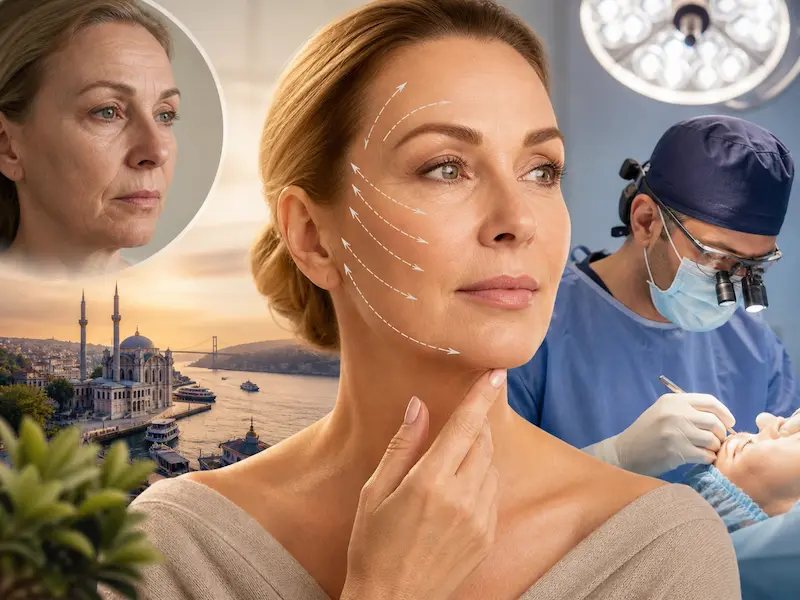

Quick summary: Stem cell facelift vs traditional facelift is not a choice between “natural cells” and “real surgery.” A stem cell-assisted facelift is best understood as a regenerative addition to a surgical facelift, while a traditional facelift focuses on structural lifting through the SMAS or deep plane layers.
For Canadian patients comparing options, the better procedure depends on anatomy, skin quality, facial volume, and whether the goal is lifting alone or lifting plus regenerative skin support.
Canadian patients often search for stem cell facelift vs traditional facelift because the terms sound like two completely separate procedures. In clinical planning, they are usually connected. A traditional facelift lifts descended facial structures; a stem cell-assisted facelift adds autologous regenerative material, usually derived from the patient’s own fat, to improve selected tissue-quality concerns.
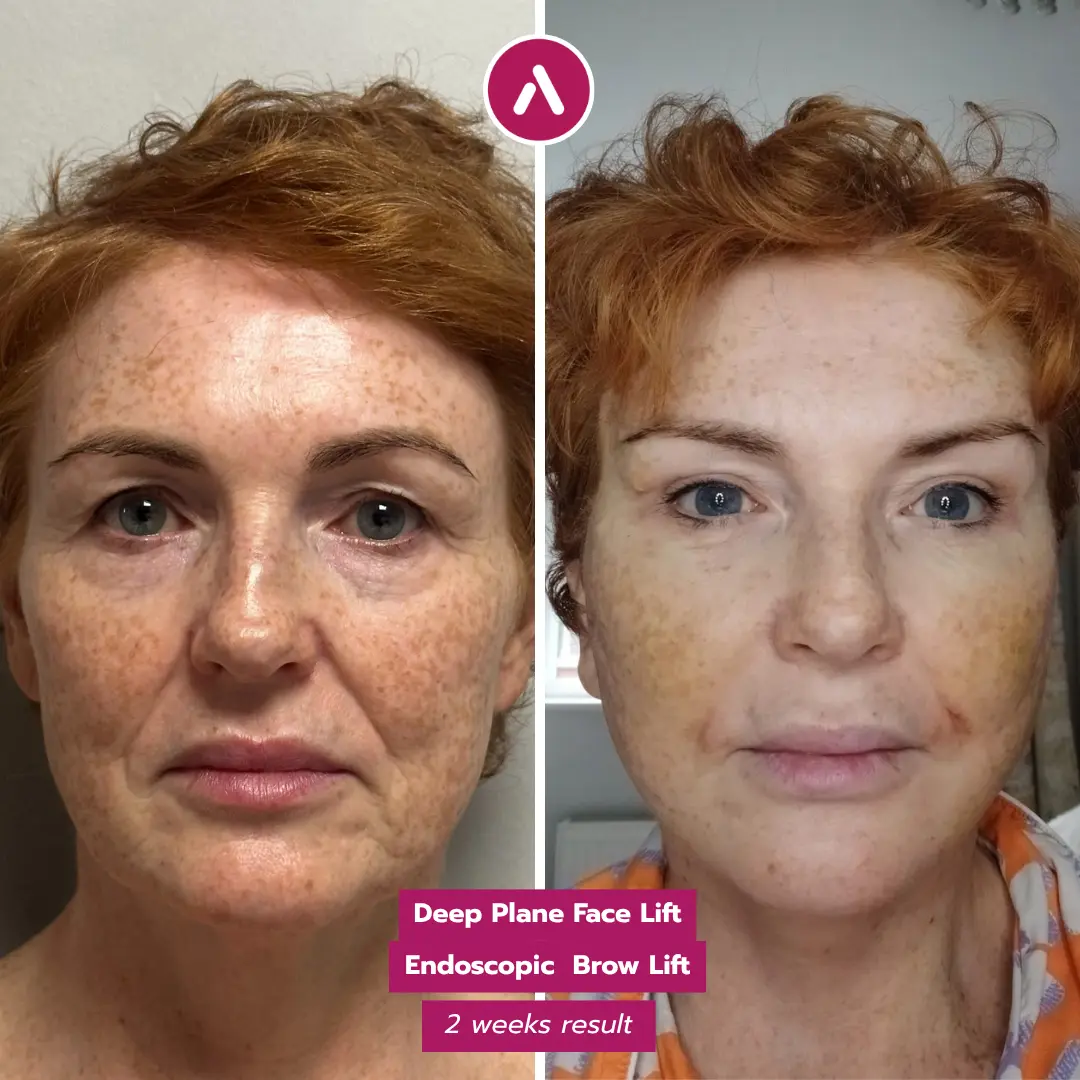
At AKM Clinic, the comparison starts with anatomy. Patients first need to understand what a surgical lift can correct, then whether regenerative augmentation is useful for their skin, texture, volume, or scar-quality goals. For a broader overview of surgical lifting options, see facelift options at AKM Clinic.
This article is a technical comparison only. It does not cover long-term durability in depth, and it does not walk through the full biological mechanism of stem cell processing. Those topics are important, but they belong to dedicated guides linked in the relevant sections below.
Table of Contents
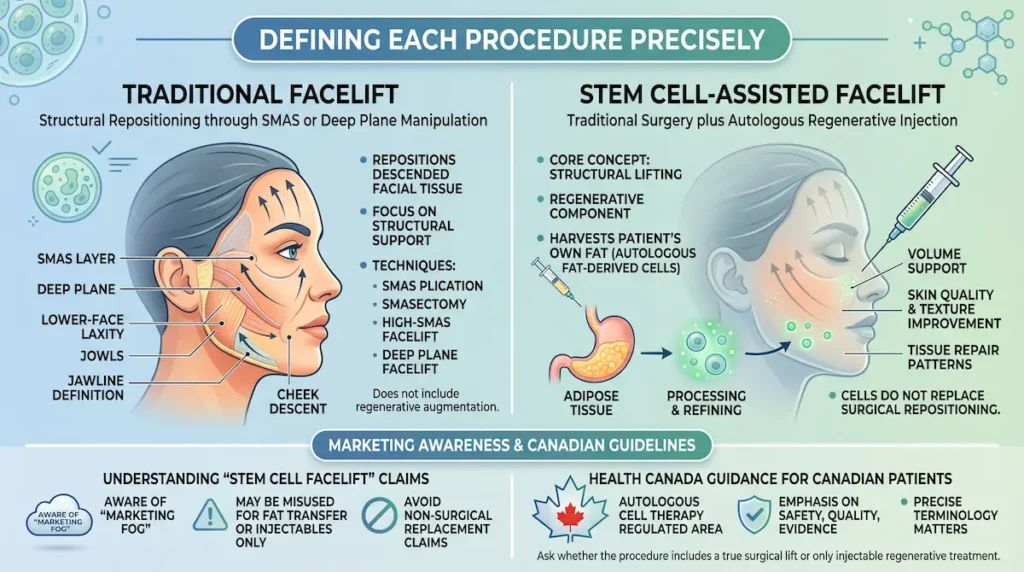
Defining Each Procedure Precisely
The first step is to remove the marketing fog. A traditional facelift and a stem cell-assisted facelift do not work in the same way, but they are not opposites. One provides structural repositioning; the other may add regenerative support to selected tissues.
This distinction matters for Canadian patients who are used to cautious medical language. Stem cell terminology should be handled carefully, especially because Health Canada treats autologous cell therapy as a regulated area where safety, quality, and evidence must be considered. Health Canada’s policy paper on autologous cell therapy products explains why a patient’s own cells still require responsible oversight and evidence-based claims.
Traditional facelift: structural lifting through SMAS or deep plane manipulation
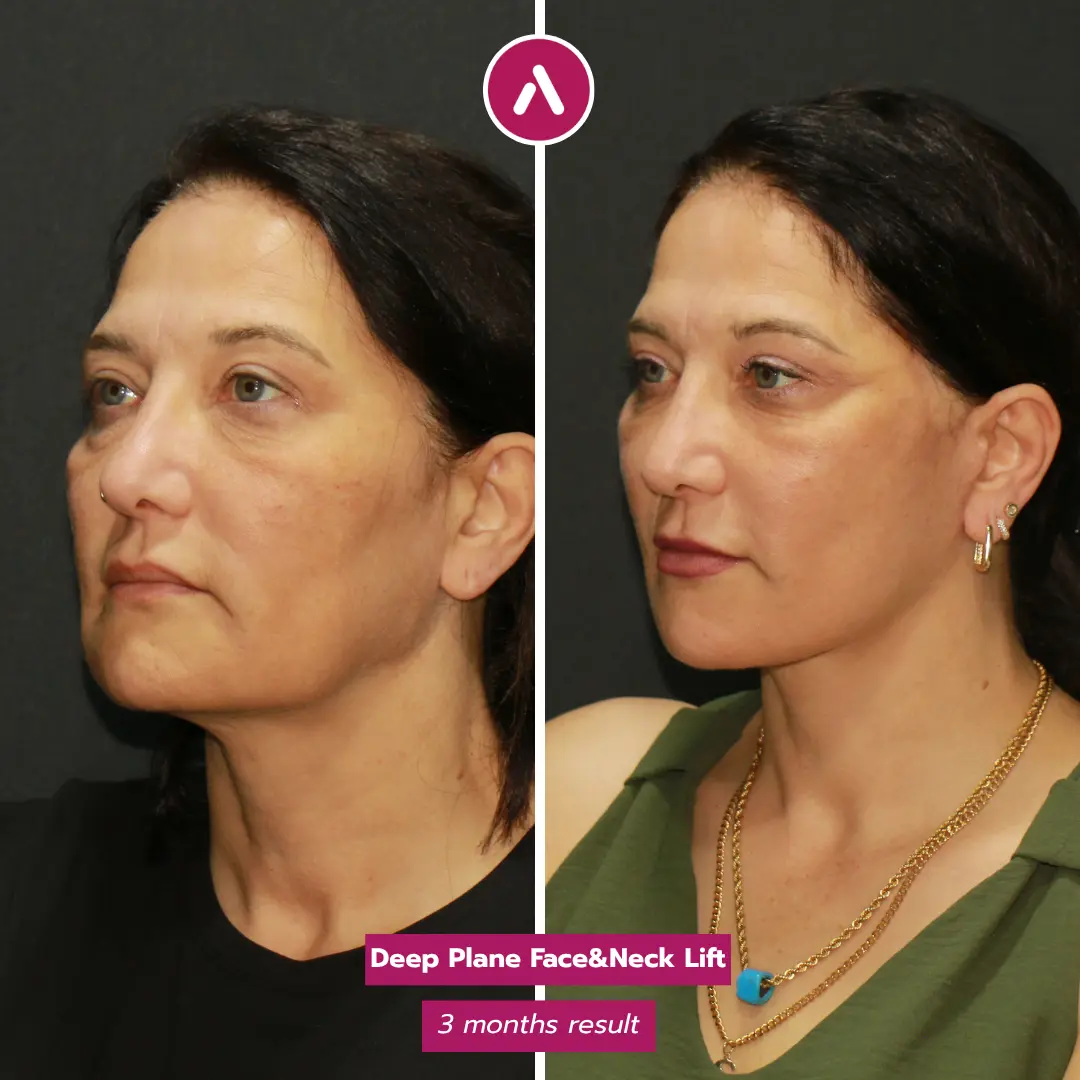
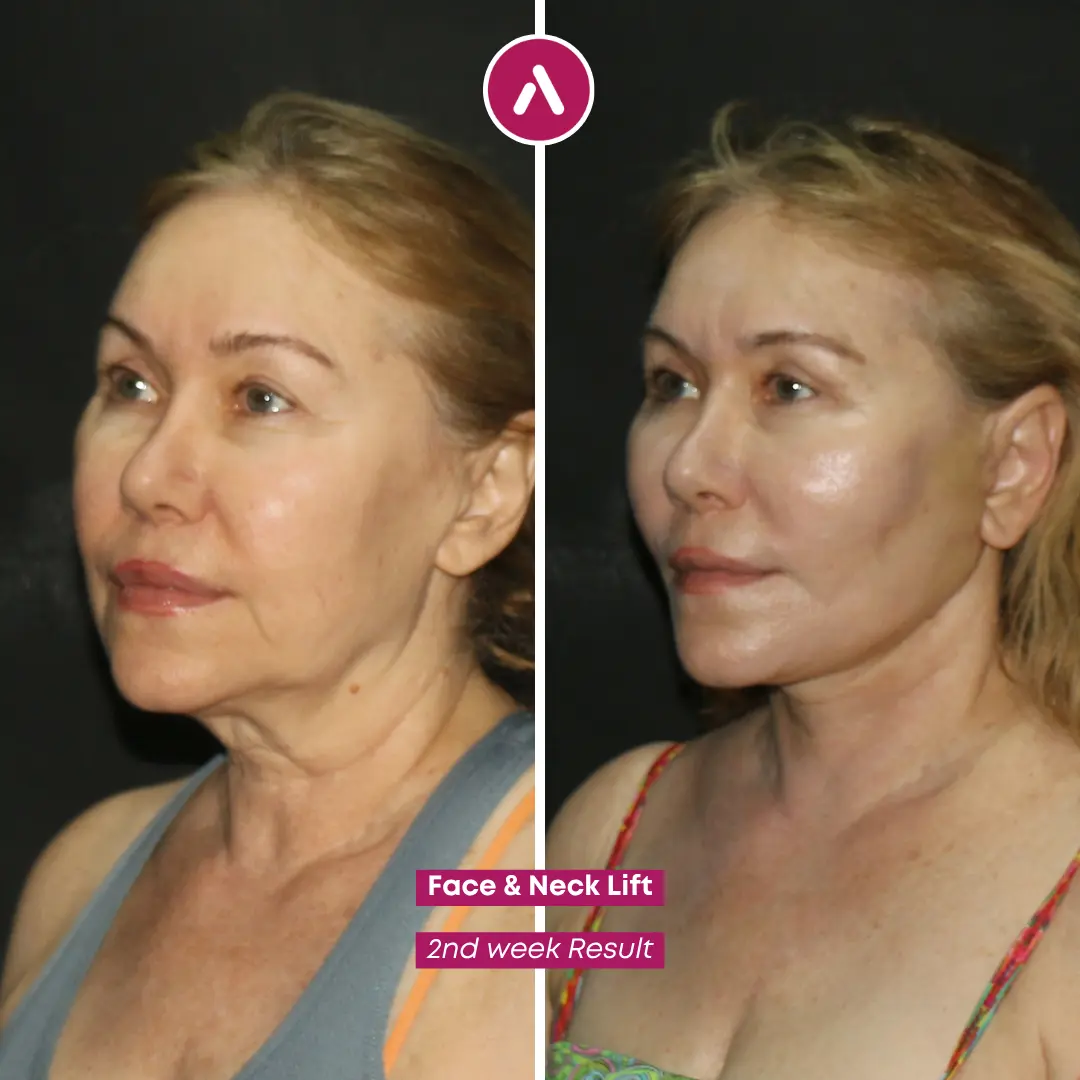
A traditional facelift is a surgical procedure designed to reposition descended facial tissue. Depending on the patient’s anatomy, the surgeon may work with the SMAS layer, the deep plane, or a related structural approach. The aim is to improve jowls, jawline definition, cheek descent, and lower-face laxity.
The term “traditional” can be confusing. It does not always mean outdated. In this comparison, traditional facelift simply means a surgical lift without regenerative fat-derived cell augmentation.
For patients with heavier lower-face sagging, deep tissue support is often more important than skin tightening alone. AKM Clinic’s deep plane facelift technique is designed to reposition the deeper facial structures rather than pull only the skin surface.
A traditional facelift can be performed using several technique families:
- SMAS plication: folding and tightening the SMAS layer without extensive release.
- SMASectomy: removing a portion of the SMAS layer to improve tightening.
- High-SMAS facelift: lifting the SMAS higher toward the cheek area.
- Deep plane facelift: releasing retaining ligaments below the SMAS for a more vertical, structural lift.
For the technique-level difference between SMAS and deep plane approaches, see the SMAS vs deep plane technique comparison.
Stem cell-assisted facelift: traditional surgery plus autologous regenerative injection
A stem cell-assisted facelift begins with the same core concept as a traditional facelift: the face still needs structural lifting where tissue has descended. The regenerative component is added to support skin quality, fine texture, selected volume concerns, and tissue repair patterns.
In aesthetic facial surgery, this often involves harvesting a small amount of the patient’s own fat, processing it, then reinjecting refined fat-derived material into selected facial areas. The goal is not to “pull” the face with stem cells. Cells do not replace surgical repositioning.
The most accurate way to describe this approach is “facelift with regenerative fat-derived augmentation.” Some clinics shorten that phrase to “stem cell facelift,” but the shorter name can lead to misunderstanding.
For the full definition and mechanism, see for the full mechanism explanation, see our complete guide to stem cell assisted surgery.
“Stem cell augmentation should be seen as an addition to precise surgical lifting, not as a substitute for it. If the facial ligaments and deeper tissues need repositioning, cells alone cannot create that structural lift.”Composite surgeon perspective based on AKM Clinic’s Natural-First surgical planning approach
Why the term “stem cell facelift” is often misused in marketing
The phrase “stem cell facelift” is attractive because it sounds less surgical, more natural, and more advanced. That is exactly why it needs caution. Some marketing uses the term for fat transfer alone, injectable treatments, platelet-rich plasma, or procedures that do not include meaningful surgical lifting.
For Canadian readers, the safest question is simple: what exactly is being done? If there is no SMAS, deep plane, or other structural lifting step, the procedure may improve volume or skin quality but should not be described as a facelift in the surgical sense.
A responsible consultation should clarify four points:
- Which lifting plane will be addressed?
- Whether fat is being harvested and processed.
- Where the regenerative material will be injected.
- What claim is being made: lift, texture, volume, or healing support.
Canadian patient note: Be cautious with any clinic that presents “stem cell facelift” as a non-surgical replacement for a facelift. In Canadian medical culture, precise terminology matters. Ask whether the procedure includes a true surgical lift or only injectable regenerative treatment.
The Surgical Mechanics: What Actually Happens
The real comparison becomes clearer once the surgical sequence is mapped. A traditional facelift follows a lifting pathway. A stem cell-assisted facelift follows that same pathway, then adds fat-derived regenerative preparation and injection where clinically useful.
This section gives the technical overview without turning into a full stem cell mechanism guide. The key point is practical: the regenerative step modifies the tissue-support strategy, but it does not replace the lift.
Step-by-step traditional facelift sequence
In a traditional surgical facelift, the process begins with incision planning. The exact incision pattern depends on sex, hairline, sideburn position, skin laxity, and whether the neck is included. For many Canadian patients, scar concealment around the ear and hairline is a major concern.
After the incision is made, the surgeon separates the skin and deeper tissues with enough access to reposition the target structures. In SMAS-based surgery, the SMAS layer is tightened, folded, or partially adjusted. In deep plane surgery, the surgeon releases retaining ligaments and repositions deeper tissue with less surface tension.
The basic surgical sequence often includes:
- Pre-operative marking while the patient is upright.
- Incision placement around the ear and hairline.
- Skin flap elevation and tissue exposure.
- SMAS or deep plane adjustment.
- Neck tightening if platysmal laxity is present.
- Skin redraping without excessive tension.
- Layered closure to support scar quality.
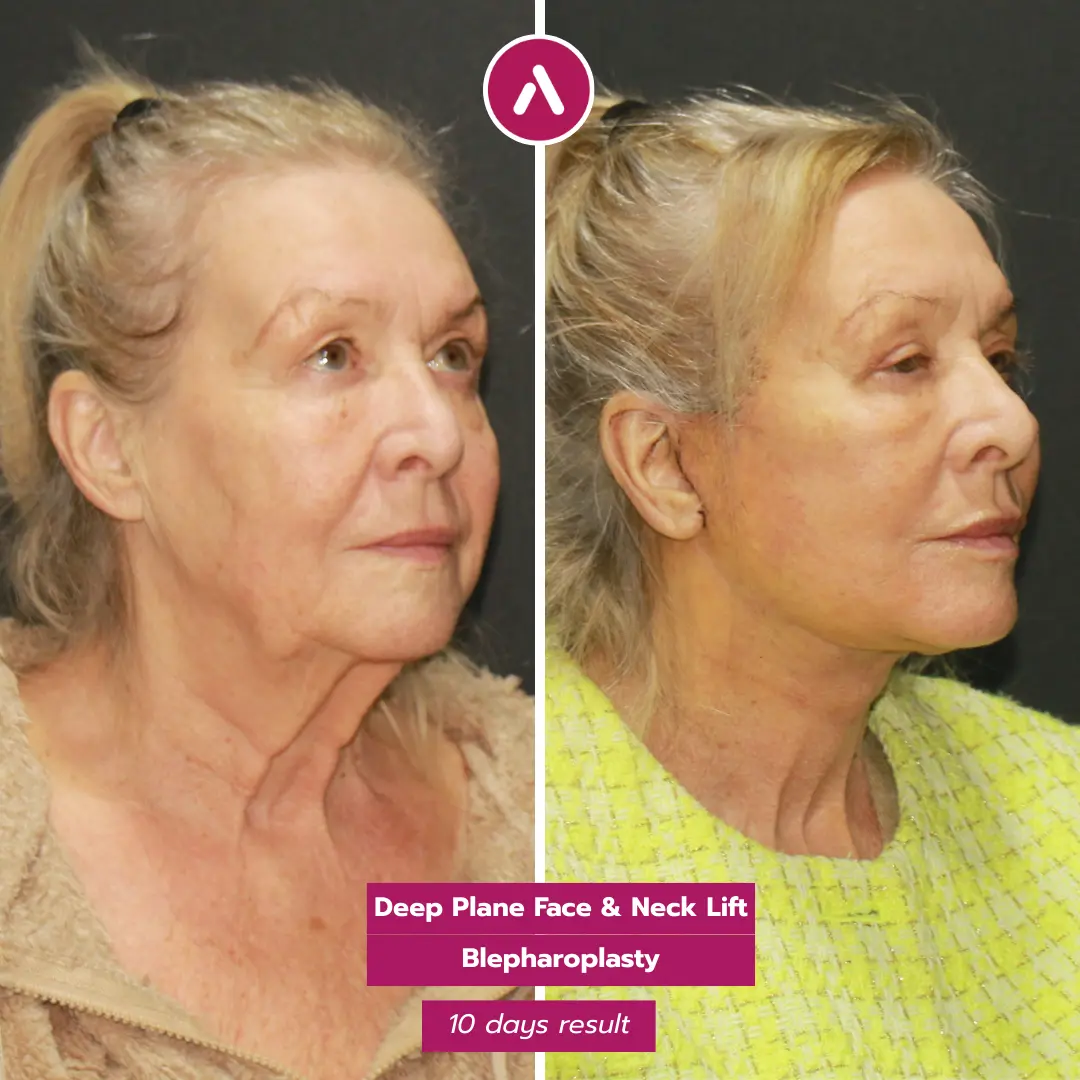
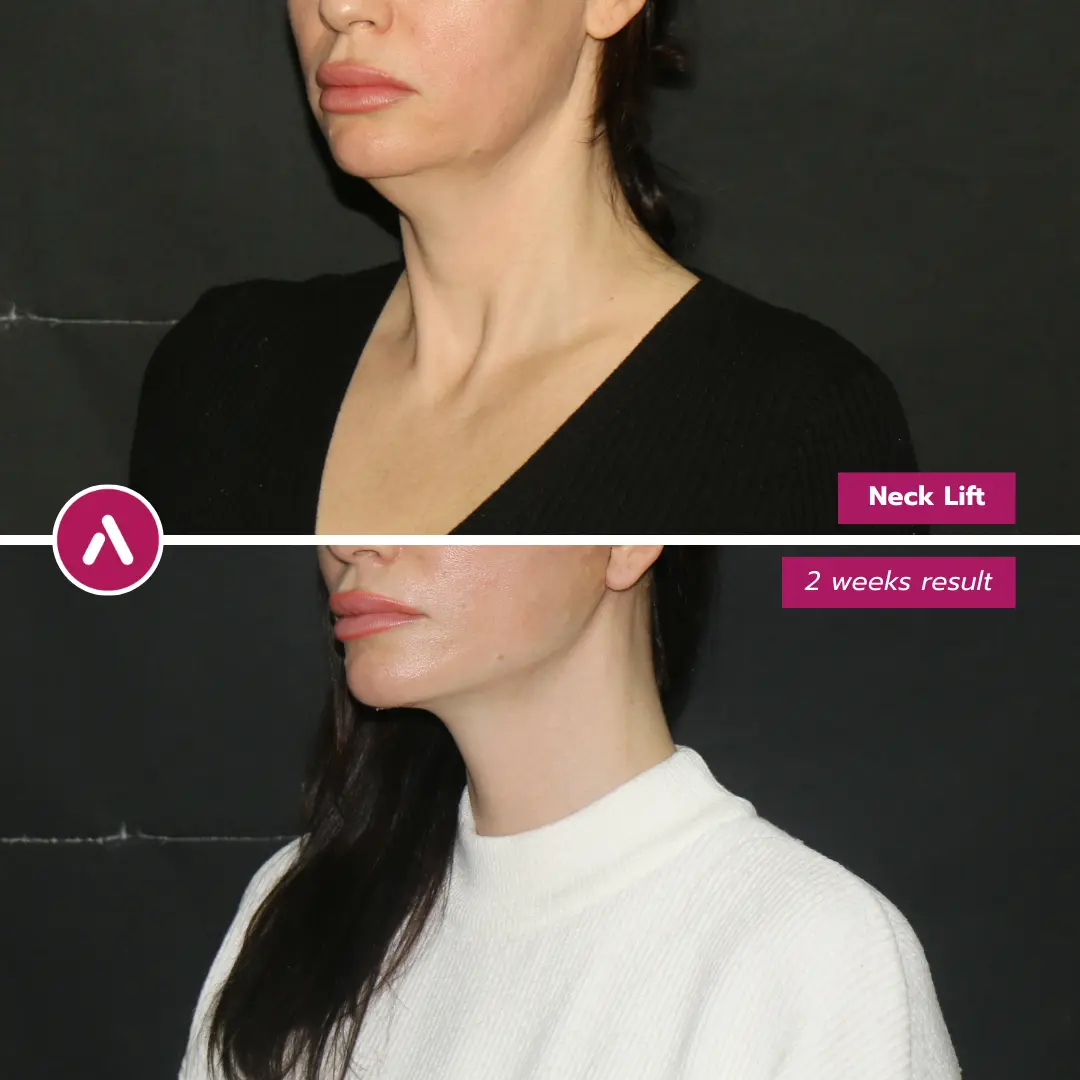
The central goal is structural. A well-planned facelift should restore support without creating a pulled or wind-swept look.
Where stem cell injection integrates into the AKM protocol
In a stem cell-assisted approach, the regenerative step is integrated around the surgical plan rather than added randomly at the end. The surgeon first identifies which concerns are structural and which are cellular or texture-related. That distinction prevents overpromising.
Fat is typically harvested from a donor area such as the abdomen or flank. The material is then processed into a more refined form, depending on the clinical goal. Larger fat particles may support volume; smaller processed fat may be used for skin-quality concerns.
The injection step may target areas such as:
- Fine creasing around the cheeks or lower face.
- Thin or crepey skin quality.
- Minor contour deficits after lifting.
- Selected areas where regenerative support may improve tissue texture.
For pricing context on this regenerative component, see regenerative fat transfer pricing.
The role of nanofat and SVF
Nanofat is highly refined fat used more for skin quality than volume. It is not the same as placing larger fat parcels for cheek or temple fullness. Its purpose is typically more regenerative than volumizing.
SVF, or stromal vascular fraction, refers to a cell-rich fraction derived from adipose tissue. In simple terms, it contains a mixture of regenerative cell populations, signalling cells, and vascular-support elements. The exact preparation method matters.
IFATS, the International Federation for Adipose Therapeutics and Science, describes itself as a scientific society focused on adipose biology and related technology. Its position as an information source is useful because it also states that it does not endorse specific treatments or practitioners, which is a helpful reminder to separate science from clinic marketing. You can review the organization at IFATS.
For a more specific discussion of refined fat use, see nanofat grafting and its regenerative role.
| Comparison point | Traditional facelift | Stem cell-assisted facelift |
|---|---|---|
| Primary goal | Structural lifting of descended tissues | Structural lifting plus regenerative tissue support |
| Main surgical action | SMAS or deep plane repositioning | SMAS or deep plane repositioning with fat-derived injection |
| Best for | Jowls, lower-face sagging, jawline laxity | Sagging plus skin texture, thin tissue, or volume-quality concerns |
| What it cannot do | Cannot regenerate skin quality on its own | Cannot replace surgical lifting if tissue descent is significant |
| Pricing reference | Standard Deep Plane: CAD $6,800 | Nanofat component: CAD $3,400; combined quote confirmed after assessment |
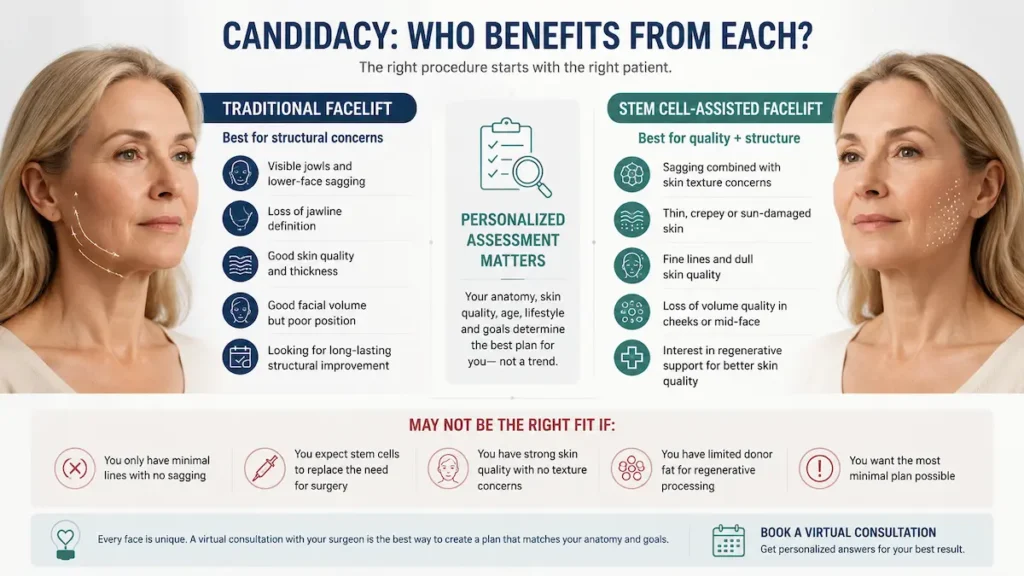
Candidacy: Who Benefits from Each
The right choice depends on what is causing the visible ageing pattern. Some patients need a precise structural lift and nothing more. Others have the same tissue descent, but also show skin thinning, texture change, or volume-quality issues that may benefit from regenerative support.
For Canadian patients, candidacy should be treated as a medical assessment rather than a trend decision. A patient from Toronto with strong skin quality and clear jowling may need a different plan than a patient from Vancouver with similar jowling but thinner, sun-damaged skin.
Patients suited to traditional facelift alone
A traditional facelift may be the better choice when the main problem is tissue descent. This includes jowls, jawline blunting, cheek descent, and neck laxity. In these cases, the limiting factor is usually structural support rather than cellular skin quality.
Patients in this group often have relatively healthy skin thickness and good baseline texture. Their concern is that the lower face has shifted downward. They do not need meaningful volume restoration or dermal-level improvement.
A traditional facelift alone may be appropriate for patients who have:
- Clear jowling with good skin quality.
- Moderate lower-face laxity without major texture concerns.
- Good facial volume but poor tissue position.
- Realistic expectations about lift rather than skin resurfacing.
- A preference for a more streamlined procedure plan.
This does not make the result basic or incomplete. A well-performed traditional deep plane facelift can deliver a natural, durable structural improvement without adding regenerative injections.
Patients who benefit from stem cell augmentation
Stem cell augmentation may be worth discussing when the patient has both descent and tissue-quality concerns. These patients still need the surgical lift, but they may gain a more complete result when regenerative fat-derived material is used strategically.
Common indicators include thin skin, fine creasing, mild hollowing, previous skin stress, or texture change that would not be corrected by lifting alone. Canadian patients who have had years of summer UV exposure, winter dryness, or previous injectable treatments may fall into this category.
Good candidates often want a refreshed result without an overfilled look. That is where careful dosing matters. The regenerative component should support the result, not distort facial identity.
Stem cell-assisted planning may be considered when the patient has:
- Facial sagging plus visible skin-quality decline.
- Fine lines or crepey texture that lifting will not address.
- Minor volume-quality issues in selected facial areas.
- Thin tissue where regenerative support may improve softness.
- Interest in a hybrid surgical and regenerative approach.
When stem cell addition is not justified
Stem cell augmentation is not automatically better. Some patients are better served by a clean surgical plan without added complexity. This is especially true when the patient has strong skin, good volume, and no meaningful dermal concerns.
It may also be unnecessary if the patient expects stem cells to create lifting by themselves. Cells cannot replace ligament release, SMAS work, or deep plane repositioning. That point should be stated clearly during consultation.
Stem cell addition may not be justified when:
- The patient’s concern is purely structural sagging.
- Skin quality is already strong for age.
- The patient wants the lowest-complexity surgical plan.
- There is insufficient donor fat for the intended regenerative step.
- The patient expects a non-surgical result from a surgical problem.
Canadian regulatory context: Responsible stem cell language matters. Health Canada’s policy position on autologous cell therapy products emphasizes that using a patient’s own cells does not remove the need for safety, quality control, and evidence-based claims. Canadian patients should ask clinics to explain the exact cell source, processing method, and intended clinical purpose.
Outcome Architecture: Structural vs Cellular Improvement
This is the core difference in the stem cell facelift vs traditional facelift decision. A traditional facelift changes where the facial tissues sit. A stem cell-assisted facelift may also influence the quality of selected tissue areas, depending on the protocol used and the patient’s biology.
Neither option should be described as universally superior. The better option is the one that matches the patient’s ageing pattern, not the one with the newer name.
What lifting alone delivers
Structural lifting addresses the visible consequences of tissue descent. It can sharpen the jawline, reduce jowling, improve lower-face laxity, and restore a more supported cheek-to-jaw transition. This is the part of facial ageing that injectables cannot reliably correct.
For many Canadian patients in their late 40s to mid-60s, this is the main need. The face has not lost all of its quality; it has lost its position. A surgical lift is therefore the logical foundation.
Lifting alone can deliver meaningful improvement in:
- Jawline definition.
- Jowl reduction.
- Lower-face support.
- Neck contour when combined with neck work.
- Cheek descent and facial heaviness.
It is less effective for skin texture, fine etched lines, dermal thinning, or diffuse skin quality. Those concerns require either skin-directed technologies, regenerative adjuncts, or resurfacing treatments.
What stem cell augmentation adds: skin quality and regenerative effect
Stem cell augmentation is best understood as a tissue-quality layer added to a surgical plan. It may help selected patients improve softness, texture, and subtle regenerative support in areas where lifting alone cannot change the biology of the skin.
The added value is cellular rather than mechanical. It does not pull the face upward. Instead, it may support the tissue environment through fat-derived regenerative material, depending on how the material is harvested, processed, and placed.
This is why the two approaches are not interchangeable. A traditional facelift is about architecture. Stem cell augmentation is about tissue support.
For the longevity angle specifically, see for longevity data specifically, see our analysis of how long results last. For the healing timeline, see for recovery timeline specifically, see our healing timeline guide.
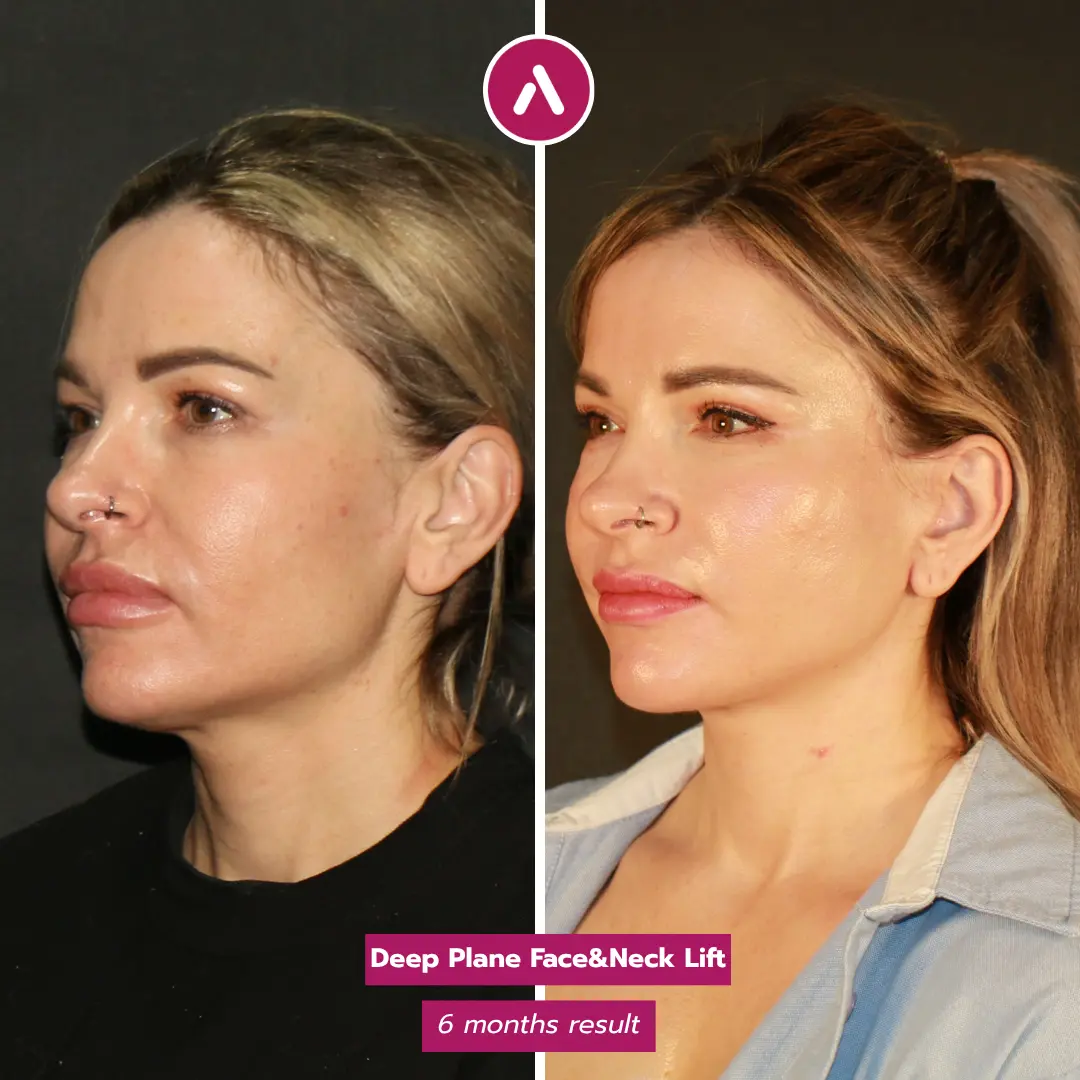
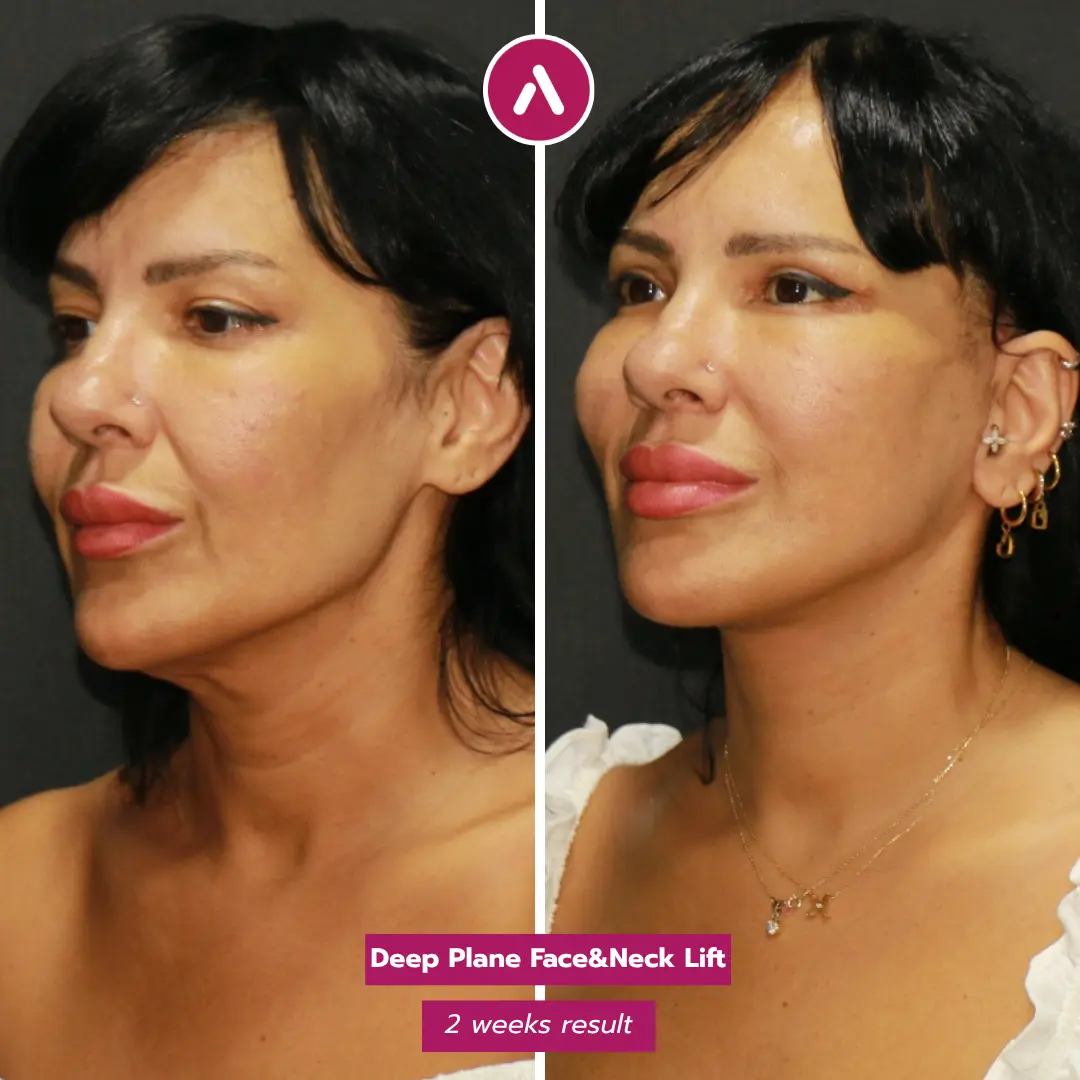
The combined result for the right candidate
The right candidate may benefit from both layers. The lift restores facial structure, while the regenerative addition supports selected surface and tissue-quality goals. The result should still look natural. More treatment does not mean a more obvious face.
AKM Clinic’s Natural-First approach is based on “rejuvenation over alteration.” In this context, regenerative augmentation should be subtle. The goal is not to inflate the cheeks or create a different identity.
A combined result may be valuable when the patient wants:
- A stronger jawline and lower-face lift.
- Improved tissue softness in selected facial zones.
- Support for thin or crepey skin quality.
- A less “surgically tight” appearance.
- A plan that respects facial identity and age-appropriate change.
The consultation should separate what the surgeon can lift from what the regenerative component may support. That separation protects the patient from unrealistic expectations.
| Outcome category | Traditional facelift | Stem cell-assisted facelift |
|---|---|---|
| Jawline and jowls | Strong correction when tissue descent is the main issue | Strong correction if paired with proper surgical lifting |
| Skin texture | Limited direct effect | Potential improvement in selected patients |
| Facial volume quality | Does not restore volume unless fat transfer is added separately | May support subtle contour and tissue quality when planned carefully |
| Natural appearance | Depends on vector control and tension management | Depends on both surgical restraint and conservative regenerative placement |
| Best-fit patient | Good skin quality with structural sagging | Structural sagging plus texture, thin skin, or regenerative support needs |
Canadian patient note: If a clinic claims stem cells can “replace” a facelift, ask for a plain-language explanation. For meaningful jowling or neck laxity, surgical repositioning remains the foundation. Regenerative treatment may support quality, but it should not be sold as mechanical lifting.
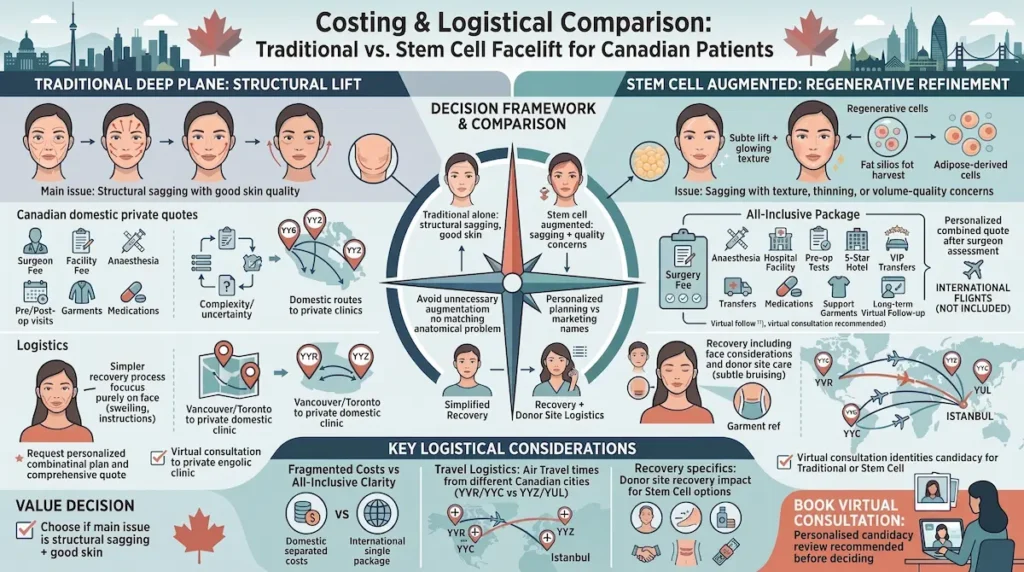
Cost and Logistical Comparison
Cost should not be the first filter, but it matters. Canadian patients comparing stem cell facelift vs traditional facelift usually want to know whether the regenerative addition changes the value equation, the travel plan, and the total procedure complexity.
The fairest comparison separates published technique pricing from personalized combination planning. A traditional deep plane facelift has a listed technique price. Nanofat grafting also has a listed technique price. A combined regenerative facelift protocol should be quoted only after the surgeon reviews anatomy, donor-fat availability, and whether the regenerative step is clinically useful.
Standard deep plane pricing versus augmented protocol pricing
According to the AKM Clinic Treatment Techniques Cost Schedule, Standard Deep Plane pricing is CAD $6,800. Extended Deep Plane pricing is CAD $8,200. Nanofat Grafting, when listed as a fat-transfer-to-face technique, is CAD $3,400.
These are not interchangeable labels. Standard deep plane and extended deep plane describe different degrees of surgical release and repositioning. Nanofat describes a regenerative fat-transfer component, not a surgical lift.
For procedure-specific pricing, Canadian patients can review deep plane facelift pricing in CAD. The regenerative component is listed separately under fat transfer pricing because it belongs to the fat-derived facial rejuvenation category.
| Cost item | What it represents | Published CAD price |
|---|---|---|
| Standard Deep Plane | Traditional structural deep plane facelift technique | CAD $6,800 |
| Extended Deep Plane | More extensive deep plane release into wider facial or neck areas | CAD $8,200 |
| Nanofat Grafting | Regenerative fat-derived component used for selected tissue-quality concerns | CAD $3,400 |
| Combined regenerative facelift protocol | Personalized plan combining surgical lift with regenerative augmentation | Confirmed after surgeon assessment |
Patients should not add these line items together and treat the result as a guaranteed package quote. Surgical combinations may involve different planning, theatre time, donor-site work, recovery support, and patient-specific safety considerations.
CAD context for both options
Canadian patients often compare an Istanbul procedure against private quotes in Toronto, Vancouver, Montreal, or Calgary. The domestic process may separate surgeon fees, facility fees, anesthesia, garments, medications, and follow-up visits. That makes the first quoted number difficult to interpret.
AKM Clinic’s all-inclusive model is designed to reduce that uncertainty. For eligible package-based procedures, the inclusions may cover surgical fees, anesthesia, hospital facility fees, pre-operative tests, 5-star hotel accommodation, VIP transfers, post-operative medications, support garments, patient advocacy, and long-term virtual follow-up.
International flights are not included. Personal spending, companion travel, and extra hotel nights beyond the package allotment are also separate. This matters for patients travelling from YVR or YYC, where routing may involve a longer itinerary than YYZ or YUL.
Canadian planning note: Ask for a written CAD quote that separates the surgical plan, package inclusions, and any optional regenerative components. This is especially important if you are comparing AKM with a Canadian private clinic quote that lists operating room, anesthesia, or post-op visits separately.
Whether augmentation is worth the additional investment
The regenerative addition is worth considering only when it solves a real clinical problem. If the patient has strong skin, good facial volume, and mainly lower-face descent, a traditional facelift may offer the better value. Adding nanofat simply because it sounds advanced is not careful medicine.
If the patient has tissue-quality concerns that lifting alone cannot correct, the value equation changes. A regenerative component may help refine the final result by addressing texture, thin tissue, or subtle contour quality. The question is not whether stem cells are “better.” The question is whether they are useful for that face.
A practical decision framework is:
- Choose traditional facelift alone when the main issue is structural sagging with good skin quality.
- Discuss stem cell augmentation when sagging appears with crepey texture, thin tissue, or subtle volume-quality concerns.
- Avoid unnecessary augmentation when the regenerative step does not match a visible anatomical problem.
- Request surgeon-led planning rather than choosing from marketing names.
For Canadian patients, this is also a logistics decision. Adding a donor-fat harvest site may slightly change the recovery experience and post-op instructions. It may also affect garment use or bruising patterns in the donor area, even if the facial procedure remains the main event.
The best next step is a photo-based virtual consultation. AKM’s team can identify which concerns are structural, which are regenerative, and which should be left alone. Compare your candidacy in a virtual consultation before deciding whether a traditional or stem cell-assisted plan is the better fit.
Frequently Asked Questions: Stem Cell Facelift vs Traditional Facelift
The most useful questions are practical. Canadian patients need to know what each option can realistically do, what it cannot do, and which claims should be questioned before booking surgery abroad.
Is stem cell facelift better than traditional facelift?
Not automatically. A stem cell-assisted facelift may be better for patients who need both structural lifting and tissue-quality support. A traditional facelift may be better for patients whose main concern is sagging, jowling, or lower-face descent with otherwise good skin quality.
The better choice depends on anatomy. A newer name does not make a procedure more appropriate.
Does stem cell injection extend facelift longevity?
This article does not cover longevity in detail because that is a separate topic. In simple terms, the surgical lift creates the structural result, while regenerative augmentation may support selected tissue-quality concerns.
For duration-specific discussion, patients should review the dedicated longevity guide rather than relying on broad marketing claims.
Can I have a stem cell facelift without traditional surgery?
You can have fat-derived regenerative injections without a facelift, but that should not be described as a surgical facelift. If there is no SMAS, deep plane, or structural lifting step, the procedure may improve volume or skin quality but cannot correct significant tissue descent.
This distinction is important for jowls and neck laxity. Cells do not lift descended ligaments.
What is the recovery difference between the two?
A stem cell-assisted facelift may include an additional donor-fat harvest site, usually from an area such as the abdomen or flank. That can add local bruising or tenderness at the donor area. The facial recovery still depends mainly on the scope of the surgical lift.
For recovery-specific timelines, bruising patterns, and healing milestones, use the dedicated recovery guide rather than this comparison article.
Are stem cells used at AKM Clinic?
AKM Clinic offers regenerative fat-derived facial rejuvenation options, including nanofat-style approaches when clinically appropriate. These are assessed during consultation, not applied automatically to every facelift patient.
The clinic’s planning philosophy remains Natural-First. The goal is to support tissue quality where useful, not to add treatments for marketing value.
Is the stem cell technique evidence-based?
Adipose-derived regenerative medicine is an active field of scientific research. However, the evidence should be discussed carefully and specifically. Patients should ask what material is harvested, how it is processed, where it is placed, and what outcome the surgeon expects it to improve.
Be cautious with vague claims. Responsible language is a trust signal.
What does CAD pricing look like for each?
Published AKM Clinic technique pricing lists Standard Deep Plane at CAD $6,800, Extended Deep Plane at CAD $8,200, and Nanofat Grafting at CAD $3,400. A combined regenerative facelift protocol requires individual assessment and should be confirmed in a written CAD quote.
Patients should avoid assuming a combined price by adding line items themselves. Surgical planning can change based on anatomy, safety, donor-fat availability, and procedure scope.
Medical Disclaimer: This page is provided for general educational purposes only and does not replace an in-person medical consultation, diagnosis, or personalized treatment plan. All surgery carries risks, and outcomes vary between individuals. Suitability for facelift surgery, procedure selection, and anesthesia choice can only be determined after a full clinical assessment by a qualified surgeon. Always follow your clinician’s instructions and seek urgent medical attention if you develop concerning symptoms during recovery.