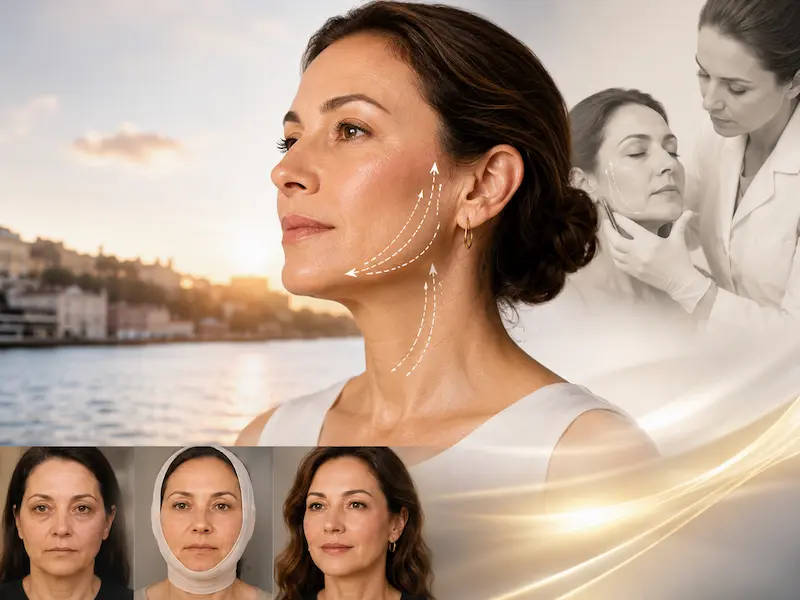

Quick Summary: A 52-year-old Canadian patient from Ontario underwent a deep plane facelift at AKM Clinic and returned to her professional life with colleagues saying she looked rested rather than “done.” This representative case study examines the surgical decisions, the early recovery arc, and the subtle details that created a natural-looking result.
Disclosure: This case study composites verified patient outcomes; identifying details have been anonymized. The patient profile is representative, not a single named individual, and is designed to help Canadian readers understand how AKM Clinic approaches natural facial rejuvenation.
For Canadian patients searching for natural looking facelift Turkey, the real question is rarely “How much younger can I look?” It is usually more precise: “Can I look like myself, only less tired?” That distinction matters.
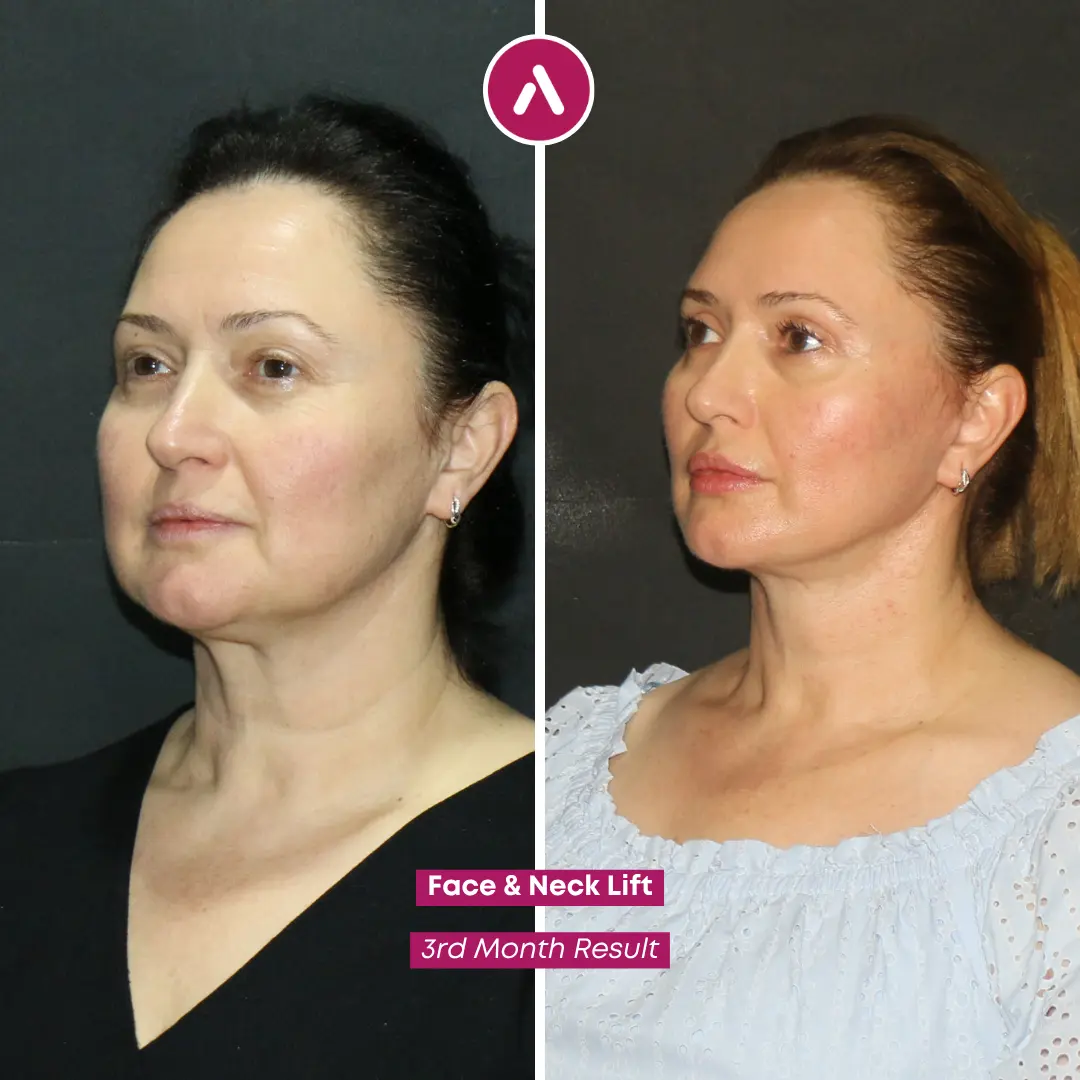
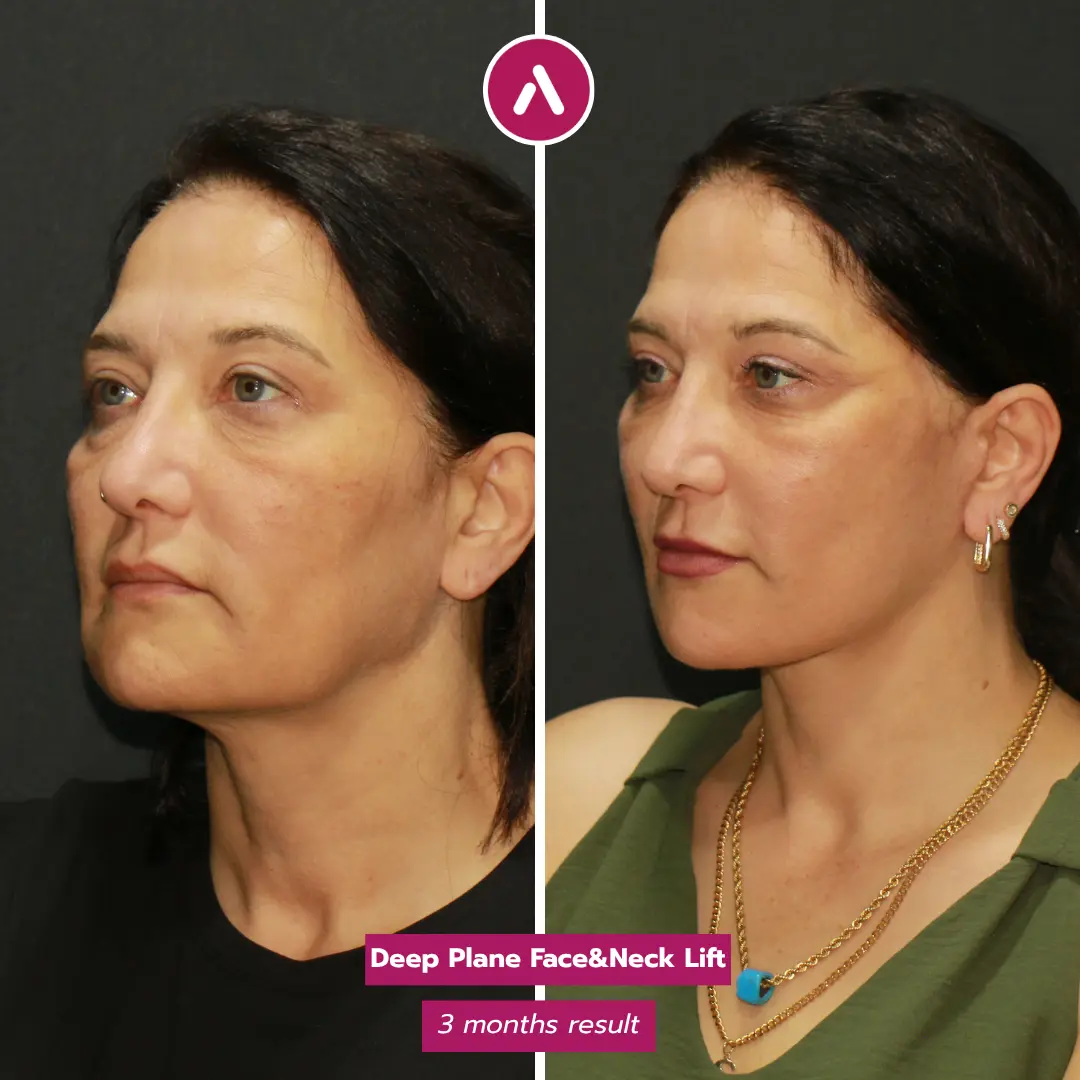
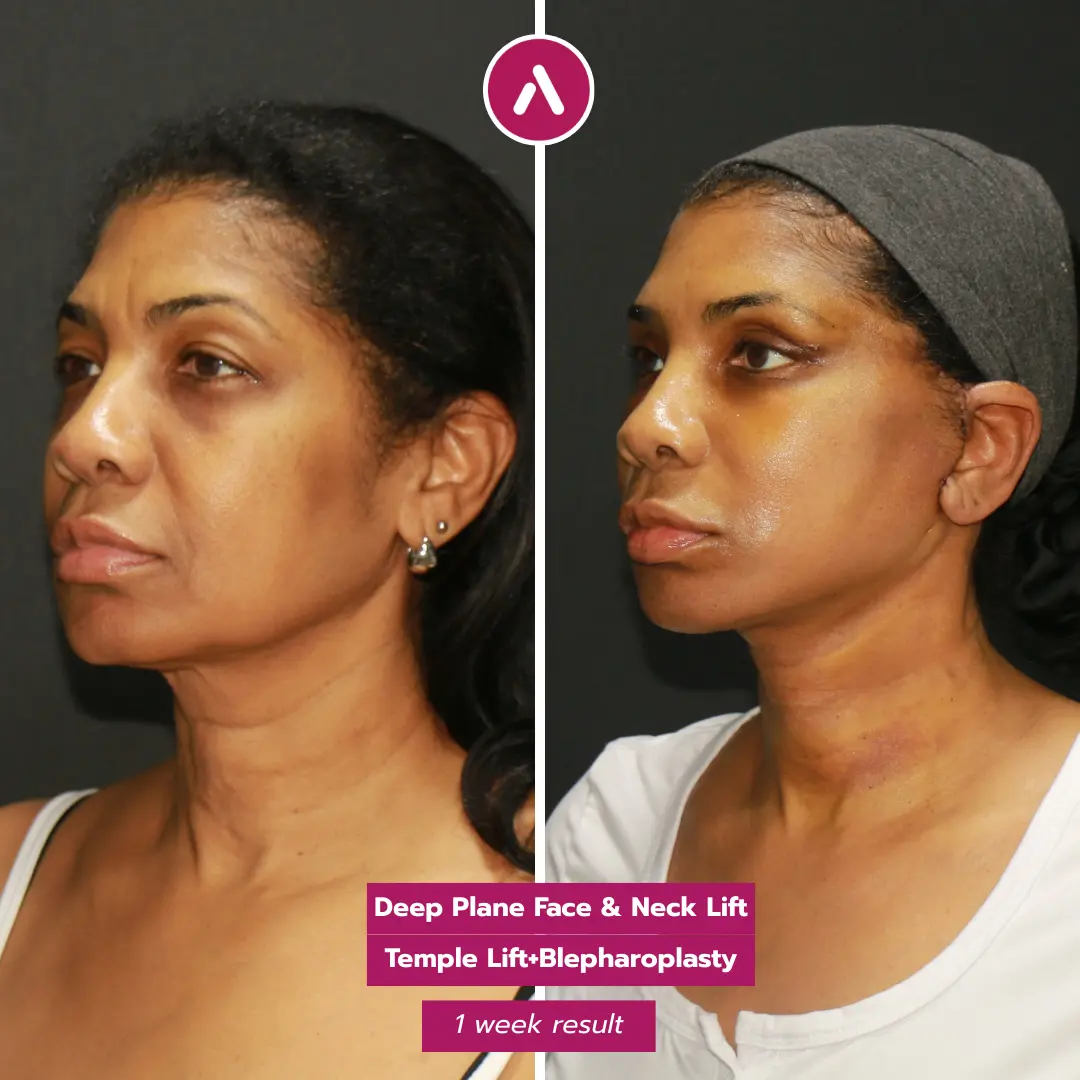
This case follows a 52-year-old professional from Ontario who was considering facelift surgery after several years of noticing jowls, softening along the jawline, deeper nasolabial folds, and loose skin under the chin. She had researched options in Toronto, compared private clinic timelines, and reviewed international alternatives before exploring facelift options at AKM Clinic.
Her priority was understated. She did not want a dramatic facial change. She wanted to return to work, see friends, and hear ordinary comments such as “You look well” rather than questions about surgery.
Table of Contents
Meet the Patient: Background and Goals
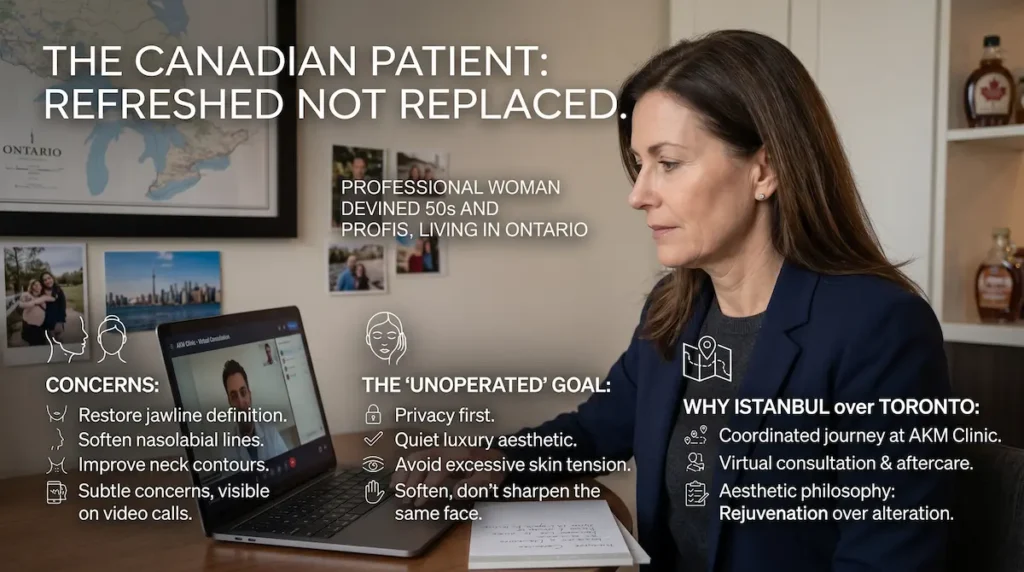
This case begins with a common Canadian pattern: a patient who is not trying to look 35 again. She wants facial balance restored without losing the small features that make her recognizable. Her concerns were visible in photographs, video calls, and daily life, but they were not severe enough to justify an aggressive surgical plan.
She lived in Ontario, worked in a professional environment, and wanted to avoid a result that would become a topic of conversation at the office. Privacy shaped every decision.
Pre-surgical concerns: jowls, nasolabial folds, and neck laxity
Her first concern was the lower face. In neutral expression, the jawline no longer looked clean from the side. Early jowls softened the transition between the cheek and chin, especially in photos taken under overhead lighting.
The second concern was mid-face descent. The nasolabial folds had deepened, not because of one isolated line, but because cheek volume had shifted downward. This made her look more tired than she felt.
The third concern was neck laxity. She noticed loose skin beneath the chin and mild vertical banding when she turned her head. These changes were subtle in person but more obvious on video calls, which had become part of her working life.
What she explicitly did not want: the “pulled” look
During consultation, her clearest instruction was simple: she did not want to look operated-on. She had seen facelift results where the skin looked tight, the mouth looked stretched, or the ears appeared distorted. Those details made her cautious.
Her goal was not a sharper face at any cost. It was a softer reset of the same face. That meant avoiding excessive skin tension and focusing on deeper structural support.
For Canadian patients, this concern is common. Many prefer a quiet-luxury aesthetic: refreshed, rested, and discreet. A result that announces itself can feel socially uncomfortable, even if the surgery is technically successful.
Why she chose Istanbul over a Toronto private clinic
Before choosing Istanbul, she explored local options in Toronto. The domestic path felt familiar but fragmented. Consultation, facility fees, anesthesia, aftercare, garments, and follow-up could be discussed separately, making it harder to understand the full experience.
AKM Clinic’s model appealed because the process was coordinated from the beginning. The virtual consultation, patient host support, hotel recovery environment, private transfers, and long-term virtual follow-up were part of one structured plan.
She also wanted a clinic whose aesthetic philosophy matched her own. AKM Clinic’s “Rejuvenation over alteration” position gave her a practical language for what she wanted: not a new face, but a more rested version of herself.
The Surgical Plan: Conservative by Design
A natural-looking facelift is not created by doing less surgery in a vague sense. It is created by choosing the right tissue plane, the right lifting vector, and the right degree of correction for the patient’s anatomy. In this case, the plan was conservative because the patient’s goals were conservative.
The surgeon’s task was to restore support without flattening individuality. That meant addressing the deeper facial structures instead of relying on skin tension alone.
Dr. Akif’s Natural-First surgical mapping
AKM Clinic’s Natural-First approach begins with mapping the face as a whole. The lower face, mid-face, jawline, neck, hairline, and ear position must all be considered together. A technically strong facelift can still look unnatural if one area is corrected without respecting the others.
In this case, the surgical plan focused on deep support. The patient was assessed for the deep plane technique used in this case, because it allows the surgeon to reposition deeper facial tissues rather than pulling the skin as the main source of lift.
This matters for natural movement. A face that looks balanced at rest but tight when smiling does not meet the patient’s goal. The plan had to preserve expression.
The decision against aggressive lifting vectors
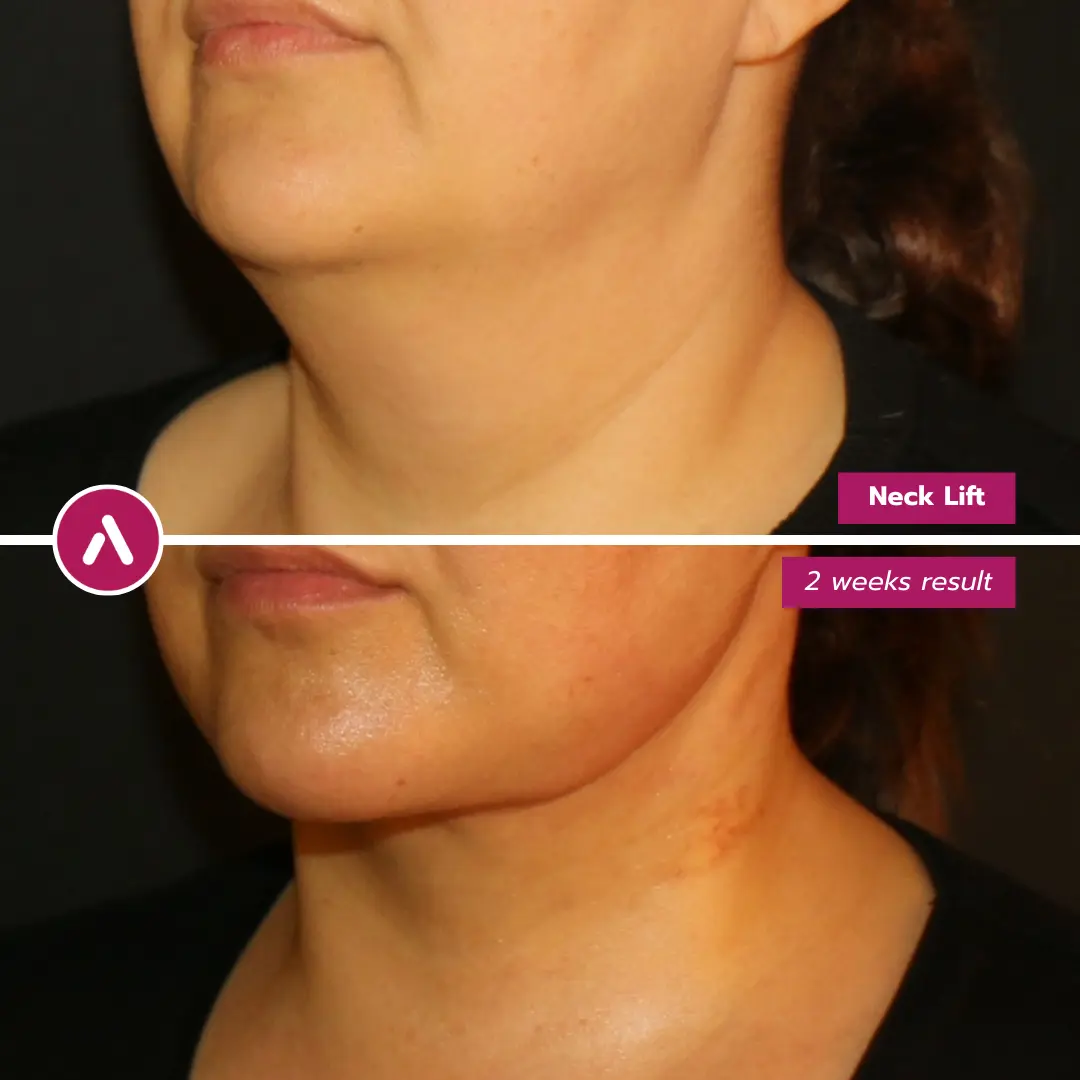
An aggressive upward pull can create a sharper jawline quickly, but it can also distort the mouth, cheek, and ear region. For this patient, that risk outweighed the benefit. The better choice was a controlled lift that improved the jawline while keeping the face soft.
The lifting vector was designed to restore the patient’s earlier facial proportions rather than create a new facial shape. This is a key difference between rejuvenation and alteration.
Her surgeon also avoided over-correcting the neck. A clean neck contour was the goal, not a rigid or overly sculpted appearance. The final result needed to look believable in everyday Canadian settings, including winter lighting, office environments, and close conversations.
How preservation of facial character guided every step
Preserving character means protecting the details people subconsciously recognize: smile shape, cheek position, jawline personality, and the way the eyes relate to the rest of the face. These details cannot be treated as separate parts.
For this patient, the plan avoided unnecessary add-ons. The aim was structural improvement through the facelift itself, with no excessive attempt to change facial identity. That restraint became the reason the result later looked natural.
The surgical plan also considered her return to work. A Canadian professional environment leaves little room for a result that looks dramatic overnight. The goal was a gradual reveal: less heaviness, better contour, and a rested appearance that people could not easily explain.
“I did not want people to ask who my surgeon was. I wanted them to ask whether I had finally taken a proper vacation.”
The Recovery Journey: Day 1 to Week 6
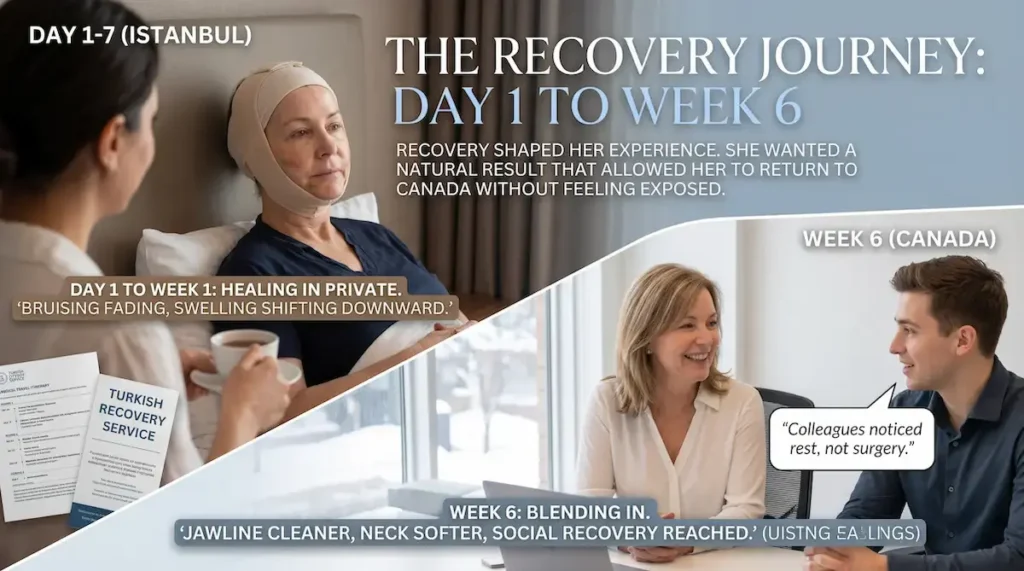
Recovery shaped the patient’s emotional experience as much as the surgery did. She expected swelling and bruising. What mattered was whether the healing process would allow her to return to Canada without feeling exposed, anxious, or visibly overcorrected.
Her recovery was planned around privacy, comfort, and steady monitoring. The early days were managed in Istanbul before she returned to Ontario for the longer settling phase.
Day 1: pressure, tightness, but no severe pain
On the first day after surgery, she described the sensation as pressure rather than sharp pain. This distinction reassured her. The face felt firm, swollen, and unfamiliar, but not frightening.
Tightness around the jawline and neck was expected. It reflected tissue repositioning and swelling, not an over-pulled result. The clinical team explained that early tightness softens as the tissues settle.
She was monitored closely, and her patient host helped translate the medical instructions into a practical day plan: rest, short walks, medication timing, hydration, and head elevation. For a Canadian travelling alone or with one companion, that structure can make the first 24 hours feel manageable.
Week 1: swelling and bruising at AKM’s hotel recovery setting
The first week was visually the hardest. Bruising became more visible before it faded, and swelling changed from day to day. Morning puffiness was stronger than evening swelling, which is typical after facial surgery.
The hotel recovery environment mattered. She did not need to navigate Istanbul traffic, arrange taxis, or explain her appearance in public spaces. Private transfers, scheduled check-ins, and a quiet room gave her a controlled setting for the most visible stage of healing.
By the end of the first week, the bruising had started to move downward and fade. She still looked post-surgical, but the early shape of the jawline and neck was visible. The result did not look final. It looked promising.
| Timeline | Observable Changes | Patient Interpretation | Clinical Meaning |
|---|---|---|---|
| Pre-op virtual consultation | Jowls, deeper folds, mild neck laxity | “I look tired on video calls.” | Deep structural support was needed. |
| Surgery day | Bandaging, swelling, early tightness | Face felt unfamiliar but controlled. | Normal immediate post-operative response. |
| Week 1 | Bruising visible, swelling shifting downward | Most private stage of recovery. | Inflammation and fluid migration were expected. |
| Week 6 | Jawline cleaner, neck softer, bruising resolved | Colleagues noticed rest, not surgery. | Social recovery phase was reached. |
| Month 6 | Facial tissues settled, scars less visible | Result felt like her own face. | Natural-result assessment became clearer. |
Week 6: when colleagues asked if she had been on vacation
Week 6 was the emotional turning point. She had returned to her Toronto-area workplace with conservative makeup and her usual hairstyle. The swelling was not fully gone, but it no longer read as surgical.
One colleague asked whether she had taken a longer holiday than planned. Another said she looked less tired. No one asked about a facelift.
“A colleague looked at me during a meeting and said, ‘You look like you finally had a real vacation.’ That was the moment I knew the result had worked.”
That comment mattered because it matched her goal. She did not want a reaction. She wanted a subtle improvement that blended into ordinary life.
The Outcome: What “Natural” Actually Looks Like
A natural facelift result is not defined by how little the surgeon changes. It is defined by whether the right structures change in the right direction while the patient’s identity remains intact. In this case, the final impression was not “new face.” It was “less heaviness.”
For patients comparing before-and-after images online, this is the most useful lens. Natural results are often easier to feel than to describe.
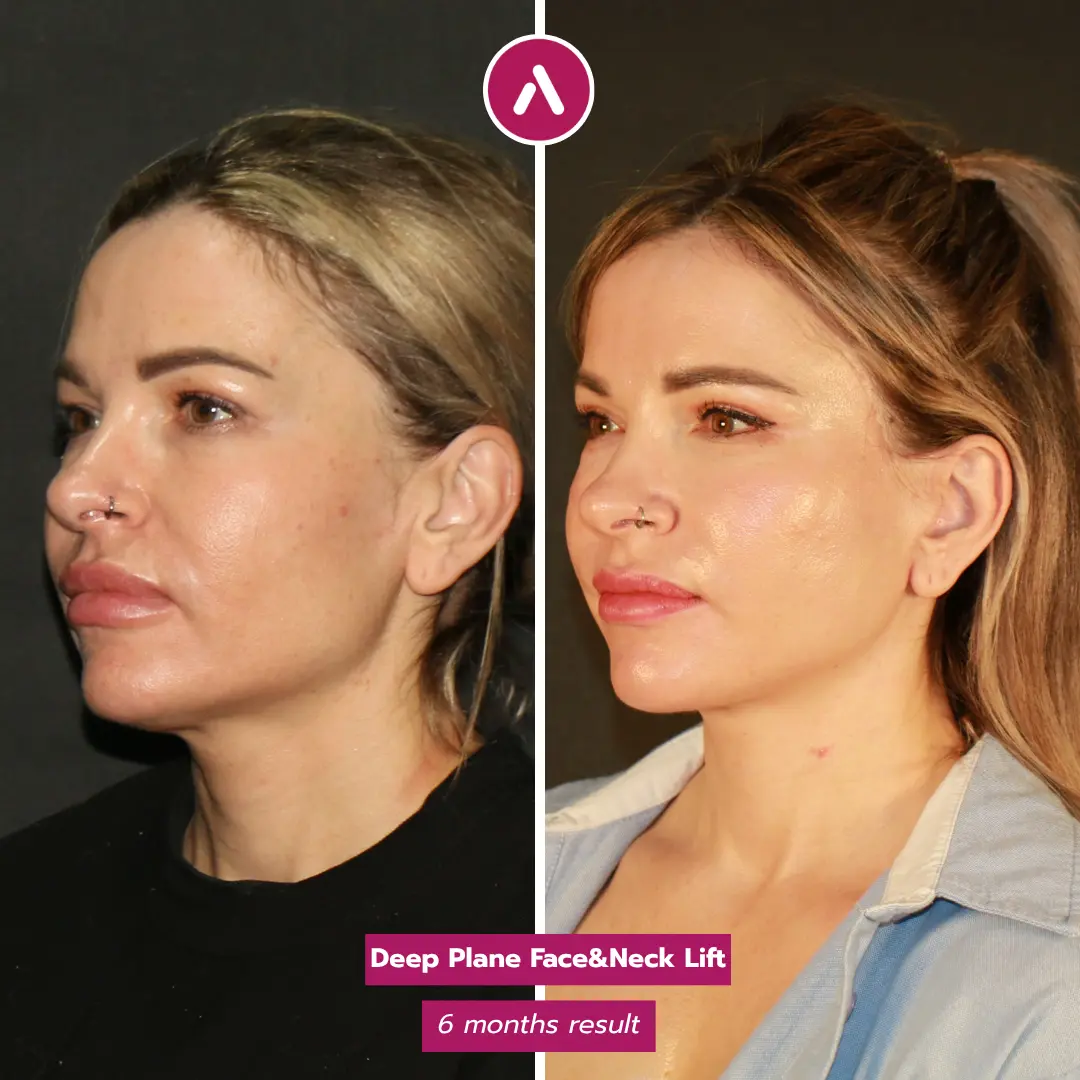
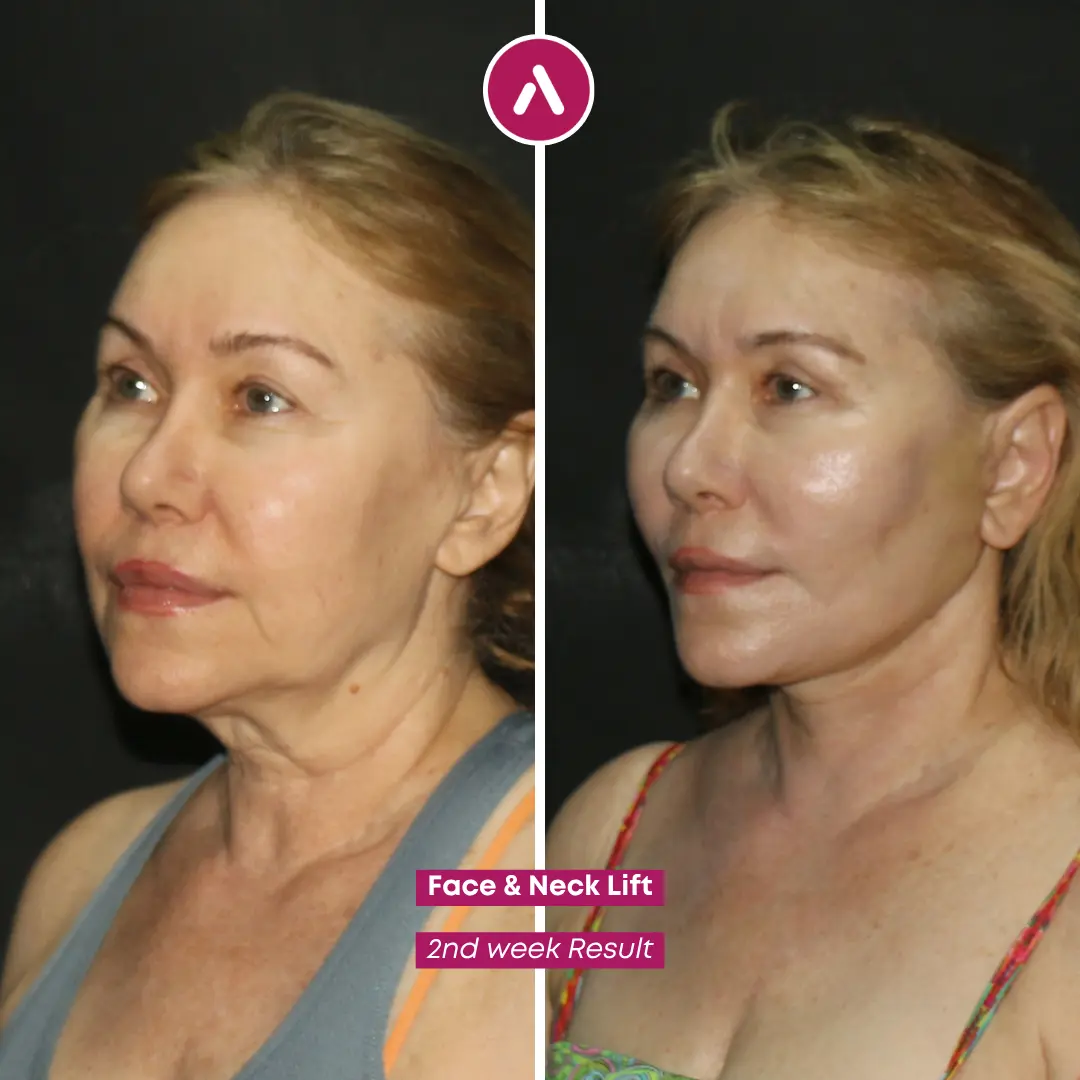
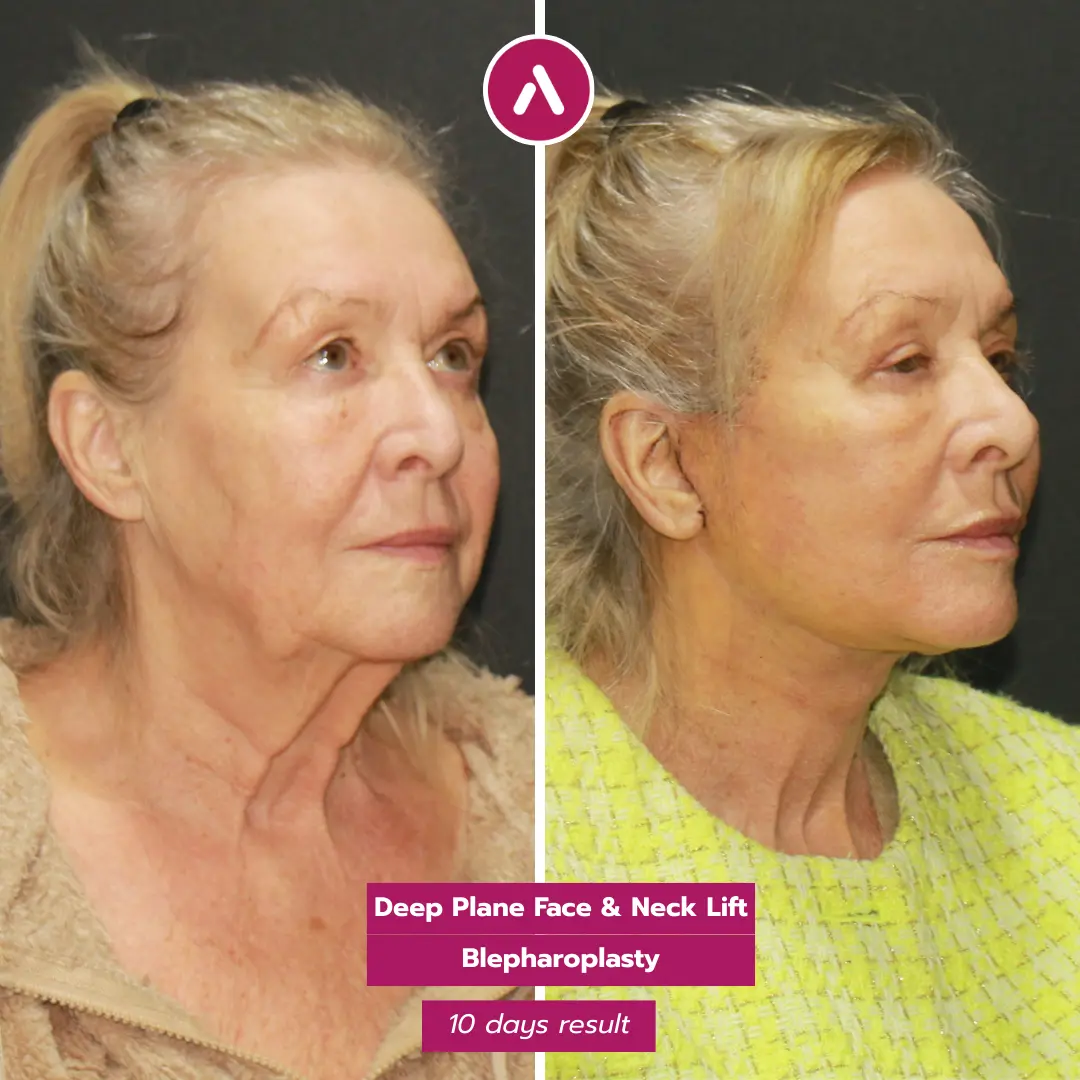
Side-by-side before and 6-month photo analysis
At six months, the most visible improvement was the jawline. Before surgery, the lower face had softened into early jowls. After surgery, the jawline looked cleaner, but not artificially sharp.
The nasolabial folds also looked less heavy. They were not erased. That restraint was important because completely flattened folds can look unnatural on a 52-year-old face.
The neck looked smoother, especially from the side. Loose skin under the chin was reduced, and the transition from chin to neck became more defined. Patients reviewing similar outcomes can compare them with more deep plane facelift before-and-after results to understand what realistic structural improvement looks like.
What changed structurally without altering identity
The main change happened beneath the skin. The deeper tissues were repositioned so the face no longer looked pulled downward by gravity. The skin followed the support rather than being forced to carry the result.
This is why her smile still looked familiar. Her cheeks did not appear overfilled. Her mouth was not stretched. The ears and hairline did not become visual clues.
Canadian reader note: AKM Clinic’s Natural-First approach means the result should fit normal Canadian social settings: office lighting, school pickup, family dinners, and close conversations. The goal is not to look surgically perfected. The goal is to look convincingly rested.
For the broader principles behind this aesthetic, readers can review the natural-results philosophy, which explains how “pulled” and “natural” outcomes differ in real facial movement.
Why no one identified the surgery
No one identified the surgery because the result did not create a single obvious clue. The jawline improved, but the face did not look tight. The neck improved, but it did not look rigid. The folds softened, but they were not erased.
Natural results depend on proportion. If every visible sign of age disappears at once, the face can look less believable. In this case, the result respected age, anatomy, and expression.
That is also why long-term reviews matter. Immediate post-op images can be misleading because swelling changes facial shape. Settled results tell the real story. For a separate long-term patient perspective, see Barbara’s detailed long-term update.
International aesthetic surgery organizations such as ISAPS also emphasize the importance of qualified surgical training and appropriate patient selection. For Canadian patients, that broader context supports a careful, evidence-led decision rather than a purely visual one.

The Canadian Patient Lens
For this patient, the success of surgery was measured in ordinary Canadian moments: returning to work, meeting friends for coffee, and appearing on video calls without feeling watched. The clinical result mattered, but the social result mattered just as much.
Her 12-month reflection was practical. She felt the decision worked because the result gave her confidence without creating explanations.
Returning to her Toronto workplace
She returned to her professional routine gradually. At first, she worked from home and kept camera angles simple. By the time she returned to in-person meetings, the visible signs of surgery had softened enough that the change did not invite questions.
This timeline is important for Canadian patients planning surgery around work calendars. A realistic return-to-office plan often includes remote work first, then low-pressure in-person commitments, then full social visibility.
Professional return timeline: For many Canadian office-based patients, the practical social-readiness window is closer to 4-6 weeks than 10-14 days. Some patients can work remotely earlier, but in-person meetings require a more conservative plan.
Patients comparing stories can review additional Canadian patient stories to understand how other patients describe their return to daily life after surgery in Istanbul.
Conversations with friends who never knew
The patient did not tell most friends about the procedure. That choice was personal, not secretive. She simply wanted the result to belong to her private medical life rather than become a shared topic.
Friends noticed small improvements. They commented on her skin, her rest, and her energy. No one named surgery, which was exactly the outcome she wanted.
This is often the difference between a technically visible facelift and a socially natural one. A visible facelift makes people search for an explanation. A natural result lets them accept the improvement without needing a reason.
Reflections on the choice 12 months later
At 12 months, the result felt settled. The swelling was gone, scars had faded, and the face moved naturally. She no longer thought about the surgery every time she looked in the mirror.
Her reflection was not that Istanbul was “easy.” Surgery abroad requires planning, realistic expectations, and trust in the team. Her view was that the structured process made the decision feel controlled.
For patients who want broader social proof before deciding, more AKM Clinic patient reviews can help place one case study into a wider pattern of patient experience.
The key lesson from this case is restraint. The most natural-looking facelift result was not the most dramatic one. It was the one that restored facial support while leaving the patient’s identity intact.
Considering a natural-looking facelift? Book a virtual consultation with AKM Clinic to discuss your anatomy, recovery timeline, and natural-result goals before making a decision.
Frequently Asked Questions: Natural Looking Facelift Turkey
These questions address the concerns Canadian patients most often raise after reading a case study: how natural results are created, how visible recovery may be, and how long the outcome can last. They are general answers, not a substitute for a personalized medical assessment.
How natural can a facelift really look?
A facelift can look very natural when the deeper facial structures are repositioned rather than relying on skin tension alone. The goal is not to erase every sign of ageing. It is to restore support so the face looks rested, balanced, and still recognizable.
What is the difference between deep plane and traditional facelift results?
A traditional facelift may focus more on tightening the skin and superficial tissue layers. A deep plane facelift works at a deeper anatomical level, releasing and repositioning tissue for a more structural lift. This can reduce the risk of a tight or pulled appearance when performed with a conservative aesthetic plan.
How long until others stop noticing changes?
Most social visibility improves substantially between weeks 4 and 6, although swelling can continue to settle for several months. Close friends may notice that something looks better, but they may not identify surgery if the result is subtle.
Can I see more Canadian patient case studies?
Yes. AKM Clinic uses verified patient experiences, anonymized case patterns, and review-based narratives to help patients understand realistic outcomes. During consultation, the team can guide you toward examples that match your age range, anatomy, and goals.
What makes AKM’s Natural-First approach different?
The Natural-First approach prioritizes “Rejuvenation over alteration.” In practical terms, that means preserving facial identity, avoiding excessive tension, and choosing surgical vectors that support the face without changing its character.
Will my colleagues notice I had surgery?
They may notice that you look more rested, less tired, or healthier. The aim is to avoid obvious surgical markers such as tight skin, distorted features, or sudden overcorrection. A careful return-to-work schedule also helps protect privacy.
How long do these natural results last?
Deep plane facelift results commonly last 10-15 years, depending on skin quality, weight stability, sun exposure, smoking status, and the patient’s natural ageing pattern. Maintenance may include skin care, energy-based treatments, or future minor procedures, but not every patient needs revision.
Medical Disclaimer: This page is provided for general educational purposes only and does not replace an in-person medical consultation, diagnosis, or personalized treatment plan. All surgery carries risks, and outcomes vary between individuals. Suitability for facelift surgery, procedure selection, and anesthesia choice can only be determined after a full clinical assessment by a qualified surgeon. Always follow your clinician’s instructions and seek urgent medical attention if you develop concerning symptoms during recovery.