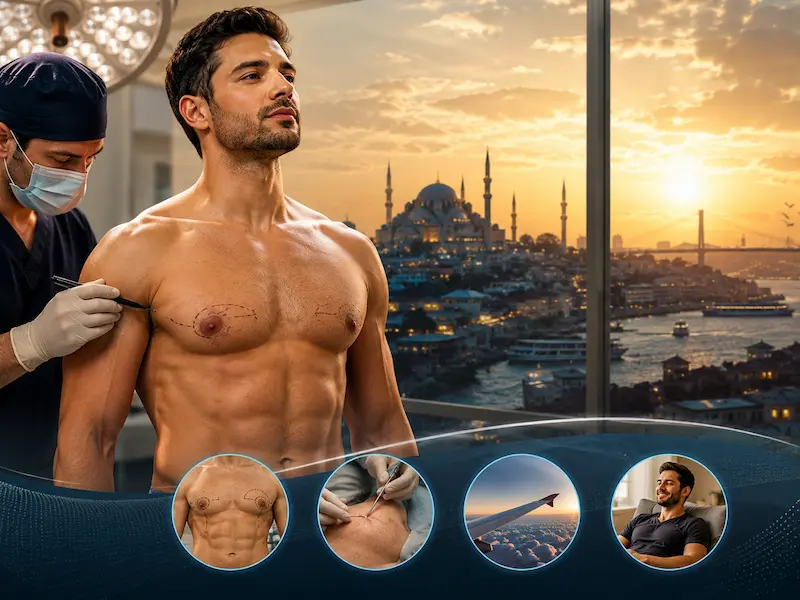

Quick Summary: Male facelift techniques require a different surgical plan than female facelift surgery because men have thicker skin, denser beard follicles, a different hairline pattern, and a stronger jawline structure. A natural male result depends on preserving the sideburn, hiding incisions around beard-bearing skin, and lifting the lower face without softening masculine facial angles.
At AKM Clinic, the goal is not to make a man look surgically changed. The goal is to make him look rested, sharper, and age-appropriate while protecting the details that make a male face read as masculine.
For Canadian men researching a facelift procedure overview at AKM Clinic, the first thing to understand is that male facelift surgery is not simply a standard facelift performed on a male patient. The anatomy, incision planning, recovery expectations, and aesthetic goals are different.
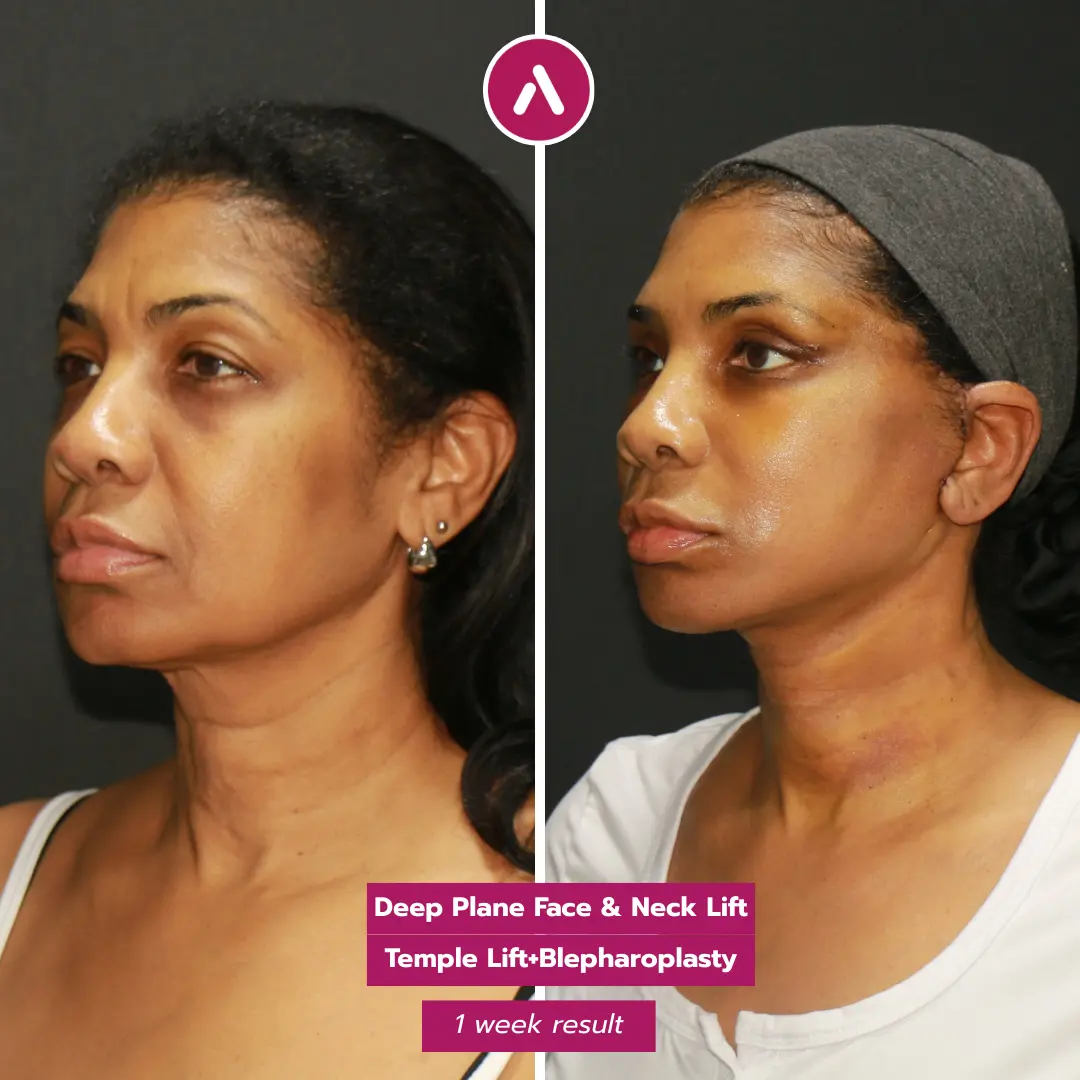
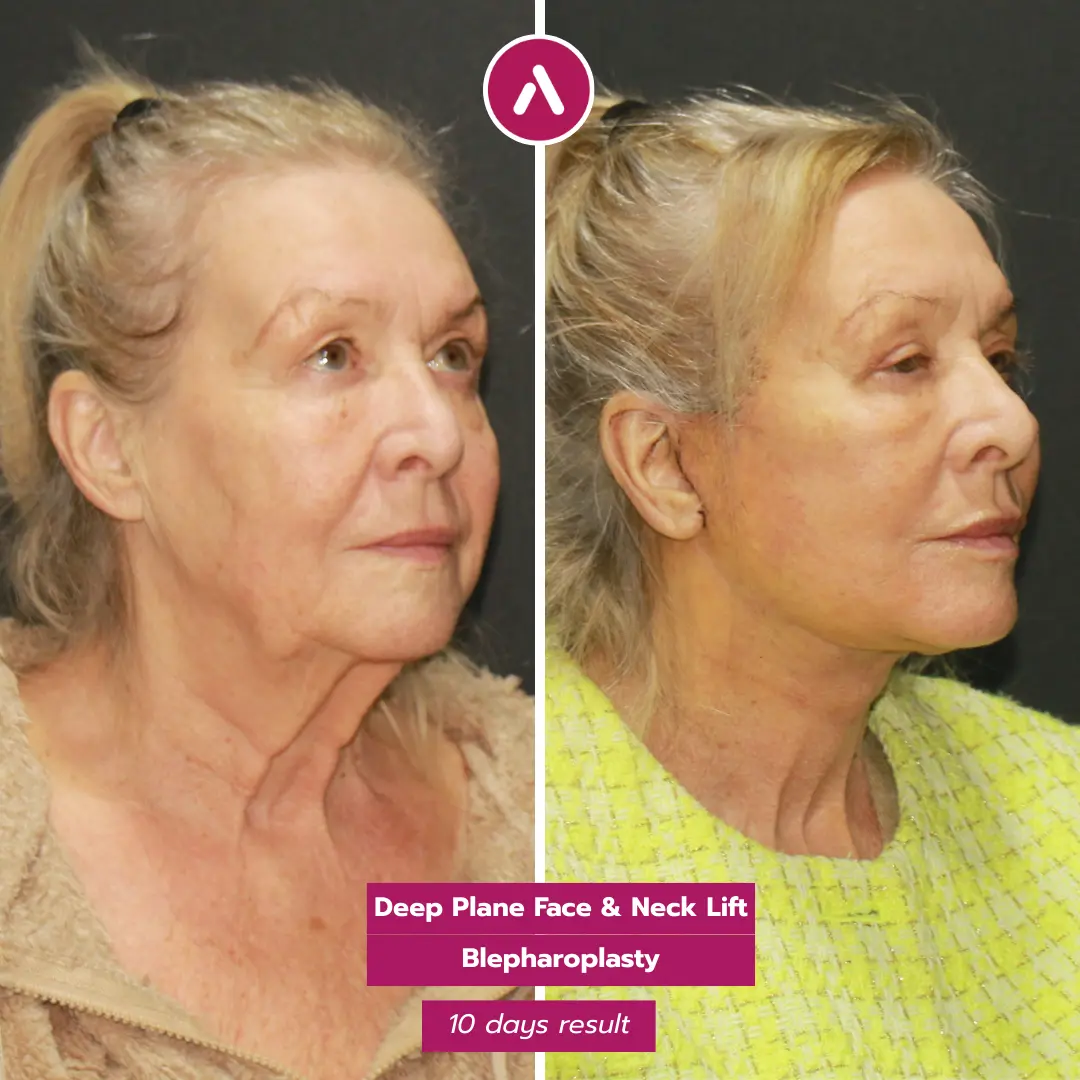
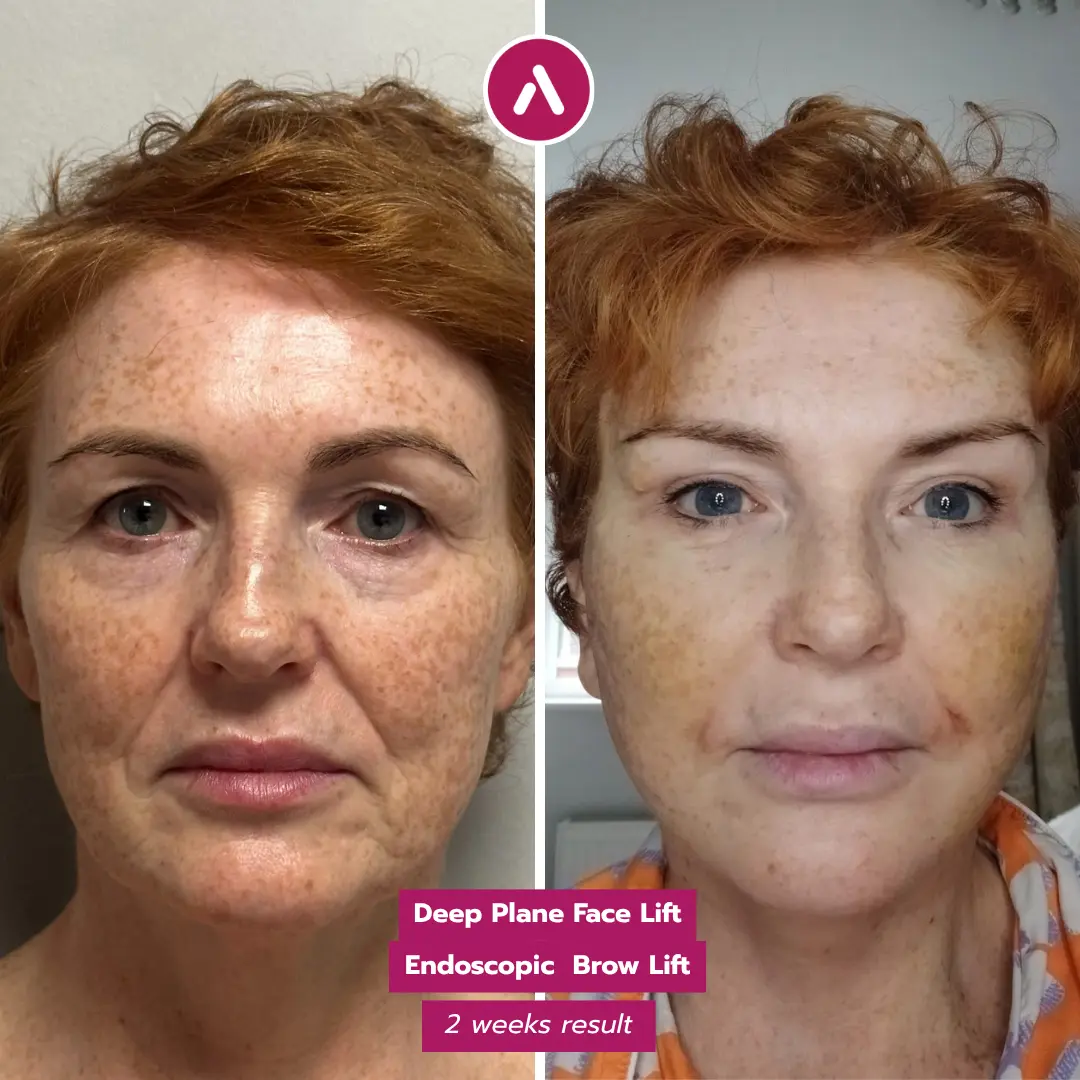
Many men from Toronto, Vancouver, Montreal, Calgary, and Ottawa are not looking for a dramatic change. They often want a sharper jawline, less neck laxity, and fewer signs of fatigue without anyone at work identifying surgery. That expectation shapes every technical decision.
This guide focuses only on male-specific facelift planning. For the broader Canadian trend behind travelling to Istanbul for facial surgery, see our article on why Canadians choose Istanbul. For a single outcome-focused story, see this real Canadian patient case study.
Table of Contents
Why Male Facelifts Require a Different Surgical Approach?
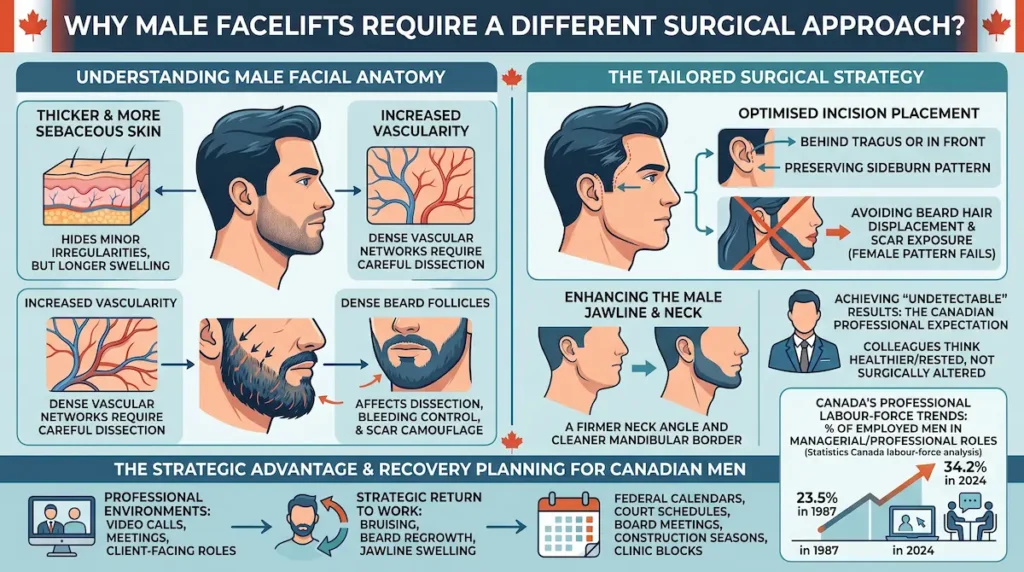
Male facial rejuvenation has a narrower margin for error than many patients expect. A small change in the sideburn, beard line, or jaw angle can make the result look visible, even when the lift itself is technically well performed.
The goal is restraint. A male facelift should reduce sagging while keeping the face recognizably masculine. That means the surgeon must plan around skin thickness, beard growth, vascularity, hairline position, and the patient’s professional life back in Canada.
Skin Thickness, Vascularity, and Beard Follicle Density
Male facial skin is usually thicker and more sebaceous than female facial skin. It also contains dense terminal hair follicles in the beard-bearing zones. These differences affect dissection, bleeding control, incision placement, and scar camouflage.
Thicker skin can be helpful because it may hide minor irregularities better. It can also make swelling last longer. A surgeon must lift with enough structural support to improve the jawline while avoiding excessive skin tension.
Beard follicles add another layer of complexity. If an incision is placed poorly, beard-bearing skin can shift into a non-bearded area near the ear. That can leave hair growing where it should not grow, which is one of the classic signs of an unnatural male facelift.
Global aesthetic surgery data also show that men are active facial surgery patients, not an afterthought. ISAPS reported that eyelid surgery was the most popular surgical procedure among men in its 2024 global survey, which reflects a broader male interest in facial refinement and age management. ISAPS global aesthetic surgery report
Why the Female Facelift Incision Pattern Fails on Men
A standard female facelift incision can sometimes be hidden within softer hairline and non-bearded skin patterns. On a man, that same design can distort the sideburn, expose scars, or move beard hair into the wrong zone.
This is why male facelift planning often gives special attention to the area in front of the ear, behind the tragus, and around the sideburn. The surgeon must decide whether an incision should sit in front of the tragus or behind it based on beard density, ear shape, skin quality, and scar visibility risk.
A female-pattern lift can also over-soften the lower face. Men usually benefit from a cleaner mandibular border and a firmer neck angle. The face should not become rounder, narrower, or overly smooth in a way that changes gender cues.
The Canadian Professional Male’s Expectation of “Undetectable” Results
Canadian men often approach facial surgery with a privacy-first mindset. Many are executives, physicians, dentists, engineers, teachers, lawyers, trades business owners, or government professionals. Their concern is not only how they look, but how quickly they can return to meetings without questions.
Statistics Canada has reported a long-term shift in Canada toward managerial, professional, and technical occupations among men, rising from 23.5% of employed men in 1987 to 34.2% in 2024. That matters because many male facelift patients work in environments where video calls, presentations, and client-facing roles make facial fatigue more visible. Statistics Canada labour-force analysis
For these patients, the result must pass a simple test: colleagues should think he looks healthier or better rested, not surgically altered. This is where male facelift techniques differ most clearly from a generic lift. The procedure must improve the lower face while protecting identity.
Canadian Context: Return-to-Work Planning for Men
Many Canadian male patients plan surgery around board meetings, court schedules, clinic blocks, construction seasons, or federal work calendars. For desk-based work, remote work may be possible earlier, but in-person return usually depends on bruising, beard regrowth, and swelling around the jawline.
Hairline and Sideburn Preservation
The sideburn is one of the most important landmarks in male facelift surgery. If it is lifted too high, shortened too much, or disconnected from the beard line, the result can look artificial even if the jawline improves.
Hairline and sideburn preservation begins before the incision is made. The surgeon evaluates the natural hair pattern, beard density, ear shape, and expected skin movement. The lift must be planned around those features rather than forcing the male face into a standard template.
Pre-Tragal Versus Post-Tragal Incision Strategy for Men
The tragus is the small cartilage projection in front of the ear canal. In facelift surgery, the incision may be placed just in front of it, behind it, or along a carefully blended line depending on anatomy.
For some men, a pre-tragal incision is safer because it avoids moving beard-bearing skin onto the tragus. For others, a carefully selected post-tragal approach may hide the incision better. The right choice depends on beard growth, skin thickness, and whether the patient regularly shaves clean or keeps facial hair.
This decision is more visible in men than in women. A man who shaves daily may reveal a poorly planned incision every morning. A man with a beard may camouflage the line more easily, but only if beard growth remains in the correct location.
Maintaining Sideburn Vertical Position
An unnatural sideburn is one of the easiest ways to detect a facelift on a man. Older techniques sometimes pulled the sideburn upward, creating a gap between the sideburn and beard. That gap can look especially obvious on men with dark hair or high-contrast skin and beard colour.
A male-adapted lift protects the vertical position of the sideburn. Instead of pulling skin aggressively toward the upper ear, the surgeon relies on deeper tissue support to reduce tension on the skin. This is one reason deep structural techniques are valuable in male patients.
The sideburn should still look like it belongs to the same face. It should not look transplanted, shortened, or swept upward. This detail matters for men who wear short haircuts, have receding temples, or work in professional settings where the side profile is frequently visible on video.
Avoiding the “High Hairline” Stigma Seen in Older Facelifts
A high or distorted hairline can age a man rather than rejuvenate him. It can also make the surgery easier to identify. Male facelift planning must account for current hair density and possible future hair loss.
This is especially important for men with temple recession or thinning around the sideburn. If skin is advanced without respecting the hairline, the incision may become more visible over time as hair continues to thin.
At AKM Clinic, this is assessed during virtual consultation and confirmed in person. Photos are reviewed from the front, oblique, side, and under-chin angles so the surgical plan can account for both current anatomy and realistic future hair changes.
| Planning Area | Traditional Female Pattern | Male-Adapted Pattern |
|---|---|---|
| Sideburn position | May tolerate more upward skin movement because the hairline is often softer. | Must preserve vertical sideburn position to avoid an obvious surgical marker. |
| Pre-auricular incision | Often designed around non-bearded skin and softer scar camouflage. | Planned around beard density, shaving habits, and tragal hair migration risk. |
| Jawline goal | May prioritize softness and oval facial contour. | Usually prioritizes mandibular definition and a stronger lower-face border. |
| Neck contour | Often aims for smoothness and refinement. | Requires tightening without creating a feminized or overly narrow neck. |
| Scar visibility | Often hidden by longer hair and less beard-related contrast. | Must remain discreet with short haircuts, shaving, or close beard trimming. |
“In a male facelift, preserving the sideburn is not a cosmetic detail. It is part of the diagnosis. If the sideburn moves unnaturally, the result becomes detectable even when the lift itself is strong.”— Dr. Akif Mehmetoğlu, AKM Clinic
Beard-Area Incision Planning
Beard-area incision planning is one of the most technical parts of male facelift surgery. A well-hidden incision must respect where beard hair grows now, where it may grow after the skin is lifted, and how the patient shaves or trims facial hair.
For many men, the beard line is part of their identity. It frames the jaw, defines the lower face, and influences how masculine the result appears. Male facelift techniques must protect that pattern rather than treat facial hair as an afterthought.
Incision Lines That Respect Future Beard Growth Patterns
The incision around the ear must be planned with beard growth in mind. If beard-bearing skin is moved too far toward the ear, hair can grow onto or behind the tragus. That can force a man to shave areas that were never meant to carry beard hair.
This is more than a grooming inconvenience. It is a visual sign that the skin was shifted without enough respect for male anatomy. The best correction is prevention during the first surgery.
During planning, the surgeon studies the density and direction of beard growth. A man with a full beard, a close-trimmed beard, or a clean-shaven routine may need different incision placement. The plan should match the way he actually presents himself in daily life.
Concealment in the Natural Beard Line
A scar is easier to hide when it follows a natural transition zone. In male facelift surgery, that often means working with the boundary between beard-bearing and non-beard-bearing skin.
The aim is to make the incision look like part of the patient’s existing facial architecture. The ear contour, tragal shape, sideburn edge, and beard border all help guide placement. A line that looks discreet on one man may look exposed on another.
This is why photo assessment is useful before a Canadian patient travels to Istanbul. Front-facing photos alone are not enough. Oblique, side, under-chin, and beard-pattern photos help the surgeon understand where scars can be hidden without compromising the lift.
Canadian Context: Beard Style and Professional Privacy
A man returning to work in Toronto, Vancouver, Montreal, or Calgary may rely on beard styling to camouflage early healing. The surgical plan should account for his normal grooming pattern, because suddenly changing from clean-shaven to a full beard can draw the same attention he is trying to avoid.
Hair Migration Risk and How to Avoid It
Hair migration occurs when beard-bearing skin is repositioned into an area where hair growth looks unnatural. Around the ear, this can create hair on the tragus, behind the ear, or too close to the earlobe.
The risk increases when skin tension is used as the main lifting force. A male-adapted technique reduces this risk by placing the real lift in the deeper tissues. The skin is then redraped rather than pulled aggressively.
That distinction matters. Skin should cover the new contour without carrying the burden of the lift. This gives the incision a better chance to heal quietly and keeps beard growth in a believable location.
Masculine Jawline and Neck Contouring
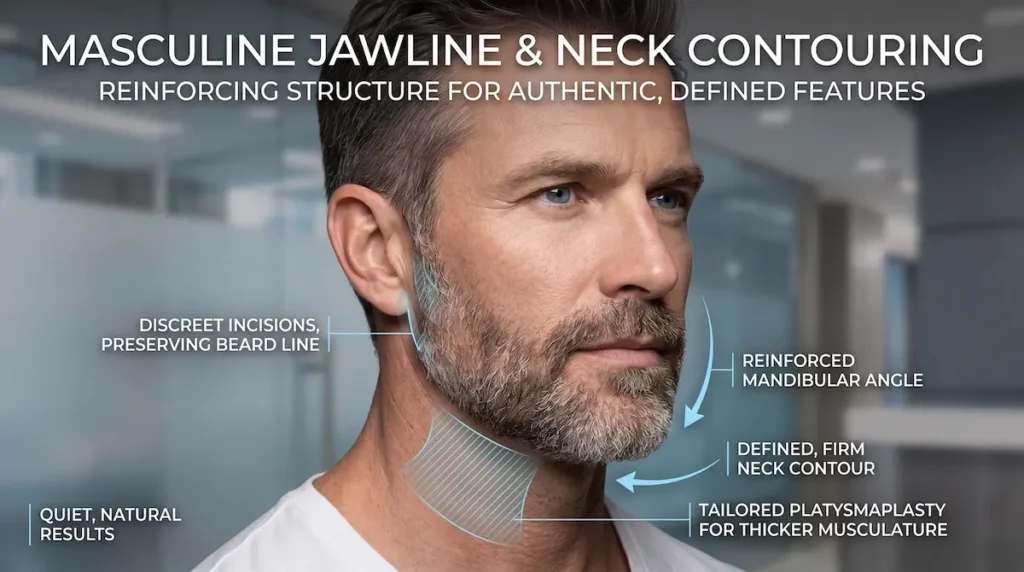
The lower face is often the main reason men consider facelift surgery. Jowls, neck laxity, and loss of mandibular definition can make a man look heavier, older, or more tired than he feels.
A male facelift should restore structure without creating softness. The jaw should look cleaner, but not delicate. The neck should look firmer, but not narrow or overly sculpted.
Reinforcing Rather Than Softening the Jaw Angle
The male jawline is usually defined by a stronger mandibular angle and a broader lower facial frame. A facelift that over-softens this area can make the result look less masculine, even if it reduces sagging effectively.
The surgical vector matters here. A vertical or oblique lift that supports the deeper facial tissues can sharpen the jawline while keeping the lower face balanced. Pulling the skin sideways may flatten the cheek-jaw transition and create a stretched look.
For men, the goal is often a cleaner edge from the chin to the angle of the jaw. It should look like the patient lost facial heaviness, not like his face was tightened.
Platysmaplasty Technique Adjustments for Thicker Male Neck Musculature
Platysmaplasty refers to tightening or repairing the platysma muscle bands in the neck. In men, this area can be thicker and stronger, especially in patients with athletic backgrounds, physical labour histories, or heavier neck anatomy.
The surgeon must decide whether the neck needs skin redraping alone, platysma tightening, fat refinement, or a deeper neck approach. The answer depends on whether the problem is loose skin, muscle banding, submental fat, deep neck heaviness, or a combination.
Over-tightening the neck can create an unnatural shelf or a strained appearance. Under-treating it can leave the face improved while the neck still looks aged. The technical balance is precise.
Avoiding the “Feminized” Neck After Surgery
A feminized neck can occur when the contour becomes too slim, too smooth, or too aggressively narrowed for the patient’s facial frame. This is not the same as a clean neck. A clean male neck still has proportion, strength, and anatomical credibility.
Men usually benefit from definition under the chin and along the jaw, but the neck should still match the shoulders, chin, and overall build. A tall man with a broad frame needs a different contour than a smaller man with a narrow jaw.
At AKM Clinic, the “Natural-First” approach applies to male patients as much as female patients. The result should preserve the patient’s identity while reducing the signs of ageing that create heaviness, fatigue, or loss of definition.
| Male Concern | Technical Risk | Male-Focused Surgical Goal |
|---|---|---|
| Jowls along the mandibular border | Over-pulling skin sideways, creating a stretched lower face. | Support deeper tissues to restore a cleaner jawline without visible tension. |
| Heavy neck or platysma bands | Under-correction that leaves the neck older than the face. | Adjust platysmaplasty and neck contouring to match male musculature. |
| Weak chin-to-neck angle | Over-sculpting that creates a narrow or delicate neck. | Improve definition while preserving a masculine cervical contour. |
| Beard-line distortion near the ear | Hair-bearing skin shifting into unnatural areas. | Place incisions according to beard density, shaving habits, and sideburn position. |
The strongest male facelift results usually look quiet. The face appears less tired, the neck looks firmer, and the jawline reads more clearly. The patient still looks like himself.
Recovery Considerations Specific to Men
Recovery after a male facelift is shaped by the same biological healing process as any facelift, but the visible experience can be different. Beard growth, thicker skin, workplace expectations, and physical activity patterns all affect how a man plans his return to daily life.
Men often focus less on looking “perfect” during recovery and more on not looking obviously post-surgical. That is a practical goal. It requires planning around shaving, swelling, bruising colour, gym restrictions, and the first in-person work commitments after returning to Canada.
Beard Shaving Timing Post-Op
Shaving too early can irritate healing skin, disturb incision areas, and increase redness around the ear or beard line. Most men need to pause shaving near the incision zones until the surgeon confirms that the skin is ready.
The exact timing depends on incision placement, skin sensitivity, swelling, and whether sutures are still present. Electric trimming is sometimes easier to reintroduce than a wet razor, but even trimming should be cleared by the clinical team first.
Men who normally shave daily should discuss this during the consultation. The surgeon can then plan incision concealment with the patient’s real grooming habits in mind. A clean-shaven lawyer in Ottawa and a bearded contractor in Calgary may need different recovery guidance.
When to Resume Gym, Contact Sports, and Physical Labour
Men often ask about exercise earlier than they ask about social events. The answer matters because increased blood pressure can worsen swelling, raise bleeding risk, and delay incision healing.
Light walking is usually encouraged early because it supports circulation and reduces stiffness during travel recovery. Heavy lifting, intense cardio, contact sports, and physically demanding labour require a longer pause. A patient who works at a desk has a different timeline than someone in construction, policing, firefighting, or warehouse work.
Canadian patients should also account for the return flight. A long-haul flight from Istanbul to Toronto or Montreal is not the same as a short domestic trip. The body needs rest after travel before adding heavy training or job-site demands.
| Activity | Typical Male Patient Concern | Planning Guidance |
|---|---|---|
| Light walking | Stiffness after surgery and long-haul travel | Usually introduced early, as guided by the clinical team. |
| Desk work or video calls | Visible bruising, swelling, or beard-line changes | Often planned before in-person meetings, especially for privacy-focused patients. |
| Wet shaving | Skin irritation near incision lines | Delayed until the surgeon confirms the incision areas are ready. |
| Gym training | Blood pressure spikes and swelling rebound | Reintroduced gradually after clearance, starting with low-intensity movement. |
| Physical labour | Strain, sweating, and accidental impact | Requires a more cautious return-to-work plan than desk-based roles. |
Camouflage Strategies for the Early Weeks Back at Work
Early camouflage for men is usually subtle. It may involve beard timing, hairstyle planning, glasses, remote meetings, or scheduling surgery before a natural break in the work calendar.
A man who already wears facial hair may be able to use a short beard to reduce attention around the lower face. A man who is normally clean-shaven should be careful. A sudden beard may invite questions if it is not part of his usual appearance.
Video calls can be useful during the transition. Lighting, camera angle, and a neutral background can help reduce attention while swelling settles. The key is consistency. The less sudden the change appears, the more private the recovery feels.
Canadian Context: Planning Around Work Culture
Canadian men often choose a quieter return. Many schedule surgery around winter holidays, summer vacation blocks, or a stretch of remote work. The best plan depends on whether the patient works in an office, clinic, courtroom, job site, or client-facing business.
AKM Clinic’s Male-Focused Surgical Plan
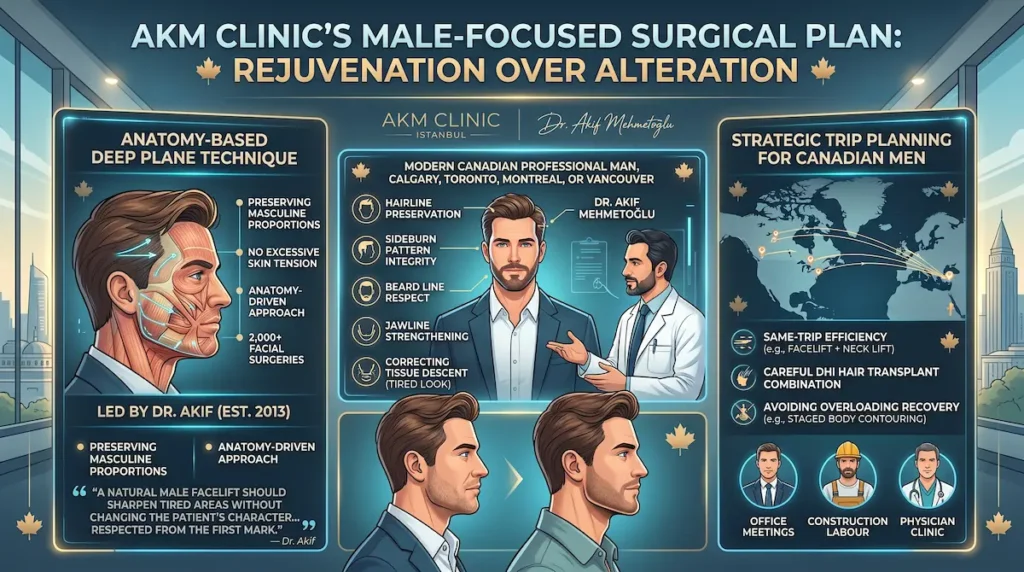
AKM Clinic approaches male facial rejuvenation through a “Natural-First” lens: rejuvenation over alteration. For male patients, that means preserving the hairline, sideburn, beard pattern, and jawline strength while correcting the tissue descent that makes the face look tired.
The clinic’s facial surgery experience is led by Dr. Akif Mehmetoğlu, whose practice has focused on advanced facial procedures since 2013, with over 2,000 successful facial surgeries. The male plan is not a separate marketing category. It is an anatomy-based surgical strategy.
Dr. Akif’s Approach to the Masculine Deep Plane Technique
Deep plane surgery is valuable for selected male patients because it supports the deeper facial structures rather than relying only on skin tension. This can help protect the sideburn and beard line because the skin does not have to carry the main lifting force.
For patients with jowls, lower-face heaviness, and neck laxity, Dr. Akif’s deep plane technique can be adapted to preserve masculine proportions. The lift is planned around the patient’s jaw angle, neck thickness, and hair-bearing skin pattern.
This does not mean every man needs the same operation. Some men need a full deep plane facelift and neck lift. Others may need a more limited lower-face approach. The decision depends on anatomy, not age alone.
Combining Facelift with Male-Specific Procedures Without Overloading Recovery
Some men ask whether they can address facial ageing, hair thinning, and body contouring during the same Istanbul trip. In selected cases, combination planning can be efficient, but it must not overload recovery or create competing healing priorities.
Hair restoration is the most common male-specific discussion. A patient with temple recession or thinning hair may ask about DHI hair transplant for combined trips. For the full planning framework, see our dedicated guide to facelift and hair transplant combination strategy.
Body contouring is a separate decision. Some men also research male body contouring procedures, but facial recovery should remain the priority when the main concern is the face and neck. Combining too much can make healing harder to manage.
Canadian Context: Same-Trip Planning Without Over-Treatment
For Canadian men travelling from Vancouver, Toronto, Montreal, or Calgary, one Istanbul trip can reduce time away from work and family. That does not mean every procedure should be combined. AKM’s role is to identify what can be safely staged together and what should wait.
Canadian Male Patient Patterns and Outcome Priorities
Canadian male patients often share three priorities: privacy, a stronger lower face, and a result that does not look cosmetic. They may not use the same language as female patients, but the concern is clear. They want to look like themselves on a better day.
The consultation should therefore include direct questions. Does the patient shave daily? Does he wear short hair? Is he often on camera? Does he work in physical labour? Is he concerned about hair loss now or in the future?
These answers shape the surgical plan. A male facelift is not just a lift. It is a set of decisions about anatomy, identity, grooming, and recovery logistics.
Patients who want to assess the expertise behind this type of planning can review our guide to surgeon credentials for male facelift. Credential review is especially important for men with complex beard patterns, prior surgery, or significant neck heaviness.
“A natural male facelift should sharpen the tired areas without changing the patient’s character. The sideburn, beard line, and jaw angle must be respected from the first mark on the skin.”— Dr. Akif Mehmetoğlu, AKM Clinic
During a virtual consultation, Canadian patients can discuss their beard pattern, hairline, work schedule, and lower-face goals before travelling. That conversation helps determine whether a male-adapted deep plane facelift, a neck-focused plan, or a staged strategy is most appropriate.
Frequently Asked Questions: Male Facelift Techniques
These questions address the concerns Canadian men most often raise during male facelift consultations. The answers are general educational guidance, not a substitute for a surgeon-led assessment of your anatomy, beard pattern, medical history, and recovery constraints.
Can a facelift be detected on a man at work?
A well-planned male facelift should not be obvious at work once early swelling and bruising have settled. The most detectable signs are usually not the lift itself, but poor sideburn position, visible scars, beard-line distortion, or an over-tightened neck.
Men who need a discreet return should plan around their work calendar. Remote work, a short beard, glasses, or a gradual return to in-person meetings may help. The best strategy depends on your profession and normal grooming style.
Do male facelifts last as long as female facelifts?
Yes, male facelift results can last as long as female facelift results when the deeper tissues are properly supported. Deep structural techniques are designed to age naturally over time rather than relying on skin tension alone.
Men with thicker skin may experience a different swelling pattern during recovery, but that does not mean the result is shorter-lived. Longevity depends more on surgical technique, skin quality, smoking status, sun exposure, weight stability, and ongoing ageing than on sex alone.
What is the recovery time for a male facelift?
Most men should plan for visible swelling and bruising in the first two weeks, with continued refinement over several months. Many desk-based patients can consider remote work earlier than in-person meetings, but this must be planned with the clinical team.
Men in physical jobs need a more cautious timeline. Heavy lifting, sweating, and accidental impact can delay healing. Patients returning to Canada after surgery should also factor in the fatigue of long-haul travel before resuming demanding work.
Can I combine a facelift with hair transplant in one trip?
In selected cases, yes. A facelift and hair transplant can sometimes be planned during one Istanbul trip, but the sequence must protect both the facelift incisions and the transplanted grafts.
This is not a decision to make based on convenience alone. For hairline-specific planning, AKM Clinic reviews scalp donor area, temple recession, incision placement, and recovery priorities before recommending same-trip or staged treatment.
Will my beard grow normally after a facelift?
Your beard should continue to grow, but incision planning must protect where that beard grows. Poorly planned skin movement can shift beard-bearing skin toward the ear or tragus, creating hair in an unnatural location.
This is why beard mapping is part of male facelift techniques. The surgeon must understand whether you shave clean, wear stubble, keep a full beard, or change styles seasonally.
Is a male facelift more expensive than a female facelift?
A male facelift is not automatically priced higher simply because the patient is male. Cost is usually determined by technique, scope, anesthesia, hospital needs, and whether the neck, eyelids, hair restoration, or other procedures are added.
For reference, AKM Clinic’s treatment schedule lists Standard Deep Plane Facelift at CAD $6,800. Patients can review facelift pricing in Canadian dollars, but the final recommendation should come from a consultation based on anatomy, not price alone.
What is the typical age for male facelift patients?
There is no single ideal age. Many male patients begin considering facelift surgery when the jawline loses definition, jowls become visible, or the neck starts to age faster than the rest of the face.
For some men, this happens in the late 40s. For others, it becomes relevant in the 50s or 60s. The better question is whether the anatomy matches the procedure. Age is only one part of the assessment.
Male facelift surgery should protect the details that make a face look natural: the sideburn, beard line, jaw angle, neck contour, and overall facial character. A generic facelift plan can miss those details.
AKM Clinic offers virtual consultations for Canadian men who want a discreet, anatomy-based plan before travelling to Istanbul. During the consultation, the team can review your beard pattern, hairline, jawline, neck laxity, work schedule, and recovery goals.
Book a virtual consultation to discuss male-specific techniques and learn which approach fits your anatomy.
Medical Disclaimer: This page is provided for general educational purposes only and does not replace an in-person medical consultation, diagnosis, or personalized treatment plan. All surgery carries risks, and outcomes vary between individuals. Suitability for male facelift surgery, procedure selection, and anesthesia choice can only be determined after a full clinical assessment by a qualified surgeon. Always follow your clinician’s instructions and seek urgent medical attention if you develop concerning symptoms during recovery.