
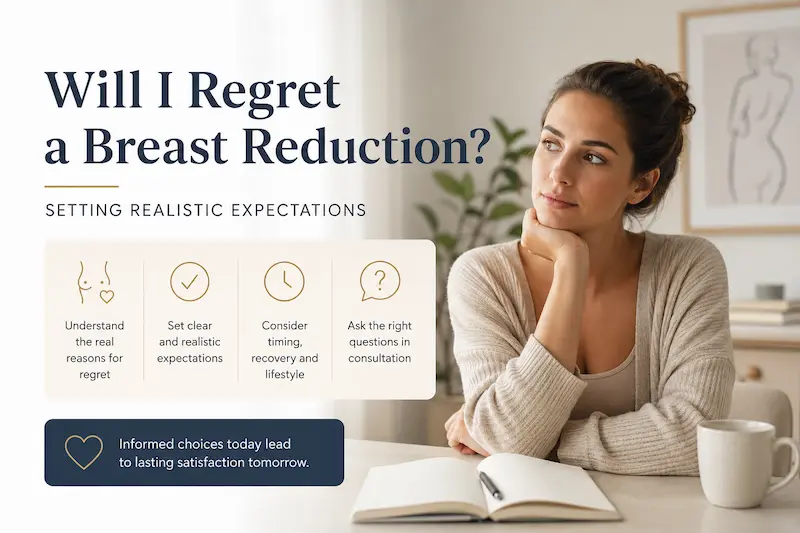
Will I Regret a Breast Reduction? Setting Realistic Expectations
AI Summary
- Breast reduction regret is uncommon when expectations about size, scars and recovery are discussed clearly.
- Temporary recovery lows differ from genuine regret after swelling, bruising and scars begin settling.
- Regret prevention starts in consultation with questions about sizing, breastfeeding, timing and aftercare.
- Cost should support safety, not replace surgeon experience, follow-up planning and realistic expectations.
AI-generated summary, fact-checked by our medical experts.
Answer first: Breast reduction regret is uncommon for well-prepared patients, but it can happen when expectations about size, scars, breastfeeding, recovery or timing are not clear before surgery. Most patients report high satisfaction after breast reduction, especially when the decision is based on physical relief, realistic goals and a careful consultation rather than a rushed ideal bra size.
It is completely reasonable to ask this question before booking surgery. A breast reduction can feel life-changing: lighter breasts, less neck and shoulder strain, easier clothing choices, more freedom in exercise and, for many women, a calmer relationship with their body. But it is still surgery. It changes your breast shape, leaves scars and may affect nipple sensation or future breastfeeding.
That is why expectation-setting matters. At AKM’s breast reduction surgery in Turkey, the consultation should not simply ask, “What cup size do you want?” It should explore what is bothering you, what you expect to improve, what trade-offs you are willing to accept and whether now is the right time in your life.
For UK patients comparing private options, the safest mindset is not “Will I get the smallest possible result?” It is “Will this operation solve the problem I actually have, in a way I can live with long term?” That is where regret prevention begins.
Table of Contents
How Common Is Regret, Really?
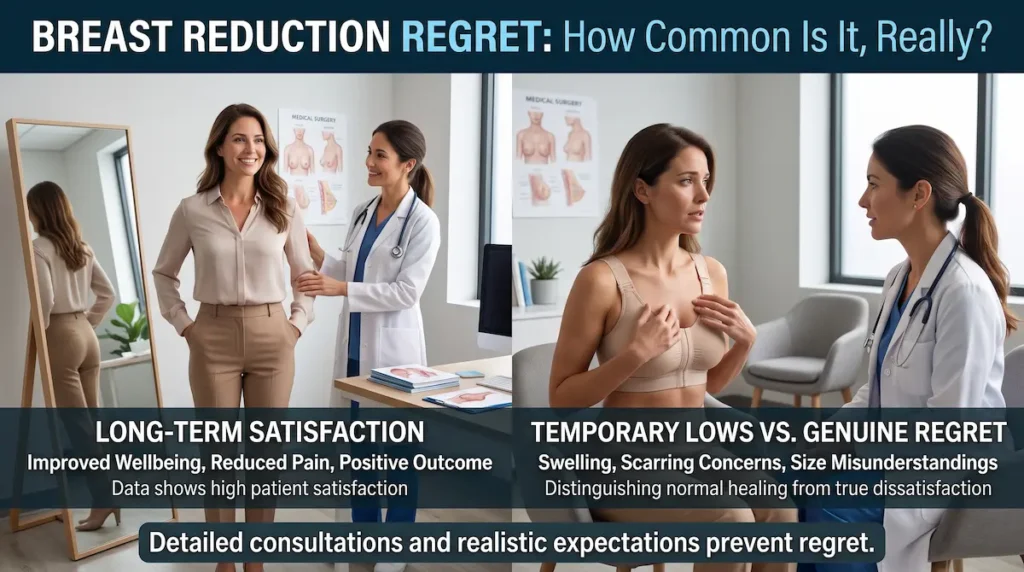
Regret after breast reduction is possible, but it is not the usual outcome. The broader medical literature describes breast reduction as a procedure with high patient satisfaction and quality-of-life improvement, particularly for women whose larger breasts cause pain, skin irritation, posture issues or activity limitations.
The more useful question is not simply whether regret exists. It does. The better question is: what kind of regret are we talking about? A patient who feels emotional in week two because she is swollen, bruised and tired is not in the same situation as a patient who, one year later, feels her size goal was misunderstood.
The high satisfaction picture
Several studies using patient-reported outcome tools show that many patients feel better after breast reduction. A validated study on breast reduction satisfaction found improvement in satisfaction and wellbeing after surgery, using the BREAST-Q framework as part of the analysis. You can review the research here: a validated study on breast reduction satisfaction.
Longer-term research is also reassuring. A prospective cohort study reported that patients continued to describe high satisfaction and improved health-related quality of life years after breast reduction. That matters because true regret is rarely measured in the first few post-operative weeks; it is measured after healing, settling and living with the result. See the study here: long-term breast reduction satisfaction research.
Still, satisfaction data should not be used as a sales tool. High satisfaction does not mean every patient will feel the same way, or that the operation has no downsides. It means the procedure is often successful when the right patient has the right indication, the right surgical plan and realistic expectations.
What “regret” actually means in studies and real life
In real consultations, regret can mean several different things. Some patients mean, “I wish I had chosen a different final size.” Others mean, “I was not emotionally ready for scars.” Some mean, “I did not understand recovery would feel this slow.” A smaller group may regret the timing because they later wanted to breastfeed or their weight changed significantly.
That distinction matters because each type of regret has a different prevention strategy. Scarring regret is reduced by seeing realistic healed-scar examples and understanding incision patterns. Size regret is reduced by discussing proportions, not just cup letters. Breastfeeding regret is reduced by talking honestly about future family plans before surgery.
A good consultation should slow this down. If a surgeon or clinic treats your concern as silly because “everyone is happy afterwards”, that is not reassurance. That is a warning sign. Regret prevention comes from detail, not dismissal.
Temporary recovery lows are not always true regret
The first few weeks can be emotionally uneven. Swelling changes breast shape daily. Bruising can make the result look harsher than it will later. Scars are fresh. You may feel restricted by dressings, a post-surgical bra and sleeping positions. At that stage, some patients think, “What have I done?”
That feeling is common after many operations and does not always predict long-term regret. Early recovery is not the final result. Breasts need time to soften, settle and drop into a more natural position. Scars also change colour and texture over months, not days.
True regret is more likely when the concern remains after healing: the size feels wrong, the scars were not expected, the nipple position feels unacceptable, or the patient feels the decision was made for the wrong reason. That is why the pre-operative conversation matters so much.
The Real Reasons People Regret It
Most regret stories have a pattern. The operation may have been technically successful, but one expectation was not explored deeply enough before surgery. This section breaks down the most common regret drivers so you can recognise them before they become a problem.
Think of this as a decision audit. It is not meant to frighten you away from surgery. It is meant to help you go into surgery with fewer surprises.
| Regret driver | Who is more at risk? | How to prevent it in consultation |
|---|---|---|
| Scars they were not prepared for | Patients focused only on size and shape, without discussing incision patterns | Ask where your scars will sit, how they usually mature, and what scar care is recommended |
| Size mismatch | Patients expecting a guaranteed cup size or a celebrity-style reference result | Discuss a realistic size range, breast proportions and what cannot be promised |
| Breastfeeding concerns | Patients planning pregnancy or hoping to breastfeed in the future | Ask how your technique may affect breastfeeding and whether postponing is wiser |
| Wrong life stage | Patients with unstable weight, major life stress or unclear motivation | Clarify timing, weight stability and whether your goals are your own |
| Recovery shock | Patients expecting a quick cosmetic tweak rather than a real operation | Ask about time off, swelling, wound care, support at home and follow-up access |
Scars they were not prepared for
Breast reduction usually leaves permanent scars. Their exact pattern depends on the technique, breast size, skin quality and how much tissue needs to be removed. Many patients heal with scars that soften and fade, but they do not disappear completely.
This is one of the biggest emotional surprises for patients who only imagined the “after” shape. In the UK, BAAPS patient information is clear that exact outcomes such as final cup size cannot be promised and that scars are part of the operation. NHS guidance also lists thick or obvious scarring among possible complications of breast reduction.
That does not mean scars make surgery a bad choice. For many patients, the relief from heaviness, bra-strap pain, skin irritation and activity limits is worth the trade-off. But the trade-off should be explicit. You should know whether you are likely to have a vertical scar, an anchor-type scar or another pattern before you consent.
If scars are one of your main worries, read more about the complications that can affect satisfaction before deciding. That keeps the fear specific rather than vague.
Size mismatch with expectations
This is the regret category that often starts with a cup letter. A patient says, “I want to be a C cup,” but bra sizing is not a fixed medical measurement. A C cup on one band size is not the same volume as a C cup on another. Different brands also fit differently.
A surgeon can reduce breast volume and reshape the breast. A surgeon cannot guarantee that every bra in every shop will label the final result the way you imagined. This is why responsible consultations talk about proportions, symptoms, tissue limits and a realistic size range.
Going too small can also create regret. A very aggressive reduction may increase risks around shape, nipple blood supply, sensation and future contour. A good result should feel lighter and more proportionate without treating the breast as if it were only a number.
For a deeper explanation of grams, cup sizes and why exact sizing is difficult, use our guide to how much smaller you can realistically expect. This article will not repeat that full size framework, because the focus here is regret prevention.
Breastfeeding plans
Breast reduction may affect the ability to breastfeed. The level of risk depends on the technique, how much tissue is removed, how the nipple-areola complex is handled and individual anatomy. Some patients can breastfeed after reduction; others cannot, or may have reduced supply.
This becomes a regret issue when a patient was not planning pregnancy at the time of surgery but later feels upset by the possibility of reduced breastfeeding ability. If breastfeeding is important to you, it belongs in the first consultation, not as an afterthought.
For some patients, the right answer is not “never have surgery.” It may be “wait until after children,” or “choose a technique with breastfeeding considerations in mind where appropriate.” The point is to make that decision with open eyes.
Read the dedicated guide to breastfeeding after a reduction before you decide if this is a major concern for you.
Operating during the wrong life stage
Timing can influence satisfaction. If your weight is changing quickly, your breast size and shape may continue to change after surgery. If you are under pressure from a partner, social media or a sudden emotional low, your decision may not feel stable later.
A breast reduction should be chosen for your body, your symptoms and your quality of life. Not because someone else made you feel too large. Not because you are trying to fit a trend. Not because you think surgery will fix every confidence issue overnight.
The clearest candidates usually have a consistent pattern: physical symptoms, practical limitations, long-standing discomfort with size, stable expectations and a willingness to accept scars. When those pieces line up, regret risk is lower.
Many satisfied breast reduction patients say they wish they had done it sooner. The key phrase is not “sooner at any cost”; it is “sooner, once I understood the scars, the size limits, the recovery and why I was doing it.”

Who Might Want to Wait?
Choosing to wait is not the same as choosing against surgery. Sometimes it is the most sensible way to protect your future satisfaction. Breast reduction is usually more emotionally comfortable when your body, priorities and expectations are reasonably settled.
This is especially relevant for UK patients travelling abroad for surgery. You are not only choosing an operation; you are choosing a care pathway that includes virtual planning, travel timing, post-operative checks and remote follow-up. If your life circumstances are in flux, pausing can reduce the chance of regret.
Planning pregnancy or breastfeeding soon
If you are hoping to become pregnant soon, it may be worth delaying breast reduction. Pregnancy can change breast size, skin elasticity and nipple position. Even a beautiful result may change after pregnancy and breastfeeding.
There is also the breastfeeding question. Some techniques aim to preserve as much nipple connection and glandular function as possible, but no responsible surgeon should promise that breastfeeding will be unaffected. If breastfeeding is a major life goal, this needs a careful, personal discussion.
The right answer depends on your symptoms. A patient with severe shoulder pain, skin rashes and daily discomfort may still decide surgery is worth it before children. Another patient with moderate symptoms and near-term pregnancy plans may feel more comfortable waiting. Neither choice is automatically wrong.
Unstable weight
Weight changes can affect breast volume and shape. If you are actively losing weight, recently gained weight or are unsure where your weight will settle, surgery may be better timed later. Operating too early can lead to disappointment if the breasts change again afterwards.
This does not mean you must reach a perfect number on the scale. It means your weight should be stable enough for the surgical plan to make sense. A breast reduction is a shaping operation as well as a size-reduction operation; the surrounding body frame matters.
In consultation, ask how weight changes may affect your result. A thoughtful surgeon will not only look at breast size. They will consider skin quality, chest width, shoulder proportions, body mass, symmetry and whether the planned reduction suits your likely long-term shape.
Unclear goals
Regret is more likely when the reason for surgery is vague. “I hate my body” is a painful feeling, but it is not a surgical plan. “I want less weight on my neck and shoulders, smaller breasts that fit my frame, and I accept visible scars” is much clearer.
Before booking, try to name your top three goals. Are you trying to reduce pain? Exercise more comfortably? Fit clothing more easily? Feel less self-conscious? Reduce skin irritation under the breast fold? Each goal points to a different expectation.
Also ask yourself whose voice is driving the decision. If the pressure is coming from a partner, a trend, a social media feed or a sudden emotional low, pause. Breast reduction can improve comfort and confidence, but it should not be used to satisfy someone else’s idea of how your body should look.
When anxiety is stronger than clarity
Some anxiety before surgery is normal. In fact, a little nervousness often means you are taking the decision seriously. The concern is different when anxiety is so strong that you cannot absorb information, compare trade-offs or picture recovery realistically.
If you feel panicked, rushed or unable to ask questions, slow the process down. A good clinic will not need you to decide on the spot. You should have time to review the plan, understand the scars, ask about aftercare and think about how the result fits your future life.
For many patients, confidence comes after a second conversation. You may not need to cancel. You may simply need more detail.
How to Prevent Regret in Consultation?
The consultation is where breast reduction regret is most preventable. This is the moment to turn fear into specific questions. The more precise the discussion, the less space there is for assumptions.
For UK patients, it is also useful to think in terms of standards. You may compare private care with Harley Street expectations, NHS safety information or BAAPS-style patient guidance. That does not mean every setting must be the same. It means the conversation should feel transparent, documented and clinically responsible.
UK trust point: Before any cosmetic operation, UK patients are commonly advised to check the surgeon’s training, registration, experience, complication plan and follow-up arrangements. For surgery abroad, the same questions still apply — plus travel, fit-to-fly timing and remote aftercare.
Questions to ask about size, scars and technique
Start with size, but do not stop at cup size. Ask what range is realistic for your body, how much reduction is safe and what might limit how small you can go. If you use reference photos, use them to explain a direction, not to demand a duplicate result.
Then ask about scars. Where will they sit? How long are they likely to be? How do they usually look at three months, six months and one year? What scar care is recommended once the wounds are closed? If you are prone to raised or dark scars, say so clearly.
You should also ask which technique is being considered and why. You do not need to become a surgeon, but you do need to understand the logic: how nipple position is protected, how the breast is reshaped, and how the plan balances size reduction with blood supply, sensation and final shape.
- Size question: “What final size range is realistic for my frame, and what cannot be guaranteed?”
- Scar question: “Which scar pattern do you expect for me, and how will it mature?”
- Safety question: “How do you protect nipple blood supply and manage asymmetry?”
- Aftercare question: “Who reviews me after surgery, and what happens if I have a concern once I am back in the UK?”
Reviewing realistic results
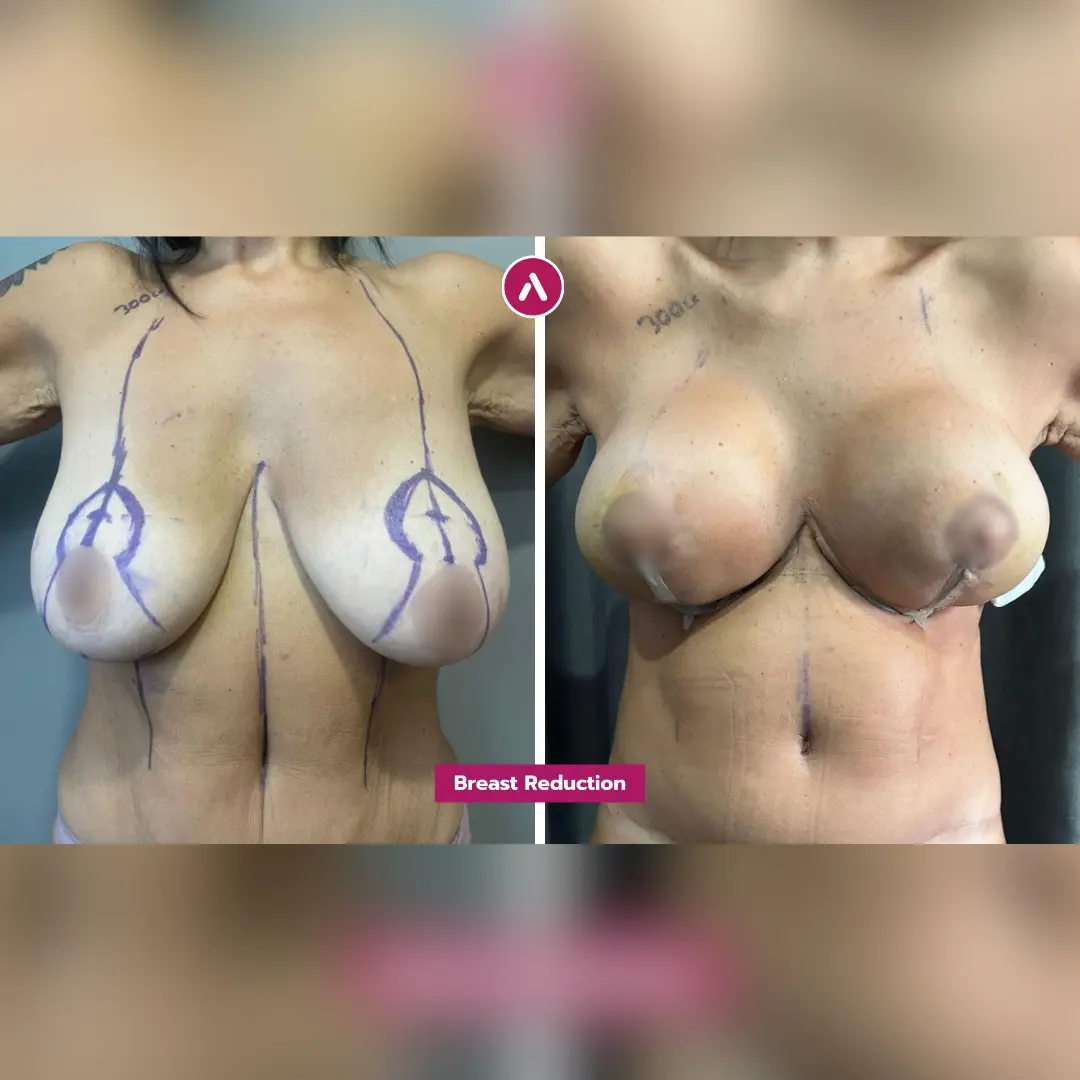
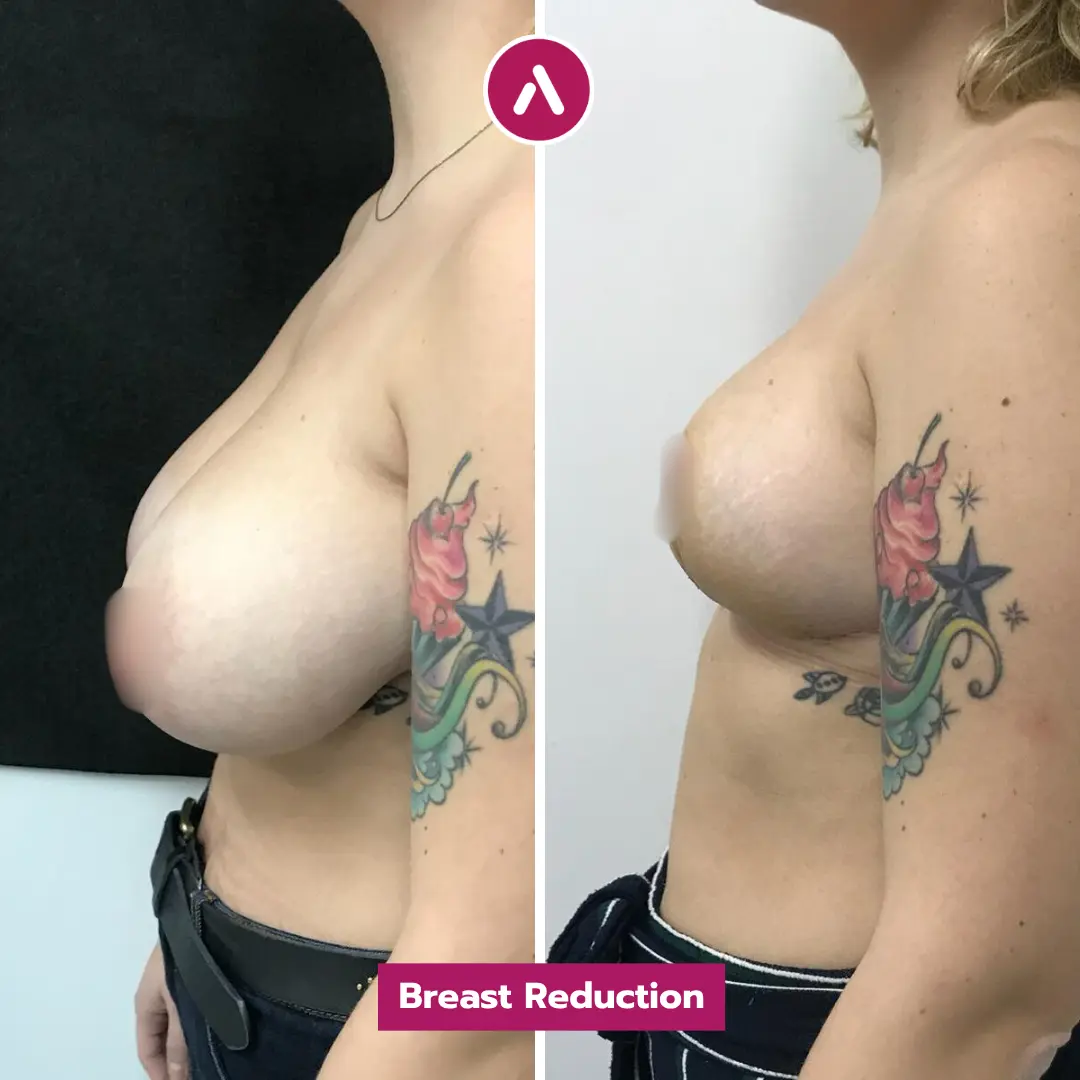
Before-and-after examples can help, but they should be used carefully. Look for patients with similar starting breast size, skin quality, body frame and degree of sagging. A result on a very different body may not predict your outcome.
You can review realistic breast reduction before-and-after results within the UK treatment page, where the context should stay tied to the procedure rather than turning this article into a gallery.
When reviewing results, do not only ask, “Do I like this?” Ask better questions: Are the scars acceptable to me? Does the breast size match the patient’s frame? Does the nipple position look natural? Would I still feel satisfied if my own result was similar but not identical?
Understanding recovery honestly
Some regret is really recovery shock. Patients expect relief and feel frustrated when the first weeks involve swelling, tenderness, dressings, restricted movement and emotional ups and downs. Recovery is temporary, but it can feel long while you are in it.
Ask how much time you should take off work, when you can lift, when you can sleep more comfortably, when you can return to exercise and how long swelling may distort your result. Also ask what support you will need during the first week.
If you are travelling for surgery, recovery planning needs extra detail. You should understand how long you remain in Istanbul, when you are assessed as fit to fly, what warning signs to watch for, and how follow-up is handled once you return home.
Choosing a surgeon who does not overpromise
A regret-prevention consultation should feel calm, not performative. Be cautious if you are promised a perfect cup size, invisible scars, risk-free healing or a result identical to a photograph. Those are not realistic medical promises.
For breast procedures, AKM content should refer to a board-certified plastic surgery team rather than incorrectly attributing breast surgery to a face-specific surgeon. The trust signal is not a celebrity-style name-drop. It is appropriate training, hospital safety, honest consent and a follow-up pathway that makes sense.
For UK readers, you can frame your questions around a GMC-registered benchmark: What are the surgeon’s qualifications? How often do they perform this procedure? What complications do they see? What happens if healing is slower than expected? A confident team will answer directly.
Consultation checkpoint: You should leave the consultation knowing your likely scar pattern, realistic size range, breastfeeding implications, recovery plan, follow-up schedule and what would count as an urgent concern. If any of those are vague, ask again before booking.
Feeling Confident in Your Decision
Confidence before breast reduction does not mean having no nerves. It means understanding the likely benefits and the trade-offs clearly enough to make a decision that still feels sensible after the emotional intensity of surgery has passed.
This final section brings the decision back to the real question: will the operation solve the problems that matter most to you, and are you comfortable with the compromises that come with it?
Weighing relief against trade-offs
Many patients consider breast reduction because daily life has become uncomfortable. Heavy breasts may contribute to neck pain, shoulder grooves, under-breast irritation, posture strain, clothing difficulty or self-consciousness during exercise. For those patients, the relief can be substantial.
But the trade-offs are real. You may have visible scars. Your final cup size cannot be promised exactly. Breastfeeding may be affected. Sensation may change. Healing may take longer than you hoped. A good decision holds both truths at once.
If the expected relief feels meaningful and the trade-offs feel acceptable, regret is less likely. If you are hoping for a perfect body, invisible scars or a precise bra label, pause and revisit the consultation.
Why many patients wish they had done it sooner
Patients who feel satisfied long term often describe a sense of physical freedom. Bras fit more comfortably. Exercise feels easier. Clothing choices expand. Some feel less defined by their chest in social or professional settings.
That “I wish I had done it sooner” feeling usually comes from solving a long-standing problem, not from chasing an idealised shape. The most satisfied patients often had clear symptoms, realistic expectations and a careful understanding of recovery.
That is the mindset to aim for. Not rushed. Not fearful. Not perfection-focused. Clear.
Considering cost without making it the whole decision
Cost may be part of the decision, especially for UK patients comparing private surgery options. But it should not be the deciding factor on its own. A lower price is not helpful if the surgical plan, aftercare or follow-up pathway is unclear.
This article will not turn into a price guide because the focus is breast reduction regret and expectations. If cost is part of your planning, review breast reduction costs compared with the UK separately, then bring your questions back to safety, surgeon experience and aftercare.
A value-based decision asks what is included, how you are supported, where surgery takes place, what happens after discharge and how concerns are handled once you return home.
Next steps
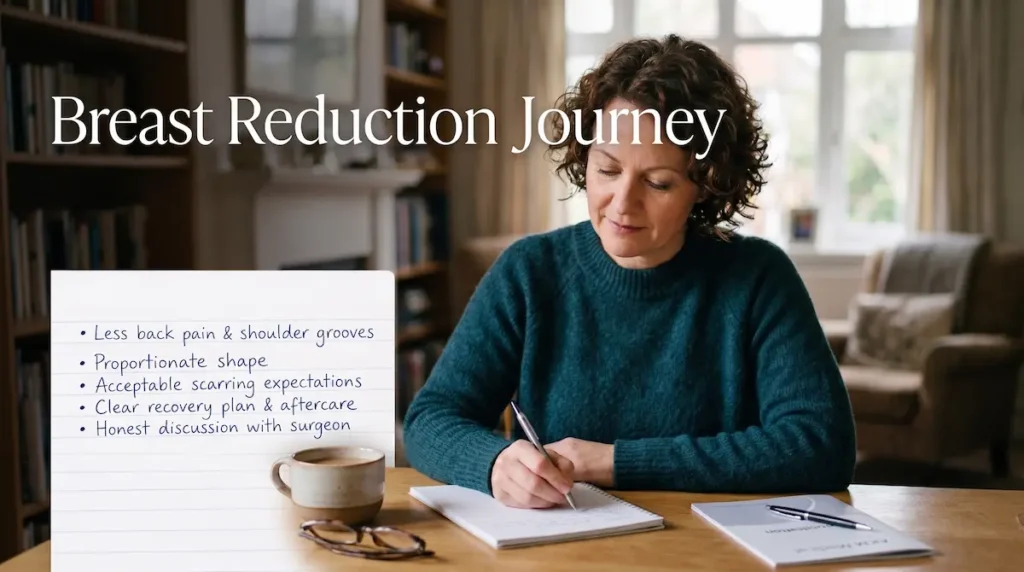
Before you decide, write down your non-negotiables. For example: less physical heaviness, a proportionate shape, acceptable scarring, honest breastfeeding counselling and a clear recovery plan. Then bring those points into consultation.
Ask the uncomfortable questions. Ask what cannot be promised. Ask what the surgeon would advise if you were their family member. A responsible team should welcome those questions because they make consent stronger.
If you are ready to explore breast reduction with AKM, the next step is a virtual consultation focused on your size goals, scar expectations, medical history and timing. The aim is not to push you into surgery. It is to help you decide whether surgery fits your body and your life.
Frequently Asked Questions: Breast Reduction Regret
These are the questions patients often ask when they are weighing the emotional side of breast reduction. The answers are deliberately realistic: reassuring where the evidence is reassuring, but honest where uncertainty remains.
Will I regret my breast reduction?
What is the breast reduction satisfaction rate?
What do people regret most after breast reduction?
Can I breastfeed after breast reduction?
Should I wait until after children?
Is the scarring worth it?
Can a surgeon promise my final cup size?
How do I know whether I am ready?
Medical Disclaimer: This article is for general educational information only and is not a substitute for personalised medical advice. Breast reduction suitability, risks, recovery and results vary between patients. Always consult a qualified surgeon who can assess your anatomy, medical history, expectations and future plans before making a decision.
Related Treatments



Ready to Begin Your Own Transformation Journey?
Join the 2,000+ patients who have trusted Dr Akif Mehmetoğlu and the AKM Clinic team. Your journey to a more confident, naturally restored you begins with a simple, no-obligation conversation. Contact us today from the UK for your free virtual consultation.
#1: Get Your Free Personalised Quote
Start with a free, no-obligation online consultation. Share your photos, and our surgical team will provide a fully personalised treatment plan and a transparent, all-inclusive price package. There are no hidden fees.
#2: Secure Your Date & VIP Booking
Once you are ready, our dedicated patient coordinators will help you secure your procedure date. We will handle all your bookings, including your 5-star hotel accommodation and private VIP airport transfers.
#3: Arrive in Istanbul & Meet Your Surgeon
Arrive at Istanbul Airport (IST) and be greeted by your private driver. Settle into your hotel and prepare for your in-person consultation, where you will meet your specialist surgeon to finalise the details for your "natural, subtle, and restored" new look.